
BEIRUT (AP) — Lebanese military forces evacuated their position at a base in a southern village on Saturday as Israeli forces moved into the surrounding region, according to a military official.
The evacuation of the army facility in Kfar Tebnit occurred as Israeli forces issued orders for residents to leave approximately 20 areas, including the southern city of Nabatiyeh and surrounding communities.
Lebanon’s government-operated National News Agency documented air attacks on Saturday targeting various communities near Nabatiyeh, including a strike that resulted in two deaths in Deir al-Zahrani. The agency also reported that Nabatiyeh experienced artillery bombardment on Saturday.
A high-ranking Lebanese military official informed The Associated Press that Lebanese forces relocated from the Kfar Tebnit facility after Israeli troops entered the region. The official, who provided no additional details, requested anonymity according to standard procedures.
Israeli forces appeared to be attempting to seize the tactical Ali Taher hill located at Kfar Tebnit’s perimeter, which provides visibility over extensive areas of Nabatiyeh and several roadways connecting the city to neighboring communities.
Israeli forces maintained control of the Ali Taher hill for 18 years before departing Lebanon in May 2000.
During late May, Israeli troops seized a neighboring tactical mountain crowned by the Crusader-era Beaufort Castle in the most significant penetration into the nation since 2000.
The advance toward Kfar Tebnit’s border occurred one day after Pakistan’s prime minister announced that the United States and Iran have reached consensus on language for an accord designed to halt their Middle Eastern conflict, with negotiators assisting both parties to complete an agreement.
Iranian Foreign Minister Abbas Araghchi informed Iranian government television on Friday that both nations were pursuing the signing of a preliminary accord announcing the conflict’s conclusion “on all fronts, including Lebanon.”
Senior Hezbollah official Hussein Haj Hassan informed Al Jazeera TV that Iranian representatives have notified them that Lebanon would be included in a forthcoming ceasefire agreement between the U.S. and Iran.
Iran serves as Hezbollah’s primary supporter, providing the organization with various weapon types during the past four decades along with billions in funding.
Combat between Israel and Hezbollah has persisted despite a ceasefire implemented on April 17 that received multiple extensions but exists as a ceasefire only in title.
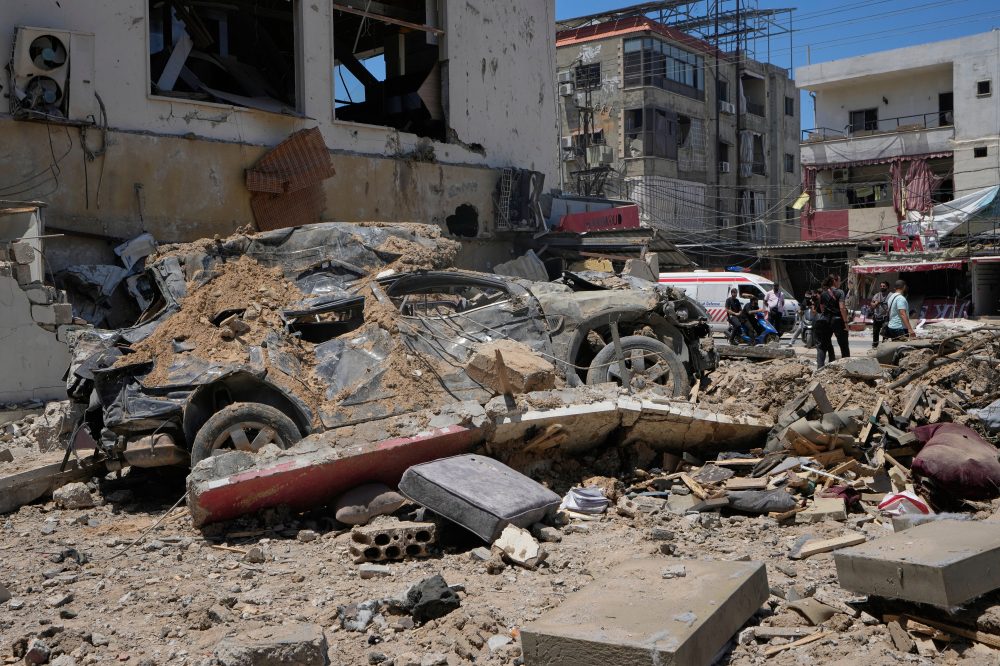
Israel maintains control over substantial portions of southern Lebanon while engaging Hezbollah militants, resulting in civilian deaths and infrastructure destruction. Hezbollah, which is excluded from the ceasefire accord between Israel and Lebanon, has conducted regular rocket and drone strikes.
The current Israel-Hezbollah conflict started on March 2, when Hezbollah launched rockets toward northern Israel two days following the commencement of U.S. and Israeli operations against Iran.
Over 3,700 individuals have died in Lebanon during the recent combat, based on Lebanese Health Ministry data. Additionally, 30 Israeli military personnel and one defense contractor have perished in or around southern Lebanon, while two civilians have been killed in northern Israel, according to Israeli Prime Minister Benjamin Netanyahu’s office.