
WASHINGTON — An immigrant mother from Argentina made securing her newborn son’s U.S. passport a top priority after his birth in Florida last year, viewing the document as proof of his American citizenship.
Now, that 28-year-old woman finds herself at the center of a constitutional battle over President Donald Trump’s executive order attempting to strip citizenship rights from children born on U.S. soil to parents who are in the country without authorization or on temporary status.
“It’s funny because I actually booked him for his passport application appointment even before he was born,” the woman told reporters, speaking anonymously at her attorneys’ request due to concerns about potential government retaliation. Her 7-month-old son slept peacefully during the interview.
“I would say that I am definitely relieved that at least he is protected,” she added.
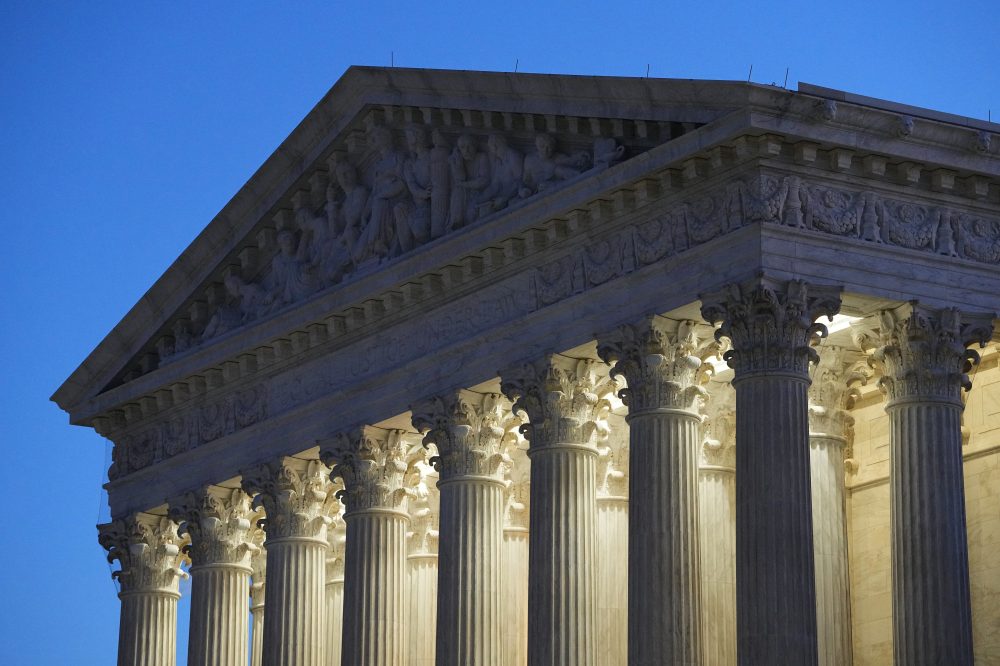
The nation’s highest court heard oral arguments Wednesday regarding Trump’s January 20 executive order, which challenges long-established interpretations of the 14th Amendment and federal legislation dating back 86 years. The constitutional provision and accompanying laws have traditionally granted citizenship to virtually all individuals born within U.S. borders, with limited exceptions for children of diplomatic personnel and enemy forces.
Federal courts across the country have unanimously declared the executive order unconstitutional and blocked its implementation.
This citizenship challenge represents a key component of the Trump administration’s comprehensive immigration enforcement strategy, which encompasses increased deportation operations, significant cuts to refugee admissions, border asylum suspensions, and elimination of temporary protected status for individuals fleeing unstable conditions in their home countries.
The legal dispute centers on interpretation of the 14th Amendment’s Citizenship Clause, which grants citizenship to “all persons born or naturalized in the United States, and subject to the jurisdiction thereof.” The administration’s argument focuses on the jurisdictional language, which appears in citizenship statutes from 1940 and 1952.
Trump’s position, outlined in his executive order “Protecting the Meaning and Value of American Citizenship” and supported by certain conservative legal experts, contends that individuals present illegally or temporarily fall outside U.S. jurisdiction, therefore disqualifying their American-born children from citizenship.
Solicitor General D. John Sauer argued the court should address “long-enduring misconceptions about the Constitution’s meaning.”
Sauer drew parallels between this case and pivotal Supreme Court decisions like Brown v. Board of Education, which ended school segregation in 1954, and the 2008 Heller ruling establishing individual gun ownership rights.
Justice Sonia Sotomayor previously characterized the administration’s defense as “an impossible task in light of the Constitution’s text, history, this Court’s precedents, federal law, and Executive Branch practice.”
Sotomayor joined her fellow liberal justices in dissenting from a 6-3 conservative majority decision that used an earlier phase of this citizenship dispute to restrict federal judges’ authority to issue nationwide injunctions.
Legal advocates representing expectant mothers challenging the order, along with federal judges who have halted its enforcement, maintain the administration’s constitutional interpretation is fundamentally flawed.
“We have the president of the United States trying to radically reinterpret the definition of American citizenship,” stated Cecillia Wang, the American Civil Liberties Union’s legal director who argued against Sauer Wednesday.
Research conducted by the Migration Policy Institute and Pennsylvania State University’s Population Research Institute indicates the executive order would impact over 250,000 babies born annually in the United States.
Although Trump’s public statements typically emphasize unauthorized immigration, the citizenship restrictions would also affect legal residents, including international students and green card applicants.
The Argentine woman interviewed arrived in America in 2016 on a student visa for college and has since filed for permanent residency.
She recalled experiencing anxiety after the court’s June decision, which raised the possibility that restrictions might be implemented, especially in states like Florida that hadn’t legally challenged Trump’s order. Subsequent lower court rulings maintained the injunction and established the current Supreme Court review.
Beyond typical new mother concerns, she explained, “I never thought that, you know, so close to the end of my pregnancy that I would have to be even thinking about … the executive order and how it would have impacted my baby.”
Despite the legal uncertainty, she remains committed to her American journey as her son began to wake.
“And so nothing that happens, politically or otherwise, would have changed my views of the country, I mean, because it gave me the most beautiful thing I have today, which is my family,” she concluded.