
High-definition replay technology has transformed how major sporting events are officiated, with referees and umpires increasingly relying on video screens to examine disputed calls.
This technological shift has created a distinctive visual communication system throughout professional sports.
Basketball fans recognize the circular finger motion that players make when requesting a replay review during NBA contests. Football features coaches hurling red challenge flags onto the field, a gesture frequently copied by spectators in the stands.
International sports have developed their own symbols: Soccer players worldwide draw imaginary rectangles in the air to request VAR (Video assistant referee) reviews. Cricket athletes form a “T” shape with their hands to activate the DRS (Decision review system), while umpires respond by tracing a box in the air, similar to soccer officials.
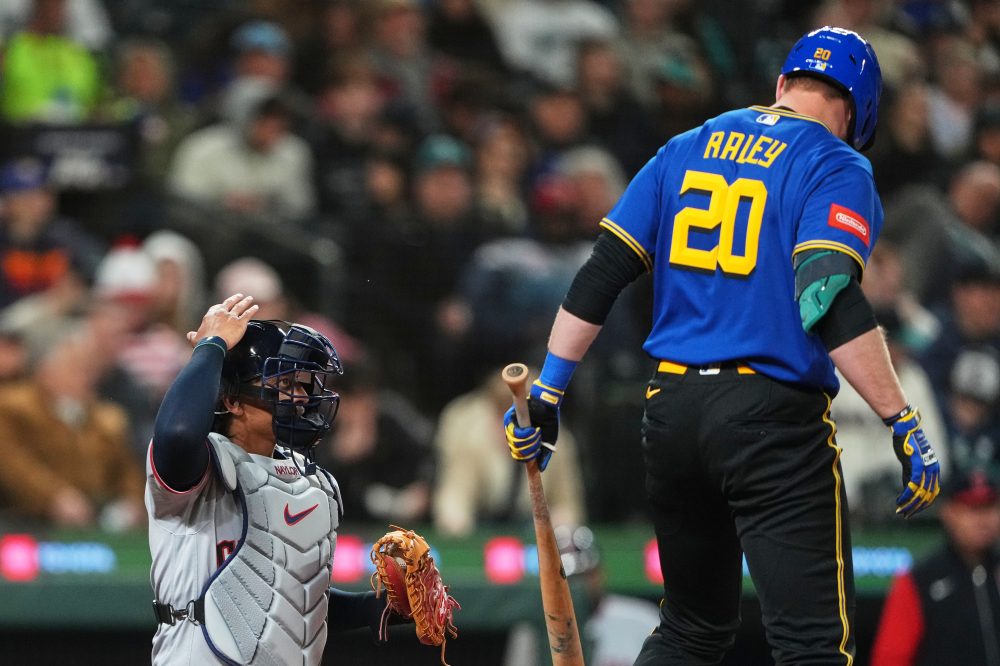
Baseball has introduced its newest gesture to this growing vocabulary: gentle taps on the head.
The Automated Ball-Strike Challenge System has become an official component of MLB games, utilizing camera technology to monitor each pitch and determine if it passes through the strike zone over home plate. While human umpires continue making initial calls, both teams can contest two decisions per game.
Players including batters, pitchers, and catchers can tap their heads several times while verbally requesting a challenge when they believe an incorrect ball-strike call was made. Fans have quickly adopted this signal, performing the head-tapping motion when they disagree with umpire decisions.
“Everyone understands what touching the top of their hat signifies,” Arizona Diamondbacks manager Torey Lovullo explained with a chuckle. “It’s caught on incredibly quickly. I believe it’s beneficial — we all want accurate calls.”
However, these hand signals can sometimes be interpreted as disrespectful behavior.
Tampa Bay Rays infielder Taylor Walls received an ejection during a regular season game last year after disputing a call and tapping his helmet while confronting the umpire. The ABS system was tested experimentally during 2025 spring training but wasn’t permitted in regular season contests.
Walls insisted his gesture was harmless. Home plate umpire Nic Lentz viewed it differently and ejected Walls from the game.
Lovullo anticipates fewer miscommunications going forward.
“Players must also give verbal confirmation, which should prevent confusion,” he noted.
Video review expansion across sports has generated new tactical approaches for timing challenges correctly. Quick non-verbal signals often make these systems function effectively.
Numerous NBA franchises assign an assistant coach or staff member to monitor a tablet displaying the television broadcast, enabling rapid play analysis. Players frequently make impulsive choices during intense game moments — spinning their finger in the air when believing their team should challenge a call. (Reality check: Players consistently believe they’re correct.)
However, coaching staffs make the ultimate decisions.
For the New York Knicks, assistant coach Jordan Brink provides guidance to head coach Mike Brown.
“When he signals like this (nodding affirmatively), then you do this (finger twirl). When he signals like this (head shake), then you just think ‘Well…’ and have to apologize to your players,” Brown explained.
Cleveland Cavaliers coach Kenny Atkinson emphasized that “you must maintain self-control” since replay situations typically involve high emotions. Los Angeles Clippers coach Ty Lue couldn’t explain how the finger twirl became basketball’s standard replay symbol, but in his characteristic dry style, admitted its widespread use can be irritating.
“I’m tired of seeing it. Let’s examine that,” Lue commented, prompting laughter from reporters. “College players are doing it now too, it’s everywhere.”
MLB currently employs two replay signals. Managers request reviews of safe-out calls and other rulings by placing hands over their ears, imitating umpires wearing headsets to communicate with MLB’s replay center. This gesture and the ABS head-tap have emerged as traditional baseball hand signals fade away. For over 100 years, catchers used finger signals to call pitches, sometimes employing complex sequences to prevent opposing teams from deciphering upcoming pitches.
Everything changed after the 2017 Houston Astros cheating scandal was revealed in 2020. A system called PitchCom now transmits pitch calls and defensive positioning instructions without manual signals.
“Previously, dugouts used signals to indicate bunt attempts or delayed steals, but now it’s just pressing a few buttons,” Lovullo said.
Despite technological advances, hand signals remain prevalent in sports. Ironically, sophisticated video replay technology has become a primary reason for their continued importance.