
WASHINGTON — Courts throughout the nation have consistently rejected President Donald Trump’s directive aimed at eliminating birthright citizenship for babies born to parents who are in the country without legal status or on temporary visas.
The nation’s highest court conducted oral arguments Wednesday regarding the Trump administration’s challenge to a New Hampshire federal judge’s decision, which determined the executive action signed during Trump’s first day back in office “likely violates the Fourteenth Amendment of the Constitution” and existing federal statutes.
Trump’s directive represented one component of his administration’s extensive immigration enforcement strategy, although the citizenship limitations have not been implemented.
The central debate revolves around interpreting the opening sentence of the 14th Amendment’s Citizenship Clause, which grants citizenship to “all persons born or naturalized in the United States, and subject to the jurisdiction thereof.”
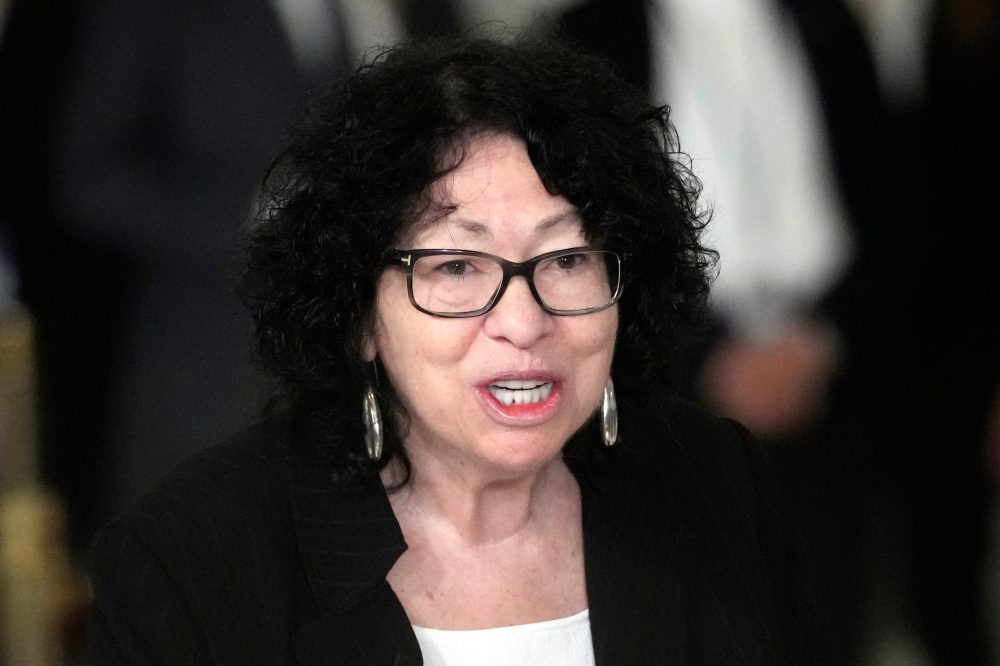
The Supreme Court’s three liberal justices have expressed clear opposition to Trump’s directive. Justice Sonia Sotomayor declared in June that “With the stroke of a pen, the President has made a ‘solemn mockery’ of our Constitution,” referencing an 1809 opinion by Chief Justice John Marshall. Sotomayor, alongside Justices Elena Kagan and Ketanji Brown Jackson, opposed a ruling by the court’s six conservative members that restricted federal judges’ ability to issue nationwide injunctions during an earlier phase of this citizenship controversy.
After the high court’s ruling, various judges have detailed their reasoning for considering Trump’s birthright citizenship order unconstitutional, inconsistent with established citizenship principles, contradictory to a 126-year-old Supreme Court precedent, and incompatible with the 14th Amendment’s original 1868 meaning.
These jurists have also explained their rationale for blocking the order’s nationwide implementation, despite the Supreme Court’s injunction restrictions.
The following represents excerpts from judicial opinions and the landmark 1898 Supreme Court case United States v. Wong Kim Ark, which judges reference as the primary precedent supporting their decisions:
Justice Horace Gray authored the majority decision in the 6-2 ruling establishing Wong’s citizenship through American birth: “The real object of the Fourteenth Amendment of the Constitution, in qualifying the words ‘all persons born in the United States’ by the addition ‘and subject to the jurisdiction thereof,’ would appear to have been to exclude, by the fewest and fittest words (besides children of members of the Indian tribes, standing in a peculiar relation to the national government, unknown to the common law), the two classes of cases, — children born of alien enemies in hostile occupation, and children of diplomatic representatives of a foreign state.”
Gray continued: “The fourteenth amendment affirms the ancient and fundamental rule of citizenship by birth within the territory, in the allegiance and under the protection of the country, including all children here born of resident aliens, with the exceptions or qualifications (as old as the rule itself) of children of foreign sovereigns or their ministers, or born on foreign public ships, or of enemies within and during a hostile occupation of part of our territory, and with the single additional exception of children of members of the Indian tribes owing direct allegiance to their several tribes.”
“The amendment, in clear words and in manifest intent, includes the children born within the territory of the United States of all other persons, of whatever race or color, domiciled within the United States,” Gray wrote.
Chief Justice Melville Fuller disagreed, arguing Wong could not claim citizenship because his parents maintained loyalty to the Chinese emperor and weren’t fully “subject to the jurisdiction” of the United States. Justice John Marshall Harlan supported this dissenting view.
“Children born in the United States and subject to its laws are United States citizens,” Sotomayor stated.
She observed that the Trump administration departed from its typical approach of seeking nationwide implementation of the citizenship restrictions. “Why? The answer is obvious: To get such relief, the Government would have to show that the Order is likely constitutional, an impossible task in light of the Constitution’s text, history, this Court’s precedents, federal law, and Executive Branch practice,” Sotomayor explained.
Sotomayor referenced an 1865 dictionary to clarify what being “subject to the jurisdiction” of the United States means. “To be ‘subject to the jurisdiction’ of the United States means simply to be bound to its authority and its laws,” she wrote, citing the American Dictionary of the English Language’s definition of “jurisdiction” as “power of governing or legislating” or “the power or right of exercising authority.”
She characterized the legal question as straightforward. “Few constitutional questions can be answered by resort to the text of the Constitution alone, but this is one. The Fourteenth Amendment guarantees birthright citizenship,” Sotomayor wrote.
However, only the three liberal justices supported her position. Justice Amy Coney Barrett, who penned the majority opinion restricting nationwide injunctions, emphasized the narrow scope of the previous case.
“The principal dissent’s analysis of the Executive Order is premature because the birthright citizenship issue is not before us. And because the birthright citizenship issue is not before us, we take no position on whether the dissent’s analysis is right,” Barrett stated.
U.S. District Judge Joseph N. LaPlante in New Hampshire, whose decision the Supreme Court is reviewing, concluded in July that “The Executive Order likely violates the Fourteenth Amendment of the Constitution” and federal statutes. LaPlante extended his ruling to cover all children nationwide born to mothers present in the United States illegally or temporarily. Refusing citizenship to these children, LaPlante noted, “would render the children either undocumented noncitizens or stateless entirely. … The children would risk deportation to countries they have never visited.”
The following month, U.S. District Judge Deborah Boardman in Greenbelt, Maryland, maintained her original decision favoring immigrant advocacy organizations challenging the order. “The Court reaffirms here its prior finding that ‘the Executive Order flouts the plain language of the Fourteenth Amendment to the United States Constitution, conflicts with binding Supreme Court precedent, and runs counter to our nation’s 250-year history of citizenship by birth.’ The plaintiffs are extremely likely to succeed on the merits of their claim that the Executive Order is unconstitutional,” Boardman determined.
“Perhaps the Executive Branch, recognizing that it could not change the Constitution, phrased its Executive Order in terms of a strained and novel interpretation of the Constitution. The district court correctly concluded that the Executive Order’s proposed interpretation, denying citizenship to many persons born in the United States, is unconstitutional. We fully agree,” wrote Judge Ronald Gould of the San Francisco-based U.S. Court of Appeals for the 9th Circuit in July, with Judge Michael Daly Hawkins concurring. Their case involved multiple state plaintiffs.
Gould argued the executive order misinterprets American history. “The Defendants’ proposed interpretation of the Citizenship Clause relies on a network of inferences that are unmoored from the accepted legal principles of 1868. … The Executive Order attempts to qualify and limit the plain language of the Constitution’s citizenship clause, which by its terms only says that a person born in the United States and subject to its jurisdiction is a citizen, by adding the notion that the person must be a child of a citizen or lawful permanent resident. … We reject this approach because it is contrary to the express language of the Citizenship Clause, the reasoning of Wong Kim Ark, Executive Branch practice for the past 125 years, the legislative history to the extent that should be considered, and because it is contrary to justice,” he explained.
Judge Patrick Bumatay disagreed, stating he would have dismissed the lower court’s decision because he questioned whether the challenging states had legal standing to sue. Bumatay avoided commenting on Trump’s order’s ultimate constitutionality.
Judge David Barron of the U.S. Court of Appeals for the 1st Circuit in Boston authored a comprehensive 100-page opinion for a unanimous three-judge panel in October. “But the length of our analysis should not be mistaken for a sign that the fundamental question that these cases raise about the scope of birthright citizenship is a difficult one,” Barron explained. “It is not, which may explain why it has been more than a century since a branch of our government has made as concerted an effort as the Executive Branch now makes to deny Americans their birthright.”
Referencing the Supreme Court’s Dred Scott decision that denied citizenship to Black Americans and prompted the 14th Amendment’s adoption, Barron observed, “Our nation’s history of efforts to restrict birthright citizenship … has not been a proud one.”
“The ‘lessons of history’ thus give us every reason to be wary of now blessing this most recent effort to break with our established tradition of recognizing birthright citizenship and to make citizenship depend on the actions of one’s parents rather than — in all but the rarest of circumstances — the simple fact of being born in the United States. Nor does the text of the Fourteenth Amendment, which countermanded our most infamous attempt to break with that tradition, permit us to bless this effort, any more than does the Supreme Court’s interpretation of that amendment in Wong Kim Ark, the many related precedents that have followed it, or Congress’s 1952 statute writing that amendment’s words in the U.S. Code,” he concluded.