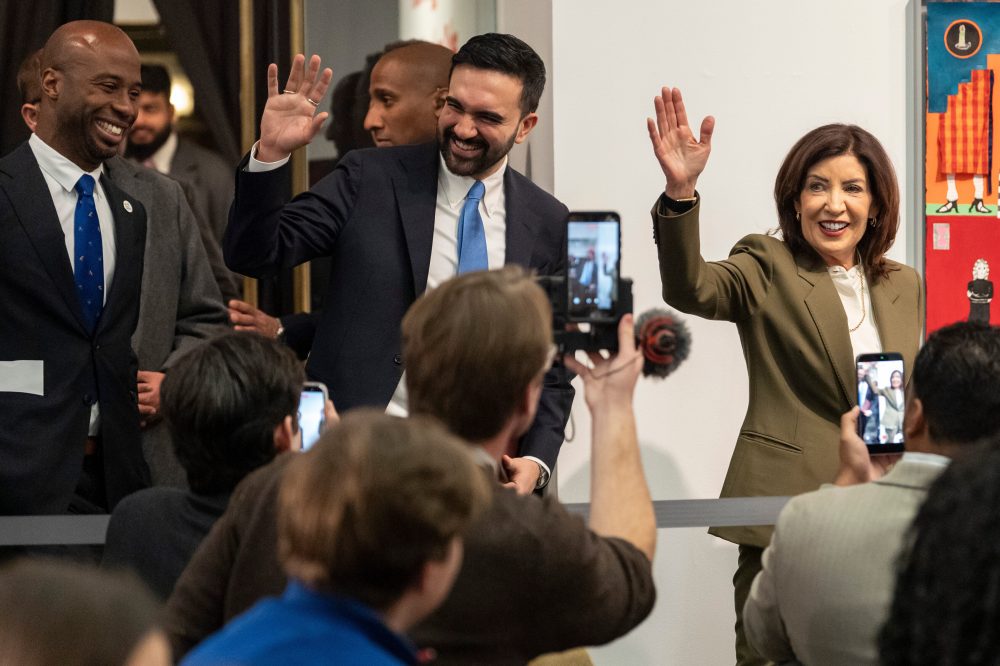

NEW YORK (AP) — After spending months resisting pressure from progressive activists demanding higher taxes on wealthy New Yorkers, Governor Kathy Hochul is now offering a middle-ground solution.
The Democratic governor announced plans to support legislation creating a tax on expensive secondary residences in New York City valued above $5 million, commonly called pied-à-terres. This proposal represents her attempt to satisfy Mayor Zohran Mamdani and progressive advocates while avoiding broader tax increases that could harm the state’s economic stability.
Under Hochul’s plan, New York City would be authorized to add a tax surcharge on these luxury second homes, potentially bringing in at least $500 million each year. The revenue would help Mamdani address his city’s significant budget deficit while funding his policy priorities.
“As Governor, I understand the importance of stabilizing the city’s finances without compromising on essential services New Yorkers count on,” Hochul said in a statement. “If you can afford a $5 million second home that sits empty most of the year, you can afford to contribute like every other New Yorker.”
Hochul plans to incorporate this tax proposal into the state’s annual budget package, which remains under intense negotiations in Albany after lawmakers missed their April 1 deadline for finalizing the spending plan.
Mayor Mamdani, who has advocated for more extensive tax increases on affluent residents, welcomed the governor’s announcement as progress. He described the proposal as moving him “one step closer to balancing our budget by taxing the ultra-wealthy and global elites.”
During a tax-focused event on Wednesday, Mamdani spoke before a “Tax The Rich” banner and explained that the measure would target the “super wealthy who can purchase properties and use them to store their wealth to benefit from New York City’s real estate market but not have to pay back into that same city.”
The governor has consistently opposed raising personal income taxes or corporate tax rates, warning that such policies would encourage more residents and businesses to relocate to states with lower tax burdens, ultimately weakening New York’s revenue base.
Progressive activists have persistently pressured Hochul on this issue, shouting “tax the rich” slogans at her public appearances and even following her to a political gathering in San Juan last year.
Hochul faces additional political challenges regarding taxation as she seeks re-election and works to counter Republican attacks about the state’s high tax burden.
Her GOP opponent, Bruce Blakeman, quickly criticized the new proposal using familiar talking points.
“Kathy Hochul’s ‘No Tax Hike’ promise has expired faster than the families fleeing New York’s affordability crisis,” said Blakeman, who serves as a county executive in the city’s suburban areas. “Unlike Hochul, I’ll actually keep my word when I’m governor: I’ll cut your taxes, slash your utility bills in half, and protect the American Dream.”
Mamdani has consistently pushed the governor and state lawmakers to increase taxes on wealthy New Yorkers, arguing they should contribute more funding for programs supporting the city’s working-class residents.
Meanwhile, he’s dealing with a substantial budget shortfall that he initially estimated at approximately $12 billion but later reduced to about $5 billion after identifying savings and securing state financial aid. This deficit threatens both his policy agenda and essential city services.
Speaking to reporters Wednesday, Hochul said her tax proposal would help New York City address its budget crisis without reducing services, though she emphasized that the mayor and City Council must identify additional cost savings to balance their budget.
“Our goal is to get the city on stable ground, to close the gap so we can take the pressure off,” she said.