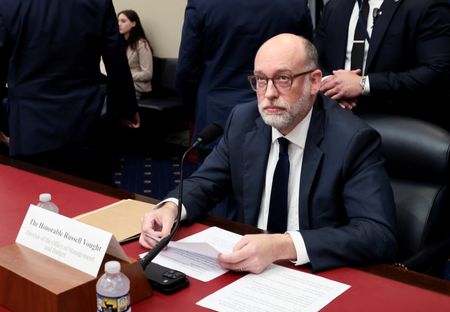

WASHINGTON – During a contentious House Budget Committee session Wednesday, White House budget director Russell Vought acknowledged he cannot provide cost projections for the Iran conflict while advocating for President Donald Trump’s proposed $1.5 trillion annual defense budget.
“We’re not ready to come to you with a request. We’re still working on it. We’re working through to figure out what’s needed,” Vought testified before lawmakers. “I don’t have a ballpark.”
The financial burden of the Iran conflict, which Trump initiated with Israel on February 28, continues to puzzle Capitol Hill officials. Congressional leaders strongly opposed an earlier $200 billion supplemental war funding proposal last month.
Vought defended Trump’s fiscal year 2027 budget blueprint, which includes a $500 billion boost in defense expenditures while slashing non-defense programs by 10 percent. The proposal aims to showcase Republican priorities before November’s midterm contests, where the party seeks to maintain House and Senate majorities amid voter concerns over living costs, energy expenses, and the U.S.-Israeli military campaign against Iran.
Lawmakers from both parties questioned the Pentagon’s financial transparency during the hearing. Democratic Representative Pramila Jayapal of Washington confronted Vought after he criticized fraud in healthcare, education, and energy assistance programs.
“I’m so glad you asked about fraud, because you are coming back to ask for a $1.5 trillion budget for the Department of Defense,” Jayapal stated. “The Department of Defense is the only federal agency that has never passed an audit … But you’re not going after any of that.”
Vought responded that the administration is addressing Pentagon “inefficiencies.”
Republican Representative Glenn Grothman of Wisconsin also expressed frustration, demanding a completed Pentagon audit before any defense spending vote. “I don’t think you’re doing enough,” Grothman said.
“There is so much arrogance in that agency,” Grothman continued. “They just say we don’t have to do it on audit. We’re so damn important. We don’t care what Congress thinks.”
The budget director promoted Trump’s spending plan for the fiscal year starting October 1 as a deficit reduction measure. He highlighted Trump’s 2025 “One Big Beautiful Bill Act,” claiming it generated $2 trillion in mandatory savings through Medicaid and food assistance reductions for low-income Americans.
However, the Congressional Budget Office projects that legislation, which extended 2017 tax reductions, will increase federal deficits by $4.7 trillion over ten years, with immigration restrictions adding another $500 billion.
Budget Committee ranking Democrat Brendan Boyle of Pennsylvania challenged Vought on healthcare projections showing over 15 million Americans losing coverage. Vought characterized those affected as able-bodied adults, undocumented individuals, or ineligible recipients.
“You’re going to sit here with a straight face and say they’re all illegals? They were all defrauding the system? That’s actually your position?” Boyle pressed.
“Yes,” Vought answered.
California Democratic Representative Scott Peters confronted Vought about Government Accountability Office findings that the administration illegally withheld billions designated for National Institutes of Health grants, public education, and Head Start programs nationwide.
“Do you dispute GAO’s findings?” Peters inquired.
“Yes. GAO is typically wrong. They’re very partisan,” Vought responded.
Trump’s budget requires Congressional approval during a period when Republicans face Democratic resistance to immigration enforcement funding, following the nation’s longest government shutdown. Democratic leaders have already declared the proposal unviable, relegating government funding decisions to private negotiations between appropriations committees.