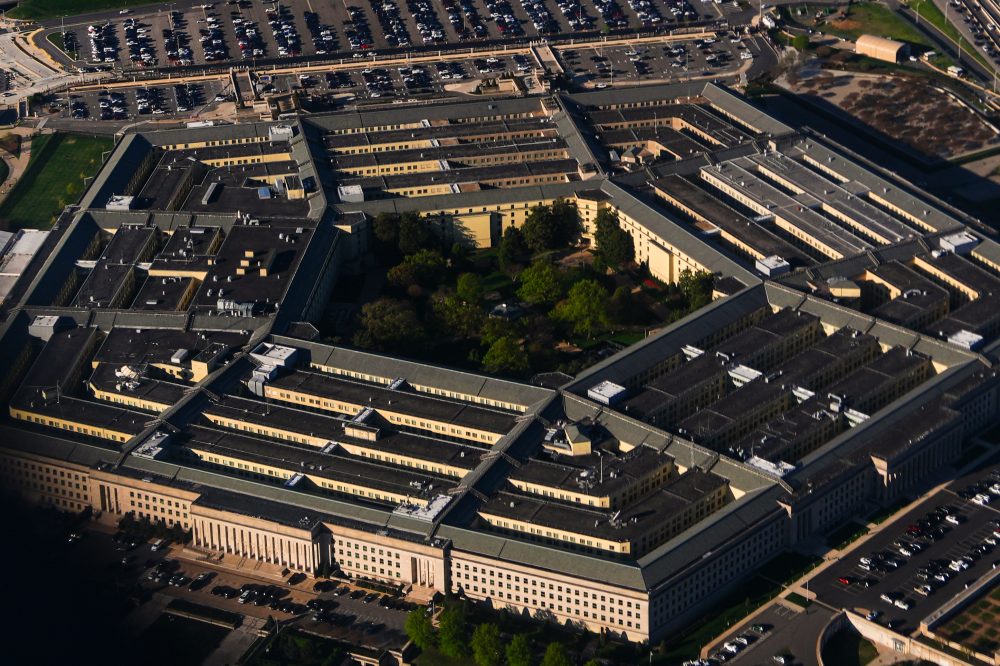

WASHINGTON — The Trump administration’s budget chief appeared before House lawmakers Wednesday to justify a proposal that would dramatically expand military spending to nearly $1.5 trillion in the upcoming budget year, representing a significant jump from the current $1 trillion allocation.
Russell Vought, President Trump’s budget director, explained that expanding America’s weapons manufacturing capabilities and increasing production of ships, aircraft, and unmanned vehicles demands substantial initial funding commitments.
The administration’s plan calls for boosting defense expenditures while simultaneously reducing funding for domestic initiatives including medical research, energy assistance programs, and numerous other non-defense areas by approximately 10% across the board. These reductions would not affect mandatory spending programs such as Social Security and Medicare.
“For the industrial base to double or triple and build more facilities, not just add shifts, it requires multiyear agreements to purchase into the future,” Vought explained to committee members. “That cost has to be booked in this first year.”
The administration’s strategy involves securing roughly $1.1 trillion through traditional appropriations channels, which typically demands bipartisan cooperation for passage. The remaining $350 billion would be pursued through separate legislation that Republicans could advance independently using simple majority votes.
Pennsylvania Representative Brendan Boyle, serving as the committee’s top Democrat, acknowledged his support for robust national defense but criticized the approach. He characterized the notion of boosting defense spending by more than 40% while reducing programs citizens depend on as evidence that Republican priorities are “out of whack.”
Committee Chairman Jodey Arrington anticipated the session would be more heated than typical hearings, a prediction that materialized immediately with his opening remarks targeting former President Joe Biden’s administration. The Texas Republican stated he was unaware of any president in his memory who “inherited such a complete and utter mess as President Trump did in January of last year.”
Arrington credited Trump with border security improvements, tax reductions, and restraining non-defense spending since taking office.
The hearing featured multiple heated exchanges between committee members.
“You know how bad this economy is when we hear Joe Biden being invoked, we hear trans people being invoked. I was waiting for Jimmy Carter to be blamed next,” Boyle responded to Arrington’s opening comments.
Boyle highlighted declining consumer confidence under Trump’s leadership and referenced a Philadelphia gas station he recently observed charging $4.11 per gallon, up from under $3.00 just six weeks earlier, attributing the increase to Trump’s “war of choice in Iran.”
Vermont Representative Becca Balint described the proposed defense spending increase as shocking.
“We’ve never in the history of this country seen spending like this, paid for by slashing health care, education and housing,” Balint stated. “Mr. Vought, yes or no, is $350 billion for the war in Iran lowering costs for Americans?”
“It is certainly not defunding child care. We fully fund child care in this budget,” Vought responded, avoiding a direct answer to the question.
Balint continued her questioning by referencing Trump’s “America First” messaging, noting that $350 billion could fund enhanced health insurance tax credits for a decade. She said her constituents question how the nation can continue financing wars while failing to address healthcare affordability challenges.
Vought defended the president’s position, stating Trump has made clear his intention to prevent Iran from acquiring nuclear weapons, missiles, and naval capabilities that threaten American national security.
“He is doing what is necessary to keep us safe, while at the same time trying to pursue diplomacy so that we can get out of wars and lower those costs over time,” Vought explained.
Regarding funding for current military operations, Vought acknowledged uncertainty about how much the administration would request for the ongoing budget year ending September 30. Those funds would be included in emergency supplemental spending legislation separate from next year’s defense spending increase.
When Texas Representative Veronica Escobar asked whether the amount would exceed $50 billion, Vought replied, “We’re still working on it. I don’t have a ballpark for you.”