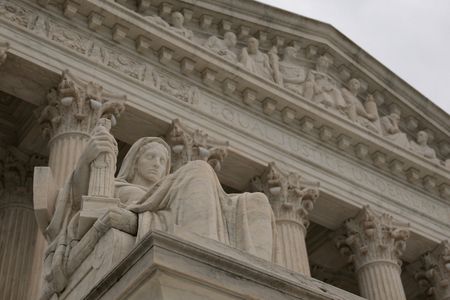
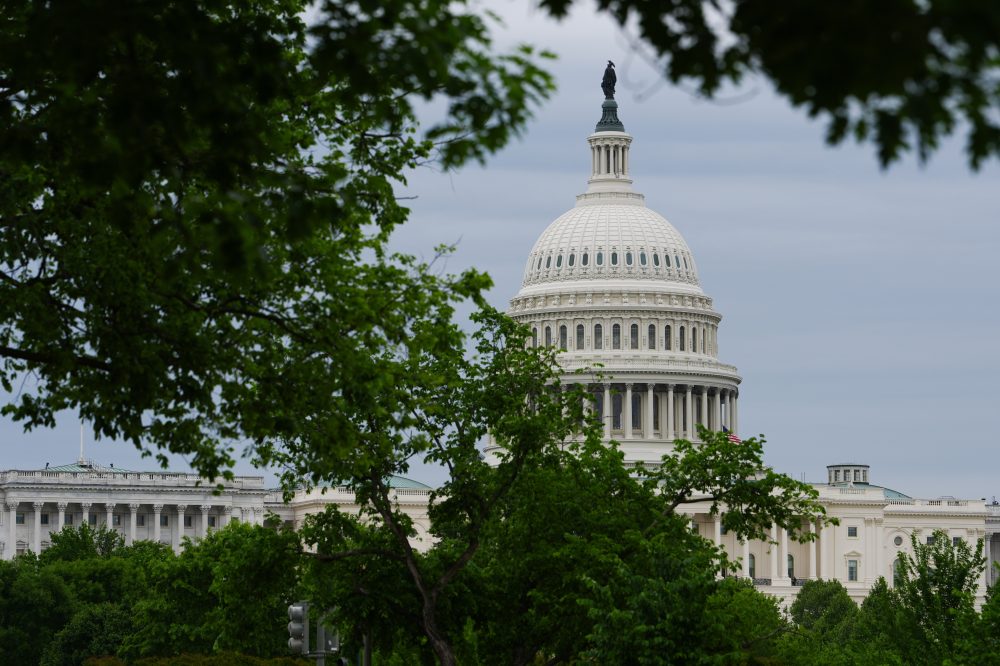
WASHINGTON — Democratic Party officials submitted an urgent petition to the U.S. Supreme Court on Monday, seeking to overturn a Virginia court decision that eliminated a ballot initiative potentially worth four additional congressional seats for their party.
The petition follows Friday’s Virginia Supreme Court ruling that invalidated a constitutional amendment voters approved by a narrow margin last month. The state’s highest court ruled 4-3 that the Democratic-led legislature violated proper procedures by initiating the amendment process while early voting was already in progress during Virginia’s fall general election.
Democratic attorneys contended without success that federal Supreme Court precedent establishes that elections don’t officially occur until Election Day, regardless of early voting activity.
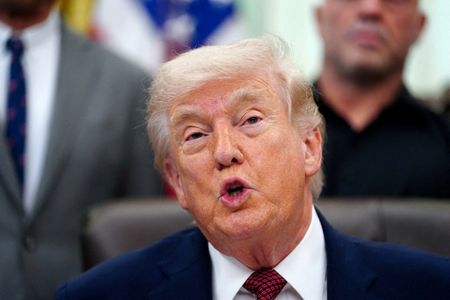
This legal challenge represents another development in the ongoing nationwide redistricting battle that began last year when President Donald Trump encouraged GOP-controlled states to redraw their electoral maps. The situation intensified following a recent Supreme Court decision that significantly diminished Voting Rights Act protections.
The Democratic petition faces steep odds, as the Supreme Court typically avoids overruling state courts’ interpretations of their own state constitutions. In 2023, the justices rejected a similar request from North Carolina Republicans seeking to overturn a state court decision that blocked their congressional map.
From a political standpoint, this appeal could benefit a party that has struggled to keep pace with Republican redistricting efforts nationwide, potentially providing ammunition for campaign messaging about Supreme Court partisanship. The court recently permitted Louisiana Republicans to move forward with redistricting after striking down a majority-Black district as unconstitutional racial gerrymandering.
Democrats found themselves at a disadvantage when, shortly after the Virginia ballot measure succeeded, the Supreme Court’s conservative majority overturned decades of precedent and essentially weakened the Voting Rights Act. This decision enabled Southern states to eliminate certain majority-Black districts and strengthen Republican congressional advantages.
The Virginia constitutional amendment originated well before that Supreme Court ruling. It was designed to counter Republican redistricting victories in Texas, Missouri, North Carolina, and Ohio, while offsetting a new Florida map that recently took effect. When the Virginia amendment initially passed, it temporarily balanced the national redistricting competition between both parties.
The Virginia Supreme Court’s decision disrupted that balance. Legislative appointments determine the court’s composition, with control alternating between parties over recent decades, and the court generally lacks a clear ideological reputation.
A 17-year-old suspect wanted in connection with a shooting that wounded five people near the University of Iowa campus has been taken into custody by federal authorities in Georgia, Iowa City officials announced Monday.
Damarian M. Jones of Cedar Rapids was apprehended by U.S. marshals in the Atlanta area and is now facing serious criminal charges including five counts of attempted murder and five counts of assault. The teenager is currently being held at Clayton County Jail in Georgia while awaiting an extradition hearing to return him to Iowa.
Authorities have not disclosed the specific details of how Jones was located and arrested, including the exact location of his capture or whether he offered any resistance during the arrest. It remains unclear at this time if Jones has secured legal representation.
Johnson County Attorney Rachel Zimmerman Smith, who would handle the prosecution if Jones is returned to Iowa, stated she had no additional information about the arrest circumstances and was unaware of whether Jones had obtained counsel. Attempts to reach the U.S. Marshals Office in Des Moines and Iowa City Police Department for comment were unsuccessful.
According to law enforcement, Jones was involved in a large altercation that erupted on a pedestrian walkway surrounded by shops, dining establishments, and bars close to the Iowa campus around 2 a.m. on April 19. Investigators allege that during a pause in the fighting, Jones discharged six rounds into the crowd before escaping the scene.
The shooting resulted in severe injuries to multiple victims. One individual sustained a gunshot wound to the head, while another was struck in both the arm and chest. Two additional victims were wounded in their legs, and a fifth person suffered a gunshot to the abdomen. Monday’s announcement indicated that one victim continues to receive hospital treatment, though officials did not identify which victim or provide details about their current medical status.
WASHINGTON — The nation’s highest court has issued a temporary order maintaining current access to mifepristone, a commonly prescribed abortion medication, while justices deliberate on potential new limitations set to begin this week.
Justice Samuel Alito issued Monday’s directive, which ensures women can continue receiving the medication through pharmacies or mail delivery without requiring face-to-face medical appointments. The order blocks federal appeals court restrictions from going into effect temporarily.
This latest reproductive rights battle comes four years following the conservative-majority court’s decision to overturn Roe v. Wade, enabling more than a dozen states to implement near-total abortion bans.
The legal challenge originates from Louisiana’s lawsuit targeting Food and Drug Administration regulations governing mifepristone prescriptions. State officials argue these policies weaken their abortion ban and raise safety concerns about the medication, despite FDA approval in 2000 and repeated scientific validation of its safety and effectiveness.
Federal trial courts determined Louisiana would likely succeed in their challenge, leading a three-judge 5th U.S. Circuit Court of Appeals panel to rule that mail delivery and remote medical consultations should be halted during ongoing litigation.
Mifepristone is typically combined with misoprostol for medication-based abortions. These procedures represented nearly two-thirds of all U.S. abortions during 2023, according to the most recent available data.
The current legal battle mirrors a similar case from three years prior.
Previous lower court decisions also attempted to limit mifepristone availability through litigation filed by anti-abortion physicians shortly after Roe’s reversal.
The Supreme Court previously prevented the 5th Circuit’s restrictions from taking effect, despite opposition from Alito and Justice Clarence Thomas. The high court later unanimously rejected the physicians’ lawsuit in 2024, determining they lacked proper legal standing to file suit.
Major medical organizations, pharmaceutical companies, and Congressional Democrats have urged the court against restricting drug access in the current case. Industry representatives warned that siding with abortion opponents could destabilize the entire drug approval system.
The FDA has gradually removed various initial restrictions on the medication, including prescriber qualifications, distribution methods, and mandatory safety reporting requirements.
Despite these regulatory determinations, abortion opponents have contested mifepristone’s safety for over 25 years through multiple petitions and lawsuits, consistently claiming the agency violated federal law by ignoring safety concerns.
President Donald Trump’s administration has maintained notable silence at the Supreme Court level, choosing not to submit written recommendations despite federal regulations being central to the case.
The situation creates challenges for Trump’s Republican administration, which depends on anti-abortion group support while facing ballot measures and polling data showing broad American support for abortion rights.
Both legal sides interpreted the administration’s silence as implicit support for the appeals court decision. Alito oversees emergency appeals from Louisiana and authored the 2022 ruling declaring abortion lacks constitutional protection, returning decisions to individual states.
Democratic officials in Virginia have filed an appeal with the nation’s highest court, seeking to restore a congressional redistricting plan that could shift political control in the upcoming midterm elections.
The appeal, submitted Monday, comes after Virginia’s Supreme Court rejected the new electoral boundaries in a narrow 4-3 ruling on May 8. The proposed map had been designed to convert four currently Republican-held congressional seats to Democratic ones, potentially impacting the balance of power in Washington where Republicans maintain slim majorities in both chambers of Congress.
This redistricting battle represents an uncommon mid-decade effort to redraw district lines, departing from the traditional practice of adjusting boundaries only after each ten-year census. The dispute highlights how closely divided Congress has become, with even small shifts in seat allocation carrying significant political weight.
Virginia’s state Supreme Court sided with Republican opponents who challenged the Democratic-supported ballot initiative that voters had approved in April. The court’s majority determined that Democratic legislators had failed to follow required procedures when they expedited the referendum process last year to meet election deadlines.
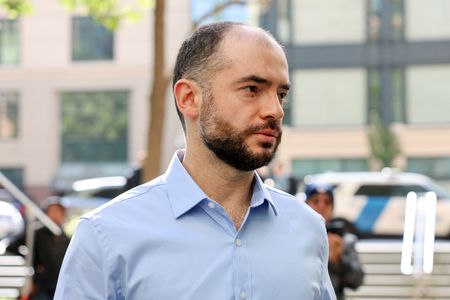
Don Scott, who serves as the Democratic speaker of Virginia’s House of Delegates, is leading the federal appeal effort. In their Supreme Court filing, the Democratic lawmakers argue that the state court’s decision has “deprived voters, candidates, and the Commonwealth of their right to the lawfully enacted congressional districts.”
The Virginia Democrats are invoking a 2023 Supreme Court precedent that cautioned state courts against overstepping “the ordinary bounds of judicial review” in ways that would undermine state legislatures’ constitutional authority over federal election regulations.
This mid-decade redistricting conflict gives Republicans a strategic edge in the broader national picture. The current fight traces back to efforts initiated by former President Donald Trump, who encouraged Texas Republicans to abandon their existing electoral map and create new district boundaries aimed at capturing up to five seats currently held by Democrats.
Democratic redistricting efforts nationwide have faced additional obstacles following a Supreme Court decision that weakened key protections in the 1965 Voting Rights Act. That ruling, decided by the court’s 6-3 conservative majority, has enabled Republican-controlled Southern states to eliminate districts where Black and Latino voters—who typically support Democratic candidates—held majorities.
The redistricting process typically occurs once per decade, with state legislatures redrawing district boundaries to account for population shifts revealed by the national census. However, this Virginia case represents part of an unusual wave of mid-decade redistricting efforts that could reshape congressional representation before the traditional timeline.
The nation’s highest court has prolonged a temporary freeze on a lower court decision that would have restricted how the abortion medication mifepristone can be obtained by patients across the country.
Justice Samuel Alito announced Monday that the hold will remain in place until May 14, allowing the medication to continue being delivered by mail while the court weighs its next steps.
The Supreme Court is reviewing appeals from two drug manufacturers seeking to overturn a May 1 decision by the 5th U.S. Circuit Court of Appeals in New Orleans. That ruling would have brought back an older rule requiring patients to meet with a healthcare provider face-to-face before receiving mifepristone.
The appeals court had blocked a 2023 Food and Drug Administration regulation implemented during former President Joe Biden’s administration that allowed the medication to be prescribed via telemedicine and sent through the mail.
Pharmaceutical companies Danco Laboratories and GenBioPro challenged the 5th Circuit’s restrictions on mifepristone access. The Supreme Court initially stepped in on May 4 with a temporary hold to allow more time for deliberation.
Medical abortion procedures, which typically involve a combination of mifepristone and misoprostol, represent approximately two-thirds of all abortions performed in the United States. Any limitations on how these medications are distributed could substantially impact access across the nation.
This legal battle brings the divisive abortion issue before the Supreme Court again as November’s congressional elections approach and President Donald Trump’s Republican allies work to maintain their congressional majority.
In 2024, the Supreme Court unanimously turned down an earlier effort by anti-abortion organizations and physicians to reverse FDA policies that had made the drug more accessible.
These ongoing legal disputes stem from the Supreme Court’s 2022 decision that struck down the landmark 1973 Roe v. Wade ruling, which had established nationwide abortion rights. Following that reversal, 13 states have implemented nearly complete abortion prohibitions, while several others have imposed significant restrictions.
Louisiana filed suit against the Food and Drug Administration in 2025, arguing that the 2023 rule removing in-person dispensing requirements violated federal law and had led to a surge in medication abortions despite the state’s comprehensive abortion ban.
A former top scientist at artificial intelligence company OpenAI revealed Monday that his ownership share in the tech startup is valued at approximately $7 billion, during court testimony in an ongoing legal battle involving Elon Musk.
Ilya Sutskever, who previously served as OpenAI’s Chief Scientist, made the disclosure while testifying in a California courtroom as part of Musk’s lawsuit against the company behind the popular ChatGPT chatbot.
The legal proceedings could significantly impact OpenAI’s future, as the company has been securing massive funding from investors while preparing for what could become a trillion-dollar public stock offering. OpenAI revolutionized public access to artificial intelligence through its ChatGPT technology.
Musk’s lawsuit demands major changes to how OpenAI operates and seeks $150 billion in damages from both the AI company and Microsoft, which has invested heavily in the firm.
During his court appearance, Sutskever testified that he had been contemplating efforts to oust co-founder Sam Altman from his CEO position for at least twelve months before casting his board vote in November 2023.
According to Sutskever’s testimony, Altman’s leadership style involved “undermining and pitting executives against one another,” which he described as “not conducive to any grand goal,” including developing safe artificial general intelligence.
Sutskever was instrumental in the shocking removal and subsequent reinstatement of Altman in November 2023. As a board member at the time, he helped coordinate Altman’s initial dismissal.
After departing OpenAI in 2024, Sutskever established his own artificial intelligence company named Safe Superintelligence.
Microsoft CEO Satya Nadella also appeared in court Monday, describing his company’s financial backing of OpenAI as a “calculated risk.” Nadella testified that Microsoft viewed its early investments as valuable primarily for promotional advantages.
The trial has featured testimony from multiple current and former OpenAI leadership figures, including President Greg Brockman, Mira Murati, and Shivon Zilis.
Musk has stated under oath that while he was aware of early conversations about converting OpenAI into a profit-driven enterprise, Altman assured him the organization would maintain its nonprofit status.
WASHINGTON – Federal officials have quietly scrubbed their website of information regarding a newly announced security testing partnership with major technology companies and their artificial intelligence systems.
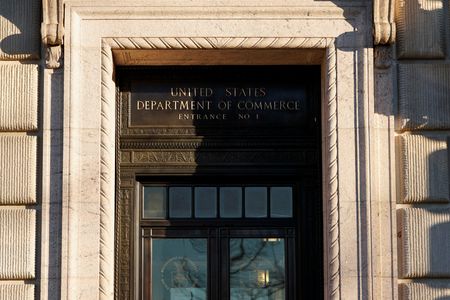
The U.S. Commerce Department has taken down details about an agreement requiring Google, Microsoft, and xAI to submit their AI models for government security evaluation, according to a website review. A link that formerly displayed the department’s announcement now shows an error message stating “Sorry, we cannot find that page.”
The webpage was later redirected to the Center for AI Standards and Innovation’s site, which is the federal organization overseeing these evaluations.
Just six days ago on May 5, the Commerce Department had publicly revealed that these technology firms would provide their newest AI systems to government researchers before releasing them to consumers. This arrangement was designed to allow federal scientists to examine the models for potential security weaknesses.
Federal authorities have expressed mounting concerns about national security threats from advanced artificial intelligence technology, including systems like Anthropic’s Mythos. Through early access to these cutting-edge models, government officials hoped to detect risks spanning from cyber threats to potential military exploitation.
The reason behind the website’s removal remains unclear. Representatives from both the Commerce Department and the Trump White House have not yet provided responses to requests for comment.
WASHINGTON – Federal officials on Monday imposed financial penalties on a dozen individuals and businesses accused of facilitating Iran’s petroleum exports to China, the Treasury Department announced.
The sanctions target three individuals and nine companies operating across multiple countries, with four entities located in Hong Kong, four in the United Arab Emirates, and one in Oman.
Monday’s action follows similar penalties imposed Friday against people and organizations that helped Iran acquire weapons and components for manufacturing drones and ballistic missiles.
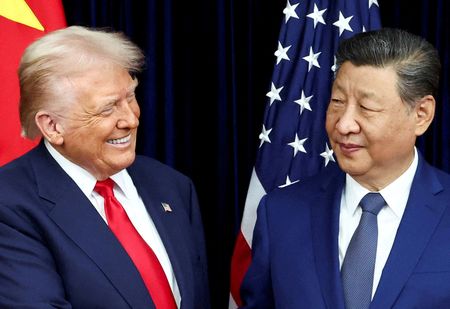
The timing comes just ahead of a scheduled meeting between President Donald Trump and Chinese leader Xi Jinping, where Trump plans to urge China’s cooperation in resolving tensions with Iran and reopening the strategically important Strait of Hormuz.
According to Treasury officials, the Office of Foreign Assets Control’s latest designations focus on individuals and organizations that assisted Iran’s Islamic Revolutionary Guard Corps in selling and transporting Iranian petroleum to China through shell companies established in countries with lenient economic oversight.
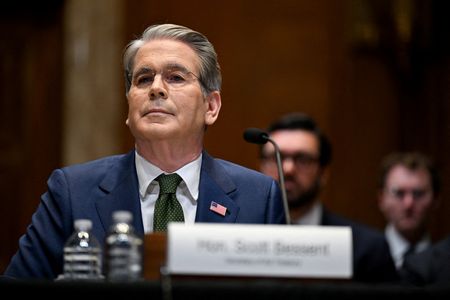
Treasury Secretary Scott Bessent indicated the Trump administration plans to intensify economic pressure on Tehran to cut off funding streams that support Iran’s weapons programs, nuclear activities, and regional proxy groups.
“Treasury will continue to cut the Iranian regime off from the financial networks it uses to carry out terrorist acts and to destabilize the global economy,” Bessent said.
Motorists traveling on Route 1 southbound should expect delays near the Christiana Road intersection where a vehicle accident has blocked the left lane of traffic.
The Delaware Department of Transportation is reporting the crash at the Route 273 interchange, which has resulted in the closure of one lane while crews work to clear the scene.
Drivers are advised to use caution in the area and allow extra time for their commute while the incident is being addressed.
ROME — While world No. 1 players Aryna Sabalenka and Jannik Sinner have made headlines discussing potential boycotts, it’s Jessica Pegula working behind the scenes to unite tennis’s elite players in their fight for better compensation from Grand Slam tournaments.
The 2024 U.S. Open finalist brings unique perspective to the leadership role, having grown up in a family that owns both the Buffalo Bills NFL franchise and the Buffalo Sabres NHL team.
“I think it maybe does (come naturally) just because I feel like I’ve taken on a bit of a leadership role with it,” Pegula explained.
The world No. 5 player already heads a newly formed 13-member committee tasked with recommending changes to women’s tennis scheduling, ranking systems, and tournament participation requirements. Now she’s tackling the compensation disparity issue as well.
“I’m not afraid to go up to any type of player and go like, ‘Hey, are you interested in this or not?’” Pegula stated. “Some players, they don’t care, sometimes they’re not worried about it. Sometimes they’re like, ‘Yeah, for sure, I’m 100% in.’ I’ve been reaching out to players on the men’s and women’s side.”
Last week, Sabalenka suggested players might need to boycott tournaments to secure a larger portion of tournament revenues, while Sinner expressed frustration about the lack of respect shown to athletes.
“At the end of the day the players are the ones that have the big voices,” Pegula noted. “It’s been nice to see Aryna and Jannik kind of step out. I know a lot of other players feel the same way. But to have the two No. 1s very outspoken about it, that’s kind of what it takes to get them to listen.”
The compensation gap is striking when compared to other major sports. NFL and NHL athletes receive approximately 50% of total revenues, while tennis players at most tournaments earn less than half that percentage. According to a recent player protest statement, the upcoming French Open will allocate under 14.9% to competitors — a decrease from 15.5% in 2024.
French Open officials announced last month they were boosting total prize money by roughly 10% to 61.7 million euros ($72.1 million), representing a 5.3 million euro increase from the previous year. However, players argue the underlying financial data reveals a different reality.
“It’s crazy. It’s an insane difference. Obviously they’re different sports. They’re run differently,” Pegula said when comparing tennis compensation to the NFL. “But tennis has been a very old-school sport. I think it’s one of the things that needs to change. Sometimes change is good. Sometimes that means fighting for things.”
This same player coalition sent correspondence to all four Grand Slam tournament directors last year requesting increased prize money and greater input in tournament decisions. Wimbledon responded by raising its 2025 prize pool 7%, the U.S. Open increased theirs by 20%, and the Australian Open boosted compensation by 16% this past January.
Despite these improvements, players maintain that Grand Slam tournaments still fall short of the 22% revenue share offered at regular ATP and WTA Tour competitions.
“The slams have kind of just gotten away with paying not that much because we’re a very individual sport,” Pegula observed. “It’s hard to get players to come together. We’re not on a salary where football players or basketball players can afford not to play.”
French Open organizers, whose tournament begins in less than two weeks, have not responded to media inquiries about the compensation dispute.
Wimbledon is expected to reveal its prize money structure next month, and Pegula said players have yet to receive any communication from the All England Club.
“We’re just going to kind of continue to talk amongst ourselves,” she said.
Tennis governance complexity stems from having seven different organizing entities: the four Grand Slam tournaments, the ATP, the WTA, and the International Tennis Federation.
“That’s what makes it so hard is that our sport is super fragmented. Hard to get everybody on the same page,” Pegula explained. “That’s why it’s been huge to actually have the top 10 men and women really come together. I’m hoping that will get the Slams’ attention.”
While managing her activist efforts, Pegula continues competing at the Italian Open, where she advanced to the quarterfinals Monday with a 7-6 (6), 6-2 victory over Anastasia Potapova. She had previously dominated Rebeka Masarova 6-0, 6-0 in an earlier round.
Her next opponent will be either three-time Rome champion Iga Swiatek or four-time Grand Slam winner Naomi Osaka.
Between matches and organizing player protests, Pegula has been frustrated by her inability to watch the Sabres’ historic playoff run — their first postseason appearance in 15 years — due to the time difference between Europe and the United States.
The Montreal Canadiens defeated the Sabres 6-2 in Game 3 Sunday night, taking a 2-1 series lead in their second-round playoff matchup.
“My gosh, I am so upset that I have not been able to see any of the games,” Pegula said. “I would give anything to just be at a playoff game. … I love it so much. It’s my favorite thing.”
JERUSALEM (AP) — Military officials have sentenced two Israeli service members to prison time following an incident where they vandalized a statue of the Virgin Mary in southern Lebanon, with one soldier inserting a cigarette into the statue’s mouth while another captured the act on camera.
The image, showing the service member with a cigarette hanging from his own lips, spread rapidly across social media platforms and generated significant international criticism. This incident represents another example of actions by Israeli military personnel that have been characterized as anti-Christian behavior in southern Lebanon, where Israel conducted ground operations this year targeting the Iranian-supported Hezbollah organization.
Military authorities announced that the soldier who posed for the photograph will serve 21 days behind bars, while his counterpart who took the picture faces a 14-day sentence.
According to military spokesperson Lt. Col. Ariella Mazor, who posted on X, the armed forces “views the incident with great severity and respects freedom of religion and worship, as well as holy sites and religious symbols of all religions and communities.”
This controversy emerged just days following another incident where photographs showed an Israeli soldier attacking a fallen crucifix statue with an ax in the southern Lebanese community of Debel, drawing sharp criticism from international officials, religious authorities, and Israeli political figures. Military leadership also imposed prison sentences on personnel involved in that separate incident.
Israeli military units gained control over southern Lebanon during the recent Israel-Hezbollah conflict, which commenced on March 2 after the Iranian-backed Lebanese organization launched rockets across the border two days following the beginning of hostilities between the U.S., Israel, and Iran. Israeli forces have maintained their presence despite an ongoing ceasefire agreement.
Military officials also reported Monday that a soldier serving as a driver was killed during operations near the border region, bringing the total number of Israeli military deaths in the area to 18 since the Iran conflict began.
According to Israeli military statements, their operations focus exclusively on structures that served as Hezbollah strongholds. However, the extensive damage has raised concerns among Lebanese government officials and civilians that many people forced from their homes during the recent fighting may have no place to return to if the current fragile ceasefire continues.
DOVER — Drivers in Kent County should prepare for a major traffic change beginning Monday, May 18th, as state transportation officials close a busy intersection for construction.
DelDOT will shut down the intersection where Kenton Road meets Chestnut Grove Road, located between Burning Tree Road and Mapledale Road, to begin roundabout installation work.
Construction crews plan to tear out the current intersection completely before building the new circular traffic pattern in its place. The project timeline extends through the end of July, according to transportation officials.
Alternative routes will be marked with detour signs to help motorists navigate around the construction zone during the multi-month closure.
The National Agricultural Statistics Service has issued its most recent evaluation of crop development and agricultural conditions nationwide.
The federal agency’s latest assessment provides farmers, agricultural professionals, and industry stakeholders with current data on planting advancement and field conditions for key crops throughout the country.
These regular reports from NASS serve as important benchmarks for tracking seasonal agricultural progress and help inform decision-making across the farming sector.
NETHERLANDS — Venezuela’s acting leader Delcy Rodríguez firmly dismissed President Donald Trump’s suggestion that he might make Venezuela America’s 51st state, declaring her nation will remain independent.
Rodríguez made these statements Monday while speaking to reporters at the International Court of Justice in The Hague, where final arguments were being heard in Venezuela’s territorial dispute with Guyana over the resource-rich Essequibo region.
“We will continue to defend our integrity, our sovereignty, our independence, our history,” Rodríguez stated. She emphasized that Venezuela is “not a colony, but a free country.”
The Venezuelan leader’s response came after Trump told Fox News he was “seriously considering making Venezuela the 51st US state,” according to a social media post by Fox News co-anchor John Roberts. The White House has not yet commented on Trump’s statement.
Trump has previously made similar remarks regarding Canada.
Despite rejecting the statehood comments, Rodríguez noted that Venezuelan and American officials have maintained contact and are pursuing “cooperation and understanding.”
During the court proceedings, Rodríguez argued that political negotiations, rather than judicial decisions, should settle the longstanding territorial conflict with Guyana over Essequibo.
The disputed territory spans 62,000 square miles and represents two-thirds of Guyana’s landmass. The region contains valuable deposits of gold, diamonds, and timber, plus sits adjacent to offshore oil fields producing approximately 900,000 barrels daily.
This oil production rivals Venezuela’s own output of roughly 1 million barrels per day and has elevated tiny Guyana into a major energy player in South America.
Venezuela’s territorial claims date back to Spanish colonial times when the jungle region fell within its borders. However, an 1899 arbitration decision by British, Russian, and American officials established the current boundary along the Essequibo River, largely favoring Guyana.
Venezuela maintains that a 1966 Geneva agreement to resolve the dispute invalidated the 19th-century arbitration. But in 2018, three years after ExxonMobil discovered significant oil reserves off Essequibo’s coast, Guyana asked the International Court of Justice to confirm the 1899 boundary decision.
Tensions escalated in 2023 when Rodríguez’s predecessor, Nicolás Maduro, threatened military annexation of the region following a referendum on incorporating Essequibo as a Venezuelan state. Maduro was captured January 3 during a U.S. military operation in Caracas and transported to New York to face drug trafficking charges, to which he has pleaded not guilty.
While avoiding mention of the referendum, Rodríguez told the court that the 1966 Geneva agreement was designed to facilitate bilateral negotiations between Venezuela and Guyana. She criticized Guyana’s government for making an “opportunistic” decision to seek judicial resolution.
“At a time when the mechanisms established in the Geneva agreement were still fully in force, Guyana unilaterally chose to shift the dispute from the negotiating arena to a judicial resolution,” she explained. “This change was not accidental; it coincided with the discovery in 2015 of the oil field that would become world-renowned.”
Last week’s opening statements featured Guyana’s foreign minister, Hugh Hilton Todd, telling international judges that the dispute “has been a blight on our existence as a sovereign state from the very beginning.” He noted that 70% of Guyana’s territory hangs in the balance.
The court will likely require several months to issue its final, legally binding decision.
Venezuela has cautioned that its participation in the proceedings does not constitute acceptance or acknowledgment of the court’s authority over the matter.
Hundreds of displaced Haitians found themselves sleeping on streets near the capital’s main airport Monday after weekend gang battles forced them from their homes in Port-au-Prince.
Among those seeking refuge along the highway was 56-year-old Monique Verdieux, who escaped after witnessing armed groups setting fire to homes in her community. Her family members fled in separate directions, leaving her uncertain of their whereabouts.
“I am now sleeping in the street,” Verdieux explained, emphasizing that returning home remained too dangerous.
The violent confrontations between rival gangs broke out during the weekend throughout multiple northern districts of Haiti’s capital, forcing displaced residents onto the roadway that connects to Toussaint Louverture International Airport.
Criminal organizations have seized control of over 90% of Port-au-Prince following President Jovenal Moïse’s murder at his residence in July 2021. Law enforcement officials report these groups have broadened their criminal operations beyond the capital, engaging in theft, abductions, and sexual violence throughout rural areas. The country has remained without a president since the killing occurred.
During the past two weeks, Haiti’s Barbancourt rum company along with two major beverage bottling firms have raised alarms about worsening security near the Port-au-Prince airport, where flight operations face significant limitations.
The businesses issued a joint declaration Sunday criticizing the government’s crisis response as “largely insufficient,” while highlighting how deteriorated road conditions around the airport hinder Haitian security personnel from effectively patrolling the vicinity.
“You cannot secure an airport if you allow the roads around it to degrade,” their statement declared.
Initial international military personnel connected to a United Nations anti-gang mission reached Haiti in April to assist in combating persistent violence.
The U.N. Security Council granted approval in late September for deploying a 5,550-member peacekeeping force, though the complete contingent has yet to arrive on the Caribbean island.
Research published this year by the International Organization for Migration revealed that gang-related violence has uprooted more than 1.4 million Haitians, with roughly 200,000 currently residing in overcrowded and underfunded displacement camps throughout the nation’s capital.
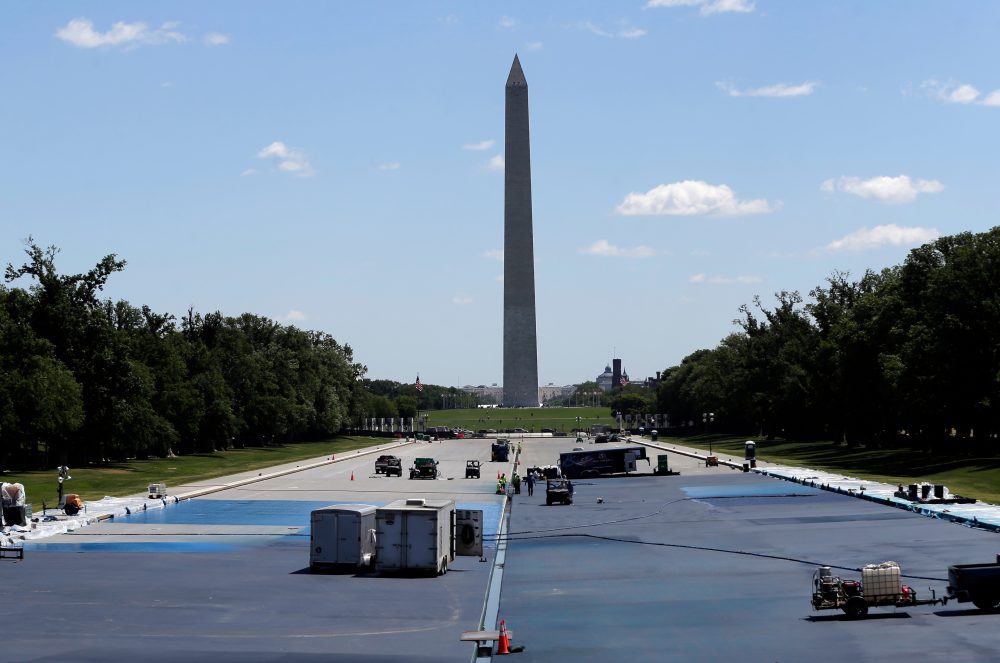
WASHINGTON — A preservation organization based in the nation’s capital is seeking court intervention to stop the Trump administration from continuing work on the Lincoln Memorial Reflecting Pool and to reverse historic modifications at one of America’s most recognizable landmarks on the National Mall.
The Cultural Landscape Foundation filed legal action on Monday, contending that the administration’s decision to paint the pool’s bottom blue without conducting required evaluations violates federal laws protecting historic locations. The organization maintains that these alterations to the Reflecting Pool represent part of President Donald Trump’s wider campaign to implement sweeping Washington renovations while bypassing proper review processes and altering the area’s character.
“The design intent, to create a reflective surface that is subordinate, is fundamental to the solemn and hallowed visual and spatial connection between the Washington Monument and the Lincoln Memorial,” stated Charles A. Birnbaum, the organization’s president and CEO. “A blue-tinted basin is more appropriate to a resort or theme park.”
The president has shown direct involvement in this initiative, previously describing the location as “filthy” before crews applied what he terms “American flag blue” paint to the pool. Trump’s presidential convoy traveled across the drained and freshly painted Reflecting Pool during the previous week, allowing him to personally inspect the work’s progress.
The legal challenge targets the Interior Department and National Park Service, agencies responsible for overseeing numerous renovation projects currently underway throughout Washington. Interior Department spokesperson Katie Martin responded that Trump “has done more to make our nation’s capital a shining beacon than any other president in the history of this country.”
“The Department is proud of the work being carried out by our Park Service to ensure this magical spot can be enjoyed for not only our 250th, but for many generations to come,” Martin stated.
During the previous year, Trump has demolished the East Wing to create space for a ballroom. His name has been placed on the exteriors of the U.S. Institute of Peace and Kennedy Center, which he intends to shut down for a two-year renovation period. His image appears on a banner at the Department of Justice headquarters, among other locations. He is advocating for a triumphal arch near Arlington Cemetery and has shut down parks, including Lafayette Square opposite the White House, for rehabilitation work.
Numerous other projects face similar legal challenges.
The Delaware Department of Services for Children, Youth and Their Families has selected Sarah Azevedo to lead its Division of Family Services as the new director.
Azevedo steps into the position following the retirement of Trenee Parker, who concluded her career after serving the department for 30 years. Parker’s departure marks the end of three decades of commitment to Delaware’s children and families.
The newly appointed director brings extensive experience to her new role, having worked within DFS for more than 27 years in various capacities throughout her career with the division.
Ocean City, Maryland will host a special ceremony this Memorial Day to pay tribute to military service members who made the ultimate sacrifice for their country.
The commemorative service is scheduled for Sunday, May 24, 2026, beginning at 1:00 p.m. at the Firefighters Memorial on North Division Street.
The town’s annual tribute provides an opportunity for residents and visitors to gather and remember the brave individuals who gave their lives while serving in the armed forces.
GEORGETOWN – Delaware transportation officials have extended a road closure in Sussex County that will keep drivers off a section of Coverdale Road until mid-June.
The Delaware Department of Transportation has informed drivers that Coverdale Road will remain closed at the bridge location through June 15th. The affected area spans from Hastings Farm Road to Seashore Highway.
DelDOT has established alternate routes for motorists, with detour signs currently posted throughout the area to guide traffic around the closure.
Medical facilities in Port-au-Prince’s Cite Soleil district cleared out patients on Monday while the international aid organization Doctors Without Borders suspended operations as armed gang violence that started two weeks ago worsened during the weekend.
The humanitarian group, known internationally as MSF, reported that hundreds of local residents fled to their medical facility for safety, where a security guard was wounded by gunfire that entered the hospital grounds. A separate medical facility reported moving newborn babies from their intensive care ward to safety.
President Donald Trump plans to issue executive orders on Monday designed to tackle rising beef costs by increasing imports and helping rebuild America’s cattle population, according to a White House official.
The administration official did not reveal specific details about the two planned orders, which are being introduced as the nation’s cattle herd has declined to its smallest size in seven and a half decades while beef costs keep rising.
According to earlier reporting by The Wall Street Journal, Trump plans to temporarily lift tariff-rate quotas on imported beef, which would permit greater quantities of meat to enter the country with reduced tariff costs. The publication also indicated that the president would instruct the Small Business Administration to expand lending opportunities for cattle ranchers and decrease protections for gray wolves and Mexican wolves that attack livestock under current Endangered Species Act provisions.
A preservation organization filed a federal lawsuit Monday aimed at stopping President Donald Trump’s renovation project at the Lincoln Memorial’s reflecting pool in Washington D.C.
The Cultural Landscape Foundation claims the ongoing construction project breaks federal law under the National Historic Preservation Act, which Congress enacted in 1996 to establish guidelines for modifications to historically significant sites.
The organization is requesting an immediate court order to stop the Trump administration’s work, which involves changing the pool’s traditional “gray stone” look to an industrial coating that resembles a blue swimming pool.
According to the legal filing, “The dark grey, achromatic basin was not incidental to the design. It was the design.”
The Department of the Interior, which oversees the renovation work, faces the lawsuit. The agency defended the project in a statement, claiming Trump “has done more to make our nation’s capital a shining beacon than any other president in the history of this country.”
The former president revealed the renovation plans last month, describing the project as something that’s “going to be fantastic” and “really beautiful.” Trump made an unexpected visit to observe the construction progress via his motorcade.
According to Trump, a visiting German friend’s criticism of the reflecting pool’s condition inspired the renovation project.
“He said, ‘It’s filthy, dirty. The water is disgusting-looking. It’s not representative of the country,’” Trump explained to reporters during a White House gathering last month.
This legal challenge joins several others targeting Trump’s Washington D.C. improvement projects, including golf course renovations and a proposed White House ballroom addition.
A federal judge temporarily blocked the ballroom construction on March 31, stating that “unless and until Congress blesses this project through statutory authorization, construction has to stop!”
However, an appeals court subsequently removed that restriction, permitting ballroom construction to continue during ongoing legal proceedings.
A new national survey reveals that most Americans believe President Donald Trump has failed to provide clear justification for the ongoing military conflict with Iran, according to Reuters/Ipsos polling data released this week.
The nationwide poll, which wrapped up on Monday, found that 66% of respondents feel Trump has not adequately outlined the objectives behind U.S. military engagement in Iran. This sentiment crosses party lines, with roughly one-third of Republican voters and nearly all Democratic voters expressing this view.
The military action commenced on February 28 with coordinated U.S.-Israeli airstrikes and has now stretched beyond two months. While recent weeks have seen decreased hostilities as both nations have proposed potential peace agreements, the conflict has significantly impacted American consumers at the gas pump.
Fuel costs have surged approximately 50% nationwide as Iran successfully blocked the Strait of Hormuz, cutting off one-fifth of global oil supplies. Despite U.S. naval efforts to reopen this crucial shipping lane for oil tankers, Tehran maintains control over the waterway.
The economic impact on American families has been substantial. Survey results show 63% of households report that rising gasoline prices have negatively affected their personal finances, representing an increase from 55% when the same question was asked in mid-March.
Trump’s overall job performance rating has seen a modest uptick to 36%, climbing two points from his term-low of 34% recorded in late April polling. However, this figure remains below his 40% approval rating from before the Iranian conflict began. When Trump took office in January 2025 following his 2024 election victory on a platform promising to reduce costs for Americans, he enjoyed 47% approval.
Public opinion regarding responsibility for escalating fuel prices shows significant concern for the current administration. Three-quarters of those surveyed, including half of Republican respondents, believe Trump’s team bears considerable responsibility for the gas price surge. When asked to assign partisan blame, 65% pointed to Republicans while 27% blamed Democrats.
Looking ahead, four out of five Americans anticipate further increases at the pump. This expectation is already affecting summer plans, with roughly 30% of respondents indicating they may need to modify vacation arrangements if current prices persist. Many are considering trip cancellations or shorter travel distances.
The economic pressures could have significant political implications for Republicans, who currently hold slim majorities in both the House of Representatives and Senate heading into November’s midterm elections. Political analysts suggest the party’s chances of retaining control depend heavily on whether gasoline prices decline before voters head to the polls.
With no resolution visible between Washington and Tehran, the economic and political ramifications continue to unfold. The Reuters/Ipsos survey collected responses from 1,254 American adults through online polling methods, with results carrying a margin of error of three percentage points in either direction.
Drivers traveling through the intersection of Doncaster Road and East Edinburgh Road should prepare for potential delays as construction crews continue their work in the area.
According to DelDOT officials, motorists can expect intermittent lane restrictions at this location throughout the day. The construction-related traffic pattern changes are set to conclude by 6 PM this evening.
Commuters are advised to allow extra travel time when passing through this area and to exercise caution around construction workers and equipment.
A groundbreaking figure in baseball broadcasting has passed away. René Cárdenas, who made history as Major League Baseball’s first full-time Spanish-language announcer, died Sunday at his Houston residence at age 96, the Astros announced Monday.
Cárdenas began his historic career when the Dodgers relocated from Brooklyn to Los Angeles in 1958. His pioneering work included being part of the inaugural Spanish-language broadcast of the World Series in 1959 and calling the All-Star Game in Spanish two years after that.
“We mourn the passing of René Cárdenas, who in 1958 with the Dodgers became the first full-time Spanish-language broadcaster in MLB history and would ultimately spend 21 years behind the mic for Los Angeles,” the Dodgers said Sunday in a social media post.
The newly formed Houston Colt .45s brought Cárdenas aboard in 1961 for their debut 1962 season. He remained with the organization for 14 seasons, continuing his role when the team became the Astros in 1965 upon moving to the Astrodome.
“With yesterday’s passing of Rene Cardenas, we lost a true legend and pioneer in broadcasting,” the Astros wrote Monday in a statement on social media. “As the franchise first Spanish broadcaster, Rene had a tremendous impact on the success of the Colt .45s/Astros in Houston’s large Hispanic community and beyond. We send our heartfelt condolences to Rene’s family and loved ones.”
After returning to his homeland of Nicaragua in 1975, Cárdenas made his way back to Major League Baseball in 1981, becoming the Texas Rangers’ inaugural Spanish-language broadcaster, according to former Rangers public relations executive John Blake.
His second tenure with the Dodgers began in 1982 and spanned nearly 20 years. He also made another return to Houston, becoming the first broadcaster to call Astros games in Spanish on television in 2008.
Following his retirement from the booth, Cárdenas continued contributing to baseball through writing for the Astros’ Spanish-language website and La Prensa, a newspaper in Nicaragua.
Beyond baseball, Cárdenas covered major sporting events, including the 1971 heavyweight boxing bout between Muhammad Ali and Jimmy Ellis at the Astrodome.
His contributions to the sport earned him multiple honors: induction into the Nicaragua Baseball Hall of Fame in 2000, the Broadcasters Wing of the Hispanic Heritage Baseball Museum Hall of Fame in 2002, and the Astros Baseball Media Wall of Honor in 2013.
NEW YORK — American companies are grappling with mounting expenses as the ongoing conflict involving the U.S. and Israel against Iran continues, with economic experts warning of potential challenges ahead including reduced hiring and business investment.
A survey conducted by the National Association for Business Economics reveals that approximately half of business economists report the conflict has harmed their company operations, according to findings released Monday. Additionally, 54% cite energy price increases as a major concern, while over two-thirds have experienced higher material costs during the past three months — marking the steepest increase NABE has recorded since July 2022.
The conflict, which started with U.S. and Israeli military actions on February 28, has triggered a global energy emergency. Oil prices continue climbing as Washington and Tehran remain locked in a standoff over the Strait of Hormuz, creating price pressures for companies and families worldwide. As fuel expenses mount, transportation costs are cutting deeper into business operations. Supply chain interruptions affecting essential items like fertilizer are adding additional pressure.
Companies are transferring these increased expenses to consumers through higher prices, extending beyond the immediate impact seen at gas stations.
According to NABE’s survey of economists from corporations, trade groups and universities, 48% indicated their companies are shifting at least some cost increases to customers — a decrease from 60% recorded in January. However, NABE discovered that more respondents (16%) anticipate raising prices within six months, while no companies plan price reductions.
Most survey participants report strong current sales and stable profit projections. This aligns with broader Wall Street sentiment, where impressive earnings across sectors from technology to oil have pushed markets near record levels recently.
However, only 13% of NABE survey participants anticipate profit growth in the near term — the smallest percentage since 2023, according to the organization.
Employment and spending may face additional impacts soon, with nearly 25% of survey respondents planning to reduce investment and hiring over the next six months.
“Sales over the past three months were steady, but materials costs increased and profit margins declined,” stated Martha Moore, chair of NABE’s survey, in a prepared statement. She noted that expectations had “softened” across multiple indicators while price outlook continues rising.
Moore, who serves as chief economist and managing director at the American Chemistry Council, highlighted growing recession worries. Half of survey participants see greater than a 25% probability that the U.S. enters recession within the coming year, up from 44% who projected such likelihood in January, NABE reported.
WASHINGTON — Federal officials are instructing American banks and financial institutions to keep watch for Iranian money laundering operations that utilize shell corporations and digital currency networks to illegally transport sanctioned petroleum products.
This directive essentially enlists the worldwide banking system to help dismantle Iran’s sanctions-dodging infrastructure, occurring as US-Iran relations have reached another deadlock regarding ending their conflict while their current truce becomes more fragile.
On Monday, President Donald Trump declared the Iranian ceasefire is on “life support” following his dismissal of Tehran’s most recent peace proposal.
The Trump administration is urging financial institutions to identify specific clients who might be washing money for Iran’s Revolutionary Guard — this includes recently established businesses transferring exceptionally large sums, organizations that channel payments through numerous middlemen, or deals linked to Iranian cryptocurrency companies, along with other warning signs.
Within the US effort to track Iranian petroleum sales, banks receive instructions to look for oil marked as “Malaysian blend” to hide its Iranian source, absent or fake transport paperwork, or vessel-to-vessel oil transfers that mask cargo origins.
A Monday report from Treasury’s Financial Crimes Enforcement Network indicates that petroleum companies tied to Iran handled approximately $4 billion in deals during 2024.
Additionally, multiple shipping firms headquartered in Iraq, the United Arab Emirates, and Hong Kong — all linked to moving sanctioned Iranian petroleum — moved roughly $707 million through American bank accounts in 2024.
Beyond conducting bombing operations in Iran, the Trump administration has shifted toward an economically-centered strategy designed to pressure Tehran into surrender through sanctions and threats of secondary penalties against Iran’s partners.
Last April, Treasury delivered correspondence to financial organizations in China, Hong Kong, the UAE, and Oman warning of potential secondary sanctions for conducting Iranian business and claiming these nations permit Iranian illegal operations to pass through their banking systems.
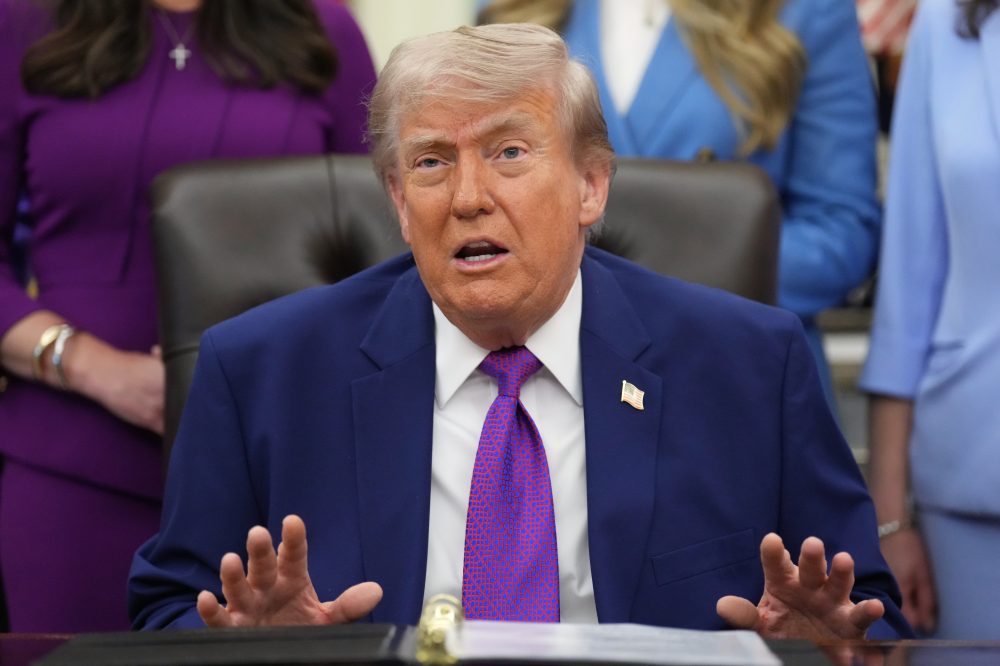
WASHINGTON — On Monday, President Donald Trump announced his intention to pursue a suspension of the federal gasoline tax as Americans face climbing fuel costs linked to the Iran conflict.
However, the president lacks the authority to eliminate the federal tax independently. Such action would require Congressional authorization.
Bipartisan legislators have advocated for eliminating the gas tax temporarily, arguing it would deliver essential financial relief to families and businesses depending on vehicles for commuting to work and school, as well as daily activities.
According to AAA data from Monday, national gas prices averaged $4.52 per gallon, representing a 50% increase from the roughly $3 per gallon average before the Iran war began under Trump’s administration.
Currently, the federal levy stands at 18.4 cents per gallon for gasoline and 24.4 cents per gallon for diesel, figures that exclude state taxes, which are typically higher.
When White House reporters questioned Trump about the duration of such a suspension, he responded, “Until it’s appropriate.” Although the tax adds approximately 18 cents per gallon to gas costs, “it’s still money,” Trump stated.
In response to escalating gas prices, the Trump administration has authorized the release of millions of barrels from the U.S. Strategic Petroleum Reserve and temporarily eased sanctions on certain Russian and Iranian oil shipments currently in transit. The U.S. is in discussions with nations dependent on Middle Eastern crude to form a coalition for monitoring the Strait of Hormuz, through which roughly one-fifth of global oil trade typically passes.
The gasoline tax generates over $23 billion annually in funding for federal highway and public transportation initiatives.
Missouri Republican Senator Josh Hawley announced on social media Monday his plans to propose legislation suspending the gas tax. Democratic lawmakers have previously backed comparable measures.
Florida Republican Representative Anna Paulina Luna also posted on X that she would introduce legislation “to suspend the federal gas tax in light of Trump’s recent remarks.”
The continuing surge in fuel prices has raised concerns among some Republicans about potential negative impacts on the party’s midterm election prospects. Trump has previously stated that higher fuel costs are acceptable to prevent Iran from acquiring nuclear weapons.
This firm stance appeared to moderate Sunday when Energy Secretary Chris Wright indicated the Trump administration was “open to all ideas,” including gas tax suspension, during his appearance on NBC’s “Meet the Press.”
Democratic Senators Richard Blumenthal of Connecticut and Mark Kelly of Arizona have sponsored legislation that would halt the federal tax until October 1. A comparable House measure was introduced by Democratic Representative Chris Pappas of New Hampshire.
“Trump’s war of choice with Iran is driving up gas prices across the country — and Americans shouldn’t have to bear the additional economic burden of Trump’s reckless decision making,” Blumenthal stated when introducing the legislation.
Several states, including Indiana and Georgia, have recently paused their taxes to reduce high prices during the conflict. Additional states are considering similar suspensions.
According to ESPN reports released Monday, the Milwaukee Bucks are willing to entertain trade discussions involving superstar forward Giannis Antetokounmpo as the NBA draft approaches this summer.
The franchise had previously considered moving the two-time Most Valuable Player before the regular season’s trade deadline but ultimately decided to keep their cornerstone player through at least the current offseason period.
Team co-owner Jimmy Haslam revealed to media members last week his desire to have Antetokounmpo’s future determined prior to the draft scheduled for June 23-24.
“Sometime over the next six or seven weeks we’ll decide whether Giannis is going to sign a max contract and stay with us or he’s going to play somewhere else,” Haslam stated to reporters last Wednesday. “(General manager) Jon (Horst) and (new coach) Taylor (Jenkins), along with (co-owner) Wes (Edens) and myself, will make that call and we understand the gravity of that call.”
Sources indicate Milwaukee would seek proven young players and potentially multiple draft selections in any potential deal involving Antetokounmpo.
The veteran forward has compiled impressive career statistics across 13 seasons and 895 total games (830 as a starter) with Milwaukee, posting averages of 24.1 points, 9.9 rebounds, 5.0 assists, 1.2 blocks and 1.1 steals per contest. His leadership helped deliver the organization’s first championship in five decades during the 2021 season. The 31-year-old has earned 10 All-Star selections and nine All-NBA team honors.
This past season proved challenging for Antetokounmpo, who appeared in just 36 games due to various injuries affecting his groin, calf and knee. His final appearance came on March 15, though he expressed frustration in early April about being healthy but unavailable to compete.
“I’m available to play, but I’m not in the game,” Antetokounmpo shared with reporters on April 3. “I’m available to play today. Right now. I’m available.”
He continued: “For somebody to come and tell me to not play or not to compete, it’s like a slap in my face. So I don’t know where the relationship goes from there.”
Antetokounmpo’s contract includes $58.46 million for the 2026-27 campaign and features a player option for the following season.
Sunday’s NBA draft lottery resulted in Washington securing the top selection, while Milwaukee received the 10th overall pick. The draft combine begins Monday in Chicago.
Officers with the Newark Police Department’s Patrol Division confiscated three weapons during separate vehicle stops over the weekend, spanning a period of less than 33 hours.
The series of traffic stops began early Saturday morning, May 9, 2026, around 4:21 AM and concluded Sunday afternoon, May 10, 2026, at approximately 1:01 PM, according to department officials.
During each of the three separate incidents, patrol officers discovered firearms while conducting routine traffic enforcement operations throughout the city.
The Newark Police Department has not yet released additional details regarding the circumstances of each stop or whether any arrests were made in connection with the weapon recoveries.
Northampton County, Virginia officials are encouraging residents to consider running for local municipal offices in the upcoming 2026 elections.
The county is actively seeking individuals interested in serving as mayor or town council members in various municipalities throughout the region. Those considering a run for local office must complete and submit their candidacy filing documents by the established deadline.
The filing period for prospective candidates closes on June 16, 2026, giving interested residents several months to prepare their campaigns and meet all necessary requirements for candidacy.
Municipal elections provide opportunities for community members to directly participate in local governance and help shape policy decisions that affect their neighborhoods and towns.
The NBA has decided not to impose additional penalties on San Antonio Spurs center Victor Wembanyama following his ejection from Sunday’s playoff matchup against Minnesota, according to a league source who requested anonymity.
The decision means Wembanyama will be available when the Spurs host the Timberwolves for Game 5 on Tuesday night, with their Western Conference semifinal series deadlocked at 2-2.
The incident occurred during Sunday evening’s contest when Wembanyama was thrown out of the game after striking Minnesota’s Naz Reid with his elbow. The contact happened early in the second quarter as players battled for a rebound, with Wembanyama becoming entangled with both Reid and Jaden McDaniels before swinging his arms and catching Reid in the face.
Game officials reviewed the incident and determined it warranted a Flagrant 2 foul, which automatically results in ejection. Television cameras captured Wembanyama on the sideline appearing confused about the ruling, seemingly asking his teammates to explain what a Flagrant 2 penalty meant.
Spurs head coach Mitch Johnson defended his star player following the game, stating that Wembanyama “gets hit on every play.”
“At some level, you have to protect yourself,” Johnson explained. “Every single play on every single part of the floor, people are trying to impose their physicality on him. I get it. We get it. That’s part of the game. At some stage, he should be protected and if not, he’s going to have to protect himself. And unfortunately, stuff like that happens.”
The ejection marked the first time in Wembanyama’s professional career that he had been thrown out of a game. Data from Sportradar indicates this was only the third flagrant foul assessed against the French big man, who earned unanimous recognition as this season’s Defensive Player of the Year and finished as a finalist for Most Valuable Player.
League protocol requires the NBA to examine all such incidents, with officials having the authority to modify, reduce, or eliminate flagrant and technical foul calls upon further review. However, the source indicated that Sunday’s ruling will remain unchanged.
LAREDO, Texas — Railroad workers made a grim discovery Sunday when they found six deceased individuals inside a freight train car at a Union Pacific facility near the Mexican border in Laredo, Texas, according to local law enforcement.
The bodies were discovered during a routine inspection of the rail cars, according to Jose Baeza, spokesperson for the Laredo Police Department. The individuals showed no signs of life when they were found, Baeza stated.
Emergency responders and police officers quickly arrived at the rail yard location. Officials verified that six people had died – five males and one female, Baeza informed the media. The identities of the deceased have not been released.
Medical examiners will conduct autopsies to determine how the individuals died, Baeza announced. He did not respond to follow-up inquiries on Monday.
Officials have not disclosed where the freight car had traveled before arriving at the facility.
“Union Pacific is saddened by this incident and is working closely with law enforcement to investigate,” the railroad company stated.
The border city of Laredo serves as a major commercial crossing point between the United States and Mexico and has become a frequent location for human trafficking activities, though investigators have not confirmed whether these fatalities are connected to smuggling operations.
In 2023, two human traffickers received life sentences for orchestrating the deadliest border smuggling tragedy in U.S. history. The convictions stemmed from the deaths of 53 migrants discovered in an overheated truck trailer in Texas during 2022.
During a comprehensive CBS 60 Minutes interview, Israeli Prime Minister Benjamin Netanyahu cautioned that Israel and the United States maintain their commitment to preventing Iran from acquiring nuclear weapons, suggesting military operations could restart if diplomatic approaches prove unsuccessful. He emphasized that the ongoing conflict has fundamentally altered Middle Eastern power dynamics.
When questioned about whether the conflict with Iran had concluded, Netanyahu responded: “I think it accomplished a great deal, but it’s not over because there’s still nuclear material, enriched uranium that has to be taken out of Iran.” He highlighted that uranium enrichment facilities require dismantling, Iran’s proxy network continues operating, and Tehran persists in ballistic missile development. “There are still enrichment sites that have to be dismantled. There are still proxies that Iran supports.”
The Israeli Prime Minister indicated that President Trump shares his position that Iran cannot be permitted to maintain nuclear weapons capabilities. Referencing discussions with President Trump during both 2016 and the 2024 campaign period, Netanyahu recalled the president consistently stating: “We cannot let Iran have nuclear weapons.”
According to Netanyahu, while sanctions and economic measures during Trump’s initial presidency temporarily slowed Iran’s nuclear advancement, they ultimately proved insufficient. “They went back to enrichment. They went back to full, their full efforts on nuclear, to develop a nuclear weapon,” he explained. Netanyahu claimed Iran was “very close” to acquiring nuclear weapons before Israeli and American operations struck their infrastructure.
When pressed about methods for removing enriched uranium from Iran, Netanyahu avoided detailing military strategies but mentioned President Trump’s belief that the material could be physically extracted through an agreement. “If you have an agreement and you go in and you take it out, why not?” he stated. He consistently declined to elaborate on potential military contingencies, noting only that both nations could “reengage them militarily” when necessary.
Netanyahu characterized Iran as experiencing its greatest weakness since the 1979 Islamic Revolution, citing economic damage, internal divisions, and public unrest that have destabilized the regime. “There are fissures in the regime,” he observed, noting that some officials worry about economic collapse and potential popular uprisings. He credited combined US-Israeli attacks on petrochemical facilities, steel plants, and missile infrastructure with substantially weakening Tehran.
However, Netanyahu avoided predicting regime change definitively. “Is it possible? Yes. Is it guaranteed? No,” he stated. Drawing parallels to the Soviet Union’s collapse and communist Romania’s fall, he noted that authoritarian governments often seem stable until experiencing sudden collapse.
The Prime Minister revealed that Israeli intelligence has extensively infiltrated Iran and conducted what he termed “surgical attacks” on scientists, commanders, and senior officials. Nevertheless, he dismissed suggestions that Israeli operations alone could spark a revolution. “One out of 100 Iranians is in the secret police,” he said, describing the regime as relying on terror and oppression.
Netanyahu also challenged New York Times reporting suggesting he privately assured President Trump that joint operations could guarantee regime change. He emphasized both leaders understood the risks and uncertainties involved. “There was danger in action,” he said, “but there’s greater danger in not taking action.”
Regarding the Strait of Hormuz situation, Netanyahu commended the United States’ blockade approach against Iran, describing it as “a brilliant move.” While acknowledging that Iran’s shipping threats created worldwide economic disruption, he said Tehran miscalculated the repercussions. “They should have understood that that would eventually cause … a reaction that was very powerful,” he commented.
Concerning Lebanon, Netanyahu claimed Israel had eliminated over 90% of Hezbollah’s missile and rocket arsenal, which he said previously totaled 150,000 projectiles targeted at Israeli cities. “Hezbollah is basically a proxy of Iran,” he stated, accusing the organization of controlling Lebanon. He reported Israel had created a security zone in southern Lebanon to prevent another large-scale infiltration similar to the October 7 Hamas attack.
Netanyahu dismissed the concept that any ceasefire with Iran should automatically include Hezbollah. “They want Hezbollah to stay there and continue to torture Lebanon,” he said regarding Tehran’s stance. When asked if he would accept such conditions even under President Trump’s pressure, Netanyahu answered: “No.”
The Israeli leader argued that weakening Iran would similarly weaken Hezbollah, Hamas, and the Houthis. “The whole scaffolding of the terrorist proxy network that Iran built collapses if the regime in Iran collapses,” he said, while acknowledging the process would take time.
Addressing Gaza, Netanyahu admitted Hamas had failed to fulfill previous commitments to disarm and demilitarize under earlier agreements. “Hamas promised to do it, and they violated the deal,” he said. While weapons production and smuggling operations had been significantly curtailed, Netanyahu stated: “The disarmament and the demilitarization of Hamas has not been done.”
He pledged Israel would ultimately ensure Hamas could no longer endanger Israeli civilians. “We are not going to let Hamas ever threaten Israel again,” he declared, adding that Israel preferred achieving this objective “the easy way” if possible.
Netanyahu firmly rejected allegations that Israel was conducting indiscriminate attacks in Gaza and Lebanon. “We’re as discriminating and surgical as any army has ever been in history,” he asserted, claiming Israel had taken exceptional steps to warn civilians through phone calls, leaflets, and text messages. He blamed Hamas and Hezbollah for intentionally positioning themselves among civilian populations.
The Prime Minister also contended that Israel was losing the “social media war,” particularly among younger Americans. He alleged foreign governments and coordinated “bot farms” were manipulating online conversations to undermine Israel support and damage US-Israel relations. “While we were fighting the physical military battle on seven battlefields … we were completely exposed on the eighth front, the media war,” he said.
Netanyahu expressed his desire for Israel to eventually eliminate American military aid completely and replace it with joint defense and technology partnerships. “I want to draw down the American support for Israel to zero,” he said, proposing collaborative projects involving missile defense, intelligence, and advanced technologies. “We’ve come of age,” he added, citing Israel’s technology economy and expanding regional relationships.
The Prime Minister also suggested several Arab nations were pursuing closer strategic cooperation with Israel following the Iran conflict. “Let’s strengthen our alliance with Israel,” he said some regional leaders were privately communicating. Netanyahu connected these developments to the Abraham Accords and expressed belief that new partnerships involving energy, artificial intelligence, and defense cooperation were achievable.
Regarding Chinese and Russian support for Iran, Netanyahu said China had provided “a certain amount of support on particular components of missile manufacturing,” while characterizing Russian assistance during the conflict as limited and inconsistent.
Near the interview’s conclusion, Netanyahu rejected claims that he pursued war for political gain. Before October 7, he noted, he was often criticized for being too militarily restrained. However, after Hamas’ attack, he determined Israel faced a coordinated effort by Iran and its proxies to eliminate the Jewish state. “It’s not going to happen. Not on my watch,” he concluded.
Delaware transportation officials have announced upcoming lane restrictions for the Summit Bridge that will affect traffic patterns throughout the summer months.
The Delaware Department of Transportation will implement periodic lane closures on Route 896’s Summit Bridge, which crosses the Chesapeake and Delaware Canal, to conduct essential maintenance work. The project encompasses steel repair work and painting operations on the bridge structure.
Transportation officials estimate the lane restrictions will commence in mid-May and continue intermittently through the summer season as crews complete the necessary bridge improvements. DelDOT plans to suspend the lane closures during holiday weekends and other periods when construction work is not actively taking place.
Motorists traveling through the area should expect potential delays and are advised to plan alternate routes when possible during active construction periods.
Former President Donald Trump is advocating for the temporary elimination of federal gasoline taxes as Americans face escalating fuel costs during the current conflict with Iran.
The proposal to halt federal gas tax collection would require legislative action from Congress to become reality.
Gas stations across the country, including locations in Los Angeles, California, are displaying prices exceeding $6 per gallon, highlighting the financial burden on consumers nationwide.
The federal gas tax suspension represents one potential approach to providing relief to drivers dealing with surging costs at the pump during this period of international tension.
A well-known Arab Israeli activist is taking steps toward launching a political party for Israel’s next national elections, according to reports from The Jerusalem Post. Yoseph Haddad is reportedly discussing a potential collaboration with Fleur Hassan-Nahoum, who previously served as Jerusalem’s deputy mayor.
This development represents a potential transition from advocacy work to electoral politics for Haddad as Israel gears up for elections that must occur by October at the latest. Sources familiar with Haddad’s plans provided details to Israeli media outlets about the emerging political venture.
Haddad has become one of Israel’s most recognizable Arab voices in public diplomacy efforts. The Christian Arab hails from Nazareth and served with the Israel Defense Forces’ Golani Brigade, where he sustained severe injuries during the 2006 Second Lebanon War. Following his military service, he established Together Vouch for Each Other, a group dedicated to advancing Arab participation in Israeli society.
Recent months have brought growing speculation about whether Haddad might leverage his public recognition and substantial social media presence to secure parliamentary representation. Israel Hayom reported that Haddad has begun concrete preparations for political entry, including consultations with an attorney who specializes in establishing political parties. Associates of Haddad informed the publication that “Big things are coming.”
Polling data from the Midgam Institute, commissioned by Haddad supporters and published by Israel Hayom in February, suggested a Haddad-led party might secure four parliamentary seats – sufficient to meet Israel’s minimum threshold for representation. The survey indicated such a party could attract supporters from Likud, Otzma Yehudit, and former Prime Minister Naftali Bennett’s Bennett 2026 party, which is running alongside Yair Lapid’s Yesh Atid on the Together list. Haddad’s entrance into the political arena could potentially shift the dynamics between Prime Minister Benjamin Netanyahu’s coalition and opposition forces.
When the February polling results emerged, Haddad stated, “All options are on the table.”
Hassan-Nahoum, a British-born politician, held the position of Jerusalem deputy mayor from 2018 through 2023 and previously served on the Jerusalem City Council. She currently works as a special envoy for trade innovation within the Foreign Affairs Ministry and holds the role of secretary-general for Kol Israel, a World Zionist Congress faction.
A political alliance between Haddad and Hassan-Nahoum would presumably target voters interested in a Zionist, civic-minded agenda emphasizing Arab involvement in Israeli public service, national duty, and fostering a more encompassing Israeli national identity. The success of such a parliamentary campaign will ultimately hinge on organizational capacity, financial resources, strategic partnerships, and navigating Israel’s challenging electoral requirements.
Israeli parliament members are pushing forward with legislation to establish specialized courts for prosecuting those accused in the October 7 attacks, arguing that current anti-terrorism laws weren’t designed to handle such a massive and historically significant assault.
The proposed legislation, developed through rare cooperation between governing coalition and opposition members, would create dedicated court procedures for October 7 defendants. This includes specialized judicial panels, modified evidence rules, faster proceedings, public documentation, enhanced victim rights, and potential death penalties for the most serious offenses. The bill’s creators emphasize this is distinct from National Security Minister Itamar Ben-Gvir’s separate efforts to broaden death penalty applications for terrorists.
According to materials from the bill’s sponsors, the legislation centers on three primary objectives: swift, focused, and uncompromising legal proceedings; giving victims a voice; and ensuring permanent historical record. The sponsors position this proposal not just as legal machinery but as a moral and historical statement designed to transform the prosecution of alleged October 7 attackers into justice for future generations.
During a press conference, opposition parliament member Yulia Malinovsky from Yisrael Beitenu declared alongside Constitution, Law and Justice Committee Chairman Simcha Rothman and Justice Minister Yariv Levin: “This is the modern Eichmann trial. Just as there was Nuremberg and later Eichmann, this is what this law creates.”
Israel has executed only two individuals in its history: IDF officer Meir Tobianski in 1948, who was convicted by military tribunal during the Independence War and later cleared posthumously in 1949, and Adolf Eichmann in 1962, a key Holocaust architect. By referencing Eichmann and Nuremberg, the bill’s supporters are positioning the October 7 trials as more than criminal cases—they’re framing them as national documentation and historical judgment.
Rothman characterized the legislation as an extraordinary moment of political cooperation around an incident he said couldn’t be handled as routine criminal proceedings.
“This is not a partisan event, and not a personal event,” Rothman stated. “It is a national event.”
He noted that legislators who “normally cannot agree on which side the sun rises and which side it sets” collaborated in “complete harmony” on this bill.
“The October 7 massacre was not an attack on a specific community or a specific individual,” Rothman explained. “It was an attack on the entire Jewish people standing against enemies who seek to destroy it.”
Parliament members presented the bill as addressing an assault they believe standard criminal procedures cannot properly manage. The proposed system aims to handle large defendant numbers, sensitive evidence, victim participation, public access, and long-term preservation of trial records.
The legislation would cover crimes committed by enemy attackers from October 7 through October 10, 2023, defining relevant offenses as war crimes, crimes against humanity, and crimes against the Jewish people.
Levin identified the primary challenge as preventing proceedings that would extend for years under standard criminal procedures. “If these proceedings were conducted at the normal pace of legal proceedings in Israel, it would take an extraordinarily long time before they reached a conclusion,” Levin said.
The justice minister explained that drafters worked to build a system that would operate faster while maintaining process credibility. “We invested enormous effort and thought into creating the optimal combination between the desire to work efficiently and the need to preserve the essential principles required for a fair trial,” he stated.
The proposed system would feature main trial panels with three judges, including at least one district-level judge. Appeals would go before three-judge panels led by retired Supreme Court justices alongside senior district-level judges.
The case scale represents one reason lawmakers cite for needing separate procedures. Levin said Israel faces “hundreds of defendants” and legal questions that standard trials aren’t equipped to handle.
“There are solutions here for very complex questions, including how to conduct a trial when there may be 20, 30, or 40 defendants in the same case,” Levin noted.
Rothman confirmed the exact suspect number remains classified but acknowledged the scope has expanded as investigations progressed.
“When we began this process, the numbers were in the dozens,” he said. “As time passed, more intelligence was uncovered, more investigations matured, and the numbers developed.”
The bill would permit courts to modify standard procedural and evidence rules when needed to uncover truth in exceptionally large cases while maintaining proceeding fairness. Sponsors cite examples including written testimony in limited situations, preliminary proceedings before single judges, and rules to help manage indictments with multiple defendants.
The proposed system also emphasizes public memory unusually strongly. Proceedings would be recorded, archived, and accessible through a dedicated digital platform, creating records for courts, Israeli society, and future generations.
“We wrote into the law that the trial will be filmed and broadcast,” Malinovsky said. “There will be a dedicated website and archives in order to preserve the memory.” Malinovsky suggested part of the purpose involves forcing renewed international focus on October 7.
“The world forgot October 7,” she stated. “The media forgot. People moved on to other issues. These trials will remind the world what happened.”
Levin opened the event by characterizing the legislation as a moral obligation to those killed, injured, kidnapped, and left behind.
“For the memory of the murdered, for their families, for the wounded, for the hostages, and for the entire people,” Levin said, “we must fulfill our highest moral obligation and bring the perpetrators of the massacre to justice.”
The legislation would expand protections and rights for victims and grieving families, including rights to receive proceeding information, privacy protection, separation from defendants when needed, and access to public broadcasts and trial documentation.
Malinovsky described the legislation as parliament’s response to a day when many Israelis felt helpless.
“We are not soldiers,” she said. “We are legislators. This is our battlefield.”
The proposal includes capital punishment provisions. Rothman said the law would allow courts to impose the harshest penalties available under Israeli law.
“The law says clearly that the harshest punishments in Israel’s legal system will apply, including the death penalty,” Rothman stated.
The system would require political-level determination before executing death sentences: The defense minister, after consulting the justice minister, would decide implementation timing and method. Implementation regulations would need approval from the Knesset Constitution, Law and Justice Committee and the Knesset.
Nevertheless, Malinovsky emphasized that decisions would remain with judges.
“In the end, these are decisions of Israeli judges,” she said. “The entire system is built so the process will be efficient and fast, but while preserving the principles of justice, including public proceedings and victims’ rights.”
That balance—speed, documentation, punishment, and due process—will likely be central to legal debates over the measure. Special evidence rules, accelerated proceedings, filmed trials, and capital punishment could draw examination from legal experts, civil liberties advocates, and international observers, even with broad political Knesset support.
The proposal includes an unusual legal representation provision. The state wouldn’t provide representation through Israel’s public defender system as standard practice. If defendants lack lawyers, courts could appoint private defense attorneys to ensure fair trials, with attorney fees paid from tax funds Israel transfers to the Palestinian Authority rather than directly from Israeli taxpayers.
Another sensitive issue involves a proposed amendment preventing October 7 massacre participants from release in future prisoner or hostage deals.
“We believed it would not be appropriate for participants in the October 7 massacre ever to be released in any future agreement,” Malinovsky said. “This is also a very clear moral statement.”
Such provisions would carry political and diplomatic weight. Israel has repeatedly released convicted prisoners in past exchange deals, and legal restrictions on future releases could affect government flexibility in hostage negotiations or future agreements.
Rothman acknowledged the clause raised legal and political difficulties, including within coalition and opposition, but said he would support it.
“I know there are complexities surrounding this proposal for many reasons,” Rothman said. “But I will support it, and I will call on my colleagues in the coalition to support it as well.”
The legislation would also adjust detention periods to investigation and prosecution needs, modifying certain deadlines and mechanisms to reflect October 7 case scale and complexity.
The lawmakers defended the bill against expected legal challenges and international criticism. Levin said the framework was drafted considering how trials would be viewed internationally, especially in the United States and other Western nations.
“There are countries in the world that support terrorism and support Hamas regardless of what happens,” Levin said. “We certainly do not act according to their dictates.” Still, he argued most countries would understand the need to prosecute attackers. “I think that in other countries there is understanding and agreement that these terrorists must stand trial. Both for justice and for the future.”
“When people see how these proceedings are conducted, they will recognize them as fair trials,” he added.
Malinovsky said she doesn’t expect Israel’s High Court of Justice to strike down the law, arguing it was drafted with legal advisers and relevant state bodies.
“When you know how to legislate wisely, and you understand the limits of power, you reach the desired result,” she said. “This law is balanced.”
The proposal also outlines logistical and security frameworks around trials, including dedicated Israel Prison Service security units for military courts, detention facilities and budgets, information-sharing mechanisms among justice and security agencies, and centralized defendant and witness registries, subject to legal restrictions.
Rothman said the bill expects support from approximately 110 Knesset members, an unusually high number in Israel’s divided 120-member parliament.
“This is the Knesset at its best,” he said. “If I was elected for this law and for this moment, then I feel I fulfilled my mission.”
For the bill’s sponsors, the legislation represents a historic justice framework following the deadliest attack in Israeli history. For Israel’s legal system, it may become a test of whether exceptional procedures, public memory, victim rights, capital punishment, adapted evidence rules, security logistics, and fair-trial guarantees can coexist within one courtroom.
Israeli military authorities announced Monday the death of Staff Sgt. (Res.) Alexander Globenyov, age 47, from Petah Tikva, who died following a drone strike near the Lebanese border. The explosive devices, launched from Lebanese territory, detonated within Israeli boundaries in what military officials characterized as another ceasefire violation by Hezbollah.
The 47-year-old reservist worked as a primary vehicle operator within the 6924 Transporters Battalion. Military sources report that Globenyov lost his life when one of multiple unmanned aircraft exploded in the border region during the assault.
In a heartbreaking interview with Ynet studio, his mother Flora Globnyov remembered her son as “a very good person.”
“He was my only son, I have no one now. He had golden hands. He was an athlete. We came to Israel in 1996,” she told reporters. “They told us it happened at the border; he was at the base. We spoke two days ago for the last time. I was afraid. I was in touch with him, and he said everything was fine.”
The grieving mother revealed that Globenyov is survived by two children – an infant daughter just 8 months old and a teenage son of 15.
“What will I do now? My life is over,” she expressed in her grief.
President Trump firmly dismissed Iran’s counter-proposal to an American peace initiative on Monday, declaring their terms unacceptable.
In a post on Truth Social, Trump stated: “I just read the response from Iran’s ‘representatives.’ I don’t like it – completely unacceptable!”
According to diplomatic sources speaking to Lebanese outlet Al-Mayadeen, Iran’s counter-proposal contained several key demands: termination of economic blockades, authority over the Strait of Hormuz shipping corridor, removal of U.S. economic sanctions, and access to frozen Iranian assets. The sources indicated Iran’s proposal also featured provisions regarding a Lebanese ceasefire, which they characterized as among Tehran’s non-negotiable conditions.
Meanwhile, America’s position has emphasized unrestricted navigation through maritime corridors and suspension of Iran’s uranium enrichment activities.
The same diplomatic sources revealed that Iran suggested continuing future discussions through written correspondence via Pakistan. Iran’s reported framework also outlined a 30-day negotiation period following any halt in hostilities to resolve outstanding issues. Sources emphasized that Iran demanded any Washington agreement must trigger immediate warfare cessation upon announcement.
According to the source, Iran’s draft demanded “an immediate end to the war and a guarantee that it will not be attacked again.” The source additionally noted Iran sought prompt termination of maritime blockades once preliminary agreements are signed.
A high-ranking Iranian official speaking to Al Jazeera characterized Tehran’s response as “realistic and positive,” explaining it prioritized ending regional warfare, “especially in Lebanon,” while addressing disputes with Washington.
On Sunday evening, Trump posted on Truth Social that Iran “has been playing games with the United States and the rest of the world for 47 years (delay, delay, delay!).”
He continued: “For 47 years, the Iranians have been ‘squeezing’ us,” killing US citizens in roadside bombs, executing tens of thousands of their own citizens and “laughing at our country, which is now great again. They won’t be laughing anymore!”
Lebanon’s Prime Minister Nawaf Salam indicated Sunday his nation would be willing to explore a peace deal with Israel, provided specific conditions are satisfied, though he emphasized the government’s top priority remains halting current combat and establishing a withdrawal schedule for Israeli military forces from Lebanese soil.
During a television interview with Al-Arabiya, Salam explained that ongoing discussions with Israel focus on Lebanon’s requirement for “a clear agenda for Israeli withdrawal.” He noted that Beirut’s stance continues to prioritize “stopping hostilities and ending the war.”
“The majority of Lebanese support negotiations to stop the war,” he stated.
The Prime Minister characterized Lebanon as having been unwillingly drawn into conflict, saying the country “did not choose the war, but was dragged into the confrontation between Iran and the United States.” His remarks came amid continued exchanges of fire between Israel and Hezbollah, despite a US-brokered ceasefire announced in April, while Washington works to prevent the Lebanese conflict from expanding into a broader regional war involving Iran.
Salam described the devastation in southern Lebanon’s city of Bint Jbeil as having “become a copy of Gaza” due to extensive damage, and reported that 86 Lebanese villages remain under Israeli control. Israeli officials maintain their southern Lebanon operations target Hezbollah positions near the border to protect northern Israeli communities from future threats. Lebanese authorities insist complete Israeli military withdrawal must occur before any permanent agreement can be established.
The Lebanese administration has worked to position diplomatic efforts as a means to end warfare without characterizing it as normalization with Israel. Earlier this week, Salam stated Lebanon wants “peace, not normalization with Israel,” reiterating that a withdrawal timeline represents Beirut’s basic requirement. He also indicated Lebanon plans to consolidate weapons under government control, a stance that would directly confront Hezbollah’s autonomous military capabilities.
The two nations technically remain in a state of war with no formal diplomatic ties. Recent US-facilitated discussions in Washington have examined security frameworks, military pullbacks, and potential ceasefire structures, though Salam has indicated circumstances aren’t ready for senior-level political negotiations.
Costa Rica’s newly sworn-in President Laura Fernández Delgado has informed Israeli President Isaac Herzog of her intention to relocate Costa Rica’s Israeli embassy from Tel Aviv back to Jerusalem, sources from Herzog’s office confirmed Friday.
This diplomatic shift would undo a 2006 policy change implemented by former President Óscar Arias, who had moved the embassy from Jerusalem to Tel Aviv to align Costa Rican foreign policy with international standards and strengthen relationships with Arab nations.
The discussion took place during a meeting in San José following Fernández’s presidential inauguration ceremony, which Herzog attended as Israel’s official representative. According to Herzog’s office, this marked Fernández’s inaugural official presidential meeting.
For many years prior to 2006, Costa Rica had operated its Israeli embassy in Jerusalem. The relocation to Tel Aviv was part of broader international diplomatic practice, as most nations maintain their Israeli embassies there due to ongoing disputes over Jerusalem’s final status in the Israeli-Palestinian conflict. Israel claims Jerusalem as its capital, while Palestinians view East Jerusalem as the future capital of their proposed state.
Fernández officially began her 2026-2030 presidential term on Friday, taking over from outgoing President Rodrigo Chaves. Her administration is anticipated to maintain many of Chaves’ policy priorities, particularly emphasizing security matters and strengthening relationships with the United States. During the inauguration events, Herzog conducted meetings with multiple regional and international dignitaries.
Herzog’s diplomatic schedule included discussions with Spain’s King Felipe VI, Chilean President José Antonio Kast, Honduran President Nasry Asfura, Guatemalan President Bernardo Arévalo, and Dominican President Rodolfo Abinader Corona.
Reflecting on his Latin American visit, Herzog expressed his impressions before departing for Israel. “I was moved to see the depth of appreciation for Israel, the great interest in its capabilities, and the recognition of its unique contribution to humanity,” Herzog stated.
He further commented on regional diplomatic trends, saying, “In contrast to many voices on the international stage, a positive trend of change, tightening of ties, and deepening of cooperation with Israel is evident in Latin America.”
During his stay, Herzog also participated in Shabbat morning services at San José’s Centro Israelita Sionista de Costa Rica, where he performed the Haftarah reading and spoke to the assembled congregation.
Abraham H. Foxman, a Holocaust survivor who rose to become one of America’s most prominent advocates for Jewish rights, passed away Sunday at the age of 86, according to an announcement from the Anti-Defamation League. The organization has not yet released details about the circumstances or location of his death.
During his leadership of the ADL from 1987 through 2015, Foxman transformed the century-old civil rights group into a major force for Jewish advocacy, monitoring hate crimes, educating about the Holocaust, and leading public efforts to combat prejudice. His career with the organization spanned almost five decades, beginning in 1965 when he started as a legal assistant and eventually becoming one of the most recognizable Jewish leaders in America.
Current ADL CEO Jonathan Greenblatt honored Foxman’s legacy in a public statement, saying: “Abe’s voice was heard—and listened to—by popes, presidents, and prime ministers, a voice he used wherever Jews were at risk. Abe Foxman spoke on the global stage with moral authority and clarity and was relentlessly dedicated to his pursuit of a world without hate.”
Foxman’s life story began in 1940 when he was born to Polish Jewish parents in what is today Belarus. During the Holocaust, his parents made the difficult decision to leave him with a Polish Catholic caregiver, who had him baptized and raised him as a Christian to hide his identity from Nazi forces. Though he reunited with his parents following World War II, 14 family members perished in the genocide. The family came to America in 1950.
This traumatic early experience shaped his entire career in advocacy. Rather than viewing antisemitism as a theoretical concept, Foxman understood it as a deadly reality he had personally survived. This background lent extraordinary credibility to his work addressing Holocaust remembrance, Jewish safety, support for Israel, and combating hatred in free societies.
Following his graduation from Yeshiva of Flatbush, Foxman completed undergraduate studies in political science at City College of New York and obtained his law degree from New York University School of Law. He also pursued additional studies in Jewish scholarship and international economics, as noted in his ADL biographical information.
Throughout his ADL tenure, Foxman became known as an unwavering and occasionally polarizing public advocate. He consistently challenged antisemitic language across politics, media, universities, entertainment, and international relations, often stepping in when public personalities made statements he considered harmful to Jews or Israel. While some critics argued he was overly quick to condemn perceived insults and too ready to accept apologies from influential figures, Foxman defended his methods by emphasizing the importance of allowing redemption. “If you don’t let them change, then you become the bigot,” he explained.
During Foxman’s leadership, the ADL expanded its focus beyond antisemitism to encompass monitoring white supremacist groups and other extremist movements, advocating for immigrant and LGBTQ rights, providing diversity training to police departments, and creating educational programs about the Holocaust, civil rights, and bullying prevention. While this broader approach sometimes drew criticism from those who preferred a narrower focus on specifically Jewish issues, Foxman viewed the battle against antisemitism as interconnected with the larger fight against all forms of hatred.
He also served as a strong advocate for Israel and maintained dialogue with leaders across the globe. According to his ADL biography, his diplomatic efforts included meetings with officials from Europe, Russia, Israel, Egypt, Saudi Arabia, Jordan, China, Japan, South Africa, and Argentina, as well as Palestinian leadership, and he held several private audiences with Pope John Paul II and Pope Benedict XVI.
Israeli President Isaac Herzog paid tribute to Foxman as someone who connected Israel with Jewish communities worldwide. Herzog stated: “Coming into a world at war, the Holocaust shaped Abe’s character and defined his mission: Combating antisemitism and hypocrisy, calling out racism and bias, speaking up for the Jewish people and the Jewish democratic Israel. His story, of rising from the ashes, is our story, the story of our people.”
Throughout his career, Foxman earned significant recognition, including France’s Legion of Honor and Italy’s Order of Merit. Three U.S. presidents—Ronald Reagan, George H.W. Bush, and Bill Clinton—appointed him to serve on the President’s United States Holocaust Memorial Council.
Even after stepping down, Foxman continued his advocacy work as national director emeritus of the ADL and remained a vocal commentator on antisemitism, Israel, and extremism. He was particularly prescient about the internet’s potential to amplify hatred, warning The Associated Press during his retirement that online platforms enabled bigotry to spread “not only anonymously but at the speed of light.”
Funeral services for Foxman are planned for Tuesday at Park Avenue Synagogue in New York City.
Foxman’s impact represents a complex but significant legacy: a Holocaust survivor who became a powerful advocate for American Jewish communities, a staunch defender of Israel, a fierce opponent of antisemites and extremists, and someone who believed that fighting hatred required both unwavering moral principles and, when genuinely earned, the capacity for forgiveness.
Delaware State University’s softball squad experienced a disappointing 3-1 loss to South Carolina State in what proved to be an intensely competitive game.
The Hornets battled hard throughout the contest but were unable to generate enough offensive production to match their opponents. Despite their efforts, DSU could only manage one run against South Carolina State’s pitching staff.
The defeat adds another loss to Delaware State’s season record as they continue working to build momentum in their softball program. The team will look to bounce back from this setback in upcoming games.
South Carolina State’s three-run performance was sufficient to secure the victory over the visiting Hornets in what both teams treated as a significant conference matchup.
Haiti’s Prime Minister announced Monday that deteriorating security conditions will prevent the Caribbean nation from conducting its scheduled August presidential election, as violent gangs continue to terrorize the country.
Prime Minister Alix Didier Fils-Aime made the announcement during a radio interview, stating that safety concerns make it impossible to proceed with voting as planned. The Caribbean’s most populated country has been waiting nearly ten years for a presidential election.
“It is clear that the security conditions are not met at the level for us to have elections in August,” Fils-Aime told Le Nouvelliste newspaper’s editor-in-chief during the Magik9 radio broadcast.
The Prime Minister expressed hope for conducting elections before year’s end, adding: “I would like for elections to happen by the end of the year. On February 7, we would have an elected president.”
Fils-Aime assumed leadership from a transitional presidential council this past February 7, a date traditionally significant for Haiti’s power transitions, though leaders often ignore this timeline to extend their rule.
The electoral process has faced numerous postponements as armed criminal organizations have strengthened their grip on the capital city and expanded into Haiti’s rural and central regions. This violence has resulted in thousands of deaths and forced more than one million residents from their homes in recent years.
Haiti’s previous president, Jovenel Moise, was murdered in 2021 after postponing elections. His assassination created a leadership void that allowed already powerful gangs to gain control over nearly all of Port-au-Prince.
The deteriorating security situation has hampered election preparations, as criminal groups solidify partnerships and extend their reach throughout the country, making it nearly impossible for officials to ensure legitimate and fair voting procedures.
Meanwhile, both the United Nations and United States have linked their promises to assist Haiti’s security forces with the government’s commitment to conducting elections.
Voter registration was supposed to begin April 1, and the electoral council had set August 30 for the first round of voting, with a runoff scheduled for December. More than 280 political organizations received approval to participate.
“We are not going to hand an encyclopedia to the population to choose from,” Fils-Aime explained. “Choice is a good thing but too much choice is not necessarily what is needed. I would love for us to have elections with 10 to 15 presidential candidates.”
The Prime Minister indicated his administration is negotiating with political organizations regarding electoral regulations, though he remains unsatisfied with the council’s proposed election budget.
Business leaders have recently reported increased gang attacks nationwide. Delphine Gardere, who leads the 154-year-old Rhum Barbancourt distillery, confirmed that one of her workers was fatally shot overnight in the capital city.
Federal health authorities announced Monday they have transported 18 cruise ship passengers back to American soil for quarantine following a hantavirus outbreak aboard their vessel, with one confirmed case now isolated in a specialized medical facility in Nebraska.
Health and Human Services Department officials revealed during a Monday press conference that the passengers are under medical observation at two locations: 16 individuals at the University of Nebraska Medical Center and two in Atlanta. One of the Atlanta patients is currently showing symptoms of the illness.
The affected travelers had been sailing on the MV Hondius, an upscale expedition vessel where an outbreak of the Andes virus occurred. This particular strain represents the sole type of hantavirus known to transmit between humans, though typically the disease spreads through contact with infected wild rodents.
Federal health authorities emphasized that public health risks remain minimal. Admiral Brian Christine, who serves as assistant secretary for health, explained that the Andes virus “does not spread easily” and typically requires extended close interaction with someone displaying symptoms.
The quarantined group spans a wide age range, from individuals in their late twenties to those in their late seventies or early eighties, according to officials. Medical monitoring could continue for as long as 42 days.
Among those returned to the United States were 17 American citizens and one British dual national who elected to receive care in America.
SALISBURY, Md. — City officials in Salisbury have announced plans to shut down a portion of Queen Avenue on Thursday as crews work to upgrade the municipal water distribution network.
The closure is set for May 14, 2026, running from 8 a.m. until 5 p.m., weather and conditions permitting.
Construction crews will block the stretch of Queen Avenue between Sassafras Drive and West Road. Both directions of travel will be impacted during the project, with workers implementing alternating single-lane traffic during peak afternoon school bus hours.
City officials say alternative routes will be established with appropriate signage to guide drivers around the construction zone. Flagging crews will be stationed at the work site to manage traffic flow.
Officials are asking drivers to allow extra travel time, anticipate potential delays, and exercise caution when navigating through the construction area.
City representatives expressed gratitude for residents’ understanding and patience as teams work to enhance essential infrastructure systems across Salisbury.
ANNAPOLIS, MD – State agriculture officials in Maryland announced plans to conduct black fly population control measures along a section of the Potomac River close to Harpers Ferry, West Virginia.
The Maryland Department of Agriculture will work alongside the Department of Natural Resources to carry out the targeted treatment operation on Tuesday, May 12, 2026, starting at 9:00 a.m.
Officials say the treatment will focus on a specific portion of the Potomac River waterway to address black fly infestations in the region.
CAPE TOWN, South Africa — South African lawmakers announced Monday they will form an impeachment committee to examine four-year-old accusations that President Cyril Ramaphosa engaged in serious misconduct by concealing the robbery of more than $580,000 in cash that was hidden in furniture at his wildlife ranch.
The announcement comes after the nation’s highest court ruled Friday that Parliament’s 2022 decision to halt impeachment proceedings against Ramaphosa violated constitutional procedures.
During that earlier vote, Ramaphosa’s African National Congress held a parliamentary majority. Lawmakers voted to stop the proceedings despite an independent investigation that found evidence suggesting the president failed to properly notify police about the theft and attempted to secretly conduct his own recovery efforts.
Last week’s Constitutional Court decision stated that proper procedure required the 2022 independent investigation to be sent to an impeachment committee for additional review.
Removing the leader of Africa’s largest economy would need backing from at least two-thirds of the 400 Parliament members, as outlined in the Constitution.
The multi-party impeachment panel must complete its investigation before any impeachment vote can occur. Monday’s parliamentary announcement did not specify a timeline for this process.
Following a historic 2024 election, Ramaphosa’s ANC lost its parliamentary majority and now leads a coalition government comprising 10 parties. He could still survive impeachment if his party members support him.
The controversy severely tarnished the image of a president who assumed office in 2018 promising to fight corruption after ten years of government scandals under previous leader Jacob Zuma.
The accusations first surfaced when a former state security agency director visited a police station in 2022, alleging the president committed money laundering and other crimes related to the stolen funds. It later became known that the 2020 theft had been kept hidden.
Ramaphosa has maintained his innocence, explaining the U.S. currency came from legitimate buffalo sales at his ranch. Questions persisted about the money’s origin and why it was concealed in a sofa.
The 2022 independent investigation concluded there was “legitimate doubt” about the money’s source, with some evidence suggesting the amount exceeded Ramaphosa’s claimed $580,000. The report also found that Ramaphosa used his presidential security chief and others to “surreptitiously” pursue the theft suspects.
“President Ramaphosa maintains that no person is above the law and that any allegations should be subjected to due process without fear, favor or prejudice,” his office stated Friday after the court ruling that revived the scandal.
A German humanitarian rescue vessel came under gunfire from Libyan coast guard ships on Monday after pulling approximately 90 migrants from a dangerously overcrowded wooden boat in the Mediterranean Sea, according to the aid organization operating the ship.
The German nonprofit Sea-Watch reported that its vessel, the Sea-Watch 5, was attacked following a rescue mission conducted around 8 a.m. GMT on Monday, roughly 27 miles off Libya’s coastline. According to the organization, the approaching ships “fired live ammunition, first a single shot and then a burst of 10 to 15 rounds, and ordered the ship to stop.”
Officials from Libya’s government in Tripoli have not responded to requests for comment regarding the incident.
Libya’s coastline serves as a primary launching point for migrants attempting to cross the Mediterranean from North Africa in small vessels, with thousands perishing during these dangerous voyages.
According to Sea-Watch, approximately 30 crew members and the rescued individuals were on board during the attack and experienced genuine fear for their safety. The crew broadcast a mayday distress signal and notified both Italian and German officials, subsequently issuing a second emergency call when two additional Libyan coast guard vessels appeared in the vicinity.
An Italian coast guard representative confirmed they received notification of the incident. “This appears to be a security incident, for which the relevant bodies and authorities have been informed, including the vessel’s flag state (Germany),” stated spokesperson Roberto D’Arrigo, noting the ship was operating within the search-and-rescue zone under Libyan authority when the confrontation occurred.
The search-and-rescue zone represents the area where local authorities manage responses to maritime emergencies.
Italian coast guard officials later escorted the Sea-Watch 5 away from the area, with the vessel proceeding north toward the Italian port of Brindisi, which authorities designated as a safe harbor.
Sea-Watch spokesperson Julia Winkler expressed concern for passenger and crew safety, urging European governments to take action against what she characterized as an assault by forces “paid and legitimized by them.”
The European Union maintains an arrangement with Libya’s government aimed at decreasing migrant flows through the country. Since 2015, the EU has provided Libya with 700 million euros ($824 million), with much of this funding directed toward strengthening border control measures.
Sea-Watch confirmed that all individuals aboard the migrant vessel were successfully rescued.
The aid organization emphasized that hostile encounters have continued during rescue missions in this region, referencing comparable incidents from recent years.
In August of last year, humanitarian organization SOS Mediterranee reported that Libya’s coast guard opened fire on their vessel, the Ocean Viking, while it searched for a migrant boat in distress in the Mediterranean.
Italy’s migration strategy in the central Mediterranean has historically depended on collaboration with Libya to prevent departures, including providing support, training and equipment to Libyan coast guard forces for intercepting migrant vessels.
Critics, particularly humanitarian organizations, argue this arrangement has intensified conflicts with rescue groups and subjected migrants to mistreatment when intercepted and returned to Libya, while also creating confrontations between Libyan patrol units and NGO ships.
THE HAGUE, Netherlands — Dutch authorities have formally charged a 37-year-old man with terrorism in connection with a bombing at the headquarters of the nation’s ruling political party, officials announced Monday during a court hearing that extended his detention for another two weeks.
The explosive device detonated on May 8 after being inserted through a mail slot at the D66 party offices, a centrist political organization. While no injuries occurred, the blast happened while approximately 30 young party members were conducting a meeting inside the building. Prime Minister Rob Jetten described the attendees as shaken but physically unharmed during his weekly press briefing.
Authorities have not disclosed the suspect’s identity, following standard Dutch privacy laws, and he was taken into custody immediately following the incident. Officials report that the man has remained silent regarding his reasons for the attack.
“The man is suspected of causing an explosion with terrorist intent. An explosion targeting the headquarters of a political party instills fear in a part of the population. For this reason, the terrorist motive has been charged,” The Hague Public Prosecutor’s Office stated in their official announcement.
Speaking to media representatives on Friday, Jetten, who assumed office in February, dismissed the intimidation attempt. “It was pretty futile if you think you can intimidate politicians with these kinds of actions,” he said.
This marks the second assault on the same downtown Hague facility within twelve months. Last September, the building suffered damage during a violent right-wing protest that turned destructive, occurring just weeks before the country’s national elections.
The Salisbury University Sea Gulls baseball program has secured its place as a host site for the upcoming NCAA Division III Baseball Tournament, marking an impressive fifth straight year of hosting privileges.
Officials announced Monday that the Sea Gulls, currently ranked seventh nationally, have been chosen as one of 16 regional host institutions for the 2026 tournament. The team will welcome visiting squads to compete at Donnie Williams Stadium on their home campus.
The tournament bracket selection was made public Monday afternoon from Indianapolis, confirming Salisbury’s continued status as a premier destination for Division III baseball competition. The consistent hosting designation reflects the program’s sustained excellence and quality facilities over the past half-decade.
According to Bloomberg News, the Trump administration has extended invitations to several prominent business executives to join President Donald Trump during his upcoming state visit to China, a White House official confirmed Monday.
Among the high-profile attendees will be Tesla CEO Elon Musk and Apple’s chief executive Tim Cook, Bloomberg reported. The business delegation also includes Goldman Sachs Group CEO David Solomon, Blackstone’s Stephen Schwarzman, BlackRock leader Larry Fink, Citigroup’s Jane Fraser, and Meta Platforms’ Dina Powell McCormick.
According to the report, Trump plans to bring more than twelve leading corporate executives as part of his strategy to negotiate new commercial agreements and purchasing deals with Beijing during his meeting with Chinese President Xi Jinping.
None of the mentioned corporations provided immediate responses when contacted for comment by Reuters.
China’s official Xinhua news agency announced that Trump’s state visit is scheduled to take place from May 13 through May 15.
WASHINGTON – President Donald Trump announced Monday his intention to temporarily suspend the federal gas tax of 18 cents per gallon as American drivers continue facing elevated fuel costs during the ongoing Iran conflict, according to CBS News.
“We’re going to take off the gas tax for a period of time, and when gas goes down, we’ll let it phase back in,” Trump stated during his interview with CBS.
When asked about potential assistance for airlines struggling with increased jet fuel expenses, Trump indicated no such relief package had been formally proposed. “The airlines are doing not badly,” he remarked to CBS, suggesting the industry doesn’t require a bailout at this time.
The announcement follows comments made Sunday by Energy Secretary Chris Wright, who confirmed during NBC’s “Meet the Press” that the administration was considering a federal gas tax suspension.
Meanwhile, individual states have begun implementing their own relief measures. Indiana, Kentucky, and Georgia have all moved forward with reductions to their state gasoline taxes to help ease the burden on consumers filling up at gas stations.
Fuel costs have climbed steadily since the Iran war commenced on February 28th. According to AAA data released Monday, the national average price for a gallon of gasoline has reached $4.52.
The Eurovision Song Contest is implementing significant changes to its voting system after facing criticism over Israel’s ability to rally public support in last year’s competition, which was already marked by boycotts over the country’s participation.
The European Broadcasting Union, which oversees the 70-year-old musical celebration, has established new guidelines for 2026 aimed at preventing “disproportionate promotion campaigns” following concerns raised by multiple national broadcasters about the previous year’s results.
Israel’s entry “New Day Will Rise” secured an exceptionally high 83% of its total points from public voting, ultimately finishing second in the overall competition. In contrast, Austria’s winning song “Wasted Love” received only 41% of its points from the public and depended heavily on jury votes to claim victory.
Social media activity from Israel’s foreign ministry X account during last year’s semi-final actively promoted voting for singer Yuval Raphael, specifically noting that “you can vote up to 20 times.”
Eurovision Song Contest Director Martin Green explained the reasoning behind the rule changes without directly addressing the Israeli posts. “We saw some activity last year which we could describe as disproportionate marketing and promotional activity that we felt was out of sync with the nature of the show, so we put some rules in about that,” Green stated in an interview with Reuters.
The updated regulations reduce the maximum number of votes per caller from 20 to 10, with voters identified through their payment methods to prevent abuse.
This past Saturday, Green issued a formal warning to Israel’s national broadcaster KAN regarding online videos posted by this year’s contestant Noam Bettan that instructed viewers to “vote 10 times for Israel.” Officials determined that directly soliciting the maximum number of votes violated both contest rules and the competition’s spirit.
KAN responded by stating it “follows all EBU rules” and characterized the videos as “an independent initiative carried out by the artist’s close personal team, without any prohibited financing, similar to activities conducted by other contestants as well.”
Israel has not provided a direct response to questions about its promotional strategies from the previous year, though the country has frequently claimed it faces unfair global criticism, particularly since the Gaza conflict began.
These developments highlight the ongoing challenges Eurovision faces in managing what the EBU describes as the world’s largest and most complicated television voting system.
Green emphasized that encouraging diaspora support is common practice among participating nations. “All countries ask their people, particularly their diasporas – because of course you can’t vote for your own country in your own country – to get behind (them). It’s a sport. We are the Olympics of music, so there’s nothing unusual about that,” he said during Friday’s interview.
The European Broadcasting Union is now encouraging viewers to distribute their votes among multiple songs while implementing additional fraud prevention measures.
Despite the new restrictions, determined voters can still potentially cast up to 30 votes by using all three available payment methods: online, text message, and phone calls.
Juan Moreno-Ternero, an economics professor at Pablo de Olavide University in Seville, Spain, who authored a 2022 academic study on Eurovision voting patterns, acknowledged the inherent challenges in any voting system. “You can always find pros and cons for almost any protocol,” he noted. “All voting rules, no matter what, are subject to manipulation.”
Buffalo Bills management announced Monday they have added defensive end Mike Danna to their roster through a one-year contract agreement.
The organization did not reveal financial details of the agreement.
The 28-year-old pass rusher has played his complete professional career with Kansas City after the Chiefs selected him during the fifth round of the 2020 draft.
Danna achieved his most productive campaign during the 2023 season, earning starting positions in all 16 regular season contests and every playoff game as Kansas City captured the Super Bowl title. That year, he recorded personal bests with 50 tackles, 6.5 sacks, and 13 quarterback pressures during regular season play, while contributing seven tackles throughout the postseason run.
During the 2024 campaign, he accumulated 25 tackles, one sack, and four quarterback hits across 15 appearances, starting 14 of those contests.
Throughout his six-year professional tenure, Danna has compiled 194 tackles, 25 tackles behind the line of scrimmage, 21.5 sacks, 51 quarterback hits, and six forced fumbles over 87 regular season games with 49 starts, while earning two Super Bowl championship rings.
To create roster space, Buffalo released cornerback MJ Devonshire, who joined the practice squad last December before signing a two-year, $1.9 million reserve/future deal in January.
Washington’s NFL franchise made official Monday their decision to retain veteran defensive back Antonio Hamilton with a fresh one-year contract extension.
Financial details of Hamilton’s new agreement with the Commanders remain undisclosed by the organization.
The 33-year-old cornerback contributed to 15 contests during his inaugural campaign with Washington in 2025, making one starting appearance while compiling 18 defensive stops, breaking up two passes, and recovering a fumble.
Hamilton originally entered the NFL as an undrafted player from South Carolina State University and has spent a decade in professional football across multiple franchises, including stints with the former Oakland Raiders from 2016-2017, followed by time with the New York Giants through 2019, Kansas City Chiefs in 2020, Arizona Cardinals from 2021-2023, Atlanta Falcons in 2024, and most recently Washington.
Throughout his professional career spanning 124 games with 19 starting assignments, Hamilton has accumulated 197 total tackles, intercepted two passes, defended 27 pass attempts, recovered two fumbles, and recorded one tackle behind the line of scrimmage.
Delaware’s top prosecutor is turning to the courts to compel a home improvement contractor to comply with a legal demand for information after months of silence.
Attorney General Kathy Jennings has asked the Superior Court to force Mastercraft Contracting, LLC to honor a subpoena issued by her Consumer Protection Unit. The company has ignored the legal request for almost three months without providing any meaningful response, according to court filings.
The contractor has been the subject of numerous consumer complaints, prompting the Attorney General’s investigation. Mastercraft Contracting operates as a home improvement business that has drawn scrutiny from state regulators.
The Consumer Protection Unit’s subpoena was part of an ongoing investigation into the company’s business practices. When companies fail to comply with subpoenas, prosecutors can ask courts to step in and enforce compliance through legal orders.
INDIANAPOLIS – The University of Delaware’s Department of Athletics, Community, and Campus Recreation has achieved exceptional Academic Performance Rate results for the 2024-25 academic year, according to Tuesday’s announcement from the NCAA.
The Blue Hens’ athletics department recorded a multi-year APR score of 989, which stands three points higher than the national average. This achievement demonstrates the continued academic excellence of Delaware’s student-athletes across all sports programs.
The Academic Performance Rate measures how well athletic programs balance competitive success with classroom achievement, tracking student-athletes’ academic progress and graduation rates. Delaware’s strong showing reflects the university’s commitment to supporting student-athletes both on the field and in their studies.
Rehoboth Beach officials have selected Nico Caceres as the new leader of the city’s Beach Patrol, promoting someone who has dedicated nearly his entire life to the organization.
Caceres will replace Jeff Giles as Captain, while Giles transitions to Administrative Chief for the upcoming summer season before his official retirement.
The new captain’s journey with Rehoboth Beach Patrol began when his family relocated from Downingtown, Pennsylvania to Long Neck, Delaware in his childhood. His mother enrolled the 10-year-old in the Junior Lifeguard program, where he remained until becoming eligible to join the official patrol team in 2014 as a rookie.
His career progression shows steady advancement through the organization’s ranks. After his rookie season, Caceres worked as a Veteran Guard during 2015-2016, then earned promotion to Lieutenant from 2017-2020, and most recently held the position of Chief of Daily Operations from 2021-2025.
Outside his beach patrol duties, Caceres works as a Spanish instructor at Sussex Academy, teaching high school students in grades 9-12. He also contributes as an assistant swimming coach and serves as advisor for the World Language Honor Society.
“The Rehoboth Beach Patrol is something that is very special to me as well as many other members that have gone through it,” says Caceres. “Being able to serve as Captain for RBP is something that holds a tremendous amount of honor and with my profession as a teacher, it was the most logical next step to take as it allows me to be able to carry on its traditions, guide future lifeguards to becoming extraordinary individuals, and continue making the City of Rehoboth a safe place to live and visit.”
City Manager Taylour Tedder expressed enthusiasm about the internal promotion, stating: “We are thrilled to have Nico make this natural progression into role of Beach Patrol Captain. Having someone literally grow up in this program and now take on this leadership role is ideal for the program and for the public. We also appreciate Captain Jeff Giles for his leadership and for what he’s done with the program over these past five years and are happy he’ll stick around for another summer as we make this transition.”
Outgoing Captain Giles praised his successor’s qualifications and dedication. “For my five years as Captain, Nico has been my right-hand man,” says Administrative Chief Jeff Giles, who will maintain a position this summer to help with the transition. “He has always been by my side supervising the leadership teams and running day to day operations. He has earned the respect and admiration of the whole patrol and is always striving to make the Rehoboth Beach Patrol the best it can be.”
The Beach Patrol will begin its 105th consecutive summer season on Saturday, May 22.
THE HAGUE, Netherlands — The International Criminal Court made public Monday an arrest warrant targeting a high-ranking Philippine senator connected to the brutal anti-narcotics campaign conducted under former President Rodrigo Duterte, which reportedly resulted in the extrajudicial executions of drug suspects.
The court document, initially issued under seal in November, accuses Ronald Marapon dela Rosa, who previously headed the Philippine national police force and served as a Duterte confidant, with crimes against humanity involving the murder of “no less than 32 persons” during a period spanning July 2016 through late April 2018.
Duterte, dela Rosa, and additional law enforcement leaders have rejected claims they sanctioned the executions of drug suspects, maintaining these individuals were fatally shot after purportedly posing threats to officers. Throughout his presidency, Duterte publicly and consistently issued death threats against drug suspects.
According to the court filing, judges determined after reviewing prosecutorial evidence that dela Rosa “made essential contributions to committing the alleged crime” of murder and designated him as an “indirect co-perpetrator.”
Dela Rosa made a surprise appearance at the Philippines Senate Monday following a summons related to a fresh inquiry into the suspected extrajudicial executions. Officers from the National Bureau of Investigation attempted to pursue dela Rosa upon his Senate arrival but were unsuccessful in apprehending him as he rushed into the legislative chamber seeking sanctuary among his senatorial colleagues.
Former Philippines Senator Antonio Trillanes displayed the warrant to reporters in Manila Monday, with the ICC subsequently verifying its legitimacy.
Dela Rosa previously held the position of national police commander under Duterte and was the initial official to implement the violent anti-drug initiative that resulted in thousands of deaths, primarily among small-time suspects. Philippine law enforcement authorities have called upon dela Rosa to present himself for questioning regarding his involvement in the Duterte administration’s killings.
Duterte faced arrest in March of the previous year and remains in custody in the Netherlands on crimes against humanity charges. These accusations also relate to the lethal anti-drug operations he authorized during his tenure. While he contests the charges, judicial officials have determined sufficient evidence exists to proceed with his trial. No trial date has been established, and Duterte has been absent from multiple court proceedings citing health issues.
The mass killings of predominantly poor drug suspects occurred both during Duterte’s tenure as mayor of Davao city in the southern Philippines and following his 2016 presidential inauguration. The deaths resulting from police operations drew concern from human rights organizations and Western nations, particularly the United States.
A woman whose husband was fatally shot during a mass attack at Florida State University has filed a federal lawsuit against OpenAI, claiming the company’s ChatGPT artificial intelligence system assisted the gunman in planning the deadly incident.
According to prosecutors, ChatGPT allegedly provided Phoenix Ikner with guidance on selecting the optimal location and timing to maximize casualties, recommendations for firearms and ammunition types, and information about weapon effectiveness at close distances.
“OpenAI knew this would happen. It’s happened before and it was only a matter of time before it happened again,” stated Vandana Joshi on Monday. Her spouse Tiru Chabba was among two fatalities in the attack, which also left six others injured.
OpenAI spokesperson Drew Pusateri rejected any responsibility for “this terrible crime.”
“In this case, ChatGPT provided factual responses to questions with information that could be found broadly across public sources on the internet, and it did not encourage or promote illegal or harmful activity,” Pusateri told The Associated Press via email Monday.
The federal court filing was submitted on Sunday.
Ikner is facing dual first-degree murder charges plus multiple attempted murder counts for the April 2025 shooting that sent shockwaves through the Tallahassee campus. Prosecutors plan to pursue capital punishment, though Ikner has entered a not guilty plea.
Additionally, Florida’s attorney general announced in April that a rare criminal probe was examining whether ChatGPT provided guidance to Ikner.
In her attorney’s statement, Joshi declared that OpenAI “put their profits over our safety and it killed my husband. They need to be responsible before another family has to go through this.”
Multiple civil cases have targeted artificial intelligence and technology firms regarding chatbots’ and social media platforms’ effects on users’ psychological well-being.
A Los Angeles jury ruled in March that both Meta and YouTube bore responsibility for harm to minors using their platforms. Meanwhile, a New Mexico jury concluded that Meta deliberately damaged children’s mental health while hiding knowledge of child exploitation on its services.
After several stretches of cooler and unsettled weather recently, a much warmer pattern is expected to develop across the Mid-Atlantic and Delmarva region heading into this weekend and continuing through much of next week. Forecast guidance is increasingly pointing toward a significant warm up that could bring the first widespread taste of summer-like conditions to the region this season.
Temperatures are expected to steadily climb beginning this weekend as an upper-level ridge builds across the eastern United States. This pattern shift will allow warmer air from the southern United States to expand northward across much of the East Coast. At the same time, the jet stream is forecast to retreat well north into southern Canada, limiting the delivery of cooler Canadian air masses into the region.
By Saturday, temperatures across Delmarva are expected to rise into the lower 80s under increasing sunshine. The warmer air mass will continue building Sunday with highs likely reaching the middle 80s in many inland locations. Some traditionally warmer spots could approach the upper 80s by early next week.
Forecast data from the National Blend of Models continues to show temperatures climbing through much of next week across Sussex County and surrounding areas. High temperatures could approach 90 degrees by Monday and Tuesday if enough sunshine develops. Overnight temperatures are also expected to become increasingly mild with lows rising into the lower to middle 60s, adding to the more summer-like feel.
The large-scale pattern strongly supports above-average temperatures not only locally, but across much of the eastern half of the United States. The latest Climate Prediction Center 6-to-10 day temperature outlook continues to highlight a high probability of above-normal temperatures stretching from the Gulf Coast through the Mid-Atlantic and Northeast.
Upper-air pattern forecasts also show expanding ridging and higher 500mb heights across the eastern United States during the middle of next week. This is typically associated with warmer and more stable weather conditions, especially during the late spring and summer months.
While the warmer temperatures will be welcomed by many after recent cool spells, the increasing heat and sunshine may also begin drying out soils once again across portions of the Mid-Atlantic. The region has dealt with periodic dry conditions this spring, and several consecutive warm days could enhance evaporation rates heading deeper into May.
At this time, the overall pattern suggests the warm conditions may persist through a large portion of next week, although occasional isolated showers or thunderstorms cannot be ruled out during the afternoons as humidity gradually increases.
MADRID – A married couple with American and German citizenship received prison sentences of nearly three years each after a Spanish court found them guilty of confining their three children to their residence for more than three years following pandemic-related anxieties about the outside world.
Spanish authorities convicted both the father and mother on Monday of family abandonment and inflicting psychological damage on their children. However, the court dismissed more severe unlawful detention charges that prosecutors had pursued, which could have resulted in 25-year sentences.
The father holds German citizenship, while the mother possesses dual nationality from both Germany and the United States. Court officials have withheld their identities to safeguard their children – a pair of nine-year-old twins and one 11-year-old.
The court mandated that each parent compensate their children with 30,000 euros (approximately $32,000) per child and removed their parental rights for a minimum of three years and four months.
Authorities took the couple into custody in April 2025 after uncovering that the children had spent several years living in unsanitary conditions at a residence on the outskirts of Oviedo, a northern Spanish city. The children had not attended formal schooling during this period.
The mother’s attorney, Javier Muñoz, defended the family’s situation, stating the children received home-based education and maintained “a stable family life” while being properly nourished.
Muñoz indicated that his clients, who have remained in custody since their arrest, felt “moderately satisfied” with the court’s decision but are contemplating an appeal of the verdict.
Orthodox bishops in the nation of Georgia have selected a new spiritual leader during a critical period for the South Caucasus country, where religious institutions wield significant influence over society and politics.
The 57-year-old cleric, originally named Elizbar Mujiri, received the title Shio III after securing 22 votes from Georgia’s Holy Synod, which consists of 39 senior religious leaders, during Monday’s election.
Before the voting took place at Tbilisi’s Holy Trinity Cathedral, Shio III told those gathered that Georgian citizens were witnessing a “historic event” in selecting their patriarch.
“…with the Lord’s help, the Georgian Orthodox Church, which has always been a unifier of the nation, a defender of the true faith, the Georgian language, traditions and historical memory will continue on this path,” he was cited by the Interpress news agency as saying.
The new patriarch will officially assume his role during Tuesday’s enthronement ceremony in Mtskheta, Georgia’s former capital and the center of its Orthodox faith.
Christianity became Georgia’s official religion in the early 300s, and faith remains central to Georgian identity today. Research from the Pew Research Center in 2017 showed that 89% of Georgians consider themselves Orthodox Christians.
The previous patriarch, Ilia II, passed away in March at age 93 after leading the religious institution for nearly five decades. During his tenure, he guided the Church’s evolution from a suppressed organization under Soviet Communist control to become Georgia’s most influential non-governmental institution.
However, Ilia II faced criticism for allegedly allowing the Church to fall under Moscow’s Orthodox Church influence. Russian President Vladimir Putin has utilized the Russian Orthodox Church to build support for his military campaign in Ukraine. Given Georgia’s 2008 military conflict with Russia, which Georgia lost, Moscow’s influence remains a contentious political topic.
Shio III assumes leadership while ongoing demonstrations target the ruling Georgian Dream party. Opposition groups accuse the party of abandoning Western alignment in favor of pro-Russian and authoritarian policies. Ten protest organizers recently received lengthy prison terms.
While the Orthodox Church typically avoids direct political commentary, analysts note its historical impact on social policies including abortion and LGBT rights, both of which Ilia II publicly opposed.
The new patriarch, a Tbilisi native, originally pursued music as a cellist before entering monastic life. Similar to his predecessor, he completed religious education at Moscow’s Theological Academy. In 2017, Ilia II designated him as “locum tenens,” positioning him to serve as interim patriarch following the incumbent’s death.
A court in Bolivia issued a contempt ruling against former President Evo Morales on Monday when he did not show up for a scheduled hearing, according to local media reports from La Razon.
The former leader, who ran Bolivia from 2006 until 2019, was supposed to appear in court to face criminal charges involving the trafficking of a minor.
The contempt citation adds another legal complication for Morales, who has been dealing with various legal challenges since leaving office.
With President Trump scheduled to meet Chinese President Xi in the coming days, agricultural interests are hoping their concerns won’t get lost in broader discussions about trade and economic rivalry. Media reports suggest the talks will center on aircraft manufacturing, rare-earth minerals, semiconductors, and tensions in the Strait of Hormuz. Agriculture experts believe soybean and beef trade will dominate farming discussions, but wheat producers say they have significant interests at stake during these high-level negotiations.
The Chinese market has long offered substantial potential for American wheat exports. U.S. wheat previously built a solid reputation among Chinese buyers due to its superior quality, dependable supply, and reliable standards. However, political tensions, evolving trade partnerships, and fierce competition from rival wheat-exporting nations have gradually diminished America’s market position. Restoring and growing Chinese market access for U.S. wheat represents a crucial opportunity for producers.
Meanwhile, international pressures continue placing heavy burdens on farming operations. Persistent shipping problems and business uncertainty around the Strait of Hormuz keep affecting worldwide fuel and fertilizer markets. These impacts quickly reach individual farms through persistently elevated diesel costs, extremely high fertilizer expenses, and ongoing uncertainty about production inputs.
This explains why market stability is so crucial. Farmers can handle typical risks like weather patterns and market fluctuations, but extended political instability creates planning challenges that are nearly impossible to navigate. A successful dialogue between American and Chinese leadership could boost overall market confidence, reduce global commerce pressures, and establish a more predictable agricultural environment. Although no single meeting resolves all problems, meaningful dialogue between major world powers significantly benefits American agricultural producers.
The National Association of Wheat Growers maintains close collaboration with Congress and the Administration on policies addressing escalating input expenses and improving long-term business conditions for wheat producers. These ongoing discussions cover fertilizer supply, supply chain dependability, energy expenses, and regulatory predictability.
The organization also continues stressing the critical need for completing comprehensive Farm Bill legislation. Strong Farm Bill provisions offer certainty during a period when agriculture desperately requires stability. From risk management resources and research investments to conservation initiatives and market development programs, the Farm Bill remains among Congress’s most significant tools for providing stability to farming families facing challenging economic circumstances.
NAWG currently focuses on developing bipartisan support in the U.S. Senate to advance Farm Bill legislation. Wheat producers require more than temporary extensions and short-term solutions. They need long-term stability to make confident decisions about investments, risk management, and future planning.
The organization is also advocating for ending Countervailing Duties on Russian and Moroccan phosphates. Additionally, they’re preparing to address the proposed Union Pacific and Norfolk Southern railroad merger. Finally, they continue urging lawmakers to provide essential economic support to farming communities affected by years of inflation, tariffs, market volatility, supply chain problems, and severe weather conditions.
Agriculture functions most effectively when markets operate smoothly, trade relationships remain stable, and policymakers concentrate on practical solutions. Wheat growers have survived multiple years of financial losses due to supply chain disruptions, inflation, political instability, and increasing operational costs. What’s needed now is not additional uncertainty, but greater predictability and stronger, more dependable partnerships.
PHILADELPHIA (AP) — New York supporters brandished brooms outside the Philadelphia venue and created a thunderous atmosphere inside. Thousands of Knicks faithful flooded the arena and celebrated their team’s commanding playoff performance with repeated chants of “Knicks in four! Knicks in four!” during the final moments of another dominant victory.
Beyond that significant number of four games, the Knicks achieved something even more impressive: capturing playoff victories by an average margin of nearly 20 points per contest.
Led by Jalen Brunson and Karl-Anthony Towns, along with contributions from Deuce McBride and Landry Shamet, New York has continued their postseason dominance into the Eastern Conference finals for consecutive seasons.
Philadelphia proved to be merely a minor obstacle as the Knicks completed their series sweep and extended their overall playoff winning streak to seven games under head coach Mike Brown.
The lone concern following New York’s commanding 144-114 victory on Sunday may be the anticipated extended break before facing either Cleveland or Detroit in the conference finals. Detroit currently holds a 2-1 series advantage over Cleveland, with Game 4 scheduled for Monday.
“Yeah, you like the rhythm that you’re in,” Brown said. “But if we expect to be who we’re capable of being, we’ll find a way to stay consistent with what we’re doing, whether it’s the energy level, the effort level, or embracing-slash-focusing on the details that we have to be able to understand in order to get a win.”
New York completely grasped their mission and prevented Joel Embiid, Tyrese Maxey and a confident Philadelphia squad—fresh off their remarkable comeback from a 3-1 series deficit against Boston in the opening round—from mounting any meaningful challenge for another stunning upset.
Regarding the upcoming break, New York could benefit from additional recovery time, particularly for injured forward OG Anunoby. Anunoby sat out Games 3 and 4 due to a strained right hamstring and his status remains uncertain daily. The 6-foot-7 defender, considered New York’s premier defensive player, has averaged 21.4 points during the postseason.
Such exceptional offensive output proves difficult to compensate for, and during an extended playoff run—which New York anticipates being part of this season—it could become problematic if Anunoby faces a prolonged absence. However, in this brief period, the Knicks flourished, particularly against a demoralized Philadelphia team facing elimination.
McBride, previously recognized primarily for his defensive abilities but now developed into a dependable perimeter shooter, filled in for Anunoby and essentially secured the series victory during the opening quarter. McBride connected on seven three-pointers, shooting a perfect 4-for-4 in the first quarter when New York made 11 of 13 attempts, finishing with 25 points. With Knicks supporters on their feet chanting “Deuuuce,” McBride sank four consecutive three-pointers for a 20-6 advantage, transforming the South Philadelphia venue into something resembling Madison Square Garden.
“I definitely knew the Knicks had crazy fans,” McBride said.
The excitement surrounding the Knicks supporters’ invasion of Philadelphia was genuine and reached its peak during Game 4.
Notable fans including Spike Lee and Timothée Chalamet secured tickets for Friday evening’s contest in Philadelphia. During Game 4, supporters circumvented the 76ers’ alleged ticket-purchasing restrictions as effortlessly as New York hit three-pointers, clearly comprising the vast majority of the 19,746 attendees at Xfinity Mobile Arena.
Embiid’s pre-series appeals for Philadelphia fans to avoid selling their seats to New York supporters went unheeded, resulting in thunderous cheers for the visiting team. Knicks fans cleverly created printouts showing Embiid being dunked on by Mitch Robinson from Game 3. These supporters waved the images at the frequently injured Embiid during his free throw attempts while taunting him with “Mr. Glass,” referencing a fictional movie character afflicted with fragile bones.
“I used to think Philly was a sports town, I don’t know if it is anymore,” Knicks forward Josh Hart said.
Having a home-court atmosphere, even while playing away, only provides limited playoff advantages.
The true difference typically appears in the statistical summary.
New York recorded 33 assists on 49 made shots in Game 4 and continued their pattern of transforming elimination games into decisive victories. Following their 51-point victory over Atlanta to close their first-round series, they built leads as large as 44 points in Game 4 against Philadelphia, ultimately winning by 30.
New York’s 19.4 points-per-game victory margin represents the largest through two playoff rounds since the tournament expanded to 16 teams in 1984.
The Knicks haven’t appeared in the NBA Finals since 1999 and haven’t captured the championship since 1973. Nevertheless, they’ve transformed the postseason into their domain and are currently favored to emerge from the Eastern Conference, trailing only defending champion Oklahoma City and San Antonio in championship odds.
CHICAGO (AP) — Before a single name gets called at next month’s NBA draft, AJ Dybantsa is already making a bold declaration: The 2026 draft class will go down as one of the greatest in league history.
The draft hasn’t even happened yet, but the confidence level among the top prospects is unmistakable.
What unites the players projected to go early in next month’s selection process is their unwavering self-belief. These athletes know their abilities and aren’t shy about expressing their talent level. For the franchises positioned to select these elite players — Washington holding the No. 1 spot, Utah at No. 2, Memphis at No. 3 and Chicago at No. 4 — the coming weeks are filled with excitement and potential.
“Since I’m in this draft class, I’m going to say we’re one of the best draft classes,” said Dybantsa, who topped Division I men’s college basketball in scoring this past season. “We’ll see how that pans out and how our careers pan out, but if you ask me right now, I think we’re one of the best draft classes.”
That’s a reasonable assessment.
While an unexpected trade or medical examination results in the coming weeks could shake things up, current projections suggest Commissioner Adam Silver will announce these four names on June 23: BYU’s Dybantsa, Kansas’ Darryn Peterson, Duke’s Cameron Boozer and North Carolina’s Caleb Wilson.
These aren’t the only talented players available in this draft — not even close. However, there appears to be exceptional star quality among the top-tier prospects, which made Sunday’s draft lottery feel more significant than usual.
“I feel like it can be the best ever,” Wilson said when asked about the Class of 2026’s potential. “We have a deep draft and I feel like everybody wants to play hard and prove themselves. And it’s just a matter of time before we can do that.”
Indiana experienced disappointment after missing out on a selection despite posting the league’s second-worst record this season. The Pacers — who reached the NBA Finals last year — gave up the No. 5 pick to the Los Angeles Clippers as part of the trade compensation for center Ivica Zubac, who will certainly benefit Indiana when Tyrese Haliburton returns from his torn Achilles.
Missing the opportunity to acquire some of this year’s available talent was painful for Pacers President of Basketball Operations Kevin Pritchard.
“Today, it stings,” Pritchard said. “But wait ’til next season. Let’s give this group an opportunity to go compete for a championship, because they’ve proven they can do it.”
Wizards President Michael Winger appreciates the mathematics involved, understanding that a 14% probability wasn’t particularly favorable. However, it matched everyone else’s odds in the lottery, and ultimately proved sufficient to secure Washington’s No. 1 selection.
What made the difference?
“I don’t have a compelling answer for that. I think that ultimately it was just our time. I think it was time to get that pick,” Winger said. “Whether it’s because there’s a special athlete at the top of the draft that we want or organizationally we’re ready for a player like that, whatever the case may be … the basketball gods decided that this was our year.”
Washington emerged as the primary beneficiary, though they weren’t alone in celebrating.
Oklahoma City secured a lottery selection in this draft thanks to general manager Sam Presti’s years of accumulating both talented players and draft assets. This means the current champions — potentially repeat champions by draft time — will only strengthen their roster further.
The Clippers obtained a top-five selection, Memphis landed the No. 3 choice, Chicago’s rebuilding effort will see the Bulls add an exceptional talent, and Utah — which received a $500,000 fine this year for resting players during fourth quarters — sits at No. 2.
“Agree to disagree,” was Jazz owner Ryan Smith’s famous response when the NBA imposed that half-million-dollar penalty. The philosophy now might be patience; the Jazz possess considerable young talent and will add even more depth in that area.
Jazz guard Keyonte George attended Sunday’s lottery and mentioned that the Jazz are remembering everything — his way of indicating that Utah has noticed all the tanking criticism that followed the team this season.
“We’re going to make sure we go at our own pace, understand we’re a new group and we’re on our journey to something special,” George said. “But yeah, as a group, we’ll have a chip on our shoulder for sure.”
Plenty of basketball remains in the current season. New York has already advanced to the NBA’s final four, waiting for either Cleveland or Detroit in the Eastern Conference finals. Oklahoma City can return to the Western Conference finals on Monday, where they would face either San Antonio or Minnesota.
Nevertheless, draft discussions are gaining momentum. Considering the abundance of talent available, that enthusiasm makes perfect sense.
“A lot of people are saying we’re the best class in the last 10 years,” Peterson said. “So, we’re going to try our best to be that.”
Milwaukee’s victory over the New York Yankees, capped by Brice Turang’s ninth-inning home run that completed a three-game sweep, highlights a troubling pattern emerging across the American League this season.
The junior circuit is experiencing unprecedented struggles early in the 2024 campaign.
As Sunday’s games concluded, just three American League clubs maintained records above .500, with the Athletics sitting merely two games over the break-even mark. Only Tampa Bay (26-13) and New York (26-15) have shown truly strong performance, though the Yankees just encountered significant difficulty against Milwaukee from the National League Central division.
Should the current season conclude today, Chicago and Texas would claim the final two AL wild card positions despite their identical 19-21 records.
A staggering eleven American League franchises currently sit below the .500 threshold. According to Sportradar data, this represents the highest total through May 10 since divisional play began. Previous high marks included nine teams below .500 at this point in 2019 for the AL and in 2012 and 2010 for the NL.
The expanded interleague schedule contributes significantly to this situation. National League teams have compiled a 107-82 record against AL opponents this year, translating to a .566 success rate. While 2006 saw the AL achieve a superior .611 mark against the NL, that entire season featured just 252 interleague contests. This year has already witnessed 189 such matchups.
Increased interleague competition allows one league to establish greater dominance over the other. Even Tampa Bay, leading the AL East, holds an 8-10 record against NL teams while going 18-3 within their own league.
Baltimore fans are growing increasingly frustrated as their team stumbles through another slow start, following last season’s similar pattern. The Orioles stand at 18-23, positioned just 1½ games from playoff contention, but May included a devastating four-game sweep in New York where they were outscored 39-10.
The Yankees now travel to Baltimore for three games, followed by Tampa Bay visiting for a series beginning Memorial Day. Baltimore’s primary concern involves staying competitive through May’s remainder without creating an insurmountable deficit.
Detroit endured a particularly challenging week regarding their starting rotation, which was expected to provide significant strength. Tarik Skubal was removed from Monday’s scheduled start and faces extended absence due to loose bodies in his elbow. Framber Valdez struggled against Boston on Tuesday and received a five-game suspension for hitting Trevor Story with a pitch.
Jack Flaherty has also underperformed while Justin Verlander has managed only one start.
Despite their 19-22 record, the Tigers remain just half a game from wild card position and 1½ games behind in the AL Central race.
Milwaukee reliever Aaron Ashby has achieved a perfect 7-0 record this season. Pittsburgh’s Roy Face established the modern single-season relief victory record with 18 in 1959, while Hall of Fame knuckleballer Hoyt Wilhelm holds the career mark with 124 relief wins among his 143 total victories.
Andy Pages delivered three home runs and six RBIs during Los Angeles’ 12-2 victory over Houston on Wednesday. Pages, rather than stars like Shohei Ohtani, Freddie Freeman, or Kyle Tucker, has provided exceptional offensive production for the defending champions. He maintains a .333 average with nine homers and 35 RBIs.
San Diego staged a dramatic comeback Sunday against St. Louis, with Nick Castellanos’ two-run homer tying the game with their final out. Manny Machado then secured a 3-2 victory in the tenth inning with a walk-off sacrifice fly.
St. Louis held a 95.4% win probability entering the bottom of the ninth, according to Baseball Savant data.
The Padres have recorded four walk-off victories this season, trailing only Chicago’s six. Neither team has suffered a walk-off defeat.
The nation’s housing market showed minimal improvement in April, delivering another disappointing performance during the season that typically sees the year’s strongest activity.
According to Monday’s report from the National Association of Realtors, sales of existing homes climbed just 0.2% from March, reaching a seasonally adjusted annual rate of 4.02 million units. This figure matched last April’s sales volume exactly.
The April results disappointed analysts who had projected sales would reach approximately 4.12 million units, based on FactSet data.
For more than a year now, sales activity has remained stuck near the 4-million mark annually, well below the typical historical average of around 5.2 million.
Meanwhile, housing costs continued their upward trajectory last month, though the pace of increases has moderated. The national median home price climbed 0.9% year-over-year to reach $417,700, setting a new record for any April since data collection began in 1999. This marks the 34th consecutive month of annual price growth.
America’s housing sector has struggled since 2022, coinciding with rising mortgage rates from their pandemic lows. Last year saw existing home sales remain essentially stagnant at three-decade lows, and this year’s first quarter continued showing year-over-year declines.
“This spring homebuying season, so far all the way through April, we can say we are not predicting any increase compared to one year ago,” said Lawrence Yun, NAR’s chief economist.
April purchases likely originated from contracts signed during February and March, when 30-year mortgage rates fluctuated between 5.98% — the lowest point in three and a half years — and 6.38%, according to Freddie Mac data. Last week’s average rate stood at 6.37%.
Though current rates remain lower than last year’s levels, they’ve been volatile since conflicts with Iran escalated, as rising energy costs spark inflation concerns.
Buyers who can afford current prices are finding more options available, though inventory remains significantly below normal levels.
Unsold properties totaled 1.47 million at April’s end, representing a 5.8% increase from March and 1.4% growth from the previous April. This inventory level marks the highest April total since 2019, when 1.83 million homes were available.
However, this still falls short of the roughly 2 million homes typically available before the COVID-19 pandemic began.
April’s inventory represents a 4.4-month supply based on current sales activity. Market balance traditionally requires a 5- to 6-month supply.
“We really need to see 30% growth in inventory, but we’re not really seeing that,” Yun said.
BRUSSELS — Foreign ministers from the European Union’s 27 member nations broke through years of political stalemate Monday, unanimously approving fresh sanctions targeting both Hamas leadership and Israeli settler groups operating in the West Bank.
Following the Brussels meeting, EU foreign policy chief Kaja Kallas announced on social media that violence and extremism must face repercussions. “It was high time we move from deadlock to delivery,” she stated.
While ministers stopped short of implementing more aggressive economic measures advocated by certain European nations and withheld immediate specifics about the new restrictions, French Foreign Minister Jean-Noël Barrot confirmed the decision encompasses sanctions against Hamas leaders plus key figures and organizations within Israel’s West Bank settler movement.
“The European Union is sanctioning today the main Israeli organizations guilty of supporting the extremist and violent colonization of the West Bank, as well as their leaders. These most serious and intolerable acts must cease without delay,” Barrot wrote on social media Monday.
“It is sanctioning the main leaders of Hamas, responsible for the worst antisemitic massacre in our history since the Shoah during which 51 French people lost their lives, a terrorist movement that must imperatively be disarmed and excluded from any participation in the future of Palestine,” Barrot added.
International observers, Palestinian officials, and human rights organizations have increasingly sounded alarms about escalating violence throughout the West Bank, where young Palestinian men face mounting casualties amid widespread arson, property destruction, and forced displacement of agricultural communities near settlement areas in the occupied territory.
United Nations Office for the Coordination of Humanitarian Affairs data shows at least 40 Palestinians have died since January began, with a record 11 killed by settlers — exceeding the total settler-related deaths for all of 2025 by two.
The unified EU decision reflects new political dynamics following Hungarian Prime Minister Viktor Orbán’s removal from office last month after governing Budapest for 16 years. Orbán, a vocal ally of Israeli Prime Minister Benjamin Netanyahu, had consistently blocked previous attempts to sanction Israeli settlers for West Bank activities.
Orbán’s April electoral defeat to Péter Magyar enabled Monday’s sanctions approval, “validates the notion that Orbán was blocking them single-handedly,” according to Martin Konečný, who leads the Brussels-based European Middle East Project.
These sanctions may represent a pivotal shift in EU-Israel relations. Growing criticism of Netanyahu’s government regarding its operations in Gaza, the West Bank, Lebanon, Syria and Iran had driven multiple European governments — particularly Spain, Ireland and the Netherlands — to pursue such penalties.
“You can’t just turn a blind eye,” Luxembourg Foreign Minister Xavier Bettel commented before the meeting.
Nevertheless, EU diplomats could not reach consensus on more forceful measures to pressure Israel, such as prohibiting West Bank settlement products or suspending crucial trade agreements.
“There’s so much that you can and should be doing, and so to get stuck in this question of adding a few more settlers is missing the big picture,” said Hugh Lovatt, a fellow at the European Council on Foreign Relations. “The EU’s narrowed the scope of action now to individuals and to a few entities, and in doing that it’s ignoring the far more systemic issues at play.”
Claudio Francavilla, Human Rights Watch associate EU director, called the sanctions “a step in the right direction, but so many more needed for the EU to comply with international law.”
Italian Foreign Minister Antonio Tajani indicated before the Brussels gathering that his government required additional time to examine a French-Swedish proposal for cutting West Bank settlers off from EU markets, essentially withholding Italian backing for the initiative despite rising domestic political pressure.
Dutch Foreign Minister Tom Berendsen noted that individual countries could independently ban settlement products should the Brussels process remain stalled.
The EU’s upcoming Foreign Affairs Council meeting later in May will concentrate on trade matters.
“We have been talking about measures for too long,” Spanish Foreign Minister José Manuel Albares Bueno said in Brussels. “Let’s move on to a vote and stop saying that there is no qualified majority for it. Let’s see how many of us are in agreement and who is not.”
BOGOTA, Colombia — Native organizations throughout the Amazon basin and Latin America plan to deliver a message Monday to the United Nations, calling attention to how organized criminal activity is fueling violence and environmental harm in rainforest communities. The groups are asking governments to tackle illegal mining, drug trafficking, and logging operations without deploying heavy military presence in Indigenous territories.
The correspondence, directed to U.N. member nations and departments including the U.N. Office on Drugs and Crime and the U.N. Permanent Forum on Indigenous Issues, describes how criminal operations are spreading throughout Amazon regions and other Indigenous lands in Latin America, putting communities, natural ecosystems, and local leadership at risk.
Those signing the correspondence say criminal expansion is damaging Indigenous leadership structures and endangering communities that have historically protected some of Earth’s most biologically diverse ecosystems.
The request comes as Indigenous communities throughout the Amazon basin face increasing pressure from both growing criminal operations and government security responses. Over recent years, unlawful gold extraction, timber harvesting, and narcotics trafficking have penetrated further into isolated rainforest areas in nations like Brazil, Peru, Colombia, and Ecuador, introducing violence, mercury pollution, and forest destruction.
International human rights organizations and U.N. specialists have expressed alarm about increasing attacks on Indigenous leaders and environmental activists connected to conflicts over territory, natural resources, and criminal enterprises throughout the Amazon. Global Witness reports that no fewer than 2,253 land and environmental advocates have been murdered or vanished worldwide from 2012 to 2024, with Latin America representing the majority of incidents.
In Peru, five individuals face trial for the 2023 murder of Indigenous advocate Quinto Inuma Alvarado, who had consistently exposed illegal timber operations and drug trafficking in his territory. Human rights organizations say most comparable murders in the region remain unprosecuted.
Raphael Hoetmer, Western Amazon Program Director at Amazon Watch, an environmental and Indigenous rights advocacy organization, said the correspondence demonstrates increasing concern among Indigenous organizations as these dangers grow.
“More and more Indigenous Peoples are experiencing the violence and impacts of illicit economies in their territories, so it is higher on the agenda,” he told The Associated Press in written comments. “Even four years ago this was not a central topic for most of our partners, but now it is one of the central topics for the wide majority.”
Hoetmer said criminal expansion is increasingly influencing daily life throughout large Amazon areas.
“The expansion and control of organized crime and violent conflict is taking over more and more of the Amazon, becoming a risk to their ways of living and to the global climate,” he said.
The correspondence warns that these situations are not only causing environmental harm but also undermining Indigenous leadership and territorial authority.
Unlawful gold extraction specifically has emerged as a significant cause of forest loss and mercury pollution throughout Amazon regions, while armed organizations and trafficking operations have attempted to control important river passages and Indigenous territories.
“Drug trafficking in the Amazon often connects with illegal mining, logging and land grabbing — a criminal ecosystem where environmental degradation disproportionately impacts local populations and Indigenous people,” said United Nations Office on Drugs and Crime Deputy Director of Operations Jeremy Douglas in written statements to AP.
“Pushing back requires territorial protection, prioritizing environmental crimes, and cooperation against transnational organized crime networks active across the Amazon,” he added.
When providing the statements, the U.N. agency noted it had not yet reviewed the Indigenous organizations’ correspondence and that the response should not be considered an endorsement of its contents. UNODC said its Latin American offices are collaborating with Indigenous communities and national authorities to strengthen territorial protection and fight environmental crimes connected to organized criminal operations.
The AP also reached out to the U.N. Permanent Forum on Indigenous Issues for comment, but did not receive a response by publication time.
The document received signatures from major Indigenous organizations including the Coordinator of Indigenous Organizations of the Amazon River Basin, known as COICA, Brazil’s Indigenous umbrella organization APIB, Peru’s AIDESEP and Ecuador’s CONAIE, along with dozens of regional Indigenous federations and international advocacy organizations.
Ercilia Castañeda, vice president of Ecuador’s largest Indigenous organization, the Confederation of Indigenous Nationalities of Ecuador, or CONAIE, said governments have increasingly addressed organized crime and illegal mining through militarization that has failed to solve the crisis in many Indigenous territories.
“Militarization has not provided answers,” she said.
Rather, she said, some communities have experienced displacement, fear, and psychological damage.
“It has affected their relationship with the land, with the water, with sacred sites, with their spiritual life,” she said. “We are talking about a deterioration of the identity and life of Indigenous peoples.”
Herlín Odicio, vice president of Organización Regional AIDESEP Ucayali, or ORAU, an Indigenous organization representing communities in Peru’s Amazon region of Ucayali, said organized crime organizations have increasingly modified their operations in Indigenous territories.
“Organized crime in Indigenous territories has changed its strategies significantly,” he said in a call with AP. “They no longer make direct threats. Now they use other strategies.”
Odicio said criminal organizations are increasingly integrating themselves into local political frameworks and campaigns to maintain control and continue operations in Indigenous territories.
He said criminal expansion has severely impacted Indigenous communities, where poverty and lack of government services leave many susceptible to recruitment into illegal operations.
“They recruit young people to work as ‘mochileros,’” he said, referring to people used to transport drugs or supplies through remote areas. “Then, in the end, when they no longer want them or do not want to pay them, they kill them.”
Odicio also warned of increasing sexual exploitation of Indigenous girls in communities and border regions affected by criminal organizations, some as young as 13 and 14, he said.
In the correspondence, organizations say government responses focused mainly on military force risk worsening conditions for Indigenous communities if they fail to acknowledge Indigenous territorial rights and self-governance systems.
“In light of this situation, it is essential that responses to organized crime and illicit economies do not translate into new processes of militarization, criminalization, or the subordination of Indigenous governance systems,” the letter says.
The correspondence asks the U.N. Permanent Forum on Indigenous Issues to conduct a dedicated study on organized crime and illicit economies in Indigenous territories and urged U.N. agencies to include Indigenous perspectives in anti-crime and anti-corruption policies.
“We are talking about a deterioration of the identity and life of Indigenous peoples,” Castañeda said.
A California resident facing federal charges for an armed assault at the White House Correspondents’ Association dinner entered a not guilty plea during his Monday court appearance in Washington.
Cole Tomas Allen, 31, from Torrance, California, appeared before a federal judge in restraints and jail clothing for his formal arraignment. Allen remained silent throughout the proceedings while his legal team submitted the plea on his behalf.
Federal prosecutors allege Allen breached security at the April 25 event while carrying firearms and bladed weapons, then discharged a shotgun at a Secret Service agent attempting to halt his advance. The charges against him include attempting to assassinate President Donald Trump.
Allen’s defense team has requested that U.S. District Judge Trevor McFadden remove key Justice Department figures from the prosecution due to potential conflicts of interest. Defense attorney Eugene Ohm argued that Acting Attorney General Todd Blanche and U.S. Attorney Jeanine Pirro should be disqualified since both were present during the incident and could serve as witnesses or be considered victims.
The judge did not immediately decide on the recusal motion but requested additional details from the defense regarding the extent of their request. Ohm indicated they may seek to exclude Pirro’s entire office from the case.
The attack occurred at the Washington Hilton during one of the capital’s most prominent annual gatherings. A Secret Service officer sustained a gunshot wound to their protective vest during the confrontation, while Allen suffered injuries but was not struck by gunfire. The incident forced organizers to conclude the event prematurely.
Allen’s next court date is set for June 29.
The defendant faces multiple federal charges beyond the assassination attempt, including assault on a federal officer with a deadly weapon and additional firearms violations. If found guilty on the assassination charge alone, he could receive a life sentence.
Following his arrest, Allen was initially monitored for suicide risk but was later removed from that status. His attorneys have criticized his treatment in custody, citing concerns about his confinement conditions including constant illumination, frequent searches, and restraint usage.
According to prosecutors, Allen informed FBI investigators that he did not anticipate surviving the assault, which officials cite as justification for the initial suicide precautions.
A more active weather pattern is expected to develop across the Mid-Atlantic and Delmarva region during the middle of the week as a strengthening upper-level storm system moves into the eastern United States. The unsettled conditions are expected to bring a round of showers and potentially a few thunderstorms Wednesday afternoon through Wednesday night before a much warmer and drier pattern takes hold heading into the weekend.
We are closely monitoring an amplified upper-level weather pattern that will evolve over the next several days. High pressure currently influencing the region will shift offshore by Tuesday, allowing warmer and more humid air to begin moving northward into the Mid-Atlantic. At the same time, another upper-level trough will dig into the eastern United States Wednesday into Thursday.
There remains some uncertainty regarding exactly how the system evolves. Some forecast guidance, particularly the European ECMWF model, continues to suggest the upper-level trough could close off into a stronger upper-level low over the Mid-Atlantic and Northeast. Other guidance keeps the system more progressive and open as it moves through the region. Regardless of the exact setup, confidence is increasing that widespread showers will develop Wednesday afternoon and continue into Wednesday night as a trough and cold front move across the area.
Ahead of the approaching system, increasing low-level warm air advection and strengthening winds aloft will help enhance atmospheric lift across the region. A warm front is also expected to lift northward through the area Wednesday, further supporting the development of showers and scattered thunderstorms.
Rain is expected to overspread the region from west to east during the day Wednesday, with the steadiest and most widespread activity likely occurring Wednesday evening and overnight as the cold front approaches. While widespread severe weather is not anticipated at this time, enough atmospheric instability may develop to support a few thunderstorms capable of producing locally gusty winds. The overall intensity of any thunderstorms will depend on how much instability can build ahead of the front during the afternoon and evening hours.
By Thursday, the main area of rain and thunderstorms should shift offshore. However, if the upper-level low closes off as some guidance suggests, colder air aloft moving overhead could spark additional scattered showers Thursday afternoon and potentially linger into Friday before the system fully departs.
Conditions are expected to improve significantly heading into the weekend as the upper-level trough lifts away and a ridge of high pressure begins building into the eastern United States. This will allow a much warmer and drier air mass to overspread the Mid-Atlantic and Delmarva region. Temperatures are expected to climb well above average by the weekend with increasing sunshine and more favorable outdoor conditions returning.
Recent rainfall across Germany has brought relief to shipping companies operating on the Rhine River, allowing cargo vessels to increase their loads significantly after drought conditions severely limited operations last week, according to industry traders who spoke Monday.
Throughout April, lack of precipitation caused the vital waterway to drop to dangerously shallow depths, forcing commercial ships to operate at just half their normal capacity. When water levels drop too low, shipping companies must add extra fees to freight costs to make up for the reduced cargo space, driving up expenses for businesses that rely on river transport. Companies also face additional costs when they must divide shipments across multiple partially-loaded vessels.
The recent precipitation has allowed water levels to recover substantially, with traders reporting that ships can now operate at between 70% and 90% capacity, a significant improvement from the 50% capacity limit imposed during the worst of the shallow water conditions.
Shipping has returned to nearly standard operations along northern stretches of the river, particularly near the major ports of Duisburg and Cologne. However, the critical bottleneck area at Kaub continues to restrict vessels to approximately 70% of their full cargo capacity.
Industry experts expect water levels at Kaub to improve enough to allow completely full loads by the end of this week as rainwater continues to flow into the river system.
The Rhine serves as a crucial transportation corridor for essential commodities including agricultural products, minerals, raw materials, industrial chemicals, coal, and petroleum products such as heating fuel.
German businesses experienced significant supply chain disruptions and manufacturing difficulties during the summer of 2022 when severe drought conditions caused the river to reach historically low levels.
Home sales across the nation posted a modest gain in April, though the increase fell below what economists had anticipated, according to new data released Monday by the National Association of Realtors.
Sales of previously owned homes climbed 0.2% during the month, reaching a seasonally adjusted annual pace of 4.02 million units. Economic forecasters had predicted sales would reach 4.05 million units.
Lawrence Yun, chief economist for the National Association of Realtors, noted the complex economic environment affecting the market. “Despite mixed macroeconomic signals, including a record-high stock market and historically low consumer confidence, home sales were modestly boosted by the continued improvement in housing affordability,” Yun explained.
The sales figures represent completed transactions from contracts that were typically signed during February and March.
Mortgage rates have been volatile, with the 30-year fixed rate falling to 5.98% in late February before surging to 6.38% by March’s end, according to Freddie Mac data. These rate increases came as inflation pressures mounted, partly due to geopolitical tensions involving the U.S.-Israel conflict with Iran. Rates peaked at 6.46% in early April and averaged 6.37% last week.
Consumer prices jumped significantly in March, marking the steepest annual increase in nearly two years. Economists expect Tuesday’s Consumer Price Index report to show a 3.7% year-over-year increase for April, which would represent the largest gain since September 2023.
The housing affordability index improved to 110.6 in April, up from 101.4 the previous year. The typical home price reached $417,700 last month, representing a 0.9% increase from April 2023.
Regional variations showed sales growing in Southern and Midwestern markets, while Western sales declined and Northeastern sales remained flat. Nationally, sales matched last year’s April levels.
Available inventory grew 5.8% to 1.47 million homes, though supply remains significantly below pre-pandemic levels. Year-over-year inventory increased 1.4%.
Based on current sales activity, the existing inventory would be depleted in 4.4 months, slightly longer than the 4.3 months recorded a year earlier. Properties stayed on the market for a median of 32 days, up from 29 days in April 2023.
Yun observed continuing market tightness. “Inventory still remains tight,” he said. “Multiple offers, though not as intense as a few years ago, are still occurring. At the same time, days on market are lengthening on average, implying that consumers are taking their time before making decisions.”
First-time purchasers represented 33% of all sales, down from 34% the previous year. Industry experts say a healthy market requires first-time buyers to comprise 40% of transactions. Cash purchases accounted for 25% of sales, unchanged from last year, while distressed sales including foreclosures remained steady at 2% of all transactions.
LONDON – The United Kingdom announced sanctions Monday against a dozen individuals and organizations allegedly connected to Iran, claiming they participated in hostile activities including attack planning and financial operations aimed at destabilizing Britain and other nations.
The sanctions target suspected members and affiliates of what British officials have identified as the Zindashti criminal network, along with multiple currency exchange businesses and financial operators.
British authorities stated the network engaged in Iranian-supported hostile operations, including making threats, planning or carrying out attacks against individuals and property in the UK and internationally.
Iran has consistently rejected claims of involvement in attacks or conspiracies within the UK and other nations.
The sanctions notice indicates some individuals face penalties for direct participation in hostile actions, while others are accused of supplying financial services or additional material assistance to enable such activities.
The punitive actions, detailed in an official government sanctions announcement, encompass asset freezes, travel restrictions and orders barring individuals from serving as company directors.
British officials said the sanctioned financial organizations had delivered services to people and groups connected to destabilizing operations, enabling Iran-linked networks to transfer and obtain funding despite international sanctions.
In recent weeks, law enforcement announced investigations into potential Iranian connections to a string of arson incidents targeting Jewish facilities in London, which triggered counter-terrorism investigations and alerts about hostile actions by Tehran or affiliated groups.
The UK elevated its national terrorism threat assessment to “severe,” representing the second-highest level, as police and government officials cautioned about increased attack risks and mounting concerns regarding hostile activities tied to foreign governments, including Iran.
The Goldey-Beacom College Lightning baseball squad has earned another opportunity to compete on college baseball’s biggest stage, receiving an invitation to participate in the NCAA Tournament for the fourth straight season.
The Lightning will open tournament play against a familiar opponent – Wilmington University – in a matchup between two Central Atlantic Collegiate Conference schools. The game is scheduled for Thursday and will take place in Waltham, Massachusetts.
This marks another milestone for the Goldey-Beacom program, which has now established itself as a consistent contender at the national level with four consecutive tournament appearances.
European Union foreign ministers on Monday firmly dismissed Russian President Vladimir Putin’s proposal that former German Chancellor Gerhard Schroeder could serve as Europe’s representative in potential future security negotiations with Moscow.
Putin had indicated over the weekend that he believed the conflict in Ukraine was nearing its conclusion and expressed willingness to discuss new European security frameworks, with Schroeder as his preferred negotiating partner.
However, EU foreign ministers gathering in Brussels for their scheduled meeting expressed serious doubts about Russia’s genuine commitment to ending the conflict and engaging in authentic peace discussions for Europe.
The ministers completely rejected any involvement from Schroeder, who has maintained employment with Russian state enterprises and developed a personal friendship with Putin over the years.
EU foreign policy chief Kaja Kallas explained the obvious conflict of interest to reporters: “It’s clear why Putin wants him to be the person – so that actually … he would be sitting on both sides of the table. If we give the right to Russia to appoint a negotiator on our behalf … that would not be very wise.”
Germany’s Europe minister, Gunther Krichbaum, stated that Schroeder, who led Germany from 1998 to 2005, lacks the qualifications to serve as an “honest broker.”
“He is, and certainly has been, heavily influenced by Mr Putin. Close friendships may be legitimate anywhere in the world, but they do not help one to be perceived as an impartial mediator,” Krichbaum explained.
Since Russia’s invasion of Ukraine in 2022, the European Union has maintained a strategy of diplomatically isolating Moscow through comprehensive sanctions and minimal high-level political engagement.
Despite this approach, some European officials have begun advocating for direct EU engagement with Russia as U.S.-led peace efforts show limited advancement, particularly as Washington shifts focus to the conflict involving Iran.
European Council President Antonio Costa revealed last week that he has been consulting with fellow EU leaders “to organise ourselves and to identify what we need” for eventual discussions with Russia when “the right moment” arrives.
Ukrainian Foreign Minister Andrii Sybiha suggested the EU could participate in negotiations that would be “complementary” to U.S.-led talks, though he provided no additional specifics.
“We could talk about (a) new role of Europe,” Sybiha told Brussels reporters. “We have mainstream peace talks under the leadership of the U.S.A. and we need this track … but Europe could play also its role.”
Kallas and several other ministers emphasized that the EU should first intensify pressure on Russia and establish clear negotiating objectives before considering any discussions or selecting representatives.
“It’s not about choosing someone,” said Lithuanian Foreign Minister Kestutis Budrys. “We should get to the basics and the basics is to get our tools ready to pressure Russia.”
Austrian Foreign Minister Beate Meinl-Reisinger supported greater EU involvement in Russian negotiations and appointing a negotiating team.
“But we will decide that – Russia won’t decide it,” she declared.
Motorists traveling southbound on Route 1 should expect delays this morning due to maintenance operations by the Delaware Department of Transportation.
DelDOT crews are performing grass cutting along the highway, creating rolling closures in the left lane. The affected stretch runs from the Route 273 overpass down to Route 40.
The lane restrictions are scheduled to continue until 11 AM today. Drivers are advised to allow extra travel time and use caution when approaching the work zone.
The rolling nature of the closure means the lane blockage will move along the roadway as crews progress with their mowing activities.
WASHINGTON — A pivotal diplomatic meeting between President Donald Trump and Chinese leader Xi Jinping is scheduled for May 14th and 15th in Beijing, with discussions potentially determining the trajectory of relations between the world’s two economic superpowers amid escalating international tensions.
The diplomatic discussions will cover a broad range of contentious issues including commercial disagreements, technology and artificial intelligence policies, Taiwan’s security situation, Middle Eastern peace initiatives, and China’s alleged connections to Iran. Additional topics on the table include agricultural trade agreements, Boeing aircraft transactions, export restrictions, and collaborative efforts to combat fentanyl and other illegal drugs.
Political experts suggest the likelihood of significant diplomatic victories remains minimal, though both countries seem committed to preventing further deterioration of relations between the globe’s dominant economic powers.
The situation surrounding Taiwan is anticipated to emerge as one of the most delicate subjects during negotiations. Reports indicate Beijing wants the self-governing territory to feature prominently in the conversations. Some advocates for Taiwan express concern that President Trump might adopt a more business-oriented stance regarding American support for Taipei. Former Rear Admiral Mark Montgomery has voiced worries that Taiwan might become a bargaining chip in discussions between the two leaders.
China’s Foreign Minister Wang Yi has recently called on the United States to “make the right choices” regarding Taiwan to preserve bilateral stability. However, Secretary of State Marco Rubio maintains that American policy remains unchanged, cautioning that any forced alteration of Taiwan’s circumstances would create regional and global instability.
The White House emphasizes ongoing American military assistance to Taiwan, highlighting that the Trump administration has authorized billions in defense equipment sales and aircraft components for the island’s protection.
The situation of imprisoned Christian publisher and Hong Kong democracy advocate Jimmy Lai is also expected to arise during the summit. The 78-year-old activist’s family members have expressed hope that President Trump might help secure his freedom from detention. Trump has indicated his intention to discuss Lai’s case directly with Xi Jinping during their meetings.
FRANKFURT, Germany – German health officials are closely watching four passengers from a cruise ship where a deadly hantavirus outbreak occurred, authorities announced Monday.
The individuals arrived at Frankfurt University Hospital during the early morning hours between midnight and 1 a.m. for medical evaluation and laboratory work, according to hospital officials. All four passengers are currently symptom-free and were placed in a specialized isolation facility.
A representative from Germany’s health ministry confirmed to Reuters that the passengers will eventually be moved to different regions across the country – Berlin, Baden-Wuerttemberg, Bavaria and Schleswig-Holstein – where local health departments will continue their care.
“No indications of illness” have been detected so far, according to Timo Wolf, who oversees the specialized isolation unit for dangerous infectious diseases at Frankfurt University Hospital.
The outbreak occurred aboard the cruise vessel MV Hondius, which departed from Argentina carrying primarily passengers from Britain, the United States, and Spain. The virus strain identified is the Andes hantavirus, a rodent-transmitted disease that can pass between humans and is commonly found in Argentina and Chile.
The outbreak has proven fatal for three individuals – two passengers from the Netherlands and one German citizen. Hantaviruses are carried by rodents and can cause serious illness when transmitted to humans.
Drivers traveling westbound on Hamburg Road should expect delays this afternoon due to construction activity that has forced the closure of the right lane.
The lane restriction affects the stretch of Hamburg Road between South DuPont Highway (Route 13) and River Road (Route 9), according to Delaware Department of Transportation officials.
The right lane closure is scheduled to remain in effect until 4:30 PM today. Motorists are advised to use caution in the area and allow extra travel time while construction crews complete their work.
Traffic is being maintained in the remaining lanes during the construction period.
The National Football League revealed on Monday that the Dallas Cowboys will travel to face the New York Giants for the season’s inaugural Sunday night matchup on September 13, 2026.
The Week 1 clash between these NFC East division opponents will take place at MetLife Stadium in East Rutherford, New Jersey. League officials plan to unveil the complete 2026 schedule on Thursday, with additional games being announced throughout the week.
These longtime rivals have now been paired for season openers eight times over the last 15 seasons, highlighting their marquee appeal.
The Cowboys consistently attract nationwide television audiences as “America’s Team,” while the Giants are expected to receive increased prime-time coverage featuring newly hired head coach John Harbaugh and established franchise quarterback Jaxson Dart, who completed a notable first season. The game will mark Harbaugh’s coaching debut with New York.
Assuming both players remain healthy, this contest would represent the first significant meeting between Dart and Dallas quarterback Dak Prescott. Though both signal-callers participated in the January 4th season finale, their teams had already been eliminated from playoff consideration.
The matchup may also showcase the professional debuts of two former Ohio State teammates: New York linebacker Arvell Reese, selected fifth overall in the draft, and Dallas safety Caleb Downs, chosen 11th overall.
With Dallas visiting New York, neither franchise will travel to Seattle for the Wednesday night season opener on September 9th, when the defending Super Bowl champion Seahawks will reveal their championship banner. The remaining candidates for that Wednesday matchup include Chicago, Arizona, Kansas City, the Los Angeles Chargers, or a potential championship game rematch against New England.
OSLO, Norway — A Norwegian court announced Monday it will issue its decision next month in the criminal case against the stepson of Norway’s future king, who faces serious charges including rape that have brought unwanted attention to the royal family.
The Oslo District Court scheduled June 15 as the date for announcing the verdict in the prosecution of Marius Borg Høiby.
Following six weeks of legal proceedings that concluded March 19, prosecutors have requested a prison term of seven years and seven months for Høiby, who maintains his innocence regarding the rape accusations.
The 29-year-old defendant is Crown Princess Mette-Marit’s son from an earlier relationship and serves as stepson to Crown Prince Haakon, who stands in line to inherit Norway’s throne. Authorities have brought 40 criminal charges against him, including four separate rape counts spanning from 2018 through 2024.
Legal representatives for Høiby, who holds no royal status or ceremonial responsibilities, argued that prosecutors lack sufficient evidence to prove the rape allegations. The defendant has acknowledged guilt for various minor infractions, including possessing illegal drugs, transporting 3.5 kilograms of marijuana in 2020, violating traffic laws, and breaking court-ordered restrictions regarding a former romantic partner. He has also partially confessed to certain violent acts and making threats while challenging crucial elements of those accusations, particularly regarding his intentions.
Høiby’s legal team contends that an 18-month maximum sentence would be fitting for the offenses he has accepted responsibility for. They maintained that their client has endured exceptional media scrutiny because of his family ties to royalty, which they claim has influenced how the public views the case.
As this legal drama has unfolded, Mette-Marit has encountered separate criticism this year regarding her past associations with deceased convicted sex offender Jeffrey Epstein. These connections have prompted questions about her decision-making abilities, although she faces no allegations of criminal behavior.
BRUSSELS (AP) — European Union leaders announced new sanctions Monday targeting 16 officials and seven facilities they say have participated in Russia’s systematic removal of tens of thousands of Ukrainian children from their homes.
The sanctioned facilities are accused of indoctrinating the children or preparing them for military service with Russian forces or pro-Russian groups operating within Ukraine.
The latest round of penalties brings the total number of individuals and organizations facing EU sanctions related to these child abductions to more than 130.
European Union headquarters stated that the asset freezes and travel restrictions were implemented because these officials and institutions are considered “responsible for actions undermining or threatening the territorial integrity, sovereignty and independence of Ukraine.”
Estimates suggest that approximately 20,500 children have been illegally removed or forcibly relocated to Russia or Russian-controlled areas in eastern Ukraine since Moscow began its full-scale military assault in early 2022.
European officials report that many of these children have their Ukrainian heritage and culture systematically erased, receive Russian citizenship documents, and are placed in adoptive families. Others face forced enrollment in indoctrination programs or military training facilities.
“Russia is trying to erase their identity,” said Latvian Foreign Minister Baiba Braže during Monday’s meeting with European counterparts in Brussels, where the sanctions received approval. “When you look at the Genocide Convention, it’s one of the features of the genocide crime. So, it’s very serious.”
The International Criminal Court has issued a warrant for Russian President Vladimir Putin’s arrest on war crimes charges, holding him personally accountable for these forced relocations.
While approximately 2,200 children have been returned to Ukraine, the identification process remains extremely challenging. Young children who were taken can become difficult to recognize after just a few years. The process of bringing them home is traumatic, and some children face difficulties readjusting upon their return.
On Monday, the EU joined Canada in hosting a gathering of the 47-nation International Coalition for the Return of Ukrainian Children, aimed at increasing diplomatic pressure on Russia and building support for efforts to locate and track those who have been taken.
“War has really many faces, but stealing the children is really one of the most horrific,” said EU Enlargement Commissioner Marta Kos before the meeting. “We should stop this, and Russia should pay.”
Monday’s sanctions target individuals including camp directors, government officials, and military personnel overseeing youth programs.
Among the 16 people named was Lilya Shvetsova, who runs the “Red Carnation” facility in occupied Crimea. The EU stated she oversees “activities aimed at shaping the political and ideological views of children present at the facility, including Ukrainian children.”
Like others facing sanctions, she was found to be “supporting and implementing actions and policies contributing to the deportation, forced transfer, forced assimilation, including indoctrination, or militarized education of Ukrainian minors.”
Morning commuters traveling south on DuPont Parkway are facing lane restrictions due to ongoing construction work in the New Castle area.
Delaware Department of Transportation officials report that the right lane of US Route 13 southbound is currently closed between 2nd Avenue and Llangollen Boulevard. The closure is expected to remain in effect until 10 AM today.
Motorists are advised to allow extra travel time and use caution when driving through the work zone. Traffic may be slower than usual during the morning rush hour period.
Delaware State Police continue their investigation into a deadly motorcycle accident that claimed the life of a Seaford resident over the weekend.
According to authorities, the fatal incident took place on Saturday, May 9, 2026, around 9:20 p.m. when a Yamaha XVS motorcycle was heading west on River Road near Woodland Ferry Road. Police report the bike was moving at what appeared to be excessive speed when the operator lost control while attempting to navigate a bend in the road, causing the motorcycle to tip over and slide off the pavement.
The motorcyclist, identified as a 56-year-old Seaford man, sustained critical injuries in the accident and was rushed to a nearby medical facility. Despite medical efforts, he succumbed to his injuries on Sunday, May 10, 2026. Authorities are withholding his identity pending notification of family members.
The Delaware State Police Collision Reconstruction Unit continues to examine the circumstances surrounding the crash. Officials are requesting anyone who may have seen the accident or has relevant information to reach out to Master Corporal J. Smith at (302) 703-3267. Tips can also be submitted through a private message to the Delaware State Police Facebook page or by contacting Delaware Crime Stoppers at (800) 847-3333.
Those affected by crime, traumatic incidents, or sudden loss can access support through the Delaware State Police Victim Services Unit and Delaware Victim Center, which provides round-the-clock assistance via their hotline at 1-800-VICTIM-1 (1-800-842-8461). Support services can also be reached by email at [email protected].
An unusual political drama is unfolding in Nebraska’s primary election Tuesday, where two Democratic candidates seeking to challenge Republican Senator Pete Ricketts are trading accusations of being fraudulent contenders with no genuine intention to win.
The peculiar Senate primary battle features pharmacy technician and community college instructor Cindy Burbank facing off against pastor Bill Forbes. Each claims the other is a disingenuous candidate who won’t seriously compete in November’s general election.
Senator Ricketts, who took office in 2023 after being appointed to fill Ben Sasse’s seat and winning a special election in 2024, is expected to cruise through his Republican primary despite facing four challengers. Political observers anticipate his main November opponent will be independent Dan Osborn, an industrial mechanic and veteran who nearly defeated Senator Deb Fischer in 2024, losing by just 7 percentage points.
The Nebraska Democratic Party has endorsed Burbank for the primary while simultaneously backing independent Osborn for the fall campaign. Party officials initially planned to avoid fielding any general election candidate to unite behind Osborn’s independent bid. Forbes’ late entry into the race, combined with his previous statements and political stances, has led party leaders to suspect he joined the contest to ensure a Democrat appears on November’s ballot, potentially splitting anti-Ricketts votes and benefiting the incumbent.
Forbes has rejected these accusations, and official records confirm his Democratic Party registration.
Burbank also entered the race late and has made preventing Forbes from reaching the November ballot a central campaign goal. Her website states that Osborn “deserves a fair shot against Ricketts.”
In March, Republican Secretary of State Bob Evnen removed Burbank from the ballot after the state Republican Party filed a complaint claiming she wasn’t campaigning sincerely. The Nebraska Supreme Court subsequently restored her ballot position.
Neither Democratic candidate has raised significant funds, with Burbank collecting approximately $4,300 through April 22 while Forbes reported no monetary contributions.
Republicans have controlled both Nebraska Senate seats since 2012, and the state isn’t considered a priority target for Democrats aiming to regain Senate control in 2026. However, a strong showing against Ricketts could provide Democrats additional flexibility as they pursue potentially winnable seats in Alaska, Maine, North Carolina, and Ohio.
The gubernatorial race features incumbent Republican Governor Jim Pillen against five primary opponents, while former state Senator Lynne Walz competes with perennial candidate Larry Marvin for the Democratic nomination. Marvin has unsuccessfully sought the Senate four times since 2012.
In Omaha’s 2nd Congressional District, six active candidates are pursuing the Democratic nomination to challenge Republican Omaha City Councilmember Brinker Harding, who faces no primary opposition. The seat, currently held by retiring Republican Representative Don Bacon, represents a crucial opportunity for Democratic efforts to reclaim the House.
Additionally, eleven state legislative primaries are occurring. Though officially nonpartisan, most candidates align with either party. These contests will send two finalists to November’s general election, with voters selecting only one candidate in the primary.
Nebraska spans both Central and Mountain time zones, but all polling locations close simultaneously at 9 p.m. Eastern Time. The Associated Press will report results and call winners in competitive primaries for Senate, House, governor, secretary of state, and legislative seats.
Primary voting is restricted by party registration, preventing crossover voting between Republican and Democratic contests. The Democratic and Libertarian parties permit unaffiliated voters to participate in their primaries, while Republicans and the Legal Marijuana NOW party allow independents to vote only in federal races. Photo identification is mandatory for all voters.
Current registration totals approximately 1.3 million voters statewide, including roughly 621,000 Republicans and 328,000 Democrats. Historical turnout suggests about 18-22% of registered voters typically participate in Republican primaries, while Democratic primary participation runs around 8% of registered voters.
Early voting data shows approximately 39% of Republican ballots and 65% of Democratic ballots were cast before Election Day in recent elections. As of Thursday, about 56,000 Republican and 49,000 Democratic primary ballots had already been submitted.
Most of Nebraska’s 93 counties typically release early and absentee results in their initial reports, often before any Election Day totals become available. The most populous counties, Douglas and Lancaster, usually provide limited Election Day results in their first updates.
During Ricketts’ 2024 Senate primary, initial results appeared at 9 p.m. Eastern Time when polls closed, with 90% of votes counted by 12:10 a.m. and final tallies around 1:35 a.m. The Associated Press declared Ricketts the winner at 9:10 p.m.
The Associated Press only declares winners when no mathematical possibility exists for trailing candidates to overcome their deficits. Automatic recounts occur when margins fall within 1% of total votes cast in races exceeding 500 votes.
Tuesday’s primary results will set the stage for November elections that remain 175 days away.
Newark, New Jersey’s incumbent Mayor Ras Baraka will compete against seven opponents on Tuesday as he pursues his fourth consecutive term leading New Jersey’s most populous city.
This election follows a turbulent year for the Democratic mayor. Nearly 12 months ago, Baraka was taken into custody during a demonstration outside a federal immigration detention facility. Those charges were subsequently dismissed, prompting him to file a lawsuit against the federal prosecutor, claiming wrongful arrest and vindictive prosecution.
Earlier this year, Baraka campaigned for governor in the Democratic primary, finishing as runner-up to former U.S. Representative Mikie Sherrill, who ultimately won the general election. While Baraka is affiliated with the Democratic Party, Newark’s mayoral position operates on a nonpartisan basis without party designations.
Seven individuals are vying to unseat Baraka: artist Tanisha Garner, developer and contractor Noble Milton, community organizer Sheila Montague, community activist Debra Salters, former Newark Municipal Court administrator Nasheedah Singleton, tech entrepreneur Jhamar Youngblood, and Douglas “Rodney” Davis, who has proposed eliminating “casual Fridays” at City Hall as part of his campaign agenda.
Montague previously ran against Baraka in 2022, capturing approximately 17% of votes in a second-place finish that was well behind the mayor. Both Montague and Salters competed for the Democratic nomination to succeed the late U.S. Representative Donald Payne in 2024, finishing in seventh and eleventh places respectively.
Should no candidate secure more than 50% of votes cast, the two highest vote recipients will proceed to a runoff election scheduled for June 9.
Voting concludes at 8 p.m. Eastern Time on Tuesday. The Associated Press will track vote totals and announce the winner of Newark’s mayoral contest.
All registered Newark voters are eligible to participate in this election. Registration records show approximately 159,000 voters were registered in Newark for the 2025 general election.
Turnout in the previous mayoral election in 2022 reached about 18,000 votes, with roughly 16% of those ballots submitted prior to Election Day. As of Thursday, nearly 2,700 early votes had already been recorded for Tuesday’s contest, with the vast majority coming from Democratic voters.
In Essex County, where Newark serves as the county seat, initial vote reports typically encompass almost all early and mail-in ballots, while same-day voting results come later. During the 2025 general election, Essex County’s first results appeared at 8:06 p.m. Eastern Time, just six minutes after polls closed. The final vote update occurred at 10:10 p.m. Eastern Time, representing about 93% of total votes.
The Associated Press follows strict protocols for declaring winners, only making calls when no mathematical possibility exists for trailing candidates to overcome the lead. New Jersey does not conduct automatic recounts, though candidates and voters may request and fund recounts, with costs reimbursed if results change.
If a runoff becomes necessary, it will take place 28 days after Tuesday’s election on June 9.
Diplomatic efforts between Iran and the United States hit another roadblock Monday as negotiations to end their ongoing conflict stalled, while a fragile ceasefire continues to deteriorate with both nations trading fire in recent confrontations.
The escalating tensions have also involved attacks on maritime vessels and Gulf region nations, along with renewed clashes between Israel and Hezbollah, the Lebanese militant organization.
President Trump dismissed Iran’s latest diplomatic response on Sunday, declaring it “TOTALLY UNACCEPTABLE!”
The president is scheduled to visit Beijing later this week for a postponed meeting with Chinese President Xi Jinping. However, China’s significant economic relationship with Iran, combined with ongoing trade disputes and tariff disagreements dating back to Trump’s previous presidency, may complicate the discussions, despite Trump’s history of publicly praising the Chinese leader.
The current volatility threatens to plunge the Middle East back into full-scale conflict and extend the global energy crisis triggered by the dispute. Iran maintains control over the critical Strait of Hormuz shipping route while America continues its blockade of Iranian ports.
Trump plans to use his upcoming China visit to encourage Xi Jinping to apply pressure on Iran for diplomatic concessions to break the current deadlock. China serves as Iran’s largest purchaser of sanctioned oil, providing Beijing with considerable influence over the situation.
The president’s rejection of Iran’s proposal centers on concerns that lifting the blockade before addressing Iran’s nuclear activities would remove a crucial bargaining chip from future negotiations.
Meanwhile, the ongoing standoff has created ripple effects in global markets, with oil prices climbing more than 2% following Trump’s announcement. World stock markets showed mixed results Monday after Wall Street achieved new record highs.
As Trump prepares for his Beijing summit, questions remain about various contentious issues on the agenda, including trade relations, the Iran situation, and Taiwan’s status. The president has indicated he may also raise the case of imprisoned pro-democracy activist Jimmy Lai during his discussions with Xi.
Delaware Department of Transportation crews are currently conducting debris removal operations along Route 896, affecting both directions of travel.
The cleanup work is taking place on the shoulder areas between Pulaski Highway (Route 40) and Red Lion Road (Route 71), with crews expected to wrap up operations by 4:30 PM today.
Motorists traveling through the area should expect to see work vehicles and crews along the roadway during the cleanup effort.
Telecommunications company EchoStar announced steeper subscriber losses than Wall Street anticipated for the first three months of the year, reflecting the ongoing shift away from traditional television services.
The company’s first-quarter results underscore how consumers are abandoning conventional cable and satellite TV packages in favor of more affordable streaming options that offer greater flexibility.
EchoStar shed approximately 366,000 pay-television customers during the quarter, surpassing analyst projections of 336,433 lost subscribers based on Visible Alpha data.
Despite the customer exodus, the pay-TV division’s revenue reached $2.29 billion, slightly exceeding Wall Street expectations of $2.28 billion, according to LSEG research.
The telecommunications firm completed a debt restructuring agreement in March with bondholders from Dish DBS, marking another step in the company’s ongoing efforts to address significant financial obligations.
Overall company revenue totaled $3.67 billion, marginally beating forecasts of $3.66 billion. The firm’s quarterly losses decreased to $146.9 million compared to $202.7 million during the same three-month period last year.
These financial results follow EchoStar’s inclusion in the S&P 500 index during March.
Motorists traveling southbound on Valley Road near Fitness Way are encountering traffic delays due to ongoing construction activity that has shut down the right lane.
According to DelDOT traffic reports, the lane closure is expected to last until 5 PM today. Drivers are advised to use caution in the area and allow extra travel time while work crews complete their operations.
Traffic is being directed around the construction zone, but delays are likely during peak travel hours as vehicles merge into the remaining open lanes.
Motorists should avoid Rose Dale Lane after a car fire prompted officials to shut down the roadway in both directions between Seeneytown Road and Pearson’s Corner Road.
The closure remains in effect as emergency crews work to extinguish the blaze and clear the scene. Drivers are advised to seek alternate routes until the road reopens.
No additional details about the incident have been released at this time.
Delaware State Police are continuing their investigation into a deadly collision that claimed the life of an elderly Maryland man in Felton over the weekend.
The tragic incident unfolded around 4:50 p.m. on May 10, 2026, when an 80-year-old driver from Goldsboro, Maryland was operating a Kia Sorento heading north along Sandtown Road near Willow Grove Road. According to initial findings from investigators, the vehicle was moving at excessive speed when the driver illegally overtook two other cars in an area where passing is prohibited. The driver then lost control while attempting to navigate a bend in the roadway.
The SUV veered off the western side of the road and collided with two empty commercial trucks and their trailers that were parked in an adjacent lot. The elderly motorist, who was not wearing a safety belt, sustained fatal injuries and was transported to a nearby medical facility where he passed away. Authorities are withholding his identity pending notification of relatives.
Traffic along the roadway was disrupted for roughly three hours as emergency responders worked to clear the accident scene and conduct their preliminary examination.
The case remains under active review by Delaware State Police Troop 3’s Collision Reconstruction Unit. Officials are requesting that anyone who observed the incident or possesses relevant information reach out to Master Corporal W. Booth at (302) 698-8451. Tips can also be submitted through private messages to the Delaware State Police Facebook page or by contacting Delaware Crime Stoppers at (800) 847-3333.
Those affected by crime or sudden loss can access support services around the clock through the Delaware State Police Victim Services Unit and Delaware Victim Center. The toll-free helpline is available at 1-800-VICTIM-1 (1-800-842-8461), and assistance can also be requested via email at [email protected].
SRN News has unveiled a new daily audio program designed to keep audiences informed about religious developments worldwide. The feature, known as “Global Landscape,” offers a brief two-minute overview of faith-related headlines and stories each day.
The audio segment focuses on delivering quick updates about religious news, cultural changes, and major events that highlight how faith intersects with current affairs across the globe. The program aims to provide audiences with essential information about significant developments in the religious community in an easily digestible format.
This new offering represents SRN News’ effort to create specialized content that addresses the growing interest in how religious matters impact world events and cultural movements.
Major technology corporations are turning to religious communities for guidance as they navigate the ethical challenges of artificial intelligence development.
Last month marked the first-ever Faith-AI Covenant roundtable held in New York, an event coordinated by the Interfaith Alliance for Safer Communities. The initiative aims to establish ethical standards for AI development drawing from diverse religious traditions.
Companies such as Anthropic have begun actively consulting with religious leaders on AI matters. However, skeptics raise questions about whether these corporate efforts are genuine and whether they will effectively address ethical concerns surrounding artificial intelligence. Questions remain about how extensively these companies will implement recommendations from faith communities into their actual practices.
In other religious news, a political scientist specializing in religious demographics is raising concerns about the future of America’s largest Protestant denomination. Ryan Burge warns that the Southern Baptist Convention may continue experiencing significant membership losses despite recent increases in baptisms and church attendance.
The denomination saw membership decline by three percent last year, representing nearly 400,000 departing members – equivalent to the total membership of smaller denominations. Burge, who teaches at Washington University, explained the challenge: “The SBC has a baby boomer problem. Structurally speaking, it’s hard to outrun that demographic cliff.”
Recent judicial decisions regarding abortion medication access have renewed political tensions during this election year. While it remains premature to predict how these rulings might influence upcoming races, advocacy organizations on both sides anticipate the decisions could motivate their respective voter bases.
Organizations supporting abortion rights are developing strategies to mobilize voters who might be more inclined to support Democratic candidates. Conversely, anti-abortion groups expressing frustration with federal inaction on restricting these medications warn that traditionally Republican voters might abstain from future elections. One activist characterized the situation as a “five-alarm crisis” for the Republican Party.
The Trump administration has launched an investigation into Smith College in Northampton, Massachusetts, examining potential Title IX violations. The inquiry focuses on the institution’s admissions policies regarding transgender students.
Over the past ten years, most women’s colleges across the United States have modified their enrollment policies to include transgender women. The Education Department stated: “An all-women’s college loses all meaning if it is admitting biological males.” Numerous graduates of women’s colleges have voiced concerns that admitting transgender students could undermine these institutions’ fundamental mission and identity.
Live Action, a prominent anti-abortion advocacy organization, has released several reports alleging that the National Abortion Federation collaborated with the Biden administration to target pro-life activists. According to Live Action’s claims, the NAF gathered comprehensive personal details about anti-abortion advocates, including their names and private information. The organization states that this data collection extended to information about activists’ family members, including spouses and children, and in certain instances included travel schedules and driver’s license information. Live Action references documentation from the previous Trump administration that allegedly shows how President Biden conducted what they characterize as a campaign against pro-life advocates.