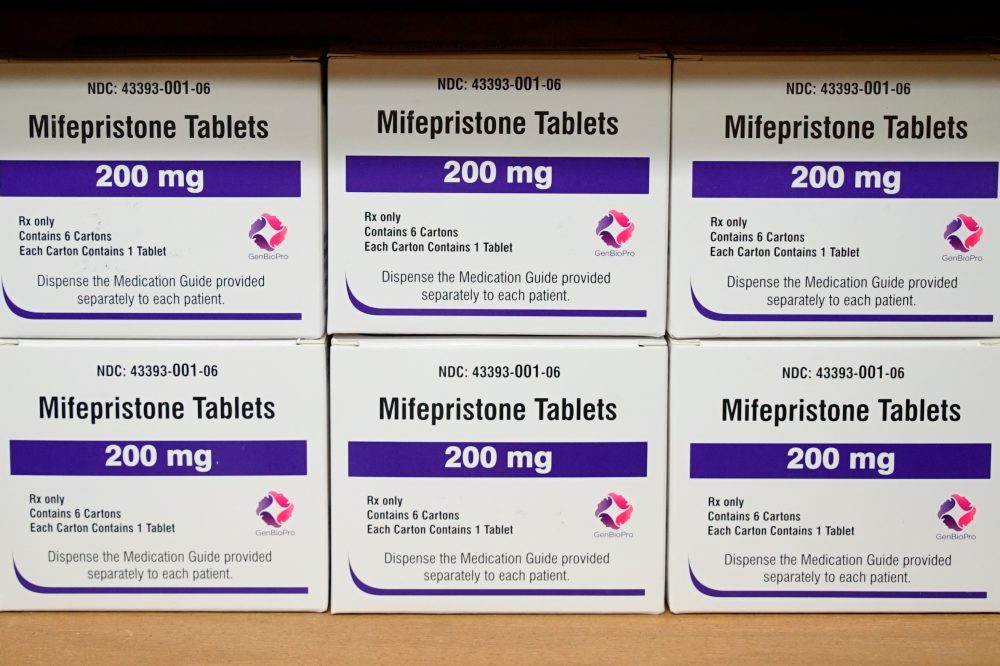

WASHINGTON — The nation’s highest court has issued a temporary order maintaining current access to mifepristone, a commonly prescribed abortion medication, while justices deliberate on potential new limitations set to begin this week.
Justice Samuel Alito issued Monday’s directive, which ensures women can continue receiving the medication through pharmacies or mail delivery without requiring face-to-face medical appointments. The order blocks federal appeals court restrictions from going into effect temporarily.
This latest reproductive rights battle comes four years following the conservative-majority court’s decision to overturn Roe v. Wade, enabling more than a dozen states to implement near-total abortion bans.
The legal challenge originates from Louisiana’s lawsuit targeting Food and Drug Administration regulations governing mifepristone prescriptions. State officials argue these policies weaken their abortion ban and raise safety concerns about the medication, despite FDA approval in 2000 and repeated scientific validation of its safety and effectiveness.
Federal trial courts determined Louisiana would likely succeed in their challenge, leading a three-judge 5th U.S. Circuit Court of Appeals panel to rule that mail delivery and remote medical consultations should be halted during ongoing litigation.
Mifepristone is typically combined with misoprostol for medication-based abortions. These procedures represented nearly two-thirds of all U.S. abortions during 2023, according to the most recent available data.
The current legal battle mirrors a similar case from three years prior.
Previous lower court decisions also attempted to limit mifepristone availability through litigation filed by anti-abortion physicians shortly after Roe’s reversal.
The Supreme Court previously prevented the 5th Circuit’s restrictions from taking effect, despite opposition from Alito and Justice Clarence Thomas. The high court later unanimously rejected the physicians’ lawsuit in 2024, determining they lacked proper legal standing to file suit.
Major medical organizations, pharmaceutical companies, and Congressional Democrats have urged the court against restricting drug access in the current case. Industry representatives warned that siding with abortion opponents could destabilize the entire drug approval system.
The FDA has gradually removed various initial restrictions on the medication, including prescriber qualifications, distribution methods, and mandatory safety reporting requirements.
Despite these regulatory determinations, abortion opponents have contested mifepristone’s safety for over 25 years through multiple petitions and lawsuits, consistently claiming the agency violated federal law by ignoring safety concerns.
President Donald Trump’s administration has maintained notable silence at the Supreme Court level, choosing not to submit written recommendations despite federal regulations being central to the case.
The situation creates challenges for Trump’s Republican administration, which depends on anti-abortion group support while facing ballot measures and polling data showing broad American support for abortion rights.
Both legal sides interpreted the administration’s silence as implicit support for the appeals court decision. Alito oversees emergency appeals from Louisiana and authored the 2022 ruling declaring abortion lacks constitutional protection, returning decisions to individual states.