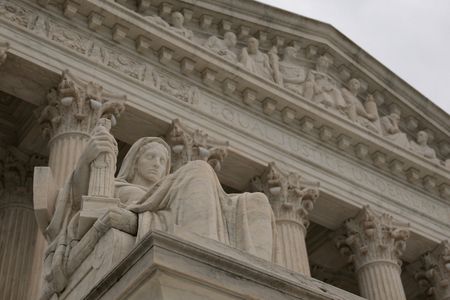

Democratic officials in Virginia have filed an appeal with the nation’s highest court, seeking to restore a congressional redistricting plan that could shift political control in the upcoming midterm elections.
The appeal, submitted Monday, comes after Virginia’s Supreme Court rejected the new electoral boundaries in a narrow 4-3 ruling on May 8. The proposed map had been designed to convert four currently Republican-held congressional seats to Democratic ones, potentially impacting the balance of power in Washington where Republicans maintain slim majorities in both chambers of Congress.
This redistricting battle represents an uncommon mid-decade effort to redraw district lines, departing from the traditional practice of adjusting boundaries only after each ten-year census. The dispute highlights how closely divided Congress has become, with even small shifts in seat allocation carrying significant political weight.
Virginia’s state Supreme Court sided with Republican opponents who challenged the Democratic-supported ballot initiative that voters had approved in April. The court’s majority determined that Democratic legislators had failed to follow required procedures when they expedited the referendum process last year to meet election deadlines.
Don Scott, who serves as the Democratic speaker of Virginia’s House of Delegates, is leading the federal appeal effort. In their Supreme Court filing, the Democratic lawmakers argue that the state court’s decision has “deprived voters, candidates, and the Commonwealth of their right to the lawfully enacted congressional districts.”
The Virginia Democrats are invoking a 2023 Supreme Court precedent that cautioned state courts against overstepping “the ordinary bounds of judicial review” in ways that would undermine state legislatures’ constitutional authority over federal election regulations.
This mid-decade redistricting conflict gives Republicans a strategic edge in the broader national picture. The current fight traces back to efforts initiated by former President Donald Trump, who encouraged Texas Republicans to abandon their existing electoral map and create new district boundaries aimed at capturing up to five seats currently held by Democrats.
Democratic redistricting efforts nationwide have faced additional obstacles following a Supreme Court decision that weakened key protections in the 1965 Voting Rights Act. That ruling, decided by the court’s 6-3 conservative majority, has enabled Republican-controlled Southern states to eliminate districts where Black and Latino voters—who typically support Democratic candidates—held majorities.
The redistricting process typically occurs once per decade, with state legislatures redrawing district boundaries to account for population shifts revealed by the national census. However, this Virginia case represents part of an unusual wave of mid-decade redistricting efforts that could reshape congressional representation before the traditional timeline.