
WASHINGTON — Democratic Party officials submitted an urgent petition to the U.S. Supreme Court on Monday, seeking to overturn a Virginia court decision that eliminated a ballot initiative potentially worth four additional congressional seats for their party.
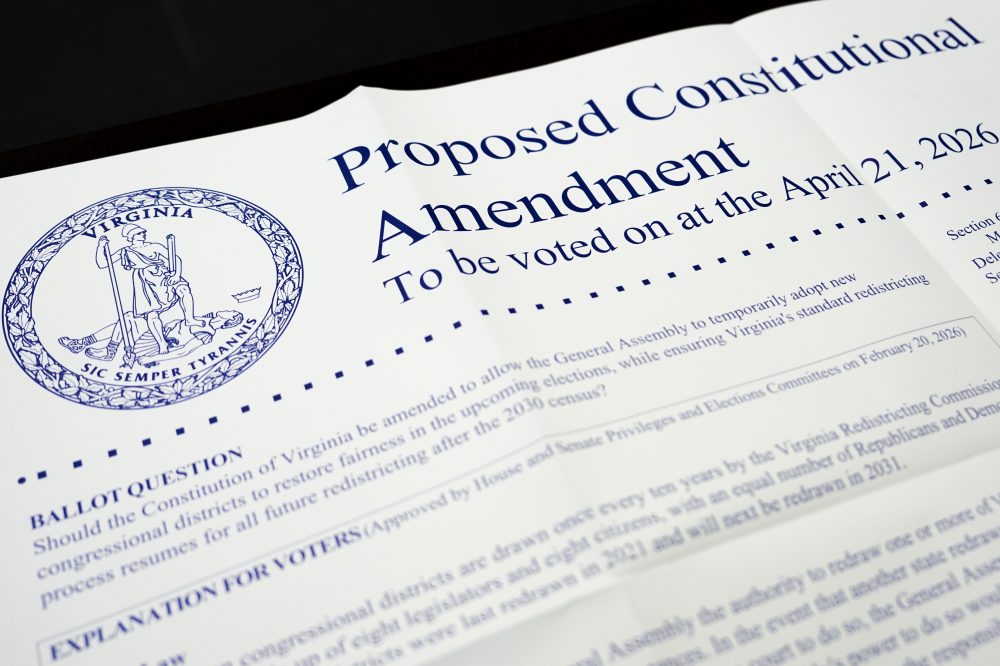
The petition follows Friday’s Virginia Supreme Court ruling that invalidated a constitutional amendment voters approved by a narrow margin last month. The state’s highest court ruled 4-3 that the Democratic-led legislature violated proper procedures by initiating the amendment process while early voting was already in progress during Virginia’s fall general election.
Democratic attorneys contended without success that federal Supreme Court precedent establishes that elections don’t officially occur until Election Day, regardless of early voting activity.
This legal challenge represents another development in the ongoing nationwide redistricting battle that began last year when President Donald Trump encouraged GOP-controlled states to redraw their electoral maps. The situation intensified following a recent Supreme Court decision that significantly diminished Voting Rights Act protections.
The Democratic petition faces steep odds, as the Supreme Court typically avoids overruling state courts’ interpretations of their own state constitutions. In 2023, the justices rejected a similar request from North Carolina Republicans seeking to overturn a state court decision that blocked their congressional map.
From a political standpoint, this appeal could benefit a party that has struggled to keep pace with Republican redistricting efforts nationwide, potentially providing ammunition for campaign messaging about Supreme Court partisanship. The court recently permitted Louisiana Republicans to move forward with redistricting after striking down a majority-Black district as unconstitutional racial gerrymandering.
Democrats found themselves at a disadvantage when, shortly after the Virginia ballot measure succeeded, the Supreme Court’s conservative majority overturned decades of precedent and essentially weakened the Voting Rights Act. This decision enabled Southern states to eliminate certain majority-Black districts and strengthen Republican congressional advantages.
The Virginia constitutional amendment originated well before that Supreme Court ruling. It was designed to counter Republican redistricting victories in Texas, Missouri, North Carolina, and Ohio, while offsetting a new Florida map that recently took effect. When the Virginia amendment initially passed, it temporarily balanced the national redistricting competition between both parties.
The Virginia Supreme Court’s decision disrupted that balance. Legislative appointments determine the court’s composition, with control alternating between parties over recent decades, and the court generally lacks a clear ideological reputation.