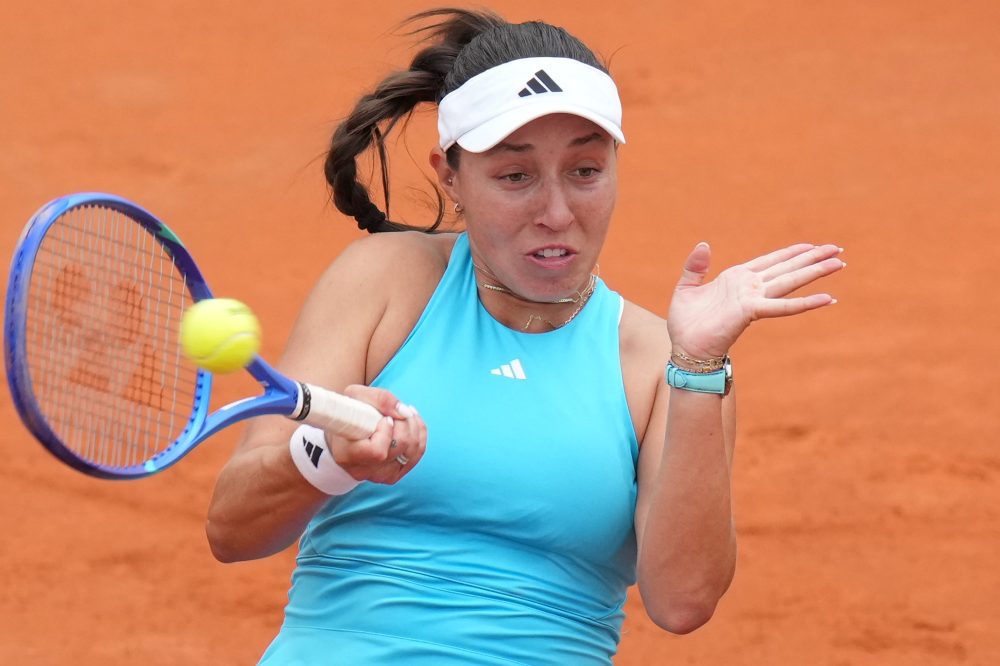

ROME — While world No. 1 players Aryna Sabalenka and Jannik Sinner have made headlines discussing potential boycotts, it’s Jessica Pegula working behind the scenes to unite tennis’s elite players in their fight for better compensation from Grand Slam tournaments.
The 2024 U.S. Open finalist brings unique perspective to the leadership role, having grown up in a family that owns both the Buffalo Bills NFL franchise and the Buffalo Sabres NHL team.
“I think it maybe does (come naturally) just because I feel like I’ve taken on a bit of a leadership role with it,” Pegula explained.
The world No. 5 player already heads a newly formed 13-member committee tasked with recommending changes to women’s tennis scheduling, ranking systems, and tournament participation requirements. Now she’s tackling the compensation disparity issue as well.
“I’m not afraid to go up to any type of player and go like, ‘Hey, are you interested in this or not?’” Pegula stated. “Some players, they don’t care, sometimes they’re not worried about it. Sometimes they’re like, ‘Yeah, for sure, I’m 100% in.’ I’ve been reaching out to players on the men’s and women’s side.”
Last week, Sabalenka suggested players might need to boycott tournaments to secure a larger portion of tournament revenues, while Sinner expressed frustration about the lack of respect shown to athletes.
“At the end of the day the players are the ones that have the big voices,” Pegula noted. “It’s been nice to see Aryna and Jannik kind of step out. I know a lot of other players feel the same way. But to have the two No. 1s very outspoken about it, that’s kind of what it takes to get them to listen.”
The compensation gap is striking when compared to other major sports. NFL and NHL athletes receive approximately 50% of total revenues, while tennis players at most tournaments earn less than half that percentage. According to a recent player protest statement, the upcoming French Open will allocate under 14.9% to competitors — a decrease from 15.5% in 2024.
French Open officials announced last month they were boosting total prize money by roughly 10% to 61.7 million euros ($72.1 million), representing a 5.3 million euro increase from the previous year. However, players argue the underlying financial data reveals a different reality.
“It’s crazy. It’s an insane difference. Obviously they’re different sports. They’re run differently,” Pegula said when comparing tennis compensation to the NFL. “But tennis has been a very old-school sport. I think it’s one of the things that needs to change. Sometimes change is good. Sometimes that means fighting for things.”
This same player coalition sent correspondence to all four Grand Slam tournament directors last year requesting increased prize money and greater input in tournament decisions. Wimbledon responded by raising its 2025 prize pool 7%, the U.S. Open increased theirs by 20%, and the Australian Open boosted compensation by 16% this past January.
Despite these improvements, players maintain that Grand Slam tournaments still fall short of the 22% revenue share offered at regular ATP and WTA Tour competitions.
“The slams have kind of just gotten away with paying not that much because we’re a very individual sport,” Pegula observed. “It’s hard to get players to come together. We’re not on a salary where football players or basketball players can afford not to play.”
French Open organizers, whose tournament begins in less than two weeks, have not responded to media inquiries about the compensation dispute.
Wimbledon is expected to reveal its prize money structure next month, and Pegula said players have yet to receive any communication from the All England Club.
“We’re just going to kind of continue to talk amongst ourselves,” she said.
Tennis governance complexity stems from having seven different organizing entities: the four Grand Slam tournaments, the ATP, the WTA, and the International Tennis Federation.
“That’s what makes it so hard is that our sport is super fragmented. Hard to get everybody on the same page,” Pegula explained. “That’s why it’s been huge to actually have the top 10 men and women really come together. I’m hoping that will get the Slams’ attention.”
While managing her activist efforts, Pegula continues competing at the Italian Open, where she advanced to the quarterfinals Monday with a 7-6 (6), 6-2 victory over Anastasia Potapova. She had previously dominated Rebeka Masarova 6-0, 6-0 in an earlier round.
Her next opponent will be either three-time Rome champion Iga Swiatek or four-time Grand Slam winner Naomi Osaka.
Between matches and organizing player protests, Pegula has been frustrated by her inability to watch the Sabres’ historic playoff run — their first postseason appearance in 15 years — due to the time difference between Europe and the United States.
The Montreal Canadiens defeated the Sabres 6-2 in Game 3 Sunday night, taking a 2-1 series lead in their second-round playoff matchup.
“My gosh, I am so upset that I have not been able to see any of the games,” Pegula said. “I would give anything to just be at a playoff game. … I love it so much. It’s my favorite thing.”