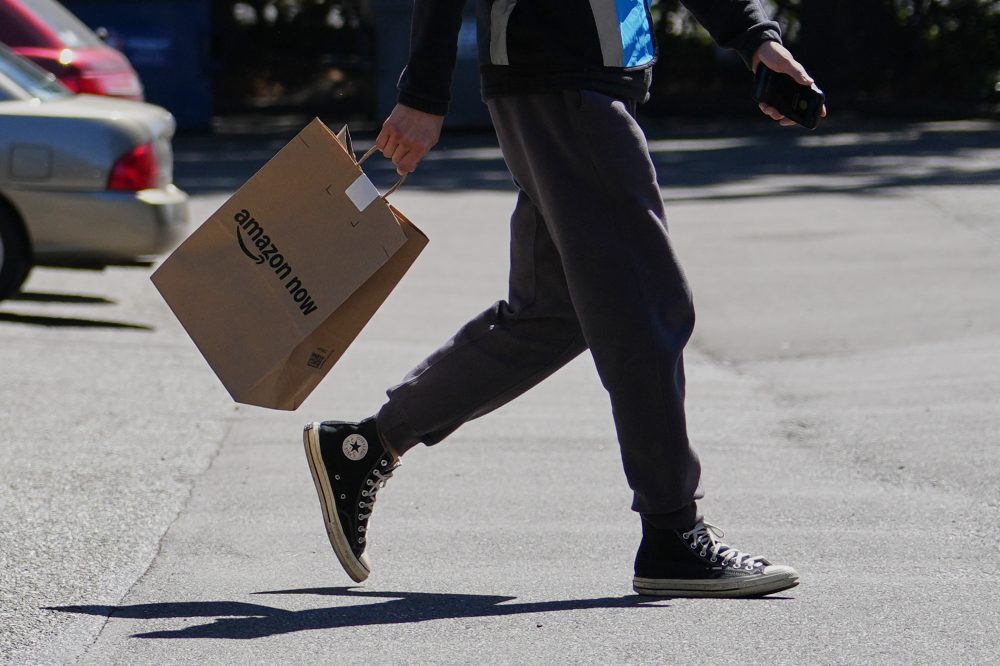

Two decades after transforming online shopping with rapid delivery, Amazon is setting a new standard by launching 30-minute delivery service for customers willing to pay extra fees for immediate needs.
The retail giant, which changed consumer expectations in 2005 by introducing two-day shipping for Prime subscribers, is establishing compact fulfillment centers across numerous American and international cities. These facilities target shoppers who need immediate access to items like cold medicine for illness or fresh ingredients for evening meals.
This ultra-rapid service, branded as Amazon Now, debuted in India last June. The company reports that half-hour delivery options have expanded to metropolitan regions across Brazil, Mexico, Japan, the United Arab Emirates, Britain and America.
These compact distribution centers measure roughly equivalent to a CVS pharmacy location. Each facility maintains approximately 3,500 items available for express delivery, featuring alcoholic beverages, baby supplies, pet products, fresh meat, over-the-counter drugs, games and electronic accessories.
“We know that customers love speed and always have,” Beryl Tomay, Amazon’s head of transportation, told The Associated Press on Monday. “What we see customers doing, when we offer faster speeds, are they purchase more from Amazon. And Amazon becomes more top of mind for that or other types of items as well.”
Within America, the corporation initially piloted Amazon Now in Seattle, where company headquarters operates, along with Philadelphia. Atlanta residents and Dallas-Fort Worth metropolitan area shoppers currently enjoy access to the program. The platform has launched or expects deployment before year’s end in Houston, Denver, Minneapolis, New York, Phoenix, Oklahoma City, Orlando, Florida, plus numerous additional metropolitan areas, according to Amazon.
Pricing for Amazon Now begins at $3.99 for Prime subscribers, who pay yearly fees of $139, while non-members face charges of $13.99. Orders totaling less than $15 incur an additional $1.99 handling charge, the company stated.
Amazon’s emphasis on delivery velocity emerges as certain consumers question rushed shipping practices, considering potential environmental consequences and worker welfare concerns related to high-speed order fulfillment.
Relentless speed focus enabled Amazon to construct its logistics and e-commerce dominance. Following its establishment of two-day delivery as standard practice, Amazon introduced one-day and same-day options for Prime customers. This spring, the corporation launched 90,000 products available within one to three hours for additional costs.
These streamlined micro-facilities designed for 30-minute order processing represent another advancement in Amazon’s delivery evolution.
Just a few employees handle orders from product aisles within these 5,000- to 10,000-square-foot locations, contrasting with massive fulfillment warehouses storing millions of products where Amazon utilizes combined human staff and robotic systems for order selection and packaging.
Amazon customizes product selections for individual locations while employing artificial intelligence and advanced technology to examine customer purchasing patterns, timing and frequency. Top American purchases include cleaning products, dental care items, mouthwash, plumbing tools, tropical fruits and wireless audio devices, Amazon reported.
Amazon’s push for instant satisfaction directly challenges on-demand food delivery services including Instacart, Uber Eats, DoorDash and Grubhub, which lack the e-commerce giant’s operational scale, according to independent retail analyst Bruce Winder.
“What Amazon brings is their prowess in supply chain,” Winder said.
These competitor companies dismiss Amazon as a competitive threat, highlighting their ability to deliver hundreds of thousands of products through partnerships with diverse merchants and restaurants.
“DoorDash has a mission to empower grocers and retailers and augment their existing footprint, not to replace them,” DoorDash spokesperson Ali Musa said in an emailed statement. “We win only when they win, which is how we can offer over half a million grocery and retail items in under an hour across the country.”
Amazon engages in competition with Walmart to become the leading retailer providing sub-hour delivery to online customers.
Walmart Express Delivery charges an extra $10 beyond standard shipping fees, offering shoppers access to over 100,000 products guaranteed within one hour. Many customers receive items under 30 minutes, Walmart CEO John Furner informed analysts in February.
Previous companies have attempted 30-minute delivery promises, but the industry shows numerous failed efforts to achieve such speed targets.
The COVID-19 pandemic spawned multiple companies promising 10- to 15-minute grocery delivery from neighborhood micro-warehouses, according to Sucharita Kodali, an analyst at market research firm Forrester Research.
However, escalating operational expenses, minimal customer retention and depleted investment funding caused most ventures to collapse before pandemic conclusion, analysts noted.
Domino’s introduced a 1984 guarantee offering free pizzas for deliveries exceeding 30 minutes. The company modified this “30 minutes or it’s free” policy after two years, providing only $3 discounts for delayed orders.
While the promotion increased Domino’s market position, it ultimately damaged company reputation. The guarantee ended in December 1993 following multiple accidents and legal cases involving drivers speeding to meet deadlines.
Brad Jashinsky, a retail analyst at information technology research and consulting firm Gartner, believes Amazon should learn from the pizza company’s experience.
“You get in trouble when you start overpromising something like that,” he said.
Amazon will avoid time guarantees, instead providing customers selecting 30-minute delivery with order progress updates, Tomay explained.
“There’s no rushing either in our building workers or the gig workers,” she said.
Kodali believes Amazon requires multiple simultaneous orders from identical or neighboring apartment complexes for cost-effective 30-minute service operation.
While consumers value rapid delivery of essential products like bathroom tissue and batteries, retailers and logistics professionals observe some online shoppers, particularly Generation Z members, selecting slower shipping for non-urgent purchases.
Amazon has offered customers options to decline one- or two-day delivery, receiving consolidated orders on single days with minimal packaging. Combining deliveries reduces boxes, shipping materials and fuel consumption, analysts reported.
“The millennials who came to age in an era that was on fast delivery came to expect it de facto, whereas … Gen Z is more accepting of a slower speed than previous generations before them,” said Darby Meegan, a general manager at Flexport, a supply chain and logistics company that fulfills orders for thousands of online merchants.
Amazon leadership reports encouraging initial Amazon Now results in India, where Prime members tripled 30-minute delivery requests after service adoption.
Amazon Now attracts increasing repeat American customers, Tomay noted.
“It’s in early days and time will tell,” she said. “I think that it will be interesting to see how it evolves.”