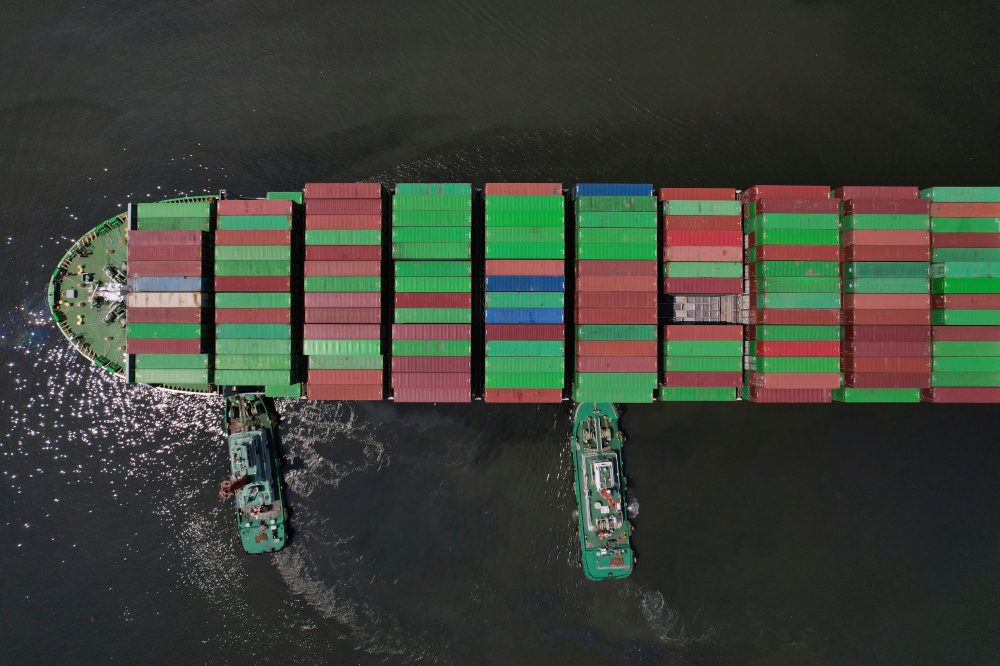

BANGKOK (AP) — The maritime industry depends on a thick, tar-like substance called bunker fuel to power cargo vessels worldwide. The ongoing Iran conflict has blocked the Strait of Hormuz, severely limiting access to this essential fuel that keeps global shipping operations running, particularly affecting Asia’s largest maritime refueling center.
This heavy, crude fuel represents the lowest grade of petroleum products — thicker and more contaminated than refined oils used in cars and aircraft — and settles at the bottom of storage tanks due to its density.
However, this fuel is crucial for transporting approximately 80% of internationally traded merchandise that travels by ocean, and industry analysts warn that bunker fuel shortages will drive up shipping expenses, elevate retail prices, and damage business profits across the globe.
Asia will experience these problems initially, given its heavy dependence on Middle Eastern petroleum. Singapore, which serves as the world’s primary bunker fuel supply center, is experiencing declining stockpiles and rapidly increasing costs.
Maritime companies are attempting to adjust to this energy crisis by reducing ship speeds and modifying routes to minimize expenses temporarily while developing strategies to obtain vessels capable of using alternative energy sources.
However, some businesses may not endure this emergency response much longer, according to Henning Gloystein from Eurasia Group consulting, who cautioned that the economic damage will extend beyond Asia through international supply networks.
Asia, experiencing the earliest and most severe effects of the energy crisis, has implemented different types of “energy triage” to manage the situation, expanding coal usage, purchasing additional Russian crude oil, and reconsidering nuclear energy development plans.
Nevertheless, Asia is preparing for additional consequences as energy stockpiles decrease and government financial support disappears.
According to United Nations statistics, over half of worldwide ocean-based commerce passed through Asian ports during 2024, meaning developments there will affect the entire planet.
Currently, Singapore’s bunker fuel inventory remains stable despite rapidly climbing prices.
However, the extended disruption from major heavy crude oil suppliers needed for bunker fuel production, including Iraq and Kuwait, will create supply shortages, according to Natalia Katona from commodity website OilPrice.
“We just see the price in Singapore going up, up, up,” Katona said.
Prior to the conflict, Singapore’s bunker fuel prices averaged approximately $500 per metric ton ($450 per U.S. ton). By early May, costs had risen to over $800 ($725 per U.S. ton).
Maritime companies are currently bearing most of these increased expenses, according to June Goh, a petroleum analyst with Sparta Commodities market intelligence firm, though this situation may soon “pass on to the customers.”
The European Federation for Transport and Environment estimates the Iran war costs the global shipping sector 340 million euros (approximately $400 million) daily.
“Bunker fuel shortages tend to feed through to shipping costs more quickly than many other cost pressures,” said Oliver Miloschewsky of risk consultancy firm Aon.
While individual product impacts might seem small, the combined effect of elevated shipping expenses “can ripple across supply chains and ultimately influence consumer prices across a broad range of sectors,” he said.
Singapore residents are experiencing these effects in additional ways as local ferry services raise ticket prices and luxury cruise operators add fuel surcharges.
According to Miloschewsky, shipping companies have few options to address this situation. They can either pay increased fuel costs or adopt fuel conservation strategies like reducing speed or canceling trips.
Clarksons Research industry group reported that average speeds for bulk carriers and container vessels have decreased globally by approximately 2% since the conflict started on February 28.
Elevated prices are also generating increased interest in environmentally friendly fuels, according to Håkan Agnevall from marine and energy technology company Wartsila.
The positive aspect is that technology for producing lower-emission fuels already exists, he explained. The negative aspect is that production hasn’t reached commercial scale and cleaner fuels typically cost more.
Although U.S. President Donald Trump disrupted initiatives to move global shipping away from fossil fuels in 2025, Agnevall suggested the current crisis might encourage forward-thinking companies and nations to restart their transition toward cleaner alternatives.
Increasing fossil fuel costs are reducing the price difference. “That improves the business case for green fuels,” he said.
The Caravel Group operates Fleet Management Limited, one of the world’s largest ship management companies, supervising over 120 shipbuilding projects.
Approximately one-third of vessels under the company’s construction management will be “dual fuel capable,” allowing them to operate on both traditional bunker fuel and alternatives like liquified natural gas, CEO Angad Banga explained to The Associated Press.
Ship owners are prepared to pay extra for vessels that can alternate between fuel types because “in a volatile environment optionality has a measurable economic value,” he said.
Alternative fuels currently lack the flexibility of conventional fuel systems, Banga noted. While over 890 LNG-powered vessels operate worldwide, insufficient supporting infrastructure has created operational bottlenecks.
However, the industry is advancing and bunker fuel restrictions are generating even greater interest in LNG-capable ships, he said, “that progress is real.”