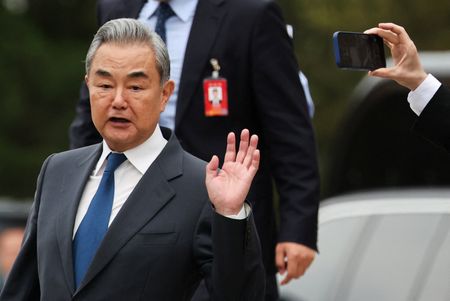
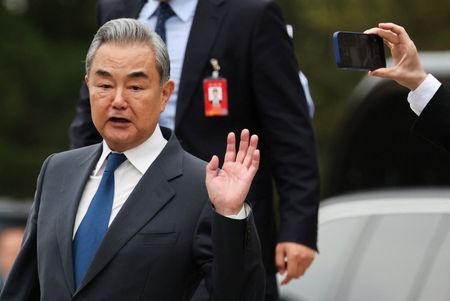
China’s Foreign Minister Wang Yi is scheduled to travel to New York where he will lead a high-level UN Security Council session on May 26, according to an announcement from China’s foreign ministry on Friday.
During his time in New York, Wang is expected to hold discussions with UN Secretary-General Antonio Guterres and will meet with foreign ministers from “relevant countries,” the ministry stated in their official announcement.
Following his UN duties, Wang will make an official trip to Canada scheduled for May 28-30, accepting an invitation extended by his Canadian counterpart, the ministry confirmed.
Federal safety officials announced Friday that Hyundai Motor will recall 421,078 vehicles across the United States due to a software malfunction that could trigger unexpected brake activation.
The recall affects specific 2025-2026 model year Santa Cruz, Tucson, Tucson Hybrid, and Tucson Plug-In Hybrid Electric vehicles, according to the U.S. National Highway Traffic Safety Administration.
Federal regulators explained that a software malfunction in the vehicles’ front-mounted cameras could lead to the forward collision avoidance system engaging incorrectly, resulting in sudden brake application and potentially increasing collision risk.
The safety agency noted that authorized dealers will perform front camera software updates without charge to vehicle owners.
This announcement follows another recall earlier in the week, when the manufacturer pulled more than 54,000 vehicles from U.S. roads due to fire hazards related to excessive heat in the hybrid power control unit.
A federal agency is moving forward with plans to update regulatory paperwork requirements for private facilities that quarantine ruminant animals.
The Animal and Plant Health Inspection Service has announced its plans to seek changes and an extension to existing information collection rules that govern privately operated quarantine facilities for ruminants, following procedures outlined in the Paperwork Reduction Act of 1995.
The agency’s announcement indicates it will be requesting both modifications to current standards and an extension of the regulatory framework that oversees these specialized animal housing facilities.
The Food Safety and Inspection Service has announced plans to extend an existing data collection program that monitors laboratory certifications and oversight of meat and poultry processing operations.
Following requirements under the Paperwork Reduction Act of 1995 and Office of Management and Budget guidelines, FSIS stated it will seek renewal of its current information gathering system. The program covers laboratory certification processes, business dealings with federally inspected meat and poultry facilities, egg processing operations, and related companies, as well as waivers from Federal Meat Inspection Act and Poultry Products Inspection Act standards.
Officials indicated no modifications are planned for the current data collection framework. The existing authorization is set to conclude on October 31, 2026.
An urgent request for assistance arrived in early May when a cruise vessel near Cape Verde found itself in crisis, carrying passengers believed to be infected with a lethal hantavirus variant that proves fatal for roughly one-third of those affected.
After the ship had visited multiple isolated islands, the World Health Organization required immediate answers. Officials wondered whether a biomedical facility in Senegal, located just one hour away by air, could assist a team gathering samples from potentially infected individuals aboard the vessel.
The aircraft touched down in Senegal during the predawn hours of May 5. Scientists at the Institut Pasteur de Dakar labored throughout the night, utilizing advanced laboratory technology and high-powered computing systems to generate results that health authorities around the globe were anxiously awaiting.
In less than a full day, researchers had created a partial genetic sequence revealing that the disease impacting the travelers — identified as cases five and six — was the Andes variant of hantavirus, recognized for its ability to transmit between people through close contact. Research facilities in South Africa and Switzerland arrived at identical conclusions on the same day.
The WHO shared these discoveries during a media briefing. The contribution of the West African laboratory had not been thoroughly documented before, demonstrating how international research partnerships can assist in controlling disease outbreaks.
“It’s crucial to have, in different parts of the world, the capacity and capabilities to detect those different pathogens,” said Dr. Moussa Moise Diagne, a virologist and head of the sequencing platform at Institut Pasteur.
“It’s really important for the clinical case management, and also for the contact tracing, which is really key.”
The Institut Pasteur, an international foundation headquartered in France, serves a vital function in addressing disease emergencies across sub-Saharan Africa.
The organization’s Senegal facility assisted approximately 20 nations throughout the COVID-19 crisis and has contributed to responses against Marburg in Guinea and Ebola in the Democratic Republic of Congo — including developing a quick diagnostic test for the ongoing outbreak.
For examining patients on the Cape Verde vessel, the WHO gathered materials from the laboratory and arranged charter transportation to fly a team to the island chain and return with specimens. The biological samples received triple-layer protection — placed in testing vials, wrapped in plastic, and secured within a cardboard container bearing hazard warnings.
By 3 a.m., the Dakar team was operating at full capacity, understanding that each passing hour was crucial.
The shipment was unsealed within a specialized containment laboratory and neutralized by qualified personnel, who readied samples for analysis. Liquid specimens underwent examination using sequencing equipment designed to chart the virus’s genetic structure.
The findings reached the WHO in the early hours of May 6, aligning with discoveries from South Africa and Switzerland, which had obtained samples from additional patients.
By May 8, scientists had completed the full genetic mapping. Research centers across the globe examined sequences to detect mutations that might influence viral behavior.
The speed of potential transmission represented a vital concern. The ship had docked at remote Atlantic islands and three travelers had perished, including one passing through Johannesburg. Approximately 150 individuals from 23 nations were aboard the MV Hondius, an expedition cruise vessel.
Thankfully, researchers discovered no significant genetic changes compared to the 2018–19 outbreak in Argentina.
“Sequencing is the way to understand the strength of the transmission,” Diagne said.
Health experts indicate additional cases might surface globally because of the virus’s extended incubation timeline, which can extend up to six weeks. Unanswered questions persist, including the location and timing of initial infections — information essential for preventing further spread beyond areas where the disease naturally occurs.
“The most important thing now is to know what is the window of exposure in Latin America,” Diagne said.
The hantavirus emergency, followed by a rapidly expanding Ebola crisis in central Africa, has underscored the importance of worldwide laboratory networks, many of which, including the Institut Pasteur, have recently experienced funding reductions for pandemic preparedness.
One instance involves the U.S. National Institutes of Health’s choice to terminate support for the Centers for Research in Emerging Infectious Diseases Network, a global program that encompasses a West African facility. A research project examining how hantavirus affects humans was also discontinued.
The U.S. Department of Health and Human Services stated it continues to prioritize addressing global infectious disease challenges. Claims that the United States is retreating from international health security “do not reflect the reality of our ongoing engagement and support internationally,” a spokesperson said.
World Cup spectators face minimal danger from Ebola exposure, according to a global health expert from King’s College London, though increased health screenings and travel limitations may create operational difficulties.
Dr Oliver Johnson, who specializes in global health at the London university, assessed the threat level as the expanded 48-nation tournament prepares to begin across the United States, Canada and Mexico from June 11 through July 19.
The Democratic Republic of Congo is currently battling an Ebola outbreak in its eastern region, with approximately 600 suspected infections and over 130 fatalities recorded. This situation prompted the World Health Organization to issue a public health emergency declaration of international concern.
The outbreak has already disrupted the DR Congo national team’s tournament preparations, forcing them to cancel pre-competition activities in Kinshasa and move their planning operations to Belgium instead.
American officials have implemented entry restrictions preventing non-U.S. passport holders who visited DR Congo, Uganda or South Sudan within the previous 21 days from entering the country, requiring Congo-based personnel to leave ahead of schedule.
The team plans to reach the U.S. on June 10 or 11 and will establish their base in Houston.
“If you are a casual visitor to the World Cup from around the world, I think there is a very low risk that you would be at risk of Ebola,” Johnson explained to Reuters. “Ebola has never really caused transmission in high-income country settings, where there have been very occasional cases.”
“That is because it is not airborne. You had to normally have direct contact with someone who is quite sick, and there is usually good contact tracing. If a case does occur, it is identified quickly,” he continued.
However, Johnson noted the outbreak may still create wider consequences.
American authorities have implemented additional screening procedures at Washington Dulles for travelers who recently visited affected nations, while health organizations are coordinating with FIFA and local authorities to address potential dangers.
“It will affect things like airport queues and screening, which will slow things down,” Johnson explained. “It is going to add a little extra stress and it’s going to cost money to the U.S. to try and organise.”
“I think the other possibility is that we hope this outbreak is not going to spread beyond DR Congo…. That could cause a knock-on effect of travel bans or extra screening, and it could happen quite last minute,” he added.
Tournament attendees should maintain standard safety measures including proper hand washing and staying away from close contact when feeling ill, Johnson recommended. He encouraged fans to show respect for others and prevent discrimination, helping maintain the World Cup’s welcoming atmosphere.
DR Congo begins their tournament schedule against Portugal in Houston, followed by matches against Colombia in Guadalajara and Uzbekistan in Atlanta.
Each year, millions of Muslim faithful gather in Saudi Arabia to participate in the Hajj, joining together in sacred ceremonies and worship that represent one of Islam’s most fundamental requirements. For believers, this journey serves not only as a religious duty but also as a profound spiritual encounter that offers an opportunity to seek divine forgiveness and cleanse themselves of previous wrongdoings.
This year’s pilgrimage takes place amid a fragile ceasefire in the Iran war and ongoing regional instability throughout the Middle East.
During earlier months, war-related travel disruptions affected some Muslims who had traveled to Saudi Arabia for “Umrah,” commonly known as the minor pilgrimage. Several pilgrims found themselves stuck and struggled to arrange transportation back to their home countries.
The following provides insight into this yearly Islamic pilgrimage and what it means to Muslim communities.
The Hajj represents the yearly Islamic journey to Mecca in Saudi Arabia and encompasses multiple sacred ceremonies. Every Muslim who possesses the financial means and physical capability must complete this pilgrimage at least once during their lifetime. Many believers choose to undertake this journey multiple times.
This pilgrimage stands as one of Islam’s Five Pillars, alongside the declaration of faith, daily prayer, charitable giving, and fasting.
The Hajj takes place annually during Dhul-Hijja, the final month of the Islamic lunar calendar. This year’s official pilgrimage begins on Monday.
Summer pilgrimages present particular difficulties due to scorching temperatures. During the extreme heat of 2024, over 1,300 individuals perished during Hajj, based on reports from Saudi officials. The nation’s health minister explained that most deaths involved unofficial pilgrims who traveled extensive distances under direct sunlight.
For those making the journey, completing the Hajj satisfies a religious requirement while providing a transformative spiritual encounter. Participants view it as an opportunity to obtain God’s mercy, strengthen their relationship with the divine, and follow the paths taken by prophets.
As a collective experience, the Hajj brings together Muslims from different racial backgrounds, ethnic groups, languages, and social classes from across the globe. Many participants describe feelings of brotherhood, spiritual connection, and modesty. Pilgrims also arrive carrying their individual requests, hopes, and personal stories.
Numerous pilgrims carry prayer requests from relatives and friends who ask for prayers to be offered on their behalf.
Many individuals dedicate years to hoping and praying for the chance to complete the Hajj, or they work to save money and wait for official permission to begin their journey.
Before departure, preparations might involve gathering necessary supplies for the challenging trip, obtaining advice from previous pilgrims, participating in educational sessions, or studying other preparatory materials for spiritual and physical readiness.
Pilgrims declare their intention to perform the Hajj and enter “ihram,” a sacred state. This condition requires following specific guidelines and restrictions. Men must avoid wearing typical tailored clothing that wraps around the body, like shirts, while in ihram. Instead, men wear simple ihram garments; religious scholars explain this practice helps eliminate luxury and pride, removes symbols of worldly status, and focuses the pilgrim on humility and worship of God.
A spiritual pinnacle of the Hajj for many occurs while standing on the plain of Arafat, where pilgrims worship God, ask for mercy, and offer prayers. Many lift their hands in prayer while tears flow down their cheeks.
Additional ceremonies include “tawaf,” which requires walking around the Kaaba in Mecca seven times in a counterclockwise direction. The Kaaba, a cubic building, serves as the direction Muslims face during their five daily prayers from any location worldwide.
Other ceremonies involve retracing the steps of Hagar, or Hajar, Prophet Ibrahim’s wife, who is known as Abraham in Jewish and Christian traditions. Muslims believe Hagar ran back and forth between two hills seven times while searching for water for her child.
Eid al-Adha, also called the “Feast of Sacrifice,” is the Islamic celebration that starts during the Hajj, on the 10th day of Dhul-Hijja in the Islamic lunar calendar.
This celebratory event observed by Muslims worldwide honors Ibrahim’s readiness to sacrifice his son as an expression of obedience to God. During this holiday, Muslims sacrifice sheep or cattle and share portions of the meat with those in need.
HAVANA (AP) — The most recent public sighting of former Cuban President Raúl Castro occurred during a government-sponsored International Workers’ Day demonstration along Havana’s renowned waterfront, where he was surrounded by thousands of attendees.
The 94-year-old remained steady and composed beneath the intensifying sun on May 1, while others in his vicinity succumbed to the heat before the ceremony commenced. His security team, headed by his grandson Raúl Guillermo Rodríguez Castro, positioned themselves behind him.
Such public appearances have become uncommon for the final Castro brother from Cuba’s revolutionary period. Though he reportedly continues to hold considerable sway over governmental affairs, he keeps a minimal public presence despite his position as general of Cuba’s armed forces.
Castro returned to public attention Wednesday when federal prosecutors announced criminal charges against him related to directing the 1996 destruction of civilian aircraft operated by Miami-based Cuban exiles. The accusations encompass murder and aircraft destruction charges. Castro held the defense minister position during that time.
The criminal charges and subsequent statements Thursday from U.S. President Donald Trump and Secretary of State Marco Rubio sparked concerns about potential American military action against Cuba, similar to recent events in Venezuela during early January.
“We expect that he will show up here, by his own will or by another way,” acting U.S. Attorney General Todd Blanche said in announcing the charges against the former Cuban president during a press conference in Miami.
Cuba’s socialist government condemned the indictment and prepared to hold a rally Friday to honor Castro, who turns 95 on Jan. 3. Protests were planned Friday morning in front of the U.S. Embassy in Havana.
“The Cuban people reaffirm that neither threats, nor blockade, nor energy embargo, nor false accusations will be able to break the will of an entire people in defense of their Revolution,” read a statement published by state media.
It is not known if Castro will attend Friday’s event.
During July 1953, Castro faced arrest in Cuba on charges of armed insurrection after an unsuccessful attack on military installations. Though sentenced to 13 years imprisonment, he gained freedom after two years through political amnesty. Subsequently, he departed for Mexico to help coordinate revolutionary activities.
Castro wed guerrilla combatant Vilma Espín during the 1960s, and they became parents to four children. Details about Castro’s personal life remain limited: He maintains a reputation as devoted to family and officially lives in an area west of Havana.
Throughout his tenure as defense minister under his deceased brother Fidel Castro, and subsequently as president, his daily operations were notably private: avoiding scheduled appointments, formal events, or public and family celebrations.
Following his departure from office and transition of power to President Miguel Díaz-Canel, Raúl Castro has made few public appearances. He continues wearing his characteristic olive-green military attire when receiving foreign officials.
“He still has influence, and the leadership seeks his opinion on major decisions, but he is not running the government on a day-to-day basis,” said William LeoGrande, a political scientist at American University in Washington.
“If the U.S. were to abduct him, it would not change the operations of government, unlike what happened in Venezuela,” LeoGrande said.
The charges against Raúl Castro have intensified diplomatic friction between the U.S. and Cuba, which recently declared its petroleum supplies exhausted due to continuing American energy restrictions.
The nation’s difficulties have escalated following the Jan. 3 U.S. invasion of Venezuela, which stopped essential oil deliveries from that South American nation. Later in January, Trump issued threats of tariffs against any nation selling or supplying oil to Cuba.
Senior Trump administration officials — including Rubio, CIA chief John Ratcliffe and other prominent national security personnel — have conducted meetings with Cuban representatives in recent months to discuss relationship improvements. However, American officials have expressed dissatisfaction with these discussions, resulting in additional sanctions against Cuba’s government over the past week.
A 27-year-old Moroccan worker who has spent seven years as an undocumented migrant in Spain sees new possibilities ahead as the country’s leftist government rolls out a comprehensive amnesty program.
Abdelmoujoud Erra has survived on temporary jobs and lived in makeshift settlements, but now hopes the amnesty initiative could change his circumstances. “Without documents you work for five euros ($5.80) an hour. With documents, you work legally, with more money — maybe seven or eight euros an hour,” Erra explained from the southern Spanish province of Almería, where undocumented workers congregate at traffic circles seeking employment in the region’s vast greenhouse operations.
The amnesty program, which continues through June, represents a cornerstone of Prime Minister Pedro Sanchez’s strategy to capitalize on migration’s economic advantages for Spain’s aging society, contrasting with border restrictions implemented by other nations.
However, the initiative has sparked fierce criticism from conservative opposition groups. The People’s Party argues it will overwhelm government services, while Vox has claimed the administration seeks to displace Spanish citizens.
For Erra, legal documentation would have opened doors to pursuing his boxing ambitions and visiting relatives in Morocco. “I’ve lost a lot of time. If only I had had papers earlier,” he reflected. Recently, a blaze destroyed the informal camp where he resided, though his amnesty paperwork survived because he had stored it at the local Red Cross facility.
Almería’s agricultural zone spans over 30,000 hectares (74,100 acres) of plastic-covered intensive farming, making it the European Union’s primary winter vegetable source. The region ships tomatoes, cucumbers and other produce valued at 3 billion euros each year while providing work for approximately 80,000 individuals, according to labor organizations and government officials.
Agricultural business associations and worker representatives express optimism that the amnesty will help solve staffing shortages. Andrés Góngora, coordinator of farmers’ union COAG, recognized that the industry relies on some undocumented workers and said the amnesty would create stability. Expanding the legal workforce could enable cultivation of more labor-demanding crops while promoting community harmony, he noted.
Advocacy organizations have consistently condemned living conditions in the Almería area, estimating approximately 10,000 migrants reside in inadequate housing and that at least 70% of agricultural workers lack legal status.
Spain’s population of 50 million has grown recently due to migration flows. Research organization Funcas calculates that roughly 840,000 undocumented migrants currently participate in the labor force.
Michael Aymaga, a 35-year-old from Ghana, represents another hopeful applicant. He lives in a migrant encampment near Nijar, where electrical service is sporadic and water availability is restricted. The amnesty opportunity fills him with excitement as he expresses his desire to give back to his adopted country. “I would definitely use all my skills and everything I have to help Spain (become) a better Spain,” he stated.
A British technology company announced Friday that it has upgraded its yearly profit expectations due to surging business demand for artificial intelligence infrastructure and customers placing early orders to avoid worldwide memory chip supply shortages.
Companies that provide technology infrastructure have seen tremendous benefits from the explosive increase in demand for AI-related equipment, as businesses continue to integrate artificial intelligence into their daily operations.
The Marlow-based company announced it anticipates mid-teens percentage growth in yearly adjusted operating profit, which exceeds its previous projection of high single-digit growth.
The firm reported it achieved double-digit year-over-year increases in gross profit and adjusted operating profit during the third quarter, driven by customers placing advance product orders to avoid global supply chain constraints affecting memory chips.
Manufacturers of memory chips have found it difficult to meet worldwide demand for their products as rivalry among technology service companies and product creators grows more intense.
The business, which offers IT services and infrastructure solutions, acknowledged the uncertainty created by continuing memory shortages and the broader economic climate.
Pakistani officials are working to facilitate peace negotiations between the United States and Iran, with diplomatic meetings continuing in Tehran as both nations remain divided over key issues including uranium enrichment and maritime shipping controls.
Pakistan’s Interior Minister Syed Mohsin Naqvi conducted another diplomatic session with Iran’s Foreign Minister Abbas Araqchi on Friday, according to the semi-official Tasnim news agency. This meeting occurred two days after Pakistani representatives delivered the most recent American proposal to Iranian officials.
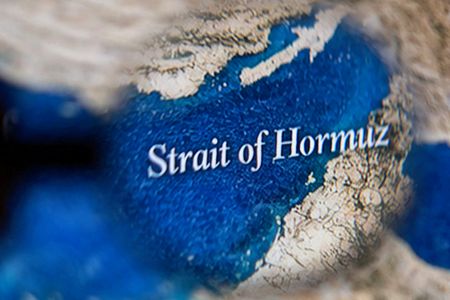
U.S. Secretary of State Marco Rubio expressed cautious optimism about the diplomatic progress on Thursday, telling reporters there had been “some good signs” in the negotiations. However, he emphasized that any resolution would be impossible if Iran continues to impose shipping fees in the Strait of Hormuz, which has been largely closed to commercial traffic since the conflict began on February 28.
“There’s some good signs,” Rubio stated. “I don’t want to be overly optimistic … So, let’s see what happens over the next few days.”
A senior Iranian source indicated to Reuters on Thursday that negotiators have made progress in narrowing differences, though uranium enrichment activities and Strait of Hormuz control remain significant obstacles.
The conflict has severely impacted global markets, with rising oil costs raising concerns about widespread inflation. Prior to the war, approximately one-fifth of worldwide oil and liquefied natural gas shipments passed through the Strait of Hormuz.
Financial markets reflected the ongoing uncertainty Friday, with the U.S. dollar reaching near six-week highs and oil prices climbing as investors questioned whether diplomatic efforts would succeed.
“We’re coming to the end of week 12, we’re six weeks in the ceasefire, and I’m just not really that convinced we’re any closer to a resolution between the U.S. and Iran,” said Tony Sycamore, a market analyst at IG, regarding the Middle East conflict.
President Donald Trump declared Thursday that the United States would ultimately secure Iran’s highly enriched uranium stockpile, which Washington claims is intended for weapons development despite Tehran’s assertions that it serves peaceful purposes.
“We will get it. We don’t need it, we don’t want it. We’ll probably destroy it after we get it, but we’re not going to let them have it,” Trump told reporters at the White House on Thursday.
Prior to Trump’s remarks, two senior Iranian sources informed Reuters that Iranian Supreme Leader Ayatollah Mojtaba Khamenei had ordered that the uranium must not leave the country.
The president also criticized Tehran’s plans to impose charges on vessels using the strait.
“We want it open, we want it free. We don’t want tolls,” Trump declared. “It’s an international waterway.”
Trump is facing political pressure domestically with November midterm elections approaching, as Americans express frustration over rising fuel costs and his approval ratings hover near their lowest point since his return to office last year.
Iran presented its most recent proposal to the United States earlier this week.
According to Tehran’s descriptions, the offer largely repeats conditions Trump has previously rejected, including demands for Strait of Hormuz control, war damage compensation, sanctions relief, asset unfreezing, and U.S. military withdrawal.
The International Energy Agency has characterized the conflict as creating the world’s most severe energy crisis.
The agency warned Thursday that peak summer fuel consumption combined with reduced Middle Eastern supply could push the market into the “red zone” during July and August.
Shipping traffic through the strait has dropped dramatically compared to the 125 to 140 daily transits recorded before the war began.
Iran has indicated it plans to reopen the strait to allied nations that comply with its conditions, which may include fee requirements.
“It would make a diplomatic deal unfeasible if they were to continue to pursue that. So it’s a threat to the world if they were trying to do that, and it’s completely illegal,” Rubio said.
Trump and Israeli Prime Minister Benjamin Netanyahu have stated their military objectives include reducing Iran’s support for regional militant groups, eliminating its nuclear capabilities, destroying its missile arsenal, and facilitating regime change by Iranian citizens.
However, Iran has maintained its stockpile of weapons-grade enriched uranium and continues to possess the capability to threaten neighboring countries through missiles, drones, and proxy forces.
Investment bank Nomura has become part of an expanding group of financial firms predicting the Federal Reserve will maintain current interest rates throughout 2026, pointing to continuing inflation concerns and uncertainty about whether policymakers will support rate reductions.
Central bank officials are growing more concerned that conflict in Iran might contribute to rising prices, with an increasing number willing to consider rate increases if necessary, creating a more restrictive policy environment for incoming chair Kevin Warsh.
The financial firm, which previously forecast quarter-point reductions in both September and December, stated in a May 21 analysis that increasing price pressures from the Iran conflict and an expanding worldwide shortage of memory chips are affecting consumer costs and maintaining high inflation levels.
Financial institutions including Morgan Stanley and Barclays have eliminated expectations for Federal Reserve rate cuts this year, pointing to negative effects from elevated oil prices connected to Middle Eastern tensions and positive impacts from robust capital investment related to artificial intelligence.
Kevin Warsh, scheduled to take the oath as Fed Chair on Friday, indicated during his confirmation proceedings that he continues to favor rate reductions based on his economic assessment.
Although robust economic growth, high inflation and accommodating financial conditions might eventually support higher rates, Nomura does not anticipate increases in the immediate future.
Nevertheless, “recent data and Fed commentary make us skeptical he can convince a majority of the FOMC to support rate cuts,” Nomura said.
Financial markets are currently indicating approximately a 58% probability that the Federal Reserve will increase interest rates by no less than 25 basis points before year-end, based on CME’s FedWatch tool.
The Federal Reserve’s next scheduled meeting is June 16-17, 2026.
Television host Stephen Colbert wrapped up his 11-year tenure on “The Late Show” Thursday evening, featuring an impromptu conversation with Beatles legend Paul McCartney and delivering sharp commentary about his unexpected exit from CBS.
The concluding episode of “The Late Show with Stephen Colbert” opened with the host expressing gratitude to both studio guests and home viewers for following his nightly commentary on current affairs, which frequently included sharp criticism of Republican President Donald Trump.
“We were here to feel the news with you, and I don’t know about you, but I sure have felt it,” Colbert told the laughing audience at the Ed Sullivan Theater in New York.
CBS revealed last July its decision to cancel “The Late Show,” pointing to financial considerations. The late-night television format, a cornerstone of American entertainment since the 1950s, has experienced declining audience numbers and reduced advertising revenue over recent years.
The network’s choice to terminate the highest-rated late-night program generated significant backlash from Democrats and other observers who interpreted it as an effort to suppress political comedy in defiance of First Amendment free speech guarantees.
The program’s elimination occurred while Paramount Global, CBS’s parent company at the time, was pursuing government approval for a corporate merger. Following approval of that transaction, CBS now operates under David Ellison-led Paramount Skydance.
Colbert’s program maintained its position as the most-viewed late-night talk show among broadcast networks since the 2017-2018 television season, based on Nielsen ratings. During this season, “The Late Show” drew an average of 2.1 million viewers.
During Thursday’s final broadcast, Colbert stepped away from his hosting position and ventured backstage, where he discovered a luminous green circle. Astrophysicist Neil deGrasse Tyson, a regular show contributor, humorously suggested it represented a wormhole created by “two conflicting realities,” namely “a show that was number one on late night, and it also gets canceled.”
“Your cancellation has created a rift in the comedy-variety-talk continuum,” Tyson explained. “If it grows, all of late-night television could be destroyed.”
Other late-night personalities Jimmy Kimmel, John Oliver, Jimmy Fallon, Seth Meyers and Jon Stewart subsequently joined to provide guidance.
Initially, Colbert indicated he had arranged for Pope Leo to appear as his closing guest. A staff member then jokingly announced that the pontiff had withdrawn due to dissatisfaction with his dressing room refreshments.
McCartney then unexpectedly entered the stage, announcing his availability. “I was just in the area. I was doing some errands,” the musician joked.
McCartney had previously performed in the same venue in 1964, when the Beatles made their American debut on “The Ed Sullivan Show.” Colbert inquired about McCartney’s memories from that historic performance, Sullivan’s personality, and the Beatles’ initial impressions of the United States.
The musician recalled that he and his fellow band members, who were in their early twenties then, perceived America as “the land of the free, the greatest democracy.”
“That’s what it was, and hopefully still is,” McCartney commented.
The program concluded with McCartney performing the Beatles hit “Hello, Goodbye” while Colbert provided backing vocals.
Following the show’s conclusion, Trump posted on Truth Social that Colbert possessed “no talent.”
“You could take any person off of the street and they would be better than this total jerk,” the president stated. “Thank goodness he’s finally gone!”
Prior to Thursday’s broadcast, supporters gathered outside the theater expressed sadness about losing both Colbert’s hosting and “The Late Show” as a cultural institution. Colbert, 62, assumed hosting duties from David Letterman in 2015.
“This is the end of an era. The late night show is a staple. David Letterman, Johnny Carson, it’s upsetting,” said fan Mike McGillicuddy.
Another supporter, Sarah Thompson, expressed being “very sad that Stephen’s leaving.”
“It’s just going to leave a big hole in America because you need to laugh at the end of the day from all the trauma that we’re facing,” she said.
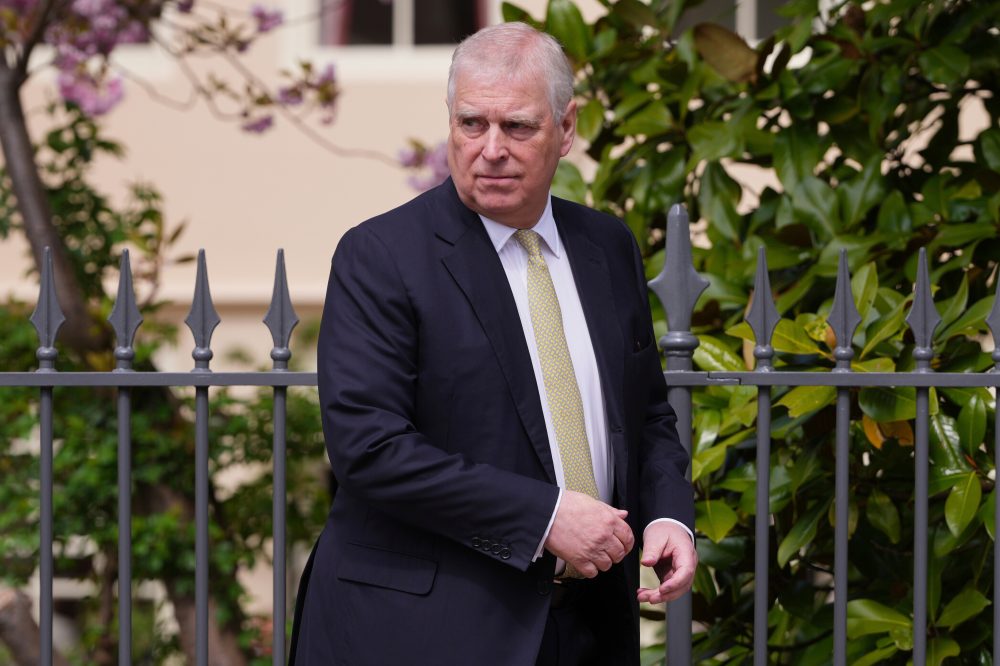
LONDON — Law enforcement officials in Britain issued a public appeal Friday for witnesses to come forward as part of their ongoing investigation into alleged criminal conduct by former Prince Andrew, with sexual misconduct among the potential charges being examined.
Thames Valley Police confirmed they have established communication with legal representatives of a woman who claims she was brought to a Windsor location in 2010 for sexual activities.
“Should she wish to report this to police it will be taken seriously and handled with care, sensitivity and respect for her privacy,” police said in a statement.
A Florida-based lawyer named Brad Edwards informed the BBC in January that his client had a sexual encounter with the former royal family member, who now goes by Andrew Mountbatten-Windsor, at his Windsor residence. Edwards stated his client was trafficked there by the late convicted sex offender Jeffrey Epstein in 2010.
The former prince has consistently rejected any claims of wrongdoing related to the accusations made against him.
Mystery enthusiasts worldwide observed International Sherlock Holmes Day on Friday, paying tribute to Sir Arthur Conan Doyle on his birthday and celebrating the enduring legacy of literature’s most famous detective.
The festivities stretched from the iconic 221B Baker Street in London’s heart to the dramatic Reichenbach Falls nestled in Switzerland’s mountainous landscape, where devoted fans gathered to honor both the author and his legendary creation.
Earlier this month, members of the Sherlock Holmes Society of London made a special journey to Switzerland, donning Victorian-era clothing including traditional capes, deerstalker hats, and period dresses. Their mission: to recreate one of fiction’s most memorable death scenes at the Reichenbach Falls.
This dramatic confrontation between the brilliant detective and his arch-enemy Professor James Moriarty left readers stunned when “The Final Problem” was published, seemingly ending the career of one of literature’s most cherished characters.
Conan Doyle’s 1893 tale depicted Holmes vanishing over the waterfall’s edge alongside Moriarty, with only Dr. John Watson left behind to find a goodbye note near the rushing waters. The author, born May 22, 1859, had planned to eliminate Holmes permanently, believing the detective tales were preventing recognition of his more scholarly historical works.
Public reaction was immediate and intense. Magazine readers cancelled their subscriptions, donned black armbands as symbols of grief, and voiced strong opposition to their beloved detective’s demise. Ten years passed before Conan Doyle changed course, resurrecting Holmes in “The Adventure of the Empty House” with the revelation that the detective had faked his death and escaped the falls.
The Holmes chronicles established numerous foundations of contemporary detective literature. From 1887 through 1927, Conan Doyle produced four novels and 56 short stories featuring Holmes, pioneering methods like forensic reasoning, careful observation, and systematic analysis that became cornerstones of mystery writing.
These tales have inspired countless adaptations across theater, film, and comics globally, featuring performances by Jeremy Brett, Basil Rathbone, Christopher Lee, Robert Downey Jr., and Benedict Cumberbatch in various interpretations.
The newest adaptation features British actor Hero Fiennes Tiffin in Amazon Prime’s recent prequel series “Young Sherlock,” developed by Guy Ritchie and launched this year. Production on a second season is currently underway.
The Sherlock Holmes Museum at 221B Baker Street has welcomed visitors since 1990, displaying fascinating artifacts like Holmes’ violin and chemistry equipment, plus a pistol concealed within a carved-out book.
According to the stories, Holmes resided in this Georgian townhouse from 1881 to 1904, sharing the space with Watson. However, 221B was fictional when Conan Doyle wrote his stories, as Baker Street’s numbering system didn’t extend that far during that period.
The museum, actually situated between numbers 237 and 241, required special authorization from Westminster City Council to display the famous fictional address.
“It has to be the most famous address in the world, I would say,” tour guide Paul Leharne said. “No matter what reincarnation Sherlock Holmes is going to take, he’s always going to be living at 221B Baker Street.”
On May 3, society members delivered dramatic performances at Reichenbach Falls, complete with theatrical gestures, elaborate acting, and dark cloaks flowing in the waterfall’s mist as they portrayed the Holmes-Moriarty battle.
Established in 1951, the society unites readers, collectors, scholars, and admirers of Conan Doyle’s writings. Their Swiss expedition followed portions of the path outlined in “The Final Problem,” with members traveling through Switzerland in classic buses before taking a steep cog railway to reach the waterfall.
Reichenbach Falls gained fame as one of detective fiction’s most significant locations following Conan Doyle’s 1893 visit to the region.
Philip Porter, an author and publisher who portrayed Sherlock Holmes in the society’s recreation, emphasized the location’s continuing importance to the stories’ enduring popularity.
“It’s a pilgrimage,” he said. “It’s a very dramatic setting: The sound, the backdrop, the music behind us of the cascading water.”
Peter Horrocks, who took on Moriarty’s role, described the challenge of returning to everyday life after several days embodying the villain. “It’s a strange feeling, getting out of these clothes,” he said. “You do start to inhabit the character that you’re playing after a while.”
JAKARTA, Indonesia — A sweeping transformation of Indonesia’s commodity trade policies has industry experts comparing the sudden shift to a corporate takeover of major sectors in the resource-abundant nation, with potential worldwide consequences.
The policy change, revealed to parliament Wednesday by Indonesian President Prabowo Subianto, requires a newly established state-owned company to manage all national exports of coal, palm oil and iron alloys starting in September.
Prabowo explained that boosting tax collections is a primary goal. This would help replenish depleted government coffers that have been drained by energy disruptions from the conflict in Iran. Given Indonesia’s position as a leading commodities supplier, these policy changes are expected to create waves throughout global supply networks.
The Southeast Asian country stands as the world’s top supplier of thermal coal used for power generation and palm oil, an essential component in products ranging from beauty items to alternative fuels. This nation of approximately 287 million residents also possesses the planet’s largest confirmed nickel deposits, a crucial material for electric car batteries and stainless steel production.
Industry analysts predict China, as Indonesia’s primary trading ally, will experience the most significant impact from this policy transformation.
China is monitoring Indonesia’s “initiative to nationalize” while evaluating “how it would impact China’s further cooperation,” according to Lie Xie from the UK-based think tank Third Generation Environmentalism. “The future path that Indonesia is taking is highly important for China.”
The rapid timeline for implementing these new regulations could disrupt China’s access to essential materials for its clean technology sectors, which depend on Indonesian resources to meet expanding renewable energy demands. Chinese corporations represent major stakeholders in numerous Indonesian sectors, including essential minerals.
“Indonesia has become vital to China” as it provides the materials that “underpin China’s dominance in electric vehicles, batteries, and industrial manufacturing,” explained Li Shuo from the Asia Society Policy Institute’s China Climate Hub. “But the relationship is evolving.”
If executed properly, consolidating Indonesia’s trade operations could also create opportunities for increased American investment, experts noted, as the U.S. competes with China for critical resources.
“Such a move is a clear signal that U.S. investment is being attracted to come to Indonesia even more,” stated Bhima Yudhistira from the Jakarta-based Center of Economic and Law Studies. He characterized the new approach as a “hostile takeover” that will require reviewing every agreement in Chinese-controlled industries.
Prabowo informed legislators that Indonesia had forfeited up to $908 billion due to exporters misrepresenting their sales figures to evade taxes and additional charges.
“The primary objective of this policy is to strengthen oversight and monitoring — and to combat under-invoicing, transfer pricing and the diversion of export proceeds,” he stated.
The organization assuming control of Indonesia’s commodity exports — PT Danantara Sumberdaya Indonesia — received official registration one day prior to Prabowo’s declaration. Danantara, the sovereign wealth fund established by the president last year, holds 99% ownership and will enhance government authority in commodity pricing decisions.
This “represents a governance reform, a step toward strengthening our credibility in managing strategic commodity trade in an orderly and accountable manner,” commented Yvonne Mewengkang from Indonesia’s Ministry of Foreign Affairs.
Between June and August, private enterprises must transfer their import and export operations to Danantara, which should oversee all international trade transactions by September.
“There will be an explanation for investors later, so that stakeholders will be informed before June 1,” noted Airlangga Hartarto, the coordinating economic minister in Indonesia. “After all, in the initial phase, we are focusing on transparency in reporting.”
Trade specialists question whether the government can smoothly assume control of commerce across all these sectors in under four months.
China serves as Indonesia’s leading trade partner and represents one of its largest foreign investment sources.
Chinese companies control Indonesia’s nickel sector while China remains a top buyer of resources covered by the trade reorganization.
Additional significant buyers of Indonesian palm oil, coal and nickel include the U.S. and European Union. India, Japan, South Korea and regional neighbors Malaysia, Vietnam and the Philippines would also face effects.
Under Prabowo’s leadership, the administration has expanded oversight of strategically vital commodities, targeting illegal mining activities, assuming plantation control and promoting domestic refining capabilities for critical minerals.
Prior to Prabowo’s announcement, the China Chamber of Commerce in Indonesia delivered a five-page complaint letter last week expressing investor worries about Indonesia’s unpredictable business environment.
Chinese companies have recently encountered “excessively stringent regulation, over-enforcement, and even corruption and extortion by competent authorities,” the correspondence stated. This has “severely disrupted normal business operations” and “undermined long-term investment confidence.”
“Prabowo didn’t listen to the complaint from these Chinese companies and then did something very, very shocking with this new body to control the export,” Yudhistira observed.
Through establishing state oversight of key sectors, Indonesia aims to diversify its investor base, according to Yudhistira with CELIOS. Diminishing Chinese influence may generate interest from alternative partners, including the U.S.
This will only escalate the resource competition between the two superpowers, he cautioned.
Whether this new approach successfully draws fresh investors will hinge on implementation transparency, noted Syahdiva Moezbar from the Centre for Research on Energy and Clean Air.
Private companies report remaining uninformed about specifics.
Danantara’s effects on small-scale trade, specialty product exports and processing industries require clarification, according to Eddy Martono, chairman of the Indonesian Palm Oil Association.
“Exporters usually already have their own established markets; we must ensure we do not lose these markets if they are not managed properly,” he emphasized.
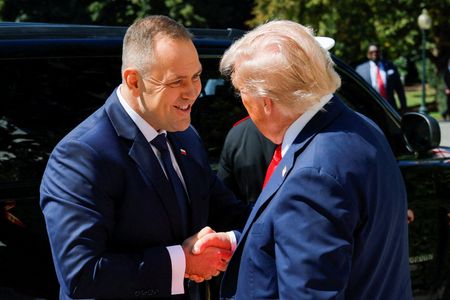
WARSAW, May 22 – Poland’s President Karol Nawrocki expressed appreciation to President Donald Trump following the US decision to deploy additional American military personnel to Poland.
Nawrocki’s thanks followed Trump’s Thursday announcement that the United States would deploy 5,000 additional troops, with Trump citing his relationship with the conservative nationalist leader as the motivation.
“Good alliances are those based on cooperation, mutual respect, and a commitment to our shared security,” Nawrocki wrote on X.
“I thank U.S. President Donald J. Trump for his friendship toward Poland and for the decisions whose practical dimension we see very clearly today,” Nawrocki added on Thursday night.
The move to deploy more soldiers to Poland demonstrates that Polish-American relations remain “very strong, and Poland is a model ally,” Defence Minister Wladyslaw Kosiniak-Kamysz stated, also posting on X.
Earlier this week on Tuesday, US Vice President JD Vance informed reporters that a planned US military deployment to Poland had faced delays, though he clarified it would be incorrect to characterize this as a withdrawal of troops from Europe.
Previously, Polish officials had expressed concern over reports suggesting the Pentagon had scrapped deployment plans for their country, but they later provided assurances to Polish citizens that such reports were inaccurate.
A Polish parcel locker company announced Friday that a massive $9 billion acquisition offer spearheaded by FedEx will accept shareholder responses between May 26 and July 27.
InPost revealed that the €7.8 billion cash proposal from a group including FedEx, Advent International, and existing InPost stakeholders has secured necessary approvals from regulators in China, Israel, Italy, Turkey, and Ukraine. The company expects the European Commission and Vietnam to finish their evaluations during the latter half of 2026.
The February announcement of this complete cash acquisition received full endorsement from InPost’s board of directors and currently has backing from 48% of company shareholders. The transaction requires approval from 80% of shares to move forward successfully.
The €15.60 per share proposal would enable the American shipping giant FedEx to strengthen its European operations while supporting the development of a major European parcel locker network, even as both companies maintain their competitive independence.
Following completion of the transaction, InPost’s stock would be removed from trading on the Euronext Amsterdam exchange.
The company plans to hold two special shareholder meetings to provide detailed information about the acquisition proposal.
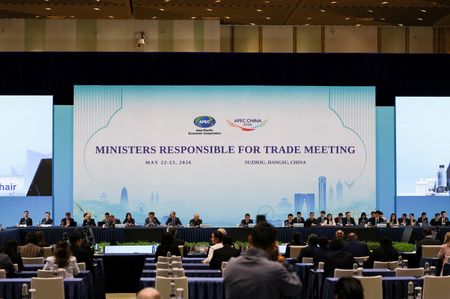
Trade officials from across the Asia-Pacific region have convened in the eastern Chinese city of Suzhou for discussions focused on strengthening economic cooperation amid mounting global tensions.
The two-day conference, which began Friday, brings together representatives from the Asia-Pacific Economic Cooperation nations – a bloc that handles nearly half of worldwide trade. Participants are addressing multilateral partnerships, trade imbalances, and how to build more resilient supply chains during times of international crisis, including the U.S.-Israeli war on Iran.
During Friday’s opening ceremony, Li Chenggang, China’s international trade representative and vice commerce minister, emphasized the importance of collaboration during uncertain times. “The more turbulent the times, the more we must adhere to seeking common ground while reserving differences, working together to overcome difficulties, striving to reach more consensus, leading the Asia-Pacific economy through the crisis and injecting confidence into the global economy,” Li stated.
The Suzhou meetings serve as preparation for this year’s annual APEC leaders summit scheduled for Shenzhen. Attendees are also examining ways to advance regional free-trade agreements, enhance digital commerce, improve artificial intelligence capabilities, and promote sustainable economic growth.
Li outlined this year’s conference priorities as “optimising institutional arrangements, cultivating momentum in emerging fields, jointly expanding the Asia-Pacific economic pie and ensuring fair distribution of that pie to achieve inclusive, mutually beneficial, and win-win outcomes.”
The gathering occurs against a backdrop of significant trade tensions. China recently reported a record trade surplus approaching $1.2 trillion for the previous year. Meanwhile, Group of Seven finance ministers recently reached consensus on addressing current trade imbalances, describing the situation as unsustainable. U.S. Treasury Secretary Scott Bessent has advocated for increased protections against an influx of low-priced Chinese goods.
The conference follows recent high-profile diplomatic visits to Beijing by U.S. President Donald Trump and Russian President Vladimir Putin. All three nations hold APEC membership.
APEC Business Advisory Council chair Li Fanrong addressed the gathering Friday, highlighting the economic pressures facing the global marketplace. Speaking for the business community, he called for a moratorium on additional trade restrictions to avoid creating more uncertainty. “The stakes could not be higher for business confidence, jobs, living standards and long-term prosperity in our region,” he declared.
Notable participants representing APEC’s 21 member economies include Rick Switzer, the deputy U.S. trade representative; Don Farrell, Australia’s trade minister; Kao Kim Hourn, ASEAN’s secretary general; and Taiwan’s top trade negotiator, Yang Jen-ni.
Japanese trade minister Ryosei Akazawa’s attendance marks the highest-ranking Japanese official visit to China since diplomatic relations deteriorated in November. A potential meeting between Akazawa and senior Chinese officials would represent the most significant diplomatic contact since Japanese Prime Minister Sanae Takaichi sparked controversy by suggesting Japan might respond militarily to a hypothetical Chinese attack on Taiwan.
Following those remarks, Beijing implemented various retaliatory actions, including discouraging Chinese citizens from traveling to Japan and restricting exports of certain rare earth materials essential for manufacturing electric vehicles, weapons, and other products.
KUALA LUMPUR, May 22 – Starting June 1, Malaysia will implement fresh regulations designed to shield young people from dangerous online material, according to an announcement Friday from the country’s communications regulator.
The Malaysian Communications and Multimedia Commission announced that these new regulations will mandate online service companies to establish protective measures that restrict account creation and ownership for individuals younger than 16, while also enforcing enhanced content oversight across their platforms.
According to the commission, these initiatives target providing suitable age-based protections and limitations for high-risk elements found on digital platforms.
The regulatory body stated that online platform companies must establish “effective reporting and response mechanisms, advertiser verification measures and the labelling of manipulated content where appropriate.”
While the commission mentioned that online platforms will receive a grace period to put these measures into effect, officials did not reveal how long this transition period will last.
In recent years, Malaysia has increased its oversight of social media corporations following discoveries of a significant increase in dangerous online material. Malaysian officials classify online gambling, fraudulent schemes, child pornography and grooming, cyberbullying, and material concerning race, religion, and royalty as harmful content.
The administration intends to implement age verification for users within this year, mirroring comparable actions worldwide aimed at restricting social media access for young people.
Turkish officials have permanently shut down Istanbul Bilgi University by canceling its operating permit, according to an announcement in the country’s Official Gazette on Friday. The closure comes after government authorities took control of the institution during a criminal investigation last year.
The private university, which opened its doors in 1996, was purchased by Can Holding in 2019. However, the holding company’s assets were confiscated by the government as part of an ongoing probe into money laundering, tax evasion, and organized crime activities last year.
Following the government seizure, officials placed the university under the management of a state-appointed trustee. The institution currently serves approximately 22,000 students, with about 3,400 new enrollments expected for 2025.
According to Turkish news outlets, affected students will transfer their studies to the Mimar Sinan University of Fine Arts, which serves as Istanbul Bilgi University’s guarantor institution. Under Turkish law, all private foundation universities must designate a state university as their guarantor school.
Turkish President Tayyip Erdogan gave final approval for the decision to cancel Istanbul Bilgi’s operating license, effectively ending the university’s nearly three-decade operation.
House Republicans on Thursday postponed a planned vote on legislation that would force President Donald Trump to end military involvement in Iran, as party leaders struggled to gather sufficient support to block the measure.
The GOP leadership faced difficulties securing enough votes to dismiss the resolution, which would require the president to withdraw from the conflict with Iran. As a result, the planned vote has been pushed back until June.
The delay highlights the challenges Republicans are encountering as they work to maintain unity on foreign policy issues while the administration continues its military engagement in the region.
RALEIGH, N.C. — Carolina’s extended time away from the ice caught up with them in a big way Thursday night, as the Hurricanes suffered through defensive lapses and mental mistakes in a crushing 6-2 loss to Montreal to open the Eastern Conference Final.
The Hurricanes had been idle for 11 days following their sweep into this round — the most extended rest period for any club before beginning their next playoff series since at least 1920. That lengthy layoff showed immediately as Carolina watched Montreal strike for four goals within the opening 11-plus minutes, establishing the foundation for what became a dominant performance by the Canadiens in the best-of-seven opener.
During the contest, the squad that had compiled an 8-0 record through their first two playoff rounds while never surrendering more than two goals in a single game found themselves constantly caught out of position and missing defensive assignments as Montreal generated numerous high-quality scoring opportunities in open areas.
“We lost the game from the start,” Carolina captain Jordan Staal said. “Obviously, giving them that many freebies, any team is going to make you pay, especially at this time of year. There wasn’t enough respect for them. They played a great game. They were ready to roll and we weren’t.”
The performance will intensify the debate about whether extended rest helps or hurts teams, a conversation that had surrounded Carolina since they eliminated Philadelphia on May 9 and began waiting for Montreal to finish their seven-game series against Buffalo. The Hurricanes appeared to experience both benefits (Seth Jarvis found the net in the opening minute for an early lead) and drawbacks (surrendering numerous premium scoring chances) from their time off.
Montreal center Jake Evans acknowledged the unusual situation, saying: “That’s a really unique circumstance to be off however many days.”
“I don’t think that had anything to do with it,” Jarvis said about the break. “I think it was just a lack of awareness and just us not being ready to go right from the puck drop.”
The opening proved shocking for Carolina, and not just because they trailed 4-1 after Ivan Demidov executed a forehand-backhand-forehand sequence to beat Frederik Andersen on a breakaway. More concerning was how systematically Montreal dismantled Carolina’s defensive structure.
Carolina has built success around aggressive forechecking and puck control that creates offensive zone pressure while limiting opposition chances. This strategy has powered an eight-year postseason streak and helped them finish second only to Presidents’ Trophy winner Colorado during the regular season.
The Hurricanes then eliminated Ottawa and Philadelphia in sweeps, becoming the first franchise to win their opening two playoff rounds without dropping a game since the NHL adopted best-of-seven formatting for all four rounds in 1987. They never trailed during their first five playoff contests. They received outstanding production from the Logan Stankoven, Taylor Hall and Jackson Blake line to compensate for quiet offensive numbers from their top unit of Jarvis-Sebastian Aho-Andrei Svechnikov. Andersen had been outstanding by making crucial saves throughout.
None of that excellence was visible Thursday.
“We weren’t ready, we weren’t mentally ready to play at that (level) we had been playing,” coach Rod Brind’Amour said. “Everything was just a little off and they’re a very, very talented team. Obviously, some of them were just blown coverages that I don’t know what we were thinking.”
Montreal arrived brimming with momentum after capturing a Game 7 victory on the road against Tampa Bay, then repeating that feat Monday night in overtime against the Sabres.
Montreal coach Martin St. Louis revealed that the team’s analytics department had begun studying Carolina while they were still battling through the Buffalo series. The Canadiens certainly appeared well-prepared in another loud and intimidating atmosphere, successfully moving the puck away from Carolina’s aggressive pressure early to create clean breakouts and multiple breakaway opportunities against Andersen.
Meanwhile, Brind’Amour acknowledged it was a “tough” performance for several of Carolina’s key players. That included defenseman Jaccob Slavin, who recorded a minus-4 rating.
More troubling, this result compounds the mounting pressure from Carolina’s Eastern Conference Final struggles. This marks the team’s third appearance in four years and fourth time in their current eight-season playoff streak under Brind’Amour. The Hurricanes now hold a 1-13 record in those contests, including sweep losses to Boston in 2019 and Florida in 2023.
Game 2 is scheduled for Saturday night.
“I think we just toss this game to be honest,” Brind’Amour said. “I hate that this time of year that’s what we’ve got to do. But there wasn’t much to grab on to there.”
Markets across Asia posted increases Friday, mirroring moderate advances seen on Wall Street, as crude oil costs continued climbing due to persistent uncertainty surrounding the Iran conflict.
Energy prices had dropped Thursday during U.S. market hours, reducing strain on bond markets as yields declined. Bond yields had surged earlier this week to levels that posed risks to global economic growth and threatened to drive down values of stocks, bitcoin, and various other investments.
U.S. market futures showed slight increases while Tokyo’s Nikkei 225 jumped 2.7% to reach 63,352.44. Economic data revealed inflation dropped to a four-year low of 1.4% in April, even as energy costs increased due to the ongoing conflict.
South Korea’s Kospi index advanced 0.6% to 7,860.59.
Hong Kong’s Hang Seng climbed 1.2% to 25,685.65, while the Shanghai Composite index increased 0.5% to 4,096.24.
Australia’s S&P/ASX 200 moved up 0.5% to 8,664.00.
Taiwan’s Taiex traded 1.5% higher, while India’s Sensex edged up 0.2%.
Crude oil costs stayed high due to disruptions affecting the Strait of Hormuz, a vital passage for energy transportation, with shipping operations remaining significantly reduced compared to levels before the Iran conflict started in late February. Ongoing discussions between the U.S. and Iran have continued without resolution, contributing to market uncertainty.
Congressional Republicans faced challenges Thursday in securing enough support to defeat legislation requiring President Donald Trump to end involvement in the war, pushing scheduled votes on the issue into June.
Brent crude, the global benchmark, increased 1.5% to $104.08 per barrel. Prices were approximately $70 per barrel in February before hostilities commenced. U.S. benchmark crude traded 0.9% higher at $97.25 per barrel.
“Markets are still searching for signs of progress in a potential deal between the US and Iran,” ING commodities strategists Warren Patterson and Ewa Manthey wrote in a note on Friday. “While there are signs of optimism, uncertainty reigns.”
Wall Street posted gains Thursday, with the benchmark S&P 500 rising 0.2% to 7,445.72. The Dow Jones Industrial Average increased 0.6% to 50,285.66, while the technology-heavy Nasdaq composite moved up 0.1% to 26,293.10.
Nvidia stock dropped 1.8% even after reporting quarterly earnings that exceeded expectations amid the artificial intelligence boom, with some market analysts still considering the share price undervalued.
Southwest Airlines increased 2.7% and American Airlines rose 4.9% as energy costs declined before recovering. Ralph Lauren jumped 13.9% after reporting quarterly results that beat forecasts.
In early Friday trading, the yield on the U.S. 10-year Treasury stood at 4.56%, down from over 4.67% earlier this week, when increased global inflation pressures related to the conflict drove bond yields higher.
The U.S. dollar strengthened to 159.02 Japanese yen from 158.98 yen. The euro traded at $1.1613, declining from $1.1619.
KHARTOUM, Sudan — A routine call from a husband became the last contact a Sudanese family would ever have. He had finished his duties and planned to visit the market on his way home. But this wasn’t an ordinary workday — he was coming back from battle.
Fahmy al-Fateh never returned home that day. His wife, Azaher Abdallah, began reaching out to friends, family members, and eventually his military unit colleagues. Witnesses last spotted her husband departing from a military facility in Khartoum on a motorcycle. That occurred more than 12 months ago.
Today, their young 3-year-old boy yells at every motorcycle that passes by, believing his father might be riding it, Abdallah explained.
“He was the most precious thing in my life,” she expressed through tears, covering her face with her palms. “I would feel more at peace if I knew something. It’s better than not knowing what happened to him, whether he’s alive or dead.”
Al-Fateh represents just one case among more than 8,000 individuals who have disappeared throughout Sudan’s three-year conflict, based on data from the International Committee of the Red Cross. The warfare has shattered families across the nation. Citizens have become separated during evacuation attempts, vanished amid combat operations, or been secretly imprisoned, leaving loved ones desperate for answers about their whereabouts.
Numerous missing persons from Khartoum state are believed to rest in unmarked burial sites where tens of thousands of remains have been discovered since Sudan’s army regained control of the capital from paramilitary forces last year.
During active fighting, burying bodies in traditional cemeteries proved extremely hazardous. Residents created graves wherever possible under the circumstances.
While traveling through the city last month, Associated Press journalists observed sports facilities and burial grounds filled beyond capacity with the deceased. Dirt piles next to an abandoned fuel station displayed improvised markers bearing names and dates, though many lacked any identification.
A military media representative accompanied the AP throughout the visit, including during interview sessions. The AP maintains complete editorial authority over its reporting.
The ICRC reported resolving more than 1,000 missing person cases but declined to specify how many individuals were found alive versus deceased.
Abdallah was asleep when her husband departed their home before dawn last January. Al-Fateh, a 38-year-old farmer and trader, had enlisted with Sudan’s army at the war’s onset. That morning, he was participating in efforts to reclaim Khartoum from the paramilitary Rapid Support Forces.
Since his disappearance, the 30-year-old Abdallah has searched throughout the city, checked hospital morgues, and requested military assistance. His unit promised to attempt locating him. If no news emerged, they advised, she should assume he was missing.
At their residence on Khartoum’s outskirts, she reviews photographs of him wearing his uniform, maintaining hope for his eventual return.
“That is what my heart tells me,” she stated.
Mental health experts explain that uncertainty regarding missing family members can trigger years of severe emotional distress.
“Families of missing persons experience additional layers of vulnerabilities due to hostilities, displacement and ambiguous loss,” explained Nathalie Nyamukeba, a psychologist with the ICRC.
Several Sudanese families report that continuing the search remains their only coping mechanism.
Sulafa Mustafa’s son disappeared two years ago. The reserved 18-year-old Suleiman Abdalsid visited a friend’s residence near Khartoum and failed to return home.
His mother persistently traveled through neighborhoods, even while artillery sounds echoed nearby, conducting house-to-house inquiries. She has checked medical facilities and detention centers, showing his photograph to countless strangers.
She has even used a rented microphone to call out his name.
“I haven’t lost faith in finding you,” she declared, then covered her face with her hands.
Locating people dead or alive remains extremely difficult in Sudan, particularly as the conflict continues. Laboratories that could have conducted DNA analysis have been destroyed, and few forensic experts remain in the country.
In Khartoum state, officials have relocated nearly 30,000 bodies — from approximately 50,000 total — that had been quickly buried near residences, in athletic fields, or alongside roads when the RSF controlled the territory. Their efforts are ongoing.
Roughly 10% of relocated bodies remain unidentified.
Hisham Zienalabdien, director general of the forensic medicine department for Khartoum state, explained they are preserving DNA from unidentified remains with hopes of eventually matching it with family members.
For families who have located loved ones but cannot provide proper burials, a different type of anguish exists.
Abubakar Alswai waited over a year to transfer his 73-year-old brother, Mohamed, from where he had been interred in front of his residence to a public cemetery.
The RSF had killed Mohamed but waited three weeks before allowing a neighbor to bury his bullet-struck and decomposing body. According to Islamic customs, widely practiced in Sudan, funeral services should occur as rapidly as possible, preferably within 24 hours.
Alswai wiped tears from his face while watching grave diggers exhume his brother’s remains. At least Mohamed would now receive the respectful burial he deserved, he said, and his family could find some closure.
“What happened had left a mark on my heart,” he said.
BELGRADE, Serbia — University students across Serbia are preparing for their largest demonstration of 2025 this weekend, intensifying their campaign for sweeping political reform in the Balkan nation governed by authoritarian President Aleksandar Vucic.
Saturday’s rally in the capital city of Belgrade is expected to draw thousands of participants from across the country.
The student-led movement previously organized massive anti-corruption demonstrations that challenged Vucic’s authority throughout last year. Currently, the activists are focusing their efforts on upcoming elections scheduled for later this year or early next, which they believe could remove Vucic’s right-wing populist administration from power.
“We hope a lot of people will come and spend the day with us, and then continue to support the students because we are preparing for the elections,” youth representative Isidora Jovanovic told The Associated Press. “Serbia needs a change, and students will bring that change.”
Saturday’s demonstration will take place at Belgrade’s Slavija Square, where a massive anti-government gathering occurred last March. That previous rally concluded with an abrupt disturbance that analysts later claimed — though the government disputed — involved authorities deploying a sonic weapon against peaceful demonstrators.
Earlier this week at the square, law enforcement officers intervened to keep Vucic’s supporters separated from students who were creating their “Students win” banners. Several days before that incident, an elderly person sustained injuries when a motorist disrupted a traffic blockade in downtown Belgrade.
Multiple confrontations have occurred in recent months, including violent episodes that disrupted a local election in March.
Jovanovic stated that event organizers are taking every precaution to prevent any confrontations, particularly given the large number of attendees expected from throughout Serbia. The students “don’t want any of them (citizens) to leave with a bad feeling or injuries.”
The student activism began following a railway station disaster that claimed 16 lives in northern Serbia during November 2024. The movement maintained faculty blockades for months in 2025, ultimately forcing then-Prime Minister Milos Vucevic and his administration to step down.
The demonstrators declared that outcome insufficient and have called for early elections, which Vucic has yet to schedule.
The demand for responsibility regarding the concrete canopy collapse at the Novi Sad station struck a chord with the general population, as many citizens attributed the disaster to widespread corruption and carelessness in government infrastructure developments.
Dusan Vucicevic, a professor at the Faculty of Political Sciences, described how the youth movement has evolved into a significant political force with substantial public backing. He believes students can anticipate an “excellent result” in future voting.
“We finally have a political group that can challenge the (ruling) Serbian Progressive Party and Aleksandar Vucic,” Vucicevic told the AP.
Vucic has mounted an aggressive campaign against the demonstrators. Government-aligned media outlets have labeled his opponents as terrorists and foreign operatives seeking to harm the nation — language that has intensified political tensions.
The president’s supporters will probably occupy a park encampment near the presidency building on Saturday, which he established last March, seemingly as protection against protesters. Multiple assaults on demonstrators and media personnel have been documented near the camp previously.
Accounts of law enforcement using disproportionate force and making arbitrary arrests of protesters have drawn international attention. Serbia’s retreat from democratic principles could result in the loss of approximately 1.5 billion euros ($1.8 billion) in European Union funding designated for membership candidate countries.
Branislav Vasic and Filip Novakovic, first-year students at Belgrade’s Faculty of Political Sciences, told the AP they plan to attend Saturday’s demonstration. The 19-year-olds described participating alongside their senior classmates in protests as essential.
“Everyone should go to the rally out of principle because of the situation,” Vasic said. He maintains that “there is the strength for change as long as people want it.”
Novakovic expressed his belief that “we are together in this, one step away from a better future.” He said this generation possesses a unique opportunity to achieve the transformations that earlier generations were unable to accomplish.
“I will keep trying as long as I live,” he said. “This struggle is a long one.”
British law enforcement officials announced Friday that their criminal investigation into Andrew Mountbatten-Windsor will require considerable time and resources, following the royal family member’s arrest earlier this year on charges of misconduct in public office.
The younger sibling of King Charles was taken into custody at his Norfolk residence in February and questioned for several hours by investigators. His arrest came after the U.S. Department of Justice released millions of documents connected to deceased sex offender Jeffrey Epstein.
The detention of the 66-year-old royal, who holds eighth position in the line of succession, marked an extraordinary moment in contemporary British history. International media outlets featured photographs of the former prince departing the police facility.
Mountbatten-Windsor, the second child of the late Queen Elizabeth, has consistently rejected allegations of any improper conduct regarding Epstein, though he has acknowledged regretting their association. He has remained silent publicly since his arrest.
“The investigation is by necessity hugely thorough and will take time,” Oliver Wright, Assistant Chief Constable of Thames Valley Police, who are carrying out the inquiry, told reporters. “It’s not going to be a quick investigation by any means.”
Investigators are examining the former prince’s duties as special representative for trade and investment from 2001 to 2011, with correspondence from the DOJ indicating he may have disclosed sensitive information to Epstein.
The misconduct charge, which can result in life imprisonment, encompasses various forms of serious wrongdoing including information breaches, corruption, and sexual impropriety.
“There’s a number of aspects of alleged misconduct that the investigation is examining. So we’re speaking with a range of witnesses,” said Wright, who followed British protocol by not naming Mountbatten-Windsor directly, as is standard practice before formal charges are filed.
Wright reported that authorities have gathered “a significant amount of information” from citizens and various sources, emphasizing the investigation’s complexity.
Officers are also examining claims that a woman was brought to a Windsor location in 2010 for sexual purposes, after legal representation for the alleged victim informed the BBC that Epstein had arranged for her to travel to Britain for a sexual encounter with the former prince.
While investigators have interviewed the attorney, the woman herself has not yet filed a formal complaint. British authorities noted that some potential victims may hesitate to come forward due to intense media scrutiny.
“In terms of Epstein victims and survivors, we hope that anyone with relevant information will come forward and I really want to stress that our door is open whenever a victim survivor is ready to engage with us. We’re ready for you at whatever point that may be,” Wright said.
A specialized team of veteran officers is handling the case, which has been classified as a major crime equivalent to a homicide investigation. They are coordinating with the U.S. Department of Justice but have not yet obtained the Epstein documents.
“That is ongoing, and it’s a fairly complex thing to do, but we’re working very hard on that,” Wright said.
On Thursday, the British government disclosed confidential records regarding Mountbatten-Windsor’s trade envoy appointment, revealing that the late queen had advocated for his selection to the position.
King Charles, who removed his brother’s titles and honors last October, expressed deep concern about the arrest and stated that authorities have the family’s “full and wholehearted support and cooperation.”
Thames Valley is not the sole British police department investigating potential crimes related to the Epstein files.
Surrey police announced Tuesday that they are examining two allegations of child sexual abuse, one reportedly occurring in the 1980s and another from the mid-1990s to 2000. Officials provided no additional information about the individuals involved.
A French quantum computing startup announced Friday it has secured new funding from Nvidia’s venture capital division, as competition intensifies in the rapidly evolving quantum technology sector.
Alice & Bob, the Paris-based company, received investment from NVentures but did not disclose the funding amount. The announcement follows the Trump administration’s recent commitment to invest $2 billion in equity across nine quantum computing firms as part of efforts to maintain American dominance in this emerging field.
Growing technological advances have sparked increased investor enthusiasm for quantum computing’s ability to accelerate processes in areas like pharmaceutical research, financial analysis, and encryption technology.
The surge in funding reflects growing recognition that “computing infrastructure is becoming more and more crucial in our economies,” Alice & Bob CEO Theau Peronnin explained to Reuters. He described the investment increase as “massive.”
The company, which maintains locations in Paris and Boston, specializes in “cat qubits” – a unique form of quantum bit engineered to better withstand errors compared to standard qubits. This addresses a fundamental challenge facing quantum computing development.
This latest funding supplements a €100 million Series B financing round the company completed last year. According to Peronnin, the new investment follows recent collaborative work between Alice & Bob and Nvidia on multiple projects that showcased the firm’s capabilities and innovations.
Peronnin emphasized that Alice & Bob’s approach enables the creation of “very compact, very cost-efficient” quantum systems, “positioning us really at the forefront of the race at the moment.”
The company is taking part in France’s PROQCIMA initiative, overseen by the Ministry of the Armed Forces, which targets completion of two French-developed universal quantum computer prototypes ready for commercial production by 2032.
“We hope for a strengthening of that public procurement programme,” Peronnin stated, noting that government backing of strategic sectors “forces companies to deliver and it helps create champions.”
Cleveland has made a habit of fighting back from deficits throughout these NBA playoffs.
However, the Cavaliers have never faced an opponent playing as well as New York is right now.
Josh Hart rebounded from a disappointing first game by contributing nine points during an 18-point third-quarter scoring streak for New York on Thursday evening, helping the home team secure a 109-93 victory over Cleveland and take a 2-0 advantage in the Eastern Conference finals.
New York has now captured both opening games of this best-of-seven matchup at home, following their 115-104 overtime victory on Tuesday when they erased a 22-point fourth-quarter disadvantage.
The series shifts to Cleveland for Game 3 on Saturday evening.
The third-seeded New York squad will enter Saturday’s contest exactly one month since their last defeat and just two wins away from reaching the NBA Finals for the first time since 1999.
New York has captured nine consecutive games, establishing a franchise record for victories in a single postseason run, dating back to a 109-108 defeat against Atlanta in Game 3 of their opening-round matchup on April 23.
Eight of those nine wins came by double-digit margins as New York has accumulated a plus-221 scoring differential, the highest mark through any team’s initial 12 playoff contests in league history.
“We’re hungry for the opportunity to go out there and play basketball at the highest level,” Knicks center Karl-Anthony Towns said, “but we also understand that you can never be satisfied in these positions in the playoffs. The mindset’s going to continue to be 0-0 every single time we step on that court.”
Hart recorded 26 points, establishing a new personal best for postseason play. He connected on 10 of 21 field goal attempts, including 5 of 11 three-point shots, while contributing seven assists. He managed only 13 points in Tuesday’s opener.
“Just a whale of a game from Josh,” Knicks coach Mike Brown said.
Towns recorded 18 points and 13 rebounds while Jalen Brunson contributed 19 points and a career-playoff-high 14 assists, giving New York two players with double-doubles. Mikal Bridges added 19 points and OG Anunoby chipped in 14.
“We don’t really care who gets the shine, the shots, the minutes, those kind of things — we’re focused on winning,” Hart said. “I think everyone is willing to sacrifice their own personal agendas or performance for the betterment of the team. And when you have a group of guys that do that, sky’s the limit.”
Donovan Mitchell led Cleveland with 26 points while Jarrett Allen recorded 13 points and 10 rebounds for the fourth-seeded Cavaliers, who now trail 2-0 for the second consecutive series. Cleveland defeated Detroit in seven games during the conference semifinals.
The Cavaliers also required seven games to eliminate Toronto in the opening round, though Cleveland had jumped ahead 2-0 in that series.
“This isn’t our first time facing adversity,” Mitchell said. “We’ve been to two Game 7s, so being down 2-0, it’s not the biggest challenge. It’s right there. So let’s go ahead and take advantage of it.”
James Harden contributed 18 points while Evan Mobley added 14 for Cleveland, which managed just 38.8% shooting (31-for-80) from the floor — including 25.7% (9-for-35) from three-point territory — and 68.8% (22-for-32) from the free-throw line.
“Wasn’t a great shooting night,” Cavaliers coach Kenny Atkinson said. “At the end of the day, you’ve got to put the ball in the hole. Tonight, we didn’t.”
Both teams stayed within six points of each other during the opening half, when Hart and Anunoby collaborated on an 8-4 scoring run to close the second quarter and give New York a 53-49 halftime advantage.
Allen and Mitchell each scored to begin the third quarter, tying the contest for the last time before Brunson’s 28-foot shot ignited the 18-0 scoring burst.
Cleveland missed all seven field goal attempts and both free throw tries while turning the ball over twice during New York’s decisive run, which concluded when Hart connected on a three-pointer to push the lead to 71-53 with 5:35 remaining in the period.
New York held an 85-70 advantage entering the fourth quarter before Cleveland made one final push by scoring the opening eight points. However, Anunoby answered with a three-pointer at the 8:39 mark and Cleveland managed to get within single digits only once more.
New York’s lead reached as high as 19 points in the closing minutes.
The world’s biggest computer manufacturer announced quarterly earnings that far surpassed analyst predictions on Friday, with revenues climbing 27% as customers accelerated PC purchases in anticipation of higher prices due to component shortages.
Stock prices for the Chinese technology company jumped 15% on Friday, making it the top performer on the Hang Seng Index.
The company’s computer, tablet and mobile device segment – which generates the majority of its income – saw revenues increase 24% during the quarter ending in March, marking the strongest quarterly performance in half a decade.
These impressive results follow earlier company warnings about potential disruptions to computer shipments as the technology sector faces an increasingly severe shortage of memory components. The manufacturer has already implemented price increases to offset rising memory costs.
“Supply (of memory chips) is in heavy shortage, and the cost is growing faster,” the company’s CEO Yang Yuanqing explained to Reuters on Friday, noting that having a more diverse supplier network – including Chinese manufacturers – helped minimize the disruption.
According to regulatory documents filed this month, China’s leading memory chip producer ChangXin Memory Technologies listed the computer maker among its key clients, while reporting revenue growth exceeding 700% in the first quarter due to surging memory chip prices.
Memory component costs doubled during the first quarter compared to the previous period and are projected to rise as much as 63% in the current quarter, driven by artificial intelligence data center demand that has reduced supplies available for phones, laptops and vehicles.
The technology company reported fourth-quarter revenues of $21.6 billion, significantly exceeding analyst forecasts of $18.7 billion, while its computer shipment growth exceeded overall market performance by almost six percentage points.
The corporation is also rapidly expanding into artificial intelligence processing markets, with its AI server order backlog reaching $21 billion.
The infrastructure solutions division, which encompasses AI server operations, achieved 37% revenue growth in the fourth quarter, outperforming all other company divisions.
Shareholder profits surged 479% to $521 million, well above analyst expectations of $271 million, according to LSEG data.
Worldwide computer shipments increased 3.2% in the first quarter of 2026 to 63.3 million units, while the company’s shipments rose 9% to 16.5 million units, capturing a 26% market share, according to Counterpoint Research.
A major Wall Street financial institution is working to transfer risk associated with over $4 billion in private equity fund loans, according to a Friday report from the Financial Times citing sources with knowledge of the situation.
JPMorgan is reportedly negotiating with investors on a deal that would allow the bank to shift risk related to ‘net asset value loans’ that are secured by private equity fund holdings, according to the report.
The news outlet’s report could not be independently confirmed by Reuters. When contacted for comment, JPMorgan did not provide an immediate response to Reuters.
Market confidence in private credit has declined over recent months as worries grow about relaxed lending practices and the possibility that artificial intelligence could disrupt the software industry — an area where many funds have significant exposure.
According to the Financial Times, the major bank is developing a risk transfer mechanism that would keep the NAV loans on its books while moving some potential losses to outside investors.
Federal prosecutors have filed criminal charges against former Cuban President Raúl Castro in connection with civilian aircraft shot down in 1996 that were operated by Miami-based exiles, marking an escalation in the Trump administration’s pressure campaign against Cuba’s socialist government.
In Bolivia, demonstrations and roadblocks organized by mining workers and labor unions brought the country’s political capital to a standstill, intensifying pressure on President Rodrigo Paz merely six months after he took office.
Suspected members of Los Ardillos launched attacks on communities throughout Mexico’s Guerrero region using gunfire, fire-setting and explosive drones, compelling hundreds of residents to evacuate their homes.
___
This gallery was assembled by photojournalist Eraldo Peres based in Brasilia, Brazil.
___
AP photography: https://apnews.com/photography
AP News on Instagram: https://www.instagram.com/apnews
CORONA, Calif. — While California isn’t considered friendly territory for Trump supporters, a bitter Republican primary battle is unfolding in a district southeast of Los Angeles where two sitting House members are attacking each other’s dedication to the former president.
Rep. Ken Calvert, who holds the distinction of being the longest-serving Republican in California’s House delegation, has launched advertisements labeling his opponent Rep. Young Kim as a “traitor” to President Donald Trump and calling her “a liberal and a liar.” His campaign spots feature old footage of Kim making critical comments about Trump.
Kim, who previously emphasized her independence from Trump’s administration, now calls herself a “Trump Republican” and has released commercials claiming Calvert has been “sabotaging President Trump’s agenda” while only “serving himself.” She has accused him of working in “lockstep with Nancy Pelosi,” the former Democratic House speaker who remains unpopular among Republican voters.
The harsh rhetoric between these two House members, who were once cordial colleagues, highlights the high stakes of a race neither wanted to face. The June 2 primary marks the first election since Gov. Gavin Newsom successfully pushed for new congressional boundaries as part of a nationwide redistricting effort aimed at securing Democrats five additional House seats in California.
This Republican-against-Republican battle in one of the remaining conservative strongholds in left-leaning California demonstrates how electoral maps have been transformed nationwide.
The matchup has drawn national attention: Calvert and Kim represent the only Republican House incumbents competing against each other in the 2026 primaries. Texas features a similar situation with Democratic Reps. Al Green and Christine Menefee also forced to compete due to redistricting.
The campaign reveals how many Republicans continue to rally around the president despite his declining approval ratings amid the war in Iran and rising consumer costs.
Democrats across the nation have found encouragement in recent election outcomes leading up to the midterms, which historically benefit the party not controlling the presidency. Trump has demonstrated his ongoing influence within the party by helping defeat several incumbents who challenged the White House. Republicans currently maintain a narrow 217-212 House majority, with one independent and five empty seats.
During a recent weekend gathering organized by conservative activists in Calvert’s home city of Corona, retired Trump supporter Mike Rutland expressed uncertainty about his choice amid the flood of attack ads from both campaigns. Absentee voting has already begun.
“I want my state back,” Rutland expressed, frustrated with years of Democratic leadership. Regarding the primary, he stated “we don’t want any RINOs,” referring to the disparaging term meaning “Republicans in name only.”
The nationwide struggle for House control continues as more states work to redraw district lines for political gain following a recent Supreme Court decision that limited the federal Voting Rights Act and gave states more freedom to eliminate districts with significant minority populations. In California, the revised House map has disrupted Republican ranks when a single district’s outcome could decide overall control.
Veteran GOP Rep. Darrell Issa announced his retirement in March rather than face competition in a redrawn district favoring Democrats. Former Republican Rep. Kevin Kiley switched to independent status when confronted with a difficult reelection campaign in a Democratic-leaning area. GOP Rep. David Valadao is pursuing reelection in his Central Valley district where Democratic voter registration was increased in an attempt to defeat him.
For both Calvert and Kim, this election in a district spanning inland Riverside and Orange counties might serve as preparation for a head-to-head rematch in November. California’s election system allows the top two primary vote-getters to proceed to the general election regardless of party affiliation. While five Democrats and one independent appear on the ballot, the district’s nearly 9-point Republican voter registration advantage suggests only the two Republicans may advance.
In a state where Republicans haven’t captured a statewide office in twenty years, this GOP-favoring district represents a remnant from the past. Orange County once ranked among America’s most reliably Republican regions, earning the nickname Reagan country due to its connection with former Republican President Ronald Reagan.
GOP strategist Jon Fleischman, who previously served as executive director of the California Republican Party, observed that both candidates are “giving President Trump a very big bear hug.” However, if both proceed to November, an important consideration will be “Where do all the Democrats and nonconservative voters end up?”
“I think it’s going to be ugly,” Fleischman predicted.
As a preview of potential future attacks, voters have received mail from Kim’s campaign claiming Calvert supported legislation to “force taxpayers to fund sex change operations for children,” which Calvert’s team dismisses as false. Meanwhile, his campaign highlights Kim’s backing of a resolution to censure Trump for his involvement in encouraging the Jan. 6, 2021, Capitol riot, branding her a “Trump betrayer.”
“I’m not personalizing it. I’m just pointing out somebody’s record,” Calvert explained regarding her support for the resolution during an interview at the barbecue event.
Calvert, who first won election in 1992, has represented territory comprising more than half of the redrawn district and serves on the influential Appropriations Committee.
Kim was born in South Korea, raised in Guam, and moved to California for her college education. She established herself as a small-business owner before winning election to the state Assembly and later Congress.
During her 2018 House campaign, she highlighted her independence from Trump’s White House on matters like trade policy. “I’m a different kind of candidate,” she told The Associated Press then.
Kim now pledges on her website to “stand with President Trump.”
“The great American comeback depends on it,” she stated.
NEW YORK (AP) — Following more than ten years of preparing dough at his family’s Brooklyn pizza establishment, Salvatore Lo Duca recently learned something troubling: A crucial ingredient in their thin-crust pizzas, bromated flour, included a potential cancer-causing substance that’s already prohibited in most countries worldwide.
Working in the rear kitchen of Lo Duca Pizza, the 39-year-old started modifying the traditional recipe passed down from his parents — with surprising outcomes.
“When we started playing around with a different flour, I actually took a liking to it,” said Lo Duco, who runs the shop with his five brothers. “It’s a little more expensive, but the quality is there.”
An approaching prohibition on the chemical, potassium bromate, could soon compel thousands of pizza establishments and bagel stores throughout New York to undergo a comparable transformation.
The legislation, approved by state lawmakers and waiting for Gov. Kathy Hochul’s signature, has created divisions among dough-makers, sparking concerns that even a small modification to established baking methods could significantly impact the city’s most famous foods.
“This is an earth-shaking event for New York pizza,” said Scott Wiener, a pizza historian who leads tours of notable slice shops. “That ingredient is part of the identity of the slice.”
Workers at multiple establishments using bromated flour refused to provide comments for this report. However, Wiener calculated that approximately 80% of pizza and bagel businesses depend on flour containing the oxidizing substance, which shortens dough resting periods and helps create a stronger, chewier final product.
For many, the distinctive characteristics of New York bagels — their height and form, outer crispness and elastic texture — wouldn’t be achievable, or at least as widespread, without this chemical enhancement.
“You could achieve that same bagel texture, but it’s a lot more work and it’s going to be a lot more expensive,” lamented Jesse Spellman, the second-generation owner of Utopia Bagels.
In preparation for the potential prohibition, he’s also been modifying his family’s formula, testing different yeast amounts and rising periods.
“It’s going to take some time to get a product that we’re happy with,” Spellman said.
However, others view the suggested potassium bromate ban as overdue. The ingredient is currently forbidden throughout the European Union, China, India, Canada and — starting next year — California. Some researchers have suggested that its absence outside America might explain why many Americans find baked products in Europe and other places more digestible.
“From a consumer’s point of view, there’s nothing good about potassium bromate,” said Erik Millstone, a professor of science policy at the University of Sussex focused on the health impact of chemicals in food.
Dating back to the 1980s, he explained, research has demonstrated it can trigger cancer in laboratory animals, even at “perfectly reasonable” amounts.
“Most well-informed people would prioritize a long healthy life over a slightly softer and more soluble bun,” he said.
Currently, many of New York’s most acclaimed pizza restaurants, especially newer and more craft-focused establishments, promote their use of “unbromated” flour.
However, local slice shops continue to predominantly use a General Mills flour called All Trumps, a standard component since the city’s first quick-service pizza places opened almost a century ago, according to Wiener. General Mills now offers an unbromated flour for approximately the same cost, though other options are more expensive.
In Wiener’s opinion, the shift from bromated flour could eventually enhance slice quality citywide.
“Without such a fast turn around for dough production, you’re going to get more well-fermented doughs, which is going to lead to lighter pizzas that are easier to eat and leave you with less of a stomachache,” he said. “It will require more of a process. But everything will be built back better.”
Should the legislation become law, businesses will receive a one-year grace period to continue using the additive, plus extra time to finish unexpired supplies. A spokesperson for Hochul said she would review the bill.
Meanwhile, the possibility of the ban has created reactions beyond New York’s boundaries.
“Pizza in Florida is officially better than pizza in New York,” crowed Mario Mangilia, the owner of DoughBoyz in Florida in a recent Instagram post. He added that “my grandfather would haunt me” if the shop’s dough recipe were ever changed.
But after facing criticism from several prominent pizza accounts regarding the additive’s health risks, Mangilia seemed to reconsider his pro-bromate position.
“I’ll tell you what,” he replied to a Long Island-based pizza owner. “I’ll test some different flour out to check it out.”
WASHINGTON (AP) — President Donald Trump plans to visit a closely contested congressional district in New York on Friday to promote his economic agenda, despite declining public approval of his economic performance.
The president will make an appearance in the Hudson Valley region alongside Republican Rep. Mike Lawler, who faces reelection in what analysts expect to be among the most competitive House contests this November. The event will center on promoting tax legislation Trump enacted last year, specifically highlighting the expansion of state and local tax deductions from $10,000 to $40,000, a significant benefit for residents of high-tax states like New York.
White House officials have been seeking additional opportunities to showcase Trump’s economic record as his approval numbers on economic issues have declined. Recent polling by AP-NORC shows approximately one-third of American adults support Trump’s economic management, a decrease from the 40% approval rating he held at the beginning of his second term. Despite campaign promises to reduce costs, gasoline prices have increased this year due to conflict in Iran.
Lawler represents one of only three House districts held by Republicans that voted for Democratic presidential candidate Kamala Harris in 2024. While the other two representatives — Nebraska Rep. Don Bacon, who is retiring, and Pennsylvania Rep. Brian Fitzpatrick, who has criticized Trump policies — have distanced themselves, Lawler has chosen to align with the controversial president to maintain support among Republican base voters.
“Look, the people who hate the president — and that’s their sole basis for their vote — are likely never voting for me,” Lawler told The Associated Press during an interview at the White House congressional picnic this week. He characterized Trump’s visit as an opportunity to motivate his supporters.
“Moreover, I have a record in my district that is one I’m very proud of, and a record that appeals to a broad middle,” Lawler stated, sporting a red baseball cap with “Mr. SALT” printed on it, referencing the state and local tax deduction he advocated for in the legislation. “I am confident that I will be reelected on my own merits and my own record.”
The president’s speech at Rockland Community College in Suffern, New York, will “highlight his strong record of making life more affordable for working families,” according to White House spokesperson Liz Huston. She noted that Trump intends to contrast his approach with Congressional Democrats who opposed the tax legislation.
Trump initially implemented a SALT cap in 2017 through his Tax Cuts and Jobs Act. Last year’s legislation increased the SALT deduction to $40,000 from $10,000 following difficult negotiations with Republicans, including Lawler, whose constituents face substantial local tax burdens. The new law also increased average tax refunds for New York residents to over $3,800, based on White House data.
“My constituents were seeing anywhere from $5,000 to $20,000 refund checks, which is pretty massive,” Lawler explained, mentioning his plan to present Trump with one of his “Mr. SALT” caps.
Trump officially backed Lawler’s reelection campaign last year, though the endorsement came while the congressman was considering a gubernatorial run in New York. Political observers interpreted the endorsement as an effort to encourage Lawler to seek reelection rather than create an open, competitive House seat.
Five Democratic candidates are competing for their party’s nomination to challenge Lawler in the general election. The Democratic primary is scheduled for June 23.
“Nothing says ‘I don’t understand my district’ quite like Mike Lawler bringing Donald Trump to NY-17 to tout a disastrous economy that’s crushing working families at every turn,” commented Riya Vashi, a spokesperson for the Democratic Congressional Campaign Committee.
National Republican Congressional Committee chairman Richard Hudson disagreed with that assessment, maintaining that Trump’s Friday visit will “absolutely” benefit Lawler’s campaign.
“His poll numbers are pretty good in Lawler’s district,” Hudson, a North Carolina congressman, stated. The NRCC has conducted polling in competitive districts, and Hudson reported that the “president’s numbers are good. Democratic numbers are tanking.”
Lawler clarified that the event is an official White House function rather than a campaign rally, noting that over 5,000 people registered to attend within the first 12 hours registration was available.
WASHINGTON — America’s top diplomat Marco Rubio is working to calm worried European partners about the Trump administration’s plans for NATO, attempting to present a more diplomatic approach amid confusion over U.S. military presence overseas.
On Friday, Rubio will participate in a NATO foreign ministers gathering in Sweden while Pentagon leadership simultaneously briefs the 32-member alliance on America’s military dedication to European security at NATO headquarters in Brussels.
This diplomatic meeting, which comes before a NATO leaders summit scheduled for Turkey in July, occurs during significant uncertainty about the Iran war’s trajectory and whether stalled American efforts to mediate the Russia-Ukraine conflict might restart. European frustration continues over President Donald Trump’s critiques of partner nations and his expressed desire to acquire Greenland, which belongs to NATO member Denmark.
Rubio frequently serves as a more moderate voice from the Trump administration during international gatherings. He has been sent on multiple diplomatic missions this year, including the Munich Security Conference in February and a recent trip to Italy, where he engaged with Italian leadership and Pope Leo XIV following Trump’s criticism of the pontiff regarding his positions on crime and the Iran conflict.
Before departing for the meeting in Helsingborg, Sweden, Rubio refused to address potential modifications to America’s military footprint in Europe, including possible reductions in troop numbers under the NATO Force Model, which serves as a backup plan for European security during serious threats.
The Trump administration had previously decided to halt the deployment of thousands of American troops to Poland and Germany, but the president then announced on social media Thursday that “the United States will be sending an additional 5,000 Troops to Poland.”
Uncertainty remains about whether this means the previously canceled brigade would resume its Poland deployment, if extra troops beyond the rotational assignment would be added, or if troop reductions would still occur in other European nations. Pentagon officials directed inquiries to the White House, which did not immediately provide clarification.
Previously, Rubio confirmed that Trump and other administration officials, including himself, are “very disappointed” with NATO, particularly regarding its Iran war response.
“I don’t think anyone is shocked to know that the United States, and the president in particular, is very disappointed at NATO right now,” he told reporters in Miami before boarding his plane.
While describing himself as a “strong supporter” of the transatlantic military partnership and calling it significant, Rubio echoed criticisms that certain NATO partners, particularly Spain, had blocked U.S. base access for Iran conflict operations. He noted others showed reluctance to join efforts to reopen and secure the Strait of Hormuz, a vital oil shipping passage that Iran has largely shut down.
“I know why NATO is good for Europe, but why is NATO good for America?” Rubio asked rhetorically, answering his own question by referring to bases that allow the U.S. and others to project power globally. “So, when that is the key rationale for why you’re in NATO, and then you have countries like Spain denying us the use of these bases, well, then, why are you in NATO?”
Rubio observed that virtually all NATO members oppose Iran developing nuclear capabilities, yet few responded when Trump announced he would act to prevent such development.
“He’s not asking them to commit troops. He’s not asking them to send their fighter jets in. But they refuse to do anything, and so I think the president looks at that and says, ‘Hold on a second,’” Rubio said. “I think we were very upset about that. The president has made that very clear.”
NATO leadership has minimized the significance of American troop level adjustments in Europe, claiming these changes were planned well in advance and are not unexpected.
However, these announcements have caught some partners off guard and occurred despite American commitments to coordinate military decisions to prevent security vulnerabilities. Trump’s apparent reversal on Poland also came as another surprise.
NATO Secretary-General Mark Rutte stated Wednesday that American allies have been aware for a year that the Trump administration would withdraw some European troops, and the alliance expects “rightly, for Europe and Canada to take a bigger responsibility for the conventional defense of NATO and particularly, of course, the European part of NATO.”
Rutte indicated the U.S. “will stay involved” but might eventually redirect resources to other global regions. U.S. Gen. Alexus Grynkewich, who leads both American and NATO forces in Europe, assured this week that European security would remain intact but cautioned that allies should anticipate additional reductions in coming years.
The Trump administration has indicated that Europe must assume greater responsibility for its own security, including Ukraine’s protection, going forward.
President Donald Trump announced Wednesday his plans to hold a conversation with Taiwan’s President Lai Ching-te, marking an extraordinary step for an American leader that could strain diplomatic ties with China and potentially trigger additional Chinese military exercises near the island.
This marks Trump’s second announcement in a week regarding his intention to contact Lai, eliminating earlier theories that his initial mention following last week’s meeting with Chinese President Xi Jinping was an accidental comment.
Taiwan expressed willingness for Lai and Trump to engage in dialogue, although neither Washington nor Taipei has confirmed specific timing for such a conversation.
Addressing the potential Trump-Lai discussion, China’s foreign ministry stated Thursday that the United States must “handle the Taiwan issue with extreme caution and stop sending wrong signals to the separatist forces of Taiwan independence.”
The following explains why Beijing might strongly oppose such communication.
CHINA’S STANCE ON TAIWAN
Beijing considers Taiwan its most crucial and delicate matter, involving Chinese sovereignty and territorial integrity that outsiders should not question or meddle with.
China regards Taiwan as unfinished business from the Chinese civil war, during which the defeated Republic of China government escaped to the island in 1949 after losing to Mao Zedong’s communist forces, who established the People’s Republic.
Beijing declares Taiwan a Chinese province without legitimate claims to statehood and has not ruled out military action to achieve control, while stating preference for “peaceful reunification.”
China describes Taiwan as its “core of core interests” and an uncrossable red line, consistently condemning high-level interactions between foreign officials and Taipei as meddling in Chinese domestic matters.
Both Chinese and Taiwanese administrations do not officially acknowledge each other, and China declines to address Lai as “president.”
CHINA’S PREVIOUS RESPONSES TO U.S.-TAIWAN ENGAGEMENT
Beijing conducted significant military exercises around Taiwan in 2022 following then-U.S. House Speaker Nancy Pelosi’s Taipei visit, and has organized multiple other military drills responding to American engagement with Taiwan.
China’s most recent major military maneuvers near the island occurred in late December. Earlier that month, the Trump administration authorized an $11 billion weapons sales package to Taiwan, representing its largest ever.
TAIWAN’S PERSPECTIVE
Taiwan operates as a flourishing democracy whose leadership firmly dismisses Beijing’s sovereignty assertions. Taiwan maintains it is an independent nation named the Republic of China, the island’s official designation, with rights to international engagement and democratic self-determination.
Lai has consistently proposed discussions with China but faced rejection. Beijing labels him a “separatist.”
AMERICAN POSITION
America ended formal diplomatic relations with Taipei in 1979, choosing Beijing instead, but remains obligated under the Taiwan Relations Act to supply the island with defensive capabilities. America officially maintains neutrality on Taiwan’s sovereignty through Washington’s “One China” policy.
In 2022, the State Department incorporated language regarding the Six Assurances, referencing six Reagan-era security commitments to Taiwan that America declassified in 2020.
These assurances from 1982, previously kept confidential, include statements that America has not established a timeline for ending weapons sales to Taiwan, nor agreed to prior consultation with Beijing regarding such sales, or to modify the Taiwan Relations Act governing American policy toward the island.
China has consistently demanded America cease weapons sales to Taiwan.
TRUMP’S PREVIOUS TAIWAN CONTACT
In late 2016, President-elect Trump conducted a 10-minute conversation with then-President Tsai Ing-wen. China responded with measured criticism, filing a diplomatic protest and accusing Taiwan of pursuing a “petty action.”
A South Korean government minister announced his department will cease providing products from businesses that trivialize the nation’s democratic past, following widespread criticism of a Starbucks Korea promotional campaign that referenced a deadly 1980 military assault on democracy advocates.
The coffee company introduced its “Tank Day” promotion on the anniversary date of the May 18 Gwangju uprising, when military forces deployed troops and armored vehicles to crush mass demonstrations calling for democratic reforms.
“Conduct that makes light of that history or consumes it as commercial material is an issue that can never be taken lightly,” Yun Ho-jung wrote on X late on Thursday, expressing deep regret over what he called Starbucks Korea’s “anti-historical conduct” and saying the Ministry of the Interior and Safety would no longer offer products from companies that made light of the history and value of democracy or used it as commercial material.
This week, Shinsegae Group, which operates Starbucks locations in South Korea under license, terminated the coffee chain’s local chief executive due to the promotional campaign, stating it was unsuitable.
When contacted regarding the voucher decision, Shinsegae pointed to Tuesday’s public statement of remorse issued by Group Chairman Chung Yong-jin.
According to Yun, government departments including the Interior Ministry typically distribute gift certificates such as coffee vouchers to individuals participating in surveys, competitions and civic engagement activities.
He called on other institutions and citizens to adopt his ministry’s approach.
The Interior Ministry handles government operations along with emergency and safety oversight.
Minister of Patriots and Veterans Affairs Kwon Oheul also criticized Starbucks in an X post late on Thursday, saying his ministry would strengthen monitoring to prevent the spread of false information related to the uprising.
Military forces under the dictatorship of Chun Doo-hwan are believed to have killed or caused the disappearance of hundreds during the Gwangju protest suppression. Numerous aspects of the incident remain unclear, including the identity of who authorized troops to fire on demonstrators.
In his statement this week, Shinsegae Group Chairman Chung Yong-jin recognized the suffering the promotional campaign had inflicted.
“I deeply bow in apology as the representative of the group,” Chung said. The marketing “deeply hurt the public, the bereaved families, and the victims of the May 18 demonstration.”
The controversy has sparked consumer boycott movements on social media and prompted police complaints against Chung, according to Seoul law enforcement.
Data from WISEAPP shows Starbucks holds the top position among food and beverage chains in South Korea based on estimated customer numbers during the six-month period ending in February.
Vietnamese electric vehicle manufacturer VinFast is facing legal action from North Carolina officials who claim the company has broken promises to build a major manufacturing facility in their state, according to a statement from Attorney General Jeff Jackson released Thursday.
The lawsuit alleges that VinFast has ceased all activity at a 712-hectare (1,759-acre) location in Chatham County for more than twelve months. The company had received authorization to construct the facility with pledges to generate 7,500 employment opportunities and pour more than $3 billion into North Carolina’s economy.
“VinFast has defaulted on its agreements with the State, and VinFast’s continued inaction all but guarantees imminent further default,” the statement declared.
When contacted by Reuters, VinFast representatives stated they had not yet been served with any formal legal documents from the state. “Contracts with contractors have already been signed, and construction activities are expected to commence shortly in accordance with the planned schedule,” the company responded.
Originally, VinFast announced in 2022 that the facility would produce 150,000 vehicles annually. However, by 2024, the company pushed back the plant’s opening until 2028, citing market uncertainties.
State officials are seeking the right to buy back the property for a different manufacturer and want VinFast to return $80 million that was provided for site development work.
The manufacturing facility was originally scheduled to begin operations by July 1 of this year, but the company later announced the delay until 2028, according to the state’s statement.
VinFast explained that recent shifts in U.S. electric vehicle industry policies have affected their project timeline, necessitating additional time “to evaluate appropriate implementation conditions.”
The electric vehicle maker announced last week it plans to sell its Vietnamese manufacturing operations for 13.3 trillion dong ($506 million) to investor groups who will also take on approximately $6.9 billion in company debt.
Stock prices for Vingroup, which owns VinFast, dropped 3.5% during Friday morning trading in Hanoi.
A British mountaineer has established a new milestone for foreign climbers by successfully reaching the summit of Mount Everest for the 20th time, according to hiking officials in Nepal.
Kenton Cool, age 52, conquered the 8,849-metre (29,032-foot) summit in the early morning hours on Friday and was making his way down to lower camps, according to Ishwori Poudel from the expedition organizing company Himalayan Guides.
An expedition organizer who has climbed Everest four times described Cool as someone who is “quietly rewriting the record books.” Lukas Furtenbach of the Austria-based Furtenbach Adventures company praised the achievement.
“More Everest summits than any non-Sherpa ever… and still making it look like just another walk in the hills. Absolute legend,” Furtenbach told Reuters from the base camp. Cool climbed with one of Furtenbach’s teams.
Cool, whose initial Everest climb took place in 2004 and who has returned annually except during years when authorities shut down the mountain for various reasons, emphasized that reaching Everest’s peak is never routine.
“It never gets any easier or any less frightening. It’s the tallest mountain in the world and with it comes an incredible sense of majesty,” Cool said in a statement.
“I rely on every bit of experience I have to move safely in this environment. Standing on the summit for the twentieth time is incredibly special.”
A Nepali Sherpa, Kami Rita, holds the overall record for most Everest summits at 32.
More than 8,000 people have successfully climbed Everest, with many completing multiple ascents, since New Zealander Sir Edmund Hillary and Sherpa Tenzing Norgay first reached the top in 1953.
ANTIBES, France — Hollywood stars attending the film festival in the French Riviera traveled to a luxury charity event Thursday evening, where an exclusive auction generated substantial funds for AIDS research initiatives.
The elegant gathering took place at the Hotel Du Cap, Eden Roc, featuring dinner entertainment from notable performers including Robbie Williams, Zara Larsson and Lizzo. Actress Geena Davis served as the evening’s host, appearing prominently on this year’s festival promotional materials honoring the film “Thelma & Louise.”
Speaking to reporters before the event, Lizzo shared her enthusiasm for upcoming musical projects. “I’m just so excited. I’m trying to bring back good, clean fun. Like, I just want to have fun again, people need to dance, people need to laugh,” she said.
The guest list included prominent entertainment figures such as Rami Malek, who has a project competing at the current festival, along with Eva Longoria, Heidi Klum, Sofia Carson, Natasha Poly and Bar Refaeli.
The auction featured an impressive collection of valuable items and exclusive opportunities.
Actor William Abadie offered a cameo appearance in the television series “Emily in Paris” while revealing that the sixth season would conclude the show. Following competitive bidding, organizers provided two such opportunities, each selling for 375,000 euros ($435,545).
High-value artwork dominated the evening’s sales, with a complete collection of Andy Warhol screen prints featuring Marylin Monroe commanding 2.8 million euros ($3,252,228).
Luxury accessories also drew significant interest. Festival sponsor Chopard contributed diamond earrings that brought 600,000 euros ($696,906), while an extremely rare Audemars Piguet timepiece — limited to just five pieces worldwide — sold for an impressive 1,450,000 euros ($1,684,160).
Williams delivered a compilation of his popular songs, concluding with “Angels” as a tribute to his daughter. Premium concert tickets became an unexpected auction item, with two bidders each paying 220,000 euros ($255,5278) for separate ticket packages.
Larsson concluded the dinner portion with an energetic set that drew attendees to dance near the performance area. Following the formal program, guests continued celebrating at a poolside reception.
The organization has accumulated nearly 841 million euros ($950 million) for AIDS research and related programs since its founding in 1985, distributing more than 3,800 grants during that period.
U.S. Customs and Border Protection officials forced an Air France flight destined for Detroit to land in Montreal instead after discovering a traveler from Congo had mistakenly gotten on the plane in Paris, violating current Ebola-related travel restrictions.
According to a spokesperson for the agency, the individual “should not have boarded” the aircraft on Wednesday because of U.S. entry limitations designed to prevent the spread of Ebola.
In an email statement, the spokesman explained that officials “took decisive action and prohibited the flight carrying that traveler from landing at Detroit Metropolitan Wayne County Airport, and instead, diverted to Montreal, Canada.”
The airline confirmed that the passenger from Congo was refused U.S. entry because of new rules requiring travelers from specific nations, including Congo, to enter only through Washington.
The Department of Homeland Security announced Thursday that all U.S. citizens and permanent residents who visited Congo, Uganda or South Sudan within the past 21 days must now enter exclusively through Washington Dulles International Airport for additional health screenings.
Craig Currie, spokesman for the Public Health Agency of Canada, explained that American officials notified Canadian authorities about refusing the aircraft entry because of temporary travel limitations affecting anyone who had been to the Democratic Republic of Congo, Uganda, and South Sudan in the preceding 21 days.
Currie reported that a Montreal public health official examined the passenger and found them to be showing no symptoms. The individual was subsequently flown back to Paris.
“Air France flight AFR378, along with all other passengers, continued to its original destination of Detroit,” Currie stated in an email.
The World Health Organization declared the current Ebola outbreak a public health emergency of international concern on Sunday. This outbreak involves the Bundibugyo virus, which occurs less frequently than other strains and currently has no available vaccine or treatment.
A Chinese industrial empire that grew from a failing textile factory into one of the world’s largest petrochemical companies now finds itself caught in an international sanctions battle between Washington and Beijing.
The Hengli Group’s petrochemical division, which operates a massive 400,000 barrel-per-day oil refinery in Dalian, was sanctioned by the United States last month over allegations of purchasing Iranian crude oil. The company has denied these accusations.
The sanctions targeted Hengli along with approximately 40 shipping companies and vessels as the US seeks to pressure China into helping broker a resolution to Middle East conflicts that began when America and Israel launched attacks on Iran in February. This occurred as the presidents of both nations were preparing for diplomatic meetings.
Hengli represents the largest Chinese refining operation to face US sanctions to date.
China, which has consistently opposed such unilateral actions, quickly moved to protect the company by implementing for the first time a 2021 law designed to prevent businesses from complying with foreign sanctions.
In the past, Washington had primarily focused on smaller players, including independent Chinese refiners called “teapots” that were the primary buyers of Iranian crude since sanctions were reimposed in 2018.
“Hengli is no teapot refinery. It is a world-class, world-scale plant that is representative of the large integrated refining and petrochemical facilities in which Beijing increasingly wants to consolidate its refining capacity,” said Erica Downs, senior research scholar at Columbia University’s Center on Global Energy Policy.
“This is probably why Beijing felt compelled to use its anti-sanctions law for the first time,” she said.
The company’s billionaire co-founders, Chen Jianhua and his wife Fan Hongwei, have not responded to requests for comment.
SWIFT CONSEQUENCES
The financial penalties produced immediate results across Hengli’s international operations.
The company’s Singapore trading division, which had employed roughly 100 workers, is scheduled to close this month according to reports. Additionally, China’s Wanhua Chemical has halted a long-standing contract to purchase benzene from Hengli Petrochemical.
Industry experts suggest the sanctions could threaten a tentative 2024 agreement with Saudi Aramco for the oil giant to acquire a 10% ownership stake in Hengli Petrochemical. Aramco has declined to provide comment on the matter.
Despite these setbacks, Hengli’s primary focus on domestic markets and support from Beijing allows the company to maintain most operations. Management has stated they continue purchasing oil using Chinese yuan, avoiding the dollar-based settlement system.
A similar situation occurred last year when competitor Shandong Yulong Petrochemical faced British and European sanctions for Russian oil transactions, ultimately becoming even more dependent on Russian crude supplies.
Industry analysts expect Hengli will likewise increase its reliance on sanctioned oil sources while redirecting petrochemical sales to Chinese customers.
When asked during his Friday flight from Beijing about potentially removing sanctions on Chinese companies buying Iranian oil, the former president said he would consider the option.
“We talked about that and I’m going to make a decision over the next few days,” he said.
As of Thursday, no changes had been announced.
ANTICIPATING CHALLENGES
Nine days before the sanctions took effect, Fan, who leads Hengli’s publicly-traded Shanghai division, expressed caution in a letter to shareholders following Hengli Petrochemical’s 2025 earnings report showing profits of 7.07 billion yuan ($1.04 billion) on revenues of 201 billion yuan.
“Great-power competition continues to evolve and intertwine, and geopolitical turbulence has never ceased,” she wrote. “We are well aware that the road ahead may not be smooth.”
The company has overcome significant obstacles throughout its history.
Chen, now 55, grew up in Suzhou’s Wujiang district, an area where most families traditionally raised silkworms. He left school before age 14 and built his initial wealth through scrap silk trading.
During a speech to the National Young Entrepreneurs Conference last year, Chen Jianhua, whose name translates to “build China,” described purchasing a bankrupt textile facility with 27 workers when he was 23 years old.
This occurred in 1994 as China’s economic transformation was accelerating under Deng Xiaoping’s reforms.
To support China’s efforts to challenge foreign dominance in synthetic fiber manufacturing, Chen expanded Hengli’s operations upstream, eventually entering the state-controlled refining industry to create a fully integrated petrochemical operation.
Hengli established a model for a new generation of large, private petrochemical manufacturers producing materials for plastics and other products serving China’s rapidly expanding industrial sector.
In a bold move, Hengli constructed what became an $11 billion facility on the then-isolated Changxing island near Dalian, directly competing with state-owned China National Petroleum Corp’s nearby refinery.
“There was no electricity, no water, and no mobile signal – just a mountain, a stretch of sea and a small road. For a full four years, I lived and ate on the construction site,” Chen recalled.
CURRENT OPERATIONS
Hengli now holds the position as the world’s top producer of purified terephthalic acid (PTA), a key component in synthetic fiber manufacturing.
In 2022, responding to Beijing’s infrastructure investment initiatives aimed at stimulating the pandemic-affected economy, Hengli acquired an unused shipyard on Changxing island.
“At the start, all the shipowners didn’t trust us and wouldn’t place orders, so we placed our own orders,” building two 300,000-ton very large crude carriers and an 82,000-ton bulk carrier, he said.
Hengli Heavy Industry secured contracts for 115 ships valued at over 100 billion yuan last year, with customers including Greek, Norwegian and Japanese shipping companies.
In February 2025, Chen attended a private sector leadership meeting with Xi, who encouraged participants to support China’s technological independence and supply chain security objectives.
Chen remembered Xi’s message: “Show your talent, the time is now.”
Australian regulators announced Friday that they have imposed financial penalties on supermarket giant Coles and dairy company Brownes Foods Operations, with each company paying A$39,600 (approximately $28,270) following violations related to milk supply contracts.
The Australian Competition & Consumer Commission issued infringement notices targeting different practices by each company. Officials allege that Coles created two milk supply contracts that demanded exclusive supply arrangements to the country’s second-largest grocery chain while simultaneously placing limits on how much dairy farmers could produce.
The regulatory agency did not reveal which specific suppliers were subject to these restrictive agreements.
Meanwhile, Brownes Foods Operations faced penalties for failing to provide transparent pricing information in two separate contracts. Regulators claim the dairy firm did not adequately explain minimum pricing structures during the supply period or provide proper justification for those price floors.
Competition officials expressed particular concern about production volume restrictions in exclusive dairy contracts, stating these limitations harm farmers by reducing their output capacity while preventing them from working with other processing companies.
This enforcement action follows a recent court ruling that found Coles had deceived customers through a pricing scheme where the retailer increased costs on hundreds of products before advertising discounts that were still higher than previous sale prices.
The State Department announced Thursday that it has given the green light for a potential $108.1 million equipment sale to Ukraine, according to officials.
The approved sale would provide Ukraine with equipment needed to maintain its Hawk Missile System operations, the department stated on May 21.
The chief executive of Advanced Micro Devices announced Friday in Taipei that the company is requesting its manufacturing partners to boost production levels due to heightened demand for artificial intelligence products.
CEO Lisa Su made the statement during her visit to the Taiwanese capital. The semiconductor company relies heavily on manufacturing partnerships to produce its chips.
Advanced Micro Devices maintains a significant business relationship with TSMC, which holds the position as the globe’s largest contract semiconductor manufacturer.
Russian air defense systems intercepted drone strikes targeting Moscow and the surrounding Yaroslavl region during the early morning hours on Friday, according to statements from local officials posted on the Telegram messaging platform.
Mayor Sergei Sobyanin reported via Telegram that four drones approaching Moscow were successfully shot down, prompting the deployment of emergency response teams to the affected areas. The mayor did not elaborate on additional specifics regarding the incident.
Both Moscow and the Yaroslavl region, located northeast of Russia’s capital city, experienced similar drone strikes earlier in the week. The targeted areas contain significant energy infrastructure facilities.
Independent confirmation of the reported military incidents could not be obtained by Reuters.
A vehicular accident is causing significant traffic disruptions on Interstate 95 northbound near Airport Road, with four left lanes currently blocked to traffic.
The crash has resulted in the closure of multiple lanes, creating potential delays for commuters and travelers in the area. Drivers are advised to use caution when approaching the scene and consider alternative routes if possible.
Traffic conditions may remain impacted while emergency crews work to clear the scene and investigate the incident.
A new group of Australian women and children connected to the ISIS terrorist organization have exited a detention facility in northeastern Syria and could be making their way back to Australia, according to Friday reports from the Australian Broadcasting Corporation.
The news outlet stated that a bus transporting the group departed the Al-Roj facility on Thursday afternoon, accompanied by Syrian government officials in a convoy. While the group is anticipated to arrive in Damascus, the timing of any potential journey to Australia remains uncertain, according to the report.
Australia’s home affairs ministry has not yet provided a response to requests for comment.
The Australian government has previously stated it would not offer direct help for bringing back Australian families connected to ISIS, though officials have recognized “very serious limits” in their ability to block citizens from returning to the country.
Earlier in May, four women and nine children with ISIS ties came back to Australia following seven years in detention facilities. When they arrived, Kawsar Ahmad, 54, and her daughter Zeinab Ahmad, 31, faced slavery-related charges, while 32-year-old Janai Safar was charged with terrorism-related offenses.
The women’s return sparked controversy, with critics claiming Australia’s centre-left government failed to stop their repatriation.
From 2012 to 2016, several Australian women traveled to Syria to reunite with husbands who were reportedly ISIS members. After the caliphate fell in 2019, many ended up detained in camps, though some managed to return home.
In January, the United States started relocating detained ISIS members from Syria following the breakdown of the Kurdish-led Syrian Democratic Forces, which had been overseeing multiple detention centers holding ISIS fighters and associated civilians, including foreign nationals.
The Australian Mexican food chain Guzman y Gomez has announced its withdrawal from the United States market, citing disappointing sales performance in what was considered a crucial expansion opportunity.
This marks a dramatic shift from the restaurant company’s previous commitment to the American market, which it had reaffirmed as recently as February. The chain had planned a slow expansion beginning in Chicago while pursuing ambitious goals to match McDonald’s store count in Australia. The U.S. market, with its 350 million consumers, represented significant potential in a space where competitor Chipotle operates roughly 4,000 locations.
However, operational challenges proved overwhelming as rising costs for fuel, food supplies, and labor severely impacted profit margins. Market analysts had begun characterizing the U.S. operations as a drag on short-term financial performance and stock value, which has remained below the 2024 initial public offering price.
Following the exit announcement, company shares surged as much as 20 percent and maintained a 14 percent increase at A$20.61 during midday trading, though still below the A$22.00 offering price. Analysts revised their projections to reflect both a reduced market opportunity and the elimination of ongoing U.S. losses.
RBC Capital Markets analyst Michael Toner commented on the development: “The U.S. business had very low prospects of being successful, and the losses of the business were weighing down the earnings of the group so the sooner exit than anticipated is positive.” Toner had previously indicated in a client analysis that departing the U.S. market would boost GYG’s gross profit by 15 percent.
Co-CEO Steven Marks explained in a company statement that anticipated sales improvements never materialized and the organization required “significantly more time and capital” to achieve meaningful scale in the American market.
During a conference call with analysts, chief financial officer Erik Du Plessis avoided discussing how the Iran war might be affecting the U.S. economy, stating only that “there’s obviously a lot happening in the markets” which had been incorporated into company projections.
The withdrawal will result in a one-time financial impact between $30 million and $40 million in results for the fiscal year ending in June, pending audit completion. Company officials noted this expense should not affect the planned final dividend for 2026.
Despite the U.S. setback, the company reported positive expectations for its home market, projecting underlying pre-tax profit of approximately A$85 million for Australia during the year, representing a 29 percent increase from the previous year.
Canada’s petroleum-wealthy Alberta province has announced plans for an October public vote regarding potential separation from Canada, though the province’s top official clarified Thursday that the ballot won’t directly address independence.
Danielle Smith explained that citizens would instead decide whether the time has come for a binding referendum on departing Canada.
“I want to be clear. I support Alberta remaining in Canada, and this is how I would vote on separation in a provincial referendum. It is also the position of my government,” Smith stated during broadcast comments.
The ballot measure will ask whether Alberta should continue as part of Canada or pursue constitutional legal measures toward conducting a binding independence referendum.
Even a “yes” result in such a binding vote would not automatically create independence. Federal government negotiations would be required. According to a 1998 Supreme Court decision, provinces lack authority to withdraw from Canada unilaterally.
Daniel Béland, a political science professor at McGill University in Montreal, observed that Smith has publicly rejected independence, leading some to draw parallels with Britain’s former Prime Minister David Cameron before the Brexit referendum, which he supported as a method to handle a vocal party faction despite opposing U.K. departure from the European Union.
“Politically Smith seems committed to do so to appease supporters of her own party who want a referendum. If she doesn’t follow suit, she might face a potentially perilous mutiny within her partisan ranks,” Béland stated.
Thursday morning saw three United Conservative Party of Alberta caucus members approve a committee motion requesting Smith and her cabinet schedule the referendum for Oct. 19.
Prime Minister Mark Carney’s federal Liberal government had not immediately responded to Smith’s declaration.
Carney has been collaborating with Smith on Pacific coast oil pipeline construction aimed at satisfying many Albertans.
“As part of his emphasis on economic development in the aftermath of the trade war between Canada and the U.S., Mark Carney is clearly more favorable to pipeline building and the energy industry than his predecessor Justin Trudeau,” Béland noted.
Béland predicted referendum failure.
“Support for Alberta independence is slightly below 30% and the percentage of people truly committed to the cause is below 20% according to polling data so the odds of a ‘yes’ vote appear to be very low right now but campaigns matter,” he explained.
Opposition Federal Conservative Leader Pierre Poilievre previously stated that he and all Conservative Parliament members would advocate for Alberta’s continued Canadian membership during any referendum campaign.
Federal weather experts are predicting a calmer Atlantic hurricane season this year, crediting a strengthening El Nino weather pattern that typically suppresses storm development in the region.
The National Oceanic and Atmospheric Administration released its seasonal prediction Thursday, indicating a 55% probability of below-normal hurricane activity. Weather officials anticipate eight to 14 named storms this season, with three to six reaching hurricane strength and one to three becoming major hurricanes.
Typical hurricane seasons produce 14 named storms, with seven reaching hurricane status and three becoming major hurricanes with winds exceeding 110 mph.
Eighteen additional forecasting organizations from private companies and universities have issued similar predictions, with most calling for reduced activity during the summer and fall months. These independent forecasts project an average of 12 named storms, with only five becoming hurricanes and two reaching major hurricane classification. These predictions also suggest the Accumulated Cyclone Energy index will register at 80% of typical levels.
Colorado State University, which began hurricane seasonal predictions in 1984, expects the lowest storm activity since 2015, when the strongest El Nino in 75 years occurred. The university’s hurricane specialist Phil Klotzbach indicated their forecast may be revised downward in June.
This prediction comes after nine of the past 10 Atlantic hurricane seasons exceeded normal activity levels or reached hyperactive status, Klotzbach noted. Last season began slowly but intensified later, generating a near-record three Category 5 hurricanes, including Melissa, which caused extensive damage to Jamaica and Cuba, according to Columbia University climate scientist and tropical weather specialist Suzana Camargo.
Global economic losses from tropical storms have climbed dramatically, rising from an average of $11.4 billion annually in the 1980s to $109.7 billion per year over the last decade, with three-quarters of the damage occurring in the Atlantic, Gulf of Mexico and Caribbean regions, according to insurance company Munich Re.
Weather experts note that hurricanes, typhoons and cyclones represent the same meteorological phenomenon, with different names used across various global regions.
“We should expect a less active year than certainly what we’ve seen recently, and perhaps significantly so below average,” said University at Albany atmospheric scientist Kristen Corbosiero. “But again, it only takes one to cause real devastation and destruction in the mainland U.S. or even in Hawaii.”
The primary factor driving these predictions is “the elephant in the room” – the developing El Nino, Camargo explained.
El Nino represents a natural, cyclical warming of central Pacific waters that disrupts global weather patterns, particularly during winter months. Researchers have documented for decades the relationship between El Nino conditions and reduced Atlantic hurricane activity, while simultaneously increasing storm frequency and intensity in the central and eastern Pacific. Many forecasters this year are predicting a strong, superstrong or potentially record-breaking El Nino. During La Nina conditions – El Nino’s cooler counterpart – the Atlantic typically experiences increased storm activity.
NOAA Administrator Neil Jacobs stated Thursday that there’s a 98% probability of El Nino conditions this summer, with an 80% chance of moderate to strong intensity.
Historical data shows that Atlantic hurricane seasons during strong or very strong El Nino events produce two-thirds the number of named storms and half the hurricanes compared to the 1991-2020 average, based on Associated Press analysis of storm and El Nino records.
El Nino conditions inhibit Atlantic storm development through multiple mechanisms, particularly through crosswinds occurring one to seven miles above the surface “which can basically blow apart the thunderstorms that make up” a hurricane, Corbosiero explained.
“A stronger than normal wind shear tends to tilt storms as they try to develop,” said University at Albany atmospheric scientist Brian Tang. “It pushes dry air into storms. And prevents storms from developing in the first place. And if they do develop, it also prevents them from intensifying.”
While El Nino reduces both frequency and intensity of weaker storms, once systems reach hurricane status with 74 mph winds, “they can be kind of like a self-feeding entity” and become less susceptible to El Nino’s wind shear effects, explained Matthew Rosencrans, lead hurricane season forecaster with NOAA’s National Weather Service.
Peak season forecasts indicate strong westerly wind shear in the main development region where the largest and longest-lasting hurricanes typically form off Africa before moving west across the Atlantic, Klotzbach noted. El Nino conditions typically reduce these types of storms.
During the 15 strongest El Nino years since 1950, 37 named storms, 11 hurricanes and three major hurricanes made landfall on the continental United States. In contrast, during the 15 coldest La Nina years, 61 named storms, 31 hurricanes and 10 major hurricanes struck America’s Gulf and Atlantic coastlines, according to Klotzbach. He noted that El Nino primarily reduces Atlantic coast impacts while having less influence on Gulf coast landfalls.
Beyond El Nino, dry African conditions and Atlantic water temperatures only slightly above normal also contribute to forecasts of reduced seasonal activity, Rosencrans said.
El Nino and La Nina patterns create opposite effects on Pacific storms compared to Atlantic systems, leading experts to anticipate increased Pacific activity. Jacobs predicted a 70% chance of above-normal eastern Pacific hurricane activity.
NOAA forecasts 15 to 22 named Pacific storms with nine to 14 becoming hurricanes and five to nine reaching major hurricane status. Normal Pacific activity includes 15 named storms, eight hurricanes and four major hurricanes. Rosencrans explained that central Pacific storm development typically shifts closer to Hawaii during El Nino periods.
Eastern Pacific storms near Baja Mexico typically “go west, affect the fishies and little else,” Corbosiero said. However, they occasionally turn east or north, causing significant damage like Hurricane Otis in 2023, which devastated Mexico, or 1992’s Hurricane Lester, which brought heavy rainfall to the U.S. Southwest.
Hawaii’s small island chain in the vast Pacific remains vulnerable to storm threats. In 1992, an El Nino year with minimal Atlantic activity (though Miami suffered devastation from Hurricane Andrew), Hawaii was struck by Hurricane Iniki.
Moving westward toward Asia and India, “your odds of any storm forming becoming a super typhoon go up significantly in El Nino,” Klotzbach said.
The eastern Pacific hurricane season began May 15, while the Atlantic season starts June 1, with both concluding November 30.
El Nino conditions can extend hurricane seasons, explained John Bravender, a weather service meteorologist in Honolulu. “With the warmer waters across the area, not only can hurricanes maintain their strength at higher latitudes, but also longer through the year,” he said.
Hawaii is preparing for potential hurricane impacts while parts of the state continue recovering from recent consecutive storms that caused catastrophic flooding, Gov. Josh Green said.
An Australian mining company announced Friday its intention to raise roughly A$350 million ($250 million) through a stock offering to finance development of its major rare earth mining venture, with backing from the investment firm owned by Australia’s wealthiest individual.
Arafura Rare Earths revealed the fundraising strategy one day following approval for its $1.6 billion Northern Territory mining operation, which is expected to become Australia’s third-largest rare earth facility by 2030.
The company will release an initial batch of shares valued at approximately A$175.5 million, priced at A$0.260 each, marking a 16.1% reduction from Thursday’s closing price. A second round of shares worth A$174.5 million awaits shareholder authorization.
Hancock Prospecting, the investment company belonging to Australia’s richest person Gina Rinehart and currently Arafura’s biggest investor, has pledged approximately A$85 million toward the stock offering.
Following the completion of this fundraising effort, Hancock’s ownership percentage in Arafura is expected to increase from its current 15.5% to about 17.5%.
According to Arafura, the money raised will completely cover the equity portion needed for the Nolans project’s development.
The mining operation has already obtained financing commitments from export credit organizations in the United States, Canada, Germany and South Korea, along with international trading companies and manufacturers, as Western nations increase efforts to reduce dependence on China, the world’s leading rare earth producer.
The company reported securing approximately 93% of its binding sales target for neodymium-praseodymium (NdPr) oxide through recent supply contracts and export credit agency backing.
Australia aims to become the primary rare earth supplier for its international partners, with Arafura scheduled to provide 500 metric tons of NdPr to the nation’s strategic mineral stockpile, expected to begin operations by year’s end.
Additionally, Arafura announced a separate share purchase program targeting up to A$25 million from individual investors.
Trading of the company’s shares has been temporarily suspended.
North Carolina officials have initiated legal proceedings against Vietnamese electric vehicle manufacturer Vinfast, alleging the company has not honored its commitments to construct an electric vehicle and battery manufacturing facility within state borders, according to Attorney General Jeff Jackson.
The legal action, announced Thursday, claims that Vinfast has ceased all construction activities at the designated site for more than twelve months.
The Vietnamese automaker had previously received authorization to develop the manufacturing plant, with obligations to generate 7,500 employment opportunities and commit over $3 billion in investment to North Carolina, the attorney general’s office stated.
“Vinfast has defaulted on its agreements with the State, and Vinfast’s continued inaction all but guarantees imminent further default,” the statement declared.
Representatives from Vinfast did not provide an immediate response when contacted for comment by Reuters.
Financial markets across Asia posted gains Friday as the US dollar maintained strength near six-week peaks, with investors maintaining cautious optimism about potential progress in diplomatic discussions between the United States and Iran, despite ongoing disagreements on major issues.
Market participants continue to monitor the potential for disruptions to the Strait of Hormuz, a vital shipping channel for global energy transport, which has driven oil costs higher and altered worldwide interest rate projections due to inflation worries.
US Secretary of State Marco Rubio indicated there had been “some good signs” in negotiations aimed at resolving the nearly three-month conflict in the Middle East, though disagreements persist regarding Tehran’s uranium stockpile and oversight of the shipping corridor.
Equity markets showed positive movement, with MSCI’s comprehensive Asia-Pacific stock index excluding Japan climbing 0.3%, positioning for a slight weekly gain. Japan’s Nikkei index advanced 2%.
Futures contracts for US equities increased 0.2% while European futures climbed 0.8%.
Chris Weston, head of research at Pepperstone, noted that market developments appear to be moving toward more concrete outcomes that traders can evaluate with increased certainty.
“Although confidence levels are still not especially high,” Weston cautioned.
Energy prices gained ground in Friday’s early session following sharp declines, as mixed signals from negotiations continue to create uncertainty for investors. Crude costs remain significantly elevated compared to pre-conflict levels and are anticipated to stay high even with a potential agreement.
Brent crude futures climbed 2% to $104.71 per barrel but were tracking toward a 6% weekly decline. US West Texas Intermediate futures increased 1.66% to $98.01.
Extended energy supply disruptions from the prolonged conflict pose risks of broader price increases globally, prompting traders to anticipate interest rate increases in both developed and emerging economies.
Current market pricing reflects potential rate increases from the US Federal Reserve before year-end, contrasting with pre-conflict expectations of two rate reductions.
“We’re seeing an unusually strong linkage between oil prices and global rates, reflecting how broad-based and borderless this shock has become,” said Mitch Reznick, Head of Fixed Income at Federated Hermes.
“What initially appeared to be a shift in inflation expectations is now feeding directly into realised inflation, reinforcing the view that central banks will need to keep policy tighter for longer to restore price stability.”
These developments have pushed Treasury yields higher and strengthened the dollar, which also gains from safe-haven investment flows. The euro traded at $1.1614 in early activity, near Thursday’s six-week low, heading for a 1% monthly decline.
Measured against a currency basket, the dollar stood at 99.247. The Japanese yen traded at 159.11 per US dollar.
Friday’s economic data revealed Japan’s core inflation decelerated to a four-year low in April, creating uncertainty about the Bank of Japan’s future rate adjustment strategy.
Atlanta Braves outfielder Ronald Acuna Jr. was removed from Thursday’s matchup against the Miami Marlins during the sixth inning after experiencing discomfort in his left thumb.
Team officials announced on social media that Acuna’s removal was “as a precaution with pain in his left thumb.”
Before Eli White took his place in right field, Acuna had delivered a solid performance, going 2-for-3 at the plate including a two-run single that helped Atlanta establish a commanding 6-2 advantage over Miami.
The performance extended Acuna’s strong return to action, bringing his totals to 4-for-11 (.364) with five runs scored across three contests since rejoining the active roster on Monday. The five-time All-Star had been sidelined for 14 games due to a left hamstring injury.
Through 37 appearances this season, the 28-year-old Venezuela native has compiled a .261/.370/.384 slash line with two home runs, 11 RBIs and seven stolen bases. His .754 OPS represents the second-lowest mark of his nine-year career — only surpassed by his 2024 season that concluded in May following a torn ACL in his left knee.
Four major nations are preparing to hold a high-level diplomatic summit in India’s capital next week, according to an announcement from Japan’s foreign ministry on Friday.
The foreign ministers from the United States, Japan, Australia and India are scheduled to gather in New Delhi on May 26 for what’s known as a ‘Quad’ meeting between the four countries.
Japan’s foreign ministry confirmed that the nation’s chief diplomat, Toshimitsu Motegi, will make a three-day trip to India beginning Monday to participate in the diplomatic session.
Meanwhile, U.S. Secretary of State Marco Rubio is expected to arrive in India on Saturday, following his attendance at NATO foreign ministers’ discussions in Sweden, according to the U.S. State Department.
A vehicle accident has resulted in lane closures on southbound Route 495 near Fox Point State Park, according to traffic officials.
Two right lanes are currently blocked due to the crash, which is impacting traffic flow in the area. Motorists traveling on this stretch of highway should expect delays and consider alternate routes if possible.
Authorities have not yet provided information about the cause of the accident or whether any injuries occurred. The timeline for reopening the affected lanes has not been announced.
Drivers are advised to exercise caution when traveling through the area and to allow extra time for their commute.
Current NFL Most Valuable Player Matthew Stafford has finalized a one-year contract extension with the Los Angeles Rams that will keep him with the franchise through the 2027 season.
The team made the announcement Thursday but did not disclose financial terms immediately. According to ESPN’s reporting, the 2027 contract is valued at $55 million with the possibility of reaching $60 million, representing an increase from his current season’s compensation.
This agreement suggests the 38-year-old quarterback is seriously considering remaining with Los Angeles beyond 2026. This development is significant given Stafford’s previously stated approach of evaluating his career on an annual basis since capturing the Super Bowl title in February 2022, and his decision to return for the coming season was only announced when he received his MVP award in February.
The organization caught many by surprise when they selected Alabama quarterback Ty Simpson with the 13th overall selection in last month’s draft, temporarily raising questions about Stafford’s future role — until head coach Sean McVay clearly stated that Stafford remains the team’s starting quarterback for however long he chooses to continue playing.
“Whenever that time comes for (Simpson) to get an opportunity to be Matthew’s successor will be on Matthew’s terms,” McVay said at the time. “I didn’t want that to ever be misunderstood. … It is Matthew’s football team.”
Stafford just completed one of his finest professional seasons, earning his first MVP recognition while narrowly defeating New England’s Drake Maye in the balloting. He led the league with 4,707 passing yards and achieved a personal best with 46 touchdown passes while throwing only eight interceptions, then guided the Rams through two playoff road wins to reach the NFC championship contest.
The coming season marks Stafford’s 18th year in professional football and his sixth campaign with Los Angeles, who obtained him through a trade with Detroit in 2021. Stafford ranks sixth all-time in NFL passing yards with 64,516 and sits seventh in touchdown passes with 423, trailing Philip Rivers by just two.
Los Angeles enters the season among the top Super Bowl contenders despite using their first-round selection on a quarterback who appears unlikely to see significant playing time for at least two seasons. Simpson has expressed enthusiasm about developing under Stafford’s guidance, describing it as “a perfect situation” for a quarterback who started just one season with the Crimson Tide.
The team’s organized team activities are scheduled to begin next week.
This year’s Super Bowl will take place at the Rams’ home venue, SoFi Stadium, occurring one week following Stafford’s 39th birthday. He previously guided the Rams to their championship victory in a Super Bowl held at SoFi.
SAN JUAN, Puerto Rico (AP) — During her yearly state address on Thursday, Puerto Rico Gov. Jenniffer González announced plans to increase electrical generation capacity across the U.S. territory as ongoing blackouts continue to anger residents throughout the island.
The governor explained that a competitive selection process for adding 3,000 megawatts of new power generation is currently in progress, with the contract expected to be finalized by the end of summer. She also revealed that approximately 1,000 megawatts will come online in the coming months as workers repair and upgrade existing power facilities.
González explained that every 100 megawatts can supply electricity to 60,000 households.
“With more megawatts in the system, we can reduce outages,” she said.
The island’s electrical infrastructure was devastated when Hurricane Maria struck as a Category 4 hurricane in September 2017, though the system was already deteriorating due to insufficient upkeep and funding.
The governor announced that workers have begun installing Tesla battery systems using over $700 million in federal funding, noting these units should help decrease power interruptions with their 430 megawatts of energy storage capability.
Additionally, 244 megawatts worth of backup power plants designed to operate during peak usage periods have been delivered to the island, she stated.
González has received significant criticism for supporting the Trump administration’s decision to reallocate $350 million in federal money initially designated for rooftop solar panels and battery systems for 12,000 low-income Puerto Rican families, funds now being used for the island’s deteriorating electrical grid.
The governor also stated her continued support for converting power facilities to natural gas operations.
“I want to reduce the cost of power in Puerto Rico,” she said.
Last year, the island ranked fifth nationally for highest average electricity costs, trailing only Hawaii, California, Connecticut and Rhode Island, based on U.S. Energy Administration Information data.
González repeated her commitment to terminate a multimillion-dollar agreement with Luma, a private corporation managing power transmission and distribution in Puerto Rico that has faced widespread criticism as blackouts continue.
In response, Luma issued a statement saying “the improvements to the transmission and distribution network are evident.”
The company added: “As long as the outstanding funds remain available, the reconstruction and modernization work across the island will continue.”
Puerto Rico’s Electric Power Authority continues working to reorganize over $9 billion in outstanding debt.
González also recognized “serious problems” affecting the island’s water systems, as increasing numbers of communities experience extended periods without service.
“I don’t intend to console anyone,” she said while requesting patience and noting that rebuilding projects are ongoing.
After the nearly two-hour speech, the governor, who belongs to the pro-statehood New Progressive Party, received criticism from opposition politicians.
Pablo José Hernández, Puerto Rico’s representative in Congress and a member of the Popular Democratic Party, released a video statement following the address declaring that Puerto Ricans are not alone, “that your feelings of frustration, dissatisfaction, and anger are justified.”
The United Nations issued sharp criticism Thursday regarding a recently enacted Afghan Taliban regulation concerning marital separation that contains allowances for child marriage, stating the measure deepens bias against women and girls.
Taliban officials dismissed these criticisms, asserting the regulation adheres to Islamic principles and maintaining that forced marriages of girls are already prohibited in the country.
Afghanistan’s justice ministry released Decree No. 18 “on judicial separation of spouses” last week, establishing guidelines for married couples seeking separation.
The regulation’s most disputed elements include language stating that when a girl who has reached puberty remains silent, this can be viewed as marriage approval. The decree also contains sections addressing separation for girls who have reached puberty and are wed, which “implies that child marriage is permitted,” according to a statement from the United Nations Assistance Mission in Afghanistan (UNAMA).
“This undermines the principle of free and full consent and failing to safeguard the best interests of the child,” it said.
The regulation specifies that marriages may be declared void “if a father or grandfather has given a minor girl or boy without any dowry, not enough dowry or obscene embezzlement.” Additionally, it states that a girl married off by her father or grandfather to a man who “has not treated her with kindness or is well-known for his bad choices…has the right to approach the court to cancel the marriage contract upon reaching puberty.”
Yet when a woman requests divorce from her spouse and he refuses, “then in this case, there are no witnesses with the girl, the husband’s word is valid,” according to the new regulation. Witnesses are unnecessary if she presents her request directly to a judge.
Afghan women and girls currently endure extensive discrimination, with regulations controlling their dress and conduct. Educational opportunities beyond elementary school are forbidden, along with most employment and nearly all recreational pursuits, including fitness centers, beauty establishments, and public recreational areas.
“Decree No. 18 is part of a broader and deeply concerning trajectory in which the rights of Afghan women and girls are being eroded,” said Georgette Gagnon, the U.N.’s Deputy Special Representative of the Secretary-General and officer in charge of UNAMA.
Although the regulation permits women to leave their spouses, the process is significantly more difficult for women than men.
The measure “operates in a deeply unequal framework: while men retain the unilateral right to divorce, women must pursue complex and restrictive judicial avenues to separate from a spouse,” UNAMA said. “This situation reinforces structural discrimination and limits women’s autonomy in matters fundamental to their dignity, safety, and well-being.”
Following their takeover of Afghanistan after the disorderly departure of U.S.-supported forces in 2021, the Taliban declared certain limited women’s rights, releasing a decree that granted women inheritance rights and marriage refusal options. Nevertheless, “successive decrees have undermined these protections,” UNAMA stated.
The numerous limitations established by the government “have deprived millions of Afghan women and girls of their right to education, weakened economic participation, and deepened poverty, with long-term consequences for Afghanistan’s development,” it continued.
“The objections from those who contradict the religion of Islam are not new and we should not pay attention to them,” Zabihullah Mujahid, a spokesman for the Afghan government, told the RTA state broadcaster in an interview.
Mujahid observed that Afghanistan’s supreme leader Hibatullah Akhundzada has previously issued a decree prohibiting forced marriage of girls. Afghan judicial systems and the nation’s ministry of vice and virtue have examined thousands of such instances within the past year, he stated, “which shows the Islamic Emirate’s concern for women’s rights.”
WASHINGTON – The United States imposed financial sanctions Thursday on nine officials accused of blocking peace efforts in Lebanon and preventing the disarmament of the Iran-backed Hezbollah organization.
The Treasury Department’s Office of Foreign Assets Control stated these officials operate throughout Lebanon’s legislative, military, and security agencies, working to maintain Hezbollah’s control over important Lebanese government institutions.
“Hezbollah is a terrorist organization and must be fully disarmed,” Treasury Secretary Scott Bessent stated. The group, established in 1982 by Iran’s Revolutionary Guards, has been classified as a terrorist organization by the United States and Gulf Arab nations, including Saudi Arabia.
American officials blame the organization for suicide attacks in 1983 that resulted in 241 U.S. military deaths and demolished the U.S. Marine headquarters in Beirut, as well as a French military compound, killing 58 French paratroopers. The U.S. also attributes a 1983 suicide bombing at the U.S. Embassy in Beirut to Hezbollah.
AMERICA FOCUSES ON HEZBOLLAH’S FUNDING
Last week, Israel and Lebanon extended their ceasefire agreement by 45 days, continuing to reduce tensions from a conflict in southern Lebanon that escalated months ago following U.S. and Israeli military actions against Iran.
State Department spokesperson Tommy Pigott announced the department will offer up to $10 million for intelligence that helps disrupt the militant organization’s financial operations.
“This is only the beginning. Anyone still shielding or collaborating with this terrorist organization, or otherwise undermining Lebanon’s sovereignty, should understand that they will be held accountable,” Pigott stated.
“A stable, secure, and independent Lebanon requires the full disarmament of Hezbollah and the restoration of the Lebanese government’s exclusive authority over security matters throughout the country.”
The Treasury Department identified the following individuals as targets of Thursday’s sanctions:
– Mohamed Abdel-Mottaleb Fanich, who directs Hezbollah’s executive council.
– Hassan Nizammeddine Fadlallah, a parliamentary member representing Hezbollah since 2005, who collaborated with Al Nour Radio and Al Manar TV, both previously sanctioned by the U.S.
– Ibrahim al-Moussawi, who directs Hezbollah’s media operations and serves as the group’s parliamentary representative.
– Hussein Al-Hajj Hassan, who has served as Hezbollah’s parliamentary representative since 1996.
– Mohammad Reza Sheibani, Iran’s ambassador designate to Lebanon, whom Lebanon’s Foreign Ministry declared persona non grata after withdrawing approval of his appointment and ordering his departure from Beirut.
– Ahmad Asaad Baalbaki and Ali Ahmad Safawi, both security leaders within the Amal Movement, a political partner and security collaborator of Hezbollah. Safawi commands the Lebanese Amal militia in southern Lebanon and directed its forces in combined Hizballah-Amal military operations against Israel.
– Brigadier General Khattar Nasser Eldin, director of the Lebanese General Directorate for General Security, for sharing intelligence with Hezbollah.
– Colonel Samir Hamadi, a high-ranking Lebanese intelligence officer.
China’s Foreign Minister Wang Yi met with Moldova’s Deputy Prime Minister Mihai Popsoi on Thursday, expressing that Beijing values its relationship with the Eastern European nation and wants to strengthen their partnership, according to a Friday statement from China’s foreign ministry.
The diplomatic meeting took place shortly after Russian President Vladimir Putin completed a ceremonial 24-hour state visit to Beijing, where he held talks with President Xi Jinping. During Putin’s visit, the two leaders agreed to enhance cooperation and provide greater mutual support.
According to the Chinese foreign ministry’s official summary of Thursday’s discussions, the representatives from both nations also discussed the ongoing conflict in Ukraine. This marks the first time a Moldovan foreign minister has visited China in nearly eight years.
China has refrained from criticizing Russia’s military actions in Ukraine and avoids using the term “invasion” when referring to the conflict. Instead, Beijing advocates for a diplomatic resolution to the crisis, a stance Wang repeated during his conversation with Popsoi, the statement indicated.
Moldova shares a border with Ukraine and has publicly denounced Russia’s military offensive. The country has experienced long-standing tensions with Moscow regarding the breakaway region of Transdniestria, which declared independence while Moldova was still part of the Soviet Union and maintains pro-Russian leadership.
Approximately 1,500 Russian military personnel remain stationed in the disputed territory, with Moscow characterizing their role as peacekeeping forces. The region continues to receive significant financial and political support from Russia.
Moldova’s current administration, which has set a goal of joining the European Union by 2030, views both the separatist region and the Russian military deployment as tools Moscow uses to influence the country’s domestic policies.
“Wang said China cherishes the traditional friendship between the two countries, and stands ready to work with Moldova to further cement mutual trust,” according to the ministry’s official statement.
Congressional lawmakers are once again pushing to eliminate the biannual ritual of changing clocks, with a House committee advancing legislation Thursday that would make daylight saving time permanent across the nation.
The House Energy and Commerce Committee approved the Sunshine Protection Act by an overwhelming 48-1 margin. The legislation would likely be incorporated into a broader five-year transportation package.
Advocates for ending the clock changes point to research showing the time shifts disrupt sleep patterns, lead to increased workplace accidents, and contribute to more vehicle collisions. They argue that extended evening daylight during winter months would also stimulate economic growth.
President Donald Trump endorsed the committee’s action on social media, stating it’s “time that people can stop worrying about the ‘Clock,’ not to mention all of the work and money that is spent on this ridiculous, twice yearly production.”
The legislation now moves to the full House for consideration before heading to the Senate, where it encounters resistance from some lawmakers including Republican Tom Cotton and others.
Cotton has argued the change would create unreasonably late winter sunrises and force students to walk to school in darkness across much of the nation. The proposed law includes provisions allowing individual states to withdraw from the system.
Representative Vern Buchanan, who has championed this initiative annually since 2018, has reintroduced the proposal once more. The concept enjoys strong support in the lawmaker’s home state of Florida, where it would extend evening recreational time for golf and outdoor sports.
The Senate previously passed similar legislation unanimously in March 2022, but the House never brought that version to a vote.
Representative Frank Pallone, a New Jersey Democrat, expressed support for permanent daylight saving time as “better for safety and will boost New Jersey’s tourism industry. Let’s stop changing the clocks twice a year.”
The current daylight saving system, which moves clocks forward one hour during summer months, has been standard practice across nearly the entire United States since the 1960s.
The nation previously experimented with year-round daylight saving during World War Two and again in 1974 as an energy conservation measure. However, the 1974 implementation proved highly unpopular with the public and was reversed within the same year.
Federal authorities have detained Adys Lastres Morera, whose brother serves as executive president of GAESA, a massive network of military-controlled enterprises in Cuba, Secretary of State Marco Rubio announced Thursday.
Morera had been living in the United States as a permanent resident since 2023, but is now being held by U.S. Immigration and Customs Enforcement while facing deportation proceedings, ICE officials confirmed in a separate announcement.
Officials stated that Morera’s continued presence creates a security risk for the United States and works against American foreign policy objectives.
Cuban officials seldom discuss GAESA publicly, an organization whose full name translates to ‘business administration group’ from its Spanish acronym Grupo de Administración Empresarial.
The island nation has maintained that such secrecy is essential to counter American trade and financial restrictions that significantly hinder Cuba’s international business operations.
Attempts to contact Morera’s representatives for a response were unsuccessful.
LA CROSSE, Wis. – Salisbury University’s track and field teams celebrated exceptional achievements on the opening day of the 2026 NCAA Outdoor Track & Field Championships, with two standout performances at Roger Harring Stadium at Veterans Memorial Field Sports Complex.
Mia Hill captured First Team All-American recognition in the long jump competition, marking a significant milestone for the Sea Gulls program. The championships are being held at The University of Wisconsin-La Crosse.
Adding to the team’s success, Kai Smith secured his place in the 200-meter finals following his preliminary race performance during Thursday afternoon’s events.
The strong showing from both athletes highlights the competitive strength of Salisbury University’s track and field programs as they continue competition at the national championships.
Semiconductor equipment manufacturer Lam Research is working to integrate artificial intelligence and advanced sensing technology into its manufacturing tools while planning expansion across the United States, according to the company’s chief executive.
The California-based company, which provides equipment to major chipmakers including Micron Technology and Taiwan Semiconductor Manufacturing Co, has seen its stock price surge over 75% this year due to strong demand for AI chip manufacturing equipment.
During a Thursday interview, Lam CEO Tim Archer outlined the company’s two-year strategy to enhance its tools with additional sensors that collect data for AI analysis. This technology would help identify production issues and inefficiencies earlier in the manufacturing process, enabling customers to produce higher-quality chips with fewer defects on silicon wafers.
Archer shared these details while hosting a venture capital competition at the company’s Fremont, California headquarters, where Lam awarded $250,000 to startup Lightfinder.
The Massachusetts Institute of Technology spinout has developed technology to miniaturize chip measurement tools, making them small and affordable enough to integrate directly into existing manufacturing equipment rather than requiring separate processing steps.
“The more data you collect from the machine itself, or from the wafer, the better your models can be about predicting what’s happening and starting to really react to problems in the system,” Archer said. “What AI is allowing us to do … is basically identify conditions in the system that we didn’t know were a problem before.”
The CEO also verified that Lam will establish an additional facility in the Phoenix area to serve customers like TSMC, while increasing investments at its California headquarters where manufacturing operations continue.
According to December reporting by the Phoenix Business Journal, Lam purchased a 148,000-square-foot building near TSMC’s large-scale factories for more than $45 million, though specific plans for the facility remain undisclosed.
“Clearly, we see Arizona as a place that we need to be from the standpoint of supporting (customers),” Archer said. “I think you’ll very soon see more investment coming here in the Fremont area.”
SpaceX came tantalizingly close to launching its massive Starship rocket Thursday evening, with the countdown halting just 30 seconds before liftoff due to a series of technical malfunctions.
The towering 407-foot (124-meter) spacecraft was ready to embark on a test mission from Texas that would take it on a path spanning half the globe. However, complications arose with the newly constructed launch pad at Starbase near the Mexican border, forcing engineers to call off the attempt when time ran out.
Company CEO Elon Musk later explained that a hydraulic pin responsible for keeping the launch tower’s arm secured failed to withdraw properly. He indicated that if engineers can resolve the issue promptly, the company will try again Friday.
The failed launch attempt occurred just one day following Musk’s announcement that his aerospace company plans to go public.
The spacecraft carries 20 simulated Starlink satellites that were scheduled for deployment before the vehicle’s planned controlled descent into the Indian Ocean, concluding what was intended to be an hour-long mission. This marks the 12th test flight planned for a Starship and the first attempt since last fall.
NASA has designated this newest iteration of Starship as the vehicle that will transport astronauts to the lunar surface in the coming years.
CONCORD, N.C. — Racing legend Kyle Busch, who captured two Cup Series championships and accumulated more victories than any driver in NASCAR’s three national series combined, has passed away at the age of 41.
A joint announcement released Thursday by the Busch Family, Richard Childress Racing and NASCAR confirmed the driver’s death following his hospitalization. Officials did not disclose the specific cause of death.
Earlier Thursday, Busch’s family had revealed he was receiving treatment for a “severe illness,” just three days ahead of his scheduled participation in the Coca-Cola 600 at Charlotte Motor Speedway.
The Las Vegas native was the younger sibling of Kurt Busch, who has been inducted into the NASCAR Hall of Fame.
“Our entire NASCAR family is heartbroken by the loss of Kyle Busch,” the statement said. “A future Hall of Famer, Kyle was a rare talent, one who comes along once in a generation. He was fierce, he was passionate, he was immensely skilled and he cared deeply about the sport and fans.”
The announcement continued, noting that “throughout a career that spanned more than two decades, Kyle set records in national series wins, won championships at NASCAR’s highest level and fostered the next generation of drivers as an owner in the Truck Series. His sharp wit and competitive spirit sparked a deep emotional connection with race fans of every age, creating the proud and loyal ‘Rowdy Nation.’”
This development follows an incident 11 days earlier when Busch contacted his pit crew during the closing stages of a Cup Series event at Watkins Glen, requesting medical attention for what he described as needing a “shot” after completing the race. Television coverage indicated Busch had been battling sinus congestion that worsened due to the intense physical demands and elevation variations of the New York road course.
Despite his condition, Busch managed an eighth-place finish in that competition.
Most recently, Busch participated in last weekend’s Dover events, claiming victory in the Trucks Series race for Spire Motorsports while placing 17th in the NASCAR All-Star race.
“Absolute shock. Very hard to process,” veteran NASCAR driver Brad Keselowski posted on social media.
NASCAR driver and former teammate Denny Hamlin posted on social media: “Absolutely cannot comprehend this news. We just need to think of his family during this time. We love you KB.”
A controversial figure nicknamed “Rowdy” and “Wild Thing” due to his post-race altercations, ongoing rivalries with fellow competitors and occasionally unpredictable conduct, the versatile Busch made his Cup Series debut in 2005, earning Rookie of the Year honors.
He subsequently claimed championships in 2015 and 2019 while driving for Joe Gibbs Racing.
The Nevada driver achieved unprecedented dominance across NASCAR’s three premier divisions, amassing 234 combined victories in Cup, O’Reilly Auto Parts and Trucks Series competition. His tally included 63 Cup triumphs, 102 O’Reilly Auto Parts victories and 69 Trucks wins — the latter two representing series records.
Early in his career, Busch was released by Hendrick Motorsports to create roster space for Dale Earnhardt Jr.
“Kyle and I had a really challenging existence for many years,” Earnhardt said in a statement. “But we luckily took the time to figure out our differences and that was something he instigated with a conversation in his bus around how we each managed our racing teams. I was super eager for us to get on better terms. But it was he who made the effort for that to be possible.”
Busch subsequently joined Joe Gibbs Racing, where he achieved the majority of his career accomplishments. However, he departed after the 2022 season due to sponsorship issues and signed with Richard Childress Racing, where he faced challenges returning to victory lane.
His recent performance struggles contributed to tensions with former JGR teammate Hamlin, who appeared to question Busch’s prospects on the Actions Detrimental podcast. Hamlin said, “If you’re expecting Kyle Busch to just go back to Victory Lane on a regular basis, you are kidding yourselves.”
Though Hamlin later clarified his remarks were observational rather than critical, Busch took offense and threatened to make Hamlin’s racing experience “hell” on the track.
During last month’s Kansas race, while running multiple laps behind, Busch followed through on his warning by aggressively defending his position against race leader Hamlin rather than yielding. This tactic disrupted Hamlin’s momentum during a critical race phase, ultimately contributing to Tyler Reddick’s victory as Hamlin’s performance declined.
Following his Dover Trucks victory last week amid improved performance, Busch appeared to reference the Hamlin controversy, remarking “I guess I just remembered how to drive.”
When asked after his Dover triumph about his career victory goals, Busch reflected on the uncertainty of racing.
“You take whatever you can get, man,” Busch said. “You never know when the last one is going to be, so cherish them all — trust me.”
This tragic loss represents another devastating blow to the NASCAR community. Last December, former driver Greg Biffle, his wife and two children and three others died in a plane crash in Statesville, North Carolina.
News of Busch’s passing emerged after IndyCar teams had concluded media day activities at Gasoline Alley for the Indianapolis 500. As information circulated along Main Street in Speedway, Indiana, near Indianapolis Motor Speedway, racing enthusiasts from both IndyCar and NASCAR expressed their grief.
NASCAR leadership confirmed to The Associated Press that Sunday’s Coca-Cola 600 will proceed as scheduled.
Competitors are anticipated to arrive at Charlotte Motorsports Speedway in Concord on Friday, with practice sessions and qualifying rounds beginning Saturday. Earlier Thursday, RCR announced that Austin Hill would substitute for Busch in the No. 8 Chevrolet Camaro ZL1.
Busch leaves behind his wife Samantha and children Brexton and Lennix.
Japan’s core inflation rate dropped to its lowest level in four years during April, reaching 1.4% compared to the same period last year, according to government data released Friday. The decline was primarily attributed to government subsidies for educational expenses.
Economic experts anticipate price increases will pick up speed in the months ahead as higher oil prices and supply chain problems stemming from Middle East tensions push companies to increase costs across various product categories.
The core consumer price index, which excludes unpredictable fresh food prices, came in below market predictions of 1.7%. This represented a decrease from March’s 1.8% rate and marked the smallest annual increase recorded since March 2022.
An additional measurement that removes both volatile food and fuel prices showed a 1.9% yearly increase in April, down from March’s 2.4% rise. The Bank of Japan closely monitors this particular metric as it better reflects price changes driven by consumer demand.
These inflation figures will be among the key considerations when the BOJ convenes for its next policy meeting, where financial experts widely anticipate the central bank will increase its short-term interest rate from 0.75% to 1%.
Financial markets have experienced volatility following the Iran war’s effective closure of the Strait of Hormuz, a critical passage for approximately 20% of worldwide oil and gas shipments. This has pushed crude oil prices higher and strengthened the dollar against the yen.
The conflict has created challenges for the BOJ’s interest rate strategy by increasing inflationary pressures while simultaneously impacting an economy that depends heavily on Middle Eastern fuel imports.
Wholesale price inflation, which typically signals future consumer price trends, increased at its fastest rate in three years during April as the Iran conflict elevated costs for oil and chemical products. This development strengthens arguments for an upcoming interest rate increase.
The Texas Attorney General’s Office filed legal action Thursday against the messaging platform WhatsApp and its parent corporation Meta Platforms Inc, claiming the companies deceived users regarding the security and extent of WhatsApp’s encryption technology. A Meta representative has disputed these claims.
Court documents filed in Harrison County assert that WhatsApp and Meta provide false assurances to users about message encryption while maintaining access to nearly all private conversations on the messaging platform.
“WhatsApp markets its services as secure and encrypted, but it does not deliver on those promises,” Texas Attorney General Ken Paxton said in a statement.
Meta representative Andy Stone responded on social media that the lawsuit contains false claims and that WhatsApp cannot access users’ encrypted conversations.
The legal action requests a court directive preventing Meta and WhatsApp from accessing Texas residents’ WhatsApp communications without permission, along with financial penalties.
Texas’ complaint references media coverage of a federal probe into allegations that Meta could access unencrypted WhatsApp communications and a whistleblower complaint filed with the U.S. Securities and Exchange Commission.
The case was brought under the Texas Deceptive Trade Practices Act, which serves as the state’s primary consumer protection statute.
Paxton’s office has pursued multiple comparable data privacy cases against major technology firms, including Google, which agreed in May 2025 to pay $1.375 billion to resolve allegations of user data privacy violations.
On May 11, Paxton’s office initiated legal proceedings against Netflix, accusing the streaming service of surveillance activities targeting children and other users by gathering their information without permission and creating an addictive platform design.
Netflix has rejected these accusations and stated the lawsuit relies on inaccurate and misleading information.
Brazil’s administration plans to announce Friday that it will broaden spending restrictions across government departments to comply with annual budget limits, according to Finance Minister Dario Durigan, who made the statement Thursday.
Current spending restrictions total 1.6 billion reais ($320 million). Officials have set the release of their twice-monthly revenue and spending report for 3 p.m. local time (1800 GMT) Friday.
During a CNN Brasil interview, Durigan explained that while spending limitations will grow, officials won’t need to implement a complete spending freeze — an action taken when economic officials believe the annual fiscal goal might be missed.
“We are moving toward an increase in the block, so the government is cutting into its own flesh,” the minister said.
Durigan noted that federal income has matched projections, but emphasized the administration should maintain steady progress toward fiscal stability, including measures to control growing expenditures.
Officials aim for a primary surplus of 0.25% of GDP this year, allowing for variation of 0.25% either way. In March, they projected a primary surplus of 3.5 billion reais, approximately 0% of GDP, for the current year.
Oklahoma City Thunder guard Jalen Williams faces an uncertain future in the Western Conference finals as team medical staff monitor his recurring left hamstring injury on a daily basis, according to ESPN’s Thursday report.
The 25-year-old player is receiving ongoing treatment for his second hamstring setback in the same leg within a month’s time. During Wednesday’s matchup, Williams began the game but managed just seven minutes on the court, contributing four points, one rebound and two steals before departing due to left hamstring tightness. The Thunder secured a 122-113 victory over the San Antonio Spurs at home, tying the best-of-seven series at one game apiece.
In the series opener on Monday, Williams delivered a strong performance with 26 points, seven rebounds and three assists across 37 minutes of play. However, the visiting Spurs prevailed 122-115 in double overtime against the host Thunder. Prior to that appearance, Williams had been absent from six consecutive playoff contests due to a Grade 1 left hamstring strain.
The Thunder guard made the trip with his team on Thursday ahead of Friday’s Game 3 in San Antonio. ESPN indicates he will likely receive a questionable designation when the official injury report becomes available.
Following his participation in the opening two games of a first-round series sweep against the Phoenix Suns, Williams was unavailable for all four contests during the Thunder’s sweep of the Los Angeles Lakers.
Williams earned All-Star recognition in 2025 and posted regular season averages of 17.1 points, 4.6 rebounds and 5.5 assists across 33 games, all as a starter. He missed the season’s first 19 games while recovering from right wrist surgery performed during the offseason. A right hamstring strain also troubled him during the regular season.
Throughout his playoff career spanning 37 games, Williams has maintained averages of 20.3 points, 5.7 rebounds and 4.8 assists. His postseason highlight came with a 40-point performance in Game 5 of the 2025 NBA Finals against the Indiana Pacers, helping the Thunder capture the championship in seven games.
The New York Giants face uncertainty about when star wide receiver Malik Nabers will return to action following his knee injury, according to head coach John Harbaugh on Thursday.
Speaking after the team’s third OTA practice, Harbaugh expressed hope that Nabers could rejoin the squad during training camp and be available for their September 13 season opener at home against the Dallas Cowboys on “Sunday Night Football,” though he acknowledged the unpredictable nature of the recovery.
The 22-year-old receiver suffered a torn right ACL in September and received a complete meniscus repair on October 28. During the offseason, he required an additional procedure to clear away scar tissue that was creating stiffness in the joint.
“He’s in the middle of it. It’s such a hard thing. It’s an ACL, and whatever else he had in that knee,” Harbaugh explained. “Not a simple knee (injury), you know? So he’s in the slog of it, the grind of it, I would say. So, he’s fighting through it, and he’s here every day working hard at it.”
The coach emphasized the difficulty in making predictions about Nabers’ return, stating: “Just impossible to predict. I mean, the goal is to start the season and get out there sometime in training camp. That’d be the goal, and we’ll see what happens.”
Harbaugh maintained a flexible approach regarding the team’s preparation, saying: “If (Nabers is) out there, great. (If) he’s not out there, great. We’ll be ready to go either way. But I know he’s fighting like crazy to do his best to be out there, and he’s with the guys every day.”
Nabers had a remarkable rookie season in 2024, setting a franchise record with 109 catches for 1,204 yards and seven touchdowns across 15 games, earning a Pro Bowl selection. Before his injury last season, he had recorded 18 receptions for 271 yards and two touchdowns in four games.
The Giants have restructured their receiving corps during the offseason. They parted ways with Wan’Dale Robinson, who signed with the Tennessee Titans, while bringing in Darnell Mooney and Calvin Austin III. The team also selected Malachi Fields in the third round of the draft, with all three new additions participating in OTAs.
“I’m excited about those guys,” Harbaugh said regarding veterans Mooney and Austin. “They’re pros, starters, established starters in the NFL, and they look good.”
The team is also managing another injury situation, as receiver Darius Slayton remains out following core muscle surgery.
“He had a sports hernia thing,” Harbaugh noted. “That’s one of those deals you just got to — you can try to nurse it through and he nursed it through last year, I guess. And so I think we all agreed just get it fixed and he’ll be 100% for the start of training camp.”
NEWARK, Del. – The Blue Hens women’s basketball team has secured the services of Milena Bigovic, according to an announcement made Thursday by head coach Sarah Jenkins.
The University of Delaware women’s basketball program confirmed the addition of Bigovic to their roster as they continue building their team.
A food manufacturer based in Lynn, Massachusetts has issued an urgent recall for soup products sold at Whole Foods Market due to potential undeclared allergens.
Kettle Cuisine is pulling 24-ounce containers of Whole Foods Market Kitchen Minestrone Soup from store shelves after discovering the product may contain shrimp that is not listed among the ingredients.
Health officials warn that individuals with allergies to crustacean shellfish face the possibility of severe or potentially fatal allergic reactions if they eat the affected soup product.
Customers who purchased this product and have shellfish allergies should not consume it and are advised to discard it immediately or return it to the store.
A food manufacturer has announced a voluntary product recall affecting pancake mix sold nationwide due to potential allergen contamination.
Hometown Food Company, working alongside Element Food Solutions, announced on May 20, 2026, that they are pulling a specific production batch of Birch Benders 12oz Sweet Potato Pancake Mix from store shelves. The Chicago-based company says the product may contain egg ingredients that are not listed on the packaging.
The recall targets only one lot code of the pancake mix product. Consumers who suffer from egg allergies or have severe reactions to egg products could face serious health consequences if they consume the affected pancake mix.
The company described the recall as limited in scope and emphasized that it was initiated voluntarily as a precautionary measure to protect consumer safety.
Motorists traveling northbound on Route 9 should expect delays as construction crews have closed the right lane between South Little Creek Road and Port Mahon Road.
The lane restriction is scheduled to remain in place until 6 PM today as work continues in the area.
Drivers are advised to use caution when approaching the construction zone and allow extra travel time for their commute.
Florida state officials have agreed to pay nearly $500,000 to a wildlife researcher who lost her job after posting critical comments about conservative activist Charlie Kirk on social media following his assassination.
Brittney Brown, who worked as a biologist, was terminated by the state’s Fish and Wildlife Conservation Commission last September after sharing a meme on her personal Instagram that suggested Kirk was indifferent to school shootings. She pursued legal action demanding her position back, explaining that finding alternative employment proved difficult since the state commission regulates her field of expertise in avian conservation.
On Thursday, Brown finalized a settlement worth $485,000 with commission leadership, which includes back wages, compensation for damages, and legal fees. As part of the agreement, she has committed to not pursuing future positions with the agency.
The Fish and Wildlife Conservation Commission has not yet provided a response to requests for comment.
Brown joined numerous employees across public and private organizations who faced termination following remarks about Kirk’s shooting death at a university in Utah. Multiple legal challenges regarding these dismissals remain active in courts.
Prior to his assassination, Kirk and his organization, Turning Point USA, mobilized conservative young voters and contributed to President Donald Trump securing a second presidential term.
Following the September 10 shooting incident, Kirk’s followers searched social media platforms for content they interpreted as celebrating his death. Public figures including Laura Loomer vowed to damage the professional lives of those who made jokes about the killing, while the conservative social media presence Libs of TikTok revealed personal information and employment details of many who posted to its millions of followers.
After Libs of TikTok featured Brown’s post, her employment was terminated the following day, her legal filing states. Brown noted that someone informed Libs of TikTok about her dismissal approximately 10 minutes after it occurred and before any public announcement.
In an unusual case in Tennessee, authorities detained a former police officer for 37 days over a Facebook comment making light of Kirk’s assassination. Tennessee state officials agreed this Wednesday to pay $835,000 to resolve a lawsuit brought by Larry Bushart. During his incarceration, Bushart lost his post-retirement position and was unable to attend his granddaughter’s birth before prosecutors ultimately dismissed the felony charges, according to his legal complaint.
Prior to her dismissal, Brown had served with Florida’s Fish and Wildlife Conservation Commission for approximately seven years, conducting research on coastal and marine birds in the panhandle region, court records show.
Carrie McNamara, representing the ACLU of Florida, described Brown’s settlement as “a hard-won vindication” that demonstrates to Florida authorities they cannot retaliate against speech they find objectionable.
“The First Amendment does not disappear when someone accepts a government job,” McNamara said.
Melissa Tucker, who supervised Brown as Habitat and Species Conservation Director, had asserted that Brown’s social media activity prompted hundreds of formal complaints and created substantial workplace disruption. Legal proceedings later showed the agency actually received approximately 50 complaints.
Last week, U.S. District Judge Mark Walker issued sanctions against Tucker for overstating the complaint volume and failing to correct the misrepresentation.
President Donald Trump announced Thursday that the United States will deploy an additional 5,000 military personnel to Poland, creating widespread uncertainty after weeks of contradictory statements from his administration regarding plans to decrease rather than expand American military presence across Europe.
The announcement on social media has generated additional confusion for European allies who have already been caught off guard by shifting policies, as the administration has criticized NATO nations for not contributing enough to their own defense and for insufficient support during the Iran conflict.
“Based on the successful Election of the now President of Poland, Karol Nawrocki, who I was proud to Endorse, and our relationship with him, I am pleased to announce that the United States will be sending an additional 5,000 Troops to Poland,” Trump posted on Truth Social.
In recent weeks, both Trump and Pentagon officials had announced plans to withdraw at least 5,000 personnel from Germany following criticism from Chancellor Friedrich Merz, who stated the U.S. was being “humiliated” by Iranian leadership and condemned what he described as strategic failures in the conflict.
Earlier this month, Trump informed reporters that the U.S. would be “cutting a lot further than 5,000.”
Last week, approximately 4,000 soldiers from the Army’s 2nd Armored Brigade Combat Team, 1st Cavalry Division had their Poland deployment canceled. The Associated Press confirmed this cancellation was part of efforts to implement Trump’s directive to reduce European troop levels. A separate deployment to Germany involving long-range missile specialists was also suspended.
Lawmakers from both major political parties have condemned these reductions, arguing they send problematic messages to both allies and Russian President Vladimir Putin amid the ongoing four-year conflict in Ukraine.
Republican Representative Don Bacon of Nebraska testified during a congressional hearing that Polish officials told him they were “blindsided.” He described the decision as “reprehensible” and called it “an embarrassment to our country what we just did to Poland.”
Chief Pentagon spokesman Sean Parnell stated Tuesday that this represented “a temporary delay” for U.S. forces heading to Poland, which he described as a “model U.S. ally.” He explained this resulted from reducing assigned brigade combat teams in Europe from four to three, noting the Pentagon must still determine final troop positioning.
Questions remain about whether the brigade will eventually deploy to Poland, if extra troops beyond the rotational deployment might be added, or if troop reductions will occur in different European locations. Pentagon officials directed inquiries to the White House, which has not yet provided clarification.
Defense Secretary Pete Hegseth and Defense Undersecretary Elbridge Colby both conducted discussions with Polish officials this week. Polish Prime Minister Donald Tusk expressed satisfaction Wednesday with “Washington’s declaration that Poland will be treated as it deserves.”
On Tuesday, U.S. General Alexus Grynkewich, who commands both American and NATO forces in Europe, told Brussels reporters that “it will be 5,000 troops coming out of Europe.”
Trump’s statement coincided with Secretary of State Marco Rubio’s travel to Sweden for meetings with NATO counterparts, who have been questioning the administration’s European troop reduction policies.
“There seems to be no process to deliberating policies like troop withdrawals and deployments at the top,” said Ian Kelly, a former career diplomat who served as U.S. ambassador to Georgia during both the Obama and first Trump administrations and currently teaches international relations at Northwestern University in Illinois.
Kelly suggested Rubio faces challenges explaining Trump’s policy reversals to Europeans seeking stability and predictability, regardless of potential disagreements.
“These are not well thought out decisions,” Kelly observed. “These are impulsive decisions based on Trump’s whims or what his advisors think are Trump’s whims.”
WASHINGTON — A previously popular proposal to establish a Smithsonian American Women’s History Museum on the National Mall fell apart Thursday when Republicans modified the legislation to exclude transgender individuals from museum displays.
The House voted down the measure 204-216, creating uncertainty about future efforts to move forward. The altered legislation also prohibited showcasing a “diversity” of perspectives and granted President Donald Trump final authority over the museum’s placement.
“It was a simple bill. You kind of ruined it with your trans obsession and your culture wars,” Rep. Teresa Leger Fernandez, a Democrat from New Mexico and chair of the Democratic Women’s Caucus, said earlier in the week.
However, Republicans contended that Democrats were overreacting to the modifications and now blocking progress on the long-desired women’s museum in the nation’s capital.
Republican Rep. Nicole Malliotakis of New York, the bill’s chief sponsor, called it “a disgrace” that Democrats would obstruct the bill’s approval.
“Perhaps the party that is opposing a women’s history museum on the National Mall because they want to have transgender exhibits — maybe they are the ones who are trans obsessed,” Malliotakis said.
In the end, several Republicans joined Democrats in opposing the measure. The floor came to a halt as GOP leadership scrambled to find support within their own party.
Among Republican opponents, some conservatives objected to having any museum dedicated specifically to women.
“We say we need to unite this country, but then we isolate every group,” said Rep. Tim Burchett, R-Tenn., who was among several from the conservative Freedom Caucus who voted against it.
These developments endanger the lengthy campaign to establish a women-focused museum in Washington. Earlier authorization for the museum passed during Trump’s first presidency in 2020, and this recent legislation would have secured its National Mall location. Trump has shown interest in transforming the capital’s cultural landmarks, from the Kennedy Center to the Lincoln Memorial Reflecting Pool.
Early this year, the bill had attracted approximately 230 co-sponsors, demonstrating unusual bipartisan cooperation in the divided House, where Republicans maintain a narrow majority. However, due to the bill’s revisions, the Democratic Women’s Caucus rejected the final version, and Democratic leadership urged opposition.
“A museum about women, fought for and supported by women, should not be controlled by one man,” the leaders of the women’s caucus said in a statement. “Republicans traded the representation of women for Trump’s gain and ego. It’s as embarrassing as it is disappointing.”
House Speaker Mike Johnson argued the modifications shouldn’t be contentious, but his attempt to advance the bill with only Republican support despite Democratic objections was unsuccessful.
“Why are they backing out? Simply because the bill reinforces an objective truth that a museum for women, get ready, should showcase only women,” said Johnson, R-La.
On Thursday, Rep. Kat Cammack, R-Fla., said she brought her young daughter, Augusta, to the chamber to witness history in the making.
“Biological women deserve to have their stories told,” Cammack said, holding her child during her speech.
But Rep. Joe Morelle of New York, the top Democrat on the House Administration Committee, said the Republicans abandoned the bipartisan bill for one preferred by Trump’s White House.
Originally presented as progress toward securing the museum’s location, the legislation underwent several revisions during a committee vote last month.
One modification established a mission statement declaring, “The Museum shall be dedicated to preserving, researching, and presenting the history, achievements, and lived experiences of biological women in the United States.”
It also includes a restriction stating, “The Museum may not identify, present, describe, or otherwise depict any biological male as a female.”
Another revision specified the museum’s location on the mall — near 14th Street Southwest and Jefferson Drive, “except that the President may designate an alternative site for the Museum within 180 days of the date of the enactment of this subsection.”
Democrats argued this provision grants Trump power to determine the museum’s final location. “And we do not agree with that,” said Leger Fernandez.
Republicans maintained the provision serves as a backup plan if issues arise with the proposed site to keep the museum project moving forward.
A final change this week eliminated the word “diversity,” instead directing the museum’s organizing council to ensure a “range” of political viewpoints and experiences.
“I just think it’s ridiculous that we are arguing over this,” said Malliotakis.
She suggested it troubles Democrats that Trump will be the one to break ground on the museum, “but that’s the reality.”
A data center company based in Singapore has successfully completed a $575 million financing arrangement to support its growth plans throughout Asia-Pacific regions, the firm announced on Friday.
The Singapore company, which operates with backing from U.S.-based investor Stonepeak, stated this represents its inaugural holding company loan of this magnitude.
According to the company’s announcement, the financing will support continued expansion efforts in South Korea, Japan, India and Southeast Asia as demand increases for hyperscale and AI-ready data center infrastructure throughout these markets.
Multiple major financial institutions served as lead arrangers and bookrunners for the deal, including Clifford Capital, Deutsche Bank, MUFG, Sumitomo Mitsui Banking Corp and Standard Chartered. BNP Paribas and Stonepeak Credit also participated as lead arrangers, the company reported.
The data center operator noted that most of the participating financial institutions have previously provided financing to the company.
The loan agreement includes provisions that would permit conversion to a sustainability-linked loan structure, pending agreement on specific sustainability performance benchmarks, according to the company.
MUFG, Sumitomo Mitsui Banking Corp and Standard Chartered will serve as coordinators for any future sustainability-linked loan arrangements, the firm added.
Leaders from the United Auto Workers union are pushing for enhanced worker protections and wage requirements as the United States prepares for upcoming trade negotiations with Canada and Mexico.
During a Thursday media presentation, UAW President Shawn Fain and other union officials outlined their priorities for the upcoming trade agreement discussions. Official negotiations regarding modifications to the U.S.-Mexico-Canada Agreement are anticipated to begin between the U.S. and Mexico in the coming week.
The Detroit-based labor organization stated that the U.S. government should withdraw from the trade agreement with these nations if worker-friendly trade provisions are not included.
“There’s no future for the working class that doesn’t address the free trade disaster,” Fain stated during the media webinar while wearing a “Kill NAFTA” T-shirt, referring to the previous free trade deal between the three countries.
The union is advocating for the expansion and enforcement of Mexico’s labor laws, wage increases in Mexico, and improved health and safety standards.
The UAW has historically considered free trade agreements as harmful to blue-collar employment in America, as corporations have moved jobs to regions with lower costs over recent decades.
An updated USMCA might incorporate stricter U.S. content requirements for vehicles entering the country without tariffs. According to a recent Boston Consulting Group analysis, such rule modifications could result in increased expenses, greater complexity, and restrictions on market access, with the report specifically noting that repealing current provisions could generate $33 billion in tariff-related costs.
Earlier this month, automotive trade organizations encouraged the administration to maintain the existing agreement. The nations face a July 1 deadline for reviewing the USMCA.
House Republican leadership made a surprising decision Thursday to postpone a planned vote on legislation that would require President Donald Trump to get congressional approval before continuing military operations against Iran.
The voting session was supposed to happen Thursday afternoon before lawmakers departed Washington for the Memorial Day break. However, leadership pushed the vote back to early June following the recess.
Earlier this year, the House had rejected three similar war powers measures in tight votes, with Republicans showing nearly unanimous opposition. This demonstrated strong party support for both the Iran military actions and the president.
However, the voting margins had grown tighter over time – the most recent resolution was defeated in a tie vote – as weeks have elapsed since the United States and Israel launched strikes against Iran on February 28. Thursday’s proposal appeared positioned to succeed, given anticipated Republican defections and several member absences.
“We had the votes without question, and they knew it,” Representative Gregory Meeks, the top Democrat on the House Foreign Affairs Committee, told reporters after the vote was canceled.
Democrats and some Republicans have urged Trump to seek congressional authorization for military force, pointing to constitutional provisions that give Congress, rather than the president, the power to declare war. They have raised concerns that Trump may have committed the nation to an extended conflict without articulating a clear strategic plan.
Most Republicans and the White House maintain that Trump’s military actions are lawful and fall within his commander-in-chief authority to protect the United States through limited operations against immediate threats.
Republicans maintain slim control in both chambers of Congress.
Earlier this week, the Senate moved forward with a comparable war powers resolution in an unusual challenge to Trump. The procedural vote to advance the measure passed 50 to 47, with four Republicans joining nearly all Senate Democrats in support. Three Republicans were absent for that vote.
President Donald Trump will conduct a swearing-in ceremony for Kevin Warsh as the new Federal Reserve chairman this Friday at the White House, according to an announcement from the Trump administration on Thursday.
The confirmation of Warsh occurred on May 13 through a vote that largely followed party lines. Warsh will be replacing Jerome H. Powell in the top position at the nation’s central bank, although Powell will continue serving as a board member through 2028.
At 56 years old, Warsh will hold the chairman position for four years and serve as a Fed governor for 14 years. Trump chose Warsh as a counterforce to additional interest rate increases. Warsh has consistently advocated for reducing rates while also cutting back the Fed’s balance sheet.
Warsh assumes leadership while other board members are considering raising rates to combat inflation linked to Trump’s military conflict in Iran. According to meeting minutes released on Wednesday, most Fed policymakers during their April 28-29 gathering believed “some policy firming would likely become appropriate” should inflation continue to exceed the central bank’s 2% goal.
Oil markets saw significant gains Friday morning as traders expressed pessimism about the likelihood of diplomatic progress between Washington and Tehran, with negotiations remaining stalled over disagreements about Iran’s nuclear material reserves and maritime passage restrictions.
An Iranian official speaking to Reuters indicated that while no agreement has been finalized with Washington, the distance between the two sides has decreased. Meanwhile, U.S. Secretary of State Marco Rubio acknowledged there had been “some good signs” in talks but any toll system in the strait would be unacceptable.
West Texas Intermediate crude contracts surged to a peak of $98.00 per barrel during morning trading, ultimately settling $1.20 higher at $97.55, representing a 1.3% increase as of 2228 GMT. The previous day saw prices drop approximately 2%, ending at their weakest point in almost two weeks.
Despite Friday’s gains, the oil benchmark remained on track for a weekly decline exceeding 7%.
A traffic collision has resulted in the closure of two left lanes on southbound Interstate 495 at Edgemoor, creating potential delays for commuters in the area.
The incident is currently blocking traffic flow in the left portion of the highway, though other lanes remain open to vehicles. Drivers traveling through this section of I-495 should anticipate slower speeds and possible backups while emergency responders and cleanup crews work at the scene.
Motorists are advised to use caution when approaching the area and may want to consider alternative routes to avoid potential delays.
SALISBURY, Md. – Weather concerns have prompted officials to adjust the schedule for an upcoming NCAA Super Regional baseball matchup, moving the first pitch one hour earlier than originally planned.
The game between Salisbury University’s seventh-ranked baseball squad and the 21st-ranked UChicago team will now commence at 11 a.m. on Friday at Donnie Williams Sea Gull Baseball Stadium. Officials cite potential severe weather conditions expected throughout the weekend as the reason for the scheduling change.
The earlier start time represents a one-hour adjustment from the previously announced game time as organizers work to avoid anticipated inclement weather that could affect play.
Motorists traveling on Route 9 southbound should expect delays this morning as construction crews have closed the shoulder between Heron Circle and Carroll Drive.
The shoulder closure, which began earlier today, is scheduled to remain in place until 10 AM according to traffic officials.
Drivers are advised to use caution when traveling through the construction zone and allow extra time for their commute during the morning hours.
OTTAWA, Ontario (AP) — Major streaming platforms operating in Canada will now be required to dedicate 15% of their earnings from Canadian subscribers to support domestic content production, according to an announcement Thursday from the nation’s federal broadcast regulator.
The new mandate represents a threefold increase from the previous 5% requirement that the Canadian Radio-Television and Telecommunications Commission, CRTC, established in 2024. U.S.-based streaming giants including Apple, Amazon and Spotify are currently fighting that original mandate in court.
The CRTC’s ruling comes as part of implementing the Online Streaming Act, legislation that the United States has flagged as a trade concern in advance of upcoming trade discussions with Canada.
Meanwhile, traditional Canadian broadcasters will see their contribution obligations reduced from the current range of 30% to 45% down to 25%.
“The total contributions are expected to stabilize the funding at more than $2 billion in support of Canadian and Indigenous content, such as French-language content and news,” the regulator said in a press release.
The CRTC has also outlined specific guidelines governing how both streaming services and traditional broadcasters must allocate these funds, including mandatory contributions to production funds and direct investment in Canadian programming.
While streaming platforms can direct most of their required contributions toward content creation, the CRTC has established spending restrictions for the largest operators.
Streaming services earning more than $100 million Canadian ($73 million) annually from Canadian subscribers must allocate 30% of their spending toward collaborative projects with Canadian broadcasters and independent content creators.
These new contribution mandates will affect streaming platforms and broadcasters generating at least $25 million Canadian ($18 million) in yearly Canadian broadcasting income.
The CRTC is additionally creating a specialized fund to support particular television channels, including CPAC, the Canadian service that provides direct coverage of political events.
A public dispute between California’s governor and a major petroleum corporation has escalated, with the Democratic governor’s administration telling motorists to steer clear of Chevron gas stations during the Memorial Day holiday weekend.
The governor’s office took to social media Thursday with advice for consumers, stating: “Pro tip: unbranded gas comes from the same refineries, storage tanks, and pipelines, and it meets the same state standards to keep your engine running clean. Big Oil is already making billions off Trump’s Iran War; don’t let them rip you off even more by overpaying for the brand name.”
The administration referenced research conducted by a division of the state’s energy commission, which regulates the petroleum industry, showing Chevron’s prices exceeded unbranded options by 60 to 80 cents per gallon on average.
This public criticism comes after Chevron began displaying notices at California filling stations that point to state environmental policies as the cause of elevated fuel costs. Gas prices in California reached $6.14 per gallon Thursday, exceeding the national average by approximately $1.58, data from the American Automobile Association shows. California imposes roughly 70 cents in taxes per gallon, the nation’s highest rate according to state energy officials.
The company’s posted messages declare: “California politicians are choosing foreign oil and fuels over local jobs and lower costs.” The notices include a QR code linking to a Chevron website encouraging people to “speak up for affordable, reliable energy.”
While the exact timing of when these signs appeared remains unclear, company representative Ross Allen explained they’re part of an educational initiative Chevron began three years ago to highlight how California policies affect pricing.
“We’ve been very vocal about the importance of customer education in California so that our drivers and our consumers understand where their tax dollars are going,” Allen stated.
Allen noted that California hosts hundreds of Chevron stations, with most operating independently and establishing their own pricing structures.
The Memorial Day period traditionally marks one of the year’s heaviest travel weekends.
Fuel costs have risen across the country since the Iran conflict started, creating a worldwide energy shortage. Crude oil prices, gasoline’s primary component, have increased during the war because the Strait of Hormuz, a narrow waterway in the Persian Gulf that typically handles one-fifth of global crude oil shipments, has been effectively blocked. Oil vessels remain stuck there, unable to complete deliveries.
The governor, who frequently highlights California’s role as a worldwide environmental leader, has enacted legislation in recent years targeting oil company earnings and attempting to lower gasoline costs.
In 2023, he approved legislation empowering the state’s energy commission to fine oil companies for excessive profits, announcing the state had “finally beat big oil.” However, regulators decided last year to delay plans for penalizing companies until 2030, focusing instead on alternative consumer protection measures.
This delay occurred after two oil refineries representing about 18% of the state’s refining capacity announced closure plans, sparking renewed discussion about how the state’s aggressive environmental policies affect prices.
The governor signed additional legislation in 2024 granting the commission power to mandate that refineries maintain specific fuel reserves. This aims to prevent sudden price spikes when refineries shut down for routine maintenance, though this regulation has also encountered delays.
AUSTIN, Texas — State regulators have revoked the nursing credentials of a Camp Mystic co-director, delivering harsh criticism for her response during last year’s devastating flood that claimed the lives of 25 girls and two teenage counselors.
The disciplinary action represents one of Texas’ initial moves against the family that owns and runs the all-girls Christian camp following the July 4 disaster. Camp Mystic recently called off plans to resume operations this summer amid fierce opposition from grieving families.
Mary Liz Eastland, who held nursing credentials and worked as the camp’s medical officer, had previously testified in court proceedings that she made no attempt to reach children and staff located in the camp’s lower areas as early morning flooding intensified along the Guadalupe River. Her father-in-law, Richard Eastland, who owned Camp Mystic, also perished in the flood.
Permitting Mary Liz Eastland to continue her nursing practice would create a “continuing and imminent threat to public welfare,” stated an order executed Tuesday by Kristin Benton, who heads the Texas Board of Nursing.
The document alleges Eastland “abandoned the campers and staff when the camp site began to flood … by evacuating herself and her children to higher ground without providing any assistance or direction to all of the other campers and staff.”
Eastland disputes these conclusions and plans to challenge the suspension, according to Camp Mystic attorney Joshua Fiveson. He criticized the board for revoking her license with minimal advance notice of proceedings and without gathering testimony or completing a thorough investigation.
“This is a sad day for Mrs. Eastland as well as every licensed nurse in Texas,” Fiveson stated. “This was an exercise in premature punishment.”
The board’s order indicates a final determination regarding her license will be made within two months.
Following the disaster, the Eastland family has faced mounting criticism from bereaved families and Texas legislators. Multiple families have initiated legal proceedings against the Eastlands, who spent months pursuing reopening plans before eventually abandoning them.
Legislative hearings in April revealed the camp’s inadequate flood emergency protocols, dependence on insufficiently trained personnel, and lost opportunities to move children away from riverside cabins.
During those hearings, Mary Liz Eastland detailed her actions that evening when she and her children departed their residence to join her mother-in-law. She described water flooding into the house and breaking a window to escape. The family managed to reach higher ground.
She and other personnel assembled survivors for attendance verification, comparing names with cabin lists. She testified that rising floodwaters prevented her from reaching the campers positioned nearest to the Guadalupe River.
Eastland also faced questioning about why she failed, as the camp’s chief medical officer, to contact or notify other medical personnel to assist campers before the catastrophe occurred. When asked whether additional staff could have aided in camp evacuation efforts, she responded, “Maybe so.”
Miami Marlins left-handed pitching prospect Robby Snelling is scheduled for Tommy John surgery on Friday to fix the ulnar collateral ligament in his throwing elbow, team officials announced Thursday.
According to MLB Pipeline, Snelling ranks as the organization’s second-best prospect and will be sidelined for the remainder of this season plus an undetermined portion of next year. The team moved him to the 60-day injured list Thursday.
The procedure will take place in Dallas with Dr. Keith Meister performing the operation. Miami officials said they will announce the expected recovery timeline following the surgery. Snelling met with Meister on Thursday.
“Disappointing for him, us,” Miami manager Clayton McCullough told reporters. “That’s an unfortunate part of our industry. Guys go down. So Robby will have the surgery. We’ll have more what the timeline and return to play will look like after that. We just keep going, and Robby will come back from this a stronger person.”
The young pitcher was pulled from his scheduled May 14 appearance against the Minnesota Twins after feeling discomfort during a bullpen workout on May 12. Medical tests initially showed a UCL sprain, but additional evaluation confirmed the need for surgical intervention.
This setback occurred shortly after Snelling’s major league debut on May 8 versus the Washington Nationals. In that contest, he allowed three runs on five hits across five innings during a 3-2 defeat to Washington, issuing four walks while recording two strikeouts.
Miami acquired Snelling as part of a four-prospect package from the San Diego Padres in a six-player transaction last July that centered around left-hander Tanner Scott.
The team called up another player from that same trade, third baseman Graham Pauley, before Thursday’s matchup with the Atlanta Braves.
The 25-year-old Pauley hit .173 with one home run and nine RBIs across 28 games with Miami this season. Over three years, he has appeared in 103 games between the Padres and Marlins organizations.
Additionally, Miami moved infielder Leo Jimenez to the 7-day concussion list. The 25-year-old has posted a .227 batting average with one RBI through 18 games.
Top-rated basketball prospect Kameron Mercer revealed Thursday that he will attend the University of Cincinnati to play for the Bearcats while also moving up his graduation timeline to join the Class of 2027.
The 6-foot-5 sophomore guard helped guide Princeton High School to an Ohio state title this past season and intends to complete his studies a year ahead of schedule to team up with Cincinnati’s new head coach Jerrod Calhoun.
“I’m looking forward to doubling up work and being ready,” Mercer said on a Zoom call while on ESPN’s “SportsCenter” on Thursday. “I’ll be supporting the Bearcats from the sideline.”
According to 247Sports rankings, Mercer previously held the No. 16 position nationally in the Class of 2028, but following his reclassification now sits as a four-star prospect at No. 33 overall in the country, third among shooting guards, and second in Ohio for the Class of 2027 based on the 247Sports Composite.
ESPN had previously placed Mercer at No. 7 in the Class of 2028 prior to his grade reclassification and noted that he represents the highest-ranked recruit to choose Cincinnati since their recruiting records began in 2007, marking the program’s first five-star commitment since Lance Stephenson in 2009.
“Growing up in Cincinnati, it means a lot to me to play here,” said Mercer, who also had Ohio State as a finalist.
Cincinnati’s coaching staff initially extended a scholarship offer to Mercer during his eighth-grade year under previous head coach Wes Miller and his assistants. Coach Calhoun renewed that offer, and Mercer returned to campus earlier this month for additional time with the new coaching staff.
“I think our connection grew as soon as I stepped foot on campus,” Mercer said. “(Calhoun) has a little different aura to him. I loved all my other visits, but I think Coach Calhoun, there’s just something about him that I can’t explain. It’s a little different.”
The recruit praised the coaching staff’s direct communication style and genuine approach.
“They genuinely care and they kept it straight with me,” he said. “They didn’t tell me I was just this great player. Just told me what I needed to work on and what I could do from now on to be ready. I love the staff and I know I’ve only known them for maybe a month or a month and a half, but they’re just so real with me. They keep everything real and I love coaches who are straightforward.”
During Princeton’s championship season, Mercer posted averages of 14.2 points, 5.4 rebounds, 3.4 assists and 2.4 steals per contest. He also earned a gold medal representing the United States Under-16 national team at the 2025 FIBA AmeriCup last summer, contributing 5.8 points, 3.2 rebounds and 2.2 steals per game as a bench player across six contests.
WASHINGTON – The head of the Department of Homeland Security has renewed warnings that federal authorities may halt international passenger and cargo processing at major airports located in cities that refuse to cooperate with federal immigration enforcement policies, according to sources familiar with the matter.
Secretary Markwayne Mullin, who first issued this warning publicly in April amid budget negotiations, reiterated the threat during private discussions with travel industry leaders last week. Sources indicate that airports in Denver, Philadelphia, Chicago, Los Angeles, New York City, Newark, Seattle and San Francisco could face suspension of international operations if their cities continue resisting the Trump administration’s strict immigration policies.
The warning comes as federal officials clash with so-called “sanctuary cities” that have declined to assist with the current administration’s immigration crackdown efforts. The Atlantic previously reported on Mullin’s remarks to travel executives.
SpaceX plans to conduct the 12th uncrewed test flight of its Starship rocket on Thursday, marking the first launch of a redesigned vehicle that plays a crucial role in Elon Musk’s lunar and Mars exploration goals, as well as the company’s upcoming public stock offering.
The rocket system consists of SpaceX’s Super Heavy booster paired with the Starship upper-stage vehicle, engineered for complete reusability and designed to transport both crew members and cargo.
This inaugural flight of the Starship V3, equipped with new capabilities to support future lunar and Martian missions, represents a critical evaluation for the spacecraft as SpaceX prepares for its stock market launch with a target valuation of $1.75 trillion.
Here’s a chronological overview of Starship test flights:
FIRST TEST FLIGHT – APRIL 20, 2023
The rocket detonated just minutes following takeoff from South Texas, failing to accomplish multiple mission targets.
Although the two-stage vehicle reached less than half the distance to space’s edge, ascending to approximately 25 miles (40.23 km), the mission achieved its primary objective of launching the new rocket from the pad despite several engine malfunctions.
SECOND TEST FLIGHT – NOVEMBER 18, 2023
The rocket launched from the Starbase facility near Boca Chica, Texas, but encountered failure in space shortly after takeoff.
While the Super Heavy first-stage booster successfully separated from the main Starship, it detonated over the Gulf of Mexico moments later. The upper stage was subsequently lost during the flight.
THIRD TEST FLIGHT – MARCH 14, 2024
The rocket nearly completed its entire test mission on the third try, traveling further than previous attempts, but broke apart during its Earth return.
Communication with the spacecraft ceased moments after live video footage from an onboard camera revealed a reddish glow surrounding the silver vehicle due to re-entry heat.
FOURTH TEST FLIGHT – JUNE 6, 2024
The spacecraft endured a blazing, high-speed return from space and accomplished a groundbreaking controlled ocean landing in the Indian Ocean, representing significant progress for a vehicle built to return from orbit.
While descending, protective tiles and metal fragments separated from the craft, and portions of its steering flaps sustained severe damage, though they continued functioning sufficiently for the ocean landing.
FIFTH TEST FLIGHT – OCTOBER 13, 2024
The company’s launch tower successfully captured the massive first-stage booster using enormous mechanical arms as it returned to the Texas launch site for the first time.
This capture represented a major advancement for SpaceX’s testing program for a rocket designed to transport heavier payloads to orbit, carry astronauts to the moon for NASA, and eventually journey to Mars.
SIXTH TEST FLIGHT – NOVEMBER 19, 2024
The company conducted its sixth test flight, enhancing the upper stage’s space capabilities, but abandoned an attempt to catch the booster at the launch site while then U.S. President-elect Donald Trump observed in person.
The Super Heavy booster instead landed in the Gulf of Mexico after SpaceX redirected it from the launch tower, suggesting the vehicle failed to meet the requirements for a catch attempt.
SEVENTH TEST FLIGHT – JANUARY 16, 2025
A rocket detonated in space above the Bahamas approximately eight minutes post-launch, creating fields of burning debris that streaked across the sky over the Turks and Caicos Islands.
The vehicle featured multiple new onboard systems flying for the first time and carried the initial batch of simulated satellites intended for space deployment.
Both the U.S. Federal Aviation Administration and Turks and Caicos Islands officials initiated investigations into the rocket test.
EIGHTH TEST FLIGHT – MARCH 6, 2025
The upper stage detonated in space minutes after launching from Texas, causing the FAA to temporarily suspend flights at Miami, Fort Lauderdale, Palm Beach and Orlando airports due to “space launch debris.”
The FAA opened a mishap investigation into the event. Musk described the explosion as “a minor setback.”
MAY 22
The FAA authorized Starship to resume flights following the March incident, permitting SpaceX to proceed with another Texas launch.
However, the agency extended the Aircraft Hazard Area along the rocket’s flight path from 885 nautical miles to 1,600 nautical miles, reaching eastward from the South Texas coastline through the Straits of Florida and encompassing the Bahamas and Turks and Caicos Islands.
NINTH TEST FLIGHT – MAY 27, 2025
The rocket launched into space from Texas but lost control approximately midway through its mission, failing to achieve several key test objectives.
SpaceX also lost communication with the 232-foot Super Heavy booster during its descent before it crashed into the ocean, rather than executing the controlled splashdown the company had intended.
The upper stage achieved suborbital space but started spinning uncontrollably roughly 30 minutes into the mission, after SpaceX cancelled a planned release of eight mock Starlink satellites when the vehicle’s Pez dispenser-like mechanism malfunctioned.
TENTH TEST FLIGHT – AUGUST 26, 2025
The spacecraft successfully released its first group of mock Starlink satellites in space and evaluated new heat shield tiles during re-entry, reaching development goals that had been postponed by recent failures.
Approximately 30 minutes into the mission, the craft’s Pez-like deployment system ejected eight dummy Starlink satellites, representing a crucial test for a rocket that SpaceX intends to use in its satellite launch operations.
ELEVENTH TEST FLIGHT – OCTOBER 13, 2025
The company launched its 11th rocket from Texas and successfully landed it in the Indian Ocean, marking the final flight before testing commenced on a new version of the massive rocket equipped with additional features for lunar and Martian missions.
After propelling the upper stage into space, Super Heavy returned for a gentle splashdown in the Gulf of Mexico seven minutes after liftoff, evaluating a landing engine setup before the booster’s destruction.
TWELFTH TEST FLIGHT – EXPECTED ON MAY 21, 2026
The upcoming test flight is anticipated to be the inaugural launch of Starship V3 and its enhanced Super Heavy booster, as well as the first mission from a new launch pad constructed for the more powerful rocket.
Key improvements include a redesign of the booster’s 33 Raptor engines to generate increased thrust from a lighter configuration.
Iranian authorities are displaying propaganda materials throughout Tehran that emphasize national solidarity and triumph against international powers, coming just months after violently suppressing demonstrations and amid ongoing economic struggles affecting citizens.
The campaign features images of Revolutionary Guardsmen and the blocked Strait of Hormuz, while officials organize military-style group weddings and weapons training in religious buildings to showcase national defiance.
The current messaging differs from previous revolutionary religious content by focusing on nationalist elements designed to appeal beyond core supporters.
“The old ideology of the Islamic Republic no longer really had much traction within the society. And therefore there was a need to draw on other elements of Iranian identity that could mobilize masses,” said Ali Vaez, Iran project director at the International Crisis Group.
Whether this approach will succeed with a deeply disillusioned public remains uncertain, according to Vaez and other experts.
Despite Iran’s ability to resist U.S. and Israeli military strikes and force U.S. President Donald Trump into negotiations by blocking the Strait of Hormuz, a crucial international oil passage, the country confronts severe domestic challenges.
The nation’s economy, already struggling before current conflicts, faces potential collapse while increasing government crackdowns reveal officials’ concerns about possible renewed civil unrest.
Against this challenging environment, authorities continue using traditional Iranian propaganda themes of national resistance and Western antagonism while reducing emphasis on some historical revolutionary imagery.
Traditional Shi’ite Muslim martyrdom symbols, prominent for decades, have partially been replaced by Persian national and historical figures previously rejected by the Islamic Republic as representing monarchist history.
Additionally, state television broadcasts of government-organized demonstrations now include interviews with women not wearing headscarves, content previously forbidden in Iranian media.
“It’s an attempt to show that everything is normal in Iran, we’re all united and we don’t butcher our own people,” said Ali Ansari, professor of modern history at the University of St Andrews in Scotland.
“It’ll work to some extent with waverers in the middle but most Iranians don’t believe it really.”
Iran’s achievement in blocking the Strait of Hormuz has become central to both international propaganda efforts targeting Trump and domestic messaging campaigns.
One display shows Revolutionary Guardsmen with a fishing net capturing U.S. vessels and aircraft. Another depicts fabric stretched across Trump’s face in the strait’s distinctive outline.
These images continue Iran’s tradition of celebrating national heroism while condemning the United States, including a famous mural depicting the Statue of Liberty with a skull face.
However, departing from past practices, a large Tehran poster features Rais Ali Delvari, a guerrilla fighter against British occupation of Iran’s Gulf region one hundred years ago, standing with a Revolutionary Guards commander to block the strait with raised hands.
“These banners showing national heroes are for wartime purposes. After that they will come back against us and the repression will begin,” said Narges, 67, a retired government employee in Shiraz who asked not to give her family name.
Iranian political sources report that power has shifted dramatically during wartime from religious leaders to Revolutionary Guards commanders, completing a gradual transition occurring over years.
“The direction of travel when it gets to the narratives that the regime is putting out there is actually indicative of the transformation that the regime is undergoing. It is moving from a theocratic system into a military one,” said Vaez.
Pictures of the Iranian national football team saluting and new Supreme Leader Mojtaba Khamenei with an oversized Iranian flag reinforce the patriotic messaging.
Infrastructure attacks and Trump’s threats of “civilisational erasure” have enhanced the effectiveness of these strategies, Vaez explained.
“These have all helped the Iranian regime to portray this war, not as a war against the Islamic Republic, but a war against Iran as a state,” he said.
Officials have organized almost nightly demonstrations during the conflict to maintain street-level support, though both government supporters and critics question their effectiveness.
“It’s all a game, a performance meant to show the world that people are with the system. Instead of these displays they should fix the economic situation,” said Arshia, 23, a recent French-language graduate from Yazd.
For Mohammed, 26, a hardline student in Tabriz, the patriotic sentiment felt genuine, but he expressed anger about unveiled women participating alongside unrelated men in rallies. “This is not what the revolution was for,” he said.
A recent mass wedding featured couples displayed in Revolutionary Guards vehicles decorated with balloons and machine guns, positioned next to ballistic missile replicas painted bright flamingo pink.
State television broadcast weapons training in mosques, where military instructors taught men and women to disassemble and operate assault rifles.
Such imagery might serve the dual purpose of warning Iranian dissidents that authorities maintain heavily armed backing, Ansari suggested.
“It goes to the heart of the fact that the regime is not as secure as it’s pretending to be. They’re presenting to their own people that this is a regime that is tough,” he said.
MIAMI — Miami Marlins southpaw Robby Snelling is scheduled for surgery Friday to fix the ulnar collateral ligament in his left elbow, bringing his rookie campaign to an early close following just a single big league appearance.
The organization’s second-ranked prospect received his call-up from Triple-A Jacksonville this month and took the mound for his major league debut against Washington on May 8, surrendering three runs on five hits and issuing four walks across five innings in a losing effort. Following a bullpen session, he experienced discomfort in his left elbow, and subsequent MRI imaging showed a sprained UCL.
After being examined Thursday in Dallas by Dr. Keith Meister, surgery was recommended, according to the team. Officials said a recovery timetable will be provided after Friday’s procedure.
“Disappointing for him and us,” manager Clayton McCullough said. “That’s an unfortunate part of our industry. Guys go down. We just keep going, and Robby will come back from this a stronger person.”
McCullough indicated the Marlins will experiment with various pitchers to occupy the fifth rotation slot, citing Braxton Garrett, who was sent down to Triple-A Jacksonville on Wednesday, and Tyler Phillips, who has surrendered four earned runs while recording 27 strikeouts across 30 relief innings this season.
“We have some others in Jacksonville that have thrown the ball well and (can) potentially get that opportunity,” he said. “We have ways here with the group we have that we can cover those games. So I think that we’ll just continue to kick the tires on what we think is best. And guys will have chances to step into that spot and have a chance to perform here.”
Snelling was transferred to the 60-day injured list as part of several roster adjustments before Thursday’s series conclusion against the Atlanta Braves.
Additionally Thursday, the Marlins obtained outfielder Rece Hinds through a trade with Cincinnati for right-hander Zach McCambley. Hinds was assigned to Triple-A Jacksonville.
Miami also brought up infielder Graham Pauley from Triple-A Jacksonville and put infielder Leo Jiménez on the seven-day concussion injured list.