
JAKARTA, Indonesia — A sweeping transformation of Indonesia’s commodity trade policies has industry experts comparing the sudden shift to a corporate takeover of major sectors in the resource-abundant nation, with potential worldwide consequences.
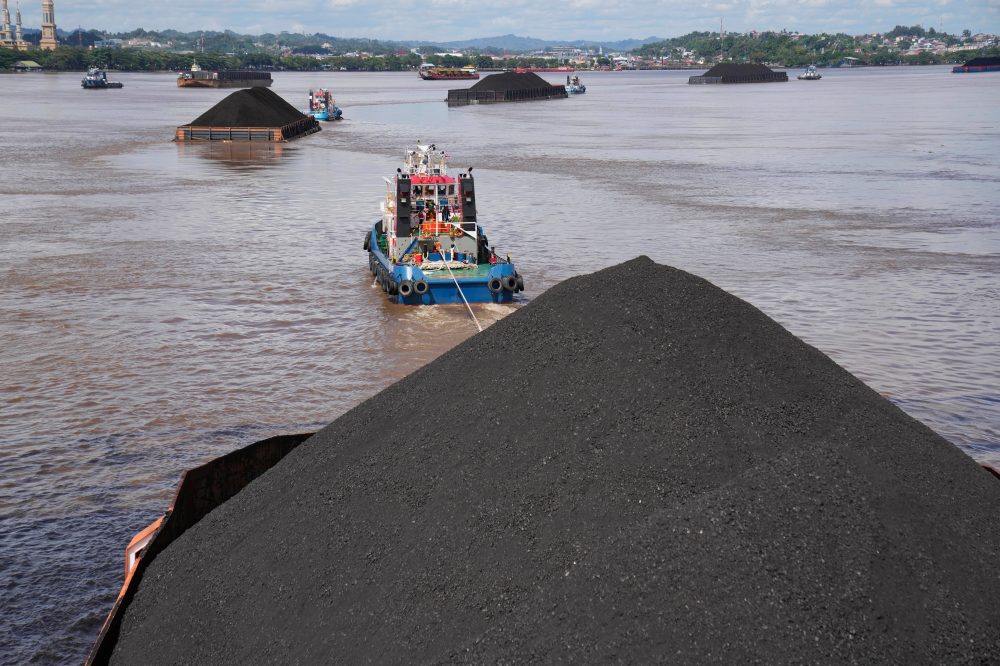
The policy change, revealed to parliament Wednesday by Indonesian President Prabowo Subianto, requires a newly established state-owned company to manage all national exports of coal, palm oil and iron alloys starting in September.
Prabowo explained that boosting tax collections is a primary goal. This would help replenish depleted government coffers that have been drained by energy disruptions from the conflict in Iran. Given Indonesia’s position as a leading commodities supplier, these policy changes are expected to create waves throughout global supply networks.
The Southeast Asian country stands as the world’s top supplier of thermal coal used for power generation and palm oil, an essential component in products ranging from beauty items to alternative fuels. This nation of approximately 287 million residents also possesses the planet’s largest confirmed nickel deposits, a crucial material for electric car batteries and stainless steel production.
Industry analysts predict China, as Indonesia’s primary trading ally, will experience the most significant impact from this policy transformation.
China is monitoring Indonesia’s “initiative to nationalize” while evaluating “how it would impact China’s further cooperation,” according to Lie Xie from the UK-based think tank Third Generation Environmentalism. “The future path that Indonesia is taking is highly important for China.”
The rapid timeline for implementing these new regulations could disrupt China’s access to essential materials for its clean technology sectors, which depend on Indonesian resources to meet expanding renewable energy demands. Chinese corporations represent major stakeholders in numerous Indonesian sectors, including essential minerals.
“Indonesia has become vital to China” as it provides the materials that “underpin China’s dominance in electric vehicles, batteries, and industrial manufacturing,” explained Li Shuo from the Asia Society Policy Institute’s China Climate Hub. “But the relationship is evolving.”
If executed properly, consolidating Indonesia’s trade operations could also create opportunities for increased American investment, experts noted, as the U.S. competes with China for critical resources.
“Such a move is a clear signal that U.S. investment is being attracted to come to Indonesia even more,” stated Bhima Yudhistira from the Jakarta-based Center of Economic and Law Studies. He characterized the new approach as a “hostile takeover” that will require reviewing every agreement in Chinese-controlled industries.
Prabowo informed legislators that Indonesia had forfeited up to $908 billion due to exporters misrepresenting their sales figures to evade taxes and additional charges.
“The primary objective of this policy is to strengthen oversight and monitoring — and to combat under-invoicing, transfer pricing and the diversion of export proceeds,” he stated.
The organization assuming control of Indonesia’s commodity exports — PT Danantara Sumberdaya Indonesia — received official registration one day prior to Prabowo’s declaration. Danantara, the sovereign wealth fund established by the president last year, holds 99% ownership and will enhance government authority in commodity pricing decisions.
This “represents a governance reform, a step toward strengthening our credibility in managing strategic commodity trade in an orderly and accountable manner,” commented Yvonne Mewengkang from Indonesia’s Ministry of Foreign Affairs.
Between June and August, private enterprises must transfer their import and export operations to Danantara, which should oversee all international trade transactions by September.
“There will be an explanation for investors later, so that stakeholders will be informed before June 1,” noted Airlangga Hartarto, the coordinating economic minister in Indonesia. “After all, in the initial phase, we are focusing on transparency in reporting.”
Trade specialists question whether the government can smoothly assume control of commerce across all these sectors in under four months.
China serves as Indonesia’s leading trade partner and represents one of its largest foreign investment sources.
Chinese companies control Indonesia’s nickel sector while China remains a top buyer of resources covered by the trade reorganization.
Additional significant buyers of Indonesian palm oil, coal and nickel include the U.S. and European Union. India, Japan, South Korea and regional neighbors Malaysia, Vietnam and the Philippines would also face effects.
Under Prabowo’s leadership, the administration has expanded oversight of strategically vital commodities, targeting illegal mining activities, assuming plantation control and promoting domestic refining capabilities for critical minerals.
Prior to Prabowo’s announcement, the China Chamber of Commerce in Indonesia delivered a five-page complaint letter last week expressing investor worries about Indonesia’s unpredictable business environment.
Chinese companies have recently encountered “excessively stringent regulation, over-enforcement, and even corruption and extortion by competent authorities,” the correspondence stated. This has “severely disrupted normal business operations” and “undermined long-term investment confidence.”
“Prabowo didn’t listen to the complaint from these Chinese companies and then did something very, very shocking with this new body to control the export,” Yudhistira observed.
Through establishing state oversight of key sectors, Indonesia aims to diversify its investor base, according to Yudhistira with CELIOS. Diminishing Chinese influence may generate interest from alternative partners, including the U.S.
This will only escalate the resource competition between the two superpowers, he cautioned.
Whether this new approach successfully draws fresh investors will hinge on implementation transparency, noted Syahdiva Moezbar from the Centre for Research on Energy and Clean Air.
Private companies report remaining uninformed about specifics.
Danantara’s effects on small-scale trade, specialty product exports and processing industries require clarification, according to Eddy Martono, chairman of the Indonesian Palm Oil Association.
“Exporters usually already have their own established markets; we must ensure we do not lose these markets if they are not managed properly,” he emphasized.