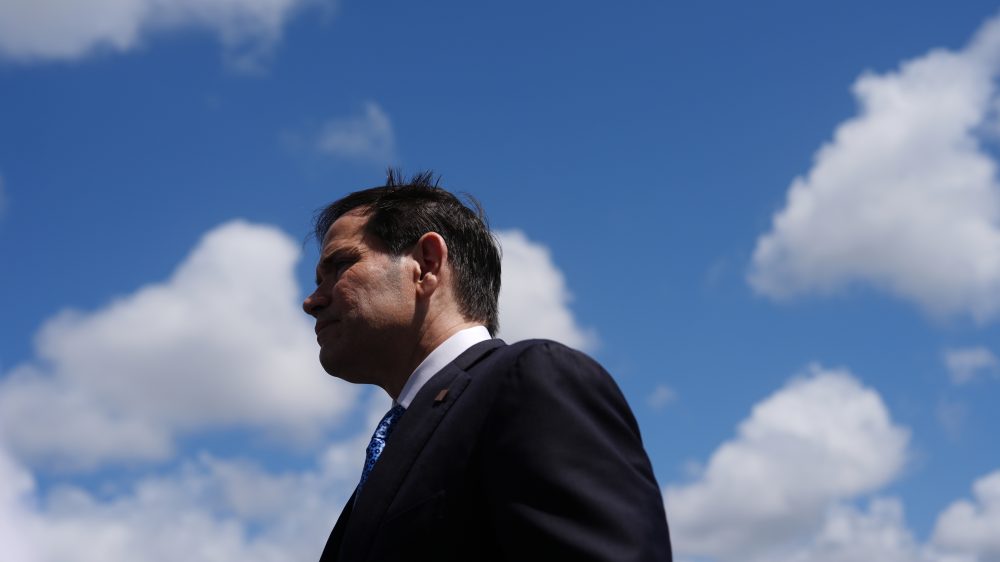

WASHINGTON — America’s top diplomat Marco Rubio is working to calm worried European partners about the Trump administration’s plans for NATO, attempting to present a more diplomatic approach amid confusion over U.S. military presence overseas.
On Friday, Rubio will participate in a NATO foreign ministers gathering in Sweden while Pentagon leadership simultaneously briefs the 32-member alliance on America’s military dedication to European security at NATO headquarters in Brussels.
This diplomatic meeting, which comes before a NATO leaders summit scheduled for Turkey in July, occurs during significant uncertainty about the Iran war’s trajectory and whether stalled American efforts to mediate the Russia-Ukraine conflict might restart. European frustration continues over President Donald Trump’s critiques of partner nations and his expressed desire to acquire Greenland, which belongs to NATO member Denmark.
Rubio frequently serves as a more moderate voice from the Trump administration during international gatherings. He has been sent on multiple diplomatic missions this year, including the Munich Security Conference in February and a recent trip to Italy, where he engaged with Italian leadership and Pope Leo XIV following Trump’s criticism of the pontiff regarding his positions on crime and the Iran conflict.
Before departing for the meeting in Helsingborg, Sweden, Rubio refused to address potential modifications to America’s military footprint in Europe, including possible reductions in troop numbers under the NATO Force Model, which serves as a backup plan for European security during serious threats.
The Trump administration had previously decided to halt the deployment of thousands of American troops to Poland and Germany, but the president then announced on social media Thursday that “the United States will be sending an additional 5,000 Troops to Poland.”
Uncertainty remains about whether this means the previously canceled brigade would resume its Poland deployment, if extra troops beyond the rotational assignment would be added, or if troop reductions would still occur in other European nations. Pentagon officials directed inquiries to the White House, which did not immediately provide clarification.
Previously, Rubio confirmed that Trump and other administration officials, including himself, are “very disappointed” with NATO, particularly regarding its Iran war response.
“I don’t think anyone is shocked to know that the United States, and the president in particular, is very disappointed at NATO right now,” he told reporters in Miami before boarding his plane.
While describing himself as a “strong supporter” of the transatlantic military partnership and calling it significant, Rubio echoed criticisms that certain NATO partners, particularly Spain, had blocked U.S. base access for Iran conflict operations. He noted others showed reluctance to join efforts to reopen and secure the Strait of Hormuz, a vital oil shipping passage that Iran has largely shut down.
“I know why NATO is good for Europe, but why is NATO good for America?” Rubio asked rhetorically, answering his own question by referring to bases that allow the U.S. and others to project power globally. “So, when that is the key rationale for why you’re in NATO, and then you have countries like Spain denying us the use of these bases, well, then, why are you in NATO?”
Rubio observed that virtually all NATO members oppose Iran developing nuclear capabilities, yet few responded when Trump announced he would act to prevent such development.
“He’s not asking them to commit troops. He’s not asking them to send their fighter jets in. But they refuse to do anything, and so I think the president looks at that and says, ‘Hold on a second,’” Rubio said. “I think we were very upset about that. The president has made that very clear.”
NATO leadership has minimized the significance of American troop level adjustments in Europe, claiming these changes were planned well in advance and are not unexpected.
However, these announcements have caught some partners off guard and occurred despite American commitments to coordinate military decisions to prevent security vulnerabilities. Trump’s apparent reversal on Poland also came as another surprise.
NATO Secretary-General Mark Rutte stated Wednesday that American allies have been aware for a year that the Trump administration would withdraw some European troops, and the alliance expects “rightly, for Europe and Canada to take a bigger responsibility for the conventional defense of NATO and particularly, of course, the European part of NATO.”
Rutte indicated the U.S. “will stay involved” but might eventually redirect resources to other global regions. U.S. Gen. Alexus Grynkewich, who leads both American and NATO forces in Europe, assured this week that European security would remain intact but cautioned that allies should anticipate additional reductions in coming years.
The Trump administration has indicated that Europe must assume greater responsibility for its own security, including Ukraine’s protection, going forward.