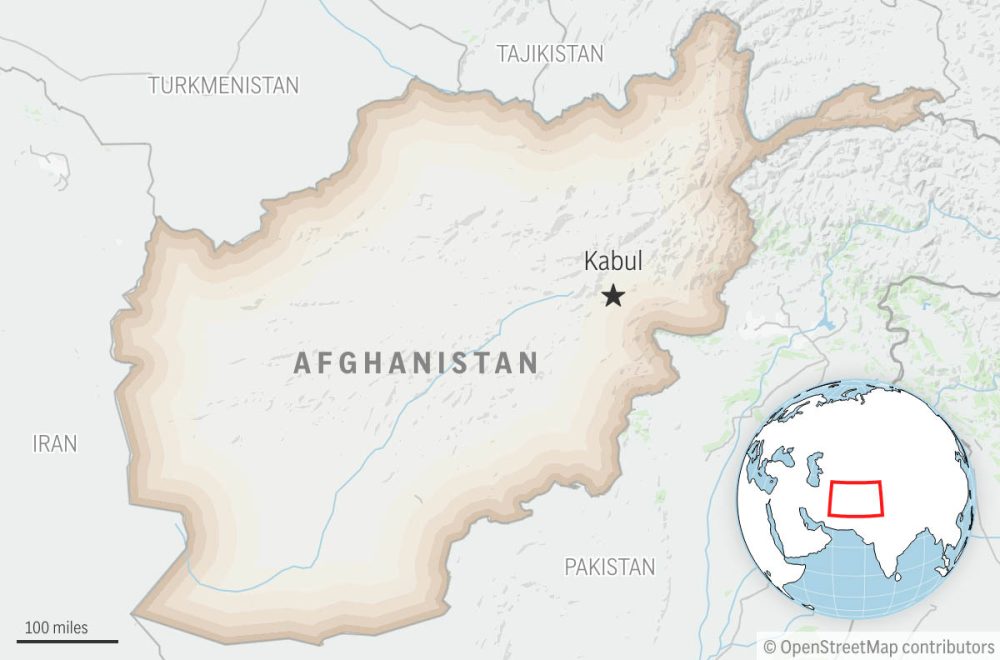

The United Nations issued sharp criticism Thursday regarding a recently enacted Afghan Taliban regulation concerning marital separation that contains allowances for child marriage, stating the measure deepens bias against women and girls.
Taliban officials dismissed these criticisms, asserting the regulation adheres to Islamic principles and maintaining that forced marriages of girls are already prohibited in the country.
Afghanistan’s justice ministry released Decree No. 18 “on judicial separation of spouses” last week, establishing guidelines for married couples seeking separation.
The regulation’s most disputed elements include language stating that when a girl who has reached puberty remains silent, this can be viewed as marriage approval. The decree also contains sections addressing separation for girls who have reached puberty and are wed, which “implies that child marriage is permitted,” according to a statement from the United Nations Assistance Mission in Afghanistan (UNAMA).
“This undermines the principle of free and full consent and failing to safeguard the best interests of the child,” it said.
The regulation specifies that marriages may be declared void “if a father or grandfather has given a minor girl or boy without any dowry, not enough dowry or obscene embezzlement.” Additionally, it states that a girl married off by her father or grandfather to a man who “has not treated her with kindness or is well-known for his bad choices…has the right to approach the court to cancel the marriage contract upon reaching puberty.”
Yet when a woman requests divorce from her spouse and he refuses, “then in this case, there are no witnesses with the girl, the husband’s word is valid,” according to the new regulation. Witnesses are unnecessary if she presents her request directly to a judge.
Afghan women and girls currently endure extensive discrimination, with regulations controlling their dress and conduct. Educational opportunities beyond elementary school are forbidden, along with most employment and nearly all recreational pursuits, including fitness centers, beauty establishments, and public recreational areas.
“Decree No. 18 is part of a broader and deeply concerning trajectory in which the rights of Afghan women and girls are being eroded,” said Georgette Gagnon, the U.N.’s Deputy Special Representative of the Secretary-General and officer in charge of UNAMA.
Although the regulation permits women to leave their spouses, the process is significantly more difficult for women than men.
The measure “operates in a deeply unequal framework: while men retain the unilateral right to divorce, women must pursue complex and restrictive judicial avenues to separate from a spouse,” UNAMA said. “This situation reinforces structural discrimination and limits women’s autonomy in matters fundamental to their dignity, safety, and well-being.”
Following their takeover of Afghanistan after the disorderly departure of U.S.-supported forces in 2021, the Taliban declared certain limited women’s rights, releasing a decree that granted women inheritance rights and marriage refusal options. Nevertheless, “successive decrees have undermined these protections,” UNAMA stated.
The numerous limitations established by the government “have deprived millions of Afghan women and girls of their right to education, weakened economic participation, and deepened poverty, with long-term consequences for Afghanistan’s development,” it continued.
“The objections from those who contradict the religion of Islam are not new and we should not pay attention to them,” Zabihullah Mujahid, a spokesman for the Afghan government, told the RTA state broadcaster in an interview.
Mujahid observed that Afghanistan’s supreme leader Hibatullah Akhundzada has previously issued a decree prohibiting forced marriage of girls. Afghan judicial systems and the nation’s ministry of vice and virtue have examined thousands of such instances within the past year, he stated, “which shows the Islamic Emirate’s concern for women’s rights.”