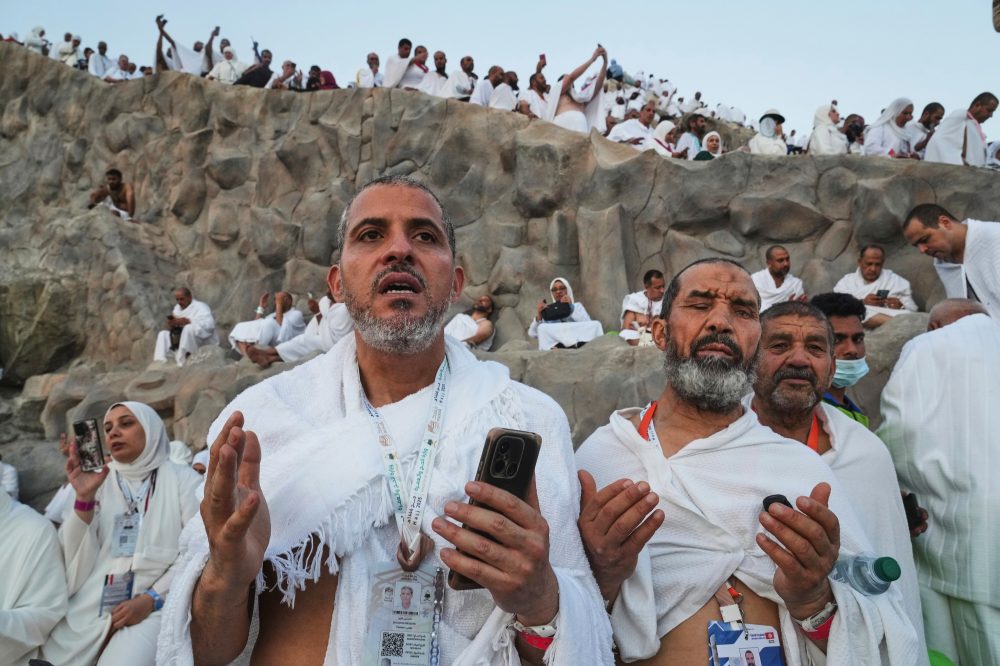

Each year, millions of Muslim faithful gather in Saudi Arabia to participate in the Hajj, joining together in sacred ceremonies and worship that represent one of Islam’s most fundamental requirements. For believers, this journey serves not only as a religious duty but also as a profound spiritual encounter that offers an opportunity to seek divine forgiveness and cleanse themselves of previous wrongdoings.
This year’s pilgrimage takes place amid a fragile ceasefire in the Iran war and ongoing regional instability throughout the Middle East.
During earlier months, war-related travel disruptions affected some Muslims who had traveled to Saudi Arabia for “Umrah,” commonly known as the minor pilgrimage. Several pilgrims found themselves stuck and struggled to arrange transportation back to their home countries.
The following provides insight into this yearly Islamic pilgrimage and what it means to Muslim communities.
The Hajj represents the yearly Islamic journey to Mecca in Saudi Arabia and encompasses multiple sacred ceremonies. Every Muslim who possesses the financial means and physical capability must complete this pilgrimage at least once during their lifetime. Many believers choose to undertake this journey multiple times.
This pilgrimage stands as one of Islam’s Five Pillars, alongside the declaration of faith, daily prayer, charitable giving, and fasting.
The Hajj takes place annually during Dhul-Hijja, the final month of the Islamic lunar calendar. This year’s official pilgrimage begins on Monday.
Summer pilgrimages present particular difficulties due to scorching temperatures. During the extreme heat of 2024, over 1,300 individuals perished during Hajj, based on reports from Saudi officials. The nation’s health minister explained that most deaths involved unofficial pilgrims who traveled extensive distances under direct sunlight.
For those making the journey, completing the Hajj satisfies a religious requirement while providing a transformative spiritual encounter. Participants view it as an opportunity to obtain God’s mercy, strengthen their relationship with the divine, and follow the paths taken by prophets.
As a collective experience, the Hajj brings together Muslims from different racial backgrounds, ethnic groups, languages, and social classes from across the globe. Many participants describe feelings of brotherhood, spiritual connection, and modesty. Pilgrims also arrive carrying their individual requests, hopes, and personal stories.
Numerous pilgrims carry prayer requests from relatives and friends who ask for prayers to be offered on their behalf.
Many individuals dedicate years to hoping and praying for the chance to complete the Hajj, or they work to save money and wait for official permission to begin their journey.
Before departure, preparations might involve gathering necessary supplies for the challenging trip, obtaining advice from previous pilgrims, participating in educational sessions, or studying other preparatory materials for spiritual and physical readiness.
Pilgrims declare their intention to perform the Hajj and enter “ihram,” a sacred state. This condition requires following specific guidelines and restrictions. Men must avoid wearing typical tailored clothing that wraps around the body, like shirts, while in ihram. Instead, men wear simple ihram garments; religious scholars explain this practice helps eliminate luxury and pride, removes symbols of worldly status, and focuses the pilgrim on humility and worship of God.
A spiritual pinnacle of the Hajj for many occurs while standing on the plain of Arafat, where pilgrims worship God, ask for mercy, and offer prayers. Many lift their hands in prayer while tears flow down their cheeks.
Additional ceremonies include “tawaf,” which requires walking around the Kaaba in Mecca seven times in a counterclockwise direction. The Kaaba, a cubic building, serves as the direction Muslims face during their five daily prayers from any location worldwide.
Other ceremonies involve retracing the steps of Hagar, or Hajar, Prophet Ibrahim’s wife, who is known as Abraham in Jewish and Christian traditions. Muslims believe Hagar ran back and forth between two hills seven times while searching for water for her child.
Eid al-Adha, also called the “Feast of Sacrifice,” is the Islamic celebration that starts during the Hajj, on the 10th day of Dhul-Hijja in the Islamic lunar calendar.
This celebratory event observed by Muslims worldwide honors Ibrahim’s readiness to sacrifice his son as an expression of obedience to God. During this holiday, Muslims sacrifice sheep or cattle and share portions of the meat with those in need.