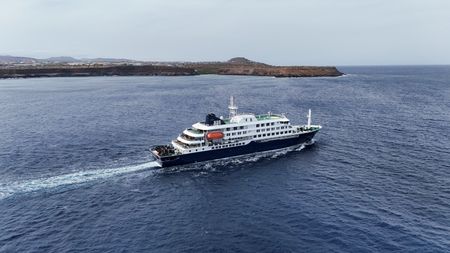

An urgent request for assistance arrived in early May when a cruise vessel near Cape Verde found itself in crisis, carrying passengers believed to be infected with a lethal hantavirus variant that proves fatal for roughly one-third of those affected.
After the ship had visited multiple isolated islands, the World Health Organization required immediate answers. Officials wondered whether a biomedical facility in Senegal, located just one hour away by air, could assist a team gathering samples from potentially infected individuals aboard the vessel.
The aircraft touched down in Senegal during the predawn hours of May 5. Scientists at the Institut Pasteur de Dakar labored throughout the night, utilizing advanced laboratory technology and high-powered computing systems to generate results that health authorities around the globe were anxiously awaiting.
In less than a full day, researchers had created a partial genetic sequence revealing that the disease impacting the travelers — identified as cases five and six — was the Andes variant of hantavirus, recognized for its ability to transmit between people through close contact. Research facilities in South Africa and Switzerland arrived at identical conclusions on the same day.
The WHO shared these discoveries during a media briefing. The contribution of the West African laboratory had not been thoroughly documented before, demonstrating how international research partnerships can assist in controlling disease outbreaks.
“It’s crucial to have, in different parts of the world, the capacity and capabilities to detect those different pathogens,” said Dr. Moussa Moise Diagne, a virologist and head of the sequencing platform at Institut Pasteur.
“It’s really important for the clinical case management, and also for the contact tracing, which is really key.”
The Institut Pasteur, an international foundation headquartered in France, serves a vital function in addressing disease emergencies across sub-Saharan Africa.
The organization’s Senegal facility assisted approximately 20 nations throughout the COVID-19 crisis and has contributed to responses against Marburg in Guinea and Ebola in the Democratic Republic of Congo — including developing a quick diagnostic test for the ongoing outbreak.
For examining patients on the Cape Verde vessel, the WHO gathered materials from the laboratory and arranged charter transportation to fly a team to the island chain and return with specimens. The biological samples received triple-layer protection — placed in testing vials, wrapped in plastic, and secured within a cardboard container bearing hazard warnings.
By 3 a.m., the Dakar team was operating at full capacity, understanding that each passing hour was crucial.
The shipment was unsealed within a specialized containment laboratory and neutralized by qualified personnel, who readied samples for analysis. Liquid specimens underwent examination using sequencing equipment designed to chart the virus’s genetic structure.
The findings reached the WHO in the early hours of May 6, aligning with discoveries from South Africa and Switzerland, which had obtained samples from additional patients.
By May 8, scientists had completed the full genetic mapping. Research centers across the globe examined sequences to detect mutations that might influence viral behavior.
The speed of potential transmission represented a vital concern. The ship had docked at remote Atlantic islands and three travelers had perished, including one passing through Johannesburg. Approximately 150 individuals from 23 nations were aboard the MV Hondius, an expedition cruise vessel.
Thankfully, researchers discovered no significant genetic changes compared to the 2018–19 outbreak in Argentina.
“Sequencing is the way to understand the strength of the transmission,” Diagne said.
Health experts indicate additional cases might surface globally because of the virus’s extended incubation timeline, which can extend up to six weeks. Unanswered questions persist, including the location and timing of initial infections — information essential for preventing further spread beyond areas where the disease naturally occurs.
“The most important thing now is to know what is the window of exposure in Latin America,” Diagne said.
The hantavirus emergency, followed by a rapidly expanding Ebola crisis in central Africa, has underscored the importance of worldwide laboratory networks, many of which, including the Institut Pasteur, have recently experienced funding reductions for pandemic preparedness.
One instance involves the U.S. National Institutes of Health’s choice to terminate support for the Centers for Research in Emerging Infectious Diseases Network, a global program that encompasses a West African facility. A research project examining how hantavirus affects humans was also discontinued.
The U.S. Department of Health and Human Services stated it continues to prioritize addressing global infectious disease challenges. Claims that the United States is retreating from international health security “do not reflect the reality of our ongoing engagement and support internationally,” a spokesperson said.