New Castle County authorities have taken two individuals into custody following an extensive narcotics investigation that spanned several months.
The probe commenced during fall 2025 when investigators with the New Castle County Police Violent Crime Interdiction Unit began examining the activities of 49-year-old Burtran Marshall. Authorities believed Marshall was involved in moving substantial amounts of illegal drugs across Delaware, with operations extending into New Castle County.
As investigators delved deeper into the case, they connected a second suspect to the alleged distribution network – 36-year-old Dominique, whose last name was not provided in the initial report.
The investigation represents part of ongoing efforts by local law enforcement to combat drug trafficking operations throughout the region.
Motorists traveling on southbound Route 1 should expect to encounter cleanup crews working in the median strip today.
The debris removal operation is taking place along the stretch of highway between Christiana Mall and Wrangle Hill Road (Route 72). Work crews are scheduled to wrap up their cleanup activities by 12 PM.
Drivers in the area should use caution and be prepared for possible delays while the maintenance work is underway.
PHNOM PENH, Cambodia — Fourteen garment factory workers lost their lives and 93 others sustained injuries in two separate vehicle crashes that occurred Saturday across Cambodia, with the majority of victims being women.
Cambodia’s textile industry serves as the nation’s primary source of export revenue, relying on affordable labor costs to remain competitive. Workers typically earn between $200-300 monthly, including overtime pay.
The deadlier of the two accidents took place in Kampong Chhnang province, situated roughly 60 kilometers (37 miles) north of Phnom Penh, the capital city. A large cargo truck collided with an open-bed truck that was transporting employees to their workplace, resulting in nine fatalities and 53 injuries, the Labor Ministry reported in an official statement.
The second tragedy unfolded in Svay Rieng province in the southeastern region, an area known for its concentration of garment manufacturing facilities. A worker transport bus left the roadway and rolled over, claiming five lives and injuring 40 additional passengers.
Open-bed trucks serve as the standard transportation option for factory employees. These vehicles typically provide no seating or bench arrangements, leaving riders to remain standing throughout their commute, which dramatically elevates the potential for serious injuries or fatalities during accidents.
In response to the incidents, the Labor Ministry expressed being “deeply shocked by two horrific traffic accidents that occurred simultaneously” and urged rigorous adherence to traffic regulations to avoid future tragedies.
Data from the Transport Ministry reveals that traffic collisions claimed 1,467 lives in 2025, establishing vehicle accidents as the predominant cause of accidental deaths throughout the Southeast Asian country.
The nation’s textile manufacturing sector, which includes apparel, footwear, and travel goods production, provides employment for approximately 800,000 to 1 million workers across roughly 1,900 manufacturing facilities. According to the country’s Ministry of Commerce, this industry generated over $15.5 billion in export revenue during the previous year.
WASHINGTON (AP) — Federal officials confirm they have pulled news releases concerning criminal prosecutions tied to the January 6, 2021, Capitol riot from the Department of Justice website, labeling the prosecution information as “partisan propaganda.”
The removal of documents detailing criminal charges, guilty verdicts and prison sentences represents another move by the Trump administration to fundamentally alter the narrative surrounding the Capitol attack, when hundreds of Republican President Donald Trump’s supporters breached the building to stop Congress from certifying his 2020 electoral defeat to Democrat Joe Biden.
During his first day returning to office in January 2025, Trump issued pardons, reduced prison terms or promised to drop charges for all of the more than 1,500 individuals facing criminal charges from the Capitol incident, including defendants found guilty of assaulting law enforcement with improvised weapons like flagpoles, a hockey stick and crutch.
This Monday, the Justice Department revealed plans for a $1.776 billion compensation fund designed to pay Trump supporters who believe they faced unfair investigation and prosecution. Acting Attorney General Todd Blanche has not dismissed the possibility that violent rioters with convictions could receive compensation, sparking anger from both parties in Congress.
Following a reporter’s Friday observation on social media platform X that the Justice Department was “quietly” taking down website news releases connected to the January 6th incident, including information about a Texas man who admitted guilt to assault charges and separately faced state charges for soliciting a minor, the department replied through its “rapid response” account that nothing was being done “quietly.”
“We are proud to reverse the DOJ’s weaponization under the Biden administration. We will do everything in our power to make whole those who were persecuted for political purposes,” the post said. “This includes stripping DOJ’s website of partisan propaganda.”
The deleted releases included those covering seditious conspiracy prosecutions of Proud Boys and Oath Keepers members, both far-right extremist organizations. Last month, the Justice Department filed an unopposed request with a federal appeals court to overturn those seditious conspiracy guilty verdicts, which the court approved Thursday. On Friday, the department moved to throw out the cases against these group members.
WASHINGTON (AP) — A congressman returned to his Southern California district last Fourth of July to hear troubling accounts from his community as federal immigration enforcement operations moved through neighborhoods, with one resident telling him they had begun carrying their passport to prove their legal right to remain in the United States.
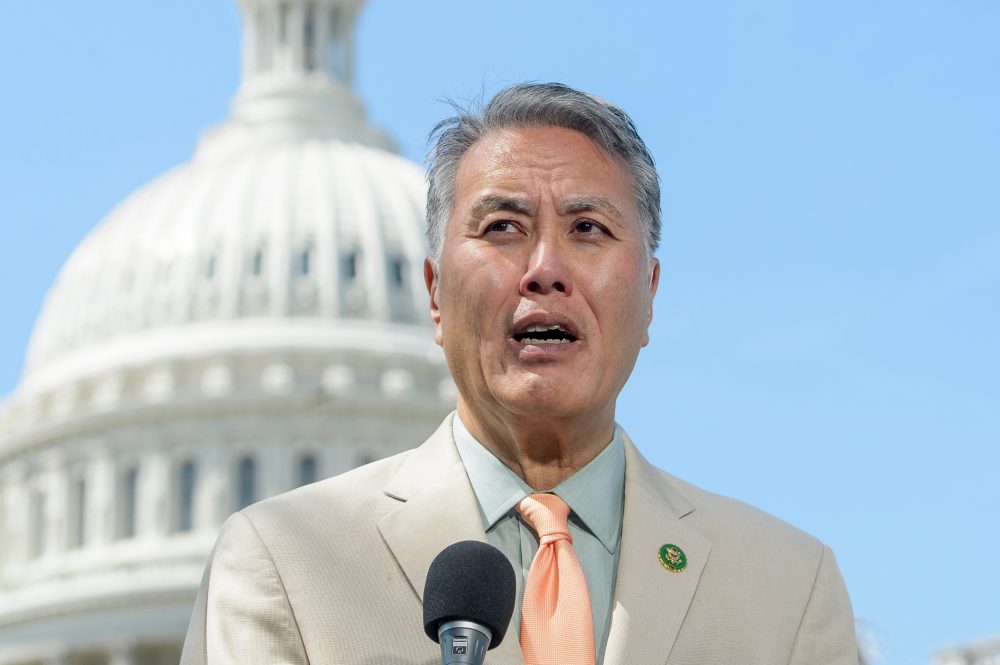
Rep. Mark Takano, whose American-born parents were both detained as toddlers along with their families during the forced removal of Japanese Americans in World War II, found himself drawing connections between that dark period in American history and current events.
“I do feel like there’s a similarity of circumstance of my own 2-year-old father and my 1-year-old mother being labeled as enemy aliens and they’re considered a danger to national security,” he told The Associated Press in an interview.
“They’re put into these incarceration camps,” he said. “Similar arguments have been made by this administration — that immigrants pose a grave danger to our country and it’s for the security of our country that we’re doing this.”
President Donald Trump’s campaign promise of the largest mass deportation operation in U.S. history is at an inflection point. Americans are seeing what it looks like to round up, detain and deport thousands of people, particularly in the aftermath of the deaths this year of Renee Good and Alex Pretti, U.S. citizens protesting the actions in Minneapolis.
The White House changed the leadership at the Department of Homeland Security as it reframes its approach. New Secretary Markwayne Mullin promised to keep the department off the front pages.
But Trump is also under mounting pressure from conservative groups not to let up on the goal of deporting 1 million people a year. The president’s Republican allies in Congress are fueling the immigration and deportation actions with billions of dollars in special funds.
Takano, the ranking Democrat on the House Veterans’ Affairs Committee, has drawn from his own family history — and the country’s eventual redress to Japanese Americans who were detained — to challenge Trump’s approach.
“We look back on that era of history as a shameful one, as a time when our political leaders failed the Constitution, failed the American people,” he said.
A former high school history teacher before being elected to Congress in 2012, Takano grew up in Southern California and came to understand the family stories.
His grandfather Isao Takano arrived in the U.S. from Hiroshima and married Kazue Takahashi, a U.S.-born citizen. Together they settled in Bellevue, Washington, and launched a business growing tomatoes, strawberries and chrysanthemums for the marketplace in Seattle.
When the U.S. entered the war after the Japanese attack on Pearl Harbor, they were among some 120,000 people of Japanese ancestry, immigrants and those born in the U.S., forcibly relocated.
His father, William, was 2 years old when his family was sent in 1942 to the incarceration camp at Tule Lake in California. His mother, Nancy Tsugiye Sakamoto, born in California to American-born parents, was a year old when she was relocated to the detention facility in Heart Mountain, Wyoming.
Then, as now, he said, people are being swept up in the anti-immigrant detentions.
“Will Americans generations from now visit Alligator Alcatraz and think to themselves, How could our government do this?” Takano said during a House floor speech, referring to the Trump-era immigration detention facility in Florida.
“These future generations of Americans will look to us, the Congress, to see what we did to try to stop it.”
Takano remembers his father taking him to see the land the family once owned. He learned about his great uncles who served in the Army’s 442nd Regimental Combat Team of Japanese American soldiers; one was killed in action in Italy. He recalls his own father later collected donations for the national redress campaign.
In 1988 Congress passed the Civil Liberties Act, which sought to apologize for the “grave injustice” that had been done and provide $20,000 to each person detained. Republican President Ronald Reagan signed it into law.
Takano’s parents were among those who received a letter of apology from the federal government, he said, and a payment.
Talks are underway among some in Congress, he said, for a similar redress to the people who have had their car windows smashed in, their homes raided and livelihoods upended as part of Trump’s immigration enforcement operations.
“Remarkably the country did come to realize the mistake,” he said. “I believe we’re living through one of those eras of mistakes and I believe we can come out of this moment stronger.”
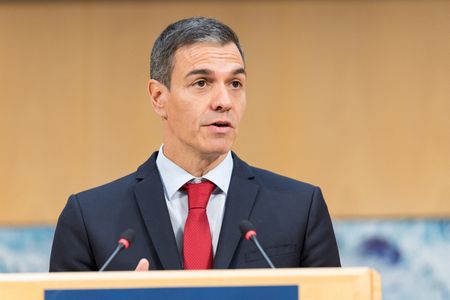
MADRID, May 23 – Authorities arrested several masked individuals Saturday after they attempted to breach security barriers surrounding the official residence of Spain’s Socialist Prime Minister Pedro Sanchez during a large demonstration demanding his resignation over multiple corruption allegations.
Law enforcement officers detained the group on the primary roadway leading to Madrid’s Moncloa Palace, the prime minister’s family residence, according to footage broadcast on Spanish television networks.
Massive crowds of protesters displayed signs reading “Resignation of the socialist mafia” along with other critical messages, while waving numerous Spanish national flags during the March for Dignity event, coordinated by the Spanish Civil Society association.
Representatives from the opposition People’s Party and the far-right Vox party participated in the demonstration, which remained mostly peaceful throughout.
Earlier this week on Tuesday, a Spanish court revealed that former Spanish Socialist prime minister Jose Luis Rodriguez Zapatero is under investigation for allegedly orchestrating an influence-peddling and money-laundering operation, adding to the current leftist administration’s mounting corruption troubles.
Zapatero, who serves as a crucial supporter of the sitting prime minister, rejected all allegations of misconduct on Tuesday.
Event coordinators claimed 80,000 participants joined the demonstration, while the Spanish government’s Madrid representative estimated attendance at approximately 40,000 people.
Tehran’s lead negotiator delivered a firm message during weekend diplomatic meetings, declaring that Iran will not yield on its core national interests while pursuing peace talks with Washington.
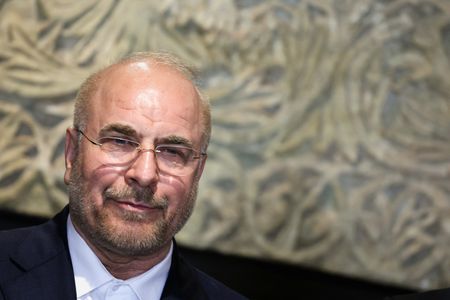
Parliament Speaker Mohammad Baqer Qalibaf made the statement Saturday during discussions with Pakistani army chief Asim Munir in Tehran, according to state television coverage. The Iranian official characterized the United States as an unreliable negotiating partner.
Pakistan is spearheading regional diplomatic efforts to bridge the gap between the two nations following weeks of warfare that forced the closure of the Strait of Hormuz to most commercial vessels. The shipping disruption has created instability in global energy markets, despite a fragile ceasefire currently in place.
The Pakistani military leader also held meetings with President Masoud Pezeshkian and Foreign Minister Abbas Araqchi during his Tehran visit before departing, Iranian state media reported.
Discussions focused on a 14-point proposal from Iran that serves as the primary framework for negotiations, along with messages passed between both sides.
Qalibaf emphasized Iran’s commitment to defending its “legitimate rights” through both military action and diplomatic channels, while expressing distrust toward “a party that has no honesty at all” – a criticism Tehran has voiced repeatedly.
The Iranian speaker warned that the country’s military forces have strengthened their position during the current ceasefire. Should the United States “foolishly restarts the war,” he cautioned, the results would be “more forceful and bitter” than when fighting initially began.
Secretary of State Marco Rubio acknowledged Friday that some advancement toward an agreement has occurred, though significant work remains. Iran’s foreign ministry countered that substantial disagreements persist between the parties.
Throughout the weeks of conflict, Iran has maintained its stockpile of highly enriched uranium approaching weapons-grade levels, along with its missile, drone and proxy force capabilities that both the United States and Israel seek to restrict.
Denmark’s King Frederik on Saturday requested that caretaker Prime Minister Mette Frederiksen make another attempt at forming a government following the breakdown of center-right negotiations headed by Defence Minister Troels Lund Poulsen.
This development provides Frederiksen, whose Social Democrats continue to hold the position as Denmark’s largest political party even after significant electoral setbacks, with an opportunity to claim a third straight term leading the country.
Earlier this month, Poulsen, who heads the right-wing Liberal Party, had been tasked with investigating potential government arrangements after Frederiksen’s initial coalition discussions fell apart when the centrist Moderate Party withdrew from negotiations.
Frederiksen will likely need to offer compromises to Moderate Party leader Lars Lokke Rasmussen, whose backing is considered crucial following the March election that resulted in parliament being divided between 12 different parties.
The Social Democrats secured 38 seats in Denmark’s 179-member parliament, a decline from their previous 50 seats in 2022, marking their poorest electoral performance since 1903.
These extended negotiations have hindered government operations during a critical period for Denmark, as the country works to address tensions with U.S. President Donald Trump’s administration regarding Greenland.
PARIS, May 23 – France announced Saturday it will prohibit Israeli far-right police minister Itamar Ben-Gvir from entering the country, according to Foreign Minister Jean-Noel Barrot, who said the move represents mounting international frustration over how Gaza flotilla activists were handled.
“As from today, Itamar Ben-Gvir is banned from entering French territory,” Barrot posted on X.
“Along with my Italian counterpart, I am asking the European Union to also take sanctions against Itamar Ben-Gvir,” he continued.
International leaders expressed fury after Ben-Gvir shared footage showing himself mocking activists bound to Gaza who were being restrained on the ground, with several later claiming they suffered physical abuse while in custody.
Ben-Gvir’s actions drew criticism from Israeli Prime Minister Benjamin Netanyahu as well as the United States, Israel’s closest supporter. Netanyahu described Ben-Gvir’s behavior as “not in line with Israel’s values and norms.”
The activists, whose ship was seized earlier this week in international waters by Israeli naval personnel while attempting to transport humanitarian supplies to Gaza, were eventually expelled from Israel after being initially held in custody.
Officials with the Democratic Republic of Congo’s national soccer team say they have no intention of modifying their World Cup preparation plans, even after receiving a stern warning from United States authorities about mandatory isolation requirements before entering the country.
On Friday, Andrew Giuliani, who serves as executive director of the White House Task Force for the World Cup, told ESPN that the Congolese delegation must stay in isolation at their Belgium training facility for 21 days or face the possibility of being refused entry into the United States. This requirement stems from a fatal Ebola virus outbreak currently affecting the central African nation.
The team from Congo is scheduled to set up their tournament base in Houston and will face Portugal in their first Group K match on June 17. Their remaining group stage games include a June 23 contest against Colombia in Guadalajara, Mexico, and a June 27 matchup with Uzbekistan in Atlanta.
Giuliani emphasized the seriousness of the situation in his ESPN interview, stating: “We’ve been very clear to Congo that they should maintain the integrity of their bubble for 21 days before they can then come to Houston on June 11.”
He added: “We’ve made it very clear to the Congo government as well that they need to maintain that bubble or they risk not being able to travel to the United States. We cannot be any clearer.”
However, a team spokesperson indicated that their current timeline remains unchanged, which includes exhibition matches against Denmark in Liege, Belgium on June 3, and Chile in Cadiz, Spain on June 9.
The official explained: “We have kept our training programme. No player in the squad has come from DR Congo.”
All squad members, including head coach Sebastien Desabre, are currently residing outside of the Democratic Republic of Congo, with most located in Europe. Some team administrators did travel to the Belgium training camp from the DRC this week.
The squad had originally planned a three-day celebration visit to Kinshasa next week before departing for their first World Cup appearance in 52 years, but this trip has been scrapped.
On Friday, the World Health Organization elevated the risk level to “very high” for the uncommon Bundibugyo strain of Ebola potentially spreading into a nationwide outbreak in the DRC. The organization has also classified the outbreak affecting both the DRC and neighboring Uganda as an emergency of international concern.
Health officials report nearly 750 suspected cases and 177 suspected deaths linked to the outbreak in the Democratic Republic of Congo.
Delaware transportation officials are reporting a traffic incident that has impacted travel on a major highway corridor.
The right lane of southbound Interstate 95 near the Churchmans Road interchange has been shut down following a vehicle collision. The lane closure is currently in effect as crews work to clear the scene.
Drivers traveling through the area should anticipate potential delays and consider using alternative routes when possible. No additional details about the nature of the crash or any potential injuries have been released at this time.
When 5-year-old Calvin Owens ventured outdoors for the first time in over a month, he encountered his four-legged companion Hadley on a hospital courtyard. Connected to medical equipment through various wires and tubes, the young patient still found the strength to rise from his wheelchair briefly to throw a ball for her.
His face lit up watching her retrieve it. Medical staff applauded the moment.
“Look how good you’re doing!” encouraged Hadley’s handler, Schellie Scott.
These meaningful breakthroughs and joyful instances occur regularly when Hadley or her three fellow facility dogs at Cincinnati Children’s Hospital make their rounds. These four-legged healthcare workers differ from typical volunteer therapy dogs that visit hospitals for patient comfort. They receive extensive specialized training and work full-time schedules, offering emotional assistance during difficult medical procedures, encouraging physical activity, and helping make hospital environments feel less intimidating. Healthcare professionals report these programs are expanding rapidly at pediatric medical centers nationwide.
Growing scientific evidence demonstrates that brief encounters with facility dogs can enhance children’s general wellness, lessen their pain perception, and diminish stress indicators including cortisol concentrations and blood pressure readings.
“These dogs are making a real difference,” said Kerri Rodriguez, director of the Human-Animal Bond Lab at the University of Arizona. “They can provide a little bit of normalcy, a little bit of comfort, in a really stressful, sterile environment that kids might not feel comfortable in.”
While nobody maintains official statistics on facility dogs working in pediatric hospitals, Rodriguez notes the steady expansion of the annual Facility Dog Summit, where handlers and participants connect professionally. Attendance at this gathering almost doubled between 2024 and 2025. Though other medical facilities employ full-time dogs, healthcare experts indicate children’s hospitals drive most program growth. Canine Assistants, a major Georgia-based nonprofit organization, operates a dedicated pediatric hospital program that has deployed over 80 dogs across the nation.
Canine workers have served for years at facilities including Mount Sinai Kravis Children’s Hospital in New York, Norton Children’s in Louisville, Kentucky, and St. Louis Children’s Hospital. Additional programs continue launching regularly. Johns Hopkins Children’s Center in Maryland welcomed its initial two facility dogs this past March.
Medical centers typically obtain these animals through nonprofit organizations. Groups like Canine Companions, Cincinnati Children’s dog provider, handle breeding, raising, and training before partnering them with hospital personnel while retaining ownership. The dogs and their handlers share both living and working arrangements.
While hospitals avoid direct purchase costs for the animals, they cover ongoing expenses including food and medical care, which can accumulate significantly since most are larger breeds such as Labradors or golden retrievers. Medical facilities commonly organize fundraising campaigns or pursue grants to manage these costs.
Healthcare professionals emphasize the clear advantages of these “animal-assisted therapies.” Rodriguez co-authored a 2022 research study examining survey data from 17 pediatric hospitals. Pediatric healthcare workers described how facility dogs offered reassuring companionship, established connections, and created familiar hospital atmospheres for children and families. A 2021 Journal of Pediatric Nursing study determined that animal-assisted interventions benefited pain management and blood pressure control in children and adolescents. Additional research found these therapies decrease anxiety and discomfort while potentially improving cardiovascular and respiratory function.
Facility dogs access more restricted hospital areas than volunteer animals and sometimes focus on specific departments. Opal, one of two St. Louis dogs, divides her schedule between the pediatric behavioral health unit and the child protection program.
Regardless of their work location, maintaining cleanliness remains essential.
Hadley receives baths twice monthly because she operates in the cancer and blood diseases section, where patients may have compromised immune systems. She gets additional baths or special wipe cleanings following potential germ exposure. Handlers utilize easily sanitized leashes and toys, and people must clean their hands before and after dog contact.
When patients require isolation, dogs remain outside their rooms. The single exception occurs when terminally ill children request canine companionship. In such situations, caregivers determine that comfort and fear reduction outweigh infection concerns.
Hadley begins her workday when her handler Scott — whose child life assistant role involves maintaining patients’ normal routines — reaches the hospital. Hadley primarily visits patients but also takes breaks for free play time.
During a recent morning, the Labrador-golden retriever mix ran energetically around a grassy play space with her colleague, Grover. While Grover maintains calm composure, Hadley’s excitement leads her to shake her head while tossing balls to herself.
“Hadley loves life,” Scott said. “Hadley lives big.”
Throughout the hospital, the dogs receive continuous attention. For handlers, “it’s like being the assistant to a famous person,” joked Scott.
Evidence of their celebrity status appears everywhere.
They feature in closed-circuit television programs produced by the hospital and broadcast to patient rooms. Holiday and event-themed dog photographs decorate corridor walls. Special mailboxes allow children to send letters or drawings to the dogs and receive responses.
Patients can collect trading cards featuring each dog with information like breed and birthday, decorate bandanas for their furry friends, or receive small stuffed dogs. Healthcare workers create dog-themed books showing children upcoming procedures or treatments.
Children with extended hospital stays develop close relationships with the dogs.
Aspen Franklin, a 14-year-old battling a serious immune disorder, has visited the hospital since toddlerhood and spent weeks there recently. Sometimes, Hadley has cuddled next to her in bed.
“She has a calming presence,” Aspen said. “That is a comfort to me.”
Like other facility dogs, Hadley also supports families. When Aspen’s younger brother Emory provided cells for her bone marrow transplant, Hadley spent time with him and other visiting siblings.
Having Hadley present “is really nice because they’re away from their animals at home,” said their mom, Brittney Franklin, whose family has two dogs and a cat.
Franklin recently observed Aspen creating art with Hadley. Since the dog couldn’t enter her room so soon after transplant, Aspen applied paint colors to a small canvas and gave it to Scott, who placed it in a plastic bag with peanut butter spread on top. Just outside the room, Hadley enthusiastically licked the surface. Abstract artwork resulted.
Hadley’s following patient was Calvin, the young boy she encountered on the courtyard. Calvin suffers from a rare, severe form of juvenile arthritis and recently underwent bone marrow transplant. Despite only managing to stand briefly at a time, he repeatedly made the effort to play with Hadley.
“He’s such a strong little man,” Scott said.
Following Calvin’s return indoors, Hadley visited 11-year-old Bethany Striggles, who recently completed chemotherapy treatment for bone cancer. The girl threw the ball down the entire hallway length, and Hadley ran joyfully to fetch and gently return it. Bethany rewarded her with an ice pop.
“She helps me exercise more,” Bethany said. “She’s energetic and happy and always likes to see me.”
Eventually, Hadley does become tired. When this occurs, she returns to an office lovingly called her lair, containing treats, toys and a large dog bed.
Above the bed hangs a bulletin board filled with artwork, photographs and messages. One, written on orange construction paper, displays a small, pink handprint and reads: “Thank you for being my BEST FRIEND.”
At least 90 workers lost their lives in a devastating gas explosion at a coal mining facility in China’s Shanxi province, according to state media reports released Saturday.
The deadly incident occurred Friday evening at the Liushenyu coal mine located in Changzhi city, China’s official Xinhua News Agency confirmed. Approximately 247 workers were present during their shifts when the explosion took place.
The province of Shanxi serves as China’s primary coal-producing region. This area, which exceeds Greece in land mass and houses roughly 34 million residents, employs hundreds of thousands of miners who extracted 1.3 billion tons (1.17 billion metric tons) of coal during the previous year – representing almost one-third of the nation’s entire coal production.
Such tragic incidents occur regularly throughout China, where fast-paced industrial development has resulted in aggressive resource extraction, substandard workplace safety measures, and insufficient oversight systems.
Mine operators and regional government officials often face criticism for prioritizing financial gains over worker protection. These underground catastrophes typically stem from inadequate ventilation systems needed to remove dangerous gases that naturally emerge from coal deposits. Over the last twenty years, Chinese authorities have worked to decrease mining fatalities through enhanced safety protocols and shutting down certain smaller operations.
2023: 53 people were killed after a collapse at an open-pit mine in northern China’s Inner Mongolia region.
2009: 108 miners died as a result of a gas explosion at the state-run Xinxing mine in Heilongjiang province near the border with Russia. State broadcaster CCTV displayed a diagram showing the miners trapped about a third of a mile underground. Footage showed one entrance was blocked and rescuers in orange suits with breathing equipment attempting to enter through another.
2005: 171 people died in a blast at the Dongfeng coal mine in Qitaihe in Heilongjiang province.
2005: 214 miners were killed following a gas explosion at the Sunjiawan coal mine in the Liaoning province in China’s northeast.
2004: 166 died in a gas explosion at the Chenjiashan coal mine in the Shaanxi province, in China’s northwest.
2004: 148 people were killed in a gas explosion at the Daping coal mine in China’s inland Henan province.
2000: 162 people died after an explosion at the Muchonggou coal mine in the mountainous Guizhou province in China’s southwest.
HARRISBURG, Pa. — State Representative Chris Rabb faced steep odds in his bid for the Democratic congressional nomination in Philadelphia, with the political establishment firmly aligned against him.
The mayor and Philadelphia’s Democratic Party organization had thrown their support behind a different candidate in this week’s primary contest. Pennsylvania’s congressional delegation also backed another contender. One of Rabb’s opponents had millions in financial backing, while another benefited from extensive voter mobilization efforts led by powerful local construction trade unions.
Despite these challenges, Rabb secured victory by a commanding 15-point margin over his nearest rival in Tuesday’s contest. The state lawmaker appears headed to Congress since no Republican candidate filed for the GOP nomination.
A coalition of progressive organizations powered Rabb’s campaign, with his strategy focusing partly on criticizing his own party for prioritizing wealthy contributors over ordinary voters. He attributed his success to a grassroots coalition inspired by New York City Mayor Zohran Mamdani, concerned about Republican President Donald Trump, and seeking more responsive governance.
“That was at the heart of why I was running and that is what I built my campaign around and that, I believe, is a chord we struck in this electorate that showed up and came out like gangbusters,” Rabb said in an interview with The Associated Press.
Progressive activists view Rabb’s triumph as among their most significant victories this year and another indication that Democratic voters perceive party leadership as ineffective against Trump. Progressive candidates are also seeking House positions in New York, California and Michigan, either challenging sitting Democratic lawmakers or targeting vulnerable Republicans.
The 55-year-old Rabb describes himself as a Democratic socialist and “proud troublemaker” who consistently championed progressive legislation during his five terms in the state House. His supporters believe voters delivered a clear message this week.
“They want someone who knows what they stand for and is ready to fight, whether it’s fighting Donald Trump now or fighting an economy and political system rigged for billionaires in years ahead,” said Adam Green, a co-founder of the Progressive Change Campaign Committee.
The success of progressive candidates in midterm contests has raised concerns among moderate Democrats that far-left nominees might alienate centrist voters and waste a politically favorable opportunity to defeat Republicans, regain congressional control, and obstruct Trump’s agenda during his final two years in office.
Mike Mikus, a Pittsburgh-based Democratic strategist, said progressives could pose challenges for the Democratic Party in the future, but not during this election cycle.
“Regardless of who we nominate, gas prices are still too high, grocery prices are too high and people generally think the economy is not in a good place,” Mikus said. “And voters will vote for change.”
The Working Families Party served as perhaps Rabb’s most significant backer, an organization that argues both Democratic and Republican establishments have compromised with powerful interests. The group has supported several congressional members, with Analilia Mejía becoming their latest success after winning a New Jersey special election on April 16.
Rabb remains uncertain about what awaits him in Washington. “Will we have a razor-thin majority? Will we be in a razor-thin minority?”
He views Congress as an institution where most members avoid bold action due to financial influences in politics. During his victory address, Rabb displayed the passion that progressive supporters say resonated with voters.
“I have been critiqued along this campaign for being too radical, too bold,” Rabb told the crowd. “They ain’t seen nothing yet.”
Rabb’s policy positions on many campaign topics did not differ substantially from his opponents’, including supporting Trump’s impeachment, eliminating U.S. Immigration and Customs Enforcement, implementing a data center moratorium, and advocating for “Medicare for All.”
He distinguished himself by emphasizing support for government-operated grocery stores to eliminate “food deserts” and comprehensive minimum wage legislation that would end lower tipped wages and include independent contractors like gig workers.
Most significantly, Rabb mounted fierce criticism of establishment politics, including within his own party.
He argued that people are frustrated with insider politicians and big-money politics, leading to poor voter participation even with Trump in office and strong opposition to “MAGA extremism and corporate greed,” referencing Trump’s “Make America Great Again” movement.
“We can learn lessons from this victory because, if establishment politics was as effective and productive as people would have us think, then I would have been blown out of the water,” Rabb said.
State senator and former state party chair Sharif Street placed second on Tuesday. U.S. Sen. Cory Booker of New Jersey and Philadelphia Mayor Cherelle Parker supported his campaign, while building trades unions contributed over $600,000.
Dr. Ala Stanford finished third, receiving endorsement from retiring incumbent Dwight Evans and $3.5 million in expenditures from 314 Action, a left-leaning political action committee focused on electing scientists to Congress.
The state’s leading Democrat, Gov. Josh Shapiro, remained neutral in the race but called to congratulate Rabb following the election.
Allied progressive organizations provided at least $1.8 million in spending support for Rabb, according to federal campaign records. U.S. Rep. Alexandria Ocasio-Cortez, D-N.Y., campaigned for him four days before the primary.
Supporters celebrated his victory over the city party’s “machine.”
“The fact that Chris was able to win in machine territory is significant and should send a shock wave to the Democratic establishment that base voters are upset and want transformational change,” said Joseph Geevarghese, executive director of Our Revolution, which was founded by U.S. Sen. Bernie Sanders, I-Vt.
While progressive organizations are gaining influence in Philadelphia, some Democrats noted that Rabb won just 45% of votes, suggesting a unified establishment candidate might have succeeded. Others pointed to low turnout, with fewer than one-third of registered Democrats participating.
“Momentum, the vibes, how people feel about a candidate are going to make a difference,” said Mustafa Rashed, a Democratic political consultant in Philadelphia.
Rabb revealed he nearly abandoned the race and considered withdrawing after discovering his campaign treasurer had stolen funds.
The sense of betrayal, combined with being financially outmatched by rivals, made him question whether his candidacy could survive.
“There was a lot of internal talk about what is the path forward for me,” Rabb said. “I had to dig down and just reaffirm that I’m walking in my purpose and this is exactly what I’m supposed to be doing, irrespective of the adversities.”
CINCINNATI (AP) — Specially trained canines are providing comfort and emotional support to young patients at children’s hospitals across the nation, delivering much more than just a friendly greeting. These full-time facility dogs differ from volunteer therapy animals because they receive extensive professional training and can access all hospital areas to assist patients during their entire stay.
According to specialists, children’s hospitals throughout the country are increasingly adopting facility dog programs as ongoing research demonstrates significant advantages for pediatric patients. Research indicates that even short encounters with these animals can enhance overall wellness, reduce anxiety and discomfort, and help young people feel more comfortable in strange medical environments.
At facilities like Cincinnati Children’s Hospital, canines such as Hadley offer emotional comfort during challenging medical procedures, motivate children to remain physically active, and bring a touch of everyday life to the hospital environment. These dogs have become popular throughout the medical centers, with their images displayed in corridors, featured in media appearances, and special mailboxes installed where young patients can leave messages and artwork for their four-legged friends.
___
This is a photo gallery curated by AP photo editors.
When Faisal Rashid and his spouse woke up at 3 a.m. in February, they were racing against time to reserve their places for this year’s Hajj pilgrimage before all spots were taken. From their Pasadena, California residence, adrenaline coursed through him as he worked through the online reservation system.
The February moment when the pair discovered they had secured places in the sacred Islamic journey to Mecca in Saudi Arabia was so moving that remembering it still causes them to become emotional.
“It was a very, very joyful experience,” said 35-year-old Rashid, his voice wavering. “My wife was already crying, praying. We were very grateful that this happened,” he added, a tear rolling down his face.
Much has shifted since that February day — the Iran war erupted and widened before a tenuous ceasefire was reached. The couple’s determination to complete the pilgrimage remains unchanged, however.
They represent American Muslims who are joining millions of pilgrims gathering in Saudi Arabia from across the globe for a Hajj that this year occurs amid regional tensions and uncertainty surrounding the conflict. The Hajj will officially start on Monday.
During the Hajj, Muslims come together in religious ceremonies and worship as they complete one of the Five Pillars of Islam. A sacred duty for Muslims who are physically and financially capable, Hajj can represent the spiritual journey of a lifetime for participants and an opportunity to seek divine forgiveness and cleansing of previous wrongdoings.
Many Muslims dedicate years to saving funds and waiting for authorization to undertake the journey.
“It’s not something you just get,” said Rashid, a doctoral candidate and a Los Angeles Police Department reserve officer. “It’s something that if God invites you, then you’re able to go.”
At one point, his father asked how the war affected their Hajj plans; an aunt wondered if he could get a refund if things escalated.
He figured others had previously endured far worse to make the journey. “You’re brought up to think about how this is a very physically and emotionally enduring expedition,” he said.
A planner by nature, Rashid began following a flight tracker and registered for a program that sends updates and alerts from U.S. embassies and consulates abroad.
But instead of worrying, he has been leaning on his faith.
“In Islam we’re taught that you’re supposed to do your very best effort but then let go of the things that … you don’t have control over,” he said. “I need to let go and feel that, ‘Hey, you know what, God is the best of planners.’ “
On Friday, U.S. Secretary of State Marco Rubio said there was “slight progress” during talks with Iran over a potential peace deal. He spoke days after U.S. President Donald Trump said he was holding off on a military strike against Iran because “serious negotiations” were underway. Trump has been threatening for weeks that the ceasefire reached in April could end if Iran does not make a deal.
Following the eruption of the Iran war, the U.S. Embassy in Riyadh in April advised Americans to reconsider participating in this year’s Hajj, citing then the “security situation and intermittent travel disruptions.”
Ahmed Sufyan, a surgeon in Michigan, has been concerned about potential flight disruptions on his way back from the pilgrimage. His round trip includes stops in Gulf countries that had been embroiled in the war, which started on Feb. 28 with joint U.S.-Israeli attacks on Iran and drew retaliatory strikes by Iran.
“There is some uncertainty with the war,” he said. “That does add a level of concern.”
Still, he said, “the faith is what drives us.”
If this were for vacation, he couldn’t have justified it. But Hajj is different, he said.
“I feel really lucky that I have this opportunity,” he said. “I personally know people who have attempted to go for many years, and it’s not easy to secure a spot.”
“Hajj,” he said, “transcends politics and conflict.”
His goal? To return a better person.
“To fulfill the Hajj requirements, you have to stop thinking about yourself and start thinking about your creator and putting things into perspective,” he said. “It teaches you patience and humility.”
Hajj brings together large numbers of Muslims of diverse races, ethnicities, languages and economic classes from around the world, leaving many feeling unity and connection.
In India, home to a large Muslim minority, pilgrimage planning has proceeded largely as normal, but high fuel prices have pushed up travel costs for this year’s pilgrims from the country.
Back in the U.S., the uncertainty upended Noor-e-ain Shahid’s plans for her children’s care while she and her husband go to Hajj.
The Texas neurologist had planned for her children to stay with family in Dubai. Tickets were bought; then the war erupted.
By late April, Shahid decided there was too much unpredictability: What if things flare up in the region? What if flight delays leave her kids stuck in Dubai?
Her in-laws offered to stay with the children in the U.S. while she and her husband are away. She is not worried about her own safety on the journey.
“If Allah has invited me, then Allah will take care of me,” she said. “And if Allah has decided my end is there in this situation, then, I mean, I accept that.”
She has been overwhelmed by emotions. High among them is feeling fortunate.
“It’s considered as rebirth,” she said. “You go there and you have an opportunity to become new when you come back and start over.”
In California, ahead of the Hajj, Rashid and his wife have prepared for the physically demanding pilgrimage by going to the gym and on walks. New shoes, he said, must be broken in. He has been spiritually preparing and getting guidance.
The couple also collected prayer requests that others would like them to make during Hajj.
“You want to go in spiritually with a clean slate, not with any kind of ill hearts or bitterness,” he said. “You don’t want to feel anxious about worldly things.”
The International Federation of Red Cross and Red Crescent Societies announced Saturday that three volunteers have died from Ebola after being exposed to the virus while conducting body management work in the Democratic Republic of Congo.
The volunteers – Ajiko Chandiru Viviane, Sezabo Katanabo, and Alikana Udumusi Augustin – were working with the Mongbwalu branch in Ituri province in the northeastern part of the country when they contracted the disease on March 27. They passed away on May 5, 15, and 16.
According to the IFRC, the three workers were engaged in body management duties as part of humanitarian operations that were not connected to Ebola response efforts. The current outbreak had not been detected when the exposure occurred.
The World Health Organization has classified the current outbreak as an international emergency. This particular strain, known as Bundibugyo Ebola, currently has no licensed vaccine or therapeutic treatment available.
Deceased Ebola patients remain extremely contagious, and improper burial practices where relatives touch bodies without adequate protection are a major source of virus spread. Red Cross teams are actively working in affected areas to prevent such unsafe practices.
“These volunteers lost their lives while serving their communities with courage and humanity,” the IFRC said.
Red Cross workers are currently conducting house-to-house visits in outbreak zones to counter false information about the disease circulating in affected communities.
Ukrainian tennis player Elina Svitolina enters the French Open as a potential championship candidate following her recent Italian Open victory, but the athlete is maintaining a measured perspective about her title prospects, emphasizing that a relaxed mental approach and concentration on her play matter more than dwelling on capturing her first Grand Slam championship.
The 31-year-old athlete defeated reigning Roland Garros titleholder Coco Gauff in last week’s Italian Open championship match after securing hard-fought victories against world number two Elena Rybakina and third-ranked Iga Swiatek.
Although she claimed her most significant tournament victory since taking maternity leave following her daughter’s birth with fellow tennis professional Gael Monfils in 2022, Svitolina, currently ranked seventh globally, emphasized she won’t burden herself with expectations entering the Grand Slam tournament beginning Sunday.
“It’s all about trying to focus on my game, my performance, not going too far with the thoughts about if I can win the title or not,” Svitolina, who faces Hungarian opponent Anna Bondar in her opening match, explained to media members Saturday.
“There’s still lots of matches to win to get that title, and you need to be fit and mentally ready.
“There’s still a lot of work ahead. It’s just important to focus on the first round, one match at a time, and be ready for anything that comes my way.”
The Ukrainian player, who has advanced beyond the quarterfinal stage at every Grand Slam tournament except Roland Garros, expressed contentment with her career trajectory.
“It’s okay if I don’t win a slam,” she stated.
“It’s also fine, in a way, because if you’re not okay with that I think you can just eat yourself from inside and all the time not be happy about what you do on the court.
“I think my career, even if I finish tomorrow, is okay. And if something happens, I’ll be fine with that and I’ll still be a happy person and live my life good.
“So I just want to have this mentality now, because I think when you’re younger, of course you want to win a slam, this is the goal, number one, and you’re so upset and you can really damage yourself mentally if you don’t succeed.
“I still believe I can win a Grand Slam but I’m also fine if it’s not going to happen or if it’s not on the cards for me.”
Five Palestinian police officers died Saturday when Israeli missiles struck their security post in northern Gaza, according to local police authorities, marking an escalation in attacks against the Hamas-controlled security force.
Gaza’s police directorate reported that two missiles struck the facility in the Tawam area, killing at least five officers and injuring additional personnel. The directorate oversees security operations in Gaza territories that came under Hamas administration after a U.S.-mediated ceasefire agreement in October.
Israeli military officials have not yet provided a response to requests for comment regarding the incident.
The role of Hamas’ approximately 10,000 police officers has become a major obstacle in negotiations surrounding U.S. President Donald Trump’s Gaza strategy. While Hamas seeks to incorporate these officers into a future security force outlined in the proposal, Israel opposes including any personnel with Hamas connections.
The diplomatic discussions have reached an impasse due to Hamas’ unwillingness to surrender its weapons and continued Israeli military operations throughout the territory. Health authorities report that more than 880 Palestinians have died in Israeli attacks since the ceasefire began, while at least four Israeli soldiers have been killed in militant operations during the same timeframe.
A powerful 6.0 magnitude tremor shook Hawaii’s Big Island late Friday evening near Honaunau-Napoopoo, prompting scientists with the United States Geological Survey (USGS) to evaluate conditions at the Kilauea volcano.
The famous Kilauea volcano, recognized as among the globe’s most active volcanic sites, sits on Hawaii’s Big Island and has been producing intermittent eruptions since December 23, 2024.
Scientists with the USGS’ Hawaiian Volcano Observatory (HVO) released information earlier Friday indicating their forecast models predict the volcano’s next eruption will happen between May 24 and May 27.
Friday’s seismic event registered at approximately 23 kilometers (14 miles) below the surface and created tremors that residents across Hawaii, Maui, and Oahu islands could feel, the USGS reported.
Officials with the Pacific Tsunami Warning Center determined the earthquake would not generate tsunami conditions, and authorities received no initial reports of structural damage or injuries from the incident.
A Tennessee federal court has dismissed all criminal charges against Kilmar Abrego Garcia, bringing an end to a case that captured national headlines due to a deportation error by the Trump administration.
The federal judge cleared Garcia of human smuggling charges that had been pending against him. Garcia’s situation became widely known after the Trump administration mistakenly deported him to a dangerous correctional facility in El Salvador.
The dismissal represents a complete victory for Garcia, who is now free of all federal criminal allegations that had been brought against him.
The United States housing market is grappling with a pair of significant challenges – insufficient inventory of available properties and unaffordable pricing on existing homes. Federal lawmakers believe their newest proposed legislation could provide relief for both issues.
Sherill Baldwin frequently spends her time working at a neglected graveyard in Connecticut. Though she discovered the location by accident, Baldwin has now become involved in a growing effort by volunteers known as ‘cemetery citizens’ who dedicate themselves to caring for abandoned burial sites.
These dedicated individuals are part of a larger nationwide initiative focused on rehabilitating and maintaining burial grounds that have been overlooked or forgotten by their communities. The volunteers work to clear overgrown vegetation, repair damaged markers, and restore dignity to these final resting places.
The head of Nvidia confirmed Saturday that China is part of the company’s ambitious $200 billion central processing unit market projection, indicating the tech giant still anticipates substantial future demand despite ongoing trade tensions between the United States and China.
Jensen Huang, Nvidia’s CEO, made the remarks to reporters after arriving in Taipei on Saturday. When questioned whether his market forecast encompassed China, he responded: “I would think so.”
The focus on central processing units has intensified as corporations increasingly adopt agentic AI technology – automated systems that operate independently – expanding demand beyond the graphics processing units typically used for training large-scale models.
Earlier this week, Huang worked to reassure investors that the world’s most valuable company could maintain its exceptional growth trajectory through a diverse customer base, with new products helping achieve the $1 trillion sales target for its primary AI chips.
During Wednesday’s earnings call, Huang announced that Nvidia’s new “Vera” central processors would open access to the new $200 billion market opportunity.
The company has obtained licenses from U.S. authorities to market its H200 chips but still awaits approval from Chinese regulators, who are promoting domestic chip manufacturers.
Recent discussions between U.S. President Donald Trump and Chinese President Xi Jinping in Beijing failed to produce immediate progress for Nvidia’s H200 chip sales. Huang participated in those talks as part of the American delegation.
Last week, Reuters revealed that approximately 10 Chinese companies received U.S. clearance to purchase Nvidia’s second-most advanced AI chip, the H200, though no shipments have occurred yet.
“H200 has been licensed to ship to China. It would be terrific to be able to serve that market. The Chinese market is very important. It’s very large, of course,” Huang stated while speaking at Taipei’s downtown Songshan airport.
Huang’s visit to Taipei precedes next month’s Computex trade show. He indicated plans to meet with TSMC during his Taiwan visit, the global leader in contract chip manufacturing that produces many advanced semiconductors driving artificial intelligence advancement.
KYIV, May 23 – A deadly drone attack by Russian forces targeted mourners attending a funeral service Saturday in the vicinity of Sumy, a northeastern Ukrainian city, leaving one person dead and nine others wounded, according to a top regional authority.
Oleh Hryhorov, head of the regional military administration, offered no additional information about the incident. Media outlets in the area reported that an attack drone with guidance capabilities struck the roadway close to a bus.
The city of Sumy sits approximately 30 kilometers (19 miles) away from the Ukrainian-Russian border and has faced repeated strikes from Russian missiles and drone attacks throughout the ongoing conflict.
WASHINGTON, May 23 – Following the Trump administration’s intensified pressure on Communist-controlled Cuba, which came after military forces removed Venezuelan President Nicolas Maduro in January, analysts are examining why the Cuban situation may unfold differently despite Caracas having been a major ally of the island nation’s government.
LEADERSHIP SUCCESSION QUESTIONS
When U.S. forces captured Maduro during a swift operation on January 3, then-Vice President Delcy Rodriguez assumed control and has remained as acting president. However, Cuba presents a different scenario with no clear deputy to Cuban President Miguel Diaz-Canel or former President Raúl Castro, the 94-year-old ex-leader whom the U.S. indicted this week as part of efforts to intensify pressure on Havana.
Orlando Pérez, a specialist in U.S.-Latin America relations at the University of North Texas in Dallas, explained the challenge: “The security apparatus in Cuba has dismantled, systematically dismantled, every alternative or potentially alternative power source.”
While Venezuela has a prominent opposition figure in Nobel laureate María Corina Machado, who won 2024 elections but was prevented from assuming power and hopes to return for free elections this year, Cuba lacks a comparable leader.
Though Raúl Rodriguez Castro, the former president’s grandson, recently met with CIA Director John Ratcliffe during an unusual visit by a U.S. intelligence chief to Havana – sparking speculation about potential cooperation with Washington – the younger Castro holds no official government role and isn’t anticipated to turn against his family. He participated in a Friday rally in Havana protesting his grandfather’s indictment.
ANALYZING ADVANTAGES AND DANGERS
Cuba has remained a U.S. adversary since Fidel Castro’s 1959 revolution. Trump enjoys strong backing from hardline Cuban-Americans in Florida who have long advocated for U.S.-supported regime change, and the Republican president has expressed clear desires for transformation in their native country.
Historically viewed as a threatening Soviet ally just 90 miles from Florida, and more recently as a potential base for Chinese influence in the Western Hemisphere, Cuba’s position has shifted as Russia’s focus moved elsewhere after the Soviet bloc’s collapse, while economic difficulties have reduced its capacity to challenge the U.S.
Analysts warn that Cuban instability could trigger a migration emergency, as citizens already facing widespread power outages due to the U.S. blockade might choose to escape the island during conflict or disorder.
Cuba’s armed forces demonstrate greater ideological commitment and unity than Venezuela’s military and would likely mount stronger resistance. While dozens of Cuban agents died in Venezuela during January while protecting Maduro, survivors gained valuable intelligence about U.S. operational methods.
Cuba is also considered more sophisticated in surveillance and intelligence capabilities, particularly after years of collaboration with Russia and China.
POTENTIAL U.S. GAINS FROM CUBA
Venezuela possesses significant natural resources, with U.S. corporations already positioning themselves to extract oil from the South American nation, which has experienced increased exports.
Cuba offers no comparable resources. Its government-controlled tourism sector lagged behind other Caribbean locations in cost and service quality even before this year’s sharp decline, worsened by shortages connected to Trump’s “maximum pressure” strategy, the U.S. blockade, and tariff threats against nations supplying it with fuel.
U.S. Secretary of State Marco Rubio, a vocal Cuba critic who also serves as national security adviser, is viewed as the driving force behind the Trump administration’s Cuban strategy.
A Florida-born son of Cuban immigrants who has previously sought the presidency and is expected to run again, Rubio could benefit politically from major Cuban changes, but failure carries significant risks as the U.S. confronts massive budget shortfalls while conducting a costly Iran campaign estimated at billions daily.
LEGAL COMPLICATIONS
The 1996 Helms-Burton Act restricts Washington’s ability to alter Cuban relations, connecting embargo removal to specific political changes including establishing a democratically elected government.
Trump modified U.S.-Venezuela business relationships by ousting Maduro while maintaining the existing government structure without announcing plans for free elections.
Regarding Cuba, he cannot legally proceed without dramatic cooperation from Cuban officials, who have refused to collaborate thus far.
Cuba’s situation proves more complex due to its economy’s lack of private enterprise, dominated instead by Gaesa, a military conglomerate under U.S. sanctions controlling the island’s premier hotels, main port, leading commercial bank, and extensive networks of supermarkets, gas stations, and remittance operations.
Washington justified the Venezuela intervention by citing Maduro’s government involvement in “narcoterrorism.” Cuban officials haven’t faced similar accusations, with their government claiming cooperation with the U.S. in anti-drug efforts.
A traffic collision has resulted in the closure of the right lane on Interstate 95 southbound near the welcome center area.
The lane blockage is located just beyond the welcome center on the southbound side of the interstate. Drivers traveling through this section should anticipate potential delays and exercise caution while passing through the incident scene.
Traffic conditions may be impacted as vehicles merge from the closed right lane into the remaining open lanes.
Local Russian authorities reported Saturday that a Ukrainian drone strike ignited a blaze at an oil facility in the Krasnodar region during overnight hours, marking another assault on Russia’s crucial petroleum infrastructure.
Officials from Novorossiysk reported that debris from the downed drone caused the fire at the oil terminal, resulting in injuries to two individuals. The authorities did not identify which specific facility was targeted.
According to Russia’s Astra news outlet, the attack hit the Sheskharis oil terminal and depot, which serves as the endpoint for the state-controlled pipeline company Transneft’s primary oil transportation lines in the area. Astra published images that seemed to display smoke billowing from the terminal, though the photos’ authenticity could not be confirmed. Ukrainian officials have not yet issued a statement regarding the incident.
Ukrainian forces have broadened their capacity for medium and long-distance strikes, utilizing drone and missile systems developed within the country to combat Russia’s 4-year-old invasion. Strikes against Russian petroleum facilities that provide crucial funding for the invasion have become nearly routine events.
In related developments, Moscow-appointed officials announced that the fatality count from a Ukrainian drone attack on a college dormitory in Starobilsk, located in the Russian-controlled Luhansk region of Ukraine, has climbed to 11 following the overnight strike into Friday.
Russian President Vladimir Putin condemned the dormitory attack on Friday as a “crime” and directed military leaders to present options for response. He stated that no military or law enforcement installations were located near the educational facility.
During an emergency U.N. Security Council session requested by Russia to address the strike, Ukrainian Ambassador Melnyk Andrii rejected his Russian colleague’s war crimes allegations, characterizing them as a “pure propaganda show” and maintaining that the May 22 operations “exclusively targeted the Russian war machine.”
WASHINGTON, May 23 – A major rift has emerged between President Donald Trump and Congressional Republicans over his proposed $1.776 billion compensation fund for individuals he describes as victims of government “weaponization,” creating a heated standoff just months ahead of the midterm elections.
The Senate put a halt to deliberations on Thursday regarding a $72 billion immigration enforcement spending package after numerous GOP senators insisted the controversial fund should either be eliminated entirely or face strict oversight requirements.
Democratic lawmakers have similarly vowed to target the fund through the immigration legislation.
The previous day, Senate Majority Leader John Thune prevented $1 billion in federal money from going toward an elaborate White House ballroom that Trump has started constructing, stating he lacked sufficient Republican support.
Trump responded forcefully on Friday.
“I am helping others, who were so badly abused by an evil, corrupt, and weaponized Biden Administration, receive, at long last, JUSTICE!” the president wrote on his social media platform.
This power struggle between Trump and members of his own party, fueled by recent primary wins of Trump-backed candidates defeating incumbent legislators, may escalate when Congress reconvenes next month and could impact November’s midterm races.
“The American people are going to reject this out of hand,” Republican Senator Thom Tillis of North Carolina said of the anti-weaponization fund, whose beneficiaries could include those convicted in connection with the attack on the Capitol on January 6, 2021.
Though many GOP senators remained unusually quiet after Thursday’s spending bill discussion, Tillis and others made clear how politically damaging the president’s requests had become.
“(The fund) could potentially compensate someone who assaulted a police officer, admitted their guilt, got convicted, got pardoned and now we’re going to pay them for that? That’s absurd,” Tillis, who is not running for reelection, said in a Thursday interview with Spectrum News.
CONGRESSIONAL MANEUVERING OVER COMPENSATION FUND
Republican Representative Brian Fitzpatrick of Pennsylvania, facing a competitive reelection race this fall, joined forces with Democratic Representative Tom Suozzi of New York on a bill to block any payments from the fund.
Retiring Representative Don Bacon of Nebraska described both the ballroom and anti-weaponization funds within the immigration spending package as “poison pills” for House Republicans in difficult reelection contests.
Given Republicans’ narrow control in both congressional chambers, just a small number of dissenting lawmakers could sink Trump’s proposals.
However, there’s widespread doubt that congressional Republicans, who have remained faithful to the president on issues ranging from trade policy to budget cuts to military action, are prepared to break away.
“We’ve heard this talk for 10 years now of rebellion and cracks in the coalition. It has never happened,” said Doug Heye, a longtime Republican strategist.
He noted Republicans are “constantly capitulating” on Trump’s priorities, suggesting any uprising would be “light years” away.
Several Trump supporters in Congress, including Republican Representatives Abraham Hamadeh of Arizona and John Rose of Tennessee, have rallied to his defense.
“Not a single congressional Republican was elected to oppose President Trump,” Hamadeh posted on X, adding: “Yet an insurgency is already brewing” in the Senate. “STOP slamming the brakes on the America First agenda.”
Peter Ticktin, an attorney representing more than 400 January 6 defendants, expressed confidence his clients will receive compensation despite congressional resistance.
“They’re fools if they think this is going to work,” Ticktin said of Senate Republicans who oppose the fund. “It’s still going to go through, and those opposing the fund will suffer in future elections.”
DEMOCRATS PLAN TO FORCE CHALLENGING VOTES
Democratic lawmakers, though holding minority status in both chambers, are capitalizing on what they view as the president’s politically insensitive proposals.
They’ve highlighted the contrast between struggling American consumers dealing with inflation and Trump’s expensive ballroom project and potential large government payments to January 6 participants or other associates.
“Is it possible on May 21, 2026, Republicans finally found an ethical bridge too far?” Senator Dick Durbin, the second-highest-ranking member of the Democrats’ Senate leadership, said at a Thursday press conference.
Senate Democratic Leader Chuck Schumer on Thursday described Republicans as experiencing a “meltdown” over the ballroom and what Democrats label a Trump “slush fund.”
One option for congressional Republicans when they return from break on June 1 involves finding a compromise position.
An anonymous source with knowledge of the negotiations mentioned discussions about potential fund restrictions, including standards for commission oversight members or mandating judicial review.
At minimum, Democrats will likely attempt to force opponents into politically challenging votes on spending bill amendments.
Democratic Senator Chris Coons of Delaware told reporters this week he had prepared 13 such amendments. One would prevent payments to January 6 participants who attacked Capitol law enforcement, while others would ban taxpayer funding for payments and require public disclosure of all payments if the fund survives, according to a spokesperson for the senator.
Plant species that define familiar landscapes around the world face a growing threat of extinction as rising global temperatures transform their natural environments, new research reveals.
Scientists examined the future survival prospects of more than 67,000 vascular plant species — representing roughly 18% of all known plants with water and nutrient transport systems. Their findings paint a concerning picture for botanical diversity worldwide.
The research indicates that between 7% and 16% of these species could see their natural ranges reduced by more than 90%, putting them in serious danger of disappearing entirely. Among the plants at highest risk are California’s Catalina ironwood, an uncommon native tree, bluish spike-moss from an ancient plant family spanning over 400 million years, and approximately one-third of all Eucalyptus varieties — trees synonymous with Australia’s landscape.
Scientists reached these conclusions by analyzing millions of location records for plants alongside projected greenhouse gas emission patterns for the years 2081-2100.
Plant survival depends on much more than geographic location — it requires specific combinations of temperature ranges, precipitation levels, soil types, land usage, and environmental features like shade coverage.
“One way to picture this is to imagine plants trying to follow a moving ‘climate envelope.’ As temperatures warm, many species can shift northward or uphill to stay cool enough. But temperature is only part of the story,” explained Junna Wang, a Yale University postdoctoral researcher, and Xiaoli Dong, a professor of environmental science and policy at the University of California, Davis, in joint statements to Reuters.
Wang and Dong served as lead researchers for the study, which appeared in the journal Science.
According to their findings, climate change is reducing the availability of these essential environmental combinations in many regions, creating fewer locations where all necessary survival conditions exist simultaneously.
Plants typically spread to new areas over multiple generations through seeds or spores transported by wind, water, wildlife, or gravity. However, when researchers compared realistic plant movement patterns with hypothetical scenarios allowing unlimited dispersal, extinction projections remained remarkably similar.
“If slow movement were the main problem, then allowing unlimited dispersal should dramatically reduce extinction risk. But that is not what we found,” Wang and Dong noted.
This discovery carries significant implications for conservation efforts.
“If dispersal limitation were the main driver, then strategies like assisted migration — physically helping species move to new areas — could solve much of the problem. But if climate change is reducing the amount of suitable habitat overall, then simply helping species move may not be enough,” the researchers added.
Different regions face varying levels of threat. Arctic plants adapted to cold conditions may lose habitat as extremely cold climates become less common. Arid areas, including portions of the western United States and regions with Mediterranean-style climates, confront dangers from intensified drought conditions, reduced soil moisture, and increased wildfire frequency. Along southern and eastern Australian coasts, shorelines may prevent species from migrating toward the poles.
However, the study also identified potential benefits in some areas. Local plant diversity could increase across approximately 28% of Earth’s land surface as species establish themselves in newly favorable locations. This includes parts of tropical and subtropical regions where enhanced rainfall — beyond just temperature changes — might create suitable conditions for additional plant varieties.
The researchers characterized these changes as a worldwide reorganization, with some species vanishing from their traditional territories while others colonize new areas. They emphasized that local increases don’t necessarily indicate overall improvement for plant populations.
These geographical shifts could also produce “novel communities” — plant combinations that have never coexisted historically but would begin interacting for the first time. The researchers acknowledged uncertainty about how these new ecological relationships might develop.
Plants form the foundation of most land-based ecosystems. They capture and store carbon, prevent soil erosion, support animal populations, and supply food, lumber, medicines, and other essential materials. Changes in plant diversity can therefore trigger widespread effects throughout natural systems and human communities.
“If climate change reduces vegetation cover, ecosystems may absorb less carbon dioxide from the atmosphere, which can further intensify warming. That creates a feedback loop in which climate change harms plants, and reduced plant cover/productivity in turn worsens climate change,” Wang and Dong explained.
“Ultimately, protecting plant diversity is not only about conserving nature for its own sake — it is also about maintaining the ecological systems that support human societies,” they concluded.
Turkish intelligence operatives have successfully detained 10 individuals suspected of Islamic State involvement during an operation in Syria, according to security sources who spoke to the Anadolu news agency on Saturday.
The operation was conducted jointly with Syrian intelligence services, with sources indicating all detained suspects have Turkish citizenship and are believed connected to previous terrorist incidents within Turkey’s borders.
According to the state-run Anadolu agency, one detainee allegedly maintained ties to those responsible for the devastating 2015 bombing at Ankara’s train station, an attack that claimed over 100 lives.
Security sources revealed that among those captured was an individual who reportedly functioned as the terrorist organization’s intelligence leader overseeing Turkey-related operations.
The detained suspects face accusations of participating in weapons training, conducting propaganda activities, and either organizing or providing support for terrorist attacks, sources stated.
A devastating gas explosion at the Liushenyu coal mine in northern China’s Shanxi province has resulted in the deaths of at least 90 people, representing the country’s most catastrophic coal mining incident in over 16 years.
The deadly blast occurred late Friday evening, adding to China’s lengthy record of fatal mining accidents spanning several decades.
China’s mining industry has experienced numerous tragic incidents throughout its history:
In 1950, a mining accident at the Yiluo Mine in Henan province claimed at least 174 lives.
A decade later in 1960, a methane explosion at the Laobaidong Coal Mine in Shanxi province resulted in 684 fatalities.
The 1990s brought another tragedy when a gas explosion at the Sanjiao River coal mine in Shanxi province killed 147 workers in 1991.
The year 2000 saw a gas explosion at the Muchonggou Coal Mine in Guizhou province that took 162 lives.
Multiple disasters struck in 2004, including a gas explosion at the Daping Coal Mine in Xinmi, Henan province, killing 148 people, and another gas explosion at the Chenjiashan Coal Mine in Tongchuan, Shaanxi province, that claimed 166 lives.
The following year proved particularly deadly with several major incidents: a gas explosion at the Sunjiawan colliery of state-owned Fuxin Coal Industry Group in Liaoning province killed 214 people, flooding at the Daxing Mine in Guangdong province resulted in 123 deaths, and an explosion at the Dongfeng Coal Mine in Qitaihe, Heilongjiang province, killed approximately 170 people.
In 2007, heavy rainfall caused flooding in two mines in Shandong province, leading to 181 fatalities.
The most recent major incident before this week occurred in 2009, when a gas explosion at the Xinxing Mine in Heilongjiang province killed 108 people.
The current disaster at the Liushenyu Coal Mine represents the deadliest coal mining accident China has experienced since that 2009 incident.
Pope Leo delivered sharp criticism against corporations pursuing massive profits while damaging the environment during a Saturday visit to a region of Italy notorious for toxic waste problems.
The pontiff traveled to Acerra, located approximately 220 kilometers (137 miles) south of Rome, where he condemned what he called “dizzying” corporate profits that come at the expense of environmental destruction. Leo, who is the first U.S. pope, called on the global community to “reject temptations of power and enrichment linked to practices that pollute the land, water, air, and social coexistence.”
The papal visit focused on an area near Naples dubbed the “Land of Fires,” where the European Court of Human Rights determined last year that government officials failed to shield local residents from illegal waste disposal activities dating back to at least 1988. Leo explained his motivation for the trip was to “gather the tears” of families who have lost relatives to illnesses connected to the contamination.
Crowds welcomed the pope’s arrival via popemobile in an outdoor plaza on the bright spring afternoon, with supporters displaying small Vatican flags in yellow and white, wearing yellow caps, and holding up signs featuring photographs of deceased family members.
During his remarks, Leo, who has adopted increasingly direct language in recent months and plans to release his first major document on Monday, stated that “unscrupulous people and organizations have been allowed to act with impunity for too long.” Throughout his four-hour stay in Acerra, he also criticized “the dizzying profits of a few, blind to the needs of people, their work and their future.” The pope also held meetings with affected residents.
For many years, waste collection, processing and disposal operations in southern Italy were controlled by a limited number of private entities, with some contracts connected to the Camorra, a mafia organization operating in the Naples region.
The European court ruled in January 2025 that Italian government officials repeatedly failed to take action against illegal dumping in an area also called the “Triangle of Death,” named for the unusually high cancer rates affecting local populations.
The court mandated that the Italian government create a complete database of contaminated sites and inform citizens about health risks within two years.
Prime Minister Giorgia Meloni named an Italian general in February 2025 to lead a special unit focused on assisting victims and pursuing environmental restoration efforts.
Leo plans to release his first encyclical, a significant religious text, to the world’s 1.4 billion Catholics on Monday. The document is anticipated to examine artificial intelligence developments and how the technology affects warfare and workers’ rights.
Good morning, Delmarva! We’re looking at a soggy Saturday across the peninsula as a steady rain system moves through our area. Expect overcast skies and persistent rainfall throughout the day, with temperatures reaching a cool 58 degrees. The most notable feature today will be those gusty east winds at 15-20 mph, with some gusts reaching up to 35 mph, so secure any loose outdoor items. We’re anticipating between a quarter to half inch of new rainfall.
Tonight, the rain continues with temperatures holding steady around 55 degrees – perfect weather for staying cozy indoors!
Looking ahead to Sunday, we’ll see a significant warm-up to 74 degrees, but don’t put that umbrella away just yet. The rain will transition to showers and thunderstorms as we head into the afternoon and evening hours. Sunday night keeps the active weather pattern going with more showers and storms possible, and temperatures dropping to a mild 62 degrees.
Stay dry out there, Delmarva, and have a wonderful weekend! I’m your TV Delmarva meteorologist keeping you weather-ready.
Researchers from the Maryland Department of Natural Resources (DNR) and the Virginia Institute of Marine Science (VIMS) published findings from the 2026 Chesapeake Bay Blue Crab Winter Dredge Survey this past May, revealing encouraging news for the region’s iconic crustacean population.
The joint annual study counted approximately 349 million blue crabs throughout the Chesapeake Bay in 2026, marking a substantial 46% jump from the previous year’s count of 238 million crabs.
Particularly promising was the surge in young crabs, with researchers documenting 228 million juvenile blue crabs – representing a dramatic 121% rise compared to the prior year’s findings.
This positive trend breaks a concerning pattern, as the above-average population numbers come after six straight years of disappointing juvenile recruitment rates.
Both overall crab numbers and juvenile counts reached their peak levels since 2019, according to the survey data.
Adult male crab populations also showed improvement, with an estimated 37 million adult males recorded – a 43% boost from the previous survey.
However, adult female numbers declined by 25% to 81 million crabs, though this figure still exceeds the management threshold while falling short of target objectives.
The harsh winter conditions took a toll on the Bay’s crab population through increased mortality rates. Approximately 20% of adult male crabs and 12% of adult female crabs perished during the winter months, significantly higher than the typical mortality rates of 9% and 7% respectively observed from 1996 to 2026.
These survey findings arrive as researchers work to complete the Chesapeake Bay blue crab benchmark stock assessment, a comprehensive evaluation of the species and environmental factors influencing population trends.
The preliminary assessment indicates higher crab numbers than previously calculated in the Bay, though it also identifies an unexplained overall population decline affecting the species.
Throughout the coming year, DNR plans to collaborate with other jurisdictions, commercial watermen, and scientific experts to determine how the stock assessment findings will be incorporated into management strategies.
The last blue crab stock assessment conducted in 2011, along with subsequent management actions, successfully restored the Chesapeake’s blue crab population following more than ten years of poor abundance and harvest numbers.
This updated stock assessment will provide essential information to refine that earlier work by establishing appropriate management targets, thresholds, and sustainable fishing quotas.
Maryland and Virginia have jointly conducted the Winter Dredge Survey since 1990, with annual review of findings aimed at maintaining uniform management approaches across both states.
During the survey period, marine biologists employ dredging equipment to collect, measure, document and return blue crabs at 1,500 locations across the Chesapeake Bay between December and March. Complete survey data can be found on the DNR website.
Ugandan health authorities announced Saturday that three additional individuals have tested positive for Ebola, raising the nation’s confirmed case total to five.
According to a Health Ministry statement, the newly confirmed patients include a Ugandan driver who had transported the country’s initial confirmed case and a healthcare worker who became exposed to the virus while providing care to that same patient.
The third newly confirmed case involves a Congolese woman, the ministry reported.
Hundreds of demonstrators gathered in Taiwan’s capital Saturday, calling for lawmakers to approve the complete defense budget package after parliament only authorized a portion of the requested funds.
The opposition-controlled legislature approved just two-thirds of the $40 billion supplementary defense budget that President Lai Ching-te had sought. The president’s proposal included funding for American-made weapons systems as well as domestic military equipment like drones, aimed at strengthening defenses against China, which considers the island part of its territory.
Parliamentary opposition members, holding the majority of seats, passed their own modified version of the spending plan this month, authorizing funds only for American arms purchases. They argued the administration’s proposals lacked clarity and risked enabling corruption.
Multiple human rights organizations and pro-independence advocacy groups organized the demonstration in the capital, with participants displaying flags and chanting in favor of increased defense expenditures.
“True peace requires national defence. Only by strengthening our national defence can we ensure Taiwan’s freedom,” Wang Hsing-huan, chairman of the small Taiwan Statebuilding Party, which has no lawmakers in parliament, told the crowd.
Government officials are now working to secure approval for the remaining funds, including money for a new “T-Dome” integrated air defence system.
“We need to protect ourselves against China’s expansion,” said civil engineer Angela Yen, 34. “China and Taiwan are two different countries.”
Leaders from both major opposition parties maintain they support defense investments but refuse to approve “blank cheques” for military spending.
During remarks in southern Taiwan earlier Saturday, Cheng Li-wun, chairwoman of the largest opposition party the Kuomintang, stated that no one wished to see military conflict with China emerge.
Her party reported she emphasized that Taiwan possesses adequate resources but must avoid wasteful expenditures. Taiwan should invest in peace, not war, and not send the next generation to serve as soldiers and fight, added Cheng, who last month met Chinese President Xi Jinping in Beijing.
The island’s government continues to reject Beijing’s territorial claims, maintaining that only Taiwan’s citizens can determine their political future.
Fifteen years have passed since a catastrophic tornado devastated Joplin, Missouri, but the community spirit that emerged from that tragedy continues to flourish today.
In the wake of the disaster, an extraordinary response unfolded as nearly 100,000 volunteers traveled from across the nation to assist with rebuilding efforts. The outpouring of support was so significant that volunteers left messages of hope on tornado-damaged structures, and grateful Joplin residents later responded with thank-you notes to those who helped.
The legacy of that volunteer spirit remains alive in the Missouri community, where acts of service have become a lasting part of the local culture. Experts who study human responses to disasters note that catastrophic events can reveal compassion in unexpected and powerful ways.
The transformation of Joplin serves as a testament to how communities can emerge stronger from devastation, with the bonds forged during recovery continuing to shape the town’s character years later.
After more than 11 months away from home, the crew of the USS Gerald R. Ford received a triumphant reception upon their return to Naval Station Norfolk. The aircraft carrier’s deployment lasted 334 days, during which sailors faced multiple challenges at sea.
The extended mission took the crew through two separate military conflicts while also dealing with onboard emergencies including a fire and malfunctioning sewage systems. Despite these hardships, the sailors were greeted as heroes when they finally stepped onto home soil.
Emotional reunions filled the naval station as family members welcomed back their loved ones after nearly a year of separation. The homecoming marked the end of one of the longest recent deployments for the crew members aboard the massive warship.
Maine’s groundfishing sector is facing severe economic pressures as escalating food expenses and fuel costs continue to devastate the already troubled industry. However, an initiative that began during the coronavirus pandemic is providing crucial support to help fishermen survive the worsening inflationary pressures.
The Fishermen Feeding Mainers program represents a collaborative effort between the Portland Fish Exchange in Portland, Maine, and the Maine Coast Fishermen’s Association. This initiative focuses on distributing fresh, locally-sourced seafood to community members at no cost, with public schools among the beneficiaries.
Workers at the Portland Fish Exchange can be seen handling fish in containers before the catch is prepared for distribution. This partnership demonstrates how the fishing community is adapting to economic challenges by finding new ways to connect their harvest with local food needs while supporting their struggling industry.
Listen to the Morning Delmarva Farm Report Update — May 23, 2026
DELMARVA — Crop insurance sign-ups on Delmarva have exploded this year, according to data from the University of Delaware. Participation in supplemental coverage programs jumped from 170 policies in 2025 to 1,440 policies this year.
The surge came after Congress boosted federal premium subsidies from 65% to 80% last summer, cutting what farmers pay by about 43%. A Maryland corn and soybean grower told the Delmarva Farmer the higher subsidies added a lot more coverage for not as much premium, making it finally affordable.
Midwest Weather Concerns
Cold weather continues to stall crop development across the Midwest. An agronomist working in Illinois and Wisconsin says recent low temperatures have created emergence problems for corn and soybeans. Without those growing degree units and heat, plants just aren’t developing normally during this critical phase.
Markets
Soybeans and corn both finished yesterday’s session firm ahead of the Memorial Day weekend. Traders say short covering and technical buying pushed prices higher.
Locally, corn at Laurel Grain Company in Laurel Delaware is bringing $5.02 a bushel for December delivery. Soybeans there are $11.38 for November.
Forecast
Expect rain today with temperatures near 59° and east winds 15 to 20 miles per hour. Rain continues tonight with lows around 55°. Tomorrow brings more rain, then showers and thunderstorms, with highs near 69°.
This article is based on the Delmarva Farm Report Update Morning Edition, May 23, 2026. Hosted by Tom Bradley.
Officials appointed by Russia report that fatalities from a drone attack on a student dormitory in eastern Ukraine’s Luhansk region have increased to 10, up from an earlier count of six deaths.
Moscow blamed Ukraine for what it called an intentional drone attack on the town of Starobilsk on Friday, with Russian President Vladimir Putin directing his military to develop retaliatory options.
According to Leonid Pasechnik, who leads the Russian-appointed regional administration, the strike resulted in 10 deaths, left 48 people wounded, and 11 individuals remain missing.
Ukrainian military officials rejected Russia’s claims and stated they had targeted an elite drone command unit in that location. They maintained that Kyiv operates within international humanitarian law guidelines.
JOHANNESBURG (AP) — A holiday morning email would launch South African disease expert Lucille Blumberg into a medical mystery spanning thousands of miles across the Atlantic Ocean.
On May 1, while South Africa observed Labor Day, Blumberg received an urgent message from a colleague in the United Kingdom. The message detailed a cruise ship passenger who had been airlifted to a Johannesburg hospital with what appeared to be pneumonia, while additional passengers aboard the vessel were falling ill.
The colleague, responsible for monitoring diseases in remote British territories across the South Atlantic, requested Blumberg’s assistance with the patient, who had been removed from the ship at Ascension Island.
This urgent request thrust Blumberg and her team at South Africa’s National Institute for Communicable Diseases into a race against time to solve an outbreak mystery aboard the Dutch cruise vessel MV Hondius.
“Even though it was a public holiday, we moved, we moved really fast,” Blumberg told The Associated Press. “It was busy. There were many conversations. There were online discussions, and there was laboratory testing happening at the time.”
In just 24 hours, the team successfully identified the culprit: hantavirus, an uncommon virus transmitted by rodents.
The elderly British passenger had reached the private Johannesburg medical facility several days prior in critical condition, leaving healthcare providers puzzled about the root cause of his illness.
When he was removed from the vessel, two elderly Dutch travelers aboard the MV Hondius had already perished, though this initially raised minimal concern. Health officials on Ascension Island had notified the World Health Organization about a group of pneumonia-like cases on the ship.
Initially, Blumberg and her team suspected Legionella, the bacteria responsible for Legionnaires’ disease, a severe pneumonia type. Bird flu was another possibility they considered.
“I called my infectious disease colleagues, and we had a caucus, and we discussed the usual ones,” Blumberg said. “Legionella is well described in outbreaks in hotels and on cruise ships, and influenza certainly is. These people had visited islands where avian influenza is well documented.”
However, tests for these conditions returned negative results. The specialists conducted comprehensive testing for various respiratory illnesses, all yielding negative outcomes.
The investigation team then focused on the ship’s origin point — Argentina — and learned that passengers were enthusiastic birdwatchers who had reportedly visited South American regions populated by both birds and rodents.
This information steered the South African disease specialists toward a different possibility: the uncommon hantavirus infection carried by rodents, which occurs in certain South American areas.
“It’s a well-described, not common, but it’s a well-described virus in Chile and Argentina,” Blumberg said. She noted that their investigation benefited from partnerships with hantavirus specialists from South America and the United States, coordinated through the WHO, the U.N. health agency.
“You can get onto a Zoom (call) online and ask your questions and get advice. This is not something every day. So that was quite extraordinary,” Blumberg said.
By Saturday morning, Blumberg contacted the director of South Africa’s sole laboratory capable of hantavirus testing.
“I said, we want to do hanta, and she said, ‘yeah, I’m coming.’”
Laboratory analysis of the patient’s blood specimens confirmed hantavirus that same afternoon. The team conducted additional testing for verification, Blumberg explained.
These positive results, which also pinpointed the Andes variant of hantavirus, enabled the WHO to notify the cruise ship about the outbreak and make a public announcement. Although hantavirus typically doesn’t spread easily between people, the WHO notes that the Andes strain can transmit from person to person.
The laboratory findings also prompted Blumberg to urgently obtain blood samples from a Dutch woman — among the initial two cruise passengers who died — who had left the ship with her deceased husband’s remains on St. Helena island and traveled to South Africa, where she also passed away.
Postmortem hantavirus testing on her also returned positive.
“It was a bit of a wow moment,” Blumberg said. “And at least once you know what you’re dealing with, it’s much easier to respond.”
The British passenger who became the first confirmed hantavirus case from the cruise is recovering in the hospital, according to South Africa’s health ministry. The vessel has since reached Rotterdam’s Dutch port, where it underwent disinfection and remaining crew members departed.
“I’ve been doing outbreaks for 25 years. That’s what we do. We do them every day,” she said. “I think the important thing was to respond immediately to a question that clearly was urgent and then to take it from there.”
ISTANBUL, May 23 – Authorities in Turkey have arrested 13 individuals as part of an investigation into the main opposition Republican People’s Party’s 2023 leadership congress, according to state media reports released Saturday. The arrests come after a court decision earlier this week removed party leader Ozgur Ozel from his position, escalating a significant political crisis.
An appeals court in Turkey ruled Thursday to invalidate the congress where Ozel won his leadership role, pointing to unspecified voting irregularities. The court’s decision restored former CHP Chairman Kemal Kilicdaroglu to the leadership position – a controversial figure who previously lost to President Tayyip Erdogan in that year’s elections.
Party officials strongly criticized the court’s decision, with the CHP calling it a “judicial coup.” Ozel vowed to challenge the ruling through the legal system and declared his intention to stay “day and night” at the party’s Ankara headquarters.
According to the state-run Anadolu news agency, the Istanbul chief public prosecutor’s office announced that suspects were apprehended across seven provinces on accusations of tampering with delegate voting during the 2023 congress.
The detained individuals are facing multiple charges including “violating the law on political parties,” “accepting bribes,” and “laundering assets derived from crime,” prosecutors stated. Law enforcement conducted search and seizure operations at locations in Istanbul, Ankara, Izmir, Sanliurfa, Kahramanmaras, Kilis and Malatya provinces.
Political experts described this week’s court ruling as a crucial test of Turkey’s fragile democratic institutions amid concerns about authoritarian governance. They suggest the decision could extend Erdogan’s 23-year presidency even as the nation struggles with persistent inflation challenges.
While the next scheduled national election is 2028, an earlier vote might be necessary if the 72-year-old Erdogan, who faces term limitations, decides to seek reelection. Political observers believe the court ruling increases the likelihood of an early election. Government officials reject accusations that courts are used to suppress political opponents, maintaining that the judicial system operates independently.
Above the countryside of western Ukraine, an interceptor drone shaped like a bullet plunged toward its objective while dozens of military personnel watched from below. Soldiers erupted in celebration as the aircraft successfully severed a cable connecting another drone to a balloon, sending it floating into the distance.
This week, Ukraine’s top military drone operators faced off in an unusual competition – not battling Russian forces, but competing against fellow pilots for recognition and advanced equipment for their respective units.
Unmanned aircraft have revolutionized warfare in Ukraine. Young soldiers operating explosive-laden strike drones through video game controllers – often from command posts well behind battle lines – have become a source of terror for opposing forces.
The “Wild Drones” competition took place in open fields near the resort community of Truskavets, bringing together operators from 19 of Ukraine’s premier units alongside manufacturers of frontline drone equipment.
“This is an opportunity for them to communicate with each other a little, to learn something or share something with someone, and to see from manufacturers what new products are available,” said “Grey”, the sergeant major of the Black Raven drone battalion of the 93rd Mechanized Brigade, an organizer of the event. He asked to be identified by his military call sign.
Ukraine has embraced the “gamification” of warfare. The previous year saw implementation of a scoring system for confirmed drone eliminations. Military units can exchange these points for gear through the armed forces’ DOT-Chain and Brave1 Market digital platforms, dubbed “Amazon for war”.
“It’s a bit like choosing a car. They all do different things,” said one soldier from the first battalion of the 22nd Separate Mechanized Brigade, who asked not to be identified.
Military leaders say this approach boosts soldier morale through competitive elements while ensuring top-performing pilots receive resources most effectively.
While Russia’s monetary reward system focuses on equipment destruction, Ukraine’s point structure also incentivizes targeting personnel, as Defence Minister Mykhailo Fedorov aims to inflict 50,000 casualties monthly on Moscow’s forces. Ukrainian officials estimate current Russian military deaths and serious injuries at approximately 35,000 per month, though Moscow disputes these numbers.
The competition, established two years prior, provided respite for participants who have served on the front since Russia’s 2022 invasion. The atmosphere remained casual, featuring barbecue meals and social gatherings, with some attendees accompanied by spouses and children.
Multiple officers reported their units maintain regular communication with drone producers to suggest enhancements.
“It’s a constant, ongoing process,” said “Dym”, the call sign of the commander of the about 400-strong Black Raven unit. “If we have one version of a drone today, in three months it could be a completely different drone.”
The expanding operational range of drones continues to widen the “Kill Zone” – presently extending roughly 15 kilometers (nine miles) on either side of battle lines – where personnel and vehicles face rapid drone strikes.
Multiple competitors noted that aircraft like the Vampire heavy bomber – manufactured by Ukrainian defense technology firm Skyfall – now transport food, water and medical equipment into dangerous areas to minimize human presence.
Category champions at the competition earned three Vampire drones along with batteries and operating systems.
A company representative, using the call sign “Ares”, stated Skyfall maintains capacity for producing over 10,000 drones daily while continuously incorporating battlefield feedback.
“The biggest demand is automisation, so fewer people can operate more drones,” he said.
Ukrainian President Volodymyr Zelenskiy has rejected a German proposal for associate European Union membership, calling the plan unjust in a letter sent to top EU officials on Friday.
The German Chancellor Friedrich Merz had put forward the idea of allowing Ukraine to attend EU meetings without voting privileges as a transitional measure toward complete membership. Merz suggested this approach could help broker an agreement to conclude the four-year conflict that began with Russia’s invasion.
However, Zelenskiy argued in his correspondence, which Reuters obtained, that recent electoral changes removing Hungarian Prime Minister Viktor Orban – a strong critic of Ukraine’s EU bid – now open the door for meaningful advancement in membership discussions.
“It would be unfair for Ukraine to be present in the European Union, but remain voiceless,” Zelenskiy wrote in his message. “The time is right to move forward with Ukraine’s membership in a full and meaningful way.”
The Ukrainian leader directed his letter to European Council President Antonio Costa, European Commission President Ursula von der Leyen and Cypriot President Nikos Christodoulides, who currently holds the rotating EU Council presidency.
In his correspondence, Zelenskiy expressed gratitude to European officials for their wartime assistance and emphasized Ukraine’s role as a shield protecting the entire 27-member union from Russian attacks.
“We are defending Europe – fully, not partially, and not with half-measures,” he stated. “Ukraine deserves a fair approach and equal rights within Europe.”
Japan’s Trade Minister Ryosei Akazawa confirmed Saturday that he engaged in an informal conversation with China’s Commerce Minister Wang Wentao during international meetings, though he emphasized no official bilateral discussions took place between the two nations.
The Japanese official made his comments to media representatives following his participation in Asia-Pacific Economic Cooperation ministerial sessions held in Suzhou, located in eastern China.
This interaction represents the most significant contact at the senior official level between Japan and China since tensions between the countries escalated in November.
“Before the dinner began on Friday, I approached Minister Wang and had a brief conversation,” Akazawa stated, explaining that he couldn’t provide specifics since the exchange involved diplomatic matters.
According to Kyodo news agency, Akazawa had expressed hope on Friday that he might have the chance to address various topics with Wang should the circumstances allow.
When asked whether Japan had made an official request for bilateral meetings, a trade ministry representative chose not to provide comment.
Any formal meeting between Akazawa and his Chinese counterpart would have represented the most substantial diplomatic engagement since Japanese Prime Minister Sanae Takaichi sparked the current dispute by stating that a theoretical Chinese military action against Taiwan might prompt a Japanese response.
Following those remarks, Beijing implemented various countermeasures, including advising Chinese nationals against traveling to Japan and restricting exports of certain rare earth materials essential for manufacturing electric vehicles, military equipment and other goods.
While participating in the APEC ministerial sessions, Akazawa urged countries that export materials to address unreasonable restrictions on rare earth exports, though he refrained from identifying specific nations, according to the ministry representative.
China has blocked Japan’s access to multiple heavy rare earth elements and other critical materials for a minimum of four months, timing that aligns with the diplomatic disagreement and indicates Beijing may be leveraging its mineral resources for diplomatic purposes.
Tampa Bay mounted a decisive four-run rally in the eighth inning to defeat the New York Yankees 4-2 on Friday night, overshadowing what had been an impressive comeback performance by Gerrit Cole in his return from reconstructive elbow surgery.
The Rays capitalized on defensive miscues by the Yankees’ infield during their explosive eighth-inning surge, scoring four times against relievers Tim Hill and Camilo Doval in just six at-bats to turn a close game into a 4-1 advantage.
With the victory, Tampa Bay maintained their perfect record against New York this season at 4-0 while extending their division lead in the AL East to 5 1/2 games. The win marked the Rays’ fifth consecutive victory and their 22nd triumph in 26 contests.
Cole delivered a solid performance in his first outing since facing the Los Angeles Dodgers in Game 5 of the World Series on Oct. 30, 2024. The right-handed pitcher surrendered just two hits across six innings while recording two strikeouts and issuing three walks.
Braves 5, Nationals 4 (11 innings)
Chadwick Tromp delivered clutch hitting in extra innings, first tying the game with a single in the 10th before delivering the winning hit in the 11th to give Atlanta victory over visiting Washington.
Tyler Kinley (4-2) pitched a flawless 11th inning as Atlanta captured its fourth consecutive win. Austin Riley and Mauricio Dubon each collected three hits in the victory.
Washington got home runs from CJ Abrams and Curtis Mead but dropped their fourth game in six tries. Paxton Schultz (0-2) surrendered Tromp’s game-winning hit.
Blue Jays 6, Pirates 2
Kevin Gausman dominated with eight strikeouts over 6 2/3 innings as Toronto defeated visiting Pittsburgh to extend their winning streak to three games.
Gausman (4-3) surrendered one run on six hits to earn his first victory in five outings. Louis Varland closed out the final six batters for his seventh save. Yohendrick Pinango and George Springer contributed two-run doubles, while Ernie Clement and Jesus Sanchez hit back-to-back doubles in the eighth.
Pittsburgh committed three defensive errors, including two in the third inning that helped Toronto score three runs. Bubba Chandler (1-6) struck out a career-high 11 batters while allowing three runs (one earned) on two hits across five innings. Brandon Lowe recorded two hits and scored twice.
Astros 4, Cubs 2
Christian Vazquez powered Houston’s offense with a home run, single and two RBIs as the visiting Astros defeated Chicago in their series opener.
Houston starter Spencer Arrighetti (6-1) held Chicago scoreless through five innings, allowing just two hits. The victory came after the Astros had managed only six runs total in their previous four games, losing three of them.
Cubs right-hander Jameson Taillon (2-4) gave up four runs and eight hits in 4 2/3 innings. Pete Crow-Armstrong homered for Chicago, which extended their losing streak to six games and dropped 10 of 12.
Guardians 1, Phillies 0
Pinch hitter Kyle Manzardo connected for a ninth-inning home run off Jhoan Duran, giving visiting Cleveland their seventh straight victory over Philadelphia.
Gavin Williams (7-3) was dominant through eight innings, striking out 11 without issuing a walk while allowing four hits. Cade Smith earned his 17th save as Cleveland’s pitching staff overcame an offense that managed just four hits against Cristopher Sanchez.
Sanchez threw eight scoreless innings, extending his shutout streak to 37 2/3 consecutive innings — the longest by a Philadelphia pitcher since at least 1920. However, Duran (1-2) surrendered the decisive homer to Manzardo.
Rockies 3, Diamondbacks 2
Chad Stevens came through with the go-ahead single with one out in the ninth inning, helping Colorado secure victory over Arizona in Phoenix.
Stevens’ first hit of the season and third of his career drove home Sterlin Thompson with the winning run as Colorado snapped a three-game skid. TJ Rumfield had tied the game for the Rockies with a double in the eighth.
Arizona’s Lourdes Gurriel Jr. drove in two runs before leaving in the sixth inning with left hamstring tightness. The Diamondbacks surrendered a 2-0 lead and saw their season-best five-game winning streak come to an end.
White Sox 9, Giants 4
Munetaka Murakami capped a nine-run fourth inning with a bases-clearing double, while Davis Martin cruised to his fifth straight win as Chicago prevailed at San Francisco.
Andrew Benintendi added a two-run double and Sam Antonacci, the major league leader in hit-by-pitches, was plunked twice and scored twice in the same inning, helping Chicago win their ninth game in 12 tries. Martin (7-1) allowed four runs in 5 2/3 innings.
Trevor McDonald (2-1) was charged with seven runs in 3 2/3 innings as San Francisco dropped their fourth straight. Luis Arraez had an RBI single among his two hits.
Twins 8, Red Sox 6
Byron Buxton and Austin Martin launched two-run homers in the seventh inning as visiting Minnesota rallied for victory over Boston to open their three-game series.
The Twins overcame deficits of 4-0 and 6-3 to win behind their four-run seventh, tagging Boston reliever Justin Slaten (0-2) for his first earned runs of the season. Buxton and Martin each went 2-for-5 and combined for five RBIs. Travis Adams (1-0) pitched two innings of relief.
Wilyer Abreu (2-for-5) and Nick Sogard (2-for-3) both collected multiple hits for Boston.
Orioles 7, Tigers 4
Jackson Holliday’s first hit in three games since his season debut this week was a two-run go-ahead homer in the fourth inning, leading Baltimore past visiting Detroit in their series opener.
Pete Alonso launched a three-run homer and finished with four RBIs as Baltimore ended a three-game losing streak to begin a 10-game homestand. Gunnar Henderson collected three hits while Holliday, Adley Rutschman and Leody Taveras each had two hits.
Kevin McGonigle homered for Detroit, which suffered its seventh consecutive loss. Hao-Yu Lee had two hits and two RBIs. Jack Flaherty (0-6) surrendered six runs (three earned) on eight hits in 3 1/3 innings.
Marlins 2, Mets 1
Owen Caissie drove in two runs and Jakob Marsee made two spectacular catches in center field for host Miami, which edged New York in their series opener.
Eury Perez (3-6) and three relievers combined on a three-hitter for Miami, which ended a three-game losing streak. New York has dropped three of four. Perez allowed two hits over 6 1/3 innings.
Juan Soto blasted a 449-foot homer to right-center in the first inning before adding a single in the fourth. Mets opener Tobias Myers gave up one hit in his first start of the season.
Padres 7, Athletics 3
Ramon Laureano broke a tie with a home run in the bottom of the seventh inning as San Diego defeated visiting Oakland in their series opener.
Laureano worked a full count against Jeffrey Springs (3-5) before crushing a changeup an estimated 401 feet to left field for his sixth homer of the year. The blast made a winner of reliever Adrian Morejon (4-1), who worked 1 1/3 perfect innings with three strikeouts.
Springs allowed only three hits — all home runs — and four runs in 6 1/3 innings. San Diego starter Walker Buehler received a no-decision after giving up five hits and three runs in five innings.
Mariners 2, Royals 0
Mitch Garver clubbed a two-run homer in the seventh inning, after Logan Gilbert pitched effectively into the sixth, and visiting Seattle edged struggling Kansas City.
Gilbert allowed two hits and never faced serious trouble over 5 2/3 innings. Kansas City starter Noah Cameron matched Gilbert’s effectiveness, allowing four hits and tying a career high with eight strikeouts while throwing 96 pitches over six strong innings.
Seattle managed just five hits, but Garver and Julio Rodriguez each had two. Gilbert, Eduard Bazardo (3-2), Matt Brash and Andres Munoz (nine saves) combined to allow just four hits and strike out 10 Kansas City batters, who have scored 28 runs while losing 10 of 11.
Brewers 5, Dodgers 1
William Contreras established the tone with an early three-run homer and Logan Henderson threw five innings of two-hit ball to lead Milwaukee past visiting Los Angeles in the opener between division leaders.
Milwaukee, coming off a Cubs sweep, has won 12 of 14 to reach the top of the NL Central. The NL West-leading Dodgers had won five of six on their current road trip. It marked the first meeting since Los Angeles swept Milwaukee in last season’s NLCS.
Henderson (2-1) allowed two singles in five innings. Los Angeles, which managed just three hits, scored an unearned run in the seventh on Shohei Ohtani’s sacrifice fly. Milwaukee jumped on Justin Wrobleski (6-2) for four runs on six hits in a 10-batter, 38-pitch first inning.
Angels 9, Rangers 6
Zach Neto hit two home runs and Anaheim native Wade Meckler homered in his first career Angels at-bat, a three-run shot, leading Los Angeles past Texas in Anaheim, Calif.
Oswald Peraza went 3-for-4 with a homer as Los Angeles snapped a three-game losing streak. Grayson Rodriguez (1-1) earned his first win since 2024 after allowing four runs on seven hits over 5 2/3 innings.
Brandon Nimmo homered, doubled and drove in two runs while Danny Jansen also went deep for Texas, which had won three of four. Jacob deGrom (3-4) was tagged for six runs on six hits in three innings.
ACERRA, Italy — Grieving families in a contaminated region surrounding Naples gathered Saturday to meet with Pope Leo XIV during his pastoral visit, bringing decades of sorrow, frustration and pleas for accountability following the deaths of their children from cancer connected to organized crime’s massive toxic waste disposal operations.
The papal visit to the region known as Terra dei Fuochi, or Land of Fires, occurred just before the 11th anniversary of Pope Francis’ major environmental encyclical Laudato Si (Praised Be), demonstrating Leo’s commitment to continuing his predecessor’s focus on ecological issues.
Last year, the European Court of Human Rights confirmed residents’ longstanding claims that criminal organizations’ dumping, burying and incineration of hazardous materials resulted in higher cancer rates and other health problems across 90 municipalities near Caserta and Naples, affecting 2.9 million people.
The court determined that Italian officials had been aware of the contamination since 1988, attributing it to the Camorra crime organization that oversees waste management, yet failed to implement adequate measures to safeguard residents’ health. The legally binding decision granted Italy two years to establish a toxic waste database and document health hazards for area residents.
The pontiff traveled to Acerra to meet families who have lost young family members to cancer, representing the human toll of environmental contamination. Bishop Antonio Di Donna calculated that 150 young people have perished in the city of approximately 58,000 during the last 30 years.
“We very much wanted the pope to meet with them because these children and young people who have died are, to all intents and purposes, victims of environmental pollution. There is a link, a correlation between pollution and the incidence of cancer,” Di Donna said.
Among those lost was Maria Venturato, who succumbed to cancer in 2016 at age 25. Her father Angelo expressed his desire to speak with the pope about their circumstances, “not for me … for the next generation.”
“I’d like to give these young people a future, so I’m asking for the pope’s help with this. That is, I’m making a strong appeal to him to go to those in power and say, ‘Look, let’s heal this land of fires,’” he said.
Filomena Carolla intends to give the pope a memorial book documenting the life of her daughter, Tina De Angelis, who died of cancer at 24.
“I’m just angry at the people who poisoned the soil, because what did our children have to do with it? What did they have to do with it, so young,” Carolla said.
Francis’ original plans to visit the region in 2020 were postponed due to the pandemic.
Friday brought news that appears to resolve the most pressing question surrounding the United States World Cup team selection, as The Athletic reported that Gio Reyna has secured a place on the squad.
The 23-year-old midfielder possesses considerable technical ability, but his selection by coach Mauricio Pochettino has sparked debate given his injury-plagued career, poor recent club performance, and previous behavioral concerns with the national squad.
This season has been particularly disappointing for Reyna, who earned only four starting positions and participated in a mere 19 matches while playing for Borussia Monchengladbach. His offensive production was minimal, recording a single goal with zero assists.
His career included six seasons with German club Borussia Dortmund, plus a short loan period at England’s Nottingham Forest. Following a productive 2020-21 campaign where he started 23 matches and contributed four goals plus five assists for Dortmund, injuries severely reduced his availability in subsequent seasons.
While Reyna has netted nine goals across 36 appearances for the U.S. men’s national team, his most notable headlines may have stemmed from his limited role during the 2022 World Cup. Reports indicated he nearly faced removal from that tournament’s roster due to his negative response to being relegated to reserve status.
Another significant development in the reported roster involves the exclusion of Real Salt Lake midfielder Diego Luna. The 22-year-old has scored four times in 18 national team matches and earned recognition for his tenacious style, exemplified when he continued playing in last year’s Costa Rica friendly despite suffering a broken nose.
Several players who faced uncertain selection prospects ultimately secured roster spots according to the report, including Vancouver Whitecaps midfielder Sebastian Berhalter, New England Revolution goalkeeper Matt Turner, Toulouse center back Mark McKenzie, and Leeds United winger Brenden Aaronson.
Sebastian Berhalter, age 25, is the son of former USMNT coach Gregg Berhalter.
Pochettino plans to announce the complete 26-player roster during a Tuesday ceremony in New York.
The National Weather Service office in Mount Holly, New Jersey has issued an advisory warning of dangerous rip current conditions affecting coastal areas.
The safety alert went into effect early this morning at 2:24 AM and will remain active until 8:00 PM today, May 23rd.
Beachgoers are urged to exercise extreme caution when entering ocean waters during this period, as rip currents pose serious risks to swimmers of all skill levels.
Rip currents are powerful, narrow channels of fast-moving water that can quickly pull swimmers away from shore and into deeper waters.
Weather authorities have put a high surf advisory into effect for coastal areas, warning residents and beachgoers of potentially dangerous wave conditions.
The advisory went into effect at 2:24 AM on May 23rd and will continue until 8:00 AM on May 24th, according to the National Weather Service Mount Holly office in New Jersey.
The warning indicates that wave heights and surf conditions could pose risks to those near the shoreline during this timeframe.
ISHØJ, Denmark (AP) — A Danish artist who specializes in creating sculptures from recycled materials has spent more than ten years placing giant wooden troll figures across the globe. Thomas Dambo has constructed nearly 200 of these creations spanning 19 nations.
The former hip-hop performer and poet is now moving his fairy tale-inspired works indoors for his inaugural museum exhibition.
“The Garbage Man” exhibition at the Arken Museum of Contemporary Art, located outside Copenhagen, presents a narrative about playful trolls who secretly enter the museum, assume control, and transform the space.
“They build and leave a giant human made of trash … as a lesson for the humans to behave better and don’t put their trash where everybody else lives,” Dambo explained from his workspace near Denmark’s capital city.
The 46-year-old creator began installing his troll sculptures in 2014 when he constructed two pieces for a music festival in Denmark.
In 2016, he concealed six massive trolls throughout forested locations surrounding Copenhagen. This initiative became an internet sensation, attracting millions of online viewers.
“I was like, if I tell a story that combines them all, then when I’ve done this (for) 10 years, I will probably have made over 100 sculptures and … I have made the world into my stage,” he explained.
After twelve years of work, Dambo has completed nearly 200 sculptures. He and his crew construct approximately 25 new troll figures each year. His tallest creation, “Long Leif,” measures 13 meters (43 feet) in height and is located in Detroit Lakes, Minnesota.
Typically, Dambo’s creations function as both treasure hunts and artistic displays. His storybook-inspired sculptures are positioned in remote locations including woodlands, mountainous regions, tropical areas, and meadows worldwide, with visitors able to locate them through a digital “Troll Map.”
Examples include “Little Lisa” concealed within a forest in Germany and “Happy Kim” relaxing in a botanical garden in South Korea.
Young visitors climb on the sculptures while adults marvel at discovering the trolls. Dambo calculates that approximately 5 million people encounter his works each year.
“The sculptures bring people out to experience things that they would otherwise have been too lazy or maybe not creative enough to go and visit,” he noted. “My trolls, they bring people to all these small, little corners of the world.”
Every troll created by Dambo features distinct naming and styling. In the Arken exhibition, launching Sunday and continuing through Nov. 29, his latest pieces draw inspiration from childhood companions.
These sculptures possess “personalities of a late teenage, young 20s type of group of boys that are causing havoc, and the type of gang that would break into a museum and fill it up with trash,” Dambo described.
While trolls frequently feature in Nordic legends, Dambo selected these mythological beings as a means to communicate themes about waste management and recycling.
The environmental artist’s sculptures consist almost completely of waste materials and abandoned items, including wooden shipping pallets, used furniture, and old whisky containers.
He explained that working within a museum setting allows him to incorporate materials unsuitable for outdoor conditions, such as abandoned electronics, cardboard, and clothing items in large quantities.
In one section, a troll called “Dyna Dee” rests atop a 6-meter (nearly 20-foot) pile of donated clothing from a neighborhood recycling group.
Dambo aims for museum attendees to depart with motivation to reduce their purchasing habits.
“It’s not really about recycling, it’s about you probably have enough clothes in your cabinet to wear for the rest of your life,” he stated. “This is not my recycling project, this is my stop buying stuff project.”
The aerospace company conducted a test launch of its most powerful Starship rocket to date on Friday from its Texas facility.
The massive rocket’s trial flight took place just two days following an announcement from the company’s CEO that the business would go public. According to the NASA Administrator, this test brings the Starship vehicle closer to future lunar missions.
The enhanced rocket represents the company’s largest and most advanced version of the spacecraft designed for deep space exploration.
Foreign nationals currently living in the United States who seek permanent residency will now be required to return to their home countries to complete the green card application process, according to a Friday announcement from the Trump administration.
The policy represents an unexpected reversal of established immigration procedures that have been in place for years.
Under the new requirements, individuals seeking permanent resident status can no longer complete their applications while remaining in the United States, marking a significant departure from previous practices.
WASHINGTON – Three months following President Donald Trump’s military campaign against Iran, questions emerge about whether battlefield successes can convert into meaningful strategic achievements.
Despite winning numerous tactical engagements, Trump now confronts a more complex challenge as Iran continues controlling the Strait of Hormuz while showing minimal willingness to compromise on nuclear issues, leaving the theocratic regime fundamentally unchanged.
Multiple analysts suggest Trump’s declarations of total success appear unconvincing as both nations navigate between uncertain diplomatic efforts and his intermittent threats to renew military strikes, which would likely trigger Iranian counterattacks throughout the region.
The president now risks a scenario where America and its Gulf Arab partners conclude the confrontation in a weaker position, while Iran, despite suffering military and economic damage, potentially gains increased influence after demonstrating its ability to disrupt one-fifth of global oil and gas flows.
Though the crisis continues, some experts suggest Trump might discover a face-saving resolution if negotiations develop favorably, while others anticipate a troubling post-conflict landscape.
“We’re three months in, and it’s looking like a war that was designed to be a short-term romp for Trump is turning into a long-term strategic failure,” said Aaron David Miller, a former Middle East negotiator for Republican and Democratic administrations.
This situation particularly concerns Trump, given his well-known aversion to appearing unsuccessful – a characterization he frequently applies to political rivals. In this Iranian crisis, he leads the world’s most powerful military against a secondary power that seemingly believes it holds advantages.
This predicament could make Trump, who hasn’t established clear end goals, more resistant to compromises that might appear as retreats from his maximum demands or resembling the 2015 Obama-era nuclear agreement with Iran that he abandoned during his first presidency, according to analysts.
White House spokeswoman Olivia Wales said the U.S. has “met or surpassed all of our military objectives in ‘Operation Epic Fury.’”
“President Trump holds all the cards and wisely keeps all options on the table,” she added.
Trump sought reelection promising to avoid unnecessary military interventions but has created an entanglement that could permanently harm his foreign policy legacy and international credibility.
The ongoing confrontation occurs as he encounters domestic criticism over elevated U.S. gasoline costs and declining approval numbers after initiating the unpopular conflict before November’s midterm elections. His Republican Party struggles to retain Congressional control.
Consequently, more than six weeks into a ceasefire, some analysts believe Trump confronts a difficult decision: accept a potentially imperfect agreement as an exit strategy or escalate militarily while risking an extended crisis. Should diplomacy fail, his options might include launching focused but limited strikes, declaring final victory, and moving forward.
Another possibility involves Trump potentially redirecting attention toward Cuba, as he has indicated, hoping to change the conversation and pursue a potentially simpler victory.
Such a move might lead him to underestimate Havana’s challenges, similar to how some Trump aides privately admit he incorrectly assumed the Iran operation would mirror the January 3 raid that captured Venezuela’s president and resulted in his replacement.
Nevertheless, Trump maintains supporters.
Alexander Gray, a former senior adviser in Trump’s first term and now chief executive officer of the American Global Strategies consultancy, rejected the notion that the president’s Iran campaign was on the ropes.
He argued that significant damage to Iranian military capabilities represented a “strategic success,” that the conflict brought Gulf states closer to America while distancing them from China, and that Iran’s nuclear program’s future remains undetermined.
However, signs suggest Trump’s frustration with his inability to shape the narrative. He has criticized opponents and accused news media of “treason.”
The conflict has continued twice beyond the maximum six-week timeline Trump established when joining with Israel to begin the war on February 28. While his MAGA political supporters have remained loyal regarding the war, fractures have emerged in his previously nearly unanimous Republican lawmaker support.
Initially, extensive airstrikes rapidly weakened Iran’s ballistic missile arsenal, destroyed much of its naval fleet, and eliminated numerous senior leaders.
But Tehran responded by closing the strait, causing energy prices to surge, and attacking Israel and Gulf neighbors. Trump then ordered Iranian port blockades, but this has also failed to force Tehran’s compliance.
Iranian leaders have countered Trump’s victory claims with their own propaganda characterizing his campaign as a “crushing defeat,” though Iranian officials have clearly exaggerated their own military capabilities.
Trump stated his war objectives included preventing Iran’s nuclear weapons development, ending its regional and U.S. interest threats, and facilitating Iranian citizens’ efforts to overthrow their government.
No evidence suggests his frequently changing goals have been accomplished, and many analysts consider achievement unlikely.
Jonathan Panikoff, a former deputy national intelligence officer for the Middle East, said that while Iran suffered devastating damage, its leaders view mere survival of the U.S. assault as success while learning their control extent over Gulf shipping.
“What they discovered is they can exercise that leverage and with few consequences for them,” said Panikoff, now at the Atlantic Council think tank, adding that Iran appeared confident it could endure more economic hardship than Trump and outlast him.
Trump’s primary stated war goal – Iran’s denuclearization – remains unachieved, and Tehran has demonstrated little willingness to substantially limit its program.
Highly enriched uranium stockpiles are believed to remain buried following U.S. and Israeli airstrikes last June and could be retrieved and further refined to weapons grade. Iran claims it wants America to acknowledge its uranium enrichment rights for stated peaceful purposes.
Complicating matters further, Iran’s supreme leader has issued orders that the country’s near-weapons-grade uranium cannot be exported, two senior Iranian officials told Reuters.
Some analysts have suggested the war could increase, rather than decrease, Iran’s likelihood of accelerating nuclear weapon development efforts for protection similar to nuclear-armed North Korea.
Another Trump declared objective – forcing Iran to cease supporting armed proxy groups – also remains unmet.
Adding to Trump’s challenges, he now confronts new Iranian leaders considered more hardline than their eliminated predecessors. Post-conflict, they are widely expected to retain sufficient remaining missiles and drones to continue threatening neighbors.
He also faces consequences from further deteriorating relationships with traditional European allies, who have largely declined his assistance requests for a war they weren’t consulted about.
China and Russia, meanwhile, have observed lessons about U.S. military limitations against asymmetric Iranian tactics and how some weapons supplies have become depleted, analysts said.
Robert Kagan, a senior fellow at the Brookings Institution think tank, has argued that the outcome will represent an even more decisive blow to U.S. standing than its humiliating withdrawals from much longer, bloodier conflicts in Vietnam and Afghanistan because those countries “were far from the main theaters of global competition.”
“There will be no return to the status quo ante, no ultimate American triumph that will undo or overcome the harm done,” he wrote in a recent commentary entitled “Checkmate in Iran” on the Atlantic magazine’s website.
Mexico claimed a convincing 2-0 victory against Ghana during a World Cup preparation match held Friday evening in Puebla, providing fans a preview of the anticipation growing with less than three weeks remaining until the nation begins tournament competition.
Despite Puebla not being designated as one of Mexico’s World Cup venue locations, supporters wearing green jerseys generated an energetic environment all evening long. Continuous waves circled the venue even though certain sections remained visibly vacant due to closures mandated by FIFA penalties related to offensive crowd behavior during earlier national squad competitions.
Brian Gutierrez established Mexico’s dominance right away, bending a shot into the net from outside the penalty area just two minutes into play at Cuauhtemoc Stadium.
Young Liga MX standout Gil Mora hit the goalpost during the opening period, while Alexis Vega saw his header disallowed due to an offside violation before halftime arrived.
Ghana, playing without their newly named coach Carlos Queiroz who was not present while assistant coaches directed from the sideline, nearly found an equalizer early in the second period after creating two goalkeeper saves and striking the upper crossbar.
However, replacement player Guillermo Martinez crushed the visiting team’s comeback hopes in the 54th minute, completing a fast break opportunity to extend Mexico’s advantage to two goals.
Manager Javier Aguirre utilized the exhibition match to assess his roster before announcing Mexico’s complete World Cup team selection on June 1st, bringing in European-based talents Edson Alvarez, Jorge Sanchez and Luis Chávez for second-half action after they recently arrived at the training facility.
Los Angeles third baseman Max Muncy will be sidelined for several games after taking a pitch to his right wrist during the eighth inning of Friday’s 5-1 defeat to the Milwaukee Brewers at their home stadium.
The 35-year-old player, who had gone without a hit in his previous three plate appearances, was struck by a 95.5 mph slider thrown by reliever Aaron Ashby.
Following the contest, Dodgers manager Dave Roberts shared encouraging news about the injury. “The initial X-ray was negative, which was great,” Roberts said. “I think it got enough of the pad to protect it. He’ll be down for the next couple days just to make sure we get that swelling out. I think right now, we’re breathing a sigh of relief.”
Despite the positive test results, Muncy remains cautiously hopeful about his condition.
“I’m not feeling great right now, but it is a relief,” Muncy commented. “We’ve just got to monitor it the next couple of days. Typically, especially in that area, the X-rays never come back positive immediately. It kind of forms a little bit.”
“I’m pretty sure it half my wrist pad and then half my wrist. So me deciding to wear that wrist guard the last couple years might have saved my wrist.”
According to Roberts, Santiago Espinal, who entered the game as a pinch runner for Muncy, will take over third base duties for Saturday’s matchup.
The injured player currently paces the Dodgers with 12 home runs this season and maintains a .258 batting average along with 19 RBIs across 48 games.
The two-time All-Star began his major league career with the Oakland Athletics during 2015-16 before signing with Los Angeles as a free agent prior to the 2017 campaign. Throughout his career spanning 1,068 games, the three-time World Series winner has compiled a .231 batting average with 226 home runs and 623 RBIs.
A knowledgeable source is pushing back against claims that America’s weapons transfers to Taiwan have been delayed because of the ongoing Iran conflict, stating that such military sales require years to complete and have no connection to the current war.
The island nation of Taiwan, which China considers part of its territory, continues to await American approval for a weapons package that could reach $14 billion in value, according to previous reports.
Uncertainty emerged in Taipei after President Donald Trump indicated following his recent meeting with China’s President Xi Jinping that he remained undecided about approving the military package.
During a Senate Appropriations Defense Subcommittee hearing on Thursday, acting U.S. Navy Secretary Hung Cao stated that weapons sales to Taiwan had been temporarily halted to ensure America maintained sufficient munitions for Operation Epic Fury, the military operation targeting Iran.
However, a source with knowledge of the situation noted that Trump has indicated a decision on Taiwan’s weapons sales would come soon.
“These sales take years to process and are unrelated to Operation Epic Fury,” the source explained, referencing the military campaign that America and Israel began in February. “The United States Military has more than enough munitions, ammo, and stockpiles to serve all of President Trump’s strategic goals and beyond.”
The 1979 Taiwan Relations Act legally requires America to supply Taiwan with defensive capabilities, and officials have maintained since Trump’s meeting with Xi that Taiwan policy remains consistent.
Taiwan’s leadership stated Friday that they had received no notification regarding any delays in American weapons sales.
Beijing has consistently demanded that America cease all military sales to the island.
Taiwan’s administration dismisses China’s territorial claims, maintaining that only Taiwan’s citizens have the authority to determine the island’s destiny.
A deadly gas blast at a mining facility in China’s Shanxi province has resulted in eight fatalities and left 38 workers trapped beneath the surface, according to state media reports released Saturday.
The incident occurred Friday evening at the Liushenyu coal mine located in Changzhi city, as reported by the official news agency Xinhua. At the time of the blast, approximately 247 workers were operating below ground. By early Saturday morning, rescue teams had successfully evacuated 201 workers to safety.
Authorities are currently investigating what triggered the deadly explosion, Xinhua stated.
Chinese President Xi Jinping has ordered comprehensive rescue efforts for the missing workers and demanded a thorough investigation into what caused the tragedy, with accountability measures for those found responsible, according to the news agency.
The affected province serves as China’s primary coal mining region. Despite being larger than Greece with approximately 34 million residents, Shanxi’s extensive mining workforce of hundreds of thousands extracted 1.3 billion tons (1.17 billion metric tons) of coal during the previous year, representing nearly one-third of the nation’s total coal production.
Travelers planning to use their accumulated airline miles and credit card points this summer are facing disappointing news.
Credit card holders who collect airline miles and travel rewards points will discover their accumulated balances provide less value during the upcoming travel season.
Jet fuel prices have surged due to the Iran conflict, pushing up both airline ticket costs and baggage fees. The Labor Department’s recent data shows airfares climbed 21% in April compared to the same month last year. Summer flights typically carry higher price tags due to increased passenger demand.
Travel industry experts warn that consumers hoping to redeem airline-branded credit cards or bank travel rewards for specific destinations or premium seats may need to contribute additional cash, select alternative locations, or accept less convenient flight times to maximize their account benefits.
During the initial phase of frequent flyer programs, airlines provided clear charts showing customers the exact mile requirements for upgraded service or distance-based flights. Today, nearly every carrier employs continuous fare adjustments through algorithm-driven dynamic pricing systems.
Point-based flight pricing now follows overall demand patterns, similar to cash fares. The monetary value of seats typically matches their point equivalent. Elevated airfares generally result in higher mile or point requirements for ticket purchases.
Well before current global oil supply disruptions, consumers, two U.S. senators, and former Transportation Secretary Pete Buttigieg criticized airline practices of raising point or mile requirements for free flights and reducing available reward seats before customers could use their loyalty earnings.
“There’s no question that dynamic award pricing, higher redemption rates on some domestic routes, and added fees have made it harder to find the outsized deals that travelers enjoyed a decade ago,” said Brian Kelly, the travel and credit card rewards expert better known as The Points Guy. “But that doesn’t necessarily mean points have lost value. It just means consumers need to be more strategic about how they redeem them.”
However, positive aspects exist for travelers.
Multiple methods exist for accumulating airline miles, with most programs offering no expiration dates. Enrolling in an airline’s frequent flyer program represents the most straightforward approach and typically requires no fees. Based on the carrier, members accumulate miles through flights with the airline or partner companies and can exchange them for benefits including flight discounts, seat improvements, or baggage allowances. Premium loyalty program levels also provide advantages such as priority boarding or waived baggage costs.
Leading airlines collaborate with financial institutions to offer co-branded credit cards that include annual fees. These cards generate miles for users with every purchase.
“When you’re going to spend money anyway, you might as well get something back for it,” said Adam Morvitz, a credit card miles expert and CEO of point.me, a travel loyalty platform. “If you’re already buying groceries, paying for gas or booking a hotel, a travel rewards card turns that everyday spending into points that can fund your next trip.”
Frequent flyer status or airline credit cards may provide summer cost savings in this area. To compensate for increased jet fuel expenses, several U.S. airlines have elevated checked baggage fees for domestic and many short-distance international flights. United Airlines increased first checked bag costs from $40 to $50. Delta Air Lines raised their initial checked bag fee from $35 to $45.
Airlines continue permitting customers with high-tier loyalty status or holders of credit cards like the Delta SkyMiles Card from American Express or United’s card with Chase to check bags without charge.
Financial companies including American Express, Chase Bank and CitiBank offer their own travel credit cards that provide points through purchases. Travelers seeking flexibility to fly with multiple airlines typically prefer these options. Card benefits may include airport lounge access, travel insurance, eliminated foreign transaction fees, and TSA PreCheck or Global Entry credits.
“For those who spend responsibly, the value is incredible as you’re able to get more in value from the perks, even if there is an annual fee,” he said.
For newcomers, Morvitz suggests flexible points cards rather than airline-specific choices because they allow transfers between loyalty programs and offer more redemption possibilities if airlines modify their award pricing. He advises consumers to select cards matching their actual spending patterns — such as cards offering bonus categories for groceries or dining — while evaluating whether annual fees justify the benefits they’ll genuinely utilize.
Many banks are advertising substantial sign-up bonuses as people develop summer travel plans, including offers of 100,000 miles or up to 150,000 miles or points for new customers who meet qualifications and spend specified amounts within designated timeframes — typically the initial three months. Kelly noted these bonuses create favorable timing for obtaining such cards, potentially making trips more affordable for those requiring additional points.
These enrollment offers can represent among the most valuable reward card features, sometimes worth over $1,000 in travel benefits, Morvitz explained. However, consumers should carefully monitor minimum spending requirements for qualification. He also suggests utilizing category bonuses and shopping portals to maximize rewards while always including frequent flyer numbers with airline bookings.
The crucial consideration is that bank travel cards or airline loyalty cards lose their value if balances are carried over. Average credit card interest rates range between 21% and 24%, meaning even a $1,000 balance can rapidly eliminate savings from complimentary checked bags.
“Travel rewards cards are one of the best financial tools available to responsible cardholders, but they’re designed for people who treat them like a debit card,” Morvitz said. “Spend what you’d spend anyway and always pay the balance in full each month. The moment you start carrying a balance and paying interest, the math works against you.”
Hotels present another area where travelers may receive reduced value from reward points this summer. Hyatt restructured its loyalty program this week, expanding from three tiers to five. While some budget hotel stays will maintain current point requirements, the same may not apply to Hyatt’s premium properties.
The travel blog One Mile at a Time calculated that some of Hyatt’s most exclusive properties could cost up to 67% more with points under the revised system.
“If you’re sitting on hotel points, don’t sit and hoard them. … They quickly seem to be getting less valuable,” said Sally French, who covers credit cards and loyalty programs for Nerd Wallet.
GOP-led states are accelerating efforts to redraw congressional boundaries in their favor before November’s midterm elections, following a recent Supreme Court ruling that reduced minority voting protections under federal law.
Within just a few weeks, revised U.S. House boundaries have already become law in Tennessee and Alabama, while similar measures have passed through at least one legislative chamber in Louisiana and South Carolina. However, legal and legislative obstacles still exist before these new maps can take effect for November voting.
Congressional boundaries are normally redrawn following each decade’s census. However, President Donald Trump has encouraged Republican-controlled states to pursue redistricting now as they work to maintain the GOP’s slim House majority amid challenging political conditions. Historically, a sitting president’s party tends to lose congressional seats during midterm elections, and Trump’s approval numbers remain underwater.
The aggressive redistricting strategy could yield significant gains for Republicans. Since Trump initially pushed Texas to revise its voting boundaries last year, GOP strategists believe they could secure up to 15 additional seats through new House districts across seven states. Democratic efforts have been more limited, targeting approximately six seats through new boundaries in two states.
Here’s an overview of the latest redistricting developments:
Republican Gov. Henry McMaster convened a special legislative session to address congressional redistricting. The GOP-controlled House approved a proposal early Wednesday designed to boost the party’s prospects of capturing the state’s sole Democratic-held seat.
Senate members are scheduled to convene Saturday — marking their third consecutive day of meetings — to review the redistricting proposal. However, approval remains uncertain.
Democratic lawmakers oppose the plan, while some Republicans also express concerns. Several GOP senators worry that their strategy to target the district represented by Democratic U.S. Rep. Jim Clyburn might backfire by distributing too many Democratic voters into Republican-held areas, potentially making those seats vulnerable.
South Carolina’s primary elections are scheduled for June 9. The proposed legislation would establish a new congressional primary date in August.
The Supreme Court invalidated Louisiana’s congressional map, which featured two majority-Black districts held by Democrats, ruling it constituted illegal racial gerrymandering. The state House is expected to consider a revised map next week that would substantially alter one of those districts while improving Republican chances of winning it.
While Republicans controlling the state Legislature agree on the general framework of the new map, the House and Senate have different approaches for dividing certain areas, including decisions about which parishes remain intact versus those that get divided.
A House committee modified a map that the Senate had previously approved. Should the chambers pass different versions, a joint legislative committee could attempt to broker a compromise before the session concludes June 1.
Republican Gov. Jeff Landry delayed Louisiana’s May 16 congressional primary until later in the summer to provide time for redistricting completion.
A federal court considered arguments Friday regarding a request to prevent Alabama from implementing congressional districts that could help Republicans secure an additional seat in the midterm elections. This represents the most recent development in an ongoing legal battle.
Republican state legislators approved a map in 2023 featuring one majority-Black district. The court had previously blocked that map and mandated a replacement that resulted in Democrats winning two seats where Black residents form a majority or near-majority.
However, the U.S. Supreme Court recently reversed that directive and instructed the lower court to reconsider the case based on the Louisiana ruling.
Legal representatives from the NAACP Legal Defense Fund and the ACLU, advocating for Black voters, want a three-judge panel to block the state from implementing the 2023 map. They argue a preliminary injunction is justified because the Louisiana decision shouldn’t impact a separate determination that Alabama’s map intentionally discriminated against Black voters.
Alabama conducted its primary elections on May 19. However, new congressional primaries are set for August for districts that differ under the 2023 map.
A state court panel considered arguments Thursday in another NAACP legal challenge aimed at overturning Tennessee’s new congressional map, which divides a Memphis-area, majority-Black district represented by a Democrat. The revised map could enhance Republican opportunities to claim all nine of the state’s seats.
The legal challenge argues that the General Assembly incorporated elements in the redistricting legislation that weren’t specifically authorized or required under a proclamation by Republican Gov. Bill Lee establishing the special session agenda. These include a provision eliminating a state law that bars mid-decade redistricting.
If lawmakers exceeded their constitutional authority, the lawsuit maintains that the new map cannot be implemented.
Two recent national spelling bee champions, Dev Shah from 2023 and Faizan Zaki from last year, shared nearly identical victory moments – standing on a confetti-covered stage alongside a man wearing glasses and an aloha shirt, proudly displaying his book “Words of Wisdom.”
That man is Scott Remer, and for him, those championship photos represent more than celebration – they’re essential marketing for his unique business.
The 32-year-old Remer holds the distinction of being America’s sole full-time professional spelling coach, while most others in the field are former competitors still attending college or high school. Though nearly every national champion from the last 15 years has received coaching, Remer stands alone in making it his primary profession.
At this year’s competition – running Tuesday through Thursday in Washington with 247 contestants – multiple finalists will likely be Remer’s pupils when the field narrows to roughly 10 competitors.
“He’s probably one of the most influential figures in spelling over the past 10 years,” said Shah, now 17.
Remer’s resume includes training five national champions, and following the competition’s return after pandemic interruptions in 2020 and 2021, he has expanded his coaching operation significantly. This year he claims 34 students, maintaining at least 29 pupils during each of the previous four competitions.
His fees exceed those of competitors: private sessions cost up to $180 per hour. Additionally, when students place in the top 10 and earn prize money, Remer collects up to 10% of their winnings as what he terms “a performance-based bonus.”
Despite his demanding personality during instruction, many families consider Remer’s services worthwhile – or perhaps valuable because of his intensity.
Consistently enthusiastic and outgoing regarding spelling matters, Remer traces his coaching passion to his disappointing fourth-place finish in 2008, his final competition year. He describes his motivation as sharing knowledge, helping children achieve their potential, and the challenge of uncovering competition-worthy words.
“This is really about the love of language and the love of the competition. Part of it is once you’re stung by the bee, there’s kind of no going back,” Remer said. “I’m not going to deny that it pays well, because it does. But I don’t know that there’s anything wrong with that.”
His two most recent champions credit him as essential to their victories.
“Even though his classes are more expensive, it’s definitely worth it,” Faizan said. “I saw results.”
Faizan’s father, Zaki Anwar, negotiated a reduced $120 hourly rate for Remer’s instruction since Faizan already possessed advanced spelling skills. Remer earned 7% of the champion’s $52,500 prize total – a $3,675 bonus.
“After winning, it doesn’t really matter,” Anwar said.
Remer’s instruction focuses on word roots, language patterns, and pattern exceptions. He aims to develop deep linguistic understanding enabling spellers to decode unfamiliar words, as Shah demonstrated with “rommack” in 2023.
However, Remer’s rates and teaching approach have driven some students to seek alternative coaches.
“I found it prohibitively expensive,” said Navneeth Murali, a University of Pennsylvania student who competed through 2020 and now coaches spellers at roughly $50 per hour. “It wasn’t a realistic option for me.”
Grace Walters, who trained 2022 champion Harini Logan, charges $75 hourly. Both she and Murali accept only a few students annually.
“I’m very much quality over quantity. It’s really important to me that I’m able to get to know each speller as a whole person, not just as a speller, and tailor my curriculum to them as individuals,” said Walters, a University of Kentucky linguistics graduate student. “But I have to give credit where it’s due: If everyone was doing it like me, there wouldn’t be enough coaches for all the spellers out there.”
Sree Vidya Siliveri worked with Remer before placing 60th in 2024 but struggled with his methods, according to her father, Sreedhar Siliveri. After finding new coaching, she finished 10th in 2025.
“We were looking for alternatives and found some of the fresh, like, high school students who can be friendlier and charge less,” Sreedhar Siliveri said.
Even devoted Remer supporters acknowledge his sometimes abrupt and demanding approach with middle school students. Simone Kaplan, who placed second among the “octo-champs” of 2019, valued Remer’s rigorous coaching while recognizing it doesn’t suit everyone.
“Scott is a true logophile, a master of languages. He pushes his students to keep up with him,” Kaplan said. “That can inspire some spellers to learn and succeed, but it can also leave a student feeling like they’ve disappointed him if they don’t spell every word right. And that’s difficult for a kid.”
Remer says his objective involves providing support while delivering necessary feedback to prevent repeated errors.
“I try to be tough but fair, and I also try to modulate my teaching methods, based on the kids’ needs and the kids’ personalities,” he said. “Whether I’m always successful at that is I guess an open question.”
A 2016 Yale graduate who earned a Cambridge master’s degree the following year, Remer published his first study guide, “Words of Wisdom: Keys to Success in the Scripps National Spelling Bee,” in 2010 as a teenager. That same year, he coached his first champion, Anamika Veeramani.
He has authored three additional books and previously worked for the Council on Foreign Relations and as communications coordinator for an LGBTQ-friendly New York synagogue. Since 2020, he has focused entirely on spelling coaching while also providing Chinese, Spanish, writing, and standardized test preparation tutoring. Born and raised in Cleveland’s suburbs, he currently resides in Mexico City.
Remer has penned annual Guardian op-eds about the competition since 2019. He distributes email lists featuring his students and progress updates, referring to them as “my spellers” despite many having multiple tutors. (Faizan worked with three coaches last year.) During competition week, Remer maintains constant visibility, conducting on-site lessons and sitting with families during television coverage.
While recognizing the need for self-promotion, he admits discomfort with marketing activities.
“I think I’m trying not to be particularly self-aggrandizing in general,” Remer said, “so if the question is, does it come naturally to me to do that sort of promotional and marketing work, the answer is no.”
Scripps, the Cincinnati media company operating the century-old competition, doesn’t endorse coaching, but executive director Corrie Loeffler considers the practice unavoidable given the competition’s intensity.
Loeffler diplomatically questioned whether any coach should claim responsibility for a speller’s achievements.
“It’s hard work, it’s study ethic, it’s perseverance,” she said. “These kids are doing pretty incredible things at a really high level, especially at a young age, and I want them to be able to take credit for that themselves, knowing that it’s a community and they’ve had so much support along the way.”
Richard Childress Racing announced Friday it will permanently retire the No. 8 Chevrolet following the death of driver Kyle Busch, who passed away at 41 after battling a serious illness.
However, the racing team plans to hold the number for potential future use by Busch’s 11-year-old son, Brexton Busch, should he decide to pursue NASCAR competition.
In an official statement, RCR explained: “Kyle Busch was instrumental in the design of RCR’s stylized No. 8 and it has become synonymous with Kyle and an important symbol for his fans and the NASCAR industry. No one can carry it forward to the level that he did. The No. 8 is reserved and ready for Brexton Busch when he is ready to go NASCAR racing.”
The young Busch has already shown promise in motorsports, capturing the Tulsa Shootout Jr. Sprint Championship last year.
Beginning with Sunday’s Coca-Cola 600 at Charlotte Motor Speedway, RCR will field the No. 33 Chevrolet with driver Austin Hill in place of the retired No. 8.
Kyle Busch leaves behind his wife Samantha and two children: Brexton and 4-year-old daughter Lennix.
During his racing career, Busch claimed NASCAR Cup Series titles in 2015 and 2019. He holds the all-time record with 234 wins across NASCAR’s three premier divisions, including 63 Cup Series victories.
U.S. Secretary of State Marco Rubio touched down in India Saturday, beginning a crucial four-day diplomatic visit designed to rebuild a relationship strained by trade conflicts and President Donald Trump’s tariff policies.
This marks Rubio’s inaugural journey to India, with scheduled visits to Kolkata, Agra, Jaipur and New Delhi. According to the State Department, discussions will center on trade partnerships, energy collaboration and defense cooperation.
American leaders, including Trump during his initial presidency, have consistently worked to draw the historically neutral nation closer as a balance against Russian influence and China’s expanding presence in the Indo-Pacific region. However, these diplomatic efforts suffered a significant setback when Trump imposed some of America’s steepest tariffs on Indian goods last year.
While many of these trade penalties were reduced through a temporary agreement, both nations have yet to reach a final comprehensive trade deal.
Indian officials had pushed for a Trump visit connected to a Quad summit involving the United States, India, Japan and Australia, but experts indicate this proposal was shelved due to trade disagreements and other pressing matters, including the U.S.-Israeli conflict with Iran.
Meanwhile, America has strengthened relationships with India’s neighboring rival Pakistan, with Islamabad playing a crucial role in peace negotiations, creating additional friction in U.S.-India relations.
The energy emergency triggered by the U.S.-Israeli conflict with Iran has also hindered American attempts to reduce India’s dependence on Russian oil.
Speaking Thursday, Rubio identified energy as a primary focus, noting ongoing discussions to increase America’s portion of India’s energy imports.
“We want to sell them as much energy as they’ll buy,” he said. “There’s a lot to work on with India. They’re a great ally, a great partner. We do a lot of good work with them.”
For Indian officials, Trump’s recent visit to Beijing this month heightened worries about American commitments, according to Basant Sanghera, a former State Department South Asia policy expert now with The Asia Group consultancy.
Sanghera explained that Trump’s strategy had “created a perfect storm of anxiety” in India regarding the U.S. relationship, “but ties have stabilized and both sides are trying to build momentum in the areas that there is convergence.”
The previous Biden administration prioritized India as a crucial strategic ally and honored Prime Minister Narendra Modi with a 2023 state visit. Trump also hosted Modi at the White House early in his second term before implementing harsh tariffs that derailed diplomatic progress.
U.S. Ambassador Sergio Gor, nicknamed “the India whisperer” by Michael Kugelman of the Atlantic Council think tank, began his duties in New Delhi in January and has worked to restore relations. Gor maintains a personal friendship with Trump and previously served as a White House adviser.
In February, both countries established a “framework for an interim agreement” on trade, reducing Trump’s tariffs on Indian products to 18% from a severe 50%, with half previously tied to India’s earlier Russian oil purchases.
However, negotiations to complete the agreement stalled after the U.S. Supreme Court overturned Trump’s tariffs in late February.
This decision effectively lowered duties on Indian goods to 10%, but New Delhi continues evaluating its options as the Trump administration pursues investigations under unfair trade practices laws expected to reinstate much of the previous levies.
A source familiar with the negotiations revealed American disappointment with India’s perceived delays and apparent expectation of securing favorable terms without significant concessions, a sentiment likely to complicate Rubio’s efforts to stabilize relations.
“I do not expect Secretary Rubio will have much impact in changing the downward trajectory,” said Richard Rossow of the Center for Strategic and International Studies think tank.
“The lack of a trade agreement – more than three months after the announcement of the ‘interim deal’ – clouds other areas of engagement.”
India’s requests for the White House to arrange a Trump visit for a Quad summit, designed to counter China’s growing influence, remain unanswered, according to another source familiar with the discussions.
Rubio’s upcoming meeting with fellow Quad foreign ministers in Delhi will mark the third such gathering without leader-level participation and represents an “unannounced downgrade” of the alliance, Rossow noted.
Despite this, the U.S. Embassy in New Delhi posted on X emphasizing the Quad’s significance, stating it stands “together for a free and open Indo-Pacific… From supporting regional security to diversifying critical minerals supply chains.”
A scenic mountainous region in western Uganda is seeking to distance itself from a deadly virus that bears its name, as health officials worry about stigma from the current Ebola outbreak in neighboring Congo.
The district of Bundibugyo, home to approximately 200,000 residents, became the namesake for a strain of Ebola virus following an outbreak nearly twenty years ago. The region, characterized by steep hills and valleys along Uganda’s border with Congo, is primarily populated by cocoa farmers working the challenging terrain.
What was once known as a picturesque area has gained unwanted global attention due to its connection with the Bundibugyo virus strain, which is currently causing hundreds of infections in eastern Congo. Health authorities report 160 suspected deaths from Ebola across two provinces in the neighboring country.
The virus strain received its name from the November 2007 outbreak in the remote western Uganda location, when scientists determined it was distinct from previously identified Ebola types. Unlike the Sudan strain, first found in what is now South Sudan, or the Zaire variety discovered in present-day Congo in 1976, this new form required its own classification.
Scientists consider the Bundibugyo strain particularly concerning because it remains less studied than other Ebola variants. The virus had been circulating in Congolese communities before health officials identified it as the source of increasing illness cases.
The original 2007 Bundibugyo outbreak resulted in at least 37 deaths before being controlled by year’s end. A smaller second outbreak of the same strain occurred in northeastern Congo in 2012.
Dr. Tom Ksiazek, a University of Texas Medical Branch virologist who led the U.S. Centers for Disease Control and Prevention team that first identified the Bundibugyo virus, noted that early case detection in previous outbreaks enabled rapid public health responses.
Currently, while no Ebola cases exist in the Bundibugyo district itself, the ongoing association with the virus strain concerns Ugandan officials. Government spokesman Alan Kasujja has called on international health authorities to clarify that Uganda is not the center of the latest outbreak.
“Bundibugyo is too beautiful to be the name of a disease,” he said on X. “We need to take back its name from this madness.”
The World Health Organization handles virus naming conventions and has shown sensitivity to avoiding terms that could stigmatize communities, as demonstrated when monkeypox was renamed mpox in 2022. However, Ebola strains have traditionally been named for their discovery locations.
Uganda’s health officials, experienced in managing Ebola outbreaks, emphasize that “no Ebola” currently exists in their East African nation. They want WHO to provide more specific information in outbreak updates to avoid confusion.
The country has documented only two cases, both involving Congolese citizens who entered Uganda before Congo officially declared an outbreak on May 15. A 59-year-old man was hospitalized in the capital city of Kampala on May 11 and died three days later. A second patient, a woman about whom authorities have released limited information, is receiving treatment at a different Kampala hospital.
President Yoweri Museveni emphasized Thursday that the outbreak is primarily “on the Congo side,” encouraging tourism officials to counter perceptions that Ebola is spreading within Uganda.
Museveni advised citizens to “stop shaking hands” as a preventive measure and ordered the postponement of an annual religious gathering that draws thousands of pilgrims, including those from Congo, to a Catholic basilica near Kampala by June 3.
Additional protective measures announced Thursday include halting all public transportation and flights between Congo and Uganda.
Dr. Emmanuel Batiibwe, who directed efforts to contain a 2022 Ebola outbreak that killed at least 55 people, warned of high risks from cross-border trade. Preventing the current outbreak from entering Uganda will require “enhanced surveillance at all points of entry,” he said.
Uganda has faced multiple Ebola outbreaks, including a 2000 epidemic that killed more than 200 people and another in Kampala last year.
Existing Ebola vaccines and treatments prove ineffective against the Bundibugyo strain. Health experts emphasize contact tracing, isolation, and proper protective equipment for healthcare workers as crucial prevention strategies.
According to WHO, fruit bats are believed to naturally harbor Ebola viruses. The disease spreads through contact with infected individuals’ bodily fluids or contaminated materials.
U.S. Secretary of State Marco Rubio touched down in India Saturday, preparing for crucial discussions next week with officials from India, Australia, and Japan – the four nations that make up the Indo-Pacific coalition called the Quad.
The diplomatic mission comes as the United States works to repair damaged relationships with India following tensions created by President Donald Trump’s trade policies, which imposed higher tariffs on various Indian goods.
During his four-day stay, Rubio plans to travel to multiple cities and attend a celebration in New Delhi commemorating America’s 250th year of independence.
“There’s a lot to work on with India, they’re a great ally and partner. We do a lot of good work with them so this is an important trip,” Rubio said ahead of his visit to India.
Rubio landed in Kolkata Saturday morning and plans to tour Mother House, the central operations of the Missionaries of Charity established by Mother Teresa. His itinerary includes stops in Agra and Jaipur, cities famous for their historic landmarks and royal architecture.
The Secretary of State will conduct one-on-one discussions with India’s External Affairs Minister Subrahmanyam Jaishankar and is anticipated to meet with Prime Minister Narendra Modi.
Tuesday’s Quad ministerial gathering in New Delhi will bring together officials from the alliance that has consistently criticized China for demonstrating military strength in the South China Sea and aggressively advancing its territorial maritime demands.
China argues its military presence serves purely defensive purposes to safeguard what it considers legitimate territorial rights, characterizing the Quad as an effort to limit its economic expansion and global influence.
Following his swearing-in ceremony in January of last year, Rubio’s initial official overseas commitment involved conferences with foreign ministers from the remaining Quad nations, conducted both collectively and individually.
A Japanese nurse who holds the distinction of being the only woman to successfully climb the world’s second-tallest mountain, K2, on three separate occasions has accomplished something even more remarkable: reaching the top of all 14 of Earth’s highest peaks.
However, for 44-year-old Naoko Watanabe, mountaineering represents much more than accumulating achievements. She views it as pursuing adventure, finding happiness, and discovering new cultures, people, and cuisines. This June, she plans to guide a team of amateur climbers back to Pakistan’s Nanga Parbat, dubbed the “killer mountain,” which remains her preferred destination.
“I’m just an ordinary person who has happened to achieve records while climbing the Himalayas during my vacations,” Watanabe explained during a recent Associated Press interview conducted in Tokyo. “I don’t consider myself a mountaineer.”
Watanabe’s high-altitude journey began in 2006 during her nursing school years when she successfully ascended Cho Oyu, standing at 8,201 meters (26,906 feet) as the world’s sixth-tallest mountain along the Nepal-China border.
This marked her inaugural climb of one of the globe’s 14 mountains that rise above 8,000 meters (26,246 feet).
Following her transition to full-time nursing at a university hospital in 2009, she found it challenging to juggle her career with her climbing passion, ultimately choosing temporary nursing positions to allow more frequent expeditions.
She now regularly ventures into the Himalayas as an escape from Japan’s demanding, conformity-focused society, using these climbs to restore her mental equilibrium. Her current mission involves introducing others who need respite to the happiness that mountain climbing can provide.
Watanabe is currently organizing a June expedition to Pakistan’s Nanga Parbat, the world’s ninth-tallest peak, which she successfully summited on her second try in 2022. For this upcoming journey, she intends to accompany amateur climbers, with most participants remaining at base camp.
“The Nanga Parbat base camp is extremely scenic and it’s my favorite among the 14 peaks,” Watanabe explained. “I want everyone to see that.” She encourages participants to move at their preferred speed, take breaks freely, capture photographs, and engage with Sherpa guides.
“They are not supposed to be working hard,” Watanabe emphasizes. “I want (the climbers) to be free from the stereotypes and realize that the Himalayas can be fun … and to know there are more important things than reaching the summit.”
Born in Onojo City in southern Japan in 1981, Watanabe began her adventure journey at age 3 when her mother enrolled her in a children’s adventure program. Her early experiences included island camping in China, expeditions across Mongolian grasslands with other youngsters, and climbing a snow-covered Pakistani mountain at age 12.
Throughout her youth, she credits her love for adventure and climbing with helping her navigate challenging periods as she wrestled with Japan’s cultural expectations to participate in group activities while avoiding individual distinction.
Her healthcare background has proven invaluable during her 31 expeditions spanning the last two decades.
“The experience (as a nurse) has become useful in the mountains when I face emergencies and need to make a quick decision on the spot about the weather or my own health conditions.”
During her initial Everest attempt in 2011, with only 150 meters (160 yards) remaining to the summit, she chose to retreat when weather conditions rapidly declined. Her emotional Sherpa objected, insisting they were merely one hour from the peak. However, Watanabe foresaw potential oxygen supply issues if deteriorating weather caused delays. During their descent, she temporarily lost her vision. They returned safely, though she developed pneumonia.
Returning to Everest in 2013 on an exceptionally windy day, conditions appeared more favorable. While other climbers withdrew, she proceeded cautiously and successfully reached the summit.
Watanabe achieved the milestone of becoming the first Japanese woman to conquer all 14 of the world’s tallest mountains in October 2024, when she summited the 8,027-meter (26,335-foot) Mount Shishapangma in China.
In July 2024, she also earned recognition from Guinness World Records as the first woman to reach the summit of the 8,611-meter (28,251-foot) K2, the world’s second-tallest mountain, on three occasions.
Watanabe intends to continue climbing for the pure enjoyment it provides.
“I will probably end up climbing (mountains in the Himalayas) about 100 times,” she projects. “It would be fun if that eventually becomes a record that I set in my own unique way.”
A month-long United Nations gathering focused on examining the global nuclear nonproliferation agreement concluded Friday without reaching consensus, as disputes between the United States and Iran over Tehran’s atomic activities derailed negotiations.
The conference chair, Vietnam’s U.N. Ambassador Do Hung Viet, declared that the 191 nations party to the Nuclear Nonproliferation Treaty could not agree on even a diluted concluding statement. He declined to identify which nations prevented consensus.
This marks the third consecutive unsuccessful review of the NPT, widely regarded as the foundation of worldwide efforts to prevent nuclear weapons proliferation and promote disarmament. During the previous treaty assessment in August 2022, Russia prevented consensus on a concluding document due to its February 2022 Ukraine invasion and mentions of Moscow’s control over the Zaporizhzhia nuclear facility, Europe’s largest.
Disputes regarding Tehran’s atomic activities intensified before the Iran war, which commenced with U.S. and Israeli military strikes on Feb. 28. President Donald Trump has stated the conflict aimed to stop Iran from acquiring nuclear weapons capability. Iran has processed uranium to levels approaching weapons-grade purity but maintains its program serves only peaceful purposes.
The U.S. and Iran have confronted each other since the review conference began on April 27. The U.S. has charged Iran with displaying “contempt” for its treaty obligations, while Iran has claimed U.S. and Israeli attacks on its atomic installations breached international law.
Iran participates in the NPT, which mandates nations allow the U.N. nuclear oversight body to inspect all atomic facilities. However, Iran has denied International Atomic Energy Agency inspectors entry to nuclear locations bombed by the U.S. last June.
During closing remarks, the United States labeled Iran a “prolific treaty violator” and accused it of “shirking accountability for its grotesque violations” throughout the conference. Iran charged the U.S. and its partners with waging a “relentless campaign” to justify their “unlawful attacks” on the nation and its nuclear infrastructure.
Daryl Kimball, executive director of the Washington-based Arms Control Association, said the conference “showed that rhetorical support for the NPT is strong, but the foundations of the NPT are cracking due to inaction, inattention, and intransigence on the part of the major powers.”
“Much more enlightened, engaged, and pragmatic leadership and diplomacy will be needed to guard against the growing risks of an unconstrained nuclear buildup, threats to resume nuclear testing, and the risk of a nuclear-armed Iran,” Kimball said.
Britain’s Rebecca Johnson, founding executive director of the Acronym Institute for Disarmament Diplomacy, delivered sharp criticism of both the U.S. and Russia, the world’s two largest nuclear powers, which she said “double down on nuclear threats, blame others and try to undermine or ignore the NPT’s nuclear disarmament commitments and related agreements.”
Emergency crews in California are working around the clock to prevent a potential disaster after authorities forced tens of thousands of residents from their homes due to a deteriorating chemical storage tank that could either rupture or explode.
The crisis began Thursday in Garden Grove, a community of approximately 172,000 residents located about 30 miles south of Los Angeles, when officials discovered a storage tank at an aerospace manufacturing facility was at risk of catastrophic failure.
Craig Covey, division chief of the Orange County Fire Authority, explained that firefighters have been continuously spraying the tanks with water using remote-controlled equipment to maintain safe temperatures and “buying us time,” according to a video he shared on social media.
The problematic storage container holds methyl methacrylate, a highly flammable and volatile substance used in plastic production and aerospace manufacturing, according to the Orange County Register.
In an earlier video message, Covey outlined the dire situation facing emergency responders, explaining that the tank could fail and release up to 7,000 gallons of toxic chemicals, or it could detonate and threaten additional storage tanks nearby.
“I know I keep talking about we were handed this situation where there’s only two things that can happen, it could crack and leak, or it could blow up. That’s not acceptable to us,” Covey stated in his later video update. “I have an entire team actively working locally, regionally, across the state, and across the country, to try to figure out how to fix this.”
Covey emphasized his determination to find a solution, saying his objective was to “get all these brilliant minds together to put a plan together, so that we don’t let this blow up.”
The evacuation threat escalated Friday when officials received updated information from the manufacturing company that increased explosion concerns, according to TJ McGovern, interim chief of the Orange County Fire Authority.
Garden Grove Police Chief Amir El-Farra reported that approximately 40,000 people live within the evacuation area, with roughly 15% declining to leave their homes, as noted by the Orange County Register.
Emergency management teams have established three temporary shelters – one within Garden Grove itself and additional facilities in the adjacent communities of Anaheim and Cypress.
Dr. Regina Chinsio-Kwong of the Orange County Health Care Agency warned that escaping vapors could cause serious breathing problems if people experience extended exposure, though air quality monitoring equipment has not yet detected any chemical vapors in the atmosphere.
“You are safe as long as you are out of the zone that was determined to be an evacuation zone,” Chinsio-Kwong assured residents.
A major Silicon Valley law firm has agreed to pay $54 million to settle allegations that it played a role in enabling the massive fraud at collapsed cryptocurrency exchange FTX.
Fenwick & West, which served as outside legal counsel to FTX during its rise to become one of the world’s largest crypto platforms, reached the preliminary settlement agreement on Friday. The deal was filed in federal court in Miami and requires judicial approval.
FTX customers who brought the lawsuit claimed that the technology-focused law firm “helped to craft and implement strategies that facilitated FTX’s fraud.” Fenwick had been a primary external legal advisor as the exchange gained prominence before its spectacular 2022 collapse and bankruptcy filing.
Lead plaintiff attorneys, including litigator David Boies, told the court the settlement with Fenwick was fair and would help avoid the uncertainties of prolonged and complicated litigation.
In its Friday statement, Fenwick maintained its innocence, saying it “was not aware of the fraud at FTX, stands by the integrity of its legal work, and disputes wrongdoing of any kind, as we have consistently stated throughout this matter.” The firm, which has more than 500 attorneys on staff, added that “we look forward to putting this matter behind us” and concentrating on its business operations.
This settlement represents part of a second round of agreements stemming from the FTX legal battles. Previous settlements involved two former FTX executives.
FTX founder Sam Bankman-Fried received a 25-year prison sentence in 2024 after being convicted of stealing $8 billion from customers through a massive fraud operation. He entered a not guilty plea and has filed an appeal of his conviction.
San Antonio’s Victor Wembanyama has achieved another milestone in his defensive dominance, earning every single first-place vote for the NBA All-Defensive First Team, the league revealed Friday evening. This recognition comes after the 22-year-old star received the unanimous Defensive Player of the Year honor just last month.
Joining Wembanyama on the elite first team are Oklahoma City’s Chet Holmgren, Detroit’s Ausar Thompson, Minnesota’s Rudy Gobert, and Boston’s Derrick White. Notably, Holmgren faced off against Wembanyama during the Western Conference finals.
Both Holmgren and Thompson ranked as the second and third place finishers in the Defensive Player of the Year race, trailing behind Wembanyama, who topped the NBA with 3.1 blocks per game for his third consecutive season leading that category.
The All-Defensive First Team voting results showed Holmgren in second place with 93 first-place votes and four second-place selections, totaling 190 points. Thompson claimed third with 72 first-place votes and 22 third-place votes for 166 points. Gobert earned fourth place with 151 points from 61 first-place and 29 second-place votes, while White rounded out the top five with 146 points from 58 first-place and 30 second-place votes.
The All-Defensive Second Team features Oklahoma City’s Cason Wallace alongside Toronto’s Scottie Barnes, New York’s OG Anunoby, Atlanta’s Dyson Daniels, and Miami’s Bam Adebayo.
Adebayo received additional recognition as the NBA Social Justice Champion, earning the Kareem Abdul-Jabbar Trophy. The league will also contribute $100,000 to the Bam, Books & Brotherhood Foundation in his honor.
“I accept this award not just for myself, but for every voice that has gone unheard and every person working behind the scenes to create a more just and compassionate world,” Adebayo stated in a team announcement.
The other contenders for the social justice award included Boston’s Jaylen Brown, San Antonio’s Harrison Barnes, Cleveland’s Larry Nance Jr., and Detroit’s Tobias Harris.
A devastating blast at a Staten Island dry dock facility Friday resulted in one fatality and left 36 people wounded, according to officials. The explosion occurred while fire crews were already responding to an active blaze and working to free two individuals who had become trapped.
Among the injured were two firefighters who required hospitalization. One fire marshal sustained severe injuries including a skull fracture and brain hemorrhage, requiring intubation for treatment. The second firefighter remained in serious but improving condition, authorities reported.
“This was a complex, fast-developing emergency situation,” New York Mayor Zohran Mamdani told reporters.
“First responders did what they always do: they ran towards danger so others could escape to safety.”
Authorities confirmed the fatality was a civilian but released no additional information about the victim’s identity.
Mamdani stated that a thorough investigation would commence after crews fully suppress the remaining fire.
Fire departments had initially responded to reports of a basement fire with two workers trapped inside when the explosion took place, according to officials.
The emergency unfolded in Staten Island’s Richmond Terrace area, located in the New York City borough situated across the harbor from Manhattan.
A fatal explosion at a New York City shipyard on Friday claimed one life and left 36 people wounded, according to officials.
Fire department authorities report that the majority of those hurt in the blast were firefighters and emergency responders who arrived at the scene following the incident.
The explosion occurred at a shipyard facility located on Staten Island, sending multiple people to area hospitals for treatment.
BOSTON — Baseball legend Roger Clemens stepped back onto the pitcher’s mound at Fenway Park, delivering another fastball from the familiar spot.
This time, however, his son was positioned behind home plate as the catcher.
The former Boston ace, who holds the Red Sox record for strikeouts with 2,590, threw his ceremonial first pitch slightly to the right of the plate to his 30-year-old son Kody Clemens, a utility player for the Minnesota Twins, before Friday evening’s game between Minnesota and Boston.
The 63-year-old grandfather was pleased with the moment, especially with family members and grandchildren watching from the stadium seats.
“A little two-seamer. Didn’t slip, didn’t tear anything,” Clemens said. “Home plate seems to get farther and farther away every year. I don’t know what that’s about. But it’s kind of like the Ted Williams seat. I think we know no one’s going to hit one there and it keeps going up one row every year.”
Attendees received a commemorative Roger Clemens bobblehead as part of his return to Fenway Park.
This marked another father-son baseball moment for the Clemens family. Earlier in 2025, Roger and Kody shared pregame duties when they exchanged lineup cards during a spring training contest between the New York Yankees and Philadelphia Phillies, with Roger working for New York while Kody played for Philadelphia.
In 2006, Roger also shared the field with his eldest son Koby in the minor leagues when the then-43-year-old pitcher was completing a rehabilitation assignment with the Houston Astros during what would become his second-to-last major league campaign.
According to Roger, his family enjoys teasing him about certain baseball achievements that his son has accomplished that he never will.
“They’re always messing with me now because they said he’s done two things in professional ball that I never will: strike out (Shohei) Ohtani and hit a home run here at Fenway,” Clemens said.
One honor that still eludes the veteran pitcher is having his major league jersey number retired. The University of Texas honored their former standout as the first player to receive that recognition in 1993.
Although Clemens isn’t officially recognized on Boston’s honor roll, no full-time Red Sox player has worn his No. 21 since his departure following the 1996 season.
He expressed interest in potentially having the number retired by the Red Sox, the team where he spent the majority of his career.
“I don’t have any control over that, but I had 13 wonderful years here. I love that number,” Clemens said. “I thought it was really cool when I came out at Texas that they had it hanging in my locker. So, it’s been a great number for me. I went to 22 a little bit, and a lot of family members had that number, too. So both solid numbers.”
NEW YORK — After an absence spanning 569 days, Yankees star pitcher Gerrit Cole made his highly anticipated return to the mound Friday evening, delivering six scoreless innings against Tampa Bay while helping his team to a 1-0 advantage.
The 35-year-old right-handed pitcher, who underwent elbow ligament reconstruction surgery in March 2025, surrendered just two hits and issued three walks while recording two strikeouts. Cole delivered 50 strikes out of his 72 total pitches, beginning 18 of 22 at-bats with strikes.
The six-time All-Star and 2023 American League Cy Young Award recipient displayed remarkable command for someone returning from such an extended break. Cole required only 11 pitches combined in the third and fourth frames and at one point set down 10 consecutive batters.
His four-seam fastball averaged 96.1 mph across 35 offerings, topping out at 98.6 mph during the opening inning. Cole’s arsenal included 13 sinkers, 10 sliders, eight changeups and six knuckle-curves throughout the outing.
Cole demonstrated his baseball instincts by picking off a baserunner to navigate first-inning difficulty and displayed clear passion when he yelled after firing a full-count fastball past Jonathan Aranda for a called strikeout in the fifth frame.
Austin Wells provided offensive support with a fifth-inning home run against Nick Martinez.
Sporting several days of facial hair, Cole warmed up to the Rolling Stones’ “Gimme Shelter,” then knelt on the infield dirt just in front of the pitcher’s mound to focus on the ground. He incorporated his modified overhead arm motion in his delivery, a technique developed during his rehabilitation process.
Cole maintained his stamina by eating bananas in the dugout between innings.
Chandler Simpson faced a 95.9 mph called strike to open the contest, then managed an opposite-field bloop hit to left-center on another fastball and moved up when Junior Caminero drew a full-count walk. After Aranda flew out, Cole caught Simpson off second base during his leadoff attempt and Yandy Díaz went down looking on a sinker for the third out.
Cole navigated around a one-out walk in the second inning, then set down three straight batters on seven pitches in the third and again on four pitches in the fourth. He retired 10 consecutive hitters before Cedric Mullins broke through with a fifth-inning base hit.
Cole’s last meaningful major league appearance came on Oct. 30, 2024, during Game 5 of the World Series, when the Los Angeles Dodgers rallied from a 5-0 deficit by scoring five unearned runs off Cole to capture the championship.
He underwent medical testing after surrendering two home runs during his second spring training appearance in 2025 against Minnesota on March 6, leading to reconstructive elbow surgery five days afterward.
Cole completed two one-inning spring training appearances this season on March 18 and 24, then started his minor league rehabilitation assignments on April 17. He posted a 4.71 ERA across 28 2/3 innings, giving up 28 hits while striking out 28 and walking three batters.
State senator David Brock Smith secured victory in Oregon’s Republican U.S. Senate primary on Friday, marking the final major race decided from the state’s May 19 primary election.
Smith prevailed over six other Republican candidates and will now challenge Democratic Sen. Jeff Merkley, the incumbent, in the November general election.
“This campaign is about putting Oregon first. Fighting for affordable living, safer communities, good-paying jobs, responsible government, and protecting the values that make our beloved state strong,” Smith declared in a statement. “This election is bigger than politics. It’s about restoring hope, opportunity, and accountability for every Oregonian.”
Merkley, who first took office in 2008, is considered to hold a relatively secure position given that Oregon voters haven’t chosen a Republican for U.S. Senate since 2002. His campaign team had not provided a response by Friday evening regarding Smith’s primary victory.
This outcome follows other major primary decisions announced on election night, including a gas tax ballot question and the Republican gubernatorial primary that established a November showdown for the state’s highest office.
Voters decisively defeated a ballot measure proposing to increase the state gas tax by 6 cents to 46 cents per gallon. The Democratic-controlled Legislature had approved this controversial gas tax hike along with additional fees last year to fund road repairs and address transportation budget shortfalls. Republicans subsequently organized a referendum drive to place the issue before voters for final determination.
Republican leaders celebrated the gas tax measure’s defeat after voters soundly rejected it. Democratic officials largely stayed quiet and didn’t mount organized support efforts as the Iran war drove gas prices higher. Several party members had predicted voter rejection of the measure leading up to the primary.
For governor, Republican state Sen. Christine Drazan won her party’s nomination from a crowded field of 14 contenders. She defeated rivals including another GOP legislator who had championed the gas tax referendum effort and a former NBA player.
Drazan’s win creates a repeat matchup with Democratic Gov. Tina Kotek, who secured her party’s nomination while seeking another term. In 2022, Drazan fell short against Kotek by more than 3 percentage points in a three-candidate race that featured an independent contender.
Kotek won her initial gubernatorial term that year following legislative service that included a record tenure as Oregon’s House speaker. She has clashed with the Trump administration, which attempted unsuccessfully to send National Guard troops to Portland last fall, citing protection of federal facilities and staff after demonstrations at the city’s U.S. Immigration and Customs Enforcement building.
Kotek has also committed to addressing homelessness, mental health challenges, and educational concerns. However, despite approving funding and initiatives targeting these problems, the state continues experiencing increased homelessness and declining student achievement scores that remain below pre-pandemic benchmarks.
Drazan will probably focus on these challenges while confronting difficult odds: Oregon voters haven’t chosen a Republican governor in more than four decades.
In Oregon’s single competitive U.S. House race, Democratic incumbent Rep. Janelle Bynum secured her primary victory. County commissioner Patti Adair claimed the Republican nomination in that district and will attempt to reclaim the seat for the GOP. Republicans had flipped this seat in 2022 for the first time in many years before Bynum won it back for Democrats.
Federal health authorities announced Friday they are temporarily prohibiting lawful permanent residents from entering the United States if they have visited the Democratic Republic of Congo, Uganda or South Sudan within the past 21 days due to Ebola concerns.
The Centers for Disease Control and Prevention had initially exempted U.S. citizens, nationals and green card holders from a 30-day entry prohibition, but officials now say including permanent residents in the restriction is essential to prevent the virus from reaching American soil.
“Applying this authority to lawful permanent residents for a limited period of time provides a balance between protecting public health and managing emergency response resources,” the Centers for Disease Control and Prevention said in a statement.
The World Health Organization elevated the risk assessment to “very high” Friday for the uncommon Bundibugyo strain of Ebola potentially becoming a nationwide outbreak in the DRC and has classified the situation there and in Uganda as an emergency of international concern.
Health officials initially implemented the restriction Monday using Title 42 of U.S. public health law, which grants federal health agencies the power to block migrants from entering the nation to halt the transmission of infectious diseases.
Permanent residents have traditionally been protected from U.S. entry limitations. The CDC’s pandemic-era Title 42 directive excluded them, as did various travel restrictions implemented during the Trump administration.
An internal World Bank document obtained by Reuters shows that 27 nations have taken steps to secure rapid access to emergency funding through existing bank programs following the start of the Iran war.
The confidential document did not identify which specific countries are involved or reveal the total dollar amounts they are seeking. World Bank officials declined to provide comment on the matter.
According to the document, three nations have successfully established new funding mechanisms since the Middle East conflict started on February 28, while the remaining countries continue working through the approval process.
The ongoing conflict has created widespread disruption in global energy markets, damaging supply chains worldwide and blocking critical fertilizer deliveries to developing nations.
Government officials from Kenya and Iraq have publicly confirmed their efforts to obtain emergency World Bank assistance to address war-related impacts, including Kenya’s struggle with rising fuel costs and Iraq’s significant decline in oil revenues.
These 27 nations are part of a larger group of 101 countries that have access to various pre-established financing tools for crisis situations. This includes 54 countries enrolled in the Rapid Response Option, which permits nations to utilize up to 10% of their unused financing.
World Bank President Ajay Banga announced last month that the institution’s emergency response tools would enable countries to access between $20 billion and $25 billion through pre-arranged emergency financing, existing project funds, and rapid-disbursement programs.
Banga indicated the bank could redirect portions of its investment portfolio to reach $60 billion within six months, with potential long-term adjustments bringing the total to approximately $100 billion.
During the same period, International Monetary Fund head Kristalina Georgieva predicted that up to 12 countries would request between $20 billion and $50 billion in immediate assistance from the global lending institution. However, according to three informed sources, few formal requests have been submitted.
“Countries are definitely in wait-and-see mode,” one source said, requesting anonymity.
Kevin Gallagher, director of the Global Development Policy Center at Boston University, explained that nations prefer World Bank funding over IMF negotiations because IMF programs typically mandate austerity policies that could worsen social unrest already occurring in countries like Kenya.
A federal jury in Seattle has cleared Boeing of fraud allegations on Friday, rejecting claims that the aircraft manufacturer concealed safety issues with 737 MAX planes sold to LOT Polish Airlines in the previous decade.
The Polish carrier had alleged that Boeing committed fraud by concealing a crucial modification to the widely-used narrow-body aircraft’s flight control systems. This modification was connected to two deadly 737 MAX accidents in 2018 and 2019 that resulted in the aircraft being banned from flying worldwide for 20 months.
LOT Polish Airlines had been pursuing $153 million in compensation for losses it claimed were caused by the aircraft grounding.
Following a two-week court proceeding, jury members spent three hours in deliberation before reaching their decision.
“We are gratified by the jury’s verdict in our favor today,” a Boeing spokesperson said.
LOT Polish Airlines released a statement recognizing the decision while keeping open the possibility of filing an appeal.
“As the legal process may not yet be concluded, LOT will not comment further on the details of the proceeding at this stage,” the company said.
A deadly gas explosion at a coal mining facility in northern China’s Shanxi province has claimed eight lives, with 38 workers still trapped underground, according to Saturday reports from state news agency Xinhua, which cited the local emergency management authority.
The blast happened late Friday evening at the Liushenyu coal mine located in Qinyuan county, where 247 employees were working below ground when the explosion occurred, Xinhua stated.
Rescue teams had successfully evacuated 201 individuals to safety by early Saturday morning, which included the eight fatalities, according to the news report.
Former Indianapolis 500 champion Alexander Rossi says he’s ready for Sunday’s big race despite dealing with injuries from a crash earlier in the week. The driver was behind the wheel of a backup vehicle during Friday’s practice after sustaining injuries to his left hand and right ankle in Monday’s incident.
The 2016 Indy 500 champion was hurt during Monday’s wreck in Turn 2 that also included Pato O’Ward in the collision. Following the accident, Rossi was seen using crutches when he exited his vehicle.
During Friday’s “Carb Day” media session, the Ed Carpenter Racing competitor expressed confidence that his No. 20 Chevrolet would perform well in Sunday’s race at Indianapolis despite the setback.
“I feel fine, it was good,” Rossi commented about Friday’s practice session. “It was really important that it didn’t rain today for obvious reasons, and the (No.) 20 car did an amazing job to build a car that’s just as good as the one we had.
“It never gets old. This place is magical for so many different reasons. If we can do something pretty cool on Sunday, it’ll be one heck of a story.”
During Friday’s session, Rossi completed 48 laps with his fastest speed reaching 222.291 mph, placing him 31st among all 33 competitors. He’s scheduled to begin Sunday’s race from the second starting position. Defending champion Alex Palou of Spain earned the pole position, while David Malukas in the No. 3 car rounds out the front row.
O’Ward also took his backup vehicle out for Friday’s practice and noticed differences in how it handled compared to his original car.
“Every car has its little details of how it likes certain setups and adjustments,” explained O’Ward of Mexico. “I think this one, as much as it was like the other, it wasn’t. It’s a different car.
“We’re getting there, we are getting there. (The practice) obviously ended much better than it started, so we’ve found the right direction, and I think we’ve got (the car) in the window where we can work with it during the race.”
The Arrow McLaren driver posted his fastest lap at 224.202, ranking 20th for the day after completing 58 laps.
Two-time Indianapolis 500 winner Josef Newgarden from Team Penske recorded Friday’s quickest time during Carb Day, clocking 228.342 on his 11th lap out of 55 total.
Newgarden faces a significant challenge starting from the eighth row in the 23rd position. The most recent driver to claim victory from such a far back starting spot was Johnny Rutherford, who won from 25th place in 1974.
The recent champion wasn’t placing too much emphasis on Friday’s practice results.
“It feels OK, feels all right,” said the 2023 and 2024 winner. “But today is Friday. We’ve got to be good on Sunday.
“I’m just ready to get to Sunday. Sunday is what’s going to matter with the Shell car. Team Chevy has done a great job for us this month, so I’m excited to go racing.”
Four-time Indianapolis 500 victor Helio Castroneves of Brazil remains a contender to watch as he prepares for his 26th appearance at the legendary speedway.
The 51-year-old driver, who celebrated his birthday earlier this month, finished 19th in Friday’s practice with a speed of 224.293 after running 70 laps.
“It feels great, this machine looks strong,” Castroneves stated. “The guys did a great job.”
Castroneves last captured the Indianapolis 500 in 2021, adding to his previous victories in 2001, 2002, and 2009.
Emergency officials issued evacuation orders for roughly 40,000 residents in Southern California on Friday following a dangerous leak from a chemical storage tank that poses serious safety risks.
The hazardous situation prompted authorities to close local schools as they warned that the compromised storage facility could potentially burst or explode. The chemical tank has continued leaking despite ongoing response efforts.
Orange County Fire Authority Division Chief Craig Covey addressed the media during a press briefing held at the Los Alamitos racetrack in Cypress regarding the dangerous materials incident occurring in Garden Grove.
Emergency crews are working to contain the situation while residents remain displaced from the affected area until the threat is resolved.
A traffic accident has resulted in the closure of the left lane on southbound Interstate 495 at Philadelphia Pike.
The crash is causing delays for drivers traveling through the area. Motorists are advised to use caution and allow extra time for their commute while emergency crews work to clear the scene.
No additional details about the accident or any potential injuries have been released at this time.
BUENOS AIRES, Argentina — A man from Argentina who was held in Venezuelan custody for 448 days issued an appeal Friday for global leaders to intensify efforts pressuring the administration of interim Venezuelan President Delcy Rodríguez to free other detainees.
Nahuel Gallo, age 35, gained his freedom on March 1 following his arrest on spy-related charges leveled by the administration of former President Nicolás Maduro, who has since been removed from power.
“I think we’re still imprisoned until our fellow inmates are freed,” Gallo told The Associated Press.
Throughout his nearly 15-month incarceration, Gallo reported suffering physical assaults, inadequate healthcare, and relentless mental torment while confined at Rodeo I facility.
Since assuming the role of acting president following Maduro’s January apprehension by U.S. forces, Rodríguez has pledged democratic changes, and Venezuelan officials have previously rejected accounts of prison mistreatment. However, opposition voices maintain that hundreds continue to be held on political grounds.
According to Gallo, these ongoing imprisonments demonstrate that Venezuela’s oppressive apparatus continues to function.
During a Thursday meeting in Buenos Aires with U.S. Ambassador to Argentina Peter Lamelas, the diplomat issued a statement declaring that “the Maduro regime in Venezuela used the arbitrary detention of foreign citizens as a tool of political repression.”
Earlier this week, National Assembly President Jorge Rodríguez — who is the interim president’s brother — revealed intentions to free 300 prisoners, including some whom human rights organizations view as politically motivated cases.
Gallo’s arrest occurred on Dec. 8, 2024, during his attempt to cross into Venezuela for a visit with his Venezuelan partner, María Alexandra Gómez García, and their child, who was under 2 years old at the time.
While passing through border control, Venezuelan officials examined his mobile device and discovered WhatsApp messages between him and his partner discussing Venezuela’s political and economic circumstances.
“You’re criticizing my president,” Gallo recalled officers telling him.
He was subsequently taken to the General Directorate of Military Counterintelligence, where he reported being restrained, struck, and kicked during questioning sessions.
Following this, he was placed in a truck where agents persisted with interrogation after discovering contacts connected to Argentine legal institutions on his phone.
“You are a spy. You work for the government,” he recalled them saying while threatening to throw him from the vehicle, pressing a gun against his head and pointing a Taser at him.
Almost three weeks following his detention, then-Venezuelan Attorney General Tarek William Saab charged Gallo with engaging in “terrorist actions” against Venezuela.
Throughout his nearly 15-month stay at Rodeo I, Gallo reported having zero communication with Argentine representatives and receiving no updates about potential release discussions.
Gallo painted a picture of brutal circumstances within the facility. Healthcare was severely restricted. Prisoners received only brief daily periods for bathing, laundering, and restroom use. Guards regularly deployed pepper spray against inmates.
His foreign status prohibited him from receiving visitors. His first conversation with his wife occurred only after a full year behind bars and following his decision to begin a hunger strike.
The experiences that continue to trouble him most involve witnessing guards assault prisoners in adjacent cells.
“I think the greatest torture is seeing something being done to someone else and not being able to do anything,” Gallo said.
He currently utilizes social media platforms to expose Venezuelan prison conditions and campaign for those who remain incarcerated.
“The person who’s still inside is waiting for the one who got out to do something,” he said.
Gallo continues to recall the words his fellow prisoners shared as he departed Rodeo I: “Gallo, don’t forget about us.”
The primary immigration courthouse in San Francisco has permanently shut its doors, leaving no asylum seekers awaiting decisions and no attorneys presenting cases in what was once a bustling legal venue.
When President Donald Trump began his current term, the facility employed 21 immigration judges. By its closure on May 1, only two remained after the others were terminated, chose retirement, or stepped down during the White House’s systematic removal of federal immigration judges.
This shutdown represents another example of the widespread disruption affecting immigration courts nationwide as the current administration seeks methods to process its enormous backlog of 3.8 million asylum cases while maximizing deportations.
Rejection rates for asylum requests have increased dramatically following the dismissal of nearly 100 judges deemed too lenient, with hundreds of military attorneys approved to take their places. Immigrants have faced arrest upon arriving at courthouses or government facilities for scheduled hearings.
While this national transformation continues, San Francisco becomes the first major metropolitan area to lose its primary immigration court, creating disorder and breakdown in an area historically welcoming to those seeking asylum. The two remaining judges will operate from a different federal facility in the city but will function as part of an immigration court located across the bay.
According to court personnel, this welcoming reputation may have contributed to its closure.
“It was a vibrant legal scene and so I think if you were looking to target a court you would have to look at what San Francisco stands for,” said Jeremiah Johnson, an immigration judge in the city until he was fired in November. He is now executive vice president of the National Association of Immigration Judges.
The majority of the court’s 117,000 immigration cases have been relocated to a facility in Concord, approximately 30 miles away, which opened two years ago to assist with San Francisco’s case backlog. However, disruption has also affected that location. A courthouse that began 2025 with 11 judges now operates with five following multiple terminations. It already handled 60,000 cases before absorbing the San Francisco transfers.
San Francisco’s immigration court, which ranked third nationally in asylum case volume, was historically regarded as among the most favorable to asylum seekers. Between 2019 and 2024, nearly 75% of applicants obtained some form of protection, compared to 43% nationally, based on information gathered by the Transactional Records Access Clearinghouse, a nonprofit data research center based at Syracuse University.
This success rate stemmed partly from San Francisco’s extensive network of immigrant advocacy groups and pro bono or affordable legal services, resulting in one of the nation’s highest rates of legal representation for immigrants.
The Executive Office of Immigration Review, the Department of Justice division overseeing immigration courts, announced in March its intention to close the San Francisco courthouse in 2027 as a cost-reduction strategy and transfer cases to Concord. However, the closure occurred ahead of schedule after almost all San Francisco judges departed or were dismissed. The Executive Office offered no comprehensive explanation for the changes, stating only that it chose not to renew the court’s lease and does not discuss personnel issues.
Security measures at the Concord courthouse are extensive, possibly due to the new case influx. Armed security personnel question each visitor about weapons or explosives and observe as everyone powers down their mobile devices. Even coffee is prohibited inside. Only water is permitted, and only in clear containers.
Judah Lakin, an immigration attorney based in Oakland who also teaches at UC Berkeley School of Law, said the closure of the San Francisco court has made cases more time consuming since it’s harder for his clients, who often travel from hours away, to reach Concord on public transportation.
One recent 10-minute hearing in Concord took him more than two hours of travel, he said.
Beyond logistical challenges, Lakin explained that the turmoil in immigration courts under the Trump administration has created a tense courtroom environment. Mass terminations have resulted in last-minute hearing cancellations, cases have been rescheduled with minimal notice, and clients often remain in extended legal uncertainty, making them susceptible to deportation.
One of his clients, he said, was provisionally granted asylum by a judge, who was then fired before signing the decision. The case was transferred to a second judge, who was also fired. Now on their third judge, his client is still waiting.
“The ground is constantly shifting underneath your feet, whether it’s judges being fired and hearings getting canceled, whether it’s your clients getting arrested, whether it’s getting denials on things that used to be standard and routine,” Lakin said.
“I think that’s on purpose. That’s by design. It’s part of the strategy,” he added.
San Francisco’s immigration court was among the nation’s first to employ judges with non-prosecutorial backgrounds, with many having prior experience assisting immigrants at nonprofits or representing them in legal proceedings.
Witnessing the court’s closure is “heartbreaking,” said Dana Leigh Marks, a former San Francisco immigration judge who retired in 2021 after 35 years on the bench and who was among the first judges in the nation to be hired from private practice.
She views the Trump administration’s decision to close the largest immigration court in Northern California as part of an effort to undermine due process and eventually dismantle the path to asylum.
“It’s all a part of big ways and little ways that the Trump administration is trying to get non-citizens out of the country,” she said.
Johnson, the dismissed San Francisco judge, received his appointment during the first Trump administration. He believes he became a target because he approved asylum in 89% of his cases.
“You don’t fire judges if you disagree with the way they’re handling a case, that’s not how courts work. If you disagree, you appeal that decision,” he said.
Johnson, who is the executive vice president of the National Association of Immigration Judges, defended his judicial record, pointing out that over eight years, only about 10 of his cases were appealed by the Department of Homeland Security, and very few were sent back for further hearings by the Board of Immigration Appeals.
Unlike federal courts, where there are strict rules of procedure and judges have lifetime tenure, the Justice Department runs immigration courts, and the attorney general can fire the judges with fewer constraints.
There were 754 immigration judges across the country at the start of Trump’s second term. Now, there are about 600, including some temporary judges, according to data collected by the judges’ union. Widespread courthouse arrests of immigrants have caused hundreds of people not to even show up for hearings, leading to deportation orders in absentia.
Nidaa Pervaiz came to the Concord court on a recent day to represent a client from Nepal. She prefers the new courthouse in some ways, since it’s closer to her home.
But, she said, she and her clients are already feeling the impact of the changes. Fewer judges leads to fewer hearings. That means more delays for her clients, whose paperwork can expire even before they can appear before a judge.
“Their whole lives are at stake, and they are coming to make a plea for their future” she said.
Drivers traveling westbound on Jackson Street should expect delays this afternoon as construction crews have closed the right lane between Lancaster Avenue and Chestnut Street.
The lane restriction is expected to remain in place until 3:30 PM today while work continues in the area.
Motorists are advised to use caution when driving through the construction zone and allow extra time for their commute.
ROCHESTER, NY – Salisbury University’s women’s lacrosse team watched their championship hopes slip away Friday evening in a heartbreaking 5-4 defeat to Wesleyan University Cardinals during NCAA semifinal action.
The Sea Gulls, who entered the contest as the tournament’s second seed, couldn’t overcome the third-seeded Cardinals in what became a defensive battle at Judson Stadium on the RIT campus. The narrow one-goal margin brought an end to Salisbury’s impressive season run.
Both teams struggled to find offensive rhythm in the tightly contested matchup, with neither squad able to pull away decisively throughout the game.
DAKAR, Senegal (AP) — In a dramatic late-night announcement on Friday, Senegal’s President Bassirou Diomaye Faye dismissed Prime Minister Ousmane Sonko following prolonged political friction between the two leaders.
Government Secretary General Oumar Samba Ba made the announcement during a nighttime television broadcast, revealing the end of a partnership that had brought their party to power.
The dismissal marks the climax of escalating disputes between these once-allied leaders from the Patriotes Africains du Sénégal pour le Travail, l’Éthique et la Fraternité (Pastef) party, which had successfully ousted the previous administration.
According to Ba, the prime minister’s removal triggered the resignation of all government ministers and led to the cabinet’s complete dissolution.
The Pastef party had secured victory following an aggressive political battle against the previously governing Alliance pour la République party. This came amid widespread concerns that former President Macky Sall might exploit a 2016 constitutional amendment to extend his presidency. Sall, who governed from 2012 to 2024, ultimately chose not to seek reelection, leading to his party’s defeat.
Sonko, who leads the Pastef party, was prohibited from seeking the presidency after courts upheld a defamation conviction and the Constitutional Court rejected his candidacy. Faye stepped in as the party’s candidate in Sonko’s place.
Following his dismissal, Sonko posted a brief message on X, stating: “Praise be to Allah. Tonight I will sleep with a light heart in the Keur Gorgui neighborhood.”
Tens of thousands of Southern California residents remained displaced Friday as emergency crews worked desperately to contain a dangerous chemical leak that threatens to explode without warning.
Emergency officials issued mandatory evacuation orders for approximately 40,000 people after a storage vessel containing 6,000 to 7,000 gallons of methyl methacrylate began overheating and releasing toxic vapors Thursday at an aerospace plastics manufacturing plant in Garden Grove, Orange County.
The leak originated at GKN Aerospace, a facility that produces components for both commercial and military aircraft. When overnight efforts to stop the chemical release failed, authorities expanded evacuation zones Friday to include portions of five additional Orange County communities: Cypress, Stanton, Anaheim, Buena Park and Westminster.
Garden Grove Fire Chief Craig Covey delivered a stark warning during Friday’s afternoon briefing, emphasizing the gravity of the situation.
“This is not precautionary. … This thing is going to fail, and we don’t know when,” Covey stated. “We’re doing our best to figure out when or how we can prevent it.”
The fire chief explained that the compromised tank faces two catastrophic scenarios: it could crack and spill the hazardous substance onto the ground, or it could detonate entirely.
Garden Grove Mayor Stephanie Klopfenstein acknowledged residents’ concerns during the press conference, saying, “We understand that this is frightening. But the evacuation orders are in place for your safety.”
Emergency responders have constructed protective barriers using sandbags around the facility to contain any potential chemical release and prevent contamination from reaching storm drainage systems, waterways, or the Pacific Ocean.
Covey described methyl methacrylate as extremely volatile, poisonous, and combustible.
“We are setting up these evacuations in preparation for these two options: it fails, or it blows up,” the fire chief explained in a social media video update. “Please follow our requests and orders for evacuations.”
While emergency teams successfully neutralized one damaged storage vessel initially, Covey announced Friday morning that the second tank had entered what he called “the biggest crisis.”
Authorities reported no casualties or fatalities related to the incident. Educational institutions throughout the affected area suspended operations as a safety precaution.
Officials revealed Friday that both fentanyl and methamphetamine were discovered inside a residence where emergency personnel became ill while responding to a suspected overdose incident in a rural New Mexico county.
Three individuals discovered inside the residence on Wednesday lost their lives. A fourth person who was present in the home and one emergency worker who fell ill remained hospitalized as of Friday.
A physician who examined the responders displaying symptoms such as nausea and dizziness determined their condition most closely matched fentanyl exposure. The investigation into the method and cause of the exposure continues.
During a press conference in Albuquerque, University of New Mexico Hospital Chief Medical Officer Steve McLaughlin stated that officials were operating “under the assumption” that fentanyl caused the illness. He described the responders’ symptoms as ranging from mild to moderately severe.
“It’s probably not absorbed through your skin, but it would be absorbed through your eyes, nose, mucous membranes, or if you inhale it,” McLaughlin explained to The Associated Press.
Officials noted during Friday’s briefing that methamphetamine poses notorious toxicity risks upon exposure, while fentanyl presents less danger. The responders who became sick had provided direct medical care to the individuals discovered inside the house located east of Albuquerque, in the rural community of Mountainair.
Over a dozen emergency personnel underwent quarantine and decontamination procedures following their response to the location.
Among the two individuals still receiving hospital treatment Friday, one was discovered unconscious in the residence where the three fatalities occurred. Officials reported receiving the initial call from a coworker of one of the people inside after they failed to appear for work.
New Mexico State Police Chief Matt Broom stated that investigators found no immediate evidence suggesting drug manufacturing operations within the house.
State police announced early in the investigation that no public danger existed and that the unidentified substance was not believed to be airborne.
Officials identified two victims Friday as Mika Rascon, 51, and Georgia Rascon, 49. The third deceased person’s identity remains unreleased, and the cause and manner of all three deaths await determination.
Recorded communications from the Torrance County Fire Dispatch channel on Broadcastify revealed that responders initially received a report about a 60-year-old man who was unconscious but breathing.
Minutes later, a dispatcher announced the presence of three additional people at the location, with two possibly not breathing. Emergency personnel then requested naloxone, the medication used to reverse opioid overdoses. Officials confirmed that naloxone successfully revived one person.
Within an hour of the original emergency call, the dispatch center reported multiple exposures had occurred.
Several emergency responders developed symptoms including coughing, vomiting and dizziness, according to authorities. Hospital officials noted that most responders experienced no symptoms.
Research evidence indicates that fentanyl, a powerful opioid, does not typically cause overdoses through casual skin contact or brief airborne exposure in standard field conditions. Medical experts explain that overdoses require substantial ingestion, injection or inhalation of the drug.
Local residents in Mountainair, a community of fewer than 1,000 people, have expressed concerns about drug use affecting their area and surrounding regions.
According to the most recent Centers for Disease Control and Prevention data, New Mexico ranked fourth nationally for drug overdose death rates in 2024, recording 775 fatalities.
SpaceX conducted a test flight Friday of its most advanced Starship rocket to date, featuring an enhanced design that NASA plans to use for returning astronauts to the lunar surface.
The revamped mega rocket took its maiden voyage just two days following an announcement by SpaceX CEO Elon Musk about taking his company public. The launch occurred from Texas’s southern border region, with the spacecraft carrying 20 simulated Starlink satellites scheduled for deployment on the opposite side of the globe.
This marks the 12th experimental mission for the rocket system Musk envisions will eventually transport humans to Mars. However, lunar missions through NASA’s Artemis initiative come first in the timeline.
October saw the final launch of the previous generation of space-bound Starships. SpaceX’s third-generation model — an enhanced variant called V3 — lifted off from a newly constructed launch platform at Starbase, located close to the Mexican border. Technical problems with the launch pad prevented Thursday evening’s scheduled attempt.
The company hoped to prevent the explosive incidents that occurred during consecutive launches the previous year, when mid-flight detonations scattered debris across the Atlantic Ocean. Previous test flights also concluded with fiery endings.
Standing at 407 feet (124 meters) tall, this newest variant surpasses earlier Starship models by multiple feet (over 1 meter) and delivers increased engine power.
The updated booster features fewer but larger and more durable grid fins designed to guide it back to Earth after takeoff, plus an enlarged and reinforced fuel transfer system that supplies the 33 primary engines. This fuel line matches the dimensions of SpaceX’s Falcon 9 first-stage booster. The retro-styled, stainless steel vehicle also contains enhanced capabilities across the board — additional cameras, improved navigation and computing systems — along with docking equipment for upcoming rendezvous and lunar operations.
The Starship system is designed for complete reusability, utilizing massive mechanical arms at launch sites to capture returning rocket components. However, during this recent test mission, no recovery operations were planned. The redesigned first-stage booster’s journey ended in the Gulf of Mexico, while the spacecraft and its satellite demonstrations concluded in the Indian Ocean.
NASA has contracted SpaceX for billions of dollars — along with Jeff Bezos’ Blue Origin — to develop the lunar landing vehicles that will transport Artemis astronauts to the moon’s surface.
Both companies are competing to achieve the first successful mission.
Although Starship has reached space’s outer boundaries during multiple flights lasting no more than an hour, Bezos’ Blue Moon vehicle has not yet launched, though a prototype is being prepared for a lunar mission later this year.
NASA plans to follow April’s successful lunar flyby mission with four astronauts by conducting an orbital docking test around Earth next year. During that Artemis III mission, crew members will rehearse connecting their Orion capsule with either Starship, Blue Moon, or both vehicles.
A crewed lunar landing mission — Artemis IV — could occur as early as 2028 using whichever lander proves safer and becomes operational first. This would represent NASA’s first crewed moon landing since Apollo 17 in 1972. The current objective involves establishing a lunar base near the moon’s south pole, operated by both astronauts and robotic systems.
SpaceX has begun accepting bookings for private missions to the moon and Mars aboard Starship.
Dennis Tito, the world’s inaugural space tourist and California businessman, along with his wife, reserved seats 3 1/2 years ago for a lunar orbit flight. The departure date remains undetermined.
This week, another affluent space traveler — Chinese-born bitcoin investor Chun Wang — revealed his plans to journey to Mars on Starship’s inaugural interplanetary voyage. Wang previously funded a SpaceX polar mission in a Dragon capsule last year and, together with his selected crew, became the first to orbit over both polar regions.
Neither cost nor timeline details were disclosed for his Mars expedition.
NEW YORK (AP) — A Manhattan federal judge dismissed author Michael Wolff’s legal case against first lady Melania Trump on Friday, describing his “twisted” effort to stop her potential $1 billion lawsuit over his comments linking her to Jeffrey Epstein as contrary to how “federal courts operate.”
Federal Judge Mary Kay Vyskocil criticized both parties for engaging in an “unacceptable degree of strategic maneuvering” and declared she “refuses to supervise a poorly presented quarrel.”
Vyskocil, a President Donald Trump appointee, acknowledged that Wolff and the first lady “face a legitimate legal conflict,” but emphasized “their dispute must follow standard legal processes like any other case.”
The author initiated legal proceedings against Melania Trump in October following correspondence from her attorney, Alejandro Brito, warning that she would have “no choice” but to pursue litigation unless he withdrew comments that allegedly inflicted “severe damage to her reputation and finances.”
Initially filed in New York state court, Brito successfully moved the case to federal jurisdiction. In her 45-page ruling, Vyskocil determined that although federal court maintains authority over the matter, she chose not to exercise it and “dismisses this case to be litigated like any other.”
Attempts to reach representatives for the first lady’s office, Brito, and Wolff’s legal counsel were unsuccessful.
During an April White House appearance, Melania Trump publicly rejected any connection to Epstein, the wealthy financier and registered sex offender who died by suicide in jail during August 2019 while facing sex trafficking allegations.
Speaking from prepared text, the first lady announced she and her legal team were challenging “false and groundless accusations” suggesting connections to Epstein.
“The lies linking me with the disgraceful Jeffrey Epstein need to end today,” Melania Trump said. “The individuals lying about me are devoid of ethical standards, humility and respect. I do not object to their ignorance, but rather I reject their mean-spirited attempts to defame my reputation.”
Wolff’s legal filing claimed the Trumps “routinely threaten critics” with expensive litigation “to suppress opposition speech, intimidate detractors broadly, and secure unwarranted financial settlements and North Korean style confessions and apologies.”
He alleged these intimidation tactics were “intended to establish nationwide fear preventing citizens from freely exercising First Amendment protections.”
The author has written twelve books, including four bestselling works focused on the president.
According to his lawsuit, Melania Trump’s legal threats concerned remarks he made to The Daily Beast and in three online videos. Wolff argued some statements were partial quotes removed from proper context.
Additional comments, his legal team argued, constituted protected expression. The characterization of the Trumps’ relationship as a “sham marriage, trophy marriage” represented a “reasonable and warranted” opinion, according to the filing.
The lawsuit emphasized that Wolff never alleged Melania Trump participated in Epstein’s criminal activities.
Following Brito’s correspondence in July 2025, The Daily Beast withdrew an article headlined “Melania Trump ‘Very Involved’ in Epstein Scandal: Author,” which featured Wolff’s interview.
Wolff’s lawsuit clarified his remarks addressed the first lady’s “participation” in managing the situation “privately” within the White House — not suggesting involvement in Epstein’s offenses.
Other statements Wolff defended as accurate included claims about Melania Trump encountering Donald Trump within Epstein’s social network, and allegations that Donald Trump pursued relationships with associates’ spouses and initially became intimate with Melania Trump aboard Epstein’s aircraft.
NEW YORK — At least 16 people sustained injuries, three of them serious, when an explosion and fire erupted at a shipyard facility on Staten Island Friday afternoon, according to the New York Fire Department.
The incident began around 3:30 p.m. Friday when someone called to report two workers stuck in a confined area at the dock, according to Joanne Mariano from the fire department’s press office. When firefighters arrived, they discovered flames burning in the lower level of a large metal building at the dock location.
While emergency crews were battling the blaze, a significant explosion happened at the location approximately 50 minutes after their arrival, Mariano explained.
By 5 p.m., emergency personnel had documented 16 injured individuals at the scene, Mariano reported. Among those seriously hurt were two firefighters and one civilian. Two other firefighters suffered moderate injuries, while the remaining victims had minor injuries. Two emergency medical workers were also among those with minor injuries.
Officials were still working to confirm the final number of patients, Mariano noted.
More than 200 firefighters and emergency medical staff from 68 different units responded to the scene Friday evening, according to Mariano. Authorities continue to investigate what caused the fire and explosion.
Richard Oviogor, who was nearby during the incident, spoke to WABC-TV about hearing two explosions and what felt like a “big shock wave.”
The location houses multiple businesses, including a coffee roasting operation and a self-storage business. The shipyard was previously operated by the Bethlehem Steel Company, which constructed vessels for the U.S. Navy during World War II.
Wreckage from unmanned aircraft sparked a blaze at an oil facility in Russia’s Black Sea port city of Novorossiysk, leaving one person hurt, authorities reported in the early hours of Saturday, May 23.
According to the General Headquarters of southern Krasnodar Region in a Telegram post, multiple technical and administrative structures were engulfed in flames. The falling wreckage also struck the facility’s oil storage terminal.
Florida Governor Ron DeSantis revealed on Friday that Blue Origin will invest $600 million to grow its Rocket Park operations in Cape Canaveral.
This major investment announcement comes at a time when Blue Origin’s competitor, Elon Musk’s SpaceX, is moving toward a public offering with an estimated worth of $1.75 trillion.
Key highlights of the expansion include:
• A massive 830,000-square-foot facility dedicated to manufacturing upper stages will create 500 aerospace positions, with workers earning an average of more than $98,000 annually.
• Blue Origin CEO Dave Limp described the initiative in a statement: “Project Horizon is the latest and most ambitious chapter in Blue Origin’s decade-long commitment to Florida.”
• According to Limp, Blue Origin has grown to employ nearly 4,000 people since 2015 and has invested over $2.3 billion through partnerships with 500 Florida suppliers.
• Financial backing for the project will come through the Spaceport Improvement Program, a collaborative effort between Space Florida and the Florida Department of Transportation, which previously supported Blue Origin’s new launch pad at Launch Complex 36.
• Blue Origin, the space venture owned by billionaire Jeff Bezos, currently holds the distinction of being the sole company that both builds and launches rockets from Florida.
• Federal aviation authorities directed Blue Origin in April to examine an upper-stage failure of its New Glenn rocket following an unsuccessful satellite mission launched from Florida.
Elon Musk’s SpaceX conducted a crucial test Friday evening, launching its 12th Starship mission from Texas facilities in what represents the maiden voyage of the upgraded V3 spacecraft.
The uncrewed launch from Starbase, Texas near Brownsville marked a significant moment for the rocket company as it approaches what could become the largest initial public offering in history next month.
This inaugural flight of the Starship V3 – engineered to support more regular Starlink satellite deployments and future NASA lunar missions – comes after months of testing postponements and could influence investor sentiment before the anticipated IPO.
The massive spacecraft, which has consumed over $15 billion in development costs as a completely reusable vehicle, plays a central role in Musk’s vision to reduce launch expenses, grow his Starlink enterprise, and pursue goals from deep-space missions to orbital data facilities – all calculated into his targeted $1.75 trillion IPO valuation.
A positive test outcome would strengthen SpaceX’s argument that Starship, recognized as the world’s most massive and powerful rocket ever launched, is approaching commercial viability following years of explosive failures and development setbacks.
The enormous rocket system, featuring the upper-stage Starship crew vehicle mounted on its Super Heavy booster, lifted off Friday evening from SpaceX’s Gulf of Mexico facilities near Brownsville.
This launch represented the company’s 12th Starship test since 2023 and the inaugural flight for the V3 version of both the spacecraft and its Super Heavy booster – equipped with the company’s latest Raptor 3 engines – plus the first departure from a new launch platform built for the enhanced rocket.
PLANNED OCEAN SPLASHDOWN
SpaceX announced it would not try to recover or land either the booster or upper-stage Starship following Friday’s test mission, regardless of performance.
However, test goals encompass completing multiple return-flight procedures by both the lower-stage rocket and Starship, including controlled landing sequences before both vehicles impact ocean waters.
The Super Heavy aims for a Gulf of Mexico splashdown location approximately seven minutes post-launch. The Starship will continue traveling through suborbital space before executing its own “exciting landing!” as SpaceX describes it, in the Indian Ocean roughly one hour afterward.
During Starship V3’s space journey, mission plans involve its payload system releasing 20 simulated Starlink satellites individually, plus two operational satellites positioned along Starship’s flight path to monitor the spacecraft’s heat protection and relay information to ground controllers during descent.
Approximately 20 minutes following the payload release demonstration, a scheduled restart of Starship’s Raptor engine in space will occur.
For Starship’s intense, transonic return through Earth’s atmosphere, engineers deliberately removed one heat shield tile to assess varying aerodynamic pressures on surrounding tiles. Additional tiles received white paint to function as imaging references during testing.
The rocket’s thermal protection system constitutes one of SpaceX’s most challenging development obstacles with Starship, as engineers work to create an extremely durable protective coating requiring minimal or zero maintenance between flights.
INVESTOR ATTENTION BEFORE IPO
This 12th test flight in the Starship program faces intense investor observation three weeks before an IPO that could establish the first U.S. market entry exceeding $1 trillion and instantly make SpaceX among the world’s most valuable public companies.
SpaceX’s most profitable operations, focused on its Starlink business and orbital data center plans, depend heavily on Starship successfully delivering them to space.
Although Musk has publicly accepted previous test-flight failures calmly, questions remain about how investors will balance the billionaire entrepreneur’s willingness to accept short-term risks against his long-term goals for lunar and interplanetary exploration.
SpaceX’s engineering approach, viewed as more risk-accepting than many established aerospace companies, relies on a flight-testing method that pushes new spacecraft to failure points, then refines improvements through repeated attempts.
Musk, who established his California-based rocket firm in 2002, stated one year ago he expected Starship to complete its first uncrewed Mars journey by late 2026, a timeline now clearly unattainable.
The V3 incorporates numerous enhancements designed to optimize the vehicle’s performance for missions extending beyond the low-Earth orbit domain of SpaceX’s current primary launch system, comprising Falcon 9 or Falcon Heavy rocket boosters with Dragon capsules.
Among the key improvements to the Super Heavy booster is redesigning its 33 Raptor engines to generate increased thrust from a configuration that weighs considerably less.
The upper-stage Starship’s propulsion system has similarly been enhanced for extended-duration missions, featuring capabilities for spacecraft-to-spacecraft connections, space-based refueling, and improved maneuverability.
Several Starship tanker craft would need to perform the orbital refueling process – a dangerous and untested procedure necessary for SpaceX’s strategy regarding its initial lunar-landing mission, scheduled for 2028.
These elements were all included in the $3 billion-plus contract SpaceX secured in 2021 through NASA’s Artemis program, the U.S. initiative to return astronauts to the moon’s surface this decade for the first time since 1972. These objectives position Starship at the heart of a renewed space competition with China, which targets its own crewed lunar landing in 2030.
SALISBURY, Md. – Salisbury University’s baseball program, known as the “Team of the ’20s,” has earned another trip to college baseball’s biggest stage. The seventh-ranked Sea Gulls baseball squad has qualified for the NCAA Division III Baseball Championship following their Super Regional sweep of the 21st-ranked University of Chicago Maroons on Friday.
Playing at Donnie Williams Sea Gull Baseball Stadium during rainy conditions, Salisbury captured both contests with scores of 5-3 and 7-4. This marks the fourth occasion in six seasons that the program has reached this elite level of competition.
The victories pushed the Sea Gulls’ current winning streak to 17 consecutive games, representing the longest such streak for the program in over a decade. Salisbury will join seven other teams competing in the Division III World Series, which begins next Friday in Eastlake, Ohio, a community near Cleveland.