
A scenic mountainous region in western Uganda is seeking to distance itself from a deadly virus that bears its name, as health officials worry about stigma from the current Ebola outbreak in neighboring Congo.
The district of Bundibugyo, home to approximately 200,000 residents, became the namesake for a strain of Ebola virus following an outbreak nearly twenty years ago. The region, characterized by steep hills and valleys along Uganda’s border with Congo, is primarily populated by cocoa farmers working the challenging terrain.
What was once known as a picturesque area has gained unwanted global attention due to its connection with the Bundibugyo virus strain, which is currently causing hundreds of infections in eastern Congo. Health authorities report 160 suspected deaths from Ebola across two provinces in the neighboring country.
The virus strain received its name from the November 2007 outbreak in the remote western Uganda location, when scientists determined it was distinct from previously identified Ebola types. Unlike the Sudan strain, first found in what is now South Sudan, or the Zaire variety discovered in present-day Congo in 1976, this new form required its own classification.
Scientists consider the Bundibugyo strain particularly concerning because it remains less studied than other Ebola variants. The virus had been circulating in Congolese communities before health officials identified it as the source of increasing illness cases.
The original 2007 Bundibugyo outbreak resulted in at least 37 deaths before being controlled by year’s end. A smaller second outbreak of the same strain occurred in northeastern Congo in 2012.
Dr. Tom Ksiazek, a University of Texas Medical Branch virologist who led the U.S. Centers for Disease Control and Prevention team that first identified the Bundibugyo virus, noted that early case detection in previous outbreaks enabled rapid public health responses.
Currently, while no Ebola cases exist in the Bundibugyo district itself, the ongoing association with the virus strain concerns Ugandan officials. Government spokesman Alan Kasujja has called on international health authorities to clarify that Uganda is not the center of the latest outbreak.
“Bundibugyo is too beautiful to be the name of a disease,” he said on X. “We need to take back its name from this madness.”
The World Health Organization handles virus naming conventions and has shown sensitivity to avoiding terms that could stigmatize communities, as demonstrated when monkeypox was renamed mpox in 2022. However, Ebola strains have traditionally been named for their discovery locations.
Uganda’s health officials, experienced in managing Ebola outbreaks, emphasize that “no Ebola” currently exists in their East African nation. They want WHO to provide more specific information in outbreak updates to avoid confusion.
The country has documented only two cases, both involving Congolese citizens who entered Uganda before Congo officially declared an outbreak on May 15. A 59-year-old man was hospitalized in the capital city of Kampala on May 11 and died three days later. A second patient, a woman about whom authorities have released limited information, is receiving treatment at a different Kampala hospital.
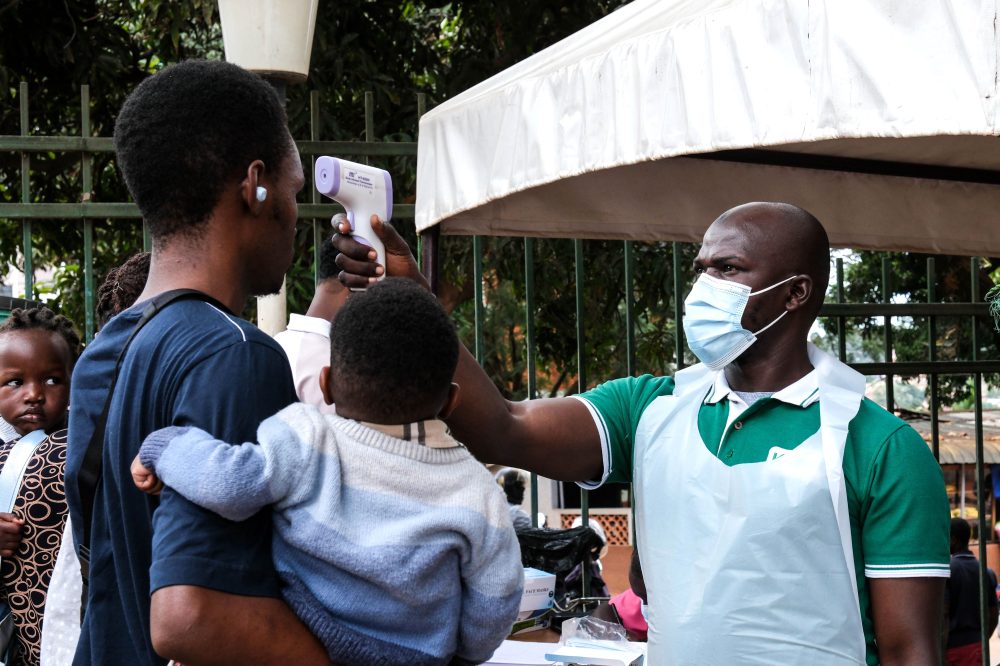
President Yoweri Museveni emphasized Thursday that the outbreak is primarily “on the Congo side,” encouraging tourism officials to counter perceptions that Ebola is spreading within Uganda.
Museveni advised citizens to “stop shaking hands” as a preventive measure and ordered the postponement of an annual religious gathering that draws thousands of pilgrims, including those from Congo, to a Catholic basilica near Kampala by June 3.
Additional protective measures announced Thursday include halting all public transportation and flights between Congo and Uganda.
Dr. Emmanuel Batiibwe, who directed efforts to contain a 2022 Ebola outbreak that killed at least 55 people, warned of high risks from cross-border trade. Preventing the current outbreak from entering Uganda will require “enhanced surveillance at all points of entry,” he said.
Uganda has faced multiple Ebola outbreaks, including a 2000 epidemic that killed more than 200 people and another in Kampala last year.
Existing Ebola vaccines and treatments prove ineffective against the Bundibugyo strain. Health experts emphasize contact tracing, isolation, and proper protective equipment for healthcare workers as crucial prevention strategies.
According to WHO, fruit bats are believed to naturally harbor Ebola viruses. The disease spreads through contact with infected individuals’ bodily fluids or contaminated materials.