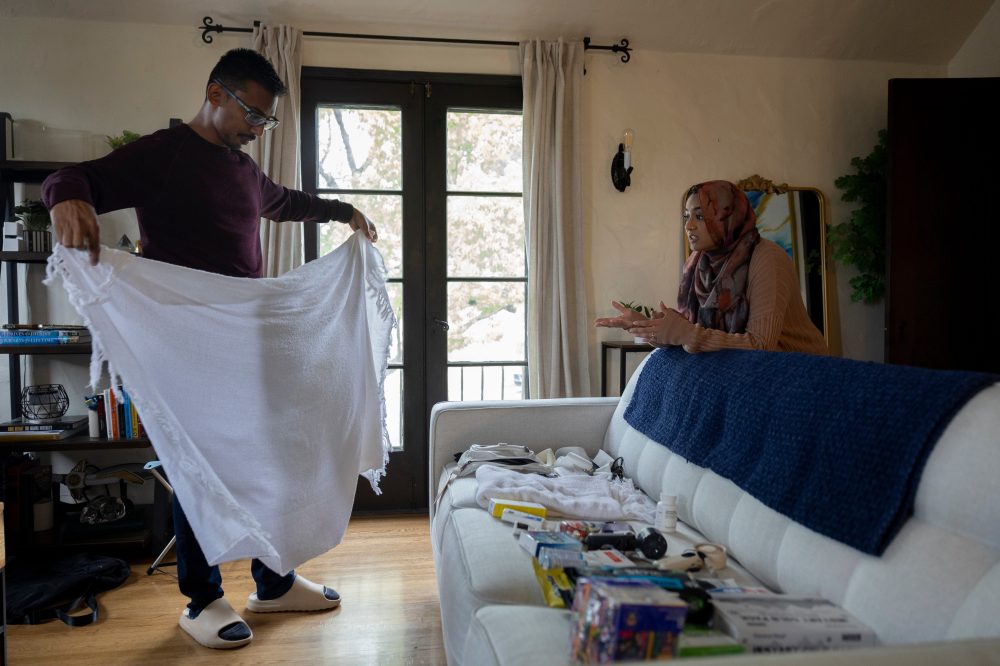

When Faisal Rashid and his spouse woke up at 3 a.m. in February, they were racing against time to reserve their places for this year’s Hajj pilgrimage before all spots were taken. From their Pasadena, California residence, adrenaline coursed through him as he worked through the online reservation system.
The February moment when the pair discovered they had secured places in the sacred Islamic journey to Mecca in Saudi Arabia was so moving that remembering it still causes them to become emotional.
“It was a very, very joyful experience,” said 35-year-old Rashid, his voice wavering. “My wife was already crying, praying. We were very grateful that this happened,” he added, a tear rolling down his face.
Much has shifted since that February day — the Iran war erupted and widened before a tenuous ceasefire was reached. The couple’s determination to complete the pilgrimage remains unchanged, however.
They represent American Muslims who are joining millions of pilgrims gathering in Saudi Arabia from across the globe for a Hajj that this year occurs amid regional tensions and uncertainty surrounding the conflict. The Hajj will officially start on Monday.
During the Hajj, Muslims come together in religious ceremonies and worship as they complete one of the Five Pillars of Islam. A sacred duty for Muslims who are physically and financially capable, Hajj can represent the spiritual journey of a lifetime for participants and an opportunity to seek divine forgiveness and cleansing of previous wrongdoings.
Many Muslims dedicate years to saving funds and waiting for authorization to undertake the journey.
“It’s not something you just get,” said Rashid, a doctoral candidate and a Los Angeles Police Department reserve officer. “It’s something that if God invites you, then you’re able to go.”
At one point, his father asked how the war affected their Hajj plans; an aunt wondered if he could get a refund if things escalated.
He figured others had previously endured far worse to make the journey. “You’re brought up to think about how this is a very physically and emotionally enduring expedition,” he said.
A planner by nature, Rashid began following a flight tracker and registered for a program that sends updates and alerts from U.S. embassies and consulates abroad.
But instead of worrying, he has been leaning on his faith.
“In Islam we’re taught that you’re supposed to do your very best effort but then let go of the things that … you don’t have control over,” he said. “I need to let go and feel that, ‘Hey, you know what, God is the best of planners.’ “
On Friday, U.S. Secretary of State Marco Rubio said there was “slight progress” during talks with Iran over a potential peace deal. He spoke days after U.S. President Donald Trump said he was holding off on a military strike against Iran because “serious negotiations” were underway. Trump has been threatening for weeks that the ceasefire reached in April could end if Iran does not make a deal.
Following the eruption of the Iran war, the U.S. Embassy in Riyadh in April advised Americans to reconsider participating in this year’s Hajj, citing then the “security situation and intermittent travel disruptions.”
Ahmed Sufyan, a surgeon in Michigan, has been concerned about potential flight disruptions on his way back from the pilgrimage. His round trip includes stops in Gulf countries that had been embroiled in the war, which started on Feb. 28 with joint U.S.-Israeli attacks on Iran and drew retaliatory strikes by Iran.
“There is some uncertainty with the war,” he said. “That does add a level of concern.”
Still, he said, “the faith is what drives us.”
If this were for vacation, he couldn’t have justified it. But Hajj is different, he said.
“I feel really lucky that I have this opportunity,” he said. “I personally know people who have attempted to go for many years, and it’s not easy to secure a spot.”
“Hajj,” he said, “transcends politics and conflict.”
His goal? To return a better person.
“To fulfill the Hajj requirements, you have to stop thinking about yourself and start thinking about your creator and putting things into perspective,” he said. “It teaches you patience and humility.”
Hajj brings together large numbers of Muslims of diverse races, ethnicities, languages and economic classes from around the world, leaving many feeling unity and connection.
In India, home to a large Muslim minority, pilgrimage planning has proceeded largely as normal, but high fuel prices have pushed up travel costs for this year’s pilgrims from the country.
Back in the U.S., the uncertainty upended Noor-e-ain Shahid’s plans for her children’s care while she and her husband go to Hajj.
The Texas neurologist had planned for her children to stay with family in Dubai. Tickets were bought; then the war erupted.
By late April, Shahid decided there was too much unpredictability: What if things flare up in the region? What if flight delays leave her kids stuck in Dubai?
Her in-laws offered to stay with the children in the U.S. while she and her husband are away. She is not worried about her own safety on the journey.
“If Allah has invited me, then Allah will take care of me,” she said. “And if Allah has decided my end is there in this situation, then, I mean, I accept that.”
She has been overwhelmed by emotions. High among them is feeling fortunate.
“It’s considered as rebirth,” she said. “You go there and you have an opportunity to become new when you come back and start over.”
In California, ahead of the Hajj, Rashid and his wife have prepared for the physically demanding pilgrimage by going to the gym and on walks. New shoes, he said, must be broken in. He has been spiritually preparing and getting guidance.
The couple also collected prayer requests that others would like them to make during Hajj.
“You want to go in spiritually with a clean slate, not with any kind of ill hearts or bitterness,” he said. “You don’t want to feel anxious about worldly things.”