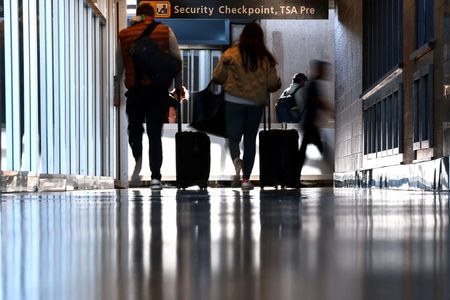

Federal health authorities announced Friday they are temporarily prohibiting lawful permanent residents from entering the United States if they have visited the Democratic Republic of Congo, Uganda or South Sudan within the past 21 days due to Ebola concerns.
The Centers for Disease Control and Prevention had initially exempted U.S. citizens, nationals and green card holders from a 30-day entry prohibition, but officials now say including permanent residents in the restriction is essential to prevent the virus from reaching American soil.
“Applying this authority to lawful permanent residents for a limited period of time provides a balance between protecting public health and managing emergency response resources,” the Centers for Disease Control and Prevention said in a statement.
The World Health Organization elevated the risk assessment to “very high” Friday for the uncommon Bundibugyo strain of Ebola potentially becoming a nationwide outbreak in the DRC and has classified the situation there and in Uganda as an emergency of international concern.
Health officials initially implemented the restriction Monday using Title 42 of U.S. public health law, which grants federal health agencies the power to block migrants from entering the nation to halt the transmission of infectious diseases.
Permanent residents have traditionally been protected from U.S. entry limitations. The CDC’s pandemic-era Title 42 directive excluded them, as did various travel restrictions implemented during the Trump administration.