
Plant species that define familiar landscapes around the world face a growing threat of extinction as rising global temperatures transform their natural environments, new research reveals.
Scientists examined the future survival prospects of more than 67,000 vascular plant species — representing roughly 18% of all known plants with water and nutrient transport systems. Their findings paint a concerning picture for botanical diversity worldwide.
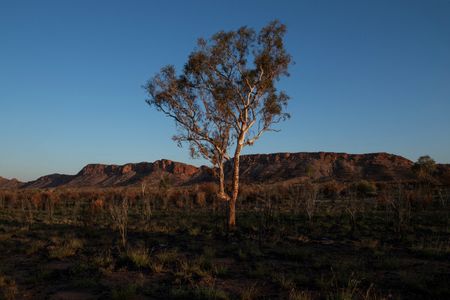
The research indicates that between 7% and 16% of these species could see their natural ranges reduced by more than 90%, putting them in serious danger of disappearing entirely. Among the plants at highest risk are California’s Catalina ironwood, an uncommon native tree, bluish spike-moss from an ancient plant family spanning over 400 million years, and approximately one-third of all Eucalyptus varieties — trees synonymous with Australia’s landscape.
Scientists reached these conclusions by analyzing millions of location records for plants alongside projected greenhouse gas emission patterns for the years 2081-2100.
Plant survival depends on much more than geographic location — it requires specific combinations of temperature ranges, precipitation levels, soil types, land usage, and environmental features like shade coverage.
“One way to picture this is to imagine plants trying to follow a moving ‘climate envelope.’ As temperatures warm, many species can shift northward or uphill to stay cool enough. But temperature is only part of the story,” explained Junna Wang, a Yale University postdoctoral researcher, and Xiaoli Dong, a professor of environmental science and policy at the University of California, Davis, in joint statements to Reuters.
Wang and Dong served as lead researchers for the study, which appeared in the journal Science.
According to their findings, climate change is reducing the availability of these essential environmental combinations in many regions, creating fewer locations where all necessary survival conditions exist simultaneously.
Plants typically spread to new areas over multiple generations through seeds or spores transported by wind, water, wildlife, or gravity. However, when researchers compared realistic plant movement patterns with hypothetical scenarios allowing unlimited dispersal, extinction projections remained remarkably similar.
“If slow movement were the main problem, then allowing unlimited dispersal should dramatically reduce extinction risk. But that is not what we found,” Wang and Dong noted.
This discovery carries significant implications for conservation efforts.
“If dispersal limitation were the main driver, then strategies like assisted migration — physically helping species move to new areas — could solve much of the problem. But if climate change is reducing the amount of suitable habitat overall, then simply helping species move may not be enough,” the researchers added.
Different regions face varying levels of threat. Arctic plants adapted to cold conditions may lose habitat as extremely cold climates become less common. Arid areas, including portions of the western United States and regions with Mediterranean-style climates, confront dangers from intensified drought conditions, reduced soil moisture, and increased wildfire frequency. Along southern and eastern Australian coasts, shorelines may prevent species from migrating toward the poles.
However, the study also identified potential benefits in some areas. Local plant diversity could increase across approximately 28% of Earth’s land surface as species establish themselves in newly favorable locations. This includes parts of tropical and subtropical regions where enhanced rainfall — beyond just temperature changes — might create suitable conditions for additional plant varieties.
The researchers characterized these changes as a worldwide reorganization, with some species vanishing from their traditional territories while others colonize new areas. They emphasized that local increases don’t necessarily indicate overall improvement for plant populations.
These geographical shifts could also produce “novel communities” — plant combinations that have never coexisted historically but would begin interacting for the first time. The researchers acknowledged uncertainty about how these new ecological relationships might develop.
Plants form the foundation of most land-based ecosystems. They capture and store carbon, prevent soil erosion, support animal populations, and supply food, lumber, medicines, and other essential materials. Changes in plant diversity can therefore trigger widespread effects throughout natural systems and human communities.
“If climate change reduces vegetation cover, ecosystems may absorb less carbon dioxide from the atmosphere, which can further intensify warming. That creates a feedback loop in which climate change harms plants, and reduced plant cover/productivity in turn worsens climate change,” Wang and Dong explained.
“Ultimately, protecting plant diversity is not only about conserving nature for its own sake — it is also about maintaining the ecological systems that support human societies,” they concluded.