
For more than a century, Catholic pontiffs have issued influential documents calling on world leaders to tackle the most pressing social challenges of their eras, with many of the Church’s 1.4 billion members knowing these texts by their brief Latin titles.
Pope Leo XIII’s “Rerum Novarum” in 1891 demanded improved working conditions during the Industrial Revolution. John XXIII’s “Pacem in Terris” in 1963 called for nuclear arms reduction during Cold War tensions. Francis’s “Laudato Si’” in 2015 demanded urgent climate action.
Now Pope Leo XIV has joined this historical tradition, releasing an urgent document Monday called “Magnifica Humanitas” (Magnificent Humanity) that calls on world governments to regulate artificial intelligence development more strictly.
“Like other popes before him, Pope Leo is responding to one of the most pressing social issues of his time,” John Thavis, a longtime Vatican correspondent who covered three papacies, told Reuters.
“Clearly (Leo) wants to help shape the debate over technology and AI, by emphasizing the moral and ethical arguments that centre the human person,” said Thavis.
One year into his leadership, Leo officially signed the AI document on May 15, marking exactly 135 years since his predecessor published “Rerum Novarum,” deliberately connecting his newest social justice appeal to the papal text many consider the first of its kind.
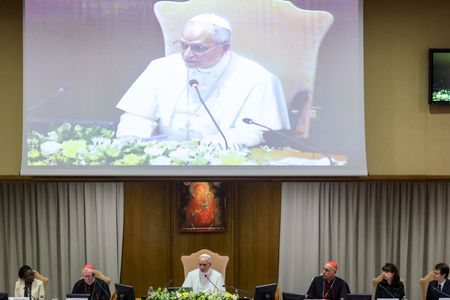
Anna Rowlands, a British academic and Church adviser, explained at Monday’s Vatican presentation that for over a century, pontiffs have warned the world “will not be saved by the market.”
“Today, Pope Leo cautions that we will not be ‘saved’ by AI,” she said.
These papal letters represent one of the most authoritative forms of instruction a pope can give to Church members worldwide.
Pontiffs select encyclical subjects deliberately to showcase their papacy’s main concerns, since these texts can extend hundreds of pages and require years of preparation.
The late Pope Francis, who served for 12 years, wrote just four such documents during his tenure.
Leo, who has taken a more aggressive stance recently and drawn criticism from U.S. President Donald Trump after condemning the Iran war, cautioned in his text that AI spreads false information, encourages conflict and might push the world toward endless warfare.
During Monday’s Vatican presentation, he also voiced alarm that certain autonomous weapon systems have progressed “practically beyond any human reach to govern them.”
Papal documents calling for global action show varying degrees of success in creating real change.
“Pacem in Terris,” released months following the 1962 Cuban missile crisis, receives credit from some historians for providing moral support to talks between then-U.S. President John F. Kennedy and Soviet leader Nikita Khrushchev that resulted in the Partial Nuclear Test Ban Treaty.
Francis, whose “Laudato Si’” became the first papal document to support scientific agreement that greenhouse gases warm Earth’s atmosphere, often expressed disappointment that governments weren’t doing enough to address climate change.
Thavis explained that determining whether a papal encyclical will create lasting change is initially difficult, as these lengthy documents need time for worldwide audiences to absorb them.
“Their ideas tend to surface gradually in the public square, in the media and in grassroots activism,” he said. “I suspect this encyclical will act as a landmark reference point in the ongoing debate over artificial intelligence.”
The text is now accessible on the Vatican website in multiple languages and will be printed as a booklet for reading and discussion groups.
Chris Olah, a co-founder of Anthropic, one of the world’s leading AI companies, participated in Monday’s Vatican launch event for Leo’s document and expressed gratitude to the pope for tackling issues created by this disruptive new technology.
He noted that companies like his encounter significant commercial pressures and require external oversight.
Leo demanded in his document strong international rules to monitor AI development and argued that AI data ownership shouldn’t remain exclusively with private companies.