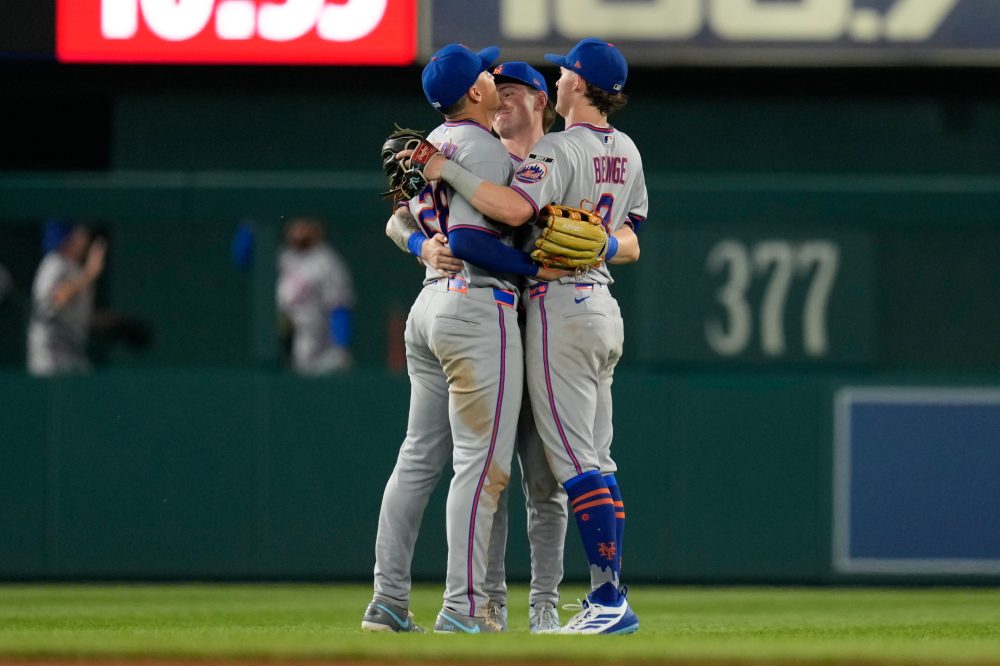

During Monday’s extended battle between Washington and New York, the Nationals quickly decided to put Juan Soto on base intentionally when extra innings began in the 10th. The Mets responded by doing the same to James Wood in their half of the inning. When Soto stepped up to the plate again in the 12th, Washington initially pitched to him before eventually walking him intentionally after the count reached 2-0.
This tactical chess match wasn’t unexpected. The automatic runner rule that places a runner on second base to start extra innings has created one of the few situations where managers still readily use intentional walks – a tactic that had been losing popularity.
Major League Baseball saw just 753 intentional walks during the 2019 season, marking the lowest total since 1961 when fewer teams and games existed.
The trend has continued downward from that point. The 2023 season produced only 474 intentional walks, while last year saw 556. Similar to how analytics-focused strategists discourage sacrifice bunts due to wasted outs, putting additional runners on base is viewed as dangerous.
However, extra innings present a different strategic landscape. With first base empty at the start of each inning and the potential for setting up double-play opportunities, there’s minimal risk in walking strong hitters intentionally if the game remains tied in the bottom half.
Between 1974 and 2019, before the automatic runner rule existed, intentional walks occurred once every 140 plate appearances. During extra innings specifically, that frequency increased to once every 26.7 plate appearances.
Following the 2020 rule implementation, intentional walks now happen once every 335 plate appearances in regular situations. But in extra innings, they occur once every 16.7 plate appearances. Extra-inning intentional walks have become more frequent than in previous eras.
While some baseball fans appreciate the added strategic elements, others find it disappointing to see elite players like Soto prevented from hitting. The major league leaders in extra-inning RBIs since 2020 include:
1. Eugénio Suarez, 22
2. Josh Naylor, 21
3. Alec Bohm, 20
4. Adolis García, 20
5. Daulton Varsho, 18
Meanwhile, the players receiving the most extra-inning intentional walks are:
1. José Ramírez, 25
2. Aaron Judge, 19
3. Juan Soto, 16
4. Shohei Ohtani, 15
5. Bryce Harper, 15
Despite the two intentional walks issued to Soto, the Mets prevailed on Monday with a 10-run explosion in the 12th inning, winning 16-7. Carson Benge contributed two hits and three RBIs during that decisive frame. Benge currently leads MLB with six extra-inning RBIs this season.
In other baseball action, Reid Detmers of the Los Angeles Angels delivered a dominant performance Sunday night, recording 14 strikeouts across eight innings while allowing just one hit. Jake Burger’s second-inning home run was the sole blemish on Detmers’ otherwise perfect outing.
The Angels defeated the Texas Rangers 2-1 when a ninth-inning throwing error by Justin Foscue decided the contest.
Tuesday night brought dramatic late-inning action as the Arizona Diamondbacks trailed San Francisco by two runs entering the bottom of the ninth with two outs and a runner on base. Adrian Del Castillo delivered an RBI single, Ryan Waldschmidt reached on catcher’s interference, and Ketel Marte capped the comeback with a three-run homer for a 5-3 victory. San Francisco’s win probability had reached 95.4% according to Baseball Savant.
The Diamondbacks have capitalized on a favorable schedule stretch, posting an 8-2 record against the Giants and Rockies over their past 10 contests.