
Following a significant legal victory, religious leaders have returned to an immigration detention center near Chicago for the first time since 2020, bringing spiritual comfort to those held inside the facility.
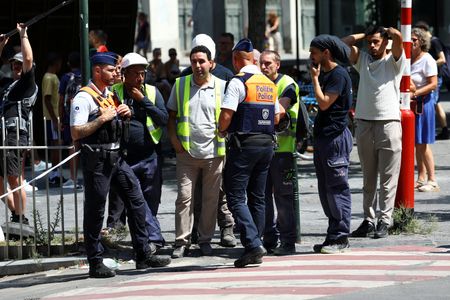
Two Catholic priests and a nun, accompanied by law enforcement, walked through security barriers and barbed wire fencing to enter the Broadview detention center on Ash Wednesday, marking the end of a months-long legal fight for access.
Father Paul Keller, one of the priests who entered the facility, described witnessing emotional reactions from detainees who received communion and ashes during the religious observance. With his hands darkened from applying ceremonial ashes, Keller characterized the experience as both meaningful and somber following the extended court proceedings.
Religious officials had been barred from the Broadview center, located west of Chicago, since the COVID-19 pandemic started in 2020, according to the Coalition for Spiritual and Public Leadership.
“We’re dealing with what should be a very non-controversial issue, which is praying with people who are detained and providing them some comfort,” Keller told Reuters. “It’s unfortunate that it’s happening because of a lawsuit.”
The facility became a focal point during the previous administration’s enforcement operation known as “Midway Blitz” last autumn, when federal agents conducted widespread arrests across Chicago and surrounding areas. Officials targeted individuals they claimed posed risks to public safety, though the operations drew criticism for their tactics.
According to court documents, agents used tear gas in residential areas, detained protesters, deployed stun guns during arrests, aimed weapons at civilians, and shot two individuals, one fatally. The Department of Homeland Security reported detaining over 4,200 people during these operations.
Many detainees were housed at the Broadview center under crowded conditions, with some sleeping on floors near malfunctioning restroom facilities, according to legal filings.
The area around the detention center previously saw regular demonstrations, with protesters gathering as immigration officials deployed pepper balls and tear gas. On Wednesday, the atmosphere was markedly different, filled instead with prayers and religious songs.
Ash Wednesday represents the start of the Lenten season in the Catholic calendar, when believers receive ash crosses on their foreheads as a sign of penance.
Catholic leadership, including those with Chicago-area roots like Pope Leo, have become vocal advocates for immigrant rights during recent federal enforcement efforts. Chicago Archbishop Blaise Cupich delivered a powerful sermon at a local church, emphasizing the dignity of all immigrants.
“God does not need papers to know where you are or who you are,” Cupich said. “When you cry in secret, he sees you. When you work hard for your children while no one is watching, he sees you. He sees you when you sacrifice your own comfort to send money back home.”
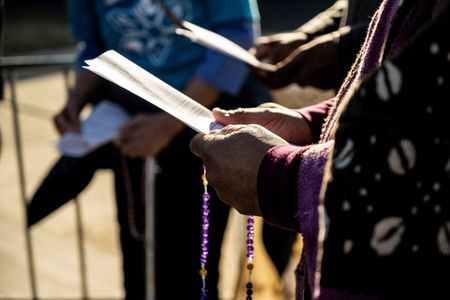
Following the clergy’s visit to the detention facility, thousands gathered for a public Mass, carrying prayer beads, supportive signs, and candles.
The service included traditional Catholic elements like scripture readings, congregational singing, and incense, while also incorporating special prayers for immigrant families and those who have lost loved ones to immigration enforcement actions. The service included remembrances for Silverio Villegas Rodriguez, Renee Good, and Alex Pretti, three individuals killed during recent federal operations.
“It’s letting immigrants and people in Broadview know that they’re not alone and that we haven’t forgotten about them,” said Kamila Chavez, a Loyola University Chicago student who attended the service.
The legal victory represents progress for community members who have experienced trauma from immigration enforcement, according to Reverend David Black, a Presbyterian minister who was injured by federal agents at the facility in October. Black was pepper-sprayed and struck in the head with a pepper ball during previous protests.
On February 13, a federal judge determined that denying religious leaders access to the facility violated their constitutional right to practice their faith.
“Ash Wednesday is a day that we remember that we are dust and that we will return to dust,” said Rev. Black. “It’s a day that Christians remember that the empires of this world rise out of ashes and fall back into ashes.”