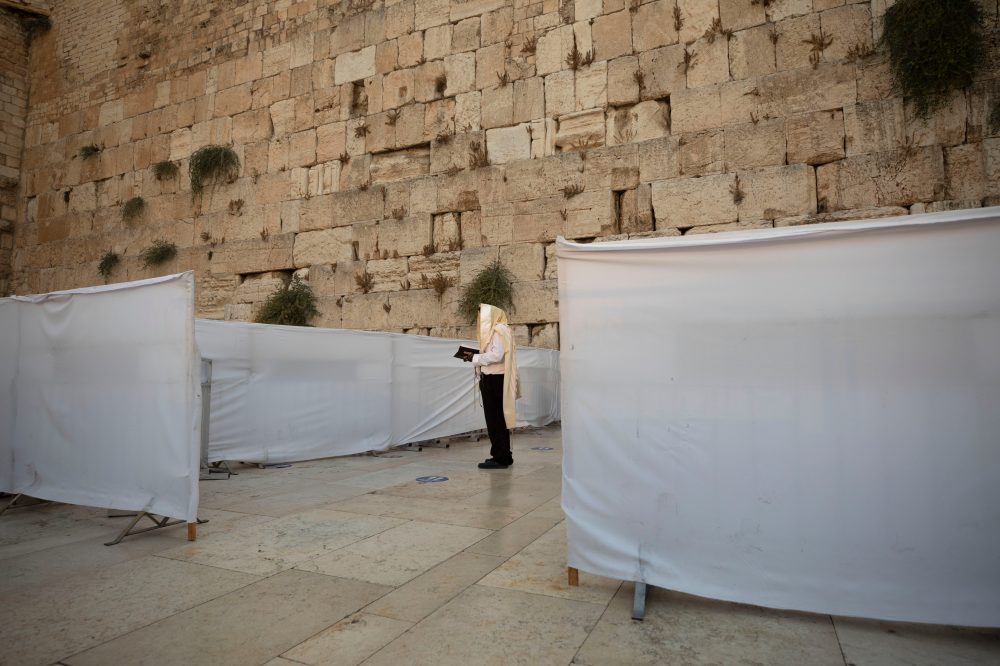

JERUSALEM — Israeli lawmakers have taken the first step toward approving legislation that would grant the country’s Orthodox chief rabbinate complete authority over Jerusalem’s Western Wall complex, sparking concerns among liberal Jewish communities that co-ed worship could soon become illegal at the sacred site.
The proposed legislation poses a threat to deepen tensions between Israel and America’s Reform Jewish community, which represents the nation’s largest Jewish denomination.
The Western Wall stands as Judaism’s most sacred location for prayer worldwide. Currently, the prominent main courtyard operates under rabbinate oversight with gender-separated worship areas, while a smaller egalitarian zone exists in a less visible location where men and women can worship side by side.
Should the legislation pass, any religious activities at the wall that don’t conform to the chief rabbinate’s guidelines would constitute “desecration,” carrying potential prison sentences of up to seven years. This development could effectively eliminate the wall’s co-ed prayer area.
“It’s criminalizing the way the vast majority of Jews pray in the heart of the holiest site of the capital of the Jewish state,” said Orly Erez-Likhovski, executive director of the Israel Religious Action Center, the social justice arm of Israel’s Reform movement.
While Reform Judaism dominates American Jewish religious life, it maintains limited influence in Israel, where Orthodox religious authorities control most religious matters including marriage ceremonies and burial practices.
“Wherever ultra-Orthodox have the upper hand or have control, they’re trying to force gender segregation. They are trying to make women disappear,” said Erez-Likhovski.
Her organization represents Reform and Conservative movements, along with the “Women of the Wall” advocacy group, in ongoing Supreme Court litigation aimed at compelling the government to maintain and restore the egalitarian prayer space.
The co-ed section remains largely hidden from view, accessible only through a narrow entrance.
Visitors to this area cannot directly touch the ancient stones due to protective barriers installed following a 2018 incident when a large stone broke away from the wall and crashed onto the prayer platform, forcing an immediate shutdown.
This situation contrasts sharply with the wall’s famous main plaza, featuring donor recognition plaques and bustling with worshippers who separate by gender to pray beside the historic stones.
Far-right legislator Avi Maoz sponsored the bill, which passed its initial reading Wednesday evening by a 56-47 margin.
According to the Israel Democracy Institute, a Jerusalem-based research organization, lawmakers fast-tracked the preliminary vote Wednesday to counter a February 19 Supreme Court decision ordering repairs to begin on the egalitarian section.
A decade ago, Prime Minister Benjamin Netanyahu’s administration committed to completing these repairs as part of an agreement to encourage religious diversity.
The timing for the bill’s final approval vote remains undetermined.