
MILAN (AP) — While Olympic crowds pack Milan’s famous Duomo, dedicated young volunteers are guiding visitors to discover the city’s hidden religious treasures through an innovative program that showcases sacred art and architecture.
The program, called ‘The Path of Beauty’ or ‘La Via della Bellezza’ in Italian, launched in 2020 through the archdiocese’s youth ministry department. While tours normally happen on weekends, organizers expanded to weekday schedules during the Olympic Games, continuing through March 15.
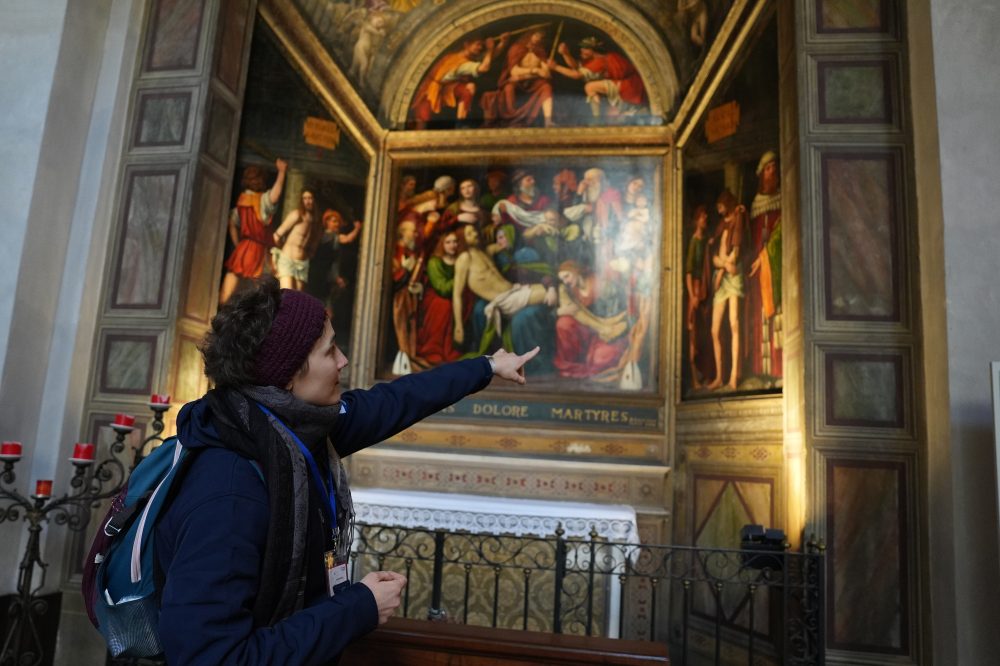
‘The concept focuses on welcoming people into these sacred spaces and encouraging them to reconnect with artistic magnificence passed down through generations, yet remains meaningful today,’ Sara Cainarca, who oversees the visiting team, explained to The Associated Press on Wednesday.
The archdiocese program involves 15 to 20 participants, with each volunteer becoming an expert on one or two Milan churches. These brief tours cover a dozen Catholic churches throughout the metropolitan area.
Volunteers position themselves inside their designated churches, clarifying they aren’t professional tour guides but offer complimentary introductions to each building’s historical significance and religious artwork.
Throughout the Olympic period, volunteers report hosting guests from the United States, France, Germany and Spain, including some attending the Games and others simply eager to explore beyond Milan’s famous attractions.
Giovanna Giuditta Mazza, an art history student who began participating two years ago, conducts tours in English, French and Italian, primarily at the Basilica of San Lorenzo Maggiore, dating to the late 4th and early 5th centuries and ranking among Milan’s most ancient churches.
‘Visitors entering the church typically arrive without expectations,’ explained Mazza, 22. ‘However, upon departure, I notice excitement in their expressions, which means everything to me.’
These interactions provide volunteers opportunities to discuss their personal faith.
‘True beauty encompasses more than artistic expression,’ stated Víctor Ortíz, a 22-year-old cultural heritage student. ‘It includes God’s message as well.’
The Santa Maria presso San Satiro church gains recognition for Renaissance architect Donato Bramante’s visual trick, creating a trompe-l’oeil apse to overcome space limitations.
Ortíz, who frequently leads tours there, describes how the location connects to a 13th-century miracle, where a Virgin Mary image reportedly bled after being attacked.
‘The increasing religious devotion from that incident ultimately resulted in the church’s construction during the 16th century,’ he noted.
‘La Via della Bellezza’ originated as educational workshops where Lombardy region university students examined connections between artistic expression and spiritual life. Volunteers later expanded to cities including Brescia and Bergamo, where churches and basilicas feature renowned Romanesque and Baroque artwork.
‘Our goal involves guiding visitors as they transform from sightseers into spiritual seekers discovering deeper personal longing,’ said Cainarca, 26.
Volunteers gather monthly with specialists providing advanced instruction in art history and related subjects. The group also visits regional destinations to enhance understanding of both artistic legacy and underlying spiritual customs. Their next trip heads to Ravenna, featuring Christian monuments celebrated for mosaics recognized as UNESCO World Heritage sites.
However, Milan remains Cainarca’s preferred working location. She believes the city’s churches define its character, noting patron Saint Ambrose established ideals of community cooperation.
‘Currently, Milan represents fashion, retail, banking and modern architecture,’ she observed. ‘These churches provide opportunities for reflection, meditation and exploration.’