
The Vatican announced Saturday that Pope Leo XIV has selected a seasoned diplomatic veteran to serve as the Holy See’s new representative to the United States, taking on one of the Church’s most critical international relationships during a challenging period marked by disagreements over immigration policies and military action in Iran.
Archbishop Gabriele Caccia, a 68-year-old Italian diplomat currently serving as the Vatican’s representative to the United Nations in New York, will assume the role of apostolic nuncio in Washington. He takes over from Cardinal Christophe Pierre, the French-born ambassador who is stepping down at age 80.
The incoming ambassador brings extensive international experience, having previously represented the Holy See in Lebanon and the Philippines before his 2019 assignment to the United Nations. After his ordination as a priest in Milan in 1983, Caccia held the influential position of assessor within the Vatican’s secretariat of state, one of the most significant administrative roles in the Church’s central government.
Caccia steps into a position fraught with challenges on multiple fronts, dealing with both American Catholic Church leadership and U.S. government relations during a period of worldwide instability.
During Pierre’s time as ambassador, tensions became apparent between the conservative-leaning U.S. Conference of Catholic Bishops and the more liberal agenda championed by Pope Francis throughout his papacy.
The Vatican considers its relationship with the United States and American Catholics particularly vital, especially given that U.S. Catholic donations represent a major source of funding for the Holy See’s operations.
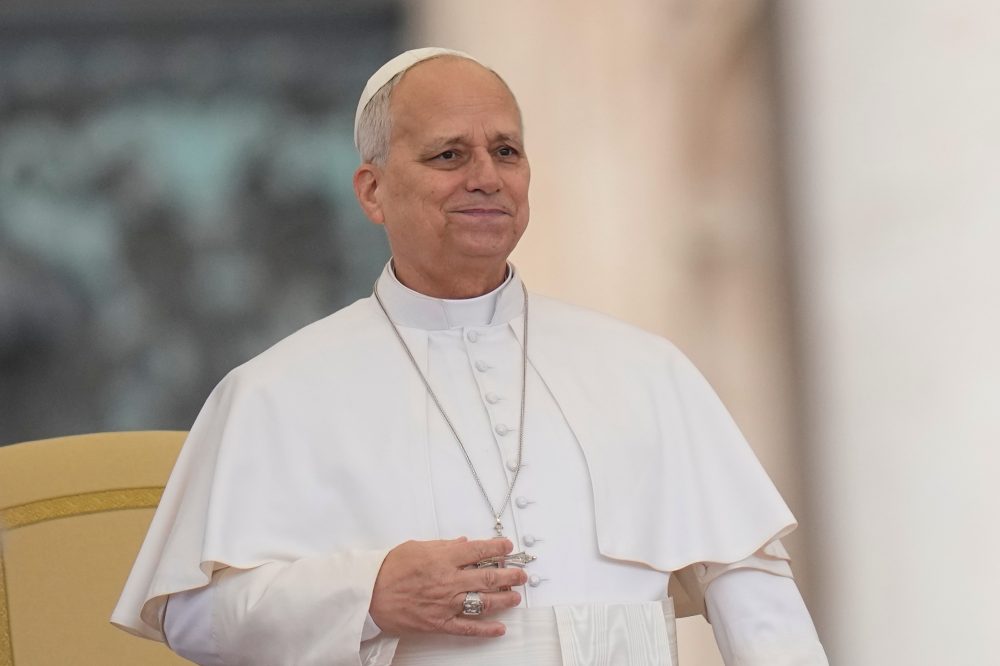
Pope Leo, who made history as the first American-born pontiff, understands these complexities well, having worked closely on U.S. bishop appointments for two years under Francis before his 2025 election. Throughout his papacy, Leo has consistently promoted messages of reconciliation and Church unity.
Diplomatic friction between the Vatican and the first Trump presidency centered largely on immigration issues, and these tensions have persisted into Leo’s tenure and Trump’s second term. While Leo has consistently called on the Trump administration to uphold migrant dignity, he has also recognized the nation’s sovereign right to control its borders.
Recently, Leo has voiced “profound concern” regarding the ongoing U.S.-Israeli conflict in Iran, calling on all parties to “stop the spiral of violence before it becomes an irreparable abyss.”
During remarks last Sunday, Leo advocated for renewed diplomatic efforts, stating that weapons only create “destruction, pain and death.”
In a significant foreign policy address this year, Leo also criticized America’s aggressive military stance, seemingly referencing Washington’s actions in Venezuela and threats regarding Greenland. He condemned nations that use force to expand their influence globally and “completely undermine” peace and the international legal framework established after World War II.
Responding to his appointment Saturday, Caccia expressed gratitude for Leo’s confidence in selecting him to represent the Vatican in his homeland.
“I receive this mission with both joy and a sense of trepidation,” Caccia stated according to Vatican News. He described his assignment as a mission “at the service of communion and peace,” noting the timing coincides with America’s 250th independence anniversary.
Archbishop Paul S. Coakley, who leads the U.S. bishops’ conference, praised Caccia’s selection and extended the American Church hierarchy’s “warmest welcome and our prayerful support.”
While the Vatican maintains its longstanding policy of diplomatic neutrality, Leo has been vocal in condemning the humanitarian consequences of Israel’s Gaza operations and Russia’s Ukrainian invasion.