
With Ash Wednesday marking the beginning of Lent this week, Catholic clergy nationwide are preparing for increased activity in their confessionals. Believers throughout America are rediscovering the sacrament of reconciliation, which has transformed from an uncomfortable listing of wrongdoings into a healing journey toward divine grace.
“They come to confession feeling as if they are terrible, but … they are displaying the fact that they want to be good,” said the Rev. Patrick Gilger, a Jesuit priest in Chicago. “The fact that somebody shows up to confession is a lived act that they desire holiness.”
While many religious traditions incorporate periods of self-denial, repentance and forgiveness before significant holy days, Catholics view the sacrament of penance as an ongoing practice meant to occur weekly or monthly. During confession, individuals share their sins with a priest, promise to avoid repeating them, receive absolution, and complete assigned penance before returning to receive Communion.
“This becomes kind of a marker for Catholics. It’s something they do, which their Protestant and other non-Catholic neighbors don’t do,” said James O’Toole, a Boston College professor emeritus and author of a new history of confession.
Prior to the final decades of the 1900s, Catholic confession followed a predictable pattern. Churches and educational institutions maintained categorized lists of transgressions, ranging from serious mortal sins like adultery that violated commandments to minor venial sins such as disrupting church services.
The process typically moved quickly – penitents would detail their sins and frequency, recite an act of contrition, then receive penance such as reciting ten Hail Marys. However, O’Toole noted that confession participation experienced a dramatic decline afterward, influenced by expanding psychological understanding of human nature, shifting cultural attitudes toward sexuality, and scandals involving clergy misconduct.
According to the Rev. Thomas Gaunt, who directs Georgetown University’s Center for Applied Research in the Apostolate, the Catholic Church doesn’t collect confession statistics, making current participation trends difficult to measure precisely.
Nevertheless, American parishes report growing interest, and priests describe how the sacrament now emphasizes conversations about divine mercy and love while still maintaining acknowledgment of sins and receiving forgiveness as central elements.
“There’s only so many ways to go wrong. There’s an infinite number of ways to be right and to have God’s life coursing through you,” said the Rev. Mike Nugent, who was ordained in 2023 and is parochial vicar at Saint Ambrose Catholic Church in Annandale, Virginia.
Modern confessors aren’t simply offering easy forgiveness – priests cannot grant absolution without genuine willingness to change from the penitent. However, they strive to demonstrate the same compassion that Gospel accounts show Jesus extending to various sinners.
“What sinfulness is in the Catholic Church’s theological understanding is the intentional, willful distancing of oneself from God,” said Gilger, who also teaches at Loyola University. “The point of confessing your sins, of attending to sins, is only to allow the God who wants to be with us to rush back into the emptiness that those sins have created.”
Multiple priests describe confession as having therapeutic benefits for both participants, particularly in today’s society that tends toward judgment rather than forgiveness.
“The individual can both confront him or herself, sort of acknowledge these things, and at the same time experience, from God through another person, mercy, forgiveness, and hope,” said the Rev. Brendan Hurley. He oversees the penance preparation program at the Pontifical North American College, next to the Vatican, where Nugent studied.
The confidentiality of confession remains absolute, with the Vatican consistently opposing legislative attempts to require certain disclosures.
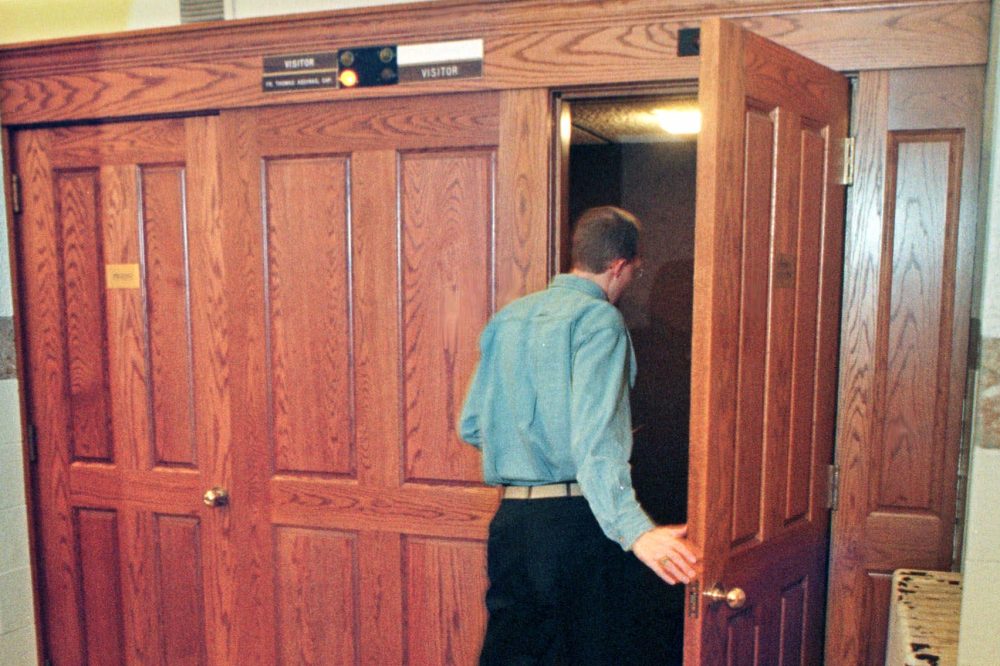
Whether kneeling before a traditional wooden confessional screen or meeting face-to-face with their confessor, most people seek to release emotional burdens and receive concrete encouragement, according to priests.
“It’s about healing,” said the Rev. John Kartje, rector of Mundelein Seminary in Illinois and a priest for nearly a quarter century. “You need trust, you need openness, you need vulnerability, you need honesty.”
This approach results in what Nugent humorously calls confession having “a strong customer satisfaction rating.” His parish, along with others in the Diocese of Arlington, will begin offering Wednesday evening confessions simultaneously starting next month.
“Knowing that I’m loved even with my struggle, even with sin, even with the things that are challenging and shameful in my life, that I am still loved perfectly — my gosh, that is good news,” Nugent added.
Priests encounter dramatically varied confession experiences, from individuals with only hours to live to those revealing major secrets like infidelity or theft that they’ve never previously spoken aloud.
Other situations require guiding overly vague penitents who might only say “I haven’t been true to myself” or those struggling to accept church teachings on widely accepted practices like contraception.
What clergy emphasize they avoid is showing disapproval or adopting harsh, judgmental approaches. Instead, they concentrate on reinforcing God’s continuing love and presence.
“Then people know what the thing that they’re doing is that’s keeping them away from God,” Gilger said.
Traditionally, seminary students studied moral theology through detailed manuals that functioned as “clear rule books,” which influenced what Catholics learned through religious education, according to O’Toole.
While seminaries still include penance courses near graduation, today’s training emphasizes “creating a space where the penitent can feel comfortable,” Hurley said.
Seminary students now practice with faculty and fellow students while also regularly participating in confession themselves – a practice maintained by all priests, including the Pope.
Both receiving and administering confession ultimately represents an expression of faith.
“I think the learning curve when you first get out (of seminary) is … don’t fall in the trap of thinking this is all on you, because sometimes that leads to being overly strict,” Kartje said. “I’m hearing your confession. I’m saying the words of absolution. But the only real healer is the Holy Spirit.”
The understanding that they serve as channels for divine grace to struggling individuals motivates many priests to spend hours listening to admissions of wrongdoing.
“You’re not just there for what Jesus is doing in healing that person. You also have this privileged role in being present as someone shows incredible virtue,” Nugent said. “When someone comes and says, ‘Father, these are the things I’ve done,’ there’s so much honesty, there’s so much humility, a great generosity of spirit, a great faith in the God who will forgive them.”
While serving as confessor can be emotionally demanding, it also provides significant rewards, Gilger noted.
“I remember some confessions, the hard things people said, but … mostly what I remember is how amazing people are, and it’s immensely consoling,” he said.