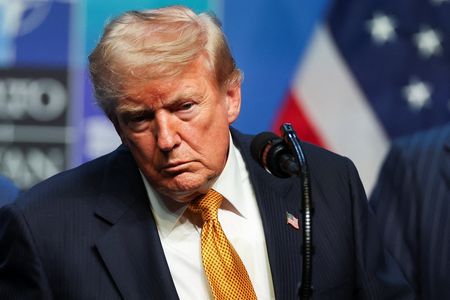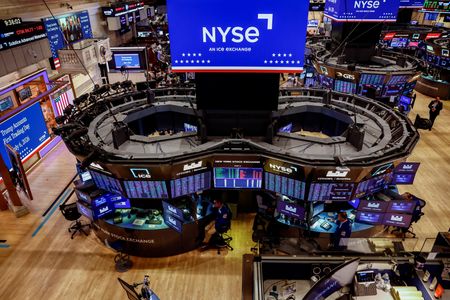

Global investors received a jarring reminder Wednesday of just how fast the oil market can rattle financial markets, after U.S. President Donald Trump declared that a temporary deal with Iran aimed at ending the war “is over.”
The announcement sent oil prices surging nearly 6% to a two-week high, while assets sensitive to inflation — including bonds and gold — took a hit.
“It’s a big wake-up call for markets,” said Aneeka Gupta, director of macroeconomic research at Wisdomtree. The expectation had been “that we were likely to start to see the flow of oil coming back into the markets, and we saw inflation expectations being dialled down.”
Oil markets were the first to feel the shock, with prices climbing as much as 6% on Wednesday following Trump’s comments. Even so, Brent crude futures remain near $78 per barrel — well below the $100-plus levels seen for two months starting in mid-March, a period that had inflation gauges flashing red for policymakers.
Prices had dropped sharply after the United States and Iran signed an initial memorandum of understanding in June, which reopened the Strait of Hormuz. Oil from tankers previously stranded inside the Gulf then flooded the market, creating a temporary oversupply. Now, analysts are asking where prices will stabilize once that surplus clears — and whether the latest developments will discourage tankers from returning to the Gulf.
The market turbulence arrived at an already uncertain moment for stocks. Doubts are emerging about the artificial intelligence boom, as traders question whether companies that have collected billions in revenue from chips and AI products will continue to do so if supply constraints ease or demand falls short of projections.
Since the Nasdaq reached a record high on June 1, memory chip manufacturers have experienced a rough stretch. An exchange-traded fund tracking memory chip stocks has dropped nearly 8%, while the Philadelphia semiconductor index has declined 5%. Meanwhile, broader markets have performed better — the equal-weight S&P 500, which reduces the influence of the largest companies, has gained nearly 3%, and Europe’s STOXX 600 index is up 4%.
Bond markets also reacted strongly to Trump’s comments. Yields jumped as traders raised their inflation forecasts and began pricing in higher interest rates, reversing recent trends that had pointed toward fewer rate hikes. Contracts tracking eurozone inflation expectations one year out rose 14 basis points to 1.992%. Traders were pricing in roughly 35 basis points of additional tightening from the European Central Bank this year, up from 25 basis points the day before.
According to LSEG data, markets were also pricing in 36 basis points of tightening from the U.S. Federal Reserve and 32 basis points from the Bank of England. Despite the renewed inflation concerns, U.S. consumer inflation is still expected to come in around 2.15% in a year’s time — a significant drop from the 4.2% figure recorded in May.
Germany and Britain both saw their two-year bond yields jump 10 basis points to their highest levels in nearly a month. The reaction in the U.S. — which exports energy — was more muted, with two-year yields rising 5 basis points.
Market volatility, which had been largely calm for much of the past several months, picked up sharply on Wednesday. The VIX volatility index had returned to its pre-war levels by early June, aside from a brief spike tied to concerns about high-priced tech stocks. Similar patterns played out in volatility measures for bonds and currencies, which had seen a nearly unbroken decline in recent weeks before Wednesday’s jump. Equity markets with heavy chip exposure — such as those in South Korea and Taiwan — continue to see especially elevated volatility.
Gold, meanwhile, fell on the news. The precious metal is currently trading 23% below where it stood before the war began. Prior to the conflict, gold had enjoyed a six-month rally that lifted its price by 70%, driven by buying from central banks, institutional investors, and individual traders alike.
After a modest recovery since the start of July, gold gave back those gains Wednesday, falling 1.1% to $4,060 an ounce. Though gold is typically viewed as a safe-haven investment and a hedge against inflation, it initially rose when the Iran conflict began before quickly reversing course. A stronger dollar and rising expectations for central bank rate hikes have weighed heavily on the metal’s price.