The University of Delaware has released its latest weekly athletics digest, providing updates on Blue Hens sports activities and upcoming competitions.
The weekly publication serves as a comprehensive overview of athletic department news, highlighting recent performances and previewing scheduled events across various sports programs at the university.
Delaware athletics continues to keep fans and supporters informed through these regular updates about team activities and competitive schedules throughout the academic year.
Delaware motorists should expect potential delays on Interstate 95 northbound this afternoon as cleanup crews work to remove litter from the highway.
The Delaware Department of Transportation has scheduled litter removal operations along the northbound lanes of I-95, beginning at the Delaware Welcome Center and continuing through to Wilmington. The cleanup activities are expected to conclude by 4:30 PM today.
Drivers traveling this route should allow extra time for their commute and exercise caution when approaching work zones where crews may be operating.
More than 250 technology professionals gathered for NOAA’s ProTechnology Innovation Showcase on March 25, 2026, which organizers are calling a major success.
The event concentrated on data modeling advancements and included presentations from six ProTech Prime vendors and their technical teams. All presentation materials from the showcase have been made available online through a shared drive link.
NOAA officials say they intend to host these technology showcases on a regular basis, covering various topics of interest to the technology community. Information about upcoming events will be posted on their news and events webpage.
The agency is seeking input from attendees and the broader community for future showcase topics. They have created a feedback form where participants can suggest subjects for upcoming events or share their thoughts about the inaugural gathering.
Officials expressed gratitude for the strong turnout and participation, saying they look forward to welcoming attendees at the next ProTechnology Innovation Showcase.
PITMAN, N.J. – First-year swimmer Rowan O’Donoghue from Salisbury University’s nationally-ranked women’s swimming program has earned the New Jersey Athletic Conference’s top newcomer honor, announced Tuesday.
O’Donoghue’s selection as NJAC Rookie of the Year caps off an outstanding debut season and leads an unprecedented 23 Sea Gulls swimmers who received All-NJAC recognition this year.
The achievement marks a program record for All-Conference selections for Salisbury’s women’s swimming team, which currently holds the 20th position in national rankings.
The rookie sensation’s performance throughout her inaugural collegiate season impressed conference officials enough to earn the prestigious newcomer award in the competitive NJAC.
SALISBURY, Md. – Runners from throughout the region will gather in downtown Salisbury on Saturday, April 4, 2026, for the return of the yearly Salisbury Marathon, Half Marathon, and 5K competitions.
The athletic celebration will bring together competitors and community members for a day filled with sporting achievement and local pride. Organizers encourage residents to come support the athletes while planning ahead for significant traffic disruptions throughout the downtown area.
Street and Park Access Restrictions
Friday, April 3, starting at 1 p.m.:
The Downtown Plaza area along West Main Street between Market Street and Division Street will shut down at 1 p.m. to allow for race preparation activities.
Saturday, April 4, between 6 a.m. and 3 p.m.:
Main Street between Lake Street and Court Street
West Market Street from Main Street to Circle Ave.
Camden Street
Carroll Street between Waverly Drive and the traffic circle
Division Street from Route 50 to Circle Ave.
Mill Street starting from Church Street
Riverside Drive will allow only neighborhood access
Race organizers will also block South Park Drive near City Park between Beaver Dam Drive and Snow Hill Road during morning hours from 6 a.m. until 10 a.m.
County officials warn that numerous additional county roadways will experience closures as well. Race organizers have posted a complete closure map at: https://www.sbymarathon.com/Race/runsby/Page-2
Officials expect the Salisbury Marathon to showcase athletic excellence, competitive spirit, and strong community participation.
Those seeking current details about traffic restrictions can check the Salisbury Marathon’s social media accounts. Complete race route information is accessible through www.RunSBY.com.
A standout performance on the baseball diamond has earned Goldey-Beacom College senior Connor Blence recognition as the Central Atlantic Collegiate Conference Baseball Pitcher of the Week.
Blence, who hails from Downingtown, Pennsylvania, delivered an exceptional outing last week that caught the attention of conference officials. The senior hurler’s dominant pitching display was deemed worthy of the weekly honor from the CACC.
The recognition highlights Blence’s contribution to the Lightning’s baseball program and showcases the caliber of talent competing at the collegiate level within the conference.
WASHINGTON — American consumers showed slightly improved confidence levels in March, even as fuel costs continue climbing due to the ongoing conflict in Iran, according to new data released Tuesday.
The Conference Board reported that consumer confidence climbed marginally to 91.8 in March, up from the previous month’s reading of 91 in February.
According to the organization, while increased expenses from tariffs and oil price spikes caused by Middle Eastern warfare didn’t impact the overall confidence measurement, other survey components revealed growing pessimism, particularly regarding inflation expectations.
Survey participants made significantly more references to petroleum costs, gasoline prices, and the Iranian conflict, while their expectations for inflation over the next 12 months jumped to heights not witnessed since August 2025, when tariff concerns reached their peak.
Nationwide gasoline prices surpassed $4 per gallon on Tuesday for the first time in two years, as the Middle Eastern war continues to drive fuel costs higher across the globe.
WASHINGTON — Three former FBI agents filed a class action lawsuit Tuesday seeking to regain their positions, claiming they were unlawfully terminated for participating in the investigation of Donald Trump’s attempts to reverse his 2020 election loss.
The federal court filing represents another legal challenge to FBI Director Kash Patel’s personnel overhaul, which has led to the dismissal of numerous agents over the past year due to their involvement in Trump-related investigations or perceived disloyalty to the Republican president’s policies.
While the Washington federal court lawsuit names only three agents, its request for class action designation could potentially allow dozens of agents terminated since Trump’s administration began to seek job restoration.
The dismissed agents — Michelle Ball, Jamie Garman and Blaire Toleman — lost their positions in October and November, which they characterize as part of a “retribution campaign” targeting their investigation work. According to the lawsuit, each agent served between eight and 14 years with “exemplary and unblemished” records and anticipated completing their careers with the bureau before their sudden termination without justification or opportunity to defend themselves.
“Serving the American people as FBI agents was the highest honor of our lives,” they said in a statement. “We took an oath to uphold the Constitution, followed the facts wherever they led and never compromised our integrity. Our removal from federal service — without due process and based on a false perception of political bias — is a profound injustice that raises serious concerns about political interference in federal law enforcement.”
The agents participated in an investigation that led to special counsel Jack Smith’s 2023 indictment charging Trump with illegally attempting to reverse his presidential election loss to Democrat Joe Biden in 2020. Smith later dropped this case and a separate classified documents case following Trump’s 2024 election victory, citing Justice Department policies preventing federal prosecution of sitting presidents.
According to the lawsuit, the terminations occurred after Senate Judiciary Committee Republican Chairman Chuck Grassley released internal FBI documents regarding the election investigation, codenamed Arctic Frost. These materials revealed that Smith’s team had obtained phone records from several Republican legislators through subpoenas, angering Trump’s congressional supporters.
The legal action names Patel and Attorney General Pam Bondi as defendants, alleging they orchestrated the dismissals despite being “personally embroiled” as witnesses or legal representatives in Trump’s various legal matters.
Patel received a federal grand jury subpoena and had his phone records obtained during the Mar-a-Lago classified documents investigation, while Bondi served on Trump’s legal team during his first impeachment trial, which ended in acquittal.
“And now, by virtue of presidential appointment to the pinnacle of federal law enforcement, Defendants are abusing their positions to claim victories that eluded them on the merits,” the lawsuit states.
FBI and Justice Department representatives did not respond immediately to requests for comment. Patel and Bondi have maintained that the terminated agents and Smith’s team prosecutors weaponized federal law enforcement, an accusation included in termination letters but dismissed by plaintiffs as defamatory and groundless.
Attorney Dan Eisenberg, representing the agents, stated his clients faced dismissal without investigation, formal charges, or hearing opportunities.
“This lawsuit seeks to reaffirm fundamental constitutional protections for FBI employees, ensuring they can perform their duties without fear or favor. We all benefit when law enforcement officers’ only loyalty is to facts and the truth,” said Eisenberg from Emery Celli Brinckerhoff Abady Ward & Maazel LLP.
The legal filing requests agent reinstatement and a court declaration confirming their rights violations. It seeks to represent a class of at least 50 agents terminated since January 20, 2025, or facing future dismissal. These agents could also recover their positions if the case succeeds and receives class action approval.
Additional dismissed employees pursuing legal action include agents photographed kneeling during 2020 racial justice protests, an agent trainee who displayed an LGBTQ+ flag at his workspace, and senior officials including the former acting FBI director terminated last summer.
Dismissals have continued, with Patel recently removing Washington field office agents involved in investigating Trump’s classified document retention. Trump maintains he had authority to keep the documents upon leaving office and claims without evidence that he declassified them.
An international medical organization has documented widespread sexual violence being deployed as a strategic weapon in Sudan’s brutal civil war, according to a report released Tuesday by Doctors Without Borders.
The conflict erupted in April 2023 when tensions between Sudan’s military forces and the paramilitary Rapid Support Forces escalated into full-scale warfare across Khartoum and other regions. The International Criminal Court is now examining mass murders, group sexual assaults, and additional atrocities from this conflict as possible war crimes and crimes against humanity.
The medical aid organization, operating under the French acronym MSF, documented testimonies from women who experienced group sexual assault in both South Darfur and North Darfur provinces.
Between January 2024 and November 2025, MSF facilities provided care to no fewer than 3,396 sexual violence survivors. According to the organization, the majority of these survivors described their attackers as armed militants, with 60% of South Darfur incidents involving group perpetrators.
One survivor shared her traumatic experience in the report: “They took us to an open area. The first man raped me twice, the second once, the third four times,” according to her testimony.
MSF Emergency Coordinator Myriam Laroussi, who worked in Tawila, North Darfur, assisting medical teams following El Fasher’s capture in late 2025, addressed reporters during the report’s presentation in Nairobi, Kenya. She emphasized that the documented figures represent merely the “tip of the iceberg” and that sexual violence occurs on a much larger scale in regions where MSF cannot operate.
Gloria Endreo, an MSF midwife, reported that medical teams treat approximately 10 to 15 women each day, with the majority arriving beyond the crucial 72-hour window essential for addressing injuries, trauma, infections, and preventing unwanted pregnancies. Many victims must travel for days on foot or by camel to reach Tawila.
“As healthcare practitioners, we consider the 72 hours as a golden period because we provide a lot of care within that period,” Endreo explained.
The violence extends beyond individual victims to impact entire communities, according to Andreza Trajano, MSF’s sexual health specialist. She noted that in certain instances, young women were assaulted in front of their mothers and grandmothers. Community members now avoid essential activities like farming due to fear of sexual assault, Trajano reported.
“Will we continue to just let women’s and girls’ bodies be used as a weapon of war?” she questioned.
MSF called upon the United Nations to establish a stronger presence in Sudan to address community needs more effectively.
The catastrophic war has claimed over 40,000 lives according to United Nations data, though humanitarian organizations believe this represents a significant undercount and the actual death toll could be substantially higher.
Recent combat has concentrated in the Darfur and Kordofan regions, where fatal drone attacks occur daily. The U.N. Human Rights Office reported that more than 500 civilians died in drone strikes this year through mid-March.
JOHANNESBURG — In an unusual campaign move, a 75-year-old mayoral candidate donned full snorkeling equipment and took a swim in a massive water-filled pothole to protest what she calls decades of municipal incompetence in South Africa’s largest metropolis.
Helen Zille, a prominent figure in South African politics, suited up in a wetsuit, diving mask, snorkel gear, and a distinctive pink-and-white swim cap before taking a doggy paddle through the murky brown water that had collected in an upscale Johannesburg neighborhood street. According to Zille, the water-filled crater has remained unfixed for approximately three years following a water main break that city workers have unsuccessfully attempted to repair multiple times.
The politician filmed her aquatic protest and shared it online, where local television networks quickly picked up the footage. During her swim, she remarked with obvious sarcasm, “And here we are with a free and wonderful Saturday-afternoon snorkel.”
“I wonder if there are any fishes in here. Let me take a look,” she continued before submerging her head beneath the surface.
Despite being recognized as Africa’s wealthiest metropolis in terms of private assets, Johannesburg has endured years of unstable local government partnerships and deteriorating public services. The municipality, historically dubbed the “City of Gold” due to its origins in massive gold mining operations, continues to face significant challenges.
The city’s roughly six million residents regularly endure power outages, water service interruptions, and crumbling infrastructure including failed water mains and deteriorated roadways.
Zille, who previously served as head of South Africa’s second-largest political party and held the mayoral position in Cape Town, announced her intention to seek the top municipal office in Johannesburg during upcoming local elections.
Following Zille’s weekend demonstration, Johannesburg’s sitting mayor responded via social media on Tuesday, acknowledging that the pothole resulted from a water main “that had repeatedly failed over the past three years.” The official stated that repair crews addressed the problem and filled the crater within one day of the politician’s publicity stunt on Saturday.
Two major Asian nations have forged a stronger alliance to secure their energy futures as Middle Eastern conflicts create uncertainty in global oil and gas markets.
Japanese Prime Minister Sanae Takaichi and Indonesian President Prabowo Subianto announced Tuesday their commitment to expanded energy cooperation during talks held in Tokyo.
“In the wake of the Iran situation, the importance of resources and energy security is being recognized globally,” Takaichi stated during their joint press conference.
While specific terms of their new partnership remain confidential, both leaders revealed they had formalized an economic collaboration agreement earlier this month focusing on essential minerals and nuclear technology.
The March 15 memorandum outlines plans for constructing a nuclear facility, potentially located in Indonesia’s West Kalimantan region, utilizing Japanese technical knowledge and possible financing from development institutions, according to Japan’s Ministry of Economy, Trade and Industry documentation.
President Prabowo expressed Indonesia’s interest in Japanese assistance with processing valuable minerals including rare earth materials, along with expanding renewable energy and nuclear power capabilities.
Despite the devastating 2011 Fukushima nuclear accident, Japan has renewed its commitment to atomic energy while pursuing partnerships across Southeast Asia to achieve carbon-neutral goals. Meanwhile, Indonesia seeks nuclear solutions to address rising energy consumption.
Indonesian officials previously announced intentions to construct two compact nuclear reactors on a southern island by 2034, with formal cooperation proposals already received from Canadian and Russian governments.
The nations also committed to strengthening supply chain stability, particularly for liquefied natural gas, according to Japan’s Foreign Ministry statement.
Japan ranks among the world’s largest LNG importers, with Indonesia supplying approximately 5% of its needs. The resource-limited island nation relies on the Middle East for over 90% of its oil imports and has begun tapping strategic reserves this month to maintain market stability while seeking alternative suppliers.
The nation’s highest court delivered a significant ruling Tuesday, striking down Colorado’s prohibition on so-called conversion therapy for LGBTQ+ youth by an 8-1 margin. Colorado is among approximately two dozen states that have outlawed the widely discredited practice.
The court’s overwhelming majority supported Christian counselor Kaley Chiles, who challenged the state’s restrictions on talk therapy as a violation of First Amendment protections. The justices determined the legislation presents free speech issues and returned the case to lower courts to evaluate whether it can meet a stringent legal test that most laws fail to satisfy.
This decision continues a pattern of recent Supreme Court cases where justices have supported religious discrimination claims while showing skepticism toward LGBTQ rights protections.
Chiles, backed by President Donald Trump’s Republican administration, maintained that the state law improperly prevents her from providing voluntary, faith-based counseling services to minors. She argues her methods differ from historical conversion therapy techniques such as shock treatment. Her legal team claimed the prohibition makes it difficult for parents to locate therapists willing to explore gender identity issues with children unless the counseling supports transitioning.
Colorado pushed back against these arguments, stating its legislation permits broad discussions about gender identity and sexual orientation while providing exemptions for religious ministries. State officials emphasized the law only prohibits therapeutic attempts to change LGBTQ individuals into heterosexuality or conventional gender roles – practices that medical experts have debunked and connected to significant psychological damage.
Colorado maintained the law doesn’t infringe on First Amendment protections because therapeutic services differ from other forms of expression, representing healthcare that falls under state regulatory authority.
The 2019 legislation includes potential penalties of fines and professional license suspension, though no enforcement actions have occurred. Legal experts anticipate this ruling will ultimately render comparable laws in other states unenforceable.
The Alliance Defending Freedom, a conservative legal advocacy group with frequent Supreme Court appearances, represented Chiles. This same organization previously represented a Christian web designer who successfully challenged Colorado’s anti-discrimination statutes after refusing services to same-sex couples.
WASHINGTON — Available positions across the United States decreased to 6.9 million during February, providing fresh evidence of continued weakness in the nation’s employment landscape.
Federal labor officials announced Tuesday that open job positions dropped from the previous month’s total of 7.2 million in January.
Data from the Job Openings and Labor Turnover Summary revealed that companies increased layoffs while fewer workers voluntarily left their positions — typically viewed as an indicator of worker confidence in securing improved wages or better workplace environments.
America’s employment sector has struggled throughout the previous twelve months, influenced by persistent elevated borrowing costs and questions surrounding President Donald Trump’s economic agenda, along with concerns about artificial intelligence’s role in the workplace.
Companies hired fewer than 10,000 workers monthly during 2025 — representing the weakest employment growth outside of an economic downturn since 2002. This year began with a promising 126,000 new positions created in January. However, February saw the nation eliminate 92,000 jobs. Friday’s release of March employment data is anticipated to demonstrate recovery, with economists predicting employers, charitable organizations, and government entities will have added 60,000 positions during the month.
Even with slow hiring patterns, joblessness remains minimal at 4.4%. Economic experts describe the current situation as a cautious employment environment where businesses avoid expanding their workforce but resist releasing existing employees. Increasing concerns suggest artificial intelligence may be replacing entry-level positions, while companies delay hiring choices until they better comprehend artificial intelligence implementation strategies.
Foreign ministers from China and Pakistan issued a joint statement Tuesday demanding an immediate halt to fighting in Gulf and Middle Eastern regions, with both nations pushing for urgent diplomatic negotiations to begin, according to reports from Pakistan’s foreign ministry and China’s state-run Xinhua news agency.
The diplomatic leaders emphasized the need to protect maritime shipping lanes and ensure the security of vessels and their crews currently stuck in waters near the Strait of Hormuz, Xinhua reported.
Both nations presented their demands through a comprehensive five-point peace plan unveiled Tuesday aimed at bringing back stability and calm to the troubled region, Pakistan’s foreign ministry announced.
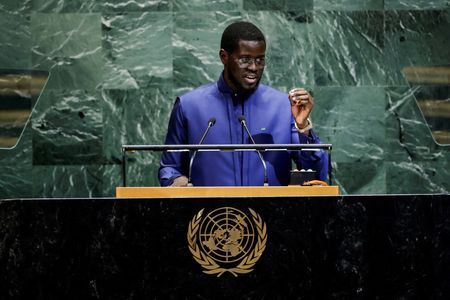
The president of Senegal has given his approval to controversial legislation that increases maximum prison sentences for same-sex relations from five to 10 years while also making it illegal to promote homosexuality, according to an official government announcement.
Parliament members voted by a wide margin to pass the legislation earlier in March, though President Bassirou Diomaye Faye faced significant opposition from international human rights organizations urging him not to enact the measure.
Volker Turk, the United Nations human rights chief, criticized the proposed law on March 12, stating it “flies in the face of the sacrosanct human rights we all enjoy: the rights to respect, dignity, privacy, equality and freedoms of expression, association and peaceful assembly.”
Both Faye and Prime Minister Ousmane Sonko had pledged during their 2024 election campaigns to implement stricter anti-LGBT legislation. The two leaders signed the bill into law on Friday, as confirmed by a government announcement dated Monday and shared by a government spokesperson on Tuesday.
Previously, Senegal’s criminal code included provisions that imposed prison sentences of up to five years and financial penalties reaching 1,500,000 CFA francs (equivalent to $2,700) for what it termed “acts against nature.”
The updated legislation increases the maximum sentence to twice the previous length and raises potential fines to as much as 10 million CFA francs.
The new law explicitly defines acts against nature as including homosexuality, bisexuality, “transsexuality,” zoophilia and necrophilia.
Individuals convicted of promoting or providing financial support for such activities will also face imprisonment.
Reuters previously reported that Senegalese supporters of the legislation had coordinated with a United States-based “pro-family” organization that characterizes homosexuality as a threat to public health, discussing campaign tactics and mobilization strategies.
In the weeks before lawmakers cast their votes on the bill, there was a notable increase in arrests of men suspected of “acts against nature” and, in certain instances, “voluntary transmission” of HIV, which carries a potential 10-year prison sentence.
Motorists traveling on southbound Route 1 should expect delays this morning due to ongoing construction activity near Hudson Road.
The Delaware Department of Transportation reports that the right lane is currently blocked for construction work, creating a traffic bottleneck in the area. The lane closure began earlier today and is expected to continue until 12:30 PM.
Drivers are advised to allow extra travel time and use caution when passing through the work zone. Traffic is being directed into the remaining open lanes during the construction period.
Relocating to a new home presents a major challenge when it comes to furnishing your space, as quality sofas and bedroom sets are both heavy and costly.
When facing the stress of a move, many people turn to inexpensive options that arrive quickly at their doorstep. This demand has created a market for disposable furniture.
These basic items are constructed from a combination of synthetic materials, particle board, and compressed wood chips designed for short-term use. Customers can order them through online retailers, where they’re mass-manufactured and delivered unassembled in flat packages.
While these products serve their immediate purpose, their components typically cannot be recycled and resist natural decomposition when discarded.
“It’s of little emotional value, it’s fleeting, and it is not going to accompany you through your life’s journey,” said furniture and design expert Deana McDonagh with the University of Illinois Urbana-Champaign.
Environmental Protection Agency data shows Americans discarded more than 12 million tons of furniture in 2018, with 80% ending up in waste facilities.
While relocating is stressful and disposable furniture offers a practical fix, alternative decorating approaches exist that cost just as little while enriching other aspects of your daily life.
After Heather Strong relocated to her own residence in the Los Angeles region following a breakup, she felt like she was beginning anew. Several cherished household items, including her beloved pan rack, remained with her former partner in their shared home.
Strong then learned about the Buy Nothing Project: a mobile application and network of neighborhood Facebook communities where residents exchange items without cost. Eighteen months later, Strong has equipped her residence with dining chairs, wooden furnishings, and linens obtained from community members.
“I’ve had the chance to explore different areas of my own community and venture out a little. And I’ve made some friends,” said Strong, a business owner.
Buy Nothing co-founder Liesl Clark suggests reaching out to community members before purchasing that flat-pack coffee table. Browse local Facebook and Nextdoor communities, explore donation platforms like Freecycle, and ask if acquaintances know anyone disposing of household items. Additionally, check sidewalks and front steps for quality pieces others have abandoned.
“You will get so much more satisfaction. You’ll save funds that you can then perhaps spend more locally,” Clark said.
Maddie Fischer has outfitted most of her Brooklyn residence with previously owned items. She discovered one living room chair inside a garbage bag on the street and acquired her dining table at no cost during a moving sale, enlisting her sister and friends to transport it down four flights of stairs.
“I don’t mind when things look like they’ve had a little bit of wear and tear,” said Fischer, a social media manager. “I think it gives them more character.”
When sidewalk discoveries don’t yield desired results, consider secondhand retailers. Visit local thrift shops or browse online marketplaces like eBay, Vinted and Gumtree. Furniture rental services also provide access to quality pieces temporarily, though costs can be substantial.
When budget allows, consider investing in well-made furniture early. Dressers and tables crafted from timber and natural materials offer distinctiveness and add personality to living spaces. Additionally, they endure longer and require less frequent replacement.
Furnishing an entire empty residence simultaneously can create significant expenses. McDonagh, the furniture specialist, suggests purchasing one quality piece annually. “If you’re doing it for your future self, take your time,” McDonagh said.
Choose modular components like shelving and storage systems that connect together and adapt to different spatial requirements. Gradually, your residence will accumulate durable items that create a comfortable atmosphere.
Meanwhile, work with available resources. Book stacks or cardboard boxes can serve as temporary seating while waiting for sturdier alternatives, McDonagh explained. Patio furniture often functions well inside homes, since weather-resistant fabrics provide excellent protection against damage and stains.
Contrary to its reputation, disposable furniture can endure for years with proper maintenance. Through ingenuity and careful attention, replacement frequency can be reduced significantly.
“I don’t believe that any furniture is inherently fast. It’s our decision as consumers whether it’s fast or not,” said Katryn Furmston, a fast furniture expert with Nottingham Trent University in England.
Perhaps you prefer avoiding carrying a desk up multiple staircases. Or the idea of using previously owned upholstery makes you uncomfortable.
When purchasing particle board furniture becomes necessary, avoid questionable websites offering unrealistic deals that result in incomplete shipments or unstable products. Once items arrive, handle them carefully. Conceal damage with decorative coverings or reposition pieces to hide imperfections.
Before your next relocation, keep product photos available to share with friends or colleagues. Extend its usefulness by selling through community networks or giving to neighbors. Contribute to keeping items functional for maximum duration.
JERUSALEM (AP) — Demonstrators filled streets throughout Palestinian territories on Tuesday following Israel’s parliamentary approval of legislation mandating capital punishment by hanging for Palestinians found guilty of killing Israelis.
Palestinian demonstrators of all ages organized sit-ins and protest marches in the Israeli-controlled West Bank, where the new legislation will have its broadest impact. The law requires West Bank military tribunals — which exclusively prosecute Palestinians — to impose death sentences as the standard punishment for murder convictions, unless extraordinary circumstances warrant otherwise.
Protest signs in the West Bank city of Nablus displayed images of a prisoner in traditional Palestinian keffiyeh headwear beside a hangman’s noose, bearing messages that read “Time is running out and silence is deadly” and “Stop the law to execute prisoners, before it’s too late.”
Israeli lawmakers gave final approval to the legislation Monday evening amid celebration and applause. National Security Minister Itamar Ben-Gvir, who led efforts to advance the bill, characterized the new law as overdue and representative of national strength and pride.
While scheduled to become effective within 30 days, the law’s enforcement may face delays due to ongoing legal challenges before Israel’s Supreme Court.
Though the legislation does not apply retroactively to existing inmates, it represents a dramatic shift toward harsher Israeli criminal justice policies that has generated anxiety among demonstrators concerned about all Palestinian detainees in Israeli facilities — viewed as symbols of national resistance.
Protesters in Nablus voiced support by chanting “You are the symbol of struggle, You are the symbol of steadfastness,” while displaying photographs of imprisoned relatives and friends.
The Fatah movement called for a comprehensive work stoppage in northern West Bank areas for Wednesday. Palestinian leadership issued condemnations claiming the death penalty legislation breaches international legal standards and urged global intervention. The Palestinian Foreign Ministry demanded sanctions against Israel’s parliament and its removal from international organizations.
“The law represents a critical turning point in the formalization of extrajudicial killings under a legal guise,” the statement said. “The Ministry stresses that this law, in its essence, constitutes an institutionalized policy of field executions based on discriminatory and racist standards.”
The bill’s approval represented the achievement of a multi-year campaign by Israel’s far-right politicians to increase penalties for Palestinians convicted of attacks against Israelis. Following the vote, Ben-Gvir posted a video on X showing himself celebrating with champagne. Israeli human rights organizations and opposition legislators announced plans to file a Supreme Court petition seeking to invalidate the law.
Amnesty International warned that implementing the death penalty under this new legislation could breach fundamental rights to life and prohibitions against torture and cruel punishment established under international law.
In Gaza, demonstrators gathered outside Red Cross offices where women wearing hijabs displayed large portraits of prominent Palestinian prisoners including Marwan Barghouti.
The legislation also affects Israeli courts, authorizing them to impose capital punishment on Israeli citizens convicted of nationalist-motivated murder — terminology that legal analysts say effectively limits death sentences to Palestinian citizens of Israel while exempting Jewish citizens.
BELGRADE, Serbia (AP) — European Union officials on Tuesday condemned reports of violent incidents that occurred during Serbia’s local elections over the weekend, demanding that President Aleksandar Vucic’s government prosecute those responsible for the attacks.
The EU’s diplomatic mission in Serbia — a nation seeking to join the 27-member European bloc — referenced observations from international election monitors who documented violence and voting violations during Sunday’s elections.
“We regret the number of reported irregularities and incidents during the elections, the uneven playing field, and note with concern reports of acts of violence against independent observers, citizens, representatives of political parties and media workers,” the EU said in a statement.
“We call on the competent national authorities to ensure swift and transparent follow up and to hold perpetrators accountable,” the statement added.
Sunday’s elections took place across 10 Serbian municipalities and served as a crucial test for the authoritarian leader Vucic, who has faced over a year of youth-driven demonstrations that have weakened his stronghold on authority.
Vucic proclaimed success for his right-wing populist Serbian Progressive Party across all 10 local governments. The Serbian leader personally spearheaded the campaign effort, attempting to solidify his leadership following protests that began in November 2024 after a deadly train station incident in northern Serbia.
International election monitors from the Congress of Local and Regional Authorities of the Council of Europe stated Monday that although the actual voting process followed proper procedures, they were “alarmed” by conditions surrounding the polling locations.
Observers “saw heated arguments and the threatening presence of large groups of people, often unidentified and sometimes masked,” the group said.
The Associated Press asked the Serbian government to comment on the allegations but did not have a reply yet.
Multiple individuals sustained injuries during confrontations in at least three municipalities, including students and media personnel, who reported being assaulted by organized pro-government groups. Vucic has blamed his political opposition for inciting the disorder.
Although Vucic officially supports Serbia’s European Union membership bid, critics accuse him of restricting democratic rights while cultivating strong ties with Russia and China.
The student-organized demonstrations following the Novi Sad railway station roof collapse that claimed 16 lives have presented the most significant threat to Vucic’s leadership in more than ten years. Government officials have since intensified their crackdown on opposition voices, with hundreds of individuals arrested or reporting job losses.
On Tuesday, law enforcement officers searched the University of Belgrade campus, claiming they were investigating a student’s death from the previous week. University staff told local news outlets they believed the search was connected to ongoing government pressure following the student-led demonstrations.
Serbia is anticipated to hold presidential and parliamentary elections either later this year or in 2025. Political analysts believe Vucic’s popularity has declined, though large-scale protests have diminished in recent months.
Delaware State University’s women’s track and field athletes turned in exceptional performances at the Raleigh Relays, with several team members establishing new program milestones and posting top conference times.
The Hornets’ strong performance at the competition showcased the program’s continued development and competitive excellence on the national stage.
Multiple athletes contributed to what coaches are calling one of the program’s most successful outings of the season, with record-setting achievements that position the team well for upcoming conference championships.
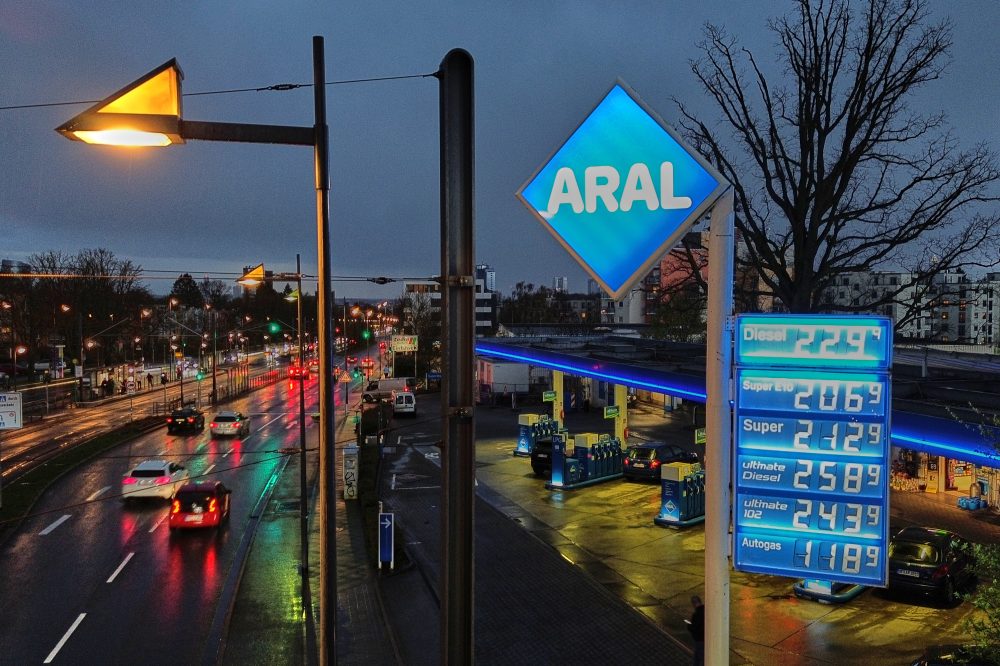
President Donald Trump directed harsh criticism toward European allies on Tuesday, demanding they “go get your own oil” as the ongoing military conflict with Iran has driven American gasoline prices beyond $4 per gallon.
Trump’s sharp social media remarks followed recent U.S. military strikes against a city housing one of Iran’s primary nuclear facilities, creating a massive explosion visible from space, while Tehran retaliated by attacking an oil tanker from Kuwait in the Persian Gulf.
The escalating military actions demonstrate how intense the warfare has become more than 30 days after American and Israeli forces initiated the campaign. The fighting has resulted in over 3,000 casualties and severely disrupted global energy supplies, creating chaos in international markets.
Earlier, Trump had posted video footage showing the strike on Isfahan, a central Iranian city that houses one of three uranium enrichment facilities targeted by U.S. forces in June. Intelligence experts suspect much of Iran’s weapons-grade nuclear material is stored at this location.
Energy Markets in Turmoil
Iran’s control over the Strait of Hormuz – a critical shipping channel that normally handles 20% of global oil transportation – has caused dramatic price increases worldwide, along with Tehran’s systematic attacks on energy facilities throughout the region. These disruptions have created volatility in international stock exchanges and increased costs for essential consumer products.
Brent crude oil, the global benchmark, reached approximately $107 per barrel on Tuesday, representing a surge of more than 45% since military operations commenced on February 28.
Trump specifically blamed European partners including Britain and France for declining to participate in a military campaign they claim lacks clear objectives and was launched without their input.
“You’ll have to start learning how to fight for yourself, the U.S.A. won’t be there to help you anymore, just like you weren’t there for us. Iran has been, essentially, decimated. The hard part is done. Go get your own oil!” Trump posted online.
He particularly criticized France for blocking aircraft carrying military equipment to Israel from using French airspace, calling the nation “VERY UNHELPFUL” and warning “The U.S.A. will REMEMBER!!!”
European Nations Restrict Military Support
French military officials previously stated they permitted American Air Force operations at the Istres facility in southern France only after receiving assurances that aircraft involved in combat missions would not use the base.
Spain, which has become Europe’s most vocal opponent of the military campaign, announced Monday it was prohibiting U.S. military aircraft connected to the conflict from entering Spanish airspace.
Italy has also denied American forces access to the Sigonella air base in Sicily for operations related to the Middle East offensive, according to a knowledgeable official who confirmed earlier media reports.
The restriction was implemented several days ago and affected U.S. aircraft, including bomber squadrons, that were scheduled to refuel at the facility before continuing to the Middle East theater, said the official, who requested anonymity due to lack of authorization for public statements.
Italian government representatives later emphasized that their partnership with America remains “solid and based on full and loyal cooperation.”
Latest Military Operations Target Iranian Infrastructure
American and Israeli forces conducted fresh strikes against Iran, hitting the capital Tehran during early morning hours. Israeli military officials also announced new attacks against what they characterized as Hezbollah facilities in Beirut.
Video footage Trump distributed appeared to document a major assault on Isfahan, with NASA satellite monitoring systems detecting explosions in mountainous terrain south of the city. Iranian authorities have not acknowledged the attack occurred.
Satellite imagery captured before June’s military operations indicates Tehran moved a truck containing highly enriched uranium to a nuclear installation approximately 20 kilometers (12 miles) from Tuesday’s strike locations.
Intelligence analysts believe the vehicle – shown in images entering an underground tunnel while carrying 18 blue storage containers – likely transported most or all of Iran’s uranium stockpile enriched to 60% purity. This level represents a brief technical step away from weapons-grade concentrations.
Trump issued warnings this week that without a ceasefire agreement “shortly” and reopening of the strait, America would expand military operations to include attacks on the Kharg Island oil export terminal and potentially water desalination infrastructure.
During a Pentagon briefing, Defense Secretary Pete Hegseth declined to specify whether U.S. ground troops would join the conflict.
“We don’t want to have to do more militarily than we have to,” he stated. “But I didn’t mean it flippantly when I said, in the meantime, we’ll negotiate with bombs.”
FRANKFURT, Germany — European inflation climbed to 2.5% during March as ongoing conflict involving Iran drove fuel costs significantly upward, according to official data released Tuesday. Economic experts are now forecasting that the European Central Bank will implement interest rate increases later this year in response.
The yearly inflation figure for the 21 nations in the European Union that use the euro jumped from February’s 1.9% rate, which was recorded before the conflict began and disrupted oil and natural gas shipments from the Persian Gulf region.
Energy costs surged 4.9% during March, a stark contrast to February’s 3.1% decrease, according to data from Eurostat.
The conflict’s effect on pricing has become evident at Rome’s expansive Trionfale indoor marketplace, located just north of Vatican City, where produce vendor Anna Caruso noted that rising fuel expenses are driving up costs for zucchini, eggplant and other fruits.
“If the price of fuel increases, those who transport will increase the general price,” she explained. “With many items, they say, I can’t afford this … and shift toward the cheaper items.”
Fellow vendor Paola Ianzi acknowledged that while some price increases stem from seasonal factors, “the increase is also partially due to the war because diesel and fuel increased and those who transport fruit and vegetables need to compensate that.”
Food costs rose by a relatively modest 2.4%, while services — encompassing everything from healthcare to personal grooming — increased 3.2%.
Christine Lagarde, who leads the European Central Bank, has warned that companies might respond more rapidly to price increases during this inflationary period, influenced by difficult experiences from the 2022 inflation surge when rates reached double digits. During that period, Russia severely reduced natural gas deliveries to Europe while oil prices soared, causing energy expenses to skyrocket.
Iran has restricted most tanker movement through the Strait of Hormuz, a crucial shipping route that normally handles approximately 20% of global oil and gas transportation. This blockade threatens to create much tighter fuel markets in the weeks and months ahead.
The anticipated continued rise in inflation above the ECB’s 2% goal is prompting analysts to forecast rate increases in upcoming months to prevent inflation from becoming embedded in the economy through higher wage and price expectations. Bill Diviney, who heads macro research at ABM AMRO bank, stated: “We expect the ECB to raise rates already at the April and June governing council meetings… in order to pre-empt any de-anchoring of inflation expectations.” Economic researchers at Oxford Economics similarly anticipate two rate hikes during this year.
The ECB maintained its benchmark rate at 2% during its most recent meeting on March 19. Interest rate adjustments remain the primary tool central banks use to combat inflation.
LONDON — Buckingham Palace announced Tuesday that King Charles III plans to conduct his first official state visit to America this coming April, timing the trip to honor the approaching 250th anniversary of the United States’ independence while strengthening diplomatic relationships between both countries.
This royal visit comes after President Donald Trump’s ceremonial trip to Britain last September, which featured elaborate pageantry including ornate royal jewels, military musical performances, and an elegant formal dinner served with centuries-old silverware. These grand diplomatic ceremonies are designed to strengthen international partnerships, especially during challenging periods.
While Trump has expressed admiration for Britain’s royal family, tensions have emerged with British Prime Minister Keir Starmer, who has provided only cautious backing for his nation’s traditional ally regarding the Iran conflict.
Although Charles has traveled to America on 19 previous occasions, this marks his first formal state visit as Britain’s monarch. His late mother, Queen Elizabeth II, completed four official state visits to the United States during her reign.
The king’s itinerary will also include a stop in Bermuda, marking his inaugural visit to the British overseas territory since assuming the crown.
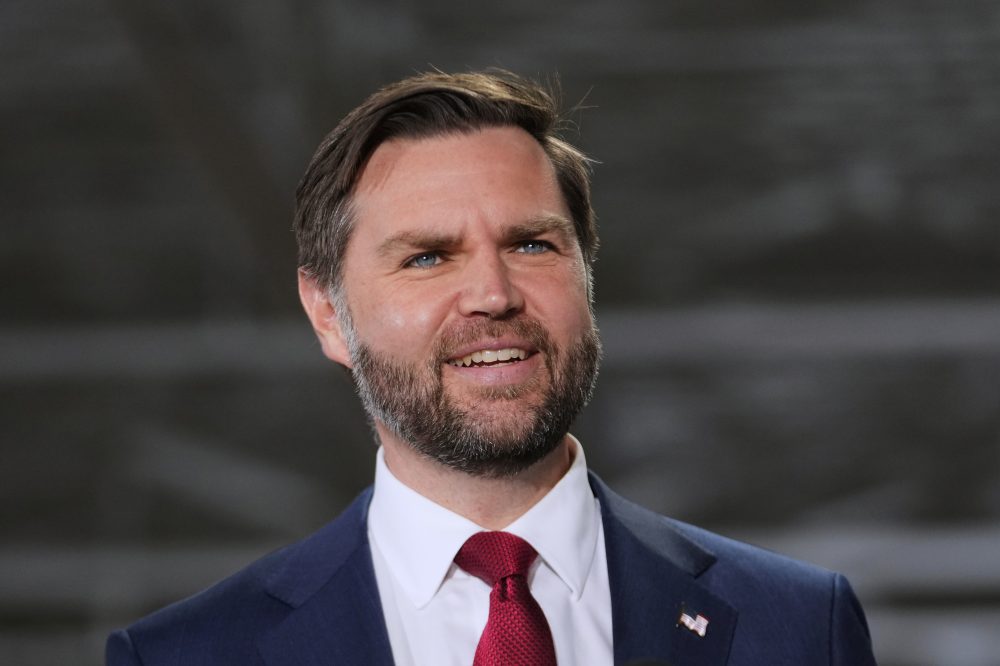
Vice President JD Vance will release a new memoir this summer that details his spiritual journey and adult conversion to the Catholic faith.
The book, titled “Communion: Finding My Way Back to Faith,” is scheduled for publication on June 16 through Harper, an imprint of HarperCollins Publishers. The same publishing house previously released Vance’s bestselling 2016 memoir “Hillbilly Elegy,” which sold over a million copies and launched him into the national spotlight.
“The story of how I regained my faith, of course, only happened because I had lost it to begin with,” the 41-year-old vice president explained in a statement.
“The interesting question that hangs over this book, and over my mind, is why I ever strayed from the path. Why the Christian faith of my youth failed to properly take root,” he added.
Tuesday’s book announcement is expected to fuel rumors about Vance’s potential White House ambitions for 2028. While the Republican vice president has stated he isn’t currently concentrating on such plans, he has suggested waiting until after the 2026 midterm elections before making any campaign decisions.
Publishing books has become a common strategy for presidential candidates, offering them media attention and opportunities to refine their political messaging before officially entering races. Several potential Democratic contenders for 2028 have already published or announced upcoming books, including Kentucky Governor Andy Beshear, Pennsylvania Governor Josh Shapiro, California Governor Gavin Newsom, and former Vice President Kamala Harris.
According to his publisher, Vance personally authored the 304-page “Communion,” working on the project intermittently since 2019. The book will feature content about his political career. While several vice presidents from Walter Mondale to Mike Pence have published books, Vance would be among the first in recent history to do so while actively serving in office.
HarperCollins had previously told the Associated Press in 2022 that Vance had postponed a planned religious memoir. Portions of “Communion” are based on that earlier project.
Vance has described his religious transformation as moving from Christianity to atheism before ultimately embracing Catholicism. He joined the Catholic Church in 2019 and has said his newfound faith provided him with meaning that he couldn’t find through his Yale University education or career in finance.
“Hillbilly Elegy,” which chronicled Vance’s upbringing in rural America, gained widespread readership when it was first published and became even more popular following Donald Trump’s unexpected 2016 presidential win, as Democrats turned to the book to better understand Trump’s voter appeal. Director Ron Howard later turned “Hillbilly Elegy” into a 2020 film featuring Glenn Close and Amy Adams.
Though Vance initially opposed Trump, he later became a strong supporter. He won election to the U.S. Senate representing Ohio in 2022 as a Republican, and Trump selected him as his vice presidential candidate two years later. At his inauguration, Vance became the youngest person to hold the vice presidency since Richard Nixon served under President Dwight Eisenhower during the 1950s.
The book announcement comes one day after Vance’s wife, Usha Vance, revealed she has launched a podcast titled “Storytime with the Second Lady” aimed at encouraging children’s literacy.
The Vances are parents to three young children and are expecting their fourth child, a son, in late July.
Back in 1965, Filipino and Mexican American farm laborers joined together in a groundbreaking strike against grape growers in California. The historic action brought together Filipino organizer Larry Itliong and César Chavez, who helped establish the National Farm Workers Association. This defining moment has been commemorated through literature, public memorials, and theatrical productions.
Now, following recent sexual abuse accusations against Chavez involving young women and girls within the labor movement, Filipino American communities — including families of the original strikers — are reconsidering how to honor this important historical period.
Several Filipino organizations have called off their planned César Chavez Day marches, while community leaders are pushing to rebrand the March 31 holiday to spotlight Filipino and Chicano farm laborers, especially women, while recognizing those who suffered Chavez’s alleged abuse.
“We really need to kind of center this trauma of women and sexual abuse,” said Dillon Delvo, executive director of Little Manila Rising, a longtime Filipino community hub in Stockton, California. “It’s definitely what the discussion needs to be.”
During America’s colonial control of the Philippines between 1898 and 1946, countless Filipinos learned English and gained permission to move to the United States. Between the 1920s and 1960s, thousands of Filipino immigrants became part of America’s farm labor force, taking jobs on agricultural operations, in processing plants, and canneries, mostly throughout western states. This initial group of men — who came from the Philippines’ Ilocano-speaking areas — earned the nickname “manong,” a loving term meaning older brother.
These Filipino farm laborers faced significant hardships including substandard pay, inadequate living quarters, and dangerous work environments, all while trying to earn money for their families back home. They also dealt with isolation because few Filipino women made the journey to America, and laws banning interracial marriage prevented them from marrying outside their ethnic group.
During the 1960s, Filipino agricultural workers established the Agricultural Workers Organizing Committee to coordinate labor actions.
“It came out of necessity and desperation to protect themselves, to try to live in dignity,” said Dennis Arguelles, Southern California director for the National Parks Conservation Association. The region Arguelles, who is Filipino, monitors includes monuments to Filipino farmworkers and Chavez.
On September 8, 1965, Itliong and co-organizer Philip Vera Cruz guided the Committee’s decision to walk off the job at grape farms in Delano, California. Their demand was simple: payment of at least the federal minimum wage. Itliong, described as the more “fiery union leader,” reached out to Chavez, who along with Dolores Huerta led what was then called the National Farm Workers Association.
“Chavez was hesitant to strike,” Arguelles said. “You didn’t feel like the National Farm Workers Association was ready to take on these powerful agribusiness interests. These business structures were very effective in pitting different ethnicities against each other to break strikes.”
Seven days later, the groups officially merged to form the United Farm Workers. The Delano grape boycott continued for five years and transformed the agricultural industry, ultimately resulting in collective bargaining contracts for thousands of workers.
The widely accepted story of Itliong’s role has typically been linked to Chavez, with both men featured side by side in educational materials, museum displays, and artwork throughout California.
The accusations against Chavez have generated concerns about placing historical figures on pedestals.
“There always seems to be a need to be like a main character,” Delvo said. “But the problem is that is not what a union is about.”
The controversy has also reignited discussions about how Chavez’s prominence may have overshadowed other movement leaders.
“Maybe this is our opportunity to tell a more accurate and comprehensive narrative of what took place,” Arguelles said. “I see that as being a positive thing.”
During a public session last week, the Los Angeles Board of Supervisors began procedures to change César Chavez Day to Farmworkers Day. Some participants proposed shifting the holiday, which falls on Tuesday, to September 8 to commemorate the Filipino workers’ strike. Johnny Itliong, the 60-year-old son of Larry Itliong, claimed Chavez had attempted to “erase the history” of how the Delano strike started.
“I’ve spent my whole life speaking up for my father and his generation of men and women who fed America,” Itliong said at the meeting.
A stage production called “Larry the Musical: An American Journey,” which tells the story of the Filipino farmworkers movement, mentions Chavez just once, during a scene where Itliong contacts him by phone. The show’s creators also ensured the narrative highlighted the women in Itliong’s circle. Current developments have reinforced the wisdom of that artistic choice.
“From the beginning, we have always centered this musical on the women of the community as those who keep Larry and the community accountable, and the ones who pass on knowledge to the next generation,” co-producers Gayle Romasanta and Bryan Pangilinan said in a statement.
Vernadette Gonzalez, an ethnic studies professor at University of California, Berkeley, believes teachers should use this moment to spotlight overlooked figures from the Filipino farmworkers movement. She points out that Latina women in the United Farm Workers were simultaneously caring for their children and providing meals for organizational gatherings.
“Nobody’s crediting them in the minutes of the meeting,” Gonzalez said. “Who’s missing from the story? In the United Farmworkers movement, folks will say ‘It’s Larry Itliong and the Filipino farmworkers.’ But I would also say ‘Where are the women?’”
HAVANA — A Russian oil tanker successfully arrived at Cuba’s Matanzas port on Tuesday, delivering 730,000 barrels of much-needed fuel to the Caribbean island after a three-month gap in petroleum deliveries.
The vessel Anatoly Kolodkin was permitted to complete its mission by the Trump administration, even as the U.S. maintains strict energy sanctions against Cuba.
Cuban officials, including Energy and Mines Minister Vicente de la O Levy, celebrated the tanker’s arrival as the nation grapples with widespread power outages and shortages of essential goods including food and medical supplies.
“Our gratitude to the Government and People of Russia for all the support we are receiving. A valuable shipment that arrives amidst the complex energy situation we are facing,” de la O Levy wrote on X.
The island nation generates less than half of its fuel needs domestically and depends heavily on foreign oil to power its electrical infrastructure. Energy analysts estimate the cargo could yield approximately 180,000 barrels of diesel fuel, sufficient to meet Cuba’s consumption for roughly nine to ten days.
Cuban Deputy Foreign Minister Carlos Fernández de Cossío highlighted the significance of the delivery on social media. “The arrival of an oil tanker to a country has likely never generated so much news as the Russian one to Cuba,” he posted on X. “It’s a sign of the brutal siege Cubans endure with heroism and stoicism. It’s a demonstration of the criminal cruelty of imperialism against a nation that refuses to be dominated.”
Cuba previously depended on Venezuela for most of its petroleum imports, but those deliveries ceased after U.S. actions against the South American nation in early January, including the arrest of its leadership. Mexico also suspended oil exports to Cuba following Trump’s late January warning of potential tariffs against any nation providing fuel to the island.
Speaking to reporters while returning to Washington on Sunday evening, Trump expressed tolerance for the Russian delivery. “We don’t mind having somebody get a boatload because they need … they have to survive,” Trump stated.
However, he remained critical of Cuba’s government, adding: “Cuba’s finished. They have a bad regime. They have very bad and corrupt leadership and whether or not they get a boat of oil, it’s not going to matter.”
The Russian tanker faces sanctions from the United States, European Union, and United Kingdom due to the ongoing conflict in Ukraine.
When questioned Monday about the administration’s selective approach to oil deliveries, White House press secretary Karoline Leavitt described it as “a decision that will continue to be made on a case-by-case basis for humanitarian reasons or otherwise,” while emphasizing “there’s been no firm change in our sanctions policy.”
Both Trump and Secretary of State Marco Rubio continue pushing for significant reforms in Cuba’s political system and policies, with discussions ongoing as the island faces mounting economic and energy challenges.
Motorists traveling westbound on Baynard Boulevard are experiencing delays today as construction crews work between Shipley Avenue and Marsh Road.
Delaware Department of Transportation officials report that flagging operations are currently in place to manage traffic flow through the work zone. The traffic control measures are expected to remain in effect until 5 PM this afternoon.
Drivers are advised to plan for additional travel time when using this route and consider alternate paths if possible during the construction hours.
Drivers using Screven Place will encounter periodic lane restrictions today as construction crews continue their work in the area.
According to DelDOT, the temporary lane closures will affect traffic flow intermittently throughout the day, with normal traffic patterns expected to resume by 5:00 PM this evening.
Motorists are advised to allow extra travel time and exercise caution when driving through the construction zone.
A cloud computing company has landed one of the largest financing deals of the year, securing $8.5 billion to fuel expansion of its artificial intelligence services as businesses scramble for more computing power.
CoreWeave announced Tuesday it has obtained the massive funding through a delayed-draw term loan facility, allowing the company to build out its AI cloud platform infrastructure. The deal represents part of a broader $28 billion in combined equity and debt commitments the firm has raised over the past 12 months.
Under the financing arrangement, CoreWeave can initially access approximately $7.5 billion, with the ability to draw the full $8.5 billion once its data center facilities achieve steady operational performance. The loan carries an eight-year term, set to mature in March 2032.
Major Wall Street banks structured the complex transaction, with Morgan Stanley and MUFG serving as co-lead organizers and book runners. Goldman Sachs and JPMorgan participated as additional coordinating lead arrangers for the deal.
Investment giant Blackstone Credit & Insurance anchored the financing, while a consortium of international financial institutions, asset management firms, and insurance companies joined as participants in the loan facility.
Chinese telecommunications giant Huawei Technologies announced modest annual revenue growth on Tuesday, with 2025 sales climbing 2.2% as the company’s core infrastructure and consumer device divisions helped offset declines in cloud computing.
The Shenzhen-based technology firm generated 880.9 billion yuan ($127.5 billion) in total revenue for 2025, representing a significant deceleration from the 22.4% growth rate achieved in 2024.
This year’s financial performance represents Huawei’s second-best revenue showing on record, though still falling short of the company’s peak 891 billion yuan in sales recorded in 2020. Net earnings climbed 8.6% to reach 68 billion yuan.
The technology company’s mobile phone division experienced severe setbacks following US trade sanctions that limited access to cutting-edge semiconductor technology and Google’s Android platform, causing overall revenues to plummet 29% in 2021. The 2025 results mark four straight years of recovery since that low point.
Sales from Huawei’s consumer division, encompassing smartphones and various digital products, increased 1.6% to 344.5 billion yuan. Meanwhile, the information and communication technology infrastructure segment – the company’s primary revenue source – achieved 2.6% sales growth totaling 375 billion yuan, according to the company’s official statement.
The firm’s cloud computing division, though smaller in scale, reported a 3.5% revenue decrease, reflecting intense competition within China’s saturated market. However, the intelligent automotive solutions unit, which assists traditional car manufacturers in developing connected vehicles, experienced remarkable growth of 72.1% with revenues reaching 45 billion yuan.
Huawei maintained substantial investment in research and development initiatives to counter the impact of continuing US trade restrictions.
Research and development expenditures jumped to 192.3 billion yuan in 2025, accounting for 22% of total annual revenue, as the company poured resources into software development, semiconductor design, and manufacturing equipment to decrease dependence on restricted American technology.
Company chairwoman Meng Wanzhou, who is the daughter of Huawei founder Ren Zhengfei, acknowledged in a statement that the organization faces a future “full of uncertainty,” while committing to further expansion of Huawei’s developer community.
The company’s latest Ascend AI processors, model 950PR, have been engineered for better compatibility with Nvidia’s CUDA software platform and have undergone testing at major Chinese technology companies including ByteDance and Alibaba.
Huawei, which develops both Ascend artificial intelligence chips and Kunpeng central processing units, reported that its Ascend platform attracted over 4 million developers by year-end, while the Kunpeng system reached 3.8 million developers.
“Our computing business continued to seize opportunities in AI,” Meng stated.
The technology firm noted that its 384 SuperPod artificial intelligence computing platform, launched last year as a competitor to Nvidia’s GB200 NVL 72 system, has secured clients across internet services, financial services, and telecommunications sectors.
WASHINGTON – Single-family home values across America showed modest growth during January, though escalating mortgage rates tied to ongoing Middle East conflicts may push potential first-time homebuyers out of the market, according to new federal data.
The Federal Housing Finance Agency reported Tuesday that home values climbed 0.1% in January, following a revised 0.3% increase in December. December’s figure was initially reported as a smaller 0.1% gain. Over the full year ending in January, home prices grew 1.6%, down from December’s 1.9% annual increase. This deceleration in yearly price growth partially stems from higher prices from the previous year falling out of the comparison calculations.
Home affordability had been showing signs of improvement before the conflict involving the U.S. and Israel with Iran drove up oil costs and sparked concerns about inflation, leading to higher U.S. Treasury bond yields. Since mortgage rates follow the benchmark 10-year Treasury note, the popular 30-year fixed-rate mortgage has surged to a six-month peak of 6.38%, up from 5.98% just before the conflict began.
Regional variations showed significant differences across the country. The East South Central area experienced the largest monthly price jump at 1.7%. The Mountain, West North Central, New England and Middle Atlantic regions also posted gains. However, the West South Central region saw prices drop 0.7%, while the South Atlantic region declined 0.4% and the East North Central area fell 0.1%.
Looking at annual comparisons, the East North Central region led with a 4.4% price increase, followed closely by the Middle Atlantic region at 4.3%. The East South Central, New England and West North Central areas also recorded strong yearly gains. Meanwhile, the Pacific and West South Central regions experienced price declines, and the South Atlantic region remained flat year-over-year.
Beijing plans to maintain its restrictions on refined fuel exports through April, according to five industry insiders familiar with the situation, though limited exceptions may be granted to regional nations that have requested assistance.
Negotiations are underway for modest shipments of diesel, jet fuel and gasoline to Southeast Asian countries during April, three sources revealed. Export volumes under consideration range from 150,000 to 300,000 metric tons, depending on which source is consulted.
The sources, who requested anonymity because they lack authorization to discuss the matter publicly, indicated that independent export sales by refineries would continue to be prohibited.
Nations potentially eligible to receive Chinese fuel deliveries include Bangladesh, Myanmar, Sri Lanka, the Maldives and Vietnam, the sources indicated.
Any direct deliveries to these countries would be managed by Chinese government-owned companies, three sources confirmed.
China’s National Development and Reform Commission has not yet responded to requests for official comment.
Multiple nations, including the Philippines and Bangladesh, have approached China seeking fuel assistance since the Iran conflict began, as previously reported by Reuters. Beijing has expressed willingness to collaborate with Southeast Asian countries to help resolve energy supply shortages.
The Chinese government implemented export restrictions on diesel, gasoline and jet fuel beginning March 12. The prohibition does not apply to jet fuel used for international flight refueling and marine bunkering operations, and was not formally announced to the public.
Limited quantities of diesel and jet fuel continued to leave bonded storage facilities in Hainan province in southern China after March 12, with two knowledgeable sources explaining these shipments had already cleared customs procedures before the restrictions took effect.
Three vessels – Stavanger Pearl, Auchentoshan and Qian Chi – departed Hainan with combined diesel cargo exceeding 600,000 barrels following March 12. Ship-tracking information from Kpler and trade sources showed the first tanker headed to Mexico while the remaining two sailed for the Philippines.
Iranian forces launched an overnight assault on a large Kuwaiti oil tanker in waters near Dubai, setting the vessel ablaze in the latest escalation affecting Gulf region shipping.
The attack on the massive tanker represents another example of how Gulf nations are bearing the brunt of consequences from the expanding regional conflict.
Meanwhile, former President Trump has directed sharp words toward European allies regarding energy independence, telling them to secure their own petroleum supplies rather than relying on external sources.
The tanker incident occurred as tensions continue to mount across the Middle East, with maritime shipping routes becoming increasingly vulnerable to military actions.
Gulf states have found themselves caught in the crossfire of the broader conflict, with their strategic waterways and energy infrastructure becoming frequent targets.
Delaware hunters will have more time to pursue turkeys this spring as state wildlife officials announce an extended hunting season with additional opportunities for young and mobility-impaired hunters.
The Delaware Department of Natural Resources and Environmental Control revealed that this year’s spring turkey hunting season will span from April 10 through May 11, providing hunters with ample time to pursue their quarry.
Before the regular season begins, special hunting days have been designated for youth and non-ambulatory hunters on Saturday, April 4, and Sunday, April 5, giving these groups early access to the hunting grounds.
Hunters who possess permits for Segment D will benefit from an extra hunting opportunity, as they will be allowed to hunt on Sunday, May 11. This additional day comes as a result of recent modifications to the state’s turkey season regulations.
Motorists traveling on West Newport Pike westbound should plan for potential delays this afternoon due to ongoing construction activity.
According to DelDOT officials, the right lane remains blocked between Petro Drive and Stanton Drive as crews continue their work. The lane restriction is expected to lift at 5 PM today.
Drivers are advised to use caution when approaching the construction zone and allow extra travel time for their commute.
Motorists traveling on West Newport Pike are encountering traffic delays today due to ongoing construction activities that have forced the closure of the right lane.
According to DelDOT officials, the lane restriction affects the westbound direction of West Newport Pike in the stretch between Petro Drive and Stanton Drive. The construction work is expected to continue until 5 PM today.
Drivers are advised to allow extra travel time and exercise caution when passing through the work zone. Traffic may be moving slower than usual as vehicles merge from the closed right lane into the remaining open lanes.
Employee representatives at consumer goods giant Unilever are sounding alarms about a potential merger with McCormick & Company, expressing fears that the massive deal could trigger significant job losses across Europe.
The proposed combination would merge Unilever’s food division with the American spice manufacturer, creating a $60 billion food conglomerate. Such a deal would bring together popular brands like Hellmann’s mayonnaise with McCormick’s Cholula hot sauce under one corporate umbrella.
The Unilever European Works Council, which speaks for nearly 20,000 workers across Europe and Britain, expressed deep concerns about the transaction’s impact on employment.
“We fear that a possible transaction could be accompanied by further personnel measures,” the council stated. “Uncertainty among the workforce is high.”
This worker resistance presents another obstacle for Unilever and its Chief Executive Fernando Fernández, who is spearheading a comprehensive restructuring of the British company. His strategy focuses on streamlining operations, reducing expenses, and concentrating more heavily on health and beauty products.
The employee council indicated it would collaborate with affiliated trade unions to determine appropriate responses if Unilever fails to “find good solutions for affected employees.”
“It could lead from negotiations to maybe strikes in different countries where that is possible. It depends on the legislation around Europe,” representatives explained.
Unilever declined to provide a response when contacted for comment about the workers’ concerns.
The company currently employs approximately 4,800 people in its European and British food operations, representing about one-third of its total regional workforce.
The NBA has begun organizing voters for its annual postseason awards, with ballots expected to be submitted soon after the regular season concludes, following the pattern of recent years.
While some award categories appear straightforward for voters to decide, others present more challenging choices. The Defensive Player of the Year seems destined for San Antonio’s Victor Wembanyama, and the Rookie of the Year contest will likely come down to two Duke alumni – Charlotte’s Kon Knueppel and Dallas’ Cooper Flagg.
However, other competitions remain wide open. The MVP discussion includes compelling arguments for several players: Oklahoma City’s Shai Gilgeous-Alexander, Denver’s Nikola Jokic, the Los Angeles Lakers’ Luka Doncic, Wembanyama, Boston’s Jaylen Brown, and several additional contenders.
The Coach of the Year race presents another crowded field of deserving candidates.
Multiple coaches have built strong cases for recognition. J.B. Bickerstaff appears positioned to lead Detroit – a franchise known for lengthy losing streaks just two seasons ago – to the Eastern Conference’s top seed. In San Antonio, Mitch Johnson is completing his first official full season as head coach (despite handling 77 of 82 games last year) and has the Spurs competing for the Western Conference’s first or second position. Additional consideration should go to Quin Snyder in Atlanta, Charles Lee in Charlotte, Jordan Ott in Phoenix, and Darko Rajakovic.
Boston’s Joe Mazzulla presents another compelling candidate. The Celtics navigated most of this campaign without Jayson Tatum, leading some observers to predict a regression following Tatum’s injury and the exits of key players including Al Horford, Kristaps Porzingis, and Jrue Holiday. Instead, the Celtics have reached 50 victories once again under Mazzulla’s guidance.
When reporters questioned Mazzulla before Monday’s game about the Coach of the Year award and his potential candidacy, his response was characteristically blunt.
“I don’t need it,” Mazzulla stated. “I think it’s a stupid award.”
This declaration likely eliminates any possibility of the Celtics organization campaigning for Mazzulla’s candidacy. Some franchises actively promote their candidates – Utah memorably created an album cover featuring then-center Rudy Gobert as a jazz musician when promoting his Defensive Player of the Year bid.
Award campaigning has already begun across the league. Wembanyama made his MVP argument following a recent game in Miami, while Spurs teammates are promoting Keldon Johnson for Sixth Man of the Year honors. Johnson’s primary competition appears to be Miami’s Jaime Jaquez Jr.
The National Basketball Players Association recently addressed the 65-game eligibility requirement for most awards, highlighting concerns about Detroit’s Cade Cunningham, whose collapsed lung this month could prevent him from meeting the minimum games needed for All-NBA team consideration.
“We always knew when there’s a line you draw that somebody’s going to fall on the other side of that line,” NBA Commissioner Adam Silver explained last week. “It may feel unfair in that particular instance. Let’s see what happens at the end of this year.”
While teams have every right to advocate for their personnel to receive awards, Mazzulla’s position demonstrates his focus on objectives far beyond individual recognition.
“You shouldn’t have it,” Mazzulla continued regarding the award. “And it’s more about the players and it’s more about the work that the staff puts in. It’s just that simple. I really don’t ever want to be asked or talked about it again. It’s just that dumb. So, the players play, it’s about them. Staff works their (butt) off. I’m grateful to have ’em.”
Team accomplishments appear to be Mazzulla’s sole priority. While this stance won’t prevent voters from selecting him, it represents a perspective worthy of respect.
Motorists traveling through Dover should plan for potential delays this afternoon due to ongoing construction work on Frederica Road.
DelDOT reports that one southbound lane is currently blocked between Market Street and David Street while crews complete roadwork in the area. The lane closure is expected to remain active until 4:00 PM today.
Drivers are advised to allow extra travel time and consider alternate routes if possible to avoid congestion in the construction zone.
The National Football League is once again facing the prospect of starting a season with substitute officials after contract talks with the referees’ union have stalled, bringing back memories of the chaotic 2012 season that concluded with one of the most controversial calls in football history.
League officials are moving ahead with plans to recruit and train replacement referees in the coming weeks, according to two sources familiar with the negotiations who spoke anonymously to The Associated Press on Sunday.
The last time the NFL relied on substitute officials during the opening weeks of 2012, the experiment culminated in disaster during a Monday Night Football matchup between Seattle and Green Bay that featured the notorious ‘Fail Mary’ play.
In that game’s final moments, with Seattle trailing 12-7, quarterback Russell Wilson threw a desperation pass to the end zone where receiver Golden Tate pushed cornerback Sam Shields aside before battling Green Bay’s M.D. Jennings for the ball. While Jennings appeared to make the initial catch, the substitute officials delivered conflicting signals – one indicating a touchback, the other a touchdown.
The play was ultimately ruled a simultaneous catch, awarding Seattle the victory in a decision that sparked nationwide outrage.
“It was awful,” Packers quarterback Aaron Rodgers commented afterward. “Just look at the replay. And then the fact that it was reviewed, it was awful.”
The NFL later acknowledged that Tate should have been penalized for offensive pass interference, which would have secured Green Bay’s victory, though they maintained insufficient evidence existed to reverse the catch ruling.
Las Vegas bookmakers estimated that controversial decision affected at least $300 million in worldwide betting action – a figure that would be substantially larger today given the expansion of legal sports gambling.
Dallas safety Gerald Sensabaugh captured the frustration felt across the league at the time, saying: “Would you let a Toyota dealership work on your brand new Rolls-Royce? That doesn’t work right, does it. Our brand is so big, it’s so important to a lot of people. There’s no way you can have guys that don’t have experience at that level.”
The controversy extended beyond that single play. The previous evening, another prime-time contest ended in dispute when Baltimore kicker Justin Tucker’s 27-yard field goal was ruled successful despite appearing to miss wide right, giving the Ravens a 31-30 victory over New England. Patriots coach Bill Belichick was subsequently fined $50,000 for grabbing an official’s arm while seeking a review.
Player safety concerns also emerged during the 2012 replacement period. In one incident, Pittsburgh safety Ryan Mundy delivered an uncalled helmet-to-helmet blow to Oakland receiver Darrius Heyward-Bey, who required hospitalization for a concussion and neck injury. Mundy later received a $21,000 fine.
Procedural errors plagued games throughout those three weeks. Seattle received an undeserved timeout during their opener against Arizona when officials incorrectly failed to charge them for one following an injury in the final two minutes. San Francisco was granted two additional challenges in their loss to Minnesota despite coach Jim Harbaugh having no timeouts remaining.
“I granted him the challenge and we went and looked at it,” replacement referee Ken Roan admitted afterward. “That was wrong. I should not have.”
During overtime of a Tennessee-Detroit matchup, officials incorrectly enforced a penalty, giving the Titans an extra 12 yards on a drive that concluded with the game-winning field goal.
“Obviously, there was a miscommunication, or I don’t know what you call it, from an enforcement standpoint,” Lions coach Jim Schwartz observed.
Questions about impartiality also surfaced when side judge Brian Stropolo was removed from a Carolina-New Orleans game just hours before kickoff after the league discovered his Facebook page contained photos of him wearing Saints gear while tailgating.
The NFL previously used replacement officials during the 2001 season’s opening week, though that experience generated fewer memorable controversies. The labor dispute was resolved shortly after September 11th, allowing regular officials to return when games resumed following a one-week suspension.
However, complaints still emerged from that earlier period. Oakland quarterback Rich Gannon noted multiple missed calls following a Raiders victory, while Washington defensive end Bruce Smith wrote a formal complaint to Commissioner Paul Tagliabue about poor officiating.
“The officiating crew that we had today was horrible,” Smith stated after Washington’s loss to San Diego. “There were a number of plays out there, at least six, and we’re going to send into the league and I would hope that the league would take action and fine these guys. They were a mess and they definitely put players’ careers in jeopardy. This is unacceptable.”
Not everyone shared those concerns, with Seattle coach Mike Holmgren saying at the time: “I thought they did a pretty good job. They didn’t throw a lot of flags and they kept the game under control.”
Statistics showed 1.6 fewer penalties called per game during that week with replacement officials compared to the remainder of the 2001 season.
As the league prepares for another potential labor dispute, officials are considering rule modifications that would allow the replay center to correct obvious mistakes, including certain penalties not typically subject to review, if replacement referees are used.
Delaware Department of Transportation crews are conducting construction work that has forced the closure of the right lane on Old Mill Bridge Road southbound today.
The lane restriction affects the stretch of roadway between Country Lane and Millers Neck Road, with DelDOT officials indicating the closure will remain active until 6 PM.
Motorists traveling through the area should expect potential delays and are advised to use caution when navigating around the construction zone.
The well-known spice manufacturer McCormick revealed Tuesday it will merge with Unilever’s food operations, bringing together major household brands including Hellmann’s mayonnaise and Knorr seasonings.
While the merged entity will retain McCormick’s brand identity and executive team, the ownership structure will shift significantly. Unilever investors are projected to control 55.1% of the new food company plus an additional 9.9% in outstanding shares, leaving McCormick stockholders with a 35.0% stake when the deal finalizes.
Last month, both corporations acknowledged they were engaged in merger discussions, as Unilever works to narrow its business focus toward beauty and personal care products.
The spice company, recognizable by its distinctive red bottle caps, carries a $15 billion valuation, while the Unilever food brands being acquired represent billions in additional value.
Tuesday’s announcement specified that Unilever’s food operations in India, Nepal and Portugal will not be part of the transaction.
In a written statement, McCormick Chief Executive Brendan Foley described the merger as something that “accelerates McCormick’s strategy and reinforces our continued focus on flavor.” Foley noted that his company has “long admired Unilever’s foods business,” calling it a “portfolio that complements our existing business, capabilities and long-term vision.”
Stock prices for both companies experienced modest gains in pre-market trading Tuesday morning.
NEW YORK — The digital world’s most prestigious honors are celebrating three decades of recognizing online excellence, with this year’s Webby Award nominees including rap superstar Cardi B, NBA champion Stephen Curry, and an unexpected entry involving actress Sydney Sweeney’s bathwater.
Tuesday’s announcement from the International Academy of Digital Arts & Sciences revealed nominees selected from more than 13,000 submissions spanning over 70 countries, with The Associated Press receiving advance details.
Political figures made their mark in the nominations, with social media teams for New York Mayor Zohran Mamdani and California Governor Gavin Newsom receiving recognition. Kendall Jenner secured three nominations for her humorous Super Bowl advertisement with Fanatics Sportsbook titled “Bet on Kendall,” which playfully referenced her history of dating professional athletes. She’ll compete against Sweeney in the viral PR campaign category, where the “Euphoria” star earned her spot through a Dr. Squatch collaboration offering limited-edition soap infused with her bathwater.
This year’s competition spans eight major divisions: gaming, podcasts, websites and mobile platforms, video and cinema, applications and software, artificial intelligence, plus advertising, media and public relations.
Award recipients will be revealed April 21, followed by a celebration ceremony on May 11 in New York, with “The Daily Show” correspondent and writer Josh Johnson serving as host.
Leading the nomination count, Google topped all organizations with 46 nods, while PBS followed with 29, and Apple, The Walt Disney Company, NBCUniversal, and Netflix each earned between 22 and 23 nominations.
Several 2025 campaigns gained recognition for their viral appeal, including Absolut’s Tabasco-infused vodka, Ricola’s herb-scented scarf featuring their “signature Swiss alpine herbs,” and two French pastry-inspired products: Panera Bread’s Croissant Clutch purse and Lidl’s Eau de Croissant perfume.
Language-learning platform Duolingo captured attention once more by staging the fake demise of Duo, their popular owl mascot. This stunt, which inspired Dua Lipa to cleverly post “Til’ death duo part” on X, received nominations for outstanding PR campaign and most effective earned media usage. Lipa herself earned recognition when Apple documented a complete day during her Radical Optimism concert tour.
Last year’s cultural sensation “Stranger Things” finale promotion garnered three nominations, including a mobile treasure hunt requiring users to tap a 20-sided die for Upside Down access. Similarly, Bad Bunny fans participated in a nominated scavenger hunt using Google Maps and Spotify to discover song titles from his “Debí Tirar Más Fotos” album.
A Los Angeles billboard showcasing Curry received viral recognition because it appears he’s shooting a basketball at the moon, while fellow NBA legend LeBron James’ Amazon commercial, depicting his consideration of post-basketball careers including barbering and lounge singing, earned a collaboration award nomination.
Academy members select the main awards, while global fans vote for the Webby People’s Voice Award through April 16.
In the music video competition, Kendrick Lamar and SZA’s “Luther” faces Sabrina Carpenter’s “Tears,” Rosalía’s “Berghain,” Little Simz’s “Young,” and Claude’s Eurovision entry “C’est La Vie.” Lamar previously claimed last year’s music video Webby for “Not Like Us.”
Two-time Oscar nominee Benedict Cumberbatch earned dual nominations for his dramatic interpretations of Amazon customer reviews in the “Five Star Theater” campaign’s second installment. Blackpink’s Lisa received recognition for leading professional ballet dancers and performers in a NikeSKIMS advertisement that inspired numerous TikTok recreations. International girl group Katseye also earned a nomination for their Gap “Better in Denim” commercial.
Dwayne Johnson’s unexpected visit to Apalachee High School’s football team following a campus shooting received recognition in the best long-form video division. Lady Gaga’s Spotify fan Q&A session about creating her “Mayhem” album earned a nomination for outstanding events and livestream social campaign.
Culinary content creator Nick DiGiovanni secured two nominations: one for putting MrBeast through cooking training camp in a video exceeding 71 million views, and another for preparing meals for various animals, including a lion. MrBeast earned his own recognition with the animated series “MrBeast Lab.”
The organizers of a Timothée Chalamet lookalike competition that drew thousands of attendees, including the actor himself, received recognition. Chalamet’s Cash App advertisement, featuring a large spiky tropical fruit, earned a nomination in branded entertainment short-form video and film.
Justin Bieber’s live Twitch broadcast of his Coachella headlining set preparations received a community engagement nomination, while Sonic’s commercial featuring Terry Crews instructing athletes in acting earned recognition for best long-form branded entertainment.
Feature podcast host nominations went to “Good Hang with Amy Poehler,” “Next Question with Katie Couric,” “The Mel Robbins Podcast,” “Reclaiming with Monica Lewinsky,” and “Baby, This is Keke Palmer.”
Palmer’s podcast also competed in the entertainment and culture interview category alongside “Thanks Dad with Ego Nwodim,” “All There Is with Anderson Cooper,” “Office Ladies,” and “Armchair Expert with Dax Shepard.”
Sports podcast nominees include “Pablo Torre Finds Out,” “All the Smoke,” “New Heights with Jason & Travis Kelce,” “Bussin’ With the Boys,” and “7PM in Brooklyn with Carmelo Anthony.”
Cardi B’s “Am I The Drama?” album promotion, featuring a Harlem street performance where she sold her album for $9.99 alongside incense, earned two nominations. Selena Gomez and Benny Blanco’s short film “I Said I Love You First” received recognition, as did Gomez’s Rare Beauty cosmetics line.
Science educator and new mother Emily Calandrelli gained a Webby nomination after her TSA confrontation over breast pump equipment and stored milk sparked the #HandsOffOurMilk movement. Former “Saturday Night Live” performer Bowen Yang and actor Matt Rogers earned recognition for their Olympic discussions with “Sesame Street” characters on NBC Olympics podcast “Two Guys, Five Rings.”
DEIR AL-BALAH, Gaza Strip — Samer Lulu’s face lit up with joy as he lifted his oldest daughter Kinda into his arms for the first time in over two years. The emotional reunion came Monday when eleven Palestinian toddlers returned to Gaza after being evacuated as critically ill newborns.
Kinda and other premature babies were rescued from Shifa Hospital’s neonatal intensive care unit in November 2023 when power failures shut down the life-sustaining incubators. The facility, Gaza’s largest medical center, lost electricity during the early stages of the Israel-Hamas war as Israeli forces surrounded and later entered the complex.
The fragile infants faced life-threatening conditions due to their premature births — they had delicate skin, dangerously low birth weights, and required continuous medical attention to survive. When the power went out, medical staff wrapped them in blankets and placed them together to share body heat after removing them from the non-functioning incubators.
Medical personnel were treating 50 premature infants during the conflict’s opening week, according to doctors who spoke with The Associated Press at that time. Of those, 31 babies survived the initial month and were transported to safety. On Monday, eleven of these children returned home, accompanied by some of the caregivers who had evacuated with them to Egypt.
Mohammad Zaqout, a hospital administrator, explained before the evacuation that electrical outages prevented Shifa from purifying water, creating a chain reaction of medical emergencies for the newborns, including digestive issues, blood infections, and dangerously low body temperatures. Medical staff reported that three infants died before the evacuation could take place.
Sundus Al-Kurd shared with The Associated Press that she initially feared her daughter had perished in the months following the emergency evacuation to Egypt. She was reunited with Bissan, now 2 and a half years old, during Monday’s homecoming.
While the children’s return brought rare happiness to Lulu and other families, concerns about what lies ahead overshadowed their celebrations. Describing Monday as the most significant day of his existence, Lulu acknowledged that anxiety about the future dampened his joy.
“Our feelings are mixed with pain because of the reality we live in,” he shared with The Associated Press outside Nasser Hospital in Khan Younis. “We hope that the future of our children will not be filled with the tragedy or suffering they faced at the beginning of their lives.”
These vulnerable infants became early representations of civilian casualties in Gaza following Israel’s military response launched October 8, 2023, one day after Hamas-led fighters carried out a devastating assault that killed over 1,200 people in Israel and resulted in 250 hostages being taken.
Israeli officials claimed that the attackers used medical facilities as military headquarters, accusations that both hospital administrators and Hamas rejected. During the war’s early phase, medical professionals and civilians seeking shelter in hospitals described continuous bombardment and rapidly worsening conditions.
The Red Crescent and World Health Organization coordinated the evacuation of Shifa’s neonatal intensive care unit in November 2023 as Israeli forces advanced into northern Gaza and surrounded the medical complex.
“Most cases in the neonatal unit depend on electricity, and most of them depend on artificial respiration. In the event of a power outage, a disaster will occur within five minutes, and all cases dependent on ventilators will inevitably die due to the power outage,” Naser Bulbul from Shifa’s neonatal unit explained at the time as medical staff worked frantically to keep the babies alive.
These children were part of a broader group of Palestinians returning to Gaza from Egypt through the partially reopened Rafah crossing, where they were transported to Nasser Hospital for family reunions. Parents held their sons and daughters close and comforted them as they cried while crowds gathered to witness the emotional scenes.
The border crossing resumed limited operations for Palestinian returnees in February, though passage has remained restricted, including a complete closure during the early weeks of tensions with Iran.
An Israeli government representative confirmed that the 11 toddlers and seven accompanying caregivers were allowed to return with assistance from UNICEF, the U.N. children’s organization. The official requested anonymity as they lacked authorization to speak publicly.
The whereabouts of most children from the original group of 31 evacuees from November 2023 remains unknown, though medical staff reported that four died after reaching Egypt in critical condition. Some parents told The Associated Press they still have no information about what happened to their newborns after the evacuation.
Two-year-old Ibrahim Bader was reunited with his father and grandmother, but not his mother, who died from illness in December 2023 after most Gaza hospitals had ceased operations or reduced services, according to his father Jabr Bader.
Ibrahim, Kinda, and the other children are coming back to a Gaza dramatically changed by more than two years of warfare. Israel’s military campaign has resulted in over 72,000 Palestinian deaths, according to local health officials, and forced most residents to flee their homes repeatedly. Communities lie in rubble, parts of the territory experienced severe food shortages last year, and attacks and gunfire have persisted beyond the October ceasefire agreement between Israel and Hamas.
Although several Gaza hospitals stopped functioning during the conflict, some have resumed limited operations, though power outages, fuel shortages, and supply problems continue to threaten services, requiring backup generators and endangering medical procedures. Gaza’s Health Ministry, which tracks victim ages, has documented thousands of children among the casualties. The ministry, operating under Hamas governance, keeps comprehensive casualty records that U.N. agencies and independent analysts consider generally credible.
Ahmed al-Farra, a physician in Nasser Hospital’s children’s department, described the family reunions as an emotional moment, “filled with many messages — sadness, and the joy of being reunited with their loved ones.”
CAPE CANAVERAL, Fla. — For the first time in over five decades, humans are preparing to journey to the moon again.
NASA’s Artemis II mission represents a modern echo of the Apollo era, planning to launch four crew members on a lunar voyage that will take them thousands of miles past the moon before returning home. The astronauts will travel beyond the moon’s far side, make a sweeping turn, and head directly back to Earth. This won’t include lunar orbit or surface exploration — instead, it’s designed as a rapid round trip taking under 10 days.
While NASA has promised future missions will leave new footprints on the moon’s surface, several preparatory flights must happen first. The scheduled test mission featuring astronauts Reid Wiseman, Victor Glover, Christina Koch and Jeremy Hansen marks the initial phase of NASA’s plan to establish a permanent lunar presence.
This historic flight will achieve several firsts for lunar travel: the first woman, first Black astronaut, and first international crew member to venture to the moon.
Koch currently holds the record for the longest single space mission completed by a woman. Her 328-day stay at the International Space Station from 2019 to 2020 included participation in the first spacewalk conducted entirely by women.
Glover, who served as a Navy test pilot, became the first Black astronaut to serve a long-duration mission aboard the space station during 2020 and 2021. He also flew on one of SpaceX’s early crewed missions.
Hansen, representing the Canadian Space Agency, brings fighter pilot experience but will be making his first space journey. Leading the crew is Wiseman, a former Navy captain who completed a space station mission in 2014 and later directed NASA’s astronaut program. The crew members are all between 47 and 50 years old.
The mission will use NASA’s new Space Launch System rocket, measuring 322 feet tall. Though shorter than the Apollo program’s Saturn V, it generates more thrust at launch due to its attached solid rocket boosters. The crew will ride in the Orion spacecraft mounted on top.
Built using repurposed space shuttle engines and components, the SLS burns liquid hydrogen fuel like the shuttle program did. Hydrogen fuel leaks caused delays for both the shuttle program and the first unmanned SLS test in 2022. More than three years later, Artemis II experienced similar hydrogen leaks during a February fueling test, causing the mission to miss its initial launch window. Additional helium system problems pushed the launch target to April.
Following launch, the crew will spend their first 25 hours in a high, elliptical Earth orbit. They’ll practice spacecraft maneuvering by using the discarded upper rocket stage as a target, piloting their Orion capsule around it to prepare for future lunar docking operations. Rather than using sophisticated sensors, they’ll rely on visual navigation, staying at least 33 feet away from the stage.
“Sometimes simple stuff is the best,” Wiseman said.
If everything proceeds smoothly, Orion’s main engine will propel the crew toward the moon, located approximately 244,000 miles from Earth. This trajectory, known as a free-return path and famously used by Apollo 13, uses gravitational forces from both the moon and Earth to minimize fuel requirements.
On the sixth day of flight, Orion will reach its most distant point from Earth, traveling 5,000 miles beyond the moon’s far side. This will break Apollo 13’s distance record, making the Artemis II crew the most remote human travelers in history. After passing behind the moon, the astronauts will begin their direct journey home, splashing down on the tenth day — exactly nine days, one hour and 46 minutes after launch.
The Artemis II crew expects to observe previously unseen areas of the moon’s far side, with the lunar surface appearing roughly the size of a basketball held at arm’s length during their closest approach in the approximately six-hour flyby. They’ve been studying detailed maps and satellite imagery of the lunar far side and expect to take extensive photographs. NASA geologist Kelsey Young will serve as their lunar advisor, monitoring the flyby from Mission Control in Houston.
“The moon is like such a unifying thing,” she said. “What we’re doing with this mission is going to bring that a little closer to everybody around the world.”
Along with professional photography equipment, the crew will bring the newest smartphones. NASA’s administrator Jared Isaacman included smartphones in the mission specifically for capturing “inspiring” images.
While NASA and commercial companies have concentrated on reaching the moon’s near side — the hemisphere that always faces Earth — only China has successfully landed spacecraft on the far side. This makes the astronauts’ observations of the lunar far side particularly important for NASA’s scientific goals.
Similar to the Apollo missions, Artemis will conclude with a Pacific Ocean splashdown.
Mission planners will closely monitor Orion’s heat shield as the capsule reenters Earth’s atmosphere. This component sustained the most damage during the 2022 unmanned test flight, with burned sections breaking away. While the heat shield design is being modified for future missions, Artemis II will use the original configuration.
NASA plans to reduce heat exposure during reentry by shortening the capsule’s atmospheric descent time. Navy recovery vessels will wait off San Diego’s coast as Orion descends by parachute into the ocean.
PALM SPRINGS, Calif. — Airport security officials detained a United States Marine at Palm Springs International Airport after discovering a live explosive device in his luggage during routine baggage screening, authorities announced.
Transportation Security Administration agents uncovered the 25mm explosive round while examining checked bags on Monday, according to a statement from the Palm Springs Police Department.
During questioning, the Marine explained to authorities that he had discovered the ammunition “in the field” approximately one year earlier and decided to keep it, believing it posed no danger.
“Due to extensive rust and corrosion, the round’s original identifying paint markings were no longer visible, making it difficult to determine whether it was an inert training munition or a live explosive device,” authorities stated in their official announcement.
Specialists from the Riverside County Sheriff’s Department Explosive Ordnance Disposal Team utilized X-ray equipment to verify the round contained live explosives. The bomb squad transported the device to an isolated desert location along Interstate 10, where they safely detonated it without incident or injury.
Investigators have forwarded the matter to the Riverside County District Attorney’s Office for evaluation of possible legal violations and criminal prosecution. The district attorney’s office had not responded to requests for comment as of Tuesday.
Military officials took custody of the Marine following his release from local authorities. He now faces possible disciplinary measures from the Marine Corps as well as potential civil fines from the TSA, police officials confirmed. Both the Marine Corps and TSA have not yet provided statements regarding the incident.
The Carlyle Group announced Monday it will acquire a controlling interest in MAI Capital Management through a transaction that places the investment advisory company’s worth at more than $2.8 billion.
MAI Capital, which has operated from Cleveland since its establishment in 1973, managed and advised on $72.6 billion in assets as of the start of January.
The firm provides a comprehensive range of services to its clientele, including wealth management, investment oversight, retirement strategy planning, tax advisory services, family office operations, and consulting for institutional clients.
According to the announcement, the transaction is scheduled for completion during the second quarter of 2026.
Financial advisory firm Ardea Partners represented MAI Capital throughout the negotiation process, while Houlihan Lokey served as the financial advisor to Carlyle Group.
WASHINGTON – Former President Donald Trump delivered sharp criticism Tuesday toward nations that declined to support recent U.S.-Israeli military actions against Iran, suggesting they should either purchase American petroleum or forcefully secure the Strait of Hormuz themselves.
In his statement, Trump specifically called out Britain and France for their lack of participation in what he described as a month-long conflict that has disrupted international markets, increased energy costs, and resulted in Iran blocking oil tanker passage through the strategic waterway.
“All of those countries that can’t get jet fuel because of the Strait of Hormuz, like the United Kingdom, which refused to get involved in the decapitation of Iran, I have a suggestion for you: Number 1, buy from the U.S., we have plenty, and Number 2, build up some delayed courage, go to the Strait, and just TAKE IT,” Trump wrote on his Truth Social platform.
“You’ll have to start learning how to fight for yourself, the U.S.A. won’t be there to help you anymore, just like you weren’t there for us.
“The hard part is done. Go get your own oil!”
Trump additionally condemned France for denying military supply aircraft bound for Israel permission to cross through French airspace during the operations.
Weekly, hundreds of residents queue up with plastic containers to receive meals at an extraordinary location: the modest childhood residence of soccer icon Diego Armando Maradona in Argentina.
Located in Villa Fiorito, an impoverished area outside Buenos Aires, the property no longer belongs to Maradona’s relatives following his 2020 death from cardiac arrest. For the past month, the current property owner has allowed volunteers to use the dirt courtyard to grill and prepare meals for local residents.
During a recent Thursday visit, Maria Torres was seen preparing stew in two oversized pots while other volunteers prepared potatoes and cut up chicken portions. The building’s front wall features a painted mural showing the soccer star alongside text reading “The house of god.”
Argentina’s poverty statistics show improvement, declining to 31.6% during the first six months of 2025 from 52.9% in early 2024, when President Javier Milei dramatically devalued the currency and inflation surged. Officials plan to release second-half 2025 data on Tuesday.
Despite this “very important drop” in poverty levels, Argentina requires increased GDP expansion in job-creating industries like mining rather than capital-focused sectors such as farming, according to Eduardo Donza, a sociologist from Argentina’s Catholic University.
The poverty reduction coincided with significant decreases in monthly inflation rates, falling from double-digit levels when Milei assumed office to 2.9% by February.
Nevertheless, Milei’s budget-cutting policies have drastically reduced government employment, and many citizens report decreased buying power following reductions in transportation and energy assistance programs.
Pastor Leonardo Fabian Alvarez, who operates the temporary food distribution site, reports increased demand for meals in Villa Fiorito and surrounding areas as small manufacturing businesses have shut down. Milei’s deregulation policies and a strengthened peso have made foreign goods more affordable.
“People obviously lost their jobs,” Alvarez explained, noting that “they come to the line, pick up food, take what we give them.”
In 2021, Argentina officially designated Maradona’s birthplace as a national historic landmark.
Danish pharmaceutical giant Novo Nordisk is introducing a new subscription-based pricing model for patients who purchase their weight loss drug Wegovy without insurance coverage, providing monthly cost reductions of nearly 30% compared to standard pricing as the company works to expand market access and compete with rival Eli Lilly in the rapidly expanding obesity medication sector.
The competitive landscape for self-paying obesity drug customers is intensifying as both Novo Nordisk and Eli Lilly pursue direct-to-consumer sales strategies and partner with telehealth companies to attract patients, discourage use of compounded alternatives, and promote long-term treatment adherence – despite concerns that aggressive price reductions could impact profit margins.
Industry experts and financial analysts suggest Novo Nordisk may be at a disadvantage in this pricing competition, having implemented steeper cost cuts than Lilly in an effort to boost prescription numbers that have fallen behind Lilly’s competing medication Zepbound.
Starting Tuesday, the subscription program will be accessible through telehealth services such as Ro, WeightWatchers and LifeMD, allowing qualifying self-paying customers to purchase three-, six- or twelve-month medication supplies at set monthly rates, with extended plans providing greater savings. Additional telehealth providers including Hims & Hers and Sesame are expected to participate shortly, according to Novo Nordisk.
The Danish manufacturer underwent significant changes last year, including CEO replacement, substantial workforce reductions, and appointment of new U.S. division leadership, as part of efforts to strengthen its competitive position against Lilly, which rapidly established direct consumer sales channels.
Ed Cinca, who serves as Novo Nordisk’s senior vice president of marketing and patient solutions, explained that consumers are seeking “easier and clearer ways of facilitating payment” for obesity treatment options.
“We’re seeing the patient evolving into the consumer of health,” Cinca stated, noting that individuals paying directly want straightforward budgeting options, transparent pricing, and simplified methods to continue their treatment regimens.
The subscription structure sets Wegovy injection pen costs at $329 monthly for three-month plans, $299 for six-month options, and $249 for twelve-month subscriptions – representing savings of 6% to 29% below the current $349 monthly standard price.
Wegovy pill form pricing will be $289, $269, and $249 monthly respectively, offering approximately 3% to 17% reductions from the standard $299 monthly cost.
Eli Lilly’s direct-pay pricing for Zepbound begins at $299 monthly for the 2.5 mg dosage, $399 for 5 mg, and $449 for 7.5 mg and higher strengths through its “Self Pay Journey Program.”
Lilly’s competing oral obesity medication awaits U.S. Food and Drug Administration review, with company officials anticipating second-quarter approval. Previous reports indicated potential April approval timing.
Market competition has escalated as both pharmaceutical companies attempt to direct patients toward their branded, FDA-approved medications and away from less expensive compounded alternatives.
Zach Reitano, chief executive of telehealth company Ro, which partners with Novo Nordisk, observed that both Novo and Lilly are exploring innovative customer outreach methods, resulting in reduced drug prices and lower distribution expenses.
“They’re following the exact same path that you’d normally see in other consumer industries,” Reitano commented.
Novo Nordisk is increasingly relying on telehealth partnerships and direct distribution methods to connect with self-paying patients, representing a departure from conventional insurance-based channels and traditional physician office visits.
In November, Novo Nordisk reduced Wegovy’s standard monthly self-pay cost to $349 from $499, approximately a 30% decrease, following introduction of a temporary $199 starter-dose promotion.
A Russian oil tanker loaded with approximately 700,000 barrels of crude oil reached Cuba’s Matanzas port early Tuesday morning, marking the island’s first major fuel shipment in three months during a severe energy shortage.
The vessel named Anatoly Kolodkin, which operates under Russian flag and faces U.S. sanctions, arrived at the anchorage area at sunrise under clear weather conditions, according to eyewitness reports and maritime tracking information. The ship had entered Cuban waters late Sunday evening near the U.S. naval facility at Guantanamo Bay.
U.S. officials stated they permitted the tanker’s fuel delivery on humanitarian grounds, despite ongoing sanctions against the vessel.
The Aframax-class ship docked at Matanzas Bay, Cuba’s primary facility for supertanker operations and fuel storage, while much of the surrounding city and most of Cuba remained without electrical power.
Cuban President Miguel Diaz-Canel has confirmed that no oil tankers had reached the country for three months prior to this delivery, intensifying an energy emergency that has caused continuous power outages throughout the nation of 10 million residents. The crisis has pushed medical facilities, mass transit systems, and agricultural operations to near-collapse conditions.
Should the cargo be successfully unloaded, it would provide temporary relief to Cuba’s Communist government as it faces mounting challenges from the Trump administration, which has pledged policy changes regarding Cuba.
Processing the crude oil aboard the Anatoly Kolodkin into usable gasoline, diesel fuel, and power generation materials will require several days through Cuba’s domestic refining operations.
The tanker’s cargo consists of Russian Urals crude, a medium sour grade that matches the capabilities of Cuba’s older refinery infrastructure.
Motorists traveling on Interstate 95 southbound should expect to see cleanup crews working along the roadway this afternoon.
Delaware Department of Transportation reports that litter removal teams are currently positioned on the shoulder of I-95 south in the stretch between Exit 4 and the Maryland border.
The roadside cleanup operation is expected to wrap up by 4:30 PM today. Drivers in the area should use caution and be aware of the crews working alongside the highway during this time.
A prominent French consumer advocacy organization announced Tuesday that it has initiated legal proceedings against video game publisher Ubisoft following the company’s decision to permanently disable an online racing title.
UFC-Que Choisir, France’s top consumer protection group, brought the case before a French court after Ubisoft terminated access to “The Crew,” an online racing game that customers had purchased.
The gaming company removed the title from online stores in December 2023 before completely shutting down the game’s servers on March 31, 2024. This action left the game completely inaccessible to everyone who had previously purchased it.
Ubisoft has not yet responded to requests for comment regarding the legal action.
As immigration enforcement operations intensify across various communities, local residents have developed a grassroots solution to help children safely reach their schools.
Volunteers in affected areas are organizing what they term a ‘walking bus’ – coordinated group walks that escort students to and from school during periods of heightened Immigration and Customs Enforcement activity.
These community-led initiatives aim to provide both physical safety and emotional support for families concerned about their children’s daily commute to school. The walking groups ensure students can continue attending classes without interruption, even when parents may be hesitant to leave their homes or drive in areas where enforcement operations are taking place.
Community organizers say the program helps maintain educational continuity while demonstrating neighborhood solidarity during challenging times. The volunteer escorts walk predetermined routes, gathering children along the way before delivering them safely to school grounds.
Similar programs have emerged in multiple cities where immigration enforcement has increased, with local residents stepping up to fill gaps in transportation and provide reassurance to worried families.
Motorists traveling on Holland Glade Road should plan for potential delays today as construction crews conduct roadwork in the area.
Delaware Department of Transportation reports that drivers will encounter periodic lane restrictions on Holland Glade Road in the stretch between Hebron Road and Route 1. The work-related closures are scheduled to remain in effect until 4 PM today.
Commuters are advised to allow extra travel time or consider alternate routes to avoid potential backups in the construction zone.
Delaware Department of Transportation crews are actively removing debris from the center median along US Route 40 today, working to clear litter between the junction with US Route 13 and the state line with Maryland.
The maintenance operation is scheduled to continue through 5 PM this afternoon. Motorists traveling this stretch of highway may notice the cleanup crews at work in the median area.
The litter removal effort covers the entire span of Route 40 from where it separates from Route 13 eastward to the Maryland border.
Drivers traveling on northbound Route 896 will need to find alternate routes for left turns at Welsh Track Road as Delaware Department of Transportation crews conduct road work in the area.
The left turning lane has been temporarily shut down and will remain inaccessible to motorists until 5 PM today, according to DelDOT traffic advisories.
Officials have not provided details about the specific nature of the construction work causing the lane restriction.
Motorists are advised to plan for potential delays and consider alternative routes if they need to make left turns in that area during the closure period.
Drivers traveling on southbound Route 896 will need to find alternate routes for left turns at Welsh Track Road as construction crews have temporarily shut down the turning lane.
According to DelDOT, the left turn lane closure is scheduled to last until 5 PM today while road work is completed in the area.
Motorists should expect potential delays and plan alternative routes if they need to make left turns at that intersection during the closure period.
Motorists traveling on Hazlett Avenue should expect delays this afternoon as construction crews continue work that requires intermittent lane closures.
According to the Delaware Department of Transportation, the affected stretch runs from Pennewill Drive to Bacon Avenue, with lane restrictions in place until 6 PM today.
Drivers are advised to plan alternate routes or allow extra travel time when navigating through the construction zone. DelDOT recommends using caution and reducing speed when passing through the work area.
SUNRISE, Fla. — A phone call from Italy several weeks ago changed the career trajectory of Michael White, leading him to become the Florida Panthers’ newest business operations president.
The person on the other end of that international call was Bill Zito, the Panthers’ hockey operations president, who reached out to offer insights about the organization’s operations. That conversation convinced White he belonged with the Stanley Cup champions.
On Tuesday, the Panthers made White’s appointment official, bringing aboard an executive with 25 years of experience in technology and customer experience fields. His responsibilities will include managing business operations for all four team facilities: Amerant Bank Arena, Baptist Health IcePlex, Panthers IceDen, and War Memorial Auditorium.
The opportunity to collaborate with Zito, who built the roster that captured Stanley Cup championships in 2024 and 2025, played a crucial role in White’s decision. Zito contacted him from Italy last month while serving with the U.S. men’s hockey team leadership during their gold medal victory at the Milan Cortina Olympics.
“We clicked automatically. Our first meeting was supposed to be 30 minutes, went an hour and a half and we probably could have talked another two hours,” White explained. “And we just stayed in touch throughout the process. I would say that we’re off to a really great start together and he was one of the primary reasons I came over here. He’s one of one, a legend, but also somebody that you want to partner with.”
White joins the Panthers organization after serving as Chief Product Officer at Zoox, Amazon’s autonomous vehicle division, where he helped develop self-driving robotaxis. While ice resurfacing machines still need human operators, the Panthers cited White’s strategic planning abilities as a distinguishing factor in their selection process.
“After a diligent and comprehensive search, we are confident that Michael is the right fit to lead our organization into continued success,” stated Michael Viola, a member of the Panthers’ ownership group. “He brings to our club a proven record in consumer experience, partnership growth and product development for some of the world’s most successful companies and invaluable capabilities of organizational leadership and visionary innovation.”
White faces an immediate challenge regarding the team’s future development plans. The Panthers must submit proposals to Broward County officials by fall 2028 for developing the area surrounding Amerant Bank Arena, their home venue.
His professional background includes multiple senior positions with The Walt Disney Company, where he contributed to organizing the 2019-20 NBA season restart at Disney’s Orlando-area campus during the COVID-19 pandemic shutdown.
White met with most Panthers staff members on Monday during his introduction to the organization.
“The organization is world-class,” White observed. “My previous job was great. Then I met the Violas and I’m like, ‘Wow, this is fantastic. Unbelievable ownership.’ Obviously, the winning that the team has done, and Bill’s done, the culture … it just permeates through. I just met 300 of the front-office folks and everyone literally introduced themselves and you could just feel the culture. For me, it’s a little bit of a listening journey to start and then we’ll see what we can do next. It’s a fantastic foundation and we’ll look for areas where we can amplify that.”
White takes over from Matthew Caldwell, who departed his role as Florida’s business operations leader in August to become CEO of the NBA’s Minnesota Timberwolves and WNBA’s Minnesota Lynx.
WASHINGTON — President Donald Trump’s traditional approach to steadying financial markets through public statements and social media messaging is proving less effective as his military conflict with Iran continues to unfold.
The president has focused heavily on preventing oil price spikes, stock market crashes, and interest rate increases as the war he initiated last month drags on. Despite his efforts to project confidence, the S&P 500 has dropped over the past five weeks while global oil prices have jumped approximately 60%.
“I thought oil prices were going to go up higher than they are now,” Trump stated during an investor summit on Friday. “And I thought that we would see a bigger drop in stock. It hasn’t been that bad.”
Rather than addressing voters directly about economic impacts, the administration has concentrated on limiting financial market volatility. These markets have experienced dramatic swings based on speculation about potential ceasefires or military escalation.
Trump demonstrated his contradictory messaging approach Monday morning before markets opened, posting on social media about significant progress in peace negotiations with Iran while simultaneously threatening to target civilian infrastructure like desalination facilities if an agreement wasn’t reached “shortly.”
The administration views financial markets as an indirect communication channel to voters, with Trump’s economic platform built on affordable gas prices, strong retirement account performance, and low mortgage rates.
However, this communication strategy appears to be losing impact as the president’s various statements have failed to address the fundamental issue of disrupted global energy supplies. Recent polling from The Associated Press-NORC Center for Public Affairs Research shows only 38% of Americans approve of Trump’s economic handling, while 35% support his Iran policy.
Gene Sperling, who served as a senior economic advisor under Democratic presidents Clinton, Obama, and Biden, argued that voters directly connect rising gas prices to Trump’s decision to attack Iran. He criticized what he called “simplistic jawboning” as inadequate for Americans paying over $4 per gallon for gasoline.
“Most advisers would say the president has to speak directly to the American people and fully acknowledge the economic pain that his policy has so directly caused in a short amount of time and make the case for why the national security concerns justify it,” Sperling explained. “Instead, you have a strategy of not recognizing or even dismissing people’s economic pain.”
White House press secretary Karoline Leavitt characterized the oil price increases Monday as a “short-term fluctuation.”
Jeffrey Sonnenfeld, a Yale University School of Management professor and co-author of “Trump’s Ten Commandments: Strategic Lessons from the Trump Leadership Toolbox,” believes Trump’s contradictory messaging is backfiring.
“The uncertainty is now soaring,” Sonnenfeld observed. “As the messaging to calm markets with false reassurances is having diminishing credibility in financial markets, so, too, has Trump diminished public confidence.”
Trump has maintained flexibility in his war strategy, though this has created confusion about his actual goals.
During Thursday’s Cabinet meeting, he claimed Iran was “begging” for a deal while threatening additional military strikes and insisting any economic damage would be temporary.
Following Friday’s market close, he postponed his deadline for Iran to reopen the Strait of Hormuz, a critical oil shipping route, announcing he would delay bombing Iranian energy facilities.
Treasury Secretary Scott Bessent told Fox News Channel’s “Fox & Friends” on Monday that Iran was allowing some tankers through the Strait of Hormuz and that markets remain “well supplied” due to strategic petroleum reserve releases and lifted sanctions on existing Russian and Iranian oil shipments.
“We are seeing more and more ships go through on a daily basis as individual countries cut deals with the Iranian regime for the time being,” Bessent explained. “But over time, the U.S. is going to retake control of the straits, and there will be freedom of navigation, whether it is through U.S. escorts or a multinational escort.”
Graham Steele, a former Biden administration Treasury official, noted that Trump’s messaging tactics “can work temporarily, but they have diminishing returns, over time,” when disconnected from concrete policies and outcomes.
“We saw a lot of the volatile market reactions initially, when he kept announcing these things and then walking them back,” Steele said. “The market reaction now is just a steady trend upward in prices,” adding that markets are “not responding to it in the same way anymore.”
The University of Michigan’s Index of Consumer Sentiment dropped to 53.3 in March on Friday, reaching its lowest point since December. Survey director Joanne Hsu attributed the decline to financial market instability “in the wake of the Iran conflict,” which has reduced economic confidence among middle and higher-income households.
Hsu noted that survey respondents don’t expect sustained higher energy costs and stock declines, but warned this could shift if the conflict “becomes protracted or if higher energy prices pass through to overall inflation.”
PNC Financial Services chief economist Gus Faucher emphasized that low consumer sentiment doesn’t automatically indicate an approaching recession. However, he said consumers need to witness lower gas prices, stable stock markets, and reduced mortgage rates to improve their economic outlook, requiring a definitive conflict resolution rather than repeated presidential announcements.
“The proof is in the pudding,” Faucher stated. “People need to see some substantive improvements before they feel better about conditions.”
PRAGUE – Czech law enforcement announced Tuesday that a foreign individual has voluntarily surrendered to police, confessing to hurling incendiary devices at a Russian cultural facility in Prague during the previous week.
Authorities have not released additional identifying information about the individual, who was taken into custody on Monday.
“It is a foreigner who, according to his own words, had planned the act and was preparing for it since summer 2025,” police said on X.
The assault occurred last Thursday evening when the perpetrator launched multiple petrol bombs at the structure.
Law enforcement released photographs showing the blackened exterior of the building located in Prague’s 6th district, an area that houses numerous diplomatic facilities, including Russia’s embassy.
Russian embassy officials reported last week that the assailant hurled six containers filled with combustible materials, with three of them causing damage to the building’s front exterior.
The chaotic opening quarter of 2026 comes to a close with energy markets in turmoil as the ongoing Iran conflict pushes average gasoline prices in the United States above $4 per gallon – a threshold not crossed in more than three years.
Market volatility continues as investors grapple with uncertainty over how long the conflict will persist. A Monday report from the Wall Street Journal offered some optimism, indicating President Trump is seeking to conclude the war without requiring the reopening of the Strait of Hormuz shipping lane. This development boosted U.S. stock futures during the final trading day of a difficult March.
However, pessimistic signals emerged Tuesday morning when Iranian forces attacked an oil tanker in the Gulf region. Additionally, reports surfaced of 2,500 U.S. Marines being deployed to the area, adding to existing troop presence.
Oil markets showed mixed reactions Tuesday, with Brent crude fluctuating near $115 per barrel while U.S. crude traded around $104. Stock performance varied globally, with Wall Street futures showing gains before market opening and European shares posting modest increases on hopes for conflict de-escalation.
Despite these gains, Europe’s STOXX 600 index is heading toward its worst monthly performance since 2020. Asian markets continued their downward trend, with South Korea’s KOSPI index recording its steepest monthly decline since 2008.
Federal Reserve Chairman Jerome Powell provided some market support Monday by stating that long-term inflation expectations remained “well anchored,” though he emphasized the Fed would “wait and see” regarding the war’s inflationary impact. U.S. Treasury yields declined Monday but are still positioned for significant monthly increases.
The International Monetary Fund warned Monday that “all roads lead to higher inflation and slower growth.” Supporting this concern, eurozone inflation surged to 2.5% in March from the previous 1.9%, while German inflation data showed a jump to 2.8% from 2.0%.
Manufacturing data provided a bright spot, with Chinese factory activity expanding at its fastest rate in a year, matching similar improvements in other regions. Whether this growth occurred before or despite the March oil price shock remains unclear, with China’s substantial energy reserves potentially providing some insulation.
This week brings significant U.S. labor market data, beginning with February job openings figures and culminating with the March employment report on Good Friday. The Conference Board’s consumer confidence index will also reveal how Americans are handling the energy price surge.
Key economic events include the March consumer confidence report and job openings data at 10:00 AM, along with speeches from multiple Federal Reserve officials including Michael Barr, Michelle Bowman, Chicago Fed’s Austan Goolsbee, and Kansas Fed’s Jeffrey Schmid.
Pharmaceutical giant Eli Lilly announced Tuesday its plans to acquire Centessa Pharmaceuticals through a massive $6.3 billion transaction, marking a significant expansion in the company’s therapeutic portfolio.
The acquisition is specifically designed to bolster Lilly’s capabilities in developing innovative treatments for sleep-wake disorders, a growing area of medical concern affecting millions of Americans.
The deal represents one of the larger pharmaceutical acquisitions announced this year, highlighting the industry’s continued focus on expanding treatment options for neurological and sleep-related conditions.
During a diplomatic mission to Taiwan on Tuesday, U.S. Senator Thom Tillis cautioned the island nation against underestimating China’s territorial ambitions, citing Hong Kong’s experience as a cautionary tale.
The Republican senator’s comments came as part of discussions surrounding Taiwan President Lai Ching-te’s stalled $40 billion defense budget proposal, which has U.S. backing but faces opposition in Taiwan’s parliament.
President Lai argues the additional military funding is essential to strengthen Taiwan’s defenses against China, which considers the island part of its territory. However, opposition lawmakers, while supporting defense investments generally, refuse to approve what they call “blank cheques.”
Speaking to reporters as part of a bipartisan Senate delegation, Tillis emphasized that Hong Kong’s fate should serve as a clear warning to Taiwan about Chinese intentions.
Hong Kong transitioned from British control to Chinese sovereignty in 1997 with promises of maintaining certain freedoms, but Beijing implemented strict national security legislation in 2020 that opponents argue has eliminated many liberties. Chinese officials defend the law as necessary for restoring order following prolonged civil unrest.
“And I think my biggest worry for Taiwan is that they underestimate the intentions of China, which I think were made very, very clear by what happened to Hong Kong. And so, yes, we would love peace, but please don’t be naive,” Tillis stated.
“You have a perfect example right in front of you of the intentions of China. And let’s make sure what happened to Hong Kong doesn’t happen here to Taiwan,” he continued.
The senator was joined by other lawmakers, including Democratic Senator Jeanne Shaheen, who serves as ranking member on the Senate Foreign Relations Committee. The delegation met with President Lai on Monday.
Coinciding with the U.S. visit, China extended an invitation to Cheng Li-wun, leader of Taiwan’s main opposition Kuomintang party, to visit Beijing. Cheng accepted the invitation and plans to travel next week on what she describes as a peace mission.
Taiwan’s government responded to Cheng’s planned Beijing trip by stating that China’s goals to “annex” Taiwan remain unchanged.
“While we may have ideals about peace, we should not harbour illusions,” declared Taiwan’s Mainland Affairs Council, the agency responsible for cross-strait policy, in an official statement.
The Danish pharmaceutical company Novo Nordisk announced Tuesday that it has implemented substantial price cuts for its widely-used medications Ozempic and Wegovy in the Indian market, reducing costs by up to 36% and 48% respectively.
The price reductions come as the company faces increasing competition from Indian pharmaceutical manufacturers who are introducing lower-cost generic versions of these diabetes and weight-loss treatments into the market.
This marks another round of price decreases for the popular medications as Novo Nordisk works to maintain its market position against the growing presence of more affordable alternatives produced by local Indian drugmakers.
A traffic accident has prompted officials to shut down a busy stretch of Route 16, blocking all vehicle movement in both directions.
The complete road closure affects the section of Route 16 between Shawnee Road and Blacksmith Shop Road, according to Delaware Department of Transportation officials.
Motorists are advised to seek alternate routes while emergency crews respond to the collision scene. No timeline has been provided for when the roadway will reopen to normal traffic flow.
A controversy over religious expression in European football has emerged after the Union of European Football Federations imposed financial penalties on a Serbian soccer club for their fans’ religious display during a recent match.
The Serbian team received the fine after supporters unveiled a massive banner featuring Orthodox Saint Simeon accompanied by the message “May our faith lead you to victory.” However, Serbian officials are questioning the consistency of the ruling, noting that a German football team faced no disciplinary action when their fans recently showcased a large Satan image with the inscription “Hear us, Lucifer, rise from the abyss and accept our souls.”
The Serbian football club has announced plans to challenge the penalty through an official appeal process.
Legislators in Ohio’s House of Representatives have passed a controversial bill targeting drag performances in locations where children may be present. The proposed legislation would not completely prohibit all drag shows, but would specifically restrict those taking place in venues accessible to minors.
The measure received no support from Democratic representatives, with every Democratic state senator casting votes in opposition to the proposal. The bill has now advanced to Ohio’s Senate for further consideration.
Republican lawmakers backing the proposal argue that the legislation serves multiple purposes beyond regulating drag performances. “It also establishes clearer legal standards to help maintain privacy and safety in spaces designated for biological females,” supporters of the bill stated.
Churches throughout the area are launching their Holy Week observances this weekend, beginning with Maundy Thursday services that honor the final meal Jesus shared with his disciples, the ceremonial foot washing, and Christ’s teaching that “A new commandment I give to you, that you love one another; even as I have loved you.” Following Thursday’s services, congregations will observe Good Friday, which honors Christ’s crucifixion. The sacred week concludes with Easter Sunday, considered the most significant celebration in the Christian faith, when believers worldwide will gather to commemorate the resurrection.
Internal documents suggest that air traffic control operations at LaGuardia Airport may have breached established safety protocols on the evening a deadly collision occurred between an Air Canada aircraft and a fire truck, according to records obtained by Reuters.
The March 22 accident, which happened around 11:37 p.m. Eastern Time and resulted in the deaths of both pilots, has reignited discussions about inadequate staffing levels in America’s air traffic control system and the increasing burden placed on controllers nationwide.
Due to personnel shortages, particularly among supervisory staff, air traffic controllers are increasingly being asked to manage both airborne and ground traffic simultaneously, multiple controllers from various locations have reported.
The National Transportation Safety Board announced last week that investigators are examining the specific responsibilities assigned to each controller as part of their crash investigation.
Should it be determined that the controller managing the incident was handling both aviation and ground operations, this would contradict LaGuardia tower’s established operational guidelines.
A 1997 NTSB final investigation report regarding a similar LaGuardia collision between a private aircraft and ground vehicle noted that new protocols were implemented afterward requiring that “local and ground positions shall not be combined prior to” midnight at the New York facility.
According to a 2023 LaGuardia Tower Standard Operating Procedures document reviewed by Reuters, this regulation remained active as of that year.
“Positions at LaGuardia Tower are not to be consolidated to one position prior to midnight local time or 90 minutes after the start of the shift, whichever is later,” the 2023 document stated. Sources familiar with operations confirmed this policy remained current through 2026.
The Federal Aviation Administration, which oversees American air traffic control operations, has not responded to requests for comment.
UNCLEAR CONTROLLER RESPONSIBILITIES
NTSB Chairwoman Jennifer Homendy informed media last week that two controllers were on duty in the airport’s control tower glass enclosure when the accident occurred.
One local controller was overseeing active runway operations and surrounding airspace, while a controller-in-charge was simultaneously providing departure clearances to pilots, she explained.
“It is not clear who was conducting the duties of the ground controller. We have conflicting information,” Homendy stated, referring to the position responsible for managing aircraft and vehicle movement on taxiways, typically excluding active runways.
Several active and former controllers indicated they believe the local controller overseeing runway operations was simultaneously managing ground traffic, based on audio recordings available through LiveATC.net.
The NTSB has not responded to follow-up inquiries.
Aviation accident investigations typically identify multiple contributing elements rather than pinpointing a single cause.
POSITION CONSOLIDATION
The controller-in-charge began their shift at 10:30 p.m., with the local controller starting at 10:45 p.m., according to Homendy’s statements.
Based on LaGuardia’s standard operating procedures, local and ground controller positions should not have been merged until midnight at the earliest.
The procedural document also specifies that position consolidation should only occur when traffic conditions justify it. When positions are combined and traffic increases, they should be separated again, the guidelines state.
On the evening of the Air Canada incident, weather-related delays led to 70 commercial aircraft departures and arrivals between 10 p.m. and 11:37 p.m., significantly higher than the typical 53 flights during the same timeframe since 2022, based on Cirium aviation data.
Multiple controllers interviewed described that evening’s workload as exceptionally demanding and noted that additional personnel would normally be called in or asked to extend their shifts to handle such increased flight volumes.
Local and ground controller positions should have remained separate until midnight at minimum, according to a current New York-area controller who requested anonymity due to media restrictions.
“And that is not even talking about the traffic, volume and complexity that night,” the controller added.
Iranian military forces launched an overnight assault on a large Kuwaiti oil tanker in waters near Dubai, causing the vessel to catch fire and demonstrating how Gulf nations are becoming increasingly entangled in the expanding regional conflict.
The attack on the massive commercial oil vessel occurred as military operations continue across multiple theaters, with Gulf states now facing direct consequences from the widening warfare that has engulfed the region.
The incident marks a significant escalation in hostilities that threatens critical maritime shipping routes through the Persian Gulf, where much of the world’s oil transportation occurs daily.
Authorities in the Czech Republic announced Tuesday they have taken a foreign national into custody who confessed to firebombing a Russian cultural facility in Prague with homemade incendiary devices.
The male suspect voluntarily surrendered to law enforcement on Monday and admitted to orchestrating the assault on the Russian House, revealing he had been plotting the attack since last summer. The targeted facility receives funding from the Russian government but operates without diplomatic protection.
Czech authorities have not disclosed the suspect’s country of origin or provided additional identifying information.
The attack occurred late Thursday evening in the Czech capital. Images from the scene revealed shattered glass and smoke damage to two windows and an exterior wall, though the structure did not ignite.
The Russian House provides cultural, educational and academic programming while also teaching Russian language classes to the public.
Facility director Igor Girenko informed Russian state media outlet Tass that attackers hurled six Molotov cocktails at the building Thursday night, with three devices failing to detonate.
Russian Foreign Ministry representative Maria Zakharova denounced the incident as “a barbaric act,” while Russia’s Prague embassy urged Czech officials to strengthen protection for Russian facilities and personnel throughout the country.
Czech Foreign Ministry officials have publicly criticized the attack.
Major financial institutions across the United States have begun increasing loan costs for private credit funds amid mounting concerns over how these firms value their investments, according to three industry insiders. This shift could significantly impact the profitability of these investment vehicles.
Since late 2023, banks have demanded higher interest rates on crucial funding sources for these investment firms, including business development companies, as questions intensify regarding lending practices and the outlook for software companies in their portfolios, two sources revealed.
For credit facilities provided to specialized vehicles created by business development companies to hold loan portfolios, interest rates have climbed to as high as 2 percentage points above the Secured Overnight Financing Rate benchmark, up from approximately 1.8 percentage points last November, one insider disclosed.
A separate source indicated these rates jumped from 1.75 percentage points in November to between 1.85 and 1.90 percentage points currently. This financing method, known as back leverage, allows private credit managers to borrow against their existing loan portfolios as collateral and is commonly used to provide credit lines to these funds.
This represents a complete turnaround from the period before November when borrowing costs were generally declining, sources noted.
The tightening credit conditions could hamper funds’ ability to make new investments and manage daily operations.
“Any interest cost directly affects a private credit fund’s net interest income and IRR,” explained Sean Dunlop, a Morningstar banking analyst. IRR refers to internal rate of return, which measures expected annual profit rates from investments.
“It’s definitely a rough spell for private credit in general, between elevated redemption requests for semi-liquid funds like BDCs, (and) concerns regarding the creditworthiness of the underlying portfolio,” Dunlop noted.
These developments represent the latest warning signs for the private credit sector, a massive $2 trillion investment category that has faced increased scrutiny recently due to its vulnerability to artificial intelligence’s potential impact on software companies. Some investors have withdrawn from these vehicles while publicly-traded fund stock prices have plummeted.
JPMorgan Chase reduced the assessed value of collateral backing some loans to private credit players, a source told Reuters in early March. The bank provides funding to these firms through back leverage financing arrangements.
“People have questions about valuations now that they didn’t necessarily have six months ago,” said Seth Kleinman, who leads the special situations practice at Benesch law firm. “Those underlying questions about valuations are really stressing the banks in terms of how much they’re willing to lend.”
One source told Reuters that borrowing expenses have increased market-wide, with private credit companies also raising their rates, helping them offset higher funding costs. Since these funds rely on leverage to expand their investment capacity, more expensive borrowing reduces their profit margins.
The rate increases followed widespread credit concerns that escalated after bankruptcies involving a sub-prime lender and an auto parts company, plus a Blue Owl proposal to merge two funds in a manner that could have resulted in shareholder losses.
Before these events, borrowing costs through these facilities had been decreasing for approximately eighteen months, according to one source.
Rate adjustments that funds negotiate with banks for these loans are eventually revealed in regulatory documents. These rates vary among different funds and management companies.
Business development companies, which raise equity capital and combine it with borrowed funds to lend to medium-sized businesses, managed approximately $513 billion in assets by late 2025, according to Houlihan Lokey data. A recent Moody’s analysis revealed that U.S. banks had provided nearly $300 billion in loans to private credit firms as of June 2025. Banks also extended another $285 billion to private equity funds while maintaining $340 billion in unused lending commitments for these borrowers, based on Federal Reserve data and Moody’s research.
“The era of low rates for a sustained period of time seems like it is over,” Kleinman concluded.
JPMorgan Chase has unveiled an ambitious plan to dramatically expand its support for small businesses across the United States as part of a broader economic development strategy.
The banking giant announced Tuesday its American Dream Initiative, which aims to grow the bank’s small business customer base from 7 million to 10 million clients. The comprehensive program also focuses on expanding affordable housing, improving healthcare access, and enhancing workforce development opportunities.
Over the next decade, JPMorgan plans to provide $80 billion in loans to small businesses through direct lending, community development financial institutions, and federal small-business programs. The bank also intends to expand its coaching services to reach 115,000 small business owners, providing guidance on payroll management, cash flow, healthcare benefits, and employee retirement planning.
“The majority of these loans will be commercial, at market rates, so we can grow our business with small and medium companies in a sustainable way,” explained Ben Walter, CEO of Chase Business Banking. He noted that a smaller portion of the program includes charitable components.
To support this expansion, JPMorgan will add 1,000 new small-business credit officers and 150 senior business consultants to work in branch locations. The bank is targeting specific regions including Alabama and major metropolitan areas such as Philadelphia, Atlanta, Los Angeles, and San Francisco.
“The American Dream is alive, but it’s slipping out of reach for too many people – and for future generations,” stated Jamie Dimon, JPMorgan Chase’s chairman and CEO. He emphasized that focused initiatives could help extend economic opportunities to more Americans.
Alabama represents a key focus area for the program, according to Walter. The bank currently serves major clients in the state including Auburn University, the University of Alabama, Children’s Hospital of Alabama, and Infirmary Health System. JPMorgan is also providing financing for infrastructure projects like the West Alabama Corridor highway and plans to establish 35 branches throughout the state by 2030.
JERUSALEM – Israeli Defense Minister Israel Katz announced Tuesday that his country intends to create and maintain a security buffer zone throughout southern Lebanon extending to the Litani River after concluding military operations against Hezbollah.
Following a security briefing, Katz outlined the plan in an official statement, saying the Israeli Defense Forces would maintain authority over the region up to the Litani River, including remaining bridges across the waterway. He described the initiative as establishing a “security zone” while eliminating Hezbollah’s elite Radwan military units that have moved into the territory and destroying weaponry in the area.
The defense minister also stated that more than 600,000 Lebanese civilians who were evacuated to areas north of the Litani River would not be permitted to return to southern Lebanon until Israeli officials can ensure the security of northern Israeli communities.
Katz further announced that border villages in Lebanon would face complete destruction, stating this would follow “the model of Rafah and Beit Hanoun in Gaza, in order to permanently remove threats near the border to northern residents” of Israel.
Stock market futures posted solid gains Tuesday morning as investors reacted positively to news suggesting the Middle East conflict involving Iran could be winding down, offering hope after a turbulent month that has pushed major market indexes toward their sharpest monthly losses in recent years.
According to a Monday report in The Wall Street Journal, President Donald Trump informed his staff that he would consider halting military operations against Iran, even if shipping lanes in the Strait of Hormuz continue to face restrictions.
This development helped calm investor anxiety following weeks of conflict that have hammered global financial markets, leaving both the S&P 500 and Dow Jones Industrial Average heading for their steepest monthly declines since September 2022.
Oil markets remained unstable Tuesday but were still positioned for record monthly increases. The energy sector of the S&P 500 has climbed more than 11% during March, making it the sole sector expected to finish the month with gains.
Both the Dow and Nasdaq concluded last week trading 10% beneath their all-time highs, officially entering correction territory. The smaller Russell 2000 index had already reached correction status earlier in March.
BNP Paribas economist Isabella Mateos Y Lago noted that investors don’t anticipate the conflict will significantly harm economic growth, with most analysts maintaining their pre-conflict projections for U.S. market performance through late 2026 and making minimal adjustments to profit expectations, as cash reserves stayed below levels seen during Trump’s tariff announcements.
“As long as the possibility of scenarios that inflict only manageable growth costs persists, it is preferable that financial markets do not amplify headwinds from higher energy prices and more hawkish central banks,” she stated.
By 5:08 a.m. Eastern Time, Dow futures had climbed 417 points or 0.92%, while S&P 500 futures advanced 57 points or 0.89%, and Nasdaq 100 futures increased 194.25 points or 0.84%.
Market watchers will be monitoring the February Job Openings and Labor Turnover Survey (JOLTS), which kicks off a series of employment reports during this shortened holiday week.
Statements from Federal Reserve officials, including Austan Goolsbee and Michelle Bowman, will be closely examined for insights into the central bank’s future monetary policy direction, particularly after Fed Chair Jerome Powell indicated Monday that the Fed could take time to evaluate the conflict’s economic impact.
Rising oil prices due to the Iran situation have reignited concerns about inflation, leading money market traders to eliminate expectations for any Fed rate cuts this year, a shift from the two reductions they had anticipated before the conflict began, according to CME Group’s FedWatch Tool.
In pre-market trading activity, McCormick shares rose 4.2% following Unilever’s announcement of advanced discussions to merge its food operations with the spice company.
Emerson Electric gained 2.2% after Jefferies initiated coverage with a “buy” recommendation.
MOSCOW – Russia’s top diplomatic official made accusations Tuesday that American efforts to topple governments in Iran and Venezuela are driven by desires to secure greater access to oil and natural gas reserves.
Foreign Minister Sergei Lavrov claimed that both the United States and Israel oppose efforts to normalize relations between Iran and neighboring countries. He also issued warnings that ongoing Middle Eastern conflicts could expand into a much larger regional war.
Good morning, Delmarva! We’re looking at a beautiful Tuesday to wrap up March, with mostly sunny skies and temperatures climbing to a pleasant 81 degrees. It’s going to be a bit breezy out there, so hold onto your hats – southwest winds will be running 10 to 15 mph with gusts potentially reaching 30 mph. Perfect weather for getting outside and enjoying some fresh spring air!
Tonight will be partly cloudy with lows dipping to a comfortable 65 degrees – ideal for leaving those windows open if you’d like.
Now, here’s where things get interesting for Wednesday. We’ll start the day partly sunny with highs around 82, but keep your umbrellas handy! Showers and thunderstorms are possible during the afternoon and evening hours. Wednesday night looks pretty active weather-wise, with showers and storms likely continuing, and temperatures dropping significantly to around 54 degrees.
If you have outdoor plans for Wednesday evening, you might want to have a backup indoor option ready. Stay weather-aware, Delmarva, and have a wonderful Tuesday!
Delaware Department of Transportation crews are currently performing litter removal operations along northbound Route 1 in the corridor connecting Smyrna and Middletown.
The maintenance work involves crews operating on the roadway shoulder and is expected to wrap up by 4:30 PM this afternoon.
Motorists traveling through this section of Route 1 should exercise caution and be alert for maintenance personnel working near the travel lanes during the cleanup operation.
A vehicle collision has shut down the two right lanes of southbound Interstate 495 at Exit 4A, according to Delaware Department of Transportation officials.
The crash is causing traffic delays for drivers heading south on the busy interstate. DelDOT has not yet provided information about when the lanes will reopen or the extent of any injuries.
Motorists are advised to use caution when approaching the area and expect slower travel times while emergency crews work to clear the accident scene.
Residents of Delano, California face a difficult reckoning as they observe March 31st, the birthday of labor icon Cesar Chavez, amid troubling sexual assault accusations against the late civil rights leader.
The agricultural community, which served as the epicenter of Chavez’s historic farmworker organizing efforts, now finds itself torn between honoring his contributions to labor rights and confronting disturbing allegations that have emerged about his personal conduct.
Delano holds special significance in the farmworker movement’s history, as it was here that Chavez established The Forty Acres, the original headquarters for the United Farm Workers of America. The town became synonymous with the grape workers’ strike that brought national attention to the plight of agricultural laborers.
Community members are now wrestling with complex questions about how to remember a figure whose public achievements in advancing workers’ rights stand in stark contrast to the personal accusations that have surfaced.
The annual commemoration of Chavez’s birthday, traditionally a time of celebration and reflection on his advocacy for farmworkers, has taken on a more somber and conflicted tone as residents attempt to reconcile his legacy with the serious allegations.
Motorists traveling through the Bear area should expect temporary lane restrictions along a stretch of Christiana Road due to ongoing construction work.
The Delaware Department of Transportation reports that sporadic lane closures are affecting traffic between Bear Christiana Road and Pulaski Highway. These construction-related restrictions are scheduled to remain in place until 6:00 AM.
Drivers are advised to allow extra travel time and exercise caution when passing through the work zone area.
The Equal Employment Opportunity Commission is undergoing a significant transformation in its mission and priorities under the leadership of Andrea Lucas, who was appointed by former President Trump to chair the federal agency.
Lucas has established a new direction for the EEOC, marking a departure from the organization’s traditional focus on safeguarding vulnerable and underrepresented employees in the workplace.
The agency, which was established during the Civil Rights movement to combat workplace discrimination, is now operating under a different set of priorities that represent a shift from its historical mission of protecting marginalized workers.
This change in direction reflects broader policy shifts within federal agencies as new leadership implements different approaches to civil rights enforcement and workplace protection.
Autonomous naval vessel manufacturer Saronic Technologies announced Tuesday it has successfully completed a massive $1.75 billion investment round, pushing the company’s worth to $9.25 billion – more than twice its previous valuation.
The dramatic increase in value reflects a broader trend of soaring investor interest in defense technology companies, particularly as the Trump administration signals plans to redirect military funding toward innovative firms capable of delivering advanced technology faster and cheaper than traditional defense contractors.
The rapid growth is striking – Saronic secured $600 million just last month at a $4 billion company value. Similarly, drone manufacturer Anduril Industries is seeking to reach a $60 billion valuation in its upcoming funding round.
To put this in perspective, established defense giant Huntington Ingalls, which serves as the military’s primary shipbuilder with 44,000 employees, currently holds a market value of $15 billion.
The Navy awarded Saronic a $392 million contract in December for production of its 24-foot Corsair autonomous vessels. The company’s Austin manufacturing facility now has capacity to produce thousands of these units annually.
Saronic’s roadmap includes expanding its fleet offerings from the compact Corsair to the larger 180-foot Marauder vessel, with plans for additional surface and underwater craft. Following previous funding, the company acquired a Louisiana shipyard in Franklin for Marauder construction.
The new capital will fund expansion of manufacturing operations across Louisiana, Texas, and additional locations. Saronic is also developing an advanced shipbuilding facility concept called “Port Alpha.”
Kleiner Perkins spearheaded the investment round, bringing together new investors including Advent International, Bessemer Venture Partners, DFJ Growth, and BAM Elevate. Previous backers Andreessen Horowitz, 8VC, Caffeinated Capital, Elad Gil, and Franklin Templeton also participated.
The company reports its workforce has grown beyond 1,300 employees.
Soccer enthusiasts will have one last opportunity to secure World Cup tickets as FIFA launches its final ticket sales phase this Wednesday.
The world soccer governing body is releasing its remaining inventory of tickets for the upcoming tournament, marking the last official chance for fans to purchase seats through FIFA’s authorized channels.
According to FIFA officials, this final sales round comes with important considerations for potential buyers. Ticket prices and availability will vary significantly, and the organization is cautioning fans that high demand could work against those hoping to score last-minute deals.
The final ticket release follows previous sales phases that have seen intense competition among soccer fans worldwide trying to secure their spots at the prestigious tournament.
FIFA representatives emphasize that this Wednesday launch represents the absolute final opportunity to purchase official World Cup tickets directly from the organization, making it a critical moment for fans who have been waiting to attend the matches.
HAMBURG, Germany — German authorities report a woman was attacked by a wolf Monday evening in a busy shopping district of Hamburg, marking what officials believe is the first recorded incident of its kind since wolves made their comeback to the country nearly three decades ago.
Emergency responders transported the victim to a local Hamburg medical facility following the unprecedented encounter, according to reports from the German news service dpa. Details about the woman’s medical status remained unavailable Tuesday, and law enforcement has not disclosed the location or extent of her injuries. The circumstances that led to the attack remain unclear.
The incident occurred in a commercial district close to Altona station, located west of Hamburg’s central area. Later that same evening, law enforcement officers retrieved the wolf from the Binnenalster lake in the heart of the city after receiving multiple reports of the animal’s presence there and at various other locations throughout Hamburg. Media outlets reported the wolf was subsequently moved to a containment facility on the city’s outskirts.
Authorities suspect the wolf responsible for the attack is likely the same animal spotted over the weekend in Blankenese, a Hamburg suburb. Wildlife specialists theorize the creature is a juvenile wolf seeking its own territory that inadvertently entered the urban area. Hamburg’s regional administration emphasized that wolves typically steer clear of human and canine contact, and noted that the unfamiliar city setting would create significant stress for the animal.
According to Germany’s Federal Agency for Nature Conservation, this represents the first documented case of a wild wolf attacking a human since these animals returned to German territory following a 150-year absence that ended nearly 30 years ago, dpa reported.
However, wolf attacks targeting farm animals across Europe have increasingly troubled agricultural communities for years. In the previous year, the European Parliament approved changing the wolf’s classification from “strictly protected” down to “protected.”
Just last week, Germany’s national legislature gave final authorization to new laws that will make it simpler for authorities to eliminate wolves that attack or injure farm animals.
BRUSSELS – The European Union’s top energy official is warning member nations to get ready for extended turmoil in energy markets caused by the war involving Iran.
EU Energy Commissioner Dan Jorgensen sent a letter dated March 30 to energy ministers across the bloc, advising them to begin preparations for what could be lasting market disruptions. The correspondence was obtained ahead of an emergency ministerial meeting scheduled for Tuesday.
The ongoing Middle East conflict has severely impacted global energy costs, with European gas prices skyrocketing more than 70% since the U.S.-Israeli military action against Iran commenced on February 28. Europe’s substantial dependence on energy imports makes the continent particularly vulnerable to price volatility stemming from regional conflicts.
While the closure of the critical Strait of Hormuz shipping lane hasn’t directly affected Europe’s crude oil and natural gas deliveries – since most of these resources come from non-Middle Eastern suppliers – Brussels remains deeply worried about other energy products.
Jorgensen highlighted immediate concerns regarding Europe’s access to refined petroleum goods, including jet fuel and diesel. These products face potential supply constraints that could impact the continent’s energy security.
The commissioner’s letter outlined several recommendations for member states during this uncertain period. Nations should refrain from implementing policies that would boost fuel usage, restrict petroleum product trading, or discourage production at European refineries processing these critical materials.
“Member States are encouraged to defer any non-emergency refinery maintenance,” Jorgensen wrote in his communication to ministers.
The emergency meeting comes as European leaders grapple with energy security challenges that echo previous disruptions caused by geopolitical tensions in key energy-producing regions.
Arizona outfielder Corbin Carroll put on an offensive showcase, blasting a home run and recording a triple while driving in four runs as the Diamondbacks held off a late Detroit comeback to defeat the Tigers 9-6 in Phoenix on Monday night.
Carroll got Arizona rolling early with an RBI triple in the opening frame, then followed up with a three-run blast in the second inning to stake his team to a commanding 5-0 advantage against Justin Verlander, who was making his Detroit debut after returning to the organization on a one-year deal following his departure in 2017.
The veteran right-hander Verlander (0-1) struggled in his Tigers homecoming, surrendering six hits and five earned runs across 3 2/3 innings of work. The former Cy Young Award winner from 2011 had spent his first 13 major league seasons in a Detroit uniform.
Arizona starter Michael Soroka (1-0) delivered five shutout innings while matching his career-best with 10 strikeouts in his first outing for the Diamondbacks, who bounced back from being swept by Los Angeles in their season-opening series to capture their home opener. Soroka achieved an “immaculate inning” in the fifth frame, retiring three consecutive batters on exactly nine pitches. Paul Sewald closed out the victory with a perfect ninth inning to record his first save.
White Sox 9, Marlins 4
Miguel Vargas launched a grand slam and finished with six RBIs while Austin Hays connected on a three-run homer as Chicago captured its first victory of the season with a road win over Miami.
Japanese star Munetaka Murakami, who became the first player in White Sox history to homer in his initial three games, went 1-for-5 as his home run streak came to an end. Chicago rebounded after dropping three consecutive contests. Davis Martin (1-0) scattered five hits and three runs across five innings for the victory.
Miami suffered its first defeat following a three-game season-opening sweep. The Marlins received offensive contributions from Liam Hicks, who delivered a two-run homer and added an RBI single. Chris Paddack (0-1) made his Miami debut but struggled, yielding eight hits and eight runs in four innings.
Rockies 14, Blue Jays 5
Troy Johnston connected on a two-run homer to spark a seven-run sixth inning explosion as Colorado claimed its first victory in four games this season with a road triumph over Toronto.
Ezequiel Tovar collected three hits and three RBIs while TJ Rumfield contributed three hits and two RBIs for the Rockies. Braxton Fulford added a solo homer and an RBI single. Relief pitcher Chase Dollander (1-0) earned the win despite allowing four runs, five hits and two walks while striking out five over four innings.
Davis Schneider homered twice for Toronto while George Springer, Andres Gimenez and Kazuma Okamoto each added solo shots in the Blue Jays’ first loss in four games this season. Toronto starter Cody Ponce injured his right knee attempting to field Jake McCarthy’s grounder in the third inning and required assistance leaving the field.
Astros 8, Red Sox 1
Jose Altuve connected twice and Lance McCullers Jr. took a shutout into the seventh inning of his season debut as Houston dominated visiting Boston.
Yordan Alvarez and Brice Matthews also homered for the Astros, who captured their third consecutive victory after losing their first two games. Altuve recorded his 15th career multi-homer game and went 4-for-4 with a walk and four runs scored. McCullers (1-0) permitted one run on four hits with nine strikeouts over seven innings.
Houston jumped on Ranger Suarez (0-1) in his Boston debut. The southpaw gave up four runs on seven hits in 4 1/3 innings.
Mariners 2, Yankees 1
Cal Raleigh delivered a walk-off single in the ninth inning to give Seattle a victory over visiting New York.
Seattle reliever Matt Brash (1-0) threw a scoreless inning for the win. Luis Castillo tossed six shutout innings with seven strikeouts as the Mariners improved to 3-2.
Ryan Weathers went 4 1/3 innings and allowed one run on four hits in his Yankees debut. New York suffered its first loss after winning three straight.
Additional Games
In other action around the majors: Cincinnati’s Chase Burns threw five one-hit innings with seven strikeouts in his first major league victory, a 2-0 win over Pittsburgh; Washington routed Philadelphia 13-2 behind Luis Garcia Jr.’s three RBIs; Kansas City defeated Minnesota 3-1 in their home opener; Atlanta shut out Oakland 4-0; Chicago Cubs beat the Angels 7-2; Texas topped Baltimore 5-2; Tampa Bay rallied past Milwaukee 3-2; the Mets edged St. Louis 4-2; San Francisco defeated San Diego 3-2; and Cleveland handed the defending champion Dodgers their first loss of the season, 4-2.
Iranian judicial authorities are threatening capital punishment and complete property confiscation for citizens suspected of espionage or collaboration with adversarial nations, according to a judiciary spokesperson’s announcement on March 31st.
The official stated that individuals who share photographs or video footage potentially useful for enemy targeting operations may face charges of intelligence collaboration under the enhanced legislation.
Over 1,000 individuals have been detained during the past month on allegations including recording footage at strategic sites, distributing anti-regime material on social media platforms, and engaging in enemy collaboration, according to Iranian news outlets.
The ongoing military confrontation between Iran and both the United States and Israel began February 28th, subsequently expanding throughout the Middle East region, resulting in thousands of casualties while disrupting global energy markets and economic stability.
The judicial representative explained that the strengthened statute, enacted in the previous year, covers operational activities, intelligence work, and specific media actions considered supportive of antagonistic governments, particularly the United States and Israel.
Citizens who spread panic through false information could receive imprisonment, with enhanced penalties during periods of armed conflict, the spokesperson cautioned.
Approximately 200 formal charges have been filed in related cases, with authorities collaborating with security agencies to locate and confiscate assets connected to accused individuals, emphasizing zero tolerance in law enforcement, the official added.
Russian authorities are intensifying efforts to block Virtual Private Networks, the digital tools that millions of citizens rely on to circumvent government internet restrictions and censorship, according to the country’s top digital official.
The announcement comes amid what international diplomats have dubbed Russia’s “great crackdown” on digital freedoms, which has included blocking mobile internet access and disrupting major messaging platforms while expanding government authority to shut down mass communications.
“The task is reduce VPN usage,” stated Digital Minister Maksut Shadayev through the state-supported messaging platform MAX on Monday evening. He added that his department is working to implement these restrictions while attempting to minimize disruption for users.
Shadayev revealed that officials have made decisions to limit access to several unnamed foreign platforms, though he provided no specific details about which services would be affected.
Following Russia’s 2022 military action in Ukraine, the government enacted the most restrictive censorship measures witnessed since the Soviet era, strengthening oversight and expanding the authority of the Federal Security Service, which succeeded the Soviet KGB.
Recent months have seen authorities escalate these measures significantly, blocking WhatsApp entirely, reducing Telegram’s functionality, and repeatedly disrupting mobile internet service in Moscow and other major cities and regions throughout the country.
Government officials justify these actions by claiming foreign platforms have violated Russian law and that mobile internet limitations are essential for defending against large-scale Ukrainian drone attacks.
Data from the Kommersant newspaper indicates that by mid-January, Russian authorities had blocked over 400 VPN services, representing a 70% increase from the end of the previous year.
However, the situation has become an ongoing battle between authorities and users: each time officials disable one VPN service, replacement options quickly emerge, and many young Russians reportedly switch between different VPN providers on a daily basis to maintain access.
A leading European satellite internet company is pursuing a partnership with India’s space program as it works to expand its rocket launch capabilities beyond current providers like SpaceX.
Eutelsat, which competes directly with Elon Musk’s Starlink service, has entered discussions with India’s Space Research Organisation (ISRO) regarding future satellite deployments, according to company CEO Jean-François Fallacher. The French executive, who has led the organization since June, confirmed the ongoing negotiations during a recent interview, though he noted that no agreement has been finalized.
The potential partnership discussions have not been previously disclosed publicly. ISRO officials have not yet responded to requests for comment about the talks.
This development comes as France and India have strengthened their cooperation across multiple sectors, including defense, space technology, and maritime security. India recently committed to purchasing French military aircraft, and last year French President Emmanuel Macron advocated for increased space collaboration between the nations. Macron characterized dependence on non-European launch providers as “madness.”
Eutelsat’s current structure resulted from a 2023 combination with OneWeb, a London-based satellite internet company that had been financially supported by both British and Indian investors, including India’s Bharti group.
The merged organization faced significant challenges when Russia’s invasion of Ukraine cut off access to Soyuz rocket services. Since then, the company has depended on SpaceX’s Falcon 9 rockets and Europe’s Ariane launch vehicles. Additionally, Eutelsat has arranged a contract with MaiaSpace, a French company developing Europe’s first reusable small-scale launcher.
Fallacher traveled to New Delhi in February as part of President Macron’s official visit, where he met with India’s telecommunications minister and regulatory officials to explore market entry opportunities.
“We are preparing for the future, because launch capacity needs to be prepared very much in advance,” Fallacher explained. “India is a huge country … so getting market access is strategic.”
ISRO previously launched 72 OneWeb satellites using its LVM3 rocket system before the companies merged. These refrigerator-sized satellites deliver high-speed internet connectivity to government agencies and commercial clients.
India is currently restructuring its space sector strategy, transferring routine manufacturing and commercial operations to private companies while allowing ISRO to concentrate on cutting-edge research and exploration missions. Government projections estimate India’s domestic space industry could reach approximately $44 billion in value by 2033.
Regarding Eutelsat’s financial position, Fallacher stated the company has secured complete funding through 2031. The organization currently operates 650 satellites and anticipates expanding to over 1,000 units “very soon,” according to the CEO. Airbus is constructing 440 additional satellites, while a planned OneWeb enhancement for the European Union’s IRIS² initiative will further expand the fleet.
When asked about comparisons to Starlink’s 10,000-satellite network, Fallacher emphasized that Eutelsat would expand as market demands require.
“It’s not a question of number of satellites, because when you are higher in space, you need fewer satellites. As soon as it’s becoming a limitation, we will order new satellites and we will grow the constellation,” he stated.
The company secured its financial stability through a 5 billion euro ($5.7 billion) refinancing arrangement last year, which positioned the French government as the largest shareholder.
“We will not come back next year or the year after to request additional funding from the market,” Fallacher assured.
Eutelsat projects spending approximately 2 billion euros to purchase and deploy its 440 planned satellites by 2030. Launch services typically represent 30% to 40% of total program expenses.
Community volunteers in areas experiencing heightened immigration enforcement activity have organized group escorts to help students safely reach their schools.
These volunteer-led initiatives, which organizers have dubbed ‘walking buses,’ involve adults accompanying groups of children on foot to ensure they can continue attending classes despite ongoing federal immigration operations in their neighborhoods.
The grassroots effort has emerged as a response to increased U.S. Immigration and Customs Enforcement activities in various communities across the country, with local residents stepping up to provide safe passage for students who might otherwise face barriers getting to school.
Educational institutions aren’t the only places implementing cellphone restrictions anymore. The movement to disconnect from mobile devices is now reaching bars and restaurants nationwide.
Dining and drinking establishments are embracing the digital detox trend, creating phone-free environments for their patrons. These businesses are encouraging customers to put away their devices and focus on in-person conversations and experiences.
The shift represents a growing response to concerns about technology’s impact on social interaction and the dining experience.
Transportation Security Administration workers have begun collecting their delayed paychecks, marking the first time they’ve been compensated since the Department of Homeland Security shutdown commenced more than six weeks ago.
The back pay distribution comes as relief for security personnel who have been working without compensation throughout the extended government closure. However, airport operations continue to face challenges, with lengthy security checkpoint delays persisting at various airports across the country.
The leader of the Cherokee Nation recently discussed his ongoing disputes with Oklahoma’s state government over tribal sovereignty and Native American rights.
Chuck Hoskin Jr., who serves as Principal Chief of the Cherokee Nation, sat down with NPR’s Steve Inskeep to address his current conflicts with Oklahoma’s governor and the broader challenges facing tribal communities nationwide.
The conversation highlighted the continuing tensions between state and tribal governments over issues of sovereignty and self-governance that affect Native American communities across the country.
A seasoned Transportation Security Administration officer walked away from his career after nearly a decade of service when a federal government shutdown left him working without receiving his paycheck.
Robert Echeverria, who spent nine years screening passengers at Salt Lake City Airport, made the difficult decision to seek employment elsewhere when the partial government closure meant TSA workers continued reporting to their posts despite not being paid.
In an interview with NPR correspondent Leila Fadel, Echeverria explained the circumstances that led to his departure from the federal security agency, highlighting how the financial strain of unpaid labor during the shutdown ultimately drove him to pursue other career opportunities.
KYIV, Ukraine — A delegation of twelve European foreign ministers arrived in Ukraine’s capital Tuesday, traveling by train to commemorate the fourth anniversary of Russian war crimes committed in the nearby town of Bucha.
The high-level diplomatic mission comes as American-led peace negotiations remain stalled and Washington’s focus has shifted toward Middle Eastern conflicts, prompting European nations to intensify efforts to maintain international attention on what has become Europe’s largest land conflict in decades, now entering its fifth year.
Ukrainian Foreign Minister Andrii Sybiha welcomed the European delegation, acknowledging what he called the “grim anniversary” of the horrific crimes that shocked the world four years ago.
Russian forces quickly seized control of Bucha following their February 24, 2022 invasion of Ukraine, maintaining occupation for approximately one month. After Ukrainian forces reclaimed the community, they discovered over 400 bodies left behind from Russia’s systematic killing campaign.
“Such a strong European presence (in Ukraine) on this day demonstrates that justice for this and other Russian atrocities is inevitable,” Sybiha wrote on X. “Comprehensive accountability for Russian crimes is vital to restore justice in Europe.”
Tuesday’s discussions between EU representatives and Ukrainian officials centered on reaffirming Europe’s commitment to pursuing accountability for Russia’s invasion and subsequent war crimes.
During her journey to Kyiv, EU foreign policy chief Kaja Kallas emphasized the critical need to prosecute both military commanders who issued execution orders and soldiers who carried out the killings in communities like Bucha.
“One of the things that is really necessary is accountability. Otherwise, you have revenge and retaliation,” Kallas stated. “If you don’t see people doing this to your family held accountable, you will want revenge.”
The ongoing Iran conflict has become Washington’s primary concern, potentially redirecting crucial military resources that Ukraine desperately needs, including air defense systems, while simultaneously boosting Russia’s economy through elevated energy prices.
“We can’t let it (the Ukraine war) slip off the table,” Kallas warned. “We are the ones who have to keep this up because nobody else does.”
American-facilitated peace talks have reached an impasse, with no clear timeline for resumption as the Middle East crisis continues to dominate international attention.
A massive humpback whale measuring between 39 and 49 feet has successfully escaped from shallow waters where it had been trapped along Germany’s Baltic Sea coast since the weekend.
The marine mammal broke free Monday evening from waters near Wismar, a German port city, according to regional authorities. Initially swimming toward the harbor, the whale changed course and headed for open waters. Marine experts reported no additional whale sightings Tuesday morning.
Rescue teams had previously worked to free the enormous creature from an underwater sandbank at Timmendorfer Strand, a resort community in the area, using heavy excavation equipment. Despite the successful initial rescue, the apparently weakened whale soon found itself in difficulty again, though in slightly deeper waters. Officials decided to give the animal space and time to regain strength naturally.
The whale’s plight captured widespread attention across Germany, drawing large crowds to shorelines while news outlets provided continuous coverage and live video streams of the rescue efforts.
However, the whale remains far from where it belongs and must navigate an enormous distance to reach the Atlantic Ocean via the North Sea.
“The whale swimming free yesterday is a first very good sign, but the way to the North Sea is still long and we can only keep our fingers crossed that it makes it there,” Burkard Baschek, the scientific director of the Ocean Museum Germany and the scientific coordinator of the rescue effort, told ZDF television.
Baschek explained that guiding the whale on its journey spanning several hundred miles would not be feasible, citing whales’ diving capabilities. “That means that in principle we can only hope that it will make it under its own steam,” he added.
Marine biologists have not placed a tracking device on the whale due to its deteriorated skin condition, caused by extended exposure to the Baltic Sea’s lower salt levels compared to ocean waters.
The whale was initially observed in the area on March 3.
Experts remain uncertain about what caused the whale to enter Baltic waters. Some marine biologists suggest the animal may have become disoriented while pursuing a school of herring or during its migration route.