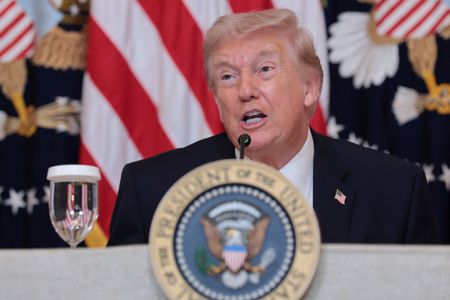
WASHINGTON – The Trump administration announced Wednesday it will expand a controversial visa bond program, adding 12 more countries to a list requiring citizens to post $15,000 deposits when applying for U.S. entry visas.
A State Department official, who requested anonymity, confirmed that the expanded program will affect citizens from a total of 50 nations, with most of the previously targeted countries located in Africa.
Starting April 2nd, nationals from these countries must pay the substantial bond when seeking B1 or B2 visas for business or tourist purposes. According to the official, the program’s purpose is to discourage visitors from remaining in the United States beyond their authorized stay.
The dozen newly added nations include Cambodia, Ethiopia, Georgia, Grenada, Lesotho, Mauritius, Mongolia, Mozambique, Nicaragua, Papua New Guinea, Seychelles, and Tunisia.
Visitors who comply with their visa terms and return home as required will have their bonds refunded, the official explained. Those who never make the trip will also receive their money back.
The Republican president has maintained strict immigration policies since assuming office in January, implementing aggressive deportation measures, canceling visas and green cards, and requiring social media and speech reviews for immigrants.
Civil liberties organizations have criticized Trump’s travel and immigration measures, arguing they undermine due process rights and freedom of expression. The administration and its supporters counter that these policies enhance national security.
Trump previously enacted a travel restriction last June that completely or partially prohibited entry for citizens from 19 countries, citing national security concerns.
The State Department official claimed the bond program has successfully decreased the number of individuals who exceed their authorized stay periods.
The original 38 countries subject to the bond requirement include Algeria, Angola, Antigua and Barbuda, Bangladesh, Benin, Bhutan, Botswana, Burundi, Cabo Verde, Central African Republic, Cote d’Ivoire, Cuba, Djibouti, Dominica, Fiji, Gabon, The Gambia, Guinea, Guinea-Bissau, Kyrgyzstan, Malawi, Mauritania, Namibia, Nepal, Nigeria, Sao Tome and Principe, Senegal, Tajikistan, Tanzania, Togo, Tonga, Turkmenistan, Tuvalu, Uganda, Vanuatu, Venezuela, Zambia, and Zimbabwe.
Josh D’Amaro officially takes over as Disney’s chief executive officer during Wednesday’s annual shareholder meeting, inheriting leadership of the entertainment giant during a period of significant industry transformation.
D’Amaro’s successful management of Disney’s profitable theme parks division, which generated 57% of the company’s $17.5 billion in profits last year, propelled him to the top executive position.
Shareholders are looking forward to hearing D’Amaro outline his approach for navigating Disney through the age of artificial intelligence, where technology companies pose threats to traditional media economics, and addressing potential tourism disruptions from Middle East conflicts and rising oil costs.
The new CEO also faces a struggling television division, audience fatigue with major franchises including Marvel and Star Wars, and a fragmented entertainment environment where Disney competes with platforms like YouTube and TikTok for viewer attention. He must also overcome comparisons to Bob Chapek, another former parks division leader whose unsuccessful CEO stint led to Bob Iger’s return in November 2022.
While both D’Amaro and Chapek emerged from the parks business, Disney’s board has partnered D’Amaro with seasoned television executive Dana Walden, who received a promotion to president and chief content officer. TD Cowen analyst Doug Creutz noted that Walden’s established creative experience will complement D’Amaro’s operational capabilities.
“It will however be critical for the two executives to be able to forge a strong partnership,” Creutz stated in his analyst report.
Iger plans to stay on Disney’s board through year-end before his second scheduled retirement.
Following Iger’s company return, Disney stock had plummeted over 40% in one year due to investor worries about streaming division losses. Activist investor Third Point had pushed for spinning off ESPN before recognizing its company value, while Trian Fund Management, led by Nelson Peltz, accumulated shares.
Iger brought stability to Disney by restructuring the organization to empower creative leadership and achieving streaming profitability. He successfully fought off campaigns from Peltz and other activists who claimed the entertainment company had fallen behind in streaming competition.
Under Iger’s guidance, Disney produced five movies earning over $1 billion globally in the last two years, announced a $60 billion investment plan for theme parks and cruise ships, launched ESPN’s streaming platform, and established an OpenAI partnership.
Despite these achievements, Disney’s total return on invested capital reached 11% during his leadership, trailing the S&P 500 Index’s 77% return. The company’s enterprise value currently trades at 10 times the upcoming 12 months of EBITDA, below its two-year median of 12 times EBITDA, according to LSEG data.
Bank of America analyst Jessica Reif Ehrlich expressed anticipation for hearing D’Amaro’s company vision.
When Iger became CEO in 2005, he acted swiftly to establish his leadership style, repairing relationships with activist investor Roy Disney and reconciling with former Pixar CEO Steve Jobs, which enabled Disney’s acquisition of the groundbreaking animation studio, Ehrlich explained.
“Josh is coming from parks. Will he do things quickly? Does he have a plan?” Ehrlich questioned. “If he could at least articulate a growth strategy, that would be super helpful.”
Motorists traveling on Wiggins Mill Road should expect delays today as construction crews are causing periodic lane restrictions along a busy stretch of roadway.
The Delaware Department of Transportation reports that lanes are being intermittently closed between Green Giant Road and Main Street as work continues in the area.
Officials say the lane restrictions will remain in effect until 4 PM today, and drivers are advised to plan for additional travel time when using this route.
The construction work is causing temporary disruptions to normal traffic flow as crews complete their scheduled activities along this section of Wiggins Mill Road.
Motorists traveling along Christina Avenue should expect traffic delays today as construction crews continue work that requires intermittent lane closures.
The affected stretch runs along Route 9 from Terminal Avenue to A Street, where drivers may encounter temporary lane restrictions throughout the day.
According to Delaware Department of Transportation officials, the construction-related lane closures are expected to remain in effect until 5 PM today.
Drivers are advised to allow extra travel time and consider alternate routes if possible to avoid potential delays in the area.
Delaware Department of Transportation crews are currently conducting debris cleanup along a stretch of Interstate 95 southbound today.
The litter removal operation is taking place in the median strip between the Maryland state line and the Delaware Welcome Center, according to DelDOT traffic officials.
Motorists traveling through the area should expect to see maintenance vehicles and crews working until 4:30 PM this afternoon.
Drivers are advised to use caution and reduce speeds when approaching the work zone for the safety of road crews.
The Newark Police Department has earned its 10th consecutive re-accreditation from the Commission on Accreditation for Law Enforcement Agencies, marking another milestone in the department’s commitment to professional standards.
The certification, awarded on March 14, 2026, confirms that Newark Police successfully meets all 467 CALEA standards established for law enforcement organizations across the country.
CALEA accreditation serves as a benchmark for police departments nationwide, requiring agencies to demonstrate compliance with rigorous operational and administrative guidelines covering everything from use of force policies to community relations protocols.
This latest recognition continues Newark Police Department’s decade-long streak of maintaining these demanding professional standards, reflecting the organization’s ongoing dedication to excellence in law enforcement services.
Delaware transportation officials have temporarily shut down a portion of Double Bridges Road after a tree fell and blocked traffic flow.
The closure affects the stretch of roadway between Kent Avenue and Parker House Road while DelDOT crews work to safely remove the fallen tree from the road.
Motorists are advised to seek alternate routes until the tree removal operation is completed and the road can be safely reopened to traffic.
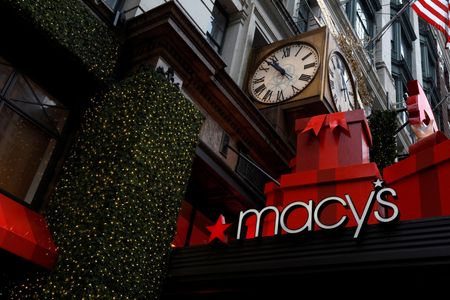
The iconic department store chain delivered fourth-quarter earnings that surpassed Wall Street predictions, with company-wide comparable store sales climbing upward once again. Macy’s attributed the positive results to strategic merchandise changes and enhanced customer experiences that encouraged increased consumer spending.
The retail corporation, which includes luxury retailer Bloomingdale’s and beauty store chain Bluemercury, presented a cautiously optimistic forecast for the coming year. While sales projections exceed analyst expectations, the company maintained a restrained profit outlook.
Tony Spring, the company’s chief executive who began his second year at the helm on Wednesday, announced that Bloomingdale’s achieved record-breaking holiday season revenue. Industry experts suggest this exceptional performance partly stems from the bankruptcy proceedings affecting the parent company of luxury competitors Saks Fifth Avenue and Neiman Marcus.
However, Macy’s faces identical challenges confronting other retailers across the industry. Recent U.S. trade policies have imposed tariffs that increased merchandise costs, while American consumers have shifted their spending priorities.
The conflict in Iran that erupted in recent weeks has intensified these economic pressures, causing significant spikes in gasoline and diesel fuel prices. These elevated costs are immediately impacting consumers at gas stations and may soon affect retail pricing.
Additional expenses from tariffs have created challenging decisions for retailers, affecting both product selection and pricing strategies as they determine how much of these increased costs to transfer to already budget-conscious customers.
The Supreme Court recently overturned President Donald Trump’s most substantial tariff measures, though the current administration plans to implement replacement policies.
Within this economic environment, consumer purchasing patterns have become inconsistent, with affluent households maintaining spending levels while lower-income families reduce expenditures in what economists describe as a “K-shaped economy.”
Since Spring assumed leadership in early 2024, Macy’s has shuttered underperforming locations while investing substantially in modernizing remaining stores. The company has enhanced customer service operations and worked to distinguish its luxury offerings through exclusive product lines.
Financial results showed net earnings of $507 million, equivalent to $1.84 per share, during the three-month period concluding January 31. This represents significant growth from the previous year’s $342 million, or $1.21 per share. Adjusted earnings reached $1.67 per share for the most recent quarter.
Total revenue decreased slightly to $7.64 billion from $7.68 billion in the corresponding prior-year period, reflecting the company’s ongoing store closure strategy.
Sales at existing stores and online platforms increased 1.8%, though this growth rate fell short of the third quarter’s 3.2% gain and followed a 1.9% rise during the second quarter. These figures encompass licensed operations including cosmetics departments.
Financial analysts had projected earnings of $1.57 per share on revenue of $7.51 billion for the quarter, according to FactSet polling data.
While Macy’s overall comparable store sales grew 0.4% during the quarter, the 125 renovated locations demonstrated 0.9% growth, providing positive validation for the company’s significant modernization investments.
Bloomingdale’s delivered impressive comparable sales growth of 7.4% in the latest quarter, while Bluemercury posted a 1.6% increase in comparable sales.
Looking ahead, Macy’s anticipates annual net sales between $21.4 billion and $21.65 billion. The company projects comparable sales will range from a 0.5% decline to a 0.5% increase, with earnings per share expected between $1.90 and $2.10.
Wall Street analysts are forecasting $2.20 per share on sales of $20.97 billion, according to FactSet research.
Drivers traveling through a section of Estates Drive should plan for potential delays as flagging crews continue work in the area this afternoon.
According to DelDOT, the flagging operation is taking place along Estates Drive between Appleby Road and Conlin Court. Traffic control personnel will be directing vehicles intermittently through the work zone.
The flagging activity is expected to wrap up by 6 PM today. Motorists are advised to allow extra travel time and exercise caution when approaching the work area.
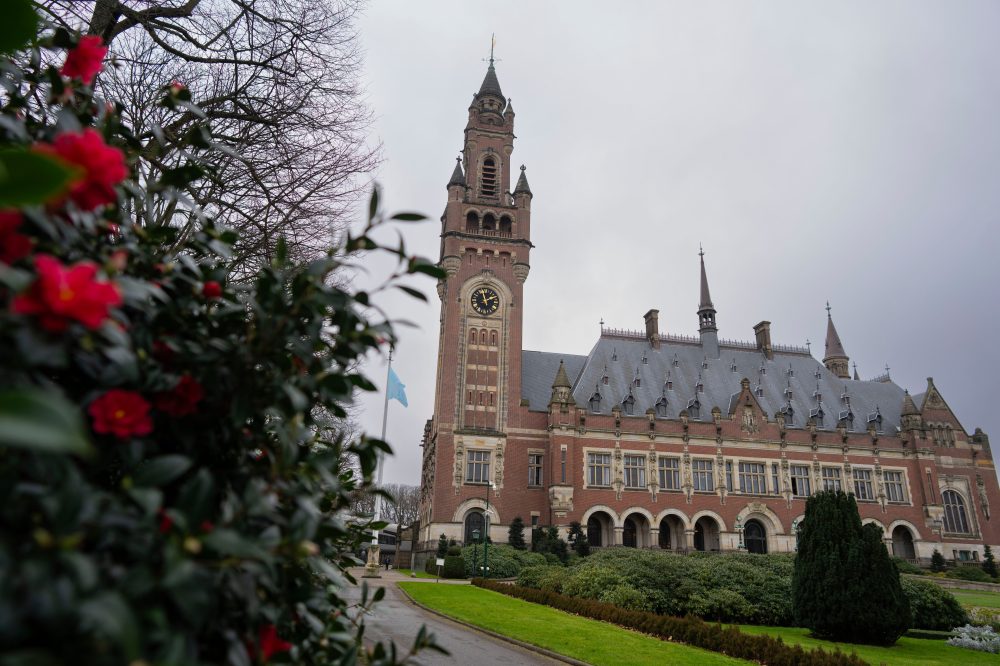
THE HAGUE, Netherlands — Rwanda is demanding Britain pay $115 million through international arbitration proceedings after the UK abruptly cancelled a disputed refugee resettlement agreement, officials said Wednesday.
The arrangement, negotiated in 2022 under former Prime Minister Rishi Sunak, would have relocated migrants arriving in Britain by boat or as stowaways to the East African nation. The agreement included financial compensation to Rwanda for associated expenses.
Rwanda’s Justice Minister and Attorney General Emmanuel Ugirashebuja told arbitrators at The Hague’s Permanent Court of Arbitration that his country established an asylum appeals system, built governmental and administrative frameworks, and “prepared reception facilities for the incoming refugees and incurred significant costs in doing so.”
However, when Starmer assumed power, “The new prime minister declared the Rwanda scheme to be dead and buried on his first full day in office,” Ugirashebuja stated. “The United Kingdom did not do Rwanda the courtesy of informing it in advance. Instead, Rwanda was left to read about these developments in the media.”
British officials are asking the tribunal to reject Rwanda’s financial demands, contending that both nations reached an agreement in November 2024 where Rwanda would abandon its payment claims.
Rwanda disputes this assertion. Ugirashebuja informed the panel that the UK “sought to walk away from its legal obligations.”
“A lot of the arbitration is going to turn around on the proof of that agreement,” said Joelle Grogan, visiting senior research fellow at UCD Sutherland School of Law in Dublin, in an Associated Press interview.
The arbitration tribunal at The Hague’s ornate Peace Palace will likely require months or longer to render a verdict following this week’s proceedings.
Sunak originally designed the initiative to transport certain migrants on one-way journeys to Rwanda. When Starmer cancelled the program, his home secretary Yvette Cooper condemned it as the “most shocking waste of taxpayer money I have ever seen.”
Cooper calculated that the plan, which faced legal obstacles and widespread human rights criticism, consumed 700 million pounds ($904 million) in public money, including Rwanda payments, chartered flights that never departed, and salaries for over 1,000 civil servants assigned to the program.
The 2022 agreement stipulated that migrants would be transported to Rwanda for asylum processing, and successful applicants would remain there permanently. Britain’s Supreme Court declared the policy illegal, ruling that Rwanda does not qualify as a safe destination for relocated migrants.
Rwanda initiated the arbitration process in January, stating that Starmer destroyed the deal “without prior notice to Rwanda.”
In the legal proceedings, Rwanda also contends that the UK breached the agreement’s provision requiring London to resettle vulnerable refugees from Rwanda.
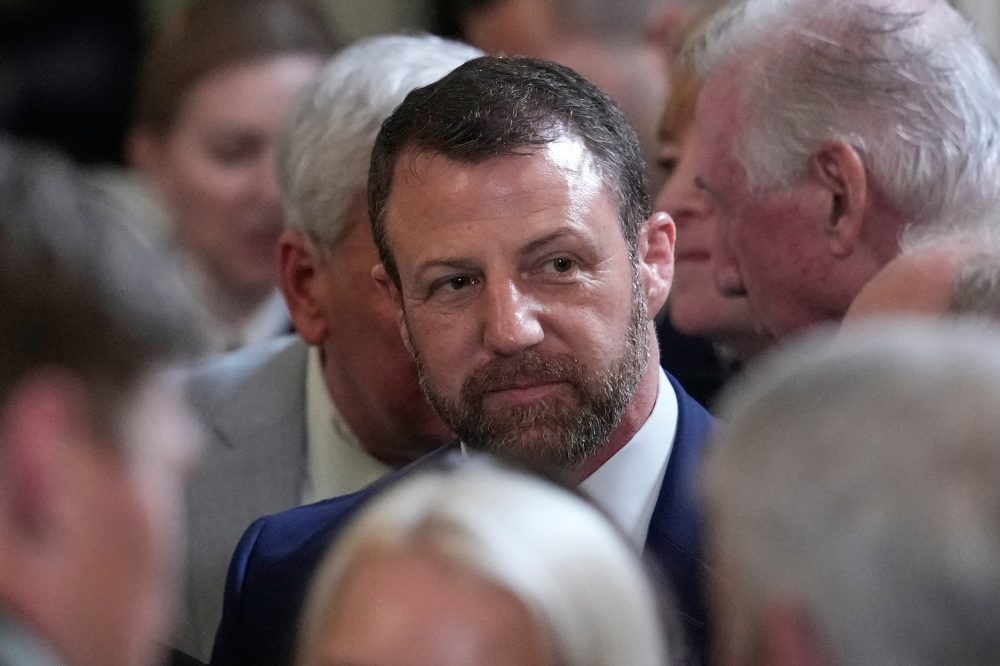
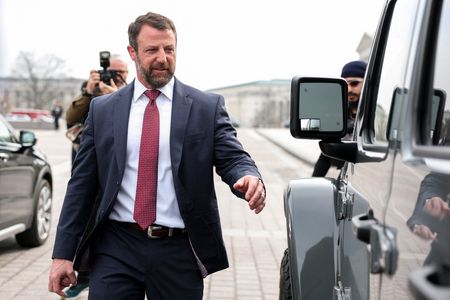
WASHINGTON — Oklahoma Senator Markwayne Mullin is scheduled to testify Wednesday during his confirmation hearing to become President Donald Trump’s next Homeland Security Secretary, where lawmakers will question him about his plans for the massive federal department.
The Oklahoma Republican has served 13 years in Congress and developed a strong working relationship with Trump. Should senators approve his nomination, Mullin would take over from Kristi Noem, who Trump dismissed from the position earlier this month following widespread criticism of her department leadership.
Wednesday’s hearing marks the first chance for Congress and the American people to learn directly from Mullin about his strategy for managing the nation’s third-largest cabinet agency. The enormous department employs approximately 260,000 workers and handles everything from presidential protection and disaster relief to immigration enforcement.
Before entering politics, Mullin competed in mixed martial arts and operated a plumbing company in Oklahoma. He has previously voiced support for immigration enforcement efforts and is anticipated to loyally advance Trump’s policy priorities if confirmed to lead DHS.
“Whether it be protecting the homeland from bad actors, stopping dangerous drugs from flowing into American communities, or removing the worst-of-the-worst criminal illegal aliens, Senator Mullin will work tirelessly to implement the President’s agenda,” White House spokeswoman Abigail Jackson said in an emailed statement Tuesday.
Democrats are expected to focus heavily on Trump’s immigration policies and Mullin’s role in implementing them during questioning. The hearing occurs while the administration’s mass deportation efforts face mounting scrutiny, with Mullin likely to encounter pressure about achieving Trump’s ambitious removal targets amid growing public opposition to aggressive enforcement methods.
Democratic opposition to the Trump administration’s immigration tactics has led party members to block DHS funding until the department agrees to modify how its officers conduct operations.
Michigan Democratic Senator Gary Peters, who serves as the top Democrat on the Senate Homeland Security Committee, released prepared remarks ahead of the hearing calling for “straightforward” reforms similar to those governing police departments. Peters highlighted various security challenges facing the department, from Iranian threats to cybercriminals, emphasizing the need for leadership with a “steady hand.” However, Peters expressed “reservations” about Mullin’s readiness for such a crucial position.
The ongoing partial government shutdown has created lengthy security checkpoint delays at numerous airports nationwide as TSA screeners work without paychecks for another month. Republicans have consistently argued that Democrats are compromising national security by refusing to fund the department.
During Noem’s tenure, aggressive enforcement actions took place in major cities like Los Angeles, Chicago and Minneapolis, where federal agents conducted large-scale arrest operations that led to confrontations between protesters and law enforcement.
Critics and elected officials have accused DHS personnel of breaking vehicle windows, physically confronting bystanders attempting to document their actions, and holding immigrants in poor conditions. The fatal shootings of two demonstrators — Renee Good and Alex Pretti in Minneapolis — intensified opposition to Trump’s immigration approach.
Department officials maintain their officers only use force when absolutely necessary and have criticized activists and politicians for escalating tensions through inflammatory statements about federal agents.
Mullin will also likely answer questions regarding FEMA’s future, as the disaster relief agency undergoes significant restructuring after Trump expressed interest in major reforms or potentially eliminating it entirely.
Noem headed a Trump-created FEMA Review Council tasked with proposing major changes to how the federal government assists states, tribes and territories with disaster preparation, response and recovery. These proposed reforms could significantly reduce federal disaster assistance while placing greater responsibility on local governments.
Additionally, Noem required her personal approval for all contracts exceeding $100,000, creating substantial delays for states seeking reimbursement for disaster-related expenses like debris cleanup.
Following the departure of two acting FEMA administrators during Noem’s leadership, the agency remains without permanent leadership.
Trump announced Noem’s new role as special envoy for a Western Hemisphere security initiative. Noem expressed gratitude for the appointment and highlighted what she called “historic accomplishments” at DHS in strengthening American security.
Drivers traveling through a section of Federal School Lane should plan for potential delays due to ongoing traffic control operations in the area.
According to Delaware Department of Transportation officials, flagging personnel are directing traffic along Federal School Lane in the stretch between Chaddwyck Boulevard and River Road, also known as Route 9.
The traffic management operation is expected to continue until 3:30 PM today, with motorists advised to allow extra travel time when using this route.
DelDOT recommends drivers consider alternate routes if possible to avoid potential congestion in the affected area.
Motorists traveling eastbound on Woodrow Road should expect delays and plan alternate routes as officials have closed the right lane between Route 202 and Sharpless Road.
According to DelDOT traffic reports, the lane restriction will remain active until 5 PM today. Drivers are advised to use caution when traveling through the work zone and allow extra time for their commute.
The traffic advisory affects the stretch of roadway connecting Route 202 to Sharpless Road in the eastbound direction only.
A new audio program from SRN News is offering listeners a quick daily briefing on religious news happening worldwide. The feature, called “Global Landscape,” runs for two minutes each day and covers the most important faith-related stories from across the globe.
The program focuses on bringing audiences up-to-date information about religious developments, changes in various cultures, and important events where faith intersects with world affairs. According to SRN News, the segment is designed to give listeners valuable perspective on how religion continues to influence global events and society.
Federal officials conducted their first auction of drilling rights in Alaska’s National Petroleum Reserve on Wednesday since the last sale took place in 2019, marking another opportunity to gauge energy companies’ interest in the challenging Alaskan market.
The Bureau of Land Management made available 600 parcels spanning 5.5 million acres to petroleum companies during the auction. Officials opened and announced the winning bids through a live broadcast on the agency’s website beginning at 10 a.m. Alaska time.
This auction represents the initial offering among at least five that are required under President Donald Trump’s One Big Beautiful Bill Act, legislation he enacted last year. The current administration has prioritized boosting domestic energy production while rolling back drilling limitations that were implemented during the Biden presidency in the Alaska reserve.
However, energy companies have shown limited enthusiasm for acquiring drilling permits in Alaska during recent years. Operating in the state presents significant challenges, requiring decades-long commitments and investments reaching into the billions. Companies completely avoided a recent auction for offshore drilling permits in Alaska’s Cook Inlet earlier this month.
The reserve, commonly called NPR-A, encompasses 23 million acres and was established for petroleum exploration during the 1970s to combat energy supply issues.
When the most recent NPR-A auction occurred in 2019, companies submitted $11.3 million worth of winning proposals for 1.05 million acres.
Alaska government leaders and certain indigenous communities back petroleum development because it generates tax income and employment opportunities. Environmental advocates contend that energy extraction harms wildlife habitats for animals including polar bears and caribou.
Department store chain Macy’s announced Wednesday that it expects lower annual profits than previously anticipated as consumers continue to tighten their spending habits amid ongoing economic pressures.
The retail giant joins other major chains including Walmart and Kohl’s in adopting a conservative outlook for the coming year, reflecting concerns about American consumers’ financial strain.
Company executives said they are taking a “prudent approach” when planning for the future, pointing to economic and international political factors that could further impact how much customers are willing to spend.
Following the announcement, Macy’s stock dropped 2% during pre-market trading hours.
Under CEO Tony Spring’s leadership, the company has been working to attract higher-income customers as a strategy to boost sales, while budget-conscious shoppers continue to feel the squeeze from rising prices and economic instability.
The retailer projects annual adjusted earnings will fall between $1.90 and $2.10 per share, a decrease from last year’s $2.15 and below Wall Street analysts’ predictions of $2.17 per share, based on LSEG data.
Import tariff costs are expected to squeeze profit margins during the first six months of the year, with the heaviest impact anticipated in the opening quarter.
Because Macy’s depends heavily on Chinese manufacturing, the company faces significant exposure to import taxes. Although Washington has implemented a standard 10% tariff rate following a Supreme Court decision that eliminated broader U.S. duties, retailers may still experience short-term financial pressure from inventory purchased at previously higher tariff rates.
Looking ahead to 2026, the company anticipates net sales between $21.4 billion and $21.7 billion, representing a decline from 2025’s $21.8 billion. This projection aligns closely with analysts’ expectations of $21.42 billion.
During the fourth quarter, Macy’s total sales decreased 1.7% to $7.64 billion compared to the same period last year, though this figure exceeded analysts’ projected $7.62 billion, boosted by strong holiday shopping activity.
The main Macy’s brand experienced a 3.2% sales decline, partially due to store closures, while comparable store sales managed a 0.4% increase. The company’s premium divisions showed stronger performance, with Bloomingdale’s achieving 8.5% sales growth and Bluemercury rising 2.5%.
A recent survey examining mothers and their church participation has uncovered interesting patterns in worship attendance. The study, conducted by Motherhood Today, discovered that approximately 50% of mothers cite spiritual growth as their primary motivation for regular church attendance, with learning about God ranking as the second most important factor.
When evaluating their church experiences, participating mothers expressed strong appreciation for small group programs but indicated they would welcome enhanced mental health resources and more targeted support for mothers. Research suggests that when mothers feel welcomed and supported in their religious communities, they’re more inclined to ensure their children participate in services as well.
In related findings, the Pew Research Center has published new data on worldwide religious diversity, identifying Singapore as the nation with the greatest variety of different faiths practiced within its borders. Suriname and Taiwan secured second and third positions respectively in this global ranking.
The United States landed in 32nd place overall for religious diversity, though it tops the list among the world’s most populous nations, with Nigeria and Russia following behind. Countries with predominantly Muslim populations in Middle Eastern and African regions showed the lowest levels of religious diversity. Researchers note that religious diversity often correlates with religious freedom, as more restrictive governments typically suppress diverse faith practices.
In concerning international news, Dutch authorities have filed terrorism charges against four teenagers suspected of detonating an explosive device outside a Rotterdam synagogue. According to the Rotterdam Public Prosecutor’s office, the adolescents face accusations of “causing an explosion, arson and attempted arson, all with the intent of instilling fear in the Jewish community.” Fortunately, no injuries resulted from this incident.
Jewish religious sites worldwide have experienced heightened security concerns and multiple attacks following joint U.S.-Israeli military operations against Iran that began February 28th. Just last week, two individuals triggered an explosion near a Jewish educational facility in Amsterdam, drawing immediate criticism from municipal leaders and Jewish organizations.
Finally, new data from LifeWay Research examining Bible reading habits among regular churchgoers shows that 31% engage with scripture daily. An additional 30% report reading the Bible several times weekly, though not every day. Among remaining regular attendees, 14% read weekly, 11% multiple times monthly, and 5% once per month. Surprisingly, 9% of consistent worship attendees report never opening the Bible. Encouragingly, regular scripture reading has actually increased compared to two decades ago, though evangelical leadership continues to identify biblical illiteracy as a significant challenge facing modern churches.
A comprehensive new research study from the Pew Research Center has revealed distinct patterns in how Americans allocate their daily time based on gender, examining everything from professional responsibilities to physical fitness and leisure activities. The findings show particularly striking differences when it comes to religious and community engagement, where women consistently dedicate more time than their male counterparts. This gap becomes even more pronounced with age, according to the research data. Among Americans who have reached their seventies, women typically devote approximately 35 minutes each day to faith-based or community service activities, while men in the same age group average about 27 minutes daily for these pursuits.
A recent survey by the Pew Research Center reveals that most Americans don’t view gambling as a moral issue. The research found that seven out of ten people in the United States believe wagering does not go against their moral principles. This stands in stark contrast to attitudes in other nations, where gambling faces much stronger moral opposition. In South Korea, nearly 8 out of 10 adults view gambling as morally wrong, while similar majorities in Nigeria at 72% and Greece at 66% share this disapproval. As March brings the NCAA basketball tournament, experts predict a significant increase in betting activity across the country.
A recent study conducted by LifeWay Research shows a significant increase in Protestant church members who actively utilize their spiritual abilities to benefit their communities and serve their faith. According to the research findings, 68% of Protestant churchgoers now report making deliberate efforts to use their talents to “serve God and others.”
This represents a notable jump from 2012, when only 58% of survey participants expressed the same commitment to service-oriented faith practices.
Scott McConnell, a representative from LifeWay, explained the significance of these findings. “Jesus prescribed a life that focuses on loving God and others, and this is actively shown in serving others. Most churchgoers embrace this goal,” McConnell stated.
Research from the Barna Group reveals that a majority of Americans regularly consume faith-based media content, with 60 percent of adults accessing Christian programming or publications in some form. According to the study, approximately half of these viewers tune in at least weekly.
The findings show that two-thirds of respondents consider Christian media sources to be reliable and trustworthy. However, the research also uncovered some concerns among regular viewers.
The Barna report notes that “engagement brings scrutiny. Among heavy consumers, 45 percent say the content can be divisive and 40 percent say it sometimes makes Christians ‘look bad.’”
The study highlights the complex relationship between faith-based media consumption and audience perceptions, showing that while most Americans trust these sources, regular viewers are more critical of certain content approaches.
Good morning, Delmarva! We’re looking at a pleasant spring day ahead with partly sunny skies and temperatures climbing to a comfortable 41 degrees. You’ll want to keep that jacket handy though, as northerly winds will be picking up at 5 to 10 mph, adding a bit of crispness to the air.
No weather worries today – it’s shaping up to be a great day to get outside and enjoy some fresh air! Just remember we’re still in that transitional spring weather pattern, so layering is your friend.
Tonight, expect mostly clear skies as temperatures dip down to around 30 degrees. It’ll be a chilly one, so you might want to bring any sensitive plants inside or cover them up.
Looking ahead to Thursday, we’ve got some good news! Mostly sunny skies return with temperatures bouncing back nicely to around 50 degrees – much more spring-like! Thursday night will see increasing clouds with lows settling near 36 degrees.
Enjoy this beautiful Wednesday, Delmarva, and I’ll see you back here tomorrow with your updated forecast!
WASHINGTON – Oklahoma Republican Senator Markwayne Mullin will appear Wednesday before a Senate committee seeking confirmation as the nation’s next Homeland Security Secretary, facing questions about immigration policies and national security matters.
The nomination comes after President Trump dismissed former Secretary Kristi Noem amid growing criticism over the department’s immigration enforcement approach. Mullin has consistently supported Trump’s strict immigration stance throughout his congressional career.
Democratic senators have withheld funding for the Department of Homeland Security since mid-February, demanding changes to current immigration practices. The funding dispute has resulted in a partial agency shutdown.
Trump initiated an intensive deportation campaign upon returning to office in 2025. Though the administration characterizes the effort as targeting dangerous criminals, arrests have included individuals with clean records, along with children and families.
During Noem’s tenure, federal agents conducted major enforcement operations in cities including Los Angeles and Chicago. These operations involved masked officers using aggressive tactics, including tackling workers in parking areas and deploying tear gas in residential neighborhoods while citizens attempted to record the activities. The militaristic approach sparked legal challenges and widespread criticism.
Following a January incident in Minneapolis where federal immigration officers fatally shot two American citizens, the administration promised a more focused strategy. However, Democrats maintain their funding opposition until enforcement methods change.
Trump replaced Noem earlier this month as Republican lawmakers increasingly criticized both the immigration crackdown and her departmental leadership. Mullin previously served ten years in the House of Representatives before winning his Senate seat in 2022.
The Senate Homeland Security and Governmental Affairs Committee hearing provides Mullin an opportunity to outline his leadership approach and address concerns about his predecessor’s management.
Committee ranking Democrat Gary Peters of Michigan plans to criticize Noem’s response to the Minneapolis shooting, according to prepared statements obtained by Reuters.
“It’s not the role of the secretary to be a cable news commentator in the wake of a crisis,” Peters said.
Mullin, who previously operated a family plumbing company, ranks among the Senate’s wealthiest members. His 2024 financial disclosure revealed assets between $29 million and $97 million. Recent years show millions in stock transactions, though a spokesperson notes he employs an independent firm for portfolio management in accordance with federal regulations.
During his 2012 House campaign, Mullin faced Democratic criticism regarding employment of a convicted felon with firearm access at his plumbing operation. Opponents also questioned whether the business utilized E-Verify, the federal system confirming workers’ legal immigration status.
White House spokesperson Abigail Jackson stated this week there was “no indication Mullin did anything inappropriate” concerning the felon issue and confirmed “none of his businesses ever employed workers without legal status.”
As a Cherokee Nation member, Mullin became only the fourth Native American senator upon his election victory.
Wednesday’s confirmation hearing begins at 9:30 a.m. Eastern time.
WASHINGTON – As midterm elections approach, Senate Republicans are employing a calculated political strategy, attempting to characterize Democrats as enablers of electoral misconduct through their opposition to President Trump’s voter identification legislation.
The proposed SAVE America Act, which has Trump’s backing, would mandate proof of American citizenship when registering to vote and require photo identification for ballot casting. However, the measure faces certain defeat in the Senate, where Republicans cannot secure the necessary 60 votes from the chamber’s 100 members.
Anticipating Democratic resistance to the proposal, Trump’s congressional supporters have launched an extended floor discussion designed to emphasize Democratic opposition to photo voting requirements – a concept that enjoys widespread public support across party lines, polling data indicates.
Senator John Barrasso, who serves as the chamber’s second-ranking Republican, explained their approach to reporters: “We’re going to put every one of them on the record so that everyone in America knows that Republicans support voter ID and Democrats are the party of open borders and illegal voters.”
The Republican messaging echoes Trump’s unsubstantiated assertions that significant numbers of undocumented immigrants participate in American elections.
However, federal law already prohibits non-citizen voting in national elections. Government audits of voter registration databases and research conducted by organizations across the political spectrum confirm that such illegal voting occurs extremely infrequently. The Constitution delegates election administration responsibilities to state and local authorities.
Democratic lawmakers argue against the legislation, contending its restrictions target a non-existent problem. They further assert the requirements could prevent millions of Americans from voting, particularly women, racial minorities, and economically disadvantaged citizens who may struggle to obtain passports, birth certificates, and other documentation needed to verify citizenship.
Senate Democratic leader Chuck Schumer criticized the SAVE America Act during Tuesday’s floor proceedings, calling it “a pernicious, radical bill” and pledging his party would prevent its passage.
The House approved the legislation by a narrow margin last month. Political observers suggest the bill could serve as justification for Trump and Republicans to claim that any narrow defeats in November resulted from fraudulent voting.
Walter Olson, a senior fellow at the libertarian Cato Institute, noted: “It seamlessly introduces an excuse for losing the midterms. It is also a possible rationalization for intervening in some way.”
Trump and his congressional allies are already pointing to Democratic opposition as proof of intended voter fraud, claiming Democrats seek non-citizen votes in November.
The Republican Party confronts a midterm campaign environment that traditionally disadvantages the incumbent president’s party, threatening Republican hopes of maintaining their narrow House majority. Democrats are capitalizing on voter dissatisfaction with economic conditions and concerns about an escalating conflict with Iran that has driven oil prices above $100 per barrel.
Political analysts believe Democrats have favorable prospects for House control, while Republican divisions in Texas have created possibilities for reduced Senate representation, though few anticipate Democratic control of that chamber.
Chris Williams, a voting expert at the University of Arkansas at Little Rock, suggests the SAVE America Act targets anti-establishment voters who respond to claims of institutional corruption and contributed to Trump’s presidential victories in 2016 and 2024.
This voting bloc represents a substantial portion of the electorate. Reuters/Ipsos polling conducted before the 2024 election revealed that 44% of American adults worried about “large numbers of non-citizens voting,” including 82% of Republicans, 44% of independents, and 15% of Democrats.
Should Republicans experience losses, Olson warned that Trump might attempt to interfere with ballot handling procedures before states certify results. The defeated legislation could provide justification for intervention against Democratic victories “because they wouldn’t address fraud.”
While Congress debates the SAVE America Act, Trump’s Justice Department is pursuing legal action against 29 states, including Republican-controlled Utah and Oklahoma, for failing to provide voter registration records. Attorney General Pam Bondi stated these records are necessary to maintain election integrity.
Trump has indicated he would pursue voter ID mandates through executive action if Congress fails to act.
Representative Joe Morelle, the leading Democrat on the House Administration Committee overseeing elections, emphasized: “Fundamentally, these are the American people’s elections. They’re not Donald Trump’s. They’re not the Republican Party’s. They’re not the Democratic Party’s.”
“When the American people recognize the president is trying to shut down or stop the work of election officials, I think there’s going to be an enormous outcry,” Morelle added.
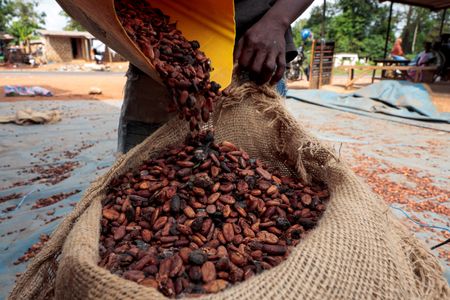
Coffee industry specialists are warning that the popular beverage may follow the same dramatic price trajectory as cocoa, which experienced a severe market crash after reaching unprecedented heights in 2024.
These predictions dominated conversations during the National Coffee Association’s recent annual gathering in Tampa, Florida, where market watchers debated whether coffee would mirror cocoa’s steep decline.
“I would be shocked if it did not happen,” stated Carley Garner, who serves as senior commodities strategist at DeCarley Trading, a Zaner division. “I do think coffee is the new cocoa,” she added.
The cocoa market provides a cautionary tale for coffee traders. New York cocoa futures soared to unprecedented levels exceeding $12,000 per ton in December 2024 due to adverse weather conditions that severely limited production in key growing regions. However, within just over a year, cocoa values tumbled more than 70% as buyers reduced purchases of premium chocolate products and manufacturers responded by shrinking package sizes or substituting less expensive ingredients.
Coffee has experienced a similar pattern, with arabica varieties climbing due to unfavorable tropical weather that disrupted harvests. The commodity reached its highest point ever in February 2025 and remained elevated as President Donald Trump’s trade tariffs created market distortions. Expectations of a strong production rebound in Brazil, the world’s leading coffee producer, have since pushed prices downward.
“I think coffee prices will be at $2 (per pound) by the end of the year,” Garner predicted, noting that elevated costs are dampening consumer appetite.
Digby Beatson-Hird, who analyzes coffee markets for Avere Commodities, anticipates an even steeper drop to $1.80 per pound this year. Tuesday’s closing price stood at nearly $2.93 per pound.
Consumer behavior data supports these bearish forecasts. A National Coffee Association survey of 1,500 Americans conducted in January revealed that 61% of participants had taken steps to reduce their coffee expenses. Many decreased their coffeehouse visits and increased home brewing, while others opted for less expensive brands. Despite these cost-cutting measures, overall coffee consumption levels remained stable, the NCA reported.
The coffee trade has adapted to market pressures, according to David Behrends, who serves as managing partner and head of trading at Sucafina SA, among the globe’s largest coffee trading companies.
Higher-priced mild arabica varieties from Colombia and Central America have surrendered market position, he explained, while less expensive robusta beans have gained ground.
Carlos Mera, Rabobank’s chief coffee analyst, noted that coffee consumption stagnated in 2025, marking the first year without growth compared to the historical annual increase of 2.3% recorded before the pandemic.
Mera anticipates that coffee’s recent price decline will eventually benefit consumers and stimulate demand recovery. He projects a 2% consumption increase for 2026.
The demand patterns reveal significant differences between coffee and cocoa markets, which may explain why some analysts question whether coffee will experience cocoa’s dramatic price collapse.
Even Brazil’s anticipated record harvest may not provide substantial price relief, market experts suggested.
Brazilian growers maintain strong financial positions and plan to sell their crops gradually, likely retaining portions to rebuild their inventories, explained Cleber Castro, who represents numerous Brazilian farms as a sales representative.
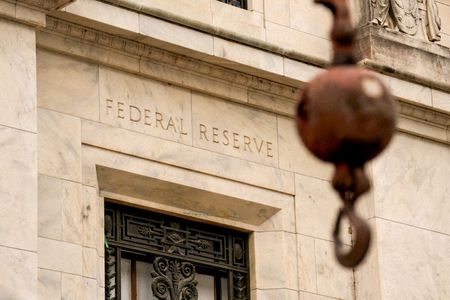
WASHINGTON – Major financial institutions appear poised for a regulatory victory as the Trump administration prepares to announce revised bank capital requirements that will be less stringent than previously proposed, though several obstacles could still delay final implementation.
Federal banking regulators plan to release updated proposals on Thursday that will require large banks to maintain slightly lower capital reserves, according to Federal Reserve Vice Chair for Supervision Michelle Bowman’s announcement last week. This represents a dramatic shift from the original 2023 proposal that would have forced some major banks to increase their capital buffers by as much as 20 percent.
The updated regulations will modify the so-called “Basel” rules and “GSIB surcharge” requirements, changing how financial institutions calculate the funds they must set aside to cover potential losses. These changes come after an intensive multi-year lobbying effort by Wall Street firms to roll back post-2008 financial crisis regulations they claim are hampering economic growth, though opponents argue the modifications could weaken protections at a time of increasing global and credit market risks.
Despite banks moving closer to their desired outcome, industry experts and analysts predict the intricate approval process could extend through most of the year as financial institutions examine detailed provisions and regulators work through various complications, including potential changes in Federal Reserve leadership and White House oversight.
“You’re going to get several hundred pages, possibly a thousand pages of documents,” explained Ian Katz, managing director at Capital Alpha Partners. “There’s just going to be so much to go over, and some of it is highly technical.”
While Bowman indicated the agencies intend to move swiftly, Truist Securities analysts predicted last week that final rules likely won’t be completed until early 2027.
The Basel framework establishes international capital standards, determining how banks must allocate resources for credit, market, and operational risks. Michael Barr, Bowman’s Democratic predecessor, introduced the initial draft in July 2023, citing the Silicon Valley Bank failure earlier that year as justification for increased capital requirements affecting more than 30 institutions with assets exceeding $100 billion.
Banking executives argued they already maintained adequate capital levels and mounted an unprecedented opposition campaign, threatening legal action and gaining support from numerous lawmakers while creating disagreement among regulatory agencies. This resistance successfully pushed the issue into the current administration, which has generally aligned with industry positions.
Bowman stated last week that the modifications would better align requirements with actual risk levels.
The revised Basel proposal eliminates several provisions that banks strongly opposed, including a requirement to follow the more restrictive of two risk capital calculation methods, which particularly disadvantaged major trading firms. The new version will also be more lenient toward fee-generating operations, such as credit card businesses, that faced strict new operational risk standards.
However, banks continue seeking clarification on other contentious matters, including the degree to which they can utilize internal models for market risk assessment rather than regulator-prescribed models, and capital requirements for non-publicly traded securities.
The Federal Reserve also intends to modify the GSIB surcharge applied to the eight highest-risk global U.S. banks by updating economic factors and adjusting short-term funding risk calculations.
Financial institutions facing the largest GSIB surcharges, including JPMorgan, Bank of America, Citigroup, Goldman Sachs, and Morgan Stanley, may see benefits, according to some analysts, though industry officials caution that impacts could vary significantly between firms.
“Not all large banks are the same,” noted Brian Gardner, chief Washington policy strategist at Stifel, adding that industry reaction will depend on how the proposal affects particular business lines.
The new proposals may also face political hurdles. Banks will have 90 days to submit comments to the agencies, which must jointly approve any additional modifications. At the Federal Reserve, this requires approval from its bipartisan board, where Democratic members might oppose a final version they consider too lenient, according to industry sources.
The rules will also need endorsement from Kevin Warsh, Trump’s nominee to replace Fed Chair Jerome Powell. While Warsh hasn’t publicly addressed the capital rule changes, he generally supports reduced regulation. Under a 2025 Trump executive order, the final rule must undergo White House Budget Office review, creating another potential complication.
Nevertheless, with banks and regulators now aligned, University of Michigan professor Jeremy Kress believes it should be “much easier” for regulators to complete the process.
Spring vacation season has turned into a travel nightmare for countless passengers who are stuck at airports across the country due to extended security screening delays combined with harsh weather conditions that hit earlier this week.
The peak spring break period has brought a perfect storm of travel complications, with Transportation Security Administration checkpoints experiencing significant backup times while adverse weather patterns have compounded the delays for vacationers trying to reach their destinations.
Travelers hoping to escape for their spring getaways are instead finding themselves waiting in terminals as the dual challenges of overwhelmed security processes and weather-related flight disruptions create widespread airport congestion during one of the busiest travel periods of the year.
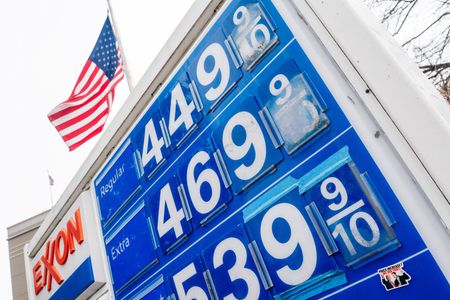
While President Trump and Republican lawmakers anticipate that rising fuel costs from the Iran crisis will be brief enough to avoid political damage in November’s elections, energy market experts and industry specialists warn that Americans may face sustained high prices at gas stations long after any resolution is reached.
The ongoing conflict has caused crude oil prices to spike, with U.S. oil surpassing $100 per barrel for the first time since the 2022 conflict between Russia and Ukraine began. Diesel fuel has climbed beyond $5 per gallon, reaching levels not seen since the end of 2022. These increases largely result from Iran’s strategic blocking of the Strait of Hormuz, a critical waterway that typically handles about 20% of the world’s oil transportation.
The President has consistently maintained that increased energy expenses represent a reasonable cost for eliminating Iran as a threat. During Tuesday’s remarks, he once again forecasted that energy prices would “drop like a rock” following the conflict’s conclusion.
However, market futures, official government projections, and anticipated summer driving season demand all indicate that oil and gasoline costs will remain elevated even after tensions subside, according to industry experts who note that energy prices historically decrease at a slower pace than they increase.
Matt Smith, who analyzes energy markets for consulting firm Kpler, explained: “It’s going to take time for those prices to come back down.”
Should gasoline costs remain high throughout the summer months, voters may hold Trump’s Republican Party responsible for increased household expenses and penalize GOP candidates during November’s midterm contests. Recent polling indicates Americans are increasingly concerned about living costs. Economic affordability represents a crucial advantage for Democrats, who have opportunities to gain House control and reduce Republican Senate dominance.
While Trump has consistently leveraged social media platforms and presidential communications to influence public opinion, gasoline pricing proves particularly challenging to reframe politically, according to Chris Borick, who studies polling and political science at Pennsylvania’s Muhlenberg College.
Borick noted: “It’s the most in-your-face reminder of affordability concerns, and it’s almost impossible to convince voters of some kind of contextual case that outweighs their emotional reaction.”
White House representative Taylor Rogers defended the administration’s position, stating Trump has been “right about everything,” including oil market predictions.
“Once the military objectives of Operation Epic Fury are completed and the Iranian terrorist regime is neutralized, oil and gas prices will drop rapidly—potentially even lower this before the strikes began,” Rogers declared.
The Energy Information Administration significantly increased its energy price forecasts this month. Current projections show Brent crude averaging approximately $79 per barrel in 2026, representing a 37% increase from the previous $58 estimate, while retail gasoline is expected to average $3.34 per gallon, up nearly 15% from earlier predictions.
Looking ahead to 2027, updated government forecasts project global oil prices roughly 22% higher and domestic gasoline costs about 8.4% above previous estimates, highlighting expectations that supply constraints and geopolitical tensions may maintain elevated energy expenses for years ahead.
Commodity trading markets reflect similar trends, with delivery contracts extending into next year priced above earlier 2026 levels.
According to LSEG data, U.S. crude futures have averaged $68.10 per barrel year-to-date but are projected to average $85.25 for the remaining 2026 period and $71.35 in 2027, compared to approximately $64.70 per barrel in 2025.
Rabobank energy strategist Florence Schmit emphasized that any market stabilization would occur gradually.
“Even if they signed a peace deal tomorrow, it would take months before we see a full resumption of traffic and energy flows,” she explained, suggesting prices might decline to the mid-to-high $70s range by year’s end.
American motorists are experiencing immediate effects. Tuesday’s national average for regular gasoline reached $3.79 per gallon, up from $3.54 one week prior and $2.92 a month ago, based on industry tracking. Current prices show sharp increases from $3.08 twelve months ago, demonstrating broader inflationary trends in energy sectors and reduced crude availability.
Since the February 28 conflict beginning, Trump has examined various approaches to reduce price pressures, with Chief of Staff Susie Wiles leading coordination efforts, according to Reuters reporting.
The current administration has implemented multiple measures to counter supply disruptions and stabilize global markets, including relaxing specific sanctions on Russian energy exports to increase available crude and coordinating with international partners for an unprecedented strategic petroleum reserve release.
The approximately 200 million barrel release from America’s Strategic Petroleum Reserve will occur over multiple months, restricting its immediate price impact.
WARSAW, Poland (AP) — After a male bullfinch crashed into Marcin Jarzębski’s apartment window, he knew the injured bird required professional care. The following day, he delivered it to Warsaw’s innovative 24-hour emergency center designed specifically for wounded wild birds.
Jarzębski carefully transported the small, round bird—featuring distinctive black head markings, gray back, and red chest plumage—in a shoebox to become among the initial cases at the new wildlife drop-off facility located at Warsaw Zoo’s entrance.
“The bird stayed with us overnight, but unfortunately it probably has a broken wing so we brought it to the bird hospital,” Jarzebski said.
The round-the-clock emergency facility in Poland’s capital operates through a network of automated metal units—similar to package lockers—equipped with heating systems to maintain warmth during winter months. These units immediately notify the nearby bird hospital when occupied, prompting veterinarians to retrieve the animals for examination and care.
After completing required paperwork, Jarzębski secured both the shoebox containing the bullfinch and the documentation form inside one of the units, confident the bird would receive optimal treatment opportunities.
The container system, developed using concepts from bird hospital staff, secures the animals safely until medical professionals can collect them. This drop-off facility, which began operations in February, has enhanced the effectiveness of the zoo’s bird hospital that has functioned since 1998 and currently provides care for roughly 9,000 patients yearly.
Zoo director and ornithologist Andrzej Kruszewicz conceived the project, emphasizing humanity’s obligation to assist wildlife affected by habitat modifications, including species like the bullfinch.
“This bird is a child of the forest who, during migration, didn’t understand the window,” Kruszewicz said.
“Humans often cause problems: car accidents, crashes into windows, electrocutions, tangled strings on storks’ legs,” he said. “All this is humans’ fault and they should feel responsible to give these birds a second chance.”
Regular patients arriving at Warsaw Zoo encompass familiar songbird varieties including tits, sparrows, thrushes and starlings, along with pigeons. Nevertheless, in an environmentally rich city like Warsaw, featuring the Vistula River flowing through its center, more uncommon species occasionally arrive for treatment.
Hospital manager Andżelika Gackowska explains that elevated winter temperatures from climate change have influenced birds that traditionally migrated southward, such as cranes and herons, to remain in Poland instead.
“Birds who stopped migrating because of warm winters were caught off guard by such a harsh winter as this year,” Gackowska said. Certain birds experienced anemia throughout the cold season due to challenging conditions and inadequate food sources, increasing their susceptibility to illness.
Funding for the emergency facility partially came from Warsaw’s citizen budget program, which selects projects through popularity rankings in online community surveys.
Warsaw Zoo staff report increased public awareness regarding assistance for sick birds, though they caution against excessive intervention, advising residents not to collect young, healthy birds mistakenly perceived as abandoned.
“In spring, we always make an information campaign warning people not to ‘kidnap’ birds,” Gackowska said. “Birds take care of their small ones differently than humans. If we see a baby bird on the grass alone, it is likely just training how to fly independently.”
Within the bird hospital, veterinary assistants remain continuously active, providing food and medications to diverse bird species housed in separate rooms based on type and severity of condition.
After birds regain strength, they move to spacious outdoor enclosures, allowing readjustment to natural conditions before release.
Returning recovered birds to their native environment represents the primary objective, according to veterinarian Ewelina Chudziak.
NOME, Alaska – Television personality Jessie Holmes has secured his second consecutive championship in Alaska’s demanding Iditarod Trail Sled Dog Race, completing the approximately 1,000-mile journey with his canine team.
Holmes and his sled dogs reached the finish line Tuesday evening in Nome, the historic Gold Rush community situated along the Bering Sea coast.
The challenging competition began March 8 in Willow, following a ceremonial launch the previous day in Anchorage. Participants navigated their teams through two mountain ranges, alongside the icy Yukon River, and over treacherous Bering Sea ice formations.
The former “Life Below Zero” cast member joins an exclusive group as only the third musher in the race’s 54-year existence to achieve consecutive victories after their initial championship. Susan Butcher accomplished this feat in 1986-1987, followed by Lance Mackey in 2007-2008, with both eventually claiming four total titles.
Speaking to The Associated Press prior to this year’s competition, Holmes described the race as his career’s most significant challenge. “That’s hard to put that on yourself because you got to live with that pressure every day,” Holmes explained. “And if I do not make it, it is going to absolutely crush me.”
His victory comes with an $80,000 prize, exceeding last year’s $57,000-plus payout. The increased purse resulted from financial backing by Norwegian billionaire Kjell Rokke, who competed in a newly established non-competitive amateur division. Rokke completed his journey Monday under special provisions allowing external assistance from a former champion, modified rest schedules, and dog substitutions.
Holmes made his Iditarod debut in 2018, earning rookie honors with a seventh-place showing. Across nine race appearances, he has achieved seven top-10 results and placed in the top five during his last five competitions.
His eight-season run on National Geographic’s “Life Below Zero” documented the challenges of remote Alaskan living. Television earnings enabled Holmes to acquire superior dogs and equipment, plus purchase undeveloped property near Denali National Park and Preserve. The carpenter has built his wilderness homestead, with his nearest neighbor residing roughly 30 miles away.
Rokke, currently residing in Switzerland, contributed $100,000 in additional prize funding and $170,000 to Alaska Native communities serving as race checkpoints. Fellow non-competitive participant Steve Curtis, a Canadian businessman, committed $50,000 toward village youth athletic programs, though he did not complete the course.
The People for the Ethical Treatment of Animals, the race’s primary opposition group, maintains that over 150 dogs have perished throughout Iditarod history. The organization called on Rokke to redirect his funding toward canine welfare rather than subjecting animals to “hazards and misery.”
Race officials have never released official fatality statistics for participating dogs.
This year’s competition saw one canine death – a four-year-old female named Charly from musher Mille Porsild’s team, according to Tuesday’s official statement. A necropsy examination will be performed.
Thirty-four competitive mushers began the race, matching the 1973 inaugural event for the second-smallest field in history. Veteran musher retirements and rising costs for essentials like dog food have contributed to reduced participation this decade.
WASHINGTON – Democratic primary contests across the nation are becoming battlegrounds over the Iran conflict, as progressive candidates challenge their more moderate opponents for insufficient opposition to President Donald Trump’s military campaign and alleged connections to defense industry funding.
A Reuters analysis reveals these internal party conflicts are playing out in primary races for congressional seats across Michigan, Colorado, Illinois, Maine and North Carolina. Multiple progressive challengers are targeting establishment-backed candidates, claiming that campaign contributions from weapons manufacturers and pro-Israel organizations compromise their anti-war positions.
These primary confrontations reflect deeper ideological battles within the Democratic Party as it works to regroup following 2024 electoral defeats and begins positioning for the 2028 presidential race.
The U.S.-Israeli military action against Iran has reignited progressive calls to end American military interventions and reduce the political power of defense industry donors, while redirecting focus toward domestic economic justice and civil rights issues.
Progressive candidates have made the Iran conflict a centerpiece of their campaigns through public appearances, media coverage, television advertisements and donor outreach, highlighting their opponents’ financial relationships with weapons contractors and organizations linked to the American Israel Public Affairs Committee, the influential pro-Israel lobbying organization.
Abdul El-Sayed, seeking the Democratic Senate nomination in Michigan, expressed skepticism about politicians who accept such funding. “It’s difficult to trust politicians who take money from weapons manufacturers and AIPAC, all of whom are for this war, and for those politicians to then stand up and say they against the war,” El-Sayed stated.
Candidates like El-Sayed argue that opposing the Iran conflict requires more than rhetoric – Democrats must demonstrate commitment by rejecting donations from these sources. Their moderate rivals have pushed back forcefully, contending they have consistently opposed the Iran war and accusing progressives of creating artificial controversies for political advantage.
Although Democratic congressional members have generally united against a conflict that lacks broad American support, these primary season disagreements suggest the party may be undermining a potential electoral opportunity as Republicans face their own political challenges heading into the midterms.
The central debate revolves around whether the party should prioritize appealing to independent voters or concentrate on mobilizing its base supporters. These internal tensions, encompassing both ideology and strategy, have persisted through multiple election cycles.
The disagreements extend beyond foreign policy to include questions about how aggressively to pursue economic reforms and the appropriate relationship between the party and corporate interests.
Bill Galston, an experienced Democratic strategist, predicted the tensions will intensify after November. “The day after the midterms are over in November these tensions will burst forth,” Galston said.
In North Carolina’s Democratic House primary this month, county commissioner Nida Allam launched an advertisement targeting the Iran war and her rival, incumbent Democrat Valerie Foushee.
Allam’s campaign emphasized that Federal Election Commission records show Foushee’s current campaign received $3,000 contributions from political committees associated with defense contractors Lockheed Martin and Northrop Grumman.
During Foushee’s 2022 congressional campaign, AIPAC’s political action committee provided over $2 million in support according to FEC documents, though she pledged to decline AIPAC-connected assistance in this cycle.
Allam declared in her advertisement: “I will never take a dime from defense contractors or the pro-Israel lobby. I have opposed these forever wars my entire career.”
Foushee secured a narrow victory in the March 3 primary by a single percentage point and appears likely to win reelection in November. However, Galston characterized Allam’s Iran-focused attacks as an early indication of the party’s internal struggles leading toward 2028.
In a statement to Reuters, Foushee criticized the conflict: “Trump’s senseless war in Iran puts civilians abroad and our servicemembers at risk. Americans are tired of sending taxpayer money abroad for endless wars while the cost of groceries, healthcare, and housing continues to rise here at home.”
Progressive challengers also criticize their opponents for supporting Pentagon budget increases rather than backing unsuccessful congressional attempts to redirect defense spending toward domestic programs.
In Colorado’s Democratic Senate primary, state senator Julie Gonzales, 43, is challenging 74-year-old incumbent John Hickenlooper, who is favored to win both the primary and general election.
Gonzales has criticized Hickenlooper’s October vote supporting increased defense spending under Trump, calling it inconsistent to make anti-war statements while funding military operations.
“Whatever he says, John Hickenlooper owns this war,” Gonzales told Reuters.
Hickenlooper joined most Senate Democrats in supporting a recent resolution to limit Trump’s war-making authority abroad.
In a video posted on X, Hickenlooper stated: “I think he started an illegal war with Iran. Americans don’t want another endless war in the Middle East.”
Public opinion surveys indicate approximately 25% of Americans support the war, with only 10% of Democratic voters backing the conflict.
Melat Kiros, a progressive Democratic candidate challenging an incumbent in a Colorado House primary, immediately addressed the Iran issue when the U.S.-Israeli bombing campaign began February 28.
In an Instagram video recorded while walking, Kiros condemned politicians who accept defense industry contributions.
“The only way things change is if we make sure that our elected representatives aren’t in the pockets of the military industrial complex,” she said.
Speaking with Reuters, Kiros criticized her opponent Diana DeGette for voting twice against progressive proposals to reduce Pentagon spending in 2020 and 2021.
“The greatest hypocrisy I’m seeing is these folks now saying we shouldn’t be spending this money on war.”
DeGette’s campaign did not respond to Reuters’ request for comment, but in a March 5 statement she said: “This war is costing at least $1 billion every day. That is billions of dollars that could go towards affordable health care and housing. I refuse to support this war.”
Matt Bennett, co-founder of the centrist Democratic organization Third Way, warned that progressive efforts to intensify internal party debates over Iran and broader party direction could damage Democratic midterm prospects.
He maintained that defeating Republicans and reclaiming the presidency requires candidates who can appeal to moderate voters.
“These hyper progressives that are running in these primaries don’t do that, and that’s the concern.”
Progressive organizations counter that voters are dissatisfied with conventional politics.
Usamah Andrabi, spokesman for Justice Democrats, which has endorsed progressive candidates including Allam and Kiros this year, said party supporters want leaders who will confront corporate influence and the defense establishment.
“The war with Iran is a great testing ground for that sort of future of the Democratic Party,” Andrabi said.
The Democratic National Committee, responsible for election strategy and candidate support, did not address Reuters’ questions about internal Iran disagreements, instead highlighting economic and political priorities for voters.
DNC spokesperson Mia Ehrenberg said: “More than a year into his term, prices are higher than ever and Trump’s latest foreign conflict has plunged our nation into a deadly and costly war that no one asked for.”
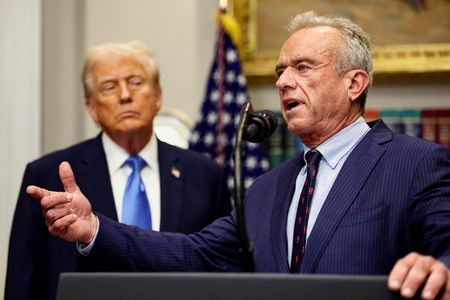
Childhood immunization rates have plummeted in Michigan during the opening year of President Trump’s second term, according to new data analysis that shows the influence of vaccine-skeptic Health Secretary Robert F. Kennedy Jr. on American healthcare practices.
State records reveal that Michigan experienced a dramatic decrease in vaccination completion rates among toddlers, offering one of the first concrete glimpses into how Kennedy’s anti-vaccine stance is affecting public health nationwide. Michigan stands out among states for providing detailed monthly vaccination statistics, while comprehensive national figures won’t be available until later this year.
The data analysis examined how many toddlers received their complete series of seven essential vaccines – including measles, mumps and rubella (MMR), whooping cough, and hepatitis B shots – before turning three years old, which represents the federal health standard.
Between January 2025 and January of this year, completion rates dropped nearly three percentage points to 66.5%. This represents a decline roughly 13 times larger than typical annual variations seen over the past 18 years. Only the COVID-19 pandemic in 2020 and the 2008 financial crisis produced steeper drops in Michigan’s vaccination rates.
The analysis found that white children, who make up the largest demographic group, and Hispanic children experienced the most significant decreases. Public health experts, parents, researchers and community advocates interviewed across Michigan identified Kennedy’s persistent criticism of vaccines as the primary factor influencing white families, while Trump administration deportation efforts have deterred Latino families from visiting public health clinics.
Stanford University epidemiology professor Mathew Kiang expressed concern about the Michigan trends, noting the state’s size and demographic diversity make it a meaningful indicator.
“What’s happening there is almost certainly happening in other states,” Kiang said.
State data indicates that approximately 4,500 additional toddlers in Michigan now face heightened vulnerability to serious diseases due to the 2025 vaccination decline. These unvaccinated children also create risks for infants too young for immunization and adults with compromised immune systems, according to health authorities.
Oakland County epidemiologist Lauren Fink emphasized the broader implications in an email statement: “Even if the public health impact of one vaccine in one arm is unmeasurably small, every unvaccinated child is at risk.”
Kennedy has spent years promoting claims, contradicted by scientific research, that standard childhood immunizations cause autism and chronic illnesses while posing greater dangers than the diseases they prevent. Since assuming his role as the nation’s top health official, Kennedy has amplified these anti-vaccine messages through government channels, bringing views previously confined to specialized social media groups into mainstream federal communication.
Rachel Atwood, a long-time vaccine skeptic from western Michigan, noted the shift in public discourse: “People are becoming a little more open to questioning things because RFK Jr is pushing out information that has never been really readily available on mainstream media.”
Atwood supports Kennedy’s position that America dedicates excessive resources to infectious disease prevention rather than addressing chronic conditions like diabetes and obesity.
Kennedy has also restructured the childhood vaccination recommendation process, removing the existing national advisory board and installing members who share his perspectives. This new board recently guided federal officials to reduce recommended childhood immunizations despite lacking fresh evidence of vaccine harm. However, a federal judge blocked these changes Monday, agreeing with major medical organizations that argued the modifications would undermine vaccine confidence and reduce immunization rates.
Health and Human Services Department spokesman Andrew Nixon disputed Kennedy’s role in declining vaccination rates, instead blaming Michigan’s aggressive COVID-19 response, including school closures and mask requirements, for eroding public trust in health policies.
“Restoring confidence in public health, not repeating the mistakes of the pandemic era and failed policies from states like Michigan, is the path to stronger vaccination uptake over time,” Nixon said. He declined to address the decline among Hispanic children.
Dr. Natasha Bagdasarian, Michigan’s chief medical executive, distinguished the state’s 2025 immunization patterns from previous years, noting that vaccination rates had stabilized following the pandemic. Bagdasarian identified Kennedy’s rhetoric and policies as new factors creating doubt and confusion among families.
“Michigan is not failing,” Bagdasarian said. “I think we are being failed by some of the rhetoric that is being put out at the national level.”
The United States achieved measles elimination status in 2000 due to high vaccination coverage at that time. Increasing vaccine reluctance has gradually undermined this accomplishment.
Over the past year, America has confronted its most severe measles outbreaks in decades, beginning in Texas and continuing recently in South Carolina. At least two children have died and dozens required hospitalization, with most victims being unvaccinated. Michigan experienced surging whooping cough cases in 2024 that continued into 2025.
Rather than advocating widespread vaccination to control these outbreaks, Kennedy has characterized immunization decisions as personal choices to be made through doctor consultation.
Noah Sliwa, a Lansing father of two, said Kennedy’s policies have validated his family’s approach. He and his wife had already chosen to space out their children’s vaccinations to better monitor potential side effects and opted against the birth dose hepatitis B vaccine for both children, contrary to previous federal recommendations.
“We felt more understood,” said Sliwa. “It felt normalized.”
Michigan health officials interviewed described observing direct connections between Kennedy’s views and vaccination rate changes. Statewide 2025 data shows nearly a three-percentage-point decrease in toddlers receiving their initial MMR shot, which Kennedy frequently criticizes.
Among white toddlers statewide, the seven-shot series completion rate fell four points to 67.5% between January 2025 and January of this year. Hispanic toddlers saw a 4.6-point drop to 69.8% during the same timeframe. Federal officials established an 80% series completion target for nationwide disease prevention over ten years ago, though they have concentrated on improving specific vaccine uptake since the pandemic.
Letha Martin, who supervises immunization programs in Oakland County north of Detroit, provides training for nurses on addressing parental vaccine hesitancy. The populous, predominantly white suburban county experienced a 2.9-percentage-point decline in toddler vaccination rates from January 2025 to January 2026, according to the analysis.
Martin reported that parents frequently expressed safety concerns about childhood shots when requesting exemptions from state vaccine requirements. Now families reference Kennedy’s specific arguments, such as claims that vaccine clinical trials inadequately test for adverse effects.
“Those are very, very particular concerns,” Martin said.
Within Michigan’s Latino community, childhood vaccination series completion rates had partially rebounded after COVID-19. However, intensified Trump administration immigration enforcement prompted more families to restrict activities outside their homes, including medical appointments, due to deportation fears, according to local health officials and advocates.
Centro Multicultural La Familia, a Latino advocacy organization in Oakland County, collaborates with county officials to organize periodic vaccination clinics. Previously, up to twelve people would typically attend these immunization sessions, said Oakland County Health Officer Kate Guzmán.
As deportation activities intensified in Michigan last year, Guzmán noted that no one attended the vaccine clinic held at the county health department, which is located adjacent to the local jail and sheriff’s department.
Detroit community leader Angela Reyes, who facilitates partnerships between Latino organizations and local health departments, reflected on the broader implications: “One of the greatest public health achievements was vaccinations, and we’re going backwards.”
WASHINGTON – The Federal Reserve is widely anticipated to keep interest rates unchanged this week, despite mounting inflation worries stemming from oil price increases tied to the Iran conflict that began over two weeks ago.
The Federal Open Market Committee is expected to maintain the current policy rate between 3.50%-3.75% when their two-day session concludes Wednesday. While most financial experts previously predicted rate reductions, that certainty has diminished following the U.S. and Israeli aerial operations against Tehran that started February 28.
BNP Paribas economists recently noted: “We see a significant, underappreciated tail risk that the FOMC moves toward a ‘symmetric policy bias,’ i.e., either a rate hike or a cut is roughly equally likely to follow.” This sentiment has gained traction as the military action has disrupted roughly one-fifth of worldwide oil commerce.
Deutsche Bank analysts posed the question more directly: “Could the Fed hike rates in 2026?”
Federal Reserve officials have several methods to communicate this potential shift in approach.
The most direct signal would come through their policy statement, scheduled for release at 2 p.m. EDT Wednesday, indicating that rate increases are equally probable as decreases for their next move.
Alternatively, this possibility might emerge in their updated quarterly economic forecasts, also released at 2 p.m., should individual committee members believe rate increases may be warranted this year or next.
Such a move would likely provoke criticism from President Donald Trump, who continues advocating for Fed Chair Jerome Powell to reduce interest rates.
Trump has selected former Fed Governor Kevin Warsh, whom the president considers supportive of rate reductions, to replace Powell when his term expires in mid-May, though obstacles to Warsh’s confirmation persist.
With inflation measured by the Fed’s preferred gauge exceeding the 2% target for five consecutive years, several central bank officials favored keeping rate increases as an option even before Iranian hostilities drove crude oil prices up approximately 50% and significantly raised U.S. gasoline costs.
The petroleum price surge, viewed as potentially contributing to broader price increases, triggered increased market speculation that central banks in regions more dependent on energy imports, including Europe and Asia, would need to implement higher rates.
Simultaneously, traders have reduced their expectations for Fed rate cuts, with numerous Wall Street institutions recently abandoning their June rate cut predictions and anticipating the Fed will remain inactive longer.
The Fed might signal consideration of rate increases Wednesday through a simple modification to their post-meeting statement: removing the reference to “additional” rate cuts that has appeared since the central bank initiated three consecutive reductions last September.
However, the dominant perspective suggests oil prices are unlikely to penetrate the expansive U.S. economy sufficiently and rapidly enough to reverse anticipated declining inflation trends later this year as last year’s tariff impact diminishes.
This makes a rate increase this year questionable and reduces the likelihood that Fed policymakers will collectively open that possibility this week.
“Our base case is that policymakers delay this change for now, as the U.S. labor market does not seem to be overheating and the war’s length, severity and economic impact are uncertain,” the BNP Paribas economists stated.
Central bank officials typically resist responding to potentially temporary commodity price surges. They also likely maintain concerns about employment market stability, particularly after employers unexpectedly eliminated jobs last month. Elevated oil prices could also decelerate economic activity if consumers reduce other expenditures while allocating more funds to gasoline purchases.
Consequently, analysts generally anticipate most Fed policymakers will forecast at least one interest rate reduction this year. At least one official – Fed Governor Stephen Miran – is expected to disagree Wednesday, preferring immediate cuts over waiting.
A Duke University survey of former Fed policymakers and staff showed more cautious views. Among 27 respondents in the survey conducted by visiting scholar and former Wall Street Journal reporter John Hilsenrath, 13 recommended maintaining steady rates all year, six supported rate increases, and only eight believed rate cuts were appropriate.
Overall, central bankers are expected to project higher inflation for this year compared to their December forecasts while also anticipating increased unemployment and slower growth.
This challenging combination in projections – what Chicago Fed President Austan Goolsbee describes as a “stagflationary direction” because it suggests both economic stagnation and rising prices – indicates Fed policymakers likely remain significantly divided on which issue requires immediate attention.
The “dot plot” showing Fed rate path expectations may reveal the extent of this division and could include one or more policymakers projecting higher policy rates by year-end.
“Those dissenting in favor of rate cuts will pencil in more cuts for the rest of the year, while we could see some of the more hawkish participants in the meeting pencil in a rate hike,” KPMG economist Diane Swonk explained. “Tension between the Fed’s dual mandate of fostering price stability and full employment will be reflected in participant rate projections.”
Stock market futures posted gains Wednesday morning as crude oil costs dipped modestly, with nervous investors looking ahead to the Federal Reserve’s policy announcement for guidance on how Middle East tensions might affect the economy.
Market optimism also received a boost from strong indicators in the artificial intelligence sector, as both Nvidia and Advanced Micro Devices climbed 1% during pre-market hours.
Reports indicate that Nvidia received Beijing’s authorization to market its second-tier AI processors in China and is developing a customized version of the Groq AI chip specifically for Chinese customers.
Meanwhile, AMD announced a new partnership agreement with Samsung Electronics to broaden their collaboration on memory chip supplies for artificial intelligence systems.
Market attention centers on the Federal Reserve, which analysts expect will maintain current benchmark interest rates when its two-day policy meeting concludes at 2 p.m. Eastern Time.
The primary interest lies in Federal Reserve Chair Jerome Powell’s commentary regarding how trade tariffs, elevated energy expenses from Middle Eastern instability, and softening employment conditions might shape future monetary policy choices.
Market participants now predict the Fed will postpone its initial rate reduction of the year until December rather than July, based on data from LSEG.
“Our economists suspect the FOMC will trim growth forecasts marginally, push up its inflation forecast and then delay the 2026 rate cut until 2027,” said Benjamin Schroeder, senior rates strategist at ING.
“That said, given the situation, the Fed will likely have little conviction in its forecasts, and Chair Powell will be certain to underline the challenges in the current volatile environment.”
February’s producer price information releases at 8:30 a.m. Eastern Time, providing policymakers one last assessment of underlying inflation trends before announcing their decision.
As of 5:08 a.m. Eastern Time, Dow E-minis advanced 268 points or 0.57%, while S&P 500 E-minis gained 35.5 points or 0.53%. Nasdaq 100 E-minis increased 165.75 points or 0.67%.
The Middle Eastern crisis continues without resolution, keeping crude oil prices elevated near $100 per barrel despite recent declines.
Investors found encouragement in temporary supply relief after sources confirmed an agreement to restart crude shipments from Iraq’s Kirkuk oil fields to Turkey’s Ceyhan terminal through pipeline infrastructure.
Transportation companies including Delta, American, and Carnival each rose over 1%, extending Tuesday’s recovery after airlines upgraded their quarterly projections, expecting robust travel demand to counterbalance higher fuel expenses.
Middle Eastern conflicts have intensified global market instability, though U.S. equities have benefited from technology stock recoveries and America’s position as an energy-producing nation.
The CBOE VIX index, commonly known as Wall Street’s fear indicator, dropped to two-week lows after reaching April 2025 peaks earlier this month, while the S&P 500 benchmark recorded its first consecutive daily gains in three weeks on Tuesday.
In other corporate developments, Lululemon declined 2% after projecting 2026 revenues and earnings below analyst expectations. The athletic apparel company, currently facing a proxy battle, added a former Levi Strauss executive to its board of directors.
Swarmer, a drone automation software firm, soared 50% following its Nasdaq market debut the previous day.
Micron Technology advanced 2.7% ahead of its earnings report scheduled for later Wednesday, while SanDisk shares gained 2.8%.
MOSCOW – A senior Russian official on Wednesday rejected claims made by The Wall Street Journal regarding alleged military technology sharing between Moscow and Tehran.
Dmitry Peskov, who serves as the Kremlin’s chief spokesperson, dismissed the newspaper’s report as “fake news” during a Wednesday statement. The Wall Street Journal had published an article Tuesday alleging that Russia has been providing Iran with satellite data and enhanced drone capabilities.
According to the newspaper’s Tuesday report, which cited unnamed sources with knowledge of the situation, Moscow has been expanding its intelligence collaboration and military partnership with Iran. The report claimed this cooperation includes providing satellite imagery and upgraded drone technology that helps Tehran target American military personnel stationed throughout the region.
Delaware motorists should expect delays on Interstate 95 northbound tonight as the Delaware Department of Transportation conducts construction work requiring a lane closure.
DelDOT has closed the single right lane on I-95 northbound in the area between Exit 1 and the Welcome Center. The construction-related closure is scheduled to remain in effect until 5:00 AM.
Drivers traveling through this section of the interstate are advised to allow extra time for their commute and merge safely into the remaining open lanes.
Ukraine’s government is pressing India to free six of its citizens who were detained last week on accusations of illegally entering Myanmar to provide drone warfare training to groups fighting the military junta.
Indian police took the six Ukrainians and one American into custody on March 13 at three separate airports across the country.
Court documents from Monday ordering the seven individuals held until a March 27 hearing reveal they’re charged with unlawfully traveling to India’s northeastern Mizoram state, entering Myanmar without authorization, and instructing anti-junta ethnic militias in drone operations. They’re also accused of smuggling large quantities of drones from Europe into Myanmar through Indian territory.
Mizoram shares a border with Myanmar’s Chin State. Myanmar has been torn apart by civil war and a humanitarian disaster since military forces toppled the democratically elected government led by Nobel Prize winner Aung San Suu Kyi in 2021.
India’s National Investigation Agency, the country’s primary anti-terrorism organization, is conducting the investigation into the detained individuals.
Ukraine’s foreign ministry issued a statement Tuesday evening asserting that “no established facts proving the involvement of the said Ukrainian citizens in unlawful activities on the territory of India or Myanmar” exist.
Ukrainian Ambassador Oleksandr Polishchuk met with Sibi George, a high-ranking Indian foreign ministry official, on Monday to deliver a formal protest note “demanding the immediate release of the Ukrainian citizens and access to them,” according to the ministry’s statement.
“We draw attention to the fact that there are certain restricted-access zones in India for foreign nationals, entry to which is possible only with special permits,” the Ukrainian statement noted.
“At the same time, proper marking of such areas on the ground is often absent, which creates a risk of unintentional violation of the established rules.”
A representative from the U.S. embassy acknowledged awareness of the situation but stated that “for privacy reasons, we cannot comment on cases involving U.S. citizens.”
Neither India’s foreign ministry nor Myanmar government officials responded to requests for comment.
The court filing didn’t identify which Myanmar-based ethnic armed organizations the group allegedly contacted.
However, the document cited investigation findings suggesting the accused were suspected of providing assistance to “proscribed Indian insurgent groups by way of supplying weapons and other terrorist hardware and training them, thus affecting national security and interests of India.”
Indian officials have reported that militant organizations that sought sanctuary in Myanmar and participated in its civil conflict returned in 2024, intensifying months of deadly ethnic violence in India’s northeastern Manipur state.
India mandates that foreign visitors obtain special entry permits for certain northeastern border states that have experienced ethnic tensions and security challenges.
Minnesota is confronting an unprecedented crisis as federal authorities have placed hundreds of millions of dollars in Medicaid funding on hold, with potential losses reaching into the billions.
The massive funding freeze stems from the Trump administration’s intensified campaign against healthcare fraud, leaving the state’s essential medical assistance program in financial uncertainty.
Minnesota Governor Tim Walz recently appeared before a House Oversight and Government Reform Committee hearing in Washington, D.C., as state officials work to address the federal concerns and restore the critical funding stream.
The scale of the financial threat facing Minnesota’s Medicaid system is unlike anything the state has previously encountered, raising concerns about the program’s ability to continue serving vulnerable populations who depend on these healthcare services.
Healthcare policy experts warn that Minnesota’s situation could signal similar challenges ahead for other states as federal oversight of Medicaid fraud prevention becomes more aggressive nationwide.
The funding suspension affects a program that provides essential medical care to low-income families, elderly residents, and disabled individuals across Minnesota, making the resolution of this crisis a top priority for state leadership.
The United Nations Assistance Mission in Afghanistan confirmed Wednesday that 143 people were killed in Pakistan’s bombing of a drug treatment facility in Kabul, according to a UN official who spoke with Reuters.
Afghanistan’s Taliban government had previously reported much higher casualties from Monday evening’s airstrike, claiming more than 400 people died and another 265 were wounded in the attack.
Pakistani officials have disputed the Taliban’s assertion that they struck a drug rehabilitation center, stating instead that their forces “precisely targeted military installations and terrorist support infrastructure.”
American private equity giant KKR announced Wednesday it will commit up to $310 million in a major partnership with Indian electric vehicle companies PMI Electro Mobility Solutions and its bus platform Allfleet India.
The New York-based investment firm plans to secure controlling ownership of Allfleet while taking a smaller ownership position in PMI Electro, though specific ownership percentages were not revealed by the companies.
PMI Electro produces electric commercial buses in various sizes, including 9-meter and 12-meter models as well as school transportation vehicles. Meanwhile, Allfleet specializes in building and managing large-scale electric public transit systems.
Under existing contracts with various state transportation agencies, Allfleet plans to roll out more than 5,000 electric buses across India.
This major investment aligns with India’s ambitious PM-eBus Sewa initiative, which seeks to introduce 10,000 electric buses through public-private partnerships in metropolitan areas. The government program carries an estimated price tag of 576.13 billion rupees, equivalent to approximately $6.23 billion.
“As our cities grow and mobility needs evolve, clean, efficient, and accessible public transport will play a central role in shaping a more sustainable future. Alongside KKR, the company will continue to focus on responsible scale-up and expanding its presence across Indian cities,” stated Aanchal Jain, who serves as CEO of PMI Electro.
The transaction awaits regulatory clearance and is anticipated to finalize by mid-2026, according to both companies.
HONG KONG, March 18 – Chinese authorities are implementing stricter oversight of companies incorporated outside mainland China that plan to go public in Hong Kong, potentially creating substantial disruptions for the territory’s robust stock offering pipeline, according to banking and legal professionals.
Industry sources indicate that regulators have instructed certain “red-chip” enterprises to relocate their legal headquarters back to China prior to launching public offerings. These businesses typically register in offshore locations, primarily tax-friendly jurisdictions, while maintaining their actual operations and assets within China through ownership arrangements.
The China Securities Regulatory Commission has acknowledged providing recent guidance to some red-chip enterprises regarding dismantling their current organizational frameworks.
Financial experts and bankers suggest this requirement could postpone some public offerings by a minimum of six months as affected companies work to restructure their legal status. Some enterprises might need to completely abandon their public offering plans due to the potentially prohibitive costs of reorganizing their corporate framework.
INTERNATIONAL INVESTMENT APPEAL MAY DECLINE
The changes could also diminish foreign appetite for Chinese enterprises.
“For foreign investors, the dismantling of red-chip structures could reduce flexibility regarding equity stakes and future divestment,” said Kenny How, a councillor at the Hong Kong Securities & Futures Professional Association.
He explained this concern arises mainly from China’s stringent foreign exchange restrictions on capital leaving mainland entities, combined with mandatory 12-month holding periods that investors must accept following public listings.
Following Hong Kong’s exceptional stock offering performance in 2025, where capital raised jumped 231% to reach $37 billion, exchange records show over 530 companies have submitted listing applications, with Chinese firms comprising the majority.
The exact number of red-chip companies among applicants remains unclear. However, data from Chinese legal firm Hankun reveals that last year, approximately 20% of the 131 Hong Kong listings China authorized involved offshore holding arrangements, with most utilizing red-chip frameworks.
Companies have historically favored listing in markets like Hong Kong and the United States to access broader international investment pools while avoiding complex domestic regulatory requirements.
This strategy became less attractive after Beijing introduced regulations in March 2023 requiring red-chip firms and similar offshore holding companies to obtain mainland approval for public listings.
RED-CHIP STRUCTURES FACE ONGOING CRITICISM
Three sources familiar with the situation, who requested anonymity due to the matter’s sensitivity, revealed that Beijing’s recent actions respond to the National Development and Reform Commission’s concerns about inadequate supervision of how these companies utilize their public offering proceeds. The NDRC, China’s primary planning authority, did not immediately provide comment to Reuters.
“Controversy around red-chip structures has never really gone away. They’ve always been accused of dodging mainland regulations and facilitating capital flight,” said Tian Meng, a lawyer at Dacheng Law Offices.
Tian noted that with data protection and foreign investment oversight becoming priority concerns, regulators are seeking more transparent corporate arrangements.
The Hong Kong market’s recent growth has offered private equity and venture capital firms valuable exit opportunities – a pathway that Beijing’s increased scrutiny might jeopardize, some investors caution. Dollar-based investment funds typically back Chinese companies established offshore.
Zhou Zhimin, a biotechnology asset management expert, warned that abrupt regulatory changes with limited transparency could undermine dollar-based investment confidence.
However, some market observers expect the long-term effects on Hong Kong listings to remain minimal.
“I believe this mainland measure is primarily aimed at improving the quality control of listed companies,” said Kenny Ng, a securities strategist at China Everbright Securities International.
“In the long run, it should have a positive effect on the stock market development and on protecting investor interests.”
China’s tech powerhouse Tencent Holdings announced strong financial results Wednesday, with fourth-quarter revenue jumping 13% as the company capitalized on booming gaming sales and growing artificial intelligence capabilities.
The Shenzhen-headquartered company generated 194.4 billion yuan ($28.3 billion) in revenue during the final quarter of 2024, narrowly surpassing Wall Street predictions of 193.5 billion yuan according to LSEG analyst surveys.
The social media and gaming giant also delivered quarterly profits of 58.26 billion yuan, topping average projections of 57.75 billion yuan.
Tencent has been ramping up its artificial intelligence investments using profits from its successful gaming division as it battles competitors like Alibaba and ByteDance for market dominance.
The tech company is integrating AI technology throughout its popular WeChat messaging and payment platform, cloud computing services, and gaming products, leveraging its massive user base of over one billion people worldwide.
Gaming revenues showed particularly strong performance, with domestic sales climbing 15% to reach 38.2 billion yuan and international gaming income soaring 32% to 21.1 billion yuan. Digital advertising revenues also grew substantially, rising 17% to 41.1 billion yuan thanks to AI-powered ad targeting improvements.
The gaming division’s success stemmed from popular new releases including “Delta Force” and “Valorant Mobile,” combined with continued strong performance from longtime favorites “Honor of Kings” and “Peacekeeper Elite.”
Tencent’s FinTech and Business Services division, encompassing cloud computing operations, saw revenues increase 8% to 60.8 billion yuan, though the company does not provide separate cloud revenue figures.
STOCKHOLM, March 18 – Sweden’s intelligence agency has identified Russia, China and Iran as the most significant security threats confronting the Scandinavian nation, according to Wednesday’s release of the annual threat assessment from the Swedish Security Service, known as SAPO.
In recent years, the security agency has documented escalating dangers, particularly from Moscow’s government as it becomes more willing to engage in dangerous operations connected to its conflict in Ukraine, including destabilizing hybrid warfare tactics across European nations.
Iranian activities have similarly been designated as a major concern for an extended period, with Swedish officials observing how organized crime groups within the country – which has struggled with gang violence for the past ten years – have been exploited by foreign governments to execute violent operations.
Security Service Chief Charlotte von Essen stated in the assessment that recent military actions involving the United States and Israel against Iran, along with Tehran’s retaliatory responses, “have increased the threat against American, Israeli and Jewish targets in Sweden.”
The chief executive of major European bank UniCredit warned Monday that a planned digital version of the euro currency could squeeze bank profits by pulling away customer deposits that provide low-cost funding.
Andrea Orcel made the comments during a Morgan Stanley conference held in London, where he discussed his bank’s ongoing discussions with European Central Bank officials about the digital currency project.
According to Orcel, UniCredit is working closely with the ECB to help ensure the central bank can achieve its monetary policy objectives through the digital euro while avoiding excessive harm to traditional banking operations.
When asked about his bank’s stance on the digital euro initiative, Orcel responded that UniCredit maintains a collaborative outlook.
“We’re relatively constructive,” Orcel said during his conference remarks.
The banking executive explained that retail customer deposits represent banks’ most affordable funding source, and the digital euro could redirect some of those funds away from traditional bank accounts, potentially affecting both liquidity levels and profit margins across the banking sector.
Spring break travelers nationwide are experiencing major disruptions as airports struggle with extensive security checkpoint delays and weather-related complications that began earlier this week.
Passengers attempting to reach vacation destinations are finding themselves stuck in terminals due to a perfect storm of travel challenges. Extended wait times at Transportation Security Administration checkpoints, combined with severe weather systems that hit at the beginning of the week, have created widespread travel headaches during one of the busiest vacation periods of the year.
The travel disruptions highlight the ongoing challenges airports face during peak travel seasons, when high passenger volumes strain security operations and weather events can quickly cascade into major delays.
A creative variation of the classic book club has emerged in Florida’s Tampa Bay region, where participants gather to analyze and discuss current news stories rather than literary works.
This innovative approach to community discussion groups offers residents a fresh way to engage with contemporary issues and stay informed about current events through collaborative conversation.
Two major technology companies announced Wednesday they are deepening their collaboration to meet growing demand for artificial intelligence computing power.
Samsung Electronics and Advanced Micro Devices revealed they have signed a formal agreement to broaden their existing partnership in memory chip technology specifically designed for AI applications, according to a joint company statement released from Seoul.
The partnership centers on Samsung providing its cutting-edge HBM4 high-bandwidth memory chips for AMD’s forthcoming Instinct MI455X AI accelerators, along with enhanced DDR5 memory components for AMD’s sixth-generation EPYC processors.
Additionally, both companies indicated they will explore potential manufacturing arrangements where Samsung could produce future AMD chip designs through contract services.
This collaboration builds on Samsung’s existing role as a major memory supplier to AMD, having previously delivered HBM3E technology for AMD’s MI350X and MI355X accelerator products.
The announcement coincided with Nvidia’s major developer conference this week, where Nvidia’s CEO Jensen Huang revealed his company’s own manufacturing partnership with Samsung and highlighted the Korean firm’s HBM4 capabilities during Monday’s presentation.
Industry analysts view this partnership as part of an intensifying competition among semiconductor manufacturers to secure long-term supply agreements for advanced memory technology, driven by artificial intelligence applications that are transforming chip demand and creating shortages in specialized HBM components.
AMD has been aggressively pursuing major AI chip contracts, including a massive agreement announced last month to potentially sell up to $60 billion in AI processors to Meta Platforms over five years, allowing the social media giant to purchase up to 10% of AMD’s chip production. The company struck a comparable arrangement with OpenAI in the previous year.
Samsung currently ranks as the world’s largest memory chip manufacturer but trails competitors in the rapidly expanding HBM market segment. Market research firm Counterpoint reports Samsung holds approximately 22% of global HBM sales, while industry leader SK Hynix commands 57% market share.
TOKYO – Japan experienced its busiest February on record for international tourism, welcoming 3.46 million foreign visitors last month according to government statistics released Wednesday. The figure represents a 6.4% jump compared to the same period last year.
The Japan National Tourism Organization reported these milestone numbers occurred even as Chinese visitor arrivals plummeted by 45% to 396,400 people, reflecting continued diplomatic strain between the neighboring countries.
Tourism officials noted the timing of Lunar New Year celebrations contributed to the strong showing, as the holiday occurred in February this year compared to late January in 2023.
The impact of fewer Chinese visitors was evident at popular destinations like the Kawazu Sakura Festival in eastern Japan, which celebrates early-blooming cherry blossoms beginning in February. Hoshi Mori, who directs the town’s tourism association, observed the noticeable absence of Chinese tourists at the event.
“Still, the festival drew about 630,000 visitors, its highest attendance since 2022, thanks to an increase in domestic tourists and those from Taiwan,” Mori explained.
South Korean travelers dominated February’s visitor statistics, maintaining their position as Japan’s largest tourist market with 1.08 million arrivals – a 28% increase. Taiwan followed as the second-largest source, contributing 693,600 visitors, representing a 37% surge from the previous February.
Security analysts are challenging Nigeria’s president’s characterization of recent terror attacks as desperate acts, arguing instead that coordinated suicide bombings in the country’s most fortified northeastern city demonstrate the continued strength of militant organizations.
The synchronized assault on Maiduguri reveals significant intelligence breakdowns and shows that extremist groups maintain the ability to target urban centers despite continuous government military campaigns against them, experts warn.
The identity of the specific militant organization responsible for the attack remains unclear, highlighting the complicated nature of a widespread 17-year conflict that has claimed tens of thousands of lives and displaced millions of residents.
Recent weeks have witnessed multiple attacks by both Boko Haram fighters and ISWAP, a faction aligned with Islamic State, leading some security experts to suggest possible coordination between these typically competing groups.
“We have to see this as the groups oozing confidence in their ability to wreak terror in that part of the country,” said Ikemesit Effiong, partner at SBM Intelligence, a Nigeria-based risk advisory company.
“We think this is the start of a spate of bombings, not just in Maiduguri but also less protected urban areas in the northeast,” Effiong added.
President Bola Tinubu announced Tuesday his authorization of additional military equipment and support, promising forces would “completely defeat” the militants – echoing similar commitments made by former leaders.
With violence expanding throughout Nigeria, including northwestern regions, U.S. forces have recently conducted airstrikes and deployed military advisers. Officials have not clarified whether American troops would participate in any response to the bombings.
Nigeria’s battle against Islamic extremists in the northeast began in 2009 when Boko Haram first appeared in Maiduguri, the capital of Borno State, attempting to establish an Islamic state. A harsh government response resulted in the group leader’s death while in police custody and forced militants from urban areas.
The organization has since fractured into multiple factions, with one declaring loyalty to Islamic State and becoming the most powerful, controlling large portions of northeastern Nigeria.
ACLED, a crisis-monitoring organization, reported Monday’s attack as Nigeria’s deadliest suicide bombing in seven years.
Nigerian military operations have failed to prevent Islamic groups from establishing permanent footholds over the years, according to Vincent Foucher, senior research fellow with the National Centre for Scientific Research in Bordeaux.
“The jihadists control substantial rural areas, the military hold towns which are entrenched,” he explained.
Even when forces target ISWAP strongholds, such as recent operations in the Alagarno forest, Foucher noted that victories are typically short-lived.
“They killed a few people, seized and destroyed some infrastructure, including an ISWAP prison. But the jihadists just move away and wait the military out,” he said.
Nigerian military officials reported preventing four attacks in separate locations outside Maiduguri before Monday’s bombings occurred.
Malik Samuel, senior researcher at Good Governance Africa, explained that while militant groups possess the capability to attack anywhere in Borno state, executing three simultaneous strikes in a city housing military headquarters raises serious concerns about whether explosives were transported into the city or constructed locally.
“It speaks to the intelligence failure and it shows that both factions are still very, very capable,” he said.
Samuel and two additional experts believe Boko Haram militants conducted the actual attack, given their history with suicide bombings, while ISWAP typically avoids such tactics.
However, Effiong and two security sources have not dismissed the possibility of some collaboration between the groups.
“Clearly, it means Maiduguri is not as safe as the authorities would want people to believe,” Samuel stated. “Attacking Maiduguri is symbolic for these groups.”
Extremist fighters have intensified attacks against Nigerian military forces during the Muslim holy month of Ramadan, killing numerous troops, including high-ranking officers, and capturing equipment.
Additionally, the Maiduguri attack demonstrated that militants are “not going anywhere, anytime soon,” Samuel observed.
The United States, maintaining a long-standing partnership with Nigeria’s military through training and weapons sales, conducted airstrikes in the northwest on Christmas Day to prevent targeting of Christians in the region.
Approximately 100 American troops have since been deployed to support the military, with U.S. forces providing intelligence through aerial surveillance.
One security source reported that this intelligence contributed to destroying four ISWAP gun trucks on March 11. However, Effiong warned it also exposes the government to accusations of being a Western puppet, potentially encouraging jihadi recruitment.
Neither the State Department nor U.S. Africa Command provided responses to requests for comment.
Foucher noted that the faction targeted by U.S. Tomahawk missiles in December remains active, demonstrating the constraints of American military intervention.
“They can regenerate easily,” Foucher said. “There are so many different fires that are burning throughout Nigeria now. It is whack-a-mole.”
TBILISI, Georgia (AP) — The Georgian Orthodox Church is mourning the loss of Patriarch Ilia II, who passed away at age 93 after serving as the church’s leader for almost half a century.
The patriarch died Tuesday evening following hospitalization for severe internal bleeding that left him in critical condition.
Shio Mujiri, who has stepped in as interim church leader while a new patriarch is selected, described the loss as monumental. “He was an epochal figure; it is a tremendous loss for the entire Orthodox Church,” Mujiri stated.
Ilia II took on his leadership position in 1977 during Georgia’s time under Soviet rule, when religious worship faced significant restrictions. He continued to serve as a powerful spiritual and public presence throughout Georgia’s transition to independence and beyond.
The church will select a new patriarch within the next two months.
BEIJING, March 18 – Beijing made a strategic proposal Wednesday, promising Taiwan guaranteed energy stability if the island nation accepts Chinese governance, as part of an ongoing effort to persuade Taiwan that unification would benefit its citizens.
The proposal comes as nations worldwide seek backup energy sources due to ongoing Middle East conflicts that have disrupted crucial shipping routes through the Strait of Hormuz.
Taiwan currently obtains one-third of its liquefied natural gas from Qatar and receives no energy resources from China. Island officials have announced they’ve arranged backup supply sources for upcoming months, with increased deliveries from the United States, Taiwan’s primary international ally.
Chen Binhua, speaking for China’s Taiwan Affairs Office, addressed reporters in Beijing, stating that “peaceful reunification” would provide enhanced protection for Taiwan’s energy and resource needs through support from a “strong motherland.”
“We are willing to provide Taiwan compatriots with stable and reliable energy and resource security, so that they may live better lives,” Chen stated when asked about Taiwan’s energy situation during Middle East hostilities.
Taiwan’s government has not yet responded to these remarks. The island consistently rejects Beijing’s claims of authority and maintains that only Taiwan’s citizens can determine their political future.
During a Wednesday gathering of his Democratic Progressive Party in Taipei, Taiwan President Lai Ching-te confirmed that energy supplies remain secure through this month and next, with expanded U.S. gas shipments beginning in June.
“Taiwan has adopted a diversified and multi-source strategic approach to energy imports,” Lai stated, according to party documentation.
Beijing has repeatedly presented Taiwan with “one country, two systems” autonomy arrangements in exchange for accepting Chinese authority, a proposal that lacks support from any significant Taiwanese political organization.
Last October, China’s state-run Xinhua news service outlined supposed benefits Taiwan would receive following “reunification,” including financial assistance, though requiring the island be governed by “patriots.”
Beijing has consistently maintained that military action remains an option for bringing Taiwan under Chinese control.
China, which leads global oil imports, implemented a fuel export prohibition last week extending through March’s end to prevent domestic supply shortages, according to sources. This restriction affects exports valued at $22 billion in the previous year.
Mining industry veteran Brandon Craig has assumed leadership of BHP, the globe’s biggest publicly traded mining operation, during a period marked by intensifying copper market competition, rising geopolitical tensions, and strained relationships with China that could impact the company’s iron ore dominance.
The 53-year-old South African native brings 25 years of company experience to the role, having recently emerged as a candidate for the position after being recognized as a promising executive within the industry.
Instead of pursuing major organizational restructuring or large-scale acquisitions immediately, Craig plans to leverage his operational knowledge to address global vulnerabilities within the company.
Within hours of the leadership announcement, Craig fielded media questions covering business expansion strategies, potential spin-offs of coal or iron ore divisions, and opportunities emerging from Western efforts to restructure global mineral supply chains.
Craig emphasized BHP’s commitment to organic growth while stating that any acquisition opportunities must present strong value propositions.
“What’s going to be really critical is to continue to focus on building really strong relationships with both governments and customers,” he said.
The new leadership team will begin international visits, starting with London travel scheduled for Wednesday, followed by meetings in China with key customers in the coming weeks.
Craig highlighted BHP’s extensive experience managing geopolitical risks across several decades.
The Australian citizen and father of two holds advanced degrees including a Master’s in Business Leadership and a Bachelor of Engineering (Mechanical) from South Africa’s University of Natal.
Colleagues describe Craig as having interests in fishing and heavy metal music, particularly Metallica, while characterizing him as low-key yet charismatic and engaging in his leadership approach.
His experience includes overseeing BHP’s Americas operations, which manage the company’s primary copper interests, as well as leading the Western Australia iron ore division, providing him with expertise across the company’s two most crucial business segments during challenging geopolitical times.
“What comes to mind for me is the time I probably spent in the iron ore business, where you can forge really close relationships across the board with customers and governments that gives you pretty unique insights into how they’re thinking about the world,” he said. “That helps the company, like BHP to navigate very effectively.”
The leadership transition provides an opportunity for BHP to rebuild relationships with major customer CMRG, following an extended dispute over annual supply agreements that resulted in China prohibiting its mills from purchasing certain BHP products.
Chairman Ross McEwan explained that Craig was chosen following comprehensive global and internal candidate searches after former CEO Mike Henry announced his departure.
“It was pretty exciting, I have to say. I wasn’t quite expecting it,” he said, referring to McEwan’s phone call offering the position.
As recently as November, Henry had expressed enthusiasm for continuing in the role, leading to speculation about his tenure before he pursued an unsuccessful bid to acquire Anglo American.
“BHP’s CEO transition appears more evolutionary than transformational,” RBC Capital Markets analyst Kaan Peker said in a note.
Craig’s leadership begins as BHP increasingly looks toward the Americas for expansion opportunities, citing more competitive investment incentives in Argentina, Chile, the United States, and Canada compared to Australia.
“We really want to see Australia be a successful nation…But I think it is very clear that when you engage across countries in different parts of the world, that a lot of these countries are putting in place very, very attractive incentive regimes to attract investment, and ultimately, Australia has to compete,” he said.
While some companies step back from environmental, social, and governance initiatives including net-zero commitments, Craig maintained his dedication to these goals while applying financial discipline.
“We will continue to pursue those but we want to pursue them with a level of economic discipline,” he said.
KABUL, Afghanistan – Desperate families gathered at the ruins of a drug rehabilitation facility in Afghanistan’s capital Wednesday, frantically searching for relatives who may be among the hundreds of victims from a devastating Pakistani airstrike two days earlier.
According to Afghanistan’s Taliban government, the Monday night bombing killed more than 400 people and injured 265 others at the treatment center. The attack occurred while patients and staff members were engaged in prayer, just days before the conclusion of Ramadan.
Pakistani officials have disputed these casualty figures, stating they conducted “precisely targeted military installations and terrorist support infrastructure.” This dramatic escalation has deepened tensions between the two Islamic nations during a period of regional instability involving U.S.-Israeli military actions against Iran.
At the bombing site Wednesday, relatives of rehabilitation center patients searched desperately for information about their missing family members who had been receiving treatment at the facility.
Uncertainty plagued many families who remained unsure whether their loved ones survived, perished, or had been relocated to other locations.
“We came here looking for our patient, he is missing,” explained Mazar, a 50-year-old man who provided only his first name. “We came to find out whether he is well, alive, or what has happened to him.”
Mazar explained that his relative had been receiving treatment at the center for the second time, but no information was available about his whereabouts. “We checked the lists, but his name was not in the list of the living. Maybe he is injured or has been killed,” he stated.
RECOVERY EFFORTS CONTINUE
Another family member, who requested anonymity, described attempting to access the facility Tuesday but being denied entry.
“We did not find his body, nor was he among the wounded, and his name is not on the list of survivors,” the man said. “We have come again today for more information.”
A Reuters correspondent observed smoke continuing to rise from sections of the complex as firefighting crews worked to extinguish remaining blazes, approximately 36 hours following the bombing. Destroyed furniture, bedding, and personal belongings were scattered throughout the wreckage.
Afghanistan’s interior ministry announced that funeral services for some victims would be conducted later Wednesday.
“Some of the bodies were not identifiable and are currently at the forensic department. Some bodies were intact and were handed over to their families,” stated interior ministry spokesperson Abdul Mateen Qanie. “Others were completely destroyed, collected almost like pieces of flesh.”
Najibullah Farooqi, who leads Afghanistan’s legal medicine directorate, reported that recovery teams continued extracting bodies from the rubble as late as Tuesday evening, with remains being released to families after identification.
“Some bodies have been handed over after their identities were confirmed. However, a large number of bodies still remain with us,” Farooqi said.
CONFLICTING ACCOUNTS OF TARGET
The two nations have presented sharply different versions regarding what the airstrike was intended to hit.
Afghan officials maintain the attack deliberately struck a well-recognized rehabilitation facility, which had been converted from a former NATO military installation called Camp Phoenix approximately ten years ago.
Pakistani authorities acknowledge targeting Camp Phoenix but characterize it as a “military terrorist ammunition and equipment storage site,” pointing to secondary explosions visible after the strikes as evidence of substantial weapons stockpiles at the location.
The European Union, United Nations agencies, and international humanitarian organizations have condemned targeting civilian and medical facilities during conflicts and urged immediate de-escalation.
The dispute between these former allies began last year when Pakistan accused Afghanistan of providing sanctuary and support to militants conducting attacks on Pakistani soil, allegations the Afghan Taliban government has rejected.
While the conflict had diminished due to mediation efforts by friendly nations including China, tensions resurged last month when Pakistan began directly targeting Afghan Taliban positions rather than limiting strikes to Pakistani Taliban militant locations that Islamabad claims operate across the border.
The Chinese e-commerce powerhouse Alibaba is transforming its artificial intelligence approach by concentrating on smart digital assistants designed to link together its vast network of business operations.
Over recent months, the company has introduced multiple AI assistant features and announced this week that it plans to split its artificial intelligence operations from its cloud services division. The newly created Alibaba Token Hub business unit, under the leadership of CEO Eddie Wu, represents the company’s clearest indication yet of its pivot toward AI-powered digital helpers that process significantly more data than standard question-and-answer chatbots.
Alibaba declined to provide comments regarding this development.
The $325 billion online retail corporation will release its quarterly financial results Thursday, with investors closely watching how the company plans to generate profits from AI technology as major technology companies worldwide struggle to monetize this groundbreaking innovation. Financial experts predict Alibaba’s third-quarter revenue will increase by 3.8% while net income is expected to drop 42.5%. The reporting period encompasses Singles’ Day, China’s largest online shopping event.
With Chinese consumers holding back on spending amid economic uncertainty, a challenging economic environment, and an ongoing real estate crisis that has diminished household savings, Alibaba has explored innovative business approaches to stimulate purchasing activity.
During the previous year, the company made substantial investments in attracting customers to its instant retail service, which rivals Meituan in the rapid one-hour delivery sector. This year, Alibaba’s AI assistant Qwen has evolved beyond simply responding to inquiries to actively assisting customers with direct purchases through conversational interactions.
In February, an initial effort to encourage users to test Qwen’s enhanced capabilities faced some challenges. Alibaba introduced the opening phase of a 3 billion yuan ($435.7 million) discount program enabling customers to make purchases on Alibaba’s retail platforms using only chatbot commands. The promotional offers became overwhelmingly popular, forcing a brief suspension of the application.
Brian Wong, a former Alibaba staff member and writer of “The Tao of Alibaba,” explained that the company’s diverse business network — covering online retail, food delivery, travel services, entertainment ticketing, and additional sectors — means handling all these everyday activities through a chatbot interface could dramatically change how consumers interact with services.
“Think of it like having OpenAI, Amazon, Stripe, Uber, DoorDash, Ticketmaster, Expedia, Netflix and Charles Schwab all integrated into one text box you can just use natural language to execute,” Wong stated. “This is what the company has enabled through its restructuring and it’s happening first in China. I don’t see this happening in the U.S. because of the challenges of integrating different platforms from different companies.”
While other Chinese technology companies like Tencent and ByteDance (TikTok’s parent company) are also implementing AI assistants for consumer services, these competitors primarily function as platforms connecting with external businesses within their applications. Alibaba’s integrated ecosystem provides a competitive edge, according to Ed Sander, an analyst with China Digital Retail Report.
“Alibaba also has the fulfillment and logistics part built in, not to mention running everything on Alibaba’s cloud infrastructure, no other company has the ability to execute every part from the chatbot all the way through to the logistics in the way Alibaba does,” Sander noted.
On Tuesday, Alibaba unveiled another business-oriented AI system focused on automation. The new platform, named Wukong, can manage multiple AI assistants simultaneously to handle complicated business operations including document preparation, spreadsheet management, meeting documentation, and research through one unified interface.
The transition toward AI assistants is motivated not only by capitalizing on the excitement generated by OpenClaw’s introduction in China but also by the revenue potential. These assistants, capable of making decisions and performing tasks continuously, use tens to hundreds times more data tokens daily compared to typical chat conversations, based on projections from Poe Zhao, a China technology analyst and founder of Hello China Tech.
This factor is particularly significant for Chinese companies, many of which provide open-source AI systems available for free download and have experienced declining token costs due to fierce competition among major domestic technology firms.
Alibaba’s AI expansion occurs while the company deals with instability in its AI management team. Lin Junyang, director of the company’s Qwen model department, departed in early March — marking the third senior Qwen executive to leave this year.
“This has heightened concerns about morale in Qwen and Alibaba’s ability to retain AI talent and maintain its leadership in the AI model race,” Morningstar analyst Chelsey Tam observed. “Top AI talent is scarce. If Lin and core Qwen members join a competitor, it would be a setback for Alibaba.”
“The AliCloud bench is deep and broad enough that while Lin’s departure was not ideal, there’s sufficient talent to fill in the gaps, particularly in light of the new restructuring that just took place,” Wong commented.
Tampa Bay’s Nikita Kucherov put on a spectacular show Tuesday night, recording three goals and two assists to lead the Lightning to a commanding 6-2 victory over Seattle in the opening game of their four-game road swing.
The Lightning received strong offensive contributions throughout their lineup, with Brandon Hagel contributing one goal and three assists, while Anthony Cirelli chipped in a goal and two assists. Gage Goncalves also found the scoresheet with a goal and an assist for Tampa Bay.
Between the pipes, Andrei Vasilevskiy turned away 16 shots to help the Lightning capture only their second victory in their past five contests.
Seattle’s scoring came from Bobby McMann and Jared McCann, but their brief two-game winning run came to an end. Kraken netminder Philipp Grubauer made 19 saves on 24 shots in the losing effort.
Wild 4, Blackhawks 3 (OT)
Minnesota’s Mats Zuccarello netted the game-winner 3:09 into overtime, while Marcus Johansson contributed a goal and two assists as the Wild defeated Chicago on the road to snap a three-game skid.
Brock Faber recorded three assists for Minnesota, which ended an 0-2-1 stretch. Ryan Hartman and Vladimir Tarasenko also tallied goals for the Wild, with Filip Gustavsson collecting 21 saves despite briefly leaving the game. The victory improved Minnesota to a perfect 3-0-0 record against Chicago this season, with all three matchups requiring extra time and producing identical final scores.
Chicago forced overtime when Frank Nazar scored with just 1:40 remaining in regulation. Nazar and Louis Crevier each recorded a goal and assist for the Blackhawks, while Ryan Greene also contributed a goal.
Sabres 2, Golden Knights 0
Buffalo goaltender Ukko-Pekka Luukkonen stopped all 28 shots he faced to earn his first shutout of the campaign as the Sabres blanked Vegas on the road.
Josh Doan and Josh Norris provided the offense for Buffalo, which extended its impressive road record to 18-2-1 over their last 21 away games and captured their 10th victory in 11 contests since the Winter Olympics break. The shutout was Luukkonen’s eighth career clean sheet.
Golden Knights goalie Adin Hill, starting his fifth straight game after posting his first shutout of the season in his previous outing, made 23 saves on 24 shots. The loss ended Vegas’s two-game winning streak.
Blue Jackets 5, Hurricanes 1
Columbus forward Charlie Coyle registered a goal and three assists to power the hot Blue Jackets to their 10th consecutive game with at least one point, defeating Carolina at home.
Mason Marchment joined Coyle in scoring power-play goals during the opening period. Danton Heinen and Denton Mateychuk found the net 34 seconds apart in the second frame, while Mathieu Olivier added a third-period tally as Columbus improved to 6-0-4 in their last 10 outings. Adam Fantilli and Cole Sillinger each registered two assists, and Jet Greaves made 27 stops.
Carolina’s Andrei Svechnikov scored in the second period, with Brandon Bussi making 25 saves for the Eastern Conference leaders, who have dropped three of their past five games.
Islanders 3, Maple Leafs 1
New York’s Calum Ritchie scored a goal and added an assist as the visiting Islanders defeated Toronto.
Brayden Schenn and Emil Heineman also found the net for the Islanders, who have captured four of their last five games. Mathew Barzal distributed three assists, while Ilya Sorokin made 26 saves.
Steven Lorentz scored the lone goal for Toronto, which holds a 2-1-1 record over their past four contests. Joseph Woll stopped 31 shots in the loss.
Predators 4, Jets 3 (SO)
Nashville’s Ryan O’Reilly converted the only goal in the shootout to lift the Predators to victory in Winnipeg.
Filip Forsberg recorded a goal and assist for Nashville, which now stands 2-1-1 in their last four games. Erik Haula and Matthew Wood also scored, while Jonathan Marchessault collected two assists. Juuse Saros was outstanding with 36 saves.
Winnipeg’s Jonathan Toews forced overtime with a goal with 1:01 left in regulation after Connor Hellebuyck was pulled for an extra attacker. Gabriel Vilardi contributed a goal and assist, Josh Morrissey scored, and Kyle Connor recorded three assists for the Jets, who had their two-game home winning streak snapped. Hellebuyck finished with 20 saves.
Canadiens 3, Bruins 2 (OT)
Montreal’s Cole Caufield scored with just 22 seconds remaining in overtime to give the Canadiens a thrilling victory over visiting Boston.
Caufield, who reached the 40-goal milestone for the season, and Nick Suzuki each posted a goal and assist, while Josh Anderson also scored. Jakub Dobes made 26 saves for Montreal, which had dropped consecutive games entering the contest.
Pavel Zacha scored both Boston goals, including one on the power play. Jeremy Swayman stopped 28 shots as the Bruins played their fifth game out of six decided in overtime or shootout, going 2-1-3 in those contests.
Canucks 5, Panthers 2
Vancouver’s Marco Rossi contributed a goal and two assists in the Canucks’ victory over visiting Florida.
Elias Pettersson scored twice, Brock Boeser recorded three assists, and Kevin Lankinen made 21 saves for Vancouver, which has won two of its last three games. Aatu Raty and Drew O’Connor also scored for the Canucks.
Matthew Tkachuk had a goal and assist, Sam Bennett also scored, Carter Verhaeghe collected two assists, and Sergei Bobrovsky made 17 saves for Florida, which has lost consecutive games.
Oilers 5, Sharks 3
Edmonton’s Max Jones and Zach Hyman scored 3:23 apart early in the third period to help the Oilers secure a crucial victory over visiting San Jose.
Adam Henrique recorded two assists for Edmonton, which won its second straight game. Connor Murphy scored his first goal as an Oiler after being acquired before the trade deadline, while Ryan Nugent-Hopkins and Vasily Podkolzin also tallied. Connor Ingram made 27 saves to improve to 4-0-1 in March.
Kiefer Sherwood and Dmitry Orlov each scored a goal and added an assist for San Jose, which fell seven points behind Edmonton in the standings. Pavol Regenda also scored, and Alex Nedeljkovic made 32 saves as the Sharks dropped their fifth game in seven outings.
NAIROBI, Kenya — A casual lunch discussion about a colleague’s menstrual discomfort has led to a groundbreaking workplace policy in Kenya’s capital city. Female government workers in Nairobi can now take two paid days off each month to manage menstrual pain and discomfort.
The pioneering initiative launched in December 2025, making Nairobi the first location in Kenya to implement such a policy. It covers county government staff members, with the goal of enhancing both productivity and employee welfare.
Governor Johnson Sakaja, who championed the program, told The Associated Press that Kenya’s federal leadership and fellow county officials are closely watching the results. His administration employs approximately 18,000 people, with women making up more than half the workforce.
“Your biggest asset is your staff,” Sakaja explained. “It starts with dignifying your own staff, for them to feel that they’re respected and dignified.”
The policy has faced minimal public resistance, though some critics worry it might make employers less likely to hire women. Sakaja rejected this concern, arguing that properly supported women outperform men in the workplace.
Female leaders currently head Nairobi county’s business and health departments.
“A lot of labor policies were written many years ago by men,” the governor noted. “Women’s rights are not anti-productivity. They are an input that creates productivity. It’s actually an investment in your workforce.”
According to Sakaja, the program won’t strain finances since multiple employees handle each function.
“It will not be a train smash if three or four people in a department are not there for a day or two,” he stated.
While Japan introduced menstrual leave in 1947, Spain became the most recent adopter in 2023. Indonesia and South Korea also have similar policies.
Across Africa, only Zambia maintains a nationwide menstrual leave program, granting female workers one monthly day off without requiring medical documentation.
Supporters argue these policies acknowledge menstruation as a valid workplace health concern.
“The feedback we have gotten, especially from the staff that work in public service management, is that it’s very refreshing. And when they come back, they are able to work even better,” explained Nairobi County Human Resource Manager Janet Opiata.
Opiata reported that at least 12 women from her department, including a senior director, used the leave during February.
The program operates as a “no-questions-asked, no-forms-filled” system, providing paid time off in addition to standard sick and vacation leave guaranteed by labor laws. Nairobi established the policy through a cabinet order and human resources department memo.
Marion Kapuya, a 25-year-old county revenue officer, said the policy has already improved her work experience.
“Working with pain or discomfort can lead to mistakes or low productivity,” she shared. “When you take the break and you are relieved from the pain, your performance will be top-notch.”
Kapuya noted that workplace stigma continues to present challenges.
“Before I get to a point of saying, ‘Excuse me, sir, I am on my period and I don’t feel okay,’ it is so hard,” she admitted.
Governor Sakaja acknowledged receiving reports that some employees still find it awkward to request menstrual leave from supervisors.
Christine Akinyi, who works in Nairobi’s private sector, praised the two-day allowance as an excellent beginning but suggested expanding it to four days. She also voiced concerns about potential hiring discrimination.
“People will prefer to employ more men because they don’t have these sick leaves,” she warned.
Dr. Eunice Cheserem, a Nairobi gynecologist, reported that severe menstrual pain affects 50% of her patients. Kenya lacks comprehensive national statistics on menstrual pain prevalence.
“If a woman gets severe menstrual pain, she actually ceases to be functional. Some will get vomiting, severe headaches, they vomit everything, they have diarrhea, they have very terrible cramps,” she described. “Some respond to conventional analgesics, but very many need very, very strong analgesics for them even to be able to function.”
Dr. Cheserem believes Nairobi county’s menstrual leave policy provides essential recovery time and allows women to properly care for themselves.
A college in China has issued an unconventional message to its students: put away the textbooks and focus on finding romance during spring break.
The Sichuan Southwest Vocational College of Aviation announced on its official WeChat platform that the theme for their upcoming spring holiday will be “See the flowers and enjoy romance.” The break runs from April 1 through April 6.
This directive, posted on Tuesday, represents a departure from China’s traditionally academic-focused culture and comes roughly two weeks after the country announced plans to add spring and fall breaks to the school calendar alongside existing summer and winter holidays.
The romance-focused break is part of broader government efforts to increase domestic tourism and consumer spending among China’s 1.4 billion residents. Officials are also implementing staggered paid leave policies to spread out travel throughout the year rather than concentrating it during peak seasons.
Multiple regions are rolling out similar spring break programs, with provinces like Sichuan and Jiangsu, plus cities including Suzhou and Nanjing, scheduling their breaks for April or early May.
Behind these initiatives lies a more serious concern: China’s declining birth rates. The country’s population decreased for the fourth straight year in 2025, with birth rates hitting historic lows that experts predict will continue falling.
Chinese officials released additional guidelines on Tuesday aimed at creating more “child-friendly cities” through improved public services covering education, healthcare, transportation, sports, and entertainment facilities.
James Liang, who co-founded the Chinese travel platform Trip and works as a demographics researcher, supports these new policies but says more action is needed.
“Society needs to have enough time and money to raise children,” Liang stated. He emphasized that “Greater efforts are needed to educate young people on the social and personal benefits of raising larger families.”
Liang suggested the government should create more comprehensive support systems by redistributing resources and increasing financial aid for families.
Oklahoma City’s Shai Gilgeous-Alexander put on a scoring clinic Tuesday night, dropping 40 points as the Thunder defeated Orlando 113-108 on the road.
With the victory, Oklahoma City secured their spot in the postseason, becoming the season’s first team to guarantee a playoff berth and extending their consecutive playoff appearances to three years.
Supporting Gilgeous-Alexander’s explosive performance, Chet Holmgren contributed 20 points while leading all players with 12 rebounds. Ajay Mitchell rounded out Oklahoma City’s double-digit scorers with 16 points.
Orlando received balanced scoring from their starting lineup, with all five starters reaching double figures. Paolo Banchero paced the Magic with 32 points and matched his teammate with 10 rebounds, while Desmond Bane chipped in 16 points.
The loss snapped Orlando’s impressive seven-game winning streak, as they’ve now fallen in consecutive contests.
Knicks 136, Pacers 110
Josh Hart delivered a career-defining performance, pouring in 33 points to power New York past visiting Indiana in dominant fashion.
Hart’s shooting display was nearly flawless, connecting on 12 of 13 field goal attempts and a perfect 5-for-5 from beyond the arc. The 33-point outburst marked the second-highest single-game total of Hart’s nine-season career. Despite sitting out the entire fourth quarter, Hart also grabbed seven rebounds and dished five assists as New York stretched their winning streak to four games. Karl-Anthony Towns delivered 22 points and 11 rebounds while Jose Alvarado added 16 points and 10 assists in double-double efforts for the Knicks.
Indiana’s struggles continued as T.J. McConnell managed 10 points and 10 assists in a double-double performance, while Jarace Walker led the team with 16 points. The defeat extended the Pacers’ franchise-worst losing streak to 14 games. Sitting at the bottom of the Eastern Conference standings, Indiana previously endured a 13-game slide earlier this season.
Nuggets 124, 76ers 96
Christian Braun’s 22 points and Cameron Johnson’s 18 points powered Denver to a commanding home victory over an injury-depleted Philadelphia squad.
Aaron Gordon, Jamal Murray, and Bruce Brown each added 12 points, while Nikola Jokic orchestrated the offense with 14 assists for Denver, which controlled the game from start to finish and held a commanding 72-40 advantage at intermission.
MarJon Beauchamp topped Philadelphia’s scoring with 16 points as their two-game winning streak came to an end. The 76ers played without key contributors Joel Embiid (oblique injury), Kelly Oubre Jr. (elbow), and Tyrese Maxey (finger).
Spurs 132, Kings 104
Victor Wembanyama needed just 22 minutes to score 18 points, while Keldon Johnson provided 18 points off the bench as San Antonio dominated Sacramento from the opening tip.
Stephon Castle distributed a game-leading 12 assists and Luke Kornet hauled in a game-high 10 rebounds for the Spurs, who captured their 19th victory in 21 games to stay within three games of Western Conference-leading Oklahoma City. Former Sacramento players Harrison Barnes (16 points) and De’Aaron Fox (15 points) combined for 31 points as San Antonio completed a season series sweep.
Rookie Maxime Raynaud exploded for a season-best 32 points and team-leading nine rebounds for Sacramento, connecting on 13 of 25 field goal attempts. The Kings had previously won four of their last five contests.
Timberwolves 116, Suns 104
Julius Randle’s efficient 32-point performance on 10-of-17 shooting helped Minnesota pull away for a home victory over Phoenix.
Bones Hyland provided a 22-point spark off the bench for Minnesota, which rebounded from a 13-point road defeat to Oklahoma City in their previous outing. Ayo Dosunmu contributed 19 points while Jaden McDaniels added 16 points.
Phoenix received 34 points in 35 minutes from Devin Booker, but the Suns dropped their third consecutive game. Oso Ighodaro tallied 16 points and Collin Gillespie managed 12 points despite connecting on just four of 13 field goal attempts.
Hornets 136, Heat 106
LaMelo Ball recorded 30 points and 13 assists as Charlotte launched a seven-game homestand with an impressive victory over Miami.
Coby White’s 24 points and Kon Kneuppel’s 22 points provided additional offensive firepower for Charlotte (35-34), which returned home following a 2-2 road trip. Brandon Miller scored 16 points while Miles Bridges added 14 points.
Miami received 20 points from Tyler Herro and 17 points from Norman Powell, with Keshad Johnson contributing 15 points, Pelle Larsson adding 14 points, and Simone Fontecchio finishing with 10 points. The Heat (38-31) have now lost two straight following their seven-game winning streak.
Pistons 130, Wizards 117
Jalen Duren established a new career high with 36 points and secured 12 rebounds as visiting Detroit overcame star player Cade Cunningham’s early departure to defeat Washington.
Daniss Jenkins scored 15 points, Tobias Harris added 12 points, and Ronald Holland II contributed 11 points for Detroit, which handed Washington their 13th straight defeat. Cunningham left the contest midway through the first quarter with back spasms and did not return to action.
Washington’s Bub Carrington erupted for a season-high 30 points, including 21 in the fourth quarter alone. Carrington shot an impressive 12-for-16 from the field and tied his season high with six three-pointers made.
Cavaliers 123, Bucks 116
Evan Mobley posted 27 points and a season-high 15 rebounds, while James Harden added 27 points and six assists as Cleveland seized control in the final seven minutes to win at Milwaukee.
Cleveland scored eight consecutive points in a 70-second stretch during the fourth quarter to grab a 108-100 advantage, then closed out their 11th victory in 15 games since acquiring Harden.
Milwaukee received 25 points and 10 assists from Kevin Porter Jr., while Bobby Portis Jr., Ousmane Dieng, and Ryan Rollins each scored 19 points. The Bucks fell to 2-9 since February 27th.
Iran’s Foreign Minister Abbas Araqchi indicated Wednesday that the country’s position against developing nuclear weapons will likely remain unchanged, though he noted the new supreme leader has yet to publicly state his views on nuclear policy.
In comments made to Al Jazeera and reported by Iranian media, Araqchi referenced the previous Supreme Leader Ayatollah Ali Khamenei’s religious ruling from the early 2000s that prohibited the development of weapons of mass destruction. Khamenei was killed during the recent U.S.-Israeli conflict with Iran.
For years, Western nations including the United States and Israel have alleged that Tehran is pursuing nuclear weapons capabilities, while Iranian officials have consistently maintained their nuclear program serves only peaceful civilian purposes.
Araqchi explained that religious edicts are tied to the specific Islamic scholar who issues them, noting he cannot yet assess the religious or political positions of Mojtaba Khamenei, who now serves as Iran’s supreme leader.
Shai Gilgeous-Alexander delivered a spectacular 40-point performance Tuesday night, powering the Oklahoma City Thunder to a 113-108 victory against the Orlando Magic on the road.
The win secured Oklahoma City’s third straight postseason berth, marking the first time any NBA team has clinched a playoff spot this season.
Chet Holmgren contributed significantly with 20 points and a game-leading 12 rebounds for the Thunder. Ajay Mitchell was the only other Oklahoma City player to reach double digits, finishing with 16 points.
Orlando saw all five of their starting players score in double figures, with Paolo Banchero leading the way with 32 points and a team-high 10 rebounds. Desmond Bane contributed 16 points to the Magic’s effort.
The loss marked consecutive defeats for Orlando following a seven-game winning streak.
Gilgeous-Alexander struggled offensively during the opening half, managing just 4-of-12 shooting from the floor. However, the reigning Most Valuable Player caught fire in the third quarter.
The star guard tied his season-high for points in a single quarter, pouring in 19 of Oklahoma City’s 34 third-quarter points.
Orlando held a 77-70 advantage with under five minutes remaining in the third period when the Thunder launched a decisive 15-2 surge to close the quarter and reclaim control. Gilgeous-Alexander contributed seven points during this crucial stretch while the Magic connected on just one of their final 10 field goal attempts in the frame.
Despite playing their second game in as many nights, the Magic refused to surrender easily.
Orlando responded with nine straight points early in the final quarter to regain the lead. Bane’s three-pointer with 8:21 left on the clock put the home team ahead 90-89.
Following a timeout, Oklahoma City countered with their own 8-0 scoring run, featuring five quick points from Mitchell before Isaiah Joe’s three-pointer extended the Thunder’s lead to 97-90.
The Magic pulled within three points with less than 3:30 on the clock before Gilgeous-Alexander took over to seal the victory.
After being held scoreless in the fourth quarter up to that point, Gilgeous-Alexander erupted for seven rapid points. During this offensive explosion, Alex Caruso added a layup following his own steal, helping the Thunder extend their advantage to 10 points.
The defending NBA Most Valuable Player recorded a season-low two assists but matched his season-best with four steals.
An unusual moment occurred with approximately four minutes left in the second quarter when Caruso’s shoe came off during a defensive play, which he then picked up.
Caruso moved over to defend Tristan de Silva’s drive toward the basket, reaching up with both his hand and his shoe to block de Silva’s shot attempt.
Officials awarded de Silva the basket and assessed Caruso a technical foul for the unconventional defensive play.
Workers at Samsung Electronics in South Korea have delivered a resounding message to company management, with an overwhelming majority voting to authorize strike action in an escalating labor dispute centered on compensation issues.
The vote results were decisive, with 93% of the 66,019 employees who participated supporting the strike authorization, according to union representatives.
Should negotiations remain at an impasse, workers are prepared to launch an 18-day work stoppage beginning May 21, following a planned demonstration on April 23, union officials announced.
Union leadership characterized the decisive vote outcome as a “strong warning” that company executives must address worker demands.
Samsung management responded with a statement saying: “We will make our best efforts to conclude the 2026 wage negotiations amicably.”
Any work stoppage at the semiconductor giant could exacerbate existing constraints in the worldwide chip supply chain, particularly as artificial intelligence data centers drive unprecedented demand that has already strained availability for automotive, computer, and smartphone manufacturers.
The voting process began last week following the breakdown of salary discussions that had been ongoing since late last year.
The labor organization represents approximately 90,000 employees, comprising more than 70% of Samsung’s 125,000-person workforce in South Korea.
Employee dissatisfaction has intensified over compensation disparities with major competitors, leading to increased union enrollment after rival chipmaker SK Hynix agreed to restructure its compensation system in September.
Samsung’s union is pressing the company to mirror SK Hynix’s approach by eliminating bonus limitations and tying bonus distributions directly to operational profits.
Company officials argue that removing the bonus ceiling would hamper their ability to finance future investments and provide shareholder returns in an industry characterized by heavy capital requirements and cyclical performance.
Samsung’s South Korean facilities are crucial to its memory chip operations, manufacturing all of its DRAM products and producing two-thirds of its NAND chips domestically, according to Counterpoint Research data.
Heungkuk Securities analyst Sohn In-joon suggests the union faces significant challenges in reaching an agreement due to the contentious issue of eliminating the bonus cap, which currently stands at 50% of yearly salary.
Removing the limitation could create compensation disparities between the profitable chip division and other business segments like mobile phones and televisions, which face earnings pressure from competitive markets and rising semiconductor costs, Sohn explained.
BANGKOK — Authorities in Thailand have detained a man who illegally broke into the habitat of Moo Deng, the baby pygmy hippo whose adorable antics made her a worldwide internet celebrity, according to zoo officials.
The Thai individual allegedly breached the enclosure Tuesday evening during a time when the animal caretaker was absent and no other guests were present, Khao Kheow Open Zoo Director Narongwit Chodchoy explained to The Associated Press.
Surveillance video that has circulated extensively online captures a person dressed in a black beanie, sunglasses, green tank top, and brown shorts getting close to Moo Deng and her mother Jona while holding a tablet device, seemingly filming or photographing them.
The individual stayed within the habitat for approximately one to two minutes before zoo personnel spotted him, Narongwit explained, noting that the suspect made no effort to escape when the facility contacted law enforcement.
Moo Deng became a global celebrity following her birth in 2024, primarily due to a zookeeper who posted charming images and clips of the infant hippo across social media platforms. Her fame has since attracted massive crowds from both Thailand and international destinations, with visitors eager to experience her appeal firsthand and capture their own photos and videos of her endearing behaviors.
Law enforcement has initially filed trespassing charges against the individual, though the investigation continues and Narongwit indicated the zoo plans to seek all possible legal remedies. Authorities have not revealed the suspect’s identity.
The individual has since been freed on bail, Narongwit reported. He confirmed that both Moo Deng and Jona remained unharmed since the intruder made no attempt at physical contact.
According to a statement published Tuesday on the zoo’s official Facebook account, both animals seemed somewhat disturbed by the incident and will receive close veterinary supervision.
The facility also called on guests to “strictly follow all rules and instructions from staff for the safety of both themselves and the wildlife.”
The Khao Kheow Open Zoo, located approximately 100 kilometers (60 miles) southeast of Bangkok, spans 800 hectares (nearly 2,000 acres) and houses over 2,000 animals.
Islamic communities across the globe are concluding the sacred month of Ramadan and preparing to observe Eid al-Fitr, a joyous holiday that traditionally brings families together for prayers and celebrations.
However, this year’s festivities arrive during a period of heightened tension due to ongoing warfare in Iran, creating widespread unrest throughout Middle Eastern nations with consequences felt internationally.
American Muslim communities have navigated this year’s Ramadan observance while facing multiple challenges, including concerns about immigration enforcement, rising anti-Islamic sentiment domestically, and anxiety over Middle Eastern conflicts affecting their relatives abroad.
The celebration of Eid al-Fitr signifies the conclusion of Ramadan, during which faithful Muslims abstain from food and drink between sunrise and sunset each day. This month emphasizes enhanced spiritual devotion, charitable giving, and acts of kindness, traditionally featuring communal meals to end daily fasting periods.
The holiday’s name translates to “the celebration of breaking the fast.”
Since Islamic traditions follow lunar cycles, both Ramadan and Eid shift through different seasons annually. This year’s Eid al-Fitr celebration is anticipated to begin on or near March 20, though exact timing may differ between nations and local Muslim populations.
Common greetings for the occasion include “Eid Mubarak,” meaning “Blessed Eid,” along with “Happy Eid.”
Indonesian Muslims participate in massive migrations back to their ancestral communities, leaving urban centers to reunite with family members in rural areas for prayer services and family celebrations.
Leading up to the holiday, bustling marketplaces overflow with shoppers purchasing clothing, footwear, baked goods, and confections.
Malaysian Muslim traditions also emphasize returning home for Eid celebrations. The holiday typically commences with dawn prayers at mosques, followed by seeking forgiveness from relatives and friends, and paying respects at burial sites of deceased loved ones.
An “open house” custom encourages mutual visits between friends and families to share in Eid festivities and enjoy customary foods.
Elder community members distribute monetary gifts in green envelopes to children and visitors.
Egyptian families participate in Eid prayers surrounded by celebratory atmospheres. Many visit extended family, friends, and neighbors, while others travel to recreational destinations. Young people, typically dressed in new holiday clothing, receive customary monetary presents called “eidiya.”
Preparing or purchasing special Eid cookies covered in powdered sugar represents another traditional element of Egyptian holiday celebrations.
Within the United States, where Muslims represent a ethnically and racially diverse minority population, communities gather for Eid prayers and festivals featuring entertainment for children and families, including activities like face painting and balloon artistry.
DUBAI, United Arab Emirates (AP) — Following the death of a senior Iranian official in an Israeli airstrike, Iran retaliated Wednesday with missile strikes targeting Israel and Gulf nations, deploying advanced weaponry designed to penetrate defense systems and resulting in two deaths near Tel Aviv as Middle East hostilities continue to escalate.
Israeli forces maintained their aggressive campaign against Lebanon, conducting strikes aimed at Iran-supported Hezbollah fighters and destroying several residential buildings in Beirut, resulting in at least six fatalities.
A projectile struck Iran’s Bushehr nuclear facility complex, though officials reported no casualties or structural damage, according to the International Atomic Energy Agency following Tehran’s briefing. IAEA Director Rafael Grossi renewed his appeal “for maximum restraint during the conflict to prevent risk of a nuclear accident.”
Brent crude oil prices continued trading above $100 per barrel Wednesday morning, representing a more than 40% increase since hostilities began.
Following the February 28 U.S. and Israeli assault on Iran that initiated the conflict, Tehran has systematically targeted Gulf Arab nations’ energy facilities and military installations as part of an effort to inflate oil costs and pressure Washington into withdrawal.
Iranian judicial authorities announced the execution of a man accused of espionage for Israel’s Mossad intelligence service. The judiciary’s Mizan news outlet named the individual as Kourosh Keyvani, claiming he “provided images and information on sensitive locations” to Israeli operatives.
Human rights organizations have cautioned since Iran’s January nationwide demonstrations that the Islamic Republic might initiate widespread executions. Iranian authorities brutally crushed the protests through force that resulted in thousands of deaths and tens of thousands of arrests.
Wednesday morning brought reports of fresh strikes across multiple Gulf states, including Saudi Arabia’s Eastern Province oil region, along with Kuwait, Bahrain, Qatar and the United Arab Emirates.
Australian Prime Minister Anthony Albanese reported that a projectile sparked a minor blaze at Australia’s UAE base near Dubai without causing injuries. His statement appeared linked to explosions heard near Al Minhad Air Base, utilized by Western forces as a regional transit point.
Saudi forces intercepted a ballistic missile aimed at Prince Sultan Air Base, which houses U.S. personnel and aircraft.
Iran continues its tight control over the Strait of Hormuz, the critical waterway carrying one-fifth of global oil shipments, raising fears of an international energy emergency.
U.S. Central Command reported American forces deployed several 5,000-pound bunker-buster bombs Tuesday against Iranian missile installations along the strait’s coastline.
In response to Israel’s assassination of Ali Larijani, Iran’s Supreme National Security Council secretary and a key government figure, the Revolutionary Guard announced Wednesday it had struck central Israel using multi-warhead missiles designed to bypass defense systems and overwhelm tracking technology.
Israeli authorities confirmed at least two waves of incoming projectiles, with the nation’s medical services reporting two deaths in Ramat Gan, located east of Tel Aviv.
Iran’s Revolutionary Guard stated it fired Khorramshahr-4 and Qadr multi-warhead missiles to avenge Larijani’s death. Associated Press footage captured at least one missile deploying cluster munitions over Israeli territory.
Larijani, a former parliament speaker, served as a key strategic advisor to the late Supreme Leader Ali Khamenei during nuclear negotiations with the Trump administration. The U.S. Treasury sanctioned him in January for his involvement in “coordinating” Iran’s brutal suppression of national protests.
Gen. Gholam Reza Soleimani, commander of the Revolutionary Guard’s Basij militia, also died in Tuesday’s Israeli attack. The U.S., European Union and other nations had sanctioned Soleimani for his years-long role in crushing dissent through the Basij.
The U.S. Embassy in Baghdad faced attack for the second consecutive day early Wednesday, according to two Iraqi security sources who requested anonymity due to lack of authorization to speak publicly.
Additional information remained unavailable, though pro-Iranian militia groups have consistently struck American positions in Iraq since the war’s onset. Tuesday saw a drone crash within the Baghdad embassy grounds.
Israeli forces demolished a Beirut apartment complex approximately one hour after issuing evacuation warnings. This marked the fourth targeting of the structure, though three previous attempts last week failed to destroy it.
Israel’s military alleged the building served as Hezbollah storage for “millions of dollars intended to finance its activities,” offering no supporting evidence.
While no immediate casualty reports emerged, other strikes on Beirut residential buildings killed at least six people and injured 24 others, Lebanon’s Health Ministry confirmed.
Israeli forces also announced a new wave of strikes against Hezbollah positions in southern Lebanon “in response to firing into Israeli territory.”
Israeli bombardment has forced over 1 million Lebanese residents – approximately 20% of the population – from their homes, according to Lebanese officials who report more than 900 deaths. In Israel, Iranian missiles have killed 14 people, while at least 13 U.S. military personnel have died.
More than 1,300 people have perished in Iran since the February 28 conflict began, the Iranian Red Crescent reported.
DUBAI, United Arab Emirates — Officials from Iran and Russia have confirmed that a projectile struck the Bushehr nuclear facility complex on Tuesday, sparking fears about potential radiation exposure amid ongoing Middle Eastern conflicts involving Iran, Israel, and the United States.
Both nations maintain that no nuclear materials were released during the Tuesday incident, though the event highlights longstanding concerns among regional neighbors about the vulnerability of the Persian Gulf coastal facility to potential attacks or natural disasters like earthquakes.
Understanding this incident requires examining the facility itself and Iran’s broader nuclear activities, which President Donald Trump has cited as justification for the February 28 military action alongside Israel against Iran.
According to Russia’s state-controlled Tass news agency, Rosatom chief executive Alexey Likhachev stated late Tuesday that “a strike hit the area adjacent to the metrology service building located at the Bushehr Nuclear Power Plant site, in close proximity to the operating power unit.” The facility operates under Russian technical supervision, utilizing Russian-supplied low-enriched uranium.
“There were no casualties among Rosatom State Corporation personnel,” Likhachev said. “The radiation situation at the site is normal.”
Iran’s Atomic Energy Organization subsequently released its own statement declaring that “no financial, technical, or human damage occurred and no part of the plant was harmed.”
The International Atomic Energy Agency, whose Iranian inspections have faced restrictions following years of diplomatic tensions after Trump withdrew from the 2015 nuclear agreement, released a cautiously worded statement Wednesday morning.
“The IAEA has been informed by Iran that a projectile hit the premises of the Bushehr NPP on Tuesday evening,” the UN agency stated, using nuclear power plant abbreviation. “No damage to the plant or injuries to staff reported.”
No independent verification of the reported damage exists. Neither Iranian nor Russian authorities have released photographs of the impact site. Russia has previously made unsubstantiated claims regarding nuclear facilities during its Ukrainian conflict, while Iran continues employing military pressure and diplomatic coercion to influence neighboring countries and ultimately pressure America to cease hostilities.
The nature of the “projectile” that struck the complex remains unknown. The U.S. military’s Central Command, responsible for coordinating airstrikes throughout southern Iran, has not responded to requests for comment.
Debris from intercepted missiles and air defense activities has caused regional damage since hostilities began. Bushehr sits approximately 750 kilometers (465 miles) south of Tehran, housing an Iranian naval facility and a dual-purpose civilian-military airport protected by air defense installations.
During the 1970s, Shah Mohammad Reza Pahlavi unveiled ambitious plans for 23 nuclear reactors while maintaining complete nuclear fuel cycle control — potentially enabling atomic weapon development. This concerned American officials, who restricted U.S. company sales to Iran. Germany’s Kraftwerk Union started Bushehr construction in 1975 as part of a $4.8 billion four-reactor agreement.
The 1979 Islamic Revolution suspended the project. Throughout the 1980s eight-year conflict, Iraq repeatedly targeted the site to disrupt Tehran’s nuclear ambitions.
Russia eventually joined the project, connecting the power plant to Iran’s electrical grid in 2011. The pressurized-water reactor produces up to 1,000 megawatts of electricity, sufficient for hundreds of thousands of residential and commercial users, though contributing only 1% to 2% of Iran’s total power generation.
Iranian officials seek to expand Bushehr into a multi-reactor complex. A 2019 initiative aims to add two additional 1,000-megawatt reactors to the site. December satellite imagery from Planet Labs PBC revealed ongoing construction with cranes visible at both expansion locations.
Bushehr’s operational reactor utilizes Russian uranium enriched to 4.5%, the low concentration required for civilian power generation.
During June’s 12-day Israel-Iran conflict, Bushehr remained untargeted as an operational civilian nuclear facility. U.S. forces struck three Iranian uranium enrichment sites during that period, destroying centrifuges and likely burying Tehran’s highly enriched 60% uranium stockpile underground. Since then, Iran has prevented IAEA inspector access to those locations.
A nuclear power plant attack could release environmental radiation. This concern has intensified since Russia’s 2022 full-scale Ukrainian invasion. Ukrainian nuclear facilities, constructed during the Soviet era, have faced attacks and found themselves in combat zones.
Any Persian Gulf radiation leak would create an existential threat for Gulf Arab nations, whose water supplies depend on gulf-based desalination facilities.
Social media giant Meta has consistently allowed illegal financial advertisements to appear on its platforms in Britain, contradicting the company’s pledge to prevent such content, according to findings from the UK’s financial watchdog.
During a one-week period in November, Britain’s Financial Conduct Authority discovered 1,052 advertisements promoting currency trading and complex financial products posted by companies lacking proper regulatory authorization to market these services on Meta’s platforms.
The situation proved even more troubling when regulators found that 56% of these unauthorized advertisements originated from advertisers the FCA had previously reported to Meta as problematic, according to exclusive review results obtained by Reuters.
Meta’s global user base has encountered billions of fraudulent advertisements spanning fake investment opportunities, unauthorized online gambling sites, and prohibited medical products, based on the company’s internal documentation previously disclosed by Reuters.
The FCA initiated this investigation after warning that social media users faced increasing targeting by online trading schemes, where criminals promise lucrative currency trades. The review aimed to evaluate Meta’s effectiveness in eliminating fraudulent advertisements.
Ryan Daniels, representing Meta, responded to the FCA’s discoveries by stating the company “fights fraud and scams aggressively on a global level and takes swift action on the vast majority of reports within days.”
Regulators concentrated their examination on Meta’s suite of platforms—Facebook, Instagram, and WhatsApp—because these services host an unusually high volume of questionable financial promotions, according to someone knowledgeable about the FCA’s investigation.
“Fraud is the most common crime in the UK,” stated an FCA representative. “With over half of some scams originating on their platforms, it’s vital Meta steps up and uses its tools to protect users from scam content.”
The authority conducted a follow-up review in December, again discovering that a limited group of repeat violators generated most of the illegal advertisements, though specific numbers weren’t provided by the source familiar with the FCA’s efforts.
Despite ongoing discussions with Meta regarding fraudulent advertisements, the FCA has observed no meaningful improvement in the company’s methods and plans to continue evaluating Meta’s oversight systems, the source indicated.
“Any suggestion that we ignore FCA reports misrepresents our ongoing efforts to protect people,” Daniels responded.
Meta emphasized that companies running financial advertisements in Britain must obtain FCA authorization and bear responsibility for following applicable regulations.
Britain’s Online Safety Act, enabling regulators to impose fines up to 10% of global revenue for hosting illegal user content, began implementation in March 2025. However, provisions addressing paid fraudulent advertisements won’t activate until at least 2027.
Without legislative backing, Meta voluntarily committed in 2022 to restrict financial service advertisements to FCA-authorized firms and modified its UK policies accordingly.
The FCA lacks authority to act against Meta directly, as communications regulator Ofcom oversees the company. Regarding paid fraudulent advertisements, Ofcom also remains powerless until the Online Safety Act provisions become effective.
“We’re working at pace to implement this. The timeline has been affected by factors beyond our control, in particular a legal challenge against the government,” an Ofcom representative explained, noting recommendations for social media companies to employ automated fraud detection technology.
While the FCA can pursue unauthorized advertisers promoting financial services on social platforms, many operate outside Britain’s jurisdiction.
The authority issues consumer warnings about unauthorized firms, has prosecuted and fined unauthorized British influencers promoting high-risk products on social media, and regularly requests social platforms remove illegal financial advertisements.
Britain’s National Crime Agency has successfully dismantled financial fraud networks targeting British citizens through social media from countries including Nigeria.
Fraud Minister David Hanson pledged continued pressure on Meta and other platforms regarding enhanced scam prevention until the Online Safety Act’s fraudulent advertisement provisions activate.
“In the meantime … I expect them to go further and faster in standing up to this threat,” Hanson told Reuters.
The FCA’s examination focused specifically on foreign exchange trading and contracts for difference (CFDs) advertisements, having identified these products as particularly harmful to consumers, according to the investigation source.
CFDs represent complex derivative instruments for speculating on asset price movements, including currencies. Since losses can dramatically exceed initial investments, the FCA requires strict investor protections, including mandatory disclosure of client loss percentages.
Reuters could not establish the total volume of currency and CFD advertisements appearing on Meta’s platforms during the review periods, as Meta didn’t respond to requests for weekly totals.
To evaluate Meta’s fraud prevention effectiveness under different regulatory frameworks, a Reuters journalist created a suspicious investment advertisement for Facebook, promising 10% weekly returns.
Reuters attempted running the advertisement in Britain—where Meta faces no financial penalties for hosting fraudulent ads—and Australia, where companies risk fines up to A$50 million ($35 million) for failing to detect scams under mandatory financial advertiser verification.
During verification for both countries, Meta requested Reuters declare whether the advertisement promoted financial services by checking a box. Emulating scammer behavior, Reuters left the box unchecked in both cases.
The advertisement ran in Britain without additional review. Reuters removed the advertisement shortly after Meta’s approval.
In Australia, despite Reuters not identifying the advertisement as financial services-related, Meta blocked it and demanded proof of authorization from Australia’s financial regulator for running financial service advertisements.
Meta explained that Reuters’ Australian advertisement was intercepted due to enhanced financial services verification processes in that country, without detailing these improvements.
Meta stated it was developing more effective global safeguards and had increased the percentage of global advertising revenue from verified advertisers to 70% in 2025, up from 55% at 2024’s end.
British consumer rights advocate Martin Lewis argued that major technology companies should stop characterizing fraudulent advertisement prevention as a technological challenge.
“This is a financial problem. If you spend enough money, you can stop the scammers, and we need to change the economics so it is worth their while to spend the money to stop the scammers,” Lewis told Reuters.
Digital rights organization Reset Tech analyzed Meta’s advertisement library during a two-week July-August period.
The group searched for advertisements mentioning three British banks—Barclays, HSBC, and Revolut—then identified those displaying three or more warning signs, including unrealistic return promises, suspicious website domains, or false endorsements.
Reset Tech determined that 51.1% of the 2,913 identified advertisements were likely fraudulent, including suspected fake investment schemes, credit offers, or government support programs. The organization estimated Meta could host 29,068 bank-related fraudulent advertisements annually, resulting in 53.6 million total exposures across Britain and the EU.
Meta criticized Reset Tech’s report for using subjective and unreliable methods to identify “suspected scams” and “suspicious ads,” none of which the organization could verify as actual fraud.
Meta argued the report demonstrated that suspected scams achieved significantly lower reach than legitimate advertisements, proving its systems successfully limited potentially violating content distribution.
Barclays referenced a commissioned survey of 2,000 British residents showing eight in ten believe technology firms should increase anti-scam efforts. The bank advocated for collaboration between banks, social media platforms, technology companies, and telecommunications providers to combat fraud.
Revolut identified Meta’s platforms as the primary source of authorized fraud reported to the bank. Revolut demanded Meta urgently improve verification system effectiveness and demonstrate tangible anti-scam initiative results.
Workers at Samsung Electronics in South Korea have given overwhelming approval for a potential work stoppage, escalating tensions in an ongoing labor dispute centered on compensation and bonuses.
On Wednesday, employees cast their ballots with 93% of the 66,019 participating workers backing the strike authorization, according to union officials.
Should contract talks remain at an impasse, union members are prepared to walk off the job for 18 consecutive days beginning May 21, representatives announced.
Union leadership characterized the decisive vote as a “strong warning” that company executives must address worker demands.
Samsung Electronics has not yet issued a response to requests for comment regarding the vote.
Any work stoppage at the technology giant could create additional strain on worldwide semiconductor availability, particularly as artificial intelligence data centers drive up demand and limit chip supplies for automotive, computer, and mobile device manufacturers.
The ballot process began last week following the breakdown of salary discussions that had been ongoing since late 2022.
The labor organization represents approximately 90,000 employees, comprising more than 70% of Samsung’s 125,000-person workforce in South Korea.
Worker dissatisfaction intensified after competitor SK Hynix agreed to compensation changes requested by its union in September, leading to increased membership in Samsung’s labor organization as employees grew frustrated with pay disparities between the companies.
Samsung’s union wants the company to mirror SK Hynix’s approach by eliminating bonus limitations and connecting bonus payments directly to operational profits.
Company officials have argued that removing the bonus ceiling would create difficulties in allocating funds for future investments and shareholder distributions in an industry known for high capital requirements and cyclical performance.
Samsung’s memory chip manufacturing operations are concentrated in South Korea, where the company produces all of its DRAM semiconductors and two-thirds of its NAND flash memory chips, based on Counterpoint Research data.
Reaching a compromise will be challenging due to the contentious bonus cap issue, currently set at 50% of yearly wages, according to Heungkuk Securities analyst Sohn In-joon.
Removing the limitation could create wage disparities between the profitable semiconductor division and other business units like mobile phones and televisions, which face earnings pressure from competitive markets and rising component costs, Sohn explained.
Global financial markets got a boost from a modest decline in oil prices, sparking renewed investor optimism across major exchanges. Japan’s Nikkei index climbed over 2% while South Korea’s markets soared nearly 4%, suggesting traders believe oil costs may hold steady near $100 per barrel.
However, this optimistic outlook faces a major test as the Federal Reserve prepares to announce its latest policy decision and release updated economic projections known as “dot plots.”
The central bank meeting represents a potential reality check for markets that have largely ignored ongoing Middle East conflicts. While economists expect the Fed to maintain current interest rates between 3.5% and 3.75%, officials must weigh whether rising global oil costs pose a greater threat to inflation or economic growth.
The critical question centers on whether the Fed’s projections will maintain expectations for rate cuts this year and next, or eliminate them entirely due to oil price concerns. A more aggressive stance could negatively impact both stocks and bonds while strengthening the dollar.
Fed Chair Jerome Powell will address the decision during his press conference and may reveal his plans for remaining on the board after stepping down as chairman in May.
Meanwhile, the Bank of Canada also meets Wednesday with no policy changes anticipated. Despite inflation dropping to 1.8% in February and weak employment data, markets still expect potential rate increases by year’s end.
Oil prices declined after Iraq and Kurdish authorities agreed to restart exports through Turkey’s Ceyhan port. Brent crude futures fell 2.4% to $100.97 per barrel.
U.S. stock futures showed gains, with S&P 500 futures up 0.4% and Nasdaq futures rising 0.5%. Investors await earnings from chipmaker Micron Technology, while reports of Nvidia planning to resume China shipments boosted artificial intelligence sector sentiment.
European markets also showed strength, with EUROSTOXX 50 futures climbing 0.5%.
Wednesday’s key market events include the Federal Reserve policy meeting, U.S. economic data releases, the Bank of Canada meeting, and Micron Technology earnings.
HANOI, Vietnam — The United States and Indonesia have finalized a comprehensive trade agreement that significantly strengthens economic relationships between the two nations, connecting Indonesia’s abundant natural resources with America’s strategic objectives.
Under the new arrangement, Indonesia has committed to expanding opportunities for American investors in the critical minerals sector, increasing purchases of U.S. crude oil and liquefied petroleum gas, supporting the creation of an American coal export pathway, and collaborating on small modular nuclear reactor technology.
The United States responded by reducing a proposed 32% tariff on Indonesian exports to 19% and providing enhanced access to American markets, including elimination of tariffs on key Indonesian products like palm oil, coffee, cocoa, spices and rubber.
While the U.S. Supreme Court’s recent decision challenging President Trump’s tariff policies could affect implementation, the agreement aligns with America’s long-term strategy to strengthen critical mineral supply chains, expand oil and gas exports, and decrease reliance on China.
Other export-dependent Southeast Asian nations currently in trade discussions with the United States, including Vietnam, are monitoring the Indonesian agreement closely for insights into potential tariff rates and concessions Washington might seek throughout the region.
As the world’s leading nickel producer, Indonesia possesses extensive mineral deposits essential for electric vehicle manufacturing and clean energy infrastructure. The country finds itself positioned between competing interests from the U.S. and China, which serves as a major source of foreign investment and a primary market for Indonesian coal and nickel, according to analysts.
China focuses on electrification, renewable energy, and controlling battery supply chains, while the United States combines its push for mineral access with increased fossil fuel exports.
Haryo Limanseto from Indonesia’s Coordinating Ministry for Economic Affairs stated the agreement’s energy components “balance foreign trade and meet domestic energy needs.”
“The leadership of Indonesia is trying to tread a fine line between the West and China,” explained Putra Adhiguna from the Jakarta-based Energy Shift Institute, noting that Chinese influence remains “inescapable” given China’s position as Indonesia’s largest trading partner.
Indonesia has committed to encouraging U.S. investment throughout its mineral sector, covering exploration, mining, refining, transportation and export operations. American investors will sometimes receive treatment “no less favorable” than local companies.
Export limitations on critical minerals to the United States will be eased to accelerate development of Indonesia’s rare earth and critical minerals industry with American partners, offering “greater certainty” for extraction companies to help increase production, according to the agreement.
Significant policy changes have transformed Indonesia’s mining industry over the last six months, and the trade deal’s new limitations on existing foreign-owned operations in Indonesia will reduce excessive output from processing facilities. International businesses must comply with identical tax, environmental, labor and quota regulations as other enterprises.
China currently dominates Indonesia’s critical mineral processing industry, with Chinese companies operating or funding numerous nickel smelters and industrial complexes.
“Indonesia is absolutely central to this competition because it combines resource endowment with political ambition,” said Kevin Zongzhe Li from the Center for China Analysis within the Asia Society Policy Institute, a New York-based research organization.
As competition for critical minerals intensifies, the agreement “opens the door for U.S. firms to have a real shot” at “modestly leveling a sector where Chinese industries established first mover advantage,” he explained.
Indonesia has agreed to reduce bureaucratic obstacles to help its companies purchase U.S. energy products more easily.
The country plans to acquire $15 billion in American energy commodities over an undetermined timeframe, primarily fossil fuels including liquefied petroleum gas, crude oil and gasoline.
Trump’s campaign to convince Asian nations to increase American LNG purchases has gained traction during trade negotiations, with energy acquisitions becoming a method to reduce trade imbalances. The impact of oil market disruption from the conflict with Iran on this initiative remains uncertain.
Indonesia, among the world’s largest coal exporters, will also invest in creating an export corridor from the U.S. West Coast to enhance American coal competitiveness in international markets, the agreement states.
Indonesia has also promised to collaborate with the United States and Japan on deploying small modular nuclear reactors, beginning with a possible project in West Kalimantan.
The agreement reflects altered U.S. energy priorities under the Trump administration, moving away from cooperation on reducing Indonesia’s climate change-contributing emissions.
In 2022, Indonesia participated in the Just Energy Transition Partnership, a multi-billion dollar initiative where the United States and other developed countries promised support for decreasing coal consumption and expanding renewable energy. The program struggled even before Trump withdrew from it last year.
Despite American withdrawal, Indonesian officials confirmed the $21.4 billion partnership will proceed. As of January, approximately $3.4 billion, roughly 15% of the funds, had been distributed, according to Airlangga Hartarto, Indonesia’s minister for economic affairs.
Adhiguna suggested the deal’s most significant impact could be political, with Jakarta adopting the U.S. focus on fossil fuel utilization.
“There is the risk that the political leadership of Indonesia is going to fall back into that hole,” Adhiguna warned.
This would result in even slower advancement in areas like solar energy development.
During the past five years, tropical Indonesia has installed less than 1 gigawatt of solar capacity — compared to approximately 2 GW in Vietnam and nearly 60 GW in India. The International Energy Agency determined that fossil fuels, including coal, oil and natural gas, comprised nearly 78% of Indonesia’s energy portfolio in 2023.
Indonesia should focus on constructing 100 GW of solar and storage infrastructure and expanding interconnection networks to facilitate renewable energy distribution, recommended Dinita Setyawati from the United Kingdom-based energy research organization Ember.
The agreement’s future faces uncertainty following the U.S. Supreme Court’s recent decision against Trump’s comprehensive global tariffs, announced shortly after the deal was reached — raising questions about the sustainability of his trade approach. The agreement requires approval from Indonesia’s parliament before implementation.
This creates another “layer of uncertainty,” noted Meha Sitepu from the Washington-based strategic consulting firm The Asia Group.
Certain agreement provisions face criticism, including those perceived as weakening Indonesia’s halal certification standards in the predominantly Muslim nation of nearly 288 million people, Southeast Asia’s most populous country.
“Parliamentary approval could be an uphill battle and added uncertainty from the U.S. side may complicate things further,” Sitepu concluded.
Maritime tracking data reveals that nearly 90 vessels, including numerous oil tankers, have successfully navigated through the Strait of Hormuz since the current Iran conflict began, even as the critical waterway remains largely disrupted.
According to Lloyd’s List Intelligence, a maritime data company, many of these vessels conducted what experts call “dark” passages – operations designed to avoid Western sanctions and monitoring systems, with suspected connections to Iran. Recent crossings have also included ships linked to India and Pakistan following diplomatic negotiations between those nations and Iran.
The conflict has driven crude oil prices beyond $100 per barrel, prompting President Donald Trump to urge allies and trading partners to deploy naval vessels and help reopen the strait in an effort to reduce energy costs.
The Strait of Hormuz serves as a vital corridor for global petroleum and natural gas shipments, handling approximately one-fifth of worldwide crude oil supplies. Since the war’s start in early March, most commercial shipping through the waterway has ceased, with roughly 20 vessels suffering attacks in the region.
Despite these challenges, trade analytics company Kpler estimates that Iran has successfully exported more than 16 million barrels of oil since March began. China has emerged as the primary purchaser of Iranian crude due to Western sanctions and associated shipping risks.
“There has been continued resilience” in Iran’s oil export volumes, noted Ana Subasic, a trade risk analyst with Kpler.
Kun Cao, client director at consulting firm Reddal, explained that Iran has managed to generate revenue from petroleum sales while also “preserve its own export artery” through its strategic control of this maritime chokepoint.
Maritime traffic information supports the oil export estimates from Iran.
Between March 1 and 15, at least 89 ships traversed the Strait of Hormuz, including 16 oil tankers, according to Lloyd’s List Intelligence. This represents a significant decline from the pre-war daily average of 100 to 135 vessel passages. More than 20% of these 89 ships were believed to have Iranian connections, while vessels from China and Greece comprised much of the remaining traffic.
Additional vessels have also managed successful crossings.
The Pakistan-flagged oil tanker Karachi, operated by Pakistan National Shipping Corp., completed its passage through the strait on Sunday, Lloyd’s List Intelligence reported.
Shariq Amin, a spokesperson for Pakistan Port Trust, declined to confirm or deny the MT Karachi’s specific route but stated the vessel would arrive safely in Pakistan soon.
Two Indian-flagged liquefied petroleum gas carriers, the Shivalik and Nanda Devi, both operated by state-owned Shipping Corp. of India, also crossed the strait around March 13 or 14, maritime data shows. LPG serves as the primary cooking fuel for millions of Indian families.
India’s foreign minister, Subrahmanyam Jaishankar, confirmed to the Financial Times that the two ships were permitted passage following discussions with Iran. Iraq has also initiated talks with Iran seeking permission for Iraqi oil tankers to transit the Strait of Hormuz, according to state media reports.
“Vessels may be transiting with at least some level of diplomatic intervention,” explained Richard Meade, editor-in-chief of Lloyd’s List. This suggests Iran may have “effectively created a safe corridor” allowing certain ships to pass near the Iranian coastline.
Earlier analysis from ship tracking platform MarineTraffic found that some vessels near the strait had identified themselves as China-linked or claimed all-Chinese crews to minimize attack risks. Experts believe these ships were leveraging China’s stronger diplomatic relationship with Iran.
Oil prices have surged more than 40% to exceed $100 per barrel since the Iran war commenced, with Iran threatening it will not permit “even a single liter of oil” bound for the United States, Israel, or their allies to pass through the waterway.
In an effort to stabilize energy prices, the United States announced it would permit Iranian oil tankers to cross the strait. “The Iranian ships have been getting out already, and we’ve let that happen to supply the rest of the world,” Treasury Secretary Scott Bessent told CNBC on Monday.
While the U.S. conducted bombing operations against military installations on Kharg Island off Iran’s coast – a crucial hub for the country’s oil network and exports – President Trump indicated he has avoided targeting Iran’s oil infrastructure for now.
Recent vessel movements through the Strait of Hormuz demonstrate the waterway is not completely “closed,” Cao observed. “It is better understood as closed selectively against some traffic, while still functioning for Iranian exports and a narrow set of tolerated non-Iranian movements,” he explained.
However, Dutch bank ING strategists Warren Patterson and Ewa Manthey warned in a research note that if Iran’s strategy is to “inflict pain through higher energy prices, the number of tankers it allows through the Strait of Hormuz may be very limited.”
Early Wednesday morning, Iran conducted military strikes targeting Israel and several Gulf nations, with blasts reported in the United Arab Emirates and Qatar while Saudi Arabia intercepted incoming attacks.
These retaliatory strikes followed confirmation from Iranian state media that Israeli forces had eliminated senior Iranian security leader Ali Larijani during a nighttime operation, along with Gen. Gholam Reza Soleimani, who commanded the Revolutionary Guard’s Basij unit responsible for crushing domestic demonstrations.
Simultaneously, Israeli forces bombed a residential building in central Beirut’s Bachoura district at dawn, completely destroying the structure. Earlier Wednesday, two separate Israeli attacks on apartment complexes in other central Beirut areas resulted in six deaths and 24 injuries, Lebanese Health Ministry officials reported.
Recent days have seen Israeli military operations increasingly target central Beirut areas, moving beyond the southern suburbs where evacuation warnings were initially issued when the conflict with Hezbollah began. These newer strikes often occur with little to no advance notice to civilians.
The ongoing U.S.-Israeli conflict with Iran has resulted in significant casualties: at least 1,300 deaths in Iran, over 900 in Lebanon, and 14 in Israel, based on official counts from each nation. American military officials report 13 U.S. service members killed and approximately 200 injured.
In related developments, Australian Treasurer Jim Chalmers stated Wednesday that his government has not received any official U.S. request for military assistance to maintain access through the Strait of Hormuz. His comments addressed President Trump’s criticism that Australia, Japan, South Korea and NATO allies had declined American calls for help protecting the strategic waterway from Iranian threats.
“Not that I’m aware of,” Chalmers responded when asked about formal U.S. military support requests during an Australian Broadcasting Corp interview.
“It’s not something that we’ve been considering, in terms of sending battleships to the Strait of Hormuz,” he told Sky News television separately.
Stock markets throughout Asia climbed Wednesday while crude oil values retreated, even as Iran conducted multiple military strikes against neighboring countries in the Gulf region.
American market futures increased 0.4% following modest Wall Street advances, as investors await the Federal Reserve’s interest rate announcement scheduled for later today. Most analysts predict the Fed will maintain current rates unchanged due to inflationary pressures from elevated energy costs.
Concerns about worldwide petroleum and natural gas availability continue affecting international markets, though Brent crude prices dropped 2.3% to approximately $101 per barrel, declining from Monday’s level above $106.
The American oil benchmark decreased more than 3% to $93.17 per barrel.
Iran executed multiple strikes Wednesday targeting Gulf region nations and Israel after one of its senior commanders was killed in an air attack, deploying advanced missile systems designed to penetrate defensive systems and resulting in two fatalities near Tel Aviv.
However, financial markets appeared to absorb these latest regional tensions without significant disruption.
Japan’s Nikkei 225 index surged 2.6% to 55,106.69 following government data showing February exports exceeded projections.
South Korea’s Kospi index jumped 3.8% to 5,854.28.
Declining petroleum costs benefit major oil-importing nations such as Japan and South Korea.
Hong Kong’s Hang Seng index dropped 0.2% to 25,816.92, while Shanghai’s Composite index fell 0.5% to 4,028.94.
Australia’s S&P/ASX 200 rose 0.5% to 8,653.40.
Taiwan’s Taiex gained 1.3% and India’s Sensex increased 0.6%.
Energy prices declined Wednesday after earlier increases. Brent crude fell 1.2% to $102.22 per barrel from Monday’s level above $106. The U.S. benchmark crude dropped 1.8% early Wednesday to $94.49 per barrel.
ING Bank analysts Warren Patterson and Ewa Manthey noted in Wednesday research that worldwide petroleum transportation remains significantly restricted, despite growing optimism that Iran might permit additional vessels through the Strait of Hormuz, a critical passage for global energy shipments.
Approximately one-fifth of the world’s crude oil travels through this waterway, which has been mostly blocked after Iran announced it would prevent passage by the United States, Israel and their allies.
Tuesday saw American stocks maintain stability as the S&P 500 increased 0.3% to 6,716.09. The Dow Jones Industrial Average edged up 0.1% to 46,993.26, while the Nasdaq composite climbed 0.5% to 22,479.53.
Delta Air Lines stock jumped 6.6% after the carrier increased its revenue projections, citing anticipated strong travel demand that could help counter rising jet fuel expenses from the Iranian conflict.
Uber Technologies gained 4.2% following its announcement of an expanded partnership with chipmaker Nvidia to deploy autonomous vehicle fleets in American cities, beginning with San Francisco and Los Angeles next year.
In Wednesday currency trading, the U.S. dollar weakened to 158.85 Japanese yen from 159.01 yen. The euro traded at $1.1539, down from $1.1542.
Venezuela secured its maiden World Baseball Classic championship Tuesday night, stunning the United States 3-2 in a nail-biting final that showcased the power of team chemistry and patriotic spirit.
The decisive moment came in the top of the ninth inning when Eugenio Suarez delivered a clutch double that brought home the winning run. Venezuela’s pitching staff dominated throughout the contest, holding the potent American batting order to just three hits en route to the historic victory.
“We’re not just teammates, we’re family,” Suarez explained following the triumph. “That’s why we play with passion, with love, because we feel the jersey. We feel our country in front of us.”
The championship capped off an incredible tournament journey for Venezuela, which included a dramatic comeback victory against defending champion Japan in the quarterfinals and another thrilling rally past surprise semifinalist Italy. The final took place before an enthusiastic crowd in Miami that heavily favored the Venezuelan squad.
“Our country right now, they are going to celebrate for about a week,” manager Omar Lopez declared during the medal presentation ceremony.
Lopez revealed the extensive preparation that went into Tuesday’s victory, describing how his coaching staff worked through the night after advancing past Italy to study their American opponents.
“We went back to floor number seven and we started to study USA until almost 3 in the morning so we could win tonight. And we did it.”
Venezuela appeared in control with a 2-0 advantage until Bryce Harper launched a massive 432-foot, two-run home run in the eighth inning off Venezuelan reliever Andres Machado to level the score.
However, the South Americans answered quickly. Suarez came through with his game-winning hit that scored Javier Sanoja in the ninth, and Daniel Palencia shut down the Americans in order during the bottom half to secure the championship.
The defeat marked another heartbreaking finish for Team USA, which has now lost in the World Baseball Classic final in back-to-back tournaments. The Americans captured the 2017 title before falling 3-2 to Japan in the 2023 championship game.
Tournament Most Valuable Player Maikel Garcia emphasized how significant this achievement was for Venezuela’s baseball-passionate population.
“I’m proud of this group, proud of this coaching staff and these players and proud to be representing 30 million Venezuelans back in my country,” Garcia stated through an interpreter. “Next time you do a ranking of baseball teams, Venezuela is number one.”
MIAMI — Venezuela made history Tuesday night, claiming its first World Baseball Classic championship with a thrilling 3-2 victory over Team USA in Miami.
The decisive moment came in the ninth inning when Eugenio Suarez connected on a clutch double that brought home the winning run, capping off Venezuela’s remarkable tournament run.
Daniel Palencia closed out the championship by retiring three straight batters in the bottom of the ninth, earning his second consecutive save and third of the tournament.
Tournament MVP Maikel Garcia, who knocked in Venezuela’s opening run with a sacrifice fly, helped lead his team to the historic triumph.
Team captain and catcher Salvador Perez expressed the significance of the victory for his homeland. “Every Venezuelan knows the effort we put in, and from where we come from,” Perez said. “Even in the smallest parts of Venezuela, people were supporting us. Even people watching on little black-and-white TVs, on their knees, supporting us. I just want to tell those people, ‘Thank you, from the bottom of my heart,’ for their support. We felt so much positivity. And even the ones who weren’t positive with us, I thank them for motivating us.”
The defeat marks the second straight final loss for Team USA, which also fell 3-2 to Japan in the 2023 championship game. The Americans previously won the Classic in 2017.
USA manager Mark DeRosa reflected on the heartbreaking loss when asked about potentially returning to manage the team again. “I would love to do it again. I would love to get over the finish line. Not only two times, but (losing) 3-2 each time,” DeRosa said.
“Why? Because if you saw how hurting those guys are in that locker room now, you’d know why. The tidal wave of emotion that this WBC has become. … It’s a special group to be a part of, and I’m proud of the way we represented the USA.”
Venezuela’s path to glory included defeating defending champion Japan in the quarterfinals and upset-minded Italy in the semifinals before taking down the United States.
“This is a moment of pride and it’s unforgettable,” Venezuela’s Luis Arraez said. “Getting this win makes me so proud because we’re dedicating this to our country, which really needs to feel this right now.”
“It’s amazing to do this especially in Miami. We got so much support from the people from Venezuela and a lot of Latin people here.”
Suarez’s championship-clinching hit came on a 3-2 changeup from Garrett Whitlock (0-1), sending the ball into the left-center gap with nobody out. The hit scored pinch-runner Javier Sanoja, who had entered after Arraez drew a leadoff walk and successfully stole second base.
“From the dugout, I was just making sure I supported my teammates and stayed ready,” Sanoja said. “My moment came and I was ready to steal that base. It was a pitch we felt we could run, and (Whitlock) made a slow delivery and I felt it was a perfect decision.”
Venezuela’s winning rally followed immediately after Bryce Harper’s massive 432-foot, two-run blast off reliever Andres Machado (1-0) had knotted the score at 2-2 in the eighth inning. Harper’s home run ended an impressive streak of more than 21 scoreless innings by Venezuelan relief pitchers.
“I knew he was going to have a moment,” DeRosa said of Harper. “That’s who he is. He has the ability to have big moments in big spots.”
“It hurts. We spent a special moment in my office after the game. I’ve watched him grow up in his career. I was just proud he was part of the team.”
Beyond Harper’s homer, Venezuela’s pitching staff limited the potent United States offense to just two total hits throughout the game.
Starting pitcher Eduardo Rodriguez dominated for Venezuela, allowing only one hit and one walk across 4 1/3 shutout innings while striking out four batters. Relievers Eduard Bazardo, Jose Butto and Angel Zerpa combined for 2 1/3 innings of one-hit relief work.
Venezuela opened the scoring in the third inning when Garcia’s sacrifice fly brought home Salvador Perez, who had led off the inning with a single.
The lead doubled to 2-0 in the fifth when Wilyer Abreu launched a 414-foot solo homer to center field off USA starter Nolan McLean.
McLean completed 4 2/3 innings for the Americans, surrendering two runs on four hits and one walk while striking out four.
Motorists should avoid northbound Route 896 at Welsh Tract Road where a vehicle crash has forced authorities to shut down the roadway completely.
The Delaware Department of Transportation reports the collision has blocked all northbound traffic lanes on DE-896 in the area. Emergency responders are currently working at the scene of the accident.
Drivers heading north on Route 896 should seek alternate routes until the roadway reopens. DelDOT has not yet provided an estimated time for when normal traffic flow will resume.
This is a developing situation and motorists are advised to check traffic conditions before traveling in the area.
BISMARCK, N.D. (AP) — A Tennessee farmer anticipates spending an additional $100,000 on fertilizer this growing season, representing a 40% increase over last year’s expenses due to the ongoing conflict in Iran — and he’s struggling to find ways to cover the unexpected costs.
“The problem is, is we’re so strained financially coming into this issue,” said Todd Littleton, whose family has farmed in Gibson County in Tennessee’s northwest region for three generations. “We have had a couple of record losses the last couple years, so everyone’s kinda grabbing at straws anyway, and then to have input prices increase yet again, it just really couldn’t happen at a worse time.”
Littleton, who cultivates corn, soybeans and wheat, represents thousands of agricultural producers nationwide facing unexpectedly high fertilizer expenses this spring for nutrients crucial to their harvests. Nitrogen fertilizer proves particularly critical for corn production, typically America’s most extensive crop that supports livestock feed and ethanol fuel production for vehicles.
Agricultural producers have voiced concerns about expensive fertilizer for years, but costs have climbed dramatically since U.S. and Israeli forces struck Iran on February 28, creating shipping delays through the Strait of Hormuz, which handles 20% of global oil and natural gas transport. Beyond driving up fuel costs essential for fertilizer manufacturing, the shipping interruption has essentially halted nitrogen fertilizer exports from Persian Gulf producers and restricted access to vital fertilizer components.
Approximately 15% of American fertilizer imports originate from Middle Eastern countries, with roughly half of the world’s urea supply and 30% of ammonia coming from that region, according to American Farm Bureau Federation data.
“When the ports started raising their nitrogen prices due to the conflict due to shipping concerns, that directly affects me here on the farm,” Littleton said.
These additional expenses prove difficult to manage following multiple challenging years when commodity prices declined while operational costs continued rising, Littleton explained.
The situation could deteriorate further, as some producers may find fertilizer completely unavailable regardless of price, according to Zippy Duvall, who leads the American Farm Bureau Federation.
“We’re being told that many of our farmers that haven’t preordered their fertilizer and paid for it may not even obtain the fertilizer that they’re going to need during the season or for spring planting,” Duvall said. “That’s why this situation is so serious.”
Harry Ott, who grows cotton, corn and peanuts while heading South Carolina’s farm bureau, indicated insufficient fertilizer reserves exist in storage facilities to satisfy upcoming demand.
“It is a really dire situation that our farmers facing,” Ott said.
Prior to these recent price jumps, multiple factors over recent years had already elevated fertilizer costs, beginning with the Ukraine-Russia conflict that restricted raw material access and increased natural gas prices. China also reduced phosphate exports while prioritizing domestic requirements.
Current circumstances have intensified existing supply challenges, meaning fertilizer prices likely won’t drop quickly even if the Iran conflict ends, according to Jacqui Fatka, who analyzes farm supply economics for lender CoBank.
“There’s going to be a tail to this to get everything turned back on, sent back out,” Fatka said.
Transportation time from Middle Eastern suppliers to American markets typically requires 30 to 45 days to reach New Orleans ports.
Some fertilizer already stored domestically can help address shortages from reduced Middle Eastern imports, but those supplies will eventually be exhausted.
“We don’t quite know how it’s going to shake out,” said Nancy Martinez, who oversees public policy, trade and biotechnology for the National Corn Growers Association.
Domestic production of nitrogen and phosphate fertilizers provides some relief, noted Anne Villamil, an economics professor at the University of Iowa.
“But again, energy prices are an input, and so even if you’re producing it in the U.S., if the cost of your inputs goes up, then it’s going to be an increase in price to the farmers who want to buy it,” Villamil said.
Rising oil costs could translate to higher grocery prices through increased diesel expenses for product transportation and petroleum-based packaging materials, explained Chad Hart, an economics professor at Iowa State University.
Nevertheless, elevated fertilizer prices shouldn’t substantially impact supermarket costs despite reducing farmer profits, since production expenses represent only a small portion of consumer grocery bills.
The Trump administration announced measures to address fertilizer costs, including efforts to boost fertilizer imports from Venezuela, which U.S. Agriculture Secretary Brooke Rollins described as “a huge step that puts farm security and farmers first.”
The Agriculture Department also highlighted previously announced $12 billion in one-time payments helping farmers offset losses primarily from Trump administration tariffs. USDA statements indicate over $30 billion in additional farmer assistance since January 2025, while supporting increased fertilizer marketplace competition to reduce prices.
CoBank’s Fatka noted the $12 billion provides limited help for farmers receiving $44 per corn acre when USDA estimates approximately $900 per acre production costs for typical American producers.
Farm bankruptcies remain uncommon, with only 315 cases last year among nearly 1.9 million national farms. Prices for America’s two primary crops — corn and soybeans — have shown recent improvement.
Tom Waters, who manages about 5,000 acres of corn, soybeans and wheat near Kansas City, said rising fertilizer and other costs make profitability challenging when crop prices stay low.
“The margins get smaller and smaller so we just have to really work hard to trim our costs and be as frugal as we can be but still provide the soil and crop what it needs to grow and produce,” Waters said.
MIAMI — Team USA captain Aaron Judge paced back and forth in the dugout Tuesday evening as Venezuelan players dropped to their knees in celebration, having just captured their nation’s inaugural World Baseball Classic championship.
The American squad, featuring a roster valued at $320 million, remained motionless on the field for several minutes before eventually making their exit.
Despite assembling their most talented lineup in the tournament’s history, the United States suffered its second consecutive championship game defeat after claiming the 2017 title.
Tuesday’s offensive struggles continued a concerning trend for Team USA, which managed only three hits in the final and scored just four runs across their last two tournament games. This performance fell far below expectations for a group of players who collectively hit 382 home runs and drove in 1,111 runs during the previous MLB season.
Following their 2023 championship game loss to Shohei Ohtani’s Japan squad, the Americans found themselves defeated once again, this time by a spirited Venezuelan team anchored by All-Stars Ronald Acuña Jr., Maikel Garcia and Luis Arraez.
Venezuelan southpaw Eduardo Rodríguez dominated the powerful American batting order with remarkable control Tuesday, earning applause from his teammates as he calmly walked off the mound in the fifth inning.
Rodríguez struck out four batters, including Judge twice — the U.S. captain finished 0 for 4 — while limiting the Americans to a single hit across 5 1/3 innings of work.
Venezuela’s relief pitchers continued the dominance, surrendering only two hits the rest of the way, though one was Bryce Harper’s game-tying two-run blast over the center field wall against Andrés Machado in the eighth inning.
The decisive moment came in the ninth when Arraez drew a walk off Garrett Whitlock to open the frame. Pinch-runner Javier Sanoja successfully stole second base, beating catcher Will Smith’s throw, then raced home on Eugenio Suárez’s clutch double. Suárez extended his arms skyward and pointed upward from second base as his teammates poured from the dugout to embrace Sanoja at home plate.
The heartbreaking conclusion mirrored the Americans’ 2023 championship game disappointment, when Ohtani struck out Mike Trout to secure Japan’s victory.
Team USA’s roster boasted players with more than 2,300 career home runs and 419 saves combined, including nine who have appeared in World Series competition.
However, the offensive explosion never materialized. The team posted a .250 batting average across seven tournament games while scoring 44 runs with 10 home runs and 40 RBIs.
Following the Americans’ 2-1 semifinal victory over the Dominican Republic, manager Mark DeRosa expressed hope that his team’s offensive breakthrough was still coming.
That anticipated eruption will now have to wait until the next tournament cycle in three years.
LAS VEGAS — At the Mandalay Bay Resort’s massive aquarium, lead aquarist Becky O’Brien holds herring above a tank filled with more than a dozen sharks, watching as a zebra shark quickly grabs the fish from her feeding tongs within moments.
O’Brien never imagined she’d become a shark nutritionist at a Las Vegas casino when she dreamed of working with ocean animals. Now she and her team provide meals for 15 different shark species three times weekly at the Shark Reef Aquarium, caring for more than 3,400 creatures in the resort’s centerpiece attraction.
“They eat, I would say, better than the tourists on the Strip,” O’Brien commented, comparing the sharks’ diet to the upscale dining options available throughout Las Vegas’ primary entertainment district.
Since opening its doors in 2000, the aquarium has become a premier destination, attracting more than 21 million guests to the resort and casino, Mandalay Bay reports.
According to Samantha Leigh, a California State University, Dominguez Hills professor specializing in marine animal nutrition, sharks require diets rich in proteins and fats to support their fatty livers, which enable them to control their depth in water.
Wild sharks consume an incredibly varied range of food sources throughout ocean ecosystems, from tiny zooplankton to large seals and even fellow sharks, Leigh explained. Captive sharks typically receive high-quality seafood comparable to what’s served in fine restaurants.
O’Brien’s team provides the Mandalay Bay sharks with a diverse menu including mackerel, herring, blue runner, and sardines to replicate the variety they would encounter in natural habitats. The fish comes from both wild-caught sources and environmentally responsible fisheries.
Weekly fish consumption at the facility exceeds 300 pounds, O’Brien noted.
Staff members insert vitamins into the fish, concealing the supplements to prevent the animals from rejecting them — similar to hiding a dog’s medication in peanut butter, O’Brien explained.
Like domestic pets, the sharks receive training and food rewards for desired behaviors. Zebra sharks learn to touch designated targets to earn their meals, while various species are conditioned to visit specific tank areas during feeding times.
Feeding sessions allow staff members to monitor the animals’ health closely. The team can assess shark conditions based on eating patterns — refusing food might indicate illness or breeding interest, O’Brien said.
While sharks become extremely hungry before mating season, many males barely eat during the actual breeding period from March through June.
“Once you get to work with these guys on a daily basis, you do learn little nuances of how each one feeds a little bit differently,” O’Brien observed. “Each species is a little bit different.”
Among the aquarium’s residents are zebra sharks, an endangered species whose numbers have dropped dramatically due to commercial fishing and coral reef destruction. The facility collaborates with international organizations to ship zebra shark eggs to Indonesia for release programs aimed at rebuilding wild populations.
O’Brien hopes visitors observing the feeding demonstrations will inspire future generations to “care about the ocean and then hopefully protect it, to love it as much as we do.”
General curator Jack Jewell noted that many aquarium sharks live significantly longer than their wild counterparts.
Jewell identified an elderly sand tiger shark moving at a leisurely pace, estimating its age between 33 and 36 years — approximately a decade beyond their typical maximum lifespan in nature.
Aging sharks struggle to hunt effectively in the wild, Jewell explained, comparing his team’s role to meal delivery services that bring food directly to customers’ homes.
During a recent visit, guests observed sharks, sea turtles, and lookdown fish — silver species named for their distinctive swimming posture — swimming around an ornamental shipwreck in the massive 1.3 million gallon habitat.
Bow mouth guitarfish, equipped with specialized mouths designed for crushing shellfish, approached the tank’s surface platform where aquarist Lukas Seoane offered fish from his feeding tongs. One dominant female guitarfish consumed more than 4 pounds of fish during a single feeding while a younger male patiently awaited his opportunity.
“Every time I’m done feeding these guys, I think I want to go out and get some sushi,” Seoane remarked. “If it’s good enough for them, it’s good enough for me.”
WASHINGTON — Senior intelligence leaders from the Trump administration are preparing for intense congressional questioning this week regarding military operations in Iran and the nation’s ability to counter domestic terrorist threats.
The traditional annual threat assessment hearings featuring the country’s highest-ranking intelligence chiefs are occurring during a period of intense examination of America’s Middle East military operations and growing alarm about homeland terrorism following recent violent incidents at a Michigan synagogue and Virginia university.
Congressional testimony before both House and Senate intelligence panels is anticipated to focus heavily on the Iranian conflict, specifically the disclosure that stale intelligence information apparently contributed to a U.S. missile strike hitting an Iranian elementary school, resulting in more than 165 deaths. Reports indicate the faulty targeting information originated from the Defense Intelligence Agency, led by Lt. Gen. James H. Adams, who will be among the witnesses. The White House maintains the incident remains under review.
The congressional sessions, beginning Wednesday in the Senate and continuing Thursday in the House, will likely examine internal administration disagreements about the conflict following this week’s departure of Joe Kent from his position as National Counterterrorism Center director. Kent stated Tuesday he could not “in good conscience” support the Trump administration’s military campaign and disagreed that Iran represented an immediate danger to America.
Shortly afterward, Director of National Intelligence Tulsi Gabbard, who supervised Kent’s operations and is scheduled to appear at this week’s hearings, posted a measured social media statement saying Trump had the authority to determine Iran’s threat level. She avoided stating her personal position on the military strikes.
Gabbard and CIA Director John Ratcliffe may face additional questioning about recent Iran intelligence evaluations, including one indicating U.S. military action would be unlikely to topple Tehran’s government, and another questioning claims that Iran was planning initial attacks.
The congressional sessions will also likely examine Kash Patel’s FBI leadership. This marks his initial public Capitol Hill appearance since video emerged last month depicting him celebrating with U.S. men’s hockey team members after their Winter Olympics gold medal victory.
Patel has dismissed numerous agents during his first year leading the bureau, sparking worries about losing national security expertise during a period of elevated terrorist dangers.
Recent weeks have seen multiple incidents: a gunman in Iranian flag clothing marked “Property of Allah” fatally shot two people at a Texas establishment; two individuals allegedly inspired by the Islamic State were charged with bringing homemade explosives to a protest near the New York City mayor’s residence; a previously convicted terrorism defendant opened fire in an Old Dominion University classroom in Virginia; and a Lebanese-born individual in Michigan drove into a synagogue.
The FBI has stated it continues working continuously to safeguard the nation.
MADISON, Wis. — While sports enthusiasts place billions in wagers during March Madness, Wisconsin’s legislature has passed legislation that could generate significant revenue through expanded sports betting opportunities.
Lawmakers gave final passage Tuesday to a bill allowing tribal gaming facilities to offer online sports betting services throughout Wisconsin. However, the legislation requires Democratic Governor Tony Evers’ approval, which remains uncertain. Implementation would also require new agreements with American Indian tribes who would operate the betting platforms — a process that will extend well beyond this year’s basketball tournaments.
Sports betting has rapidly expanded nationwide since the Supreme Court cleared the way in 2018, growing from just Nevada to 39 states plus Washington, D.C. Should Evers approve Wisconsin’s plan, the state would become the 32nd to permit online sports wagering, the preferred method for most bettors.
State-regulated sportsbooks across America processed nearly $167 billion in wagers last year, producing revenues of almost $17 billion after paying customer winnings, according to the American Gaming Association. This represented nearly a 23% jump from the prior year.
Wisconsin currently restricts gambling to tribal territories through exclusive agreements between tribes and state government. Sports wagering is presently limited to select tribal casinos, with online betting prohibited.
The tribal agreements require a portion of gambling profits to flow back to state coffers. During 2024, tribes contributed just over $66 million to Wisconsin from casino revenues.
The proposed legislation would permit online sports betting only when the supporting technology, including computer servers, operates from tribal lands within Wisconsin. This “hub-and-spoke” framework mirrors Florida’s current system.
The measure has backing from multiple Wisconsin tribes and the Milwaukee Brewers. Advocates argue residents are already placing bets through offshore platforms, prediction markets, or by traveling to neighboring states like Illinois where it’s permitted.
Republican Assembly Speaker Robin Vos acknowledged his opposition to online gambling but stated people are already participating, adding “I would rather make sure that Wisconsinites have some sort of control over that.”
The Sports Betting Alliance, representing major operators including FanDuel, DraftKings, bet365, BetMGM and Fanatics, opposes the legislation. They claim partnerships with Wisconsin tribes wouldn’t be financially viable because federal regulations mandate 60% of gambling revenues return to tribes. These companies favor a state constitutional amendment opening sports betting to all operators.
Sports Betting Alliance representative Damon Stewart testified against the bill, stating “It is simply not economically feasible for a commercial operator to hand over 60% or more of its revenue to an in-state gaming entity, just for the right to operate in the state.”
The legislation has split Wisconsin Republicans since its introduction last year. Senate passage required 12 Democrats joining nine Republicans. The Republican-controlled Assembly approved it through a voice vote without discussion last month.
Governor Evers previously indicated he would sign the bill if passed with tribal consultation and support. However, he has since expressed reservations, noting last month that not all 11 state tribes have registered support. Evers’ spokesperson Britt Cudaback did not respond to requests for comment Tuesday.
Even with Evers’ signature, Wisconsin residents may face additional delays before placing mobile and computer bets. New sports betting programs typically require months to launch.
North Carolina’s governor approved expanded sports betting legislation in June 2023, but online betting didn’t commence until March 2024. Missouri voters narrowly endorsed sports wagering in November 2024, yet it didn’t launch until December. Missouri has seen modest returns so far — $928 million in bets during the first two months generated only $659,000 in state taxes.
Several states have modified their sports betting laws to capture larger revenue shares. Tax increases or restructuring has occurred in Illinois, Louisiana, Maryland, New Jersey, Ohio, Tennessee and Washington, D.C. Colorado and Virginia have reduced previously allowed tax deductions.
Illinois has implemented multiple changes, recently adding 25-50 cent fees on each sports bet placed. Chicago began imposing an additional 10.25% tax on sports betting revenues starting January 1.
Louisiana increased sports betting taxes last year to support college athletics. The revised law allocates one-quarter of online sports wagering tax revenue to public universities with Division I football programs for “the benefit of student athletes.”
Sports betting extends beyond simple team victory predictions. Popular wagers focus on individual player statistics, such as points scored by specific athletes. These proposition bets have featured in recent scandals involving allegations of players manipulating their performance.
The NCAA began urging states in 2023 to restrict bets involving college athletes. Since then, Louisiana, Maryland, Ohio and Vermont have prohibited individual proposition bets on college athletes.
More than a dozen states impose no restrictions on collegiate proposition bets, while nearly the same number ban all such wagers. Other states maintain middle-ground positions, with some permitting prop bets on college athletes only for games not involving their home-state schools.
WASHINGTON — Federal Reserve officials face a challenging decision as they wrap up their two-day policy meeting Wednesday: whether to abandon plans for interest rate reductions this year as the ongoing Iran conflict drives energy costs higher and creates economic uncertainty.
Fed Chairman Jerome Powell is expected to announce Wednesday that the central bank will maintain its benchmark interest rate at approximately 3.6% for the second consecutive meeting. However, the Fed’s quarterly economic projections could show a shift from their previous forecast of one rate reduction this year to no cuts at all. Though it may appear like a small adjustment, this would represent a significant policy reversal following a year and a half of intermittent rate decreases.
The timing presents particular challenges for Fed policymakers making economic predictions. The Iran conflict, which began under the Trump administration on February 28, has already caused gasoline prices to surge and is expected to drive inflation higher over the coming months. This forces the Fed to revise upward their inflation projections from December, when officials predicted inflation would drop to 2.6% by year’s end.
Economic analysts anticipate the Fed will project inflation remaining as elevated as 3% through late 2026. Such a substantial increase would be difficult to reconcile with additional interest rate reductions.
Meanwhile, the spike in fuel costs — if sustained at current levels — could dampen economic growth as consumers spend more money filling their tanks, reducing funds available for other purchases. This scenario could lead to increased unemployment rates later in the year.
According to AAA data released Tuesday, national gas prices averaged $3.79 per gallon, representing an 88-cent increase from the previous month.
These dual pressures — elevated inflation and rising joblessness — typically pull Fed policy in conflicting directions. The central bank maintains or raises its key rate to combat inflation, while reducing rates to stimulate spending and employment. The combination of increasing prices and higher unemployment represents the most challenging scenario for monetary policymakers.
This week’s meeting marks one of Powell’s final sessions as chairman. His tenure concludes May 15, with President Trump having nominated former Fed official Kevin Warsh as his successor. However, Warsh’s confirmation faces Senate delays due to Republican senators’ concerns about a Justice Department probe of Powell regarding his congressional testimony about a building renovation project.
A federal judge dismissed two Justice Department subpoenas to the Fed last Friday, hampering the investigation. U.S. Attorney Jeannine Pirro announced plans to appeal the decision.
Wednesday’s meeting represents Powell’s penultimate session as chair, unless Warsh fails to receive confirmation by May 15, which would allow Powell to continue leading the Fed’s rate-setting committee until a replacement takes office.
Even before the Iran conflict began, both inflation and employment data had shown troubling trends, creating difficulties for Fed officials. Price increases accelerated in January compared to recent months, based on the Fed’s preferred inflation measure, with core inflation reaching 3.1% year-over-year. This level remains virtually unchanged from two years ago, indicating persistent price pressures.
Employment growth has also faltered. Employers eliminated 92,000 positions in February, according to recent government data, representing an unexpectedly poor performance following January’s encouraging increase of 130,000 jobs. The unemployment rate rose to 4.4% from 4.3%, though it remains at historically low levels.
A Trump supporter who runs a manufacturing company in northeast Arkansas is discovering that the president’s trade policies are damaging his business rather than helping it.
Jay Allen, who backed Trump expecting tax cuts and reduced regulations for his business, now faces significant challenges from the administration’s tariff strategy. His company, Allen Engineering Corp., produces industrial concrete equipment, but import taxes on foreign-made engines, steel, gearboxes and clutches have dramatically increased his production costs for power trowels that can cost up to $100,000.
Allen’s situation reflects mounting evidence that Trump’s tariffs, designed to strengthen American manufacturing, are actually damaging many domestic factories. The challenges may intensify as officials work to develop replacement tariffs after the Supreme Court struck down emergency import taxes in February.
The Arkansas business owner reported operating at a loss in 2025 due to tariff impacts. His workforce has shrunk from 205 employees to 140, and he’s been forced to increase prices by 8% to 10% this year, potentially reducing sales.
“What’s really sad is the unintended consequences of his tariffs are hurting manufacturing in our country,” Allen stated. “Unfortunately, the working-class people are getting squeezed.”
Trump’s tariff strategy was built on the premise that import taxes would encourage domestic factory construction and generate sufficient revenue to eliminate federal budget shortfalls. However, these outcomes haven’t emerged.
Manufacturing employment continues declining, with 98,000 factory jobs disappearing during Trump’s initial 12 months back in office. Companies paying tariff costs are pursuing legal action against the administration seeking over $130 billion in refunds. Federal deficit projections show increases over the coming decade.
White House officials argue that construction investment remains strong, factory construction hiring is increasing, new investments are occurring, and manufacturing labor productivity is rising — potentially setting the stage for an industrial comeback.
“It takes time to get production online, and therefore it will be some more time before we fully materialize the benefits of the president’s policies,” Pierre Yared, acting chairman of the White House Council of Economic Advisers, stated in an email.
Several positive construction indicators the White House highlights appear linked to programs initiated under Joe Biden.
Manufacturing facility construction spending started accelerating in 2022 as companies anticipated government support through Biden’s CHIPS and Science Act, which provided substantial subsidies for semiconductor manufacturing plants. This legislation drove a historic increase in factory construction spending, according to Skanda Amarnath, executive director of economic policy organization Employ America.
While factory construction spending has decreased during Trump’s current term, levels remain relatively elevated due to ongoing Biden-era projects in Arizona, Texas and Idaho, Amarnath noted.
Amarnath has analyzed regional Federal Reserve bank business interviews, which indicate some companies may expand using Trump’s tax incentives for equipment and facility investments.
However, while pharmaceutical companies might be growing, the feedback shows no broad manufacturing increase attributable to Trump’s tariffs.
“You don’t get the sense that there is this new manufacturing renaissance under way,” Amarnath observed.
Trump has implemented over 50 tariff-related actions through orders, proclamations and statements — not including numerous tariff threats made via social media or press interactions that haven’t been formally enacted.
The constant stream of announcements, policy reversals, exemptions and legal disputes — combined with Trump’s decision to circumvent Congress on tariff implementation — has created planning difficulties for smaller manufacturing companies.
Allen Engineering, for instance, imports 75-horsepower diesel engines from Germany. Domestic production would require a $20 million investment — a substantial gamble given uncertain tariff policies.
“Are engine-makers going to spend that kind of money to move production from Germany to the U.S. when they don’t know what the landscape is going to be in three years?” Allen questioned. “I don’t know who is going to be in the White House, and what the stance is going to be on these tariffs.”
University of Toronto economist Joseph Steinberg said research indicates that under optimal conditions, “it would take a decade for manufacturing employment to rise above where it was before tariffs were enacted.”
Steinberg noted “the current situation is nothing like the ‘best case,’” because uncertain U.S. trade policy makes companies hesitant to expand operations.
Census Bureau data shows approximately 98% of U.S. manufacturing facilities employ fewer than 200 workers and lack the brand recognition or lobbying influence that major corporations like Apple, General Motors and Ford use to reduce tariff damage.
The Association of Equipment Manufacturers reported in February that America’s global manufacturing share significantly trails China’s. The organization has advocated for tax credits to counter tariff expenses and specifically requested tariff relief on raw materials, parts and components unavailable domestically at scale.
Steel tariffs have created particular difficulties. Trump implemented them last March and increased rates to 50% in June. The Supreme Court ruling didn’t affect these tariffs.
Trump has attributed the tariffs with restoring American steel mill profitability. However, they’ve damaged companies using steel, including South Carolina’s Calder Brothers, which manufactures asphalt paving equipment.
“The steel tariffs were the first thing that got my attention,” said company president Glen Calder. “My steel pricing jumped 25% two weeks before the tariffs went into effect for domestic steel. The market price just jumped. It has stayed elevated.”
Trump’s manufacturing expansion efforts were partly aimed at helping American companies compete against China — a nation he plans to visit this spring for discussions with leader Xi Jinping.
Instead of narrowing, the U.S. manufacturing trade deficit expanded last year under Trump. Meanwhile, China’s global trade surplus reached a record $1.2 trillion.
This pattern reveals fundamental problems with Trump’s tariff approach, according to Lori Wallach, director of the Rethink Trade program at American Economic Liberties Project. She noted his tendency to bypass Congress and failure to address World Trade Organization rule gaps in trade agreements he negotiated.
Rather than collaborating with partners to establish penalties for foreign manufacturers with abusive labor practices and unfair subsidies, Trump opted against building a unified coalition to counter China. American manufacturers face disadvantages, Wallach argued, because no coalition of nations exists to impose penalties for currency manipulation, subsidies and tariff evasion schemes.
“The general revulsion of this administration to international cooperation means they’re trying to do it alone,” Wallach concluded.
MIAMI — During batting practice before Tuesday night’s World Baseball Classic championship match between the United States and Venezuela, Pablo Cuerta experienced a moment of clarity.
No matter the outcome, he would emerge victorious.
Thousands of Venezuelan supporters packed the Miami stadium that evening, joined by thousands of American fans. Some attendees, like Cuerta who holds dual citizenship, found themselves supporting both nations. He wore Venezuela’s team jersey and cap while proudly displaying the American flag across his shoulders.
“I was born in Venezuela, and this country gave me the opportunity to come, to be a citizen,” explained Cuerta, who made the drive from his Orlando-area home to attend the tournament’s final days in Miami. “I appreciate both countries, you know. One, I was born in Venezuela. And two, this one gave me everything I’ve got. So, I’m proud to have both countries.”
The South American nation claimed a historic 3-2 victory, securing the WBC championship for the first time in the tournament’s history. Following the final out, loanDepot Park erupted in thunderous celebration. Despite technically being the visiting team, Venezuela’s players felt completely at home thanks to Miami’s heavily Latino crowd.
“This is a celebration for all of the Venezuelan country,” declared designated hitter Eugenio Suárez, whose ninth-inning double provided the winning run.
Venezuelan supporters maintained their strong presence throughout the competition, with all seven of their team’s WBC games taking place at the Miami Marlins’ home stadium. Despite ongoing political turmoil in their homeland — including the recent capture and imprisonment of former leader Nicolás Maduro on drug trafficking charges following a U.S. military operation — Venezuelan fans remained focused on celebrating their team’s achievements on American soil.
The pregame ceremony featuring both nations’ flags generated ear-splitting cheers that seemed to vibrate throughout the entire facility.
“Super emotional with Venezuela and being here for the championship game. This is beyond sport. It is well deserved,” stated Argenis Masiaf, a Miami local who decorated his face with Venezuelan flag colors. “We have lived through many difficult things inside our country. This is the moment for Venezuela to accomplish something so special and memorable.”
Throughout the tournament, Venezuela’s players and coaching staff deliberately steered clear of political discussions. They consistently emphasized their singular focus on baseball competition, with manager Omar López reinforcing this message before the championship game.
López did acknowledge the tournament’s profound significance for Venezuela, a baseball-obsessed South American nation with approximately 32 million residents.
“Together we are going to have better generations for our country, united with no color, political colors or ideology,” López stated. “We have people with double citizenship. … Baseball is one of the best tools or ways to educate a country. Discipline, dedication, determination.
“If you don’t believe in that, you should start believing. You have to believe in that. Thirty human beings today are going to unite Venezuela through a baseball game.”
His prediction proved accurate.
In Caracas, Venezuela’s capital and most populous city, the streets stood virtually deserted Tuesday evening as citizens remained glued to their televisions. Thousands gathered at a public square to watch collectively, many dancing and waving national flags while children joined the festivities.
“Long live Venezuela! Truly, I am very happy,” acting President Delcy Rodriguez declared following the victory. “I want, on behalf of our people and the government of Venezuela, to thank and embrace each one of our players.”
Celebrations continued long after the game concluded, with live music, flag-waving, and emotional fans — both in Caracas and Miami — marking the historic achievement.
“The USA is (the) best country in the world,” shouted Enrique Cabrera, a retired educator, over the massive celebration that transformed loanDepot Park’s right-field concourse into a human sea of revelers. “But Venezuela is the best at baseball.”
In a nation deeply fractured by political divisions, baseball serves as one of the rare activities capable of uniting citizens across generational and ideological lines.
Consider 75-year-old Miguel Blanco, who traveled approximately 43 miles to join fellow fans at Caracas’ public viewing area. After enduring a 12-hour power outage Monday, he refused to risk missing the game due to another blackout — a common occurrence in his region.
Meanwhile, 26-year-old Ashley Peña, a youth organizer in Caracas, described the game as providing essential relief for her fellow citizens.
“This is a moment for every Venezuelan to regain faith,” she observed. “Wherever we are in any country, we are all supporting the national team.”
Josh Rojas, a Utah student, arrived at the stadium three hours before the opening pitch to absorb the electric atmosphere. He sported “V” face paint on both cheeks while carrying a Venezuelan flag.
“Me and my family knew Venezuela would make a good run, so we came,” Rojas explained. “Man, it’s meant everything. I’m a Latino American, and it’s just making me more proud of my Latin heritage. It’s just awesome to see a whole country, a whole community come together to support this country through baseball.”
Jaci Douglas, a Pennsylvania medical student who admits she “hates” baseball, viewed Tuesday’s contest as something far more significant than sports.
“My mother is Venezuelan. I have in-laws who are Venezuelans,” Douglas said. “They’re all here tonight and they told me that if I miss this, I’d regret it. … It’s an event.”
Cuerta departed Venezuela eight years ago but understood the profound meaning of this WBC journey for his birth country even before Tuesday’s championship.
“When we’re born, that’s the first thing your parents do. Before they send you to school, they send you to the field,” Cuerta reflected. “That’s what they mean when they say it’s in our blood.”
TOKYO – President Donald Trump’s request for allied nations to deploy naval vessels for protecting oil tankers in the Strait of Hormuz has sparked renewed debate over Japan’s constitutional restrictions on military involvement and how much support Tokyo can provide to Washington in potential conflicts.
Prime Minister Sanae Takaichi faces limited legal pathways and must consider historical precedents as she weighs Japan’s response to the American request.
LAW ENFORCEMENT OPERATIONS
Following Japan’s World War II surrender, the nation embraced a constitution written by American officials that prohibited using military force to resolve international conflicts.
Despite these constraints, Takaichi has the authority to send Maritime Self-Defense Force ships abroad for law enforcement purposes. Japan demonstrated this approach in 2009 when it joined anti-piracy efforts near Somalia and in the Gulf of Aden, after updating laws to permit Japanese naval forces to safeguard ships from any nation.
In response to Trump’s appeal, Defense Minister Shinjiro Koizumi informed lawmakers Monday that similar police-style operations might be explored “if further measures by the SDF are deemed necessary.”
However, this legal framework was created for law enforcement rather than military engagement. Using it in situations where Japanese personnel might face a nation-state like Iran would create significant legal complications.
ELEVATED LEGAL STANDARDS
Japan took a notable departure from its postwar pacifist stance in 2015 by enacting security legislation that permits overseas military action under specific conditions. Such action is only authorized when an attack – including one targeting a close security ally – poses a threat to Japan’s existence and no alternative solutions exist.
While these laws allow more extensive use of force than anti-piracy missions permit, the legal requirements for activating them are much more demanding. Takaichi would need to demonstrate that energy supply disruptions from Strait of Hormuz closure represent an existential danger – an argument that would likely encounter strong political and public resistance.
These security laws remain unused, and Takaichi stated this week that Japan would emphasize diplomatic initiatives to reduce Middle Eastern tensions.
HISTORICAL MILITARY DEPLOYMENTS
Japan’s previous Middle Eastern operations provide Takaichi with guidance while highlighting how Tokyo has stayed within constitutional boundaries.
During the 1991 Gulf conflict, Japan provided financial support instead of troops, drawing criticism from America and other countries as ‘checkbook diplomacy.’ Once fighting concluded, Japan sent mine-clearing vessels to the Persian Gulf in the Self-Defense Forces’ inaugural overseas mission.
“Japan’s poor response during the Gulf War remains a scar in the national consciousness. So I suspect her (Takaichi’s) government is looking hard for some way to show the flag,” said Michael Green, a professor and chief executive of The United States Studies Centre at the University of Sydney.
Following the September 11, 2001 terrorist attacks, Japan deployed naval vessels to the Indian Ocean for refueling and supporting American-led Afghan operations. This eight-year mission excluded combat or escort duties.
In 2004, Japan deployed approximately 600 ground forces to Iraq for reconstruction activities, plus aircraft for supply and personnel transport. These soldiers could only use force as a final option and received protection from Dutch and Australian forces throughout their two-year deployment.
After 2019 tanker attacks that Washington attributed to Iran, Japan redirected a destroyer and patrol aircraft from Somali anti-piracy operations to collect intelligence in the Gulf of Oman, Arabian Sea and Gulf of Aden. These vessels remained outside the Strait of Hormuz and Persian Gulf.
INTERNATIONAL LAW CONCERNS
Japan confronts an additional legal challenge: determining whether American military actions comply with international law.
The United Nations Charter typically prohibits force unless the U.N. Security Council provides authorization or it serves as self-defense against armed aggression.
For a nation that has consistently championed international law, this uncertainty could further restrict Tokyo’s willingness to participate.
Legal scholars remain split on whether U.S. strikes against Iran satisfy these requirements, and Takaichi has avoided stating Japan’s official stance on the matter.
Iranian authorities have carried out the death sentence against a man convicted of espionage charges, according to reports from the country’s judicial news outlet Mizan on Wednesday.
The executed individual was identified as Kurosh Keyvani, who officials said was convicted of espionage activities targeting his home country.
According to Mizan’s reporting, Keyvani was determined to be “guilty of providing Israel’s spy agency, Mossad, with pictures and information about sensitive locations in Iran.”
This execution represents the latest development in the ongoing covert conflict between Iran and Israel that has persisted for decades. Iranian authorities have previously put to death multiple individuals they claim were connected to Mossad operations or assisted Israeli intelligence activities within Iranian territory.
Semiconductor manufacturers operating in Malaysia are keeping a close eye on potential helium supply chain disruptions stemming from ongoing Middle East conflicts, according to an industry leader who spoke with Reuters on March 18.
The price of helium has surged significantly as natural gas processing operations in Qatar face disruption from the U.S.-Israel conflict with Iran. This essential gas, which serves as a crucial component in semiconductor manufacturing and medical imaging equipment, comes as a secondary product from liquefied natural gas processing. Any reduction in production capacity is anticipated to impact worldwide availability.
According to Wong Siew Hai, who leads the Malaysia Semiconductor Industry Association, chip manufacturers around the globe, including facilities operating in Malaysia, maintain stockpiles and use multiple suppliers to minimize immediate threats.
“While the current situation has heightened awareness and heightened risk monitoring, it has not yet translated into clear reported supply disruptions for Malaysian semiconductor operations,” Wong stated.
“However, Malaysian chipmakers are likely watching developments and managing risk through diversified sourcing, inventory buffers, and supply chain engagement, similar to their regional peers,” he added.
Wong explained that Malaysian operations focusing primarily on packaging, testing, and assembly face lower exposure to helium supply challenges since they can largely function using nitrogen instead.
The Southeast Asian nation hosts suppliers and manufacturing facilities that support major semiconductor companies including Intel Corp, along with European firms Infineon and STMicroelectronics. Malaysia processes approximately 7% of worldwide semiconductor commerce and handles roughly 13% of global chip assembly, testing, and packaging operations.
Fitch Ratings issued a statement Tuesday warning that Asia’s semiconductor supply network confronts increasing threats from helium supply constraints as the Iranian conflict continues, with credit risks potentially worsening if shortages surpass existing inventory reserves.
TOKYO, March 18 – Leading Japanese corporations delivered substantial salary increases during annual labor negotiations Wednesday, continuing a four-year streak of robust wage growth, though concerns about Middle East tensions may impact future economic conditions.
The yearly compensation discussions have remained largely unaffected by increased U.S. tariff pressures, as employers remain committed to providing substantial raises to retain workers during ongoing labor shortages.
Focus is now turning to Japan’s ability to maintain this positive wage trajectory in coming years, as rising oil costs stemming from Middle East instability could potentially dampen economic growth and reduce company earnings.
These annual compensation negotiations between company leadership and worker representatives typically wrap up around mid-March at large corporations, with numerous firms including Toyota, Hitachi and NEC fully meeting union requests on Wednesday.
“As a result of continuous efforts to improve productivity, the automobile industry has continued to implement wage increases that exceed all industries,” Toyota human resources chief Masahiro Yamamoto told a press briefing. Toyota fully satisfied union requests for the sixth consecutive year, approving monthly wage boosts of up to 21,580 yen ($135.80) plus annual bonus payments equivalent to 7.3 months of salary.
Several companies including Mazda Motor and Mitsubishi Motors completed their compensation discussions ahead of the typical timeline after rapidly agreeing to fulfill all union requests.
Mitsubishi Motors approved an average 5.1% salary increase on February 25, finishing its annual labor discussions earlier than any time since the company’s establishment in 1970.
Rengo, the nation’s primary labor union federation representing approximately 7 million workers, plans to publish initial results of negotiated agreements on March 23.
Member unions are pursuing an average increase of 5.94%, slightly lower than the previous year’s request of 6.09%, which achieved an average salary boost of 5.25% – the highest increase in 34 years.
BEIJING – Tech developers are buzzing about an unidentified artificial intelligence system that emerged last week on a testing platform, with many wondering if Chinese company DeepSeek is secretly evaluating its upcoming advanced model.
The unnamed system, dubbed Hunter Alpha, materialized on the OpenRouter AI platform on March 11 without revealing who created it. The platform later labeled it a “stealth model.”
When Reuters tested the AI chatbot, it identified itself as “a Chinese AI model primarily trained in Chinese” with training information extending through May 2025 – the same cutoff date used by DeepSeek’s existing chatbot.
However, when questioned about its origins, the system refused to name its developer.
“I only know my name, my parameter scale and my context window length,” the chatbot responded.
Both DeepSeek and OpenRouter have remained silent about the model’s creator and did not respond to comment requests.
According to its profile information, Hunter Alpha operates with one trillion parameters – the adjustable values that guide how AI systems understand language and create responses. Systems with higher parameter counts typically demand substantially more computational resources.
The model also claims a context window reaching one million tokens, which measures how much text an AI can process or retain during one conversation session. Each token represents roughly a small text fragment, like part of a word.
“The combination that stood out was Hunter Alpha’s 1 million token context paired with reasoning capability and free access,” explained Nabil Haouam, an engineer who develops AI agent systems.
“Most frontier models with that context window come with real cost at scale,” he noted.
These features align with Chinese media expectations for DeepSeek’s anticipated V4 model, which local publications suggest could debut as soon as April. DeepSeek maintains strong funding despite its unconventional structure, with a quantitative hedge fund serving as its parent company rather than a traditional tech corporation.
Although these similarities don’t prove a direct link, they’ve fueled developer speculation that the anonymous system might be an early testing version of DeepSeek’s forthcoming release.
“The chain-of-thought pattern is probably the strongest signal,” observed Daniel Dewhurst, an AI engineer who examined the model following its appearance, describing how the AI conducts reasoning.
“Reasoning style is hard to disguise and tends to reflect how a model was trained.”
Dewhurst added that Hunter Alpha’s size and memory specifications match details circulating about DeepSeek V4 since early this year.
However, some developers urged caution about connecting the model to DeepSeek.
“My analysis suggests Hunter Alpha is likely not DeepSeek V4,” stated Umur Ozkul, who conducts independent AI performance evaluations, pointing to differences in token-handling behavior and structural patterns compared to DeepSeek’s current systems.
He acknowledged that speculation linking the model to DeepSeek made sense given the timing and advertised capabilities.
Anonymous model releases are common practice, as platforms like OpenRouter enable developers to test dozens of AI systems through one interface, making them popular venues for evaluating new technology.
A similar unnamed model called Pony Alpha surfaced on OpenRouter in February before Chinese company Zhipu AI acknowledged it as part of their GLM-5 system five days afterward.
Hunter Alpha’s profile page includes a notice stating that all user inputs and system responses “are logged by the provider and may be used to improve the model,” highlighting the widespread industry practice of using anonymous launches to gather unbiased user feedback.
The model gained quick adoption after its platform debut and has processed over 160 billion tokens through Sunday, based on OpenRouter data.
Most usage came from software development tools and AI agent frameworks like OpenClaw, which enable AI systems to independently plan tasks and communicate with external programs.
Japan’s economy showed resilience in February, achieving a trade surplus of 57.3 billion yen ($360 million) after experiencing a deficit the month before, according to government figures released Wednesday.
The nation’s exports exceeded expectations with 4.2% growth in February, reaching 9.57 trillion yen, based on seasonally adjusted preliminary data from the Finance Ministry.
Meanwhile, imports climbed 10.2% year-over-year to 9.51 trillion yen, a sharp contrast to the 2.5% decline recorded in January.
January had seen Japan facing a massive 1.15 trillion yen trade deficit.
Rising import expenses are anticipated as conflicts affecting the Strait of Hormuz push up petroleum and energy costs due to ongoing warfare with Iran.
Since Japan relies on imports for nearly all its oil needs, the recent surge in Brent crude prices to approximately $100 per barrel in recent weeks poses challenges.
While geopolitical tensions, particularly the Iranian conflict, present significant concerns for Japan’s export-dependent economy, a weakened yen may provide some benefits. The dollar currently trades around 159 yen, up from less than 150 yen twelve months ago.
Trade with China saw a 10.9% year-over-year decrease, though this decline may reflect the timing of February’s Lunar New Year celebrations affecting normal business activity.
U.S.-bound shipments fell 8% as automotive exports weakened under the impact of President Donald Trump’s 15% tariffs on Japanese vehicles, continuing to burden the country’s auto industry and parts suppliers.
European markets provided strength with 17% export growth in February compared to the previous year, while other Asian destinations showed modest 2.8% increases.
Market observers are monitoring potential Bank of Japan interest rate decisions as the central bank wraps up its two-day policy meeting Thursday.
“Central banks are waiting to see if these elevated oil prices are a temporary blip or a running theme for 2026, in which case we may see more global peers pivot from a dovish to a hawkish stance,” said Tim Waterer, chief market analyst at KCM Trade.
Financial markets are also focused on potential agreements emerging from this week’s summit between Trump and Sanae Takaichi, Japan’s first female prime minister.
TRENTON, N.J. — A federal judge delivered a scathing rebuke to federal prosecutors Monday, ejecting one attorney from his courtroom and demanding that New Jersey’s three top U.S. Attorney officials appear before him to testify under oath.
U.S. District Judge Zahid N. Quraishi unleashed his frustration with the Justice Department’s handling of federal prosecutions in New Jersey during what became a heated 22-minute court session. His anger followed another judge’s ruling last week that found the Trump administration’s appointment of three officials to replace interim U.S. Attorney Alina Habba violated constitutional requirements for Senate confirmation.
The three officials — Philip Lamparello, Jordan Fox and Ari Fontecchio — continue to lead the office while the government appeals the decision.
During questioning of Assistant U.S. Attorney Daniel Rosenblum about the office’s current leadership structure and whether Habba maintains any operational control, Judge Quraishi became incensed when another prosecutor tried to interrupt. He accused Supervisory Assistant U.S. Attorney Mark Coyne of attempting to “blindside” the court and demanded he leave immediately or face removal by security.
The confrontation occurred as Quraishi prepared to sentence a defendant in a child sexual abuse material case, which he described as compromised by poor investigative work and rushed plea negotiations. The sentencing has been postponed.
“You have lost the confidence and the trust of this Court,” Quraishi declared to Rosenblum. “You have lost the confidence and the trust of the New Jersey legal community, and you are losing the trust and confidence of the public.”
The New York Times documented the judge’s comments and published a complete transcript of the proceedings online.
Justice Department spokesperson Chad Gilmartin responded to the Times, stating: “Unfortunately some judges are more interested in courtroom theatrics and constitutional overreach than promoting public safety. It is an especially troubling moment when a court chooses to sideline a case involving child exploitation.”
The three officials, dubbed “the triumvirate” by Judge Quraishi and in court documents, remain in their positions because Judge Matthew Brann temporarily suspended his order barring them to allow time for appeal. However, Brann emphasized in his 130-page ruling that “a stay cannot validate an unlawful appointment” and warned “If the Government chooses to leave the triumvirate in place, it does so at its own risk.”
“Here is your risk. This is your risk,” declared Quraishi, who received his appointment from President Joe Biden in 2021.
The judge expressed disbelief at Rosenblum’s assertions that Lamparello, Fox and Fontecchio maintain full control without outside interference from figures like Habba.
Quraishi announced he would not accept any statements from federal prosecutors until the three officials appear before him in Trenton on May 4. Should their testimony prove unsatisfactory, he indicated he might compel Habba and Deputy Attorney General Todd Blanche, the Justice Department’s number two official, to testify as well.
The judge’s irritation was evident from the hearing’s opening moments, as he criticized Coyne for appearing without advance notice and repeatedly interrupting without court permission.
“I’m not going to hear from you, Mr. Coyne. If you want to sit there for moral support or hand Mr. Rosenblum Post-its or whisper in his ear, I’ll let you do that as supervisor,” Quraishi stated during one of several confrontations before ordering Coyne’s departure.
Quraishi also criticized prosecutors’ decision-making in the child sexual abuse material case, questioning why they finalized a plea agreement before FBI agents completed their search of the defendant’s electronic devices. The agreement requires a “significantly lower” sentence than federal guidelines recommend, according to the judge.
“It was a sloppy investigation where, while you executed a plea agreement, the FBI uncovered significantly more child pornography that you couldn’t charge and now you’re stuck with a plea agreement because you’re bound by it,” Quraishi explained.
In international baseball action, Venezuela secured its inaugural World Baseball Classic championship by defeating the United States 3-2 in the final matchup held in Miami.
Major NFL news broke as the Denver Broncos completed a significant trade to acquire Pro Bowl wide receiver Jaylen Waddle from the Miami Dolphins, according to sources familiar with the transaction who spoke anonymously to The Associated Press since the deal remains unofficial. Miami will receive Denver’s first-round selection (30th overall) in the upcoming draft, plus third and fourth-round picks. The Broncos get Waddle and a fourth-round pick from Miami. The addition gives quarterback Bo Nix another elite target alongside Courtland Sutton, enhancing an aerial attack that ranked 11th league-wide last season.
The World Anti-Doping Agency postponed its decision on potentially banning government officials from major sporting competitions when their nations refuse to pay required fees. Tuesday’s delay means any confrontation with President Donald Trump and other American officials won’t occur until after this summer’s World Cup concludes. WADA’s executive board announced it will revisit the proposed regulation in September, following the tournament co-hosted by the United States, Canada and Mexico. Should the rule pass later this year, it would likely take effect prior to the 2028 Los Angeles Olympics.
Iran’s diplomatic mission in Mexico indicated the country is discussing with FIFA the possibility of relocating Iran’s World Cup games from American venues to Mexican sites, following President Trump’s discouragement of the team’s participation due to security worries. FIFA maintains regular communication with Iran’s soccer federation but stated it won’t alter the match schedule released in December. Iranian leadership previously indicated FIFA and the U.S. bear responsibility for team safety during the tournament. When asked about the situation Tuesday, Mexican President Claudia Sheinbaum responded, “We’ll see what FIFA decides.”
Duke’s Cameron Boozer earned unanimous selection to The Associated Press first-team All-America squad in college basketball. Joining the forward were fellow first-year players AJ Dybantsa from BYU and Arkansas’s Darius Acuff Jr., plus Michigan’s Yaxel Lendeborg and JT Toppin of Texas Tech. Purdue’s Braden Smith led the second team after earning first-team honors last season and honorable mention recognition in 2023-24. Gonzaga’s Graham Ike made the third team, improving from honorable mention status two seasons ago. Arizona placed two players on the honorable mention list with Jaden Bradley and Brayden Burries.
Howard University claimed its first NCAA Tournament victory in school history, defeating UMBC 86-83 in First Four action at Dayton, Ohio. Bryce Harris contributed 19 points and 14 rebounds, including a crucial turnaround shot with 13 seconds left that sealed the win. Ose Okojie led the Bison with a career-best 23 points as Howard overcame its previous 0-4 March Madness record and withstood a late UMBC comeback attempt. The 16th-seeded Bison advance to face top-ranked Michigan in Buffalo, New York, in the Midwest Region. The Retrievers got 19 points from Jah’Likah King and 17 from DJ Armstrong Jr.
Alabama basketball’s second-leading scorer Aden Holloway was found with 2.1 pounds of marijuana when authorities arrested him Monday on felony drug charges, court documents revealed Tuesday. The Crimson Tide has suspended Holloway indefinitely and removed him from team activities as they prepare for Friday’s NCAA Tournament matchup against Hofstra. Defense attorney Jason Neff didn’t immediately respond to AP requests for comment but told ESPN the case could require 18 months to navigate Alabama’s court system, potentially derailing Holloway’s collegiate and professional basketball prospects.
In a shocking reversal, appeals judges stripped Senegal of its Africa Cup of Nations title and declared Morocco the champion. The Confederation of African Football announced its appeals panel ruled Senegal “declared to have forfeited the Final,” converting their 1-0 extra-time victory into a 3-0 default loss. The controversial January 18 final in Rabat saw Senegal abandon the field for 15 minutes during stoppage time in protest, while spectators attempted to rush onto the pitch when Morocco received a penalty kick.
Two-way superstar Shohei Ohtani is set to make his spring training pitching debut Wednesday when the Los Angeles Dodgers face the San Francisco Giants in Glendale, Arizona. Manager Dave Roberts also announced Ohtani will serve as designated hitter Friday against the San Diego Padres as the four-time MVP prepares for the March 26 season opener. Ohtani recently rejoined the Dodgers at Camelback Ranch after Japan’s quarterfinal elimination from the World Baseball Classic, where he batted but didn’t pitch, though he did throw bullpen sessions.
Edmonton Oilers star Leon Draisaitl will miss the remainder of the NHL regular season due to what the team described as a lower-body injury. The German forward exited Sunday’s contest against Nashville after taking a hard hit from the Predators’ Ozzy Wiesblatt and couldn’t continue. Team officials haven’t specified the injury’s nature or whether Draisaitl might miss playoff time. The 30-year-old ranks fourth league-wide with 97 points across 65 games this season, having won the Hart Trophy as MVP in 2020 and finished runner-up last year.
Baghdad and Kurdistan Regional Government officials announced Tuesday they have struck a deal to restart crude oil shipments to Turkey’s Ceyhan energy terminal, with flows set to begin Wednesday morning.
Iraqi Oil Minister Hayan Abdel-Ghani told state media that petroleum exports would commence at 10 a.m. local time Wednesday through the regional pipeline system.
Kurdistan authorities confirmed the arrangement in an official statement, explaining that both governments will establish a joint oversight committee to coordinate the export restart. All revenues generated will flow back to Iraq’s federal treasury, according to the agreement.
The deal also includes provisions for enhanced security measures to safeguard oil production facilities and maintain uninterrupted export operations, Kurdish officials said.
Kurdistan Regional Government Prime Minister Masrour Barzani announced on social media that the region would permit crude shipments through its pipeline infrastructure as soon as possible “in light of the exceptional circumstances the country is confronting.”
“Discussions with Baghdad will continue to urgently lift restrictions on imports and trade to the region, and to provide the necessary guarantees to oil and gas companies to ensure they can resume production in a safe environment,” Barzani stated.
In a subsequent social media post, Barzani revealed that during a telephone conversation with U.S. envoy Tom Barrack, he had directed his team to provide full support for restarting oil exports to benefit citizens during these challenging times.
The breakthrough follows recent tensions between the two governments. Kurdish leadership claimed Sunday that Baghdad had not adequately addressed security and economic issues affecting the petroleum sector, pushing back against allegations that they were blocking pipeline access.
Those comments came after Iraq’s oil ministry accused Kurdish authorities of implementing unreasonable conditions and refusing pipeline access for alternative crude transport routes disrupted by the Iran conflict.
Earlier Tuesday, Iraq’s presidency called on both the federal government and Kurdish region to work together on resuming petroleum exports.
Parliament also weighed in Wednesday with a seven-point resolution during a special session focused on Ceyhan pipeline exports, urging the federal government to secure alternative outlets for Iraqi crude to prevent economic harm amid current security challenges.
The parliamentary measures appeared designed to strengthen Baghdad’s oversight of the nation’s oil industry and followed a late Tuesday meeting with the oil minister to evaluate the impact of halted exports after Strait of Hormuz closure.
Lawmakers said they stood ready to approve any necessary steps to support export efforts and called on the federal government to assert authority over all petroleum production, transportation and distribution activities.
Parliament also recommended supplying fuel oil to government and private industrial facilities to prevent refinery inventory buildup, and rehabilitating the Iraqi pipeline route from Kirkuk through western Mosul, Zummar and Fishkhabour to Ceyhan.
Oil production from Iraq’s primary southern fields, which generate most of the country’s crude output and exports, has dropped 70% to just 1.3 million barrels daily, sources reported March 8. The decline stems from the Iran conflict effectively closing the critical Strait of Hormuz, through which approximately 20% of global oil supplies pass.
In early March, Iraq’s oil ministry requested Kurdish authorities allow at least 100,000 barrels per day of Kirkuk crude to flow through the Kurdistan pipeline network to Turkey’s Ceyhan terminal, according to two oil officials.
Kurdish officials say relations with Baghdad have deteriorated after the federal government implemented a new electronic customs monitoring system, allowing oversight of imports and revenue streams. The Kurdistan Regional Government views this as an attack on its autonomous authority and trade control.
Markets across Asia posted gains Wednesday as crude oil prices stepped back from recent increases, with investors focusing attention on the Federal Reserve’s policy meeting to gauge how officials will navigate economic growth concerns and inflation pressures while Middle East conflicts continue.
Tensions escalated as Israel expanded military operations by eliminating Iran’s security chief, prompting Iran to launch fresh attacks on oil infrastructure in the United Arab Emirates. A high-ranking Iranian official indicated the nation’s new supreme leader has dismissed peace overtures from mediators, suggesting the conflict that has triggered worldwide oil market disruption will persist.
Crude oil markets saw some relief Wednesday despite the largely closed Strait of Hormuz. Brent crude futures declined 1% to $102.28 per barrel, with U.S. West Texas Intermediate crude dropping 1.6%.
This provided encouragement to stock investors, as MSCI’s comprehensive Asia-Pacific index excluding Japan climbed 1.2%. Japan’s Nikkei surged 2%.
Chinese blue-chip stocks edged higher by 0.1% while Hong Kong’s Hang Seng index advanced 0.3%.
JPMorgan’s head of global commodities research, Natasha Kaneva, explained that the current stability in Brent and WTI pricing comes from temporary factors including regional inventory surpluses, benchmark structure, and policy measures.
“If the Strait does not reopen…Brent and WTI will ultimately reprice higher as Atlantic basin inventories are drawn down and the global market is forced to clear at a materially tighter supply level,” she stated.
The UAE is considering participation in a U.S.-coordinated mission to safeguard shipping through the Strait of Hormuz, though multiple Western nations have declined President Trump’s requests to deploy naval vessels for tanker escorts in the area.
S&P 500 and Nasdaq futures both gained 0.2% following overnight Wall Street advances, buoyed by anticipation of robust earnings from semiconductor company Micron Technology. Market participants will monitor the company’s Wednesday results for insights on chip supply constraints and pricing trends.
Following the Reserve Bank of Australia’s rate increase that launched a packed week for central banks globally, attention now shifts to the Fed’s policy announcement. Investors will scrutinize updated economic projections, particularly the “dot plot” forecasting tool, which may no longer indicate any rate reductions this year.
While the Fed is anticipated to maintain current policy settings, discussions will center on whether the Iran situation primarily threatens economic expansion, increases inflation persistence, or creates a challenging combination of slower growth and rising prices.
Fed Chair Jerome Powell, scheduled to conclude his tenure in May, will conduct a news conference where markets will listen for clues about his potential continuation as a board governor after his chairmanship expires.
“Consensus still points to the median dot plot showing one 25-basis-point cut for 2026, aligning with current market pricing,” noted IG analyst Tony Sycamore.
“That said, there’s a decent chance the dots could shift more hawkish, perhaps even to zero cuts, if the committee views the oil shock as leading to stickier inflation.”
The Bank of Canada also convenes Wednesday with no policy adjustments expected. Markets anticipate the next move will be upward, with one rate increase fully anticipated by year-end.
In foreign exchange trading, the U.S. dollar weakened with the euro maintaining $1.1539 after gaining 0.3% overnight.
The Japanese yen stabilized at 159 per dollar, extending two consecutive days of gains to distance itself from the 160 threshold that has previously prompted official intervention.
Treasury bonds recovered modestly overnight, supported by successful 20-year bond auction results. Ten-year Treasury note yields remained unchanged at 4.2024% after declining 2 basis points overnight.
Samsung Electronics has announced its intention to begin large-scale manufacturing of computer chips for Tesla electric vehicles at the company’s Texas production facility during the second half of 2025.
The announcement came from Han Jin-man, who serves as Samsung Electronics President and leads the company’s Foundry Business division, during a shareholders’ meeting held on Wednesday.
This partnership represents a significant collaboration between the South Korean technology giant and the electric vehicle manufacturer, with production scheduled to commence at Samsung’s Texas-based semiconductor plant.
NBC News announced Tuesday evening that Illinois Lieutenant Governor Juliana Stratton has secured the Democratic Party’s nomination for the United States Senate seat from Illinois.
The victory positions Stratton as the likely successor to long-serving Senator Dick Durbin, given that Illinois consistently votes for Democratic candidates in statewide races. Political observers expect her to have a significant advantage heading into the November general election.
Stratton’s primary win sets up what many anticipate will be a smooth path to the Senate, as the Prairie State has remained solidly in Democratic control for federal elections in recent years.
International nuclear authorities confirmed that a missile struck the grounds of Iran’s Bushehr nuclear facility on Tuesday night, though Iranian officials say no damage occurred to the plant or its workers.
The International Atomic Energy Agency announced on social media that Iranian authorities had notified them of the projectile impact at the Bushehr nuclear power plant Tuesday evening, stating no facility damage or staff injuries resulted from the strike.
The attack occurred during the ongoing three-week conflict between U.S.-Israeli forces and Iran.
Rafael Grossi, who leads the IAEA, renewed his appeal for all parties to exercise extreme caution during military operations to prevent potential nuclear incidents.
Iran’s nuclear authority verified the strike earlier Tuesday, with the nation’s Tasnim news outlet reporting the projectile struck the nuclear facility’s perimeter in the coastal city of Bushehr around 7 p.m. local time.
Russia’s state nuclear company Rosatom criticized the attack on Tuesday, noting that radiation measurements around the facility remained at normal levels. The plant’s construction began under a German company during the 1970s before Russia took over and finished the project.
SANTIAGO, Chile — Paraguay’s legislature has given final approval to a historic trade agreement between South American nations and the European Union, completing a 25-year negotiation process that will create one of the planet’s most expansive free trade zones.
On Tuesday, all 58 Paraguayan representatives present during the voting session unanimously endorsed the Mercosur-European Union trade pact. The approval came nearly two weeks following the Senate’s endorsement and now awaits President Santiago Peña’s signature to become official.
This milestone makes Paraguay the fourth and last founding member of Mercosur to ratify the comprehensive agreement, joining Uruguay, Argentina, and Brazil in approving the deal. The European Commission has indicated it will provisionally implement the agreement while European lawmakers pursue a legal challenge through the European Court of Justice.
The trade pact encompasses regions housing more than 700 million residents and represents 25% of the world’s total economic output. Bolivia, which recently joined Mercosur, did not take part in the original negotiations but will have the opportunity to participate in future years.
Deputy Rodrigo Gamarra, a member of the governing Colorado Party and current leader of the Mercosur Parliament, called the development groundbreaking. “This is a historic agreement for Paraguay, for the region, and for the world. We are creating what is possibly the largest market in the world,” Gamarra stated.
The legislative session extended beyond nine hours, with lawmakers highlighting the potential benefits the agreement will bring to both trading blocs. Colorado Party Deputy Juanma Añazco described the arrangement as crucial for future cooperation, saying “This provisional agreement is the bridge to full integration.”
Another ruling coalition member, Deputy Alejandro Aguilera, emphasized the significance of reaching this point after decades of discussions. “It was years and years of negotiations and reluctance … achieving this is truly historic,” Aguilera commented.
Opposition lawmakers also voiced support for the trade deal, with independent Deputy Raúl Benítez stating that “where there is isolation, we respond with multilateralism.”
Paraguay’s approval concludes the ratification process for all South American participants in the agreement. Uruguay initiated the approval wave in late February, with Argentina completing its ratification the same day through substantial majorities in both legislative chambers. Brazil, representing Mercosur’s largest economy, followed suit in early March with unanimous Senate approval after lower house endorsement.
Unlike the South American process, the European Union’s 27 member nations do not require individual legislative approval for the major trade agreement. However, the European Parliament will conduct another ratification vote once the ongoing court case determines whether the deal violates EU treaties.
The agreement faces resistance from France, left-wing organizations, and agricultural unions, who contend it will harm European farming interests.
This trade pact emerges during a period of global political division and economic uncertainty, as several European countries confront security threats and navigate strained relationships with the United States.
European Commission President Ursula von der Leyen, working alongside Brazilian President Luiz Inácio Lula da Silva, served as a key advocate for the agreement. Von der Leyen has characterized it as “one of the most significant trade agreements of the first half of this century.”
“Mercosur embodies the spirit with which Europe operates on the global stage. Europe is strengthening itself and gaining independence,” von der Leyen declared in her statement.
Investment giant Elliott Investment Management announced Wednesday it has acquired a substantial position in Mitsui OSK Lines, one of Japan’s premier maritime transportation companies.
The firm described its holding in the Japanese shipping giant as “significant,” validating previous reports that had surfaced about Elliott’s move into the company.
The announcement represents Elliott’s latest venture into the international shipping sector, targeting one of Asia’s most prominent maritime logistics operators.
A Malaysian private hospital company experienced a strong first day on the stock market Wednesday, with shares climbing 26% following the nation’s most substantial initial public offering in nearly a decade.
Sunway Healthcare Holdings saw its stock price rise to 1.70 ringgit per share at opening, compared to its IPO pricing of 1.45 ringgit, with shares reaching as high as 1.83 ringgit during early trading. The company successfully raised 2.86 billion ringgit, equivalent to $732 million, through the public offering.
The healthcare provider, which operates as part of the larger Sunway conglomerate, stands among Malaysia’s top private medical care companies with 1,805 licensed hospital beds as of January. This fundraising effort represents the country’s most significant IPO since Lotte Chemical Titan Holdings went public in 2017.
Malaysia’s public offering market has been gaining momentum, with additional listings planned including a potential REIT offering from IOI Properties. Data from LSEG shows companies going public on Bursa Malaysia have raised $2.36 billion in IPOs during 2025, positioning the country as Southeast Asia’s second-largest IPO market behind Singapore.
“Sunway Healthcare is proud to join the ranks of public listed companies on Bursa, and play our part to further advance Malaysia’s vibrant capital market,” Chairman Jeffrey Cheah stated during the listing ceremony in Kuala Lumpur.
Company leadership has indicated the IPO proceeds will support hospital expansion plans and future development initiatives, with Cheah mentioning the company’s interest in regional growth opportunities. The organization runs Kuala Lumpur’s Sunway Medical Centre, recognized as Malaysia’s largest private hospital facility.
The stock offering included 575 million newly issued shares along with 1.39 billion shares sold by current stakeholders, including Sunway City and Greenwood Capital, which is connected to Singapore’s state investment fund GIC.
Twenty cornerstone investors supported the IPO, including AIA’s Malaysian division, the Employees Provident Fund, and JPMorgan Asset Management. Individual investor demand exceeded available shares by 5.6 times.
Recent financial results released Monday revealed Sunway Healthcare experienced a 2% drop in net profit to 252.2 million ringgit, primarily attributed to increased operational costs and expenses. However, the company’s revenue grew 19% to 2.2 billion ringgit from the previous year’s 1.85 billion ringgit.
Graphics processing giant Nvidia has secured regulatory clearance from Chinese officials to sell its advanced H200 artificial intelligence processors to several Chinese firms, according to an industry source.
Speaking at a California press conference on Tuesday, Nvidia Chief Executive Jensen Huang announced that his company had obtained licensing authorization to serve “many customers in China” for the H200 model, and confirmed they had already received orders from multiple firms.
The semiconductor manufacturer had spent months awaiting regulatory clearance from officials in both Washington and Beijing. While the company has secured certain approvals from U.S. regulators, the source confirmed that Nvidia has now also obtained Chinese government licenses to serve numerous clients in that market.
When contacted for comment, a representative from China’s embassy in Washington stated they were “not aware of the specifics,” and referred inquiries to “the competent authorities.”
Huang also revealed that Nvidia is working to resume H200 chip production. The company had previously suspended manufacturing due to regulatory obstacles in both countries, as reported by the Financial Times last month.
CNBC separately reported Tuesday that Huang confirmed to their network that the company now possesses authorization from regulators in both the United States and China.