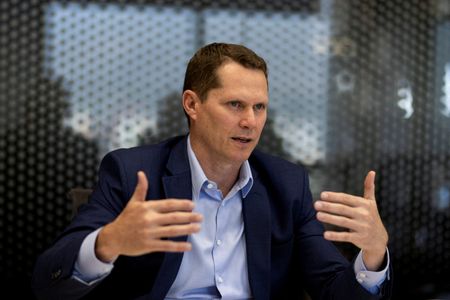

Mining industry veteran Brandon Craig has assumed leadership of BHP, the globe’s biggest publicly traded mining operation, during a period marked by intensifying copper market competition, rising geopolitical tensions, and strained relationships with China that could impact the company’s iron ore dominance.
The 53-year-old South African native brings 25 years of company experience to the role, having recently emerged as a candidate for the position after being recognized as a promising executive within the industry.
Instead of pursuing major organizational restructuring or large-scale acquisitions immediately, Craig plans to leverage his operational knowledge to address global vulnerabilities within the company.
Within hours of the leadership announcement, Craig fielded media questions covering business expansion strategies, potential spin-offs of coal or iron ore divisions, and opportunities emerging from Western efforts to restructure global mineral supply chains.
Craig emphasized BHP’s commitment to organic growth while stating that any acquisition opportunities must present strong value propositions.
“What’s going to be really critical is to continue to focus on building really strong relationships with both governments and customers,” he said.
The new leadership team will begin international visits, starting with London travel scheduled for Wednesday, followed by meetings in China with key customers in the coming weeks.
Craig highlighted BHP’s extensive experience managing geopolitical risks across several decades.
The Australian citizen and father of two holds advanced degrees including a Master’s in Business Leadership and a Bachelor of Engineering (Mechanical) from South Africa’s University of Natal.
Colleagues describe Craig as having interests in fishing and heavy metal music, particularly Metallica, while characterizing him as low-key yet charismatic and engaging in his leadership approach.
His experience includes overseeing BHP’s Americas operations, which manage the company’s primary copper interests, as well as leading the Western Australia iron ore division, providing him with expertise across the company’s two most crucial business segments during challenging geopolitical times.
“What comes to mind for me is the time I probably spent in the iron ore business, where you can forge really close relationships across the board with customers and governments that gives you pretty unique insights into how they’re thinking about the world,” he said. “That helps the company, like BHP to navigate very effectively.”
The leadership transition provides an opportunity for BHP to rebuild relationships with major customer CMRG, following an extended dispute over annual supply agreements that resulted in China prohibiting its mills from purchasing certain BHP products.
Chairman Ross McEwan explained that Craig was chosen following comprehensive global and internal candidate searches after former CEO Mike Henry announced his departure.
“It was pretty exciting, I have to say. I wasn’t quite expecting it,” he said, referring to McEwan’s phone call offering the position.
As recently as November, Henry had expressed enthusiasm for continuing in the role, leading to speculation about his tenure before he pursued an unsuccessful bid to acquire Anglo American.
“BHP’s CEO transition appears more evolutionary than transformational,” RBC Capital Markets analyst Kaan Peker said in a note.
Craig’s leadership begins as BHP increasingly looks toward the Americas for expansion opportunities, citing more competitive investment incentives in Argentina, Chile, the United States, and Canada compared to Australia.
“We really want to see Australia be a successful nation…But I think it is very clear that when you engage across countries in different parts of the world, that a lot of these countries are putting in place very, very attractive incentive regimes to attract investment, and ultimately, Australia has to compete,” he said.
While some companies step back from environmental, social, and governance initiatives including net-zero commitments, Craig maintained his dedication to these goals while applying financial discipline.
“We will continue to pursue those but we want to pursue them with a level of economic discipline,” he said.