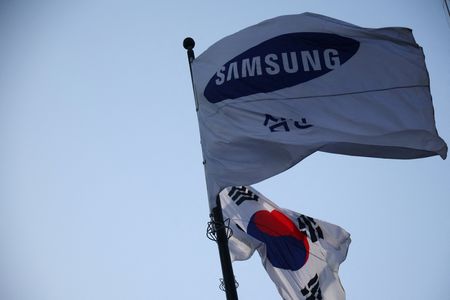

Workers at Samsung Electronics in South Korea have given overwhelming approval for a potential work stoppage, escalating tensions in an ongoing labor dispute centered on compensation and bonuses.
On Wednesday, employees cast their ballots with 93% of the 66,019 participating workers backing the strike authorization, according to union officials.
Should contract talks remain at an impasse, union members are prepared to walk off the job for 18 consecutive days beginning May 21, representatives announced.
Union leadership characterized the decisive vote as a “strong warning” that company executives must address worker demands.
Samsung Electronics has not yet issued a response to requests for comment regarding the vote.
Any work stoppage at the technology giant could create additional strain on worldwide semiconductor availability, particularly as artificial intelligence data centers drive up demand and limit chip supplies for automotive, computer, and mobile device manufacturers.
The ballot process began last week following the breakdown of salary discussions that had been ongoing since late 2022.
The labor organization represents approximately 90,000 employees, comprising more than 70% of Samsung’s 125,000-person workforce in South Korea.
Worker dissatisfaction intensified after competitor SK Hynix agreed to compensation changes requested by its union in September, leading to increased membership in Samsung’s labor organization as employees grew frustrated with pay disparities between the companies.
Samsung’s union wants the company to mirror SK Hynix’s approach by eliminating bonus limitations and connecting bonus payments directly to operational profits.
Company officials have argued that removing the bonus ceiling would create difficulties in allocating funds for future investments and shareholder distributions in an industry known for high capital requirements and cyclical performance.
Samsung’s memory chip manufacturing operations are concentrated in South Korea, where the company produces all of its DRAM semiconductors and two-thirds of its NAND flash memory chips, based on Counterpoint Research data.
Reaching a compromise will be challenging due to the contentious bonus cap issue, currently set at 50% of yearly wages, according to Heungkuk Securities analyst Sohn In-joon.
Removing the limitation could create wage disparities between the profitable semiconductor division and other business units like mobile phones and televisions, which face earnings pressure from competitive markets and rising component costs, Sohn explained.