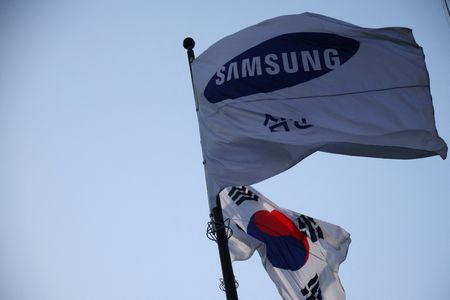

Workers at Samsung Electronics in South Korea have delivered a resounding message to company management, with an overwhelming majority voting to authorize strike action in an escalating labor dispute centered on compensation issues.
The vote results were decisive, with 93% of the 66,019 employees who participated supporting the strike authorization, according to union representatives.
Should negotiations remain at an impasse, workers are prepared to launch an 18-day work stoppage beginning May 21, following a planned demonstration on April 23, union officials announced.
Union leadership characterized the decisive vote outcome as a “strong warning” that company executives must address worker demands.
Samsung management responded with a statement saying: “We will make our best efforts to conclude the 2026 wage negotiations amicably.”
Any work stoppage at the semiconductor giant could exacerbate existing constraints in the worldwide chip supply chain, particularly as artificial intelligence data centers drive unprecedented demand that has already strained availability for automotive, computer, and smartphone manufacturers.
The voting process began last week following the breakdown of salary discussions that had been ongoing since late last year.
The labor organization represents approximately 90,000 employees, comprising more than 70% of Samsung’s 125,000-person workforce in South Korea.
Employee dissatisfaction has intensified over compensation disparities with major competitors, leading to increased union enrollment after rival chipmaker SK Hynix agreed to restructure its compensation system in September.
Samsung’s union is pressing the company to mirror SK Hynix’s approach by eliminating bonus limitations and tying bonus distributions directly to operational profits.
Company officials argue that removing the bonus ceiling would hamper their ability to finance future investments and provide shareholder returns in an industry characterized by heavy capital requirements and cyclical performance.
Samsung’s South Korean facilities are crucial to its memory chip operations, manufacturing all of its DRAM products and producing two-thirds of its NAND chips domestically, according to Counterpoint Research data.
Heungkuk Securities analyst Sohn In-joon suggests the union faces significant challenges in reaching an agreement due to the contentious issue of eliminating the bonus cap, which currently stands at 50% of yearly salary.
Removing the limitation could create compensation disparities between the profitable chip division and other business segments like mobile phones and televisions, which face earnings pressure from competitive markets and rising semiconductor costs, Sohn explained.