
A Trump supporter who runs a manufacturing company in northeast Arkansas is discovering that the president’s trade policies are damaging his business rather than helping it.
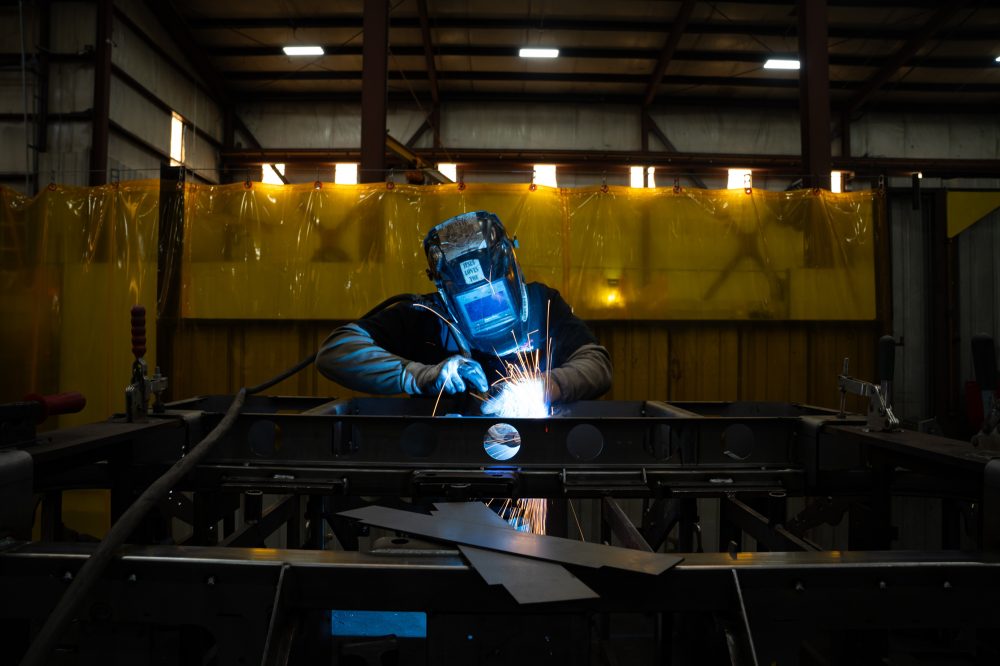
Jay Allen, who backed Trump expecting tax cuts and reduced regulations for his business, now faces significant challenges from the administration’s tariff strategy. His company, Allen Engineering Corp., produces industrial concrete equipment, but import taxes on foreign-made engines, steel, gearboxes and clutches have dramatically increased his production costs for power trowels that can cost up to $100,000.
Allen’s situation reflects mounting evidence that Trump’s tariffs, designed to strengthen American manufacturing, are actually damaging many domestic factories. The challenges may intensify as officials work to develop replacement tariffs after the Supreme Court struck down emergency import taxes in February.
The Arkansas business owner reported operating at a loss in 2025 due to tariff impacts. His workforce has shrunk from 205 employees to 140, and he’s been forced to increase prices by 8% to 10% this year, potentially reducing sales.
“What’s really sad is the unintended consequences of his tariffs are hurting manufacturing in our country,” Allen stated. “Unfortunately, the working-class people are getting squeezed.”
Trump’s tariff strategy was built on the premise that import taxes would encourage domestic factory construction and generate sufficient revenue to eliminate federal budget shortfalls. However, these outcomes haven’t emerged.
Manufacturing employment continues declining, with 98,000 factory jobs disappearing during Trump’s initial 12 months back in office. Companies paying tariff costs are pursuing legal action against the administration seeking over $130 billion in refunds. Federal deficit projections show increases over the coming decade.
White House officials argue that construction investment remains strong, factory construction hiring is increasing, new investments are occurring, and manufacturing labor productivity is rising — potentially setting the stage for an industrial comeback.
“It takes time to get production online, and therefore it will be some more time before we fully materialize the benefits of the president’s policies,” Pierre Yared, acting chairman of the White House Council of Economic Advisers, stated in an email.
Several positive construction indicators the White House highlights appear linked to programs initiated under Joe Biden.
Manufacturing facility construction spending started accelerating in 2022 as companies anticipated government support through Biden’s CHIPS and Science Act, which provided substantial subsidies for semiconductor manufacturing plants. This legislation drove a historic increase in factory construction spending, according to Skanda Amarnath, executive director of economic policy organization Employ America.
While factory construction spending has decreased during Trump’s current term, levels remain relatively elevated due to ongoing Biden-era projects in Arizona, Texas and Idaho, Amarnath noted.
Amarnath has analyzed regional Federal Reserve bank business interviews, which indicate some companies may expand using Trump’s tax incentives for equipment and facility investments.
However, while pharmaceutical companies might be growing, the feedback shows no broad manufacturing increase attributable to Trump’s tariffs.
“You don’t get the sense that there is this new manufacturing renaissance under way,” Amarnath observed.
Trump has implemented over 50 tariff-related actions through orders, proclamations and statements — not including numerous tariff threats made via social media or press interactions that haven’t been formally enacted.
The constant stream of announcements, policy reversals, exemptions and legal disputes — combined with Trump’s decision to circumvent Congress on tariff implementation — has created planning difficulties for smaller manufacturing companies.
Allen Engineering, for instance, imports 75-horsepower diesel engines from Germany. Domestic production would require a $20 million investment — a substantial gamble given uncertain tariff policies.
“Are engine-makers going to spend that kind of money to move production from Germany to the U.S. when they don’t know what the landscape is going to be in three years?” Allen questioned. “I don’t know who is going to be in the White House, and what the stance is going to be on these tariffs.”
University of Toronto economist Joseph Steinberg said research indicates that under optimal conditions, “it would take a decade for manufacturing employment to rise above where it was before tariffs were enacted.”
Steinberg noted “the current situation is nothing like the ‘best case,’” because uncertain U.S. trade policy makes companies hesitant to expand operations.
Census Bureau data shows approximately 98% of U.S. manufacturing facilities employ fewer than 200 workers and lack the brand recognition or lobbying influence that major corporations like Apple, General Motors and Ford use to reduce tariff damage.
The Association of Equipment Manufacturers reported in February that America’s global manufacturing share significantly trails China’s. The organization has advocated for tax credits to counter tariff expenses and specifically requested tariff relief on raw materials, parts and components unavailable domestically at scale.
Steel tariffs have created particular difficulties. Trump implemented them last March and increased rates to 50% in June. The Supreme Court ruling didn’t affect these tariffs.
Trump has attributed the tariffs with restoring American steel mill profitability. However, they’ve damaged companies using steel, including South Carolina’s Calder Brothers, which manufactures asphalt paving equipment.
“The steel tariffs were the first thing that got my attention,” said company president Glen Calder. “My steel pricing jumped 25% two weeks before the tariffs went into effect for domestic steel. The market price just jumped. It has stayed elevated.”
Trump’s manufacturing expansion efforts were partly aimed at helping American companies compete against China — a nation he plans to visit this spring for discussions with leader Xi Jinping.
Instead of narrowing, the U.S. manufacturing trade deficit expanded last year under Trump. Meanwhile, China’s global trade surplus reached a record $1.2 trillion.
This pattern reveals fundamental problems with Trump’s tariff approach, according to Lori Wallach, director of the Rethink Trade program at American Economic Liberties Project. She noted his tendency to bypass Congress and failure to address World Trade Organization rule gaps in trade agreements he negotiated.
Rather than collaborating with partners to establish penalties for foreign manufacturers with abusive labor practices and unfair subsidies, Trump opted against building a unified coalition to counter China. American manufacturers face disadvantages, Wallach argued, because no coalition of nations exists to impose penalties for currency manipulation, subsidies and tariff evasion schemes.
“The general revulsion of this administration to international cooperation means they’re trying to do it alone,” Wallach concluded.