
WARSAW, Poland (AP) — After a male bullfinch crashed into Marcin Jarzębski’s apartment window, he knew the injured bird required professional care. The following day, he delivered it to Warsaw’s innovative 24-hour emergency center designed specifically for wounded wild birds.
Jarzębski carefully transported the small, round bird—featuring distinctive black head markings, gray back, and red chest plumage—in a shoebox to become among the initial cases at the new wildlife drop-off facility located at Warsaw Zoo’s entrance.
“The bird stayed with us overnight, but unfortunately it probably has a broken wing so we brought it to the bird hospital,” Jarzebski said.
The round-the-clock emergency facility in Poland’s capital operates through a network of automated metal units—similar to package lockers—equipped with heating systems to maintain warmth during winter months. These units immediately notify the nearby bird hospital when occupied, prompting veterinarians to retrieve the animals for examination and care.
After completing required paperwork, Jarzębski secured both the shoebox containing the bullfinch and the documentation form inside one of the units, confident the bird would receive optimal treatment opportunities.
The container system, developed using concepts from bird hospital staff, secures the animals safely until medical professionals can collect them. This drop-off facility, which began operations in February, has enhanced the effectiveness of the zoo’s bird hospital that has functioned since 1998 and currently provides care for roughly 9,000 patients yearly.
Zoo director and ornithologist Andrzej Kruszewicz conceived the project, emphasizing humanity’s obligation to assist wildlife affected by habitat modifications, including species like the bullfinch.
“This bird is a child of the forest who, during migration, didn’t understand the window,” Kruszewicz said.
“Humans often cause problems: car accidents, crashes into windows, electrocutions, tangled strings on storks’ legs,” he said. “All this is humans’ fault and they should feel responsible to give these birds a second chance.”
Regular patients arriving at Warsaw Zoo encompass familiar songbird varieties including tits, sparrows, thrushes and starlings, along with pigeons. Nevertheless, in an environmentally rich city like Warsaw, featuring the Vistula River flowing through its center, more uncommon species occasionally arrive for treatment.
Hospital manager Andżelika Gackowska explains that elevated winter temperatures from climate change have influenced birds that traditionally migrated southward, such as cranes and herons, to remain in Poland instead.
“Birds who stopped migrating because of warm winters were caught off guard by such a harsh winter as this year,” Gackowska said. Certain birds experienced anemia throughout the cold season due to challenging conditions and inadequate food sources, increasing their susceptibility to illness.
Funding for the emergency facility partially came from Warsaw’s citizen budget program, which selects projects through popularity rankings in online community surveys.
Warsaw Zoo staff report increased public awareness regarding assistance for sick birds, though they caution against excessive intervention, advising residents not to collect young, healthy birds mistakenly perceived as abandoned.
“In spring, we always make an information campaign warning people not to ‘kidnap’ birds,” Gackowska said. “Birds take care of their small ones differently than humans. If we see a baby bird on the grass alone, it is likely just training how to fly independently.”
Within the bird hospital, veterinary assistants remain continuously active, providing food and medications to diverse bird species housed in separate rooms based on type and severity of condition.
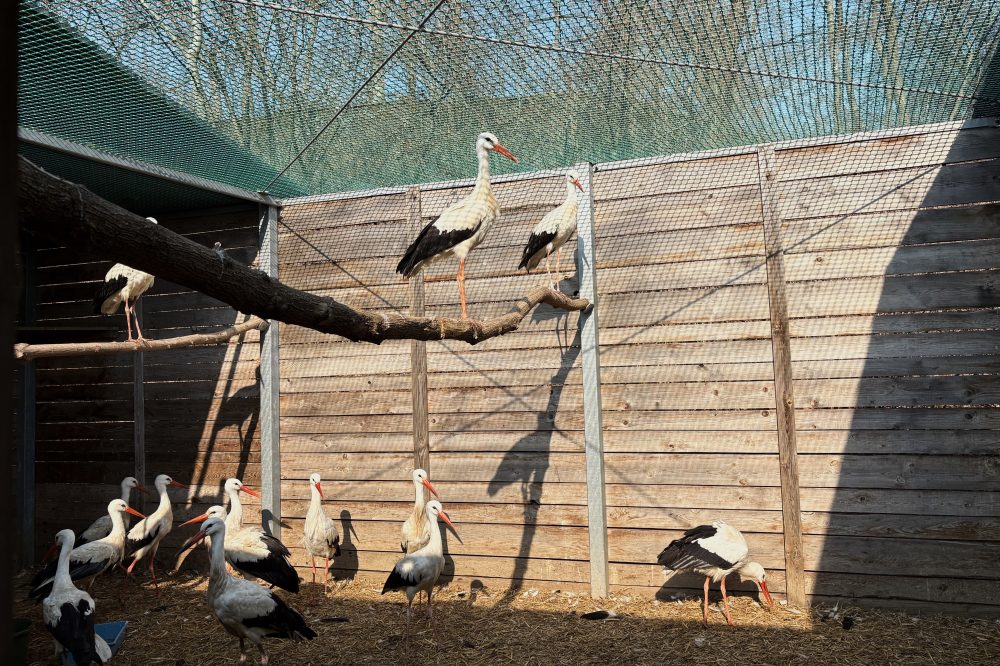
After birds regain strength, they move to spacious outdoor enclosures, allowing readjustment to natural conditions before release.
Returning recovered birds to their native environment represents the primary objective, according to veterinarian Ewelina Chudziak.
“We are fighting for freedom,” she said.