
HONG KONG, March 18 – Chinese authorities are implementing stricter oversight of companies incorporated outside mainland China that plan to go public in Hong Kong, potentially creating substantial disruptions for the territory’s robust stock offering pipeline, according to banking and legal professionals.
Industry sources indicate that regulators have instructed certain “red-chip” enterprises to relocate their legal headquarters back to China prior to launching public offerings. These businesses typically register in offshore locations, primarily tax-friendly jurisdictions, while maintaining their actual operations and assets within China through ownership arrangements.
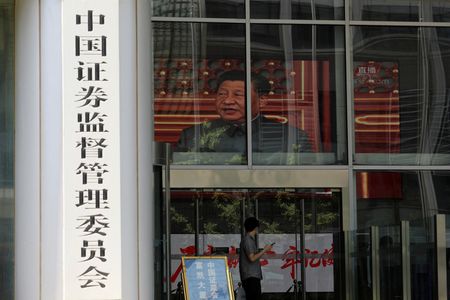
The China Securities Regulatory Commission has acknowledged providing recent guidance to some red-chip enterprises regarding dismantling their current organizational frameworks.
Financial experts and bankers suggest this requirement could postpone some public offerings by a minimum of six months as affected companies work to restructure their legal status. Some enterprises might need to completely abandon their public offering plans due to the potentially prohibitive costs of reorganizing their corporate framework.
INTERNATIONAL INVESTMENT APPEAL MAY DECLINE
The changes could also diminish foreign appetite for Chinese enterprises.
“For foreign investors, the dismantling of red-chip structures could reduce flexibility regarding equity stakes and future divestment,” said Kenny How, a councillor at the Hong Kong Securities & Futures Professional Association.
He explained this concern arises mainly from China’s stringent foreign exchange restrictions on capital leaving mainland entities, combined with mandatory 12-month holding periods that investors must accept following public listings.
Following Hong Kong’s exceptional stock offering performance in 2025, where capital raised jumped 231% to reach $37 billion, exchange records show over 530 companies have submitted listing applications, with Chinese firms comprising the majority.
The exact number of red-chip companies among applicants remains unclear. However, data from Chinese legal firm Hankun reveals that last year, approximately 20% of the 131 Hong Kong listings China authorized involved offshore holding arrangements, with most utilizing red-chip frameworks.
Companies have historically favored listing in markets like Hong Kong and the United States to access broader international investment pools while avoiding complex domestic regulatory requirements.
This strategy became less attractive after Beijing introduced regulations in March 2023 requiring red-chip firms and similar offshore holding companies to obtain mainland approval for public listings.
RED-CHIP STRUCTURES FACE ONGOING CRITICISM
Three sources familiar with the situation, who requested anonymity due to the matter’s sensitivity, revealed that Beijing’s recent actions respond to the National Development and Reform Commission’s concerns about inadequate supervision of how these companies utilize their public offering proceeds. The NDRC, China’s primary planning authority, did not immediately provide comment to Reuters.
“Controversy around red-chip structures has never really gone away. They’ve always been accused of dodging mainland regulations and facilitating capital flight,” said Tian Meng, a lawyer at Dacheng Law Offices.
Tian noted that with data protection and foreign investment oversight becoming priority concerns, regulators are seeking more transparent corporate arrangements.
The Hong Kong market’s recent growth has offered private equity and venture capital firms valuable exit opportunities – a pathway that Beijing’s increased scrutiny might jeopardize, some investors caution. Dollar-based investment funds typically back Chinese companies established offshore.
Zhou Zhimin, a biotechnology asset management expert, warned that abrupt regulatory changes with limited transparency could undermine dollar-based investment confidence.
However, some market observers expect the long-term effects on Hong Kong listings to remain minimal.
“I believe this mainland measure is primarily aimed at improving the quality control of listed companies,” said Kenny Ng, a securities strategist at China Everbright Securities International.
“In the long run, it should have a positive effect on the stock market development and on protecting investor interests.”