BAMAKO, Mali (AP) — Muslims worldwide are preparing for Eid al-Adha, the feast of sacrifice, but celebrations in Mali’s capital carry a somber tone this year. An economic blockade imposed by armed militants connected to al-Qaida has caused sheep costs to skyrocket, making the holiday’s traditional practice of slaughtering an animal and distributing meat to those in need financially impossible for many households.
The supply crisis and inflated costs stem from a blockade targeting Bamako that was declared this month by members of Jama’at Nusrat al-Islam wal-Muslimin, a group with al-Qaida ties. These fighters routinely assault truck convoys and vehicles bringing supplies to the capital, frequently burning them completely.
Mali, which has no coastline, relies extensively on fuel and merchandise transported by truck from neighboring coastal countries including Senegal and Ivory Coast. According to analysts, the militants’ economic siege aims to cripple the nation’s financial stability and weaken the military government’s authority.
The siege isn’t complete, since the armed factions avoid maintaining roadblocks for extended periods due to concerns about Malian military retaliation, allowing some supplies to continue reaching Bamako and preventing complete food scarcity for the time being.
However, the blockade has increased costs for certain products like meat and created fuel shortages, compelling citizens to wait in long lines at the limited gas stations still operating.
Since September 2025, the group had already enforced a stifling road blockade on oil imports.
Mountaga Touré, 38, a teacher, explained he searched multiple livestock markets before abandoning his plan to purchase a sheep for the celebration, noting that sheep costs have nearly doubled since the blockade began.
“The small sheep that used to cost $177 are now $266 or more,” Touré said.
In certain areas of Bamako, citizens have replaced the customary sheep with cattle, combining their resources to buy one animal so they can obtain meat for this significant Muslim observance in West Africa.
The blockade comes after extensive, synchronized attacks by separatist and extremist forces throughout Mali last month, representing the most significant assault in the nation in more than ten years.
Mali has endured insurgencies waged by extremists associated with al-Qaida and the Islamic State group, along with a separatist uprising in the northern region, for more than a decade.
After a 2020 military takeover, the governing junta shifted away from Western partners toward Russia for assistance in fighting Islamic extremists. However, security conditions have deteriorated recently, analysts note, with a unprecedented number of militant attacks. Military forces and Russian mercenaries have also faced accusations of killing civilians they believe are working with militants.
The Malian military and its Russian Africa Corps mercenaries are working around the blockade by providing protection for truck convoys transporting goods and fuel to supply Bamako markets. The armed forces also frequently report striking positions controlled by armed groups.
However, residents report that the protective escorts and military strikes haven’t been sufficient to properly supply the capital.
“Usually, I bring up to 200 sheep to Bamako to sell during Tabaski,” said Amadou Cissé, 45, a livestock trader specializing in Eid sheep, using the West African word for the holiday. “But this year I barely brought 50 because there is not enough space in army-escorted trucks.”
Cissé explained that the sheep he requested remain in Diema, a community approximately 345 km (215 miles) west of Bamako, where many animals destined for the capital are sourced.
“I was told more escorted convoys would be organized, but so far none have left Diema, so I doubt the sheep will arrive before the holiday,” he said.
Drissa Traoré, who has sold sheep in Bamako for more than ten years, reported that available inventory has decreased substantially in recent times. “This year, we have barely half the number of sheep we usually have during Tabaski,” he said.
The dangerous conditions have also impacted travel arrangements for many people.
Sidi Diarra, who works at a prominent financial company in Bamako, mentioned he typically observes the holiday with his family in Segou, approximately 240 km (150 miles) from the capital.
“This year, I am afraid to go because of attacks by extremist groups. It is safer to stay in Bamako,” he said.
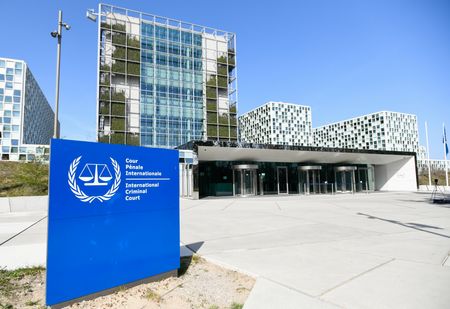
BUDAPEST, Hungary — Hungarian lawmakers voted Wednesday to maintain their country’s membership in the International Criminal Court, overturning the prior administration’s plan to exit the global war crimes tribunal under Viktor Orbán.
Orbán’s administration had announced Hungary’s intention to leave the ICC last year, following a state visit by Israeli Prime Minister Benjamin Netanyahu. The visit proceeded despite an outstanding ICC arrest warrant against Netanyahu for alleged war crimes related to Israel’s military operations in Gaza.
International organizations and the ICC had condemned Orbán’s administration for not arresting Netanyahu during his visit. Orbán responded by labeling the ICC a “political court.”
Hungary’s exit from the court was scheduled to become official on June 2.
Prime Minister Péter Magyar introduced the reversal legislation on Monday, arguing that maintaining international peace and defending human rights requires accountability for serious international crimes through “an international judicial forum.”
The legislation further states: “To this end, it is necessary to maintain Hungary’s participation in the Statute of the International Criminal Court.”
The measure passed primarily along party lines, with Magyar’s governing Tisza party providing 133 supporting votes, while 37 lawmakers opposed and five abstained.
The Assembly of States Parties, which oversees the ICC, praised Hungary’s decision to remain. The organization issued a statement Monday ahead of the parliamentary vote, saying it “congratulates the government of Hungary for this important decision.”
The ICC had previously determined that Hungary violated its legal duty to apprehend Netanyahu. In July, judicial panel members stated that the “failure to arrest suspects severely undermines the court’s ability to carry out its mandate.”
Hungary helped establish the ICC, with Orbán personally signing the Rome Statute that created the tribunal in 1999.
Had Hungary proceeded with withdrawal, it would have joined only the Philippines and Burundi as countries that left the ICC. Hungary also would have become the sole European Union member nation not participating in the court.
KATHMANDU, Nepal (AP) — Mountaineering experts, climbers, and government officials convened in Nepal’s capital city Wednesday to address mounting concerns about Mount Everest expeditions amid rising temperatures and unprecedented crowding that’s creating serious environmental and safety issues.
The gathering, called the “Everest Summiteers Summit,” took place during what experts believe was the busiest climbing period ever recorded on the planet’s tallest mountain. In just several days this month, hundreds of adventurers along with their Sherpa guides made their way to the 8,849-meter (29,032-foot) summit.
This climbing season saw Nepal authorize a unprecedented 494 permits for international climbers, with summit achievements estimated to exceed 900 people. This figure would mark the highest total ever recorded during spring climbing months, though official tallies won’t be released until later.
A sherpa guide who holds the record for most successful climbs — 32 ascents — expressed concerns about the overwhelming numbers creating dangerous conditions.
“Nepal should only allow no more than 250 climbers that are issued permit to climb from the Nepal side,” Kami Rita Sherpa said. “It will be good if the government was to limit the number.”
Recent photographs from the mountain reveal lengthy queues of climbers experiencing bottlenecks, secured to safety ropes while awaiting their turn to approach the peak.
During climbing season, which concludes this month, approximately 3,000 individuals including climbers, guides, and support staff establish temporary residence on Mount Everest. Removing all waste materials when camps are dismantled continues to pose significant difficulties.
Government regulations mandate that climbers must pack out their trash, yet substantial amounts remain abandoned on the mountain. Expedition members emphasize that environmental preservation must stay a top concern.
“We should take the rubbish from the mountain and we should protect our Himalayas,” said He Jing, a renowned Chinese climber.
Present regulations allow anyone to obtain climbing authorization by paying the government’s $15,000 permit fee.
However, Nepalese authorities are developing updated rules that would require climbers to demonstrate previous mountaineering experience.
Nathaniel Douglas, a climber from Seattle, told The Associated Press during the conference that he observes inexperienced individuals attempting Everest after viewing social media content, despite having no mountain climbing background.
“So they really don’t understand what mountaineering is, like what it actually takes to summit Mount Everest and get back down safely,” he said.
British mountaineer Adriana Brownlee, the youngest woman to climb all 14 highest peaks, said the weather on the mountains was getting warmer, increasing the risks for climbers.
“Every year the (Khumbu) Icefall seems more unstable because of global warming,” she said. adding that water underneath is melting faster, causing the seracs — blocks of ice — to fall much easier because of the movement underneath.
Last month, climbers were forced to postpone their ascents when a massive serac posed a dangerous threat to the climbing route directly above base camp.
Rescue teams in central Laos have successfully located five villagers who became trapped in a flooded cave more than a week ago, though search efforts continue for two others who remain unaccounted for, officials announced Wednesday.
The group of seven villagers had entered the cave located in Xaisomboun province on May 19 when sudden heavy rainfall caused flash flooding that sealed off their escape route, according to rescue teams from Laos and Thailand participating in the operation.
Bounkham Luanglath, representing the Lao organization Rescue Volunteer for People, which has been collaborating with local officials on the rescue mission, confirmed to The Associated Press that five individuals were discovered safe and alive, while efforts to locate the remaining two will persist.
“I’m still shaking. Our team made it happen,” he stated in a voice message.
Footage released by a Thai rescue organization appeared to capture the moment when divers surfaced and located the stranded villagers. The video shows the individuals, each equipped with headlamps, positioned on a rock formation surrounded by flood waters.
Additional footage depicted rescue personnel both inside and outside the cave celebrating with cheers, jumping, and embracing one another following the successful discovery.
International rescue specialists from Thailand joined the operation over the weekend, including divers who participated in the complex 2018 rescue operation in northern Thailand that successfully freed 12 schoolchildren and their soccer coach after they spent more than two weeks trapped underground.
The cave sits in a challenging, isolated location within Xaisomboun province’s Longcheng district, positioned approximately 120 kilometers (75 miles) north of Vientiane, the capital city. Rescue personnel at the location have documented through social media the difficult mountainous conditions and persistent rainfall that have complicated their efforts.
Online footage shared by Thai rescue teams revealed that accessing the cave entrance demands a challenging uphill trek on foot covering roughly 4 kilometers (2.5 miles). The cave opening itself presents additional obstacles with its steep, rocky terrain and narrow width that permits only one person to pass through at a time.
While no official explanation has been provided regarding the villagers’ purpose for entering the cave, Bounkham indicated that local residents commonly visited the location in search of gold, despite repeated safety warnings from authorities advising against cave entry due to dangerous conditions.
Immigration attorney Flavia Santos Lloyd found herself fielding call after call from anxious clients following the Trump administration’s announcement requiring individuals seeking permanent residency to submit applications from their native countries rather than from within the United States.
Lloyd struggled to provide clear guidance to her clients, recognizing that the perplexing new directive would create delays in the application process.
“It has a chilling effect because we have some cases that we were going to proceed and I can tell already, we should wait and see what’s going on,” she said.
On Friday, U.S. Citizenship and Immigration Services revealed that foreign nationals currently in America who desire permanent residency must depart and submit their applications from their native countries, with some undetailed exceptions.
This declaration, which could impact hundreds of thousands of permanent residency applicants annually, represents the most recent immigration directive from the Republican administration that has bewildered attorneys, advocates and immigrants alike. The move also signals a shift by the administration toward restricting legal immigration pathways, following a previous focus on individuals residing in the country without authorization.
“This is simply an attempt to try to limit and scare people away from the legal immigration process,” immigration attorney Charles Kuck said, adding that he expected legal action against the change. “This is a scare tactic.”
With concerned immigrants and their employers overwhelming immigration law firms with inquiries, the actual impact remains uncertain, along with potential exceptions and how the directive will be implemented practically.
Certain permanent residency applicants were already encountering inquiries about their eligibility to apply domestically.
For over fifty years, foreign nationals with lawful status have been permitted to apply for and obtain permanent residence while remaining in America — including spouses of American citizens, work and student visa holders, and refugees and asylum seekers, among others.
This longstanding practice appeared to shift abruptly on Friday when USCIS posted the change on its website.
“From now on, an alien who is in the U.S. temporarily and wants a Green Card must return to their home country to apply, except in extraordinary circumstances,” the agency said. When questioned by The Associated Press, USCIS indicated that only individuals providing an “economic benefit” or “national interest” would likely qualify to apply domestically.
The agency explained that nonimmigrants, including students or temporary workers, maintain temporary status in America and should depart when their authorized period concludes.
USCIS additionally released a comprehensive policy memorandum serving as guidance for staff members who adjudicate these cases. Immigration specialists attempting to interpret the announcement noted the memo contained more subtle language, creating uncertainty about the actual scope of the modification.
Boundless Immigration, an immigration law firm, published a blog post presenting their understanding of the directive, stating that officers were being directed to “apply existing discretionary standards more rigorously” but concluded that the policy doesn’t entirely halt the status adjustment process for “eligible applicants” based on their visa category.
The firm referenced earlier policy memorandums regarding citizenship acquisition that had not resulted in stricter enforcement in practice.
Shev Dalal-Dheini, senior director of government relations at the American Immigration Lawyers Association, suggested the guidance might target individuals who exceeded their visa periods, such as parents of American citizens who remained after visa expiration, company employees who transferred to America, or individuals holding visas designated for clergy and religious workers.
“It seems like maybe who they’re targeting is potentially those whose period of stay lapsed while they were here,” she said.
Kevin Miner, a partner with immigration law firm Fragomen, anticipated that individuals holding employment-based visas, such as H-1Bs, would receive exemptions. These dual-intent visas permit nonimmigrant visa holders in America to pursue permanent residency. The memo specifically identified dual-intent visas as potential exception areas.
“Those probably are cases that will continue to precede business as usual and that we won’t see a significant impact,” said Miner, who noted Friday’s announcement caught people off guard.
Matthew Soerens, the U.S. director of church mobilization for World Relief, an organization assisting refugee resettlement in America, said language in the memo addressing cases requiring domestic status adjustment provides the organization “hope” and “expectation” that the guidance excludes refugees.
Refugees are individuals fleeing their homeland who satisfy specific criteria for U.S. admission following extensive screening. They must complete permanent residency processing one year after arrival and cannot return home due to safety risks, Soerens explained.
The administration has dramatically reduced refugee admissions this year and restricted them to white South Africans.
Individuals who entered through humanitarian parole, which permits presidents to admit people for humanitarian purposes and which President Joe Biden’s Democratic administration significantly expanded, could also face consequences, Soerens noted.
Many such individuals might already have family in America or married American citizens — both situations potentially providing permanent residency pathways that could now become complicated.
These complexities make providing general legal counsel challenging, Dalal-Dheini said.
“It’s going to be a very case by case specific thing,” she said.
The American Immigration Lawyers Association reported that several individuals in permanent residency interviews under the new guidance encountered previously unasked questions on Tuesday.
One applicant seeking permanent residency based on marriage to an American citizen was questioned about why they applied to adjust status domestically instead of returning home and applying at the embassy there. They were asked whether any factors would prevent them from applying in their home country and if they maintained family there.
Another individual was instructed to submit a form demonstrating why they should be permitted to apply domestically and was told evidence should prove they wouldn’t become a financial burden or “public charge” on America, potentially including their 2025 tax return, an employer letter stating their salary, and bank statements.
Lloyd, the immigration attorney, said she has contacted her corporate and individual clients informing them she is monitoring the situation and will contact them once she obtains additional guidance and practical applications.
She believes the policy will discourage some companies from pursuing permanent residency for their clients.
“I don’t want everybody to panic,” she said. “My advice to them is wait and see.”
Opposition figures in Argentina are moving to form a unified front against President Javier Milei as his public support continues to decline ahead of the 2027 presidential contest.
Buenos Aires Governor Axel Kicillof, who leads the Peronist Justicialista party in his province, confirmed to Reuters that discussions are ongoing to create a Peronist alliance. The coalition could potentially bring together politicians from various parties who oppose Milei’s economic policies, despite his success in curbing severe inflation through widespread budget cuts.
The Peronist movement suffered a significant setback in October’s midterm elections, where voters endorsed Milei’s ambitious economic reform agenda. That loss highlighted deep divisions within the opposition and raised serious questions about its ability to mount an effective challenge going forward.
While Milei has indicated plans to seek re-election, the opposition has yet to name its standard-bearer. Potential candidates include Kicillof and Sergio Massa, a former economy minister with Peronist ties who lost the 2023 presidential race to Milei.
Recent survey data suggests Milei could face a difficult path to a second term. A May survey by Opina Argentina found Milei’s La Libertad Avanza party essentially tied with Peronist forces. Separate polling by Trespuntozero indicates 42% of voters would definitely or possibly support Kicillof, while only 34% expressed similar sentiment for Milei.
The Peronist movement remains closely linked to opposition figure Cristina Kirchner, the former president currently under house arrest in Buenos Aires while serving a six-year corruption sentence. During her administration, extensive government spending was cited as a driver of rising inflation, a problem that continued under President Alberto Fernández’s tenure when she served as vice president.
Current approval numbers show Milei at 39% positive ratings according to Opina Argentina, a sharp drop from 53% over a year ago. His standing has been damaged by government corruption controversies and declining purchasing power that hasn’t kept pace with inflation. Kicillof holds a slight edge at 43% approval, while Massa registers 33%.
Building a unified Peronist coalition may prove challenging given tensions between factions that span from center-left to center-right ideologies. However, the shared goal of defeating Milei could “act as an incentive for all actors to set aside some of their interests and come together in a coalition,” according to Facundo Nejamkis of Opina Argentina.
Campaign activities for the October 2027 presidential election are anticipated to begin in August, following the World Cup and local winter break period.
A German industrial manufacturer and an American satellite company have announced a partnership to create space technology and satellite systems for European defense, weather monitoring, and security purposes, according to a joint announcement made Wednesday.
The collaboration between Schaeffler and the U.S.-based satellite operator Spire Global involves a memorandum of understanding to develop these technologies specifically for European applications. Both companies stated their goal is to establish an independent European space hardware and mission operation by 2030.
Spire Global, which operates satellites to deliver data analysis and software services, maintains manufacturing capabilities that allow production of 300 to 400 satellites annually through its facilities located in both the United States and Europe.
The German company, which manufactures machinery and automotive components, has identified space and defense sectors as central elements in its strategic plan extending to 2035.
“As a motion technology company, Schaeffler is ideally positioned to enter the new space sector,” CEO Klaus Rosenfeld said in the statement.
According to both companies, this alliance is designed to speed up Schaeffler’s entrance into space industry markets while simultaneously expanding Spire’s operations and influence within Germany.
Patients who have been avoiding colorectal cancer screening due to concerns about colonoscopy or stool testing procedures now have a new alternative, according to updated recommendations released Wednesday by the American Cancer Society.
The medical organization has included Guardant Health’s Shield blood test among its approved screening methods for detecting colorectal cancer. The U.S. Food and Drug Administration gave its approval to Guardant’s Shield test in 2024, which works by identifying genetic material from tumors that circulates in the bloodstream.
According to the ACS, incorporating Guardant’s Shield blood test as a colorectal cancer detection method “reflects advances in disease detection and a critical shift in public health strategy to expand screening options and lower barriers to access,” as stated in their revised guidelines published in CA: A Cancer Journal for Clinicians.
“We need to increase our emphasis on colorectal cancer as a highly preventable disease as much as a treatable one,” Dr. Robert Smith, ACS vice president and senior author of the updated guideline, said in a statement.
The ACS emphasized that colonoscopy continues to be the preferred method for colorectal cancer screening, as it enables physicians to directly view the colon and rectum.
The revised guidelines also include home-based stool testing options, featuring an improved version of Exact Sciences’ Cologuard and Geneoscopy’s newly developed Colosense test. Both tests search for concealed blood and molecular indicators of cancer.
According to the ACS, stool-based tests show strong accuracy in identifying colorectal cancer and reasonable effectiveness in finding advanced precancerous growths.
While the blood test demonstrates excellent precision in identifying advanced cancers, it shows lower effectiveness than stool tests in finding precancerous growths and early-stage cancers. The ACS therefore suggests it only for people who refuse or fail to complete the recommended screening methods.
The organization has consistently emphasized that the best screening test is whichever one patients actually undergo.
Both stool and blood testing require more regular scheduling than colonoscopy, and any positive findings necessitate immediate colonoscopy follow-up to finalize the screening process, according to the ACS.
The guidelines maintain the existing recommendation that adults with average risk should begin colorectal screening at age 45 and continue until age 75 for individuals with more than 10 years of life expectancy.
Guardant reported that one-third of eligible Americans have not undergone colorectal cancer screening, and most fatalities from the disease occur among unscreened individuals.
By incorporating a blood testing option, “the new guidelines create another opportunity to reach patients who might otherwise go unscreened,” Guardant said.
The organization noted that neither stool nor blood tests are appropriate for individuals considered high-risk for the disease.
Interest rates for America’s most common home loan climbed to their highest point in nine months during the week ending May 22, according to new data released Wednesday by the Mortgage Bankers Association.
The 30-year fixed mortgage rate increased by 9 basis points to reach 6.65%, marking the steepest level since August 2025. That was before the Federal Reserve initiated a sequence of rate reductions aimed at preventing additional weakening in employment markets.
Employment conditions have steadied since then, with joblessness remaining at the same 4.3% level recorded last August.
However, price increases have accelerated, with consumer costs jumping 3.8% in April compared to the previous year, up from 2.9% in August. Growing numbers of Fed officials indicate they might need to consider rate increases, concerned that rising costs may not be limited to temporary energy price spikes but could prove more lasting.
Home loan applications fell 8.5% compared to the prior week, the MBA reported, with refinancing activity accounting for much of the decrease.
The recent mortgage rate increase occurred as Kevin Warsh assumed leadership of the Federal Reserve, replacing Jerome Powell, whom President Donald Trump had repeatedly criticized for maintaining elevated interest rates. Following Warsh’s swearing-in ceremony at the White House, Trump stated his expectation for rates to decline.
However, financial markets are currently factoring in the potential for a Fed rate increase before the year concludes.
Home loan rates maintain a loose connection to the Fed’s short-term policy rate, but they track the 10-year Treasury yield much more directly.
Government bond yields have decreased this week amid optimism about a potential agreement to reopen the Strait of Hormuz.
Grand Depart GB launched a nationwide recruitment drive Wednesday seeking 9,000 volunteers to assist with both the Tour de France and Tour de France Femmes when Britain hosts the races in 2027. The application window remains open until September 1st.
This marks a historic first, as Britain will become the initial country outside of France to host both the men’s and women’s Grand Departs during the same year. The men’s competition features three British stages scheduled for July 2-4, with routes running from Edinburgh to Carlisle, Keswick to Liverpool, and Welshpool to Cardiff.
Volunteer opportunities span all six British stages covering Scotland, England and Wales – three for men’s competition and three for women’s events. Applicants must be at least 16 years old, though no previous volunteer background is necessary.
Position responsibilities include event operations and enhancing spectator experiences for both competitions, with comprehensive training provided to all volunteers. Additionally, volunteers between 18 and 25 years old qualify for the Readiness to Work program, which offers career mentoring and employability skills development across various industries.
British Cycling has also requested government commitment of 30 million pounds ($40.31 million) in capital investment to build new cycling facilities and upgrade existing ones throughout Britain, specifically targeting underserved communities.
Drivers traveling on Route 9 should expect delays due to ongoing construction work that has shut down the right lane in both directions.
The lane restriction is affecting traffic on Bayside Drive and Main Street, specifically the stretch of Route 9 that runs between South Little Creek Road and Port Mahon Road.
Transportation officials say the right lane will remain closed until 3 PM today as crews complete their work in the area.
Motorists are advised to use caution when driving through the construction zone and allow extra time for their commute.
The administration offered few details regarding President Trump’s medical examination at Walter Reed on Tuesday, marking his third visit to the medical facility within a span of 13 months. The minimal disclosure from the White House has prompted critics to express concerns about transparency surrounding the president’s health status.
The head of the Ultimate Fighting Championship recently shared his thoughts on an ambitious project to construct a combat sports venue at the nation’s most famous residence.
During a conversation with NPR’s Steve Inskeep, Dana White, who serves as president and CEO of the Ultimate Fighting Championship, discussed his proposal to erect a fighting arena on the White House lawn.
White described the opportunity as an honor during the interview, where he outlined his vision for bringing mixed martial arts competition to the presidential residence grounds.
Hatred toward women is playing an increasingly significant role in violent attacks carried out by far-right extremist groups, according to security experts and researchers tracking domestic terrorism trends.
Despite this concerning pattern, the role of anti-women ideology in motivating extremist violence frequently goes unrecognized by law enforcement and the general public, analysts say.
The growing influence of misogynistic beliefs within radical movements represents a shift in how these groups identify their targets and justify their actions, researchers note.
Security specialists warn that failing to acknowledge the gender-based motivations behind certain attacks could hamper efforts to prevent future violence and protect potential victims.
Immigration and Customs Enforcement is making a substantial financial investment in iris recognition equipment, marking a significant expansion of the agency’s technological capabilities for identifying individuals.
The federal agency intends to distribute hundreds of these eye-scanning devices throughout the United States as part of its enhanced biometric identification system. This technological advancement allows officials to quickly verify the identities of individuals in immigration proceedings.
However, the expansion of this biometric technology has drawn criticism from privacy advocates who worry about the Department of Homeland Security’s growing collection of personal identification data. These experts raise questions about how this sensitive biometric information will be stored, protected, and potentially shared.
The iris scanning technology represents the latest addition to the federal government’s suite of identification tools, which already includes facial recognition software used during immigration hearings and other proceedings.
Prediction trading platforms are aggressively pursuing Wall Street’s biggest players as they seek to expand beyond their retail investor base, potentially reshaping how traditional finance operates despite ongoing challenges in achieving widespread adoption.
These betting markets have seen tremendous growth and popularity in the last year among individual traders, but now they’re focusing on the profitable segment of well-funded financial institutions and investment firms capable of executing massive trades.
“Hedge funds need a more nuanced and surgical way to express their views in other derivative markets that they can’t access in traditional financial venues,” said Asaf Meir, CEO of Solidus Labs, which is a trade surveillance partner for Kalshi. Meir added that a lot of hedge funds and institutional investors are looking closely at opportunities to execute trades on prediction markets.
According to Andy Ross, head of institutional business at Kalshi, the platform recently completed its first customized block trade and is actively pursuing even bigger institutions. The company has seen its annualized trading volumes more than triple in the last six months to reach $178 billion, while institutional investor trading volumes jumped 800% during the same period.
Ross explained that this growth has come mainly from increased participation by major asset managers, hedge funds, prime brokerages and other financial institutions. These high-value clients typically purchase contracts linked to scheduled monthly events, such as employment data releases.
Asset managers using platforms like Kalshi often manage their risk by taking opposing positions, frequently betting the other side of the same wager on the platform. According to Ross, some of these contracts can be worth millions of dollars.
“We’re seeing much more institutional interest in hedging the next few months,” said Ross.
However, Ross acknowledged that Kalshi remains in the beginning phases of attracting a broader institutional investor base and resolving liquidity issues on its platform.
“We’re in the foothills of this, but we’re climbing pretty fast here,” he said.
To attract and grow their institutional client base, prediction markets have begun establishing partnerships with prime brokers and other liquidity providers.
Clear Street, which serves as a broker for institutional investors and hedge funds, recently formed a partnership with Kalshi to provide customers access to event contracts. Proprietary trading firm Jump Trading has also been collaborating with institutional investors, including asset managers and hedge funds, to provide them access to these platforms, according to two sources familiar with the situation.
London-based futures and options broker Marex, which counts Jump as a client, recently began working with both Kalshi and competitor Polymarket to help develop infrastructure connecting investors to these exchanges, the sources indicated.
Polymarket did not respond to requests for comment for this story. On its website, it gives no comment on institutional growth on its platform.
Quantitative trading platforms and market-making firms are also seeking to capitalize on the expanding prediction markets business. A Reuters review found that AQR Capital Management, Susquehanna International Group and crypto exchange OKX are among several companies that have recently posted job listings for specialized prediction market traders on third-party websites. AQR declined to comment while Susquehanna and OKX did not respond to requests for comment.
“The ability to isolate a specific risk factor in real time with greater precision and without the noise of any other investment product is one of the primary selling points for prediction markets,” said Devin Ryan, head of financial technology research at Citizens JMP.
Multiple analysts and market specialists cautioned that prediction markets must resolve long-term liquidity issues on their platforms to attract major investment firms, since larger trades often overwhelm limited order books and cause sharper price movements.
“No hedge fund is going to go and route flow to a venue that has less than, at the very minimum, $10 million daily notional volume,” said Meir. “Institutional adoption means not a block trade every now and then. It means, for the type of flows I’m used to, it’s going to take a minute, but the market is working towards it, for sure.”
Edward Ridgely, co-founder and CEO of Stand, a platform that allows users to trade simultaneously on Kalshi and Polymarket, noted that some of the top markets on Polymarket have only about $30 million of total liquidity. As a result, if a large institutional investor invested several million dollars in a specific market, it would cause dramatic price swings in that market.
“What we’ve seen on our end are people like individual traders who don’t have quite the same bankroll or account size that I think normal institutions do,” Ridgely said. “There’s institutional interest, but there’s not institutional activity.”
Kalshi stated it is working to address client liquidity concerns by bringing more institutions onto its platform.
Some believe these efforts will ultimately succeed.
“They are increasingly being treated as a legitimate alternative asset class,” Toni Gemayel, head of prediction markets at Coinbase, told Reuters. “Institutions are using these markets to hedge against specific risks that traditional instruments might only capture indirectly.”
Motorists traveling on Route 14 westbound in the Milford area should expect altered traffic patterns due to ongoing construction work.
The lane shift affects the stretch of roadway between Canterbury Road (Route 15) and Church Hill Road on the Milford Harrington Highway. Construction crews have implemented the temporary traffic adjustment, which is expected to remain in place until 5PM today.
Drivers are advised to allow extra travel time and exercise caution when navigating through the work zone.
The most lasting memories that Clark and Dan Hunt carry of their late father, sports magnate Lamar Hunt, center not on the countless World Cup matches they witnessed together, but rather on the winding, peculiar journeys they embarked upon to reach those stadiums.
There were van trips across Europe alongside an eclectic group of journalists, including a young CBS announcer named Verne Lundquist. Adventures seeking the finest wienerschnitzel and gelato. Climbing over barriers to swim in Italian hotel pools that had closed hours earlier. And that infamous Mexican eatery that became their collective undoing.
“My dad, he could eat anything,” Dan Hunt remembered, recalling that evening during the 1986 World Cup. “I mean, he had a cast-iron stomach. He never got sick. And that about killed him. That was the food that took down the Hunt family.”
During extensive conversations with The Associated Press, the Hunt siblings — Clark, who chairs the NFL’s Kansas City Chiefs, and Dan, who leads Major League Soccer’s FC Dallas — looked back on the significant soccer heritage their departed father established.
America might very well be watching the World Cup unfold in another nation next month instead of serving as host, were it not for his contributions.
Lamar Hunt was instrumental in establishing professional soccer’s presence in America through his backing of the North American Soccer League. When that venture collapsed in the 1980s, an unwavering Hunt played a crucial role in creating MLS, which FIFA required as a condition for allowing the United States to stage the 1994 World Cup.
During that tournament, Lamar Hunt acted as co-chairman of the organizing committee for Dallas matches. Three decades later, Clark Hunt holds the same position for Kansas City games while Dan has assumed that responsibility in Dallas.
However, unlike America’s previous World Cup hosting duties, this time four group matches and two elimination contests will take place at Arrowhead Stadium, where the Chiefs play, and a venue Lamar Hunt often described as his most beloved location on Earth.
“It’s going to be special,” Clark Hunt expressed, “and I think it goes back to thinking about my dad a lot. That’s what I’m going to do during those games, just think about how excited he would be to see the World Cup in Arrowhead Stadium.”
Describing soccer as emerging in 1950s America would be generous. No meaningful professional competitions existed, and following a poor showing at the 1950 World Cup where they lost two of three matches, Americans wouldn’t qualify again for four decades.
Lamar Hunt’s passion for the sport began during a transatlantic journey.
His future spouse, Norma Hunt, was studying at University College Dublin as a Rotary scholar in the early 1960s, and the oil magnate H.L. Hunt’s son had traveled to see her. They attended a Shamrock Rovers contest, standing on a terrace during a chilly evening, and became captivated by the intense, passionate atmosphere of European football.
“I think,” Clark Hunt noted, “that may have been my dad’s first professional soccer game.”
That encounter left a lasting impression on Lamar Hunt, even after returning home and dedicating himself to American football, helping establish the American Football League — which eventually merged with the NFL — and the Dallas Texans, who became the Chiefs.
Several years afterward, Hunt traveled back to Europe for his inaugural World Cup experience. In 1966, he witnessed host nation England defeat West Germany in a memorable Wembley Stadium final for what remains their sole championship.
That same year, a collection of businessmen including Hunt and Jack Kent Cooke formed the United Soccer Association, which later combined with the National Professional Soccer League to establish the North American Soccer League. For almost twenty years, the NASL advanced American soccer, attracting legends like Pele, Franz Beckenbauer and Carlos Alberto to North America, and establishing foundations for future American talent.
“We know from his ventures into professional football that he was not afraid of a challenge,” Clark Hunt observed, “and he was always an optimist, too, and many of his ventures probably had long odds. But he had tremendous perseverence and tremendous work ethic, and he had a vision and a belief for what he was doing.”
The NASL expanded rapidly during the 1970s — perhaps too rapidly. Many new franchise owners lacked sufficient resources to absorb early losses while establishing their teams, leading to closures and several years of league contraction.
Following the 1984 season, with declining attendance and no television coverage, the league ceased operations.
“My dad was always great about not sharing his negative feelings, but I’m sure he had them,” Clark Hunt reflected. “I remember as a high school and college student being very upset about it, even though I didn’t have any real, you know, direct nexus to the team. But I just knew how disappointing it was for him, and sad that a sport I had come to love had really disappeared.”
However, professional soccer’s absence proved temporary.
Lamar Hunt possessed remarkable persistence, treating each setback as an educational experience. Therefore, when FIFA informed 1994 World Cup organizers that hosting required a premier domestic league, Hunt applied lessons from the NASL experience while helping create Major League Soccer.
“You knew that if Lamar Hunt was part of it,” explained Thom Meredith, his longtime associate, “it meant something. You had Robert Kraft and all these other guys, but when it came down to it, you had Lamar Hunt in the room.”
Hunt provided financial backing for the league and owned three founding franchises; the family retains FC Dallas ownership but sold clubs in Columbus and Kansas City. The league has since expanded to 30 teams across the United States and Canada, welcomed stars including David Beckham and Lionel Messi, and supported comprehensive youth soccer development nationwide.
“My dad would be so pleased to see where MLS is today,” Clark Hunt said, “and he would be so excited about where it’s going.”
While domestic soccer mattered to Hunt, the World Cup truly fascinated him, starting with that 1966 classic through the 2002 tournament in South Korea and Japan, which accelerated the sport’s Asian growth.
Most tournaments found Hunt loading his family into rental vehicles and traveling throughout host nations to attend as many matches as possible.
Clark Hunt, who later played college soccer at SMU, experienced his first World Cup in 1978. Rather than the games themselves, his clearest memory involves a plaza outside a Düsseldorf stadium featuring activities for children. One challenge involved kicking a ball through a wooden target, and Lamar Hunt enjoyed the attempt as much as his 9-year-old son.
Dan Hunt’s inaugural World Cup came in Mexico during 1986. The low point was that devastating meal that sickened the entire family, but the highlight was certainly the final, when Diego Maradona led Argentina past West Germany in Mexico City.
“We had seats at about the 40-yard line, you know? Great seats. And we were there with our tickets and people were stitting there, and they were unwilling to move. Security was unwilling to move them. So we had no seats,” Dan Hunt remembered. “So my dad, true to form, solved the problem by buying more tickets, and we were right behind the goal for the penalty-kick shootout.”
Both brothers had commitments at the 2002 tournament’s start, so Lamar Hunt — who passed away four years later at age 74 — ventured to Asia alone. Early in his trip, thieves stole his briefcase containing money, tickets and travel papers, forcing the billionaire businessman to navigate foreign ATM machines.
“He stuck is best card in and started to push buttons,” Dan Hunt recalled, “and he panicked and it shredded his card. So we’d send him cash. And then he was in South Korea, headed back to Japan, and they confiscated it all because he was over the legal limit.
“I just remember thinking, ‘My dad is totally going to get kidnapped.’”
When the United States received World Cup hosting rights alongside Mexico and Canada in June 2018, Kansas City organizers and Chiefs executives immediately began preparations. The city had been excluded from 1994 hosting after FIFA determined Arrowhead Stadium couldn’t accommodate the required field dimensions, and they refused to repeat that disappointment.
Over several years, costing nearly $20 million, lower bowl seating was removed from the NFL stadium and additional changes were implemented to prepare for its World Cup debut, now just days away. The opening match features Messi and defending champion Argentina facing Algeria on June 16.
Kansas City will stage six total matches, including a quarterfinal, with the metropolitan area serving as headquarters for Argentina and Algeria, plus traditional powers England and the Netherlands, a longtime Hunt family favorite.
Meanwhile, AT&T Stadium in Dallas, near Lamar Hunt’s former residence, will host five group-stage contests. The Cowboys’ venue will also stage four knockout round games, including a July 14 semifinal.
“I think this is one of the final pegs of fulfilling dad’s legacy,” Dan Hunt said. “He called Arrowhead Stadium his favorite place on earth, and it’s just so cool to have games there. And you know, Dallas was his hometown, and he loved it so much. So I think he would be just excited that we’re back here. I think he would be over the moon.”
Banking employees across Russia could soon find themselves on the front lines of air defense under legislation passed by the nation’s lower parliamentary chamber.
The proposed law would require financial institutions to fund and install electronic interference equipment at their locations, while designated workers would be trained to destroy approaching unmanned aircraft, according to the measure that received final approval on Tuesday.
State news agency Interfax reported the legislation was initially introduced last August before being broadened in scope. The proposal now awaits consideration by the upper house Federation Council and must receive Russian President Vladimir Putin’s signature to become law.
The nation faces mounting challenges defending its vast territory against an increasing number of strikes from advanced Ukrainian long-distance unmanned vehicles. Military experts and Western officials note that smaller aircraft are also hampering Russian forces along the 1,250-kilometer front and disrupting supply operations for the invading military.
Financial institutions have not emerged as primary targets for Ukrainian aircraft during the four years of conflict since Moscow’s invasion began.
The legislation provides limited specifics, creating numerous uncertainties about implementation. Installing equipment nationwide and providing staff training would demand extensive organizational resources.
The initiative would include Russia’s central bank and major institutions, including majority state-owned Sberbank. Given the widespread presence of banking facilities in communities throughout the country, incorporating them into air defense networks could significantly expand protective coverage.
The move could undermine Putin’s attempts to insulate Russian civilians from the conflict by directly involving ordinary citizens in warfare and increasing visibility of the invasion’s impact.
The Duma-approved legislation authorizes bank workers to disrupt or intercept aircraft control transmissions and destroy threatening unmanned aerial, underwater, and ground vehicles at their facilities without awaiting security service coordination.
“Jamming will be used to make it more difficult for (the drones) to target and attack the relevant targets,” Anatoly Aksakov, chairman of the State Duma Committee on Financial Markets, told Russian media outlet RBK. “Plus, we’ll also use means to shoot down these drones, thereby protecting the relevant targets.”
Individual organizations will decide which staff members receive authorization to implement these defensive measures.
BARCELONA, Spain (AP) — Law enforcement authorities conducted a search of Spain’s ruling Socialist Party headquarters on Wednesday as part of an ongoing investigation into alleged financial misconduct, according to the Civil Guard.
The operation at the Madrid office represents another setback for Prime Minister Pedro Sánchez’s political organization, which has faced numerous corruption allegations in recent months.
Civil Guard officials informed The Associated Press that officers were executing court orders to collect evidence related to a National Court investigation examining corruption allegations against former party officials and other suspects.
Authorities stated the operation is specifically focused on an investigation overseen by National Court judge Santiago Pedraz examining potential misconduct by Socialist party member Leire Díez.
The investigation into Díez began in 2025 after audio recordings surfaced in Spanish media suggesting her involvement in efforts to undermine a Civil Guard anti-corruption unit member. Additional reports connected her to alleged attempts to interfere with state prosecutors’ work. The judge’s investigation aims to determine whether she received party payments to allegedly conduct these activities.
The Socialist party maintained she was operating independently. Díez, who has departed the party, has rejected any wrongdoing.
A court statement released Wednesday indicated that judge Pedraz directed the Civil Guard to “confiscate diverse documentation and electronic archives in an investigation of a ring designed to destabilize judicial processes that were affecting the ruling party.”
The judge indicated that beyond Díez, he is examining the suspected involvement of former Socialist heavyweight Santos Cerdán — already under scrutiny in another corruption matter — along with a former Andalusia regional government member, a police officer, a business owner and two attorneys. The judge is investigating them for suspected bribery, providing false testimony, document forgery, influence peddling, and corruption.
Last week another court announced it was examining former Prime Minister José Luis Rodríguez Zapatero regarding a government airline bailout. He has rejected any misconduct allegations.
Sánchez’s wife and brother are under investigation for suspected influence peddling, which both have disputed.
Most significantly for the Socialists, Cerdán and a former minister under Sánchez are both facing investigation for allegedly participating in a kickback scheme that began during the COVID-19 pandemic, which they have contested.
Sánchez, who has served as prime minister since 2018, has characterized the cases involving his family as a “smear campaign.” However, the corruption investigation involving his former associates prompted him to request the nation’s “forgiveness” in 2025.
His minority administration relies on support from a junior coalition partner, which has maintained its backing despite the legal proceedings.
Sánchez, who has gained international attention for progressive positions that have drawn criticism from U.S. President Donald Trump, has not been directly connected to any of the scandals.
MANILA, Philippines — A new investigative commission was established Wednesday to examine the deadly drug enforcement campaign conducted under former Philippine President Rodrigo Duterte, with organizers seeking to compile witness testimonies and evidence for potential prosecutions.
The commission is being spearheaded by a Catholic bishop and includes a former judge from the international court system. Duterte concluded his turbulent six-year term in 2022 and was subsequently detained and transported to the Netherlands last year to face charges at the International Criminal Court in The Hague for alleged crimes against humanity related to the killings.
Sen. Ronald dela Rosa, a close supporter of Duterte who previously served as his top police official and initially implemented the violent enforcement efforts, faces ICC charges as an alleged accomplice in the numerous deaths that drew criticism from Western nations and human rights organizations.
Dela Rosa has disappeared from public view and is being pursued by Philippine law enforcement, which has committed to executing the ICC arrest warrant and delivering him to the international tribunal.
Both dela Rosa and the outspoken former president have rejected claims they approved unlawful executions, though Duterte frequently made public threats against suspected criminals during his presidency.
Thousands of police personnel who participated directly in the harsh enforcement operation that resulted in the deaths of numerous impoverished suspects have escaped thorough investigation, with very few facing criminal conviction, human rights organizations report.
“This is long overdue,” Cardinal Pablo Virgilio David stated during a press briefing. The independent “EJK Truth Commission” he helped establish will concentrate on assisting victims, their relatives and even remorseful law enforcement personnel in achieving resolution, David explained.
“This is an opportunity for a catharsis … so we can recover our dignity as a country,” David commented. “Ultimately, what we aspire for is healing not only for the victims but also our institutions.”
Raul Pangalangan, an esteemed Philippine attorney who previously served as an ICC judge for several years, explained that the commission he will lead “was created to ensure that the stories of victims, survivors and families are heard, verified and preserved.”
The commission intends to conduct open hearings.
“These things happened because everybody looked the other way,” Pangalangan stated. “It is almost a conspiracy of silence.”
Commission representatives indicated they will make their research available to government officials to assist in investigations, prosecutions and accountability efforts. They plan to submit regular reports to justice and human rights agencies, they announced.
David appealed to civic organizations, educational institutions, faith communities and other groups to support the commission’s work and mentioned that a major German charitable organization has provided financial backing.
Commission member Raquel Fortun, a forensic pathologist with the state-run University of the Philippines, told The Associated Press that determining facts years after the deaths occurred would be challenging. Some law enforcement personnel involved in the killings attempted to avoid responsibility, she noted.
Official death records for 13 drug suspects whose bodies were recovered after Duterte left office indicated they died from natural causes such as heart attack and pneumonia, she reported.
“When I examined the remains, I found that they were hit by gunfire,” Fortun revealed.
WASHINGTON — President Donald Trump plans to convene his Cabinet Wednesday during a critical juncture in discussions aimed at concluding the Iran conflict, coming just days after he declared his administration and Tehran had “largely negotiated” an agreement, though negotiations remain unstable.
While preparing to meet with his senior advisors, Trump expresses optimism about finalizing an agreement that would reopen the Strait of Hormuz and give him grounds to claim Iran’s nuclear threat has been sufficiently reduced to declare success, bringing to a close a conflict that has proven politically damaging for Republicans.
However, Trump also faces the possibility that ending his chosen war may result in an unsatisfying conclusion.
The developing agreement postpones numerous crucial matters for future resolution and has already subjected the president to sharp criticism — including from his own allies — who argue Iran’s extremist leadership will exit the conflict damaged yet strengthened. This situation unfolds as midterm congressional elections approach and Republicans express concern that increasing expenses and fuel costs are souring American voters’ attitudes.
Negotiations became more complex following U.S. military strikes on missile facilities and mine-laying vessels in southern Iran Monday, which the Pentagon described as “defensive” actions. The U.S. claimed it showed “restraint” given the ongoing ceasefire, while Iran condemned the strikes as evidence of “bad faith and unreliability.”
Secretary of State Marco Rubio stated Tuesday that discussions with Iran regarding strait reopening and ceasefire extension — time the administration says could be used to work out nuclear agreement details — will require several additional days. “He’s either going to make a good deal or no deal,” Rubio told reporters.
Trump used social media Tuesday to complain that even if Tehran offered complete surrender, news outlets would portray the conflict’s end as Iran achieving “a Masterful and Brilliant Victory.”
Although Trump maintains an agreement is achievable, significant differences appear to exist between the U.S. and Iran on multiple important matters. The president also faces criticism from Republican allies, including Sens. Roger Wicker of Mississippi, Lindsey Graham of South Carolina and Ted Cruz of Texas, who believe the terms favor Tehran too heavily.
They oppose publicly revealed deal aspects they claim too closely mirror the nuclear pact former President Barack Obama made with Iran, which Trump eliminated during his first presidency.
The proposed agreement would have Tehran surrender its highly enriched uranium stockpile — a central Trump requirement — in exchange for sanctions relief. This information comes from two regional officials and one senior Trump administration official, all speaking anonymously about the sensitive talks.
One regional official with direct negotiation knowledge said the method for Iran’s uranium surrender would be determined during a 60-day period. Some would likely be diluted, while the remainder would go to a third nation, the official explained.
Iran possesses 440.9 kilograms (972 pounds) of uranium enriched to 60% purity, just a short technical step from weapons-grade 90% levels, according to the International Atomic Energy Agency. Iran has not publicly agreed to surrender its uranium.
Trump stated Monday on Truth Social that the uranium, believed buried beneath nuclear facilities damaged by U.S. airstrikes last year, would either be given to the U.S. or “destroyed in place or, at another acceptable location, with the Atomic Energy Commission, or its equivalent, being witness to this process and event.” This comment indicates Trump is softening his previous demand that the U.S. control Iran’s uranium stockpile.
Another unresolved matter is whether the ceasefire will include Israel’s operations against Hezbollah, the Iranian-supported militant organization in Lebanon. Iran has demanded that Lebanon be included in any ceasefire agreement with the United States.
The administration appears to maintain flexibility on Lebanon. The developing memorandum calls for a ceasefire between the U.S. and its allies against Iran and its proxies like Hezbollah, but also emphasizes Israel’s right to act against immediate threats and in self-defense.
Prime Minister Benjamin Netanyahu announced Tuesday that Israeli forces are “deepening its operation” in Lebanon.
Jonathan Conricus, a former spokesperson for the Israel Defense Forces, said Israel anticipates Iran would quickly use sanctions relief to rebuild military capabilities and support proxy groups, including Hezbollah and Hamas in Gaza.
“We’re not done fighting, because the Iranian regime isn’t done,” said Conricus, who is a senior fellow with the Foundation for Defense of Democracies, a hawkish Washington think tank.
Trump said Monday that any Iran war agreement should require several additional nations, including Saudi Arabia, Qatar and Pakistan, to join the Abraham Accords, the U.S.-facilitated agreements from Trump’s first term designed to normalize diplomatic and economic relations with Israel.
Trump’s confidence that other Middle Eastern and majority Muslim nations could quickly join the accords may be overly optimistic.
For instance, Saudi Arabia, the most powerful Arab nation and long considered the most valuable target for normalization efforts, has maintained that establishing a guaranteed pathway to a Palestinian state remains a requirement. This is something Israel strongly opposes.
Trump promoted the Abraham Accords during a weekend call with Middle Eastern allied leaders.
Barbara Leaf, a retired U.S. ambassador to the United Arab Emirates and senior State Department official during the Biden administration, said officials from Gulf nations on the call informed her that Trump’s proposal was met with “stunned silence.” Someone familiar with the call disagreed with that description and said some regional allies responded favorably to the president’s invitation to join the accords. This person spoke anonymously about the private discussion.
Leaf, a distinguished diplomatic fellow at the Middle East Institute, said Middle Eastern U.S. allies understand that Iran will probably use sanctions relief money to strengthen its military capabilities. Nevertheless, they have supported Trump’s efforts to end the conflict.
“They see no other way out,” Leaf said of American regional allies. “And they see no other way out because of many of these early mistakes that the president and the administration made in conducting the war.”
Major investment firms and index funds are building up cash reserves and getting ready to sell portions of their current large-company stock holdings as they prepare for the anticipated public stock offerings from SpaceX and OpenAI, according to financial analysts.
Passive investment funds may be required to reduce their positions in other big-name stocks when these newly public companies get added to their investment portfolios, according to John Flood, managing director, Global Banking & Markets, FICC & Equities at Goldman Sachs, in a May 22 client note.
“Investors are increasingly focused on the impact of potential large IPOs in the pipeline. Ahead of each of the four largest IPOs during the past few decades, U.S. equity mutual funds increased their cash balances,” Flood stated.
These strategic moves by major asset management companies coincide with new regulations from prominent market indexes including the Nasdaq 100 and S&P 500 that are designed to accelerate how quickly newly traded large companies can join these benchmark indexes.
SpaceX’s anticipated record-setting public offering would likely fall under these updated regulations, as the company aims for approximately $1.75 trillion in market value for its stock debut — positioning it as the seventh-largest American corporation by current market prices.
Artificial intelligence companies OpenAI and Anthropic are also looking to enter public trading in upcoming months and would probably qualify for expedited benchmark inclusion based on their recent company valuations. Reuters previously reported that OpenAI might pursue a valuation of roughly $1 trillion or higher when it goes public, while Anthropic is currently negotiating a funding round that could value the company at close to $1 trillion.
Market experts monitoring major indexes noted that strong individual investor cash reserves will likely contribute to excitement around new public stock launches.
“The capacity, as well as the willingness to invest into equities remains strong,” Deutsche Bank analysts wrote in a Tuesday client note, explaining this was supported by “huge household cash balances accumulated during the pandemic.”
Getting accepted into benchmark indexes such as the Nasdaq 100 or S&P 500 provides companies with greater access to well-funded institutional investors who typically purchase substantial stakes for their index funds, expanding their investor base and enhancing trading activity over time.
For company leadership and initial investors, improved trading liquidity could lessen the market disruption from major stock sales after lockup restrictions end, usually 90 to 180 days following a public offering. However, this doesn’t completely shield against significant insider selling that might pressure stock prices.
Flood explained that major public offerings receiving fast-track inclusion in key indexes would initially represent small portions of the benchmarks, though this influence would expand as the company’s available shares increase.
In Tuesday’s analysis, Deutsche Bank analysts noted: “Even the largest expected IPO amounts equal a little over 0.1% of the current S&P 500 market cap.”
Stock market futures showed strong gains Wednesday morning as artificial intelligence enthusiasm continued to drive investor confidence, while market participants expressed measured hope regarding potential diplomatic progress between the U.S. and Iran.
Despite recent U.S. military actions near the Strait of Hormuz, which Iran described as a “gross violation” of the ceasefire agreement, a delicate truce between Tehran and Washington has held.
UBS analysts cautioned that Middle East developments and elevated bond yields could challenge the current market rally. “The evolving situation in the Middle East and still-elevated bond yields may put the global stock rally to the test. Bouts of market volatility remain likely, as investors react to fresh headlines,” they noted.
However, the analysts remained optimistic about future prospects, stating: “But we also think strong earnings should support further gains for equities over the medium term, and we see attractive opportunities across regions.”
Pre-market trading at 4:42 a.m. ET showed the Dow E-minis climbing 195 points or 0.39%, while S&P 500 E-minis advanced 21 points or 0.28%, and Nasdaq 100 E-minis gained 134 points or 0.45%.
Tuesday’s session saw both the S&P 500 and Nasdaq reach new record peaks, powered by renewed artificial intelligence confidence as Micron achieved a historic milestone by surpassing $1 trillion in market capitalization for the first time.
The memory chipmaker’s shares continued their momentum with a 4.6% gain in pre-market activity. Related companies including Sandisk, Western Digital and Seagate Technology each rose more than 1.3%.
Wall Street’s rally has been supported by robust earnings performance and projections of approximately 29% year-over-year growth in the first quarter, with the blue-chip Dow Jones index finally joining other major benchmarks in setting a new record on Friday.
Goldman Sachs increased its year-end 2026 target for the S&P 500 to 8,000 from 7,600, pointing to sustained corporate earnings strength as justification for the upgrade.
Market attention will shift Thursday to the personal consumption expenditures (PCE) index release. This key Federal Reserve inflation gauge may offer new insights into monetary policy direction under new chair Kevin Warsh.
Current money market pricing suggests the Fed will maintain current interest rates through year-end, though some traders are factoring in a potential 25 basis point increase in December.
Individual stock movements included Zscaler, which plummeted 21.5% after the cloud security company forecast fourth-quarter revenue below analyst expectations.
GlobalFoundries declined 6.6% following Bloomberg News reports that majority stakeholder Mubadala Investment Company plans to raise $1.91 billion through an unregistered block sale of company shares.
LONDON – A new defense and security agreement was finalized Wednesday between Britain and Poland as both nations work to address mounting threats from Russia’s increasingly hostile actions, according to officials from the British government.
Polish Prime Minister Donald Tusk and British Prime Minister Keir Starmer put their signatures on the treaty during a ceremony in London. The agreement will enhance border protection, combat organized criminal activities, and strengthen defense collaboration with the European Union, British officials announced.
This latest military partnership with an EU nation follows comparable pacts with France and Germany, highlighting Starmer’s campaign to mend relationships damaged by Brexit nearly a decade ago while responding to calls from U.S. President Donald Trump for European nations to shoulder greater responsibility for continental security.
Prior to departing Poland, Tusk stated that both countries view “Russia as a strategic threat,” and the two leaders were anticipated to address rising hybrid warfare, cyber attacks, and espionage activities.
“The challenges Europe now faces demands an even stronger partnership,” Starmer said in a statement.
“This treaty is the biggest step forward in our defence and security relationship with Poland in a generation, allowing us to confront modern security threats that may be less visible but no less dangerous,” he added.
British officials indicated the agreement will enable both countries to merge their expertise and industrial capabilities for developing and producing advanced next-generation weaponry, including enhanced air and missile defense capabilities.
Tusk emphasized that cybersecurity represents a major component of the treaty beyond traditional defense measures. Polish officials note their country’s position as a central point for military assistance to Ukraine has made it a primary target for Russian intelligence operations, cyber warfare, and propaganda campaigns.
This Polish agreement represents the most recent bilateral defense partnership Britain has pursued under Starmer’s leadership. The Prime Minister has achieved greater success in international relations than domestic politics, where political opponents are positioning themselves and could potentially force a leadership challenge.
Following demands from Trump’s administration for Europe to increase its self-defense capabilities, raising uncertainty about the NATO alliance’s future, both Britain and Poland have actively pursued defense agreements with other countries.
Britain and France reached an agreement last year to strengthen their defense partnership, including enhanced cooperation regarding their nuclear weapons programs, while Starmer also concluded a treaty to expand relations with Germany.
Poland finalized a defense agreement with France in 2025 to boost military cooperation and is currently developing a comparable treaty with Germany.
Three hundred citizens of Ghana lined up at Johannesburg’s OR Tambo International Airport early Wednesday morning to catch one of the initial flights back to their homeland following weeks of anti-foreigner demonstrations that raised security fears across South Africa.
The departing group consisted of women and children among the 300 individuals, with officials calling it a voluntary evacuation program for Ghanaian residents who reported feeling unsafe in the country.
Officials from South Africa have been collaborating with their Ghanaian counterparts to process a roster of approximately 800 individuals who have expressed interest in departing.
An unnamed South African immigration officer told the eNCA television network: “What we found is that of the 300, only 10 of them are legal in the country, so quite a number of them are in non-compliance to our immigration act.”
The evacuation came after weeks of anti-foreigner demonstrations, with protesters calling for stricter enforcement against what they termed illegal immigrants and blaming foreign residents for contributing to criminal activity and joblessness.
The demonstrations have been marked by violent incidents targeting migrants from various sub-Saharan African nations.
A Ghanaian citizen preparing for departure said continuous intimidation influenced his choice to leave.
“I’m happy that I’m going to my country … it’s not easy to be in someone else’s country and be disturbed all the time,” the man told reporters, choosing not to reveal his identity.
Organizations advocating for migrant rights argue that foreign nationals are being unfairly blamed by South Africans for the nation’s economic challenges, including joblessness rates exceeding 30% that particularly impact the Black community.
Ghana’s High Commissioner to South Africa, Benjamin Quashie, explained that the departures were designed to reduce tensions while maintaining positive diplomatic relations between both nations.
“The demonstrators have said they want us to work together. We must ensure that those who are undocumented are returned home and that institutions are allowed to function,” Quashie stated, rejecting suggestions of strained diplomatic relations with South Africa.
South African officials have denounced attacks against foreign residents and promised to take action against xenophobic violence, stating such behavior contradicts the country’s democratic principles.
The restored leader of Turkey’s primary opposition political organization announced Wednesday that a party congress will be scheduled after legal requirements are fulfilled, following a judicial decision that removed prior leadership and sparked internal turmoil and financial market fluctuations last week.
Kemal Kilicdaroglu informed media representatives that he plans to work with the Republican People’s Party (CHP) legal advisors to determine when the congress should occur.
The reinstated chair stated a congress “will be held, there is no alternative,” emphasizing it must occur on proper legal grounds and follow established party procedures.
Kilicdaroglu indicated all choices would be made through group consensus, noting the party assembly will likely meet and that the organization would operate strictly according to legal guidelines and protocols.
He rejected rumors regarding member expulsions from the organization, stating any such actions must comply with existing regulations.
Kilicdaroglu also condemned the decision to lock the party headquarters in response to the judicial decision, calling it inappropriate to prevent public access or prevent legislators from entering the facility.
Former CHP leader Ozgur Ozel suggested Tuesday that a leadership election should involve the party’s 2 million members rather than party representatives.
Primary runoff elections in Texas have wrapped up, finalizing the candidate matchups for this November’s general election in key races across the state.
The completion of these runoffs has established the final lineups for major contests, including a significant U.S. Senate race, while providing important insights for both political parties moving forward.
With the primary season now behind them, candidates and their campaigns will shift their focus to the general election battle that lies ahead in November.
Former President Donald Trump continues his winning streak in Republican primary contests, recently backing Ken Paxton before his Tuesday runoff victory over Sen. John Cornyn in Texas.
However, Trump’s increasing control over the GOP may create challenges for winning November’s midterm elections, as Republicans must appeal to a wider voter base that has grown critical of the president’s second term and economic conditions.
The challenge grows more complex, according to Republican operatives, due to the former president’s casual approach to addressing Americans’ economic struggles, which have been worsened by Trump’s trade policies and his continuing conflict with Iran.
Republican strategist David Urban, a Trump ally, admitted the president’s strategy is creating difficulties for his party.
“It’s going to be a tough fall unless things dramatically change,” Urban said.
He cautioned that Trump must avoid a careless withdrawal from the Iran conflict to end a situation that has restricted global oil supplies and increased gas prices for Americans.
“I think the president wants to help,” he said, but “you do not want to give the Iranians a win just because of the midterms.”
Beyond higher prices resulting from Trump’s tariffs and Iran conflict, the president has consistently called affordability worries a “hoax.”
Trump suggested that gas price increases — rising more than 50% in the U.S. since Trump and Israel began attacking Iran — represent “peanuts.” He stated he doesn’t consider Americans’ personal finances “even a little bit” when considering Iran options, claiming that stopping the country from acquiring nuclear weapons remains his sole focus.
This occurs while Trump pressures Congress to authorize $1 billion for his White House ballroom project and approve $1.8 billion for restitution payments to people who claim they faced political prosecution — possibly including those who violently stormed the U.S. Capitol on Jan. 6, 2021.
This series of events creates challenges that Republicans in competitive House districts, Senate races, and statewide campaigns must address this fall.
“You keep the House and Senate by having a message, by dealing with the issues voters are clearly complaining about,” said Republican strategist Rick Tyler, a Trump critic. “The administration has utterly failed to do this.”
More than two weeks have passed since the Republican National Committee sent messaging guidance to supporters mentioning economic issues, according to documents reviewed by The Associated Press.
Last week’s only talking points focused on supporting Trump’s $1.8 billion “anti-weaponization fund.”
“Democrats and the fake-news media are deliberately ignoring the fact that this fund is not limited to Republicans or Trump supporters,” stated the May 23 message.
Two weeks prior, the RNC urged supporters to commend the president and his party for “delivering lower costs.”
The messaging overlooked rising gas costs but highlighted significant decreases in egg, school supply, and butter prices compared to last year.
“President Trump promised to lower prices, and he is doing just that,” the talking points stated.
Republicans started Trump’s second presidency holding a 220-215 House majority. They’ve improved their chances of maintaining control by redrawing congressional boundaries in multiple Republican-controlled states. Democrats remain optimistic about flipping sufficient seats to regain control.
Republicans maintain a larger 53-47 Senate majority. Leaders from both parties acknowledge the chamber’s control remains uncertain. Some Republicans criticize Trump for supporting candidates like Paxton, who has endured years of controversy and may be more susceptible in a general election against Democratic nominee James Talarico.
Viet Shelton, a spokesman for House Democrats’ campaign committee, said Trump’s redistricting efforts reveal his understanding of his party’s difficulties.
“They’ve given up on trying to win over voters fair and square, so they’re resorting to rigging the midterms through illegal gerrymanders and voter suppression,” Shelton said.
Democratic advisers report Trump’s challenges have altered dynamics in numerous races. Their target list of Republican-held House seats now encompasses many districts Trump won by substantial margins. In special and off-year elections since Trump’s second inauguration, Democrats have consistently exceeded their 2024 performance.
Voters should anticipate seeing Trump’s economic statements in Democratic advertisements this fall. Party operatives indicate their broader approach acknowledges the president’s populist appeal while arguing he and his Republican supporters have failed to deliver results.
In U.S. House districts in Iowa, this involves highlighting tariffs’ impact on agricultural economics and how the Iran conflict has raised diesel fuel and fertilizer costs. In Texas’s Rio Grande Valley, this means discussing how Trump’s immigration enforcement has disrupted the local economy in Latino communities.
Republican strategists express concern about Trump’s economic focus deficit and his team’s lack of transparency regarding campaign fund deployment.
The pro-Trump super PAC MAGA Inc. possessed over $356 million at April’s end. Many Republican strategists report receiving no clear indication of Trump’s team’s spending plans for timing, location, and methods, according to multiple operatives speaking anonymously about private discussions.
They identify one positive development in James Blair, Trump’s political general, departing the White House to concentrate on midterm elections.
The White House declined to comment on the president’s strategy and midterm confidence.
Highlighting Republicans’ dilemma, Trump remains a fundraising powerhouse. He assisted House Republicans in collecting $36.8 million at a single fundraising dinner last month, setting a committee record.
Mike Marinella, spokesperson for the National Republican Congressional Committee, said Trump “puts House Republicans in the strongest possible position to defy history and win in November.”
Naturally, candidates must secure Republican nominations to participate in fall campaigns.
“The president has chosen to be aggressive in endorsing candidates he believes are the best advocates for his agenda and have been loyal to him,” Republican campaign veteran Chip Lake said.
Lake leads an independent expenditure effort supporting Georgia Republican Burt Jones, the Trump-endorsed candidate in a June 16 gubernatorial primary runoff.
“It’s difficult, if not impossible to win a primary in today’s environment if the president is working against you,” Lake said. Despite general election consequences, he added, independents and moderates “make up a very tiny, even minuscule portion of Republican primaries.”
South Korea’s Foreign Ministry announced Wednesday that investigators believe an Iranian anti-ship missile was responsible for striking a cargo vessel operated by local shipping company HMM in the Strait of Hormuz earlier this month.
Officials from the Iranian embassy in Seoul have not yet responded to requests for comment regarding the allegations.
The ministry revealed their findings during a briefing where they disclosed results from a government investigation examining the May 4 strike on the bulk carrier. The incident resulted in a fire and damage to the vessel’s lower stern hull.
Investigators examined debris from unknown objects discovered inside the ship following the strike on the vessel.
The examination revealed that the ship, called Namu, was struck twice, with the first warhead failing to detonate while a second one exploded.
Materials found in the debris suggested the objects were manufactured in Iran, according to ministry officials.
“Their engines were similar to turbojet engines made in Iran,” stated First Vice Foreign Minister Park Yoon-joo, who noted that one piece contained markings that seemed to be from an Iranian manufacturer.
The explosive devices were similar to those found in Iranian anti-ship missiles, specifically the Noor or Qader models, Park explained.
South Korea plans to call in the Iranian ambassador to present the investigation findings and lodge a formal complaint, he announced.
Seoul will also require Iran to implement responsible actions to ensure such incidents don’t happen again, Park stated.
U.S. President Donald Trump declared shortly after the incident that Iran had attacked the South Korean ship, and called on Seoul to participate in U.S.-led initiatives to protect shipping routes through the strait.
Tehran has previously rejected any involvement in the attack.
Good morning, Delmarva! We’re looking at an unsettled Wednesday with showers and thunderstorms likely throughout much of the day. Rain showers will likely wrap up by 7am, but don’t put that umbrella away just yet – we’ll see rounds of showers and thunderstorms developing through the afternoon and evening hours. The most active period looks to be between 7am and 4pm, with storms tapering off to just a chance by this evening.
Despite the cloudy skies and wet weather, temperatures will still climb to a pleasant 82 degrees with light winds from the west at 5 mph or less. We’re expecting about a tenth to quarter inch of rainfall, so while it’s enough to water the gardens, it shouldn’t cause any major issues.
Tonight brings a chance of lingering showers and storms with lows dropping to a comfortable 65 degrees. The good news? Thursday looks much brighter! We’ll see mostly sunny skies with highs around 80, followed by clear skies Thursday night with lows dipping to 56.
Stay dry out there, and I’ll see you tonight at 6 and 11!
Motorists traveling on westbound RT-896 should expect periodic lane restrictions between US-13 and Vessel Dr, with the closures set to remain in effect until 6AM.
The intermittent lane closures are impacting traffic flow along this stretch of roadway. Drivers are advised to allow extra travel time and exercise caution when navigating through the work zone.
BUDAPEST, May 27 (Reuters) — Hungarian lawmakers voted Wednesday to maintain their nation’s participation in the International Criminal Court, overturning a 2025 decision by the previous administration under Viktor Orban to exit the organization.
The former government under Orban had chosen to leave the ICC, claiming the judicial body had become “political.” Current Prime Minister Peter Magyar, who defeated Orban in last month’s electoral contest, had promised to maintain Hungary’s ICC membership.
LONDON, May 27 – The Iran conflict has now stretched into its fourth month, creating a stark divide in global financial markets as elevated oil prices fuel fresh concerns about inflation among policymakers, and weakening currencies present challenges for several Asian nations.
However, the ongoing conflict has provided a boost to certain assets, particularly petroleum and the dollar’s status as a secure investment.
Here’s an examination of the notable gainers and those suffering losses.
PETROLEUM’S BROADER CONSEQUENCES
Crude oil’s approximately 40% surge has disrupted expectations for inflation and monetary policy. In physical trading, petroleum prices have climbed well beyond $100 per barrel and reached nearly twice their pre-conflict levels during early April.
A historic 400-million-barrel drawdown from major economies’ strategic stockpiles, combined with traders securing alternative supply sources, has helped offset the supply shortage. However, pressure on the worldwide energy infrastructure continues to mount.
ARTIFICIAL INTELLIGENCE SURGE SUPPORTS EQUITIES
International stock markets have managed to navigate the turbulence thus far, as renewed artificial intelligence enthusiasm and broader expectations for a peace agreement outweigh the conflict’s negative effects.
American equities have reached new peaks, as has South Korea’s Kospi index. European markets are approaching record territory.
SK Hynix achieved a $1 trillion market capitalization for the first time Wednesday, joining fellow memory chip companies Samsung Electronics and Micron Technology in reaching this benchmark during an AI-fueled surge.
However, not every sector is benefiting.
The S&P 500 passenger airlines index has declined more than 6% since hostilities commenced due to worldwide flight disruptions. A global luxury portfolio has dropped 10%, showing investor concerns that inflation might impact consumer spending.
HSBC Private Bank global CIO Willem Sels noted the firm maintains an underweight stance on consumer-related products and services.
“It provides us with a hedge in case the conflict accelerates,” he said. “Consumption has done reasonably okay, certainly in the U.S. where you have better-off households who still consume a lot and are benefiting from AI.”
DOLLAR MAINTAINS DOMINANCE
The dollar has emerged as another beneficiary, with investors turning to its safe-haven characteristics. It has risen 1.5% versus other major currencies since hostilities began, outpacing the Swiss franc and yen.
Climbing U.S. Treasury yields have enhanced the dollar’s attractiveness, though some observers note it continues facing U.S. policy uncertainty and will probably decline when the conflict concludes.
“We are currently neutral but still expect a weaker dollar in the medium term,” said Van Luu, global head of solutions strategy at Russell Investments.
ASIAN CURRENCIES EXPERIENCE PRESSURE
Asia had purchased approximately 80% of petroleum transported through the now-closed Strait of Hormuz, and remaining fuel supplies cost more than previously. This situation is damaging growth and making their currencies among the worst performers since the conflict began.
India’s rupee, Indonesia’s rupiah and the Philippine peso have reached record lows versus the dollar, prompting some nations to raise interest rates or utilize foreign exchange reserves to mitigate the impact.
Sri Lanka surprised markets Tuesday with a 100 basis point increase.
Among Asian currencies, only China’s yuan has maintained stability, supported by significant domestic energy supplies.
ADDITIONAL DAMAGE TO WORLDWIDE ECONOMY
The petroleum price spike has also damaged the global economy, especially nations dependent on energy imports.
Within the euro zone, economic activity contracted at its steepest pace in over two-and-a-half years during May, according to S&P’s composite purchasing managers index.
The conflict’s effects are worsening Europe’s financial weaknesses, the European Central Bank cautioned in a Wednesday report.
British firms also reported declining activity alongside rising input costs due to increased energy expenses.
The U.S., which maintains oil and gas independence and where AI investment is climbing, has experienced less economic damage.
Nevertheless, the international nature of petroleum markets means U.S. gasoline prices have reached a four-year peak of $4.56 per gallon.
BONDS SUFFER LOSSES
Government bonds are also among the losing investments, as the petroleum price surge has led traders to consider the possibility of higher rates responding to energy-driven inflation.
Anticipation of increased fiscal and military expenditures has added pressure on longer-term securities.
The Federal Reserve may abandon its easing stance soon, and U.S. 30-year Treasury yields have climbed to their highest levels since 2007, trading above 5%.
German Bund yields have reached their highest point in more than 15 years as traders anticipate at least two ECB rate increases by year’s end.
Israeli military officials announced Wednesday they successfully targeted and eliminated the newly appointed commander of Hamas’ armed forces in Tuesday’s airstrikes on Gaza City, marking another high-profile killing less than two weeks after eliminating his predecessor.
Defense Minister Israel Katz and Israeli military sources confirmed the Tuesday operations resulted in the death of Mohammed Odeh, who they identified as the latest military chief of the organization.
Relatives of an individual named Mohammed Odeh verified his death in the bombing but did not verify his role as the military commander. Hamas leadership has remained silent on the matter.
Katz described him as “one of the architects” of the Oct. 7, 2023, attacks that sparked more than two years of conflict in Gaza and noted this marks the fourth occasion Israel has eliminated the commander of Hamas’ armed wing since that assault. The prior commander, Izz al-Din al-Haddad, was eliminated on May 16.
Tuesday’s bombing resulted in a minimum of three fatalities and 12 wounded individuals, occurring just before Eid al-Adha, an important Islamic celebration.
“We pledged to eliminate everyone who led the October 7 massacre and this is what we will do: they are all bound to die, everywhere,” Katz posted on X Wednesday. “We pledged that Hamas will not hold civilian or military rule.”
Prime Minister Benjamin Netanyahu, who faces upcoming fall elections, similarly vowed that Israel would pursue all participants in the Oct. 7, 2023, assault.
The bombing occurred while Muslims were making preparations for Eid al-Adha, typically a celebratory period marked by family reunions and festive meals.
The religious observance remains muted again this year throughout Gaza, where the overwhelming majority of residents continue living as refugees in makeshift accommodations following the destructive conflict. Approximately 90% of Gaza’s population exceeding 2 million has lost their residences, based on U.N. data, with most now housed in massive temporary encampments plagued by rodent problems and standing wastewater. Survival depends entirely on humanitarian assistance.
Eid al-Adha, known as the “Feast of Sacrifice,” represents a significant Islamic observance celebrated by millions of Muslims worldwide. The four-day celebration, which coincides with the Hajj pilgrimage, traditionally brings families together while children receive new clothing and presents.
“This is not Eid … we’re dead,” stated Mahmoud Saqer, a refugee from Khan Younis, describing residents as traumatized by the continuing human tragedy and violence throughout the region.
Throughout Khan Younis and Gaza City, surrounded by demolished structures including a destroyed mosque, residents assembled for Eid prayers with minimal festive atmosphere except for occasional balloon displays along one roadway. Tahrir al-Khatib observed that the happiness typically associated with Eid has been extinguished in Gaza.
“There’s no Eid. My children were killed. Eid is only for the people who lost no one,” expressed Ayda Al-Banna, a displaced woman from Gaza City, who attended Eid prayers alongside her granddaughter.
A truce established between Israel and Hamas last October continues to face challenges. Israeli military operations have resulted in over 880 Palestinian deaths since the ceasefire began. Israel maintains its operations respond to Hamas violations or dangers to its forces, though Palestinian medical authorities report numerous civilians among the casualties. Four Israeli military personnel have also died during this timeframe in Gaza.
Israel initiated its Gaza campaign following the Hamas assault in October 2023, which resulted in approximately 1,200 deaths and 251 individuals taken captive.
Gaza’s Palestinian Health Ministry reports more than 72,700 Palestinians have died from Israeli military action. The ministry, operating under Gaza’s Hamas administration, does not separate civilian and combatant casualties.
BERLIN (AP) — German authorities have taken into custody a Syrian man suspected of helping plan a violent attack at Berlin’s Holocaust Memorial that left a Spanish visitor seriously injured earlier this year.
Federal prosecutors announced Wednesday that the suspect, identified only as Khalaf A. according to German privacy laws, faces charges of being an accessory to attempted murder and causing bodily harm.
According to investigators, the man spent the day before the February 21, 2025 incident with Wassim Al M., the convicted attacker, and provided encouragement for the planned assault.
Wassim Al M., who is also Syrian, received a 13-year prison sentence in March after being found guilty on multiple charges, including attempted murder and seeking to join a foreign terrorist organization.
Court proceedings revealed that the attacker had traveled from Leipzig to Berlin specifically to conduct an assault on behalf of the Islamic State group.
During sentencing, presiding judge Doris Husch explained that the perpetrator selected the Holocaust Memorial as his target because “he believed he would find people of Jewish faith there.” The attack involved stabbing the Spanish visitor in the throat, followed by the attacker shouting “Allahu akbar,” meaning “God is great.”
The Memorial to the Murdered Jews of Europe consists of 2,700 gray concrete blocks situated near the Brandenburg Gate in central Berlin, serving as a tribute to the 6 million Jewish victims of the Holocaust.
The violent incident occurred just two days prior to Germany’s national election, during which immigration policy emerged as a major campaign topic following several fatal attacks involving immigrants in the preceding months.
MELBOURNE, Australia (AP) — Police in an Australian state are developing a heavily armed quick-response unit following a deadly December shooting that claimed 15 lives and injured three officers who carried only handguns during a Sydney Hanukkah event, officials revealed during a government investigation Wednesday.
During testimony at the Royal Commission on Antisemitism and Social Cohesion, which is examining antisemitism’s growth in Australia before the Dec. 14 Bondi Beach incident, New South Wales Police Deputy Commissioner David Hudson outlined a significant weapons disparity.
The department has responded by creating plans for an Armed Response Command, outfitted with semiautomatic rifles, while also restarting a priority operation targeting antisemitic incidents and retaliatory attacks on Muslim communities, Hudson testified.
Previously, rifles in the department were mainly limited to two specialized paramilitary units, he explained.
Two men, identified as father and son Sajid and Naveed Akram, allegedly used two shotguns and a hunting rifle to fire upon hundreds of Hanukkah celebrants in a beachside park. Just four officers were on scene, carrying Glock pistols that work effectively only at close range.
“On Dec. 14, our police officers were placed at significant risk being in a gunfight armed with 9 mm Glocks against long arms,” Hudson stated to the commission.
Eleven officers arrived within five minutes of the alleged shooting by the Akrams. Three of those responding officers were among the many people injured in the attack. Officers fatally shot the father and captured the wounded son in under eight minutes from the initial gunfire, Monday’s hearing revealed.
Following the incident, police also reactivated Operation Shelter, which had been created to address rising community tensions following the Oct. 7, 2023, Hamas attack on Israel, Hudson noted.
Hudson had created Operation Shelter as a “high visibility” proactive police initiative to prevent street violence escalation in Sydney. During its busiest period, 200 officers were deployed daily to the operation, which could pull additional personnel from other assignments when needed.
Operation Shelter was functioning “in name only” during the Bondi attack, Hudson said Wednesday, noting that officials quickly restarted the program after the shooting and upgraded it to an “active policing resource” that will continue until the armed response unit becomes fully operational within the next 18 months to two years.
Representatives from European Union member countries approved legislation Wednesday that would eliminate tariffs on numerous American products, according to an EU source familiar with the proceedings. The action is designed to prevent threatened higher U.S. tariffs on European automobiles and other exports.
The agreement originated from negotiations held at a Scottish golf resort owned by President Donald Trump last July. In that arrangement, European officials committed to eliminating tariffs on American industrial products and providing favorable treatment for U.S. agricultural and seafood exports, while accepting 15% American tariffs on most European goods.
Nearly ten months after reaching that initial agreement, European officials have not yet implemented their portion of the arrangement. This delay prompted Trump to warn he would impose “much higher” tariffs on European products if the EU fails to meet its obligations by July 4.
Diplomatic representatives from all 27 EU nations have now approved the legislation needed to implement the tariff reductions. This decision followed negotiations between EU government representatives and European Parliament members last week, which also established protective measures in case the Trump administration violates the trade agreement.
The European Parliament must still approve the legislation. The parliamentary trade committee plans to conduct a preliminary vote next Tuesday, with the full assembly expected to make a final decision in mid-June.
The protective provisions, advocated by EU legislators, include a clause terminating the trade agreement at the end of 2029 and language allowing the European Commission to halt portions of the deal if the United States fails to maintain 15% tariffs on washing machines, wind turbines and other products containing significant steel or aluminum. These items currently face 25% tariffs.
Latvia is bolstering its anti-drone capabilities along borders shared with Russia and Moscow-allied Belarus after unmanned aircraft have crossed into the NATO member nation, according to a military official.
Recent weeks have seen Ukrainian drones drift into Baltic NATO countries’ airspace, creating confusion and heightening tensions with Russia during a period when U.S. dedication to NATO’s mutual defense principles faces scrutiny.
Ukraine, which has been striking Russia’s Baltic oil loading facilities, has attributed the wayward drones to Russian interference with their aircraft’s navigation signals, causing them to deviate from intended flight paths.
On May 7, two such unmanned vehicles detonated at an unoccupied oil storage site in Latvia. Another crashed into a lake on Saturday after entering the country undetected, with a fisherman observing the incident.
An incoming drone prompted Lithuanian legislators in the capital Vilnius to seek underground protection on May 20, while a NATO fighter aircraft destroyed another unmanned vehicle over Estonia on May 19.
“We plan to deploy (drone) interceptor teams over the next two weeks”, Modris Kairiss, head of the Latvian Army Autonomous Systems Competence Centre, told Reuters at a side event of the Drone Summit conference in Latvia.
These units will include up to four soldiers operating from rugged terrain vehicles with killer drones capable of eliminating incoming military aircraft within a 10-km (6-mile) range, he explained.
The quantity of such units patrolling Latvia’s 400-km border with Russia and its ally Belarus remains classified information.
“We do need to increase the number of such teams, but we need to balance this against other army needs. If we put them on every kilometer of the border, we will quickly burn all army resources”, he said.
Speaking at a military testing facility where Latvia is evaluating cutting-edge drone technologies through a NATO program, Kairiss explained that neutralizing military drones during peacetime presents complications, as radar information in NATO nations is classified and distributing it to soldiers responsible for drone destruction proves cumbersome.
“It’s not enough to engage with anything you notice. We need to identify it first”, to avoid hitting a civilian airplane, Kairiss said.
An additional emerging challenge for Latvia’s military, and NATO overall, involves the increasing deployment of small drones, Kairiss noted.
“They are several steps ahead of the anti-drone systems… Detection and interception of the small targets is hard, and it’s the big challenge that soon we will all face,” he said.
MADRID, May 27 – Law enforcement officials conducted a search at the headquarters of Spain’s governing Socialist Party on Wednesday as part of an investigation into suspected illegal payment schemes, according to Spanish media reports. The action comes amid multiple corruption investigations involving associates of Prime Minister Pedro Sanchez.
A representative from the Guardia Civil confirmed to Reuters that officers had accessed the PSOE offices, though no additional information was provided due to the confidential nature of the proceedings.
The law enforcement action was conducted under a court order requesting specific information with advance notification, which differs from surprise raids designed to collect broader evidence without prior warning.
Party representative Montse Minguez spoke to Catalunya Radio, stating the organization remained composed and was providing complete cooperation with judicial authorities, emphasizing their commitment to providing any requested materials.
The Prime Minister’s party has faced numerous corruption allegations recently, with several investigations targeting close associates and relatives.
Last week, a court announced that former Socialist leader Jose Luis Rodriguez Zapatero, a close associate of Sanchez, was under investigation for allegedly orchestrating an influence-peddling and money-laundering operation, dealing another setback to the leftist administration. Zapatero has rejected any accusations of misconduct.
Banks throughout the eurozone must significantly increase their cybersecurity investments to defend against artificial intelligence models capable of identifying software vulnerabilities, according to the European Central Bank’s departing Vice President Luis de Guindos, who spoke to reporters on Wednesday.
“We have to understand much better the potential implications of these new models and to try to put in place the systems and cybersecurity patches that can address that situation,” de Guindos told reporters.
The banking official emphasized the urgent need for financial institutions to recognize this growing threat and act accordingly.
“And (we have) to try to start to enhance the awareness of the financial institutions of the banks about the need of additional cybersecurity investment, because it’s going to be something that is going to be quite structural in the near future,” he stated.
The Dutch paint manufacturer behind the Dulux brand has turned down a substantial buyout proposal from two industry competitors, the company announced Wednesday.
AkzoNobel declined a cash offer worth €73 ($85) per share from Nippon Paint and Sherwin-Williams, calling the bid inadequate despite representing a 39% markup over the company’s previous closing stock price of €52.52.
The rejection sent AkzoNobel shares soaring 16% higher, with stock prices climbing to €61 by 0813 GMT, marking what could be the company’s strongest trading performance since October 2008.
Company leadership cited several concerns with the joint proposal, stating it failed to properly value the business, lacked certainty around regulatory approval processes, and would have divided the company between the two potential buyers.
The proposed arrangement would have seen Nippon Paint take control of AkzoNobel while keeping its decorative paints and industrial coatings operations, then transfer the automotive, marine and powder coatings segments to Sherwin-Williams.
AkzoNobel’s board remains committed to its previously announced combination with U.S. coatings manufacturer Axalta, which the company views as a better strategic option.
“Neither proposal qualified as a ‘potentially superior’ offer, compared to the Axalta merger,” a company spokesperson told Reuters.
The Axalta deal would establish a combined coatings enterprise valued at $25 billion, with AkzoNobel CEO Greg Poux-Guillaume leading the merged organization.
Plans call for the new entity to maintain dual stock listings in Amsterdam and New York, with completion expected between late 2026 and early 2027. The companies project $600 million in yearly cost reductions within three years of finalizing the combination.
Investment firm KBC noted in an investor communication that “Akzo considers its own merger proposal with Axalta to be superior and pushes ahead on this track.”
The chief executive of Ultimate Fighting Championship recently discussed his intentions to construct a combat sports venue on the White House grounds during an interview with NPR.
Dana White, who holds the position of president and CEO at the mixed martial arts organization, spoke with NPR’s Steve Inskeep regarding his proposal to establish a fighting arena at the presidential residence.
During the conversation, White expressed that he considers the opportunity to develop such a facility on the White House lawn to be an honor.
A catastrophic industrial incident at a paper manufacturing facility in Longview, Washington has claimed one life and left nine people missing following a chemical container failure that occurred in the early morning hours on Tuesday.
The deadly accident happened when a chemical storage vessel collapsed at the paper mill, creating a dangerous situation that emergency responders are still working to address.
Authorities continue searching for the nine individuals who remain unaccounted for following the industrial disaster.
The retail and technology giant Amazon poured more than £15 billion ($20 billion) into its British operations during 2025, the company announced Wednesday from London. This substantial spending keeps Amazon moving toward its goal of investing £40 billion in the United Kingdom over three years ending in 2027.
The 2025 investments covered several major areas, including opening new operational facilities, expanding studio production spaces and office locations, plus beginning trials for drone delivery services.
In its yearly report on UK economic impact and tax payments, Amazon revealed additional financial details:
• The company’s UK activities generated total revenues exceeding £30 billion in 2025.
• Amazon paid more than £1.3 billion in various taxes, representing an increase of over 20% compared to 2024. These tax payments encompassed corporation tax, business rates, national insurance contributions and digital services tax.
• The company’s UK workforce stands at approximately 75,000 employees, placing Amazon among the nation’s top 10 private sector employers.
• Britain ranks as Amazon’s third-largest market worldwide, trailing only the United States and Germany.
China’s market oversight authority has imposed a financial penalty of 900,000 yuan ($133,000) on Luxshare Precision Industry for improperly executing a business acquisition involving Wingtech Technology operations, according to an official announcement released Wednesday.
The State Administration for Market Regulation revealed that Luxshare, which serves as a major Apple supplier, did not properly notify authorities about its purchase of portions of Wingtech’s operations completed in January 2025.
Regulatory officials launched their inquiry in September 2025 following Luxshare’s own disclosure of the transaction in February of that year.
The business deal centered on Luxshare obtaining complete ownership of specific electronics manufacturing divisions from the Chinese semiconductor company Wingtech through three subsidiary companies.
According to the regulatory agency, the acquisition satisfied the requirements for mandatory merger notifications but proceeded without obtaining necessary antitrust clearance first, creating a violation of China’s competition laws.
The regulator noted that Luxshare received a lighter financial penalty because the company voluntarily disclosed the violation and implemented measures to enhance regulatory compliance going forward.
A leader of Tibet’s government-in-exile began his second consecutive term Wednesday after being inaugurated in Dharamshala, India, following his victory in elections earlier this year.
Penpa Tsering, age 58, has headed the exile administration located in Dharamshala since 2021. He won another five-year term during February voting among Tibetans residing in India and other countries. Tsering initially joined the Tibetan Parliament-in-Exile in 1996 and held the speaker position from 2008 before advancing to the chief executive role.
Established in 1959, the Tibetan exile government, currently known as the Central Tibetan Administration, operates with executive, judicial and legislative divisions.
During Wednesday’s ceremony, Tsering declared that the Central Tibetan Administration “remains firmly committed to the ‘Middle Way Policy’ envisioned by His Holiness the Dalai Lama,” explaining that this approach pursues resolution through nonviolence, dialogue and lasting mutual benefit.
“Until a resolution is achieved, we will continue the back-channel communications with caution and steadiness with the Chinese government,” he stated.
The inauguration ceremony occurred with the Dalai Lama present, who arrived at the location accompanied by red-robed monks while drums beat and prayers were chanted. Hundreds of monks and Tibetans watched as Chief Justice Commissioner Yeshi Wangmo of the Tibetan Supreme Justice Commission conducted the oath administration.
February’s election represented the fourth direct vote for Tibetan exile leadership since the Dalai Lama, Tibet’s spiritual leader, officially stepped back from administrative governance in 2011.
China maintains Tibet has belonged to its territory since the mid-13th century and the Communist Party has controlled the Himalayan area since 1951. However, many Tibetans claim they maintained effective independence throughout most of their history and believe the Chinese government seeks to extract resources from the region while destroying its cultural heritage.
China refuses to acknowledge the Central Tibetan Administration and has avoided discussions with the Dalai Lama’s representatives since 2010. India regards Tibet as Chinese territory while providing sanctuary to the Tibetan exile government.
Beijing claims the Dalai Lama wants to split Tibet from China, which he rejects. Certain Tibetan organizations support independence for Tibet, given minimal advancement in negotiations with China.
Yu Jing, a spokesperson for the Chinese Embassy in India, rejected the exile administration’s legitimacy on Sunday, declaring it was “not recognized by any sovereign country” and lacked authority to represent Tibetans or manage the Dalai Lama’s reincarnation process.
During his 90th birthday celebration last year, the Dalai Lama emphasized that Chinese officials would play no part in selecting his successor and the Dalai Lama institution would persist beyond his death.
The New York Yankees delivered a historic offensive explosion Tuesday night, launching six home runs while demolishing the Kansas City Royals 15-1 in a game that extended their dominance over Kansas City to 14 consecutive victories, including postseason matchups.
Amed Rosario powered the attack with a pair of home runs, collecting four hits and driving in four runs. The Yankees also got long balls from Cody Bellinger, Anthony Volpe, Trent Grisham and Jazz Chisholm Jr., with the five home run hitters accounting for 12 RBIs combined. Grisham, Volpe, Ben Rice and Austin Wells each contributed three hits to New York’s 24-hit barrage.
The offensive showcase marked a franchise milestone, as it represented the first time in Yankees history that every starter recorded at least two hits. On the mound, Cam Schlittler (7-2) delivered six solid innings, surrendering just one run, while Ryan Yarbrough closed out the final three frames for a save.
Bobby Witt Jr. provided Kansas City’s lone bright spot with a solo homer, but the Royals have now dropped 12 of their last 15 contests. Starting pitcher Bailey Falter (0-2) struggled early, giving up seven runs on nine hits in just 2 1/3 innings of work.
In other action around the majors, the Los Angeles Dodgers overwhelmed the Colorado Rockies 15-6 behind multiple home runs from Mookie Betts and Andy Pages. The Dodgers received a scare when star player Shohei Ohtani took a pitch to his throwing hand in the fourth inning, though manager Dave Roberts expects him to make his scheduled pitching start Wednesday.
The Pittsburgh Pirates crushed the struggling Chicago Cubs 12-1, handing Chicago their 10th straight loss – the longest active losing streak in baseball and their worst skid since 2022. Rookie Esmerlyn Valdez homered and drove in three runs while Oneil Cruz had three hits in the victory.
Baltimore defeated Tampa Bay 6-1 as Shane Baz dominated his former team over seven innings, while Samuel Basallo blasted a three-run homer. The Texas Rangers snapped a four-game slide with a 10-7 win over Houston, scoring eight runs in the first inning after being held hitless the previous night.
Seattle beat Oakland 4-1 behind Emerson Hancock’s six shutout innings, while Cincinnati rolled past New York’s other team, the Mets, 7-2. Toronto topped Miami 8-1, Atlanta edged Boston 7-6, and Milwaukee blanked St. Louis 6-0.
Philadelphia held off San Diego 4-3 behind early home runs from Bryce Harper, J.T. Realmuto and Trea Turner. Washington beat Cleveland 6-3, Los Angeles Angels defeated Detroit 10-6, Minnesota outlasted Chicago’s White Sox 5-3 in 11 innings, and Arizona topped San Francisco 7-5.
Australia’s major banking institutions are confronting their most challenging operating environment in decades as mortgage market disruptions and economic headwinds drive investors away from what were once considered reliable stock picks.
The nation’s banking sector had previously outpaced the broader market by approximately double in 2025, attracting investors with dependable dividend payments while benefiting from record-breaking property values and strong credit performance.
Banking shares have faced mounting pressure since the start of the Iran conflict, with oil supply concerns raising economic growth worries, and the decline accelerated this month following modifications to housing tax regulations.
From late February through recent trading, National Australia Bank has dropped 23%, Westpac has fallen nearly 14.5%, ANZ has declined 11.2%, and Commonwealth Bank has decreased 5.6% — placing them among Asia’s worst-performing banking securities.
This downturn signals a cyclical shift for Australia’s major financial institutions as they confront the possibility of additional weakness in the A$2.4 trillion ($1.7 trillion) home loan market.
Mortgage market expansion difficulties coincide with monetary policy challenges, as the central bank implemented its third rate increase this year in May, bringing borrowing costs back to post-pandemic peaks.
“Aside from COVID, we cannot recall a time in the past 25 years when the operating conditions for banks have shifted so quickly,” Morgan Stanley’s Australian banking analyst Richard Wiles said.
“Three RBA rate hikes, proposed changes to property-related tax concessions in the federal budget, and the potential direct and indirect effects of the global energy shock have created a far more uncertain outlook for the Australian banks.”
Property-related tax concession modifications targeting real estate investors, announced earlier this month, are anticipated to reduce mortgage lending activity and weaken home loan demand while pressuring bank profit margins, according to industry analysts.
Morgan Stanley projects Australian housing prices could decrease between 5% and 10%, representing the sector’s steepest drop in four decades, potentially reducing mortgage expansion to approximately 3%-4% next year from the current 7.5%.
The mortgage business challenges follow the country’s leading banks allocating A$955 million collectively for loan-loss provisions, citing indirect costs from the Iran conflict.
Home loans represent roughly 60% of the “Big Four” Australian lenders’ total credit portfolios, based on regulatory information, and have gained increasing importance for earnings as these institutions pull back from wealth management, financial advisory services, and international assets. Australian banks face greater housing market exposure than international counterparts, where mortgages typically comprise 40%-50% of loan books, analysts note.
CBA leads the home lending market with a 25% share, followed by Westpac, NAB, and ANZ, according to their most recent financial reports. All four institutions declined to provide commentary regarding mortgage slowdown impacts when approached.
K2 Asset Management Managing Director George Boubouras noted the mounting difficulties reveal insufficient revenue diversification at Australian lenders compared to global competitors in sectors like investment banking, research, and equity trading.
Major U.S. banks have seen their stock prices recover from late February declines triggered by the conflict.
“This puts an over-reliance on domestic housing for Aussie banks,” he said, adding that the changes to property-related tax concessions would tighten lending standards and increase capital costs.
With mortgage expansion slowing, banks show limited interest in aggressive pricing competition. Financial institutions are expected to concentrate more heavily on expense reduction to preserve margins as credit demand weakens.
“It is a bit of a zero-sum game in Australia if you try to win with price, and they’ve all learnt the hard way,” said Andrew Martin, co-chief executive of fund manager Alphinity, which owns shares in the four major banks.
Macquarie analysts have reduced earnings per share projections for the banking sector by up to 2% in 2027, and between 2% and 4% in 2028. They also lowered the banks’ price target recommendations by up to 4%.
Several Australian banks have initiated workforce reductions, offshore operations transfers, and technology updates — moves analysts expect to accelerate if revenue growth remains sluggish. These institutions are also streamlining systems and expanding automation to decrease operational expenses.
International ownership of Australia’s major banks has increased over the past two years, with overseas investors now controlling roughly one-quarter to one-third of shares. This foreign interest helped make CBA the world’s most valuable lender last year.
“We’re cautious on the outlook. They still look pretty full from a valuation perspective,” said Andy Forster, senior investment officer at Argo Investments, which owns shares in the four banks.
“Dividends probably can be protected, but there’s a little bit of risk there … definitely don’t feel like they’re going to grow.”
A Christian relief organization is moving forward with plans to establish a 50-bed medical facility to treat Ebola patients in the Democratic Republic of Congo within the next week, according to the group’s leader.
The World Health Organization has classified the current outbreak of the uncommon Bundibugyo strain of Ebola as a public health emergency of international concern. No approved vaccines or treatments exist for this particular strain. Healthcare workers responding to the crisis are dealing with equipment shortages and violent incidents targeting their operations, including protesters who burned patient tents in Rwamparaek in Ituri province last week.
Franklin Graham, President of Samaritan’s Purse, expressed confidence about security measures for their planned facility during a Tuesday interview. “We have a lot more security available to us in Bunia, so we feel confident that we will be okay from those type of attacks,” Graham stated, referencing the provincial capital where the center will be located.
Graham noted that his organization previously assisted during Congo’s 2018-2020 outbreak and plans to collaborate with local religious communities while distributing educational materials to build trust and inform residents.
Equipment for the treatment center, including power generators and cooling systems for patients and medical staff wearing full protective equipment, is scheduled to reach Ituri on Wednesday. Graham described the scope of the project, saying “You’re building a small town.”
Beijing has expressed its desire to restore diplomatic relations with the Czech Republic and rebuild what it calls their historical friendship, according to statements made by Foreign Minister Wang Yi to his Czech counterpart Petr Macinka, as reported by state broadcaster CCTV on Wednesday.
While the Czech Republic officially recognizes Beijing rather than Taiwan, which China considers its territory, Prague has developed stronger connections with the island nation in recent years and has received increased investment from Taiwan.
According to CCTV, Wang emphasized that both nations should “strengthen dialogue and cooperation, enhance political mutual trust and gradually expand practical cooperation in areas such as economy, trade and tourism” to guide their relationship in the proper direction.
Wang characterized Taiwan as a domestic matter for China and expressed hope that the Czech government would “practice the One-China principle … and promote China-Czech relations back on a healthy development track.”
Beijing has expressed disapproval of connections between Prague and Taipei, maintaining that the democratically-governed island lacks authority for diplomatic relationships between nations, a position that Taipei’s government firmly disputes.
Last week, Taiwan Foreign Minister Lin Chia-lung traveled to Prague and participated in a forum there.
Czech Senate President Milos Vystrcil plans to lead a business delegation to Taiwan next week, where he is scheduled to meet with President Lai Ching-te.
Tensions also escalated last year when Czech President Petr Pavel met with the Dalai Lama in India during July. Additionally, a delegation from the Czech parliament visited Dharamshala in December and held meetings with the Tibetan spiritual leader.
In March, China expressed strong opposition to the Czech Senate’s approval of a draft resolution regarding the Dalai Lama’s succession, claiming it “grossly interfered” with domestic matters.
Australian health authorities announced Wednesday that they received notice from Seqirus, the vaccine division of pharmaceutical company CSL, regarding plans to gradually halt production of Benpen injection medications for business-related reasons.
The medication contains benzylpenicillin sodium as its primary component, which serves as an injectable antibiotic commonly administered to prevent bacterial infections after surgical procedures and various other medical treatments.
The vaccine division informed Australia’s Therapeutic Goods Administration that the phase-out process will begin with the 600 milligrams strength variant starting November 30, 2026.
“The discontinuations are due to commercial decisions and are not related to product safety, quality or effectiveness,” the regulator added.
“Alternative Australian-registered benzylpenicillin sodium injection brands are expected to be available in the future.”
CSL did not immediately respond to a Reuters request for further details.
Transportation authorities have implemented a temporary speed reduction on Interstate 495, lowering the maximum allowed speed to 55 miles per hour due to current weather conditions.
The speed restriction has been put in place as a safety precaution to help drivers navigate the interstate more safely during adverse weather.
Motorists traveling on I-495 are advised to observe the reduced speed limit and exercise additional caution while driving in the current weather conditions.
Israeli military officials announced Wednesday that they eliminated Hamas’s recently named military commander in a Gaza operation, continuing their campaign against the organization’s leadership structure.
Military sources confirmed that Mohammad Odeh was killed during Tuesday’s operation in Gaza.
A family member verified Odeh’s death to news agencies and indicated funeral services would occur following midday prayers in Gaza City. While Hamas leadership has not released an official response, Odeh’s family stated he died alongside his wife and son in the attack.
Gaza medical authorities reported that six individuals, including at least one woman, lost their lives and more than 20 sustained injuries in the same Israeli airstrike that demolished the top floor of a residential building in Gaza City’s Rimal district. Emergency responders continued searching the area for additional victims.
Prime Minister Benjamin Netanyahu stated Tuesday that Odeh had led Hamas’s intelligence operations during the October 7, 2023 cross-border assault on Israel that sparked the current Gaza conflict. According to Netanyahu, Odeh received his appointment roughly one week ago to succeed Izz al-Din al-Haddad, the organization’s top military leader, who was eliminated by Israeli forces on May 15.
Hamas-affiliated sources would not verify Odeh’s designation as the new military commander but acknowledged he was considered a likely candidate to replace Haddad, given his role leading military intelligence and his status as potentially the final surviving member of the armed wing’s senior command structure.
Prior to the attack, Israel declared it had broadened ground operations in Lebanon, where it has engaged Iran-backed Hezbollah fighters since launching strikes against Iran alongside the United States in late February. Israeli forces are also escalating military actions in the West Bank.
Israel and Hamas remain at an impasse in indirect negotiations regarding the second phase of a ceasefire agreement, which would involve the group’s disarmament and Israeli military withdrawals.
The October ceasefire left Israeli forces controlling more than half of Gaza, while Hamas maintains authority over a narrow strip of coastal area.
Defense Minister Israel Katz declared in a statement that Hamas would lose both civilian and military authority over Gaza and that plans for what he termed “voluntary migration” from the territory would be executed “at the right time and in the right way.”
Approximately 900 Palestinians have died in Israeli attacks since the truce took effect, based on Gaza health ministry data that does not separate combatants from civilians.
Four Israeli soldiers have been killed by militants during the same timeframe, according to military officials.
Israel has eliminated dozens of Hamas leaders and military personnel since the Gaza conflict began, pledging to kill or capture anyone involved in the October 7, 2023 attacks.
Hamas does not release casualty figures for its fighters. Israel maintains its post-ceasefire strikes target those planning attacks or attempting to approach its armistice line with Hamas.
More than 72,000 Gazans have died since fighting commenced in October 2023, with most being civilians, according to Gaza health officials. Israel states it employs extraordinary measures to minimize civilian casualties.
Hamas’s October 7, 2023 attacks on Israel resulted in 1,200 deaths, based on Israeli records.
Polish Prime Minister Donald Tusk announced Wednesday that his country seeks to elevate its relationship with Britain to the highest level possible, with a primary focus on defense cooperation against Russian threats, as he prepared to depart for London.
The United Kingdom is set to formalize a new defense and security agreement with Poland on Wednesday aimed at bolstering military cooperation amid growing hostile activities throughout Europe, according to government officials. This pact follows comparable agreements Britain has already established with France and Germany.
The Los Angeles Dodgers overwhelmed the Colorado Rockies 15-6 on Tuesday night, powered by stellar performances from Mookie Betts and Andy Pages who excelled after being moved to different positions in the batting lineup.
Betts launched two home runs while Pages, Enrique Hernandez and Will Smith also connected for long balls as Los Angeles stretched its winning streak to four games and captured its 11th victory in 13 outings.
Pitcher Eric Lauer (2-5) delivered six solid innings in his first appearance for the Dodgers. The left-handed starter allowed just one run on four hits while walking one batter and striking out four.
Batting fourth for the first time since 2017, Betts went yard in the opening frame and recorded his first game with multiple home runs since May 19, 2025. He went 3-for-5 at the plate with five RBIs.
Pages, who was elevated to the second spot in the order for the first time this year, matched his career-best performance with four hits.
The Rockies got home runs from Hunter Goodman, Brett Sullivan and Kyle Karros. Colorado starter Kyle Freeland (1-6) surrendered season-worst totals of eight hits and nine runs across four innings. The left-hander fanned four batters without issuing any walks.
Colorado dropped its fourth straight contest and suffered its seventh defeat in eight games.
Los Angeles took a 2-0 advantage in the first when Betts connected on a home run to center field against Freeland.
Goodman cut into the deficit for Colorado in the second with a leadoff homer to center.
The Dodgers created separation in the third inning as Hernandez led off with a home run and Pages followed two batters later with another blast for a 4-1 advantage. Hernandez was appearing in just his second game this season after returning Monday from offseason elbow surgery, but he exited Tuesday’s contest after the fourth inning due to a strained left oblique.
Manager Dave Roberts confirmed postgame that Hernandez will return to the injured list, stating, “It’s not a season-ending thing.”
Los Angeles added four more runs in the fourth when Miguel Rojas scored on a wild pitch, Pages drove in two with a double and Freddie Freeman contributed a sacrifice fly. Rojas (double) and Hyeseong Kim (sacrifice fly) each drove in runs during the fifth inning.
Betts connected for a two-run homer and Smith delivered a three-run blast in the sixth for Los Angeles, which matched its season-high marks for runs and hits (17).
Sullivan and Karros homered during Colorado’s five-run ninth inning against Rojas, who had moved from third base to the pitcher’s mound.
Italian competition authorities announced Wednesday they have launched an investigation into pharmaceutical company Biogen and its Italian subsidiary over accusations of market dominance abuse.
According to regulators, both companies are suspected of working to prevent competitor Sandoz from marketing multiple sclerosis treatments containing the active ingredient natalizumab.
Officials conducted searches at Biogen’s Italian headquarters with assistance from Italy’s financial police, the regulatory agency reported.
Company representatives from Biogen could not be reached for immediate response to the allegations.
The Food and Drug Administration has postponed its approval decision for AstraZeneca’s investigational breast cancer medication camizestrant while officials examine additional information, the pharmaceutical company announced Wednesday.
The postponement follows an April meeting where most members of an FDA advisory committee recommended against approving the medication when used alongside CDK4/6 inhibitor therapy. The panel’s concerns centered on how a crucial late-stage clinical study was structured, rather than questions about the drug’s safety or effectiveness.
The Anglo-Swedish pharmaceutical company reported it has provided extra analysis that FDA officials requested to support the medication’s approval application. This includes information about long-term effectiveness results that will be shared at a conference scheduled for June 2.
“We look forward to continuing the dialogue with the FDA in order to bring the benefits of camizestrant with this innovative treatment strategy to eligible patients in the US as quickly as possible,” said Susan Galbraith, a senior executive at AstraZeneca, in a statement.
The camizestrant medication targets patients diagnosed with a particular form of breast cancer where tumors contain a specific genetic mutation.
European regulators took a different approach last week, with the European Medicines Agency’s Committee for Medicinal Products for Human Use endorsing the drug’s approval.
LOS ANGELES — Los Angeles Dodgers superstar Shohei Ohtani exited Tuesday evening’s matchup with the Colorado Rockies after taking a pitch to his right hand.
The dual-threat player was plunked by Colorado’s starting pitcher Kyle Freeland during the fourth inning. Ohtani remained in the game briefly, grounding out in the fifth inning before departing. He finished the night without a hit in two at-bats but managed to score a run in his team’s dominant 16-5 victory.
Dodgers skipper Dave Roberts explained that the baseball primarily struck the protective padding on Ohtani’s hand before making contact with his pinkie finger.
“We’re in a good spot,” Roberts stated, noting that with the team holding a commanding lead, he preferred to give Ohtani some rest before his planned pitching appearance in Wednesday’s series conclusion.
“I haven’t decided yet if he’s going to hit,” Roberts explained. “I just want to kind of make sure how he comes in and physically how he feels because I want to make sure he feels really good on the pitching side of things.”
A new Human Rights Watch report reveals that the Trump administration has sent nearly 13,000 Cubans, Venezuelans and other foreign nationals to Mexico, where they face dangerous conditions and cartel violence in an unfamiliar nation.
According to the report released Wednesday, Mexico has allowed these deportation arrangements for years, but current deportees tend to be older individuals who have resided in the United States for extended periods compared to previous cases. This makes employment more challenging and creates urgent medical needs.
Researchers conducted more than 50 interviews in the southern Mexican cities of Tapachula and Villahermosa for the study, which comes during expanded immigration enforcement as part of the president’s mass deportation initiative.
The enforcement expansion has ensnared immigrants previously not targeted, including Cubans who lived in America for years or decades. When countries like Cuba and Venezuela restrict or refuse deportation flights, the US instead sends these individuals to Mexico or other nations with existing agreements.
“Imagine being 60 or 70 years old, uprooted from your life overnight and sent to a country you don’t know, where authorities leave you out to dry without access to even the most basic services — shelter, healthcare. Imagine being dropped in dangerous cities with nothing but the clothes on your back,” said Alcira Hava, Leonard H. Sandler Fellow at Human Rights Watch, who worked on the report.
“That’s the reality for many Cubans deported to Mexico,” Hava said.
The report shows Cubans make up the largest group sent to Mexico, with over 4,300 individuals deported. More than half of the 41 Cubans interviewed had been living in America since the 1980s or 1990s, having arrived during the Mariel boatlift or through the 1990s lottery program. Most previously held green cards but lost their status.
While more than half of deported Cubans had criminal records, researchers found only 16% involved violent crimes. One-quarter had no criminal background whatsoever.
Most individuals were apprehended during routine Immigration and Customs Enforcement check-ins, though some were detained at work or in public areas. None appeared before a judge to challenge their Mexico deportation, even when expressing safety concerns.
The Cuban community, which traditionally benefits from expedited residency and citizenship pathways through the Cuban Adjustment Act, has expressed surprise at the scope of the current immigration crackdown.
Upon arrival in Mexico, deportees are placed in southern cities offering limited employment prospects, restricted healthcare access, and where criminal organizations target them. They must navigate complex procedures to potentially obtain refugee status in Mexico, if eligible.
A Villahermosa shelter has received Cuban deportees as elderly as 83 over the past year, representing a shift from the typical young men and families they usually assist, according to shelter worker Josué Leal.
“The U.S. discards them. Cuba discards them,” Leal said, calling it a form of “double punishment.”
The specific procedures for third-country deportations remain unclear since neither the US nor Mexico has released their agreement publicly. Human Rights Watch urged both nations to publish the arrangement and ensure due process and international law compliance.
The organization called on Mexico to guarantee medical treatment access and legal status pathways for those unable to return home. It also urged the US to halt these deportations unless such protections are guaranteed.
Chinese officials have carried out the death sentence against a man who murdered a wealthy gaming executive using poison in a workplace revenge scheme, according to media reports from Taiwan.
The executed individual, Xu Yao, was found guilty of murdering Lin Qi, who established the Shanghai-based gaming company Yoozoo Games. Lin’s firm possessed the movie rights to a bestselling science fiction book series called “The Three-Body Problem.”
The science fiction novels, written by Chinese author Liu Cixin, have been published in over 40 languages and transformed into various entertainment formats, including the Netflix television series “3 Body Problem” that debuted in 2024.
According to media accounts, Xu previously led a division within Yoozoo Games and killed Lin in December 2020 after being marginalized by the company founder. This occurred shortly after Xu had assisted his boss in securing the Netflix agreement.
Court proceedings concluded with Xu’s conviction in 2024, and authorities executed him on May 21, media outlets reported.
The gaming company acknowledged the execution through a Tuesday announcement on the Weibo social media service.
“Recently, the case concerning Mr. Lin Qi, the founder of Three-Body Universe, has finally reached its conclusion, and justice has ultimately been served,” the statement read.
“All of us at the company are deeply grateful for the upholding of justice,” it continued.
Neither Yoozoo Games nor the Shanghai High People’s Court provided immediate responses to requests for additional information on Wednesday.
Media reports indicate that Xu purchased expensive toxic materials online, spending hundreds of thousands of yuan (equivalent to tens of thousands of dollars). These included alpha-amanitin, a deadly substance present in certain toxic mushrooms.
The perpetrator concealed these poisons within fake probiotic supplements and also placed them in coffee pods, drinking water, and whisky containers before distributing them to Lin and additional company workers.
Medical personnel hospitalized Lin in December 2020, where he passed away several days afterward at age 39.
Multiple other individuals became ill from the poisoning but survived, according to media accounts.
“The Three-Body Problem” book series has achieved widespread success in China and internationally. Its creator, Liu, made history as the first Chinese author to receive the Hugo Award, considered the most prestigious honor in science fiction.
Within China, these works have sparked expansion of the science fiction entertainment sector, encompassing films, computer games, publications, periodicals and exhibitions.
Off-course Ukrainian military drones have been crossing into the airspace of Baltic nations over recent weeks, creating confusion and heightening regional tensions with Russia during a period when questions persist about U.S. dedication to NATO’s mutual defense agreements.
These airspace violations have happened while Ukraine intensifies its drone campaign against Russian Baltic seaports that process roughly 40% of the country’s oil and gas exports, four years into Moscow’s comprehensive invasion.
In the majority of incidents, both Kyiv and Baltic officials have verified the wandering drones belong to Ukraine but point to Russia as responsible for forcing them off their intended routes through electronic warfare systems that interfere with or manipulate guidance signals.
Both Russian and Ukrainian forces commonly deploy such electronic countermeasures to disrupt opposing drone and missile navigation systems.
Moscow has alleged the Baltic nations are cooperating to allow Ukraine access to their airspace for launching strikes against Russian facilities. Both the Baltic countries and Ukraine reject these accusations.
The three Baltic NATO members – Lithuania, Latvia and Estonia – strongly back Kyiv and claim Russia employs threatening rhetoric to intimidate them, hoping they will pressure Ukraine to halt its offensive operations.
“They’re desperately now using any kind of opportunity to divide the Western part of the world and … to put more pressure on Ukraine not to launch these attacks,” Estonian Foreign Minister Margus Tsahkna said in a phone interview.
While most wayward drones have caused no harm, either crashing in empty areas or departing Baltic airspace, anxiety levels are rising.
A NATO fighter aircraft destroyed a suspected Ukrainian drone over Estonia on May 19, marking the first instance NATO’s Baltic air mission had “fired a missile in defence of the Alliance” since these nations joined in 2004, according to NATO officials speaking to Reuters.
On May 20, Lithuanian parliament members evacuated to underground shelters as a drone neared Vilnius. The next day, air raid warnings sounded across northern Lithuania.
“The threat level is growing. Drones are flying in. They are Ukrainian, but some are loaded with explosives and can hit civilian objects. We must protect people,” Lithuanian Defence Minister Robertas Kaunas told Reuters.
Asta Skaisgiryte, foreign policy adviser to Lithuania’s president, explained the Baltic region faces particularly intense challenges now due to Ukrainian advances in drone technology that enhance their long-distance strike capabilities.
She suggested Russia might be intentionally rerouting drones into neighboring countries’ airspace.
Multiple drones have penetrated Baltic airspace without detection, exposing weaknesses in air defense systems along NATO’s frontier with Russia and Belarus.
Latvian Prime Minister Evika Silina stepped down after dismissing her defense minister, holding him accountable for inadequate air defense preparations.
Even while maintaining unwavering support for Ukraine, Estonian leaders have informed Kyiv that airspace breaches are unhelpful and expressed expectations for better drone control.
A Ukrainian military source described a “serious” investigation underway to understand how Russia manipulates Ukrainian drones to stray into Baltic airspace.
A senior Swedish military source suggested Ukraine deliberately flies drones near the Baltic-Russian border, using it as protection since Russia would avoid firing into NATO territory and risking direct conflict.
Ukraine’s foreign ministry rejected this claim, accusing Russia of jamming drones to intentionally redirect them toward the Baltics while stating Kyiv selects flight routes that minimize risks to Baltic partners.
“We have intelligence about Russia deliberately doing this, these are not just abstract claims on our side,” said Heorhii Tykhyi, spokesperson for Ukraine’s Foreign Ministry.
Russian embassies in Vilnius and Stockholm did not respond to comment requests.
During a recent U.N. Security Council session, Russia’s ambassador claimed Moscow possessed information about Ukrainian plans to launch military drones from Latvia and other Baltic states, warning Russia would retaliate.
Though Latvia’s representative called his statements “pure fiction,” Russia’s foreign intelligence service SVR alleged Riga had approved the arrangement despite concerns about becoming “a victim of Moscow’s retaliatory strike.”
Tsahkna and Kaunas interpreted such declarations as evidence of Russian weakness amid struggles to counter Ukrainian drones or achieve significant battlefield progress.
Linas Kojala, director of the Vilnius-based Geopolitics and Security Studies Center, warned of miscalculation risks from “provocative” Russian actions.
“The tensions are high, there is a risk of an unintended escalation,” he told Reuters.
While European leaders consider Russia a significant threat, the United States – NATO’s primary military force with tens of thousands of European-based troops – has delivered conflicting messages about its continental defense commitment.
President Donald Trump has hinted the U.S. might withdraw from NATO, and Washington announced delays to a Polish troop deployment this month, though later revealed plans for an additional 5,000 personnel.
A Baltic security official, speaking anonymously, characterized Russian rhetoric as primarily aimed at domestic audiences to highlight “war-mongering Europeans.”
“They want to hide the fact that they are actually struggling in coping with the Ukrainian drone attacks,” the official said. “From our perspective, the security situation in the region has not changed.”
SpaceX’s latest Starship test flight on Friday demonstrated sufficient advancement to maintain investor enthusiasm for Elon Musk’s anticipated $1.75 trillion public stock offering, despite the rocket’s reusability goals remaining incomplete.
The Starship vehicle plays a crucial role in reducing SpaceX’s launch expenses, growing its Starlink satellite operations — the company’s primary revenue source — and enabling future projects including space-based computing, orbital AI data-center satellite deployment, and human expeditions to the moon and Mars.
“SpaceX did not need perfection from this Starship flight. It needed proof that the upgraded vehicle is moving in the right direction, and that is largely what investors saw,” said Mark Vena, CEO at SmartTech Research.
The aerospace company has invested over $15 billion in developing what it anticipates will become a completely reusable rocket system capable of transporting significantly larger cargo loads than current launch platforms.
Friday’s test marked SpaceX’s 12th Starship prototype flight since 2023 and the inaugural launch of its V3 version, achieving success in most objectives. The vehicle successfully released a group of simulated satellites and performed a controlled ocean landing in the Indian Ocean. However, the mission fell short of achieving a controlled Super Heavy booster recovery, with the component crashing into the Gulf of Mexico.
According to Vena, even an incomplete test can enhance the investment appeal when it shows measurable advancement toward complete reusability.
Investment professionals, market analysts, and portfolio managers express strong optimism about the public offering, wagering that Musk, recognized for transforming risky engineering ventures into market-leading enterprises, will fulfill the ambitious commitments outlined in SpaceX’s public offering documents.
“Full reusability is the key to unlocking dramatically lower launch costs,” said James Bruegger, chief investment officer at British investment firm Seraphim Space. “That’s where the real value lies.”
The company has cautioned that development delays or cost overruns could impede the deployment of advanced satellites and AI infrastructure by increasing expenses, reflecting concerns from some investors that Starship might become caught in repeated repair cycles and new malfunctions, never fully demonstrating a complete operational system.
“What we saw with the Starship launch is that it reduced the bear case risk that the Starship is stuck in a failure loop. So it doesn’t completely eliminate the execution risk,” said Jesse Nacht, a research associate at MarketVector Indexes. “Unless something were seriously catastrophic, I don’t think it would change expectations all too much.”
Antoine Grenier, partner and head of space consulting at Analysys Mason, described the outcome as “lukewarm success” and possibly the optimal result.
“Total failure would have been problematic, total success would have triggered enormous IPO excitement,” he said.
Grenier noted that the seven-month interval since the previous test meant SpaceX needed to conduct a launch before the public offering because avoiding it “would have raised more questions” for investors assessing the company’s development timeline.
The investor presentation for the highly anticipated public offering is scheduled for June 4, and if completed successfully, the stock sale could generate up to $80 billion, establishing it as the largest in history.
Investment professionals increasingly view SpaceX beyond its launch and satellite operations, seeing it as a potential AI infrastructure provider.
On Tuesday, Musk supported xAI’s development path, emphasizing that the three-year-old company remains in early stages compared to competitors OpenAI and Anthropic, while promising that its models “will be great.”
Currently, market analysts indicate SpaceX remains far from demonstrating Starship’s ability to function dependably and cost-effectively at large scale.
“Obviously, SpaceX will need to demonstrate a successful launch, payload deployment, orbits and touchdown of the booster and the vehicle in order to enable deployment of the system at scale to construct a megaconstellation of orbital data centers,” said Austin Moeller, managing director of equity research at Canaccord Genuity.
A Chinese farm owner never anticipated that his simple job posting for shepherd positions would become an internet phenomenon, attracting hundreds of desperate job seekers and highlighting the nation’s employment challenges.
Zuo Xiaoyong found himself overwhelmed when more than 700 people responded to his advertisement for just two shepherd roles. The applicants included office workers from major cities like Shanghai and Chongqing, factory employees from various regions, and recent college graduates.
The job listing, posted in late April, generated massive attention on Weibo, the Chinese equivalent of X, accumulating 59 million views in just hours and sparking over 21,000 discussion threads.
“I didn’t expect it to go viral,” Zuo commented, noting that one-tenth of those who applied were recent university graduates, while others were struggling with debt, demanding factory jobs, or workplace stress.
“It seems ordinary people are having a hard time finding work,” he observed.
The massive response reflects deeper issues in China’s employment landscape. Despite official unemployment rates remaining slightly above 5%, underemployment continues to climb, and private sector wages have failed to keep pace with economic expansion for nearly ten years. Workers in both blue-collar and white-collar positions frequently criticize the demanding ‘996’ work schedule – laboring from 9 a.m. to 9 p.m. six days weekly.
Economic experts predict worsening job market conditions in upcoming months due to rising factory costs from international conflicts, increasing artificial intelligence implementation, and a record-breaking 12.7 million university graduates entering the job hunt this summer.
Lynn Song, chief China economist at ING, described the reaction to Zuo’s advertisement as “symptomatic of what continues to be a highly competitive and often low-rewarding labour market.”
“Urban jobs are becoming less attractive and more rare,” Song added.
China’s 5% economic expansion depends significantly on booming exports, as manufacturers reduce profits to capture global market share, intensifying pressure on domestic workers.
Among the applicants was James Guo, who sought the position due to exhaustion from his container manufacturing job.
“You have no idea what it’s like to work more than 13 hours a day, fastening screws until your hands are swollen and covered in blisters, without even having time to go to the bathroom,” the 21-year-old explained. “The workload is too intense, I can’t take it anymore.”
Zuo’s job requirements involved managing 3,000 sheep across a 2,000-hectare pasture during summer months and handling demanding indoor feeding and cleaning tasks during harsh winters when temperatures plummet below minus 30 Celsius.
The compensation offered 8,000 yuan ($1,178) monthly per shepherd, exceeding the national urban private company average of approximately 6,000 yuan, plus provided housing and food.
Shaun Rein, managing director of China Market Research Group, noted that master’s degree holders from prestigious universities in Shanghai typically seek comparable salaries, but most earnings disappear on rent for cramped apartments and basic living costs.
Zuo, who also manages 200 cattle, emphasized that the generous pay reflects the job’s difficulties.
“The salary is high, but whether you can work long-term and get through the winter is what matters most,” Zuo stated. “This is not tourism.”
Half the applicants were born during the 1990s, representing an age group affected by what Chinese workers term the ‘curse of 35,’ as research indicates most employers, including government agencies, dismiss candidates exceeding that age.
“We are seeing the ‘curse of 35’ move from a tech-sector meme to a broader economic reality,” explained Christian Yao, senior lecturer in human resource management at Victoria University of Wellington.
Wu, a 28-year-old e-commerce employee who provided only her surname for privacy, earns 10,000 yuan monthly but found the shepherding opportunity appealing.
“I want to escape city life and stop dealing with all kinds of difficult people,” Wu shared. “I could enjoy a peaceful, secluded life away from the world.”
Ultimately, Zuo selected four shepherds – two married couples – all born in the 1980s with previous farming experience. While maintaining a waiting list of 40 additional couples, he refuses to consider unmarried individuals or young city dwellers.
“In our place, you might not see people for a whole year,” Zuo concluded. “Whether someone can endure such loneliness, I don’t know.”
Counterfeit merchandise continues to flow freely through Vietnamese markets despite ongoing government enforcement campaigns and looming U.S. trade penalties, according to recent observations by news reporters.
At Hanoi’s Ninh Hiep wholesale market, vendors openly acknowledge that enforcement efforts have minimal lasting impact on their operations. One merchant selling knockoff designer polo shirts explained the routine nature of police visits.
“Police come once a year with a TV crew. They film the seizure of a shop, and then it’s business as usual,” the vendor stated.
The Ninh Hiep market ranks among approximately 30 “notorious markets” globally that the U.S. Trade Representative has identified in its most recent annual assessment of counterfeiting and intellectual property theft.
U.S. officials have also highlighted streaming platforms like MyFlixerz, which they believe operate from Vietnam and attract hundreds of millions of monthly users worldwide by providing illegal access to movies and television programs. These sites remained active as of May 27, despite announced enforcement measures.
Neither the U.S. Trade Representative nor Vietnam’s foreign ministry provided responses to requests for comment.
The United States considers Vietnam’s intellectual property violations a significant threat to American economic interests. On April 30, Washington labeled the Southeast Asian country as the globe’s most serious intellectual property offender and indicated it could initiate an investigation by the end of May, potentially resulting in trade penalties.
This designation came as Vietnam’s exports to America surged, creating a U.S. trade deficit of $54.8 billion with Vietnam during the first quarter of this year – exceeding deficits with major trading partners China and Mexico, according to U.S. government statistics. The current administration has consistently emphasized its goal of reducing trade imbalances.
Following April’s classification as a “priority foreign country” for intellectual property violations – making Vietnam the first nation added to this worst-offender category in 13 years – the foreign ministry responded that Vietnam has made “strenuous efforts” to safeguard intellectual property rights and called on the United States to provide “an objective and balanced assessment of Vietnam’s efforts and achievements.”
In response to the U.S. announcement, Vietnamese authorities initiated an anti-counterfeiting and online piracy campaign running from May 7 through 30.
Similar enforcement action occurred last year following the previous administration’s implementation of 46% tariffs on Vietnamese imports, which have since been lowered to 10%. Vietnam has been pursuing trade agreement discussions with Washington, its primary export destination, for the past year.
News reporters made two visits to Ninh Hiep this month – once before the crackdown began and again on May 25 – interviewing approximately 10 market vendors. All described a pattern of routine government enforcement operations that produce limited long-term results. The vendors requested anonymity due to the sensitive nature of their business.
One seller revealed that recent police activity had caused some shops to reduce their displays of branded counterfeit items, but noted, “Fakes are still available in our storage if ordered.”
Officials responsible for anti-counterfeiting enforcement did not respond to requests for comment.
Reporters observed numerous stalls selling counterfeit clothing featuring brands such as Ralph Lauren, Calvin Klein, Gucci, Gap and Alo Yoga. Many products included Chinese-language labels identifying their manufacturers. When questioned, shop workers acknowledged the items were fake, primarily imported from Guangzhou, China, with a smaller portion manufactured domestically in Vietnam.
Previous enforcement campaigns have shown limited effectiveness, with some merchants noting that enforcement pressure and new tax regulations have affected their business. Another “notorious market” in Ho Chi Minh City faced police raids last year but continues operating.
Motorcycle riders still navigate Ninh Hiep’s cramped pathways, seeking merchandise for resale in downtown Hanoi and other retail locations.
“As long as there is demand, there will be supply,” one vendor observed.
Former President Joe Biden has filed a lawsuit against the Justice Department in an effort to prevent the release of audio recordings and written transcripts from his conversations with a ghostwriter, according to court documents.
The materials that Biden seeks to keep confidential were collected as part of a special counsel investigation. The legal action specifically targets both audio recordings and transcripts of interviews between the former president and a ghostwriter.
The lawsuit represents Biden’s attempt to block the Justice Department from making these investigative materials available to the public. The case involves materials that were gathered during the course of the special counsel’s probe into the former president.
President Trump is set to convene his Cabinet on Wednesday during a critical juncture in negotiations aimed at bringing the Iran conflict to an end. The potential agreement has already subjected the president to intense criticism.
The Cabinet meeting comes at a delicate time as diplomatic efforts continue to resolve the ongoing war with Iran.
KRYVYI RIH, Ukraine — When a Russian missile strike cost Iryna Nakonechna her left leg and claimed her husband’s life last year, the Ukrainian woman made a drastic decision to eliminate all connections to her past existence.
She chopped off her flowing dark hair and cleared out furniture, clothing, keepsakes and photos from her residence. Only one memento from her earlier life stayed: a picture showing her with her husband, Serhii Nakonechnyi.
Abandoning her former identity became essential, she explained, to survive the difficult transformation needed to create a new existence with an artificial limb.
Now, Nakonechna displays sharp wit and bubbly energy, with sudden bursts of loud laughter. She sports a short pixie cut and striking red cat-eye glasses, and creates small knitted toy capybaras — creatures that have emerged as an unofficial emblem among Ukraine’s amputee community. However, behind the brightness in her gaze exists sorrow intertwined with the challenging journey of becoming a different person. This represents a frequently unmentioned truth behind the stories of strength surrounding Ukraine’s tens of thousands of limb-loss survivors from the conflict that started over four years ago with Russia’s comprehensive invasion.
“The most challenging aspect was learning to accept myself with these injuries, wounds that extend beyond the physical,” she explained. “Understanding how dramatically my existence has transformed has been extremely hard.”
Ukraine’s precise count of war amputees remains unclear, but the figure keeps climbing as explosive devices, artillery fire, and missile and drone attacks cause devastating injuries to military personnel and civilians alike. This growth has sparked an expansion of rehabilitation and prosthetic care, while simultaneously transforming Ukrainian society. Artificial limbs have become increasingly prominent and meaningful symbols of endurance and resistance.
Nakonechna, 50, continues walking with an uneven gait and relies on a walking stick while adapting to the prosthetic that extends to her upper thigh. The air attack also restricted movement in her arms, creating challenges when lifting heavy items.
The following phase in Nakonechna’s recovery involves mastering walking without assistance from a cane, according to her physical therapist, Anastasiia Stetsenko.
She needs to develop not just physical strength, but mental confidence as well. She must learn to trust herself during movements most individuals consider automatic: ascending stairs, bending down to retrieve objects, walking on uneven pavement, or keeping up with her 2-year-old grandson during playground visits.
Nakonechna’s weekly hour-long appointments with Stetsenko start by detaching her prosthetic and placing it against the wall.
Next, Stetsenko instructs Nakonechna to raise a plastic bar while sitting, coordinating the motion with her breathing pattern.
“You are a demon,” Nakonechna tells Stetsenko, when the workouts become challenging.
Subsequently, Stetsenko positions Nakonechna on her back to rotate her amputated limb in gentle circles, evaluating her movement capabilities.
“This feels like an extreme sport,” Nakonechna remarks.
Eventually, Stetsenko recommends she perform squats while holding a ballet barre, among the most difficult movements for her to master again.
“I will respond as my grandson would,” Nakonechna declares. “Just no.”
Both women burst into fits of laughter, resembling longtime companions rather than therapist and client.
The assault occurred on March 5, 2025. Following their evening meal, Nakonechna and her husband decided to take advantage of unusually mild spring temperatures with a nighttime walk.
They were positioned near a hotel entrance in downtown Kryvyi Rih when a Russian missile ripped through the structure, throwing them in different directions.
Her ears buzzed as her husband, now meters away, cried out in pain.
She lifted herself up and felt her left shoulder grinding. The bones had shattered. She reached toward her left leg but felt nothing.
The pair were transported to separate medical facilities. Her husband passed away the following day.
“I never got to say goodbye,” Nakonechna stated. “I wasn’t even at the funeral.”
During the following two months, time became a haze as Nakonechna endured twice-weekly surgical procedures.
By May of that year, she could finally sit upright once more.
She experienced relief, she noted, but it marked just the start.
The residence Nakonechna previously shared with her husband now appears completely different.
“I had to get rid of everything from the past,” she stated. “And focus on living my life, even if it was half the life I had before.”
Nakonechna asked her 77-year-old mother, who suffers from dementia, to come live with her. During lunch, her mother cautiously places a pot of borscht on the table. Nakonechna mentioned such activities are no longer simple for her.
She expresses sadness that she still cannot pick up her grandson, Tymofii. One day, the child attached a sticker showing a cartoon capybara with a prosthetic leg onto her own artificial limb. She kept it there.
A precise craftsperson, she subsequently started creating knitted toy capybaras through Superhumans, a contemporary war-trauma facility focused on prosthetics and rehabilitation. Throughout the conflict, veterans began placing these toys and stickers of the gentle, cheerful animals on their limbs to help strangers feel comfortable. The capybara has since become a symbol of strength and the drive to find happiness again after tragedy.
Nakonechna’s creations rapidly gained popularity, and she dedicates hours to knitting them. Her preferred moment comes when putting together the final pieces, transforming the creation into a complete toy.
“When I count the stitches, I think only about the stitches, not about the life that could have been and unfortunately is not,” Nakonechna explained.
Recently, she achieved a personal milestone: For the first time following her injury, she put on shorts.
This simple action represented a significant transformation.
The Minneapolis police chief who was brought in to lead department reforms following George Floyd’s death has stepped down after interfering with an internal investigation, the mayor announced Tuesday.
Brian O’Hara chose to resign rather than face potential termination for obstructing a probe into allegations that he was having intimate relationships with city workers, Mayor Jacob Frey revealed.
Though the relationship allegations were not proven, investigators determined that O’Hara had disrupted their inquiry. According to a written reprimand obtained by The Associated Press, he removed a contact from his city phone to hide evidence and spoke about the investigation to another city worker after being told to remain silent.
When Frey informed O’Hara that he would face discipline that could include firing, the chief decided to step down instead.
“It was an extremely painful decision, obviously, but I concluded that that was necessary to maintain public trust, and this was the right way to move forward as a city,” Frey said.
“Trust is not secondary to the job. It is the job,” he added.
The city is continuing to investigate 17 additional complaints against O’Hara that are unrelated to the probe that led to his resignation, according to mayor’s office spokesperson Jennifer Lor. She declined to discuss the specifics of those complaints.
O’Hara did not respond immediately to a LinkedIn message requesting comment.
O’Hara took over as chief in 2022 while the department was under intense national scrutiny over police racism and excessive force. Floyd, a Black man, had been killed by a white Minneapolis officer two years earlier, sparking worldwide Black Lives Matter demonstrations and calls to defund police departments.
Minneapolis reached a deal with federal authorities last year to reform its police training and force policies following Floyd’s death. The U.S. Department of Justice under President Donald Trump terminated that agreement months afterward.
O’Hara led the police response to the fatal shooting at Annunciation Catholic School last August.
He spoke out against immigration enforcement methods in December after a federal agent put his knee on a woman’s back during an arrest and attempted to pull her toward a vehicle. Minneapolis officers came under criticism from multiple groups during Trump’s immigration enforcement operations, with some saying police were either assisting or blocking federal agents and demonstrations.
Assistant Police Chief Katie Blackwell is now running the department while officials search for O’Hara’s replacement, Frey announced.
Hong Kong has claimed the top position as the world’s premier destination for managing international wealth, displacing Switzerland from a role it has long held, according to a new report from Boston Consulting Group released Wednesday.
The Asian financial center now manages $2.95 trillion in offshore assets for wealthy clients worldwide, just edging out Switzerland’s $2.94 trillion, marking the first time the European nation has lost its leading position in cross-border wealth management, according to BCG’s 2026 Global Wealth Report.
Hong Kong’s rise was fueled by an influx of Chinese capital and a surge in initial public offerings during 2025, establishing the territory as a massive offshore financial hub.
“Hong Kong is cementing its role as China’s gateway to global markets, though that same concentration ties its trajectory tightly to economic and regulatory developments on the mainland,” the authors said.
The momentum appears likely to continue, with both Hong Kong and Singapore expected to expand their cross-border wealth operations by approximately 9% each year through 2030. Switzerland, meanwhile, is projected to grow at a more modest 6% annually during the same timeframe.
Worldwide, cross-border wealth expanded by 8.4% to reach $15.7 trillion in the past year, powered by robust financial markets and increasing client demand for geographic asset diversification. This growth concentrated heavily among the world’s top 10 financial centers, BCG reported.
However, Switzerland’s broader client base spanning multiple regions may provide stability advantages compared to Asian centers that rely heavily on Chinese economic growth, the report noted.
“Geopolitical uncertainty reaffirms Switzerland’s role as a core global booking centre, attracting flight-to-safety flows from more volatile regions such as the Middle East,” BCG said.
Financial industry sources have indicated that wealthy Middle Eastern clients have been moving assets to Switzerland amid ongoing regional conflicts.
Michael Kahlich, who co-authored the BCG report, emphasized that geographic proximity to clients drives success in wealth management. “What ultimately matters is client proximity,” said Kahlich, noting that two distinct regional hubs are emerging globally – Singapore and Hong Kong serving Asia, while Switzerland, the UK, and the U.S. cater to Western markets.
Recognizing the importance of client access, Swiss financial institutions have established significant operations in major Asian centers, Kahlich noted. “UBS is number one in wealth management in both Singapore and Hong Kong,” he said.
Electric and hybrid vehicle sales powered European auto market growth in April, while traditional gas and diesel car purchases declined, according to new data from the European Automobile Manufacturers’ Association released Wednesday.
Vehicle registrations across the European Union, Britain and the European Free Trade Association climbed 7% in April to reach 1,152,315 units. For the first four months of the year, total registrations were up 4.8% compared to the same period last year.
Electric vehicles, including battery-electric, plug-in hybrid and hybrid models, saw registrations jump approximately 21% and accounted for more than two-thirds of all vehicle registrations. Meanwhile, gasoline and diesel vehicle sales dropped roughly 15% and 17% respectively.
The data reinforces how government incentives, subsidies and rising fuel prices are steering consumers toward cleaner vehicles, particularly in Europe’s largest automotive markets.
This transition is also changing the competitive landscape among car manufacturers.
Tesla saw its third consecutive month of recovery, with April registrations climbing 46.5% to 10,654 units following more than a year of sales declines. However, the American electric vehicle maker still trailed China’s BYD, which recorded a 114.5% surge to 27,008 vehicle registrations.
Chinese manufacturer Chery experienced explosive growth with registrations soaring about 322%. Traditional automakers showed varying performance: Volkswagen increased 3.5%, Stellantis gained 6.7%, Bayerische Motoren Werke rose 2.4% and Mercedes-Benz grew 7%, while Renault dropped 3.6%.
During the first four months of 2024, Italy, France and Germany emerged as the strongest markets for battery-electric vehicles, posting registration increases of approximately 73%, 48% and 41% respectively.
Taiwanese authorities are investigating allegations that three people illegally transported Nvidia computer chips to China by first routing the shipment through Japan, according to a Bloomberg News report published Wednesday.
The report, which cited sources with knowledge of the investigation, claims prosecutors believe the individuals managed to successfully complete at least one such smuggling operation.
The news agency Reuters noted they were unable to independently confirm the Bloomberg report’s details.
The San Antonio Spurs have followed a clear pattern throughout the Western Conference finals: when Victor Wembanyama dominates the game, they emerge victorious. When he struggles, they fall short.
Tuesday evening saw the latter scenario unfold in devastating fashion.
While Wembanyama’s subpar performance wasn’t the sole factor in San Antonio’s 127-114 defeat to the Oklahoma City Thunder in Game 5, it certainly played a major role. The towering center, who previously erupted for 41 and 33 points in the team’s series victories, never found his groove as the Spurs dropped into a precarious position.
Facing elimination, San Antonio must win Game 6 on their home court Thursday evening to force a decisive seventh game, with their championship hopes hanging in the balance.
The French sensation managed just 20 points — his series low — and needed a perfect 12-for-12 showing at the free-throw line to reach that total in Game 5. He connected on only 4 of 15 field goal attempts and went 0-for-5 from beyond the arc, struggling to establish any consistent offensive flow.
“He’s got to take more than 15 shots, even with the free throws,” Spurs coach Mitch Johnson said. “He’s going to have to score more than 20 points, for sure. … OKC did a good job. We’ve got to do a better job.”
Early in the third quarter, with Oklahoma City holding an 18-point advantage, Wembanyama delivered a passionate message to his teammates during a timeout just two minutes into the period. The rally cry initially sparked results — though the Thunder immediately responded to push their lead to 20, San Antonio managed to cut the gap to eight points later in the quarter.
Brief optimism emerged for the Spurs’ chances. However, they couldn’t mount a sustained comeback. Entering the final quarter down 10 points, San Antonio managed only two points in the opening 4:02 of the fourth period, watching any momentum from Wembanyama’s timeout speech evaporate completely.
Oklahoma City’s defensive strategy proved effective, rotating multiple defenders including Isaiah Hartenstein, Chet Holmgren, Jaylin Williams, and Alex Caruso while employing various schemes against the 7-foot-4 star. Wembanyama simply couldn’t solve the puzzle presented by the Thunder’s approach.
“It’s a team defense,” Thunder guard Jared McCain said. “We talked about it. We made adjustments to it. We know that when he gets going, their whole team gets going.”
KANSAS CITY, Mo. — As Yankees skipper Aaron Boone observed the hits accumulating on Kauffman Stadium’s distinctive crown-shaped scoreboard in center field, he recognized his team was delivering an exceptional performance against Kansas City.
What he didn’t realize until later was that they were making franchise history.
The Yankees launched six home runs, with Amed Rosario contributing two, and collected 24 hits during their 15-1 demolition — their highest hit total since facing Baltimore in July 2011. However, what distinguished Tuesday night’s offensive showcase from every other game in Yankees history — surpassing even contests featuring legendary players like Lou Gehrig, Babe Ruth, Joe DiMaggio and Mickey Mantle — was this remarkable achievement: Every single starter recorded multiple hits for the first time ever.
“I did see all the hits on the board,” Boone said afterward, “and I was like, ‘Man, you don’t see that very often.’”
The Yankees benefited from facing Kansas City during a bullpen game. Struggling pitcher Bailey Falter took the mound first, surrendering seven hits while recording just seven outs. Luinder Avila provided little improvement as his replacement.
The final hits came against outfielder Tyler Tolbert, who delivered a consistent stream of 44 mph tosses to complete the ninth inning.
Nevertheless, this doesn’t diminish what ranks among the most remarkable offensive displays in Yankees history. Their hit total matched their eighth-highest ever, while the 24 hits represented their most productive road performance since August 31, 1974, against Chicago.
The six home runs marked the season high for any major league team.
“The performance they put up today,” Yankees pitcher Cam Schlittler said, “that was awesome to watch.”
The offensive onslaught started with Cody Bellinger’s second consecutive day with a homer, a two-out blast in the opening frame. The attack intensified following Paul Goldschmidt’s double, when Ben Rice lined a sinking hit toward right field that Royals outfielder Jac Caglianone casually fielded at ground level. Boone contested the out ruling, and replay review revealed the ball had hit the turf for an RBI single.
Rosario stepped up next and launched a two-run blast approximately 420 feet to left field.
Anthony Volpe contributed his season’s first homer in the second frame, while the Yankees added four more runs through consecutive singles in the third. Aaron Judge delivered an RBI double during the fifth, Trent Grisham connected in the seventh, Jazz Chisholm Jr. — the final starter to reach two hits — homered in the eighth, and Rosario added his second blast in the ninth.
He admitted with embarrassment that he was simply attempting to avoid striking out against Tolbert’s slow-motion offerings.
“It feels good to be part of history,” Rosario said through a translator. “It’s a team effort and being part of it is great.”
The Yankees have now launched 82 home runs this season, leading all major league teams by a wide margin. Kansas City, in contrast, has hit 51, including Bobby Witt Jr.’s solo shot in the third inning that provided their lone run.
The 24 hits Kansas City surrendered represented the fourth-most in franchise history. Rosario collected four hits while Grisham, Rice, Volpe and Austin Wells each recorded three. Every remaining starter contributed exactly two hits.
“Look,” Boone said with a smile, “as hard as hitting is — as hard as it is now, night-in and night-out — to have a day where everyone, you know, can fatten up a little bit, it’s good.”
NAIROBI, Kenya (AP) — Solar and wind installations combined with battery storage are becoming the dominant choice for Africa’s emerging power infrastructure, as nations and financial backers move away from coal plants and massive hydroelectric dams seeking more affordable, quicker-to-build and dependable electricity sources.
This transformation is evident in a $1.5 billion power deal between China and Zambia revealed in early May, featuring three distinct 300-megawatt developments covering solar, wind and coal-powered generation.
Although coal’s presence highlights the continent’s ongoing requirement for steady baseline power, African nations confronting increased fuel import costs due to the Iran war, unstable electrical grids and expanding industrial needs are progressively embracing renewable power developments that can be constructed more rapidly and economically than conventional facilities.
Among the 322 power projects unveiled throughout Africa in 2025, 173 involved solar installations, with hydropower following at 46, wind at 34, gas at 22 and combined energy developments at 14, based on data from energy research company Electron Intelligence.
“Africa is not on the periphery of the global energy transition, it is sitting at its center,” said Mugwe Manga, climate finance lead at FSD Kenya. “The continent holds the world’s best renewable resources, and the economics have now decisively turned in favor of clean energy.”
According to Olamide Niyi-Afuye, CEO of the Africa Minigrid Developers Association (AMDA), the continent is undergoing a broader strategic shift in how energy infrastructure is being developed, with an emphasis on systems that can be deployed faster and expanded gradually with flexible financing.
Niyi-Afuye pointed to the growing role of solar within mini-grid systems.
According to the International Renewable Energy Agency, Africa added a record 11.3 gigawatts of renewable energy capacity in 2025, triple the previous year. South Africa, Egypt and Ethiopia accounted for much of the growth.
Declining technology prices are providing assistance. Large-scale solar energy expenses have plummeted by almost 90% worldwide since 2010, while land-based wind expenses have decreased approximately 70%, establishing renewables as the most economical option for fresh electricity production in numerous African regions.
“Renewable energy is now unequivocally the fastest, cheapest, and most bankable way to connect people, companies and economies to the megawatts they need to grow,” said Matt Tilleard, CEO of CrossBoundary Energy, which invests in renewable energy in Africa.
A significant portion of the expansion occurs through decentralized solar and battery installations placed directly at mining operations, manufacturing facilities, telecommunications towers and residential properties.
“Most official statistics still measure the energy transition the old way, by counting megawatts connected to national grids,” he said. “But solar and batteries don’t need central utilities.”
Information from the Africa Solar Industry Association reveals 23.4 gigawatts of functioning solar developments had been documented throughout Africa by 2025’s conclusion. However, Chinese shipping data shows 58.1 gigawatts of solar panels have been delivered to African nations since 2017, indicating solar implementation may be advancing much more rapidly than government records reflect.
Financial backers increasingly prefer renewable developments because they can produce profits more quickly and with reduced vulnerability to international fuel price fluctuations.
“Solar and wind projects are especially attractive at this moment because they combine strong commercial fundamentals with relatively lower investment risk,” Niyi-Afuye said.
At the Kamoa-Kakula copper complex in the Democratic Republic of Congo, CrossBoundary Energy is developing a 233-megawatt solar and battery project to supply one of Africa’s largest copper mines. Tilleard said the project moved from signing to more than 80% completion within a year. Coal-fired plants can take up to 12 years to complete, while major hydropower projects often require a decade or more.
“Investors deploy capital and see assets generating revenue within 18 months,” Tilleard said.
The continent’s renewable push is also being accelerated by policy changes. Ethiopia was the first country to ban imports of internal combustion engine vehicles, spurring faster adoption of electric vehicles. In South Africa, relaxing limits on private power generation has opened the door to a surge in industrial renewable energy projects.
Nevertheless, significant challenges persist. Numerous African power companies face financial difficulties. Consequently, lenders remain cautious about extended power purchasing contracts. Funding expenses for renewable developments in Africa reach up to three times those in developed nations due to perceived national risk, according to the International Energy Agency.
Development finance institutions, including the African Development Bank and the International Finance Corporation, are helping bridge the gap with concessional loans, guarantees and risk-sharing structures.
“What remains is not a question of technology or cost,” Manga said. “It is a question of finance, political will and preparing bankable projects that will drive demand for power on the continent.”
Technology stocks powered gains across Asian markets Wednesday while crude oil prices declined following another record-setting session on Wall Street.
South Korea’s Kospi soared nearly 5% and Taiwan’s main index also posted strong gains as artificial intelligence enthusiasm sparked heavy investment in semiconductor manufacturers and other tech firms.
Tokyo’s Nikkei 225 benefited from technology sector strength, advancing 1.3% to close at 65,816.62. The index crossed above 66,000 during trading for the first time ever.
Shares of computer chip equipment manufacturer Tokyo Electron surged 5.9% while testing equipment producer Advantest climbed 5.7%.
The technology rally followed Micron Technology’s dramatic 19.3% surge, which provided the biggest boost to the S&P 500 after UBS analysts led by Timothy Arcuri increased their 12-month stock price target to $1,625 from $535. Micron finished trading at $895.88.
The analysts predict ongoing robust demand for computer memory products. Micron’s shares have more than tripled this year and the company recently joined the exclusive $1 trillion market value club alongside Nvidia, Apple and Microsoft, each of which has exceeded $3 trillion in value.
Investment enthusiasm for AI technology has driven stock prices in South Korea and Taiwan to new peaks throughout this year.
Seoul’s Kospi climbed 4.9% to reach 8,457.09, establishing a new all-time record as Samsung Electronics shares jumped 7%.
Taiwan’s Taiex advanced 2.7%.
Other Asian markets showed mixed results, with Hong Kong’s Hang Seng declining 0.7% to 25,426.92 and Shanghai’s Composite index falling 0.2% to 4,136.87.
Australia’s S&P/ASX 200 managed a slight 0.1% gain to 8,662.10.
Tuesday’s U.S. trading session produced fresh records as the S&P 500 gained 0.6% to 7,519.12 following the Memorial Day holiday break, reaching a new all-time peak. The Nasdaq composite jumped 1.2% to establish its own record at 26,656.18, while the Dow Jones Industrial Average slipped 0.2% to 50,461.68.
American markets were recovering ground lost to international peers the previous day, when President Donald Trump indicated that discussions were “proceeding nicely” with Iran regarding ending their conflict.
However, uncertainty persists as military operations continue in the area. Financial markets have previously rallied on expectations of a war resolution with Iran, only to see hostilities persist.
Crude oil prices have dominated financial market movements since the United States and Israel launched attacks against Iran in late February. The resulting conflict has shut down the Strait of Hormuz and trapped oil tankers in the Persian Gulf rather than delivering crude to global customers. This situation has elevated oil costs and triggered widespread inflation concerns worldwide.
Expectations for an agreement to restore oil flow patterns boosted shares of companies facing substantial fuel expenses. United Airlines gained 6%, while Norwegian Cruise Line Holdings advanced 4.9%.
Despite market gains, American households remain pessimistic about economic conditions due to rising inflation, with Tuesday’s report showing consumer confidence declining slightly in May, though results exceeded economists’ worst-case projections. This followed Friday’s data indicating U.S. consumer sentiment reached its lowest point on record.
Early Wednesday trading saw Brent crude, the global benchmark, drop 94 cents to $95.73 per barrel. U.S. crude oil prices fell $1.35 to $92.54 per barrel.
Declining oil costs contributed to lower yields in U.S. bond markets, reducing pressure on Wall Street. The 10-year Treasury yield decreased to 4.48% from Friday’s close of 4.56%.
Currency markets showed the U.S. dollar weakening to 159.28 Japanese yen from 159.30 yen. The euro strengthened to $1.1636 from $1.1631.
LONDON (AP) — The United Kingdom and its international partners face the possibility of defeat in digital warfare against enemies like Russia if citizens, businesses and government agencies don’t make cybersecurity a far more pressing priority, according to a top British intelligence official.
Anne Keast-Butler, who leads the communications intelligence agency GCHQ, plans to deliver a warning Wednesday that Moscow is “relentlessly targeting critical infrastructure, democratic processes, supply chains and public trust” throughout Britain and Europe. Speaking at a historic World War II codebreaking facility outside London, she will claim Russia is conducting technology theft while planning sabotage operations and assassination plots.
Keast-Butler intends to state that swift developments in artificial intelligence indicate “the ground beneath our feet is shifting” and there exists a “narrowing window for the U.K. and allies to stay ahead” of nations like China, which she describes as a science and technology “superpower.”
She will contend that efforts must be made “from boardrooms to living rooms” to make cybersecurity “10 times more urgent,” based on excerpts provided beforehand by GCHQ, which stands for Government Communications Headquarters.
This represents another in a series of alerts from Western intelligence officials and security specialists that Russia is escalating aggressive actions in what they call a “gray zone” that remains just short of actual warfare.
Over recent months, government officials in nations including Sweden, Poland, Denmark and Norway have claimed that computer hackers connected to Russia have attacked their essential infrastructure, including electrical facilities and water systems.
Richard Horne, who directs the U.K.’s National Cyber Security Centre, cautioned last month that antagonistic nations including Russia, China and Iran are responsible for the most dangerous cyber attacks facing the country. He indicated such assaults might escalate significantly if Britain enters an international military conflict.
Keast-Butler intends to emphasize how crucial international cooperation remains as U.S. President Donald Trump’s “America First” approach to foreign relations and dismissal of traditional allies creates tension between London and Washington.
Notably, she will present the annual GCHQ director’s address at Bletchley Park, an estate located 45 miles (72 kilometers) northwest of London where hundreds of mathematicians, code specialists, puzzle solvers, chess experts and other professionals labored to break Nazi Germany’s supposedly impenetrable secret communications.
Their efforts both reduced the length of the war and accelerated the development of contemporary computing technology.
A wealthy California Democrat has shattered national records for political advertising expenditures in his quest to become the state’s chief executive, according to campaign finance data.
Tom Steyer, a billionaire who previously managed hedge funds before becoming a progressive political activist, has invested or committed over $195 million toward television, cable, and radio advertisements, with spending continuing to climb, based on information gathered by AdImpact, which monitors political advertising.
The massive advertising campaign by the former White House hopeful has sparked accusations that he’s attempting to purchase the state’s top political position. His advertising expenditures dwarf those of his closest Democratic competitor, Xavier Becerra, by more than 2,000 percent as both candidates compete for advancement to the general election in November.
Across the United States, no other candidate approaches Steyer’s spending levels.
In second place nationally, Georgia Republican healthcare business leader Rick Jackson has invested approximately $83 million on campaign advertisements in his gubernatorial primary contest, which is advancing to a June runoff election. The third-highest spender is Jackson’s Republican opponent, Lt. Gov. Burt Jones, who enjoys President Donald Trump’s backing and has committed nearly $31 million to advertising, AdImpact reports.
Behind Jones was Democratic U.S. Rep. Raja Krishnamoorthi of Illinois, who invested more than $28 million on advertisements in an unsuccessful Senate campaign.
Katie Porter, a former U.S. House member competing among seven prominent Democrats in the California contest, has consistently attacked Steyer for utilizing his personal wealth to maintain constant voter exposure while facing minimal financial competition from other candidates.
“She isn’t spending hundreds of millions of dollars of personal wealth trying to buy the governor’s office,” her campaign wrote in an email to supporters.
Steyer’s advertising expenditure has surpassed the previous 2010 benchmark established by Republican Meg Whitman, who invested $178.5 million total in an unsuccessful gubernatorial campaign, primarily using personal funds. That contest represented the most expensive statewide campaign in American political history at the time. However, when accounting for inflation, Whitman maintains the state spending record, though her total covered the complete election cycle rather than just the primary phase.
Despite his unprecedented financial commitment, Steyer hasn’t established a commanding lead in the competitive race. He remains part of a top-tier group of several contenders — including Becerra and Republican Steve Hilton — as the campaign approaches the June 2 primary election. Mail-in voting commenced earlier this month.
Nevertheless, Steyer’s financial resources provide him a significant promotional advantage during the campaign’s critical final phase. He’s maintained consistent advertising and digital content challenging Becerra’s qualifications and track record, while Becerra, a former state attorney general and Biden administration health secretary, lacks comparable resources for effective responses.
One Becerra advertisement attempted to appeal to voters potentially overwhelmed by Steyer’s advertising saturation. It featured peaceful imagery of Joshua trees, ocean waves, and towering redwoods with a subtle message: “You can stop the endless Tom Steyer ads. Vote Xavier Becerra.”
Steyer’s monetary advantage has enabled him to expand his campaign presence beyond conventional television and radio spots, maintaining regular content on digital platforms including YouTube and Instagram. The New York Times revealed his campaign compensated a progressive Texas influencer $100,000 to support Steyer’s election bid. The Sacramento Bee also reported Becerra had engaged an influencer.
Numerous voters have delayed casting ballots in a contest lacking a prominent frontrunner and clear leader. The ballot will feature more than 50 candidates. California employs a “top two” primary format placing all candidates on a single ballot, with only the highest two vote recipients proceeding to November, irrespective of political party.
“In a race this close, it all matters,” said Democratic consultant Andrew Acosta.
Historical evidence demonstrates that financial resources don’t guarantee electoral success.
Billionaire developer Rick Caruso invested more than $100 million in 2022 pursuing the Los Angeles mayoral position, largely using personal funds, but suffered a decisive loss to Mayor Karen Bass, who spent significantly less than Caruso’s total. Billionaire former New York City Mayor Michael Bloomberg committed over $1 billion of personal wealth to his 2020 presidential campaign before withdrawing. Steyer’s financial resources failed to establish him as a viable contender in the 2020 presidential race, leading to his early withdrawal following disappointing results in the South Carolina primary.
Democratic San Jose Mayor Matt Mahan’s gubernatorial campaign received support from independent committees funded with millions from technology executives and venture capital investors, yet he struggled to build momentum in the race.
Steyer has never served in elected office.
During a 2019 Associated Press interview, when asked about accusations of attempting to purchase the presidency, Steyer responded:
“I don’t think that’s possible,” Steyer said at the time, before adding, “I’m never going to apologize for succeeding in business. That’s America, right?”
The election occurs as California faces ongoing homelessness challenges, wildfire insurance availability issues, anticipated budget deficits, and housing expenses beyond many working families’ means. Voters simultaneously confront increasing daily costs for food, utilities, and gasoline.
The AdImpact information excludes advertisements on certain popular streaming platforms like Hulu and YouTube or direct mail campaigns.
Immigration detainees under federal custody are ending their own lives at rates never before seen in the agency’s 20-year existence, exposing what specialists describe as critical breakdowns in medical care and supervision, a new investigation by The Associated Press reveals.
The probe discovered that no fewer than 10 individuals have committed suicide while in Immigration and Customs Enforcement custody since President Donald Trump resumed office in January 2025 and directed the agency to expand arrests and removals. Seven of these fatalities have occurred since October, marking the highest number recorded in any fiscal year. Historically, ICE has documented only one suicide death annually, or sometimes none at all.
This surge in self-inflicted deaths outpaces the expansion of ICE’s detained population, representing almost 20% of the 51 individuals who have perished in agency custody since January 2025.
Lauren Bies, acting assistant secretary for the Department of Homeland Security, characterized suicide deaths within ICE facilities as continuing to be “extremely rare.”
According to Bies, facility personnel adhere to established procedures designed to safeguard detainees displaying warning signs of self-harm, and ICE mandates yearly suicide prevention education. She stated that detainees are provided complete healthcare services, including psychological support.
The investigation’s findings show that nine of the ten deceased were Hispanic males, while one held Chinese citizenship. The victims averaged 32 years of age.
Most had spent fewer than 30 days in ICE custody, with some having been detained for only several days, based on AP’s analysis of agency records, medical examiner reports, coroner determinations and law enforcement files.
The victims included a 19-year-old worker from Mexico, a 27-year-old house painter from Colombia, and a 36-year-old restaurant employee from Nicaragua. Seven of the ten individuals had clean records regarding violent offenses.
These fatalities have exposed significant gaps in care and supervision throughout ICE’s network, where the detained population has grown by 50% to 60,000 individuals during Trump’s current presidency, the investigation determined.
Five deaths occurred at facilities operated by established ICE detention contractors, CoreCivic and the GEO Group. Another death happened at a facility run by an inexperienced contractor that ICE subsequently terminated. Three fatalities took place in sheriff-operated jails, while one occurred at a federal correctional institution.
“We are deeply saddened by and take very seriously the passing of any individual in our care,” stated CoreCivic spokesperson Brian Todd.
GEO Group spokesperson Christopher Ferreira explained that his company provides staff training on suicide prevention and works “to maintain a safe and secure environment in compliance with the standards and requirements set by the federal government.” County jail administrators chose not to provide statements.
The AP investigation determined that ICE detention facilities have consistently failed to meet standards in ways that breach the agency’s own requirements.
Personnel overlooked warning signs of psychological distress, postponed mental health interventions and failed to properly supervise detainees already identified as high-risk. They also allowed detainees access to items that could be used for self-harm.
In certain instances, troubled detainees were placed in solitary confinement, a practice that can worsen feelings of shame and powerlessness, according to specialists.
Three facilities where ICE detainees took their own lives have had difficulty meeting the agency’s mandate that detainees undergo medical and psychological evaluations within 12 hours of arrival, based on inspection documentation and jail records.
Specialists described the record number of suicides as evidence that officials are inadequately supervising the detention of tens of thousands of immigrants caught up in the Trump administration’s intensive removal efforts.
“Something is going profoundly wrong from any kind of public health or mental health perspective,” explained Dr. Sanjay Basu, a University of California-San Francisco epidemiologist who co-authored research documenting rising death and suicide rates among ICE detainees. “This is one of those alarming, sudden increases.”
Dr. Homer Venters, former chief medical officer of New York City jails and a specialist on ICE detainee deaths, described the suicide increase as terrifying.
The rise “reflects failures in how the system’s being operated, and particularly failures in how the first stages of coming into detention are happening so that people aren’t being assessed adequately,” he explained. “And then if that receiving screening picks up red flags, they’re not acted on in a way that reduces the risk of them having preventable death.”
The 2024 suicide of 27-year-old Brayan Rayo Garzon at the Phelps County Jail in Rolla, Missouri, demonstrates shortcomings in how facilities evaluate, monitor and treat such detainees, specialists noted.
The Colombian national had been arrested by police in St. Louis on a minor fraud charge and transferred to ICE custody. The agency transported him to the Missouri jail, which had recently begun accepting ICE detainees to increase revenue.
The facility failed to conduct an intake evaluation on Rayo for 35 hours. At that point, he displayed difficulty breathing, reported feeling anxious and asked for psychological treatment that was never provided.
Rayo became sick with COVID-19 in subsequent days, suffering from body aches, fever, chills and nausea. The jail scheduled him twice for routine mental health appointments, but both were cancelled—first due to staff concerns, then because of his illness.
Rayo was placed in medical isolation, confining him alone in a cell and preventing his nightly phone conversations with his mother. On his fourth day, he wrote notes in Spanish to English-speaking guards pleading to contact her.
Less than an hour later, he was discovered unconscious. He died the following day. An autopsy confirmed he had taken his own life.
Brayan Rayo Garzon was desperate. Held by Immigration and Customs Enforcement, he had spent four days in isolation at a Missouri jail while fighting COVID-19 symptoms of fever and chills.
Medical records reveal his mental health treatment request had been delayed, and jail staff had banned Rayo from his nightly phone calls to his mother to prevent virus transmission.
In handwritten messages, he begged his guards to arrange a conversation with her. “I feel in my heart that she’s very worried about me,” he wrote in Spanish.
A guard took the note and left. Jail records show that within an hour, he was discovered unconscious in his cell. Medical examiners ruled his death a suicide.
Rayo’s April 2025 death marked the beginning of a troubling surge in suicides among ICE detainees that has concerned public health experts and detention specialists. They describe the record number of suicide deaths as evidence that officials are inadequately supervising the detention of tens of thousands of immigrants caught in the Trump administration’s intensive deportation efforts.
A comprehensive Associated Press investigation discovered that no fewer than 10 detainees, all male, have taken their own lives since President Donald Trump assumed office in January 2025, a rate that dramatically outpaces the increase in the detainee population, based on analysis of ICE data, autopsy findings, coroner determinations, and police documentation. Since October, seven deaths have been ruled suicides, already setting a record for any fiscal year in the agency’s existence. ICE typically records one or zero such deaths each year.
“Something is going profoundly wrong from any kind of public health or mental health perspective,” said Dr. Sanjay Basu, a University of California-San Francisco epidemiologist who cowrote a study documenting the increase in mortality and suicide rates among ICE detainees. “This is one of those alarming, sudden increases.”
Nine of those who died were Hispanic men from four different countries, the AP discovered. One individual was a Chinese citizen. They averaged 32 years old. While Trump has described deportation targets as the “worst of the worst,” seven of the 10 had no history of violent offenses in the U.S.
These suicides represent nearly one-fifth of the 51 deaths in ICE custody since January 2025. Most of those deaths resulted from natural causes, and experts believe many could have been prevented with prompt medical attention.
Department of Homeland Security acting assistant secretary Lauren Bies said suicide deaths in ICE custody remain “extremely rare.”
Bies said detention staff follow protocols to protect detainees who show signs of self-harming and that ICE requires annual suicide prevention training. She said detainees receive comprehensive healthcare, including mental health services.
The causes behind any suicide are complicated, and each death typically involves multiple contributing elements, experts note. ICE detainees describe overwhelming stress following detention, anxiety about returning to countries where they may face danger, and frustration and isolation from communication difficulties due to language barriers.
Detainees can also experience hopelessness because of immigration law’s complexity. Unlike those in the criminal justice system, most detainees lack legal representation and their detention for immigration violations is not intended as punishment.
ICE assumes responsibility for their welfare when they enter detention, and experts say properly managed facilities should experience few, if any, suicides. This is because staff can take measures to reduce the likelihood that detainees harm themselves by identifying at-risk individuals, providing them care and monitoring them carefully, the experts explained.
AP’s investigation found that ICE detention centers have repeatedly fallen short in ways that violate ICE’s own standards.
A review of the 10 suicide deaths showed the men died throughout ICE’s detention network, including at centers operated by private contractors for years and county jails that recently became ICE partners. The AP discovered that facility staff overlooked warning signs of distress, postponed mental health treatment and failed to monitor detainees already considered at risk. They also allowed detainees access to materials that could be used for self-harm, according to AP’s examination of ICE inspection reports and death records.
In some instances, they placed distressed detainees in isolation, which can worsen feelings of humiliation and helplessness, experts say.
ICE has consistently stated that it screens detainees within 12 hours of arrival for medical, dental and mental health conditions.
At least three of the nine facilities where ICE detainees died by suicide have had difficulty meeting that standard, according to ICE inspection reports and jail records.
Dr. Homer Venters, former chief medical officer of New York City jails who previously consulted with ICE on preventing detainee deaths, called the rise in suicides terrifying.
The increase “reflects failures in how the system’s being operated, and particularly failures in how the first stages of coming into detention are happening so that people aren’t being assessed adequately,” Venters said. “And then if that receiving screening picks up red flags, they’re not acted on in a way that reduces the risk of them having preventable death.”
Among those who ended their own lives was a 19-year-old from Mexico who had been detained after a misdemeanor traffic violation while riding his scooter.
Another was a 36-year-old restaurant employee who lost touch with his family in Nicaragua after ICE detained him in Minnesota and transferred him to a crowded facility in Texas. A third was a 45-year-old who had repeatedly entered the U.S.-Mexico border illegally and had an extensive criminal history.
Rayo, who took his own life after pleading to speak with his mother, was a Colombian military veteran who had worked as a street vendor in his homeland. A week after celebrating his 26th birthday in 2023, his family crossed the U.S. border in California. He was held for three months before being allowed to live with family in St. Louis, records and interviews reveal.
His mother, Adriana Garzon, said Rayo adapted quickly to American life, forming friendships easily and working as a house painter and food delivery driver. He wanted to save money to hire an attorney to help him remain in the country after a judge in 2024 ordered his return to Colombia, she said.
He was arrested in March 2025 by St. Louis police after being caught using a stolen credit card, which he had received from a friend, at a vape shop, court records show. ICE then took him into custody. An ICE record obtained by AP classified Rayo as a laborer who was a low risk to public safety.
ICE placed Rayo in the Phelps County jail in Rolla, about 100 miles (160 kilometers) from St. Louis.
The deaths have exposed gaps in treatment and oversight across ICE’s system, where the detained population has increased by 50% to 60,000 during Trump’s second term.
Five died in centers operated by longtime ICE detention partners, CoreCivic and the GEO Group. A sixth died at a facility run by an inexperienced contractor that ICE has since replaced. Three died in jails operated by sheriffs, and one at a federal prison.
“We are deeply saddened by and take very seriously the passing of any individual in our care,” CoreCivic spokesperson Brian Todd said.
GEO Group spokesperson Christopher Ferreira said the company trains staff on suicide prevention and seeks “to maintain a safe and secure environment in compliance with the standards and requirements set by the federal government.” Officials at the three jails either declined comment or didn’t return messages.
Leo Cruz Silva, a 34-year-old who had repeatedly illegally entered the country from Mexico, experienced a severe mental health crisis following his detention after an arrest for public intoxication last fall in a St. Louis suburb, records show.
For two nights in Missouri’s Ste. Genevieve County Jail, Cruz screamed, hid under his bed and reported hallucinations, according to an ICE report on his death. Yet he did not get help quickly.
A nurse ordered antipsychotic medications and planned to get him treatment the next week, the ICE report said.
On the third day, he was found dead in his cell.
Chaofeng Ge arrived in ICE custody last summer at a Pennsylvania facility run by the GEO Group in mental distress, having pleaded guilty to a minor gift card fraud and attempted suicide in state custody, said David Rankin, an attorney representing Ge’s family.
In five days at the facility, he did not get mental health treatment and was unable to communicate because no one spoke Mandarin, Rankin said. Ultimately, Ge went unmonitored before he was found hanged in a shower stall.
“It’s clear that ICE has taken very few steps to ensure the safety of these people,” Rankin said. “They appear to want to make this process as cruel and inhuman as possible. It’s completely unacceptable.”
At Camp East Montana in El Paso, Texas, 36-year-old Victor Diaz died by suicide in a medical holding room in January, according to an ICE report. He had been moved into isolation after reporting harassment by fellow detainees, the report said.
Days earlier at the same facility, Geraldo Lunas Campos died of asphyxia after ICE said guards restrained him following a suicide attempt. His death was ruled a homicide by a medical examiner, and Trump administration officials said the FBI was investigating its circumstances.
ICE inspectors visited the facility in February, documenting 49 violations of detention standards at what was then ICE’s largest detention facility, according to their report.
The report found that staff did not record “required checks to prevent significant self-harm and suicide” while inspectors found tools and equipment unsecured and unaccounted for throughout the facility that could be used for harm. Calls to 911 show several other detainees had attempted suicide there.
At the time of the deaths and inspections, Acquisition Logistics was the contractor running the facility. ICE has since replaced Acquisition Logistics with another contractor. Acquisition Logistics did not return messages seeking comment.
The Phelps County Jail had started taking ICE detainees a month before Rayo’s arrival. Sheriff Michael Kirn, a Republican in a county where voters overwhelmingly supported Trump’s reelection, told commissioners his department’s budget was hurting and partnering with ICE could generate millions in revenue.
Records show Rayo’s trouble started immediately. It took the jail 35 hours to conduct the initial medical screening that ICE promises within 12 hours, according to jail records obtained by the AP under the open records law.
Rayo exhibited labored breathing and told a nurse he was anxious and wanted mental health treatment.
A nurse who didn’t speak Spanish used a “handheld translator” to assess Rayo, concluding he denied thoughts of suicide and depression, according to the documents compiled by the Missouri State Highway Patrol during an investigation into Rayo’s death.
She recommended him for the general population, listing his physical and mental condition as stable, records show. And she referred him for a routine mental health appointment.
Two days later, he reported head pain and body aches. Staff learned he was positive for exposure to tuberculosis bacteria. He was sent to a hospital, where he was diagnosed with COVID-19. He was returned to jail the following day.
The mental health appointment was scheduled but canceled due to “mental health clinic time and staff,” a jail record shows. Two days later, they again canceled his appointment, this time citing his coronavirus infection.
The delays violated an ICE standard requiring mental health treatment within a week of a referral.
Bies, the DHS spokesperson, said Rayo received “high-quality medical care during his time in ICE custody.”
To ease his anxiety, Rayo called his mother before bed to share a Catholic blessing. “I gave him strength,” said Garzon, whose first name Adriana was tattooed on her son’s arm.
As Rayo grew sicker with nausea, chills and aches, staff moved him into a cinderblock isolation cell with a surveillance camera overhead for closer monitoring and to prevent the spread of disease. He was not allowed to call his mother.
On his fourth day of isolation, Rayo passed two notes under his door, begging guards to let him talk to his mom. In one, which was reviewed by AP, he appealed to the guard’s humanity. “I know you have family, and you know that they worry about us,” he wrote in Spanish. “God bless you.”
The English-speaking guard used a colleague’s phone to translate the notes, and wrote in a report that he planned to follow up.
Within an hour, guards found Rayo unconscious on his bed with a sheet around his neck.
Emergency responders tried to revive him, transporting him to a hospital. That’s when an official called Rayo’s mother — to let her know her son was in very bad shape and would be flown to a St. Louis medical center. At the hospital, a doctor gave her the devastating news: Her son was dead.
An intense redistricting push before November’s elections has transformed congressional voting maps for millions of Americans across the nation — and the process continues to unfold.
Following President Donald Trump’s call for Texas Republicans to redraw U.S. House boundaries last year, GOP lawmakers in Missouri, North Carolina, Ohio, Florida and Tennessee have also approved new maps that may help their party secure additional seats in upcoming midterm contests. Louisiana appears poised to follow suit, while Alabama Republicans are challenging a court ruling that blocked their preferred map.
To date, Republicans believe their redistricting work could yield as many as 14 additional seats, while Democrats anticipate gaining six seats through new boundaries in California and Utah.
Trump is banking on this uncommon mid-decade redistricting to help Republicans maintain control of the narrowly divided House, even with unfavorable approval numbers and historical patterns showing the incumbent party typically loses seats during midterms.
Here’s an overview of recent developments in the redistricting fight:
The U.S. Supreme Court ruled in April against Louisiana’s congressional map, striking down the plan that included two majority-Black districts represented by Democrats as an unlawful racial gerrymander. This decision led Republican Gov. Jeff Landry to delay Louisiana’s May 16 congressional primary until later in the summer, providing time for map revisions.
The state House is set to review a modified congressional map this week that would boost Republicans’ prospects of capturing one of those two seats. The Senate has already approved a different version of the updated map. Both chambers are working to reach agreement on a redistricting plan before their legislative session concludes on June 1.
Republican Attorney General Steve Marshall announced he is challenging a preliminary injunction issued Tuesday by a federal judicial panel that bars the state from implementing a Republican-designed House map in the midterm elections.
The judges determined the plan, featuring just one majority-Black district, “intentionally discriminated based on race.” They directed the state to keep using a court-mandated map with two districts where Black residents make up a majority or near-majority. Democrats currently represent both of those seats.
The Missouri Supreme Court has already dismissed two challenges to a new U.S. House map that improves Republicans’ odds of winning another seat by reconfiguring a Democratic-held district centered in Kansas City.
Judges will hear arguments Wednesday in a third challenge asserting that no extraordinary circumstances justified Republican Gov. Mike Kehoe’s decision to convene lawmakers for a special redistricting session last year.
As early in-person voting started Tuesday for South Carolina’s June 9 primaries, the Republican-controlled state Senate ended an effort to redraw the state’s congressional districts this year. A proposal previously approved by the House aimed to reshape the state’s sole Democratic-held district to improve Republicans’ winning chances.
However, some Republican senators argued it was too late for any modifications. Others worried the plan might backfire by incorporating too many Democratic voters into Republican-held districts.
Voting rights organizations argue Florida’s new congressional districts should be overturned for violating a state prohibition on intentional partisan gerrymandering. But a state judge on Tuesday refused to grant a preliminary injunction preventing use of the map in the midterm elections.
The judge stated the plaintiffs hadn’t demonstrated their partisanship claims were likely to prevail. Voting rights groups said they were rapidly appealing to a higher court and would pursue the case to the state Supreme Court if needed.
A federal court on Tuesday refused to grant a temporary restraining order in a lawsuit claiming Tennessee’s new U.S. House districts are racially discriminatory. The new Republican-designed map splits up a majority-Black district in Memphis — a city where over half the population is Black — improving Republicans’ chances of winning the state’s only Democratic-held seat.
This case represents one of several challenges to the map currently moving through the court system.
PLANO, Texas — Despite extensive efforts to demonstrate allegiance, it ultimately proved insufficient.
For more than a year, U.S. Senator John Cornyn attempted to demonstrate to Donald Trump and Texas Republicans that he stood firmly with the president.
Cornyn shared an image of himself reading Trump’s “The Art of the Deal.” He introduced legislation to designate a portion of interstate highway in Trump’s honor. Most notably, the Senate institutionalist who had long defended the filibuster changed his stance in an unsuccessful attempt to push forward voting restrictions that represent a key priority for the president.
The strategy failed. Tuesday saw Cornyn join a growing list of Republicans who suffered primary defeats after losing favor with a president who shows little patience for disagreement and appears to have an endless desire for payback. The senator serving his fourth term was defeated by substantial margins by Texas Attorney General Ken Paxton, whom Trump backed last week, calling him “a true MAGA Warrior.”
Regarding Cornyn, Trump declared he “was VERY disloyal to me,” according to his social media post.
Trump’s involvement in the Texas runoff followed weeks of successfully supporting primary opponents in Indiana, Louisiana and Kentucky as payback against sitting officials who opposed his agenda.
Cornyn’s efforts to escape a similar outcome caused discomfort even among his allies.
“You look at the positions he took to please the president and the groveling and whatever,” said former Sen. Jeff Flake of Arizona, a Republican and Trump critic who didn’t seek reelection during the president’s first midterm in 2018. “It was rather painful to watch.”
Cornyn’s defeat occurred despite significant political maneuvering and enormous campaign expenditures.
His campaign launched a commercial last summer — part of a remarkable nearly-$100-million advertising campaign by the senator and supporting organizations — featuring Cornyn addressing the camera directly and declaring, “I voted with President Trump 99% of the time.”
Cornyn’s campaign website prominently displays an image of Trump and Cornyn standing together with upward-pointing thumbs, designed to demonstrate unity. Further into the site, a section labeled “The Trump-Cornyn Record” highlights the senator’s efforts in securing support for Trump’s landmark 2017 tax reduction legislation.
Cornyn has also been promoting elements in Trump’s major tax-and-spending bill that fund construction along the U.S.-Mexico border wall.
The senator had criticized the project as “naive” during Trump’s 2016 campaign. However, in January, he appeared alongside a completed wall section in Texas’ Rio Grande Valley, praising the measure’s $11 billion allocation for Texas contractors’ work “at the direction of the president of the United States, to whom I am very grateful.”
While Cornyn’s support for his party’s leader and president was typical, it contrasted sharply with comments Cornyn made in May 2023, as Trump was launching his presidential comeback effort.
“Trump’s time has passed him by,” he told reporters. “I don’t think President Trump understands that when you run in a general election, you have to appeal to voters beyond your base.”
Trump subsequently secured the nomination easily and won every competitive state in the general election.
Cornyn maintained close alignment with the president throughout the first 16 months of his second term, hoping for either his endorsement or his neutrality.
However, Trump remembered previous criticisms.
“John Cornyn is a good man, and I worked well with him, but he was not supportive of me when times were tough,” he wrote on social media while endorsing Paxton.
Cornyn had lightheartedly attempted to demonstrate Trump support, posting a social media image last year showing himself carefully reading Trump’s 1987 memoir and business guide, “The Art of the Deal.”
In a more direct approach, he proposed naming a section of U.S. highway extending from the Texas Gulf Coast to Montana as “Interstate 47,” honoring a 47th president known for his fondness for having things named after himself. In a news release about the proposal, issued just over two weeks before Tuesday’s runoff, Cornyn stated it would be called the “Trump Interstate.”
The most significant change occurred in March, after Trump had suggested he might endorse either Cornyn or Paxton in the runoff.
Paxton quickly announced he would consider withdrawing from the race if the Republican-controlled Senate eliminated the filibuster and approved the SAVE America Act, a package of voting restrictions that Trump has called a crucial component of his agenda.
The next week, Cornyn published an opinion piece in the New York Post — Trump’s preferred local newspaper — abandoning his previous filibuster support. He promised to “support whatever changes to Senate rules that may prove necessary” to move the bill “through the Senate and on the president’s desk for his signature.”
Flake observed with concern.
“I know John and his long-held positions on the filibuster and the Senate’s institutions,” he said. “No office is worth that.”
A major investment firm executive expressed support for large-scale mergers within the mining sector, arguing that bigger companies would attract more mainstream investors and have greater capacity to handle complex projects essential for new supply development.
Speaking at the Australian Financial Review conference in Perth on Wednesday, Olivia Markham highlighted scale as a significant challenge for the mining industry when compared to sectors like technology.
“When you speak to a U.S. generalist investor, they want a large liquid equities to invest in. Bigger companies have better access to capital, they typically trade at a better multiple, and I think within the context of the mining sector, bigger companies have also got the teams and the people to go and build all these complex projects,” she stated.
Markham noted that while the industry has already experienced merger activity, she believes additional consolidation would be beneficial.
“We’ve had a wave of M&A, but I see merit in more,” she commented.
“If there are sensible deals to be done that can make companies bigger, I see merit in doing that,” she continued.
The comments come after two major mining companies, Glencore and Rio Tinto, considered a potential merger earlier this year that would have created a $240 billion entity, combining Glencore’s marketing operations and copper holdings with Rio Tinto’s operational capabilities to meet growing copper demand.
Rio Tinto ultimately declined the proposal, stating insufficient cost benefits at the time. However, industry observers suggest Glencore CEO Gary Nagle remains interested in the Anglo-Australian company and might pursue renewed discussions if the Swiss miner’s stock performance continues to exceed Rio Tinto’s.
BlackRock maintains ownership positions in both companies as well as top global miner BHP.
Crude oil markets experienced a downturn Wednesday as investors monitored diplomatic developments between the United States and Iran following escalating tensions that have disrupted efforts to reopen a crucial shipping route.
Brent crude futures dropped $1.42, representing a 1.43% decline to $98.16 per barrel at 0253 GMT. Meanwhile, U.S. West Texas Intermediate crude decreased $1.66, falling 1.77% to $92.23 per barrel.
The energy markets had surged Tuesday following U.S. military operations targeting Iranian positions, dampening weekend optimism that both nations might reach a resolution to end ongoing hostilities.
Iranian officials stated Tuesday that American forces had broken a ceasefire agreement by conducting strikes near the disputed Strait of Hormuz. U.S. officials characterized their military actions as defensive measures.
After an April ceasefire concluded three months of conflict, representatives from both countries suggested they were making headway in discussions about reopening the Strait, which serves as a vital passage for international oil and gas shipments. However, escalating tensions now jeopardize those diplomatic efforts.
Tensions increased further when Israel intensified bombing operations in Lebanon Tuesday, adding additional strain to regional peace initiatives.
Despite these setbacks, reports that several LNG tankers have successfully navigated through the strait recently have boosted hopes that the waterway could reopen in the near future, potentially increasing global energy supplies.
Memory chip manufacturer SK Hynix achieved a historic $1 trillion market valuation Wednesday, becoming the latest semiconductor company to reach this significant milestone amid an artificial intelligence-fueled market surge.
The South Korean company’s stock price soared by as much as 14.9%, pushing its market capitalization to a record 1,680 trillion won ($1.12 trillion) and helping drive the country’s main stock index to an all-time high.
SK Hynix now joins its competitors Samsung Electronics and Micron Technology in the exclusive trillion-dollar club. Samsung first crossed this threshold on May 6, while Micron achieved the milestone just one day before SK Hynix on Tuesday.
The remarkable growth stems from intense demand for advanced memory chips essential for AI processing systems, including those created by companies like Nvidia. This heightened demand has created supply shortages and pushed prices significantly higher, creating substantial profits for leading semiconductor manufacturers.
Memory chip pricing has experienced dramatic increases, doubling during the first quarter compared to the previous period. Industry forecasts predict prices could climb an additional 63% in the current quarter as AI data center requirements strain supplies typically allocated for smartphones, laptops, and vehicles.
This achievement makes South Korea notable as the first nation outside the United States to have multiple companies reach trillion-dollar valuations. Only three Asian corporations have joined this exclusive group, including TSMC.
The semiconductor rally propelled South Korea’s main stock index up as much as 5.09% to 8,457.09, setting a new record. The rapid gains were so significant they triggered automatic trading restrictions designed to temporarily pause algorithmic transactions.
Samsung and SK Hynix now represent half of the index’s total market value following Wednesday’s surge. The benchmark index has become the world’s top performer during the global AI boom, climbing 91% this year after gaining 76% in the previous year.
“We expect memory chip demand to continue exceeding supply by 2028 to keep price levels high,” Kim Young-gun, an analyst at Mirae Asset Securities in Seoul, said in a report, raising target prices for SK Hynix and Samsung by 18.8% and 14.6% to 3.8 million won per share and 550,000 won, respectively.
SK Hynix shares were trading around 2.3 million won on Wednesday.
Samsung’s stock also climbed as much as 8% to 323,000 won Wednesday, reaching a fresh record high. The gains came as unionized workers in South Korea approved a tentative wage agreement, preventing a potential strike that could have disrupted global chip production.
Investment firm UBS announced Tuesday it had more than tripled its price target for Micron, citing “the structural changes AI has driven to the entire memory complex.”
Year-to-date performance has been exceptional across all three companies: Samsung shares have increased 149%, SK Hynix has gained 215%, and Micron has surged 245%.
Recent weeks have seen American retail investors pour billions into a new exchange-traded fund providing exposure to Samsung and SK Hynix stocks.
New South Korean leveraged ETFs connected to both semiconductor companies experienced strong debuts Wednesday, posting double-digit gains as chip stocks continued their rally.
The Korea Financial Investment Association’s educational website temporarily went offline Wednesday as investors rushed to complete required courses for trading leveraged ETFs, according to local media reports.
The Oklahoma City Thunder moved one step closer to their second straight NBA Finals appearance Tuesday night, defeating the San Antonio Spurs 127-114 at home in Game 5 of the Western Conference finals.
Shai Gilgeous-Alexander delivered 32 points to power the Thunder to victory, giving Oklahoma City a 3-2 advantage in the best-of-seven series. Game 6 will take place Thursday in San Antonio.
Thunder head coach Mark Daigneault adjusted his starting lineup due to ongoing injuries to Jalen Williams (hamstring) and Ajay Mitchell (calf). Rather than starting Cason Wallace, who got the nod in Game 4 on Sunday, Daigneault chose to go with Jared McCain.
McCain struggled early after managing only four points in the Thunder’s 103-82 defeat that tied the series at 2-2. He started slowly again Tuesday, connecting on just 1 of 5 shots for two points in the opening half.
The second half told a different story for McCain, who exploded for 18 points after intermission.
While Gilgeous-Alexander shot just 7 for 19 from the floor, he dominated at the free-throw line, converting 16 of 17 attempts.
Alex Caruso bounced back after being held scoreless in Game 4 with only one field goal attempt. The key reserve came out firing and contributed 22 points for Oklahoma City.
The Thunder’s bench players outproduced their San Antonio counterparts 40-33.
For the Spurs, Stephon Castle paced the scoring with 24 points on efficient 7-of-11 shooting. Julian Champagnie chipped in 22 points, while Victor Wembanyama managed 20 points despite struggling from the field at 4 of 15. Wembanyama also pulled down six rebounds.
Unlike the previous two contests where Oklahoma City dug themselves into early 15-point first-quarter deficits, Tuesday’s eight-point hole proved much more manageable for the Thunder.
Oklahoma City rallied to grab the lead late in the first quarter behind five straight points from Gilgeous-Alexander.
The Thunder built an 11-point halftime advantage and expanded their lead immediately after the break, opening the third quarter with nine unanswered points.
San Antonio refused to fold, twice cutting the gap to eight points late in the third quarter.
The Spurs couldn’t get any closer as Oklahoma City sealed the victory to rebound from their Game 4 setback.
Late in the third quarter, Spurs coach Mitch Johnson challenged an out-of-bounds ruling that went against San Antonio, with replays appearing to show the ball last touched Oklahoma City’s Chet Holmgren.
When officials denied the challenge and Gilgeous-Alexander drew a foul on the ensuing possession, Johnson received a technical foul. Gilgeous-Alexander capitalized by sinking all three free throws, stretching the Thunder’s lead to 101-88.
Holmgren recorded a double-double with 16 points and 11 rebounds for Oklahoma City, while Isaiah Hartenstein contributed 12 points and 15 rebounds.
Keldon Johnson provided 15 points off the bench for San Antonio.
Investment banking giant Goldman Sachs announced Tuesday it has boosted its year-end 2026 projection for the S&P 500 stock index to 8,000, marking an increase from its earlier forecast of 7,600.
The financial firm attributed the revised outlook to improved earnings projections after companies delivered an exceptionally strong first-quarter reporting period.
According to the brokerage, ongoing earnings expansion is expected to drive additional gains in the stock market.
WASHINGTON – The Trump administration is developing proposals to potentially suspend international traveler and cargo operations at airports located in sanctuary cities that have refused to assist with immigration enforcement efforts.
Homeland Security Secretary Markwayne Mullin revealed during a Tuesday evening Fox News Channel interview with Sean Hannity that his department is considering such measures. Mullin stressed that while he has discussed the matter with White House officials, no final determination has been reached on whether to move forward.
Earlier this month, Mullin reportedly briefed U.S. travel industry leaders in private meetings about the department’s potential decision to halt customs and immigration services for international passengers, according to Reuters and other news outlets reporting last week.
The cities that could face such restrictions include Denver, Philadelphia, Chicago, Los Angeles, New York City, Newark, Seattle and San Francisco, according to Mullin’s statements.
Former Air Force service member Carlos De La Cruz secured the Republican Party’s nomination on Tuesday for Texas’ 35th congressional district, defeating John Lujan in the primary race, according to projections from U.S. media outlets.
The contest was held for the San Antonio-area congressional seat on May 26.
Baseball has lost one of its memorable power hitters as Bob Horner, the former Atlanta Braves star known for his incredible four-home-run performance, passed away Tuesday at 68 years old.
The Kansas-born athlete made an extraordinary leap from college baseball directly to the major leagues after Atlanta selected him as the top pick in the 1878 Amateur Draft from Arizona State University. Just one week after being drafted, Horner stepped onto the field for his first big-league appearance on June 16 against the Pittsburgh Pirates at age 20, marking the occasion with a home run off future Hall-of-Famer Bert Blyleven.
His rookie season proved exceptional, as Horner posted a .266 batting average across 89 games while launching 23 home runs and driving in 63 runs. These impressive numbers earned him National League Rookie of the Year honors, edging out future Hall-of-Fame shortstop Ozzie Smith.
Horner’s most legendary moment came on July 6, 1986, when he launched four home runs during a single game at Atlanta Fulton-County Stadium, despite the Braves falling to the Montreal Expos 11-8. This remarkable achievement placed him among just 21 players in baseball history to accomplish this feat, and made him only the second Brave to do so, following Joe Adcock’s four-homer performance against the Brooklyn Dodgers on July 31, 1954, during his time with the Milwaukee Braves.
Despite battling injuries that limited him to 120 or more games in only five of his 10 major league seasons, the third baseman accumulated 218 career home runs and maintained a .499 slugging percentage. His standout 1982 All-Star season featured 32 home runs and 97 RBIs, contributing to the Braves’ National League West Division championship.
Horner’s professional career spanned nine seasons with Atlanta from 1978 to 1986, followed by a year in Japan with the Yakult Swallows in 1987, where he hit 31 home runs and batted .327 in 93 games. He concluded his major league career with one season for the St. Louis Cardinals in 1988.
His death follows the recent losses of former Braves manager Bobby Cox, who was Horner’s first manager, and former team owner Ted Turner.
BUNIA, Congo — A massive displacement camp housing 10,000 residents in eastern Congo is battling an Ebola outbreak with severely limited resources: just a single handwashing station and one infrared thermometer.
Camp officials instruct residents to clean their hands before meals using soap when available. Those without soap are told to substitute with oatmeal or sand for hand cleaning.
“My fear is that we are here with nothing to protect ourselves. We have no protection, no water or soap, and we live near garbage,” said Francine Leve Janguzi, a resident of the ISP camp, speaking to reporters while demonstrating a non-functioning water tap surrounded by makeshift shelters.
Emergency supplies are being transported to Ituri province as relief organizations and medical teams work to control the infectious disease outbreak, which has been classified as a global health emergency.
However, emergency responders worry the virus could reach the crowded displacement facilities near Bunia, where thousands live in cramped conditions lacking basic sanitation resources.
“Eastern DRC’s years of conflict and displacement have left health systems on their knees, and that makes containing this outbreak all the harder,” stated Heather Kerr, Congo director with the International Rescue Committee.
Conflict in Ituri has forced nearly one million people from their homes, according to United Nations data.
This means the Ebola crisis is “unfolding in communities already facing insecurity, displacement and fragile healthcare systems,” explained Gabriela Arenas, a regional coordinator at the International Federation of Red Cross and Red Crescent Societies.
Most ISP camp residents — named for its location near the Higher Pedagogical Institute, or Institut Superieur Pedagogique in French — fled their villages in Djugu territory after attacks by CODECO, among several armed groups active in the area.
“I’ve been here for eight and a half years. Now we’re hearing about Ebola,” camp resident Janguzi said. “Look at the state of where we’re sleeping. We don’t have any help whatsoever. We don’t have soap or water, yet we’re told to wash our hands regularly and be clean.”
No vaccine or treatment exists for the uncommon Bundibugyo variant of Ebola, which has been circulating undetected for weeks in eastern Congo. Traditional testing methods have difficulty identifying the Bundibugyo strain.
More than 1,000 suspected cases and at least 220 fatalities have been documented through Tuesday, including seven confirmed cases in Uganda. The World Health Organization and field aid groups believe the actual outbreak scope is significantly larger.
Ebola spreads through contact with bodily fluids including vomit, blood or semen. The resulting illness is uncommon but serious and frequently deadly. Signs include fever, headache, muscle pain, weakness, diarrhea, vomiting, stomach pain and unexplained bleeding or bruising.
Eastern Congo has endured years of violence from numerous separate rebel and militant organizations, some connected to foreign nations or the extremist Islamic State group.
The Rwanda-backed M23 rebels control portions of the region. Though the Congolese government maintains general authority over northeastern Ituri Province, the Ebola outbreak’s center, that authority remains fragile. The Allied Democratic Forces, a Ugandan Islamist organization linked to IS, dominates as a rebel group there and conducts violent attacks on civilian populations.
Prior to the outbreak, humanitarian organization Doctors Without Borders reported in an evaluation that Ituri’s security situation had deteriorated recently, forcing medical staff to evacuate and creating overwhelmed health centers and “catastrophic conditions” in some areas.
Gérard Maki, a community leader in the camp, told reporters the disease creates tremendous fear. “I’ve learned that there’s no cure, which is why it scares me. … Our government should also do everything possible to find a solution to this disease.”
Former President Joe Biden filed a federal lawsuit Tuesday seeking to prevent the Justice Department from releasing audio recordings and transcripts from his conversations with a ghostwriter, materials that were collected during a special counsel investigation into his handling of classified documents.
The legal filing in Washington’s federal court claims the Justice Department intends to provide these materials to Congress and the Heritage Foundation, a conservative organization, despite previously maintaining the files were protected from public disclosure under records laws.
Biden’s legal team contends the release would “constitute an unwarranted invasion of President Biden’s privacy.”
“Every American, including a sitting or former Vice President, has a right to privacy in the personal conversations he has within his own home,” his attorneys wrote. “And when the U.S. Department of Justice obtains that private information through a criminal investigation, the Department bears a particular responsibility to protect it from disclosure.”
The disputed materials include audio recordings and written records from Biden’s conversations at his residence during 2016 and 2017 with Mark Zwonitzer, who assisted Biden with writing his two memoirs. Special counsel Robert Hur examined these files during his investigation into the president’s inappropriate retention of classified materials from his tenure as a senator and vice president.
Hur’s year-long investigation resulted in a 345-page report that raised questions about Biden’s age and mental fitness but concluded no criminal charges should be filed against the then-81-year-old. Hur determined there was inadequate evidence to successfully pursue prosecution in court.
Biden has also challenged separately the release of audio from his interview with Hur. In 2024, the House voted to find Biden Attorney General Merrick Garland in contempt of Congress for declining to provide that audio after the White House claimed executive privilege, protecting it from congressional review.
Transcripts from five hours of Biden’s interviews with federal investigators were made public that same year. Although Biden insisted he handled classified information responsibly, the transcript revealed he was sometimes unclear about dates and specifics and stated he was unfamiliar with the documentation process for some sensitive materials he managed.
Republicans have claimed Biden received preferential treatment from his own Justice Department and that Trump faced unfair treatment from prosecutors. Democrats emphasized Biden’s cooperation with the investigation and drew sharp contrasts with the separate criminal case involving Trump, who was charged with refusing to return classified documents requested by the National Archives that he kept at his Florida property.
The chief executive of Nvidia declared Wednesday that Taiwan serves as the central hub of the artificial intelligence revolution and predicted the island nation will remain the globe’s primary technology production center for years ahead.
Jensen Huang made these remarks during a celebration event in Taipei announcing the semiconductor company’s upcoming Taiwan headquarters facility. He revealed that construction will commence this year, with the facility expected to begin operations in 2030.
Employees represented by unions at Samsung Electronics have voted to accept a disputed compensation package that prevents a potential 18-day work stoppage while creating significant wage disparities across different divisions of the technology giant.
Representatives from two labor unions announced Wednesday that 74% of the 62,616 employees who participated in the vote supported the compensation agreement.
Samsung’s stock price jumped 6% following the news, with additional gains driven by investor enthusiasm surrounding artificial intelligence technology that has boosted semiconductor company valuations.
The settlement, brokered by government mediators following five months of contentious negotiations, has brought widespread relief throughout South Korea, where Samsung represents approximately 25% of the nation’s total exports.
Developed amid intense pressure to match the exceptionally high compensation packages offered by competing chipmaker SK Hynix, the agreement primarily favors employees working in the company’s memory chip operations, which have experienced significant profit growth due to massive global AI investments. Some employees in this division are expected to earn bonuses approaching $416,000 during the current year.
Employees in Samsung’s additional chip manufacturing units will earn smaller but still significant bonuses, while workers in consumer electronics departments will receive considerably less compensation in comparison.
“The atmosphere is pretty gloomy and many of us lost motivation,” said one chip foundry worker in Pyeongtaek, declining to be identified.
“It really is an ironic situation — being depressed despite receiving more money.”
According to the settlement terms, all semiconductor workers will earn a standard cash bonus equivalent to 50% of their yearly wages. Samsung will additionally allocate 10.5% of its chip division’s operating profits for special bonuses, distributed as company stock. One-third of these shares become tradable immediately, another third becomes available after one year, and the final portion after two years.
Bonus distributions depend on Samsung achieving specific profit targets. The company must generate more than 200 trillion won in yearly operating profits from 2026 through 2028, and 100 trillion won per year from 2029 through 2035.
Samsung’s annual profits for this year are projected to reach 300 trillion won ($200 billion), representing the company’s highest earnings ever and far exceeding its previous record of 58.9 trillion won established in 2018.
NBC News called the Democratic primary race Tuesday evening for Johnny Garcia, who serves as a spokesperson for the Bexar County sheriff in Texas, declaring him the winner in his bid for a congressional district nomination in the San Antonio area.
Garcia emerged victorious over his primary opponent Maureen Galindo in what was considered a competitive contest for the Democratic nomination.
Health authorities in India have isolated a Ugandan woman in Bengaluru due to concerns over a possible Ebola case, according to reports from local news outlets on Wednesday.
The woman has been placed under quarantine in the Indian city as medical officials investigate the suspected infection.
Major international corporations anticipate that artificial intelligence will speed up innovation and intellectual property development at their Indian technology facilities, highlighting the nation’s expanding role as a center for technological advancement as AI transforms workplace operations.
Leaders from companies including Epsilon (part of Publicis Groupe), Kimberly-Clark, and Daimler Truck informed Reuters that automation is enabling employees at their global capability centres to shift away from basic tasks and concentrate on sophisticated projects while developing proprietary technologies.
“The number of IPs, the patents and the trade secrets created by (GCCs in India) is already increasing,” Radhakrishnan Kodakkal, head of Daimler Truck Innovation Center India, said at a Reuters summit. “AI would accelerate it.”
India’s technology centers have evolved significantly from their original purpose as affordable back-office operations, transforming into innovation hubs for international businesses. However, AI capabilities that can increasingly perform tasks like software development have raised questions about the future direction of these facilities.
Despite global economic uncertainty, India’s substantial pool of AI-trained professionals and competitive cost structure continue attracting investment to these centers.
According to a study by Nasscom and consultancy Zinnov, Indian global capability centres earned approximately $98.4 billion in revenue during the previous fiscal year, reaching industry forecasts four years earlier than expected.
Another Nasscom study indicated patent applications in India increased by 11.3% to more than 90,000 during fiscal 2024, with nearly half originating from multinational corporations, although it didn’t specify contributions from global capability centres.
Company leaders noted that Indian centers’ contributions are likely underrepresented, since much of their intellectual property gets filed through parent companies in the United States and Europe.
“At Kimberly-Clark, we do not do any patent filing from India. Whatever we do, we do through (the) U.S. because of the difficulty here,” said Deena Dayalan, global head of digital operations and cloud transformation at the consumer goods maker.
Dayalan explained that patent applications in India require five to six months, roughly twice the duration needed in the U.S. The approval process takes several additional years, he noted.
According to Nasscom, India employs significantly fewer patent examiners compared to the U.S., causing processing delays. The industry organization has also stated that expensive legal fees and unclear procedures discourage companies from filing patents domestically.
“At the Indian Patent Office, backlog and manpower shortages have long slowed the pace of examination and grant,” said Harsh Kaushik, a New Delhi-based IP lawyer.
However, he noted that recent efforts to digitize more Patent Office operations and implement centralized application distribution have streamlined the filing process. The office has also increased video hearing usage, making the system more accessible for applicants.
Company executives also emphasized that the solid infrastructure established by Indian global capability centres would support continued expansion in high-value activities.
“I see more and more IP work happening (here),” said Pratik Nath, managing director of Epsilon India.
WASHINGTON — U.S. forces conducted another operation Tuesday targeting a boat believed to be carrying drugs in the eastern Pacific, resulting in one fatality and two people rescued from the water.
Social media footage released by U.S. Southern Command captures the vessel racing across the ocean before bursting into flames. According to Southern Command, officials “immediately notified the U.S. Coast Guard to activate the Search and Rescue system for the survivors.”
This operation continues the Trump administration’s ongoing effort to destroy suspected drug-running boats throughout Latin American waters, spanning the eastern Pacific and Caribbean Sea regions. The campaign, which began in early September, has resulted in at least 194 deaths overall. Military officials have not released proof that any targeted vessels actually contained narcotics.
Last week, the Pentagon watchdog announced plans to assess whether U.S. forces adhered to proper targeting protocols during these boat attacks. The established six-phase Joint Targeting Cycle encompasses military commander’s intent, target development, analysis, decision, execution and assessment.
According to the Pentagon inspector general’s office, this review was “self-initiated.” The investigation will not examine whether the strikes violate international law, despite facing harsh criticism from some Democratic lawmakers and military legal scholars.
The Trump administration maintains the U.S. is engaged in warfare against Latin American drug cartels, which it blames for the epidemic of fatal drug overdoses devastating American communities nationwide.
NEW YORK — Donald E. Newhouse, who led one of America’s largest family-owned publishing companies and previously served as board chairman of The Associated Press, has passed away at age 96, according to his family. He died Tuesday at his residence in New Jersey.
Throughout his lengthy career, Newhouse held the position of president at the Star-Ledger in Newark, New Jersey, and led Advance Publications’ newspaper division, guiding the organization through the transition to digital media.
“You reveled in his company. He filled you with energy and humor when you felt doubtful and weak,” said Anna Wintour, the global editorial director of Vogue and Conde Nast’s chief content officer.
“He was scrupulous about not interfering in editorial business, but if you turned to him for counsel, he invariably offered judicious advice,” she said in an obituary released Tuesday night by the Newhouse family.
A New York resident, Newhouse managed the 35 newspapers under Advance Publications for almost five decades. The media company was established by his father, Samuel Irving Newhouse Sr., in 1922. His elder brother, S.I. Newhouse Jr., led the company and managed Conde Nast magazines until his death in 2017.
Louis D. Boccardi, retired president and CEO of the AP, described Newhouse as an exceptional chairman for the cooperative.
“His voice was never the loudest in the room, but it was often the wisest,” Boccardi said. Newhouse was naturally private, but behind that exterior, Boccardi said, was a generous individual who felt comfortable anywhere and remained curious about everything.
“He could come across as self-effacing and deferential, but in Don’s skilled hands those were qualities that made him an enormously strong and effective leader,” Boccardi said. “You don’t often see the adjective ‘warm’ attached to a titan of industry, but it applied to him.”
Born in 1929, Newhouse was recognized for avoiding public attention. When a reporter once asked him to identify the biggest risks he had taken during his career, he responded: “Inviting your questions.”
The typically private Newhouse did emerge publicly when he assumed leadership of the Newspaper Association of America from 1993 to 1994 and later became chairman of the AP board of directors from 1997 to 2002. He had been an AP board member for nine years prior to becoming chairman.
“He was a smart and shrewd businessman but as thoughtful and kind a man as you’ll find. Being in his presence was always a joy,” said Doug Clifton, editor of one of Newhouse’s papers, The Plain Dealer in Cleveland, from 1999 to 2007.
Newhouse studied at Syracuse University but left before graduating to join the family’s newspaper enterprise. He made regular visits to his publications but delegated operational authority to his publishers.
“Each of our newspapers operates independently, with publishers who are strong, who set policy for their individual organizations and who have the authority and responsibility of carrying out the policies they set,” he said in 1993 when assuming leadership of the newspaper association.
Newhouse was recognized for investing resources to ensure papers obtained the finest stories. Jim Willse, editor of The Star-Ledger in Newark, N.J., from 1995 until 2010, said he would provide “us all the resources we needed to make The Ledger really special.” Willse said Newhouse had a passion for newspapers and those who worked in journalism.
“He especially enjoyed it when we’d have a story about some politician caught with his hand in the cookie jar, or a spicy feature about stuffed shirts behaving badly,” Willse said.
Newhouse’s strategy of investing in quality journalism while maintaining editorial independence resulted in numerous achievements, including several Pulitzer Prizes.
Many of those publications were able to flourish and stay profitable due to their market dominance, but Newhouse acknowledged his awareness of what he termed the “dramatically changing media landscape” and evolving news consumption habits.
“The 15th-century revolution was epitomized by the printing of the Gutenberg Bible; ours by Ted Turner’s cable news network and by web-based news sites — news in real time from anywhere to everywhere,” he said in 2004 at the rededication of a communications school named after his father at Syracuse University.
Three years later, he told one of his papers, The Post-Standard of Syracuse, N.Y., that newspapers can survive “by producing content that is relevant, interesting, accurate and entertaining for newspapers and the internet.”
However, the publications eventually faced financial difficulties.
Advance was recognized in the industry for a commitment that non-union employees would retain employment despite economic challenges or technological changes. In 2009, the company announced this guarantee would be eliminated.
The company also shifted away from daily publication for several papers. In 2012, it announced that the Post-Standard; The Times-Picayune in New Orleans, Louisiana; the Patriot-News in Harrisburg, Pennsylvania and the Birmingham News, the Press-Register of Mobile and The Huntsville Times, all in Alabama, would end daily publication and would only offer print editions on Wednesdays, Fridays and Sundays. These changes resulted in hundreds of job cuts.
“His conservative approach left both the papers and its employees somewhat unprepared for the realities of the internet,” said Thomas Maier, who wrote a 1994 biography of the family.
Newhouse’s eldest son, Steven, led the company’s expansion into Internet and mobile platforms. Steven Newhouse currently serves as co-president of Advance Publications.
“My dad spent his life in the newspaper business and was devoted to it, built it up and enjoyed many good years. When it became more challenging, he was first in line to work through, finding solutions to keep the local journalism franchise going,” he said.
Newhouse is also survived by another son, Michael, daughter Katherine Mele and grandchildren. His wife, Susan, died in 2015.