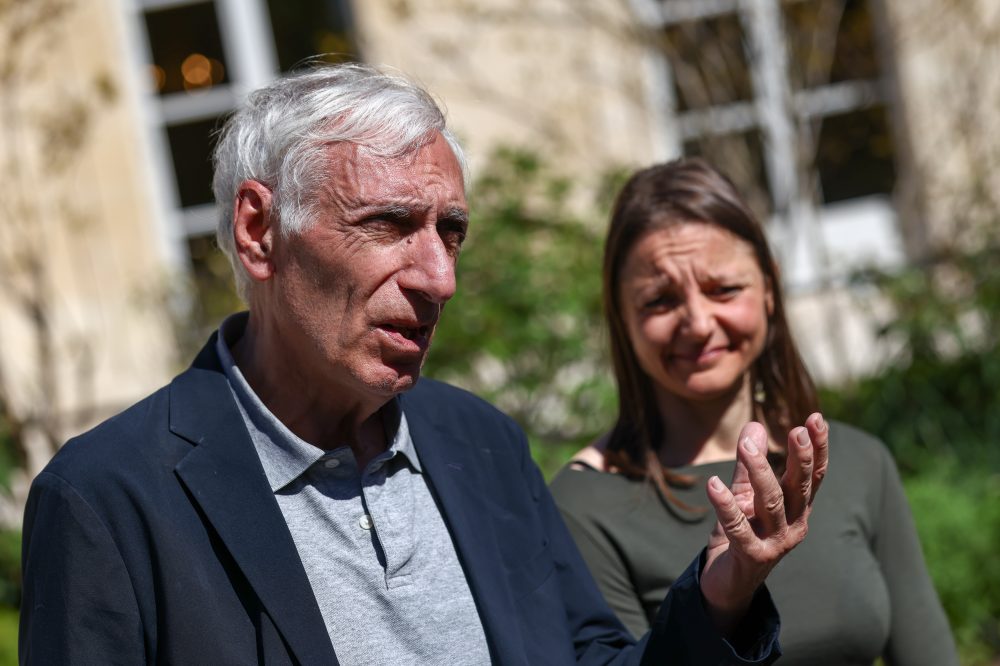

Two French citizens who spent more than three years imprisoned in Iran have finally made it back to their homeland following intensive diplomatic negotiations between Paris and Tehran.
Cécile Kohler, 41, and Jacques Paris, 72, touched down in France on Wednesday after departing Iran by vehicle on Tuesday, just as news broke of a potential ceasefire agreement between the United States and Iran aimed at ending regional hostilities that began February 28th. French officials are calling their freedom a significant diplomatic victory.
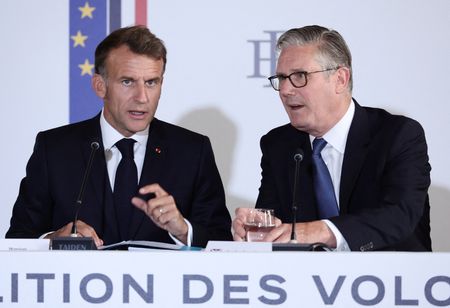
French President Emmanuel Macron, who has worked to keep France separate from Middle Eastern conflicts, greeted the pair at the presidential Elysee Palace upon their arrival.
The two were initially taken into custody on espionage allegations and were freed from their Iranian jail cells in November. But they remained stuck at French diplomatic facilities in Tehran because Iranian officials refused to grant them permission to exit the country. Macron announced they finally received authorization to begin their journey home on Tuesday.
“We understand how fortunate we are to have ‘barely made it out,’ because the situation could have been far more dire,” Kohler shared with media on Wednesday. “The past two days have been exhausting since we traveled by automobile and then aircraft. We haven’t gotten any sleep in 48 hours,” she explained.
The former prisoners made a nine-hour drive from Iran into neighboring Azerbaijan before boarding a flight to Paris, according to French officials. France’s Tehran ambassador Pierre Cochard escorted them throughout their entire journey home.
The president’s office described their release as the result of “sustained diplomatic work,” though discussions intensified recently due to pressure from the Iran conflict, which created urgency around the situation.
Macron stated last week that America couldn’t criticize allies for insufficient support after choosing to begin the Iran conflict without consulting partners. “This military action does not belong to us,” he informed reporters while visiting South Korea.
The French president became the first Western leader to have a phone conversation with Iranian President Masoud Pezeshkian on March 8th after fighting began. The two leaders have since spoken by phone two additional times, on March 15th and March 24th.
French leadership also expressed gratitude to Oman for helping broker the release of Kohler and Paris.
Omani officials “enabled us, during the crucial final phase, to communicate key messages within Iran’s government structure,” French Foreign Minister Jean-Noël Barrot explained during an appearance on France 2 television.
“This past Sunday evening, which was Easter Sunday, I got a phone call from Iran’s foreign minister confirming their government had made the decision,” he stated.
Barrot indicated that specific details about the Iranian negotiations would stay “private.”
But Iran’s official news agency IRNA reported on Tuesday that Iran had struck a deal with France to free both French nationals in return for Iranian citizen Mahdieh Esfandiari.
Macron’s administration rejected claims of any prisoner exchange arrangement.
Tehran has been advocating since last year for Esfandiari’s release after she was found guilty in France of promoting terrorism based on statements she made regarding the Hamas-orchestrated October 7, 2023 attacks against Israel.
Esfandiari received a one-year prison term in February plus a three-year suspended sentence and a lifetime ban from entering France. She has challenged the verdict.
She had been living under house arrest, a restriction that was removed Tuesday afternoon, just after news emerged that the two French citizens had departed Iran, her attorney Nabil Boudi confirmed to The Associated Press.
Kohler and Paris expressed appreciation on Wednesday to everyone who assisted in their escape from Iran.
Speaking with reporters, they described Iran’s Evin prison, which houses numerous political prisoners and opposition figures, as “hell.”
“We endured daily terror,” Kohler stated.
Paris mentioned they felt “continuously threatened” during their imprisonment.
“We were forbidden from reading or writing. Each time we exited our cell, they covered our eyes,” he recalled.
“One objective was probably to destroy our spirits,” Paris continued. “They failed to break us. We will tell our story, we will speak publicly, and we will embrace life once more.”
The pair had been on vacation in Iran when authorities arrested them in May 2022.