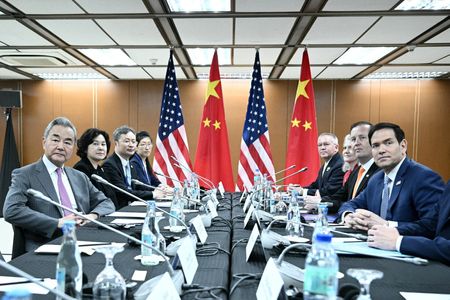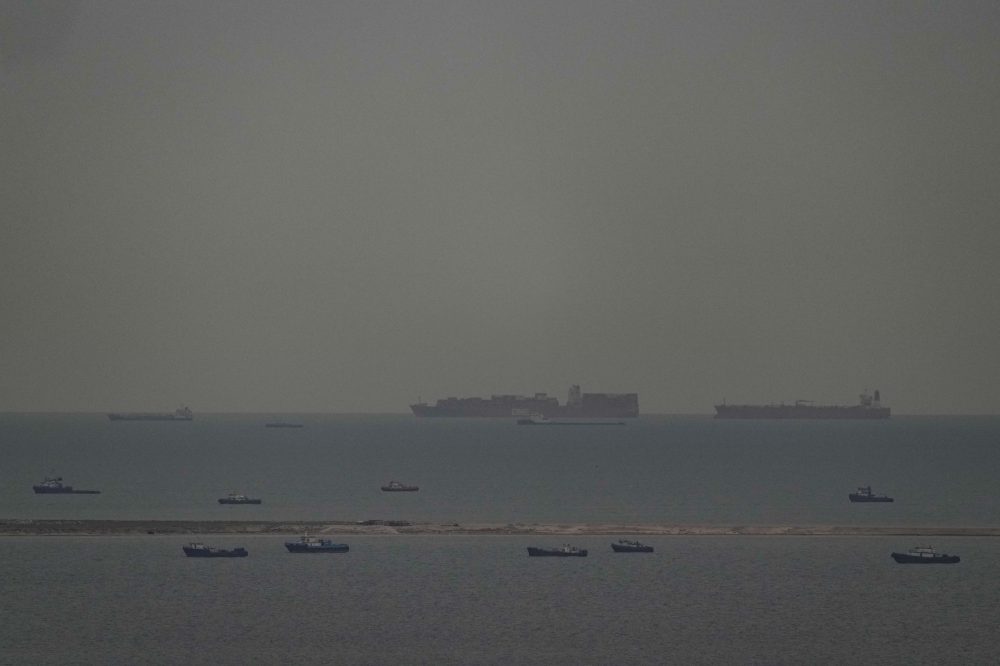

WASHINGTON — A fragile two-week halt to hostilities between the United States and Iran has created breathing room for potential peace negotiations that could commence as early as Friday. However, the temporary truce has revealed deep disagreements between the two nations over fundamental aspects of any lasting agreement.
Key disputes center around Iran’s military oversight of shipping through the Strait of Hormuz and the future of Tehran’s uranium enrichment activities.
Questions also remain about whether the cessation of hostilities applies to Israeli military operations in Lebanon, and whether Iran will seek substantial financial concessions, sanctions relief, and American military withdrawal from the Middle East as conditions for sustained peace.
The conflicting interpretations from Washington and Tehran highlight the complexity of reaching any permanent resolution.
President Donald Trump declared Tuesday evening on his social media platform that the truce required Iran to ensure the “COMPLETE, IMMEDIATE, and SAFE OPENING of the Strait of Hormuz,” the critical Persian Gulf passage that handles one-fifth of global oil shipments during normal times.
Defense Secretary Pete Hegseth announced Wednesday at a Pentagon briefing that the waterway had reopened. However, Iran declared hours afterward that it was shutting the strait again due to Israeli strikes in Lebanon.
Tehran maintains that even if shipping resumes, it will only occur under Iranian military supervision. This arrangement allows Iran to claim continued control over the strategic waterway, preserving significant geopolitical and economic influence while potentially collecting substantial fees from vessels, generating billions in new income.
Iran’s peace proposal includes Washington’s “acceptance of enrichment” for its nuclear activities. This directly conflicts with Trump’s stated goal of preventing Iran from developing nuclear weapons capabilities.
Trump presented an alternative view Wednesday, posting that any peace deal would involve the United States working with Iran to “dig up” enriched uranium. The administration claims this material was buried following joint American-Israeli strikes in June.
However, Trump’s statement differed from Hegseth’s remarks. The Pentagon chief indicated Tehran would either “give it to us voluntarily” or face consequences similar to last summer’s strikes, when American and Israeli forces targeted Iran’s nuclear facilities.
Iran also insists that ending Israeli attacks in Lebanon, which have intensified recently, must be included in broader peace discussions.
This position aligns with Pakistani Prime Minister Shehbaz Sharif’s announcement on X, where the key mediator stated the ceasefire would extend to Lebanon.
Trump contradicted this interpretation, telling PBS NewsHour Wednesday that the truce would not cover Lebanon.
This matches the position of Israeli Prime Minister Benjamin Netanyahu’s office, which stated that the two-week suspension of Iranian strikes excludes the conflict with Hezbollah in Lebanon.
When Iran initially presented a 10-point peace proposal Monday, Trump characterized it as a “very significant step” but also “not good enough.”
However, approximately 90 minutes before his Tuesday night deadline to launch extensive American attacks on Iran’s infrastructure and power systems, Trump announced the two-week pause and described Iran’s offer as a “workable basis on which to negotiate.”
“Almost all of the various points of past contention have been agreed to between the United States and Iran,” Trump explained his decision to postpone threatened massive strikes on civilian targets.
The specific agreements remain unclear, with the White House declining to explain what developments between Monday and Tuesday evening prompted Trump’s changed stance toward the Iranian proposal.
Adding to the confusion, Iran has issued multiple versions of its 10-point framework for negotiations, with variations often appearing to depend on whether documents were prepared in English or Farsi.
Iran’s Supreme National Security Council claims “the United States has, in principle, committed to” several key demands that appear incompatible with longstanding American policies.
These alleged commitments include guaranteeing lasting peace without future attacks, maintaining Iranian control over the strait, accepting uranium enrichment activities, and removing all American economic sanctions. The council says this would encompass restrictions on international business with Iran and relevant United Nations Security Council resolutions.
The council also claims American agreement to ending international monitoring of Iran’s nuclear program, providing war damage compensation, extending the ceasefire to Lebanon, and withdrawing all American combat forces from the region.
The final demand would represent a dramatic shift, considering the United States has operated military bases throughout the Persian Gulf for decades since the 1991 Gulf War with Iraq. Complete sanctions removal also appears unlikely for American acceptance.
When asked how such proposals could be considered viable, White House press secretary Karoline Leavitt stated only that “negotiations will continue.”
“The truth is that President Trump and our powerful military got Iran to agree to reopening the Strait of Hormuz, and negotiations will continue,” Leavitt said in a statement.
Trump dismissed many of these points as “a FRAUD,” posting that the peace plan attributed to the council and covered by Iranian state media was a “false Statement was linked to a Fake News site (from Nigeria).”
Instead, the United States has presented its own 15-point peace framework. American officials have only confirmed general outlines.
“There is only one group of meaningful ‘POINTS’ that are acceptable to the United States, and we will be discussing them behind closed doors during these Negotiations,” Trump posted Wednesday.