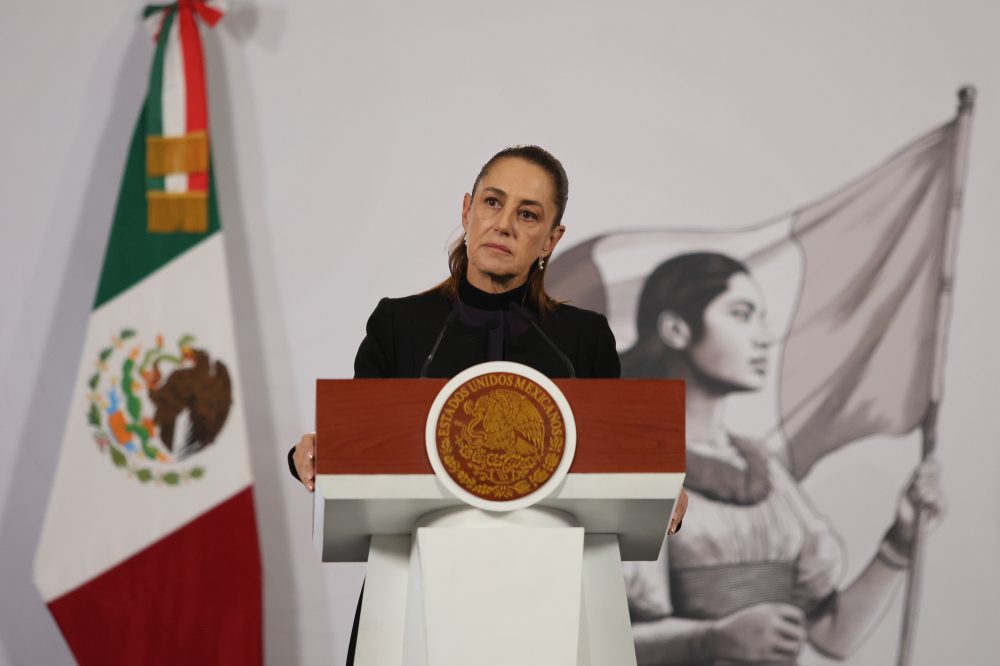

Mexican President Claudia Sheinbaum revealed Wednesday her administration’s intention to explore domestic unconventional natural gas reserves as a strategy to decrease the nation’s dependence on imported energy during a period of global market instability caused by Middle Eastern conflicts.
Despite her background as a scientist and climate specialist, Sheinbaum deliberately steered clear of mentioning hydraulic fracturing or “fracking” — the high-pressure liquid drilling technique used to extract oil and gas from deep rock formations. She instead described the proposal as pursuing “sustainable” extraction methods while promising to minimize environmental damage wherever possible.
Environmental scientists and energy professionals continue to debate whether “sustainable fracking” can actually be achieved. Sheinbaum explained that a technical panel will conduct a two-month study examining less damaging approaches, including the use of non-drinking water and fewer chemical compounds. The committee will also evaluate the financial implications of these protective measures.
“All the gas we import comes from a type of extraction that has environmental impacts” and is “100 meters from the Mexican border,” she stated, referring to Texas fracking operations.
Mexico holds the distinction of being the largest single purchaser of American natural gas globally.
Though she acknowledged that natural gas import agreements with the United States remain solid and diplomatic ties continue strong, Sheinbaum contended that boosting energy independence represents a prudent requirement. “Is more gas needed? Yes. Can all gas be replaced? Hardly,” she stated.
After taking office in October 2024, Sheinbaum has committed to expanding clean energy sources while simultaneously supporting the government-controlled Petróleos Mexicanos oil company. She justified this approach Wednesday by maintaining that fossil fuels continue to play a crucial role in Mexico’s energy portfolio.
Sheinbaum emphasized that the goal involves decreasing foreign energy dependence during unstable periods and preventing scenarios similar to Europe’s experience with Russian gas shortages during the Ukraine conflict or current disruptions from Middle Eastern warfare.
This controversial Wednesday announcement occurs as multiple infrastructure developments advance to boost American gas imports. These projects seek to meet Mexico’s growing domestic power requirements while establishing the nation as a distribution center for gas exports to Asian and European customers.