
WARSAW, Poland (AP) — Environmental advocates are voicing concerns about the declining effectiveness of Poland’s major air quality improvement program, warning that the slowdown threatens both public health and national energy independence amid ongoing global conflicts like the Iran war that disrupt fuel markets.
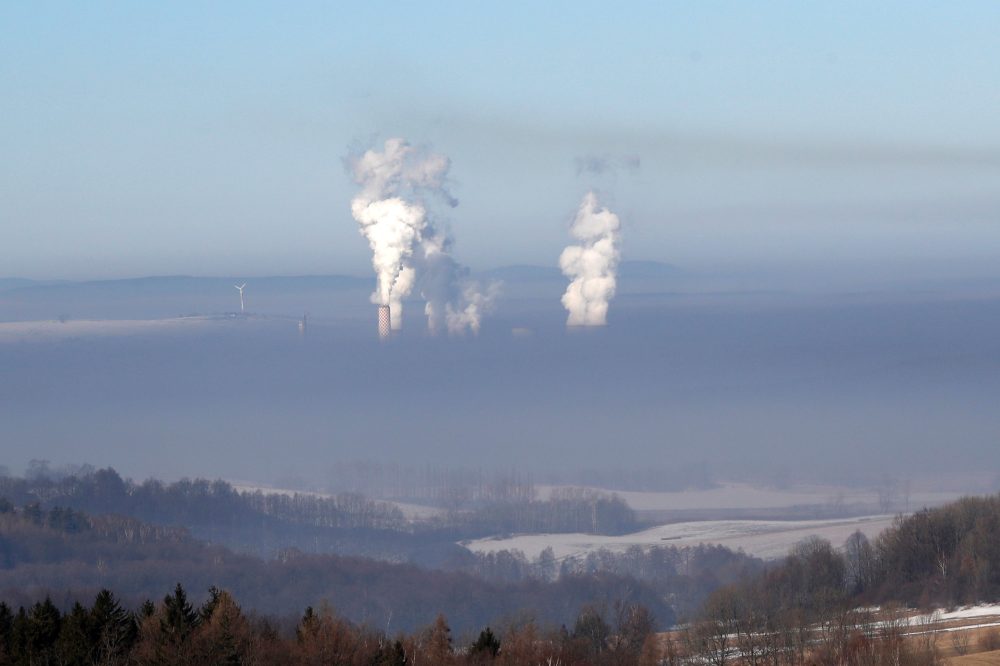
Poland ranks among Europe’s most heavily polluted nations, prompting the government to introduce the comprehensive “Clean Air” initiative in 2018 following repeated violations of European Union air quality regulations. This program provides financial assistance to homeowners and businesses seeking to replace coal-burning heating systems, enhance building insulation, and reduce energy usage. The initiative targets coal-based residential heating — the primary contributor to the country’s air pollution — by encouraging transitions to gas, wood pellet, or electric heating alternatives.
Environmental organizations are now expressing alarm that the program’s effectiveness is diminishing, which not only hampers smog reduction efforts but also maintains Poland’s reliance on unstable energy imports during a period of heightened geopolitical uncertainty.
According to Krzysztof Bolesta, Secretary of State at Poland’s Ministry of Climate and Environment, approximately one million households across the nation of nearly 38 million residents have participated in the “Clean Air” program since its launch. However, 2.5 million coal-powered heating units still require modernization.
Andrzej Guła from the advocacy group Polish Smog Alert highlighted the program’s achievements, noting that Krakow experienced a dramatic reduction from 150 annual heavy smog days to just 30. “It’s still 30 days too much, but there is progress,” Gula stated.
The program reached its zenith in 2024 when more than 250,000 funding applications were submitted, though participation has declined sharply since then.
Government officials implemented program modifications at the end of 2024 to prevent fund misuse and temporarily suspended application approvals. Environmental groups contend that this abrupt program suspension damaged public confidence.
During a Warsaw press conference on March 31, Polish Smog Alert representatives presented data showing application numbers had fallen to one-fifth of peak levels in 2025, with the decline persisting into 2026.
The environmental advocates expressed concerns that Poland’s advancement in air quality improvement and domestic energy reduction has stagnated.
Bolesta defended the reforms as necessary measures to ensure appropriate project funding and prevent public money waste.
“Poland has a unique situation in the European Union, as only Poland has such a high share of coal in individual heating,” Bolesta explained, emphasizing the government’s dedication to air quality enhancement. “However, I have no illusions: this will be very difficult and we will continue to lag behind other countries in the EU.”
Piotr Siergiej, another Polish Smog Alert representative, argued that the energy crisis resulting from the Iran conflict should prompt urgent government action to repair the program.
Siergiej contended that reducing energy consumption strengthens Poland’s energy security by decreasing reliance on imported gas, coal, and wood pellets — an environmentally friendlier solid fuel made from compressed wood waste.
“This program can become an epochal chance to energetically transform our buildings and homes, to make us more independent from those energy crises which we are facing now and whose future we can’t predict,” he said.