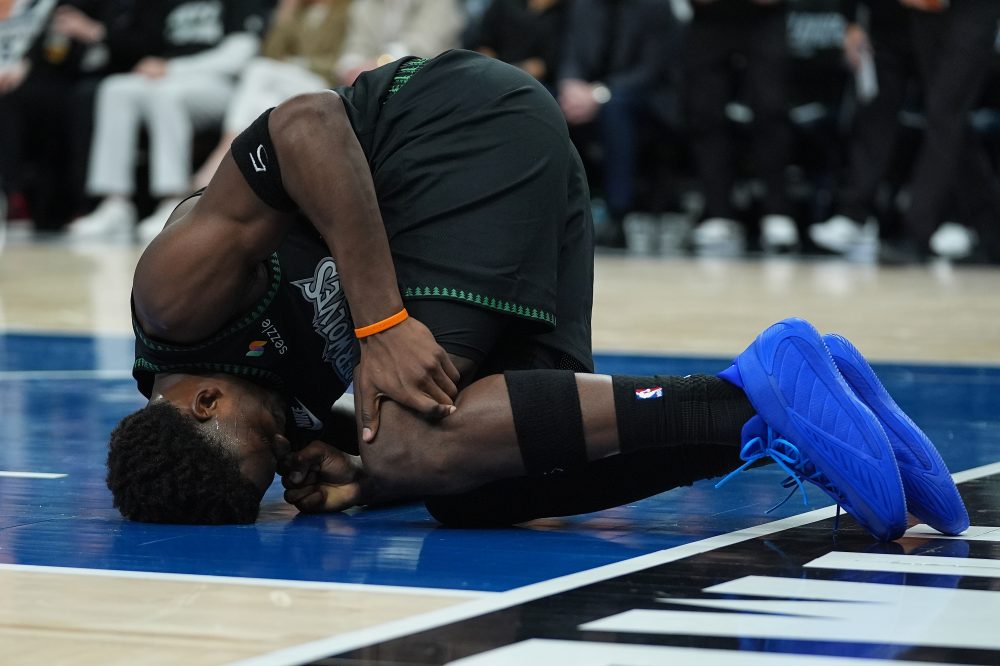
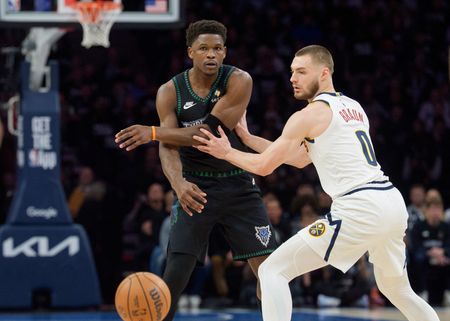
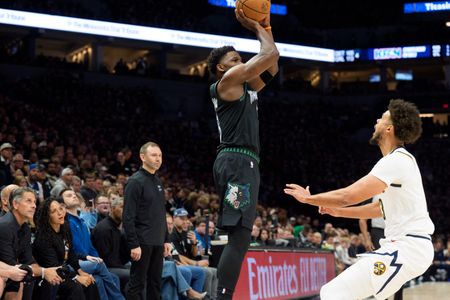
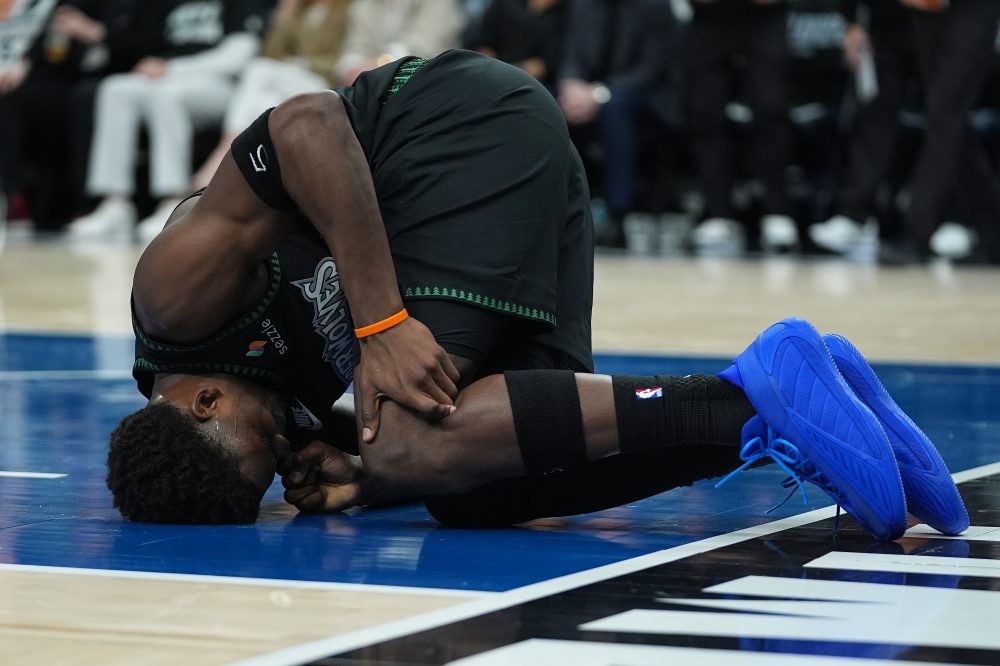
Minnesota Timberwolves star Anthony Edwards will be sidelined for several weeks after suffering a knee injury during Saturday night’s playoff game, according to a source familiar with the situation.
Medical evaluations revealed that Edwards sustained a bone bruise and hyperextended his left knee during the first half of Minnesota’s 112-96 victory against the Denver Nuggets. The source spoke to The Associated Press anonymously since the team has not publicly released injury details or recovery timeline.
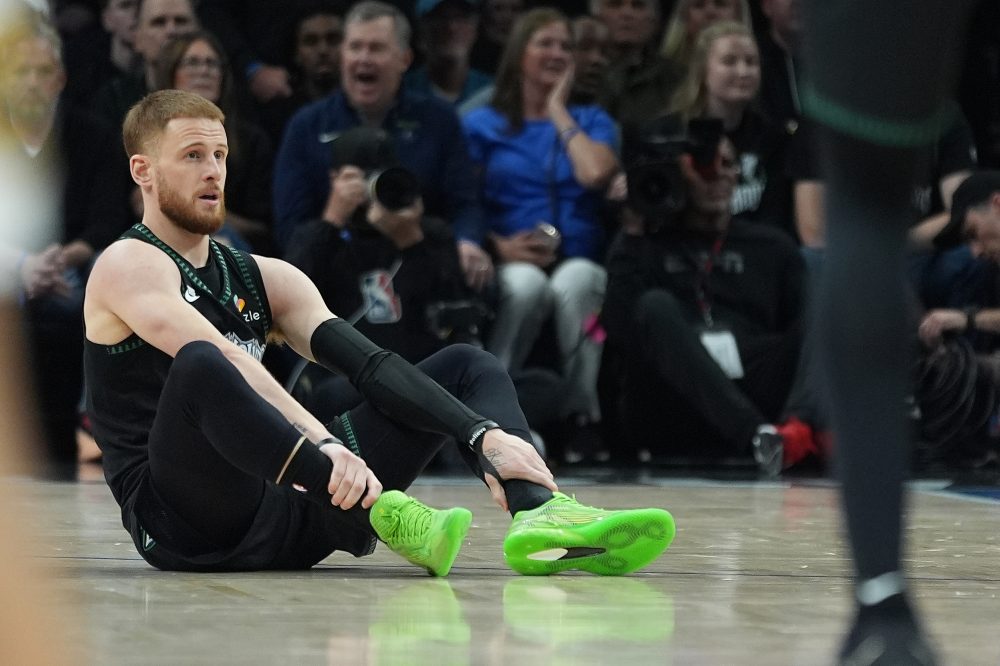
The injury occurred while Edwards was defending a layup attempt by Denver’s Cam Johnson. Edwards jumped to contest the shot, but landed awkwardly with his left leg at an unusual angle. His knee gave way, and he limped off the court unable to bear weight on the injured leg.
ESPN and The Athletic were first to report Edwards’ diagnosis.
The timing couldn’t be worse for Minnesota, which now holds a 3-1 series advantage over the Nuggets heading into Monday night’s Game 5 in Denver. The Timberwolves also lost starting guard Donte DiVincenzo in the same contest to a torn Achilles tendon, ending his season and potentially threatening his availability for 2026-27.
Edwards ranks among the NBA’s elite performers and would have earned All-NBA honors for the third straight year if he had met the league’s minimum games requirement. During the regular season, he posted 28.8 points per game, ranking third in the league behind Dallas’ Luka Doncic and reigning MVP Shai Gilgeous-Alexander of Oklahoma City. Edwards also contributed 5.0 rebounds and 3.7 assists nightly.
The dynamic guard served as the fourth-leading scorer for Team USA’s gold medal-winning squad at the 2024 Paris Olympics. This season marked a career-high 21 missed games for Edwards.
Teammate Julius Randle described the somber mood in the locker room following the injuries, particularly his interaction with Edwards after the game.
“I just dapped him up,” Randle explained. “There’s not much to say in those moments. … Somebody who’s going through those situations is processing a lot.”
Randle noted he didn’t have a chance to speak with DiVincenzo before departing the arena.
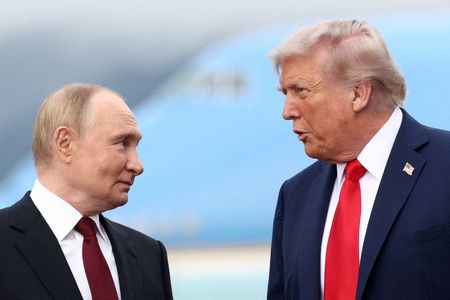
WASHINGTON – During a Sunday television appearance, President Donald Trump disclosed that he maintains ongoing dialogue with both Russian President Vladimir Putin and Ukrainian President Volodymyr Zelenskyy as part of efforts to resolve the Ukraine conflict.
Speaking on Fox News’ “The Sunday Briefing,” Trump expressed confidence about progress on the matter, stating, “We’re working on the Russia situation, Russia and Ukraine, and hopefully we’re going to get it.”
When asked about the timing of his most recent communication with Putin, Trump declined to provide specifics but confirmed the conversations are taking place.
“I do have conversations with him, and I do have conversations with President Zelenskiy, and good conversations,” Trump stated, without revealing when these discussions with either leader occurred.
The president also addressed the personal animosity between the two foreign leaders, commenting, “The hatred between President Putin and President Zelenskiy is ridiculous. It’s crazy. And hate is a bad thing. Hate is a bad thing when you’re trying to settle something, but it’ll happen.”
Despite Trump’s earlier campaign promise to bring an end to the conflict that started with Russia’s full-scale assault on Ukraine in February 2022, the war remains ongoing more than a year into his second presidential term.
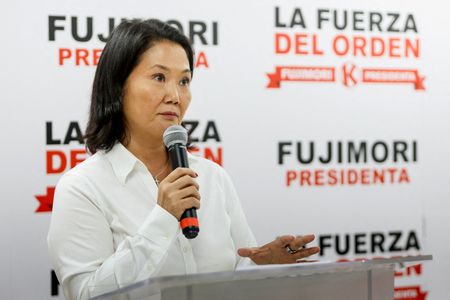
LIMA – A recent survey reveals that Peru’s presidential race has become a statistical tie between right-wing contender Keiko Fujimori and leftist candidate Roberto Sanchez as the country continues tallying votes from its April 12 primary election.
According to polling company Ipsos Peru, both Fujimori, daughter of former President Alberto Fujimori, and Sanchez would each capture 38% support in the scheduled June 7 runoff election. This marks the first polling data released since the initial voting round took place.
The extended vote counting process has prompted accusations of electoral misconduct from ultra-conservative candidate Rafael Lopez Aliaga, who currently sits approximately 24,000 votes behind Sanchez in the competition for the second runoff position. This margin has continued to expand over recent days.
Lopez Aliaga has called for the cancellation of thousands of ballots, claiming they represent fraudulent votes. However, European Union election monitors have stated they discovered no supporting evidence for these allegations.
Current tallies with 95.8% of ballots processed show Fujimori maintaining the lead at 17%, followed by Sanchez at 12% and Lopez Aliaga at 11.9%.
The same poll indicates that should Fujimori face Lopez Aliaga in the runoff instead of Sanchez, she would trail by a margin of 31% to 34%.
On Friday, the Organization of American States endorsed the electoral board’s decision to reject calls for additional elections, urging “unrestricted respect for the popular will.”
Sanchez previously held a ministerial position under former President Pedro Castillo, who is currently imprisoned.
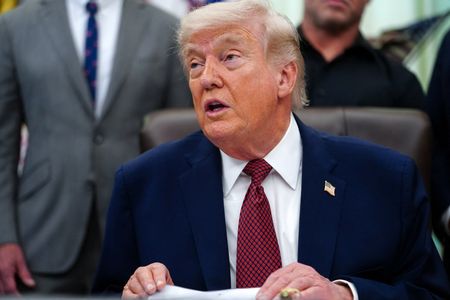
WASHINGTON – During a Sunday television appearance, President Donald Trump expressed openness to direct communication with Iran should they choose to pursue diplomatic negotiations.
Speaking on Fox News’ “The Sunday Briefing,” Trump emphasized the availability of direct communication channels. “If they want to talk, they can come to us, or they can call us. You know, there is a telephone. We have nice, secure lines,” the president stated during the broadcast.
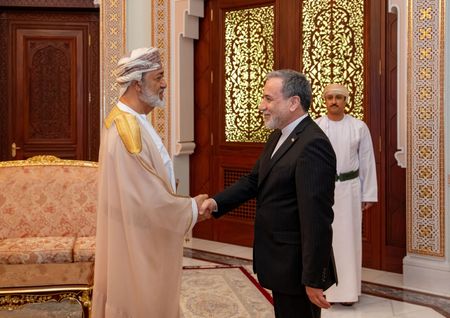
The remarks follow recent diplomatic complications, including Trump’s decision on Saturday to call off a planned mission by his representatives Steve Witkoff and Jared Kushner to Pakistan. This cancellation represents another obstacle to potential peace discussions, particularly after Iranian Foreign Minister Abbas Araqchi had traveled to Islamabad but only met with Pakistani government officials.
Despite the absence of American diplomatic counterparts, Araqchi has returned to Pakistan for continued discussions.
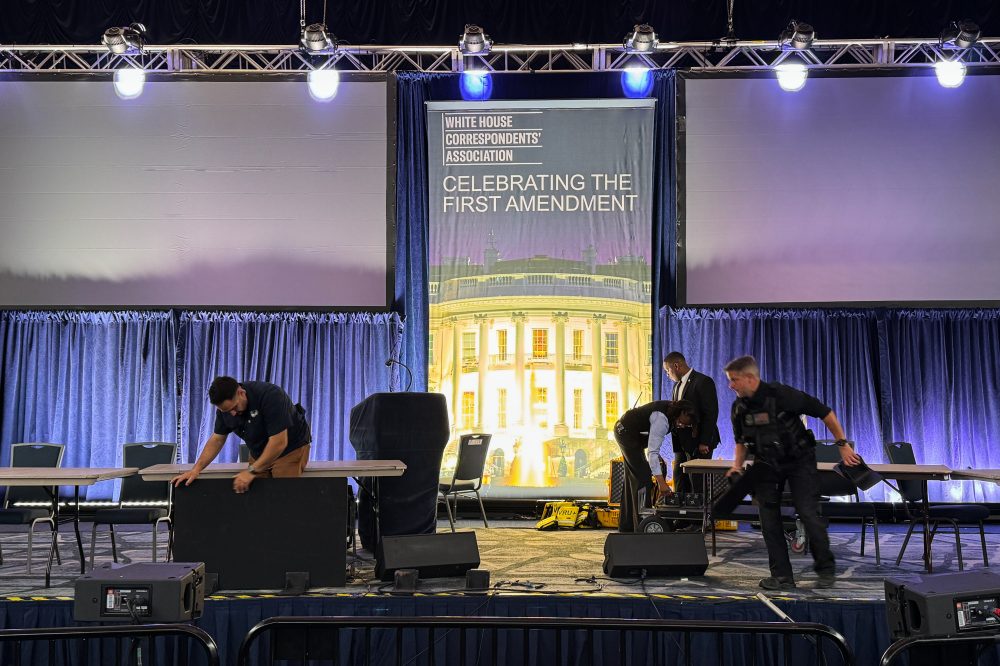
WASHINGTON – During a television appearance Sunday, President Donald Trump confirmed that law enforcement successfully intercepted a suspected gunman who posed a threat to the White House Correspondents’ Dinner, preventing the individual from reaching the event venue.
Speaking on Fox News’ “The Sunday Briefing,” Trump stated that security personnel stopped the suspect well before they could gain access to the ballroom hosting the annual gathering of journalists and political figures.
The president emphasized that the suspected shooter never got close to the dinner’s location, highlighting the effectiveness of the security response to the potential threat.
Delaware State Police have released the identity of the victim killed in Thursday evening’s deadly two-car collision in Wilmington as Rhys Newcombe, a 26-year-old Wilmington resident.
Investigators with the Delaware State Police Troop 2 Collision Reconstruction Unit are still working to determine what caused the fatal accident. Authorities are seeking help from the public and are asking anyone who saw the crash or has video footage to reach out to Master Corporal R. Kunicki at (302) 365-8417. Tips can also be submitted through private Facebook messages to Delaware State Police or by calling Delaware Crime Stoppers at 1-800-847-3333.
For those affected by crime or sudden loss of life, support services are available around the clock. The Delaware State Police Victim Services Unit and Delaware Victim Center provide assistance 24 hours daily through their toll-free helpline at 1-800-VICTIM-1 (1-800-842-8461). Support can also be requested via email at [email protected].
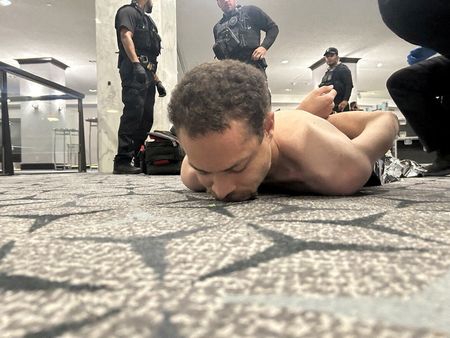
Law enforcement officials have identified the suspect in Saturday evening’s shooting at the White House Correspondents Association Dinner as Cole Allen, according to two individuals with knowledge of the investigation.
The incident occurred during the annual gathering of journalists and government officials, prompting an immediate security response. Agents quickly secured the scene following the shooting.
Further details about the circumstances surrounding the incident and Allen’s background have not yet been released by authorities.
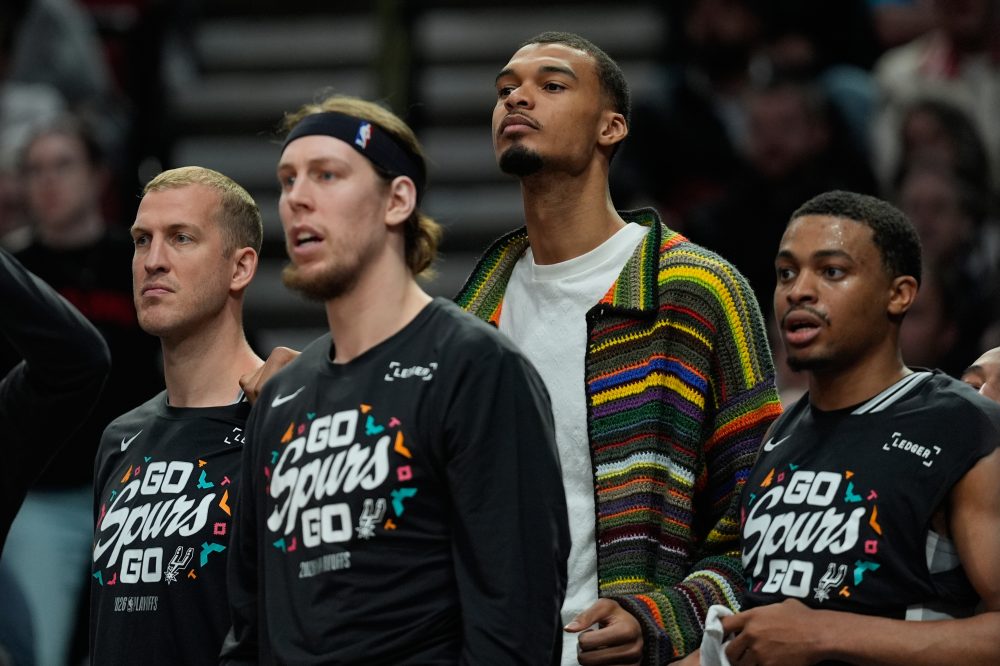
San Antonio’s rising stars are proving they can handle the spotlight, even when their franchise player Victor Wembanyama remains sidelined.
Without the towering Spurs sensation available for action, sophomore guard Stephon Castle exploded for 33 points while first-year player Dylan Harper contributed a personal-best 27 points plus 10 rebounds during Friday’s 120-108 triumph over Portland, giving San Antonio a 2-1 advantage in their series.
The 7-foot-4 Wembanyama, who earned Defensive Player of the Year honors while averaging 25 points, 11.5 rebounds, 3.1 assists and a league-leading 3.1 blocks per game, suffered a head injury during the opening half of Game 2 and couldn’t continue. Portland capitalized on his absence to claim a 106-103 home victory in San Antonio.
Although Wembanyama made the trip to Portland with hopes of returning to action, head coach Mitch Johnson declared before tipoff that while his star was making progress, he remained unavailable for competition.
As it happened, San Antonio managed just fine without him. Portland built a commanding 15-point advantage during the third period before Castle and Harper seized control while the Trail Blazers fell apart.
Whether Wembanyama will be cleared for Sunday’s contest remains uncertain.
Harper contributed 22 of his points after halftime. The 20-year-old, selected second overall in last summer’s NBA draft, became just the second-youngest player in league history to record 20-plus points coming off the bench during postseason play. Only 18-year-old Kobe Bryant was younger when he accomplished the feat.
“When I came in the game, my biggest focus was just not trying to get it all at once and just try to be that energy guy that came in and played hard,” Harper explained. “Once I started doing that, I think the game kind of just opened up.”
Game 4 Details: 3:30 p.m. EDT on ESPN Current Series Standing: Spurs ahead 2-1 Vegas Line: Spurs favored by 5.5 points
Key Information: Luke Kornet stepped into Wembanyama’s role with 14 points and 10 rebounds. Head coach Mitch Johnson would only confirm that Wembanyama continues improving but declined to discuss his availability for Sunday’s matchup.
Celtics vs. 76ers – Game 4: 7 p.m. EDT on Prime Video Series Status: Boston leads 2-1 Spread: Celtics by 7.5
Storylines: Jayson Tatum and Jaylen Brown each contributed 25 points as Boston defeated Philadelphia in Game 3 to regain home-court advantage. Tyrese Maxey, earning his first All-Star starting selection this season, continues shouldering the offensive load for the Sixers while Joel Embiid remains recovering from appendix surgery. Embiid, marked as doubtful, participated in solo court work Saturday. Head coach Nick Nurse indicated he expects more clarity on Embiid’s potential return following Sunday’s pregame warmups. VJ Edgecombe recorded his second series double-double but struggled from beyond the arc, missing all seven three-point attempts. Boston has dominated from long range, connecting on 16 threes in Game 1 and hitting 20 of 47 attempts in Game 3.
Lakers vs. Rockets – Game 4: 9:30 p.m. EDT on NBC Peacock Series Situation: Los Angeles leads 3-0 Betting Line: Houston favored by 8.5
Key Notes: Houston’s Kevin Durant was absent from the Rockets’ 112-108 overtime defeat to Los Angeles on Friday, which placed them on the brink of elimination trailing 3-0. Durant also missed the series opener due to knee problems and carries a questionable designation for Sunday’s must-win game. The timeless LeBron James delivered 29 points, including a clutch three-pointer with 13 seconds remaining in regulation for the Lakers, who erased a six-point deficit in the final 30 seconds to force overtime. Los Angeles is playing without Luka Doncic and Austin Reaves, forcing the 41-year-old James to shoulder additional responsibility and log over 45 minutes Friday evening.
Cavaliers vs. Raptors – Game 4: 1 p.m. EDT on ESPN Series Update: Cleveland ahead 2-1 Point Spread: Cavaliers by 3.5
What’s Happening: Following consecutive losses to start the series, Toronto returned to Canadian soil and received outstanding performances from Scottie Barnes and RJ Barrett in a dominant 126-104 victory that cut their deficit to 2-1. Both Barnes and Barrett scored 33 points, establishing new postseason career highs. The Raptors overwhelmed Cleveland 43-23 in the final quarter. The victory ended the Cavaliers’ 12-game playoff winning streak against Toronto. However, the Raptors received disappointing news Friday when starting guard Immanuel Quickley was declared unavailable for the remainder of the opening round due to complications in his hamstring injury rehabilitation.
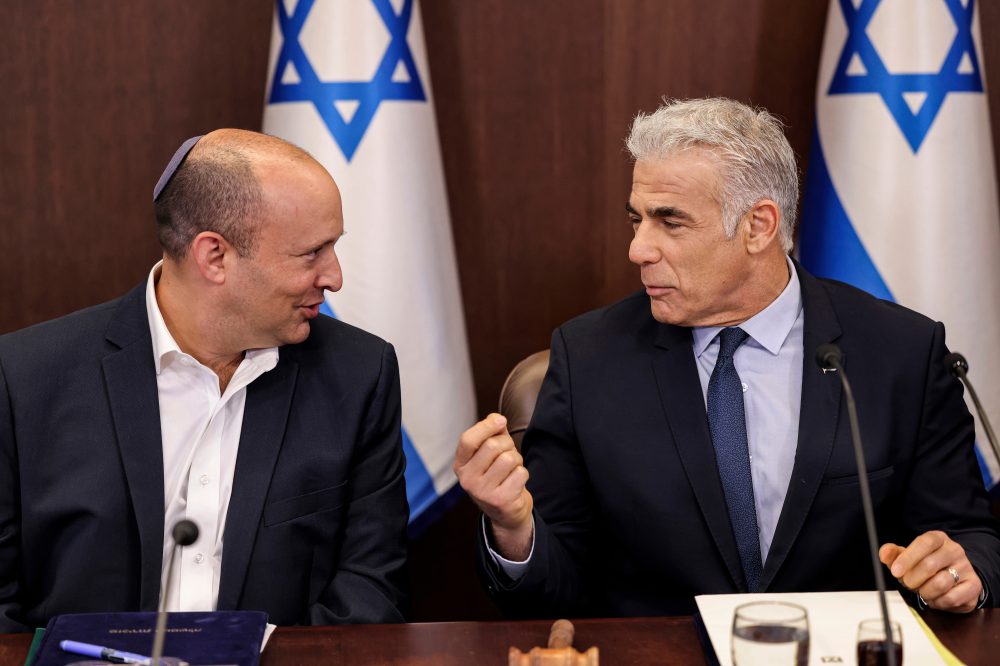
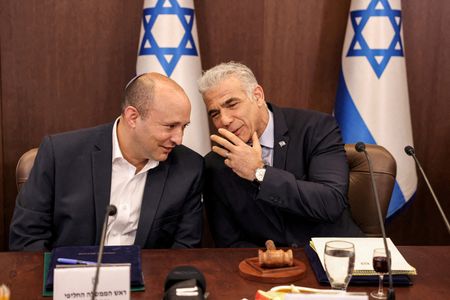
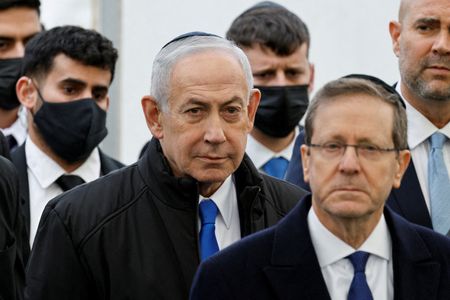
JERUSALEM (AP) — A pair of former Israeli leaders announced Sunday their intention to combine their political organizations for the upcoming election cycle, aiming to remove Benjamin Netanyahu from his current position as Prime Minister.
Naftali Bennett and Yair Lapid, who previously shared leadership duties through a rotating arrangement in a coalition they established in 2021, have decided to consolidate their parties under a unified faction with Bennett at the helm.
“The move is intended to unite the bloc, put an end to internal divisions and focus all efforts on winning the critical upcoming elections,” Lapid’s Yesh Atid party said in a statement.
The former prime ministers planned to hold a joint press conference later Sunday.
Their 2021 coalition arrangement brought Netanyahu’s 12-year tenure to a halt. Bennett occupied the prime minister’s office during the initial year before their alliance collapsed. Lapid subsequently assumed the role as interim prime minister for six months until fresh elections returned Netanyahu to office.
Since Netanyahu’s return, Lapid has functioned as Israel’s opposition leader, while Bennett stepped away from the political arena.
Despite having contrasting political philosophies — Bennett maintains Orthodox Jewish beliefs and takes a hardline stance on Palestinian issues, while Lapid follows a secular path and holds more centrist positions — the two leaders maintained an effective partnership during their brief coalition period.
This new partnership seeks to bring together a scattered opposition movement that shares little common ground except for their mutual opposition to Netanyahu’s leadership.
Two former Israeli prime ministers announced Sunday they are combining their political parties in an effort to defeat Benjamin Netanyahu’s coalition government in elections anticipated later this year.
Ex-prime ministers Naftali Bennett, representing the right wing, and centrist Yair Lapid released statements confirming the consolidation of Bennett’s “Bennett 2026” party with Lapid’s “There is a Future” party.
“This move is intended to unite the bloc, put an end to internal divisions, and focus all efforts on winning the critical upcoming elections – and leading Israel forward into the future,” opposition leader Lapid said.
According to Bennett’s office, the merged organization will operate under the name “Together,” with Bennett serving as party leader.
This political partnership marks another collaboration between Bennett and Lapid, who previously worked together to end Netanyahu’s continuous 12-year leadership following a 2021 election. Their coalition government lasted just 18 months before collapsing.
Earlier, in 2013, the duo successfully secured positions in Netanyahu’s coalition government, effectively excluding his customary ultra-Orthodox partners from power.
Netanyahu, who holds the record as Israel’s longest-serving prime minister, returned to office after winning the November 2022 election and establishing what many consider Israel’s most right-wing government ever.
However, Hamas’s 2023 assault on southern Israel sparked regional chaos and forced Israel into conflicts on several fronts, severely damaging Netanyahu’s reputation for security leadership. Subsequent polling consistently indicates he faces defeat in the next election, scheduled by late October.
Despite his controversial status domestically and internationally, Netanyahu remains his generation’s most influential Israeli politician and has demonstrated exceptional political resilience throughout his career.
Recent polling data from Israel’s N12 News on April 23 showed Bennett potentially winning 21 seats in the 120-member Knesset, compared to 25 seats for Netanyahu’s Likud party. The 54-year-old Bennett, a former military commando who became a technology entrepreneur, has been gaining ground against Netanyahu in voter surveys.
The same poll projected Lapid’s party earning just seven seats, a significant drop from their current 24 seats. However, Netanyahu’s alliance of right-wing and religious parties would control only 50 seats, while Bennett and Lapid’s probable coalition with smaller groups could secure at least 60 seats.
These results align with other surveys from academic institutions and Israeli media outlets, which position Bennett as Netanyahu’s primary challenger, though political dynamics remain fluid.
Lapid, 62, is a charismatic former television news presenter who also writes popular music and novels. He represents Israel’s secular middle class, which has grown increasingly frustrated with what they view as unfair taxation and military service obligations.
Netanyahu’s ultra-religious coalition partners have been pushing for military service exemptions for their communities, who typically have low employment rates and receive substantial government assistance.
This contentious issue has gained urgency as military officials warn of being overstretched, with the past two years producing the highest military casualties in decades.
Both Lapid and Bennett have made military service equality a cornerstone of their campaign messaging. They have also attacked Netanyahu for his inability to convert military successes into strategic victories against Iran and its regional allies, including Hezbollah in Lebanon and Hamas in Gaza.
LONDON, April 26 – In a historic achievement that rewrites the record books, Kenyan distance runner Sabastian Sawe accomplished what many thought impossible Sunday, crossing the finish line at the London Marathon in 1 hour, 59 minutes and 30 seconds to become the first athlete to officially break the two-hour marathon barrier.
The groundbreaking performance demolished the previous world record of 2:00:35, which had been set by the late Kelvin Kiptum at Chicago’s marathon in October 2023. Kiptum tragically lost his life in a vehicle accident in Kenya last year at age 24.
Ethiopian runner Yomif Kejelcha maintained close contact with Sawe throughout most of the 26.2-mile route before losing ground in the closing miles, finishing second in his first-ever marathon attempt with a time of 1:59:41. Uganda’s Jacob Kiplimo claimed third place at 2:00:28, creating what many are calling the most extraordinary men’s marathon conclusion in the sport’s history.
“I am feeling good, I am happy, it’s a day to remember for me,” Sawe shared with BBC reporters while displaying his running shoe marked with “world record” and “sub-2” in black ink.
“We started the race well. Approaching finishing the race, I was feeling strong. Finally reaching the finish line, I saw the time and I was so excited. I think today shows me a lot the first (time) for everyone, and I am so happy for today. Coming to London for the second time was so important to me and that’s why I prepared well for it.”
The women’s competition also produced record-breaking results as Ethiopia’s Tigst Assefa improved upon her own world record. The 29-year-old athlete separated herself from Kenya’s Hellen Obiri and Joyciline Jepkosgei in the final stretch, completing the course in 2:15:41 and surpassing her previous mark of 2:15:50 from last year’s London event.
“I’m so happy to win again, I want to thank God for giving me this victory, to repeat my victory from last year means even more. And so the happiness I feel is just welling up inside me,” Assefa shared with BBC.
Obiri secured second place with 2:15:53, while Jepkosgei earned third at 2:15:55.
Weather conditions proved nearly perfect for record attempts, with temperatures in the mid-teens and minimal wind providing an ideal environment for fast times.
Breaking the two-hour marathon threshold has represented one of athletics’ greatest challenges for decades, with previous attempts involving highly controlled scientific experiments designed to push human performance boundaries.
Nike’s Breaking2 project at Monza in 2017 came close but fell short, though Kenyan legend Eliud Kipchoge did run under two hours during INEOS’s 1:59 Challenge in 2019. However, those achievements weren’t recognized in official competition records.
Sawe’s Sunday triumph stands apart because it occurred during legitimate race conditions on one of the sport’s most prominent stages, transforming a goal previously tested only in laboratory-like settings into an officially recognized milestone.
The achievement becomes even more remarkable considering Sawe dealt with injuries throughout the fall and only resumed serious training in January. He realized in February that his fitness had returned sufficiently to defend his London title.
An estimated one million spectators lined the Thames River course route, cheering Sawe toward the finish line on The Mall with Buckingham Palace providing the backdrop. Prior to the race, Sawe had suggested a world record might be necessary to defeat the strong field of competitors.
“Finally, what I had done for four months it has come today to be a good result,” he explained. “I want to thank the crowds for cheering us. I think they help a lot, because if it was not for them you don’t feel like you are so loved.
“I think they help a lot because them calling make you feel so happy and strong and pushing. That is why I can say what comes for me today is not for me alone but all of us in London.”
Training at high altitude in western Kenya, Sawe draws inspiration from his uncle, former Ugandan Olympic 800-meter competitor Abraham Chepkirwod. A teacher once encouraged him by saying: “Running is not just talent, it is your fortune and your future.”
Sawe first gained attention with his spectacular marathon debut victory in Valencia this past December, recording what was then the fifth-fastest time in history. He has remained undefeated in every marathon since beginning his career in the distance.
The runner has been vocal about anti-doping efforts in athletics, advocating for frequent testing and, aware of Kenya’s troubled doping history, requesting the Athletics Integrity Unit test him extensively last year. Officials conducted 25 tests leading up to the 2025 Berlin Marathon.
“The main reason was to show that I am clean, and I am doing it the right way,” he stated.
In wheelchair competition, Switzerland’s Marcel Hug captured his sixth straight men’s title and eighth overall victory, while Catherine Debrunner outsprinted American Tatyana McFadden for her third consecutive London women’s wheelchair championship.
A wave of serious injuries continues to impact the NBA playoffs significantly.
Minnesota’s Donte DiVincenzo suffered a torn Achilles tendon during Saturday night’s game, bringing his season to an abrupt end and potentially affecting his availability for the 2026-27 campaign. DiVincenzo now joins a concerning list of star players who have torn their Achilles during playoff action over the past year, including Boston’s Jayson Tatum, Indiana’s Tyrese Haliburton, and Damian Lillard, who was with Milwaukee before moving to Portland.
In an odd twist of fate, all four players wear the number 0 jersey.
Minnesota’s injury troubles deepened as Anthony Edwards also exited Saturday’s contest with a knee problem that requires additional medical evaluation.
The DiVincenzo injury occurred during a game that featured a late-game altercation involving Denver’s Nikola Jokic and other players in the closing moments. The NBA plans to review the incident Sunday and may issue disciplinary action. Denver, currently down 3-1 in the series, faces elimination in Game 5 on Monday evening.
Several key players remain questionable for Sunday’s action depending on their injury status, including Houston’s Kevin Durant, the Los Angeles Lakers’ Austin Reaves, and San Antonio’s Victor Wembanyama. Luka Doncic has been ruled out for the Lakers, while Joel Embiid’s status for Philadelphia remains doubtful.
Sunday’s slate includes four matchups: the Lakers travel to Houston seeking a series sweep, San Antonio visits Portland, Cleveland heads to Toronto, and Boston takes on Philadelphia.
Saturday’s results showed Orlando defeating Detroit 113-105 to take a 2-1 series advantage, Oklahoma City dominating Phoenix 120-108 for a commanding 3-0 lead, New York beating Atlanta 114-98 to even their series at 2-2, and Minnesota crushing Denver 112-96 to move within one win of advancing.
Saturday night witnessed basketball history as two players accomplished an extremely rare scoring achievement. Prior to Saturday, only four instances had been recorded since 1963 of a player tallying at least 40 points while missing four or fewer shots in a playoff contest.
That exclusive club doubled in size during Saturday’s games. Minnesota’s Ayo Dosunmu exploded for 43 points while missing just four field goal attempts, and Oklahoma City’s Shai Gilgeous-Alexander contributed 42 points with only three misses.
These performances place them alongside Anthony Davis (2020), Dirk Nowitzki (2011), Elton Brand (2006), and Terry Porter (1992) as the only known players to achieve this remarkable feat during playoff action. League historians believe no other NBA players have accomplished this, though complete shot attempt records from the league’s earliest seasons are unavailable.
The NBA’s awards season continues with Monday’s Rookie of the Year announcement scheduled for 7 p.m. EDT on Peacock and NBCSN. The three finalists are Philadelphia’s VJ Edgecombe, Dallas’s Cooper Flagg, and Charlotte’s Kon Knueppel.
Additional awards will be revealed throughout the week, including Basketball Executive of the Year on Tuesday, the Twyman-Stokes Teammate of the Year on Wednesday, and the Hustle Award on Thursday. All announcements will occur at 1 p.m. EDT on NBA social media platforms.
Several awards have already been distributed this season. San Antonio’s Victor Wembanyama made history as the youngest Defensive Player of the Year winner and the first to receive a unanimous vote for the honor. Oklahoma City’s Shai Gilgeous-Alexander nearly achieved unanimous selection for Clutch Player of the Year, earning 96 of 100 possible first-place votes.
San Antonio’s Keldon Johnson captured Sixth Man of the Year honors over Miami’s Jaime Jaquez Jr. with 63 first-place votes. Boston’s Derrick White received the Sportsmanship Award as chosen by league players, narrowly edging Indiana’s TJ McConnell. Atlanta claimed back-to-back Most Improved Player awards, with Nickeil Alexander-Walker following last year’s winner Dyson Daniels.
Major awards still pending include Most Valuable Player, which will go to either Gilgeous-Alexander, Wembanyama, or Denver’s Nikola Jokic. Coach of the Year will be awarded to Detroit’s J.B. Bickerstaff, San Antonio’s Mitch Johnson, or Boston’s Joe Mazzulla.
Sunday’s television schedule features Cleveland at Toronto at 1 p.m. EDT on ESPN, San Antonio at Portland at 3:30 p.m. EDT on ESPN, Boston at Philadelphia at 7 p.m. EDT on NBC and Peacock, and the LA Lakers at Houston at 9:30 p.m. EDT on NBC and Peacock.
Defending champion Oklahoma City leads championship betting odds at -120, followed by San Antonio (+450), Boston (+550), Cleveland (+1300), and the Los Angeles Lakers (+2500). Denver sits at +2800, with New York at +3000 and Detroit at +3500. Despite their 3-1 series lead, Minnesota’s odds have dropped to +12500 following the injuries to DiVincenzo and Edwards.
Key upcoming dates include conference semifinals beginning May 2-4, the NBA draft lottery on May 10, Eastern Conference finals starting May 17 or 19 on ESPN and ABC, Western Conference finals beginning May 18 or 20 on NBC and Peacock, and the NBA Finals opening June 3 on ABC.
Minnesota’s Julius Randle praised teammate Ayo Dosunmu following his historic 43-point performance, saying: “I didn’t know he was that damn good. I ain’t going to lie to you. … But damn, I’m glad we got him.”
Additional notable statistics include Minnesota’s Rudy Gobert extending his career three-point drought to 0-for-24 after missing another attempt Saturday, Shai Gilgeous-Alexander’s incredible recent fourth-quarter shooting (18-for-19 from the field since March 17), and Karl-Anthony Towns recording just the seventh triple-double in Knicks playoff history with his 20-10-10 performance.
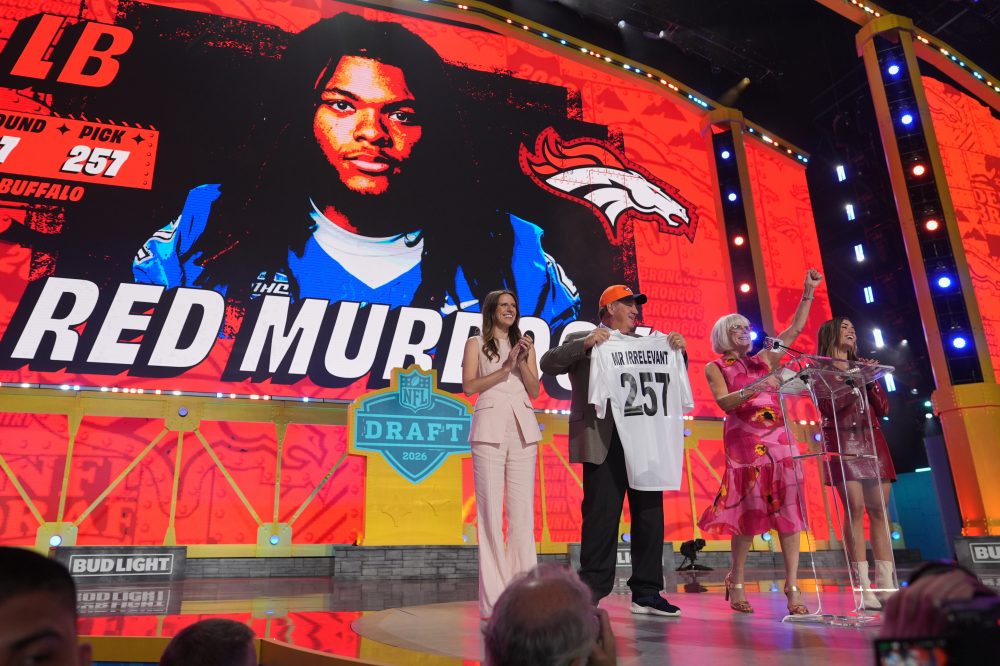
ENGLEWOOD, Colo. — Buffalo linebacker Red Murdock had begun questioning whether any NFL team would select him when the Denver Broncos called his name as the 257th and last selection in Saturday’s draft, earning him the traditional “Mr. Irrelevant” designation.
“The thoughts crept in, but I was trying to keep my mind off of things that I can’t control,” Murdock told reporters during a conference call from the team’s suburban Denver facility. “And when I got that call, I was extremely grateful.”
Utah tight end Dallen Bentley shared similar feelings after being chosen just one selection before Murdock. The Broncos held both final draft spots, marking the first time any franchise has controlled the last two picks since the AFL-NFL merger occurred in 1970.
“I’m just grateful to be part of Broncos Country, man,” Bentley expressed. “I’m just excited. It doesn’t matter when or where you get drafted or (if you go) undrafted, you’ve just got to make the most of every opportunity you get.”
This marks only the second time Denver has selected a “Mr. Irrelevant,” with Ole Miss quarterback Chad Kelly receiving that distinction in 2017.
Head coach Sean Payton and general manager George Paton deliberated over which player should receive the final selection before settling on Murdock, who established an FBS record with 17 forced fumbles during his time at Buffalo.
“Man, he’s a tackling machine, really instinctive, really good against the run,” Paton explained. “Just a nose for the ball, relentless, we think he can be a good special teamer. So, we like him.”
Payton described the draft room atmosphere as electric, noting the rare circumstances of controlling both final selections: “The rest of your career, no one will be a part of this when you have the last two picks of the draft, so, there’s eight minutes where you’re kind of controlling things.”
Despite the late round positioning, interest remained high in the final picks.
“There were a handful of teams, believe it or not, that called about coming to get Mr. Irrelevant,” Payton revealed.
“It was a hot pick,” his general manager agreed.
“We were just trying to decide who would be better to go to Newport Beach” for the annual celebration and charity gathering that has honored the draft’s final selection since 1976.
“I mean, it’s cool. In my career we’ve drafted two and they both made” the roster, Paton noted, adding that Denver plans to send both players to the festivities.
“When we talked to Bentley (we told him) he’s vice president, Mr. Irrelevant,” Payton added with humor. “So, if there’s anything he can’t handle, then the two of them can.”
For Murdock, reaching Denver represents the primary goal.
“I feel extremely grateful and excited to help the Broncos win,” Murdock stated. “I know a little bit about Mr. Irrelevant but the main thing is I’ve got an opportunity and I’m trying to make the most of it and help us win.”
“It was a pretty emotional moment, trying to hold it all in in front of the family and everything but yeah I was just really excited to get the opportunity. That’s the main thing. Man, I’m excited to go play for the Broncos. That’s a great team.”
Murdock represented one of only 16 selections throughout the three-day, seven-round draft who attended schools outside the Power Four conferences. This group includes Philadelphia Eagles defensive tackle Ura Barnard, a Nigerian prospect who never participated in college football.
Despite opportunities to transfer to larger programs like many of his fellow draftees, Murdock chose to remain committed to Buffalo.
“I’ve had opportunities, but I mentioned earlier being a team-first guy,” he explained. “That’s all that matters to me.”
The combination of name, image and likeness compensation and the increasingly active transfer portal has shifted talent toward power conferences, as major programs recruit stars from smaller leagues.
The trend shows declining representation from non-power conferences: from 70 draftees in 2022, numbers dropped to 38 in 2023, 34 in 2024, 24 in 2025, and just 16 this year.
Murdock hopes to emulate the success of notable “Mr. Irrelevant” alumni, including 49ers quarterback Brock Purdy from 2022 and former Chiefs kicker Ryan Succop from 2009.
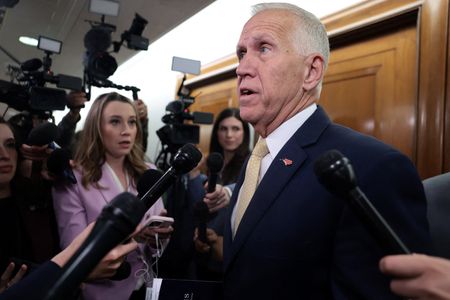
A key Republican senator has withdrawn his opposition to President Trump’s Federal Reserve chair nominee following the conclusion of a Justice Department investigation into the current Fed leadership.
North Carolina Senator Thom Tillis announced Sunday that he will support Kevin Warsh’s confirmation after federal prosecutors closed their probe into Fed chair Jerome Powell. Tillis’s previous resistance had created a significant obstacle for the nomination in the Republican-led Senate Banking Committee, with Powell’s current term set to expire May 15.
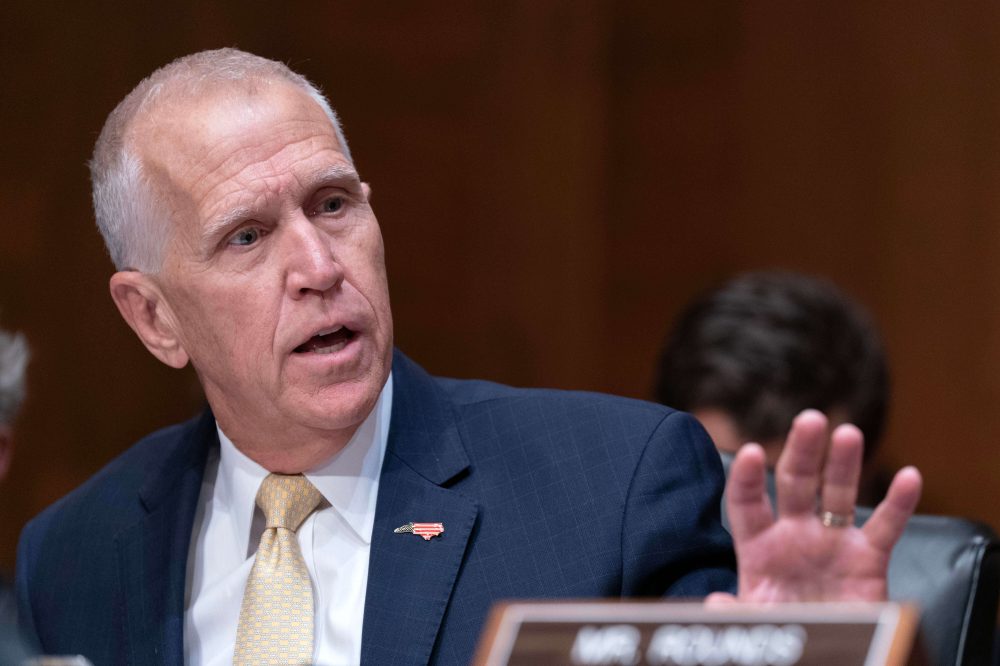
“I am prepared to move on with the confirmation of Mr. Warsh. I think he’s going to be a great Fed chair,” Tillis stated during his appearance on NBC’s “Meet the Press.” His comments came just two days after the U.S. attorney for Washington D.C. announced the end of the investigation into Powell.
The federal inquiry centered on the Federal Reserve’s costly headquarters renovation project, which has ballooned to $2.5 billion from initial projections of $1.9 billion. Powell’s congressional testimony about the construction work last summer was part of the investigation’s scope.
Tillis expressed his belief that no criminal activity occurred, saying: “I believe that there will not be any wrongdoing. May we find a little stupid here in terms of somebody responsible for the project making a decision they shouldn’t? Maybe. But it doesn’t rise to a criminal prosecution. That was my problem to begin with because I feel like there were prosecutors in D.C. that thought this was going to be a lever to have Mr. Powell leave early.”
The senator, who previously opposed Trump’s major tax legislation and announced he won’t seek reelection in 2026, said he received guarantees from the Justice Department that the matter is fully resolved. He noted that any future investigation would require a criminal referral from the inspector general.
The Senate Banking Committee scheduled a Wednesday vote on Warsh’s nomination following Tillis’s announcement. However, the committee’s top Democrat, Massachusetts Senator Elizabeth Warren, criticized the move, stating that “no Republican claiming to care about Fed independence should support moving forward the nomination of Kevin Warsh, who proved in his nomination hearing to be nothing more than President Trump’s sock puppet.”
During last week’s confirmation hearing, Warsh assured senators he had made no commitments to the White House regarding interest rate cuts and vowed to act independently if confirmed. This came after Trump told CNBC he would be disappointed if Warsh didn’t immediately lower rates upon taking office.
Tillis had strongly criticized the investigation led by U.S. Attorney Jeanine Pirro, a Trump supporter, calling it a “vindictive prosecution” that threatened the Fed’s traditional independence from political influence. He told NBC that Justice Department assurances helped him “feel like they were not using DOJ as a weapon to threaten the independence of the Fed.”
When asked Saturday about Warsh’s prospects, Trump expressed optimism, saying “I imagine it’s smooth” and calling his nominee “fantastic.” The president also mentioned wanting to understand how the Fed building renovation costs escalated so dramatically.
Trump had visited the Federal Reserve building in July, claiming on camera that renovations would cost $3.1 billion. Powell, standing beside him, disputed that figure after reviewing Trump’s documentation.
The Powell investigation was one of several Justice Department probes targeting Trump’s political opponents. Prosecutors had difficulty establishing grounds for criminal charges, and other similar investigations into figures like New York Attorney General Letitia James and former FBI Director James Comey have also failed to produce results.
A federal judge recently dismissed Justice Department subpoenas in the Powell case, determining their purpose was “to harass and pressure Powell to resign” and clear the way for a new chair. A prosecutor acknowledged in closed court proceedings that no evidence of criminal activity had been found.
Pirro indicated Friday on social media that she would “not hesitate to restart a criminal investigation should the facts warrant doing so.”
Trump originally appointed Powell as Fed chair in 2017 and has consistently pressured the central bank to reduce short-term interest rates. Even after a new chair takes office, Powell could remain on the Fed’s board of governors until his term expires in January 2028, though he hasn’t announced his intentions.
Warsh, a financier and former Fed board member, received Trump’s nomination in January.
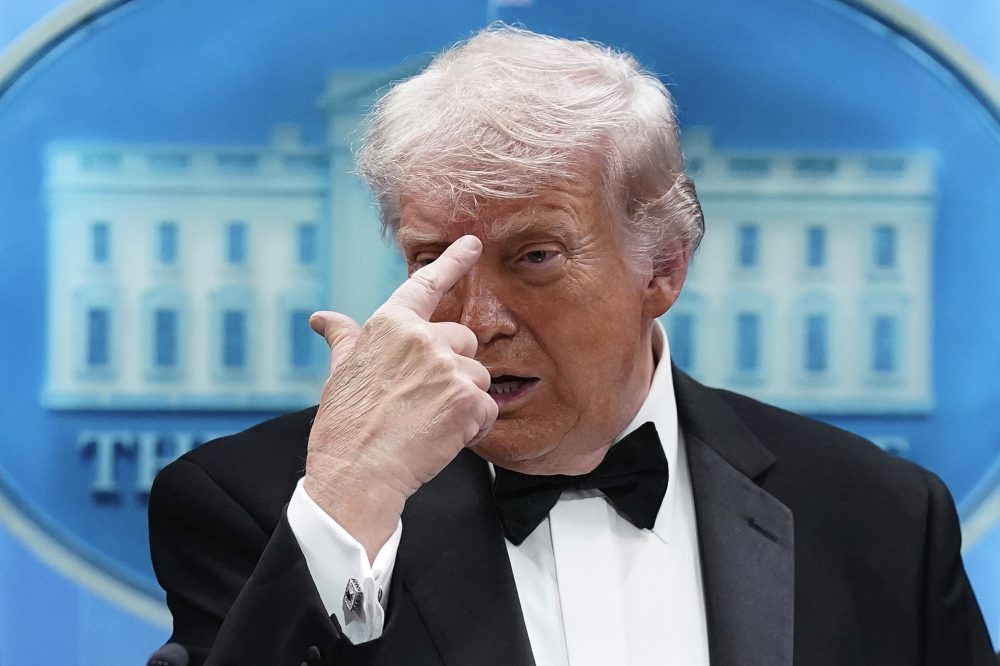
WASHINGTON — Following what he described as a third security threat against him in under two years, President Donald Trump adopted an unusually reflective tone while appealing for national reconciliation during a late Saturday press conference at the White House.
The incident unfolded just before Trump was set to speak at the White House Correspondents’ Association dinner, when an armed individual attempted to breach the security barrier at the Washington hotel venue. Law enforcement quickly apprehended the suspect, later identified as 31-year-old Cole Tomas Allen from Torrance, California, who was reportedly carrying firearms and bladed weapons.
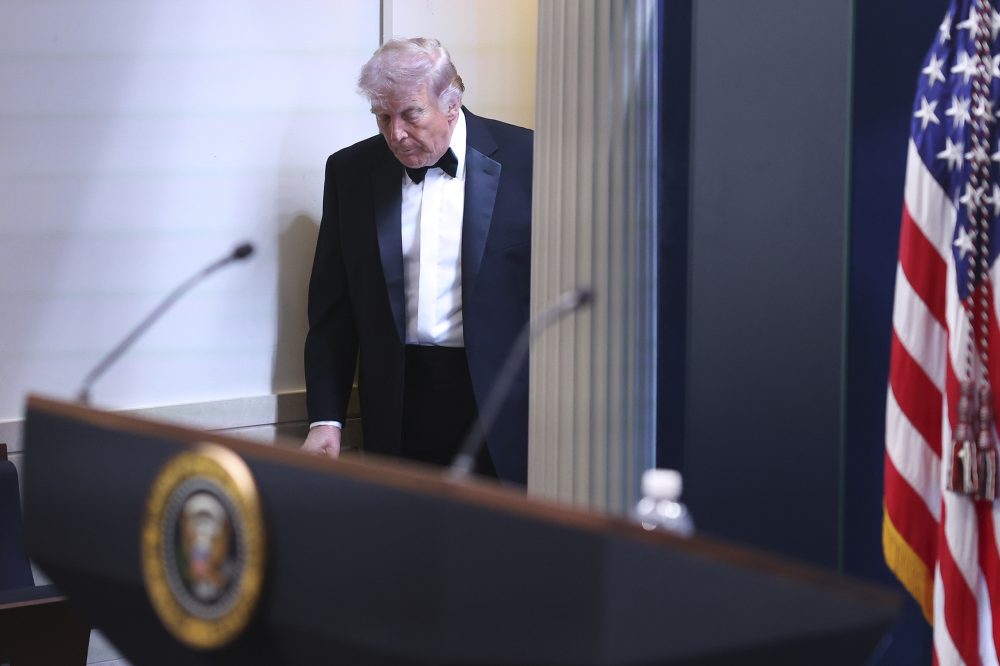
“It’s always shocking when something like this happens. Happened to me, a little bit. And that never changes,” Trump remarked during the impromptu news briefing, displaying a notably subdued demeanor compared to his typical public appearances.
The president characterized his role as inherently risky, stating the presidency represents “a dangerous profession.” He observed that political violence has intensified both domestically and internationally, noting “No country is immune.”
Trump drew historical parallels to justify the threats against him, suggesting they reflect his administration’s effectiveness. “I’ve studied assassinations, and I must tell you the most impactful people — the people who do the most, take a look at Abraham Lincoln,” he explained. “The people that make the biggest impact, they’re the ones that they go after. They don’t go after the ones that don’t do much.”
Departing from his typically confrontational political style, Trump emphasized the need for Americans to bridge their divisions.
“We have to, we have to resolve our differences,” the president stated. “I will say, you had Republicans, Democrats, independents, conservatives, liberals and progressives. Those words are interchangeable, perhaps, but maybe they’re not. But yet everybody in that room, big crowd, record-setting crowd, there was a record-setting group of people, and there was a tremendous amount of love and coming together. I watched, I watched, and I was very, very impressed by that.”
However, by Sunday morning, Trump had shifted to promoting his controversial White House ballroom construction project on social media. He claimed the incident “would never have happened with the Militarily Top Secret Ballroom currently under construction at the White House. It cannot be built fast enough!” He also dismissed legal opposition to the project as the “ridiculous ballroom lawsuit.”
This pattern of initial calls for unity followed by a return to divisive rhetoric has emerged before. After surviving an assassination attempt during a Butler, Pennsylvania rally in 2024 that left him with an ear wound and killed a supporter, Trump initially delivered a unifying message at the Republican National Convention.
“The discord and division in our society must be healed. We must heal it quickly,” Trump said during his nomination acceptance speech. “As Americans, we are bound together by a single fate and a shared destiny. We rise together. Or we fall apart.”
Yet that same address eventually included his standard combative elements, featuring disputed claims about the 2020 election and harsh criticism of then-President Joe Biden.
A similar sequence occurred following a September 2024 incident at Trump’s West Palm Beach golf resort, where Secret Service agents engaged an armed individual. Trump’s golf partner Steve Witkoff initially described the president’s response as “courageous and stoic,” but Trump soon resumed attacking “radical” Democrats and “left-wing lunatics” while calling Ryan Routh, who received a life sentence for the attempt, a “sick” individual.
Saturday’s incident differed from previous threats as First Lady Melania Trump was present. The president described his wife as shaken but alert to the danger.
“I think she knew immediately,” Trump said. “She was saying ‘It’s a bad noise.’” He added, “It was a rather traumatic experience for her.”
Federal authorities continue investigating the incident and the suspect’s motivations.
A North Carolina Republican senator announced Sunday he will no longer obstruct the confirmation process for Federal Reserve chair nominee Kevin Warsh, following the Justice Department’s decision Friday to end its investigation into current Fed Chair Jerome Powell.
Senator Thom Tillis had previously threatened to prevent any Federal Reserve nomination from moving forward while the DOJ probe remained active, citing concerns about protecting the central bank’s independence from political interference.
“I am prepared to move on with the confirmation of Mr. Warsh,” Tillis stated during his appearance on NBC’s “Meet the Press.” “I think he’s going to be a great Fed chair.”
This development removes a significant obstacle for Warsh and opens the door for Senate confirmation before Powell’s leadership term expires on May 15.
Powell revealed in January that the Justice Department had launched a criminal probe into his oversight of a $2.5 billion renovation project involving two Federal Reserve buildings in Washington. In a strongly-worded video statement released on a Sunday evening, Powell characterized the investigation as intimidation and accused the Trump administration of attempting to coerce the Fed into reducing interest rates.
A federal judge ruled in March to halt the DOJ’s subpoenas, determining they were issued with the inappropriate goal of pressuring Powell to either cut rates or step down. U.S. Attorney Jeanine Pirro indicated she would challenge the ruling and as recently as last week publicly stated her intention to continue the investigation.
However, on Friday, Pirro announced on X that she was terminating the probe and would request the Fed’s inspector general, who has been conducting a separate review of the renovations for several months, to assume responsibility for the matter.
Tillis emphasized that his opposition was never directed at Warsh personally, describing the nominee’s qualifications as “impeccable” during Tuesday’s confirmation hearing.
Warsh previously served as a Fed governor between 2006 and 2011 and has outlined plans to reform the Fed’s monetary policy approach while enhancing coordination with the Treasury and other government agencies on non-monetary issues.
During his hearing before lawmakers, Warsh stated that Trump had not attempted to secure any commitment from him to reduce interest rates. He also expressed that tariffs were not a significant concern regarding inflation and suggested that Fed officials might be relying on inflation measurements that exaggerate pricing pressures.
With Tillis now backing the nomination, Senate Banking Committee Republicans possess the necessary majority to overcome unified Democratic resistance and send Warsh’s nomination to the full Senate, where Republican lawmakers are anticipated to confirm him.
The timeline remains challenging with approximately three weeks remaining before Powell’s chairmanship concludes, including one week when the Senate is scheduled for recess. The Senate has previously confirmed a Fed nominee in under three weeks on only one occasion.
Powell has indicated he would continue serving as interim chair if Warsh’s confirmation is not completed by May 15.
Following Warsh’s installation as Fed chair, Powell may continue as a governor under a term extending another year and a half.
“I have no intention of leaving the Board until the investigation is well and truly over, with transparency and finality,” Powell declared last month.
Pirro stated Friday that she might restart her investigation based on the inspector general’s conclusions. Democratic Senators Elizabeth Warren of Massachusetts and Dick Durbin of Illinois criticized that statement Friday as a threat of “future baseless investigations” targeting Powell or other Fed governors.
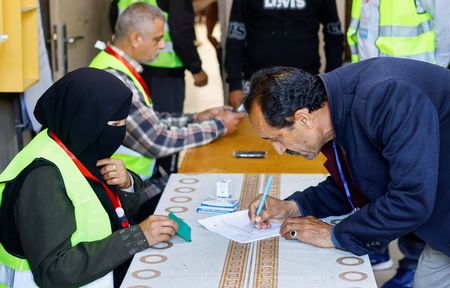
Supporters of Palestinian President Mahmoud Abbas secured decisive victories in municipal elections held across the West Bank and Gaza Strip, election officials announced Sunday following Saturday’s voting.
The elections represented a historic moment as they included participation from Gaza for the first time in almost 20 years. Saturday’s balloting also marked the initial Palestinian elections of any type since the conflict with Israel began over two years ago following Hamas’ attack on southern Israel.
Officials from Abbas’ West Bank-based Palestinian Authority explained that incorporating the Gaza city of Deir al-Balah into the electoral process demonstrated Gaza’s integral role in any future Palestinian state. The city experienced less destruction compared to other areas of the coastal region during the ongoing conflict.
Palestinian Prime Minister Mohammad Mustafa acknowledged the challenging timing of the elections during Sunday’s results announcement. The voting occurred “at a highly sensitive moment amid complex challenges and exceptional circumstances,” Mustafa stated.
However, he characterized the elections as “an important first step in a broader national process aimed at strengthening democratic life … and ultimately achieving the unity of the homeland.”
Hamas, which took control of Gaza from the Palestinian Authority in 2007, chose not to officially field candidates in Gaza and boycotted West Bank races where Fatah’s success was anticipated.
Despite Hamas’ official absence, some candidates in Deir al-Balah were perceived by local residents and political observers as sympathetic to the organization, potentially serving as a gauge of Hamas support levels.
Initial vote counts revealed that the “Deir al-Balah Brings Us Together” slate, viewed as Hamas-aligned, captured only two of 15 available seats in Gaza. The “Nahdat Deir al-Balah” list, supported by Abbas’ Fatah party and the Western-backed Palestinian Authority, obtained six seats. Independent Gaza-based groups “Future of Deir al-Balah” and “Peace and Building” claimed the remaining positions.
Abbas supporters dominated West Bank contests, with many candidates running without opposition.
Fatah representative Abdul Fattah Dawla observed that participation levels matched those from the previous West Bank municipal elections in 2022, commending voters for engaging despite continued Israeli military actions.
“By electing figures linked to Fatah, voters appear to be seeking unrestricted international support for municipal governance and a gradual political shift that could extend beyond the local level,” explained Palestinian political analyst Reham Ouda.
The recent warfare has devastated much of Gaza, leaving numerous residents homeless and struggling for basic survival. Israeli military operations have persisted despite a ceasefire agreement reached in October.
Central Elections Commission Chairman Rami al-Hamdallah reported voter participation reached only 23% in Gaza compared to 56% in the West Bank.
Al-Hamdallah noted that Israeli security measures prevented some voting materials and equipment from entering Gaza, though these obstacles were eventually resolved.
Hamas Gaza representative Hazem Qassem minimized the election outcomes’ importance, stating they bore no influence on broader national political matters.
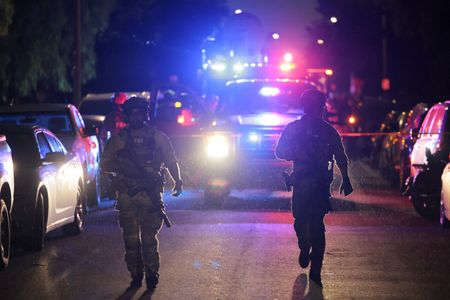
Federal authorities believe President Donald Trump was the intended target when a gunman opened fire at a security checkpoint during Saturday night’s White House Correspondents’ Association dinner in Washington.
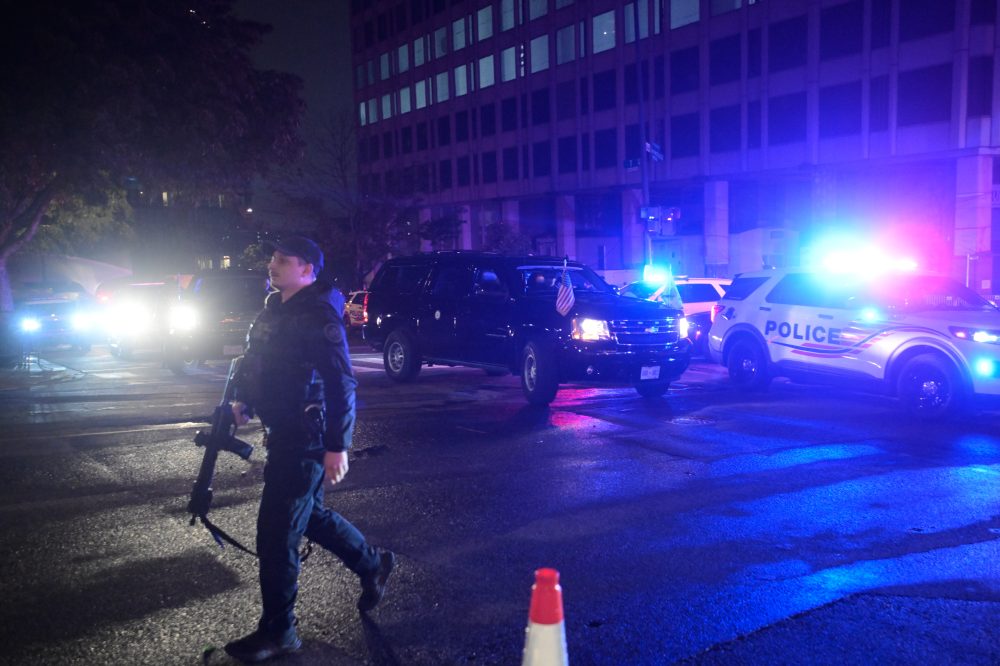
Acting Attorney General Todd Blanche confirmed Sunday that the suspect appeared to be aiming for administration officials, specifically the president. The gunman discharged a shotgun at a Secret Service agent stationed at a checkpoint inside the Washington Hilton hotel before being subdued and taken into custody. Security personnel immediately evacuated Trump and First Lady Melania Trump from the venue.
“It does appear that he, he did, in fact, have set out to target folks that work in the administration, likely including the president,” Blanche stated during an appearance on NBC’s “Meet the Press.” The Acting Attorney General added that investigators believe the suspect made his way to Washington by rail, traveling from Los Angeles through Chicago.
Federal prosecutors plan to file charges Monday against the suspect, including assault on a federal officer, illegal discharge of a firearm, and attempted murder of a federal officer, according to Blanche. He noted that authorities have not yet determined whether the attack has any connection to Iran.
During a late-evening press conference at the White House, Trump expressed his belief that he was indeed the intended victim of the assault. The president reported that the wounded Secret Service officer was protected by body armor and remained in “good shape.”
Secret Service spokesperson Anthony Guglielmi later verified that the injured officer had been discharged from the hospital.
International leaders quickly denounced the attack while expressing gratitude that Trump and all attendees remained safe, showing support for the United States. NATO Secretary General Mark Rutte characterized the incident as an assault “on our free and open societies,” with multiple leaders emphasizing that violence has no role in democratic governance.
The British embassy issued a statement indicating that officials are reviewing whether the shooting might impact King Charles’ scheduled visit to Washington beginning Monday.
Law enforcement sources identified the gunman as Cole Tomas Allen, a 31-year-old California resident. Initial background information suggests Allen worked as an educator in Torrance, located near Los Angeles, based on social media profiles.
Washington’s interim Police Chief Jeffery Carroll revealed that Allen carried multiple weapons, including a shotgun, handgun, and several knives. The suspect was transported to a medical facility for evaluation, though Carroll stated it was premature to speculate about his motives. Preliminary findings indicate Allen may have been registered as a hotel guest.
The violent incident, which began around 8:35 p.m., has sparked renewed concerns about security protocols for senior government officials, particularly given the large gathering of high-ranking officials in the hotel’s main ballroom.
Investigators are focusing on how Allen managed to bring the shotgun into the hotel, which was hosting the prestigious annual dinner that serves as a major event on Washington’s social calendar.
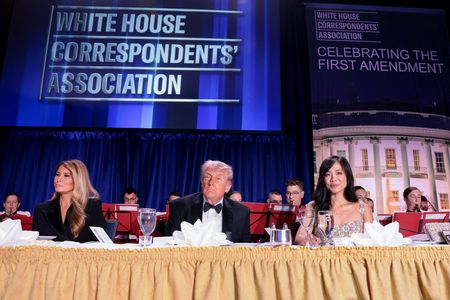
The formal event drew numerous cabinet members and senior administration officials despite extensive security measures. This marked Trump’s first attendance at the correspondents’ dinner as president, having declined to participate in previous years.
The Washington Hilton holds historical significance as the location where President Ronald Reagan survived an assassination attempt in 1981, when he was shot outside the hotel.
Security footage that Trump later shared on Truth Social captured Allen rushing through a security checkpoint, briefly surprising security personnel before they responded with drawn weapons.
Security forces did not fire at the gunman, who managed to breach two checkpoints before being stopped.
“You know, he charged from 50 yards away, so he was very far away from the room. He was moving. He was really moving,” Trump commented after the dinner was cancelled.
Trump described Allen as what officials believe to be a “lone wolf” operator.
Video documentation shows Trump and his wife engaged in conversation at their head table when commotion from the rear of the ballroom – caused by gunfire – sent waves of alarm through the crowd.
Attendees began shouting “Get down, get down!” as approximately 2,600 guests in formal attire sought cover beneath tables while security personnel drew their weapons. Some agents pushed cabinet secretaries to the ground and shielded them while others established protective barriers.
Armed security personnel in tactical gear rushed the stage with rifles aimed toward the ballroom as Trump, Melania Trump, and Vice President JD Vance were evacuated. Cabinet members seated throughout the expansive room were escorted out individually by their security teams.
While most guests remained crouched below table level, some began chanting “USA, USA!”
According to a source, Trump remained backstage for approximately one hour after being removed from the stage. He later indicated he had been reluctant to leave the event, reminiscent of his defiant response after surviving an assassination attempt in Butler, Pennsylvania, in 2024.
In that previous incident, Trump sustained an ear injury from a 20-year-old shooter who was subsequently killed by security forces.
Approximately two months following the Butler shooting, Secret Service agents discovered an armed individual hiding in vegetation at Trump International Golf Club in West Palm Beach, Florida, while Trump was playing golf. Authorities classified this as an assassination attempt, and the perpetrator received a life sentence in February.
LONDON – A Sunday phone conversation between British Prime Minister Keir Starmer and President Donald Trump centered on reopening a critical Middle Eastern shipping corridor that has been disrupted, according to a statement from the British leader’s office.
A spokesperson for Starmer’s administration said the two leaders focused on the immediate necessity of resuming commercial vessel traffic through the Strait of Hormuz, citing major economic ramifications and rising costs affecting British citizens and people worldwide.
“The leaders discussed the urgent need to get shipping moving again in the Strait of Hormuz, given the severe consequences for the global economy and cost of living for people in the UK and globally,” the Downing Street spokesperson stated.
During their discussion, Starmer briefed Trump on recent developments in his collaborative effort with French President Emmanuel Macron aimed at ensuring safe passage for maritime traffic in the region.
“The prime minister shared the latest progress on his joint initiative with President (Emmanuel) Macron to restore freedom of navigation,” the spokesperson added.
BOSTON — More than three decades have passed since thieves walked away with 13 priceless artworks from Boston’s Isabella Stewart Gardner Museum in what became history’s most notorious unsolved art crime, with the stolen pieces now worth over $500 million.
The 1990 heist continues to hold the record as the world’s biggest art theft, dwarfing other museum robberies including a broad-daylight break-in at the Louvre that involved fewer pieces and was quickly solved. While the FBI announced in 2013 that agents had identified those responsible, the bureau refused to release names, creating ongoing mystery around the case.
Now, a retired federal agent who spent more than 20 years leading the investigation has written a book revealing his conclusions about the crime. Geoff Kelly provides the most comprehensive look yet at how authorities tracked the stolen art through underground criminal circles, where several key figures and witnesses met violent deaths, while also disputing widely accepted theories about the case.
The theft carries particular irony given that museum founder Isabella Stewart Gardner had specified in her estate documents that her Venetian palace-style building should never be altered following her 1924 death. Gardner, who actually lived in the museum until she died there, wanted every painting, sculpture and architectural piece to stay precisely where she had placed it.
Today, the ornate empty frames where the missing paintings once hung remain on display as haunting reminders of what was lost.
In the early morning hours of March 18, 1990, while Boston was still recovering from St. Patrick’s Day festivities, two men wearing police uniforms appeared at the museum entrance and persuaded a security guard to admit them, breaking established safety procedures.
After restraining both guards with handcuffs in the basement, the thieves proceeded to the museum’s Dutch Room, where they sliced Vermeer’s “The Concert” and Rembrandt’s “Christ in the Storm on the Sea of Galilee” from their frames, along with pieces by Degas and Manet.
The criminals also grabbed a Napoleonic eagle finial — an ornamental metal object worth relatively little that later baffled investigators — plus the building’s security recording tapes.
Museum officials initially posted a $5 million reward for information leading to the artworks’ return, then increased it to $10 million ten years later.
Investigative leads pointed toward various suspects including Irish Republican Army members and Boston organized crime figures such as infamous gangster Whitey Bulger.
Kelly’s pursuit of clues took him to France, where he observed through field glasses as undercover FBI operatives pretended to be wealthy go-betweens, relaxing on a luxury boat while sipping champagne and enjoying strawberries to attract suspected Corsican criminal contacts.
Back in New England, federal agents conducted searches throughout the region while depending heavily on criminal informants. One terminally ill triple killer nicknamed “Meatball” secretly recorded discussions with possible accomplices, hoping to earn money for his relatives.
However, none of these investigative paths led to recovering the stolen art.
Since the robbery occurred, multiple individuals thought to be connected to the crime have been murdered, with another dying under questionable circumstances.
Robert “Bobby” Donati, a Boston mob associate who had long been suspected in the case, was discovered stabbed to death in 1991, his corpse placed in a car trunk after his residence was searched and ransacked.
Earlier, Donati had toured the Gardner Museum with another known art criminal, Myles Connor, to plan a potential robbery and mentioned that stealing the museum’s Napoleonic finial would serve as his “calling card.” Later, a jewelry dealer informed investigators that Donati had attempted to sell a finial from the Isabella Stewart Gardner Museum but withdrew the offer, claiming it was “too hot.”
Another investigative thread focused on George Reissfelder, whom authorities believe provided the escape vehicle.
Kelly located Reissfelder’s brother, a former military officer who initially doubted his sibling’s involvement. The brother became emotional after being shown Manet’s “Chez Tortoni,” recognizing it as artwork he had personally hung above his brother’s bed.
Reissfelder subsequently died under suspicious circumstances. When investigators examined his residence, the painting had vanished.
Both suspects had connections to TRC Auto Electric, a Dorchester business associated with Charles “Chuck” Merlino’s criminal organization.
While investigators felt confident about the perpetrators’ identities, obtaining conclusive evidence proved challenging.
During the investigation’s initial phase, the FBI assigned only one agent to the case, which Kelly believes hindered progress.
“You have to keep in mind when you’re talking about investigations, they come down to dollars and cents,” Kelly said. Securing adequate resources was “like pulling teeth.” Federal investigators in Boston were primarily concentrated on violent crimes, narcotics trafficking and organized crime cases at that time.
Kelly criticized the decision to publicize surveillance video despite investigators’ opposition, calling it a persistent distraction. Since no useful footage existed from the robbery night, officials released video from the previous evening showing a museum worker entering after his vehicle broke down. Kelly opposed the theory suggesting the employee was surveying the museum, since that possibility had already been examined and ruled out. The released footage generated years of misdirected suspicion, though the man was eventually cleared of involvement.
One continuing question concerns whether someone inside the museum assisted the thieves.
Photographs from that evening show a museum guard restrained in the basement with duct tape covering his head.
Investigators observed that just before the robbery, the guard violated policy by opening a door that faced the area where the thieves were later spotted waiting — behavior investigators found extremely unusual and suspicious.
“It’s the immutable laws of time and space,” Kelly said. “I think that there was enough information back then that he could have been charged. Would it be enough to convict him? I don’t know.”
By the time investigators focused more intensively on these concerns, Kelly explained, the statute of limitations had run out, eliminating their ability to force cooperation.
The museum guard, Rick Abath, consistently denied participating in the theft. He passed away in 2024.
Kelly characterizes the missing artworks as “perfect fugitives.”
“They don’t go to the doctor. They don’t get stopped for speeding. They don’t leave fingerprints,” he said. “They can just disappear.”
Unlike human fugitives, he noted, artworks can also be replicated.
Throughout the years, this has resulted in pursuing false leads — including paintings discovered in a Reno antique shop, displayed in private residences and even one that appeared in a “Monk” television episode.
Since the works are so widely recognized, selling them openly is virtually impossible.
“Stealing the artwork from the museum, that’s the easy part,” Kelly said. “Profiting from it, that’s the difficult part.”
He believes the paintings will eventually resurface — outlasting those who committed the crime.
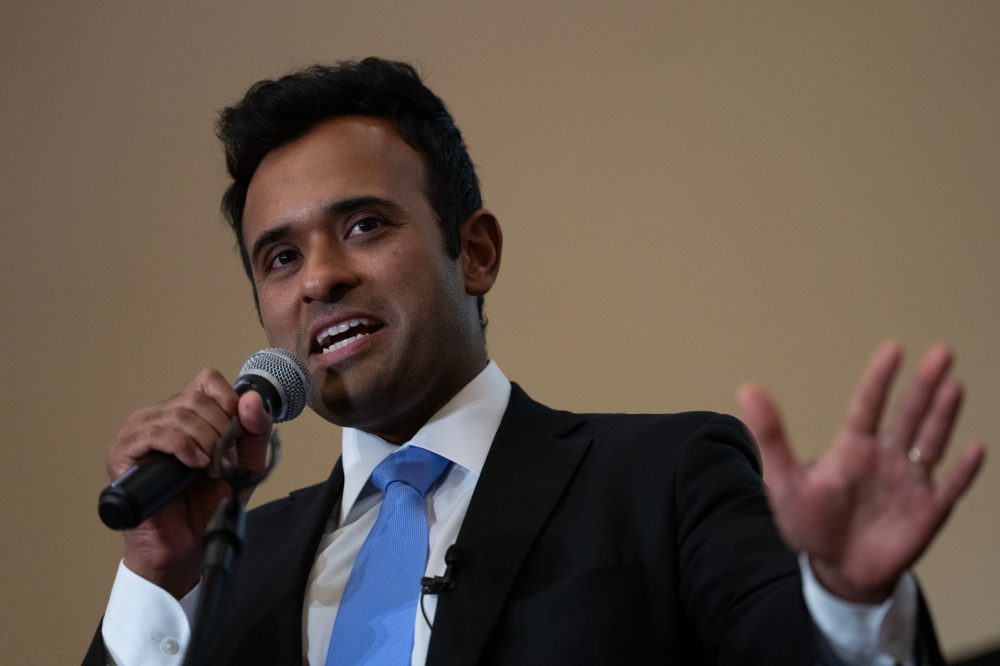
COLUMBUS, Ohio — While Vivek Ramaswamy appears to be cruising toward victory in Ohio’s Republican gubernatorial primary on May 5, the race has revealed some unexpected challenges for the former presidential candidate.
The biotech entrepreneur has leveraged his celebrity status from the 2024 presidential race, technology sector ties, and Trump’s backing to amass unprecedented campaign funds, which he’s now deploying in television advertisements targeting the November general election. Rather than focusing on his primary challenger, Ramaswamy has directed his campaign events and commercials toward attacking Democrat Amy Acton, Ohio’s former health department chief who will likely be his fall opponent.
Ramaswamy appears so confident about securing the Republican nomination that his team has essentially dismissed his primary rival up to this point.
“I believe this year we face the single greatest contrast between two candidates in the history of governor’s races in Ohio,” he told Republicans at a recent party fundraising dinner, referencing the general election. “We face the most consequential election for governor in the history of our state.”
However, the primary campaign has revealed some weak spots for the former White House hopeful.
The Cincinnati native is encountering increasing resistance from Republican voters frustrated by inflation, the chaotic handling of Jeffrey Epstein document releases, expanding data center demands, and Middle East conflicts. Ramaswamy has also drawn fire for policy proposals including merging Ohio’s university systems and increasing the minimum voting age to 25. Detractors argue these positions show the Harvard and Yale-educated tech mogul has lost touch with ordinary Ohio residents.
The attacks have turned personal, with some criticism rooted in ethnic and racial hostility toward Ramaswamy, whose parents immigrated from India.
Should Ramaswamy secure the nomination, his allies are less concerned about Republicans crossing party lines than about factors that might suppress conservative voter participation. Low turnout in November could potentially give Ohio its first Democratic governor in two decades.
“We have three opponents right now in this race,” Ramaswamy’s running mate, state Senate President Rob McColley, said in remarks to Republicans in rural Marion County that were shared by WGH Talk. “We have Amy Acton, we have the national political environment and then we have complacency. I would argue the third opponent is the most dangerous opponent we possibly have.”
Frustration among certain Ohio conservative voters has generated interest in Casey Putsch’s long-shot campaign.
Putsch, an engineer and car designer who brands himself “The Car Guy,” has gained followers through controversial YouTube content that mocks Ramaswamy and attacks national Republican leaders over Epstein file management, positions on power-hungry data facilities, and Middle East policy.
While his rallies draw small crowds and his campaign has collected just $123,000, Putsch has won support from some right-wing voters. Tyler Morris, who works in ambulance manufacturing in central Ohio, represents this constituency.
“When I hear people like Casey speak, he’s a guy like me,” Morris, 32, said as he was on his way to see Putsch speak at a Columbus park. “He’s just a guy that got pissed off one day. He’s not a politician. He’s like, do you know what — I want to speak for the average, everyday Ohioan.”
Morris explained he previously backed Trump but has since turned against the former president and refuses to support any Trump-endorsed candidate like Ramaswamy.
“I say I’m politically cynical, because it’s just like regardless of who I vote for, I feel like as an average Ohioan, it seems like things are just getting worse and worse for everyone,” he said.
Putsch’s campaign rhetoric has extended beyond appeals to working-class Ohioans. He has been criticized for promoting ethnic animosity toward Ramaswamy, frequently questioning the candidate’s Indian background and Hindu religious beliefs.
During his campaign launch, Putsch claimed Ramaswamy showed disdain for “American cultural values.” In one internet video, he demanded Ramaswamy “be destroyed.”
Following Putsch’s campaign announcement, Ramaswamy published an opinion column in The New York Times urging Republicans to reject white nationalist extremists within the party in favor of an American identity “based on ideals.”
“No matter your ancestry, if you wait your turn and obtain citizenship, you are every bit as American as a Mayflower descendant as long as you subscribe to the creed of the American founding and the culture that was born of it,” he wrote. “This is what makes American exceptionalism possible.”
The Cincinnati-born candidate later condemned racism and antisemitism within Trump’s “Make America Great Again” coalition during remarks at Turning Point USA’s AmericaFest, which angered some party members.
Following that speech, Ramaswamy’s social media accounts attracted increasingly vicious and racist comments. Putsch has also promoted racial slurs, including imagery showing Ramaswamy as an insect being exterminated and challenging him to “cowboys and Indians.”
In January, Ramaswamy withdrew from Instagram and X social media platforms.
“Leaders who depend on social media to gauge public opinion are looking through a broken mirror,” he wrote in a Wall Street Journal column.
Putsch ridiculed Ramaswamy’s withdrawal, writing on X that his opponent “can’t take the heat.”
Ohio Republican Party chairman Alex Triantafilou brushes off Putsch’s attacks as standard primary season tactics.
“The online right these days, it’s meaningless to the message of where we are as a party on the ground,” Triantafilou said.
He pointed to Ramaswamy’s national recognition, political abilities, and fundraising success — a record $50 million in total donations, though approximately half comes from Ramaswamy’s personal wealth.
“In every possible category of what we want in a candidate, he has it,” Triantafilou said.
Aaron Baer, who leads the Columbus-based Center for Christian Virtue, also dismisses Putsch’s criticism of Ramaswamy’s heritage, including challenges to Ramaswamy’s capacity to govern “a Christian state.”
“The bottom line is Vivek Ramaswamy, while he doesn’t share the Christian faith with me and millions of other Ohioans, he very much shares our values,” Baer said.
Ramaswamy has conducted what resembles a general election effort, attracting large audiences during stops in all 88 Ohio counties. His approach seems effective with voters like Pam Koch, a 70-year-old pharmacy employee who attended a Lincoln Reagan Day dinner featuring Ramaswamy as keynote speaker.
Koch identified herself as an anti-abortion Christian and said she attended “just to see where he stands, you know, spiritually and (on) everything that we value.” She left the event pleased with his presentation.
“I think he lines up with all of our values, so I’m excited about that,” she said.
Ron Eckles, a retired telecommunications worker, remains committed to Putsch, partially because of characteristics the candidate shares with Ramaswamy, including Ohio roots and entrepreneurial success. However, he views Putsch as superior on Second Amendment issues and appreciates that Putsch graduated from Ohio State University, while Ramaswamy attended Ivy League schools.
BEIJING – A content creator from North Carolina is offering international tourists an exclusive glimpse into China’s advanced automotive technology that remains unavailable to American consumers.
Ethan Robertson, 34, led a group of visitors from Australia, New Zealand, the United Arab Emirates and other countries through the Beijing Auto Show, which kicked off Friday. The tour showcased expansive exhibition floors filled with electric SUVs, pickup trucks and cutting-edge concept vehicles that highlight China’s growing influence in the global automotive market.
Robertson co-founded Wheelsboy, a YouTube channel focused on Chinese automotive content for English-speaking viewers. Tour participants were immediately struck by three key features: affordable pricing, sophisticated technology, and extensive vehicle options.
During a stop at one display, Robertson demonstrated a premium electric SUV from Leapmotor, backed by Stellantis, featuring expansive screens and a rear-seat refrigerator.
“You’re looking at a car that’s maybe $30,000 and that car is fully equipped,” he explained. “Whereas $30,000 barely gets you into any electric vehicle or hybrid” in the United States.
The dramatic price gap explains why Robertson’s predominantly American viewership responds with both amazement and disappointment.
“Our comment section is full of people saying things like, ‘I can’t believe the government won’t allow them to sell this car in my country,’” Robertson shared with Reuters.
John Cordell, a 77-year-old retired heating and ventilation engineer from New Zealand, was particularly drawn to a bright yellow Deepal S07 midsize crossover during the tour.
“First of all, I was attracted to the color,” Cordell noted. However, the vehicle’s appeal extended beyond aesthetics. He highlighted the cabin design, heads-up display technology, screen interfaces, and comprehensive camera systems.
Cordell participated in the two-day experience, priced at $399 per person, alongside his brother-in-law and son. He currently drives a Chinese-made BYD Atto 3 electric vehicle in New Zealand and emphasized technology as a key attraction. “Everything is very well engineered,” he observed.
Andrew Pertsoulis, a 62-year-old former performance coach from Sydney, was most impressed by the futuristic cabin environments. “It’s what separates them,” he said, describing how the large displays and technology-rich interiors made him feel like he had “stepped into a new generation of vehicle.”
Robertson, who currently resides in China, noted that American viewers’ attitudes toward Chinese automobiles have evolved significantly during his six years covering the sector. Initial perceptions of poor quality and imitation designs have shifted toward recognition that many manufacturers are now leading innovation in battery technology, software development, and charging capabilities.
Robertson, who began learning Chinese during his undergraduate studies, occasionally faces accusations of corporate or government sponsorship due to his channel’s positive coverage. His YouTube platform has attracted 210,000 subscribers, though he maintains independence from both commercial and political interests.
Growing numbers of Americans are developing interest in China’s automotive sector. Lei Xing, American co-host of the China EVs & More podcast, acknowledges the industry’s complexity with over 100 manufacturers. “I get lost,” Lei admitted.
While Lei doesn’t anticipate rapid entry of Chinese brands into the U.S. market due to current political tensions, he believes these vehicles will eventually reach American consumers. “It’s a matter of time,” Lei predicted. “I know in my life I’m going to be able to buy a Chinese EV.”
The Defense Minister of Mali, Sadio Camara, lost his life during a terrorist assault at his home on a military installation near the nation’s capital on Saturday, according to reports from French radio station RFI released Sunday.
The deadly incident occurred at the Kati military compound located outside Bamako, where the extremist organization JNIM, which maintains connections to al Qaeda, carried out the fatal attack on Camara’s residence.
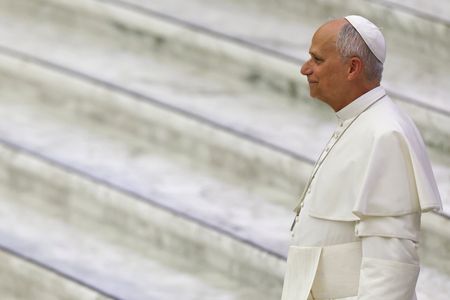
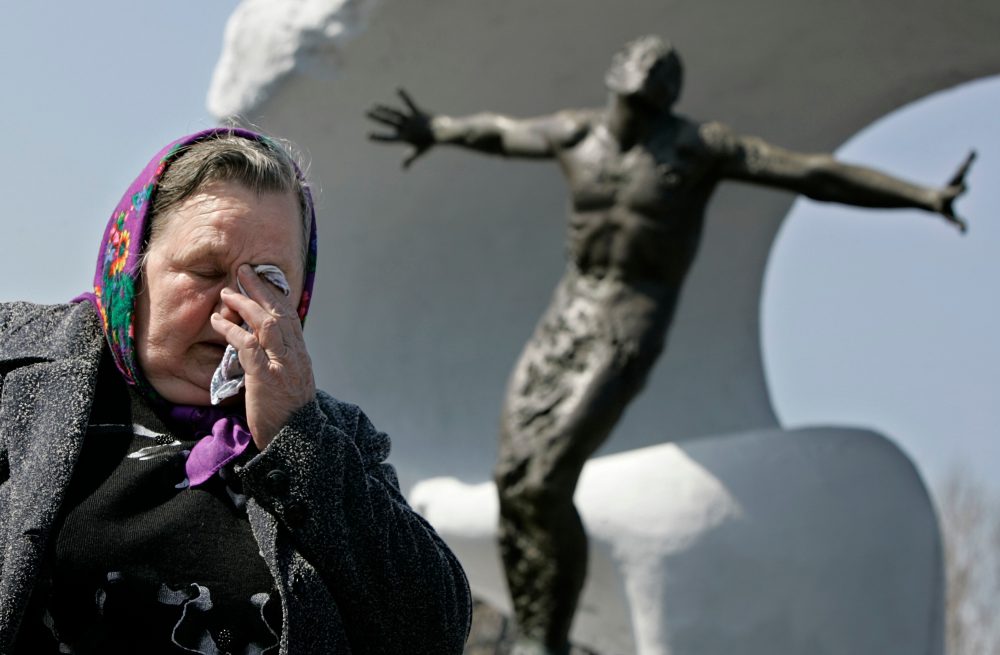
ROME, April 26 – During his Sunday remarks following the Angelus prayer, Pope Leo condemned warmongers and those who exploit natural resources as criminals robbing humanity of its peaceful future, while also cautioning against nuclear technology misuse on the 40th anniversary of the Chornobyl disaster.
Ukraine marked four decades since the catastrophic nuclear accident on Sunday, with ongoing concerns that Russia’s ongoing four-year conflict could trigger another similar catastrophe.
Speaking during his weekly address, the Pope noted that the Chornobyl incident had permanently impacted humanity’s shared memory.
“It remains a warning over the use of ever more powerful technologies,” stated the Pope, who recently completed a 10-day journey through four African countries.
“I hope that at all decision-making levels, wisdom and responsibility always prevail, so that atomic power can always be used to support life and peace,” he continued.
Drawing from the day’s Gospel reading about sheep thieves, Pope Leo explained that criminals appear in various forms, citing examples such as “superficial lifestyles driven by consumerism,” bias, and false beliefs.
“And let’s not forget also those thieves who, by plundering the earth’s resources, by fighting bloody wars or feeding evil in whichever form, are simply taking away from all of us the chance of a future of peace and serenity,” he stated.
Leo, who became the first American pontiff, has drawn criticism from President Donald Trump following his increasingly vocal opposition to warfare and authoritarian rule.
Delaware Department of Transportation crews are performing a scheduled bridge inspection that is affecting traffic flow on Rising Sun Lane this morning.
The inspection is taking place on the bridge at Rising Sun Lane and New Bridge Road, located between Main Street and the DuPont Experimental Station. DelDOT officials say the inspection work is expected to wrap up by 12:00 PM today.
Motorists traveling through the area should expect possible delays and may want to consider alternate routes until the inspection is completed.
Law enforcement officials apprehended a gunman following a shooting incident that forced the immediate evacuation of President Trump and the First Lady from Saturday evening’s White House Correspondents’ dinner.
The shooting occurred at the hotel venue where the annual journalism event was taking place, prompting Secret Service agents to quickly remove the presidential couple from the premises as a security precaution.
The suspect is now in police custody following the incident that disrupted one of Washington’s most high-profile media gatherings.
Citizens in the Boston metropolitan area have established an organization dedicated to providing support for federal judges who are experiencing aggressive rhetoric and threats of violence.
The grassroots initiative represents a community response to the increasingly hostile environment that members of the federal judiciary are facing across the country.
The citizen-led effort aims to counter the climate of intimidation that has emerged around federal court proceedings and judicial decisions.
WASHINGTON — A man who attempted to force his way into the White House Correspondents’ Association dinner ballroom Saturday night had his sights set on Trump administration officials, according to acting Attorney General Todd Blanche.
During a Sunday appearance on NBC’s “Meet the Press,” Blanche revealed that authorities believe the individual made a cross-country journey by rail, starting in California, stopping in Chicago, and ultimately arriving in Washington. The suspect then registered as a hotel guest at the venue hosting one of the capital’s most prestigious annual gatherings.
The incident forced President Donald Trump to be quickly escorted from the stage when gunfire erupted. Law enforcement has the 31-year-old individual in custody, and he is now facing criminal charges.
Delaware transportation officials have shut down a major roadway due to dangerous flooding conditions that have made travel impossible.
Airport Road is currently impassable in both directions between Interstate 95 at Exit 5A and MacArthur Road, according to the Delaware Department of Transportation.
The complete closure affects all vehicle traffic along this busy corridor, forcing drivers to seek alternate routes during their commutes.
DelDOT has not yet announced when the roadway might reopen, as crews continue to monitor the flooding situation.
Motorists are advised to plan extra travel time and use alternative routes until the water recedes and the road can safely accommodate traffic again.
KYIV, Ukraine — Multiple attacks across Ukraine, Russian-controlled areas, and Russia have resulted in at least 16 fatalities, officials reported, while the four-decade anniversary of the Chernobyl nuclear catastrophe has sparked renewed concerns about nuclear safety risks during Russia’s ongoing invasion of Ukraine.
Regional leader Oleksandr Hanzha confirmed Sunday that casualties from Russian drone and missile attacks on Dnipro had climbed to nine people.
Moscow-appointed officials reported that a Ukrainian drone attack killed one person in the port city of Sevastopol, located in Russian-controlled Crimea. Russia seized the peninsula from Ukraine in 2014 in an action widely condemned as illegal internationally, and has utilized it as a logistical hub throughout the current conflict.
In Ukraine’s Luhansk region, which Russia claims to fully control despite Ukrainian denials, Moscow-installed governor Leonid Pasechnik reported three deaths from an overnight Ukrainian drone attack on a village. This followed two additional fatalities reported in the early morning hours of Saturday.
Ukraine has not responded to either incident, and The Associated Press could not independently confirm these reports.
These recent attacks followed the death of a woman in a Ukrainian drone strike on Russia’s Belgorod border area, according to regional authorities.
Ukraine’s General Staff announced Sunday that Ukrainian forces had targeted an oil refinery in Yaroslavl, located deep within Russian territory. The attack ignited fires at the facility, which annually processes 15 million tons of oil and manufactures gasoline, diesel, and jet fuel for Russian military use. Russian officials have not yet responded to this incident.
Ukraine has created its own long-distance drone technology capable of striking targets up to 1,500 kilometers (900 miles) inside Russia. Recent attacks have focused on Russian oil infrastructure as Moscow seeks to increase exports following temporary sanctions relief from the Trump administration to address supply shortages. Ukrainian officials express concern that Russia will use additional oil revenues to purchase new weapons for intensified attacks.
Ukrainian President Volodymyr Zelenskyy used the Chernobyl disaster anniversary to caution that Russian attacks could trigger a repeat of the historic catastrophe.
“Through its war, Russia is once again bringing the world to the brink of a man-made disaster — Russian-Iranian Shaheds regularly fly over the plant, and one of them struck the confinement last year,” he wrote on Facebook.
“The world must not allow this nuclear terrorism to continue, and the best way is to force Russia to stop its reckless attacks,” he said.
International Atomic Energy Agency Director General Rafael Grossi shared similar concerns during his Kyiv visit, emphasizing that repairs to the plant’s damaged outer protective barrier must commence immediately. IAEA evaluations indicate that damage from last year’s strike has already undermined a critical safety feature of the structure, he explained, cautioning that prolonged delays could increase risks to the original containment structure below. The European Bank for Reconstruction and Development estimates repairs would cost at least 500 million euros ($586 million).
Ukrainian authorities report that a Russian drone damaged the outer shell of the plant’s New Safe Confinement structure in February 2025 — a $2.1 billion arch-shaped covering completed in 2019 over the remnants of Reactor No. 4. Moscow has denied deliberately targeting the facility, instead claiming Ukraine orchestrated the attack.
WASHINGTON — Federal law enforcement officials believe an individual connected to an incident at the White House Correspondents’ Dinner had deliberately planned to target members of the Trump administration, according to Acting Attorney General Todd Blanche.
During an appearance on NBC’s “Meet the Press” on Sunday, Blanche revealed that investigators have determined the suspect had specific intentions. “It does appear that he, he did, in fact, have set out to target folks that work in the administration, likely including the President,” Blanche stated during the television interview.
The acting attorney general also disclosed that authorities believe the individual made a lengthy cross-country journey to reach the nation’s capital, traveling by rail from Los Angeles through Chicago before arriving in Washington, D.C.
Israeli President Isaac Herzog announced Sunday that he will delay any decision on Prime Minister Benjamin Netanyahu’s pardon petition until all possibilities for a negotiated plea agreement have been explored first.
The corruption case against Netanyahu has deeply divided Israeli society and caused significant political upheaval, leading to five separate elections from 2019 through 2022. The prime minister’s legal issues stem from investigations that started approximately ten years ago, with the next scheduled election set for October 2026.
Netanyahu has consistently rejected all allegations of bribery, fraud and breach of trust.
Herzog stated Sunday that negotiating an agreement would represent the optimal outcome for Netanyahu’s situation.
“The President therefore believes that before addressing the pardon request itself, efforts should first be exhausted to reach an agreement between the parties, outside the courtroom,” Herzog said in a statement.
The president’s office released this statement following a New York Times report indicating Herzog planned to facilitate mediation toward a plea agreement, postponing any pardon consideration.
When questioned about whether plea negotiations were currently in progress, a Herzog spokesperson refused to elaborate beyond the official statement. Netanyahu’s representatives did not provide a response to requests for comment.
The pardon petition was filed by Netanyahu in November. Israeli law grants the president pardoning authority for convicted individuals, though no historical precedent exists for pardoning someone during an ongoing trial.
President Donald Trump has repeatedly urged Herzog to issue a pardon for Netanyahu, including appeals made in March during the Iran conflict when court proceedings were temporarily suspended.
Netanyahu is scheduled to return to court this week as his trial, which commenced in 2020, continues. He holds the distinction of being Israel’s first serving prime minister to face criminal charges.
Iran’s top diplomat traveled to Oman on Sunday for high-level discussions about regional stability and ongoing tensions with the United States, according to statements from Iran’s foreign ministry.
Foreign Minister Abbas Araqchi met with Sultan Haitham bin Tariq al-Said in Muscat to address security concerns in the strategically important Strait of Hormuz and surrounding Gulf waters, while also exploring diplomatic solutions to the Iran-U.S. standoff.
During the meeting, Araqchi argued that American military forces stationed throughout the Middle East were contributing to regional instability and creating divisions. He advocated for establishing a security arrangement for the region that would operate without external involvement from foreign powers.
BELFAST – Law enforcement officials in Northern Ireland have initiated an attempted murder probe following a vehicle blast that took place Saturday evening outside a police facility located south of Belfast.
The Police Service of Northern Ireland announced Sunday that their specialized terrorism investigators would be leading the case.
“We have commenced an attempted murder investigation which will be led by our Terrorism Investigation Unit,” authorities stated in an official release.
The incident occurred on Saturday night at the police station south of the Northern Ireland capital.
Australia’s top diplomat announced plans Sunday for a crucial diplomatic mission across Asia this week, focusing on energy stability concerns stemming from ongoing Middle East tensions.
Foreign Minister Penny Wong revealed her upcoming travel schedule will include stops in Japan, China, and South Korea for high-level discussions with government officials. Wong emphasized in her announcement that these diplomatic meetings will “help ensure we are coordinating effectively” as global energy markets face continued volatility.
The Australian official’s first destination will be Tokyo, where she plans to meet with Japan’s Foreign Minister Toshimitsu Motegito. Their agenda will cover energy and fuel security matters alongside discussions about the ongoing Middle East crisis.
Wong’s second stop takes her to Beijing for the eighth Australia-China Foreign and Strategic Dialogue alongside China’s Foreign Minister Wang Yi. According to Wong, these talks aim to “progress the full range of our interests and manage our differences” between the two nations.
The diplomatic tour concludes in Seoul with meetings involving South Korea’s Foreign Minister Cho Hyun. Wong highlighted South Korea’s significance, calling it “one of Australia’s most important sources of refined fuels.”
The timing of these meetings reflects growing concerns over fuel availability, as Australia relies heavily on imports for most of its energy needs. The country has encountered supply shortages in certain areas since the Middle East conflict erupted in February, prompting these urgent diplomatic efforts.
Motorists traveling along Route 1 should expect delays as Delaware Department of Transportation crews continue construction work beneath the Rehoboth Boulevard bridge.
Both the right and left shoulder lanes on Coastal Highway are currently blocked off in the area where the roadway passes under the Rehoboth Boulevard overpass. The lane closures are part of ongoing construction activities in the area.
According to DelDOT officials, the shoulder restrictions are scheduled to remain in effect through May 22nd. Drivers are advised to use caution when traveling through the work zone and to expect possible delays during peak travel times.
The construction work may impact traffic flow along this busy section of Route 1, particularly during summer travel season as visitors head to and from Delaware’s coastal communities.
BAMAKO – Continuous gunfire echoed through a military garrison town close to Mali’s capital on Sunday, according to a Reuters witness, following one of the most significant coordinated assaults by al Qaeda affiliates and Tuareg rebel forces in recent years.
The ongoing shooting in Kati indicated that combat had extended into a second day, even though military officials claimed they had regained control of the area.
Following Saturday’s large-scale attacks, the United Nations has called for international intervention to address violence and terrorism throughout the West African Sahel region.
“The Secretary‑General is deeply concerned by reports of attacks in several locations across Mali. He strongly condemns these acts of violence,” a U.N. spokesperson posted on X.
COORDINATED ASSAULT WAVE
Both an al Qaeda affiliate and Tuareg rebel forces took credit for the synchronized strikes near Bamako, the capital, as well as in gold-mining regions and other locations throughout Mali. This represents one of the most daring operations insurgents have executed in their ongoing campaign against the military-controlled government.
By Sunday, the complete count of casualties remained unknown, as did the status of the disputed city of Kidal, which insurgents claimed they had retaken from government troops during the offensive.
Government spokesperson Issa Ousmane Coulibaly reported that 16 individuals had sustained injuries and stated that authorities had complete control over all targeted locations. Officials have also imposed a three-day overnight curfew.
RUSSIAN FORCES INVOLVED IN CONFLICT
However, the Azawad Liberation Front (FLA), a Tuareg-led rebel organization that has participated in multiple government uprisings over several decades, announced Sunday that it had regained control of Kidal.
A spokesperson for the FLA stated on X that an agreement had been reached allowing Russian mercenaries to evacuate from a surrounded camp outside the city where Malian military forces remained positioned.
Taking responsibility on Saturday, the FLA announced it had conducted the extensive operation in partnership with al Qaeda-affiliated Jama’at Nusrat al-Islam wal-Muslimin (JNIM).
JNIM also released a statement on Saturday, distributed by SITE Intelligence Group, claiming responsibility for strikes in Kati, at Bamako’s airport, and in northern regions including Mopti, Sevare, and Gao.
Reuters was unable to independently confirm the claims made by JNIM and FLA.
Saturday’s offensive represents the most recent indication that Mali’s government, which assumed power following military coups in 2020 and 2021, is having difficulty providing improved security after expelling Western forces and seeking Russian assistance instead.
In September 2024, JNIM attacked a police training facility near Bamako airport, resulting in approximately 70 deaths. More recently, the group implemented an effective blockade on fuel imports that has deprived the capital’s residents and businesses of power and essential supplies.
The administration led by Assimi Goita has recently pursued stronger relationships with Washington, which has attempted to rebuild security cooperation and investigate mining possibilities.
Mali’s foreign minister informed Reuters on Monday that neighboring nations and foreign powers were providing support to terrorist organizations, but refused to identify specific countries.
DAMASCUS, Syria (AP) — Syrian courts began their inaugural public prosecution of former Assad administration officials on Sunday in the nation’s capital.
Former army brigadier general Atef Najib, who directed the Political Security Branch in Daraa province during Assad’s reign and is related to the ousted leader, stood before judges to answer accusations concerning “crimes against the Syrian people,” according to the state news service SANA.
During his 2011 tenure, Najib oversaw operations when young people who spray-painted anti-regime messages on school property in Daraa were detained and subjected to torture. This incident sparked widespread demonstrations against Assad’s oppressive security apparatus.
Government forces responded with severe violence to the demonstrations, escalating into a devastating 14-year conflict that concluded when rebels removed Assad from power in December 2024 through a rapid military campaign. Assad escaped to Russia while most of his leadership also fled the country.
Court officials filed charges against Assad and his brother Maher, who previously led the Syrian military’s 4th Armored Division — a unit opposition groups claim committed murders, torture, extortion and narcotics operations while operating private detention facilities — though both remain absent from Syria along with other senior security commanders.
Among all the accused, only Najib was detained and physically present for Sunday’s preliminary court session, with proceedings scheduled to resume next month.
Citizens assembled outside the judicial building in celebration.
Interim leader Ahmad al-Sharaa’s administration has received criticism for postponing the implementation of promised transitional justice measures. The nation continues working toward recovery following 14 years of warfare that resulted in approximately 500,000 deaths, displaced millions of residents, and left the country devastated and fragmented.
Officials now seem committed to more actively pursuing former Assad loyalists.
Syrian law enforcement detained Amjad Yousef on Friday, a former intelligence operative featured in footage released four years earlier that allegedly documented him and associates killing numerous bound and blindfolded detainees in Tadamon, a Damascus area, during the nation’s conflict.
Hungary’s newly elected Prime Minister Peter Magyar announced Sunday he will head to Brussels this Wednesday for unofficial discussions with European Commission President Ursula von der Leyen regarding the release of billions in EU funding that was suspended during conflicts with the previous administration.
“There is no time to waste,” Magyar stated, following his decisive electoral win on April 12 that brought an end to nationalist leader Viktor Orban’s 16-year tenure in office.
Magyar has previously identified four priority areas where his administration could act quickly to prevent losing approximately 10 billion euros ($11.7 billion) in EU pandemic recovery assistance by the late August cutoff date. These priorities include anti-corruption initiatives and the restoration of media and academic independence.
Following his election victory, Magyar expressed optimism about reaching a political settlement during his inaugural Brussels visit.
Orban, who maintained close ties with U.S. President Donald Trump, frequently found himself at odds with the EU regarding rule of law and human rights issues, leading to the suspension of billions in European funding.
Magyar’s center-right Tisza party secured a supermajority in the April voting, providing the authority to modify judicial, public procurement, and media oversight legislation that became central points of contention between Orban’s administration and Brussels.
For the past three years, Hungary’s economic growth has remained essentially flat.
Financial markets have responded positively and the forint has strengthened following Magyar’s electoral success, as investors anticipate the EU will release the frozen funds.
The Swiss government has sparked diplomatic tensions by demanding Italy pay medical expenses for treating its citizens who were injured in a deadly New Year’s Eve fire at the Crans-Montana ski resort that resulted in 41 fatalities.
Italy’s Prime Minister Giorgia Meloni condemned the billing request on Friday, calling it “disgraceful” after learning that victim families had received medical invoices.
Switzerland’s Federal Social Insurance Office confirmed Saturday evening to Reuters that the country intends to recover hospital treatment costs, though they clarified the bills would not be sent directly to victim families. According to existing agreements between European Union nations and Switzerland, patients receive invoices solely for verification while charges are sent “to the relevant foreign health insurer.”
A government representative later specified that Italy’s health ministry would handle payment in this situation.
In a Facebook statement Friday night, Meloni declared: “Should this disgraceful request be made formally, I hereby announce that Italy will reject it outright and will not act upon it in any way.”
“I have faith in the Swiss authorities’ sense of responsibility and hope that the report will prove to be entirely unfounded,” she continued.
Italy’s ambassador to Switzerland, Gian Lorenzo Cornado, told news agency ANSA on Saturday that Swiss officials are requesting over 100,000 Swiss francs (approximately $127,000) to cover treatment costs for four Italian citizens who received just one day of care at Sion hospital following the fire.
Cornado pointed out that Swiss patients injured in the same Crans-Montana incident have received months of treatment at Milan’s Niguarda hospital in northern Italy, and that Italian authorities deployed a civil protection helicopter for rescue assistance without requesting any compensation.
The nation’s highest court began hearing arguments Monday in a pivotal case that could reshape the legal landscape for thousands of people suing Bayer over claims that Roundup weedkiller caused their cancer.
The Supreme Court is reviewing Bayer’s challenge to a Missouri appeals court decision that upheld a $1.25 million jury award to John Durnell, who developed non-Hodgkin lymphoma after years of using the popular herbicide.
The central question before the justices involves whether federal pesticide labeling regulations supersede state warning requirements. Bayer contends that plaintiffs cannot successfully argue the company violated state disclosure laws since the Environmental Protection Agency has determined Roundup poses no cancer risk and doesn’t mandate warning labels about such dangers.
The Trump administration has backed Bayer’s position in this legal battle.
Currently, the German pharmaceutical giant faces litigation from roughly 65,000 individuals across state and federal courts nationwide. These lawsuits, which began filing in 2015, involve plaintiffs who claim they developed non-Hodgkin lymphoma and other cancers following residential or occupational exposure to the widely-used herbicide.
Bayer maintains that extensive research spanning decades demonstrates both Roundup and its primary component, glyphosate, are safe for human contact.
Should the Supreme Court rule in Bayer’s favor, it would significantly undermine the majority of pending cases by eliminating plaintiffs’ ability to argue the company violated state warning laws. However, such a decision wouldn’t automatically dismiss all remaining litigation, as many lawsuits include additional allegations of negligence, misleading marketing practices, and product defects.
The company could still attempt to use a favorable Supreme Court ruling to challenge these remaining claims and potentially overturn several trial losses on appeal.
Earlier this year, Bayer announced a massive $7.25 billion class-action settlement designed to resolve most existing cases and cover potential future claims from individuals already exposed to Roundup who may develop cancer later. A Missouri state judge provided preliminary approval in March, though final authorization remains pending with a July hearing scheduled.
The Supreme Court’s eventual ruling won’t affect settlement terms for those choosing to participate. However, individuals who reject the settlement to pursue individual litigation could face restricted legal options if Bayer prevails.
Plaintiffs have until June 4 to decide whether to accept the settlement or continue their court cases. This deadline may occur before the Supreme Court announces its decision, forcing some to make critical choices without knowing the final outcome.
The justices are expected to issue their ruling by the end of June.
The Israeli Defense Forces announced on April 26 that they have ordered civilians to leave seven communities in Lebanon situated north of the Litani river.
Military officials stated they plan to take aggressive action against Hezbollah forces, citing breaches of the existing ceasefire arrangement between the two sides.
The evacuation directive affects multiple towns in the region as tensions continue to escalate along the Israeli-Lebanese border.
WASHINGTON – Democratic lawmakers are experiencing internal disagreement about whether efforts to remove President Trump from office should become a central theme in their midterm election campaigns.
Following Trump’s recent controversial statements and social media posts, including comparisons of himself to religious figures and criticism of the pope, 84 House Democrats have endorsed legislation by Representative Jamie Raskin aimed at strengthening the 25th Amendment through a presidential assessment commission.
“I think the Raskin effort is matching where people (voters) are at,” said Representative Mark Pocan of Wisconsin, in an interview. “They can’t believe what Donald Trump’s saying.”
However, many Democratic colleagues express concern that emphasizing Trump’s removal could weaken their election messaging focused on economic affordability and potentially alienate voters who witnessed two previous impeachment attempts that resulted in Senate acquittals and Trump’s 2024 reelection.
Democrats have achieved notable success in recent special elections, and polling data shows 77% of registered voters hold Trump significantly responsible for increased gas prices following the U.S.-Israel military action against Iran. Surveys consistently indicate voters trust Democrats more on cost-of-living matters.
“I doubt, for instance, that Mary Peltola and Sherrod Brown are going to be talking a lot about impeaching Trump,” said Kyle Kondik, managing editor of “Sabato’s Crystal Ball” at the University of Virginia, referring to two Democrats running in red states Alaska and Ohio, respectively.
Republican strategist Alex Conant, formerly an aide to current Secretary of State Marco Rubio during his Senate tenure, believes GOP candidates would welcome Democrats focusing on Trump removal efforts. “They will say that Trump is focused on the economy and Democrats are focused on Donald Trump,” he said.
Representative Rosa DeLauro of Connecticut, despite acknowledging “there is something unbelievably wrong” with Trump, has declined to support Raskin’s proposal.
“Let’s get to what the needs are of the country. The economy, healthcare, grocery prices, that’s where I concentrate,” said DeLauro, who is seeking a 19th term in Congress.
Centrist Democrat Henry Cuellar of Texas emphasized district-specific concerns. “I think we need to focus on what’s important to our districts: the affordability, the ICE raids,” Cuellar told Reuters.
The Trump administration has deployed thousands of Immigration and Customs Enforcement officers nationwide for intensified deportation operations, potentially damaging Republican support among Hispanic communities. Cuellar represents a border district adjacent to Mexico.
“I don’t think we need to vote down impeachment again. It’s already happened. We know what’s going to happen in the Senate,” Cuellar said.
Progressive leader Senator Elizabeth Warren of Massachusetts has also distanced herself from Raskin’s initiative.
“It is appropriate to look at the 25th Amendment,” she said in an interview. “But it’s going to take Republicans standing up and doing that. The Democrats cannot do it by themselves.”
Constitutional procedures require the vice president and Cabinet members to jointly initiate any temporary presidential power removal under the 25th Amendment.
Some Democrats facing reelection pressure from younger progressive voters may need to embrace impeachment discussions. Representative John Larson of Connecticut, age 77, introduced 13 impeachment articles against Trump on April 6 while facing primary challenges from candidates over three decades younger.
Larson’s charges span from unauthorized war powers and alleged war crimes to violations of constitutional emoluments provisions preventing presidents from self-enrichment through their office.
House Speaker Mike Johnson issued an April 10 statement attacking Democratic motives: “Democrats are Once Again Gearing Up For Impeachment, and Other Than Trump Derangement Syndrome, They Can’t Articulate Why.”
Such criticism could influence voters in competitive states like Ohio, Alaska and North Carolina, where Democrats seek to defeat Republican incumbents by appealing to independent voters.
Former Senator Sherrod Brown, attempting to reclaim his Ohio seat lost in 2024 despite years of blue-collar support, has largely avoided Washington discussions about Trump removal. Instead, his campaign emphasizes affordability issues and argues workers face “a rigged system” affecting everyone from laborers to farmers, proposing utility rate caps rather than presidential removal.
Economic concerns and consumer prices top voter priority lists, even as Trump defends higher gasoline costs from the Iran conflict as beneficial investment. Trump’s 2024 campaign promised price reductions, yet March inflation reached 3.3% year-over-year, rising from February’s 2.4%.
Only 25% of respondents in a late March Reuters/Ipsos survey approved of Trump’s cost-of-living management.
Such polling data encourages Democratic midterm prospects, particularly given historical patterns favoring opposition parties in non-presidential elections.
Regardless of whether “impeachment” or “25th Amendment” language appears in campaign messaging, Democrats agree that connecting the Iran conflict with affordability concerns presents a winning strategy.
“I had 11 town halls with (constituents’) tremendous frustration around gas prices” during Congress’ spring break, Democratic Senator Ron Wyden of Oregon said in an interview. “What I’m focused on now is showing that we’re involved in concrete results.”
DAKAR, Senegal — Independence fighters in northern Mali have acknowledged partnering with Islamic extremists in what officials describe as one of the most significant coordinated strikes against government forces in the nation’s capital and multiple other locations, resulting in at least 16 injuries.
This marks the first occasion that the Tuareg-led Azawad Liberation Front (FLA) has publicly acknowledged working together with JNIM, an organization linked to al-Qaeda that also took credit for Saturday’s assaults targeting Bamako’s international airport and four additional cities across Mali’s central and northern regions.
“This operation is being carried out in partnership with the JNIM, which is also committed to defending the people against the military regime in Bamako,” FLA spokesperson Mohamed El Maouloud Ramadan said in a statement Saturday.
Government spokesperson Gen. Issa Ousmane Coulibaly reported on national television Saturday evening that 16 individuals sustained injuries, including both civilians and service members, while multiple attackers were eliminated. He declined to specify casualty numbers.
Bamako district governor Abdoulaye Coulibaly implemented a three-day nighttime curfew running from 9 p.m. until 6 a.m.
The independence movement also urged Russia to “reconsider its support for the military junta in Bamako, whose actions have contributed to the suffering of the civilian population.”
After experiencing military takeovers, the governing authorities in Mali, Niger and Burkina Faso shifted away from Western partnerships toward Russian assistance in their fight against Islamic extremists. However, security conditions have deteriorated recently, with militant attacks reaching unprecedented levels. Military forces have faced accusations of killing civilians suspected of working with extremist groups.
During 2024, an al-Qaeda-affiliated organization took responsibility for strikes on Bamako’s airport and a military training facility in the capital, resulting in numerous deaths.
Ramadane announced Saturday on Facebook that separatist forces had seized the northern community of Kidal along with portions of Gao, another northeastern urban center.
The Azawad independence movement has waged a multi-year campaign to establish a sovereign nation in northern Mali. Kidal had previously functioned as a separatist stronghold until government troops and Russian contractors captured it in 2023. Taking control of the city represented an important symbolic achievement for the military leadership and their Russian partners.
Authorities in Northern Ireland issued a security alert Sunday following reports of a car bomb detonation outside a police station in Dunmurry, a community near Belfast.
The Police Service of Northern Ireland confirmed that nearby residents have been moved from their homes as a safety measure, and officials are urging the public to stay away from the affected area.
“It is distressing and disturbing to wake up to the news that a car bomb exploded outside Dunmurry police station last night,” said Sorcha Eastwood, a member of the U.K. Parliament who represents the Langan Valley, southwest of Belfast.
“A busy area, a car bomb left outside residential housing, small businesses and any number of people out and about on a Saturday night working or socialising,” she said. “It is only through the grace of God that there are no casualties.”
Authorities have not disclosed any details regarding the motivation behind the bombing.
The incident follows a similar attack last month when law enforcement reported that a “crude but viable” homemade explosive device was used in an attempted strike against another PSNI facility in Lurgan, approximately 20 miles southwest of Dunmurry.
In that case, two individuals wearing masks intercepted a delivery driver, placed the explosive in his vehicle’s trunk, and threatened him with a weapon to transport the device to the police facility, officials reported. Authorities conducted a controlled detonation after evacuating roughly 100 residences.
Law enforcement characterized the Lurgan incident as likely the work of dissident Republican factions in what they called a “pathetic attempt to remain relevant and provoke fear.”
The Good Friday Agreement of 1998 brought an end to most of the violence that had persisted for decades between Republican factions opposing British control and those supporting Northern Ireland’s connection to the United Kingdom. However, extremist groups that reject the peace agreement continue to conduct occasional attacks.
Most Americans want to preserve automatic citizenship for all children born on U.S. soil, new polling data reveals, while the nation’s highest court prepares to decide whether President Donald Trump can eliminate this constitutional right.
The nationwide Reuters/Ipsos survey, conducted between April 15-20, shows 64% of respondents want to maintain birthright citizenship, while 32% back Trump’s January 2025 executive order to end the longstanding practice.
The Supreme Court faces several high-stakes decisions in the coming weeks that could significantly impact Trump’s policy agenda and establish important precedents for the November 3 midterm elections. These cases span immigration law, transgender rights, and election procedures.
Trump’s directive to end birthright citizenship immediately faced legal challenges, and Supreme Court justices will likely announce their decision before June ends in what represents a major civil rights case and crucial test of the president’s strict immigration policies. During April 1 oral arguments, the court’s 6-3 conservative majority seemed hesitant to support Trump’s position.
Political party affiliation strongly influences opinions on birthright citizenship, the polling data indicates. Just 9% of Democratic voters want to eliminate the policy, while Republicans remain split with 62% favoring its removal and 36% supporting its continuation.
The Supreme Court typically releases major decisions during May and June as its yearly session concludes.
SPORTS PARTICIPATION RULES
Regarding cases from Idaho and West Virginia, the court appears ready to permit states to enact legislation limiting transgender athlete participation in women’s athletic competitions.
The polling found widespread approval for restricting transgender girls and women from participating in female school and collegiate sports, an issue that has become a significant political controversy.
Approximately 67% of those surveyed endorsed prohibiting transgender individuals from competing in women’s scholastic athletics. Republican support reached 92%, while Democratic backing stood at 44%.
The justices will also determine whether states may count mail-in ballots bearing Election Day postmarks but arriving several days afterward. Around 65% of poll participants endorsed counting such ballots when postmarked by the deadline despite late arrival.
Democratic support for this mail-in ballot approach reached 85%, compared to 51% among Republicans.
CONGRESSIONAL DISTRICT BOUNDARIES
An additional case will establish whether Louisiana’s congressional district map meets constitutional standards after being redrawn to increase Black-majority districts from one to two, enhancing African American voter representation.
A coalition of white voters seeks Supreme Court intervention to halt the map, claiming racial considerations played an excessive role in its creation.
Public opinion on this issue shows complexity. Roughly 75% of poll participants, including 65% of Black respondents, believe race shouldn’t influence congressional map drawing. However, about half of all respondents and six out of ten Black respondents think communities sharing common characteristics, including race, deserve representation within the same congressional district.
Recent years have seen the court deliver landmark rulings expanding firearm rights, eliminating race-based college admissions, and limiting federal agency authority. The conservative majority includes three justices Trump nominated during his initial presidency.
Supreme Court public perception has grown increasingly partisan over five years. March polling by Reuters/Ipsos found 70% of Republicans view the court positively, versus 27% of Democrats. December 2021 polling, conducted months before the court eliminated nationwide abortion rights in 2022, showed 66% Republican approval compared to 55% Democratic support.
The latest Reuters/Ipsos Supreme Court poll was conducted online with 4,557 U.S. adult participants and carries approximately a 2 percentage point margin of error.
Good morning, Delmarva! We’re starting this Sunday with cloudy skies and cooler temperatures as we reach a high near 56 degrees today. You’ll want to grab a jacket if you’re heading out, as we’ve got a brisk northeast wind around 15 mph with gusts up to 30 mph making it feel even chillier.
There’s a chance of some light rain today, so keep an umbrella handy just in case. We could see rainfall amounts between a tenth and quarter of an inch – nothing too heavy, but enough to dampen outdoor plans.
The good news? Much better weather is on the way! Tonight clears up nicely with mostly clear skies and temperatures dropping to a comfortable 42 degrees. Monday looks absolutely beautiful with sunny skies and a pleasant warming trend as we climb to 66 degrees – perfect spring weather!
Monday night stays clear with another cool evening around 43 degrees, ideal for opening those windows.
Hang in there through today’s gray skies, folks – sunshine and warmer temps are just around the corner! Have a great Sunday, Delmarva!
A broken-down vehicle is causing traffic delays for drivers traveling through the intersection of Spring Meadow Drive and South DuPont Boulevard.
The left lane remains blocked as crews work to clear the disabled vehicle from the roadway. Motorists should expect delays and consider alternate routes when possible.
DelDOT continues to monitor the situation and will provide updates as the incident is resolved.
The nation’s highest court is set to examine a controversial police investigation method that could reshape digital privacy protections for all Americans.
Law enforcement officers in Virginia employed geofencing technology to access Google’s location information, seeking to identify individuals who were in proximity to a bank robbery when it occurred. This investigative approach allows authorities to request data from tech companies about all devices present in a specific geographic area during a particular time frame.
The Supreme Court justices will now determine whether this practice violates constitutional protections against unreasonable searches and seizures. The case represents a significant test of how Fourth Amendment privacy rights apply to modern digital surveillance techniques.
The outcome could establish new boundaries for how police departments nationwide can use location data from technology companies during criminal investigations, potentially affecting millions of smartphone users whose movements are routinely tracked by various applications and services.
School districts across the nation are grappling with how to educate students who receive the classification of “emotionally disturbed,” with many choosing to place these children in separate learning environments away from their classmates.
While every educational institution deals with challenging student behaviors, those who receive the emotional disturbance designation under special education law often find themselves removed from mainstream classroom settings.
The separation of these students raises questions about whether isolation helps or hinders their educational and social development, according to education experts studying the issue.
Students like Walter, a 19-year-old at Central Senior High School in St. Paul, Minnesota, represent thousands of young people navigating the special education system while dealing with emotional and behavioral challenges.
The debate continues over the most effective methods for supporting students with emotional disturbances while ensuring they receive appropriate educational opportunities alongside their peers.
British officials confirmed Sunday they are maintaining close coordination with American security agencies as King Charles prepares for his upcoming visit to the United States, following a violent incident at Saturday’s White House correspondents’ dinner in Washington.
The shooting occurred when an individual fired at security personnel near the event, prompting Secret Service agents to quickly evacuate President Donald Trump and first lady Melania Trump from the dinner.
During an interview on Sky News, Darren Jones, who serves as chief secretary to Prime Minister Keir Starmer, emphasized that both the British government and Buckingham Palace consider the monarch’s safety “very seriously.” He noted that extensive security discussions are already taking place and will continue in the days ahead.
“In respect of His Majesty’s visit to the United States next week … our security services obviously remain in close cooperation in advance of that,” Jones stated.
The royal couple, King Charles and Queen Camilla, are scheduled to begin their four-day American visit on Monday. Their itinerary includes a private meeting with President Trump and an appearance before Congress, commemorating the 250th anniversary of America’s declaration of independence from Britain.
Russia’s Defense Minister Andrei Belousov has touched down in North Korea, according to an announcement from Moscow’s defense ministry on Sunday. This marks the second high-ranking Russian official to make the journey to Pyongyang within just a few days.
North Korea’s official news agency KCNA had previously reported that Vyacheslav Volodin, who leads Russia’s State Duma, also traveled to the North Korean capital. Volodin is scheduled to participate in the dedication ceremony for a recently constructed monument honoring North Korean soldiers who lost their lives during combat in the Ukraine conflict.
According to Russia’s defense ministry, Belousov’s agenda includes meetings with North Korea’s highest-ranking leadership and military commanders, along with participation in “ceremonial and commemorative events.”
Russian President Vladimir Putin also sent a message via telegram to North Korean leader Kim Jong Un in recognition of the memorial’s unveiling, the Kremlin announced.
In his communication, Putin expressed gratitude to Kim and North Korean forces for their assistance in pushing back a significant Ukrainian offensive in Russia’s Kursk region. Putin also conveyed his belief that both nations would continue building upon their strategic alliance.
The two leaders held a summit in June 2024, resulting in the signing of an extensive strategic agreement that features a mutual defense clause. Since 2023, both countries have accelerated the development of their diplomatic and military cooperation.
MOSCOW, April 26 – Ukrainian forces struck a major fertilizer manufacturing facility in Russia’s Vologda region during a weekend drone assault, according to regional officials.
Regional Governor Georgy Filimonov reported that the attack in Cherepovets damaged a high-pressure pipeline carrying sulphuric acid at an Apatit facility, which operates under PhosAgro, a global leader in phosphate fertilizer production.
“The leak has been contained and there were no releases of hazardous chemicals,” Filimonov stated, while confirming that five individuals sustained injuries in the incident.
The targeted Apatit complex represents Europe’s largest manufacturer of phosphate fertilizers and produces both phosphoric and sulphuric acids, according to parent company PhosAgro.
Russian military officials described the weekend assault as a massive coordinated attack, reporting that air defense systems destroyed more than 250 Ukrainian drones across over a dozen regions between Saturday evening at 2000 Moscow time and Sunday morning at 0900.
The port city of Sevastopol experienced what officials called one of its most intense bombardments, with 71 drones eliminated by defense systems, according to Governor Mikhail Razvozhayev.
That attack resulted in one fatality and four additional injuries, while causing damage to homes, retail establishments, and vehicles. Debris from destroyed drones also fell across railway lines.
Meanwhile, in the Yaroslavl region – an area where Ukrainian forces have repeatedly targeted petroleum refineries – Governor Mikhail Yevrayev confirmed that defense forces repelled another large-scale drone offensive, though he provided no additional specifics about the assault.
Health authorities in Gaza reported Sunday that four Palestinians were killed in separate Israeli military operations across the territory.
According to medical personnel, Israeli forces conducted an aerial bombardment that claimed one life near the central community of Al-Mughraqa. Additionally, two individuals were killed by Israeli gunfire and artillery near Gaza City.
A third incident involved the fatal shooting of a 40-year-old woman by Israeli forces in Khan Younis, located in the southern part of the territory, medical officials confirmed.
Israeli military officials stated they were investigating the reported incidents. The military also announced it had eliminated multiple Hamas fighters in Gaza operations since Friday.
The bloodshed continues even after a ceasefire agreement went into effect in October 2025, with Israeli forces conducting nearly continuous operations against Palestinians in the region.
Medical sources report that approximately 800 Palestinians have died since the truce began, while Israeli officials say four of their soldiers have been killed by militants during the same timeframe.
Both Israeli and Hamas leadership have accused the other side of breaking the ceasefire terms.
Gaza health officials say more than 72,500 Palestinians have died since fighting began in October 2023, with the majority being non-combatants.
Israeli casualty figures show that Hamas’ initial assault on October 7, 2023, resulted in 1,200 deaths.
WASHINGTON – Security protocols for America’s top leaders are facing renewed criticism following Saturday evening’s shooting of a Secret Service agent at the White House Correspondents’ Association dinner, an incident that highlights ongoing vulnerabilities in protecting political figures during a period of heightened violence.
Numerous law enforcement personnel from multiple agencies were deployed to safeguard the high-profile annual event, which featured President Donald Trump as the main speaker this year.
Despite extensive security measures, an individual armed with a shotgun and additional weapons succeeded in reaching a location just one floor above the Washington ballroom where an unprecedented gathering of cabinet officials, senior legislators, and entertainment figures were attending the dinner.
The guest list included Vice President JD Vance, Secretary of State Marco Rubio, Defense Secretary Pete Hegseth, Attorney General Todd Blanche, Treasury Secretary Scott Bessent, Interior Secretary Doug Burgum, and numerous other administration officials, each accompanied by their respective security teams.
While it remains premature to determine whether security lapses or communication breakdowns occurred, the incident underscores persistent weak points in even the most robust protection systems, particularly given the two previous attempts on Trump’s life during his 2024 campaign.
According to Washington’s police chief, the suspect – who carried a shotgun, handgun, and knives – had been lodging at the Washington Hilton where the dinner was hosted.
At an unscheduled White House briefing following the event, Trump commended emergency responders and Secret Service personnel.
The president reflected on the inherent risks of his office, referencing past presidential assassinations while emphasizing that the gunman never came close to “breaching” the ballroom entrance.
“It’s not particularly a secure building,” Trump remarked about the hotel located roughly ten minutes from the White House. The same venue was the scene of the 1981 attempt on President Ronald Reagan’s life.
Although approximately 2,600 guests underwent metal detector screening before entering the basement ballroom, hotel access required only ticket presentation, and the facility remained open to regular guests. With protesters demonstrating outside the entrance, many opposing the administration’s conflict with Iran, attendees were expedited through security checkpoints.
Video evidence shows the gunman rushing through a corridor beyond a security station before shooting the agent and subsequently being subdued and arrested by authorities.
Dinner guests were still consuming their spring pea and burrata salad course when those seated toward the rear reported hearing several gunshots.
Secret Service personnel immediately evacuated Trump and Vance from the main table, while protection details for other officials and legislators seated among journalists and guests responded with varying approaches. Some agents navigated through the crowded ballroom, climbing over chairs and displacing table settings to reach their assigned protectees as confused attendees sought cover beneath tables.
Security teams for cabinet members, including Rubio, Bessent, and Burgum, forced their charges to the floor while creating protective barriers with their bodies. While most protected individuals were eventually removed from the venue, evacuation timing differed considerably, with some departing immediately while others remained for several minutes.
Trump, who survived a near-fatal 2024 assassination attempt when a bullet grazed his ear during a campaign appearance, reportedly wanted to resume the dinner program, according to White House sources.
He subsequently informed reporters that the Secret Service concluded continuing the event would not be feasible.
SLAVUTYCH, Ukraine — Hundreds of residents filled the main plaza of Slavutych early Sunday morning, lighting candles arranged in the shape of a nuclear warning symbol to mark four decades since the catastrophic Chernobyl nuclear accident and honor those who died containing its deadly aftermath.
The annual memorial continues each year even as residents face wartime restrictions and official advisories against mass gatherings amid Russia’s ongoing invasion of Ukraine.
The catastrophic event on April 26, 1986 exposed serious safety failures and government cover-ups within the former Soviet Union. Soviet officials concealed the explosion for 48 hours until radioactive material had drifted across Europe and Swedish scientists publicly raised alarms.
Approximately 600,000 individuals, known as Chernobyl “liquidators,” were deployed to extinguish the reactor fire and remove the most hazardous contamination. Thirty plant workers perished within months from either the blast itself or severe radiation poisoning. The catastrophe subjected millions throughout the area to harmful radiation levels and triggered massive permanent relocations of hundreds of communities across Ukraine and Belarus.
Slavutych, located roughly 50 kilometers (32 miles) from the destroyed reactor, was constructed during this era. While most displaced families were relocated to surrounding areas in the Kyiv region, Soviet officials started constructing this new city in late 1986 to accommodate Chernobyl plant employees and their families. The initial inhabitants arrived around 1988.
The community has weathered a temporary Russian takeover during Moscow’s unsuccessful attempt to capture Ukraine’s capital in the war’s early stages, along with brutal winters — particularly the most recent one, when power outages forced some locals to prepare food over open flames in the streets.
Attendees of various ages filled the square, with some families bringing spring tulips and daffodils. They assembled in the wide courtyard surrounded by Soviet-style residential buildings, where a monument sits alongside displays honoring local citizens killed in the current conflict.
Liudmyla Liubyva, 71, attended the service with a companion. She previously came with her spouse, who was employed at the Chernobyl facility but later developed mobility issues connected to radiation exposure and became unable to walk, she explained.
Liubyva emphasized the importance of recognizing those who sacrificed their well-being following the disaster, though Russia’s invasion has rekindled concerns that the threat was never completely eliminated.
“When the drone struck the arch, it felt like the world could return to 1986,” she said, referencing a Russian drone attack in 2025 that damaged the New Safe Confinement structure, the enormous dome constructed to contain radiation from the destroyed reactor. “We all — young and old alike — must protect our land, because it is so vulnerable.”
Gentle music filled the air while poetry about the tragedy played through speakers. “Years pass, generations change, but the pain of Chernobyl does not fade,” a woman’s voice recited. As the words resonated throughout the plaza, individuals wearing white hazmat suits and masks, representing the liquidators, stood quietly holding candles.
Larysa Panova, 67, frequently remembers the day of the accident that compelled her to abandon her birthplace of Chernobyl and start over in Slavutych. Although the new community has become her home, she continues to think about the woodlands and natural beauty of the area she left behind.
Prior to Russia’s comprehensive invasion, she routinely returned to see family members who stayed or simply to spend time in her childhood region. However, the war has made the exclusion zone largely inaccessible.
“I never stop thinking of Chernobyl as my homeland,” she said. “You remember your school, your childhood, your youth — everything happened there, in Chernobyl.”
BELGRADE, Serbia — What began as a small musical gathering in a Serbian town has blossomed into a nationwide movement bringing together thousands of amateur singers. The Pop Hor initiative operates on a simple principle: every person has the ability to sing.
Community singing groups remain uncommon throughout Serbia, making this relaxed and welcoming approach particularly appealing. The movement has drawn hundreds of participants, with women of various ages making up the majority of members.
Drawing inspiration from international programs, the organization welcomes participants ranging from young children to elderly adults, promoting singing as a source of happiness and tension relief.
Pop Hor launched in the central Serbian community of Gornji Milanovac four years ago and has since expanded to ten municipalities nationwide, with plans for continued growth. The program requires no tryouts, vocal assessments, or musical literacy from participants.
“Participants arrive as complete beginners, with many claiming they lack any singing knowledge,” explained Nenad Azanjac, a trained music educator who established Pop Hor alongside his spouse.
Nevenka Bila, age 72, described how the choir offers welcome relief from the ongoing political unrest and democratic demonstrations affecting the region.
“In this madness that we are living, where I spend half of my free time in the streets fighting for basic human rights, I found something that feels so good for me,” Bila said. “I discovered a new world.”
The ensemble regularly fills performance spaces throughout Serbia, performing contemporary songs primarily in Serbian, along with selections from Croatian and Bosnian artists. Despite their amateur status, the choir frequently appears at festivals and cultural events both domestically and internationally.
“I never miss a class,” stated Radmila Kozarac, a 62-year-old economist. She credits the choir with transforming her life positively, noting the meaningful friendships formed and anticipation for post-rehearsal socializing over coffee.
The choir has had “a very positive effect on me, psychologically,” she said. “It is joyful, it reduces stress.”
Musical participation offers documented neurobiological and psychological benefits, according to psychologist and Singidunum University professor Aleksandra Djuric. Group singing allows people to “release the energy together, cortisol (levels) come down and positive hormones rise out of union and happiness.”
“I keep telling my students that we can’t be exposed on a daily basis to information, to be bombarded by information and follow everything all the time,” Djuric said. “We need to find a space to calm down, relax and connect.”
Serbia experienced devastating conflicts, international isolation, and financial hardship throughout the 1990s. Political divisions and economic challenges persist today. Student-led demonstrations against populist President Aleksandar Vucic emerged in 2024 following a railway station disaster attributed to widespread corruption and negligence in government infrastructure projects.
Azanjac noted that numerous participants joined after mental health professionals suggested singing for stress management. Members “find a sense of belonging here, they enjoy it,” he explained, describing a “feeling of togetherness.”
“Singing comes second, socializing comes first,” Azanjac said.
Approximately 2,000 individuals have participated in Pop Hor since its 2022 inception in Gornji Milanovac. Azanjac envisions continued expansion beyond current boundaries.
The goal is “to have the whole region sing,” he said.
President Donald Trump has canceled plans to send his senior diplomats Steve Witkoff and Jared Kushner to Pakistan for negotiations with Iran, announcing on Fox News that “they can call us any time they want.”
Meanwhile, Iranian President Masoud Pezeshkian declared his nation will not enter negotiations while facing a U.S. blockade of its ports. During a Saturday evening phone conversation with Pakistani Prime Minister Shehbaz Sharif, Pezeshkian stated the United States “should first remove operational obstacles, including the blockade” before new talks can begin, Iranian news outlets ISNA and Tasnim reported.
Iranian Foreign Minister Abbas Araghchi departed Pakistan on Saturday night, according to two Pakistani officials who spoke with The Associated Press. Iran’s official IRNA news agency indicated Araghchi plans to return to Pakistan’s capital city Islamabad on Sunday.
In related developments, Trump announced Thursday that Israel and Lebanon have agreed to extend their ceasefire with Hezbollah for an additional three weeks following White House discussions. This marks the second major diplomatic session between the nations this month, with the original 10-day truce set to end Monday.
The Trump administration announced Friday it will impose economic penalties on a significant Chinese oil refinery and approximately 40 shipping firms and vessels that transport Iranian petroleum. This action represents part of the administration’s strategy to implement secondary sanctions against businesses working with Iran to eliminate the country’s oil exports, a crucial revenue source.
Global airlines have started canceling flights as Middle Eastern conflicts disrupt jet fuel availability and drive up costs. Aviation experts are providing guidance to passengers on handling flight cancellations.
In Iran on Sunday, authorities executed a man convicted of terrorist activities in the southeastern Sistan and Baluchistan province, state media confirmed.
Amer Ramesh was executed after Iran’s Supreme Court confirmed a death sentence from a lower court, the judiciary news source Mizanonline reported.
The report did not specify the execution location or details about his arrest. Mizanonline stated Ramesh underwent training in another regional nation and belonged to the militant organization Jaish al-Adl, which seeks expanded rights for the Baloch ethnic community.
Iran has carried out similar executions for comparable charges and has executed more than a dozen individuals accused of terrorist activities in recent weeks.
During his Saturday night call with Pakistani Prime Minister Shehbaz Sharif, Iranian President Pezeshkian reiterated his country’s position on negotiations while under U.S. port restrictions. The Pakistani leader characterized their conversation as a “warm and constructive discussion.”
Foreign Minister Araghchi completed a one-day visit to Islamabad on Saturday after meetings with Pakistani military and government leaders. The visit failed to achieve progress in efforts to restart negotiations following Trump’s decision to cancel his envoys’ planned Islamabad trip.
According to Iran’s state-run IRNA news agency, Araghchi will return to Pakistan following his current visit to Oman and before traveling to Russia. The report indicated he was scheduled to arrive back in Islamabad on Sunday to rejoin other delegation members who had returned to Tehran for consultations and “instructions on the topics related to the end of the war.”
WASHINGTON – Strange banging sounds around 8:35 p.m. Saturday evening were the first warning signs that danger was approaching the 2026 White House Correspondents’ Association dinner at the Washington Hilton.
Conversations among the 2,600 formally dressed journalists and guests suddenly stopped. Moments later, ballroom doors burst open as the attendees were beginning their salad course and sipping wine. President Donald Trump sat at the head table alongside first lady Melania Trump, Vice President JD Vance, and other high-ranking officials.
Formally dressed servers rushed through the center walkway. Security personnel quickly escorted Vance and others from the platform. Undercover officers jumped up from their seats, forcing cabinet members to the ground and rolling them under nearby tables for protection.
Some officers pulled out their weapons while others appeared in full combat equipment, pointing rifles at the shocked crowd as most attendees dropped to the floor and sought cover under tables and chairs.
Initially, Trump and the first lady remained relatively still as pandemonium unfolded throughout the venue.
“I thought it was a tray going down,” Trump said during a White House news briefing several hours afterward.
However, this was far from a catering accident. Officials later revealed that an armed individual carrying multiple weapons had broken through a security barrier on the floor directly above the ballroom, at the identical hotel where John Hinckley Jr. shot President Reagan following an event in 1981.
Law enforcement identified the Saturday evening shooter as Cole Allen, a teacher from California who had been staying at the hotel. Allen reportedly discharged shotgun rounds that wounded a Secret Service agent before officers subdued him.
Inside the ballroom, Secret Service personnel quickly surrounded Trump. The president ducked down as agents helped him from his seat, occasionally looking toward the room’s center where other agents climbed over furniture to reach remaining officials.
Military-dressed personnel flooded the stage area. Secretary of State Marco Rubio was rapidly escorted to safety. Agents pushed Homeland Security Secretary Markwayne Mullin into an adjacent room and guided House Speaker Mike Johnson away while pulling on his formal jacket.
Some dinner guests started shouting, “USA! USA! USA!”
Following several tense minutes on the floor, approximately 2,600 journalists slowly stood up and immediately began working. Cell phones emerged from pockets. Cameras activated. Everyone attempted to understand the situation. Speculation spread rapidly. Reporters had difficulty accessing wireless internet. Many discovered that evening’s network password was “MOREWINE.”
Behind the scenes, Trump wanted to continue with the program, informing White House Correspondents’ Association leadership that he still planned to speak. The Secret Service persuaded Trump to return to the White House instead. The dinner was canceled, with the president promising to reschedule within 30 days.
Security locked the ballroom doors, causing the temperature to rise. Almost one hour following the shooting incident, Education Secretary Linda McMahon departed the hotel with her protection team.
Men loosened their formal neckties while women removed their dress shoes. Weijia Jiang, CBS News White House correspondent and White House Correspondents’ Association president, shortly requested that guests leave the Hilton.
Hotel bar patrons gathered near the exits as people departed, recording the scene with their mobile devices.
The Boston Red Sox delivered a crushing blow to the Baltimore Orioles with a 17-1 victory on Saturday afternoon, breaking their four-game losing streak in spectacular fashion behind six scoreless innings from pitcher Garrett Crochet and a late grand slam by Andruw Monasterio.
In a shocking turn of events later that evening, Boston dismissed manager Alex Cora along with five other staff members. The organization has promoted Chad Tracy, who has led the Triple-A Worcester club since 2022, to serve as interim manager.
The Red Sox unleashed a devastating 10-run assault in the ninth inning, highlighted by home runs from Caleb Durbin, Willson Contreras, and Monasterio. Contreras drove in five runs during the contest, while Connor Wong contributed a three-run double in the fifth frame. Both Monasterio and Ceddanne Rafaela collected three hits each in the offensive explosion.
Baltimore, coming off a 20-hit performance Friday evening, managed just one hit through five innings Saturday. Taylor Ward accounted for two of the Orioles’ six total hits in the lopsided defeat.
In other major league action, the Los Angeles Dodgers halted Chicago’s 10-game winning streak with a 12-4 victory, powered by Max Muncy’s two-run homer and Andy Pages’ three RBIs. A six-run fourth inning proved decisive for the Dodgers.
The Philadelphia Phillies ended their 10-game losing streak in dramatic fashion, defeating Atlanta 8-5 in 10 innings on Bryce Harper’s bases-loaded single that drove home two runs. Harper finished 2-for-3 with four RBIs, while Zack Wheeler made his first appearance since August 15 after recovering from thoracic outlet syndrome surgery.
Washington topped Chicago White Sox 6-3 in 10 innings, with Nasim Nunez delivering a pair of two-run singles, including the game-winner in the extra frame. Nunez drove in four of the Nationals’ five runs, nearly doubling his season total.
The New York Yankees continued their road dominance, beating Houston 6-3 behind Austin Wells’ leadoff homer in a three-run seventh inning. The victory improved New York to 5-0 on their current nine-game road trip and extended their overall winning streak to eight games.
Toronto split their series with Cleveland, winning 5-3 as Kevin Gausman pitched effectively for 6⅔ innings and Kazuma Okamoto homered. Andres Gimenez sparked a three-run sixth with a two-run double for the Blue Jays.
Seattle rallied past St. Louis 11-9 on Leo Rivas’ tie-breaking two-run single in the ninth inning. The Mariners overcame a poor start from Bryan Woo, who surrendered seven runs in three innings, with home runs from Julio Rodriguez, Will Wilson, and Cole Young.
San Francisco evened their series with Miami at one game each, winning 6-2 behind Casey Schmitt’s two-run homer and solo shots from Drew Gilbert and Heliot Ramos. The Giants snapped Miami’s six-game winning streak in San Francisco.
Tampa Bay defeated Minnesota 6-1 as Jake Fraley homered and Ben Williamson went 3-for-4 with a triple, double, and two RBIs. The victory extended the Rays’ winning streak to three games while the Twins suffered their fourth consecutive loss.
Texas rallied from a 3-0 deficit to beat Oakland 4-3, with Josh Jung’s go-ahead two-run homer in the sixth inning proving decisive. The Rangers evened the series and set up a rubber match for Sunday.
In Mexico City, San Diego overcame an early 4-0 deficit to defeat Arizona 6-4, with Ty France hitting two solo homers. Mason Miller recorded his major league-leading 10th save while extending his scoreless streak to a franchise-record 34⅔ innings.
Kansas City routed Los Angeles Angels 12-1 behind Salvador Perez’s three hits, including a homer, and Cole Ragans’ six strong innings with 11 strikeouts. Nick Loftin drove in four runs for the Royals.
Pittsburgh defeated Milwaukee 6-3 in 10 innings on Bryan Reynolds’ go-ahead single that triggered a three-run extra frame. The victory handed the Brewers their fourth straight loss.
Cincinnati completed a series victory over Detroit with a 9-2 win, as Sal Stewart homered and drove in five runs. The Reds have won nine of their last 11 games behind strong pitching from Brady Singer.
World No. 1 Aryna Sabalenka continued her exceptional 2026 campaign Saturday, defeating Romania’s 29th-ranked Jaqueline Cristian in straight sets, 6-1, 6-4, to reach the Madrid Open’s fourth round. The victory pushes the Belarussian’s season record to an outstanding 25-1.
The top seed has made a smooth transition from hard courts to clay following her spectacular early-season performance. Sabalenka claimed the prestigious “Sunshine Double” in March by capturing consecutive championships at Indian Wells and Miami. Her only defeat this year came in the Australian Open final, where she lost to Elena Rybakina of Kazakhstan.
While Cristian managed to create four opportunities to break serve and take a 4-2 lead in the second set, Sabalenka successfully defended all of them before breaking back at 4-4 to seal the match. Next up for the world No. 1 will be Japan’s Naomi Osaka in what promises to be a compelling fourth-round clash.
Osaka earned her spot in the next round with a commanding 6-1, 6-3 victory over Ukraine’s Anhelina Kalinina. The Japanese star dominated on return, converting nearly half of her receiving opportunities and breaking serve six times throughout the match.
These two accomplished players have faced each other just twice previously, with each claiming one victory. Their most recent meeting saw Sabalenka win 6-2, 6-4 in the same round at Indian Wells.
The day’s most significant surprise came when 31st-seeded Ann Li upset fourth-ranked Iga Swiatek of Poland, though the circumstances left both competitors unsatisfied. Li was leading 7-6 (4), 2-6, 3-0 when the Polish star was forced to withdraw due to illness.
“Defintely knew it was going to be a tough match, I’m super sorry for her that she’s had to pull out, it’s never easy to go like that,” Li commented. “I was just super proud of the way that I fought and I pushed through.”
Russia’s ninth-seeded Mirra Andreeva also moved forward with a convincing 6-3, 6-2 triumph over Hungary’s Dalma Galfi. Similar to Osaka’s performance, Andreeva dominated her opponent’s service games, winning 42 of 75 return points for a 56% success rate.
The Russian teenager has now compiled a 9-1 record on clay courts in 2026.
“Clay is such a special surface,” Andreeva noted. “You really have to adjust your game.”
Additional third-round results saw several notable outcomes: 30th-seeded Hayley Baptiste shocked eighth-ranked Italian Jasmine Paolini 7-5, 6-3; Switzerland’s 11th-seeded Belinda Benic narrowly defeated Russia’s 18th-ranked Diana Shnaider 6-2, 7-6 (6); Hungary’s Anna Bondar eliminated Laura Samson of Czechia 7-6 (3), 6-1; and Canada’s 24th-seeded Leylah Fernandez rallied past 15th-ranked Iva Jovic 3-6, 6-3, 6-2 in a marathon two-hour, eight-minute battle.
Fernandez secured her fourth-round berth by breaking Jovic’s serve three times in the deciding set and will now meet Li in the next round.
Following the conclusion of the 2026 NFL Draft, professional football analysts have completed their comprehensive evaluation of how all 32 franchises performed during the selection process.
Teams that invested heavily to secure early draft positions generally maximized their opportunities, according to the assessment.
Football experts examined each organization’s draft strategy and assigned letter grades based on their immediate analysis of every team’s rookie class.
However, analysts caution that these early evaluations are based on projections of developing talent and evolving team systems, with the learning curve often being significant. Typically, it requires a minimum of two complete seasons to understand the reasoning behind these draft choices, and not every prospect will reach their potential.
Arizona Cardinals
Grade: B-
Selecting Notre Dame running back Jeremiyah Love with the third overall pick raises concerns given teams’ historical success finding quality backs in later rounds. Arizona’s primary need was quarterback, but no signal-caller warranted the third selection after Fernando Mendoza was unavailable. Their secondary need was pass rusher, with Texas Tech’s David Bailey being the only elite edge player available – he was taken one spot before Love. While Love’s big-play ability is undeniable, the wisdom of this selection is questionable given opportunities to trade down and address multiple roster holes.
Atlanta Falcons
Grade: B+
Without a first-round selection due to their 2025 trade for pass rusher James Pearce Jr., Atlanta found excellent value with Clemson cornerback Avieon Terrell at pick 48 and speedy Georgia receiver Zachariah Branch (4.36 40-yard dash) in round three.
Baltimore Ravens
Grade: A-
No pre-draft prediction was simpler than matching the offensive line-needy Ravens with Penn State’s Olaivavega Ioane at 14th overall. Second-round selection Zion Young from Missouri was a player Dallas might have reached for earlier. He possesses all the necessary attributes to contribute immediately alongside Trey Hendrickson.
Buffalo Bills
Grade: B
Buffalo’s strategy of trading backward paid dividends. The most impressive values appear to be fifth-round selections safety Jalon Kilgore from South Carolina and Penn State defensive tackle Zane Durant. However, their first two picks will likely provide the most immediate impact: 35th overall selection T.J. Parker, a Clemson edge rusher, and 62nd pick Davison Igbinosun, an Ohio State cornerback.
Carolina Panthers
Grade: B-
This grade could have approached the top tier if offensive tackle Monroe Freeling had returned to Georgia for his final season. He represents excellent value at 19th overall, while 49th pick Lee Hunter from Texas Tech could be the perfect nose tackle prospect due to his massive frame and surprising mobility. Tennessee’s Chris Brazzell II, selected 83rd overall, offers the most appealing combination of size, skill, and speed among available receivers.
Chicago Bears
Grade: B-
Chicago deserves credit for being positioned to select Oregon safety Dillon Thieneman 25th overall. He can significantly improve their inconsistent secondary. Iowa center Logan Jones at 57th helps restructure the offensive line behind Garrett Bradbury, though if he’s not a starter, addressing pass rush might have been wiser.
Cincinnati Bengals
Grade: B+
The decision to trade their 10th pick to New York for nose tackle Dexter Lawrence would feel better if not for his declining production last season with the Giants. If he arrives motivated and 41st overall pick Cashius Howell develops – he brings tremendous energy but lacks ideal size – this strategy improves significantly.
Cleveland Browns
Grade: A-
According to Field Level Media’s analysis of prospects Andrew Berry contacted to welcome to Cleveland, the Browns executed another outstanding draft. First-round selections of Utah offensive tackle Spencer Fano and Texas A&M receiver KC Concepcion launched an exceptional weekend. 39th pick Denzel Boston from Washington is a borderline number one receiver most expected to go in the top 30, while Toledo safety Emmanuel McNeil-Warren went 58th, approximately 40 spots below projections based on his talent and versatility.
Dallas Cowboys
Grade: A
Ohio State safety Caleb Downs ranked among the six undisputed elite prospects, making Dallas wise to sacrifice mid-round selections for the versatile playmaker. UCF edge rusher Malachi Lawrence possesses impressive traits, though he’s not immediately ready to rush the passer. He should win consistently. Acquiring linebacker Dee Winters from San Francisco for a fifth-round pick and selecting Michigan edge Jaishawn Barham gives Dallas the foundation for a formidable defense.
Denver Broncos
Grade: C+
Acquiring proven commodity Jaylen Waddle surpasses what Denver could have accomplished with the 30th overall pick traded to Miami.
Detroit Lions
Grade: B
Clemson offensive tackle Blake Miller provides an immediate replacement for Taylor Decker, while Michigan edge Derrick Moore represented typical Detroit value in round two.
Green Bay Packers
Grade: B
This year’s first-round selection and their 2027 first-rounder went to Dallas in the Micah Parsons trade. Parsons showed Defensive Player of the Year potential before suffering a season-ending Denver injury. As he recovers, Green Bay should contend seriously. South Carolina cornerback Brandon Cisse at 52nd overall deserved first-round consideration.
Houston Texans
Grade: C
The first-round selection of Georgia Tech guard Keylan Rutledge raises questions. Not because Rutledge lacks talent, but because no teams were competing for him or any interior lineman at that draft position, making the trade-up an overpayment. GM Nick Caserio redeemed himself in round two with Ohio State nose tackle Kayden McDonald.
Indianapolis Colts
Grade: C
Sauce Gardner himself acknowledged being Indianapolis’s first-round pick for 2026. Acquired at last season’s trade deadline, Gardner’s campaign collapsed due to calf injury. Will he return to his 2022 and 2023 All-Pro form in 2026?
Jacksonville Jaguars
Grade: C-
Jacksonville’s draft lacked excitement, particularly after trading up for Travis Hunter second overall in 2025. Weighing the cost of their 2026 first-rounder against Hunter’s franchise contribution thus far, this appears disappointing.
Kansas City Chiefs
Grade: A
Questioning Andy Reid proves unwise. The trade-up for LSU cornerback Mansoor Delane at sixth overall was brilliant, while 29th pick Peter Woods from Clemson possesses top-15 talent. Edge rusher R Mason Thomas could significantly impact this defense.
Las Vegas Raiders
Grade: A
Indiana quarterback Fernando Mendoza was the obvious first overall selection, but lesser-known picks could drive the franchise turnaround. Multi-position lineman Trey Zuhn III and cornerback Jermod McCoy – a first-round talent who missed last season with a January 2025 ACL injury – at 101st overall represent foundation-building selections if they succeed.
Los Angeles Chargers
Grade: B-
Miami edge rusher Akheem Mesidor can revitalize the pass rush with Odafe Oweh departed and Khalil Mack nearing retirement. Their strongest work came later, particularly four selections invested in offensive line improvement.
Los Angeles Rams
Grade: D+
The Rams selected Alabama quarterback Ty Simpson when three consensus first-round talents remained available. Simpson’s evaluation suggested 44th overall value, drawing reactions similar to Sean McVay’s visible disappointment. However, viewing this as a bonus pick while considering trade acquisition Trent McDuffie as their first-round success makes GM Les Snead’s reach more understandable.
Miami Dolphins
Grade: C
This draft emphasized quantity for Miami, exiting round one with two potential starters who could equally be first-year projects: 12th pick Alabama tackle Kadyn Proctor and 27th overall San Diego State cornerback Chris Johnson. Texas Tech linebacker Jacob Rodriguez shows second-round gem potential. Red Raiders receiver Caleb Douglas at 75th overall surprised everyone, as nobody projected him near the top 100.
Minnesota Vikings
Grade: C-
Using the 18th pick on massive Florida defensive lineman Caleb Banks seems questionable when Minnesota could have traded back or found similar talent later. Second-round Cincinnati linebacker Jake Golday and fourth-round Miami pick Jakobe Thomas represent solid selections.
New England Patriots
Grade: C+
Utah tackle Caleb Lomu at 28th overall offers flexibility with guard experience. GM Eliot Wolf traded up for Lomu, then acquired Illinois player Gabe Jacas in round two.
New Orleans Saints
Grade: B
Arizona State receiver Jordyn Tyson at eighth overall feels risky considering durability concerns that mirror current Saints number one Chris Olave. Georgia tight end Oscar Delp appears to be a third-round steal.
New York Giants
Grade: A-
Most expected Ohio State’s Arvell Reese to be gone before fifth overall, where New York secured him, five picks before powerful Miami tackle Francis Mauigoa. Based purely on potential and fit, the Giants excelled in round one. However, they never addressed replacing defensive tackle Dexter Lawrence, traded to Cincinnati for the 10th pick.
New York Jets
Grade: A
GM Darren Mougey acquired three potential Pro Bowl players in round one, a haul the franchise can celebrate knowing more premium picks arrive next season. Texas Tech’s David Bailey was the draft’s best pure pass rusher, Oregon tight end Kenyon Sadiq was the only elite player at his position, and 30th pick Omar Cooper Jr. from Indiana matched or exceeded several receivers selected earlier. Cooper’s teammate D’Angelo Ponds offers speed and ball skills, representing excellent 50th overall value.
Philadelphia Eagles
Grade: B
While respecting Howie Roseman’s roster construction, trading up for slot receiver Makai Lemon in round one was puzzling with multiple talented receivers still available late in the first round.
Pittsburgh Steelers
Grade: C-
Landing Arizona State tackle Max Iheanachor, one of the draft’s best finishers, deserves praise. The Drew Allar quarterback selection shows tools and potential, but the upside remains unclear unless Pittsburgh plans to develop him for two years.
San Francisco 49ers
Grade: B-
After multiple trades back, San Francisco selected Ole Miss receiver De’Zhaun Stribling with the first second-round pick. He’s a big-bodied target to complement free agent Mike Evans and 2025 first-rounder Ricky Pearsall.
Seattle Seahawks
Grade: B
GM John Schneider discussed trading out of round one before surprising everyone by selecting Notre Dame running back Jadarian Price with the final first-round pick. Price can immediately replace Kenneth Walker III if needed.
Tampa Bay Buccaneers
Grade: A
Selecting falling Miami edge rusher Rueben Bain Jr. at 15th overall sparked Warren Sapp comparisons and began a series of successful picks. Missouri linebacker Josiah Trotter (46th) and Bain’s Miami teammate cornerback Keionte Scott (116th) enter the NFL with starter-plus ability.
Tennessee Titans
Grade: A-
Quarterback Cam Ward, the 2025 first overall pick, suddenly has an impressive arsenal. First-round Ohio State receiver Carnell Tate (fourth overall) and 31st pick Auburn edge Keldric Faulk address key positions while setting the tempo.
Washington Commanders
Grade: B
Ohio State linebacker Sonny Styles (seventh overall) was considered top-five talent after his NFL Combine performance. Every great Dan Quinn defense features a linebacker with coach-on-the-field qualities. Clemson slot receiver Antonio Williams (71st overall) exceeds expectations.
A large group wedding ceremony took place Friday in central Gaza’s Deir al-Balah area, where multiple Palestinian couples exchanged vows in a collective celebration.
The brides wore customary Palestinian patterned dresses while their grooms donned formal suits accessorized with traditional keffiyeh scarves draped around their shoulders. The newly married couples strolled together through the festivities as drummers provided musical accompaniment and attendees displayed Palestinian flags throughout the ceremony.
The communal wedding event showcased cultural traditions and brought together numerous families for the joyous occasion in the central Gaza region.
WASHINGTON — The California resident taken into custody following Saturday’s shooting incident at the White House correspondents’ dinner has been identified through social media profiles as an educated tutor and computer programming enthusiast.
Cole Tomas Allen, 31, of Torrance, California, appears to match the individual shown in custody photos shared by President Donald Trump on Saturday evening. Online profiles reveal Allen recently completed a master’s degree in computer science at California State University-Dominguez Hills, with a graduation photo from May 2025 showing him in academic regalia posted to LinkedIn.
Educational records show Allen previously obtained his undergraduate degree in mechanical engineering from the California Institute of Technology in Pasadena in 2017. During his time at Caltech, he participated in a Christian fellowship group and joined a campus organization that engaged in recreational Nerf gun activities.
A Los Angeles ABC affiliate featured Allen in a news segment during his final year of college, highlighting his work on assistive technology for seniors. The story showcased his development of an innovative emergency braking system designed for wheelchair users.
Federal election records indicate Allen made a $25 contribution to a Democratic political action committee supporting Kamala Harris’s 2024 presidential campaign.
According to his professional profile online, Allen spent the past six years employed with C2 Education, an organization providing college admissions guidance and standardized test preparation. The company recognized Allen as their educator of the month in a 2024 Facebook announcement. C2 Education has not yet responded to requests for comment.
Allen’s online presence also indicates involvement in video game development, including creating a chemistry-based game for the Steam gaming platform. Recent posts suggest he was developing a space-themed combat game featuring aerial combat mechanics.
Emergency crews in northern Japan are working around the clock as massive mountain fires enter their fifth consecutive day, prompting authorities to mobilize 1,400 firefighters and 100 military personnel to contain the spreading blazes.
The wildfires have consumed approximately 3,393 acres as of Sunday morning, marking a 7% increase from the previous day’s measurements.
The flames pose a serious risk to residential neighborhoods in Otsuchi, a scenic Pacific Coast community that suffered tremendous losses during the catastrophic March 2011 earthquake and tsunami, which claimed nearly ten percent of the town’s population.
Local officials have issued mandatory evacuation notices affecting 1,541 households, displacing approximately 3,233 people — roughly one-third of Otsuchi’s entire population.
“Although the Self-Defence Forces are fighting the fires from the sky (with helicopters), the dry weather and winds are helping the fires expand,” Otsuchi Mayor Kozo Hirano told a press conference.
The emergency has sparked deep concerns among local residents who fear the potential devastation. “A fire burns everything down. With a tsunami, you might have something left after the destruction,” said 74-year-old Yoshinori Komatsu while observing military helicopters conducting water drops on the distant flames.
According to Japan’s Fire and Disaster Management Agency, only one minor injury has been reported so far — a person who fell while at an evacuation facility.
Weather forecasters with the Japan Meteorological Agency predict continued dry conditions through Monday, with the possibility of light precipitation arriving Tuesday.
Investigators are still working to determine what sparked the fires.
Law enforcement officials have released details about the man arrested for Saturday’s shooting incident at the White House Correspondents’ Dinner, identifying him as Cole Tomas Allen, a 31-year-old California resident with backgrounds in education and technology.
Allen lives in Torrance, California, a South Bay community near Los Angeles along Santa Monica Bay. According to investigators, he was registered as a guest at the Washington Hilton, the venue hosting the annual media event, though authorities have not yet established what motivated the attack.
Social media profiles reveal Allen recently earned recognition from his employer, receiving “Teacher of the Month” honors in December 2024 from C2 Education’s Torrance location. The company provides test preparation and tutoring services for students preparing for college.
His LinkedIn account describes Allen as a “mechanical engineer and computer scientist by degree, independent game developer by experience, teacher by birth.” Educational records show he completed his undergraduate studies in mechanical engineering at the California Institute of Technology in 2017, followed by a master’s degree in computer science from California State University at Dominguez Hills in 2025. Caltech confirmed that someone with that name received a degree from their institution in 2017.
Allen’s work history includes several years of part-time teaching with C2 Education while simultaneously developing games as a freelance contractor. Previously, he spent time as a mechanical engineer with IJK Controls in South Pasadena and served as a teaching assistant during his time at Caltech.
His online profile highlights a 2016 newspaper article covering a robotics competition victory by his Caltech team. Under personal interests, Allen listed only “Science and Technology” as causes he supports.
Secret Service officials report that Allen carried a shotgun when he fired at an agent outside the ballroom where the dinner was taking place. The event drew high-profile attendees including President Donald Trump, First Lady Melania Trump, Vice President JD Vance, and multiple cabinet members before Allen was apprehended.
An armed individual disrupted the White House Correspondents’ Association dinner at the Washington Hilton on Saturday evening, forcing the evacuation of President Donald Trump and his administration officials before law enforcement apprehended the suspect.
The incident began at approximately 8:35 p.m. Eastern Time when dinner attendees heard gunshots and immediately sought shelter, according to video evidence from the scene. Secret Service personnel quickly moved to protect the president and his cabinet members, escorting them from the ballroom.
Washington D.C. Mayor Muriel Bowser and interim Police Chief Jeffery Carroll later briefed reporters that a single assailant had attempted to breach a Secret Service security checkpoint in the hotel’s lobby area. The individual was carrying a shotgun, handgun, and several knives when he attempted to rush past the checkpoint, Carroll explained.
Secret Service agents intercepted the armed individual as he tried to advance through the security barrier. During the confrontation, law enforcement personnel engaged in gunfire with the suspect, though he was not hit by any bullets.
“We do know that law enforcement exchanged gunfire with the individual. … The suspect in this case, he was not struck by gunfire,” Carroll stated. “Law enforcement … they actually tackled him into the ground and handcuffed him.”
One Secret Service agent sustained injuries during the incident and was taken to a nearby medical facility for treatment. The suspect was also transported to a hospital for evaluation, according to the mayor.
At 9:17 p.m. Eastern Time, Trump issued his initial statement regarding the incident through his Truth Social platform, praising law enforcement for acting “quickly and bravely.” He confirmed that “the shooter has been apprehended” and initially suggested the dinner should proceed as planned.
However, approximately twenty minutes later, Trump posted another update indicating that law enforcement had requested all attendees leave the venue, and he was following their directive. He announced the event would be rescheduled “within 30 days.”
Trump held a press conference at the White House around 10:30 p.m. Eastern Time, joined by the FBI director and acting U.S. attorney general. Officials indicated preliminary findings suggested the perpetrator acted alone.
At 11:13 p.m. Eastern Time, U.S. Attorney for the District of Columbia Jeanine Pirro announced the suspect would face charges for using a firearm during a violent crime and assaulting a federal officer with a dangerous weapon.
WASHINGTON — Law enforcement officials revealed Saturday that the individual arrested following gunfire at the White House Correspondents’ Association dinner gained access to the venue because he was registered as a hotel guest, allowing him to bypass initial security checkpoints.
The annual gathering features extensive protection measures whenever the president participates, particularly given the location’s troubling past — nearly five decades ago, the same Washington Hilton hosted an assassination attempt against President Ronald Reagan. Authorities maintain their “multi-layered protection” functioned properly, though the episode will likely intensify scrutiny of presidential security protocols amid rising political violence nationwide.
Washington D.C. Metropolitan Police interim chief Jeffery Carroll explained to media Saturday night that investigators determined the individual had been lodging at the facility, which apparently enabled his entry during the event.
Hotel access became restricted starting at 2 p.m. Saturday ahead of the 8 p.m. dinner. Rain-soaked demonstrators assembled outside, primarily targeting their criticism toward media representatives attending the function.
Entry to the facility required proof of hotel registration, dinner tickets, invitations to associated receptions held before or after the main event, or White House Correspondents’ Association credentials showing connection to the dinner.
The 2,300 attendees gathering in the hotel’s massive underground ballroom underwent multiple additional screenings before entering, including ticket verification by association volunteers and hotel personnel, plus magnetometer screening operated by Secret Service and Transportation Security Administration staff.
Officials have not disclosed when the suspect registered at the hotel. Security footage that Trump posted on social media following the incident depicts the shooter rushing past security personnel who appeared to be dismantling metal detection equipment. After the president took his seat in the ballroom, no additional guests could enter the secured zone, explaining why crews were removing the devices.
“It shows that our multi-layered protection works,” stated Secret Service director Sean Curran. Carroll supported these remarks, noting the evening’s security blueprint was created by the Secret Service and “that security plan did work this evening.”
Additional protective measures operated within the ballroom during the dinner.
Secret Service established another protective zone around the president, including spacing that separated him and head table guests from other participants. Concealed armored panels were positioned beneath Trump’s seating area. Secret Service personnel stood guard before the stage and in side areas, alongside heavily equipped counter-assault teams prepared for threat response. Security details for numerous other prominent guests were also positioned throughout the ballroom.
A hotel representative referred security-related inquiries to the Secret Service.
The venue carries significant presidential history, with ordinary citizens regularly reserving rooms or gathering in the lobby bar to observe attendees at an event drawing Washington’s power brokers plus celebrities including George Clooney and Kim Kardashian, with hosts like Jimmy Kimmel and Trevor Noah.
Beyond its correspondents’ dinner fame, the hotel frequently accommodates major events in the nation’s capital, especially those featuring the president. The location witnessed Reagan’s shooting by John Hinckley Jr. on March 30, 1981.
Reagan was walking to his vehicle after delivering remarks when Hinckley fired a revolver, inflicting serious injuries. Hinckley thought the attack would gain attention from actress Jodie Foster.
Following that attack, the hotel implemented comprehensive security upgrades specifically for presidential visits, including a protected garage sized for the presidential limousine connecting to a private elevator and stairway leading to a dedicated suite reserved for presidential use.
The suite features a private restroom that the hotel customarily decorates with personalized towels for the president during their few annual visits.
Given the location’s extensive presidential connections, the Secret Service has traditionally used the annual gathering to train agents since the facility has undergone decades of agency analysis.
Since the 2017 Las Vegas mass shooting, numerous major hotels have strengthened security procedures, sometimes implementing regular room inspections or policies designed to identify unusual privacy requests. The timing of Saturday’s individual’s hotel registration remains unclear, as does whether such measures might have applied in this situation.
ISLAMABAD (AP) — Diplomatic efforts to broker a ceasefire between the United States and Iran have collapsed after Iran’s foreign minister departed Pakistan and President Donald Trump canceled his envoys’ planned trip to Islamabad.
Trump suggested Iran must now make the next move in potential negotiations.
“If they want to talk, all they have to do is call!!!” Trump posted on social media.
The planned discussions were intended to build upon groundbreaking direct meetings held earlier this month, where Vice President JD Vance represented the U.S. and Parliament Speaker Mohammad Bagher Qalibaf spoke for Iran.
However, Iranian leadership has expressed doubt about America’s trustworthiness following the U.S. military’s decision to impose a naval blockade on Iranian ports in response to Iran’s control over the Strait of Hormuz.
Two Pakistani government sources, who requested anonymity due to lack of authorization to speak publicly, confirmed to The Associated Press that Iran’s Foreign Minister Abbas Araghchi departed Pakistan’s capital Saturday evening.
Following his departure from Pakistan, Araghchi traveled to Oman, located across the Strait of Hormuz and known for its previous role in mediating peace negotiations. Iran’s official IRNA news agency reported he planned to return to Pakistan briefly on Sunday before continuing to Russia.
“Shared Iran’s position concerning workable framework to permanently end the war on Iran. Have yet to see if the U.S. is truly serious about diplomacy,” Araghchi wrote on social media regarding his Pakistan discussions about what he described as Iran’s non-negotiable demands.
Separately, another ceasefire agreement between Israel and the Iranian-supported Lebanese militant organization Hezbollah faced disruption Saturday as both parties exchanged fire, prompting Israeli Prime Minister Benjamin Netanyahu to direct his military to “vigorously attack Hezbollah targets in Lebanon.”
Trump announced an open-ended extension of the Iran ceasefire last week. While this has reduced most combat operations, economic consequences continue mounting two months into the conflict as global transportation of oil, liquefied natural gas, fertilizer and other essential goods faces disruption from the near-complete closure of the Strait of Hormuz.
Military posturing persists from both nations. Iran’s unified military leadership issued a warning Saturday stating that “if the U.S. continues its aggressive military actions, including naval blockades, banditry, and piracy” it will encounter a “strong response.”
Prior to Saturday’s events, Iran’s foreign ministry had already indicated that any discussions would occur indirectly, with Pakistani representatives serving as intermediaries.
Trump later informed reporters that Iran submitted a “much better” proposal within ten minutes of his decision to cancel the Pakistan trip for his representatives — Steve Witkoff and Jared Kushner. While he declined to provide specifics, he emphasized that preventing Iran from obtaining nuclear weapons remains a key requirement.
Additional disputed issues in potential negotiations encompass Iran’s uranium enrichment activities, the Strait of Hormuz crisis, concerns regarding Iran’s missile capabilities, and its backing of regional armed groups.
Tehran has pointed out that previous indirect negotiations with Washington last year and early this year regarding its nuclear program — historically the primary source of tensions — concluded with Iran facing attacks from both the U.S. and Israel, heightening its suspicions.
Brent crude oil prices, the global benchmark, have surged nearly 50% since the conflict began due to Iran’s stranglehold on the strait, which typically handles one-fifth of worldwide oil shipments during peaceful periods.
Iran launched attacks on three vessels last week, while the U.S. continues its blockade of Iranian ports. Trump has authorized military forces to “shoot and kill” small boats potentially deploying mines.
Also on Saturday, Iran restarted commercial aviation from Tehran’s international airport for the first time since the conflict began with U.S. and Israeli attacks on February 28. State television reported scheduled departures to Istanbul, Oman’s capital Muscat, and the Saudi Arabian city of Medina.
Since hostilities commenced, casualty figures show at least 3,375 deaths in Iran and at least 2,496 in Lebanon, where Israel-Hezbollah combat resumed two days after the Iran war started. Additional fatalities include 23 in Israel, more than a dozen in Gulf Arab nations, 15 Israeli soldiers in Lebanon, 13 U.S. military personnel in the region, and six U.N. peacekeepers in southern Lebanon.
Trump announced Thursday that Israel and Lebanon had agreed to a three-week extension of the Israel-Hezbollah ceasefire. Hezbollah has remained absent from the Washington-facilitated diplomatic process.
Despite the agreement, Israel conducted strikes in southern Lebanon Saturday, killing at least six individuals it identified as Hezbollah fighters, while multiple rockets and drones were fired at Israel from Lebanese territory.
Delaware transportation officials report that a traffic accident has resulted in the closure of three right lanes on southbound Interstate 95 near the Route 1 flyover interchange.
The crash has created a significant bottleneck for commuters traveling south on the major highway corridor. DelDOT crews are currently responding to the incident and working to restore normal traffic flow.
Drivers are advised to exercise caution when approaching the area and allow extra travel time. Those heading southbound may want to consider using alternative routes until the lanes can be reopened.
No additional details about the nature of the collision or potential injuries have been released at this time. Traffic conditions are being monitored as cleanup efforts continue.
Minnesota secured a commanding 112-96 victory over Denver in Game 4 of their Western Conference playoff matchup Saturday night, moving within one win of advancing to the next round. However, the triumph came with significant concerns as the Timberwolves lost two key players to injuries during the contest.
Ayo Dosunmu delivered an outstanding performance coming off the bench, establishing a new personal best with 43 points while shooting an impressive 13-of-17 from the field. His exceptional play helped Minnesota take a 3-1 advantage in the best-of-seven series.
The victory was overshadowed by injuries to two Minnesota starters. Four-time All-Star Anthony Edwards, the team’s leading scorer, exited during the second quarter with a left knee injury and was unable to return. Guard Donte DiVincenzo also suffered a concerning right leg injury on a non-contact play in the first half, with initial assessments suggesting a possible Achilles tendon rupture.
Supporting the depleted lineup, Naz Reid contributed 17 points from the bench for Minnesota. Julius Randle recorded 15 points and nine rebounds, while Rudy Gobert dominated the boards with a game-high 15 rebounds along with four points.
Denver was paced by Jamal Murray’s 30 points on 10-of-25 shooting. Nikola Jokic posted 24 points, 15 rebounds and nine assists, though he struggled with his shot, connecting on just 8-of-22 field goal attempts and missing all three 3-point tries.
In other playoff action, Shai Gilgeous-Alexander established a new playoff career-high with 42 points, shooting 15-of-18 from the floor with eight assists to lead Oklahoma City past Phoenix 121-109. The reigning NBA MVP’s performance gave the Thunder a commanding 3-0 series advantage and extended their first-round winning streak to 11 games. Playing without injured Jalen Williams, who strained his hamstring in Game 2, Oklahoma City relied heavily on their star guard.
Dillon Brooks paced Phoenix with 33 points while Jalen Green added 26. Devin Booker managed 16 points but shot just 6-of-16 from the field.
Karl Anthony-Towns achieved his first playoff triple-double with 20 points, 10 assists and 10 rebounds as New York defeated Atlanta 114-98, evening their Eastern Conference series at 2-2. Towns recorded the seventh postseason triple-double in franchise history and his fifth career triple-double overall. The performance ensures Game 5 will take place Tuesday in New York rather than serving as an elimination contest for the Knicks. OG Anunoby led New York’s scoring with 22 points and 10 rebounds.
CJ McCollum topped Atlanta with 17 points but managed only three after halftime. Nickell Alexander-Walker contributed 15 points with five 3-pointers, though the Hawks struggled from long range, making just 10-of-41 attempts for 24.4%.
Paolo Banchero and Desmond Bane each scored 25 points as Orlando held off a late Detroit surge for a 113-105 Game 3 victory in their first-round Eastern Conference series. Banchero added 12 rebounds and nine assists for the eighth-seeded Magic, who improved to 7-1 in their last eight home playoff contests. Bane connected on 7-of-9 attempts from beyond the arc.
Cade Cunningham scored 12 of his 27 points in the final quarter for Detroit. Tobias Harris contributed 23 points, Ausar Thompson had 17 and Duncan Robinson chipped in 10.
Iranian officials carried out the death sentence of a convicted militant who authorities say was involved in deadly attacks against the nation’s security forces, according to reports from the semi-official Tasnim news agency on Sunday.
The executed individual was named as Amer Ramesh, who had been taken into custody during an anti-terrorism operation conducted in Iran’s southeastern territories. Officials charged him with armed insurrection, which included participation in explosive attacks and surprise assaults directed at military targets.
Ramesh was found guilty of belonging to Jaish al-Adl, a radical Sunni Muslim organization that operates within Iran’s most economically disadvantaged province of Sistan-Baluchestan.
With just 29 seconds remaining in overtime, Matt Boldy found the back of the net to propel the Minnesota Wild to a 3-2 victory over the Dallas Stars on Saturday night in St. Paul, evening their Western Conference first-round playoff series at two games apiece.
The Wild received contributions from multiple players, with one unnamed player recording a goal and assist, while Marcus Foligno also found the scoresheet. Goaltender Jesper Wallstedt was outstanding between the pipes, turning away 43 shots to keep Minnesota in the contest. The Wild had started the series strong with a commanding 6-1 victory in the opener before dropping back-to-back contests, including a heartbreaking double-overtime loss in Game 3 on home ice.
For Dallas, Jason Robertson and Miro Heiskanen provided the offense, while Matt Duchene and Mikko Rantanen each contributed two helpers. Stars netminder Jake Oettinger was equally impressive, making 40 stops in the losing effort.
Special teams played a crucial role in the outcome, as Minnesota struggled on the man advantage, failing to convert on all four power-play opportunities. Meanwhile, Dallas capitalized on both of their chances with the extra attacker. The series now shifts back to Dallas for Game 5 on Tuesday evening.
In other NHL playoff action, the Carolina Hurricanes completed a sweep of the Ottawa Senators with a 4-2 victory. Logan Stankoven’s power-play marker in the third period proved to be the difference-maker for Carolina, which never surrendered the lead in eliminating Ottawa from postseason contention. Sebastian Aho added two empty-net tallies, while Taylor Hall contributed a goal and assist. Seth Jarvis recorded two assists and Frederik Andersen made 25 saves for the victorious Hurricanes.
Ottawa received offensive production from Drake Batherson, who had a goal and assist, and Dylan Cozens, who also scored. Linus Ullmark made 26 saves in the losing effort.
Meanwhile, the Pittsburgh Penguins kept their playoff hopes alive with a 4-2 triumph over the Philadelphia Flyers in Game 4 of their Eastern Conference first-round matchup. Sidney Crosby led the way with a goal and assist for the visiting Penguins, who had been outscored 11-4 while falling behind 3-0 in the series.
Rickard Rakell also contributed a goal and assist for Pittsburgh. Penguins coach Dan Muse made the decision to start Arturs Silovs in goal instead of Stuart Skinner, and Silovs delivered with 28 saves in a stellar performance.
Philadelphia got goals from Denver Barkey and Travis Konecny, and will have another opportunity to close out the best-of-seven series when the teams meet for Game 5 in Pittsburgh on Monday. Dan Vladar, playing through a right arm injury, stopped 17 shots for the Flyers.
Travelers with disabilities face numerous obstacles when visiting cultural attractions, ranging from obvious challenges like broken elevators to less apparent issues such as overly lengthy excursions or excessively noisy environments.
With the baby boomer population growing older, the tourism sector is increasingly focusing on serving senior travelers who possess both the resources and time for international travel, yet may require extra support. However, genuine inclusive accessibility extends far beyond this demographic, encompassing visitors with physical limitations as well as individuals with autism or dementia.
Cultural venues and museums around the world have introduced specialized guides and accessible programming to better accommodate guests with various visible or hidden disabilities. Technological advances have made many of these initiatives possible.
These programs encompass sign-language interpretation for deaf and hard-of-hearing visitors, tactile experiences for those with visual impairments, and specially designed activities for people on the autism spectrum. Additionally, travel companies focused exclusively on serving disabled tourists have emerged.
According to Ashley Grady, an accessibility program specialist at the Smithsonian Institution’s Office of Visitor Accessibility in Washington, providing accessible tours demonstrates that people with disabilities are valued in cultural environments.
These programs communicate that “we’ve thought of you,” Grady explained. “We want you to come to our museums. We want you to see yourselves reflected in our staff and our collections. And we want to make these programs as accessible as possible for you, your family, your loved ones, your friends.”
However, significant gaps persist. Ivor Ambrose, managing director of the European Network for Accessible Tourism nonprofit, noted an ongoing lack of understanding regarding the varying accessibility requirements that travelers have.
“This is actually a really big market and an opportunity, which is still not fulfilled by the operators in all these different areas of tourism,” he stated.
Multiple experts have shared recommendations for maximizing barrier-free travel opportunities for yourself or others.
Josh Grisdale, who founded Accessible Japan—a website featuring databases, resources and navigation guides for people with disabilities—has cerebral palsy and relies on a power wheelchair. When planning trips to unfamiliar destinations, he researches Reddit forums, views YouTube travel content regardless of whether the creators needed accommodations, and examines Google Street View to identify stairs or other wheelchair-incompatible features.
While Facebook can provide useful information, Grisdale noted that helpful tips are often hidden within private, unsearchable groups. He suggests working with hotel concierges when available and contacting venues directly to inquire about proper accessibility features. Most museums and cultural sites maintain online written guides detailing their accessible offerings.
Grisdale also developed tabifolk, an online platform that gathers crowdsourced accessible travel information from worldwide contributors. Since inadequate information can increase trip planning stress, he wanted to create a space where people could share their real-world experiences to help others.
“Even though I’m in a wheelchair and I’ve had a disability my whole life, there’s things that I don’t know about other disabilities,” he said.
Joanne Ndirangu, founder and director of Scout Group Agency accessible tourism company, emphasizes that thorough advance planning is essential for people with disabilities to fully experience Africa’s offerings, including safaris or Mount Kilimanjaro climbs.
Ndirangu advocates for expanding accessible tourism throughout Africa, particularly in Kenya. She encourages visitors to collaborate with local travel professionals or trained specialists who understand the region and available accessible options. These experts may have personally worked to convince hotels or restaurants to install ramps or train staff on assisting neurodivergent individuals.
“Let’s say you want to see giraffes somewhere,” Ndirangu explained. “I can now advise you, ‘That place is not viable if you’re on a wheelchair or on crutches because of the hills and the valleys.’ So I can give you an alternative — and you get to see the giraffes.”
Standard public tours frequently prove unsuitable for people with disabilities, whether due to exhibits positioned too high for wheelchair users to view or environments too loud for those with sensory sensitivities.
The Smithsonian Institution, the world’s largest museum complex, offers the sensory-friendly “Morning at the Museum” program, allowing neurodivergent participants and their families to visit Washington Smithsonian museums monthly before public opening. Visitors can participate in hands-on, multi-sensory activities or explore independently at their preferred pace.
“We can control the environment, we can reduce the crowds,” Grady said. “It’s a completely judgment-free environment and one that’s really meant to hopefully be that full bridge to inclusion, where they are able to come to a museum, have a great experience, and then maybe come back when we’re open to the public.”
In Berlin, Catholic aid organization Malteser Deutschland recognized that people with dementia were frequently overlooked as museum visitors. The organization created accessible tours specifically for this population at Berlin Zoo, the Museum of Natural History, Britzer Garden and Charlottenburg Palace, with plans for additional locations.
The Berlin Zoo tour accommodates only a small group and lasts approximately 90 minutes. Rather than covering the zoo’s extensive animal collection, the program concentrates on select habitats to prevent participant fatigue or overstimulation.
Ndirangu explained that her team receives training to immediately ask visitors whether they or family members need disability accommodations, enabling them to recommend optimal options. She noted it’s not always feasible to address unknown needs in advance. Most Kenyan hotels feature only one or two accessible rooms, which may already be occupied when guests requiring them arrive.
“Give us that opportunity to give you solutions,” she said. “We’ve had guests who don’t mention anything.”
The European Network for Accessible Tourism recommends that travel companies incorporate barrier-free service costs into their overall programming, distributing expenses among all participants rather than only those requiring accommodations. Many museums offer discounted admission for people with disabilities or complimentary or reduced-price companion tickets.
Smithsonian’s Grady said the institution modified its programs based on participant feedback and advisory group input. Recommendations have included adjusting app colors for low-vision users and collaborating with curators to ensure upcoming exhibitions remain fully accessible.
“They’re not asking for anything out of the ordinary,” she said. “They’re literally just trying to experience a visit just like anyone else.”
Your eyes need time to adapt to the complete darkness. Gradually, tiny points of light begin to emerge, followed by brighter celestial objects. Within moments, entire star formations become visible, and eventually, you can observe an entire galaxy with nothing but your natural vision.
Chile’s Atacama Desert offers visitors an seemingly endless view of the night sky. Known as Earth’s most arid region, this location also provides one of the clearest views into space available anywhere on the planet.
The desert’s exceptional combination of minimal rainfall, elevated terrain, and most importantly, distance from city lights has established it as an unmatched center for cutting-edge astronomy and the location of the planet’s largest ground-based telescope installations.
“The conditions in the Atacama Desert are unique in the world,” said Chiara Mazzucchelli, president of the Chilean Astronomical Society. “There are more than 300 clear nights per year, meaning no clouds and no rain.”
However, these pristine dark skies now face potential danger.
In the previous year, the desert became the center of a conflict between researchers and an energy company planning a renewable power facility mere kilometers from the Paranal Observatory. The European Southern Observatory manages this location, which will also house what’s planned to be the most advanced optical telescope ever constructed.
While the energy development was scrapped in January after widespread opposition from astronomers, physicists and Nobel Prize winners, the incident highlighted serious worries that current sky protection legislation is insufficient, obsolete and ambiguous. Multiple environmental rules have since undergone examination, including regulations from Chile’s science ministry covering designated astronomical protection areas.
“We are working to ensure the new criteria are strict enough to guarantee that there will be no impact on astronomical areas,” said Daniela González, director of the Cielos de Chile Foundation, a nonprofit founded in 2019 to protect the quality of Chile’s night skies.
The Associated Press conducted a three-day visit to the Paranal installations located within the region known as Photon Valley. Within this elevated corridor, multiple observatories function together utilizing some of the most advanced scientific equipment ever developed.
“Many of these large facilities are located in Chile, and ESO’s telescopes in particular are the most powerful astronomical facilities on the planet,” said Itziar de Gregorio-Monsalvo, the intergovernmental organization’s representative in Chile.
Paranal represents just one of almost 30 astronomical locations throughout northern Chile, with most operated by international organizations. Each year, the Atacama Desert attracts thousands of astronomers and researchers from across the globe who come to study how the universe began.
“We are lucky to be here,” said Julia Bodensteiner, an assistant professor at University of Amsterdam, noting that the chances of being selected as a visiting astronomer at Paranal are just 20% to 30%.
Navigating the Atacama’s rough, irregular landscape presents significant challenges. At elevations above 3,000 meters (10,000 feet), breathing becomes difficult, while extreme daytime heat transitions to bitter nighttime cold. However, for astronomical observation and research, these more than 105,000 square kilometers (40,500 square miles) of desert provide ideal conditions.
The remarkable environment of the Atacama has made possible some of the most ambitious space research projects ever planned, including the Extremely Large Telescope, ELT — a $1.5 billion project by ESO set for completion in 2030.
Featuring 798 mirrors and a light-collecting surface of nearly 1,000 square meters (a quarter of an acre), the ELT will deliver 20 times more power than current leading telescopes and provide 15 times greater clarity than NASA’s Hubble Space Telescope.
The information gathered at these observatories serves a crucial purpose not just for understanding life on Earth, but also for exploring possibilities of life beyond our world. Protecting these research locations remains vital.
Using the ELT, said ESO astronomer Lucas Bordone, “we should be able to see Earth-like planets in what we call the habitable zone, so basically the planets which are candidates towards life.”
Two decades ago, the Atacama Desert represented “an ocean of darkness,” recalled Eduardo Unda-Sanzana, director of the Astronomy Center at the University of Antofagasta. “It was just you and the universe.”
Through the years, the environment has undergone dramatic transformation.
Fueled by expanding cities, industrial growth, and the establishment of mining operations and wind energy installations, the desert has become highly sought-after land where finding balance proves challenging.
At Paranal, researchers live underground in specially designed quarters built to minimize their environmental footprint. Windows must stay blocked, corridors remain unlit, and any outdoor activity relies solely on flashlights. Even minimal artificial light can disrupt telescope operations.
Last year’s announcement of a planned green energy development created alarm throughout the global scientific community. Researchers urged officials to safeguard Chile’s dark skies from the proposed location, planned for construction just 10 kilometers (6 miles) from Paranal.
The situation raised concerns about various negative effects, including additional light pollution, small vibrations and dust particles, plus increased air turbulence. Such conditions would render astronomical research impossible.
“If you place the ELT next to a city, it doesn’t matter that its diameter is 40 meters long. It’s just the same as having a tiny telescope,” Gregorio-Monsalvo said.
Even though the company withdrew the project in late January, researchers caution that without updated, stronger regulations, similar developments could emerge at any time.
“Despite all the media hype in 2025, we find ourselves exactly where we were last year,” said Unda-Sanzana, who is also part of a ministerial advisory commission that recently delivered recommendations to Chile’s government following the incident.
Historical examples abound. Chile’s first international solar observatory — a major solar research station run by the U.S. Smithsonian Institution in the early 1900s — was compelled to cease operations in 1955 because of environmental contamination from expanding mining operations nearby.
“We’ve had 70 years to learn from history and avoid repeating those same mistakes,” Unda-Sanzana said.
NEW YORK — Four international leaders endured intensive questioning sessions at United Nations headquarters this week as they compete for what officials described as one of the world’s most challenging job interviews.
The candidates seeking to replace Secretary-General António Guterres when his term ends January 1 include former Chilean President Michelle Bachelet, Argentina’s Rafael Grossi, Costa Rica’s Rebeca Grynspan, and former Senegalese President Macky Sall. None emerged as a clear frontrunner following their appearances before UN ambassadors.
Additional contenders may still enter the competition after these initial presentations conclude.
General Assembly President Annalena Baerbock, who oversaw the questioning sessions, emphasized the position’s significance. “The secretary-general is not only the head of the U.N. and the world’s top diplomat — she or he also represents all 8 billion of us, defending the U.N. Charter and leading on peace, development, human rights,” Baerbock stated.
Each candidate committed to strengthening the UN’s core mission areas, particularly its post-World War II mandate to maintain international peace and security — a goal that has proven elusive amid ongoing conflicts in Iran, Gaza, Ukraine, Sudan and elsewhere due to deep international divisions. All four also promised institutional reforms for the organization.
Bachelet, 74, who previously served twice as Chile’s president and led the UN human rights office, emphasized crisis prevention and leadership skills during her presentation. “I stand before you to reclaim the urgent need for dialogue,” she declared, arguing the UN must anticipate, prevent and unite. She also stressed that the next leader should maintain “physical presence in the field” when addressing global challenges.
Grossi, 65, currently heads the International Atomic Energy Agency after a career in Argentine diplomacy. He acknowledged widespread skepticism about the UN’s effectiveness in today’s polarized world. “There are enormous, huge doubts about our institution” in solving global problems, he noted. Without strong leadership and universal support, the organization cannot “regain a key place at the table,” he argued, also advocating for direct engagement in crisis zones.
Grynspan, 65, leads the UN trade and development agency and previously served as Costa Rica’s vice president. She highlighted her ability to maintain principles under pressure and promised to “continue to be the moral voice and the impartial voice that the secretary-general has to be.” She criticized the UN as having become “a risk-conservative organization,” declaring: “We need to take more risks — and I am ready to fail and try again.”
Sall, 64, completed 12 years as Senegal’s president and called for the UN to “regain its place at the global table.” He positioned himself as “a bridge-builder” whose primary goal would be “to contribute to restoring trust, to calm tensions, reduce fragmentation and breathe renewed hope into our collective action.”
Bachelet, a physician by training, addressed criticism from 28 Republican US lawmakers who labeled her a “pro-abortion zealot” and urged Secretary of State Marco Rubio to oppose her candidacy. She acknowledged the controversy while defending women’s reproductive rights and pledged to advance existing UN member agreements, including gender equality initiatives.
Regional rotation traditionally influences secretary-general selection, with Latin America expected to provide the next leader. Sall, the sole non-Latin American candidate, argued the UN Charter permits any candidacy and noted that following a leader from the global north — Guterres is Portuguese — the position should shift to the global south. His candidacy sparked both supportive and opposing demonstrations outside UN headquarters, and he has faced corruption allegations, which he denies.
Daniel Forti from the International Crisis Group observed that the candidates “tried to walk a political tightrope.” He noted: “It is not immediately obvious whether any candidate did enough to propel themselves ahead of the others, or to ward off potential challengers who might emerge later.”
The 15-member UN Security Council will make the selection, with particular influence from the five permanent members holding veto power — the United States, Russia, China, United Kingdom and France — who have remained silent about their preferences. The 193-member General Assembly must provide final approval.
Minh-Thu Pham, who advised former UN chief Kofi Annan and now leads the Starling Institute, identified widespread desire for a secretary-general willing to take risks and actively promote peace. The UN lacks influence in major crises “because it hasn’t had the courage to take risks,” she explained.
Susana Malcorra, Argentina’s former foreign minister and a 2016 secretary-general candidate, emphasized that the United Nations “more than ever” requires fresh leadership and energy. Her organization, GWL Voices, advocates for selecting a woman as the next UN chief.
WASHINGTON — Former President Donald Trump remained safe and unharmed following a security scare that led to evacuations during the White House Correspondents’ Association’s yearly dinner event, according to reports.
High-ranking White House administration officials were quickly removed from the venue after authorities identified an undisclosed security concern during the gathering.
The incident prompted immediate security protocols, though specific details about the nature of the threat have not been released publicly.
Half a dozen travelers required medical treatment following an emergency evacuation at Delhi’s main airport early Sunday morning, according to reports from the Economic Times.
The Swiss Air aircraft, which was scheduled to fly from India’s capital to Zurich, experienced a catastrophic engine malfunction during its takeoff attempt at Indira Gandhi International Airport. The engine failure resulted in a fire, forcing flight crew to immediately halt the departure and order passengers to evacuate the plane while still on the runway.
All six injured passengers were taken to local hospitals for treatment following the emergency response on April 26th.
The University of Delaware Blue Hens softball squad put on an offensive clinic Saturday afternoon, April 25, tallying runs in each frame during their dominant 11-2 victory over New Mexico State in a six-inning contest that evened up their weekend series.
Delaware’s bats came alive throughout the shortened game, launching three home runs while posting multi-run innings on three separate occasions against the visiting Aggies.
The Blue Hens’ consistent offensive production across all six innings showcased their depth and ability to maintain pressure throughout the contest, ultimately securing the decisive win that brought the weekend series to a split.
Delaware State University’s softball squad wrapped up a successful series against the University of Maryland Eastern Shore, taking both ends of a doubleheader to complete a sweep of their conference opponents.
The Hornets controlled the action throughout both contests, showcasing the depth and talent that has made them competitive in conference play this season. The sweep represents a significant boost for Delaware State as they continue their campaign.
Both teams are members of the same athletic conference, making these head-to-head matchups particularly important for standings and postseason positioning. The results give Delaware State valuable momentum as they progress through their schedule.
The doubleheader format allowed both programs to make up games and stay on track with their conference obligations while providing fans with an action-packed day of softball competition.
WASHINGTON – An individual carrying several weapons and wearing body armor rushed toward a security checkpoint during Saturday’s White House Correspondents’ Dinner, injuring a law enforcement officer in the process, according to President Donald Trump.
The incident occurred on April 25th as the annual media event was taking place. Trump disclosed that the suspect was equipped with protective gear and armed with multiple weapons when the confrontation with security personnel took place.
Details about the extent of the officer’s injuries and the current status of the suspect have not been immediately released.
Minnesota Timberwolves star guard Anthony Edwards suffered a left knee injury during Saturday evening’s playoff matchup against the Denver Nuggets at home in Minneapolis, forcing him to leave the game with assistance.
The injury occurred when Edwards jumped to attempt blocking a shot but came down awkwardly on his left leg with 2:43 remaining in the second quarter. He immediately fell to the floor and grabbed his knee in apparent pain.
Shortly after, team personnel assisted Edwards as he limped off the court toward the locker room, putting minimal weight on his injured left leg during his exit.
The Timberwolves officially declared Edwards would not return to the game shortly after halftime began, and he is set to undergo an MRI scan to assess how serious the injury is.
Before getting hurt, Edwards had contributed five points and three rebounds across 18 minutes of play. Minnesota held a 2-1 advantage in the best-of-seven first-round Western Conference playoff series heading into Saturday’s fourth game.
The four-time All-Star paced the Timberwolves with 28.8 points per game throughout the regular season. In the opening three playoff games, he was averaging 23 points per contest.
Edwards became the second Timberwolves player to exit Game 4 due to injury. Earlier in the first quarter, guard Donte DiVincenzo departed with a non-contact right leg injury. According to ESPN reports, DiVincenzo, who left the arena at halftime using a wheelchair, suffered a torn right Achilles tendon.
The United States military announced on April 25th that naval forces successfully stopped a merchant ship attempting to evade Iranian sanctions while operating in the Arabian Sea.
Military officials identified the intercepted vessel as the Sevan, which they say belongs to a network of 19 ships known as a “shadow fleet” that helps transport Iranian petroleum and natural gas products to international buyers.
According to U.S. Central Command, Navy personnel from a helicopter launched from the guided-missile destroyer USS Pinckney carried out the interception operation. The military stated the vessel is “currently complying with U.S. military direction to turn back to Iran under escort.”
Central Command explained that Treasury Department sanctions target this shadow fleet because of their role in moving billions of dollars worth of Iranian energy exports, including oil, gas, propane and butane to overseas markets.
Military officials report that enforcement operations have successfully “redirected” a total of 37 vessels since the sanctions blockade operations began.
MINNEAPOLIS — The Minnesota Timberwolves suffered a devastating blow during Saturday night’s playoff matchup against the Denver Nuggets, losing both starting guards to leg injuries in the opening half of Game 4.
Star player Anthony Edwards sustained what appeared to be a left knee injury during the final moments of the second quarter. The injury occurred when Edwards’ knee seemed to give way as he came down from defending a layup attempt. Team personnel assisted him off the court to the locker room, and he was unable to continue playing.
Earlier in the contest, Donte DiVincenzo sustained an injury to his lower right leg during the game’s first few minutes. The incident happened when DiVincenzo lost his footing while pursuing a loose ball on the court. He immediately signaled for medical assistance and was unable to put weight on his injured foot as he was escorted to the locker room. Team officials confirmed DiVincenzo would not return to action.
The injuries represent a significant setback for Minnesota, which had been performing well in the series. Edwards had been leading the team with 23.0 points per game along with 8.0 rebounds as the sixth-seeded Timberwolves held a 2-1 series advantage over Denver. DiVincenzo had also been contributing significantly, averaging 14.3 points per game and connecting on 11 of his 22 three-point attempts through the first three contests.
The 2026 NFL draft concluded with 257 players chosen, ranging from Fernando Mendoza to Red Murdock, as teams completed months of evaluation and preparation.
While some rookies will make immediate impacts, others will require development time, and not every draftee will secure a roster spot. The Associated Press has released preliminary evaluations for each franchise’s draft performance, though definitive assessments won’t be possible for several years.
The Arizona Cardinals selected running back Jeremiyah Love as a special talent and immediate improvement, though choosing him third overall raises questions about positional importance. Offensive lineman Chase Bisontis (34th pick) should create opportunities for Love, while interior defensive lineman Kaleb Proctor (104th) shows promise. In a weak quarterback class, they took an early chance on Carson Beck (65th).
Atlanta secured first-round caliber talent in the second round with cornerback Avieon Terrell (48th), who will play alongside his brother AJ Terrell in the secondary. Wide receiver Zachariah Branch (79th) brings playmaking ability to the slot, and linebacker Kendal Daniels (134th) should contribute on special teams at minimum.
Baltimore addressed immediate needs with guard Olaivavega Ioane (14th) as a day-one starter. Edge rusher Zion Young (45th) was frequently projected for the first round. They added size at receiver with Ja’Kobi Lane (80th) and Elijah Sarratt (115th), while tight end Matthew Hibner (133rd) addresses a position of need.
Buffalo traded their first-round selection, accumulated additional picks, and still landed talented edge rusher T.J. Parker (35th). Cornerback Davison Igbinosun (62nd) provides depth, while offensive tackle Jude Bowry (102nd), wide receiver Skyler Bell (125th), and linebacker Kaleb Elarms-Orr (126th) fill specific requirements.
Carolina found excellent value with offensive tackle Monroe Freeling (19th), who was often considered a top-10 prospect and fits the prototypical left tackle mold. Defensive lineman Lee Hunter (49th) can disrupt plays from the interior. Their day-three selections include wide receiver Chris Brazzell II (83rd), cornerback Will Lee III (129th), offensive lineman Sam Hecht (144th), and safety Zakee Wheatley (151st).
Chicago addressed a critical need with safety Dillon Thieneman (25th) in the first round. Center Logan Jones (57th) was selected earlier than anticipated, while tight end Sam Roush (69th) specializes in run blocking. Wide receiver Zavion Thomas (89th) enhances the return game, and cornerback Malik Muhammad represents solid value.
The New York Giants didn’t possess a first-round pick after trading the 10th overall selection for defensive tackle Dexter Lawrence. They acquired edge rusher Cashius Howell (41st), who received first-round evaluations. Cornerback Tacario Davis (72nd) also strengthens a struggling defense. Center Connor Lew (128th) could start after being found in the fourth round, and 6-foot-5 wide receiver Colbie Young (140th) adds size to a deep receiving corps.
Green Bay traded down, accumulated additional selections, and assembled an impressive overall collection. Offensive tackle Spencer Fano (9th) will start immediately, while wide receiver KC Concepcion (24th) possesses all necessary tools. They selected another receiver in the second round with Denzel Boston (39th). Safety Emmanuel McNeil-Warren (58th) carried first-round grades. Offensive tackle Austin Barber (86th) provides line depth and flexibility. Center Parker Brailsford (146th) fills a need, and linebacker Justin Jefferson (149th) brings athleticism and talent.
Houston made an excellent defensive move by trading up one spot to secure the draft’s top safety, Caleb Downs, at 11th overall. Moving back three positions to 23rd might have cost them a better option, but they ended up with Malachi Lawrence, who wasn’t universally considered first-round material. Edge rusher Jaishawn Barham (92nd), cornerback Devin Moore (114th), and edge rusher LT Overton (137th) give new defensive coordinator Christian Parker additional talent to develop. Offensive tackle Drew Shelton (112th) has significant upside.
Denver’s first selection came in the third round with defensive tackle Tyler Onyedim (66th). Running back Jonah Coleman (108th) adds depth, offensive lineman Kage Casey (111th) offers versatility, and tight end Justin Joly (152nd) provides a downfield receiving threat. Denver had already acquired wide receiver Jaylen Waddle via trade before the draft.
Detroit filled a major need with offensive tackle Blake Miller (17th). Edge rusher Derrick Moore (44th) remains in Michigan and brings energy to the pass rush. Linebacker Jimmy Rolder (118th) is another Michigan player staying local. Cornerback Keith Abney II (157th) and wide receiver Kenrick Law (168th) represent solid value selections.
Green Bay acquired first-round talent with cornerback Brandon Cisse (52nd). Defensive tackle Chris McClellan (77th) provides needed run-stopping ability. Edge rusher Dani Dennis-Sutton (120th) could prove to be a fourth-round steal, while versatile offensive lineman Jager Burton (153rd) matches the offense’s character.
Houston boosted a problematic area with offensive lineman Keylan Rutledge (26th) after two weak seasons. Defensive tackle Kayden McDonald (36th) is an elite run defender who complements edge rushers Will Anderson Jr. and Danielle Hunter. Tight end Martin Klein (59th) was a reach, but Febechi Nwaiwu (106th) is a versatile offensive lineman. Linebacker Wade Woodaz (123rd) has good potential, and safety Kamari Ramsey (141st) offers value.
Indianapolis filled a significant need with linebacker CJ Allen (53rd), who was projected higher, giving the Colts excellent value. Safety A.J. Haulcy could start as a rookie. Offensive lineman Jalen Farmer (113th) is powerful and versatile. Linebacker Bryce Boettcher (135th) and edge rusher George Gumbs Jr. (156th) have development potential in Lou Anarumo’s defense.
Jacksonville selected Texas A&M teammates with their first two picks. Tight end Nate Boerkircher (56th) is physical and will enhance the running game, though the Jaguars needed defensive help. Defensive lineman Albert Regis (81st) primarily defends against the run from the interior. Offensive lineman Emmanuel Pregnon (88th) has strong potential. Safety Jalen Huskey (100th) and edge rusher Wesley Williams (119th) provide depth at positions of need. Tight end Tanner Koziol (164th), wide receiver Josh Cameron (191st), and wide receiver CJ Williams (203rd) give Liam Coen additional offensive options.
Kansas City traded up three spots and surrendered a third-round pick to acquire needed cornerback Mansoor Delane (6th). They found Chris Jones’ potential replacement later in the first round with defensive lineman Peter Woods (29th). Edge rusher R Mason Thomas (40th) is a speedy pass rusher. Cornerback Jadon Canady (109th) strengthens a depleted secondary. Running back Emmett Johnson (161st) and wide receiver Cyrus Allen (176th) provide decent fifth-round value.
Las Vegas quarterback Fernando Mendoza won’t play immediately, but the Raiders don’t need to wait to see this draft class’s impact. Cornerbacks Treydan Stukes (38th) and Keyron Crawford (67th) will contribute right away. Offensive lineman Trey Zuhn III (91st) fits new coach Klint Kubiak’s system. Cornerback Jermod McCoy (101st) is among the draft’s best prospects who fell only due to injury concerns. Running back Mike Washington Jr. (122nd) could form a tandem with Ashton Jeanty. Safety Dalton Johnson (150th), cornerback Hezekiah Masses (175th), and wide receiver Malik Benson (195th) add depth.
Los Angeles Chargers selected edge rusher Akheem Mesidor (22nd), who performed like a top-10 pick at Miami. Offensive lineman Jake Slaughter (63rd) seems questionable since the Chargers signed center Tyler Biadasz. Speedy wide receiver Brenen Thompson (105th) stretches the field. Offensive tackle Travis Burke (117th) and safety Genesis Smith (131st) completed a productive fourth round. They further strengthened the trenches with defensive lineman Nick Barrett (145th) and offensive linemen Logan Taylor (202nd) and Alex Harkey (206th).
Los Angeles Rams quarterback Ty Simpson might become a franchise player, but using the 13th pick on someone who won’t play until Matthew Stafford retires is difficult to justify instead of selecting someone who could help a Super Bowl run. Tight end Max Klare (61st) is talented but doesn’t address an immediate void. Offensive lineman Keagen Trost (93rd) is a 25-year-old prospect providing depth. Wide receiver CJ Daniels (197th) could succeed in Sean McVay’s offense. Defensive tackle Tim Keenan III (232nd) stops the run.
Miami’s offensive tackle Kadyn Proctor (12th) could become dominant. Cornerback Chris Johnson (27th) gives Jeff Hafley’s defense a secondary anchor. Linebacker Jacob Rodriguez (43rd) has high potential. They reached for wide receiver Caleb Douglas (75th), projected for middle day-three, but found great value with wide receiver Chris Bell (94th). Tight end Will Kacmarek (87th), linebacker Kyle Louis, and safety Michael Taaffe (158th) are among a 13-player haul. Wide receiver Kevin Coleman Jr. (177th) could be a fifth-round gem.
Minnesota defensive tackle Caleb Banks is superb but recovering from two foot surgeries. Linebacker Jake Golday (51st) could thrive under defensive coordinator Brian Flores. Defensive lineman Domonique Orange (82nd) adds depth. Offensive tackle Caleb Tiernan (97th) is versatile and ready. Safety Jakobe Thomas (98th) is dynamic. The Vikings traded to acquire speedy running back Demond Claiborne (198th), potentially the highlight among four day-three selections.
New England got offensive tackle Caleb Lomu (28th), considered the draft’s best by some analysts, making this potentially a steal. Edge rusher Gabe Jacas (55th) has immediate contribution talent. Tight end Eli Raridon (95th) and offensive tackle Dametrious Crownover (196th) strengthen both positions. Quarterback Behren Morton (234th) was among five other picks.
New Orleans wide receiver Jordyn Tyson is tremendously talented but needs to stay healthy to justify the eighth overall selection. Defensive lineman Christen Miller (42nd) will help stop the run. Tight end Oscar Delp (73rd) fits Kellen Moore’s scheme. Wide receiver Bryce Lance (136th) highlights the Saints’ day-three picks. Cornerbacks Lorenzo Styles Jr. (172nd) and TJ Hall (219th) are value picks with potential.
The New York Giants selected foundation players with edge rusher Arvell Reese (5th) and offensive tackle Francis Mauigoa (10th). Cornerback Colton Hood (37th) is first-round talent. Wide receiver Malachi Fields (74th) could have gone higher. Defensive lineman Bobby Jamison-Travis (186th), offensive tackle J.C. Davis (192nd), and linebacker Jack Kelly (193rd) complete an impressive group in John Harbaugh’s first draft with the Giants.
The New York Jets chose David Bailey over Reese (2nd) as the first of three first-rounders. Kenyon Sadiq (16th) is the draft’s best tight end. They traded up for wide receiver Omar Cooper Jr. (30th) to give the Jets another playmaker with Garrett Wilson. Cornerback D’Angelo Ponds (50th) resembles coach Aaron Glenn. Defensive lineman Darrell Jackson Jr. (103rd) and offensive lineman Anez Cooper (188th) strengthen the trenches. They took a chance on quarterback Cade Klubnik (110th) in the fourth round.
Philadelphia took wide receiver Makai Lemon (20th) from the Steelers but surrendered two fourth-rounders to move up three spots. Tight end Eli Stowers (54th) lacks size but offers offensive versatility. Offensive tackle Markel Bell (68th) is a developmental talent. They finally selected a Georgia player in the sixth round with offensive lineman Micah Morris (207th). Quarterback Cole Payton (178th) is intriguing for a team that values backups.
Pittsburgh will be remembered for the Lemon situation but acquired considerable talent among a 10-player class. Offensive tackle Max Iheanachor (21st) gives Aaron Rodgers or any quarterback more protection if he starts immediately. Wide receiver Germie Bernard (47th) compensates for losing Lemon. Quarterback Drew Allar (76th) seems like a reach, but cornerback Daylen Everette (85th) and guard Gennings Dunker (96th) have high potential. Wide receiver Kaden Wetjen (121st) should be a dynamic returner. Safety Robert Spears-Jennings (224th) could be the best day-three selection.
San Francisco traded out of the first round and selected wide receiver De’Zhaun Stribling (33rd) to begin the second. Edge rusher Romello Height (70th) should improve a pass rush that recorded the fewest NFL sacks. Running back Kaelon Black (90th) could give Christian McCaffrey rest. They added offensive tackles Carver Willis (127th) and Enrique Cruz Jr. on day three. Defensive tackle Gracen Halton (107th) provides significant interior help.
Seattle running back Jadarian Price (32nd) replaces Super Bowl MVP Kenneth Walker. Safety Bud Clark (64th) also fills a void. Cornerback Julian Neal (99th) is tough and physical, ideal for this defense. Cornerback Andre Fuller (236th) might be a discovery among five day-three picks.
Tampa Bay edge rusher Rueben Bain Jr. (15th) gives the Buccaneers a desperately needed pass rusher. Linebacker Josiah Trotter (46th) plays Todd Bowles’ defensive style. Wide receiver Ted Hurst (84th) has size but can’t be expected to replace Mike Evans. Safety Keionte Scott (116th) is a physical tackler who can help the secondary. Offensive lineman Billy Schrauth (160th) is talented and represents solid fifth-round value.
Tennessee made Carnell Tate the first wide receiver selected (4th) instead of taking Reese or another impact defender. But they traded back into the first round for edge rusher Keldric Faulk (31st). Linebacker Anthony Hill (60th) is a versatile plug-and-play athlete. Offensive lineman Fernando Carmona (142nd) can play multiple positions. Running back Nicholas Singleton (165th) has potential to be a fifth-round steal. Defensive lineman Jackie Marshall (184th) fits well with Robert Saleh.
WASHINGTON — President Donald Trump remained unharmed Saturday evening after gunfire erupted outside the ballroom during the White House Correspondents’ Association annual dinner, forcing the evacuation of the president and other high-ranking officials. Law enforcement quickly apprehended the gunman, and no injuries were reported from the incident.
The shooting took place outside the dining hall where Trump and hundreds of guests had gathered for the traditional media event. The dinner has been canceled and organizers plan to reschedule within the coming month.
Federal Bureau of Investigation officials confirmed the suspect is now in custody, with the agency’s Washington field office leading the response to the shooting incident.
Trump announced through his Truth Social platform that he would deliver remarks from the White House later in the evening.
News organizations are continuing to gather comprehensive details about the shooting through witness interviews, official sources, and law enforcement briefings.
House Speaker Mike Johnson, who attended the dinner with his spouse Kelly, expressed gratitude for the rapid response by law enforcement and emergency personnel who “acted so quickly to bring the situation under control.”
“Praying for our country tonight,” Johnson, a Louisiana Republican, wrote on social media.
The House Republican caucus posted “FIGHT, FIGHT, FIGHT” on the X social platform, adding: “House Republicans unite in praying for those who were in harm’s way.”
Democratic House Leader Hakeem Jeffries expressed appreciation for the “swift law enforcement action to protect everyone” at the dinner while calling for an end to violence.
“The violence and chaos in America must end,” stated Jeffries, representing New York.
CBS News senior White House correspondent Weijia Jiang, who serves as president of the White House Correspondents’ Association, spoke to the packed room of media professionals after the president departed.
Jiang announced that the president would conduct a press conference at the White House shortly and had requested the dinner be rescheduled within 30 days. She noted that Trump wanted to continue the event but was required to follow security procedures.
Jiang, who was seated beside Trump on the main platform when the incident occurred, highlighted journalism’s public service mission, stating that “when there is an emergency, we run to the crisis, not away from it.”
“On a night when we are thinking about the freedoms in the First Amendment, we must also think about how fragile they are,” she remarked. “Thank God everybody is safe and thank you for coming together tonight. We’ll do this again.”
The FBI confirmed the gunman’s arrest and said its Washington field office is handling the investigation.
Washington’s Metropolitan Police Department issued a social media statement confirming officers were on scene working alongside federal law enforcement agencies.
“We will provide updated information once confirmed,” the department announced.
Guests were enjoying their spring pea and burrata appetizer course, with servers preparing to deliver the main course, when security personnel rushed into the ballroom shouting for everyone to take cover. Formally dressed journalists dropped to the floor near tables as wine spilled across white linens and glassware clattered in the scramble for safety.
Armed security forces burst through the ballroom entrance and rushed toward the head table where Trump was seated as attendees crouched beneath tables. During the chaos, someone in the room called out, “USA!”
Approximately 30 minutes after the security incident, Trump posted on Truth Social that a “shooter has been apprehended.”
Both Trump and Vice President JD Vance were unharmed during the incident.
Event organizers initially announced there would be an “announcement shortly, we will be resuming shortly” from the stage. Most guests remained locked inside the ballroom and were not permitted to exit.
One block from the White House, people heading to parties at the Renwick Museum found themselves stopped at police barriers as streets and walkways were cordoned off. Police vehicles raced through the area with sirens wailing while a helicopter circled overhead.
Typically, the Hilton hotel, which has hosted the dinner for many years, stays open to regular guests during the White House Correspondents Dinner. Security has traditionally focused on the ballroom area rather than the entire hotel, with minimal screening for those not attending the dinner.
In previous years, this arrangement has led to disruptions in the lobby and other public areas, including protests where security removed individuals who displayed banners or staged demonstrations.
The banquet facility, filled with hundreds of prominent media figures, celebrities and government leaders awaiting Trump’s address, was immediately cleared. National Guard members positioned themselves throughout the building as people were permitted to leave but not return. Security measures outside were extremely stringent.
Details about what transpired remained unclear. A law enforcement source verified there was a shooter but provided no additional information.
Former prosecutor and current media personality Jeanine Pirro shared a brief video from the hotel following the incident, stating: “I have been taken out of the ballroom after the sound of the shots fired. The Secret Service is now in charge of this building, this hotel. I just spoke to Mayor Muriel Bowser. She is on her way, and (Police) Chief Jeffery Carroll is on his way. He will be in charge as soon as he gets here.”
Minnesota Timberwolves guard Donte DiVincenzo will not return to Saturday’s playoff matchup against the Denver Nuggets after suffering a lower right leg injury during the opening quarter.
The injury happened without any contact from opposing players. DiVincenzo was moving toward a loose ball when he planted his foot and immediately collapsed, clutching the back of his right leg.
Team officials announced DiVincenzo would not return before the first quarter concluded.
Throughout the regular season, DiVincenzo contributed 12.2 points per contest while connecting on 37.9% of his three-point attempts. In the opening three games of this playoff series against Denver, he had elevated his scoring to 14.3 points per game.
Despite an outstanding collegiate career at Buffalo University, Red Murdock watched his impressive statistics and achievements fail to impress NFL scouts throughout draft weekend.
The Denver Broncos finally called Murdock’s name on Sunday, selecting him with pick number 257 – the final selection of the seven-round 2026 NFL Draft held in Pittsburgh. This distinction automatically grants him the well-known “Mr. Irrelevant” designation.
The second-team All-American becomes the 51st athlete to receive the “Mr. Irrelevant” moniker since the custom started in 1976.
During his Buffalo tenure, Murdock – whose given name is Khalil – established a new FBS milestone with 17 forced fumbles throughout his career. His yearly totals included four in 2023, seven in 2024, and six in 2025. In a twist of fate, former Buffalo standout Khalil Mack, now an established NFL veteran, previously owned the record with 16.
In 2025, Murdock finished third nationally with 142 total tackles while recording five quarterback sacks among his 13.5 tackles behind the line of scrimmage. The previous year saw him rank second across the country with 156 tackles. Both seasons earned him first-team All-Mid-American Conference recognition.
Despite these accomplishments, Murdock grew increasingly anxious as the draft’s final day progressed, fearing he might not be selected at all.
“I feel extremely grateful and excited to help the Broncos win, above all else,” Murdock told reporters. “I know a little bit about Mr. Irrelevant, but the main thing is I got an opportunity, and I’m trying to make the most of it to help us win.”
The most successful Mr. Irrelevant remains quarterback Brock Purdy, who San Francisco selected with the 2022 draft’s concluding pick. Despite an impressive collegiate resume at Iowa State, Purdy watched 261 players chosen before him.
Purdy quickly proved his worth, leading the 49ers to the 2023 Super Bowl before falling to the Kansas City Chiefs in the championship game.
Paul Salata, the former NFL wide receiver who created the Mr. Irrelevant tradition, passed away in 2021 at 94 years old.
The final draft selection generates more publicity than any other seventh-round pick, with attention peaking when the player visits Southern California for the annual Irrelevant Week celebration. The festivities culminate with presentation of the “Lowsman Trophy.”
Following a dismal 10-17 beginning to their season, the Boston Red Sox terminated manager Alex Cora along with five members of his coaching staff, the team confirmed Saturday night.
The organization also let go hitting coach Peter Fatse, assistant hitting coach Dillon Lawson, third base coach Kyle Hudson, bench coach Ramon Vasquez, and hitting strategy coach Joe Cronin alongside Cora’s dismissal.
The Red Sox have promoted Chad Tracy, 40, who has managed their Triple-A Worcester affiliate since 2022, to serve as interim manager. Meanwhile, game planning and run-prevention coach Jason Varitek will move into a different position within the franchise.
Red Sox owner John Henry expressed his appreciation for Cora’s contributions in an official team statement, saying: “Alex Cora led this organization to one of the greatest seasons in Red Sox history in 2018, and for that, and the many years that followed, he will always have our deepest gratitude. He has had a lasting impact on this team and on this city. He has led on and off the field in so many important ways. These decisions are never easy, but this one is especially difficult given what Alex has meant to the Red Sox since the day he arrived.”
Henry continued: “I want to thank Alex, our coaches, and their families for everything they have given to this organization. They have been part of this club in a way that goes beyond the field, and they will always have our respect and gratitude.”
The team’s record fell to 9-17 following Friday’s crushing 10-3 defeat against Baltimore, where the Orioles hammered six home runs and recorded 20 hits. Following that loss, Boston found themselves trailing the New York Yankees by eight games in the American League East standings.
The Red Sox managed to bounce back Saturday, overwhelming the Orioles in a 17-1 victory.
Cora joined Boston as manager in 2018 after working as bench coach for Houston’s 2017 championship team. During his first season, he guided the Red Sox to a team-record 108 wins and a World Series championship.
Following the 2019 season, Cora became involved in Major League Baseball’s investigation concerning Houston’s sign-stealing scandal. Although MLB launched a separate inquiry into Boston’s practices, Cora and the organization mutually decided to part ways before the 2020 campaign began.
The 50-year-old manager served a suspension for the entire 2020 season due to his involvement with Houston’s violations, but Boston rehired him as manager in 2021.
Following three consecutive seasons without playoff appearances from 2022-24, the Red Sox made the postseason last year but were eliminated by the New York Yankees in an American League wild-card series.
Throughout his tenure, Cora compiled a regular-season record of 619-541 and went 18-10 in postseason play across eight years.
TALLADEGA, Alabama — Twenty-year-old Corey Day achieved a milestone victory Saturday afternoon, securing his inaugural NASCAR O’Reilly Auto Parts Series triumph at Talladega Superspeedway during the Ag-Pro 300. The California native crossed the finish line under caution in his No. 17 Hendrick Motorsports Chevrolet, taking command only during the race’s final circuit in his debut full-time campaign.
The young sprint car racer brought Hendrick Motorsports their inaugural O’Reilly Auto Parts Series victory at the Alabama track, while also delivering a win for an unusual pit crew addition — retired Philadelphia Eagles center Jason Kelce, who donned team colors and assisted with tire duties during Saturday’s competition.
“I sure as heck didn’t think it [first win] would be at a superspeedway,” Day said with a broad smile, noting he had also won a sprint car event in Nebraska earlier in the week. “My 17 guys just built a rocket ship.”
“I feel like we’ve been close, had a good day at Rockingham (North Carolina race) and had a couple other good days and just didn’t finish it off, so this is super cool,” he added.
The race concluded after 1 hour, 58 minutes and 33 seconds of competition.
Rookie driver Brent Crews achieved a personal milestone with a second-place finish in his No. 19 Joe Gibbs Racing Toyota, while Sheldon Creed from Haas Factory Team claimed third position in another characteristic photo-finish conclusion on the 2.66-mile high-banked oval. Creed’s performance earned him the $100,000 Dash 4 Cash bonus for the second consecutive week.
“Hard to be too mad at second here when so much happens and very easily could have been in one of those crashes at the end,” Crews commented. “Getting to take home the Dash 4 Cash is really special, and thank the guys in the shop for that.”
JR Motorsports’ Sammy Smith finished fourth in the No. 8 Chevrolet, helping extend the organization’s remarkable top-10 streak to 68 consecutive races — the second-longest in series history. Owner-operator Jeremy Clements rounded out the top five in his South Carolina-based No. 51 Chevrolet, marking the independent operation’s strongest result since 2022.
The remaining top-10 positions went to Dean Thompson, Jesse Love, Brandon Jones, Parker Retzlaff and Austin Green, with J.J. Yeley earning the sole Ford entry an impressive 11th-place showing among the 38-car field.
Love began the race from pole position in his No. 2 Richard Childress Racing Chevrolet, pacing the field for the most circuits (37) and holding the lead late before falling backward with six laps remaining. The pack divided around his machine, allowing Creed to assume command with five laps left.
Creed’s teammate Sam Mayer, who had shown strength throughout the afternoon, was credited as the leader with two laps remaining in a three-wide formation that also included Creed and Day. However, as frequently occurs at Talladega, contact during the final frantic moments reshuffled the leading group, sending Mayer’s No. 41 Chevrolet and two-time race winner Jeb Burton’s No. 27 Jordan Anderson Chevrolet into the outside barrier.
Mayer finished 25th despite leading three separate times for eight total laps. Burton, who came within inches of winning this event last year, ended up 26th.
JR Motorsports teammates Carson Kvapil and Justin Allgaier captured the stage victories in segments one and two respectively, but both drivers were unable to recover from mid-race penalties for “impeding” other competitors during the final stage.
Officials called only four caution periods — the fewest since 2022. The 38 lead changes represented the most at this facility since 2013.
Despite recording his worst finish of the season in 23rd position, Allgaier maintains his championship advantage by 105 points over Creed in the standings.
Competition continues next Saturday at Texas Motor Speedway for the Andy’s Frozen Custard 340, where reigning NASCAR Cup Series champion Kyle Larson will defend his victory from last year.
Day, Crews, Creed and Smith have qualified for next week’s $100,000 Dash 4 Cash opportunity.
NEWPORT NEWS, Va. – Salisbury University’s men’s tennis squad faced a challenging afternoon on Saturday, falling 6-1 to the nationally-ranked Christopher Newport Captains at Eyre Courts.
The Sea Gulls showed competitive spirit throughout most of their matchups against the 27th-ranked Captains but struggled to convert that effort into victories on the scoreboard.
Saturday’s result represents a tough test for Salisbury against one of the top programs in the region, as Christopher Newport continues to demonstrate why they hold a national ranking.
The Sea Gulls managed to secure just one point in the overall team competition, highlighting the strength of their opposition and the challenge of facing nationally-ranked competition on the road.
EDITOR’S NOTE: Following the catastrophic explosion and blaze at the Chernobyl nuclear facility on April 26, 1986, obtaining reliable details about the disaster’s true extent proved nearly impossible, with only brief official statements coming from Soviet leadership.
Following a phone tip, Associated Press Moscow bureau chief Carol J. Williams and a fellow Western reporter traveled to a burial ground in Moscow’s northwestern district, where they uncovered modest burial sites of disaster casualties. Police temporarily held the reporters at the location on trespassing charges, but they witnessed cemetery staff preparing burial plots for additional victims.
To mark the 40th anniversary of the Chernobyl catastrophe, AP is re-releasing Williams’ original report from June 24, 1986:
By CAROL J. WILLIAMS
MOSCOW (AP) — Twenty-three newly dug burial sites positioned near the primary gate of Mitinskoye Cemetery share identical characteristics. No markers identify the deceased as casualties from the Chernobyl nuclear catastrophe.
Fresh flower arrangements rest atop each earthen mound, surrounded by concrete borders. Construction crews install matching marble monuments. Ominously vacant plots suggest additional fatalities are anticipated.
Half a dozen headstones display names of firefighters whom Soviet media identified as radiation casualties from Chernobyl, while a cemetery administrator confirmed Tuesday that this section was designated for nuclear accident fatalities.
At this burial ground on Moscow’s northwestern edge, laborers worked through persistent rain installing marble monuments engraved with victims’ identities, birth years, and death dates in golden lettering. Every death date occurred following the April 26 nuclear plant disaster.
Several burial sites displayed temporary, handwritten markers showing names and dates.
A cemetery administrator who refused identification when speaking with two Western journalists visiting Mitinskoye indicated that a memorial would eventually honor the deceased.
“They will all be brought here,” the official said, declining to say how many deaths have occurred as a result of the Chernobyl accident.
The most recent official casualty count from the Ukrainian facility was announced June 5, when Soviet authorities reported 26 fatalities, including two who perished during the original explosion and fire.
Among the casualties, plant employee Valery Khodemchuk will remain sealed within the destroyed reactor No. 4 since his remains were never found, according to Communist Party publication Pravda’s May 23 report.
The publication stated that another victim, Vladimir Shashenok, died immediately and was interred at a community close to the power facility.
American bone marrow expert Dr. Robert Gale, who assisted Soviet physicians treating radiation poisoning patients, predicted additional deaths among the 55 to 60 individuals still critically ill.
Radiation poisoning victims were transported to a Moscow medical facility where the deaths likely took place.
At Mitinskoye Cemetery, preparations suggest more fatalities are expected. Fifteen burial plots create a line at the rear of the Chernobyl section. A second line contains eight sites, with three plots positioned right and five left of a space that could hold seven additional graves.
The monuments of firefighters Viktor Kibenok, Vladimir Pravik, Nikolai Vashchuk, Vasily Ignatenko, Vladimir Tishchura and Nikolai Titenok feature carved golden stars and military fire service rankings of those who initially responded to the emergency.
Cemetery employees refused to reveal when the burials occurred or whether ceremonies were conducted individually or collectively for the group.
Flower arrangements in red and pink left by family members were carefully arranged on the raised soil of each grave.
“It’s very sad, they were so young,” commented an elderly woman visiting another area of the cemetery. “They were brought here to be treated at hospitals, but they couldn’t be sent home to be buried.”
An exclusion zone has been established surrounding the nuclear facility and all area residents have been relocated.
Cemetery administrators seized the reporters’ notes and camera film, stating that journalists required authorization to visit the burial ground.
A police officer posted at the cemetery explained it was restricted to family members only and special clearance from local officials was required to record headstone names or photograph the site.
The administrator subsequently guided the two reporters to the graves under the condition they neither take notes nor capture images.
The Salisbury University women’s tennis squad faced a challenging test on Saturday, falling 7-0 to the nationally-ranked Christopher Newport Captains at Eyre Courts in Newport News, Virginia.
While the Sea Gulls demonstrated competitive spirit in their top lineup positions, they were unable to break through against the 40th-ranked Captains program. The match concluded with Christopher Newport claiming victory in all seven contested matches.
The defeat came during Saturday afternoon action as Salisbury’s team traveled to face one of the region’s top-tier tennis programs. Despite the lopsided final score, the Sea Gulls showed determination throughout the competition.
WASHINGTON — President Trump remained unharmed Saturday evening following a shooting incident that forced the evacuation of the White House Correspondents’ Dinner at the Washington Hilton, according to authorities. No casualties have been confirmed in the incident.
Federal agents and Secret Service personnel flooded the venue as attendees scrambled for cover beneath dining tables. Witnesses reported hearing someone shout “Out of the way, sir!” while others called out for people to take cover.
Multiple guests estimated they heard between five and eight gunshots during the chaos. The ballroom, packed with hundreds of high-profile media figures, entertainment personalities, and government leaders who were awaiting the president’s remarks, was quickly cleared by security forces.
National Guard troops positioned themselves throughout the hotel while authorities permitted departures but blocked anyone from returning to the building. Enhanced security measures were implemented around the entire perimeter.
Law enforcement sources verified that gunfire occurred, though additional details about the circumstances remain unavailable at this time.
The guest list included Trump, Vice President JD Vance, Defense Secretary Pete Hegseth, and Secretary of State Marco Rubio among other prominent figures.
The incident occurred during Trump’s first appearance at the annual media gathering since becoming president. The event traditionally highlights the complex dynamics between the White House and the press corps that covers it.
Trump had made his entrance to the hotel’s lower-level ballroom accompanied by “Hail to the Chief,” exchanging pleasantries with notable journalists at the head table and acknowledging White House Press Secretary Karoline Leavitt with an enthusiastic gesture.
This year’s program featured mentalist Oz Pearlman as the main entertainment, departing from the usual format of comedian performances that typically include presidential roasts.
The president’s participation had already generated discussion about journalistic ethics, particularly regarding whether reporters should socialize with their subjects. Media ethics specialist Kelly McBride from the Poynter Institute had criticized such events, stating: “What was once (a fairly long time ago) a well-intended night of fundraising and camaraderie among professional adversaries is now simply a bad look.”
Trump’s relationship with news organizations has been notably strained throughout his second term, involving legal battles with major outlets including The Times, The Wall Street Journal, and The Associated Press, along with implementing restrictions on Pentagon media access.
Prior to the dinner, nearly 500 former journalists had petitioned the White House Correspondents’ Association “to forcefully demonstrate opposition to President Trump’s efforts to trample freedom of the press.”
WHCA President Weijia Jiang of CBS News had defended the organization’s approach, telling C-SPAN: “I don’t think people realize how closely we are working with the White House. The relationship is important. It can be complicated. It can be intense. But it is robust.”
During her opening remarks, Jiang had referenced the tense atmosphere by thanking Leavitt “for everything your team does to work with us every day, whether you like it or not.”
CNN’s Manu Raju, arriving at the event, had emphasized his role as a journalist rather than an activist, saying: “I’m not an activist. My job is not to protest.”
Small groups of demonstrators had gathered outside the hotel before the incident, including one person wearing a prison costume with a Pete Hegseth mask and another displaying a “Journalism is dead” sign.
Various news organizations had invited administration officials as their guests, including Treasury Secretary Scott Bessent (New York Post), Interior Secretary Doug Burgum and Secretary of State Marco Rubio (NBC).
The Associated Press had extended an invitation to Taylor Budowich, a former deputy chief of staff whom the organization sued last year over reduced presidential access related to the Gulf of Mexico naming controversy.
“We maintain professional relationships with people across the political spectrum because we are nonpartisan by design — focused on reporting the facts in the public’s interest,” explained AP spokesman Patrick Maks.
The evening was also scheduled to recognize outstanding journalism, including coverage that had drawn Trump’s criticism, such as a Wall Street Journal report about a birthday message he allegedly sent to Jeffrey Epstein, which resulted in a presidential lawsuit.
Federal immigration authorities re-arrested an Egyptian mother and her five children on Saturday, just two days after a court mandated their release from more than 10 months in detention, according to the family’s attorneys.
Hayam El Gamal and her children, ranging in age from 5 to 18, were taken back into custody while fulfilling a mandatory check-in requirement at a Denver Immigration and Customs Enforcement facility, as reported by The Colorado Sun.
According to the family’s legal representatives, ICE placed them aboard an aircraft bound for Michigan “and then outside the United States to an unknown location.” However, attorney Eric Lee confirmed that a federal court approved an emergency petition that halted the deportation proceedings.
The Department of Homeland Security issued a Saturday statement defending the detention, claiming the family was receiving “full due process” while criticizing the judge who mandated their release as an “activist judge” who is “releasing this terrorist’s family onto American streets AGAIN.”
“We are confident the courts will ultimately vindicate us,” stated Lauren Bis, the DHS acting assistant secretary.
The department’s statement did not explain the reasoning behind Saturday’s detention following Thursday’s court decision.
El Gamal and her children had been freed on Thursday when U.S. District Judge Fred Biery mandated their release, following a comparable ruling issued earlier that week.
The Colorado-based family was initially placed in federal custody last June. Their immigration detention became the lengthiest family detention under President Donald Trump’s administration, beginning after El Gamal’s former husband, Mohamed Sabry Soliman, faced charges of attempted murder, assault, and federal hate crimes related to a firebomb incident in Boulder, Colorado last year.
Federal officials have stated they were examining the family’s potential knowledge of the attack. El Gamal, who ended her marriage to Soliman following his arrest, has denounced the Boulder incident and maintained that her family was unaware of any attack preparations.
Trump has justified his immigration enforcement policies as essential for controlling illegal immigration and reducing criminal activity. However, advocacy organizations and critics argue that the DHS initiatives infringe upon due process rights and freedom of expression.
WASHINGTON, April 25 – Secret Service agents swiftly evacuated President Donald Trump and First Lady Melania Trump from Saturday evening’s White House Correspondents’ Association dinner following an unexplained loud disturbance at the event venue.
Administration officials who were present at the gathering were also removed from the premises after the disruptive commotion occurred near the hotel ballroom hosting the annual dinner.
Approximately 2,600 people attending the event sought shelter while service staff rushed toward the front area of the dining room during the incident.
Before security personnel escorted her from the stage, Melania Trump was observed responding to activity in the audience and displayed visible concern on her face, as captured on CSPAN’s live broadcast coverage.
NASCAR has appointed Steve O’Donnell as its new chief executive officer, with the announcement taking place at Talladega Superspeedway this past Saturday. O’Donnell promised to implement significant changes aimed at reconnecting the racing organization with its traditional foundations.
During his introduction ceremony, O’Donnell committed to “make some moves” designed to restore the legendary motorsports series to its original character and values. The new CEO’s vision focuses on bringing unity to NASCAR while rekindling the enjoyment that has historically defined the sport.
O’Donnell brings extensive experience within NASCAR’s leadership structure to his new role as the organization’s top executive. His appointment signals a potential shift in direction for the sanctioning body as it seeks to address current challenges and reconnect with its core identity.
Syria’s Interior Ministry revealed Friday that authorities have captured a man identified as Amjad Youssef, accused of participating in severe human rights violations that were recorded on video during Syria’s civil war, including events connected to mass executions in a Damascus suburb during 2013.
Ministry officials stated that Youssef was captured during a security mission conducted in the al-Ghab Plain region within rural Hama province, after multiple days of intelligence surveillance. The government indicated this operation represents part of continuing initiatives to track down individuals sought for crimes related to the armed conflict that began in Syria in 2011.
Officials have not revealed specific legal charges against the suspect beyond connections to what is called the ‘Tadamon Massacre,’ referencing the Damascus district where the killings took place. Authorities have not clarified if he has been officially transferred to judicial proceedings, though they confirmed he remains under investigation for incidents that happened during the conflict.
Youssef’s identity has surfaced in news coverage and human rights documentation over recent years, with reports connecting him to events in the Tadamon neighborhood of southern Damascus in 2013. The situation drew significant global attention after video evidence was released in 2022 showing the execution of civilians in open areas.
Based on investigative reporting and human rights documentation, Youssef allegedly belonged to an armed unit that took part in detaining civilians during security sweeps in the region before moving some to remote sites within Tadamon, where unlawful killings occurred and victims were subsequently placed in mass burial sites nearby.
These accounts characterize the incidents as connected to military campaigns during the war. The former Assad administration never provided independent legal verification about the specifics of these events or the identities of participants.
The video material, which circulated extensively following its release, generated widespread criticism from human rights groups, who characterized the actions as potentially constituting war crimes and demanded independent investigations and prosecution of those responsible.
The Assad government never officially confirmed the authenticity or details of the recordings.
US Special Envoy to Syria Tom Barrack praised the announcement of Youssef’s capture, referring to him as known by the title ‘Butcher of Tadamon’ for crimes against Syrian citizens. He characterized the action as representing a ‘new model of justice’ in Syria following Assad’s removal, founded on legal principles and national healing.
In a social media post on X, Barrack stated the detention represents a ‘strong step away from impunity toward accountability,’ emphasizing that America supports the Syrian people in seeking justice. He noted that US President Donald Trump backs these initiatives designed to strengthen legal institutions and assist the nation’s recovery.
Youssef is thought to have previously served as an official within Syrian security agencies under Bashar Assad’s leadership, with his identity connected to grave violations in the Tadamon region, including torture, murder and unlawful imprisonment. The moniker ‘Butcher of Tadamon’ stems from survivor accounts documenting these crimes.
The disclosure of Youssef’s detention occurs while accountability for violations during Syria’s conflict remains among the most challenging matters, given continuing political disagreements and difficulties establishing functional international justice systems within the nation. Current Syrian leadership describes the action as efforts to implement ‘transitional justice’ and prosecute former government officials.
Human rights groups have generally supported the arrest, viewing it as a possible step toward addressing historical violations, while emphasizing that true significance depends on ensuring open and equitable trials meeting international standards, separate from political or biased motivations.
The Syrian conflict, which started in 2011, has caused hundreds of thousands of deaths and displaced millions, along with extensive records of serious violations by multiple conflict participants, particularly the Assad government and Islamic State organization.
Authorities have not yet revealed when the suspect will appear in court or provided additional information about anticipated legal actions against him. Observers await further case developments and whether this will result in public prosecution. Millions of Syrians reportedly celebrated the arrest, with public gatherings occurring in certain Damascus areas, especially in Tadamon where the massacre allegedly happened.
The Media Line reports having video evidence and confessions from Youssef acknowledging civilian killings, but has chosen not to publish them because of their extremely disturbing content. Additional footage reportedly shows Youssef directing civilians to execution and burning without legal proceedings.
LOS ANGELES – Half a century after one of baseball’s most patriotic moments, the Los Angeles Dodgers celebrated the 50th anniversary of Rick Monday’s heroic flag rescue during Saturday’s game against the Chicago Cubs.
Monday and his spouse Barbaralee displayed the same flag he saved to thunderous applause from the crowd at Dodger Stadium.
The memorable incident occurred on April 25, 1976, when Monday was patrolling center field for Chicago during a game at Dodger Stadium. During the fourth inning, a pair of protesters entered the playing field, laid out an American flag on the grass between left and center field, and poured lighter fluid on it in preparation to set it ablaze.
Monday quickly sprinted toward the demonstrators and grabbed the flag with his right hand before racing away from the scene. He then handed the flag to Los Angeles pitcher Doug Rau as fans erupted in appreciation.
The following inning when Monday stepped into the batter’s box, the stadium scoreboard displayed a message reading: “Rick Monday…You made a great play.”
During Saturday’s ceremony, Marine Corps representatives presented Monday, who served six years in the Marine Corps reserves, with a bronze statue depicting his famous flag-saving sprint.
“I had no idea they were going to be here or present me with an honor. Very humbled,” Monday commented during the game’s radio broadcast.
Both teams formed lines along the baselines for the national anthem, performed by Davis Gaines from “Phantom of the Opera.”
Monday became a Dodger the next season when Tommy Lasorda started his legendary tenure as manager. He contributed to the franchise’s 1981 World Series title and has served as a Dodgers radio announcer intermittently since 1985.
Starting Memorial Day weekend, the preserved flag will go on display at the Baseball Hall of Fame in Cooperstown, New York. Monday has maintained the flag’s condition over the decades and is lending it to the museum for the exhibit.
“What’s very nice is that flag they were trying to desecrate still has a life,” Monday reflected.
BOSTON — The Boston Red Sox have terminated manager Alex Cora, the skipper who guided the franchise to its 2018 World Series title and a record-breaking 108 regular-season victories that year.
Triple-A Worcester manager Chad Tracy will step in as interim manager to replace Cora.
“Alex Cora led this organization to one of the greatest seasons in Red Sox history in 2018, and for that, and the many years that followed, he will always have our deepest gratitude,” owner John Henry said in a statement. “He has had a lasting impact on this team and on this city. He has led on and off the field in so many important ways.”
The organization made this announcement on Saturday following a dominant 17-1 win against Baltimore, which ended a four-game skid that included getting swept at home by their longtime rivals, the New York Yankees.
Currently sitting at 10-17 for the season, the Red Sox find themselves at the bottom of the AL East standings.
Along with Cora’s dismissal, the organization is releasing five coaching staff members: hitting coach Peter Fatse, third base coach Kyle Hudson, bench coach Ramón Vázquez, assistant hitting coach Dillon Lawson, and major league hitting strategy coach Joe Cronin.
Jason Varitek, who serves as game planning and run prevention coach and caught for three of the team’s four championship teams this century, will move to a different position within the organization that has not yet been specified.
Cora, who played as an infielder for Boston for more than three seasons and earned a 2007 World Series ring as a player, served as Houston’s bench coach during their 2017 championship run. Boston brought him in to take over for John Farrell, marking his debut as a major league manager.
During his inaugural season as manager, Boston captured 108 regular-season games, eliminated their bitter rivals the Yankees in the playoffs, then beat Houston in the American League Championship Series. The team completed their championship run by defeating Los Angeles in five games for their fourth World Series crown in 15 seasons.
The following year saw Boston finish third in their division, ending a four-year playoff streak. During that offseason, The Athletic published reports indicating Cora had played a central role in Houston’s illegal sign-stealing operation during their title-winning campaign.
After Major League Baseball completed its investigation, both Cora and the Red Sox mutually agreed on his departure. Ron Roenicke took the helm of a team that would subsequently undergo major salary cuts, including trading 2018 AL MVP Mookie Betts and pitcher David Price. Following a basement finish in the shortened 2020 campaign, the team dismissed Roenicke and brought Cora back.
In his return season, Boston made the playoffs once more, defeating New York in the AL wild-card matchup and Tampa Bay in the Division Series before falling to Houston in the ALCS.
Since that playoff run, Boston has failed to win another postseason series, finishing last in consecutive seasons before returning to the playoffs last year only to lose to the Yankees in the wild-card round.
Cora compiled a 620-541 record during his tenure as Red Sox manager.
“These decisions are never easy, but this one is especially difficult given what Alex has meant to the Red Sox since the day he arrived,” Henry’s statement said. “I want to thank Alex, our coaches, and their families for everything they have given to this organization. They have been part of this club in a way that goes beyond the field, and they will always have our respect and gratitude.”
Chad Epperson, previously managing the Double-A Portland team in the Eastern League, will temporarily fill the third base coaching position. Collin Hetzler, who coached hitting for Worcester, will join Boston’s major league hitting staff.