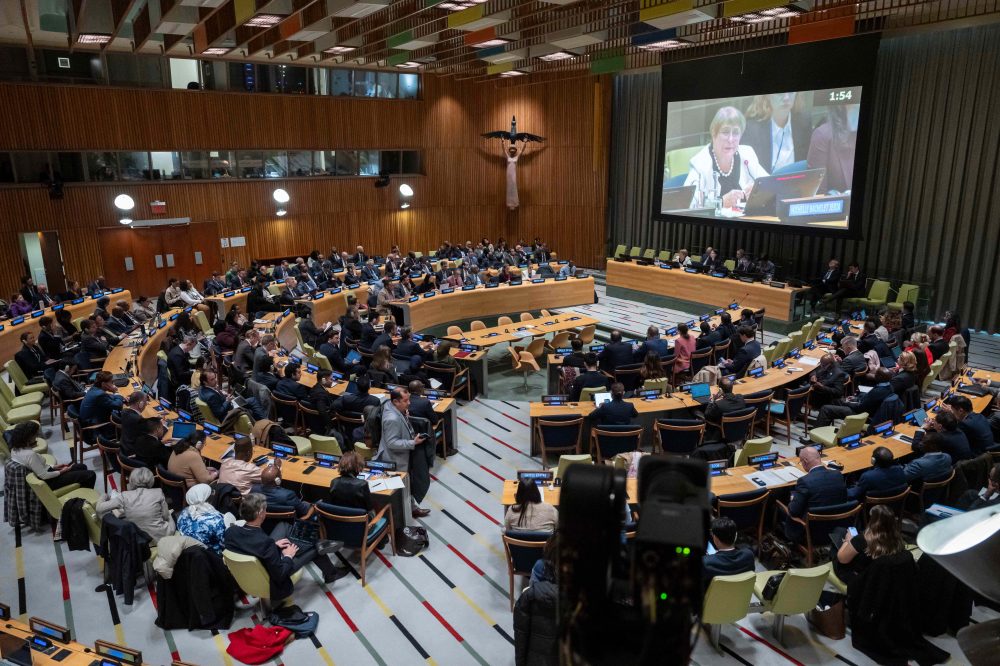
NEW YORK — Four international leaders endured intensive questioning sessions at United Nations headquarters this week as they compete for what officials described as one of the world’s most challenging job interviews.
The candidates seeking to replace Secretary-General António Guterres when his term ends January 1 include former Chilean President Michelle Bachelet, Argentina’s Rafael Grossi, Costa Rica’s Rebeca Grynspan, and former Senegalese President Macky Sall. None emerged as a clear frontrunner following their appearances before UN ambassadors.
Additional contenders may still enter the competition after these initial presentations conclude.
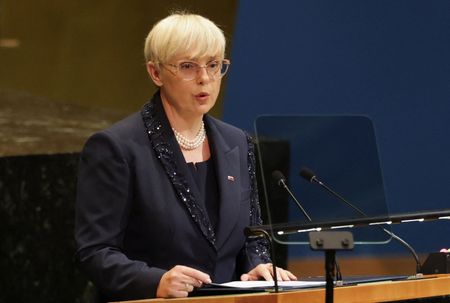
General Assembly President Annalena Baerbock, who oversaw the questioning sessions, emphasized the position’s significance. “The secretary-general is not only the head of the U.N. and the world’s top diplomat — she or he also represents all 8 billion of us, defending the U.N. Charter and leading on peace, development, human rights,” Baerbock stated.
Each candidate committed to strengthening the UN’s core mission areas, particularly its post-World War II mandate to maintain international peace and security — a goal that has proven elusive amid ongoing conflicts in Iran, Gaza, Ukraine, Sudan and elsewhere due to deep international divisions. All four also promised institutional reforms for the organization.
Bachelet, 74, who previously served twice as Chile’s president and led the UN human rights office, emphasized crisis prevention and leadership skills during her presentation. “I stand before you to reclaim the urgent need for dialogue,” she declared, arguing the UN must anticipate, prevent and unite. She also stressed that the next leader should maintain “physical presence in the field” when addressing global challenges.
Grossi, 65, currently heads the International Atomic Energy Agency after a career in Argentine diplomacy. He acknowledged widespread skepticism about the UN’s effectiveness in today’s polarized world. “There are enormous, huge doubts about our institution” in solving global problems, he noted. Without strong leadership and universal support, the organization cannot “regain a key place at the table,” he argued, also advocating for direct engagement in crisis zones.
Grynspan, 65, leads the UN trade and development agency and previously served as Costa Rica’s vice president. She highlighted her ability to maintain principles under pressure and promised to “continue to be the moral voice and the impartial voice that the secretary-general has to be.” She criticized the UN as having become “a risk-conservative organization,” declaring: “We need to take more risks — and I am ready to fail and try again.”
Sall, 64, completed 12 years as Senegal’s president and called for the UN to “regain its place at the global table.” He positioned himself as “a bridge-builder” whose primary goal would be “to contribute to restoring trust, to calm tensions, reduce fragmentation and breathe renewed hope into our collective action.”
Bachelet, a physician by training, addressed criticism from 28 Republican US lawmakers who labeled her a “pro-abortion zealot” and urged Secretary of State Marco Rubio to oppose her candidacy. She acknowledged the controversy while defending women’s reproductive rights and pledged to advance existing UN member agreements, including gender equality initiatives.
Regional rotation traditionally influences secretary-general selection, with Latin America expected to provide the next leader. Sall, the sole non-Latin American candidate, argued the UN Charter permits any candidacy and noted that following a leader from the global north — Guterres is Portuguese — the position should shift to the global south. His candidacy sparked both supportive and opposing demonstrations outside UN headquarters, and he has faced corruption allegations, which he denies.
Daniel Forti from the International Crisis Group observed that the candidates “tried to walk a political tightrope.” He noted: “It is not immediately obvious whether any candidate did enough to propel themselves ahead of the others, or to ward off potential challengers who might emerge later.”
The 15-member UN Security Council will make the selection, with particular influence from the five permanent members holding veto power — the United States, Russia, China, United Kingdom and France — who have remained silent about their preferences. The 193-member General Assembly must provide final approval.
Minh-Thu Pham, who advised former UN chief Kofi Annan and now leads the Starling Institute, identified widespread desire for a secretary-general willing to take risks and actively promote peace. The UN lacks influence in major crises “because it hasn’t had the courage to take risks,” she explained.
Susana Malcorra, Argentina’s former foreign minister and a 2016 secretary-general candidate, emphasized that the United Nations “more than ever” requires fresh leadership and energy. Her organization, GWL Voices, advocates for selecting a woman as the next UN chief.
WASHINGTON — Former President Donald Trump remained safe and unharmed following a security scare that led to evacuations during the White House Correspondents’ Association’s yearly dinner event, according to reports.
High-ranking White House administration officials were quickly removed from the venue after authorities identified an undisclosed security concern during the gathering.
The incident prompted immediate security protocols, though specific details about the nature of the threat have not been released publicly.
Half a dozen travelers required medical treatment following an emergency evacuation at Delhi’s main airport early Sunday morning, according to reports from the Economic Times.
The Swiss Air aircraft, which was scheduled to fly from India’s capital to Zurich, experienced a catastrophic engine malfunction during its takeoff attempt at Indira Gandhi International Airport. The engine failure resulted in a fire, forcing flight crew to immediately halt the departure and order passengers to evacuate the plane while still on the runway.
All six injured passengers were taken to local hospitals for treatment following the emergency response on April 26th.
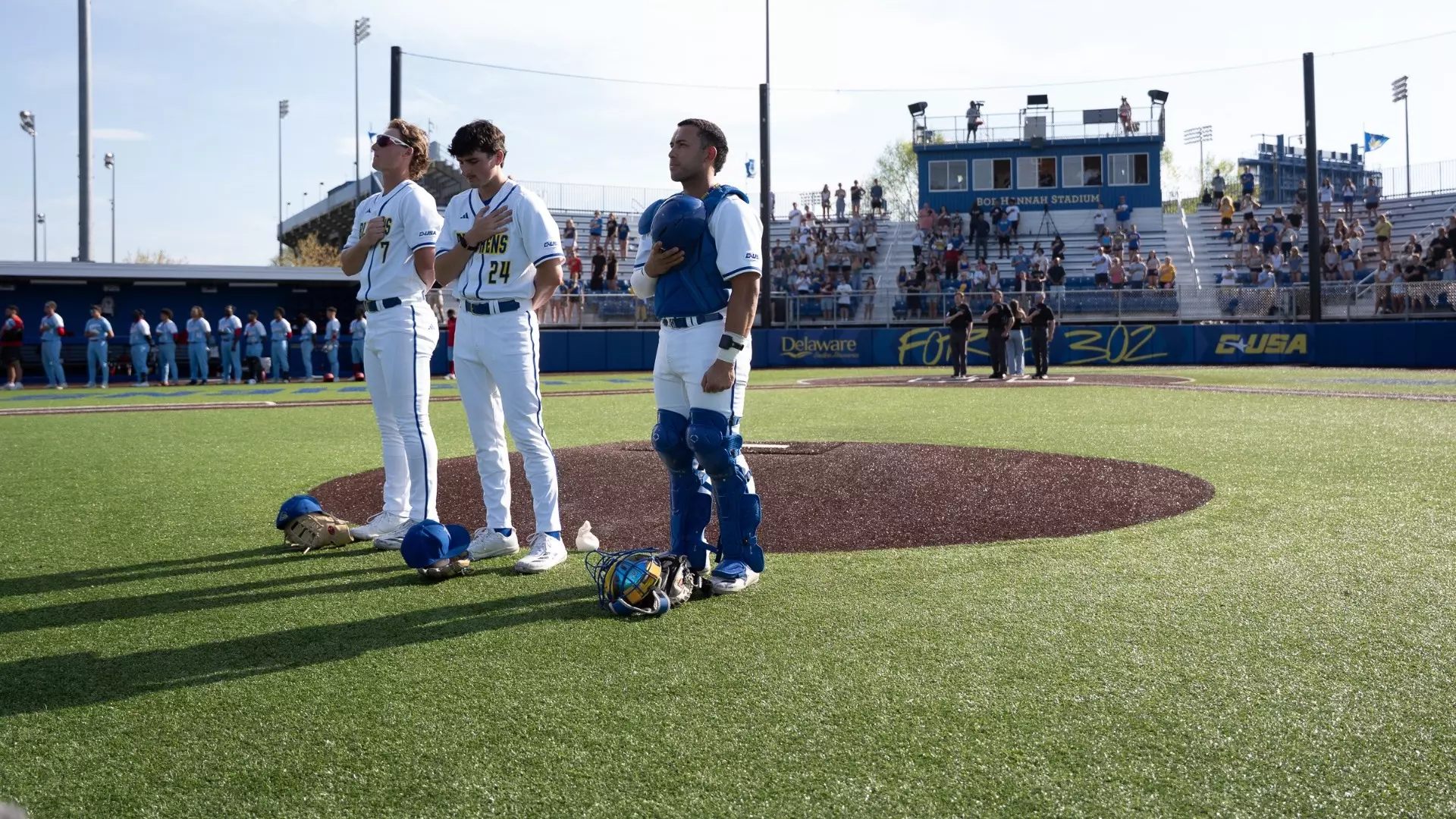
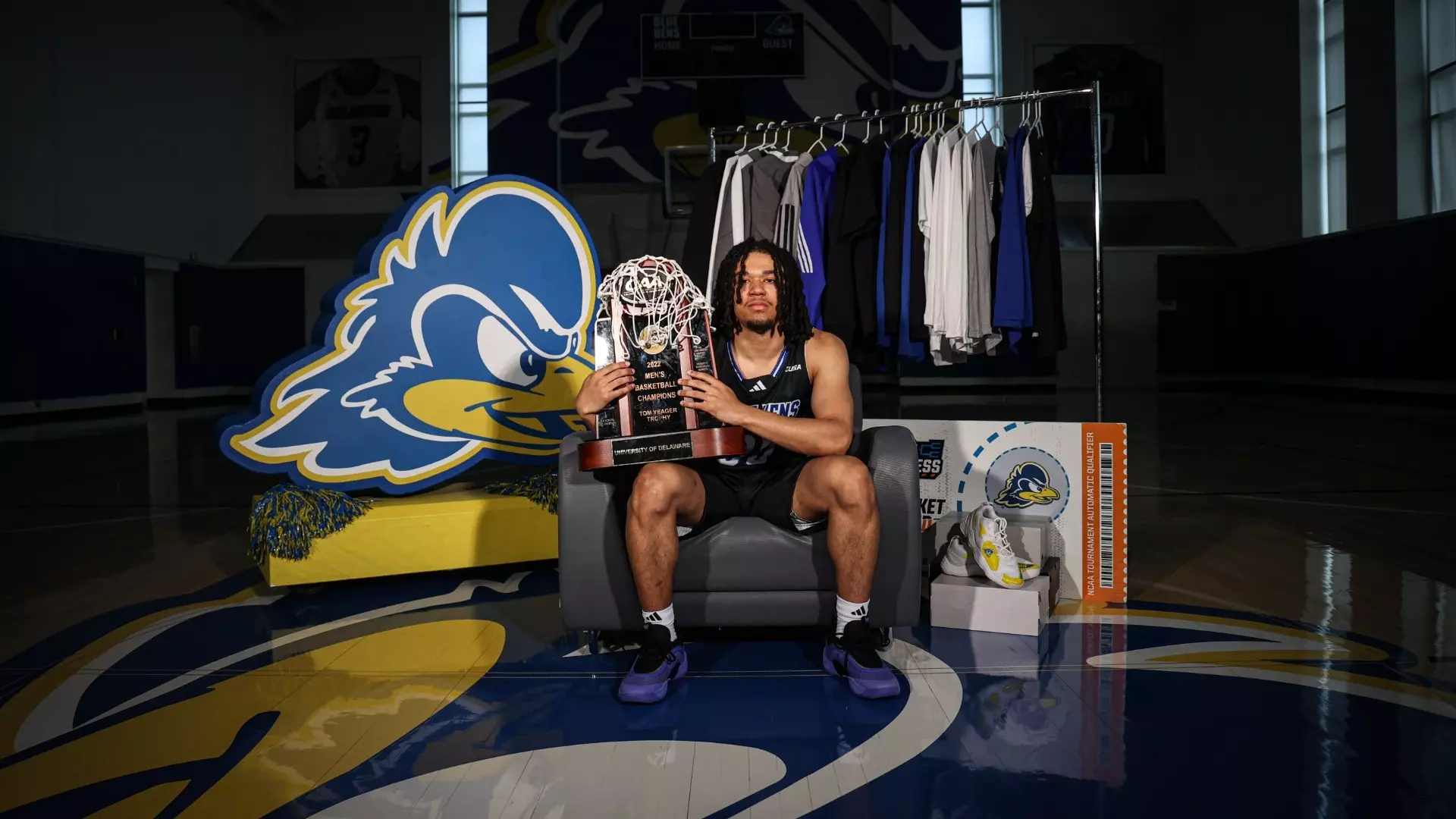
The University of Delaware Blue Hens softball squad put on an offensive clinic Saturday afternoon, April 25, tallying runs in each frame during their dominant 11-2 victory over New Mexico State in a six-inning contest that evened up their weekend series.
Delaware’s bats came alive throughout the shortened game, launching three home runs while posting multi-run innings on three separate occasions against the visiting Aggies.
The Blue Hens’ consistent offensive production across all six innings showcased their depth and ability to maintain pressure throughout the contest, ultimately securing the decisive win that brought the weekend series to a split.
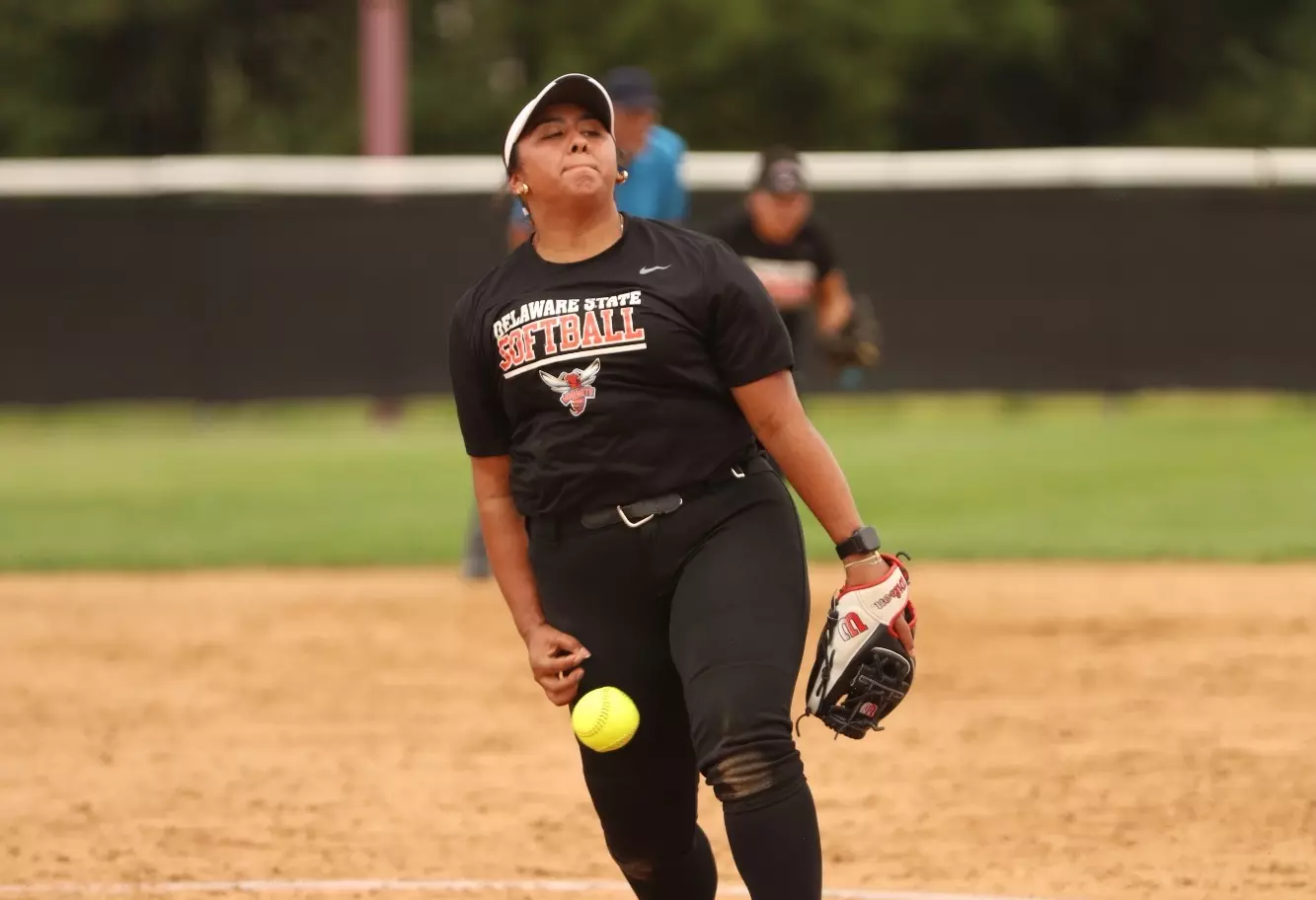
Delaware State University’s softball squad wrapped up a successful series against the University of Maryland Eastern Shore, taking both ends of a doubleheader to complete a sweep of their conference opponents.
The Hornets controlled the action throughout both contests, showcasing the depth and talent that has made them competitive in conference play this season. The sweep represents a significant boost for Delaware State as they continue their campaign.
Both teams are members of the same athletic conference, making these head-to-head matchups particularly important for standings and postseason positioning. The results give Delaware State valuable momentum as they progress through their schedule.
The doubleheader format allowed both programs to make up games and stay on track with their conference obligations while providing fans with an action-packed day of softball competition.
WASHINGTON – An individual carrying several weapons and wearing body armor rushed toward a security checkpoint during Saturday’s White House Correspondents’ Dinner, injuring a law enforcement officer in the process, according to President Donald Trump.
The incident occurred on April 25th as the annual media event was taking place. Trump disclosed that the suspect was equipped with protective gear and armed with multiple weapons when the confrontation with security personnel took place.
Details about the extent of the officer’s injuries and the current status of the suspect have not been immediately released.
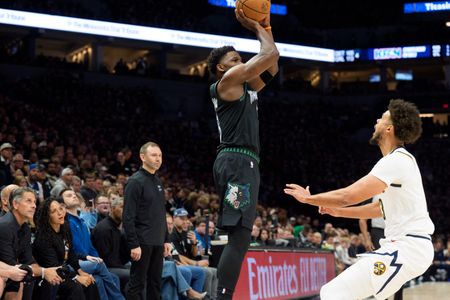
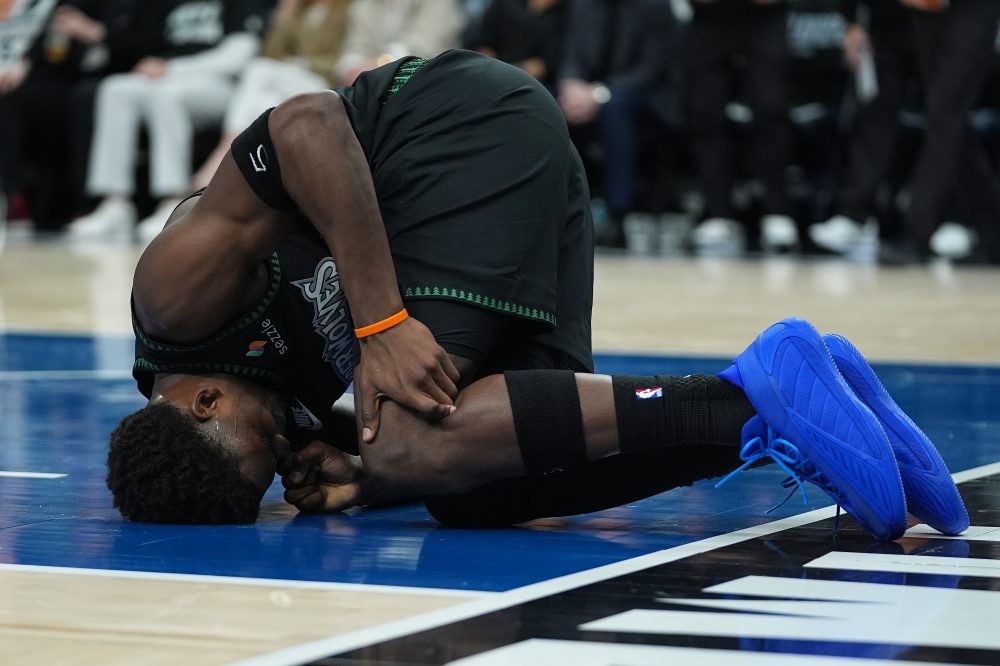
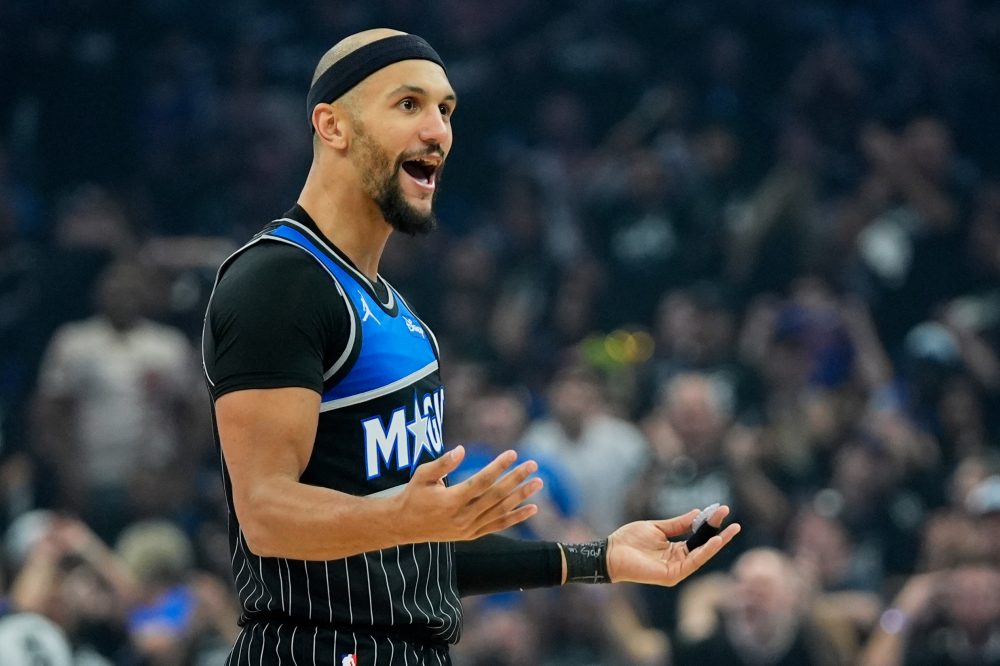
Minnesota Timberwolves star guard Anthony Edwards suffered a left knee injury during Saturday evening’s playoff matchup against the Denver Nuggets at home in Minneapolis, forcing him to leave the game with assistance.
The injury occurred when Edwards jumped to attempt blocking a shot but came down awkwardly on his left leg with 2:43 remaining in the second quarter. He immediately fell to the floor and grabbed his knee in apparent pain.
Shortly after, team personnel assisted Edwards as he limped off the court toward the locker room, putting minimal weight on his injured left leg during his exit.
The Timberwolves officially declared Edwards would not return to the game shortly after halftime began, and he is set to undergo an MRI scan to assess how serious the injury is.
Before getting hurt, Edwards had contributed five points and three rebounds across 18 minutes of play. Minnesota held a 2-1 advantage in the best-of-seven first-round Western Conference playoff series heading into Saturday’s fourth game.
The four-time All-Star paced the Timberwolves with 28.8 points per game throughout the regular season. In the opening three playoff games, he was averaging 23 points per contest.
Edwards became the second Timberwolves player to exit Game 4 due to injury. Earlier in the first quarter, guard Donte DiVincenzo departed with a non-contact right leg injury. According to ESPN reports, DiVincenzo, who left the arena at halftime using a wheelchair, suffered a torn right Achilles tendon.
The United States military announced on April 25th that naval forces successfully stopped a merchant ship attempting to evade Iranian sanctions while operating in the Arabian Sea.
Military officials identified the intercepted vessel as the Sevan, which they say belongs to a network of 19 ships known as a “shadow fleet” that helps transport Iranian petroleum and natural gas products to international buyers.
According to U.S. Central Command, Navy personnel from a helicopter launched from the guided-missile destroyer USS Pinckney carried out the interception operation. The military stated the vessel is “currently complying with U.S. military direction to turn back to Iran under escort.”
Central Command explained that Treasury Department sanctions target this shadow fleet because of their role in moving billions of dollars worth of Iranian energy exports, including oil, gas, propane and butane to overseas markets.
Military officials report that enforcement operations have successfully “redirected” a total of 37 vessels since the sanctions blockade operations began.
MINNEAPOLIS — The Minnesota Timberwolves suffered a devastating blow during Saturday night’s playoff matchup against the Denver Nuggets, losing both starting guards to leg injuries in the opening half of Game 4.
Star player Anthony Edwards sustained what appeared to be a left knee injury during the final moments of the second quarter. The injury occurred when Edwards’ knee seemed to give way as he came down from defending a layup attempt. Team personnel assisted him off the court to the locker room, and he was unable to continue playing.
Earlier in the contest, Donte DiVincenzo sustained an injury to his lower right leg during the game’s first few minutes. The incident happened when DiVincenzo lost his footing while pursuing a loose ball on the court. He immediately signaled for medical assistance and was unable to put weight on his injured foot as he was escorted to the locker room. Team officials confirmed DiVincenzo would not return to action.
The injuries represent a significant setback for Minnesota, which had been performing well in the series. Edwards had been leading the team with 23.0 points per game along with 8.0 rebounds as the sixth-seeded Timberwolves held a 2-1 series advantage over Denver. DiVincenzo had also been contributing significantly, averaging 14.3 points per game and connecting on 11 of his 22 three-point attempts through the first three contests.
The 2026 NFL draft concluded with 257 players chosen, ranging from Fernando Mendoza to Red Murdock, as teams completed months of evaluation and preparation.
While some rookies will make immediate impacts, others will require development time, and not every draftee will secure a roster spot. The Associated Press has released preliminary evaluations for each franchise’s draft performance, though definitive assessments won’t be possible for several years.
The Arizona Cardinals selected running back Jeremiyah Love as a special talent and immediate improvement, though choosing him third overall raises questions about positional importance. Offensive lineman Chase Bisontis (34th pick) should create opportunities for Love, while interior defensive lineman Kaleb Proctor (104th) shows promise. In a weak quarterback class, they took an early chance on Carson Beck (65th).
Atlanta secured first-round caliber talent in the second round with cornerback Avieon Terrell (48th), who will play alongside his brother AJ Terrell in the secondary. Wide receiver Zachariah Branch (79th) brings playmaking ability to the slot, and linebacker Kendal Daniels (134th) should contribute on special teams at minimum.
Baltimore addressed immediate needs with guard Olaivavega Ioane (14th) as a day-one starter. Edge rusher Zion Young (45th) was frequently projected for the first round. They added size at receiver with Ja’Kobi Lane (80th) and Elijah Sarratt (115th), while tight end Matthew Hibner (133rd) addresses a position of need.
Buffalo traded their first-round selection, accumulated additional picks, and still landed talented edge rusher T.J. Parker (35th). Cornerback Davison Igbinosun (62nd) provides depth, while offensive tackle Jude Bowry (102nd), wide receiver Skyler Bell (125th), and linebacker Kaleb Elarms-Orr (126th) fill specific requirements.
Carolina found excellent value with offensive tackle Monroe Freeling (19th), who was often considered a top-10 prospect and fits the prototypical left tackle mold. Defensive lineman Lee Hunter (49th) can disrupt plays from the interior. Their day-three selections include wide receiver Chris Brazzell II (83rd), cornerback Will Lee III (129th), offensive lineman Sam Hecht (144th), and safety Zakee Wheatley (151st).
Chicago addressed a critical need with safety Dillon Thieneman (25th) in the first round. Center Logan Jones (57th) was selected earlier than anticipated, while tight end Sam Roush (69th) specializes in run blocking. Wide receiver Zavion Thomas (89th) enhances the return game, and cornerback Malik Muhammad represents solid value.
The New York Giants didn’t possess a first-round pick after trading the 10th overall selection for defensive tackle Dexter Lawrence. They acquired edge rusher Cashius Howell (41st), who received first-round evaluations. Cornerback Tacario Davis (72nd) also strengthens a struggling defense. Center Connor Lew (128th) could start after being found in the fourth round, and 6-foot-5 wide receiver Colbie Young (140th) adds size to a deep receiving corps.
Green Bay traded down, accumulated additional selections, and assembled an impressive overall collection. Offensive tackle Spencer Fano (9th) will start immediately, while wide receiver KC Concepcion (24th) possesses all necessary tools. They selected another receiver in the second round with Denzel Boston (39th). Safety Emmanuel McNeil-Warren (58th) carried first-round grades. Offensive tackle Austin Barber (86th) provides line depth and flexibility. Center Parker Brailsford (146th) fills a need, and linebacker Justin Jefferson (149th) brings athleticism and talent.
Houston made an excellent defensive move by trading up one spot to secure the draft’s top safety, Caleb Downs, at 11th overall. Moving back three positions to 23rd might have cost them a better option, but they ended up with Malachi Lawrence, who wasn’t universally considered first-round material. Edge rusher Jaishawn Barham (92nd), cornerback Devin Moore (114th), and edge rusher LT Overton (137th) give new defensive coordinator Christian Parker additional talent to develop. Offensive tackle Drew Shelton (112th) has significant upside.
Denver’s first selection came in the third round with defensive tackle Tyler Onyedim (66th). Running back Jonah Coleman (108th) adds depth, offensive lineman Kage Casey (111th) offers versatility, and tight end Justin Joly (152nd) provides a downfield receiving threat. Denver had already acquired wide receiver Jaylen Waddle via trade before the draft.
Detroit filled a major need with offensive tackle Blake Miller (17th). Edge rusher Derrick Moore (44th) remains in Michigan and brings energy to the pass rush. Linebacker Jimmy Rolder (118th) is another Michigan player staying local. Cornerback Keith Abney II (157th) and wide receiver Kenrick Law (168th) represent solid value selections.
Green Bay acquired first-round talent with cornerback Brandon Cisse (52nd). Defensive tackle Chris McClellan (77th) provides needed run-stopping ability. Edge rusher Dani Dennis-Sutton (120th) could prove to be a fourth-round steal, while versatile offensive lineman Jager Burton (153rd) matches the offense’s character.
Houston boosted a problematic area with offensive lineman Keylan Rutledge (26th) after two weak seasons. Defensive tackle Kayden McDonald (36th) is an elite run defender who complements edge rushers Will Anderson Jr. and Danielle Hunter. Tight end Martin Klein (59th) was a reach, but Febechi Nwaiwu (106th) is a versatile offensive lineman. Linebacker Wade Woodaz (123rd) has good potential, and safety Kamari Ramsey (141st) offers value.
Indianapolis filled a significant need with linebacker CJ Allen (53rd), who was projected higher, giving the Colts excellent value. Safety A.J. Haulcy could start as a rookie. Offensive lineman Jalen Farmer (113th) is powerful and versatile. Linebacker Bryce Boettcher (135th) and edge rusher George Gumbs Jr. (156th) have development potential in Lou Anarumo’s defense.
Jacksonville selected Texas A&M teammates with their first two picks. Tight end Nate Boerkircher (56th) is physical and will enhance the running game, though the Jaguars needed defensive help. Defensive lineman Albert Regis (81st) primarily defends against the run from the interior. Offensive lineman Emmanuel Pregnon (88th) has strong potential. Safety Jalen Huskey (100th) and edge rusher Wesley Williams (119th) provide depth at positions of need. Tight end Tanner Koziol (164th), wide receiver Josh Cameron (191st), and wide receiver CJ Williams (203rd) give Liam Coen additional offensive options.
Kansas City traded up three spots and surrendered a third-round pick to acquire needed cornerback Mansoor Delane (6th). They found Chris Jones’ potential replacement later in the first round with defensive lineman Peter Woods (29th). Edge rusher R Mason Thomas (40th) is a speedy pass rusher. Cornerback Jadon Canady (109th) strengthens a depleted secondary. Running back Emmett Johnson (161st) and wide receiver Cyrus Allen (176th) provide decent fifth-round value.
Las Vegas quarterback Fernando Mendoza won’t play immediately, but the Raiders don’t need to wait to see this draft class’s impact. Cornerbacks Treydan Stukes (38th) and Keyron Crawford (67th) will contribute right away. Offensive lineman Trey Zuhn III (91st) fits new coach Klint Kubiak’s system. Cornerback Jermod McCoy (101st) is among the draft’s best prospects who fell only due to injury concerns. Running back Mike Washington Jr. (122nd) could form a tandem with Ashton Jeanty. Safety Dalton Johnson (150th), cornerback Hezekiah Masses (175th), and wide receiver Malik Benson (195th) add depth.
Los Angeles Chargers selected edge rusher Akheem Mesidor (22nd), who performed like a top-10 pick at Miami. Offensive lineman Jake Slaughter (63rd) seems questionable since the Chargers signed center Tyler Biadasz. Speedy wide receiver Brenen Thompson (105th) stretches the field. Offensive tackle Travis Burke (117th) and safety Genesis Smith (131st) completed a productive fourth round. They further strengthened the trenches with defensive lineman Nick Barrett (145th) and offensive linemen Logan Taylor (202nd) and Alex Harkey (206th).
Los Angeles Rams quarterback Ty Simpson might become a franchise player, but using the 13th pick on someone who won’t play until Matthew Stafford retires is difficult to justify instead of selecting someone who could help a Super Bowl run. Tight end Max Klare (61st) is talented but doesn’t address an immediate void. Offensive lineman Keagen Trost (93rd) is a 25-year-old prospect providing depth. Wide receiver CJ Daniels (197th) could succeed in Sean McVay’s offense. Defensive tackle Tim Keenan III (232nd) stops the run.
Miami’s offensive tackle Kadyn Proctor (12th) could become dominant. Cornerback Chris Johnson (27th) gives Jeff Hafley’s defense a secondary anchor. Linebacker Jacob Rodriguez (43rd) has high potential. They reached for wide receiver Caleb Douglas (75th), projected for middle day-three, but found great value with wide receiver Chris Bell (94th). Tight end Will Kacmarek (87th), linebacker Kyle Louis, and safety Michael Taaffe (158th) are among a 13-player haul. Wide receiver Kevin Coleman Jr. (177th) could be a fifth-round gem.
Minnesota defensive tackle Caleb Banks is superb but recovering from two foot surgeries. Linebacker Jake Golday (51st) could thrive under defensive coordinator Brian Flores. Defensive lineman Domonique Orange (82nd) adds depth. Offensive tackle Caleb Tiernan (97th) is versatile and ready. Safety Jakobe Thomas (98th) is dynamic. The Vikings traded to acquire speedy running back Demond Claiborne (198th), potentially the highlight among four day-three selections.
New England got offensive tackle Caleb Lomu (28th), considered the draft’s best by some analysts, making this potentially a steal. Edge rusher Gabe Jacas (55th) has immediate contribution talent. Tight end Eli Raridon (95th) and offensive tackle Dametrious Crownover (196th) strengthen both positions. Quarterback Behren Morton (234th) was among five other picks.
New Orleans wide receiver Jordyn Tyson is tremendously talented but needs to stay healthy to justify the eighth overall selection. Defensive lineman Christen Miller (42nd) will help stop the run. Tight end Oscar Delp (73rd) fits Kellen Moore’s scheme. Wide receiver Bryce Lance (136th) highlights the Saints’ day-three picks. Cornerbacks Lorenzo Styles Jr. (172nd) and TJ Hall (219th) are value picks with potential.
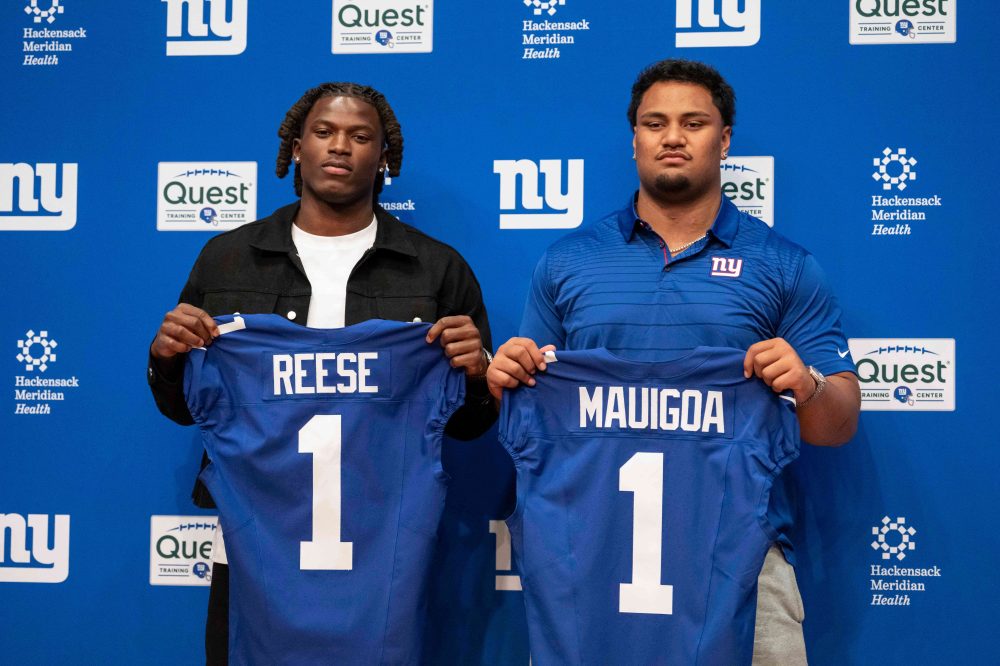
The New York Giants selected foundation players with edge rusher Arvell Reese (5th) and offensive tackle Francis Mauigoa (10th). Cornerback Colton Hood (37th) is first-round talent. Wide receiver Malachi Fields (74th) could have gone higher. Defensive lineman Bobby Jamison-Travis (186th), offensive tackle J.C. Davis (192nd), and linebacker Jack Kelly (193rd) complete an impressive group in John Harbaugh’s first draft with the Giants.
The New York Jets chose David Bailey over Reese (2nd) as the first of three first-rounders. Kenyon Sadiq (16th) is the draft’s best tight end. They traded up for wide receiver Omar Cooper Jr. (30th) to give the Jets another playmaker with Garrett Wilson. Cornerback D’Angelo Ponds (50th) resembles coach Aaron Glenn. Defensive lineman Darrell Jackson Jr. (103rd) and offensive lineman Anez Cooper (188th) strengthen the trenches. They took a chance on quarterback Cade Klubnik (110th) in the fourth round.
Philadelphia took wide receiver Makai Lemon (20th) from the Steelers but surrendered two fourth-rounders to move up three spots. Tight end Eli Stowers (54th) lacks size but offers offensive versatility. Offensive tackle Markel Bell (68th) is a developmental talent. They finally selected a Georgia player in the sixth round with offensive lineman Micah Morris (207th). Quarterback Cole Payton (178th) is intriguing for a team that values backups.
Pittsburgh will be remembered for the Lemon situation but acquired considerable talent among a 10-player class. Offensive tackle Max Iheanachor (21st) gives Aaron Rodgers or any quarterback more protection if he starts immediately. Wide receiver Germie Bernard (47th) compensates for losing Lemon. Quarterback Drew Allar (76th) seems like a reach, but cornerback Daylen Everette (85th) and guard Gennings Dunker (96th) have high potential. Wide receiver Kaden Wetjen (121st) should be a dynamic returner. Safety Robert Spears-Jennings (224th) could be the best day-three selection.
San Francisco traded out of the first round and selected wide receiver De’Zhaun Stribling (33rd) to begin the second. Edge rusher Romello Height (70th) should improve a pass rush that recorded the fewest NFL sacks. Running back Kaelon Black (90th) could give Christian McCaffrey rest. They added offensive tackles Carver Willis (127th) and Enrique Cruz Jr. on day three. Defensive tackle Gracen Halton (107th) provides significant interior help.
Seattle running back Jadarian Price (32nd) replaces Super Bowl MVP Kenneth Walker. Safety Bud Clark (64th) also fills a void. Cornerback Julian Neal (99th) is tough and physical, ideal for this defense. Cornerback Andre Fuller (236th) might be a discovery among five day-three picks.
Tampa Bay edge rusher Rueben Bain Jr. (15th) gives the Buccaneers a desperately needed pass rusher. Linebacker Josiah Trotter (46th) plays Todd Bowles’ defensive style. Wide receiver Ted Hurst (84th) has size but can’t be expected to replace Mike Evans. Safety Keionte Scott (116th) is a physical tackler who can help the secondary. Offensive lineman Billy Schrauth (160th) is talented and represents solid fifth-round value.
Tennessee made Carnell Tate the first wide receiver selected (4th) instead of taking Reese or another impact defender. But they traded back into the first round for edge rusher Keldric Faulk (31st). Linebacker Anthony Hill (60th) is a versatile plug-and-play athlete. Offensive lineman Fernando Carmona (142nd) can play multiple positions. Running back Nicholas Singleton (165th) has potential to be a fifth-round steal. Defensive lineman Jackie Marshall (184th) fits well with Robert Saleh.
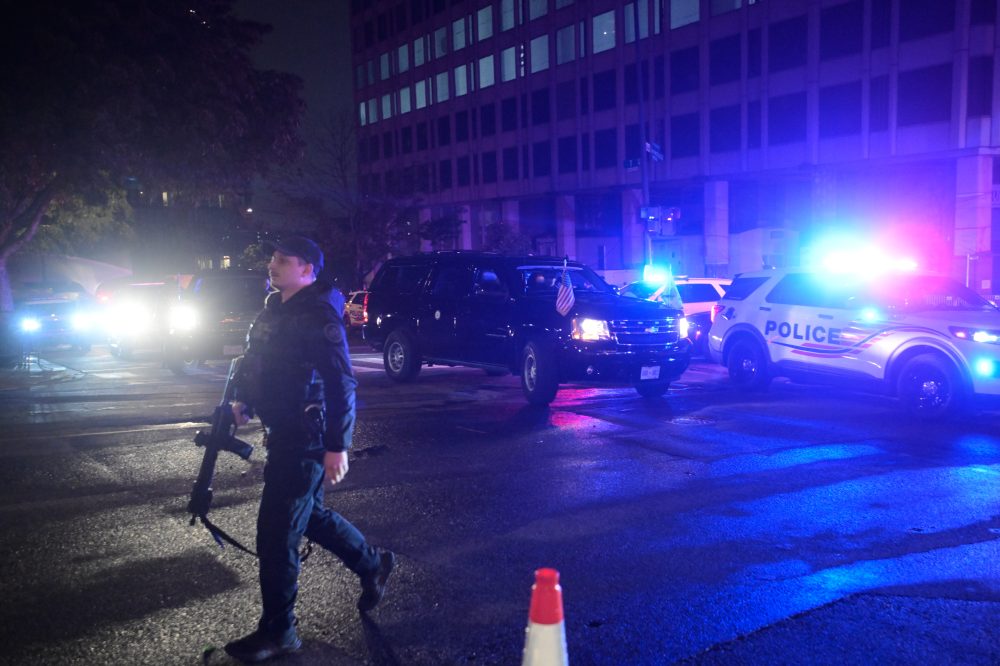
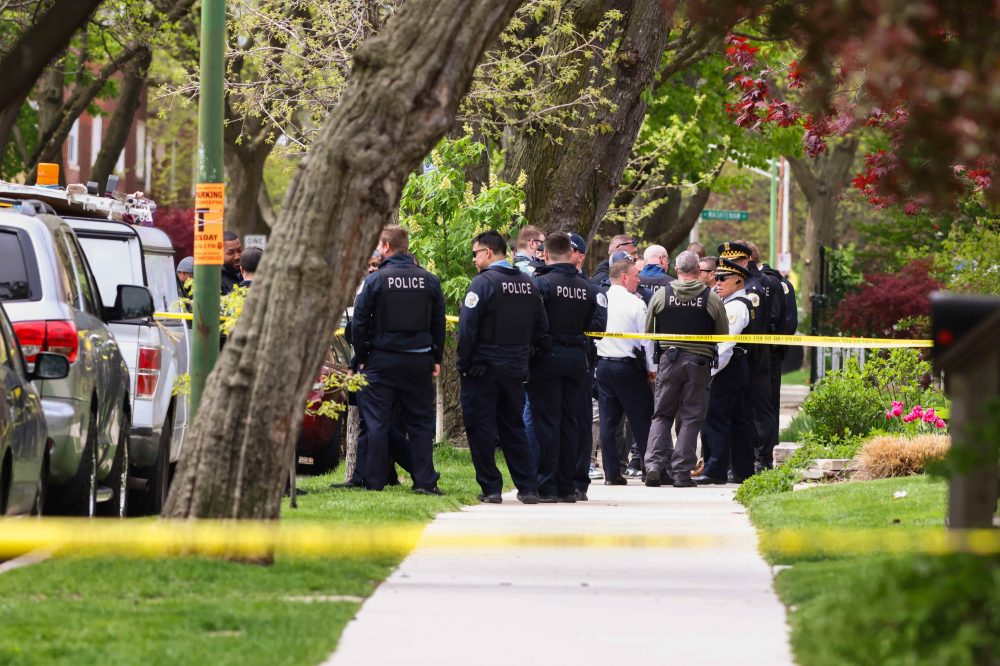
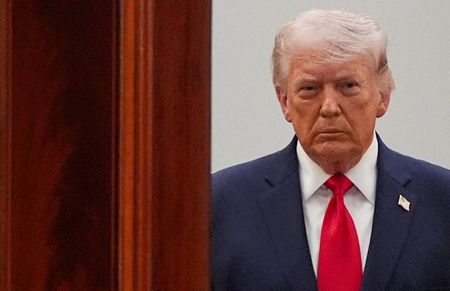
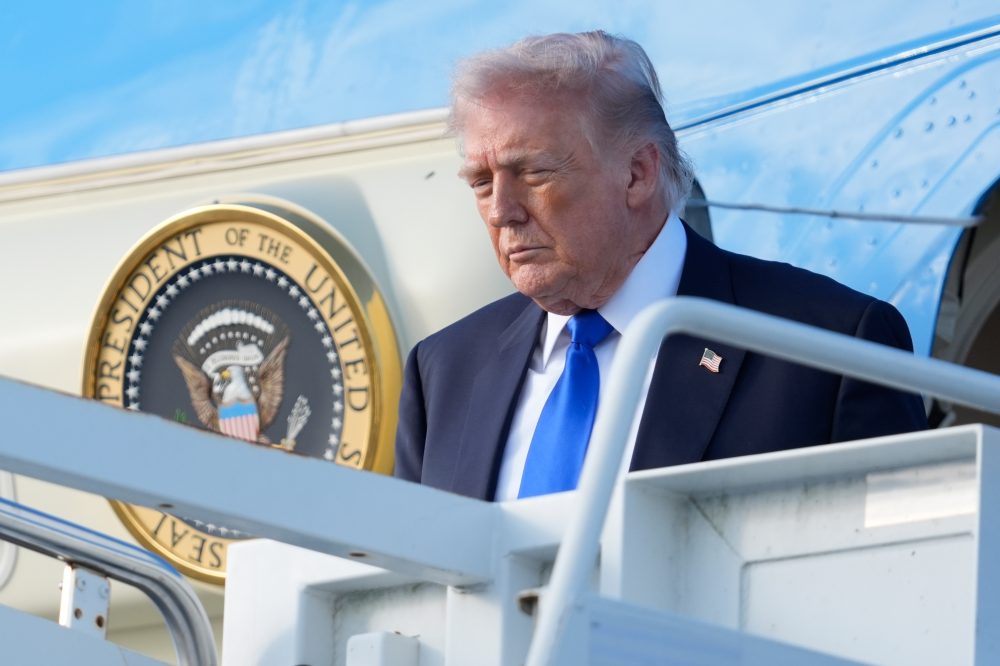
WASHINGTON — President Donald Trump remained unharmed Saturday evening after gunfire erupted outside the ballroom during the White House Correspondents’ Association annual dinner, forcing the evacuation of the president and other high-ranking officials. Law enforcement quickly apprehended the gunman, and no injuries were reported from the incident.
The shooting took place outside the dining hall where Trump and hundreds of guests had gathered for the traditional media event. The dinner has been canceled and organizers plan to reschedule within the coming month.
Federal Bureau of Investigation officials confirmed the suspect is now in custody, with the agency’s Washington field office leading the response to the shooting incident.
Trump announced through his Truth Social platform that he would deliver remarks from the White House later in the evening.
News organizations are continuing to gather comprehensive details about the shooting through witness interviews, official sources, and law enforcement briefings.
House Speaker Mike Johnson, who attended the dinner with his spouse Kelly, expressed gratitude for the rapid response by law enforcement and emergency personnel who “acted so quickly to bring the situation under control.”
“Praying for our country tonight,” Johnson, a Louisiana Republican, wrote on social media.
The House Republican caucus posted “FIGHT, FIGHT, FIGHT” on the X social platform, adding: “House Republicans unite in praying for those who were in harm’s way.”
Democratic House Leader Hakeem Jeffries expressed appreciation for the “swift law enforcement action to protect everyone” at the dinner while calling for an end to violence.
“The violence and chaos in America must end,” stated Jeffries, representing New York.
CBS News senior White House correspondent Weijia Jiang, who serves as president of the White House Correspondents’ Association, spoke to the packed room of media professionals after the president departed.
Jiang announced that the president would conduct a press conference at the White House shortly and had requested the dinner be rescheduled within 30 days. She noted that Trump wanted to continue the event but was required to follow security procedures.
Jiang, who was seated beside Trump on the main platform when the incident occurred, highlighted journalism’s public service mission, stating that “when there is an emergency, we run to the crisis, not away from it.”
“On a night when we are thinking about the freedoms in the First Amendment, we must also think about how fragile they are,” she remarked. “Thank God everybody is safe and thank you for coming together tonight. We’ll do this again.”
The FBI confirmed the gunman’s arrest and said its Washington field office is handling the investigation.
Washington’s Metropolitan Police Department issued a social media statement confirming officers were on scene working alongside federal law enforcement agencies.
“We will provide updated information once confirmed,” the department announced.
Guests were enjoying their spring pea and burrata appetizer course, with servers preparing to deliver the main course, when security personnel rushed into the ballroom shouting for everyone to take cover. Formally dressed journalists dropped to the floor near tables as wine spilled across white linens and glassware clattered in the scramble for safety.
Armed security forces burst through the ballroom entrance and rushed toward the head table where Trump was seated as attendees crouched beneath tables. During the chaos, someone in the room called out, “USA!”
Approximately 30 minutes after the security incident, Trump posted on Truth Social that a “shooter has been apprehended.”
Both Trump and Vice President JD Vance were unharmed during the incident.
Event organizers initially announced there would be an “announcement shortly, we will be resuming shortly” from the stage. Most guests remained locked inside the ballroom and were not permitted to exit.
One block from the White House, people heading to parties at the Renwick Museum found themselves stopped at police barriers as streets and walkways were cordoned off. Police vehicles raced through the area with sirens wailing while a helicopter circled overhead.
Typically, the Hilton hotel, which has hosted the dinner for many years, stays open to regular guests during the White House Correspondents Dinner. Security has traditionally focused on the ballroom area rather than the entire hotel, with minimal screening for those not attending the dinner.
In previous years, this arrangement has led to disruptions in the lobby and other public areas, including protests where security removed individuals who displayed banners or staged demonstrations.
The banquet facility, filled with hundreds of prominent media figures, celebrities and government leaders awaiting Trump’s address, was immediately cleared. National Guard members positioned themselves throughout the building as people were permitted to leave but not return. Security measures outside were extremely stringent.
Details about what transpired remained unclear. A law enforcement source verified there was a shooter but provided no additional information.
Former prosecutor and current media personality Jeanine Pirro shared a brief video from the hotel following the incident, stating: “I have been taken out of the ballroom after the sound of the shots fired. The Secret Service is now in charge of this building, this hotel. I just spoke to Mayor Muriel Bowser. She is on her way, and (Police) Chief Jeffery Carroll is on his way. He will be in charge as soon as he gets here.”
Minnesota Timberwolves guard Donte DiVincenzo will not return to Saturday’s playoff matchup against the Denver Nuggets after suffering a lower right leg injury during the opening quarter.
The injury happened without any contact from opposing players. DiVincenzo was moving toward a loose ball when he planted his foot and immediately collapsed, clutching the back of his right leg.
Team officials announced DiVincenzo would not return before the first quarter concluded.
Throughout the regular season, DiVincenzo contributed 12.2 points per contest while connecting on 37.9% of his three-point attempts. In the opening three games of this playoff series against Denver, he had elevated his scoring to 14.3 points per game.
Despite an outstanding collegiate career at Buffalo University, Red Murdock watched his impressive statistics and achievements fail to impress NFL scouts throughout draft weekend.
The Denver Broncos finally called Murdock’s name on Sunday, selecting him with pick number 257 – the final selection of the seven-round 2026 NFL Draft held in Pittsburgh. This distinction automatically grants him the well-known “Mr. Irrelevant” designation.
The second-team All-American becomes the 51st athlete to receive the “Mr. Irrelevant” moniker since the custom started in 1976.
During his Buffalo tenure, Murdock – whose given name is Khalil – established a new FBS milestone with 17 forced fumbles throughout his career. His yearly totals included four in 2023, seven in 2024, and six in 2025. In a twist of fate, former Buffalo standout Khalil Mack, now an established NFL veteran, previously owned the record with 16.
In 2025, Murdock finished third nationally with 142 total tackles while recording five quarterback sacks among his 13.5 tackles behind the line of scrimmage. The previous year saw him rank second across the country with 156 tackles. Both seasons earned him first-team All-Mid-American Conference recognition.
Despite these accomplishments, Murdock grew increasingly anxious as the draft’s final day progressed, fearing he might not be selected at all.
“I feel extremely grateful and excited to help the Broncos win, above all else,” Murdock told reporters. “I know a little bit about Mr. Irrelevant, but the main thing is I got an opportunity, and I’m trying to make the most of it to help us win.”
The most successful Mr. Irrelevant remains quarterback Brock Purdy, who San Francisco selected with the 2022 draft’s concluding pick. Despite an impressive collegiate resume at Iowa State, Purdy watched 261 players chosen before him.
Purdy quickly proved his worth, leading the 49ers to the 2023 Super Bowl before falling to the Kansas City Chiefs in the championship game.
Paul Salata, the former NFL wide receiver who created the Mr. Irrelevant tradition, passed away in 2021 at 94 years old.
The final draft selection generates more publicity than any other seventh-round pick, with attention peaking when the player visits Southern California for the annual Irrelevant Week celebration. The festivities culminate with presentation of the “Lowsman Trophy.”
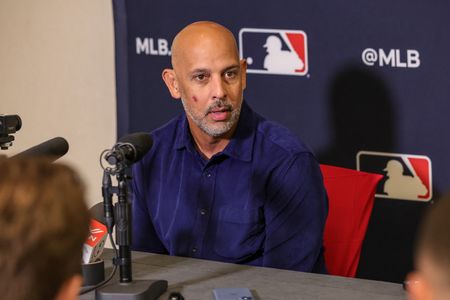
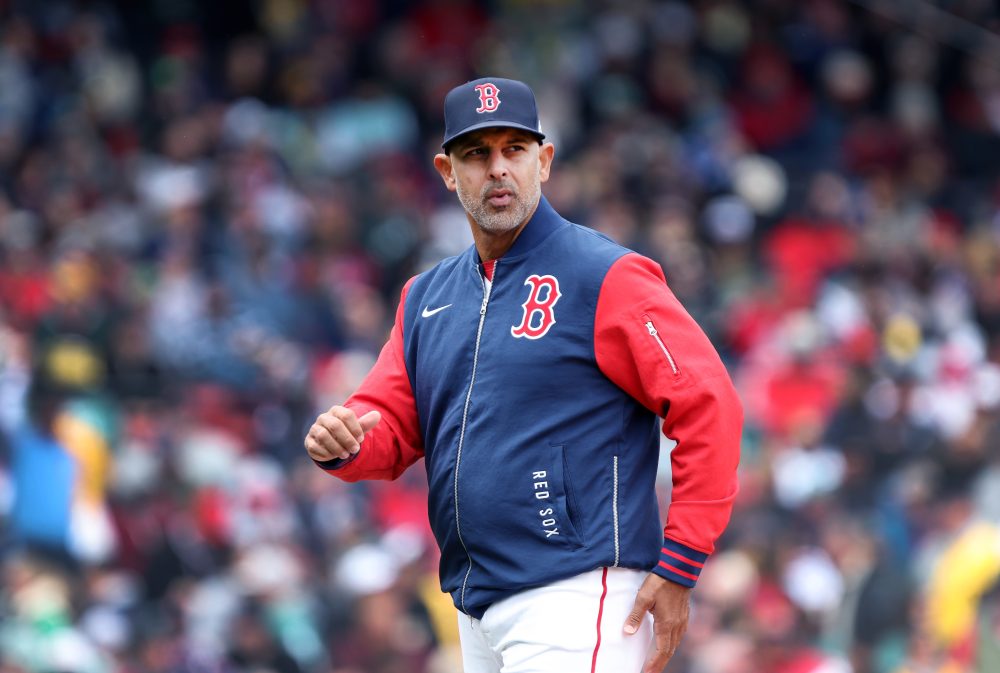
Following a dismal 10-17 beginning to their season, the Boston Red Sox terminated manager Alex Cora along with five members of his coaching staff, the team confirmed Saturday night.
The organization also let go hitting coach Peter Fatse, assistant hitting coach Dillon Lawson, third base coach Kyle Hudson, bench coach Ramon Vasquez, and hitting strategy coach Joe Cronin alongside Cora’s dismissal.
The Red Sox have promoted Chad Tracy, 40, who has managed their Triple-A Worcester affiliate since 2022, to serve as interim manager. Meanwhile, game planning and run-prevention coach Jason Varitek will move into a different position within the franchise.
Red Sox owner John Henry expressed his appreciation for Cora’s contributions in an official team statement, saying: “Alex Cora led this organization to one of the greatest seasons in Red Sox history in 2018, and for that, and the many years that followed, he will always have our deepest gratitude. He has had a lasting impact on this team and on this city. He has led on and off the field in so many important ways. These decisions are never easy, but this one is especially difficult given what Alex has meant to the Red Sox since the day he arrived.”
Henry continued: “I want to thank Alex, our coaches, and their families for everything they have given to this organization. They have been part of this club in a way that goes beyond the field, and they will always have our respect and gratitude.”
The team’s record fell to 9-17 following Friday’s crushing 10-3 defeat against Baltimore, where the Orioles hammered six home runs and recorded 20 hits. Following that loss, Boston found themselves trailing the New York Yankees by eight games in the American League East standings.
The Red Sox managed to bounce back Saturday, overwhelming the Orioles in a 17-1 victory.
Cora joined Boston as manager in 2018 after working as bench coach for Houston’s 2017 championship team. During his first season, he guided the Red Sox to a team-record 108 wins and a World Series championship.
Following the 2019 season, Cora became involved in Major League Baseball’s investigation concerning Houston’s sign-stealing scandal. Although MLB launched a separate inquiry into Boston’s practices, Cora and the organization mutually decided to part ways before the 2020 campaign began.
The 50-year-old manager served a suspension for the entire 2020 season due to his involvement with Houston’s violations, but Boston rehired him as manager in 2021.
Following three consecutive seasons without playoff appearances from 2022-24, the Red Sox made the postseason last year but were eliminated by the New York Yankees in an American League wild-card series.
Throughout his tenure, Cora compiled a regular-season record of 619-541 and went 18-10 in postseason play across eight years.
TALLADEGA, Alabama — Twenty-year-old Corey Day achieved a milestone victory Saturday afternoon, securing his inaugural NASCAR O’Reilly Auto Parts Series triumph at Talladega Superspeedway during the Ag-Pro 300. The California native crossed the finish line under caution in his No. 17 Hendrick Motorsports Chevrolet, taking command only during the race’s final circuit in his debut full-time campaign.
The young sprint car racer brought Hendrick Motorsports their inaugural O’Reilly Auto Parts Series victory at the Alabama track, while also delivering a win for an unusual pit crew addition — retired Philadelphia Eagles center Jason Kelce, who donned team colors and assisted with tire duties during Saturday’s competition.
“I sure as heck didn’t think it [first win] would be at a superspeedway,” Day said with a broad smile, noting he had also won a sprint car event in Nebraska earlier in the week. “My 17 guys just built a rocket ship.”
“I feel like we’ve been close, had a good day at Rockingham (North Carolina race) and had a couple other good days and just didn’t finish it off, so this is super cool,” he added.
The race concluded after 1 hour, 58 minutes and 33 seconds of competition.
Rookie driver Brent Crews achieved a personal milestone with a second-place finish in his No. 19 Joe Gibbs Racing Toyota, while Sheldon Creed from Haas Factory Team claimed third position in another characteristic photo-finish conclusion on the 2.66-mile high-banked oval. Creed’s performance earned him the $100,000 Dash 4 Cash bonus for the second consecutive week.
“Hard to be too mad at second here when so much happens and very easily could have been in one of those crashes at the end,” Crews commented. “Getting to take home the Dash 4 Cash is really special, and thank the guys in the shop for that.”
JR Motorsports’ Sammy Smith finished fourth in the No. 8 Chevrolet, helping extend the organization’s remarkable top-10 streak to 68 consecutive races — the second-longest in series history. Owner-operator Jeremy Clements rounded out the top five in his South Carolina-based No. 51 Chevrolet, marking the independent operation’s strongest result since 2022.
The remaining top-10 positions went to Dean Thompson, Jesse Love, Brandon Jones, Parker Retzlaff and Austin Green, with J.J. Yeley earning the sole Ford entry an impressive 11th-place showing among the 38-car field.
Love began the race from pole position in his No. 2 Richard Childress Racing Chevrolet, pacing the field for the most circuits (37) and holding the lead late before falling backward with six laps remaining. The pack divided around his machine, allowing Creed to assume command with five laps left.
Creed’s teammate Sam Mayer, who had shown strength throughout the afternoon, was credited as the leader with two laps remaining in a three-wide formation that also included Creed and Day. However, as frequently occurs at Talladega, contact during the final frantic moments reshuffled the leading group, sending Mayer’s No. 41 Chevrolet and two-time race winner Jeb Burton’s No. 27 Jordan Anderson Chevrolet into the outside barrier.
Mayer finished 25th despite leading three separate times for eight total laps. Burton, who came within inches of winning this event last year, ended up 26th.
JR Motorsports teammates Carson Kvapil and Justin Allgaier captured the stage victories in segments one and two respectively, but both drivers were unable to recover from mid-race penalties for “impeding” other competitors during the final stage.
Officials called only four caution periods — the fewest since 2022. The 38 lead changes represented the most at this facility since 2013.
Despite recording his worst finish of the season in 23rd position, Allgaier maintains his championship advantage by 105 points over Creed in the standings.
Competition continues next Saturday at Texas Motor Speedway for the Andy’s Frozen Custard 340, where reigning NASCAR Cup Series champion Kyle Larson will defend his victory from last year.
Day, Crews, Creed and Smith have qualified for next week’s $100,000 Dash 4 Cash opportunity.
NEWPORT NEWS, Va. – Salisbury University’s men’s tennis squad faced a challenging afternoon on Saturday, falling 6-1 to the nationally-ranked Christopher Newport Captains at Eyre Courts.
The Sea Gulls showed competitive spirit throughout most of their matchups against the 27th-ranked Captains but struggled to convert that effort into victories on the scoreboard.
Saturday’s result represents a tough test for Salisbury against one of the top programs in the region, as Christopher Newport continues to demonstrate why they hold a national ranking.
The Sea Gulls managed to secure just one point in the overall team competition, highlighting the strength of their opposition and the challenge of facing nationally-ranked competition on the road.
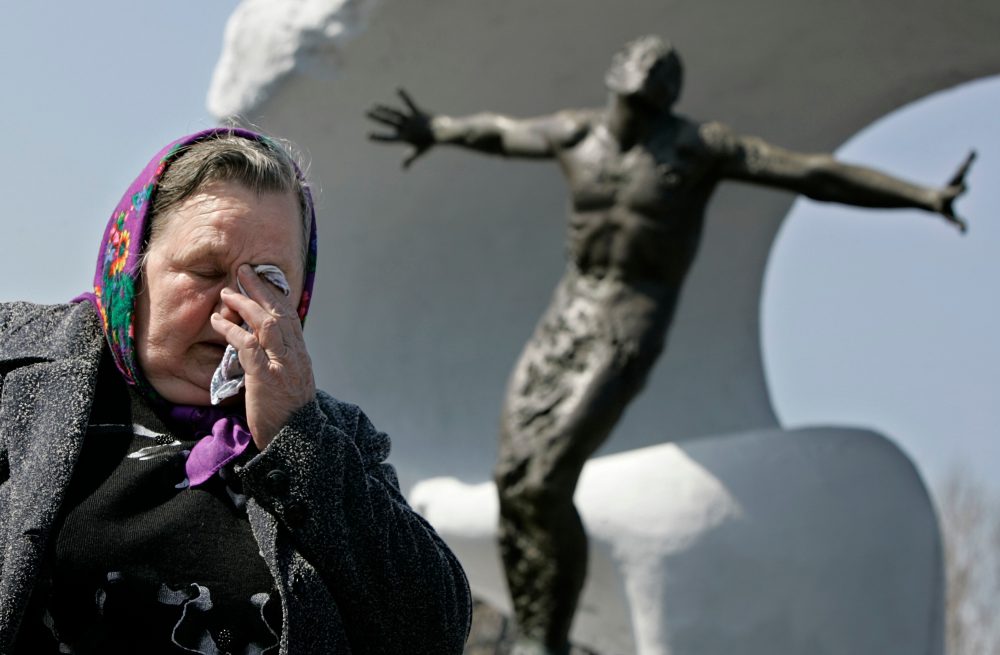
EDITOR’S NOTE: Following the catastrophic explosion and blaze at the Chernobyl nuclear facility on April 26, 1986, obtaining reliable details about the disaster’s true extent proved nearly impossible, with only brief official statements coming from Soviet leadership.
Following a phone tip, Associated Press Moscow bureau chief Carol J. Williams and a fellow Western reporter traveled to a burial ground in Moscow’s northwestern district, where they uncovered modest burial sites of disaster casualties. Police temporarily held the reporters at the location on trespassing charges, but they witnessed cemetery staff preparing burial plots for additional victims.
To mark the 40th anniversary of the Chernobyl catastrophe, AP is re-releasing Williams’ original report from June 24, 1986:
By CAROL J. WILLIAMS
MOSCOW (AP) — Twenty-three newly dug burial sites positioned near the primary gate of Mitinskoye Cemetery share identical characteristics. No markers identify the deceased as casualties from the Chernobyl nuclear catastrophe.
Fresh flower arrangements rest atop each earthen mound, surrounded by concrete borders. Construction crews install matching marble monuments. Ominously vacant plots suggest additional fatalities are anticipated.
Half a dozen headstones display names of firefighters whom Soviet media identified as radiation casualties from Chernobyl, while a cemetery administrator confirmed Tuesday that this section was designated for nuclear accident fatalities.
At this burial ground on Moscow’s northwestern edge, laborers worked through persistent rain installing marble monuments engraved with victims’ identities, birth years, and death dates in golden lettering. Every death date occurred following the April 26 nuclear plant disaster.
Several burial sites displayed temporary, handwritten markers showing names and dates.
A cemetery administrator who refused identification when speaking with two Western journalists visiting Mitinskoye indicated that a memorial would eventually honor the deceased.
“They will all be brought here,” the official said, declining to say how many deaths have occurred as a result of the Chernobyl accident.
The most recent official casualty count from the Ukrainian facility was announced June 5, when Soviet authorities reported 26 fatalities, including two who perished during the original explosion and fire.
Among the casualties, plant employee Valery Khodemchuk will remain sealed within the destroyed reactor No. 4 since his remains were never found, according to Communist Party publication Pravda’s May 23 report.
The publication stated that another victim, Vladimir Shashenok, died immediately and was interred at a community close to the power facility.
American bone marrow expert Dr. Robert Gale, who assisted Soviet physicians treating radiation poisoning patients, predicted additional deaths among the 55 to 60 individuals still critically ill.
Radiation poisoning victims were transported to a Moscow medical facility where the deaths likely took place.
At Mitinskoye Cemetery, preparations suggest more fatalities are expected. Fifteen burial plots create a line at the rear of the Chernobyl section. A second line contains eight sites, with three plots positioned right and five left of a space that could hold seven additional graves.
The monuments of firefighters Viktor Kibenok, Vladimir Pravik, Nikolai Vashchuk, Vasily Ignatenko, Vladimir Tishchura and Nikolai Titenok feature carved golden stars and military fire service rankings of those who initially responded to the emergency.
Cemetery employees refused to reveal when the burials occurred or whether ceremonies were conducted individually or collectively for the group.
Flower arrangements in red and pink left by family members were carefully arranged on the raised soil of each grave.
“It’s very sad, they were so young,” commented an elderly woman visiting another area of the cemetery. “They were brought here to be treated at hospitals, but they couldn’t be sent home to be buried.”
An exclusion zone has been established surrounding the nuclear facility and all area residents have been relocated.
Cemetery administrators seized the reporters’ notes and camera film, stating that journalists required authorization to visit the burial ground.
A police officer posted at the cemetery explained it was restricted to family members only and special clearance from local officials was required to record headstone names or photograph the site.
The administrator subsequently guided the two reporters to the graves under the condition they neither take notes nor capture images.
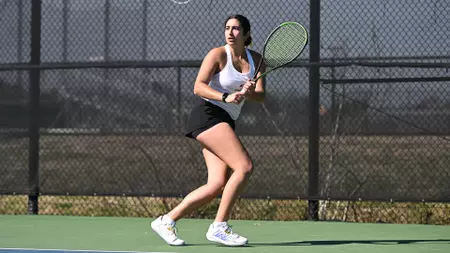
The Salisbury University women’s tennis squad faced a challenging test on Saturday, falling 7-0 to the nationally-ranked Christopher Newport Captains at Eyre Courts in Newport News, Virginia.
While the Sea Gulls demonstrated competitive spirit in their top lineup positions, they were unable to break through against the 40th-ranked Captains program. The match concluded with Christopher Newport claiming victory in all seven contested matches.
The defeat came during Saturday afternoon action as Salisbury’s team traveled to face one of the region’s top-tier tennis programs. Despite the lopsided final score, the Sea Gulls showed determination throughout the competition.
WASHINGTON — President Trump remained unharmed Saturday evening following a shooting incident that forced the evacuation of the White House Correspondents’ Dinner at the Washington Hilton, according to authorities. No casualties have been confirmed in the incident.
Federal agents and Secret Service personnel flooded the venue as attendees scrambled for cover beneath dining tables. Witnesses reported hearing someone shout “Out of the way, sir!” while others called out for people to take cover.
Multiple guests estimated they heard between five and eight gunshots during the chaos. The ballroom, packed with hundreds of high-profile media figures, entertainment personalities, and government leaders who were awaiting the president’s remarks, was quickly cleared by security forces.
National Guard troops positioned themselves throughout the hotel while authorities permitted departures but blocked anyone from returning to the building. Enhanced security measures were implemented around the entire perimeter.
Law enforcement sources verified that gunfire occurred, though additional details about the circumstances remain unavailable at this time.
The guest list included Trump, Vice President JD Vance, Defense Secretary Pete Hegseth, and Secretary of State Marco Rubio among other prominent figures.
The incident occurred during Trump’s first appearance at the annual media gathering since becoming president. The event traditionally highlights the complex dynamics between the White House and the press corps that covers it.
Trump had made his entrance to the hotel’s lower-level ballroom accompanied by “Hail to the Chief,” exchanging pleasantries with notable journalists at the head table and acknowledging White House Press Secretary Karoline Leavitt with an enthusiastic gesture.
This year’s program featured mentalist Oz Pearlman as the main entertainment, departing from the usual format of comedian performances that typically include presidential roasts.
The president’s participation had already generated discussion about journalistic ethics, particularly regarding whether reporters should socialize with their subjects. Media ethics specialist Kelly McBride from the Poynter Institute had criticized such events, stating: “What was once (a fairly long time ago) a well-intended night of fundraising and camaraderie among professional adversaries is now simply a bad look.”
Trump’s relationship with news organizations has been notably strained throughout his second term, involving legal battles with major outlets including The Times, The Wall Street Journal, and The Associated Press, along with implementing restrictions on Pentagon media access.
Prior to the dinner, nearly 500 former journalists had petitioned the White House Correspondents’ Association “to forcefully demonstrate opposition to President Trump’s efforts to trample freedom of the press.”
WHCA President Weijia Jiang of CBS News had defended the organization’s approach, telling C-SPAN: “I don’t think people realize how closely we are working with the White House. The relationship is important. It can be complicated. It can be intense. But it is robust.”
During her opening remarks, Jiang had referenced the tense atmosphere by thanking Leavitt “for everything your team does to work with us every day, whether you like it or not.”
CNN’s Manu Raju, arriving at the event, had emphasized his role as a journalist rather than an activist, saying: “I’m not an activist. My job is not to protest.”
Small groups of demonstrators had gathered outside the hotel before the incident, including one person wearing a prison costume with a Pete Hegseth mask and another displaying a “Journalism is dead” sign.
Various news organizations had invited administration officials as their guests, including Treasury Secretary Scott Bessent (New York Post), Interior Secretary Doug Burgum and Secretary of State Marco Rubio (NBC).
The Associated Press had extended an invitation to Taylor Budowich, a former deputy chief of staff whom the organization sued last year over reduced presidential access related to the Gulf of Mexico naming controversy.
“We maintain professional relationships with people across the political spectrum because we are nonpartisan by design — focused on reporting the facts in the public’s interest,” explained AP spokesman Patrick Maks.
The evening was also scheduled to recognize outstanding journalism, including coverage that had drawn Trump’s criticism, such as a Wall Street Journal report about a birthday message he allegedly sent to Jeffrey Epstein, which resulted in a presidential lawsuit.
Federal immigration authorities re-arrested an Egyptian mother and her five children on Saturday, just two days after a court mandated their release from more than 10 months in detention, according to the family’s attorneys.
Hayam El Gamal and her children, ranging in age from 5 to 18, were taken back into custody while fulfilling a mandatory check-in requirement at a Denver Immigration and Customs Enforcement facility, as reported by The Colorado Sun.
According to the family’s legal representatives, ICE placed them aboard an aircraft bound for Michigan “and then outside the United States to an unknown location.” However, attorney Eric Lee confirmed that a federal court approved an emergency petition that halted the deportation proceedings.
The Department of Homeland Security issued a Saturday statement defending the detention, claiming the family was receiving “full due process” while criticizing the judge who mandated their release as an “activist judge” who is “releasing this terrorist’s family onto American streets AGAIN.”
“We are confident the courts will ultimately vindicate us,” stated Lauren Bis, the DHS acting assistant secretary.
The department’s statement did not explain the reasoning behind Saturday’s detention following Thursday’s court decision.
El Gamal and her children had been freed on Thursday when U.S. District Judge Fred Biery mandated their release, following a comparable ruling issued earlier that week.
The Colorado-based family was initially placed in federal custody last June. Their immigration detention became the lengthiest family detention under President Donald Trump’s administration, beginning after El Gamal’s former husband, Mohamed Sabry Soliman, faced charges of attempted murder, assault, and federal hate crimes related to a firebomb incident in Boulder, Colorado last year.
Federal officials have stated they were examining the family’s potential knowledge of the attack. El Gamal, who ended her marriage to Soliman following his arrest, has denounced the Boulder incident and maintained that her family was unaware of any attack preparations.
Trump has justified his immigration enforcement policies as essential for controlling illegal immigration and reducing criminal activity. However, advocacy organizations and critics argue that the DHS initiatives infringe upon due process rights and freedom of expression.
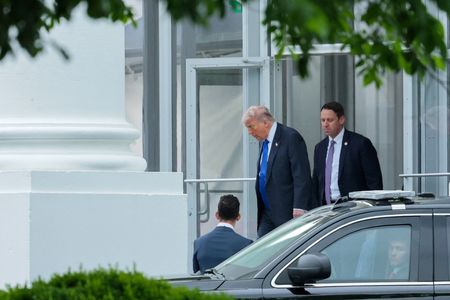
WASHINGTON, April 25 – Secret Service agents swiftly evacuated President Donald Trump and First Lady Melania Trump from Saturday evening’s White House Correspondents’ Association dinner following an unexplained loud disturbance at the event venue.
Administration officials who were present at the gathering were also removed from the premises after the disruptive commotion occurred near the hotel ballroom hosting the annual dinner.
Approximately 2,600 people attending the event sought shelter while service staff rushed toward the front area of the dining room during the incident.
Before security personnel escorted her from the stage, Melania Trump was observed responding to activity in the audience and displayed visible concern on her face, as captured on CSPAN’s live broadcast coverage.
NASCAR has appointed Steve O’Donnell as its new chief executive officer, with the announcement taking place at Talladega Superspeedway this past Saturday. O’Donnell promised to implement significant changes aimed at reconnecting the racing organization with its traditional foundations.
During his introduction ceremony, O’Donnell committed to “make some moves” designed to restore the legendary motorsports series to its original character and values. The new CEO’s vision focuses on bringing unity to NASCAR while rekindling the enjoyment that has historically defined the sport.
O’Donnell brings extensive experience within NASCAR’s leadership structure to his new role as the organization’s top executive. His appointment signals a potential shift in direction for the sanctioning body as it seeks to address current challenges and reconnect with its core identity.
Syria’s Interior Ministry revealed Friday that authorities have captured a man identified as Amjad Youssef, accused of participating in severe human rights violations that were recorded on video during Syria’s civil war, including events connected to mass executions in a Damascus suburb during 2013.
Ministry officials stated that Youssef was captured during a security mission conducted in the al-Ghab Plain region within rural Hama province, after multiple days of intelligence surveillance. The government indicated this operation represents part of continuing initiatives to track down individuals sought for crimes related to the armed conflict that began in Syria in 2011.
Officials have not revealed specific legal charges against the suspect beyond connections to what is called the ‘Tadamon Massacre,’ referencing the Damascus district where the killings took place. Authorities have not clarified if he has been officially transferred to judicial proceedings, though they confirmed he remains under investigation for incidents that happened during the conflict.
Youssef’s identity has surfaced in news coverage and human rights documentation over recent years, with reports connecting him to events in the Tadamon neighborhood of southern Damascus in 2013. The situation drew significant global attention after video evidence was released in 2022 showing the execution of civilians in open areas.
Based on investigative reporting and human rights documentation, Youssef allegedly belonged to an armed unit that took part in detaining civilians during security sweeps in the region before moving some to remote sites within Tadamon, where unlawful killings occurred and victims were subsequently placed in mass burial sites nearby.
These accounts characterize the incidents as connected to military campaigns during the war. The former Assad administration never provided independent legal verification about the specifics of these events or the identities of participants.
The video material, which circulated extensively following its release, generated widespread criticism from human rights groups, who characterized the actions as potentially constituting war crimes and demanded independent investigations and prosecution of those responsible.
The Assad government never officially confirmed the authenticity or details of the recordings.
US Special Envoy to Syria Tom Barrack praised the announcement of Youssef’s capture, referring to him as known by the title ‘Butcher of Tadamon’ for crimes against Syrian citizens. He characterized the action as representing a ‘new model of justice’ in Syria following Assad’s removal, founded on legal principles and national healing.
In a social media post on X, Barrack stated the detention represents a ‘strong step away from impunity toward accountability,’ emphasizing that America supports the Syrian people in seeking justice. He noted that US President Donald Trump backs these initiatives designed to strengthen legal institutions and assist the nation’s recovery.
Youssef is thought to have previously served as an official within Syrian security agencies under Bashar Assad’s leadership, with his identity connected to grave violations in the Tadamon region, including torture, murder and unlawful imprisonment. The moniker ‘Butcher of Tadamon’ stems from survivor accounts documenting these crimes.
The disclosure of Youssef’s detention occurs while accountability for violations during Syria’s conflict remains among the most challenging matters, given continuing political disagreements and difficulties establishing functional international justice systems within the nation. Current Syrian leadership describes the action as efforts to implement ‘transitional justice’ and prosecute former government officials.
Human rights groups have generally supported the arrest, viewing it as a possible step toward addressing historical violations, while emphasizing that true significance depends on ensuring open and equitable trials meeting international standards, separate from political or biased motivations.
The Syrian conflict, which started in 2011, has caused hundreds of thousands of deaths and displaced millions, along with extensive records of serious violations by multiple conflict participants, particularly the Assad government and Islamic State organization.
Authorities have not yet revealed when the suspect will appear in court or provided additional information about anticipated legal actions against him. Observers await further case developments and whether this will result in public prosecution. Millions of Syrians reportedly celebrated the arrest, with public gatherings occurring in certain Damascus areas, especially in Tadamon where the massacre allegedly happened.
The Media Line reports having video evidence and confessions from Youssef acknowledging civilian killings, but has chosen not to publish them because of their extremely disturbing content. Additional footage reportedly shows Youssef directing civilians to execution and burning without legal proceedings.
LOS ANGELES – Half a century after one of baseball’s most patriotic moments, the Los Angeles Dodgers celebrated the 50th anniversary of Rick Monday’s heroic flag rescue during Saturday’s game against the Chicago Cubs.
Monday and his spouse Barbaralee displayed the same flag he saved to thunderous applause from the crowd at Dodger Stadium.
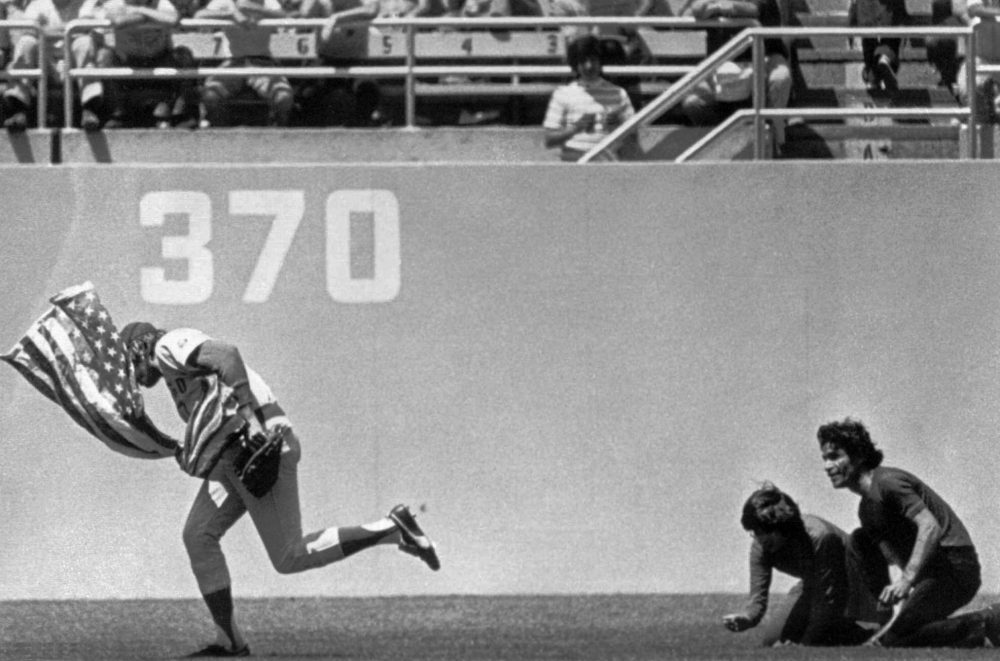
The memorable incident occurred on April 25, 1976, when Monday was patrolling center field for Chicago during a game at Dodger Stadium. During the fourth inning, a pair of protesters entered the playing field, laid out an American flag on the grass between left and center field, and poured lighter fluid on it in preparation to set it ablaze.
Monday quickly sprinted toward the demonstrators and grabbed the flag with his right hand before racing away from the scene. He then handed the flag to Los Angeles pitcher Doug Rau as fans erupted in appreciation.
The following inning when Monday stepped into the batter’s box, the stadium scoreboard displayed a message reading: “Rick Monday…You made a great play.”
During Saturday’s ceremony, Marine Corps representatives presented Monday, who served six years in the Marine Corps reserves, with a bronze statue depicting his famous flag-saving sprint.
“I had no idea they were going to be here or present me with an honor. Very humbled,” Monday commented during the game’s radio broadcast.
Both teams formed lines along the baselines for the national anthem, performed by Davis Gaines from “Phantom of the Opera.”
Monday became a Dodger the next season when Tommy Lasorda started his legendary tenure as manager. He contributed to the franchise’s 1981 World Series title and has served as a Dodgers radio announcer intermittently since 1985.
Starting Memorial Day weekend, the preserved flag will go on display at the Baseball Hall of Fame in Cooperstown, New York. Monday has maintained the flag’s condition over the decades and is lending it to the museum for the exhibit.
“What’s very nice is that flag they were trying to desecrate still has a life,” Monday reflected.
BOSTON — The Boston Red Sox have terminated manager Alex Cora, the skipper who guided the franchise to its 2018 World Series title and a record-breaking 108 regular-season victories that year.
Triple-A Worcester manager Chad Tracy will step in as interim manager to replace Cora.
“Alex Cora led this organization to one of the greatest seasons in Red Sox history in 2018, and for that, and the many years that followed, he will always have our deepest gratitude,” owner John Henry said in a statement. “He has had a lasting impact on this team and on this city. He has led on and off the field in so many important ways.”
The organization made this announcement on Saturday following a dominant 17-1 win against Baltimore, which ended a four-game skid that included getting swept at home by their longtime rivals, the New York Yankees.
Currently sitting at 10-17 for the season, the Red Sox find themselves at the bottom of the AL East standings.
Along with Cora’s dismissal, the organization is releasing five coaching staff members: hitting coach Peter Fatse, third base coach Kyle Hudson, bench coach Ramón Vázquez, assistant hitting coach Dillon Lawson, and major league hitting strategy coach Joe Cronin.
Jason Varitek, who serves as game planning and run prevention coach and caught for three of the team’s four championship teams this century, will move to a different position within the organization that has not yet been specified.
Cora, who played as an infielder for Boston for more than three seasons and earned a 2007 World Series ring as a player, served as Houston’s bench coach during their 2017 championship run. Boston brought him in to take over for John Farrell, marking his debut as a major league manager.
During his inaugural season as manager, Boston captured 108 regular-season games, eliminated their bitter rivals the Yankees in the playoffs, then beat Houston in the American League Championship Series. The team completed their championship run by defeating Los Angeles in five games for their fourth World Series crown in 15 seasons.
The following year saw Boston finish third in their division, ending a four-year playoff streak. During that offseason, The Athletic published reports indicating Cora had played a central role in Houston’s illegal sign-stealing operation during their title-winning campaign.
After Major League Baseball completed its investigation, both Cora and the Red Sox mutually agreed on his departure. Ron Roenicke took the helm of a team that would subsequently undergo major salary cuts, including trading 2018 AL MVP Mookie Betts and pitcher David Price. Following a basement finish in the shortened 2020 campaign, the team dismissed Roenicke and brought Cora back.
In his return season, Boston made the playoffs once more, defeating New York in the AL wild-card matchup and Tampa Bay in the Division Series before falling to Houston in the ALCS.
Since that playoff run, Boston has failed to win another postseason series, finishing last in consecutive seasons before returning to the playoffs last year only to lose to the Yankees in the wild-card round.
Cora compiled a 620-541 record during his tenure as Red Sox manager.
“These decisions are never easy, but this one is especially difficult given what Alex has meant to the Red Sox since the day he arrived,” Henry’s statement said. “I want to thank Alex, our coaches, and their families for everything they have given to this organization. They have been part of this club in a way that goes beyond the field, and they will always have our respect and gratitude.”
Chad Epperson, previously managing the Double-A Portland team in the Eastern League, will temporarily fill the third base coaching position. Collin Hetzler, who coached hitting for Worcester, will join Boston’s major league hitting staff.
BOGOTÁ, Colombia — Thirteen passengers died and 38 others were wounded when an explosive went off aboard a bus traveling through southwestern Colombia on Saturday, marking the deadliest incident in a recent surge of violence tied to narcotics trafficking.
The blast occurred as the vehicle moved along the Panamerican Highway in Cajibio municipality, according to Cauca region Governor Octavio Guzmán, who announced the attack on social media. Among those hurt were five children, Cauca Health Secretary Carolina Camargo reported to Noticias Caracol television.
Colombia’s Armed Forces Commander Gen. Hugo López characterized the incident as a “terrorist act” during a press briefing, pointing to criminal networks led by “Iván Mordisco” — a high-priority fugitive — along with the Jaime Martínez faction. These groups are breakaway elements from the former Revolutionary Armed Forces of Colombia operating in the area.
Both organizations rejected the 2016 peace accord signed between the government and the main rebel group.
Colombian President Gustavo Petro denounced the bombing on social media platform X.
“Those who carried out the attack and killed seven civilians — and wounded 17 others — in Cajibío — many of them Indigenous people — are terrorists, fascists, and drug traffickers,” he wrote.
The bus attack represents just one incident in a wave of at least 26 explosive attacks targeting public facilities across southwestern Colombia over the past 48 hours, all of which have harmed civilians rather than military targets, López stated.
Other recent incidents included gunfire directed at a police facility in rural Jamundi and an assault on a Civil Aviation radar installation in El Tambo, where officials intercepted three bomb-carrying drones on Saturday. Those attacks caused no casualties.
On Friday, explosive-rigged vehicles detonated near military installations in Cali and Palmira, resulting in property damage.
The spike in regional violence — occurring in territory where illegal armed organizations compete for drug trafficking control — triggered the deployment of senior government officials to the area Saturday. Defense Minister Pedro Sánchez led a delegation including regional governors and local officials meeting in Palmira when the fatal bus explosion happened.
“These criminals seek to instill fear, but we will respond with firmness,” Sánchez posted on X.
Valle del Cauca Governor Francisca Toro has requested “immediate support” from national authorities. In her social media message, Toro demanded strengthened security forces, improved intelligence work and “decisive actions” against criminal activity amid what she termed a “terrorist-level escalation.”
Government sources indicate that Cauca and Valle del Cauca regions function as crucial operational centers for illegal groups competing to control maritime and river pathways to Buenaventura port — a major shipping hub for narcotics bound for Central America and Europe.
Authorities have posted a reward exceeding $1 million for information leading to the arrest of “Marlon,” identified as the regional dissident leader. Local officials on Friday announced a $14,000 bounty for details helping identify and locate those responsible for the Cali and Palmira attacks.
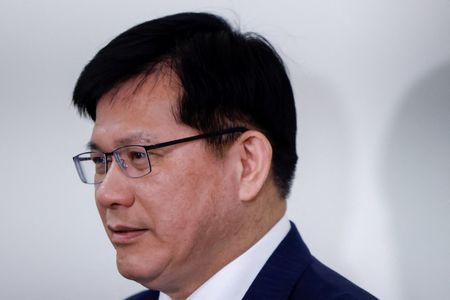
Taiwan’s Foreign Minister Lin Chia-lung successfully reached the African nation of Eswatini over the weekend, declaring that Taiwan would not be deterred by “authoritarian forces” following allegations that China pressured multiple countries to deny flight access to President Lai Ching-te’s planned diplomatic mission.
The diplomatic controversy began last week when three African nations – the Seychelles, Mauritius, and Madagascar – withdrew previously granted overflight permissions for Taiwan’s presidential aircraft heading to Eswatini, which remains one of Taiwan’s dozen remaining diplomatic partners worldwide.
This incident represents an unprecedented situation where a Taiwanese president was forced to cancel an entire international visit due to denied airspace access, suggesting Beijing may be employing new tactics to restrict Taiwan’s global diplomatic activities.
Sharing his arrival on social media late Saturday, Lin posted an image of himself disembarking from a private aircraft in the small southern African nation, previously called Swaziland.
“In that moment, I felt the deep friendship between Taiwan and Eswatini that transcends distance, and I became even more convinced that Taiwan will not be held back by authoritarian forces,” he wrote. “We will certainly step out onto the world stage.”
While Beijing has denied applying pressure on the three African countries, Chinese officials nonetheless commended their decision to block the flight permissions.
Lin provided limited information about his journey, stating only that his team “overcame all obstacles” to reach Eswatini as President Lai’s special representative for King Mswati III’s 40th anniversary celebration of his rise to power.
Beijing maintains that Taiwan, despite its democratic governance, constitutes a Chinese province without legitimate claims to sovereign status. Taiwan’s leadership disputes these assertions and maintains its right to conduct international relations.
The situation has drawn criticism from Washington, while the European Union, along with Britain, France, and Germany, have also voiced their concerns about the incident.
Israel’s High Court of Justice faced a critical decision Thursday that has been mounting for over two years: whether the government can continue postponing a comprehensive investigation into the October 7, 2023 failures, or if the court must step in and mandate one.
Ruby Chen, whose son Itay Chen was an American Israeli soldier killed during the October 7 attack and whose remains weren’t recovered until November 2025, expressed frustration with suggestions that voters could decide the matter in upcoming elections. “That’s the easy way out,” Chen told The Media Line. “We need to make a decision, not just for this time, but maybe for other times as well.”
When asked if he believed the justices grasped the families’ perspective, Chen replied, “I think they understand, but they understand it’s a hot potato.”
Tensions from outside the courtroom spilled inside during the proceedings. Court sessions were temporarily suspended when demonstrators tried to force entry, while grieving families clashed outside over what type of investigation Israel should conduct.
Chen noted how serious the situation has become. “If something similar would have happened in the US Supreme Court, you would see the FBI and people handcuffed,” he observed. After a pause, he added, “We are living in a different place.”
The case centers on a petition demanding the court compel the government to create a state commission of inquiry under current law. Stav Livne Lahav from the Movement for Quality Government in Israel’s legal team explained that while the request appears simple, its consequences are complex.
“We asked the court to order the government to use the authority it already has and establish a state commission of inquiry into the failures of October 7,” she stated.
Livne Lahav outlined the legal framework as organized and systematic. “In Israel, this kind of proceeding is a two-stage process,” she noted. “First, we have to show there is a real legal basis. If the court agrees, it issues an order requiring the government to explain why it is not acting. At this stage, the burden is on the government.”
She confirmed that initial phase has been completed. “The court issued a conditional order. That means the government now has to justify why it is not establishing a commission, under a law that clearly exists for this purpose.”
According to Livne Lahav, the core question isn’t about governmental authority, but how that power is being exercised. “No one disputes that the authority is with the government,” she said. “But authority in a democracy is not unlimited. It must be exercised reasonably, without improper considerations, and without conflicts of interest.”
She contended that the extended postponement has gained legal importance. “You cannot wait two-and-a-half years after the biggest failure in the country’s history and claim that nothing has been decided,” she argued. “At some point, inaction becomes a decision.”
The government has proposed an alternative: a politically appointed investigation body. Livne Lahav completely rejected this approach.
“First of all, this is not even law,” she explained. “It has not passed the legislative process. You cannot ask a court to rely on something that does not exist.”
She also questioned the proposed structure’s effectiveness. “A state commission of inquiry is designed to reach the truth,” she said. “It is headed by someone with judicial experience, usually a retired judge, with the tools and the independence to investigate complex events.”
In contrast, she cautioned that the government’s approach could politicize the investigation. “What they are proposing creates a situation where there will be negotiations over the truth,” she warned. “Instead of finding out what actually happened, you will have competing versions, shaped by political positions.”
Livne Lahav emphasized the broader implications beyond legal considerations. “The public should go to elections knowing what happened,” she said. “If we prevent the establishment of a body that can examine this, we are blocking the public’s ability to know.”
Chen echoed this sentiment directly. “Who knew? What did they do? What did they not do?” he questioned.
Chen also highlighted what he sees as inconsistent explanations from officials. “At the beginning, it wasn’t time because we were at war,” he said. “Now they say the court is not authorized. So, what is it? You can’t change each time and give a different excuse.”
For Chen, the postponement carries personal weight affecting how families cope with their losses. “We are still waiting,” he said. “How can you move forward without answers? We’re here at the cemetery now.”
On the opposing side, Likud legislator Tally Gotliv, who was ejected from the courtroom during the session following repeated disruptions, presented a completely different perspective. After her removal, she accused the court of overstepping boundaries and worsening the divisions it claims to address.
“The Supreme Court cannot look bereaved families in the eye,” she declared. “It cannot bear their pain, their criticism, the accusations people feel toward it.”
Gotliv claimed the justices were deliberately silencing certain voices. “The court distances and removes bereaved families from the hall,” she said. “And what is worse, it creates division between them.”
She argued this division was intentional. “There are families who want a state commission and families who do not,” she noted. “And the court is fueling that conflict.”
She went further, alleging political manipulation of the situation. “Left-wing organizations are using this pain, using this division, to advance political interests,” she claimed.
Gotliv characterized her ejection as part of this pattern. “Expelling me is a violation of parliamentary immunity,” she said. “The law is clear. You cannot remove a member of Knesset like that.”
For Gotliv, the matter extends beyond procedure to symbolism. “When they remove me, they remove the people,” she said. “This is part of the contempt the court shows toward the government and the coalition.”
She challenged the entire premise of the hearing. “The court should not be dealing with this issue at all,” she stated. “This is not a question of whether it has authority or not. It simply should not be discussing it.”
Instead, Gotliv advocated for institutional changes. “This is exactly why the power of the court needs to be restrained through legislation,” she said. “There needs to be clear limits on what it can and cannot do.”
Gotliv also disputed claims that the government was avoiding responsibility. “The government has already agreed to establish a mechanism,” she said, referring to the proposed political inquiry. “The question is not whether there will be an investigation, but what kind.”
She maintained the decision shouldn’t come from judges. “This is a decision for the elected government,” she insisted. “Not for the court.”
The divide between these viewpoints is stark. Petitioners like Livne Lahav see the lack of a state commission as governmental failure requiring court intervention. Legislators like Gotliv view judicial involvement as a violation of democratic separation of powers.
Between these opposing positions stands a public still grappling with October 7 and increasingly split over how the events before, during, and after the massacre should be examined.
The court hasn’t issued its decision yet. However, Thursday’s session demonstrated that the question has expanded beyond how October 7 should be investigated. It now encompasses whether Israel’s institutions and society still agree on who holds the authority to establish truth and when such inquiry must commence.
Israeli Prime Minister Benjamin Netanyahu revealed on Friday through social media that he had been diagnosed with prostate cancer in its early stages and has completed successful treatment in Jerusalem, stating that he has made a full recovery and remains in good health.
The 76-year-old prime minister explained that doctors discovered a cancerous tumor smaller than 1 centimeter during routine follow-up appointments after he underwent a procedure in December 2024 to address a non-cancerous enlarged prostate. Medical professionals characterized the discovery as an extremely early-stage malignancy that had not spread to other parts of his body.
Netanyahu completed a course of focused radiation treatment at Hadassah Medical Center in Jerusalem. His therapy finished approximately two and a half months prior to making the announcement public in April 2026. Medical professionals report that follow-up scans and laboratory work show no remaining signs of the disease.
In his public statement, Netanyahu described his current physical state as being in “excellent physical condition.”
During his treatment period, Netanyahu asked for his yearly medical report to be postponed to avoid releasing it “at the height of the war, to prevent the Iranian terror regime from spreading further false propaganda against Israel.”
This health revelation follows several other medical interventions in recent years. Netanyahu had surgery in December 2024 for his enlarged prostate condition. Previously, in March 2024, he underwent an operation to repair a hernia. In July 2023, doctors implanted a pacemaker after he experienced what medical staff called a “transient heart block” and “fainting episode.”
Even with this medical background, Netanyahu emphasized that his cancer was detected in its earliest phase and has been effectively eliminated through treatment.
America’s departure from Syrian military installations represents a crucial turning point in a conflict spanning over ten years. This military shift goes beyond tactical changes, sparking wider discussions about foreign military footprints in Syria and their sustainability as regional and global dynamics rapidly evolve.
As Washington exits the conflict zone, discussions have grown more intense about whether Syria faces a comprehensive reshuffling of international influence or if this represents solely an American departure that won’t affect other nations, particularly Russia.
America’s exit, concluding a military presence that started in 2014 during the fight against ISIS, is viewed by strategic experts as reflecting Washington’s broader policy change—minimizing direct military engagement in global conflicts while depending on more cost-effective political and military approaches.
Military expert Hossam Darwish explained to The Media Line that “the United States no longer sees long-term military presence as an effective means to achieve its objectives, which is reflected in similar decisions across multiple theaters.” He emphasized that this change puts foreign military installations in Syria under genuine examination within a complicated environment influenced by intersecting regional and global interests.
America began operations in Syria during 2014 with aerial attacks on ISIS locations in Raqqa, Deir ez-Zor, and surrounding regions, operating without direct coordination with Syria’s previous government after the militant organization expanded and seized control of significant portions of northern and eastern Syria. Subsequently, American involvement grew to include limited special operations forces providing ground support, advisory services, and coordination with local allies, primarily the Syrian Democratic Forces.
Washington constructed small installations and outposts in northeastern Syria to facilitate air and ground missions, implementing a strategy combining aerial power with local partnerships rather than massive ground forces. Although successful in destroying ISIS’s “territorial caliphate,” the organization wasn’t completely eliminated, continuing operations through dormant cells and conducting occasional attacks in Syria and Iraq, sustaining low-level activities today.
Russia maintains a significant role in Syria through substantial military installations. Moscow joined the conflict on September 30, 2015, responding to the Syrian government’s request under Bashar Assad as violence intensified and the state lost territorial control to opposition groups.
Russian involvement focused mainly on aerial power, conducting extensive bombing operations from Khmeimim Air Base while deploying military advisors, limited special operations units, and sophisticated air defense equipment.
Unofficial assessments indicate Russian personnel in Syria numbered between 4,000 to 7,000 at different times, emphasizing specialized roles rather than massive ground deployment.
Russia also utilized Wagner Group elements, which aren’t classified as regular military forces. This intervention helped shift military advantages toward the Syrian government by supporting the recapture of important cities and strategic territories, while enhancing Moscow’s regional influence before the Syrian regime’s collapse at 2024’s end.
Following that period, Russia has maintained a restricted but strategically important network of military facilities concentrated mainly along Syria’s coastline. The primary installation is Khmeimim Air Base near Latakia, functioning as the central hub for aerial operations where fighter aircraft and bombers conducted most strikes, housing sophisticated air defense systems plus command and logistical support infrastructure.
Tartus naval facility represents the second foundation of Russia’s presence. This location serves as Moscow’s sole Mediterranean naval installation, offering resupply and maintenance capabilities while providing Russia permanent maritime access beyond its territory.
Additionally, Russia maintained less stable operations at military airfields including Shayrat and T4 (Tiyas), plus limited deployments in regions like Aleppo and Deir ez-Zor, before gradually withdrawing from most positions following the regime’s collapse.
Recent months have shown signs of Russia reducing its interior presence while strengthening coastal deployment, indicating tactical repositioning designed to lower expenses while maintaining strategic objectives.
Syrian political expert and Russia specialist Muhammad Hamza told The Media Line that “Russia is moving toward reducing its broad deployment in favor of a more concentrated model in key strategic locations.” He added that “the coastal bases will remain a red line because they are Moscow’s gateway to the Mediterranean, but its inland presence may be reconsidered.”
Researcher Amjad Saeed observes that this deployment’s future depends on “the trajectory of the war in Ukraine, the level of international pressure and the future nature of relations with Damascus.”
Within Syria domestically, foreign military installations remain among the most delicate matters, directly connected to sovereignty questions.
Syrian political activist Kinana al-Kurdi believes Syrian leadership might pursue “restructuring its military relations in a way that allows for a gradual reduction of foreign presence without direct confrontation with partners.” She noted that “the issue cannot be resolved by unilateral decisions but through complex understandings.”
An anonymous diplomatic source suggests further that “Damascus may use the issue of military bases as a bargaining chip to obtain economic or political support, particularly during the reconstruction phase.”
From a legal perspective, expert Mahmoud Hammam clarifies that military agreements with Russia “are not rigid and can be renegotiated if political circumstances change.” This creates possibilities for various outcomes, including modifications, partial reductions, or complete termination.
Within the larger framework, foreign installations’ future in Syria cannot be separated from broader international developments. Ukraine’s ongoing war continues depleting Russian resources, while Western nations seek to restrict Moscow’s Middle Eastern influence. Simultaneously, Turkey and other regional countries closely observe developments due to direct security consequences.
Since Syria’s major political transformations in 2024, including power transitions and certain power centers’ decline, Moscow has shifted toward reducing interior presence and concentrating on coastal installations, appearing to move toward a more restricted role focused on logistical and training support rather than extensive military deployment.
PHILADELPHIA – University of Delaware’s track and field team showcased their talents at the prestigious Penn Relays, which took place from April 23rd through 25th in Philadelphia.
Olamide Ayeni led the Blue Hens’ performance by capturing the top spot in the collegiate shot put competition, earning first place honors at one of track and field’s most celebrated events.
The Delaware program also sent athletes to compete simultaneously at the John Covert Classic on April 25th, demonstrating the depth of talent within the Blue Hens roster.
The Penn Relays represents one of the premier collegiate track and field competitions in the country, making Ayeni’s victory a significant achievement for both the athlete and the University of Delaware program.
Afghanistan’s Taliban government issued a statement Saturday encouraging Afghan nationals currently housed at a U.S.-operated transit facility in Qatar to come back to their homeland, asserting that safety conditions have improved significantly.
Foreign Ministry spokesman Abdul Qahar Balkhi declared that Afghan citizens living overseas should have confidence in returning to their country. Balkhi emphasized that no security dangers currently exist for anyone within Afghanistan’s borders and stated that residents are not being forced to flee due to safety concerns.
This announcement follows reports from multiple American news organizations that the Trump administration is exploring the possibility of sending former Afghan allies to the Democratic Republic of Congo, a nation widely considered among the world’s most war-torn regions.
The New York Times reported that “After halting a US resettlement program for Afghans who helped the American war effort, President Trump is in talks to send as many as 1,100 of them to the Democratic Republic of Congo, an aid worker briefed on the plan said Tuesday.”
Over 1,100 Afghan evacuees who fled to Qatar following Kabul’s collapse in 2021 are preparing for the closure of Camp As-Sayliyah in Doha, as the American-operated facility was scheduled to close on March 31.
The facility has provided temporary shelter for former Afghan military personnel, translators, and relatives of U.S. military members, many of whom were evacuated during the turbulent withdrawal when the Taliban regained control.
The majority of camp residents have completed thorough security screenings and received approval for U.S. resettlement, including more than 400 minors.
U.S. senators have voiced strong opposition to the reported plan to transfer Afghan allies from Qatar to Congo.
Senator Alex Padilla wrote on his X account, “Unbelievable. When we betray our allies, we signal to every future partner that the US isn’t worthy of their trust.” Senator Jeff Merkley characterized the proposal as “evil and wrong.”
Additional senators, including Tammy Duckworth, Tim Kaine, and Ed Markey, have condemned the reported transfer plan, demanding its immediate suspension and enhanced protections for Afghan partners.
Nadir Khalili, a former Afghan special forces member, expressed his despair to The Media Line, saying “It would have been better for us to have been killed in the war than to be transferred to a country like Congo.”
Khalili added, “At the time, US officials clearly told us that, morally, the responsibility for our protection now rested with the United States, which is why we brought our children with us. But hearing this now has only deepened our anxiety.”
Humanitarian organizations and human rights advocates, including the United Nations High Commissioner for Refugees, have consistently called for accelerated international solutions for Afghan refugees, cautioning that resettlement delays heighten vulnerability and create instability.
SALISBURY, Md. – Salisbury University’s softball team delivered a commanding performance during their Alumni Day festivities, completely shutting out Ursinus College in a Saturday doubleheader at Margie Knight Sea Gull Softball Stadium.
The Sea Gulls dominated both contests, claiming the opening game with a 9-4 victory before delivering an even more decisive 7-1 triumph in the second matchup against the visiting Bears.
With the doubleheader sweep, Salisbury improved their season record to 20-12, while Ursinus fell to 12-26 following the losses on Maryland’s Eastern Shore.
The victories provided an exciting backdrop for the university’s Alumni Day celebration, giving returning graduates plenty to cheer about as they watched their former team continue its strong season performance.
BOGOTA – A devastating bombing in western Colombia has resulted in 13 fatalities and injured 17 additional victims, according to a police official who spoke with Reuters on Saturday.
The deadly explosive incident took place in Colombia’s western region, though authorities have not yet released additional details about the circumstances surrounding the attack or the identities of those responsible.
The casualty count was confirmed by law enforcement sources as investigations into the bombing continue.
The Cincinnati Reds have moved veteran slugger Eugenio Suarez to the 10-day injured list Saturday after he suffered a left oblique strain.
The roster move dates back to Thursday, with the team bringing up outfielder JJ Bleday from their Triple-A Louisville affiliate to take Suarez’s spot.
Manager Terry Francona anticipates the injury won’t keep Suarez out for an extended period.
“The hope is after possibly five or six days if symptoms are gone, we’ll get him imaged again,” Francona explained to the media. “Then we’ll start to build him back up.”
The 34-year-old designated hitter and third baseman was pulled from Friday’s starting lineup against Detroit approximately one hour before game time when he experienced discomfort in his left side during batting practice. An MRI scan revealed the muscle strain.
This season, Suarez is hitting .231 with three home runs and 11 RBIs across 25 games. He returned to Cincinnati on a one-year, $15 million contract after previously playing for the Reds from 2015 through 2021.
Last year, Suarez tied his personal best with 49 home runs while playing for both Arizona (36 homers) and Seattle (13). He previously reached that same 49-homer mark during his 2019 season with Cincinnati.
Bleday, 28, was performing well at Louisville with a .341 batting average, six home runs and 19 RBIs in 24 games. The outfielder nearly earned a spot on Cincinnati’s opening day roster after hitting .317 with four homers during spring training.
Throughout his four-year major league career with Miami and Oakland, Bleday has accumulated 49 home runs but carries a .215 batting average.
In additional roster moves, Cincinnati brought up right-handed pitcher Jose Franco from Louisville while sending Kyle Nicolas down to the same club.
Franco, 25, posted a 3.18 ERA in three earlier appearances with the Reds this season. Nicolas, 27, struggled with a 1-0 record and 8.59 ERA over seven outings, issuing 13 walks in just 7 1/3 innings pitched.
Polish tennis star Iga Swiatek, a six-time Grand Slam winner, was forced to withdraw from her Madrid Open match on Saturday after falling ill during competition against American player Ann Li.
Swiatek, who held the fourth seed position at the WTA 1000 clay court event, called for medical help before ultimately leaving the court in tears. At the time of her withdrawal, she was behind in the round-of-32 match with scores of 6-7(4) 6-2 0-3.
Speaking about her condition, Swiatek explained her recent struggles with what appears to be a viral infection. “The past two days were pretty terrible, I think I have some virus,” the defending Madrid champion said.
“It’s been some hours fine, some hours pretty bad. I had zero energy, zero stability, and I just felt really bad physically,” she continued.
Despite feeling unwell, the 24-year-old athlete attempted to push through the match, drawing on past experiences when she successfully competed while sick. “I knew that (it was) going to be hard but I still wanted to try because I already have been sick twice in my career and I could still win most of my matches. I guess it depends on how bad it is, and I guess this time it was worse than before,” Swiatek said.
The unexpected withdrawal creates challenges for Swiatek’s preparation schedule leading up to the French Open, where she has established herself as a dominant force. The Polish player has claimed the Roland Garros title four times, including her most recent victory in 2024.
Swiatek plans to resume her French Open preparation at the upcoming Italian Open, scheduled to run from May 5-17. The main draw competition at the French Open is set to begin on May 24.
KYIV, April 26 – Ukraine observed the 40th anniversary of the Chornobyl nuclear catastrophe on Sunday while grappling with concerns that Russia’s ongoing military campaign could trigger another nuclear emergency at the world’s most infamous atomic disaster site.
Ukrainian officials report that Moscow has consistently launched missiles and unmanned aircraft along flight routes that pass dangerously close to the nuclear facility when targeting Ukrainian population centers. Last year, one such attack caused damage to an essential protective barrier at the site.
The annual remembrance of the catastrophe – which released radioactive contamination across vast portions of Europe despite Soviet officials’ attempts to conceal its magnitude – has gained heightened significance during Russia’s military operation against its neighboring country.
“The Chornobyl disaster was the result of a reactor experiment ordered by Moscow, in violation of safety protocols, and followed by lies and cover-ups,” Ukraine’s foreign ministry said in a statement this week.
“To this day, the world has to face consequences brought by a totalitarian system that subordinated truth and science to ideology and political power.”
The catastrophic explosion and subsequent reactor meltdown at the Soviet-constructed facility’s fourth unit during the early morning hours of April 26, 1986, exposed millions to dangerous radiation levels, displaced hundreds of thousands from their homes, and rendered enormous areas uninhabitable due to contamination.
Thousands of people have died from radiation-induced diseases including cancer in the decades since, though experts continue to debate the complete casualty count and lasting health impacts.
International cooperation led to the construction of a enormous steel and concrete containment structure in 2016, designed to protect the hastily-built concrete shelter that was erected in 1986 to encase massive amounts of radioactive wreckage.
But a Russian drone attack in February 2025 breached the airtight seal of this protective barrier, according to officials. While no radiation leaks were found, the European Bank of Reconstruction and Development estimates repairs will cost at least 500 million euros to prevent lasting harm.
Ukraine’s chief prosecutor revealed to Reuters earlier this week that radar systems had tracked a minimum of 92 Russian drones flying within a five-kilometer radius of the protective structure since June 2024.
For security reasons, Ukrainian authorities typically do not announce details of official memorial events during wartime.
Located approximately 100 kilometers north of Kyiv and surrounded by a 2,600-square-kilometer restricted area, the facility – which Reuters journalists visited Wednesday – sits in an unsettling quietude that extends throughout the surrounding forests.
National Guard troops monitor the site, where roughly 2,250 workers operate in extended shifts to oversee the facility’s gradual dismantling process. Operations at the plant’s final reactor ceased in 2000.
The command center for the destroyed fourth reactor now stands as a darkened chamber filled with damaged and corroded Soviet-era machinery.
Wildlife including moose and feral horses now inhabit the area surrounding the plant and the deserted city of Prypiat, demonstrating how the natural world has reclaimed territory left vacant by human evacuation.
The University of Maryland Eastern Shore Hawks softball team suffered a disappointing sweep at the hands of Delaware State University in doubleheader action.
Despite strong pitching performances from Paris Richards and Brown, who each went the distance in their respective starts, the Hawks were unable to secure a victory in either contest against the Hornets.
Both UMES hurlers delivered complete game efforts, but the offensive support proved insufficient to overcome Delaware State’s attack throughout the twin bill.
The losses continue what has been a challenging season for the Hawks as they work to find consistency on both sides of the ball in conference play.
Arizona Diamondbacks outfielder Alek Thomas emphasized the significance of Major League Baseball’s expansion into Mexico as his team prepares for a weekend doubleheader against the San Diego Padres in Mexico City, where enthusiastic fans are expected to pack the stadium.
Thomas, born in the United States but eligible to play for Mexico through his mother’s heritage, expressed that competing in the nation’s capital holds special meaning for him personally.
“It’s definitely important,” Thomas shared with media on Saturday. “Getting the game all across the world is a big part of what MLB is trying to do… so everybody can see some of the best players in the world.”
The outfielder spoke about his strong connection with Mexican supporters leading up to the series, noting that his representation of Mexico in international competition has strengthened that relationship.
“There’s been a lot of people that came up to me,” he explained. “I feel like the Mexican fan base has always been very supportive.”
“It’s an honour to represent Mexico and my mom’s side of the family,” he continued. “After those games, the hugs were a little bit tighter… you could see how proud they were.”
With both of his parents attending the series at Estadio Alfredo Harp Helu, Thomas described the opportunity as “really special” and expressed hope to win over what’s anticipated to be a crowd favoring the Padres.
“I’m looking forward to the crowd reaction,” he said. “Hopefully we can sway them a little bit.”
San Diego star Fernando Tatis Jr. highlighted the impressive growth of Mexican baseball, specifically mentioning the improving standards of the country’s domestic summer league, where his father Fernando Tatis Sr. currently serves as manager for the Algodoneros de Union Laguna.
“It’s very nice to see the quality of baseball being played here,” Tatis Jr. commented. “It’s a league that’s growing… you can see the investment and the work that’s being put in.”
Fellow Padres player and Dominican Republic native Manny Machado emphasized how Latin American supporters transform the atmosphere completely.
“Latinos play the game differently… and a big part of that is the fans,” Machado explained. “They give us energy. You’re going to see that here again.”
For the Padres, who have cultivated substantial Mexican support over the years, this series strengthens a relationship that MLB continues to prioritize as part of its international expansion strategy.
“It’s something the sport has needed for a long time,” noted manager Craig Stammen.
Both teams are currently competing with the Los Angeles Dodgers for National League West supremacy, and focus now shifts to on-field performance, where high-scoring contests are anticipated due to the altitude, with a capacity crowd expected to attend.
Saturday’s concluding day of the 2026 NFL Draft in Pittsburgh opened with a surprising selection that caught many analysts off guard.
Tennessee defensive back Jermod McCoy, who numerous experts predicted would be chosen in the opening round, instead became the Las Vegas Raiders’ pick at 101st overall to start the fourth round.
The Raiders executed a minor trade with Buffalo, giving up a 2027 seventh-round selection to move from 102nd to 101st position and land McCoy.
Scouts Inc. had ranked McCoy as the 16th best available talent, but his dramatic slide resulted from medical red flags. The cornerback suffered an ACL tear that sidelined him for the entire 2025 collegiate campaign, and while that injury has recovered, medical evaluations revealed degenerative cartilage damage in his right knee.
“All of my doctors that did my surgery told me (that) I’m good,” McCoy said, per ESPN. “But if there’s something that (the Raiders) want me to do for the longevity of my career, I’m willing to do that because I feel like they have my best interest.”
During his 2024 season with Tennessee, McCoy recorded four interceptions and nine pass deflections following his transfer from Oregon State.
Las Vegas continued making bold moves after selecting Indiana signal-caller Fernando Mendoza with the draft’s opening pick two days earlier. The organization shipped former top-10 selection Tyree Wilson to New Orleans to jump from 219th overall up to 150th in the fifth round.
Wilson, chosen seventh overall in 2023, recorded 12 quarterback sacks across three seasons rushing the passer for Las Vegas. The Raiders had previously attempted to deal star pass rusher Maxx Crosby to Baltimore this offseason, but the Ravens withdrew from negotiations when Crosby failed his physical while rehabilitating from knee surgery.
With their 150th selection, Las Vegas chose Arizona safety Dalton Johnson.
The quarterback position remained sparse throughout the weekend, with only one passer taken in round four and another in round five.
New York’s Jets moved up through a deal with Cincinnati to grab Clemson’s Cade Klubnik at 110th overall. The trade sent Cincinnati the 128th pick while the Jets received the 199th selection in addition to moving up from 140th.
Klubnik, formerly considered elite college quarterback material, failed to meet expectations during his three-plus seasons leading Clemson’s offense. The 6-foot-2 prospect completed passes for 2,943 yards with 16 touchdowns against six interceptions in 2025 for the Tigers.
New York has once again restructured its quarterback position but waited until round four to gamble on an incoming rookie, having selected pass rusher David Bailey second overall. Klubnik will compete alongside Geno Smith, Brady Cook and Bailey Zappe for playing time.
“I woke up this morning hoping the Jets were going to pick me,” Klubnik told reporters after the pick.
Philadelphia utilized the 178th overall selection on North Dakota State’s Cole Payton, a former FCS championship winner who will join a depth chart featuring Jalen Hurts, Tanner McKee and veteran Andy Dalton.
Although only six quarterbacks were selected through five rounds, tight ends experienced tremendous popularity. Seventeen were chosen in rounds one through five, exceeding the 16 total drafted in 2025.
Mississippi State tight end Seydou Traore, a London native, joined the Miami Dolphins at 180th overall as the fifth round’s second-to-last selection. Despite not being announced among the prospect “green room” attendees, Traore appeared on Pittsburgh’s stage and received recognition from commissioner Roger Goodell, creating an uncommon moment for the draft’s third day.
Cleveland opened round six by selecting Arkansas quarterback Talen Green with the opening pick. Green will enter a crowded Browns quarterback room including Shedeur Sanders, Deshaun Watson and Dillon Gabriel.
WORCESTER, Mass. – The University of Delaware women’s rowing squad wrapped up their regular season on a high note, claiming top-three placements in three out of four championship events at the Worcester Women’s Invite held on Lake Quinsigamond.
The competition, organized by Holy Cross College, served as the final regular season test for the Blue Hens before heading into championship season. Delaware’s strong performance across multiple boat classes demonstrated the team’s preparation and competitive depth as they look ahead to upcoming postseason competitions.
The regatta took place on the historic Lake Quinsigamond, a premier rowing venue that has hosted numerous collegiate and national championships over the years.
The University of Delaware baseball squad experienced another setback in their series against Liberty University, falling in the second consecutive matchup of the weekend series.
The Blue Hens were unable to recover from their opening game loss, as Liberty maintained their momentum to take a commanding 2-0 series lead.
The defeat continues a challenging stretch for Delaware’s baseball program as they face a must-win situation in any remaining games of the series.
Details about specific scores, player performances, and game highlights were not immediately available in the initial report.
Listen to the Evening Delmarva Farm Report Update — April 25, 2026
DELMARVA — Maryland poultry farmers can finally move forward after the state Department of the Environment released its updated permit for concentrated animal feeding operations yesterday. The new 2025 general discharge permit ends a nearly 10-month delay that stalled an estimated $30 million in business investment.
Holly Porter with the Delmarva Chicken Association says the holdup impacted builders, realtors, lenders, equipment manufacturers and farmers looking to build modern chicken houses. The permit becomes effective May 8, allowing broiler producers to begin submitting applications under the new requirements.
Markets
Grain futures showed mixed results yesterday as traders wrapped up the week. Soybeans climbed on short covering and technical buying, though the crop still posted modest weekly losses. Wheat finished the week with gains driven by weather and fertilizer concerns.
Cattle futures moved higher at the Chicago Mercantile Exchange. June live cattle advanced $1.72 to settle at $245.22 per hundredweight. August feeder cattle surged $2.42 to finish at $361.77.
On the cash side, Laurel Grain Company in Laurel Delaware is offering $5.05 a bushel for May corn and $11.24 for May soybeans.
Forecast
Expect rain tonight with a low around 44°. Tomorrow brings a chance of rain showers early, then mostly cloudy skies with a high near 54°. Monday looks sunny with temperatures reaching 64°.
This article is based on the Delmarva Farm Report Update Evening Edition, April 25, 2026. Hosted by Tom Bradley.
The Goldey-Beacom Lightning baseball squad experienced contrasting fortunes during their Central Atlantic Collegiate Conference doubleheader against Post University in Waterbury, Connecticut.
The Lightning dropped the opening contest by a narrow 3-2 margin before rebounding in spectacular fashion with a commanding 15-2 triumph in the nightcap.
The split keeps Goldey-Beacom competitive in conference play as they continue their season in the Central Atlantic Collegiate Conference.
The beloved bronze figure of Rocky Balboa has found a new location inside the Philadelphia Museum of Art, where it serves as a centerpiece for an exhibition exploring the cultural significance of public monuments.
The iconic sculpture, which has long been associated with the museum’s famous steps, is now featured in an indoor display that examines how statues shape our understanding of culture and community identity.
The exhibition focuses on the broader impact that public monuments have on society and their role in reflecting cultural values and shared experiences.
ORLANDO, Fla. — The Orlando Magic have made a habit of taking the difficult path this season.
Their journey to this playoff moment included a seven-game losing streak in March that nearly derailed their postseason hopes, followed by a must-win play-in tournament game that few expected them to survive. Saturday’s contest against the Detroit Pistons continued that theme as Orlando watched a commanding 17-point advantage evaporate in the fourth quarter, leaving them trailing their opponents.
But the Magic responded in characteristic fashion.
“Fight,” said center Wendell Carter Jr. when asked about his team’s approach.
That fighting spirit proved decisive as Orlando dominated the final stretch, outpacing Detroit 9-0 over the last 2:51 to secure a 113-105 victory. The win puts the eighth-seeded Magic ahead 2-1 in their Eastern Conference quarterfinal matchup against the top-seeded Pistons.
“We did a good job of staying poised … not getting rattled,” commented Magic forward Paolo Banchero, who nearly recorded a triple-double with 25 points, 12 rebounds and nine assists. “Very composed from the team, and we got the job done.”
Banchero delivered the crucial dagger shot as well — a three-pointer that struck the rim, bounced high into the air, then fell through the net with roughly 40 seconds remaining on the clock.
“The basketball gods don’t reward hesitation,” Banchero explained. “That one, I didn’t hesitate and they blessed me with that make. A funny shot, but a big shot.”
The dramatic finish came after Detroit mounted an impressive comeback effort.
The Pistons, who had been behind for most of the evening, unleashed a devastating 26-8 surge over approximately six minutes. This rally transformed a 96-79 Orlando lead into a 105-104 Detroit advantage on a free throw by Cade Cunningham, who topped all players with 27 points. During that explosive stretch, Cunningham and Tobias Harris combined for 22 points while Detroit connected on 9-of-11 field goal attempts.
“For parts of the game, we did some good things,” said Pistons coach J.B. Bickerstaff. “But down the stretch, they made some tough shots that made it hard for us to finish it out.”
His assessment was partially accurate. The complete picture showed Detroit going scoreless after their impressive run concluded.
Once the Pistons’ 26-8 surge ended, Orlando claimed all nine remaining points in the contest. The Magic, who appear to thrive under intense pressure situations, discovered another path to victory.
Orlando’s reward is a 2-1 series advantage heading into Monday’s home game, positioning the eighth seed just two victories away from completing a major upset.
“There’s a lot to clean up as well,” acknowledged Magic coach Jamahl Mosley.
BEIJING (AP) — Leading Chinese car manufacturers displayed their newest automotive innovations at the Beijing auto show, showcasing breakthroughs in smart driving technology, rapid charging systems, and electric vehicle development.
The exhibition featured over 1,450 vehicles on display, with 181 models making their worldwide debut.
This represents a curated photo collection assembled by Associated Press photo editors.
SALISBURY, Md. – Salisbury University’s women’s lacrosse squad wrapped up a flawless regular season campaign Saturday afternoon, defeating Christopher Newport University 15-9 at Sea Gull Stadium.
The victory not only maintained the Sea Gulls’ perfect record but also guaranteed them the top seed entering the Coast-to-Coast Athletic Conference Women’s Lacrosse Championship tournament. Salisbury entered the contest ranked second nationally, while Christopher Newport held the 18th spot in the rankings.
Both teams concluded their regular season schedules with Saturday’s matchup, making it a crucial final game for tournament positioning. The Sea Gulls’ dominant performance throughout the season has positioned them as strong contenders for the conference title.
The win marks another successful chapter for Salisbury’s women’s lacrosse program as they prepare for postseason play with momentum from their unblemished regular season record.
Law enforcement officials in Florida have brought murder charges against an individual who shared living quarters with a graduate student from Bangladesh who vanished along with his romantic partner from the University of South Florida campus.
The Hillsborough County Sheriff’s Office was called to investigate the case in a neighborhood near the university in Tampa on Friday, April 24, 2026.
The missing persons case involves a doctoral candidate from Bangladesh and his girlfriend, both students at the university. Their roommate now faces two separate murder charges in connection with their disappearance.
Investigators have not released additional details about the circumstances surrounding the students’ disappearance or what evidence led to the murder charges against their roommate.
Moldova’s parliament speaker is urging investigators to expand their probe into a massive banking scandal after a court handed down a 19-year prison sentence to one of the country’s wealthiest businessmen.
Vladimir Plahotniuc was convicted this week in connection with what authorities are calling the “theft of the century” – a scheme that drained $1 billion from Moldovan banks more than ten years ago. The stolen amount represented 12% of Moldova’s entire economic output at that time, with the funds disappearing through questionable loans, asset exchanges, and shareholder agreements.
Prosecutors alleged Plahotniuc personally pocketed $39 million and 3.5 million euros ($4.1 million) from three different banks. The prosecution had originally requested a 25-year prison term.
Igor Grosu, who holds the second-highest position in Moldova’s government structure, emphasized on Saturday that additional investigation remains essential to uncover the complete truth about this widespread fraud. He stressed that Plahotniuc couldn’t have orchestrated such an elaborate scheme without assistance.
“The scale of the investigation shows that Plahotniuc could not have acted alone. He could not have organised, on his own, all the actions, operations and transactions,” Grosu stated.
“This is all quite sophisticated, all the more so as one of the accusations against him was organising a criminal group. I don’t know what other action is being taken by prosecutors, but I believe it is logical to look into episodes involving other persons, including those who insisted he was innocent,” he continued.
Plahotniuc maintained his innocence throughout the proceedings. His attorney, Lucian Rogac, criticized the case as a violation of proper legal procedures and claimed the decision was influenced by public pressure and political motivations.
Anti-corruption officials are currently pursuing three additional cases against Plahotniuc, including charges related to criminal organization involvement, bribery allegations, and creating monopolistic conditions in metal exports.
The 60-year-old Plahotniuc led Moldova’s Democratic Party between 2016 and 2019 while it was part of the ruling coalition, and also held the position of deputy parliament speaker. During his tenure in government, he exercised significant control over law enforcement agencies, the judicial system, and the courts.
Philadelphia selected North Dakota State quarterback Cole Payton during the fifth round of the 2026 NFL Draft, making him the 178th overall choice.
Payton was among six quarterbacks chosen within the draft’s opening five rounds.
The signal-caller proved his versatility as both a passer and runner during his time with the Bison. Following four years primarily serving as a backup, Payton stepped into the starting role this past season and completed passes for 2,719 yards while recording 16 passing touchdowns against just four interceptions. He also contributed significantly on the ground, accumulating 777 rushing yards and 13 rushing scores.
During his tenure as a reserve player, Payton earned two FCS championship rings in 2021 and 2024.
The left-handed quarterback measured 6-foot-3 and demonstrated his athleticism at the NFL combine by recording a 4.56-second time in the 40-yard dash while achieving a 40-inch vertical leap.
The 23-year-old will enter a competitive quarterback position group in Philadelphia that features Jalen Hurts, Tanner McKee, and Andy Dalton.
The top contender for this year’s Kentucky Derby faces an uphill battle after being assigned the challenging inside rail position during Saturday’s official post position draw at Churchill Downs.
Renegade, who captured the Arkansas Derby and is owned by American billionaire Mike Repole, enters as the betting favorite at 4-1 odds for the 152nd Run for the Roses scheduled for Saturday, May 2, in Louisville, Kentucky.
Under the guidance of Hall of Fame trainer Todd Pletcher, the three-year-old colt has delivered impressive performances in his two starts this season. Renegade staged a dramatic come-from-behind victory in the Sam F. Davis Stakes at Tampa Bay Downs on February 7, then dominated the field with a commanding four-length triumph in the Arkansas Derby at Oaklawn Park on March 28.
Jockey Irad Ortiz Jr. will guide Renegade in his quest for Derby glory, though the veteran rider is still seeking his first Kentucky Derby victory after nine previous attempts. However, Ortiz Jr. has found success in the Triple Crown series, capturing two Belmont Stakes titles in 2016 and 2022.
The rail assignment places Renegade in a historically difficult position, as no horse has won the Derby from the first gate since Ferdinand accomplished the feat in 1986. While eight horses total have won from Gate No. 1, most of those victories occurred when Derby fields were considerably smaller.
Sharing co-second choice status at 6-1 odds are Commandment, who will break from the sixth gate, and Further Ado, starting from the outside 18th position. Both horses are trained by Brad Cox.
Legendary trainer Bob Baffert, who returned to Derby competition last May following a three-year suspension, will saddle two contenders: Potente and Litmus Test.
The complete 20-horse field with opening odds includes: Renegade (4-1), Albus (30-1), Intrepido (50-1), Litmus Test (30-1), Right To Party (30-1), Commandment (6-1), Danon Bourbon (20-1), So Happy (15-1), The Puma (10-1), Wonder Dean (30-1), Incredibolt (20-1), Chief Wallabee (8-1), Silent Tactic (20-1), Potente (20-1), Emerging Market (15-1), Pavlovian (30-1), Six Speed (50-1), Further Ado (6-1), Golden Tempo (30-1), and Fulleffort (20-1).
NEWPORT NEWS, Va. – Salisbury University’s baseball squad pushed their winning streak to seven games on Saturday, claiming a narrow 2-1 victory against Christopher Newport University in Coast-to-Coast Athletic Conference action at Captains Park.
The Sea Gulls, currently ranked 12th nationally, relied on another stellar outing from pitcher Aidan Brinsfield to defeat the 13th-ranked Captains in the afternoon matchup. The victory marks the team’s longest winning streak of the season as they continue their strong conference play.
Brinsfield’s dominant pitching performance proved to be the difference-maker in the low-scoring affair, helping Salisbury maintain their momentum in what has become an impressive run through the C2C schedule.
New Castle County Police continue their investigation into the fatal shooting of a 25-year-old man that occurred eight years ago in a residential neighborhood.
Tymere Bailey was killed on the evening of April 25, 2016, in the Surratte Park community. Law enforcement officers were dispatched to Anderson Drive at address 456 following reports of gunshots at around 9:26 p.m.
When police arrived at the scene on Anderson Drive in New Castle, Delaware 19720, they discovered Bailey had been shot. The case remains open as investigators work to identify those responsible for the deadly shooting.
Anyone with information about this unsolved homicide is encouraged to contact New Castle County Police as they continue working to bring closure to Bailey’s family and hold the perpetrators accountable.
The University of Maryland Eastern Shore Hawks baseball team combined community outreach with competition during their recent Alzheimer’s awareness contest, though they came up short in a 9-3 loss to the visiting Seahawks.
The special game served as more than just another entry in the win-loss column, as the Hawks used the opportunity to shine a spotlight on Alzheimer’s disease and raise awareness for those affected by the condition.
While the final score didn’t favor the home team, individual performances provided bright spots for the Hawks. Both Carson and Gonzalez Perez managed to collect multiple hits during the contest, demonstrating solid offensive contributions despite the team’s overall struggles at the plate.
The defeat adds another loss to the Hawks’ season record, but the team’s commitment to using their platform for community awareness efforts shows the broader impact college athletics can have beyond the playing field.
The Los Angeles Kings find themselves in familiar territory, facing elimination after falling behind 3-0 in their NHL playoff series against the Colorado Avalanche.
Los Angeles enters Sunday’s Game 4 trailing three games to none in their opening-round matchup. However, the Kings have experience with this exact scenario – they overcame a similar 3-0 deficit against the San Jose Sharks during the 2014 first round before ultimately winning the Stanley Cup that year.
“You’ve got to be loose now,” said Kings interim head coach D.J. Smith. “You know the end result if you don’t win. Sometimes when that happens you grip it a little less and you make a play maybe you wouldn’t have made early on.”
Smith emphasized the importance of maintaining team unity during this challenging moment. “The No. 1 thing you can’t do is get down on yourself, get down on your team, get down on your teammates. I don’t see any of that in the room. … I don’t feel for one second that anyone in that room doesn’t think we can win our next hockey game.”
For Colorado, this marks the eighth time in franchise history they’ve taken a 3-0 series advantage. In their last three instances with such a lead, the Avalanche completed the sweep, including two occasions during their 2022 championship run.
Game 4 is scheduled for Sunday at 2 p.m. ET on TNT.
In other playoff action, the Buffalo Sabres hold a 2-1 series edge over the Boston Bruins. Boston will attempt to prevent falling into a 3-1 hole when they return to TD Garden on Sunday. The Bruins posted a 29-11-1 home record this season, tied for the league’s best home performance, and went more than three months without a home loss.
Buffalo’s road success has been equally impressive, with their 24 away victories tied for the Eastern Conference lead.
“We’ve been a good road team. We’ve put together some really good stretches on the road where we’ve played really well,” Buffalo head coach Lindy Ruff explained. “I said you’re going to get a different type of atmosphere, but just believe in the way we need to play. And I thought we executed that to a ‘T.’”
The teams received an extra day of rest following Game 3, which Buffalo claimed 3-1 to regain home-ice advantage. This playoff appearance marks Buffalo’s first since 2011, ending the longest postseason drought in NHL history.
Despite the series deficit, Boston remains optimistic after scoring the opening goal in all three contests.
“We’re a confident bunch here, and one game doesn’t change that,” Boston forward Mark Kastelic stated. “We’ll have a good two days here to reset and continue to push forward.”
That matchup continues Sunday at 4:30 p.m. ET on TNT.
Back to the Avalanche-Kings series, Colorado has demonstrated versatility beyond their reputation for speed and offensive firepower, winning multiple low-scoring defensive battles.
“You’re comfortable winning a 1-0 game. If it’s a little bit more run-and-gun, you can do that, too,” Avalanche coach Jared Bednar noted. “If it’s physical, you’re able to do that. It’s well-rounded players that can play a 200-foot game that give you the best chance to win, and we have a team full of them.”
Los Angeles has additional motivation to extend their season, as team captain Anze Kopitar plans to retire after this campaign. Meanwhile, an unnamed Avalanche defenseman has personal incentive to close out the series quickly – he was part of that 2014 San Jose team that surrendered a 3-0 lead to these same Kings.
The decisive Game 4 takes place Sunday at 7 p.m. ET on ESPN.
In Montreal, the Canadiens lead Tampa Bay 2-1 in a series where every game has required overtime. Montreal has captured two of those extra-time contests, improving their season record to 21-6-6 in one-goal games.
The Canadiens’ fourth line contributed a plus-3 rating in Game 3, while Montreal maintains their series advantage despite their top line failing to score at even strength. Juraj Slafkovsky, skating on the first line, netted three power-play goals in the series opener’s 4-3 victory.
Tampa Bay continues to struggle with penalties and defensive breakdowns, including surrendering three breakaway opportunities Friday night. The Lightning face their potential fourth consecutive first-round elimination.
“We’ve held some pretty darn good players to limited chances in this series,” Lightning coach Jon Cooper observed. “We’re just not capitalizing the way we think we can do some things. Our execution has to be (better), we have to elevate now. And it feels like we’ve had bits and pieces of this series where we’ve been pretty darn good, and on the other side of it it’s been a struggle at times.”
That series continues Sunday at 9:30 p.m. ET on ESPN.
Finally, the Anaheim Ducks have surprised many by taking a 2-1 series lead over the two-time defending Western Conference champion Edmonton Oilers. Anaheim has found the net 16 times through three games to seize control.
After four straight years of extended playoff runs, Connor McDavid and the Oilers appear fatigued and error-prone. Star defenseman Evan Bouchard has been particularly guilty of costly mistakes during Edmonton’s 7-4 Game 3 defeat.
“Any time you let in seven, it’s not a goalie problem,” Oilers defenseman Zach Hyman acknowledged. “It’s just (about) defending better. We didn’t give ourselves a chance.”
Anaheim thrives in high-scoring affairs, using their offensive talent to overcome defensive shortcomings. The enthusiastic home crowd, experiencing their first playoff hockey in eight years, provides additional energy as the Ducks attempt to push Edmonton toward their first opening-round exit since 2021.
HOUSTON — Rockets head coach Ime Udoka announced Saturday that superstar Kevin Durant’s condition is improving following his ankle injury, though his availability for Sunday evening’s must-win Game 4 against Los Angeles remains uncertain as Houston attempts to stave off elimination.
The veteran forward was sidelined for Friday’s Game 3 due to a sprained left ankle, during which the Rockets surrendered a six-point advantage in the final 30 seconds of regulation before ultimately falling 112-108 in overtime, putting them down 0-3 in the opening round matchup.
“He’s getting treatment still around the clock,” Udoka explained. “I think there’s some soreness and (he’s) pushed a lot of swelling out, but it’ll be a matter of if he can go. We’ll try it out I’m sure tomorrow morning and before the game, and we’ll know his status then.”
When questioned about the probability of Durant suiting up Sunday as Houston fights to prevent a series sweep in the Western Conference playoffs, Udoka remained cautiously optimistic.
“Every day that goes by, the likelihood goes up,” he stated. “But I thought he might be OK (Friday) based on shootaround and that’s different going half speed and then ramping it up right before a game. And so you really can’t tell, but he’s doing everything he can to get back.”
Durant was absent from the series opener due to a bruised right knee before returning for Game 2, where he contributed 23 points across 41 minutes in the 101-94 defeat. He sustained the ankle injury during the closing moments of that contest.
These playoff injury setbacks follow a season where the 37-year-old veteran logged the second-most minutes in the NBA at 2,840 during regular season play.
The NBA’s fifth all-time leading scorer is completing his inaugural campaign with Houston following an offseason trade from Phoenix.
Mexican authorities announced Saturday that two CIA operatives who perished in a fatal vehicle accident in the nation’s northern territory lacked proper authorization to conduct activities within Mexico’s borders.
The circumstances surrounding the two intelligence officers, who had been traveling back from dismantling an illegal narcotics laboratory in Chihuahua state, continue to raise questions about their mission.
According to regional officials, the agents were traveling in a convoy last weekend when their automobile plunged into a ravine and burst into flames. The incident also claimed the lives of two Mexican law enforcement personnel.
The Associated Press verified earlier this week through a U.S. official and two additional sources with knowledge of the situation that the deceased Americans worked for the Central Intelligence Agency. These individuals requested anonymity when discussing classified intelligence operations.
CIA representatives have refused to provide any statement regarding the incident.
Mexico’s Ministry of Security released information indicating that one American operative had entered the country using visitor status, while the second possessed diplomatic credentials.
The ministry further declared that Mexican leadership had no advance notice of international agents conducting or preparing to execute missions within their sovereign territory.
According to the ministry, officials are examining the situation alongside local law enforcement and the U.S. Embassy located in Mexico.
“Mexican law is clear: it does not permit the participation of foreign agents in operations within the national territory,” the ministry said in a statement.
The statement continued: “The Government of Mexico reiterates its willingness to maintain a close, serious, and respectful relationship with the Government of the United States for the benefit of the security of both countries.”
Representatives from both nations have provided conflicting information about the incident, with Mexican President Claudia Sheinbaum acknowledging Wednesday that federal personnel were participating after Mexico’s administration initially claimed no awareness of any mission or American involvement.
BOISE, Idaho — Dirk Kempthorne, who held prominent roles as Idaho’s governor and U.S. Interior Secretary, passed away Friday evening at age 74, according to a family statement released Saturday.
The former Republican leader died in Boise after battling colon cancer, which he was diagnosed with in the previous year, his family announced.
“Beyond his public service, he was a devoted husband, father, and grandfather whose greatest joy came from time spent with family and the people he met along the way,” his family said. “He had a rare gift for truly seeing others — remembering names, stories, and the small details that made each person feel known and valued.”
Kempthorne began his political career early, winning Boise’s mayoral race at just 34 years old and holding that office for seven years. He then claimed the U.S. Senate position left open by departing Senator Steve Symms. Instead of seeking another Senate term in 1998, he launched a gubernatorial campaign and overwhelmingly defeated his Democratic challenger with more than two-thirds of voter support.
President George W. Bush selected him to lead the Interior Department in 2006, where he remained through Bush’s final days in office. During his Washington tenure, he notably resided on a houseboat moored along the Potomac River. His Interior Department oversaw the 2008 designation of polar bears as a threatened species, though environmental advocates frequently criticized his approach as overly favorable to oil and gas companies.
Current Idaho Governor Brad Little praised Kempthorne’s legacy in a written tribute. “As Governor, Dirk left an enduring mark on our state,” Little stated. Working alongside his wife Patricia, Kempthorne “championed children and families, strengthened public education, and led transformational investments in our transportation system that will benefit Idahoans for generations.”
During a 2023 interview with the George W. Bush Presidential Center, Kempthorne shared details about his involvement in evacuating nearly 400 Americans and Afghan allies following the turbulent U.S. military withdrawal from Afghanistan in 2021. He and fellow organizers spent months raising funds and securing diplomatic support to arrange buses and charter an Airbus A340 for resettling evacuees in the United States and Canada.
When faced with additional people needing urgent evacuation after the flight reached capacity, Kempthorne described turning to prayer for guidance.
“That night, at a total loss for answers, alone, I knelt in prayer,” Kempthorne recalled. “I said, ‘Dear God, we cannot leave these people behind, please give a path forward.’”
He described receiving a vision of Mother Mary with infant Jesus, which inspired a solution: infants could travel on their parents’ laps rather than occupying separate seats. After confirming this arrangement with the airline, organizers successfully added 50 more passengers to the evacuation flight.
Kempthorne leaves behind his wife Patricia, along with their children Heather and Jeff and their respective families.
Delaware Department of Transportation has implemented a new speed restriction on Interstate 495, reducing the maximum allowable speed to 55 miles per hour.
The speed reduction is currently active along the highway corridor, affecting all vehicles using this important transportation route.
Drivers should expect the lower speed limit to remain in place and plan their travel accordingly. Motorists are advised to observe posted signage and adjust their driving speeds to comply with the new restriction.
BUDAPEST, Hungary (AP) — Former Hungarian Prime Minister Viktor Orbán announced Saturday through a social media video that he will skip taking his parliament seat after suffering a crushing defeat in this month’s election, choosing instead to concentrate on restructuring his nationalist political movement.
The April 12 election marked the conclusion of Orbán’s 16-year tenure when Hungarian citizens voted decisively for a center-right opponent who campaigned on promises to combat widespread corruption and restore the country’s democratic systems that had weakened during Orbán’s administration.
The victorious challenger, Péter Magyar of the Tisza party who will become Hungary’s new Prime Minister, secured a two-thirds parliamentary majority that will enable his government to reverse numerous policies implemented by Orbán.
Questions about the former prime minister’s political future and potential government involvement had remained unanswered since the election results.
However, in his Facebook video announcement, Orbán declared that his party’s parliamentary delegation would undergo “radical transformation” following the electoral defeat, and confirmed he would forgo his legislative seat.
“Our task now is not in parliament,” Orbán stated, but rather in the “reorganization” of his political faction that he refers to as the “national side.”
“I have led our community for nearly four decades,” Orbán commented. “This camp has always been the most united and cohesive political community in Hungary.”
Magyar has promised to rebuild democratic institutions and legal frameworks that deteriorated during Orbán’s leadership, while also pursuing accountability for individuals he claims oversaw and profited from extensive government corruption.
When Hungary’s new parliament convenes on May 9, it will mark the first occasion since the country’s 1990 transition from state socialism that Orbán will not hold a legislative position.
In his announcement, Orbán indicated he plans to continue as Fidesz party president following the party’s June leadership election.
Magyar’s party captured 141 of 199 parliamentary seats, representing the largest majority in Hungary’s post-Communist era. Orbán’s far-right, eurosceptic Fidesz party will hold 52 seats, a significant drop from their previous 135 seats.
A medical facility in Chicago was secured Saturday following a shooting incident that occurred on hospital grounds.
Officials at Endeavor Health Swedish Hospital confirmed that security protocols were activated after gunfire erupted around 11 a.m. on Saturday. Hospital administrators stated that all patients and medical personnel remained unharmed during the incident and emphasized that the threat had been neutralized by mid-afternoon.
Local media outlets reported that two law enforcement officers sustained injuries during the incident. Multiple attempts to obtain additional details from the Chicago Police Department were unsuccessful, as officials did not respond to requests for comment.
A recent polling survey reveals that Germany’s Alternative for Germany party, known for its far-right positions, has achieved unprecedented support levels, capturing 28% of voter preferences according to INSA’s latest weekly survey released Saturday.
This represents the party’s strongest showing ever in INSA polling data and marks a one-point increase from the week prior, establishing a four-point advantage over Germany’s traditional conservative political bloc.
The polling numbers show Chancellor Friedrich Merz’s conservative CDU maintaining its 24% support from the previous survey, while environmental party the Greens dropped to 12% support. The Social Democrats stayed at 14% backing, and the Left Party held at 11%.
Political analysts note that with 11% of voter support going toward smaller parties unlikely to meet parliamentary entry requirements, any governing coalition would need to secure at least 45% among qualifying parties to achieve a working majority.
Given that established parties continue rejecting partnerships with the Alternative for Germany, potential governing arrangements would likely require three-party agreements, according to the survey analysis. A combination of the Union, Social Democrats and Greens would control 50% support, while joining the Union, Social Democrats and Left Party would total 49%.
The polling organization conducted interviews with 1,203 German citizens from April 20 through April 24, asking participants about their voting intentions if national elections occurred this Sunday.
DAKAR – A terrorist organization with ties to Al Qaeda has announced it partnered with a Tuareg rebel faction to execute synchronized strikes throughout Mali this past Saturday, according to intelligence monitoring service SITE Intelligence Group.
The group known as JNIM, which operates as an Al Qaeda affiliate, stated it collaborated with the FLA, a rebel organization primarily composed of Tuareg fighters, in conducting the coordinated offensive operations across the West African nation.
SITE Intelligence Group reported on the joint claim of responsibility, citing an official statement released by JNIM regarding the attacks.
The Toronto Blue Jays placed outfielder Nathan Lukes on the 10-day injured list Saturday following a hamstring strain, marking another addition to the team’s growing list of injured players.
Lukes sustained the left hamstring injury during Friday evening’s 8-6 defeat against the Cleveland Guardians at home. The outfielder started the game’s opening inning with a double off pitcher Gavin Williams but limped into second base with obvious discomfort. Davis Schneider entered as a pinch runner, advanced to third on a fly ball, and crossed home plate on a ground out by Vladimir Guerrero Jr.
After beginning this season with early struggles, going 2-for-31 while dealing with vertigo-related dizziness and vision issues, Lukes had recently found his rhythm with 11 hits over his previous 21 plate appearances. His current season statistics show a .250 batting average with eight RBIs across 52 at-bats.
The 31-year-old spent seven years in minor league baseball before reaching the majors with Toronto in 2023. Following limited appearances in just 51 games during 2023 and 2024, he became a regular starter last season, posting a .255 average along with 12 home runs and 65 RBIs in 135 contests.
Toronto responded to Lukes’ injury by promoting outfielder Yohendrick Pinango from Triple-A Buffalo. The 23-year-old prospect had been performing well in the minors, batting .288 with three homers, 13 RBIs and 10 runs through 92 plate appearances. Pinango is anticipated to serve as depth behind Myles Straw, who will likely handle most outfield duties while Lukes recovers.
The Blue Jays also transferred right-handed pitcher Yimi Garcia from the 10-day to the 60-day injured list due to his elbow condition, creating the necessary roster space.
Lukes joins an extensive group of more than a dozen Toronto players currently on the injured list this season, including designated hitter George Springer with a fractured left big toe, outfielders Addison Barger (sprained left ankle) and Anthony Santander (torn left shoulder labrum), catcher Alejandro Kirk (fractured left thumb), and several pitchers including Bowden Francis (elbow surgery), Jose Berrios (stress fracture in right elbow), Cody Ponce (torn right ACL), Shane Bieber (right elbow inflammation), and Trey Yesavage (shoulder).
However, Toronto received encouraging news regarding Yesavage, who is scheduled to return from the injured list and start Tuesday’s matchup against the Boston Red Sox.
Yesavage’s return comes after completing four rehabilitation outings in the minor leagues, though his performance showed room for improvement with a 7.50 ERA and 1.750 WHIP over 12 innings. His latest appearance lasted only 2.1 innings with two strikeouts, suggesting the 22-year-old right-hander will face pitch count restrictions in his season debut.
Toronto manager John Schneider voiced his frustration with the team’s injury situation Saturday, telling Sportsnet’s Hazel Mae, “Feels like anyone who’s playing good is not allowed to play anymore.”
Currently sitting fourth in the AL East division with a 10-15 record, the Blue Jays continued their three-game series against the Guardians on Saturday afternoon in Toronto.
Chicago White Sox management made a roster move Saturday, promoting catcher Drew Romo from their Triple-A Charlotte affiliate while cutting backup catcher Reese McGuire from the team.
The 24-year-old Romo has been performing strongly in the minor leagues this season, posting a .298 batting average across 17 games with Charlotte, including three doubles, four home runs, 11 RBIs and 11 runs scored. Chicago acquired the switch-hitting catcher through waivers from the New York Mets on January 8th.
Romo brings minimal big league experience to the White Sox, having played just 19 games during the previous two seasons with the Colorado Rockies. His major league statistics show a .167 batting average with nine hits in 54 at-bats, zero home runs and six RBIs, though he demonstrated solid defensive skills by throwing out nearly a quarter of base stealers (five out of 21 attempts).
The departing McGuire, age 31, served as a reserve behind Edgar Quero this season, struggling offensively with a .172 batting average, collecting five hits in 29 at-bats with three RBIs across 11 games.
Typically, Kyle Teel would split catching duties with Quero, but he remains sidelined this season due to a hamstring injury sustained during the World Baseball Classic. During his 2025 rookie campaign, Teel posted a .273 batting average with eight home runs and 35 RBIs over 78 games, starting 61 of those contests behind the plate.
Chicago was scheduled to face the Washington Nationals at home on Saturday.
NEWARK, Del. – Head coach Martin Ingelsby welcomed a new addition to the University of Delaware men’s basketball roster on Saturday, announcing that transfer player Devin Dinkins has committed to the Fightin’ Blue Hens for the upcoming 2026-27 season.
Dinkins brings two years of collegiate experience to Newark, having competed with the Manhattan Jaspers during his previous campaigns. The signing represents another strategic move by Ingelsby to strengthen the Blue Hens’ lineup through the transfer portal.
The addition of Dinkins continues the program’s efforts to build depth and talent as they prepare for the upcoming season in the Colonial Athletic Association.
Delaware State Police recognized their top performers for 2025 during an awards ceremony held Tuesday, April 21, 2026, honoring exceptional service and dedication among their ranks. High-ranking state officials including Governor Matt Meyer, Chief Deputy Attorney General Dan Logan, Department of Safety and Homeland Security Secretary Joshua Bushweller, Colonel William D. Crotty, and Delaware State Troopers Association President Sergeant Shawn Doherty attended the event to congratulate the honorees.
Colonel Crotty and executive leadership chose Corporal Robert Prettyman from Troop 5 to receive the 2025 Trooper of the Year award, recognizing his outstanding contributions to both the department and Delaware residents. This annual honor goes to one sworn officer whose character, integrity, and performance go well beyond normal expectations, as recognized by fellow officers.
Twelve officers received nominations for the trooper award, including personnel from patrol units, criminal investigations, and headquarters across all state police troops.
For the Professional Staff recognition, Reverend Jeffrey A. Miller, Sr., who works with Troop 2 and serves as a division chaplain, earned the 2025 Professional Staff of the Year award. This honor recognizes one civilian employee whose service demonstrates excellence throughout the year.
Eleven professional staff members received nominations from various departments including Victim Services, State Bureau of Identification, Information Technology, communications centers, and the Delaware Information Analysis Center.
The ceremony also presented additional recognitions including Life Saving awards, Exceptional Performance honors, Superintendent’s Citations, and Valor awards to troopers, professional staff, and non-division personnel.
Delaware state officials celebrated a major milestone at Fort Delaware with the launch of a brand-new festival over the weekend.
The Delaware Department of Natural Resources and Environmental Control hosted the inaugural Fort Fest celebration on April 25-26, marking the historic site’s 75th anniversary with special events on Pea Patch Island.
Weekend festivities included the unveiling and dedication of a new historic marker commemorating the fort’s significance. Organizers also held the island’s first-ever 5K race, giving runners a unique opportunity to circle the historic Pea Patch Island location.
The two-day celebration represents a new annual tradition for the Delaware state park system as officials look to highlight the historical importance of Fort Delaware while offering fresh recreational activities for visitors.
PITTSBURGH — Tennessee cornerback Jermod McCoy’s extended wait for draft selection ended quickly on Saturday when the Las Vegas Raiders called his name.
The Raiders chose McCoy as their opening pick in the fourth round, betting on the defensive back’s ability to bounce back after sitting out the entire 2025 season due to a torn ACL injury.
During his collegiate career spanning 25 games between Oregon State and Tennessee, McCoy recorded six interceptions. He started at Oregon State in 2023 before moving to Tennessee. The knee injury occurred during January 2025 offseason training, shortly after Tennessee’s College Football Playoff elimination.
“I was prepared for whatever happened, but, I mean, I would’ve been excited to go higher, for sure, because, I mean, I had a good pro day, ran some good times and just did good things like that,” McCoy said. “But, I mean, I was prepared for whatever happened. Because, I mean, it’s not in my control.”
Las Vegas desperately needs defensive playmakers after struggling to create turnovers during their disappointing 3-14 campaign in 2025. The Raiders managed only eight interceptions across 17 games last season, ranking 25th among the league’s 32 teams.
The selection creates an interesting reunion between McCoy and top overall draft choice Fernando Mendoza. McCoy’s initial collegiate interception came at Mendoza’s expense when McCoy played for Oregon State against Mendoza’s California team.
“It was probably one of the top moments in my life, my first college pick,” McCoy said. “We talked after that game too, just chopped it up a little bit … We got the best quarterback in college football and now going to be the best in the league.”
McCoy stated that watching three rounds pass without selection will motivate him as he works to recapture the performance level that had him projected as a potential first-round choice before his injury.
“I feel like I learned about myself, it’s just like, I feel like I’m super mentally strong,” he said. “I feel I’ve just been through a lot. I got a story that I’m still trying to tell.”
McCoy wasn’t alone in his comeback narrative.
Clemson quarterback Cade Klubnik, whose final season with the Tigers began with championship aspirations but ended in disappointment with a 7-6 record, was selected 110th overall by the New York Jets.
The draft’s concluding day commenced with NFL Commissioner Roger Goodell announcing to rain-drenched spectators outside Acrisure Stadium that Pittsburgh had established new attendance records for Thursday and Friday, with over 600,000 people gathering at the city’s North Shore and Point State Park.
Detroit holds the overall draft attendance record of 775,000 from 2025, though that milestone appeared threatened despite the morning’s persistent rainfall.
Many attendees came equipped with the iconic yellow Terrible Towels synonymous with the local Steelers franchise.
Pittsburgh’s four second-day selections all appeared on the stage positioned in the stadium’s northeast parking area, including former Penn State quarterback Drew Allar, whose third-round selection caught some observers off guard.
“I’m really excited,” Allar said. “Enjoyed my four years at Penn State … But I’m really excited to represent Steeler fans and Steeler nation and really win a lot of games.”
Immediate success may prove challenging for Allar, who enters a quarterback competition featuring veteran Mason Rudolph and former Ohio State standout Will Howard, Pittsburgh’s 2025 sixth-round selection. The situation becomes more complex considering Aaron Rodgers could potentially return to the organization before serious 2026 season preparations begin.
NAHUNTA, Ga. — Residents in southeastern Georgia face urgent evacuation orders as two devastating wildfires continue burning through communities, with officials warning that incoming strong winds could rapidly accelerate the blazes.
Brantley County Manager Joey Cason described the circumstances as a “dynamic situation” during a Saturday morning social media video, urging citizens to “please evacuate” when authorities issue orders.
“This fire is going to move rapidly, once these winds get here later today,” he said.
The Highway 82 Fire, which ignited Monday, has leveled at least 87 residences. Georgia Governor Brian Kemp announced Friday that this represents the highest home destruction toll from any single wildfire in state records.
The blaze originated when a foil balloon contacted energized power lines, generating an electrical arc that sparked flammable materials below. Officials conducted overnight infrared heat-detection flights Friday to improve fire mapping efforts. Saturday’s update revealed the fire encompasses over 14.8 square miles with approximately 10% containment.
A separate blaze located roughly 70 miles southwest in Clinch and Echols counties near Florida’s border has consumed more than 46.9 square miles and demolished at least 35 residences. This fire, triggered by welding sparks, also remained about 10% contained by Saturday afternoon.
Fire crews are simultaneously combating over 150 additional wildfires throughout Georgia and Florida, creating smoky conditions that have reached distant areas and prompted air quality alerts in several cities.
The Southeast is experiencing an unusually high volume of spring wildfires. Researchers attribute the elevated fire risk to multiple factors including severe drought conditions, powerful winds, climate change effects, and debris from trees felled during 2024’s Hurricane Helene.
In northern Florida, Nassau County Sheriff’s Office volunteer firefighter James “Kevin” Crews lost his life Thursday evening after experiencing a medical emergency while fighting a brush fire. Georgia has reported no fire-related fatalities or injuries.
Financial disclosure documents released Saturday reveal that President Donald Trump invested a minimum of $51 million in various bond securities during the month of March, according to forms filed with the U.S. Office of Government Ethics.
The ethics filings show Trump completed 175 separate financial transactions throughout March. The disclosure forms provide value ranges rather than exact dollar amounts for each individual transaction.
The majority of Trump’s investments were in municipal bond securities issued by state governments, county authorities, school districts, and other government-affiliated entities or public-private partnerships.
Twenty-six of Trump’s largest investment moves fell within the $1 million to $5 million bracket and primarily consisted of municipal bonds and U.S. Treasury securities. However, the filings also show corporate bond purchases from Weyerhaeuser and General Motors, plus an investment in an exchange-traded fund that follows high-yield bond performance.
Trump’s corporate bond investments covered multiple industries including energy, technology, healthcare, and financial services. Companies represented in his portfolio included Constellation Energy, Occidental Petroleum, Broadcom, Nvidia, Meta Platforms, Microsoft, and major financial institutions Citigroup, Goldman Sachs, and JPMorgan Chase. Boeing was also among his corporate bond purchases.
When calculating the highest possible values across all asset categories, Trump’s total bond purchases could reach approximately $161 million.
Kentucky native Gabe Dynes, a towering 7-foot-5 basketball center, has announced his decision to return to his home state and play for the University of Louisville during his final collegiate season, as reported by the 247Sports transfer portal database on Saturday.
The massive center attended Simon Kenton High School in Independence, Kentucky, located approximately 90 miles from Louisville’s campus.
This marks the third collegiate program for Dynes during his basketball career. He began playing at Youngstown State in 2023, where he made a significant impact during his sophomore year in the 2024-25 season by recording a nation-leading 104 blocked shots. His defensive prowess earned him recognition on the Horizon League All-Defensive Team.
During his single season with the USC Trojans, Dynes had a more limited role on the court. He participated in 30 games with six starting assignments, posting averages of 2.9 points, 2.3 rebounds, and 1.0 blocks while playing 11.9 minutes per contest. Despite his reduced playing time, he demonstrated efficiency by shooting an impressive 78.8% from the field.
Louisville finished the previous season with a 24-11 record before falling to Michigan State in the NCAA Tournament’s second round.
The Vatican’s newly elected leader spoke out against capital punishment in a video statement released just hours after federal officials announced expanded execution methods for death row inmates.
Pope Leo XIV reinforced the Catholic Church’s position that capital punishment is “inadmissible,” delivering the message on the same day the Justice Department revealed it would permit the use of firing squads in federal executions.
The timing of the Pope’s statement created a stark contrast between the Vatican’s moral stance and the federal government’s decision to broaden execution protocols. The pontiff’s remarks emphasized the Church’s longstanding opposition to state-sanctioned killings.
This marks one of Pope Leo XIV’s first major public statements since taking the papal office, addressing what remains a contentious issue in American criminal justice policy.
Motorists traveling on northbound Route 15 should expect delays this afternoon as construction crews have shut down the right lane between Bison Road and Willow Grove Road.
The Delaware Department of Transportation reports the lane closure will remain active until 4 p.m. today while work continues in the area.
Drivers are advised to use caution when approaching the construction zone and allow extra travel time for their commute. Traffic may be reduced to a single lane during peak hours.
China’s Foreign Minister made a diplomatic visit to Myanmar’s capital on Saturday, meeting with the nation’s newly-installed military-backed president as Beijing works to expand its influence across Southeast Asia.
According to Myanmar’s state television network MRTV, Foreign Minister Wang Yi held discussions with President Min Aung Hlaing focusing on improving Myanmar’s international standing and collaboration within the Association of Southeast Asian Nations.
The diplomatic meeting in Naypyitaw occurred weeks after Min Aung Hlaing took the presidential oath on April 10, following elections that international observers criticized as unfair and orchestrated to preserve military control five years after the armed forces removed Aung San Suu Kyi’s civilian administration.
During their talks, Min Aung Hlaing expressed gratitude that Chinese President Xi Jinping sent congratulations just hours after his electoral victory, according to the state media report.
Beijing maintains significant economic and strategic interests in Myanmar, serving as the country’s largest trade partner and longtime supporter. Chinese companies have poured billions into Myanmar’s mining operations, energy pipelines, and infrastructure projects, while China ranks as a primary weapons supplier alongside Russia.
Among the limited number of nations backing Myanmar’s recent elections, China quickly sent congratulatory messages to Min Aung Hlaing following his presidential appointment.
The Association of Southeast Asian Nations, which counts Myanmar among its 11 members, refused to recognize the elections due to the exclusion of most opposition groups and severe restrictions on dissent. Violence from Myanmar’s ongoing civil conflict also prevented voting in certain regions.
ASEAN previously excluded Myanmar’s leadership from meetings after the military government failed to follow through on a peace agreement from April 2021 that demanded an immediate halt to violence, inclusive dialogue, and humanitarian assistance.
The former military administration under Min Aung Hlaing permitted only limited humanitarian aid under strict conditions and ignored other provisions of the peace plan.
During his April 10 swearing-in ceremony, Min Aung Hlaing identified rebuilding ASEAN relationships as a key objective.
Saturday’s discussions also covered border security issues, trade relations, joint efforts against cybercrime, and Myanmar’s domestic peace initiatives, according to the report.
China simultaneously maintains relationships with ethnic armed groups along its border, including the influential “Three Brotherhood Alliance” that has fought for decades seeking greater independence from Myanmar’s central authority.
This alliance seized substantial territory near China’s border and in western Myanmar from late 2023 through 2024, encouraging other resistance movements opposing military rule to expand their campaigns nationwide.
Nevertheless, multiple China-mediated ceasefires in the past year slowed their progress, enabling the army to reclaim strategic areas and regain military advantage since mid-2025.
Philadelphia Flyers netminder Dan Vladar has received clearance to play in Saturday’s Game 4 matchup against the Pittsburgh Penguins, according to head coach Rick Tocchet’s announcement.
The 28-year-old goaltender appeared to hurt his right arm during a frantic scramble in front of the goal during the third period of Wednesday night’s 5-2 triumph over the Penguins. Philadelphia currently commands a commanding 3-0 advantage in the seven-game Eastern Conference opening round matchup.
Following the injury concern, Vladar missed Thursday’s practice session and took advantage of Friday’s scheduled team rest day before returning to action during Saturday morning’s pre-game skate.
The goaltender has been between the pipes for the entire series, turning away 70 of 74 shots fired his way. His performance included a perfect 27-save shutout during Philadelphia’s 3-0 Game 2 victory on Monday night.
Weather forecasts calling for rain have forced the postponement of Saturday’s scheduled matchup between the New York Mets and Colorado Rockies at Citi Field.
Officials have rescheduled the contest as part of a Sunday doubleheader beginning at 1:40 p.m. ET, with fans needing only one ticket for both games. The nightcap will start roughly 30 to 45 minutes following the conclusion of the opening contest.
New York has announced its pitching rotation for the twin bill, with right-hander Kodai Senga (0-3, 8.83 ERA) taking the mound for the first matchup. Fellow righty Nolan McLean (1-1, 2.67) will handle duties for the second game.
Colorado had planned to start former Mets southpaw Jose Quintana (0-2, 6.23) in Saturday’s original contest. The Rockies organization has not yet revealed which pitchers will start in Sunday’s doubleheader.
Lebanese officials reported Saturday that four individuals lost their lives during Israeli military operations in the country’s southern region, according to Lebanon’s state news agency. The fatalities come as both Israeli forces and Hezbollah militants continue exchanging fire despite an extended ceasefire arrangement.
While the truce between Israel and Lebanon has substantially decreased fighting overall, confrontations persist in southern Lebanon’s border area, where Israeli troops maintain positions in what they describe as a protective buffer zone against the Iran-supported militant organization.
Israeli defense forces announced Saturday they had targeted Hezbollah rocket launching equipment at three separate southern Lebanon sites during overnight operations and struck multiple Hezbollah operatives in additional attacks. Military officials later confirmed they had also hit installations operated by Hezbollah’s specialized Radwan unit in the same region.
Officials have not confirmed whether the four deaths reported by Lebanese state media resulted from these specific Israeli military actions.
Israeli forces renewed their advisory for Lebanese civilians to stay away from the Litani River region in southern Lebanon during ongoing operations against Hezbollah militants.
Military representatives reported intercepting a “suspicious aerial target” in territory currently under their control, while noting that Hezbollah launched two rockets toward northern Israel, with one being successfully intercepted. No injuries were reported from the rocket attacks.
On Friday, a Hezbollah legislator declared the U.S.-brokered ceasefire agreement with Israel meaningless, one day after the truce received a three-week extension. The original ceasefire had been scheduled to end this Sunday.
WASHINGTON – President Donald Trump has scrapped a diplomatic mission to Pakistan that was set to include envoys Jared Kushner and Steve Witkoff, according to Fox News reporting on Saturday.
The planned journey was designed to facilitate peace negotiations with Iran, but Trump informed Fox News that he had decided to call off the trip.
The cancellation comes as tensions in the Middle East continue to draw international attention and diplomatic efforts.
New York City FC has promoted forward Arnau Farnos to a full first-team contract covering the remainder of the current season, the Major League Soccer club revealed on Saturday.
The agreement includes a club option that could extend Farnos’ tenure through the 2027-28 campaign.
The 23-year-old striker had been working under four separate short-term deals with NYCFC before earning this promotion.
“Arnau has taken advantage of his opportunities with both the first team and New York City FC II and has shown that he belongs,” stated NYCFC sporting director Todd Dunivant. “His soccer IQ has earned the trust of his teammates and the staff, and we are looking forward to his continued progression.”
Farnos entered MLS action for the first time on April 11 in a match against Vancouver Whitecaps FC. He also saw playing time versus FC Cincinnati on April 22, coming off the bench in both appearances.
The forward found the back of the net during NYCFC’s 5-2 victory over Westchester SC in Lamar Hunt U.S. Open Cup competition.
“I’m super thankful for the club and for the staff for giving me the opportunity to be part of this team,” Farnos expressed. “I’m really happy to continue my journey as a professional soccer player and look forward to continuing to develop and help this team achieve its goals this season.”
Iran’s top diplomat outlined his nation’s stance during weekend peace negotiations in Pakistan, rejecting what Tehran calls excessive American demands in efforts to resolve a deadly conflict affecting worldwide energy supplies.
Foreign Minister Abbas Araqchi concluded discussions with Pakistani Prime Minister Shehbaz Sharif and senior officials before departing Islamabad under military escort Saturday, according to government sources. Specific details about the negotiations remained limited.
The White House previously announced that President Donald Trump’s special representative Steve Witkoff and son-in-law Jared Kushner would fly to Islamabad on Saturday.
Whether Araqchi plans to return to Pakistan for additional talks remains uncertain. Tehran has previously rejected the possibility of renewed direct negotiations with Washington.
The standoff continues as Iran maintains its closure of the Strait of Hormuz, a waterway that typically handles 20% of worldwide oil and liquefied natural gas transport, while America blocks Iranian petroleum exports.
The crisis began February 28 with joint US-Israeli military strikes against Iran, though a ceasefire is currently holding. Iran has retaliated with attacks on Israeli territory, American military installations, and Gulf region nations. The fighting has driven energy costs to multi-year peaks, fueling inflation concerns and threatening global economic growth.
Araqchi “explained our country’s principled positions regarding the latest developments related to the ceasefire and the complete end of the imposed war against Iran”, according to a statement posted on the minister’s official Telegram channel.
When questioned about Iran’s objections to American negotiating positions, an Iranian diplomatic source in Islamabad told Reuters: “Principally, Iranian side will not accept maximalist demands.”
Defense Secretary Pete Hegseth earlier suggested Iran still had an opportunity to reach a favorable agreement.
“Iran knows that they still have an open window to choose wisely,” he stated. “All they have to do is abandon a nuclear weapon in meaningful and verifiable ways.”
Araqchi reached Islamabad on Friday. However, an Iranian foreign ministry representative posted on social media that Iranian officials had no plans to meet with US representatives and would communicate Tehran’s position through Pakistani mediators.
Trump revealed Friday that Iran intended to present a proposal addressing American requirements, though he said he didn’t know the specifics. He refused to identify Washington’s negotiating partners, saying only “but we’re dealing with the people that are in charge now”.
White House spokesperson Karoline Leavitt indicated the US had observed some Iranian progress recently and anticipated further developments over the weekend, while Vice President JD Vance remained prepared to travel to Pakistan if needed.
Following Trump’s decision to extend the ceasefire earlier this week, international air travel resumed from Tehran’s Imam Khomeini International Airport on Saturday, Iranian media reported. Initial flights departed for Medina in Saudi Arabia, Muscat, and Istanbul, with expanded operations planned for coming days.
“Well, it’s a good feeling. When flights resume, trade is done, and people can do their jobs. It’s a good feeling,” one traveler told reporters at the airport, where passengers lined up at check-in counters.
Iranian airspace has remained largely shut since hostilities began. Tens of thousands of flights worldwide have faced cancellations, diversions, and schedule changes, effectively closing much Middle Eastern airspace due to missile and drone threats.
Trump unilaterally extended a two-week ceasefire Tuesday to provide additional time for negotiators to reconvene.
Energy markets surged this week, with Brent crude futures jumping 16% amid uncertainty about peace negotiations and renewed regional violence.
Maritime data from Friday showed only five vessels had passed through the Strait of Hormuz in the preceding 24 hours, compared to approximately 130 daily crossings before the conflict. The ships included an Iranian petroleum products tanker but none of the massive crude-carrying vessels that typically supply global energy markets.
Analytics company Vortexa reported recording 35 total passages through the US blockade between April 13-22, involving Iran-connected or sanctioned ships traveling in both directions.
“The enemy, whose objective of crippling Iran’s missile and military capabilities has failed, is now seeking an honorable exit from the quagmire of war,” Iranian media quoted a defense ministry representative as saying. “Iran is today in firm control of the Strait of Hormuz.”
Iranian state television quoted the nation’s military leadership reaffirming that Iran would respond if US forces continued their “blockade and piracy” in the region.
Thursday saw Israel and Lebanon extend their ceasefire for three weeks during a White House meeting facilitated by Trump, though fighting persisted in southern Lebanon.
Israel launched an invasion of its northern neighbor last month to eliminate Iran’s Hezbollah allies after the militant organization fired across the border in support of Iran. Tehran maintains that a ceasefire there represents a prerequisite for negotiations.
Four people died in Israeli strikes on southern Lebanon Saturday, Lebanon’s state news agency reported, while Hezbollah launched rockets at Israel, the Israeli military confirmed, representing the latest challenge to that ceasefire agreement.
Delaware Department of Transportation crews are conducting maintenance work that has resulted in the complete closure of VanDyke Greenspring Road.
The roadway is currently impassable in both directions along the stretch between Dexter Corner Road and Blackbird Forest Road while the maintenance activities are underway.
DelDOT has not provided details about the expected duration of the closure or the specific type of maintenance being performed.
Motorists should plan alternate routes and expect delays in the area until the road reopens to traffic.
Delaware State Police’s Sex Offender Apprehension and Registration Unit (SOAR) has released public alerts regarding multiple sex offenders who are currently wanted and others who have reported being homeless.
Authorities are actively searching for seven individuals who have violated registration requirements by failing to update their addresses as required by law. These offenders include Arthur Baugh, Stefan Ewell, Charles Fulton, Deangelo Hoskins, Tori Lied, John Martz, and Michael Viscount.
Police emphasize that these seven individuals represent just a fraction of the sex offenders currently being sought statewide. Anyone with knowledge of their whereabouts should immediately contact SOAR at (302) 739-5882 or reach out to Delaware Crime Stoppers at (800) 847-3333.
In a separate category, state police have also issued homeless notifications for Mark Collins and Carl Rhoades. Unlike the wanted individuals, these two are not being sought for registration violations but have recently reported having no fixed address.
If community members have information indicating that Collins or Rhoades are residing at a specific location, they are encouraged to contact the same phone numbers provided for the wanted offenders.
The SOAR unit notes that both the wanted and homeless lists contain only partial information. Citizens can access comprehensive details about all registered sex offenders, including complete wanted and homeless lists, through the Delaware Sex Offender Registry website.
State police continue to emphasize the importance of public cooperation in maintaining accurate registration records and ensuring community safety through proper monitoring of registered sex offenders.
A group of talented track and field athletes from Goldey-Beacom College made the trip to Philadelphia this week to participate in the renowned Penn Relays competition.
The Delaware-based college selected its top performers to represent the school at one of the nation’s most prestigious track and field events held in Pennsylvania.
The Penn Relays attracts elite athletes from colleges and universities across the country, making it a significant opportunity for Goldey-Beacom’s track and field program to compete at the highest level.
ATHENS, Greece — French President Emmanuel Macron emphasized Saturday that Europe’s increased military spending represents a response to longstanding American requests for greater self-reliance, not an effort to create a rival to NATO.
Speaking alongside Greek Prime Minister Kyriakos Mitsotakis in Athens, Macron stressed that European nations are finally addressing Washington’s decade-long appeals for the continent to shoulder more responsibility for its own protection.
“The lesson we must draw is, let us no longer be dependent,” Macron stated following discussions with Mitsotakis. “We Europeans must strengthen this European pillar of NATO, we must strengthen this Europe of defense — not against anyone, not as an alternative to anything.”
The Greek leader supported Macron’s position, arguing that the United States should welcome Europe’s commitment to greater self-sufficiency and increased defense investments, describing American calls for higher spending as “justified.”
Macron’s Athens visit followed an informal European Union summit in Cyprus and focused on reinforcing a 2021 defense agreement between France and Greece that features a mutual protection provision for armed attacks on either nation.
“This mutual assurance and assistance clause is inviolable, and it is not up for debate between us,” Macron declared. “So there are no question marks, no doubts to be entertained — and all our potential, or real, enemies need to be very clear about that.”
The comprehensive 3-billion-euro deal encompasses Greece’s acquisition of 24 Rafale fighter aircraft and four advanced frigates, including the Kimon vessel that both leaders toured Saturday.
Greece has been modernizing its armed forces amid ongoing tensions with neighboring Turkey, purchasing much of its new equipment from French suppliers. The procurement includes France’s MICA anti-aircraft missile technology designed for use across air, ground, and naval platforms.
Both officials promoted their partnership as a model for other EU members to enhance the 27-nation alliance’s global competitiveness. Mitsotakis urged European leaders to abandon “national egotism” that shields domestic industries and pursue greater consolidation for improved efficiency.
Macron highlighted the importance of European innovation and manufacturing to attract consumers with superior products that will fund the EU’s security objectives.
“All of us Europeans — the Franco-Greek relationship is a prime example — need to buy more European products, produce more European goods, and innovate more within Europe,” he explained.
The leaders referenced Article 42.7, the EU’s collective defense provision, which Macron insisted represents more than “just empty words.” He cited both nations’ rapid deployment of naval vessels to Cyprus in early March after a Shahed drone attacked a British facility during the Iran conflict.
Regarding concerns about energy supplies, Macron cautioned against creating alarm over potential fuel shortages linked to Strait of Hormuz disruptions, through which approximately one-fifth of global oil and gas flows. He described the fuel situation as “under control” and predicted no supply interruptions.
While acknowledging that normalizing conditions will require time, Macron said Europe remains committed to reopening the strategic waterway.
Mitsotakis, representing Greece’s significant maritime industry, insisted any diplomatic resolution must guarantee “non-negotiable” unrestricted passage through the strait without vessel fees, matching pre-conflict conditions.
WASHINGTON — A Virginia bank robber’s mobile device led to his downfall, but now his case could reshape how law enforcement uses digital surveillance nationwide.
Okello Chatrie successfully stole $195,000 from a credit union in suburban Richmond and initially escaped capture. However, investigators eventually tracked him down using an advanced digital surveillance method that creates an electronic perimeter to gather location data from mobile devices near crime scenes.
Police obtained a geofence warrant from Google, which revealed that Chatrie’s mobile phone was among several devices present near the financial institution when the theft occurred.
The nation’s highest court will now determine whether these digital tracking warrants breach Fourth Amendment protections against unlawful searches. This represents another instance where justices must interpret an 18th-century constitutional amendment in the context of modern technology that the founding fathers never could have envisioned.
Chatrie’s legal challenge is among two matters scheduled for Monday’s Supreme Court arguments. The second involves pharmaceutical giant Bayer’s attempt to halt thousands of state court cases claiming the company inadequately warned consumers about potential cancer risks linked to its Roundup herbicide.
These location-based warrants fundamentally reverse traditional investigative methods. Standard police procedure involves identifying a suspect first, then securing a warrant to examine their property or devices.
Geofence warrants operate differently — officers begin with only a crime location and no identified suspect. They work backward to determine who was present in that area.
Law enforcement officials praise these warrants for solving previously unsolved cases and crimes where security footage failed to capture clear images of perpetrators or vehicle identification.
Privacy advocates argue that geofence searches constitute broad fishing expeditions that inappropriately scrutinize innocent individuals’ private information simply because their phones were nearby during criminal activity. Legal scholars specializing in digital surveillance warned the court that approving this technique could “unleash a much broader wave of similar reverse searches.”
Federal investigators employed geofence warrants to identify Trump supporters who participated in the January 6, 2021 Capitol attack, and also used them while searching for whoever placed explosive devices outside both major political party headquarters the previous evening.
Law enforcement agencies also attribute these warrants with helping solve homicide cases across multiple states, including California, Georgia and North Carolina.
An academic organization focused on improving police-community relations urged the court to avoid extreme positions in Chatrie’s case.
The previous administration’s stance would permit police to employ geofence warrants and similar technologies “with no judicial supervision or constitutional safeguards,” according to the Policing Project at New York University School of Law. Meanwhile, Chatrie’s legal team wants the court to completely prohibit geofence warrants, which would hinder “legitimate law enforcement activities,” the organization stated.
In Chatrie’s situation, the geofence warrant revitalized a stagnant investigation. After establishing that Chatrie was near the Call Federal Credit Union in Midlothian during the May 2019 robbery, officers secured a home search warrant. They discovered approximately $100,000 in cash, including currency wrapped in bands bearing the bank teller’s signature.
He entered a guilty plea and received nearly 12 years imprisonment. Chatrie’s attorneys argued during appeals that all evidence should have been excluded from his case.
His legal team contested the warrant as a privacy violation because it enabled authorities to collect location information from people near the bank without any evidence connecting them to the crime. Government prosecutors maintained that Chatrie lacked privacy expectations since he voluntarily activated Google’s location tracking feature.
A federal judge determined the search violated Chatrie’s constitutional rights but permitted the evidence because the requesting officer reasonably believed his actions were lawful.
The Richmond federal appeals court confirmed the conviction through a divided decision. Separately, the New Orleans federal appeals court declared that geofence warrants “are general warrants categorically prohibited by the Fourth Amendment.”
During the Supreme Court’s most recent digital privacy case in 2018, justices voted 5-4 supporting a defendant whose movements were monitored by authorities for almost four months without a warrant through cellphone tower records analysis.
That case also examined whether the defendant possessed privacy expectations that would activate Fourth Amendment protections — an issue present in Chatrie’s appeal.
The Supreme Court has previously determined that information shared with outside parties cannot be deemed private.
However, Chief Justice John Roberts emphasized in his majority decision the remarkable computing capabilities of modern cellphones, noting “seismic shifts in digital technology” and “the exhaustive chronicle of location information casually collected by wireless carriers today.”
Delaware State Police have taken four people into custody following a high-speed chase that concluded with a vehicle collision on Route 1 Thursday morning, during which authorities discovered a stolen firearm.
The suspects include 24-year-old Xavier Lamour from Dover and three minors – a 16-year-old and 15-year-old both from Dover, plus another 15-year-old from Harrington.
The incident began around 9:50 a.m. on April 23, 2026, when a Highway Safety Unit trooper noticed a Kia Sportage speeding southbound on Route 1 near School House Road in New Castle. When the officer tried to pull over the vehicle, the driver sped up and fled the scene. The trooper gave chase initially but called off the pursuit south of the William V. Roth Jr. Bridge due to safety risks to the public.
Law enforcement officers broadcast the vehicle’s description throughout the area. Soon after, troopers looking for the Kia near the Route 1 and Middletown Odessa Road intersection witnessed the speeding vehicle collide with a tractor-trailer before flipping over in the median strip. All four occupants were apprehended at the scene without additional problems, and no one sustained injuries in the crash.
During a search of the wrecked vehicle, police found a loaded handgun that had been reported stolen in Alabama. Computer records also revealed the Kia itself had been reported as stolen by Dover Police Department.
Lamour was transported to Troop 9 and faces multiple charges including Possession of a Firearm During the Commission of a Felony, Receiving a Stolen Firearm, Receiving Stolen Property, Disregarding a Police Officer Signal, and various traffic violations. Justice of the Peace Court 11 arraigned him and set his bond at $50,504 secured. He is being held at Howard R. Young Correctional Institution.
The three teenage suspects were also brought to Troop 9 and charged with identical felony counts: Possession of a Firearm During the Commission of a Felony, Receiving a Stolen Firearm, Receiving Stolen Property, Disregarding a Police Officer Signal, and related traffic offenses. New Castle County Family Court arraigned each juvenile, and they are being held by the Department of Services for Children, Youth & Their Families on $55,000 secured bonds.
Slovenia finds itself in political limbo after President Natasa Pirc Musar announced Saturday that she will not designate a prime minister candidate following last month’s parliamentary elections, citing insufficient coalition support among competing parties.
Last month’s electoral contest resulted in a razor-thin margin, with current Prime Minister Robert Golob’s liberal Freedom Movement (GS) claiming 29 parliamentary seats compared to 28 won by former Premier Janez Jansa’s right-wing Slovenian Democratic Party (SDS).
Despite his party’s narrow lead, Golob attempted negotiations with various political groups but acknowledged this week that he could not gather the necessary 46 parliamentary votes, leading his Freedom Movement to accept an opposition role.
Meanwhile, Jansa has challenged the election outcome and denies actively pursuing government formation, though reports suggest he may be quietly building support among smaller center-right parties that gained parliamentary representation.
The president’s refusal to nominate a candidate transfers the responsibility to parliament members, who must propose a prime ministerial nominee within a two-week timeframe.
Should lawmakers fail in this initial attempt, the 90-member parliament will proceed to a third round of nominations.
“Only if the second and third rounds are not successful, I can call early elections,” Pirc Musar explained during a press conference announcing her choice.
During this week’s political consultations, no parliamentary faction provided the required 46 votes of confidence, the president noted. She also expressed concern about the absence of trust and mutual respect among the political leaders she met with.
“If political actors want to gain my trust to propose a candidate for prime minister after consultations with them, I expect them to speak honestly and frankly,” she stated.
Any shift in leadership could significantly impact Slovenia’s policy direction, as Golob has championed European Union-compatible foreign relations and progressive social legislation.
Conversely, Jansa, who has expressed support for former U.S. President Donald Trump, advocates for corporate tax reductions and decreased government spending on non-governmental organizations, social programs, and media outlets, potentially reversing current policies if he returns to power.
Romanian authorities discovered debris from two Russian drones on Saturday following overnight strikes on neighboring Ukraine, marking an escalation in cross-border incidents that damaged property for the first time.
Officials found drone wreckage in the southeastern city of Galati, where an electrical pole and residential outbuilding sustained damage, along with additional fragments in nearby Tulcea county. No injuries were reported in either location, according to Romania’s defense ministry.
Emergency responders temporarily relocated residents near the Galati crash site while bomb disposal teams secured the potentially explosive drone remnants.
The incidents occurred as Russia targeted Ukrainian ports along the Danube River. Romania, which maintains NATO and European Union membership, shares approximately 400 miles of border with Ukraine and has experienced repeated airspace violations from Russian drones during Moscow’s ongoing military campaign.
While drone debris has previously landed on Romanian soil, Saturday’s events represented the first instance of actual property destruction.
“The defence ministry firmly condemns the irresponsible actions of the Russian Federation and emphasizes that these represent a new challenge to regional security and stability in the Black Sea area,” the ministry’s statement said.
“Such incidents demonstrate the Russian Federation’s lack of respect for the norms of international law and endanger not only the safety of Romanian citizens, but also the collective security of NATO.”
British Eurofighter Typhoon aircraft participating in Romania’s air policing mission launched to monitor the situation, following standard protocols. Authorities also issued shelter warnings for Tulcea county residents.
Recent months have seen increasing tensions across Europe’s eastern borders as suspected Russian drones have violated multiple NATO countries’ airspace.
Romanian legislation permits shooting down drones during peacetime when lives or property face threats, though officials have not yet exercised this authority.
Defense Minister Radu Miruta announced Friday that an American-made, artificial intelligence-powered anti-drone system would join national air defenses within days after completing final testing.
The Merops system, created by Project Eagle — a U.S. company supported by former Google CEO Eric Schmidt — will address drone threats along the Danube River, Miruta explained.
Poland currently operates the same system along NATO’s eastern frontier.
Romania’s foreign ministry summoned the Russian ambassador to formally protest the border violations.
BEIJING – Chinese officials issued a sharp rebuke Saturday against the European Union’s decision to place several Chinese businesses on its newest sanctions list targeting Russia, marking the 20th round of such penalties.
Beijing’s commerce ministry voiced strong disapproval of the EU’s action, calling for the Chinese companies to be struck from the sanctions roster without delay.
The latest European sanctions focus on foreign suppliers providing crucial advanced technology components to Russia. Several China-based companies were targeted for allegedly supplying equipment that serves both civilian and military purposes, or weapons technology, to Russia’s defense manufacturing sector.
A commerce ministry representative stated the EU’s decision “runs counter to the spirit of the consensus reached between Chinese and EU leaders, and seriously undermines mutual trust and the overall stability of bilateral relations.”
Chinese officials issued a stern warning that they would implement “necessary measures” to safeguard their domestic companies. The ministry added that “all consequences will be borne by the EU side” for this action.
President Donald Trump’s planned participation in Saturday’s White House Correspondents’ Association dinner in Washington will mark his first attendance as commander-in-chief, spotlighting the strained dynamics between his administration and news media.
The gathering of reporters who regularly cover Trump and his team will provide intense scrutiny of the president’s behavior. Traditionally, attending presidents have emphasized free speech principles and First Amendment protections while delivering lighthearted commentary about individual members of the press.
The Republican leader skipped the event throughout his initial presidency and during his second term’s opening year. His previous appearances include a 2011 visit as an audience member while Democratic President Barack Obama delivered comedic remarks targeting the former New York property mogul, plus a 2015 attendance as a private individual.
Previous ceremonies typically showcased comedians who delivered satirical commentary about sitting presidents. This year’s organizers selected mentalist Oz Pearlman for featured entertainment instead.
Trump’s anticipated presence has reignited ongoing discussions about the dinner’s appropriateness, specifically questioning whether reporters should appear to mingle socially with their coverage subjects. The New York Times ceased participation over ten years ago citing these concerns.
“What was once (a fairly long time ago) a well-intended night of fundraising and camaraderie among professional adversaries is now simply a bad look,” wrote Kelly McBride, ethics expert at the Poynter Institute, a journalism think tank.
Trump’s second administration has demonstrated consistent hostility toward news organizations through public criticism of individual reporters, pursuing legal battles against outlets including the Times, The Wall Street Journal and The Associated Press, and limiting media access to Pentagon operations.
Nearly 500 former journalists submitted a petition on Friday urging the correspondents’ association “to forcefully demonstrate opposition to President Trump’s efforts to trample freedom of the press.”
“The White House Correspondents’ dinner reinforces the importance of the First Amendment in our democracy,” said the WHCA president, Weijia Jiang, a CBS News reporter. “As we mark America’s 250th birthday, our choice to gather as journalists, newsmakers and the president in the same room is a reminder of what a free press means to this country and why it must endure. Not for the media or the president, but for the people who depend on it.”
However, many attending journalists view the occasion as crucial for developing story leads and building professional relationships with government officials that could prove beneficial for future news gathering efforts.
News organizations typically bring sources as dinner guests. Observers will monitor whether administration representatives who have similarly criticized press coverage will participate, and their seating arrangements.
The Associated Press extended an invitation to Taylor Budowich, a former White House deputy chief of staff who departed last autumn for private employment. This invitation carries significance because Budowich, while developing White House communications strategies, faced legal action when the AP challenged the administration’s decision to restrict presidential access after the outlet refused to adopt Trump’s proposed renaming of the Gulf of Mexico.
“We maintain professional relationships with people across the political spectrum because we are nonpartisan by design — focused on reporting the facts in the public’s interest,” AP spokesman Patrick Maks said.
The correspondents’ organization will also present awards recognizing outstanding journalism. Recipients include coverage that angered Trump, such as a Journal investigation about a birthday greeting Trump previously sent to convicted sex offender Jeffrey Epstein, which prompted presidential litigation.
NEWPORT, R.I. — A stark contrast exists between Newport’s wealthy southern districts, where grand historic estates enjoy the shade and environmental benefits of established trees, and the city’s economically disadvantaged northern neighborhoods, where large trees are scarce among subsidized housing developments.
“Residents in this area aren’t getting the advantages that trees provide,” explained Natasha Harrison, who heads the Newport Tree Conservancy. “They deserve more.”
The organization has worked to establish hundreds of indigenous trees within Miantonomi Memorial Park, a 30-acre municipal green space, aiming to restore a healthier woodland ecosystem. Fifteen community members joined conservancy staff at the northern park location Wednesday in observance of Earth Day.
Native forest species in the park have struggled against invasive vegetation, disease outbreaks, and damage from local wildlife including deer, rabbits, and squirrels. This year marks the first time the conservancy has attempted to relocate native saplings to their nursery facility for protection before returning them to the forest environment.
The organization aims to increase tree coverage in the region and improve what’s known as the “tree equity score” — a measurement system that determines whether communities have adequate tree populations to provide residents with health, economic, and environmental advantages.
Federal support was initially expected through U.S. Forest Service funding distributed to the Arbor Day Foundation, a worldwide organization focused on tree planting and forest protection, according to Harrison. However, the Forest Service canceled a $75 million grant to the foundation last year as the Trump administration moved to eliminate environmental justice programs targeting tree planting in financially disadvantaged areas.
Harrison noted the conservancy had anticipated receiving $150,000 through the foundation partnership. Private donors stepped in to cover the funding gap following the grant cancellation, while volunteer support continues to drive the organization’s efforts.
“The situation created stress, but I refused to let it stop our progress,” Harrison stated.
For nearly four decades, the conservancy has collaborated with city officials to expand Newport’s tree coverage through strategic planting initiatives.
During the park visit, Joe Verstandig, who manages the conservancy’s plant collections, guided participants through the woodland area. He identified problematic invasive species including Aralia spinosa clusters (known as devil’s walking stick), Norway maples, and Japanese knotweed. He demonstrated proper techniques for carefully removing desired native plants like Rhode Island’s common arrowwood, elderberry, and American holly.
Among the volunteers were friends Allie Bujakowski and Mara Swist. Bujakowski, who lives within a mile of the park and regularly walks her dog there, was joined by Swist from nearby Portsmouth, Rhode Island. Both women expressed enthusiasm about participating in hands-on Earth Day activities while supporting the conservancy, which had previously planted a tree in Bujakowski’s yard.
“They’re establishing trees in community areas where they’re desperately needed,” said Bujakowski, wearing a Newport mansions cap. “The visual impact is significant. Trees they planted two years ago are already attracting birds back to the area.”
Medical professionals nationwide are expressing concern about what could develop into a severe year for diseases transmitted by ticks, following reports of an abnormally high number of bites occurring earlier than typical.
Emergency departments across the nation are documenting tick bite cases at rates not seen this early in the season since 2017, prompting health officials to issue warnings.
“If you have a lot of exposures, there will probably be more cases of tick-related infections,” said Dr. Alina Filozov, an infectious disease doctor at Middlesex Hospital in Middletown, Connecticut.
The Centers for Disease Control and Prevention released an unusual early-season alert this week, urging Americans to protect themselves against tick encounters.
While tick bite incidents normally reach their peak in May, CDC Lyme disease specialist Alison Hinckley noted that current information suggests immediate action is needed. “Ticks are out and people are getting bitten,” Hinckley stated.
Although available information remains limited, initial indicators are concerning health officials.
Data from the CDC’s monitoring network reveals that emergency room visits for tick bites are occurring at the highest weekly rates for this period since 2017. This pattern is evident nationwide, with the exception of south-central states.
Approximately 85% of American hospital emergency departments contribute information to this monitoring system, though it doesn’t account for individuals who don’t seek hospital treatment.
Researchers will need several months to complete systematic tick population studies to determine actual changes in tick numbers. Additionally, since not every bite leads to infection, medical professionals will require time to assess whether there’s a genuine increase in Lyme disease or other related illnesses.
These bloodsucking parasites are small, eight-legged arachnids that typically feed on animals but sometimes attach to humans.
Several elements influence tick population fluctuations throughout the year. Climate change is generally considered a contributing factor, as these creatures thrive in warm, humid conditions and tend to be more active following mild winters. The availability of deer and mice for feeding may also play a role.
Certain ticks carry pathogens that can transmit serious illnesses, including Lyme disease, Rocky Mountain spotted fever, and alpha-gal syndrome, which causes red meat allergies. Lyme disease represents the most frequent tick-borne illness, with approximately 476,000 Americans receiving treatment annually, according to CDC estimates. These infections typically respond to antibiotic treatment.
This year, most ticks observed in northeastern regions have been large adult specimens. However, in coming weeks, smaller juvenile nymphs will become more prevalent. The appearance of nymphs, combined with increased outdoor activities, contributes to May typically being the peak month for tick encounters. The tiny size of nymphs makes them harder to detect when attached to people, often resulting in longer attachment periods and higher infection risks, according to experts.
Connecticut holds historical significance in tick-borne disease research, as Lyme disease derives its name from a Connecticut town. Earlier this month, the Connecticut Agricultural Experiment Station reported that residents were already submitting approximately 30 ticks daily for laboratory analysis.
State authorities also noted that an unusually high proportion of submitted specimens — 40% — tested positive for the bacteria responsible for Lyme disease.
Multiple factors are contributing to expanding tick populations, including exceptionally high mouse populations over the past two years, according to Scott Williams, a tick researcher at the Connecticut Agricultural Experiment Station.
Current data represents only an early indication, noted Megan Linske, a wildlife biologist with the same organization. She anticipates the situation will continue deteriorating, with increasing tick populations spreading across broader geographic areas.
Health experts recommend that people venturing outdoors pay attention to wooded areas and grassy locations that border forests. Ticks typically position themselves on vegetation at ankle height with their front legs extended, waiting to grab onto passing dogs or humans.
Protective measures include staying in the center of walking paths, wearing light-colored clothing treated with permethrin insecticide, and applying EPA-approved insect repellents.
If you discover a tick, remove it immediately. Medical attention isn’t necessary unless you believe the tick remained attached for days or if you develop a rash or other symptoms, experts advise.
Federal immigration enforcement operations have experienced a notable decline following deadly incidents in Minneapolis that sparked significant changes in agency leadership and tactics.
During the height of enforcement activities, teams of masked federal agents were frequently visible throughout Minneapolis streets, while thousands of individuals faced weekly arrests across Texas, Florida and California.
Border Patrol commander Gregory Bovino described the approach as “turn and burn,” characterized by aggressive enforcement displays and agent teams targeting restaurant kitchens, transit stops and retail store parking areas.
Immigration and Customs Enforcement arrests reached their highest point in December with nearly 40,000 detentions nationwide, maintaining similar levels the following month, according to information shared with UC Berkeley’s Deportation Data Project and examined by The Associated Press.
The late January deaths of two American citizens, Renee Good and Alex Pretti, at the hands of immigration officers in Minneapolis, combined with mounting criticism of aggressive enforcement methods, triggered significant personnel changes within immigration leadership. Following these events, ICE arrests nationwide decreased by approximately 12% over subsequent weeks.
Public opinion surveys indicated widespread disapproval of the Minnesota enforcement operation’s intensity, potentially influencing the unexpected dismissal of Homeland Security Secretary Kristi Noem in early March.
Bovino, who prominently appeared at enforcement operations wearing tactical equipment and served as the administration’s enforcement spokesperson, was removed from his position after the Minneapolis fatalities. Border enforcement chief Tom Homan was subsequently deployed to the Minneapolis area to establish new enforcement protocols, announcing the reduction of immigration agents in Minnesota on February 4.
Associated Press examination of ICE detention records reveals the agency conducted an average of 7,369 weekly arrests nationally during the five weeks following Homan’s reduction announcement, representing the most current available data, compared to 8,347 weekly arrests in the preceding five-week period. These figures remained elevated compared to much of President Donald Trump’s second term’s initial year and significantly exceeded Biden administration levels.
Regional variations in enforcement activity were substantial across different areas.
Several states experienced notable increases in ICE arrests during the five-week period, including Kentucky, Indiana, North Carolina and Florida, with some locations recording their highest weekly totals since Trump’s second term began. Kentucky specifically saw weekly arrests more than double, reaching 86 by early March.
These regional increases were balanced by significant decreases in larger states, particularly Minnesota and Texas.
The current administration maintains its focus on apprehending the most dangerous criminals residing illegally in the United States, with the president characterizing targets as “the worst of the worst.”
While this characterization applies in certain instances, the actual situation presents greater complexity.
Numerous serious criminals entering ICE custody were already incarcerated, while many others detained possessed no criminal background.
Approximately 46% of individuals arrested by ICE during the five weeks preceding February 4 had no criminal charges or convictions, decreasing to 41% in the subsequent five weeks.
This percentage still exceeds the 35% weekly average since Trump resumed office. Additionally, several states saw increases rather than decreases in arrests of individuals without criminal records even after February 4.
Federal court documents filed nationwide provide an incomplete view of continued intensive deportation efforts, despite reduced overall activity.
Cases include a 21-year-old Honduran man without criminal history who petitioned for release after February 22 arrest during a suburban San Diego traffic stop. The father of three American citizen children aged 5, 3 and 10 months had been under ICE monitoring before tactical officers conducted the stop, according to court filings.
Another case involves a 33-year-old Venezuelan physician working in a medically underserved South Texas region, arrested this month alongside her five-year-old American citizen daughter while traveling to her husband’s asylum hearing.
Officials stated her arrest was for visa overstay violations.
Aaron Reichlin-Melnick, senior fellow with the American Immigration Council research and advocacy organization, observes indicators of policy shifts in reduced arrest and detention statistics but cautions against drawing premature conclusions about permanent changes.
“The Trump administration says: ‘We’re not slowing down,’ ‘Nothing has changed,’” regarding immigration enforcement, he explained. “But it’s very clear that they have pulled back from some of the tactics of Operation Metro Surge,” referencing the Minneapolis enforcement operation.
TAMPA, Fla. — Authorities in Florida have filed first-degree murder charges against a man accused of killing two University of South Florida students who vanished from campus last month.
The Hillsborough County Sheriff’s Office announced Saturday that 26-year-old Hisham Abugharbieh faces two counts of premeditated first-degree murder with a weapon in connection with the deaths of Zamil Limon and Nahida Bristy, both USF students.
According to Chief Deputy Joseph Maurer, investigators discovered Limon’s body on the Howard Frankland bridge Friday morning. Bristy remains missing as the search continues.
Law enforcement initially arrested Abugharbieh Friday at his family’s residence on charges including illegally moving a corpse, failing to report a death, evidence tampering, false imprisonment, and battery.
The arrest occurred when deputies responded to a domestic violence call at the family home near campus. After moving Abugharbieh’s relatives to safety, officers found themselves in a standoff when he barricaded himself inside the residence. SWAT officers, crisis negotiators, a drone, and a robot were deployed before Abugharbieh surrendered, emerging with his hands raised wearing only a blue towel.
Both victims, age 27, had been planning marriage according to family members. The pair disappeared from campus on April 16. Limon was last spotted at the off-campus apartment he shared with Abugharbieh, while Bristy was seen an hour later at a campus science facility where she lived on campus.
Medical examiners are conducting an autopsy to determine how Limon died, with results expected Saturday morning, Maurer stated Friday.
University records show Abugharbieh previously attended USF from Spring 2021 through Spring 2023, pursuing a Bachelor of Science in Management, though he was not currently enrolled. Limon studied geography, environmental science and policy, while Bristy pursued chemical engineering.
The sheriff’s office reports Abugharbieh has a history of arrests. He faced battery and burglary charges in September 2023, plus another battery charge that May, all classified as misdemeanors. Records indicate he completed a first-time offender diversion program in 2024, resulting in dismissed charges. His attorney from that case has not responded to requests for comment.
Court documents also reveal two domestic violence petitions filed by a family member in 2023. A judge approved one injunction while denying the other petition. Traffic violations were also on his record.
Investigators urge anyone with information about Bristy’s whereabouts to contact the Hillsborough County Sheriff’s Office as the search continues.
Motorists traveling through a section of Old Orchard Road are dealing with lane restrictions today due to ongoing construction activities.
The Delaware Department of Transportation reports that the northbound lane of Old Orchard Road is currently closed between Savannah Road and New Road while crews complete construction work in the area.
The lane closure is expected to remain in place until 3 PM today, according to DelDOT’s traffic incident reporting system.
Drivers are advised to plan for potential delays and consider alternate routes if possible while the construction work continues.
A high-ranking Russian official arrived in North Korea Saturday to participate in ceremonies celebrating the country’s military support for Russia’s war efforts in Ukraine, according to reports from Russian state media.
Vyacheslav Volodin, who serves as speaker of Russia’s Duma and maintains close ties to President Vladimir Putin, was greeted by Jo Yong-won upon his arrival. Jo holds significant influence as a trusted advisor to North Korean leader Kim Jong Un and leads the nation’s Supreme People’s Assembly, the Tass news agency confirmed.
Intelligence estimates indicate North Korea has contributed approximately 14,000 soldiers to assist Russian military operations against Ukrainian forces. International officials from South Korea, Ukraine, and Western nations report that more than 6,000 of these North Korean troops have been killed in combat.
The visit coincides with North Korea’s planned commemoration of what they term the “liberation of Kursk,” marking one year since Moscow announced it had retaken control of the disputed region from Ukrainian forces.
The military cooperation stems from a comprehensive strategic agreement signed by Kim Jong Un and Vladimir Putin during their June 2024 meeting. This treaty established a mutual defense arrangement between the two nations, whose diplomatic and military partnership has strengthened considerably since 2023.
French President Emmanuel Macron emphasized Saturday his dedication to reopening the Strait of Hormuz, following warnings from TotalEnergies’ chief executive about potential worldwide energy shortages if the Iranian conflict extends for additional months.
During a press briefing in Athens with Greek Prime Minister Kyriakos Mitsotakis, Macron noted that fear driven by geopolitical instability can itself create supply shortages.
“Our goal is to achieve a full reopening in the coming days and weeks, in accordance with international law, guaranteeing freedom of navigation without tolls on the Strait of Hormuz. Then things can gradually return to normal,” Macron stated.
Patrick Pouyanne, TotalEnergies’ chief executive, advocated Friday for the waterway’s reopening, noting that approximately 20 percent of worldwide oil and gas supplies typically pass through this corridor.
Transit through this crucial passage, which also serves as a vital shipping lane for fertilizers and pharmaceuticals, has been severely restricted due to the U.S.-Israeli conflict with Iran. Iranian forces have captured container vessels while the United States has established a blockade at Iranian harbors.
“If it lasts two, three months more, we are entering in a world of scarcity of energy, which Asian countries have already suffered,” Pouyanne stated at the World Policy Conference in Chantilly, near Paris. “You cannot have 20% of the oil and gas of the planet being stranded and not accessible without major consequences.”
Over a dozen nations have expressed willingness to participate in a French-British led international mission to safeguard shipping through the strait once conditions allow, despite U.S. President Donald Trump’s assertion that American assistance from allies is unnecessary.
“We’re all in the same boat, and it’s not a boat we chose, if I may say. We’re victims of geopolitics and we’re victims of this war that started several months ago,” Macron commented Saturday.
Drivers traveling on Old Mill Bridge Road should plan for potential delays as mobile road striping operations are currently underway in the area.
The striping work is expected to continue through 5 PM today, according to traffic officials. Motorists are advised to use caution when traveling through the work zone and consider alternate routes if possible to avoid delays.
No additional details about the specific location or scope of the striping project were immediately available.