
BOSTON — More than three decades have passed since thieves walked away with 13 priceless artworks from Boston’s Isabella Stewart Gardner Museum in what became history’s most notorious unsolved art crime, with the stolen pieces now worth over $500 million.
The 1990 heist continues to hold the record as the world’s biggest art theft, dwarfing other museum robberies including a broad-daylight break-in at the Louvre that involved fewer pieces and was quickly solved. While the FBI announced in 2013 that agents had identified those responsible, the bureau refused to release names, creating ongoing mystery around the case.
Now, a retired federal agent who spent more than 20 years leading the investigation has written a book revealing his conclusions about the crime. Geoff Kelly provides the most comprehensive look yet at how authorities tracked the stolen art through underground criminal circles, where several key figures and witnesses met violent deaths, while also disputing widely accepted theories about the case.
The theft carries particular irony given that museum founder Isabella Stewart Gardner had specified in her estate documents that her Venetian palace-style building should never be altered following her 1924 death. Gardner, who actually lived in the museum until she died there, wanted every painting, sculpture and architectural piece to stay precisely where she had placed it.
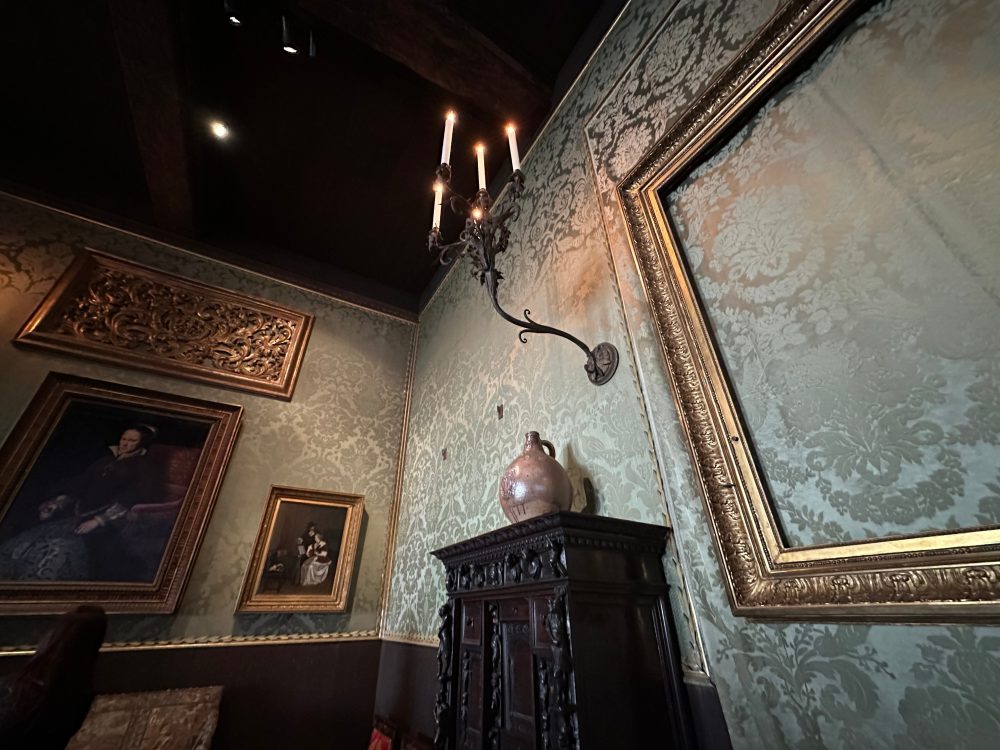
Today, the ornate empty frames where the missing paintings once hung remain on display as haunting reminders of what was lost.
In the early morning hours of March 18, 1990, while Boston was still recovering from St. Patrick’s Day festivities, two men wearing police uniforms appeared at the museum entrance and persuaded a security guard to admit them, breaking established safety procedures.
After restraining both guards with handcuffs in the basement, the thieves proceeded to the museum’s Dutch Room, where they sliced Vermeer’s “The Concert” and Rembrandt’s “Christ in the Storm on the Sea of Galilee” from their frames, along with pieces by Degas and Manet.
The criminals also grabbed a Napoleonic eagle finial — an ornamental metal object worth relatively little that later baffled investigators — plus the building’s security recording tapes.
Museum officials initially posted a $5 million reward for information leading to the artworks’ return, then increased it to $10 million ten years later.
Investigative leads pointed toward various suspects including Irish Republican Army members and Boston organized crime figures such as infamous gangster Whitey Bulger.
Kelly’s pursuit of clues took him to France, where he observed through field glasses as undercover FBI operatives pretended to be wealthy go-betweens, relaxing on a luxury boat while sipping champagne and enjoying strawberries to attract suspected Corsican criminal contacts.
Back in New England, federal agents conducted searches throughout the region while depending heavily on criminal informants. One terminally ill triple killer nicknamed “Meatball” secretly recorded discussions with possible accomplices, hoping to earn money for his relatives.
However, none of these investigative paths led to recovering the stolen art.
Since the robbery occurred, multiple individuals thought to be connected to the crime have been murdered, with another dying under questionable circumstances.
Robert “Bobby” Donati, a Boston mob associate who had long been suspected in the case, was discovered stabbed to death in 1991, his corpse placed in a car trunk after his residence was searched and ransacked.
Earlier, Donati had toured the Gardner Museum with another known art criminal, Myles Connor, to plan a potential robbery and mentioned that stealing the museum’s Napoleonic finial would serve as his “calling card.” Later, a jewelry dealer informed investigators that Donati had attempted to sell a finial from the Isabella Stewart Gardner Museum but withdrew the offer, claiming it was “too hot.”
Another investigative thread focused on George Reissfelder, whom authorities believe provided the escape vehicle.
Kelly located Reissfelder’s brother, a former military officer who initially doubted his sibling’s involvement. The brother became emotional after being shown Manet’s “Chez Tortoni,” recognizing it as artwork he had personally hung above his brother’s bed.
Reissfelder subsequently died under suspicious circumstances. When investigators examined his residence, the painting had vanished.
Both suspects had connections to TRC Auto Electric, a Dorchester business associated with Charles “Chuck” Merlino’s criminal organization.
While investigators felt confident about the perpetrators’ identities, obtaining conclusive evidence proved challenging.
During the investigation’s initial phase, the FBI assigned only one agent to the case, which Kelly believes hindered progress.
“You have to keep in mind when you’re talking about investigations, they come down to dollars and cents,” Kelly said. Securing adequate resources was “like pulling teeth.” Federal investigators in Boston were primarily concentrated on violent crimes, narcotics trafficking and organized crime cases at that time.
Kelly criticized the decision to publicize surveillance video despite investigators’ opposition, calling it a persistent distraction. Since no useful footage existed from the robbery night, officials released video from the previous evening showing a museum worker entering after his vehicle broke down. Kelly opposed the theory suggesting the employee was surveying the museum, since that possibility had already been examined and ruled out. The released footage generated years of misdirected suspicion, though the man was eventually cleared of involvement.
One continuing question concerns whether someone inside the museum assisted the thieves.
Photographs from that evening show a museum guard restrained in the basement with duct tape covering his head.
Investigators observed that just before the robbery, the guard violated policy by opening a door that faced the area where the thieves were later spotted waiting — behavior investigators found extremely unusual and suspicious.
“It’s the immutable laws of time and space,” Kelly said. “I think that there was enough information back then that he could have been charged. Would it be enough to convict him? I don’t know.”
By the time investigators focused more intensively on these concerns, Kelly explained, the statute of limitations had run out, eliminating their ability to force cooperation.
The museum guard, Rick Abath, consistently denied participating in the theft. He passed away in 2024.
Kelly characterizes the missing artworks as “perfect fugitives.”
“They don’t go to the doctor. They don’t get stopped for speeding. They don’t leave fingerprints,” he said. “They can just disappear.”
Unlike human fugitives, he noted, artworks can also be replicated.
Throughout the years, this has resulted in pursuing false leads — including paintings discovered in a Reno antique shop, displayed in private residences and even one that appeared in a “Monk” television episode.
Since the works are so widely recognized, selling them openly is virtually impossible.
“Stealing the artwork from the museum, that’s the easy part,” Kelly said. “Profiting from it, that’s the difficult part.”
He believes the paintings will eventually resurface — outlasting those who committed the crime.
“I have no doubt they still exist,” he said.