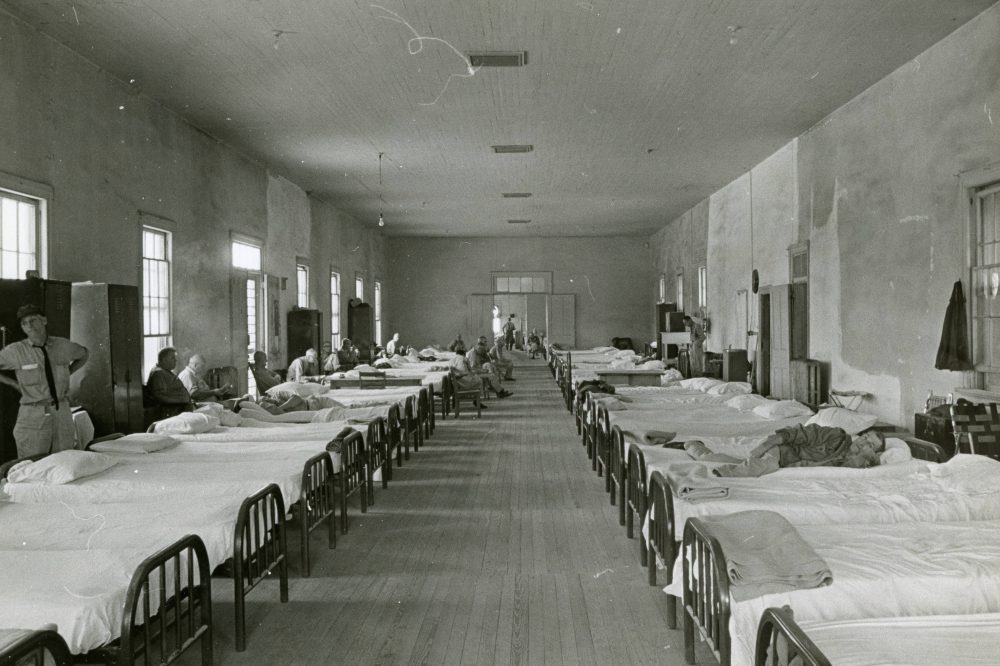

Breta Meria Conole spent over twenty years confined in a state mental health facility. Yet the circumstances behind her lengthy stay remain an unsolved puzzle for her family.
Debby Hannigan, Conole’s great grandniece, spent years attempting to obtain her ancestor’s medical files, believing they could provide insight into hereditary mental health conditions affecting her family, including her eldest daughter’s struggle with depression.
Hannigan made two separate requests to New York state for the documents. During her second attempt, she provided a letter from her daughter’s therapist stating the information would assist them “to know their family medical history better.” Both requests were denied.
This situation reflects a widespread problem.
Family members across the country have been advocating for legislative changes in New York and elsewhere that would permit access to mental health documentation of ancestors who died long ago. These efforts have led to policy modifications in certain states, including Massachusetts and Washington, though progress remains sluggish or nonexistent in other areas.
“It really does piss me off that we couldn’t just say, ‘Hey, we’re the descendants, here’s the proof, now tell us what you know!’” expressed Doug Clarke of Alfred, New York, who was unsuccessful in obtaining his great-grandfather’s records. These documents could potentially explain the depression and bipolar syndrome present in his family’s current generation, he noted.
The following examines this issue and current efforts to address it.
During the 1800s, America experienced significant growth in state facilities designed to house individuals with mental illness; by 1890, every state operated at least one such institution. These were termed lunatic or insane asylums, though admission criteria varied widely from “brain fever” and “grief and anxiety” to “laziness,” “religious excitement” and “desertion by husband,” based on historical documentation.
While conditions differed between facilities, certain asylums developed reputations as harsh, overcrowded storage facilities where patients faced neglect and physical restraints. These asylums eventually evolved into psychiatric hospitals, though treatment methods didn’t always improve: during the 1900s, they became locations for now-debunked procedures including lobotomies and induced comas.
However, hospital personnel frequently maintained detailed documentation, including comprehensive patient descriptions and symptom records. They also captured photographs and gathered additional materials, according to Dr. Laurence Guttmacher, who previously served as clinical director at Rochester Psychiatric Center, one of New York’s state hospitals.
Documentation at various facilities may have suffered damage, destruction or loss over time. Additionally, remaining records might lack proper organization or cataloging. Nevertheless, substantial information still remains available, Guttmacher explained.
“We had this incredibly rich trove of records” at the Rochester hospital, he stated.
These documents have attracted attention from individuals whose families face ongoing challenges with depression, suicide or related conditions.
“Would you want to know if your grandfather died of a heart attack?” asked Dr. Christine Moutier, chief medical officer for the American Foundation for Suicide Prevention. “It’s information that you can use to understand how vigilant to be.”
Countless patients died within state hospitals, with some buried in graves lacking identification markers. Certain families have been unable to determine when a relative passed away, much less the cause, said Alexandra Lord, a historian currently writing about suicide within her own family. She encountered difficulties accessing New York state documentation regarding her great-grandmother.
Guttmacher noted: “About twice a month I would get a request from a family member to get access to records, to try to learn the story of their families.” State authorities informed him he was prohibited from sharing such information.
Federal legislation passed in 1996 safeguards individual patient health information privacy, including diagnostic details and treatment received. This law, called HIPAA, maintains health information protection for five decades following death.
Various states maintain comparable regulations. Ohio legislation permits the nearest living family member of a deceased patient to request state mental health facility records, and anyone may request them fifty years after patient death. Maine similarly provides relatively straightforward access to records from that time period.
However, numerous other states maintain stricter policies. New York permits such records to remain sealed “in perpetuity,” according to a statement from New York’s Office of Mental Health. Documents may be released to patients and immediate family members, though typically not to more distant relatives. They have also been shared with medical professionals “with a justification,” and with historians who commit to not identifying individual patients, state officials indicate.
Massachusetts maintained similar restrictions, but advocacy efforts resulted in new legislation last year making state hospital records public after seventy-five years, plus records for individuals deceased at least fifty years.
This modification followed a commission report discussing state institutions’ history of mistreatment and neglect, including patient sterilizations at a Monson state hospital. Commission member Alex Green characterized the state’s record nondisclosure as a “cover-up” of decades of abuse endured by disabled individuals.
Currently, some are working toward changing New York’s legislation. This year, state Sen. Pat Fahy proposed a bill classifying records and information about patients deceased fifty years or longer as historical documents — removing them from privacy protection requirements.
Fahy highlighted New York’s psychiatric facilities’ own troubled past. She referenced the Willowbrook State School, a Staten Island facility where developmentally disabled children previously lived under terrible conditions.
“If the person is deceased, there should be an availability of these records to help give the family closure,” stated Fahy, a Democrat from the Albany area. “Learning from our history is one of the best ways to give us insight into how we do better in the future.”
Families do possess alternative pathways to information regarding ancestors’ mental health backgrounds, historians note.
Online platforms such as Ancestry.com offer — for a fee — access to historical records, including census data that can reveal whether someone resided in a state institution during census periods.
Veterans’ military pension files have included mental health information.
Historical newspapers contained numerous items about local residents, including when individuals were committed to state institutions.
There may be significantly more people interested in family mental health history than commonly understood, said Ryan Thibodeau, a St. John Fisher University researcher involved in efforts to modify New York’s law. During the 1950s, at America’s institutionalization peak, over 500,000 people resided in state hospitals.
“Their descendants are everywhere,” he observed.